Dress shoes, curtains, cosmetics, pig intestines, wrist watches, toys, paintings, binders, nails, cigarettes, t+shirts, pens, hatchets, bras, cookies, hammers, cloth, suits ducks, hand-carved decorations, wiring, pots, chairs, sandals, strawberries, hats, metal detectors, potatoes, toilet plungers,house shoes, sickles, blinds, perfumes, hiking boots, mufflers, pocket watches, panties, puzzles, pans, pipes, scopes, cherries, hedge trimmers, cutlery sets, skateboards, lawn mowers, porch swings, DVDs, planers, tables, knife sharpeners, spoons, screw drivers, CDs, hair brushes, power outlets, hair driers, chickens, Croc rip-offs, faucets, pencils, stomach lining, Teva rip-offs, rake handles, hiking poles, plums, Nike-rip-offs, wrench sets, geese, bikes, tobacco, ties, pencil bags, homemade cheese, levels, skis, pigeons, tank-tops, forks, nuts, tennis shoes, pigs, binoculars, hunting knives, socks, butter knives, rakes, carving knives, fillet knives, Russian cameras, notebooks, axes, inline skates, cats, insulation, pencils, e-cigarettes, tiles, bolts, dresses, light switches, high heels, instant coffee, dogs, shovel heads, baseball caps, chains and stakes for grazing cows, and countless other items, all available at your local jarmark.
polska 2013
Polish Ketchup
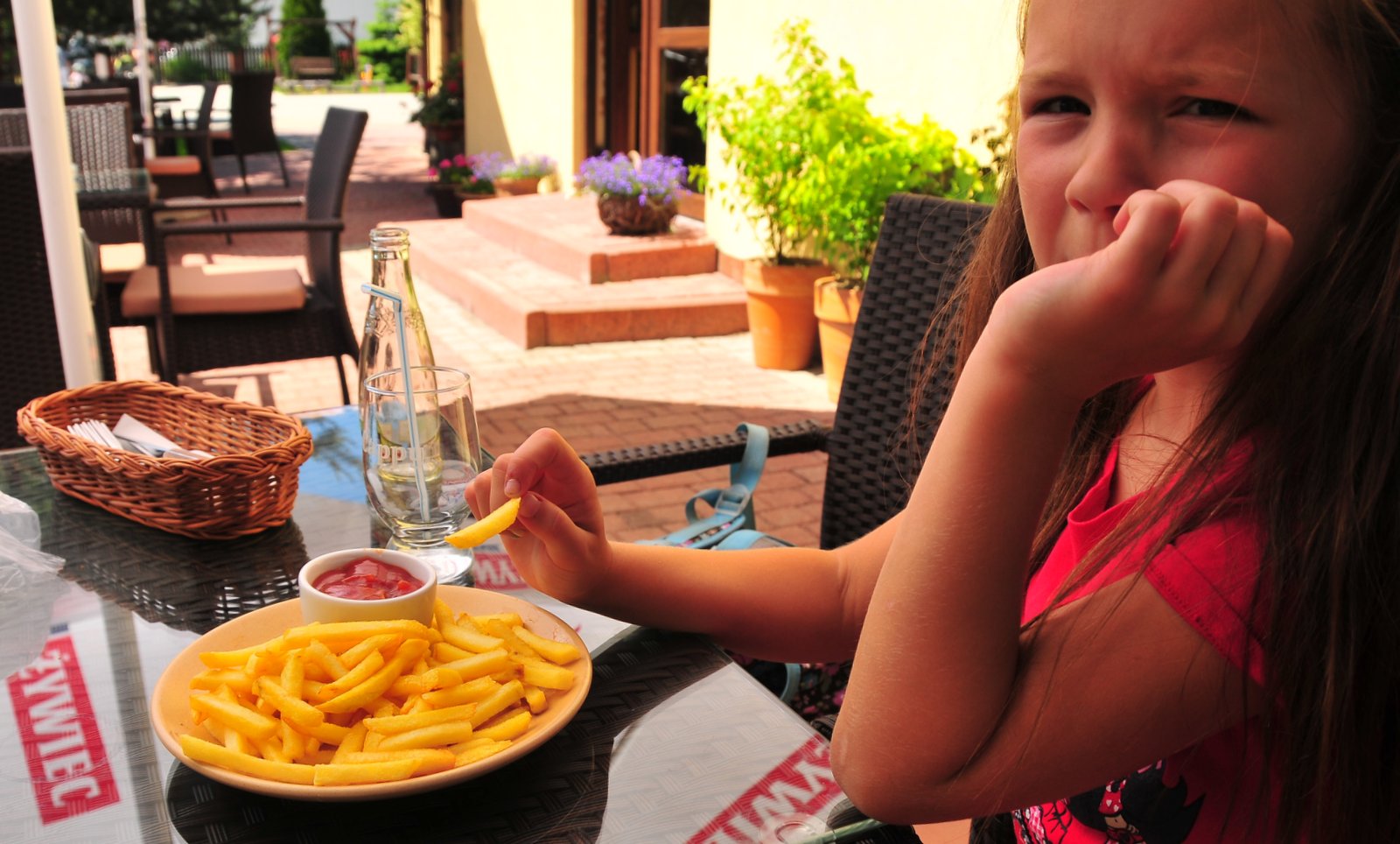
The Girl has decided that Polish ketchup, with its hint of pungency and its lack of sweetness of its American counterpart, is most decidedly not for her.
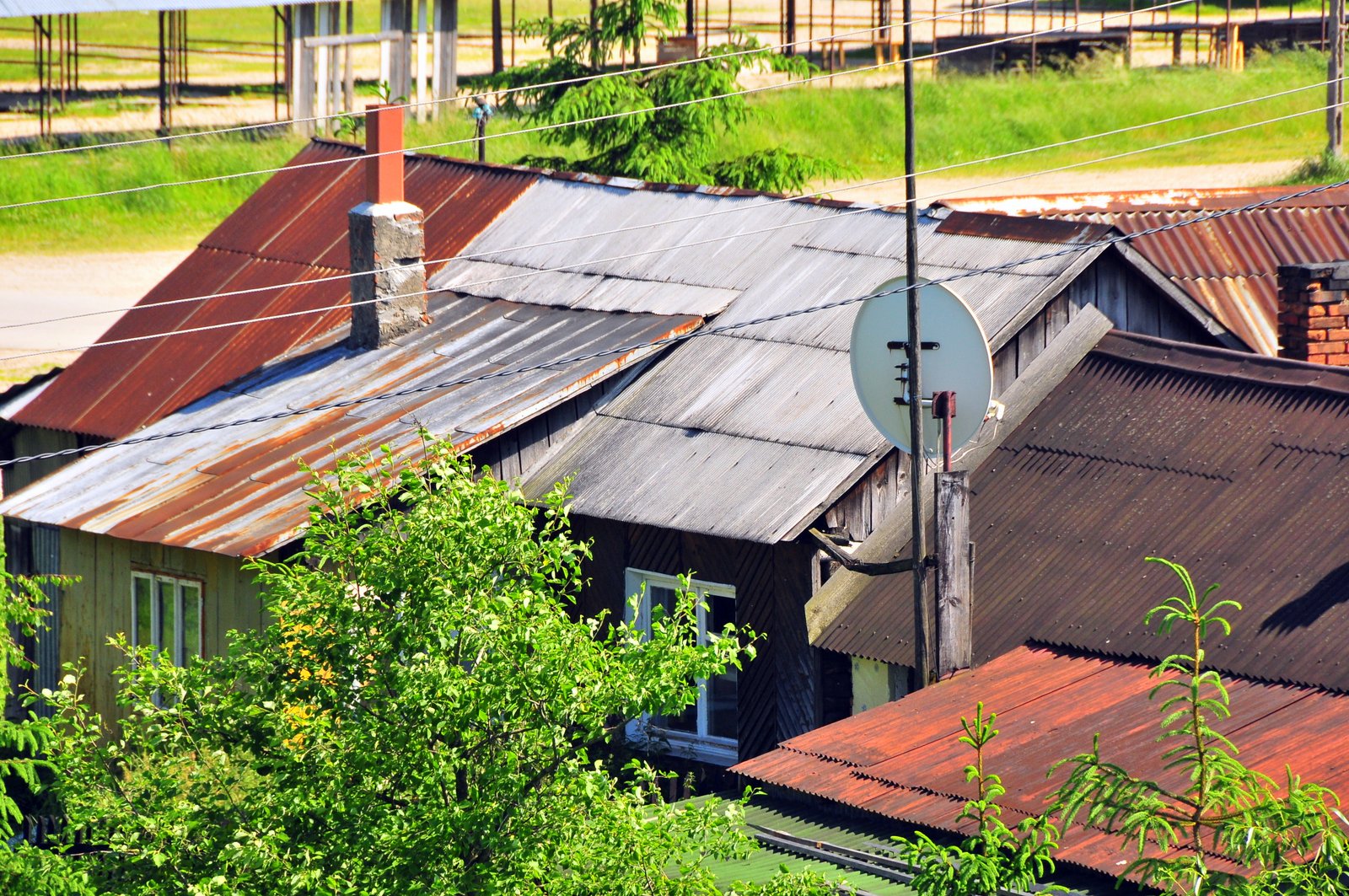
Disrepair
The signs of it are everywhere: houses with roofs that have long-since lost the luster of their newness.
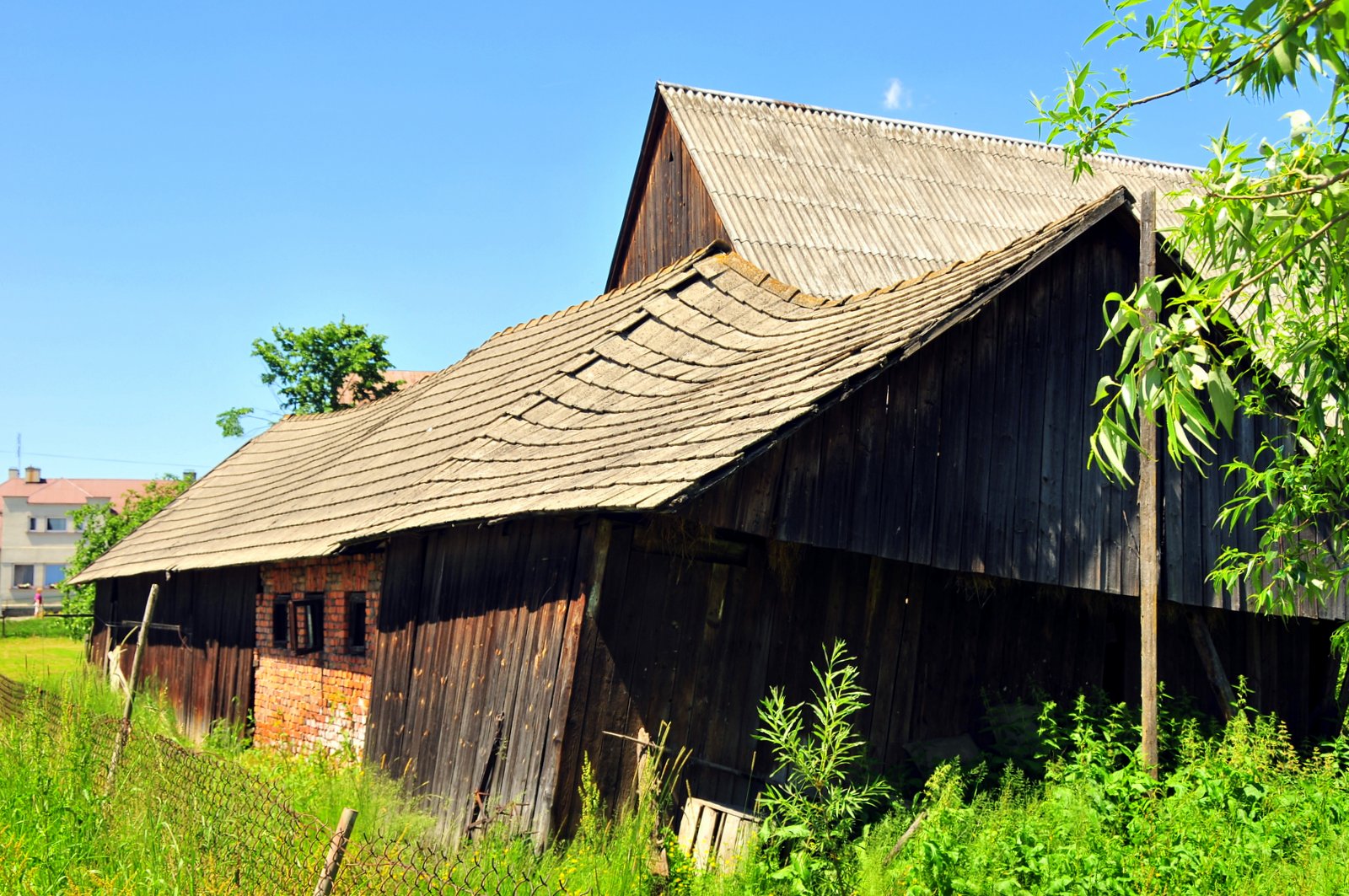
Barns collapse on themselves.
Road repairs, melting in the heat of an unusually warm day, prove themselves to be only temporary.
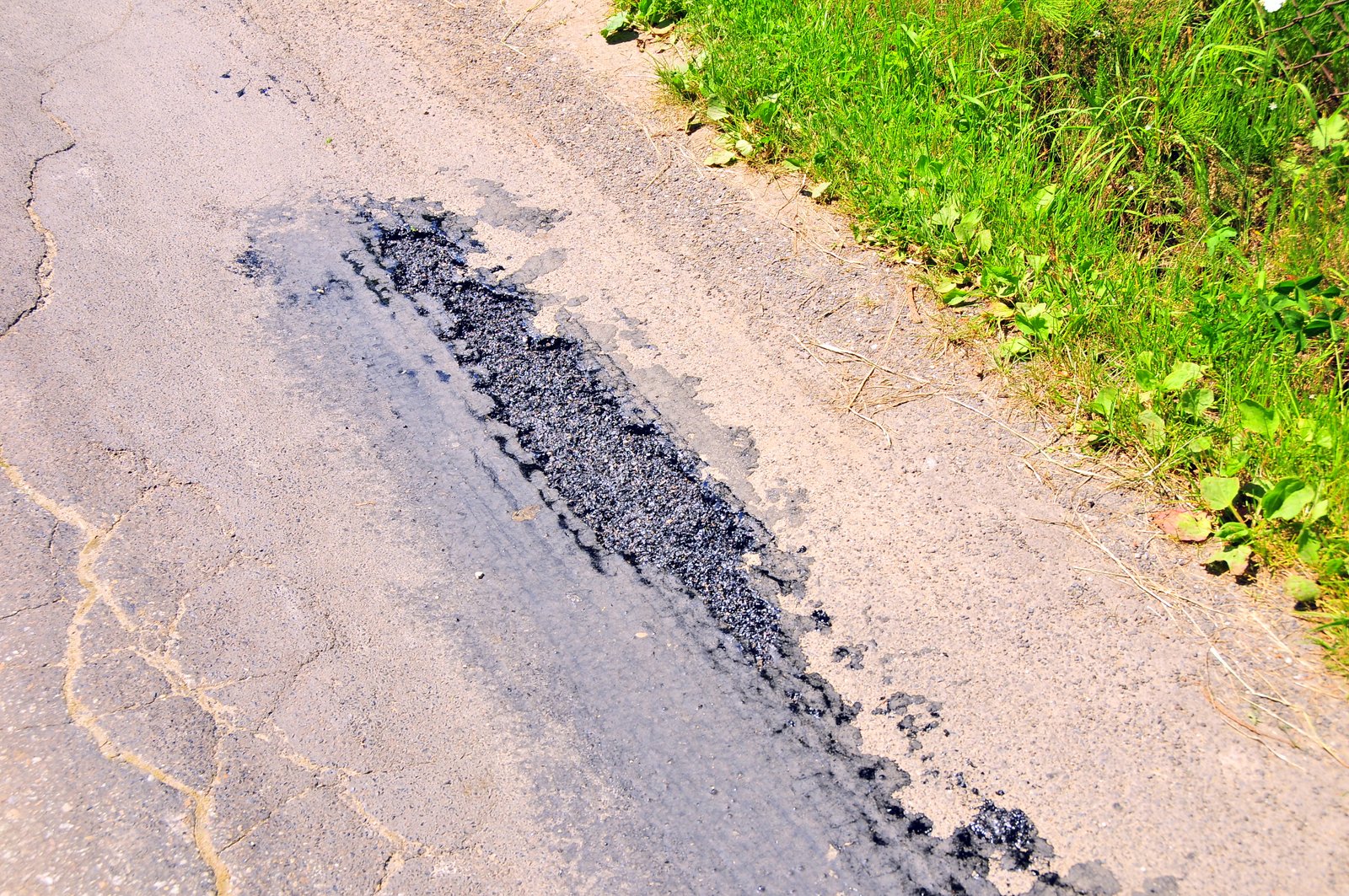
When I first arrived in Poland in 1996, sights like these were common everywhere, in the countryside and in the capital. In 2013, such scenes are less common.
The Visit
“J, are you here?” She somehow knocks at the door, opens the door, enters the house, and says this all at the same time. It took me a long time to grow accustomed to this style of entering a friend's house, but she's lived in Orawa all her life, and it comes naturally to her.
I walk to the door as she enters and she asks, “Is Pani J here?”
“No, she went to the store a few minutes ago,” I explain. “She should be back shortly.” I usher her into the kitchen, recommending that she wait here. Then again, Babcia has a gift for coming back home, sneaking into the house, and disappearing upstairs to iron this or to clean that, so I suggest that perhaps she's upstairs. “I'll just check.”
I head to the base of the stairs—those countless stairs that lead to a floor of rooms for guests of the bed and breakfast and then to the next floor where the family residences are and finally to more guest rooms on the floor above—and call, “Babcia!” The name echoes through the tiled stairway and dies without response.
“I guess she's not here,” I explain heading back to the kitchen.
“J is too young to have a grandchild your age. You're calling her 'grandmother' because...”
“Because my daughter calls her that,” I explain.
“Oh! You're K's husband! Oh, okay, okay. You know, I was K's teacher.”
We chat for a little about K, about E and L, about roads in Poland (why does that topic always seem to come up? Every Pole summarizes the situation with the same words: “holes within holes.”) and suddenly, there's Babcia.
“I hear voices!” she sings as she enters. She's always glad to have visitors, and she's particularly glad to see M, her close friend.
“What shall I make for you? Coffee? Tea?”
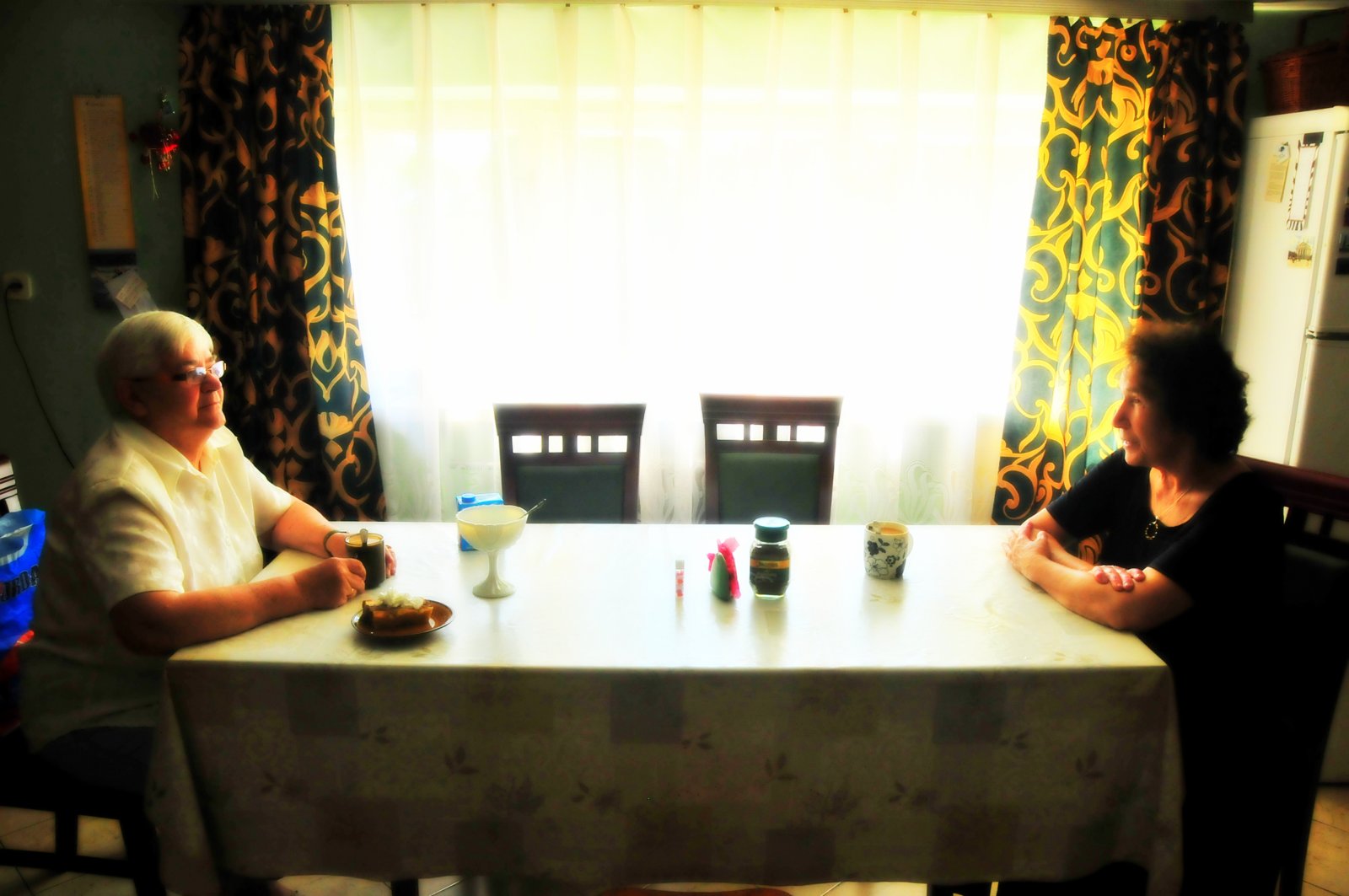
Before long, they're drinking coffee and talking about who's gotten married, how M's mother, who just turned an incredible 99 years old in May, is doing, about their children, their grandchildren, the neighbors, politics, films.
Yet the conversation always seems to turn back to something we might call in English gossip but in Polish sounds somehow different. It's not just that the word somehow is different. The word for “gossip” in Polish (plotkować) traces its etymology directly to the word for “fence” (płot), for that's where it traditionally takes place. No, it's not that the word sounds different–of course it would, as it's a different language.
It's the act itself that sounds different. All gossip here eventually turns back to a personal connection, and while malicious gossip certainly does take place, the vast majority of it sounds more like a cross between a local newscast and spoken memoirs. The gossip can reach back years and years, to people they knew decades ago, to events that have long passed from the common memory.
And so the two babcias sit at the kitchen table, swimming in the past, present, and future simultaneously.
Shop
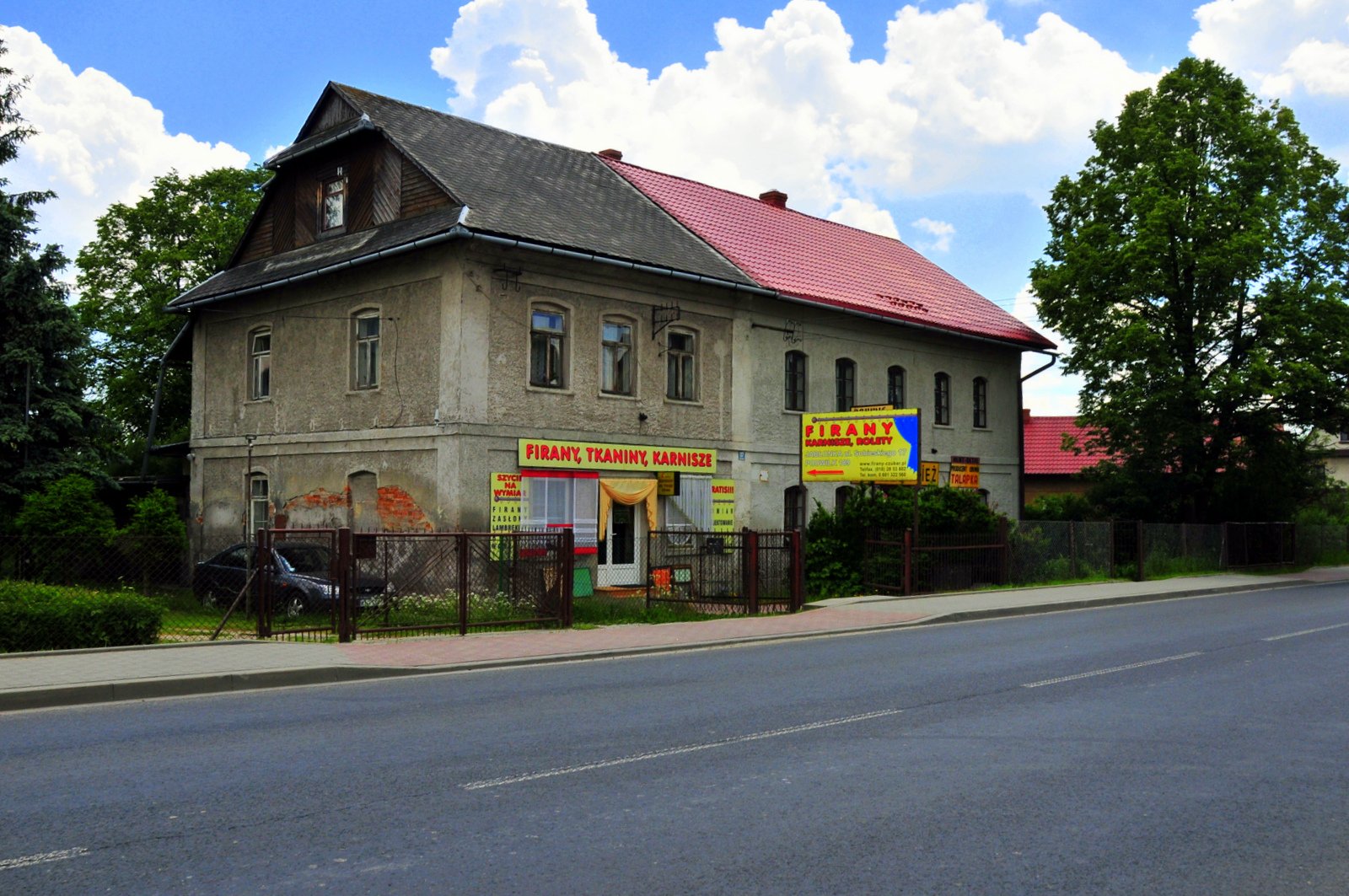
This is how I remember Jablonka, not the little miasteczko it’s become.
First Day at (Polish) School
It's L's first day at a Polish school, picking up with the kindergarten kids for their final two weeks of school. She was upset the night before: "I don't want to go!" was a common tearful refrain. "I don't want to go" are the first words out of her mouth this morning. But a little bribery works wonders: "After school, we'll stop in at Steskal's for an ice cream cone, and later today, we'll go visit a toy store."
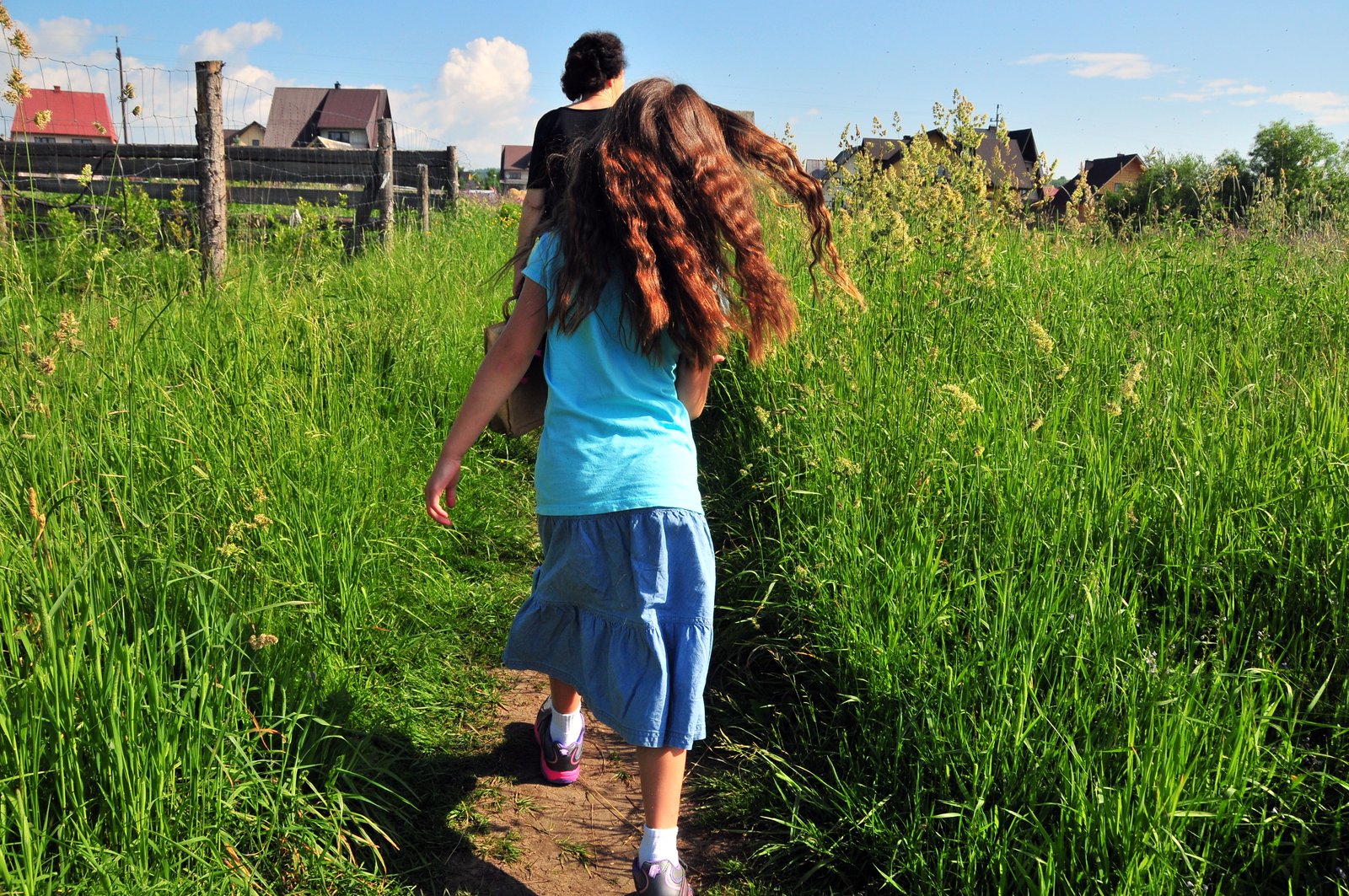
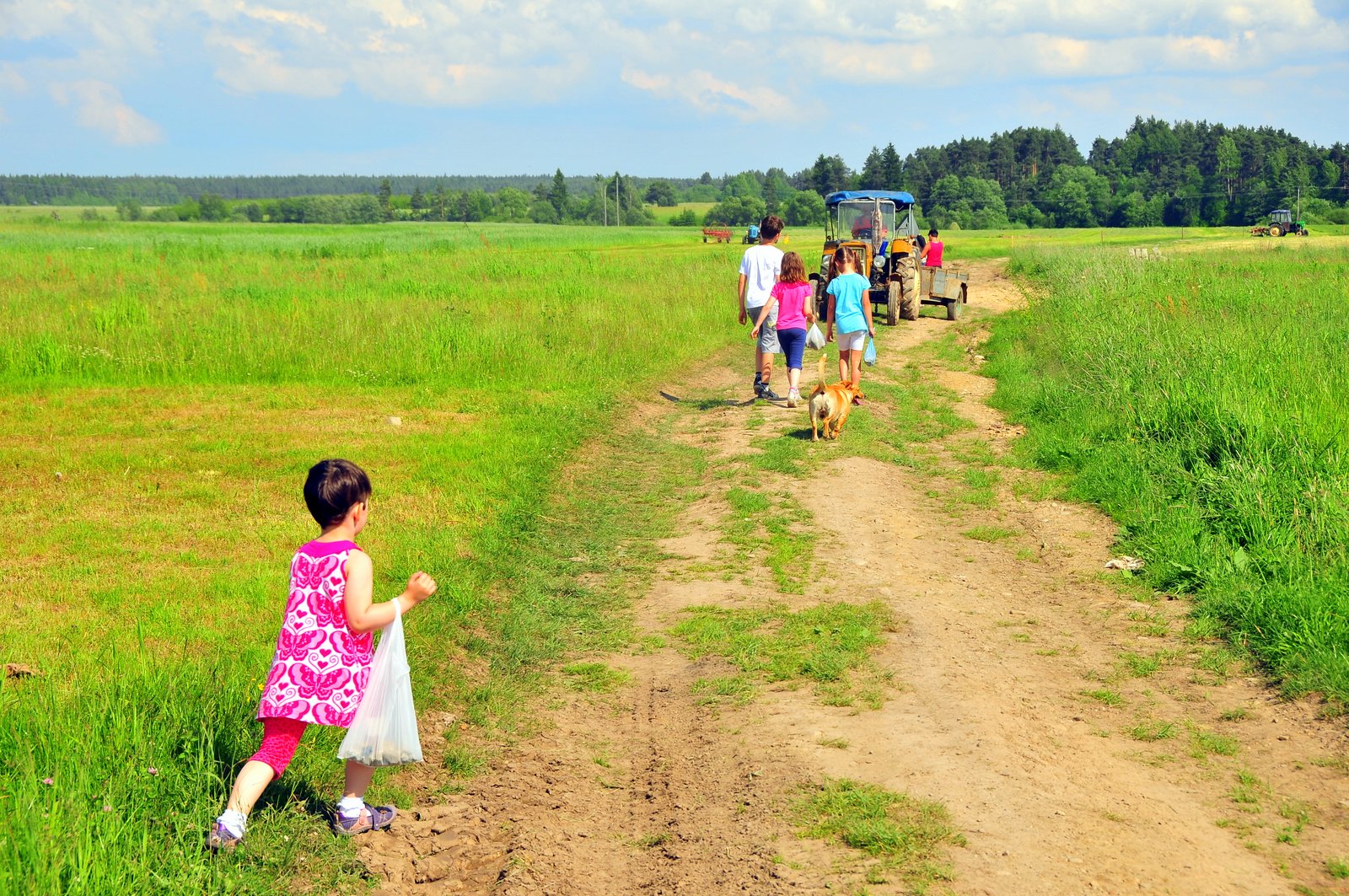
And so off we go, heading through the fields to school -- another "only in rural Poland" moment.
We meet with the director (not, it turns out, my former student, which is odd: I had two students with the exact same name, and now this makes the third female in this small area with the same first and last name), and she leads us to L's teacher. Each class is given a name like "Bumble Bees" and "Dragons" and this and that: a real mix of names. L has joined the "Forget-Me-Nots".
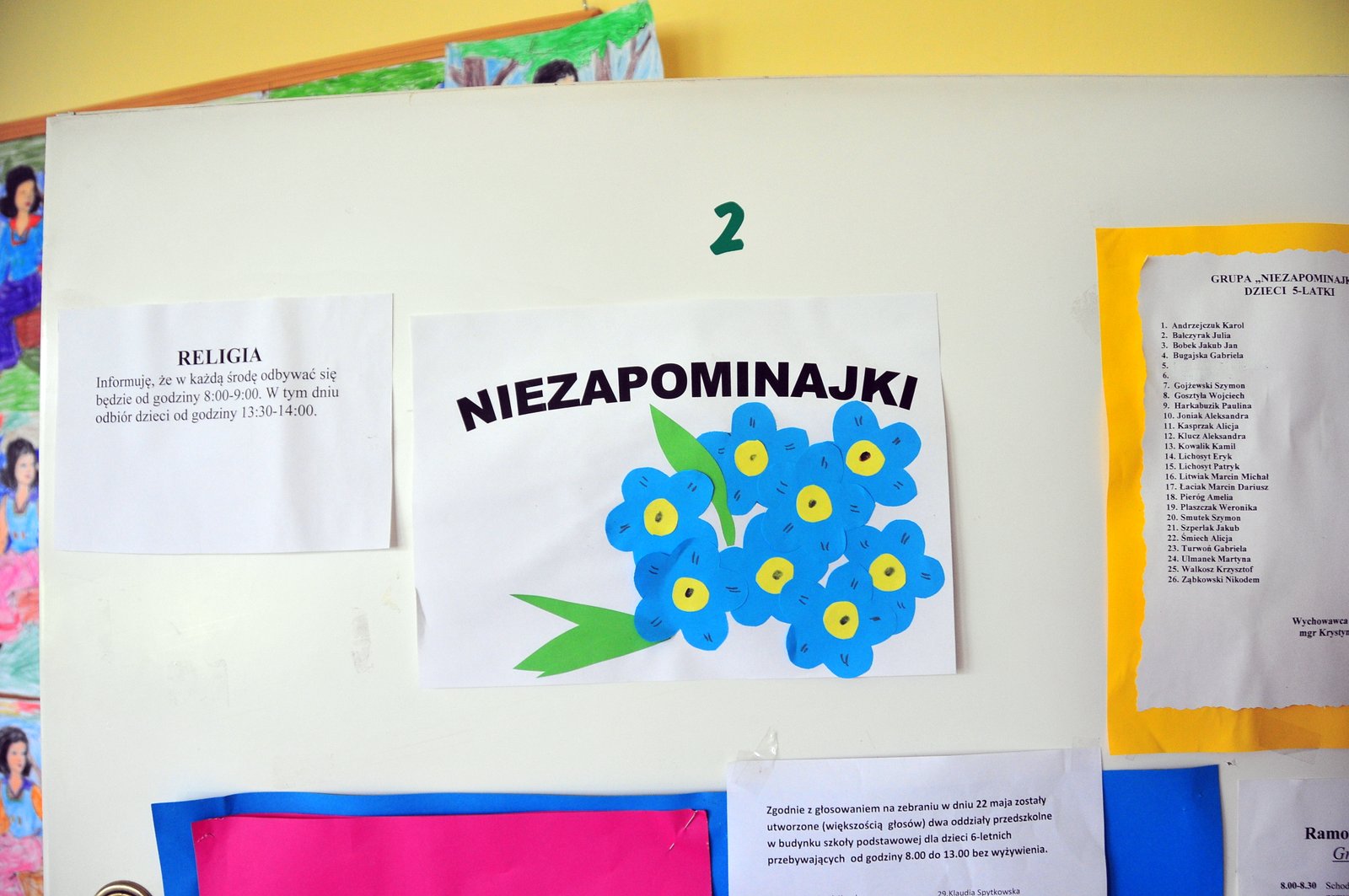
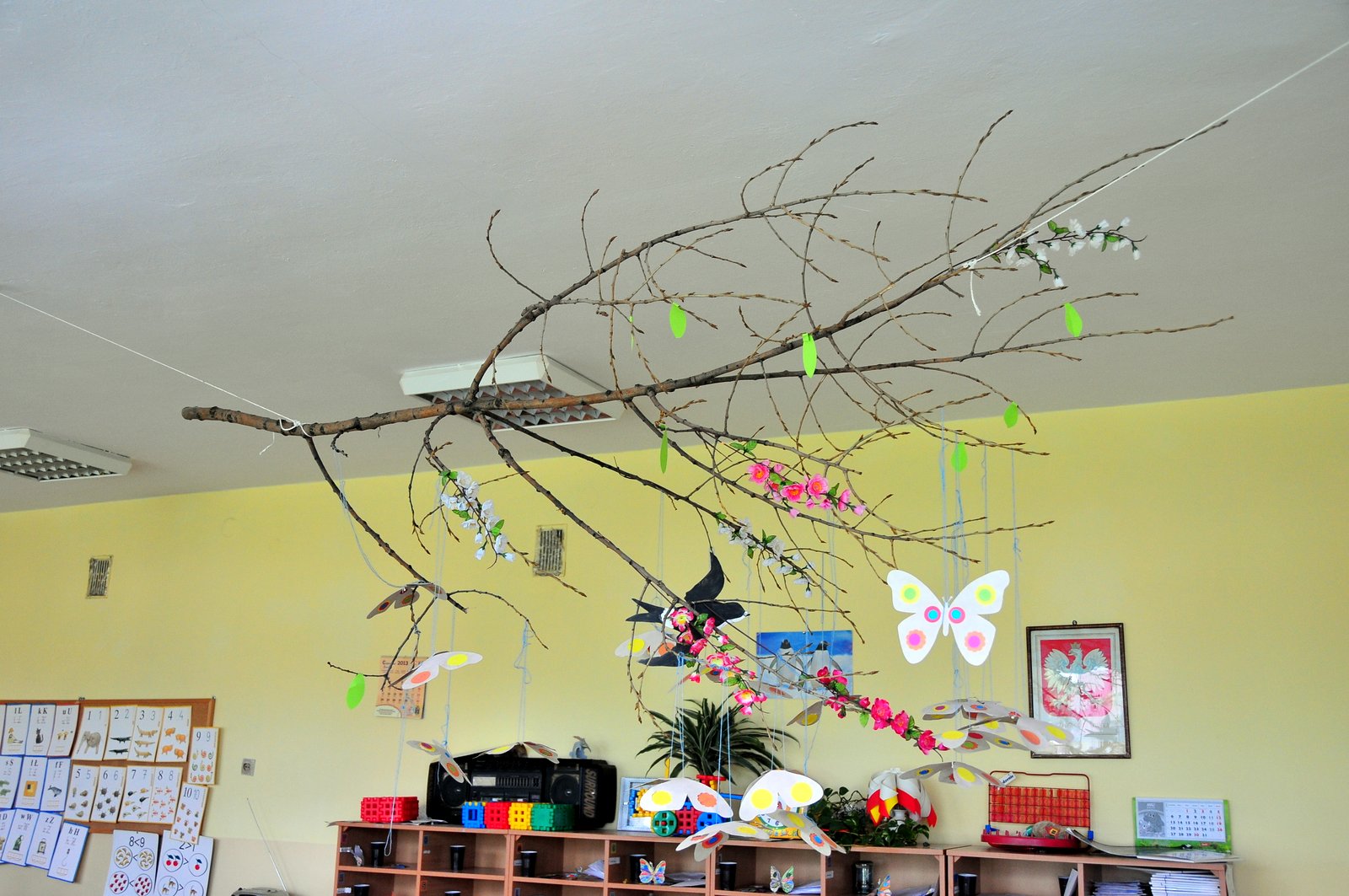
It's a colorful room with an original bit of decoration in the middle.
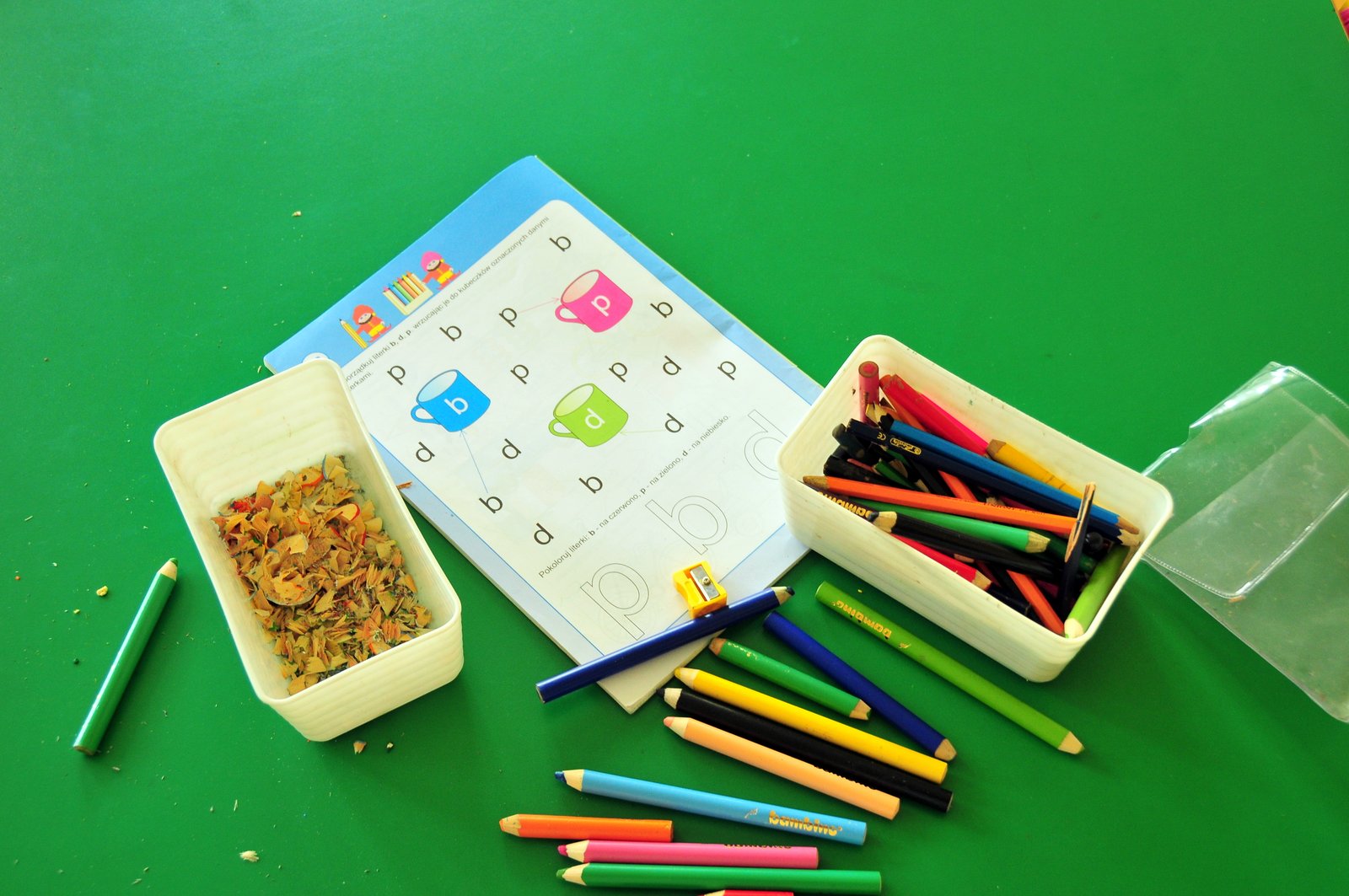
The first few minutes she's very clingy. She doesn't want to participate; she doesn't want to speak; she doesn't even want to show her face, literally. I coax her to a table of girls, and I begin chatting with them, hoping L will join in. They all introduce themselves, we talk a bit, and slowly L begins to come out of her shell. She eventually asks for a copy of the work the children are completing.
Before long, the kids circle up, sitting "Turkish style" (a direct translation of the Polish equivalent of criss-cross-applesauce). Then there are games, marching, chanting, singing, generally silliness. L takes part, somewhat reluctantly.
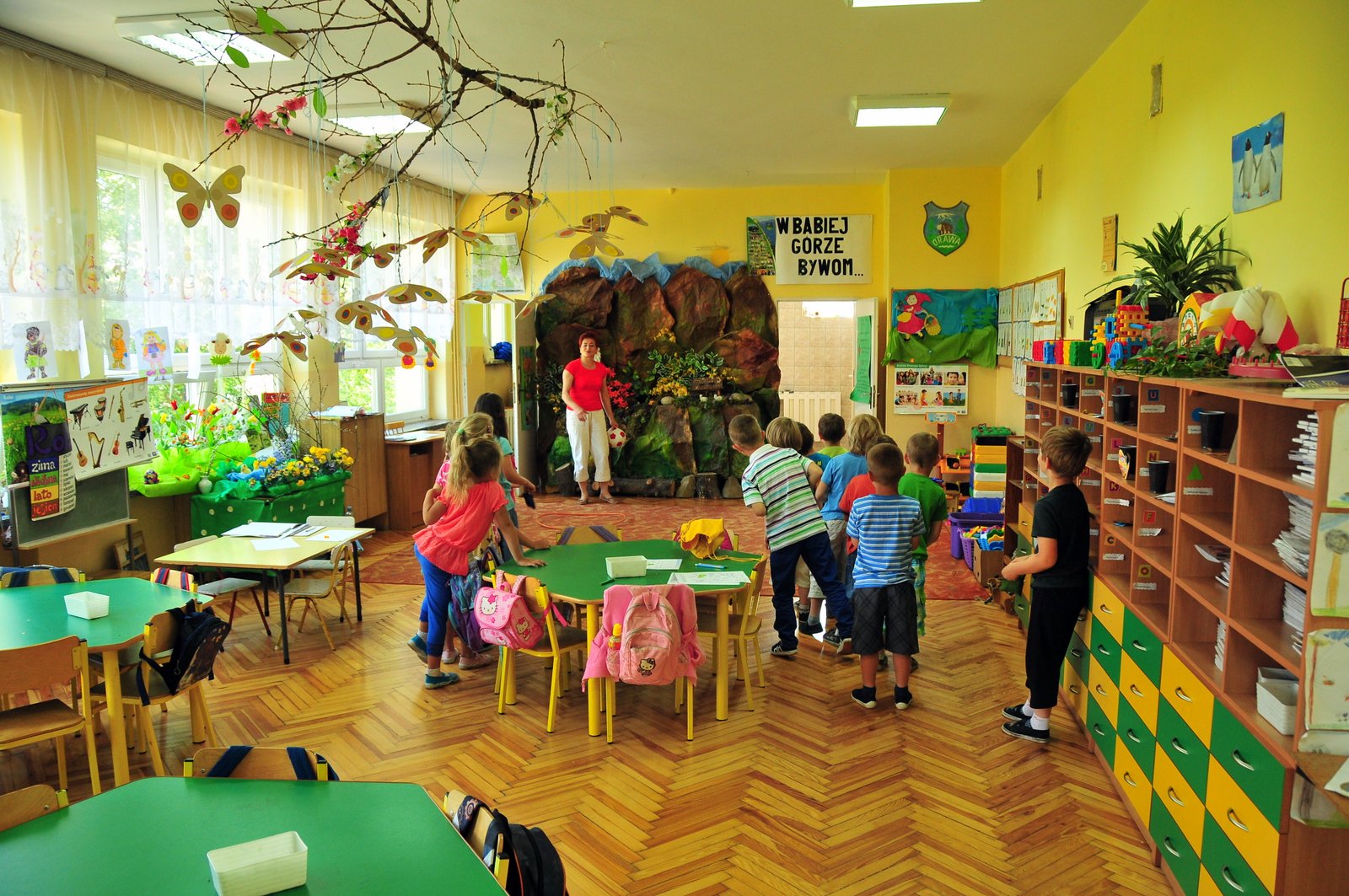
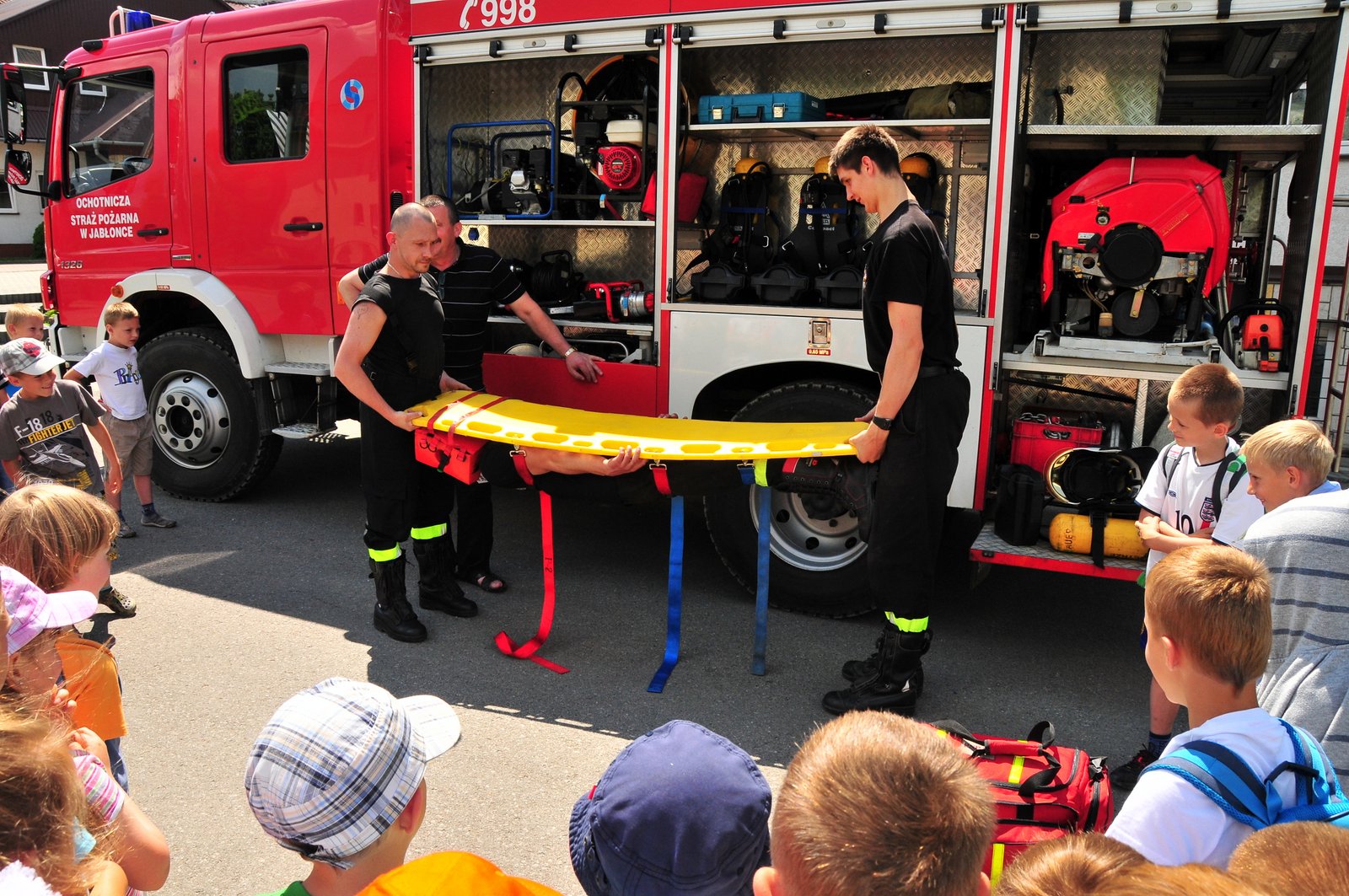
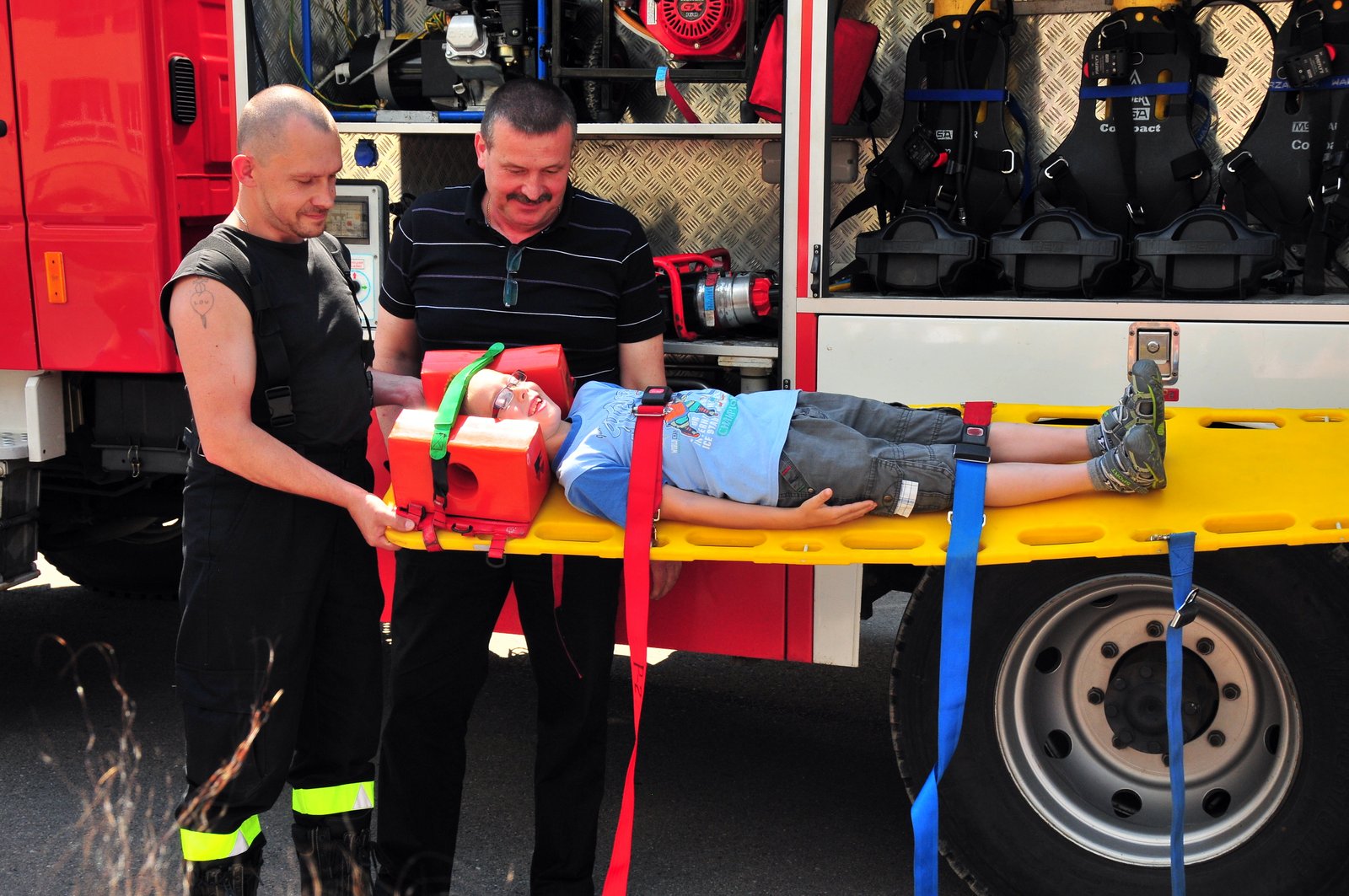
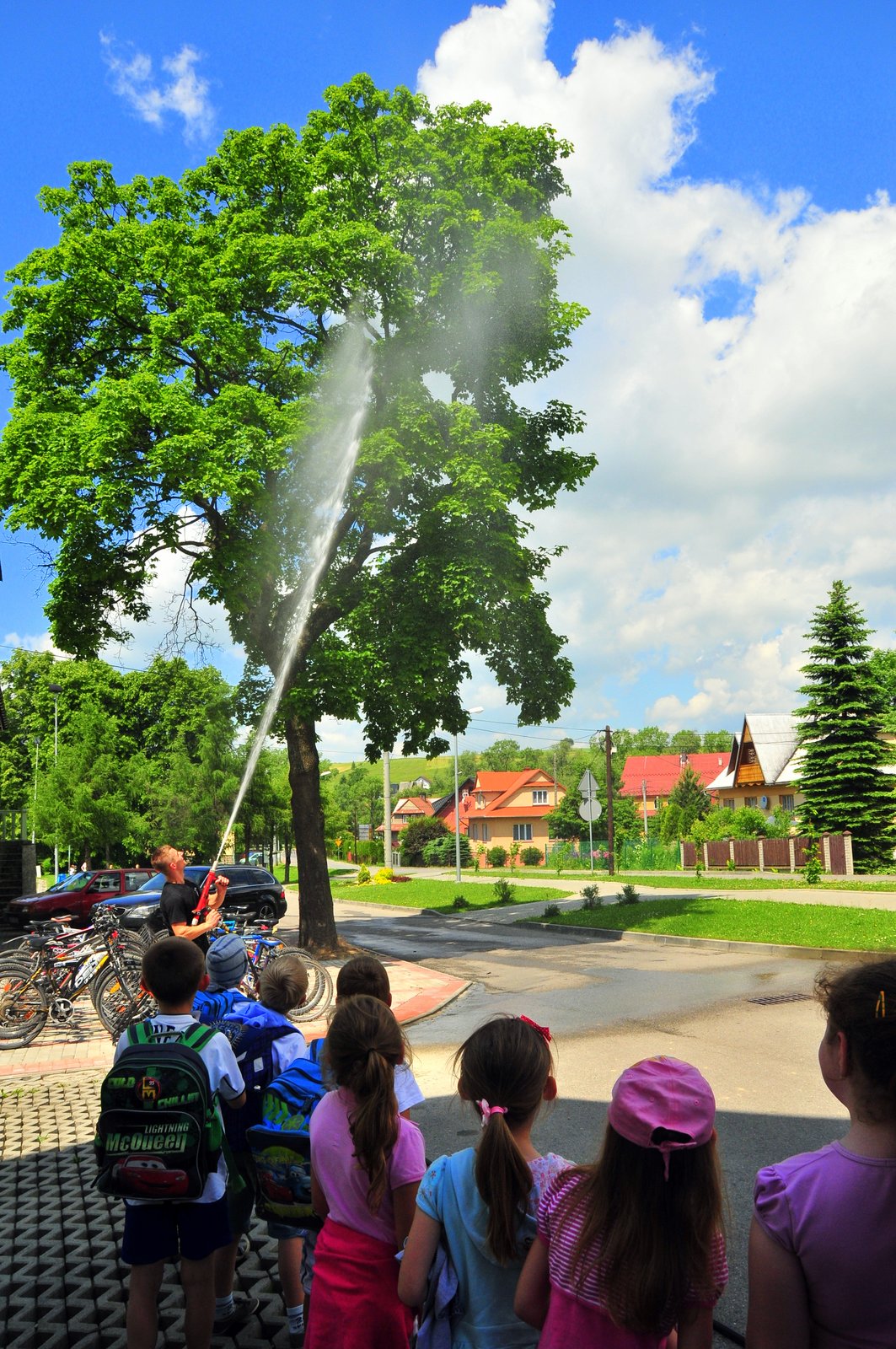
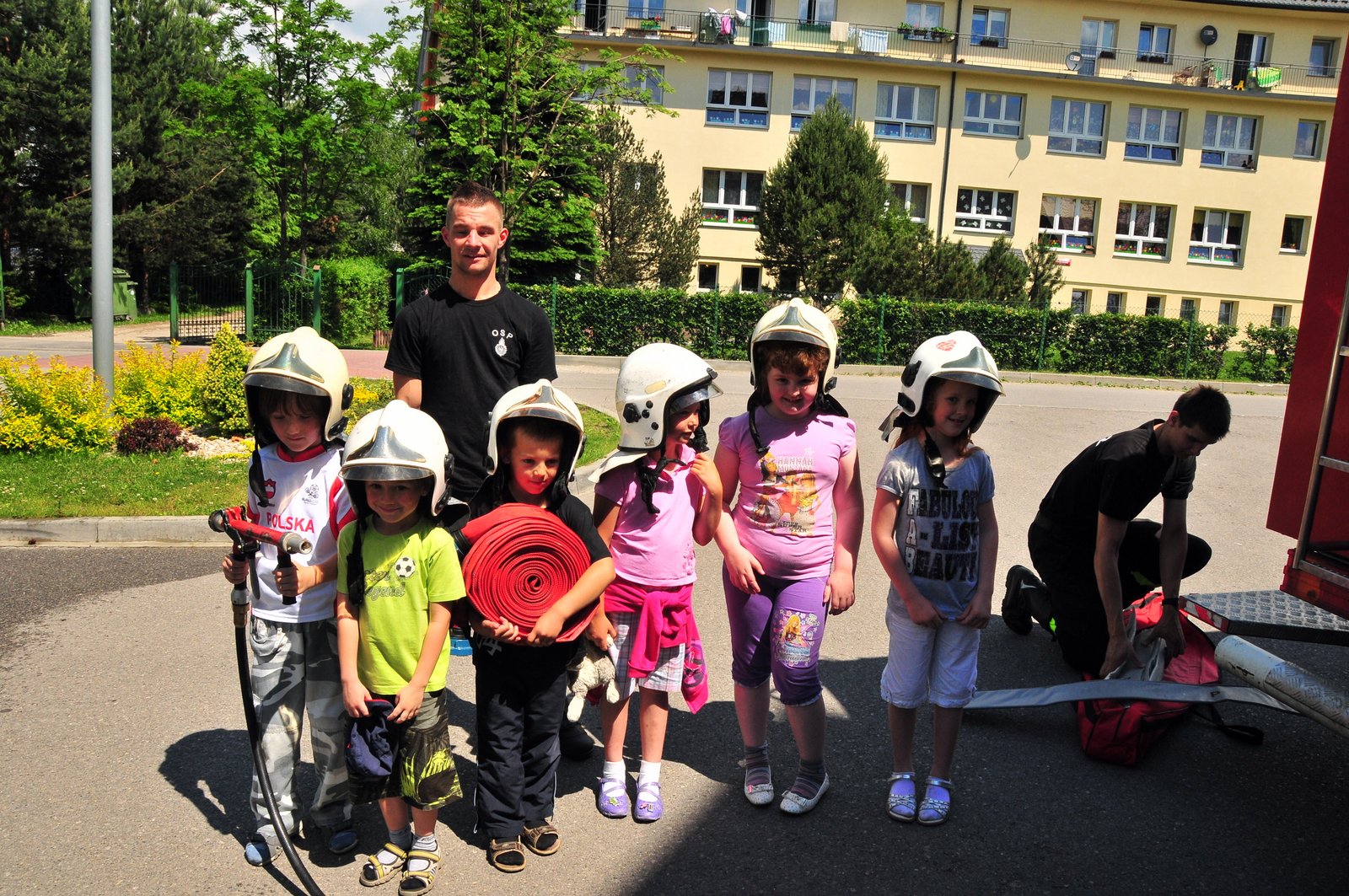
Soon it's time for the "second breakfast" (i.e., snack), and as the children are washing up, the teacher tells me that after snack, they're going to be the next in line to go out and look at the firetruck that has been sitting in front of the school most of the morning -- sort of a guided tour of a firefighter's world.
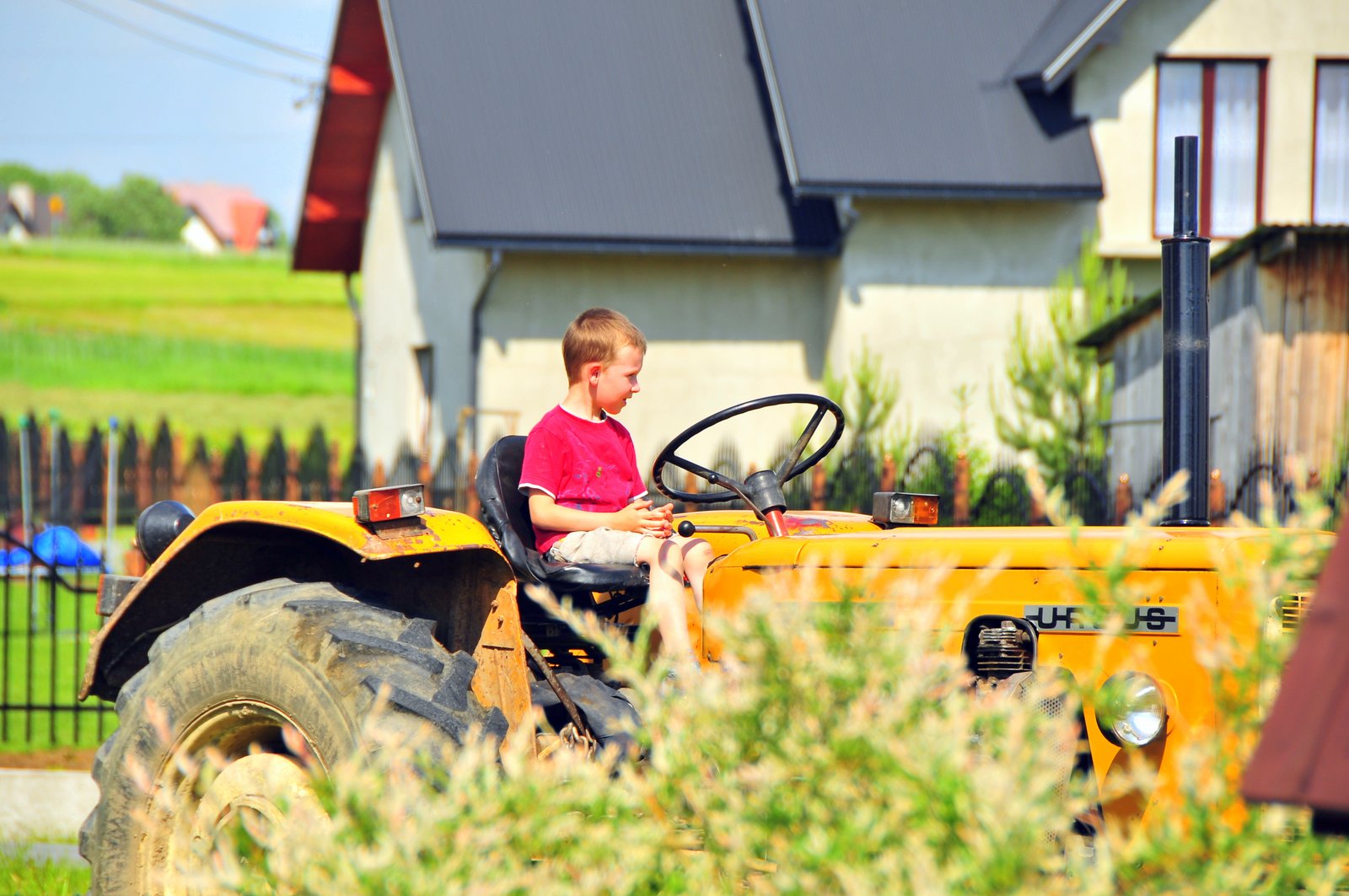
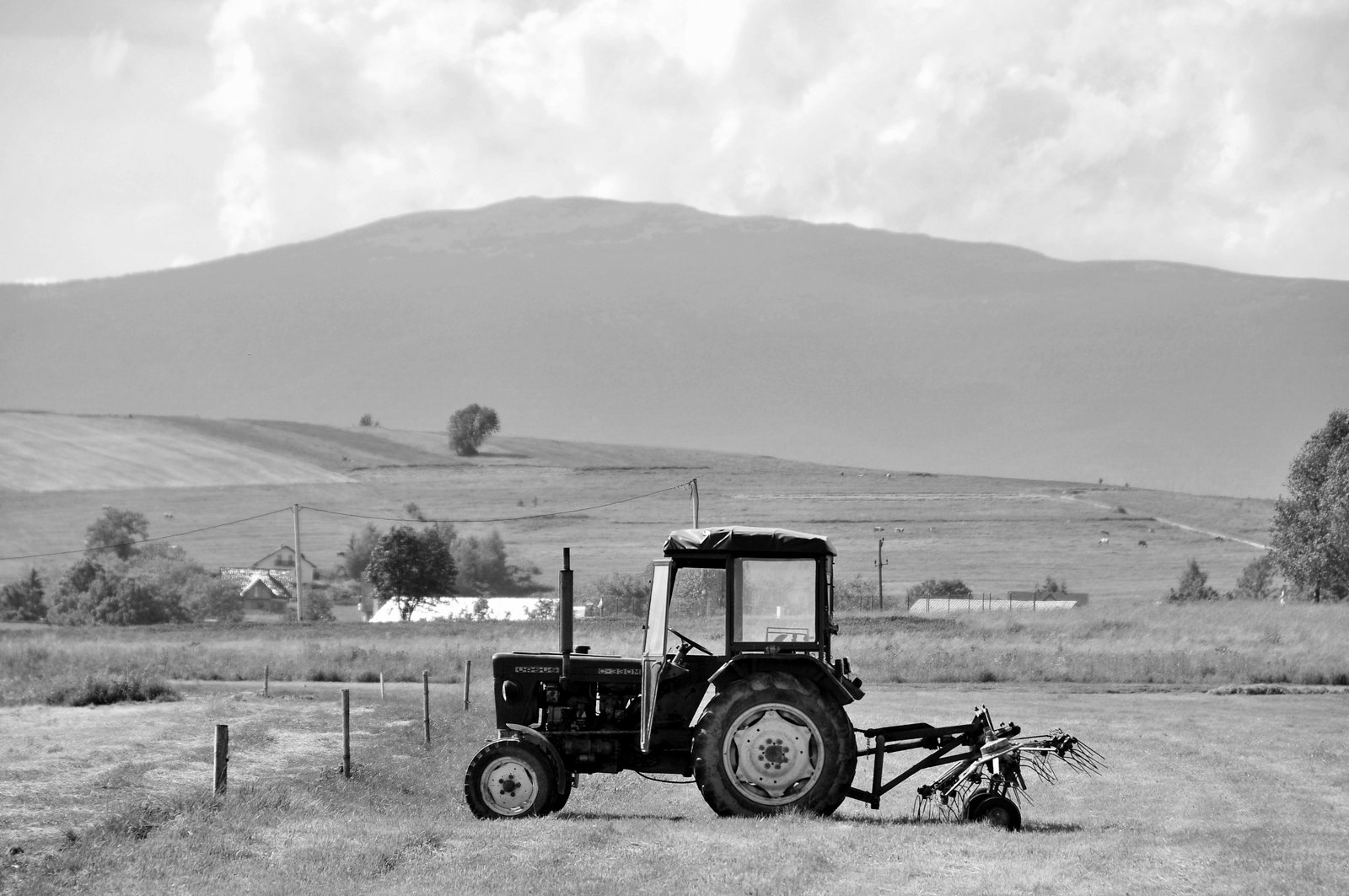
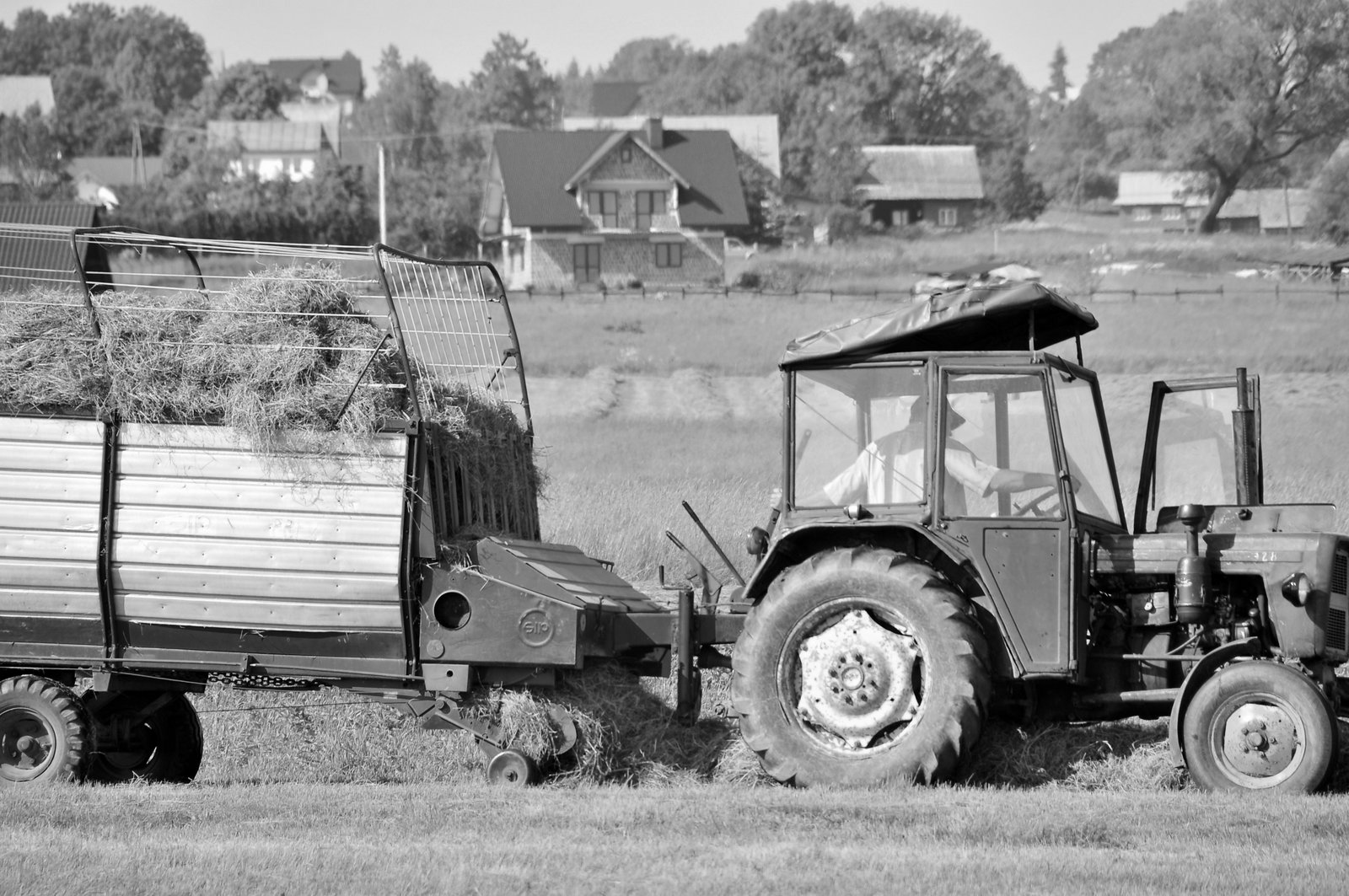
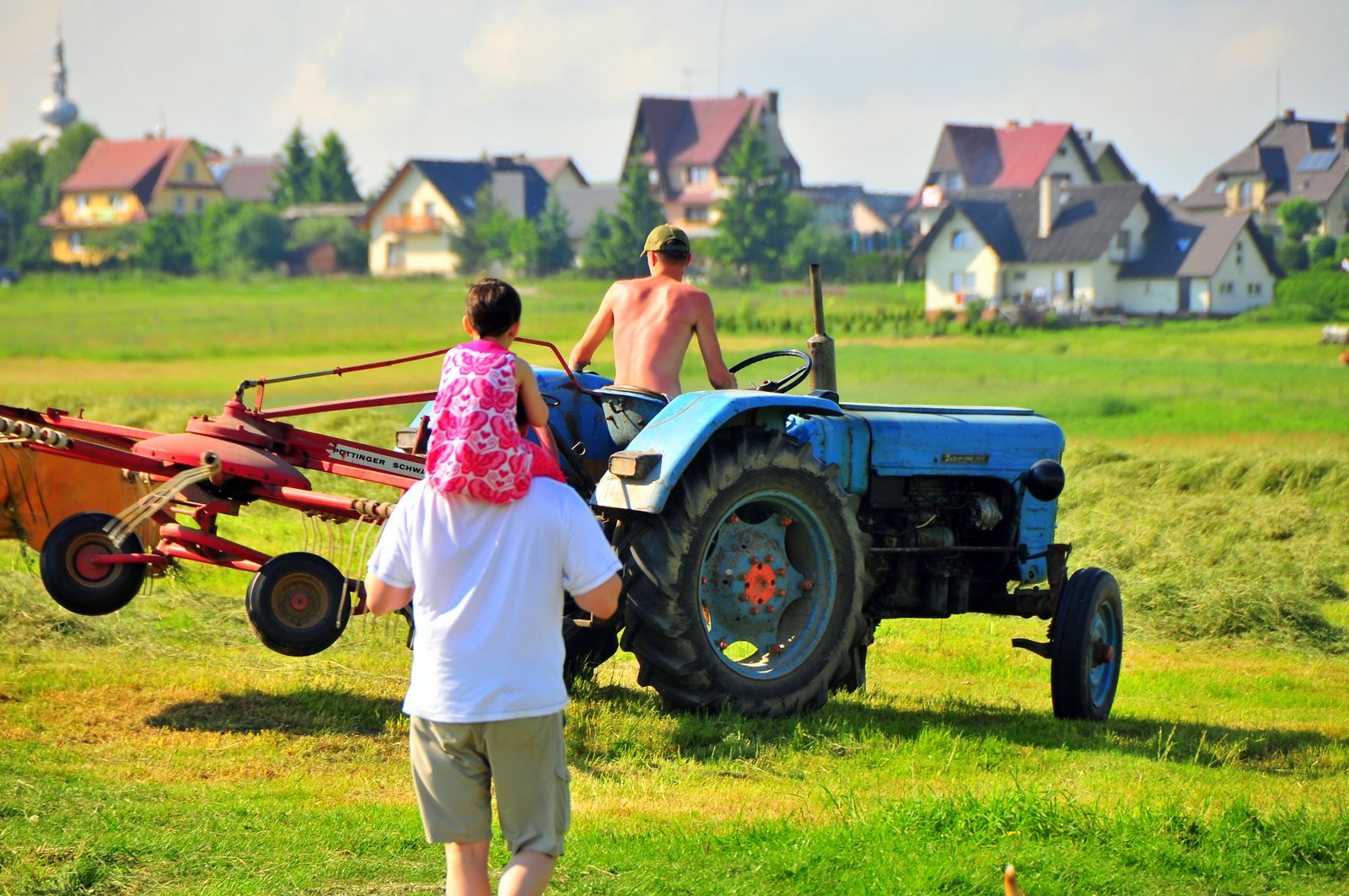
As we head out, another "rural Polska" moment, for we have to wait as an elderly dziadek drives his equally old tractor down the street, a tractor so old with such a weak engine that it has difficulty going over the speed bump. The driver has to throw it in reverse, getting up a little more momentum the second time, to roll over the bump.
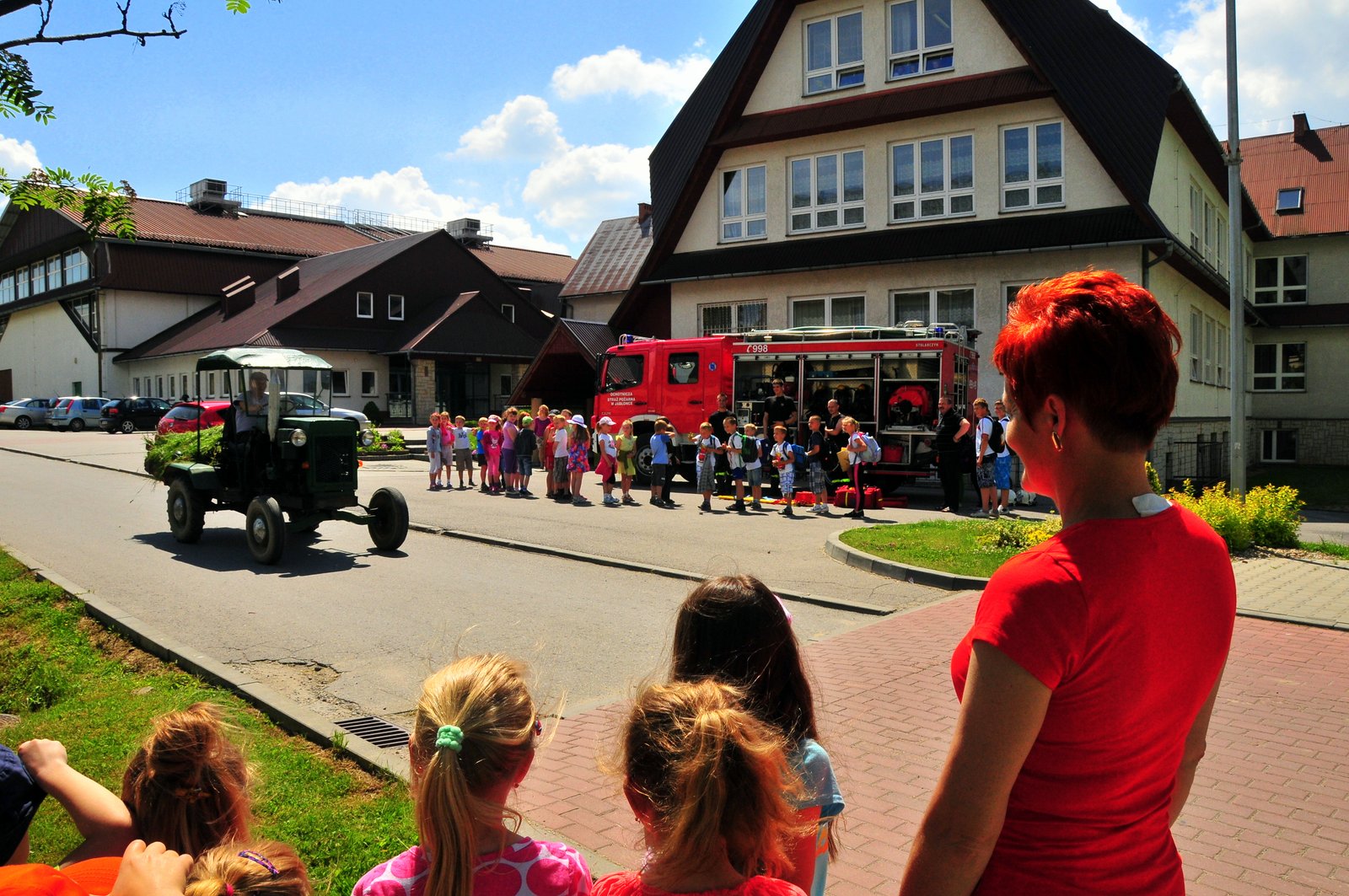
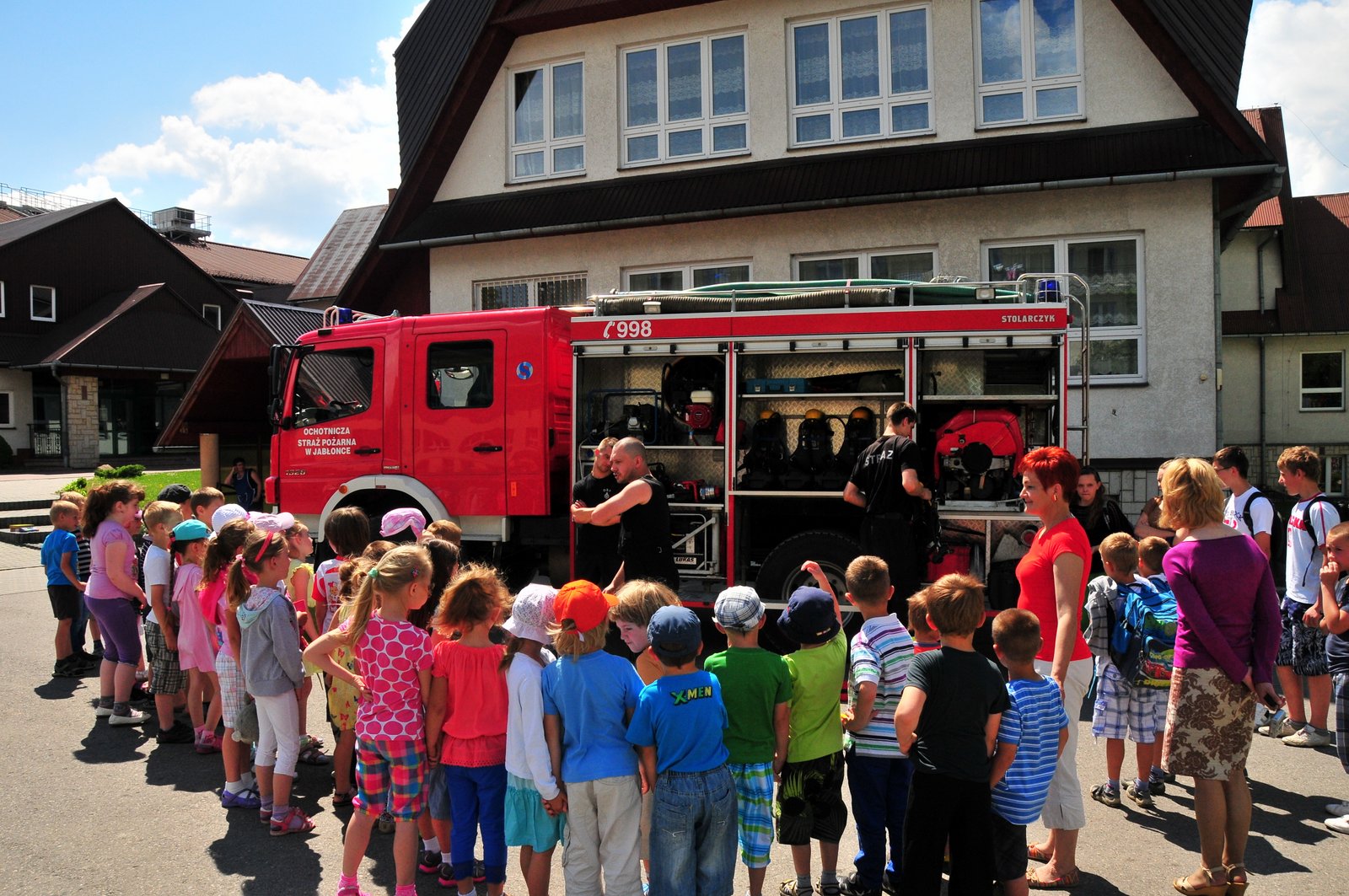
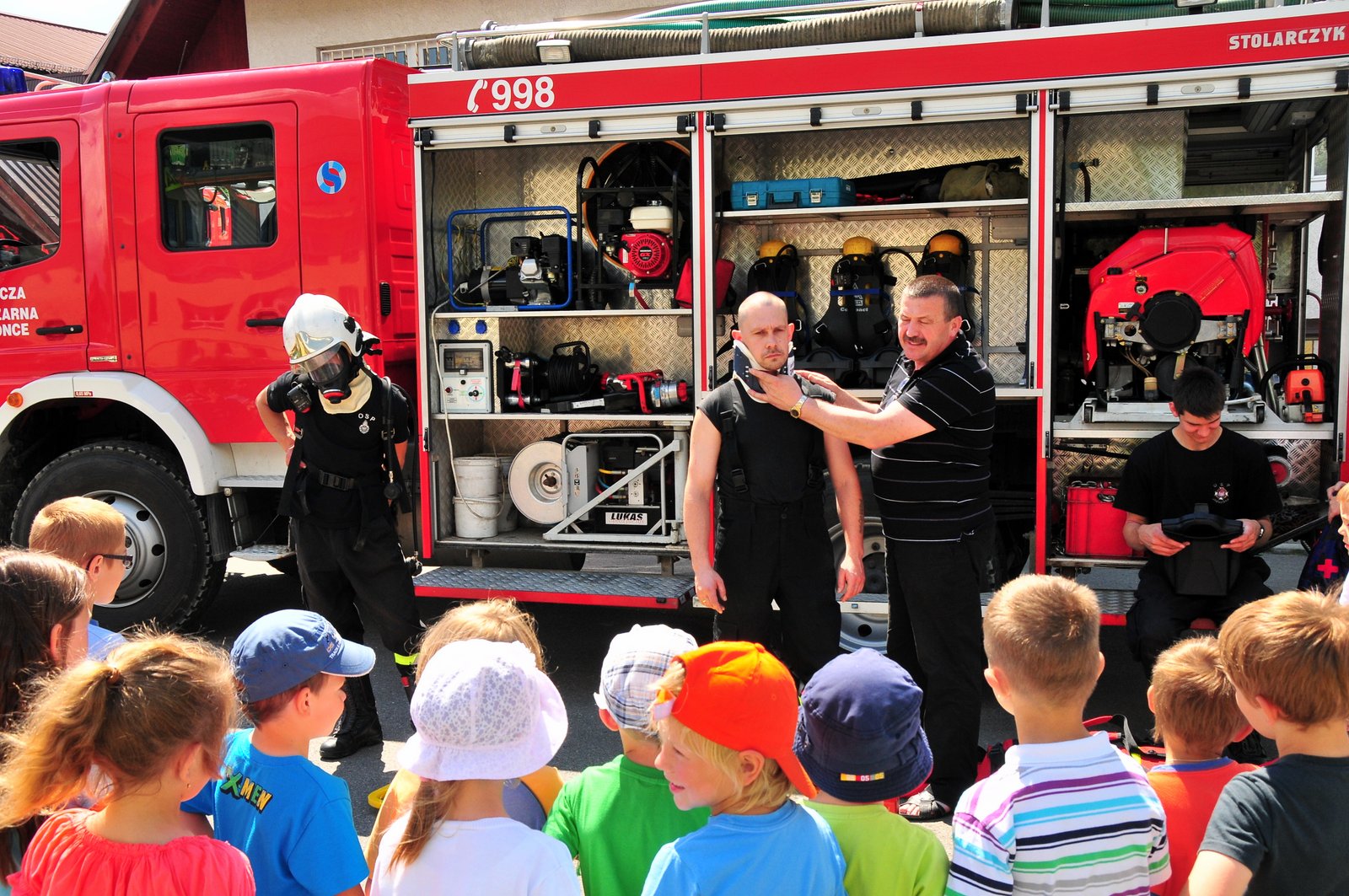
We cross the street and the presentation begins. The firefighters show the kids their oxygen masks, their aspirators, their hoses, their helmets -- in a word, everything.
Afterward, we all head back inside for the latest installment of Cała Polska Czyta Dzieciom -- All of Poland Reads to Its Children, roughly translated. Representatives of various professions have been coming to the school to read to the children, and today, it was a police officer's turn.
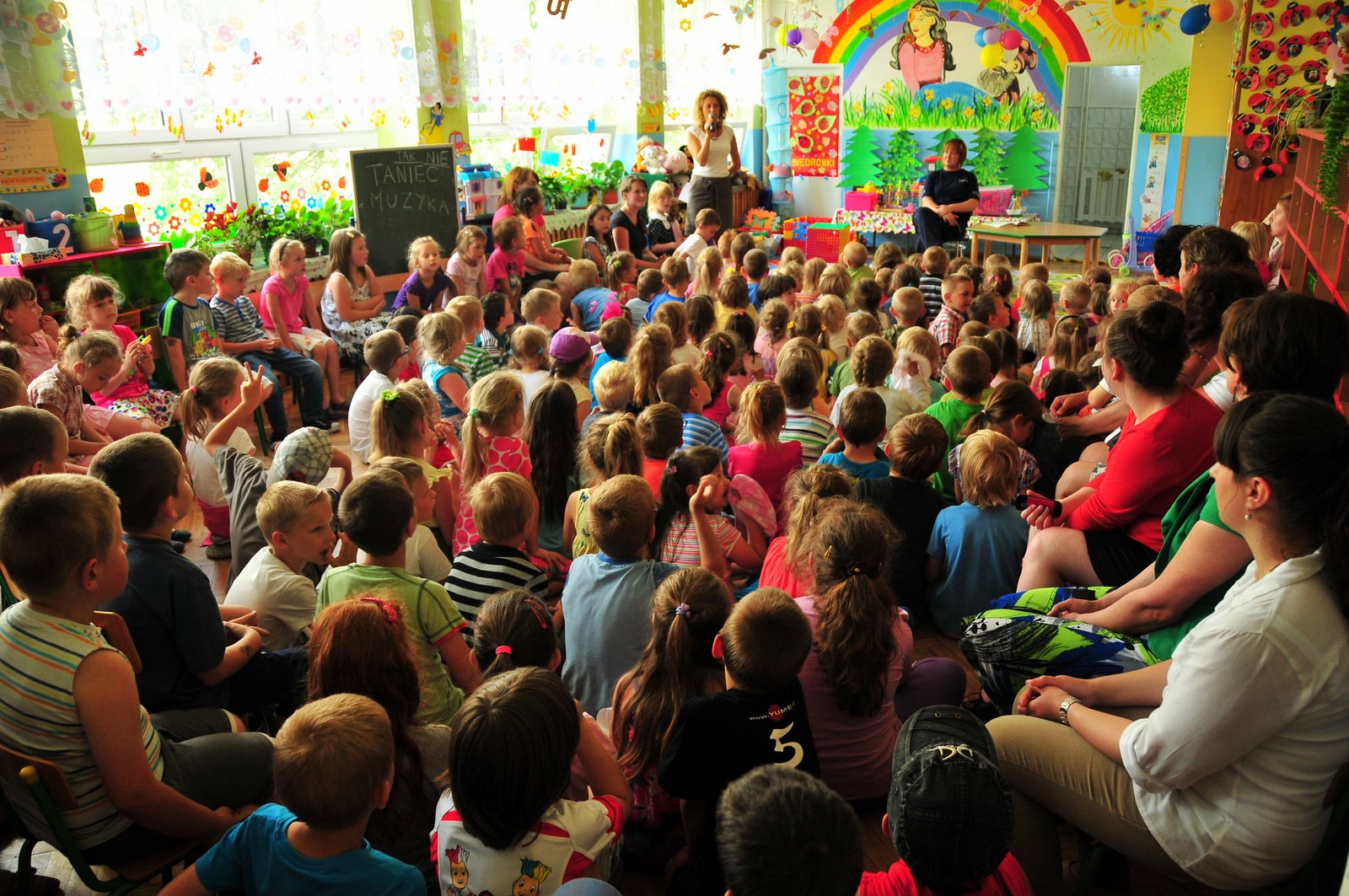
Of course all the children are interested in one thing, and one thing only: the officer's pistol. The officer take the clip from the gun, gives it a tug to release any shell that might already be chambered, then holds it up for everyone to see. Since Poland, like most of Europe, has very strict limits on citizens' gun ownership rights (in short, there are none), most of these children have never seen a pistol in person (except on the belt of a police officer). It's a nine millimeter with a six-bullet magazine, the officer explains, and there's significant "Ooo'ing" and "Ahh'ing." I find myself thinking that had this happened in the States, some kid in the group would have raised his hand to explain that someone in his family has a nine millimeter with a seventeen-bullet magazine.
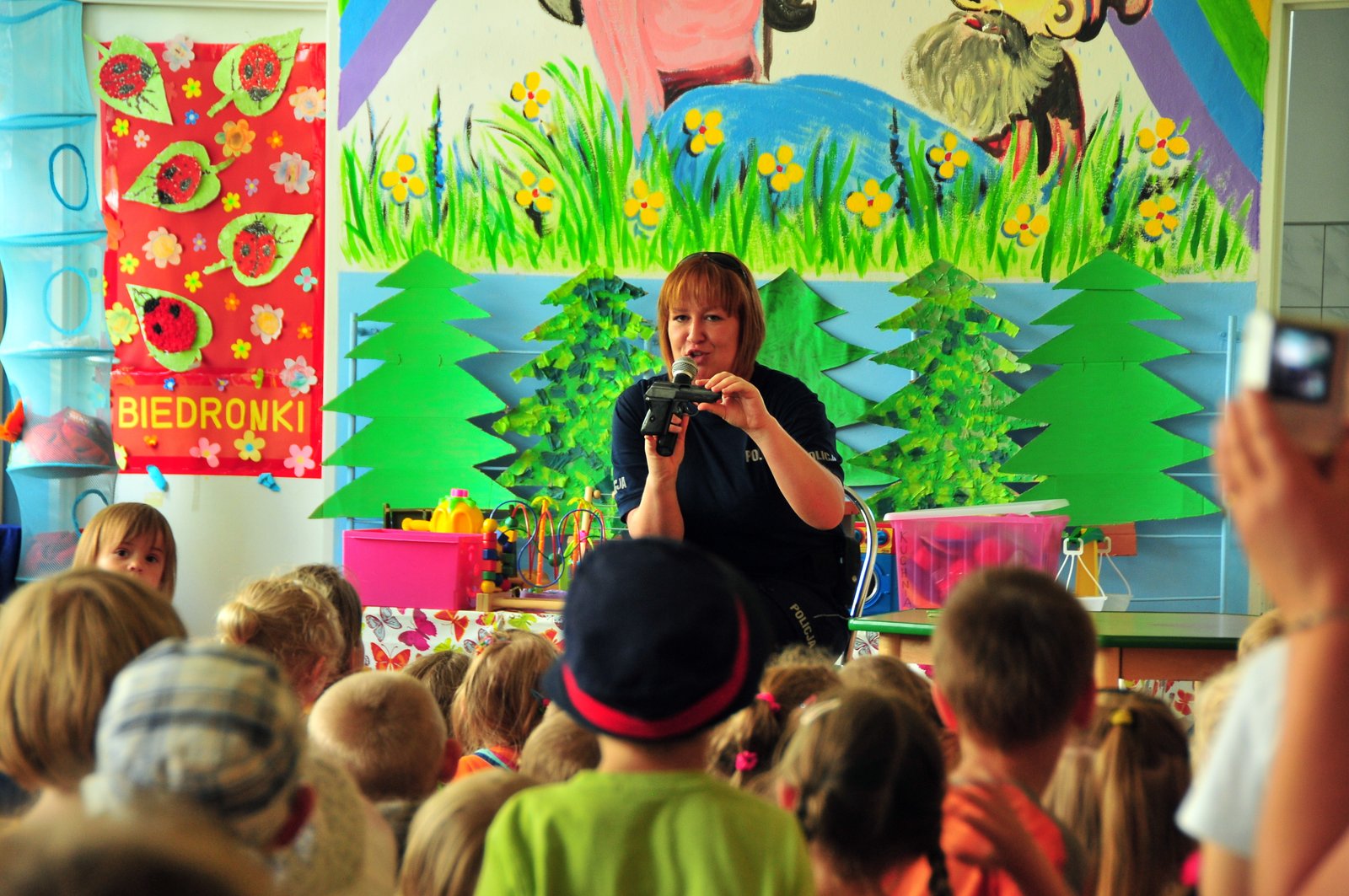
But we're not in the States, and the gun produces the intended reaction, and as the children exit the room, the story has disappeared into a fog of chatting about the pistol, especially among the boys.
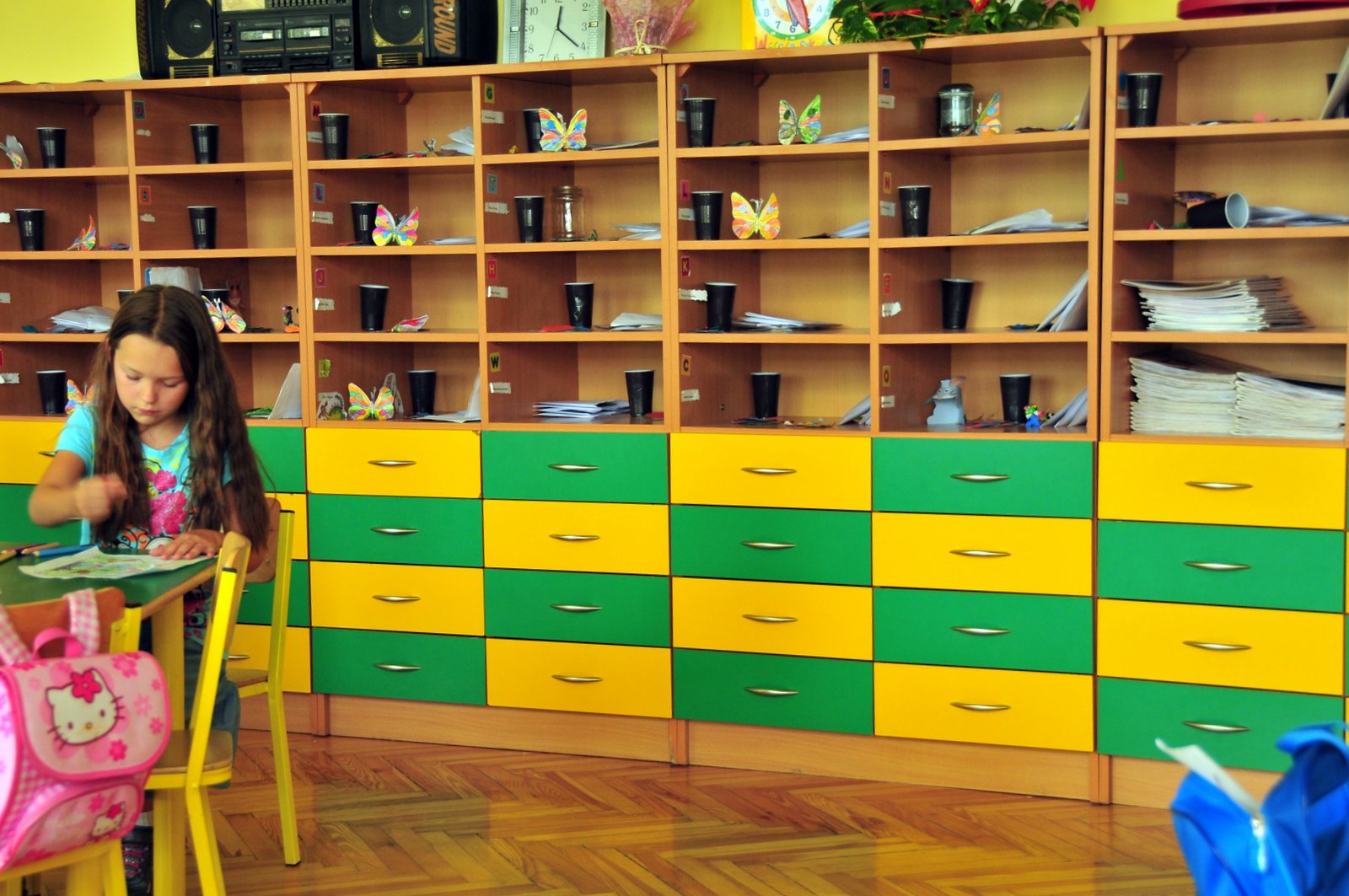
But L has other things on her mind: there's a picture that's still only partially colored.
After school, as we walk with ice cream cones to the roar of tractor trailer trucks heading to Slovakia ("This is an international throughway now," Babcia has explained more than once), we talk about the day. L decides tomorrow she can stay a little longer, then Wednesday, the whole day. Provided we go to the flea market first.
She's turning Polish faster than I thought possible.
Afternoon Walk 2
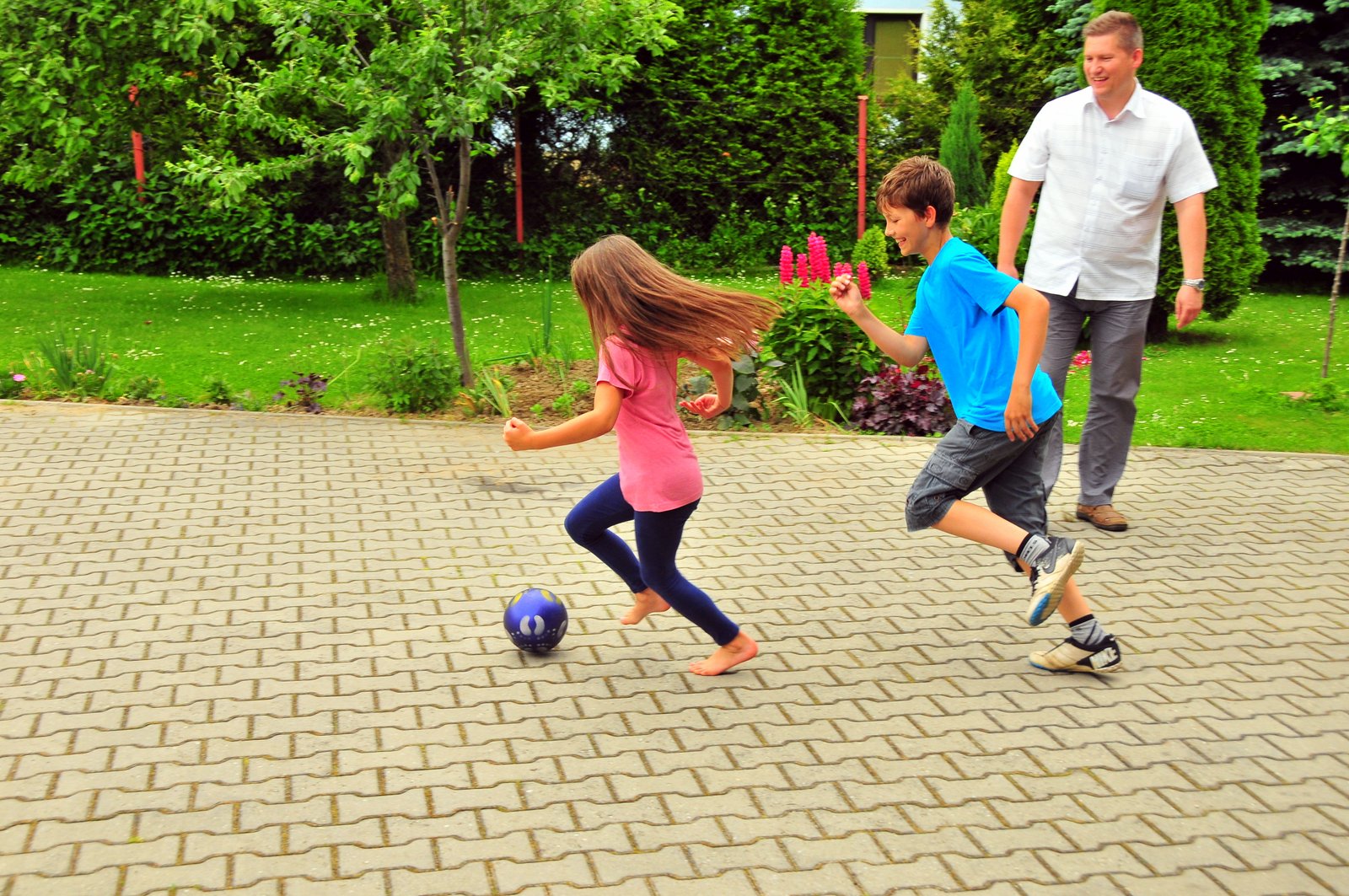
The weekend winds down. The cousins head back to the outskirts of Krakow after one quick game of intercontinental family soccer. It’s a version of the game that might not be immediately recognized: incredibly wide goals, lax rules, multi-positional players, and a total goal total that’s close to forty.
Once it’s just the three of us again — Babcia, L, and I — Babcia asks us to take the dog out for a walk. He’s a friendly fellow, fairly curious yet fairly obedient, so walks usually involve him running ahead, trailing behind darting off to the left or right only to come almost immediately when someone calls, “Kajtus!”
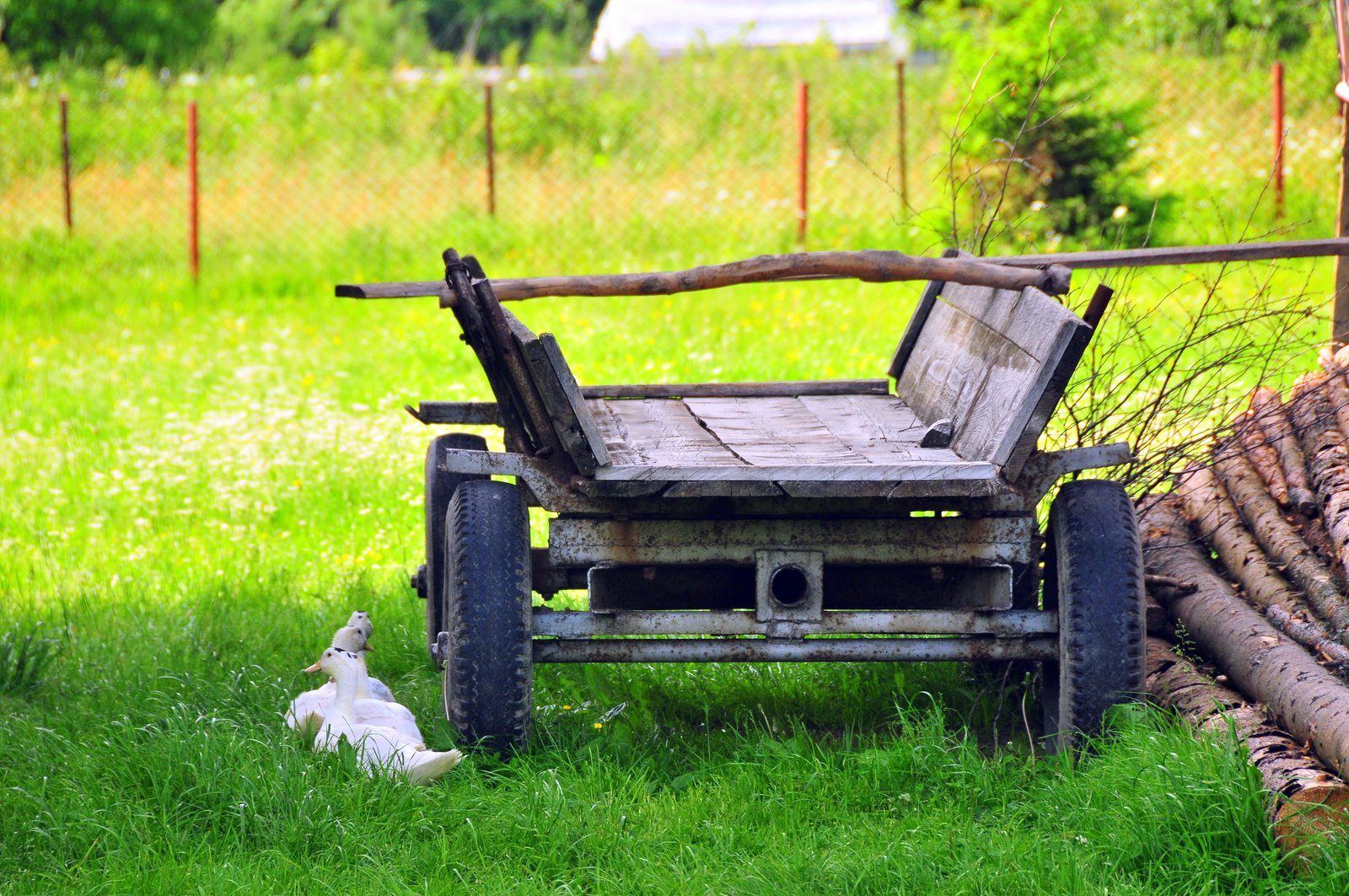
This afternoon, though we start of in the same direction, passing the same barn next to Babcia’s with the same ducks marching by the same trailer,
we take a right instead of a left, and soon we’re in the empty flea market. Stall after covered stall, one beside the next, all leading to the main market area where even more stand waiting. This market has been in this same location for only about twenty-five years, but the market itself dates to the time of the Austro-Hungarian Empire.
“What about during the Communist period?” I ask Babcia. Would such blatantly privatized ventures have been allowed?
“Of course! In many ways, it was more important then than now.”
The ironies of Poland: in many ways Communist for decades, in many other ways, breaking the mold of Communism — which in turn broke Communism. For instance, there were never the large collective farms in Poland that one saw in Stalinist Soviet Union. The State did not crack down on religious expression as it did in the Soviet Union. These two facts alone did more to undermine Communism and help with the post-Communist restructuring than almost anything else.
The ironies of Poland.
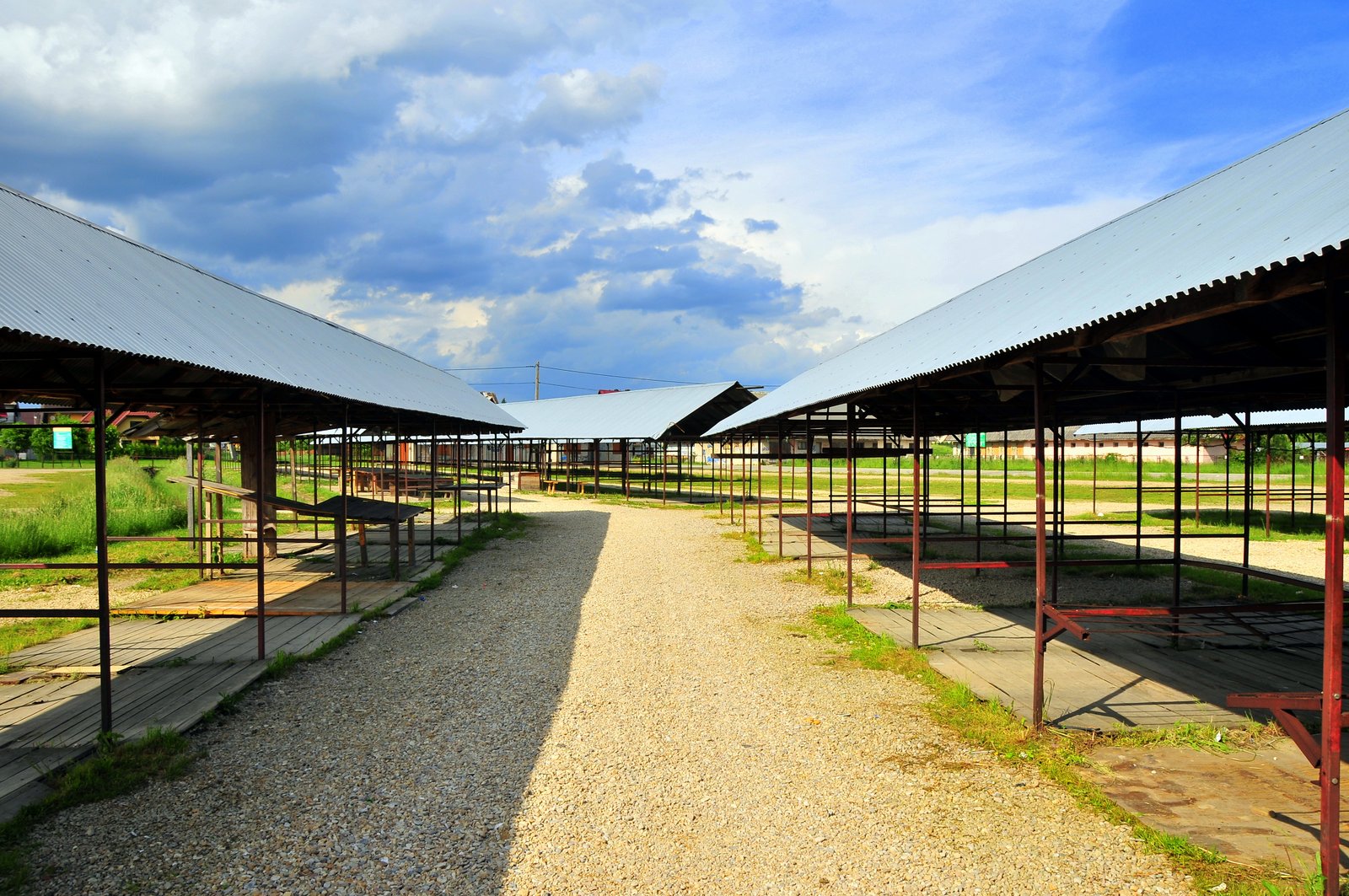
Our walk continues through the market to a point where we meet the ubiquitous river — even when we’re not walking to it, we’re walking to it. And so are many others.
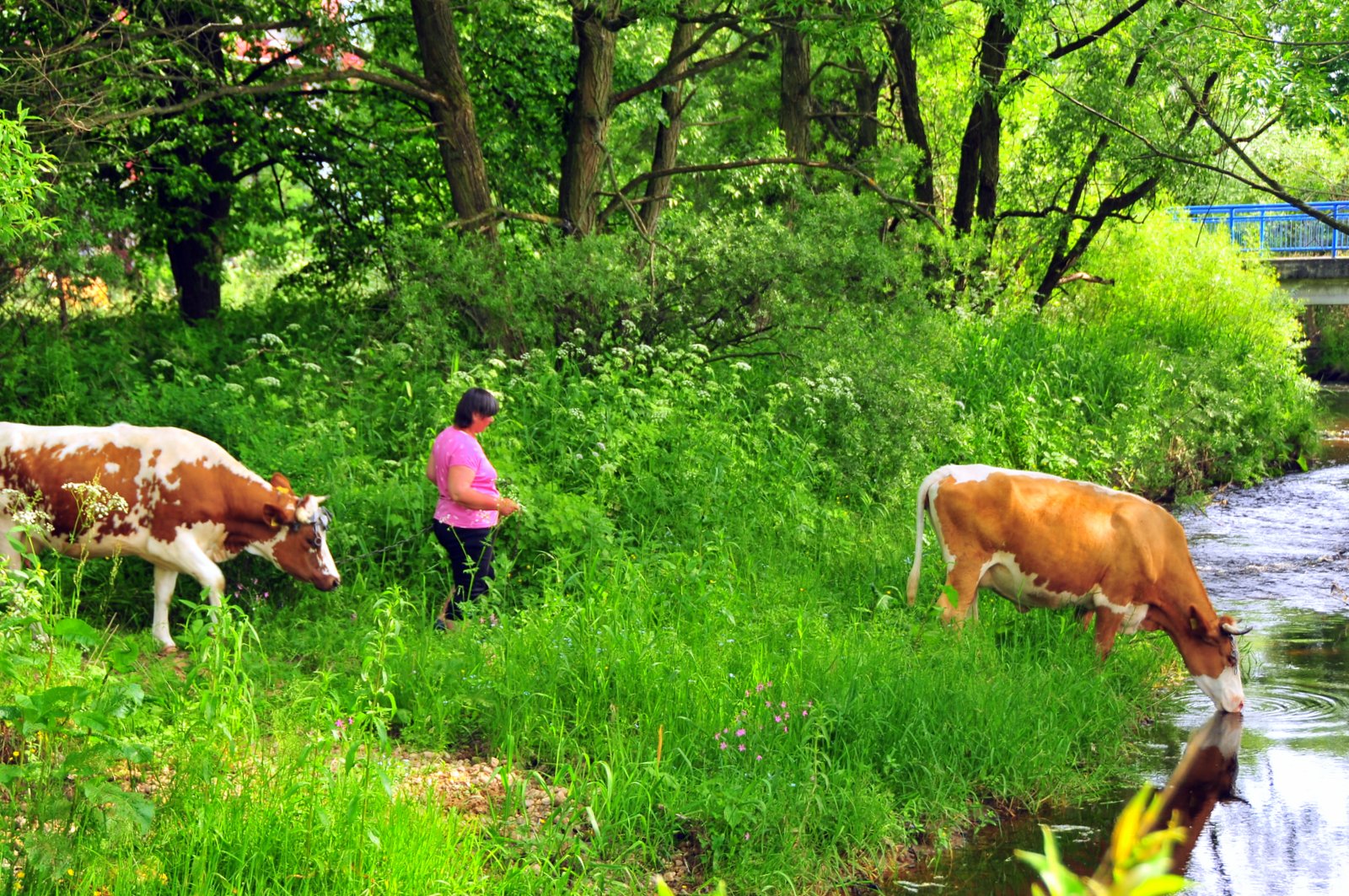
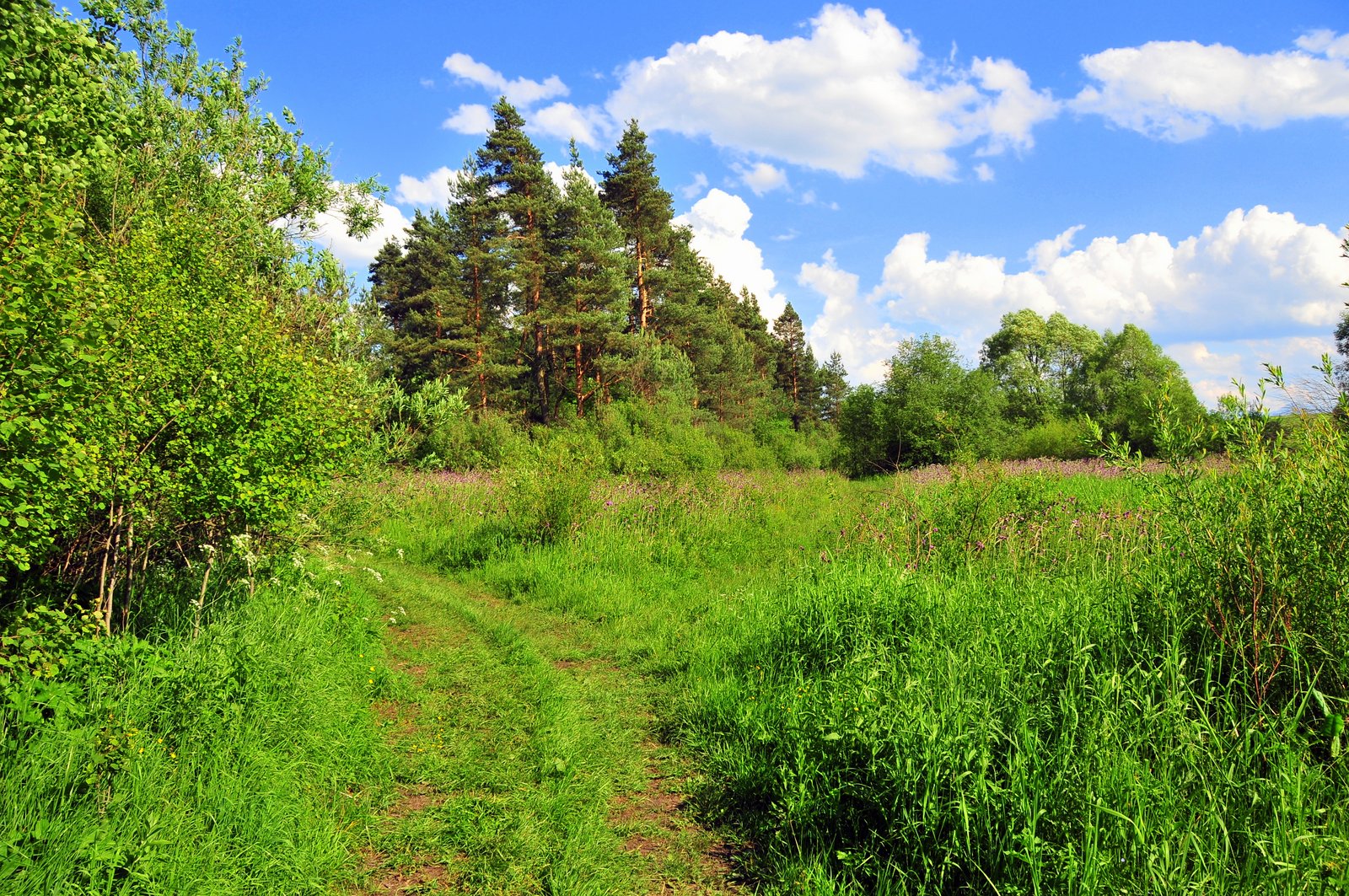
We turn and walk along the river, and the scene becomes almost fairy-tale-like. More ironies of Poland: within a mere few meters of the local bastion of commerce and capitalism, so to speak, one can find land that seems almost untouched by anyone.
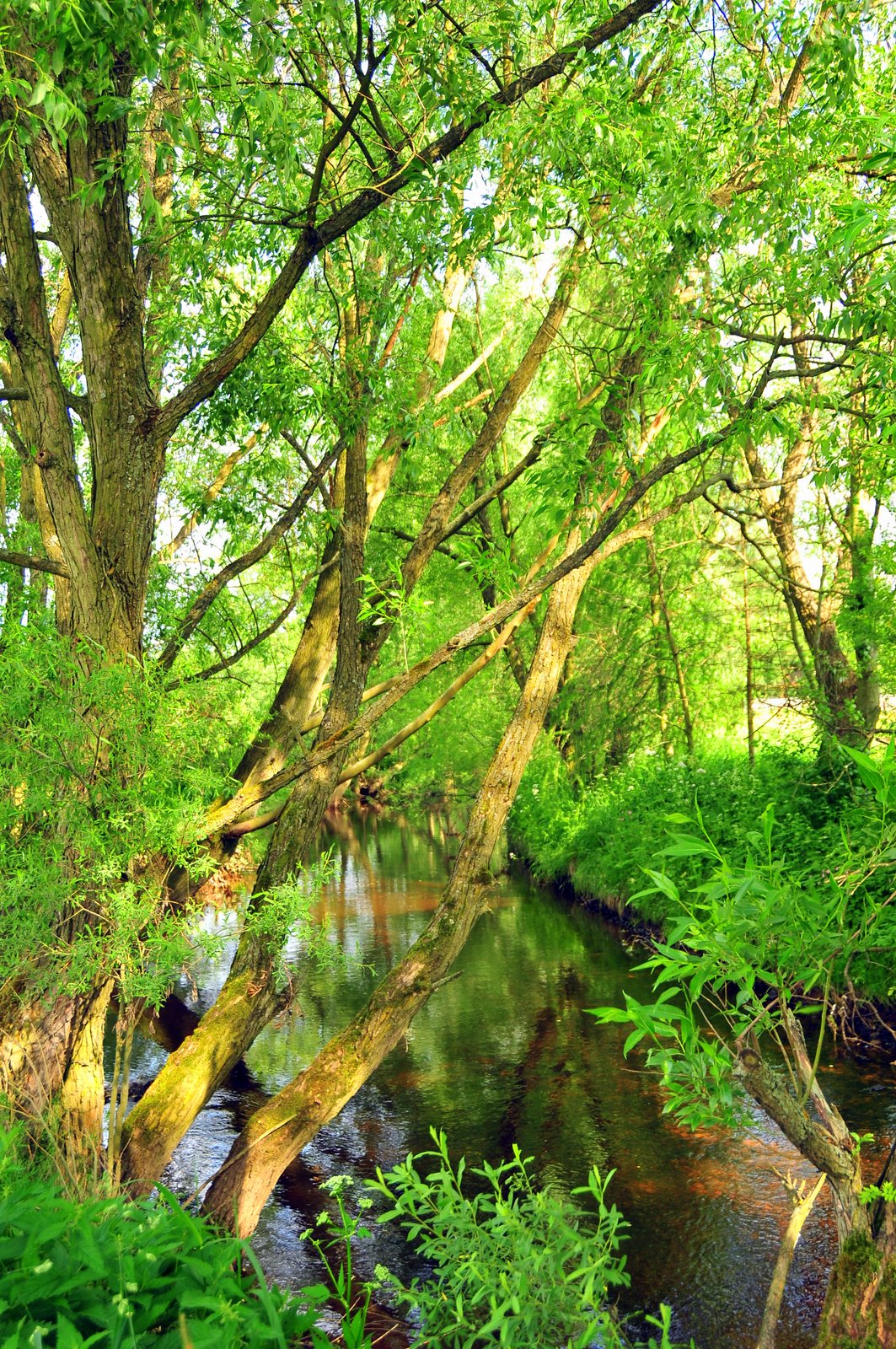
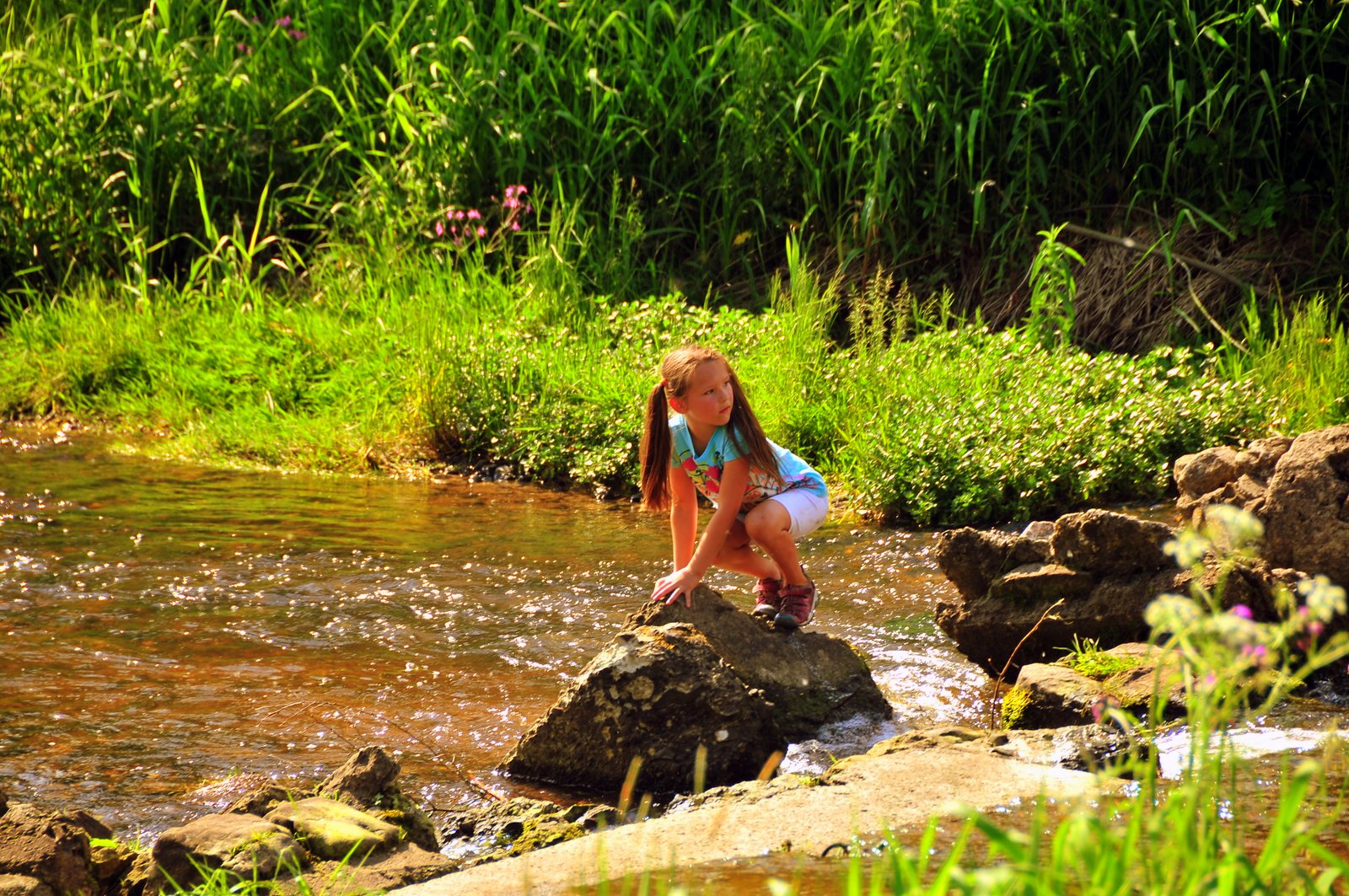
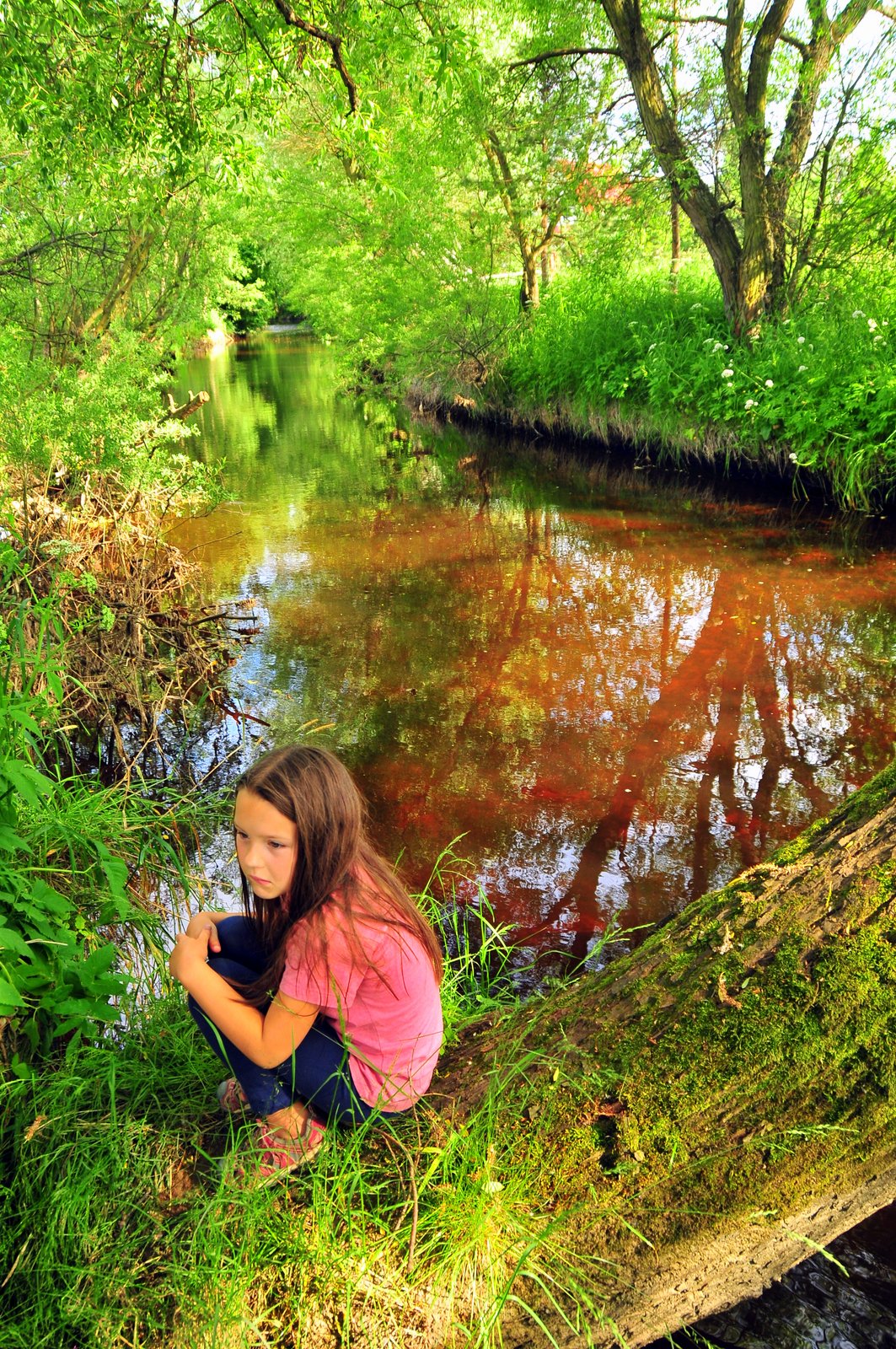
L perches herself on a tree, and for a few moments, we just look around. The light is golden now, filtering through the leaves and reflecting here and there on the water.
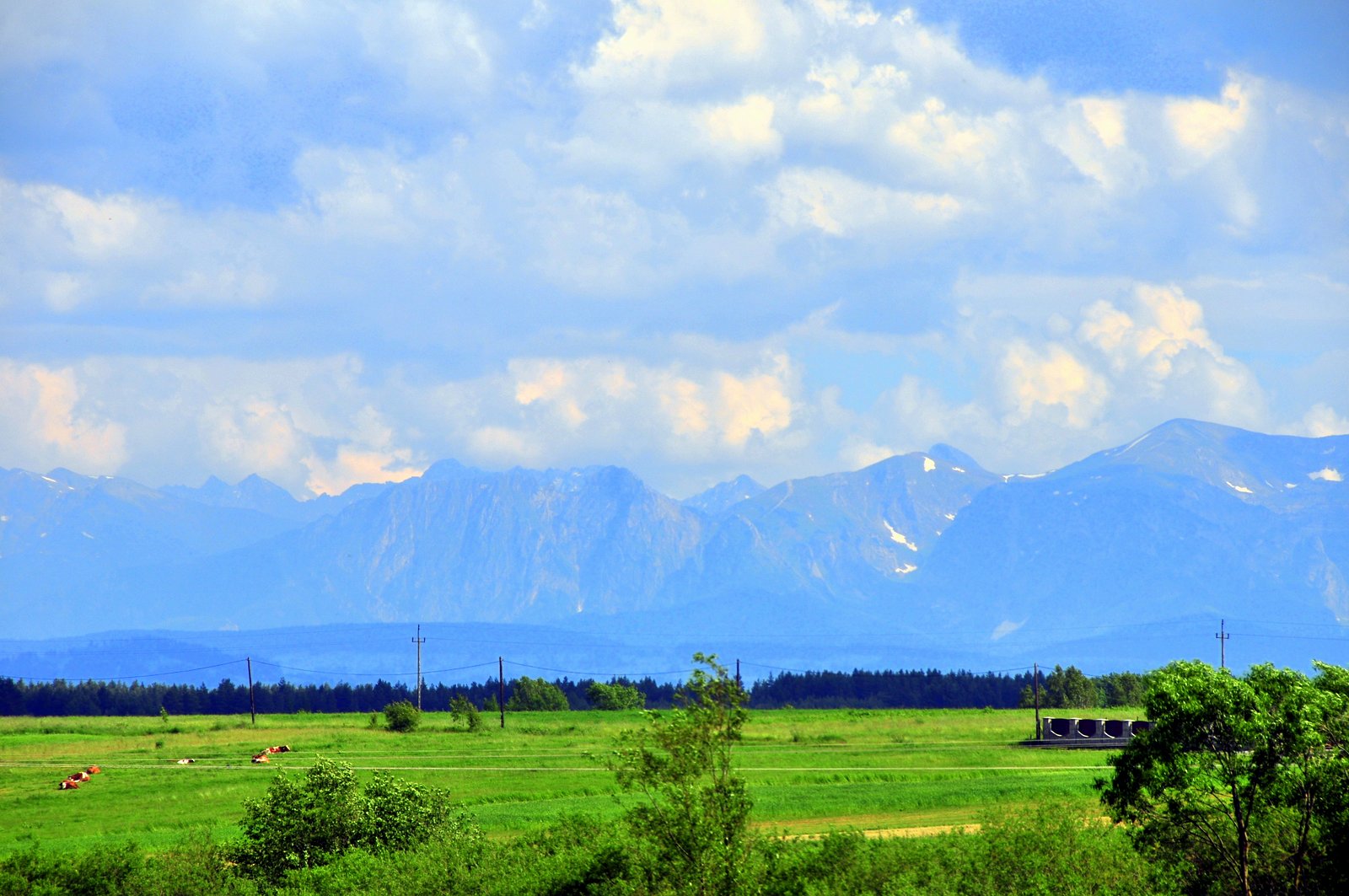
After dinner at a local restaurant — the first real restaurant in Jablonka — L and I head out for another walk. The air is cool, the Tatra Mountains are unusually clear, and the light is only getting richer and richer.
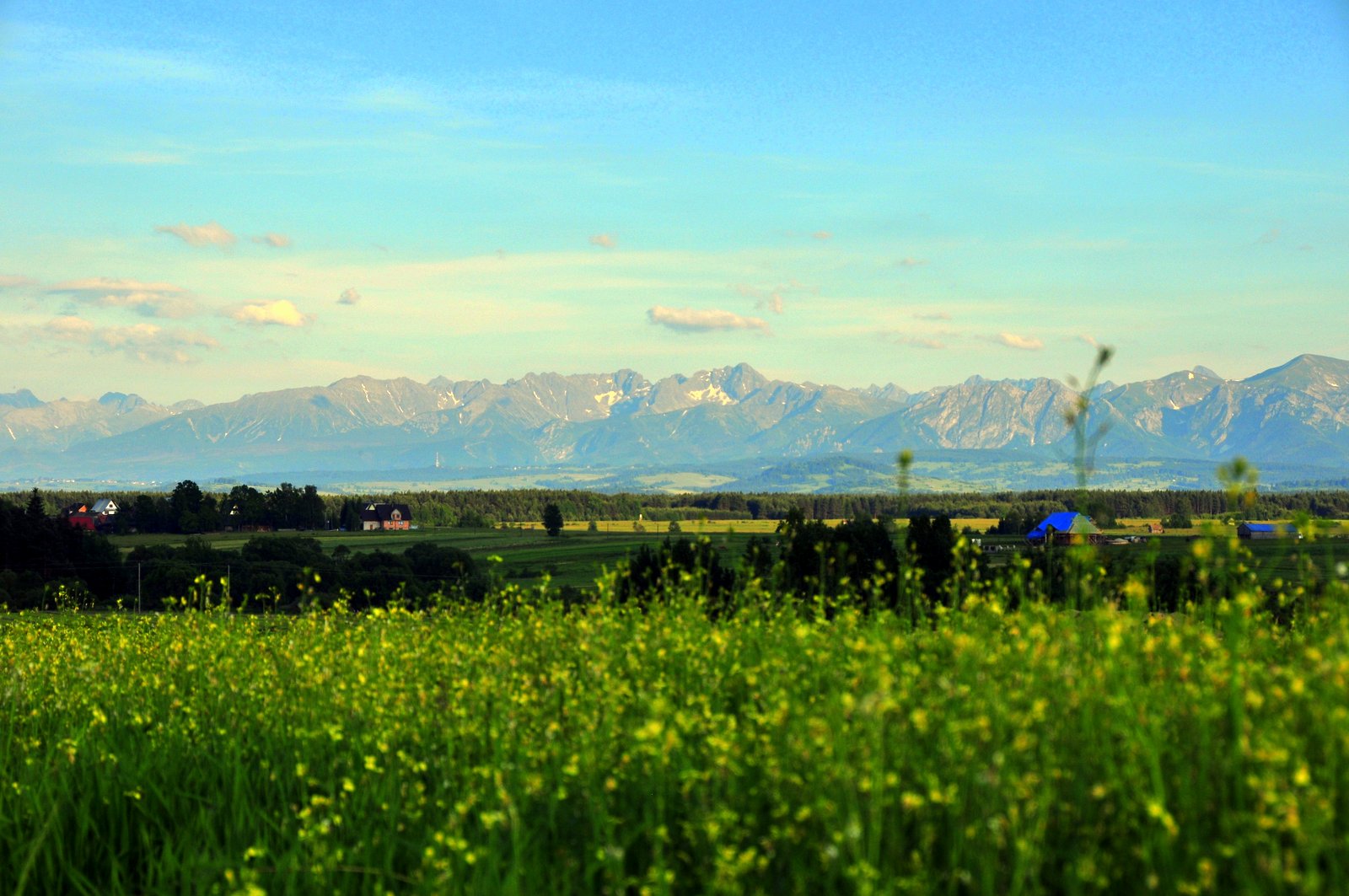
making everything positively glow.
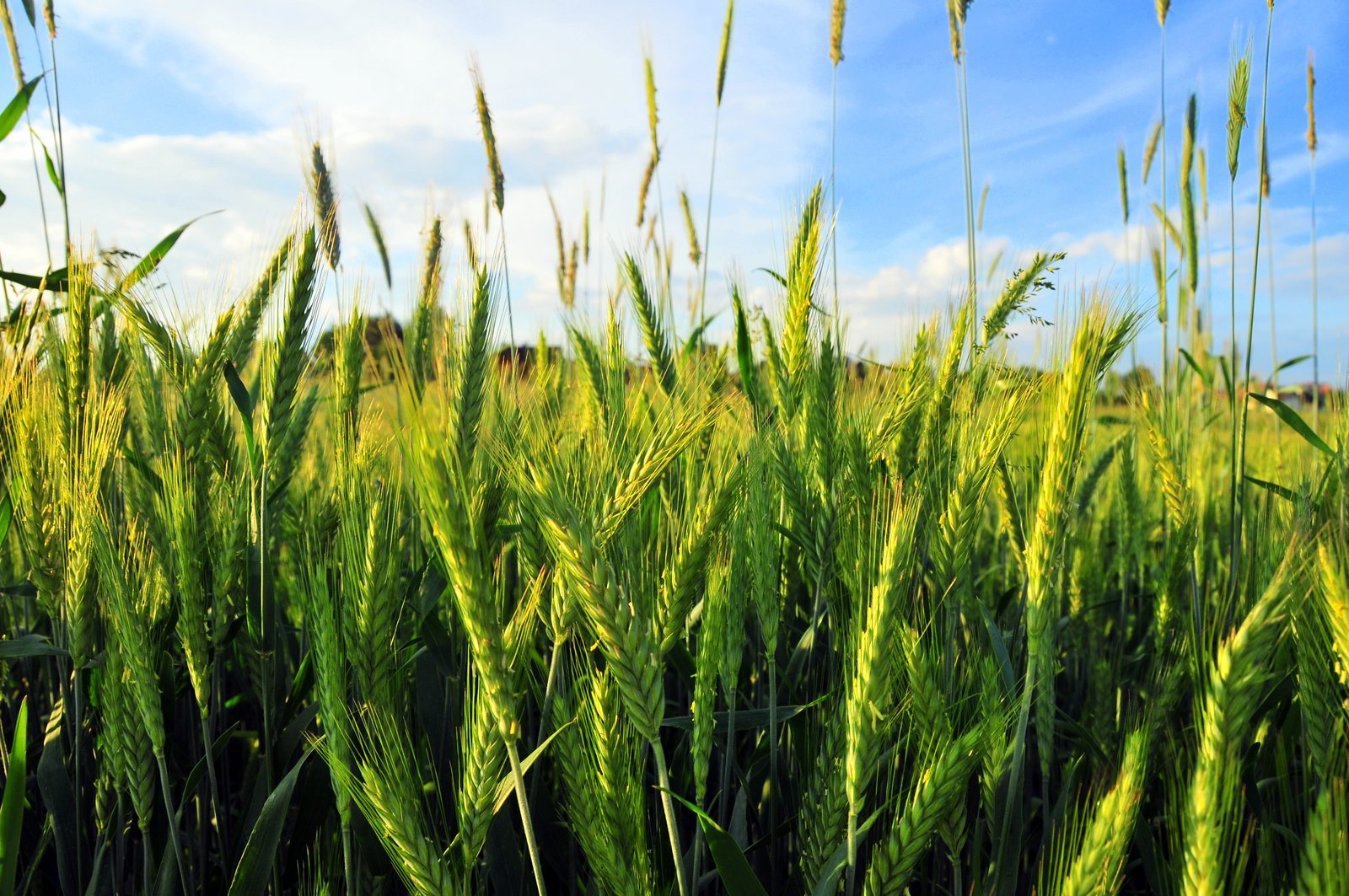
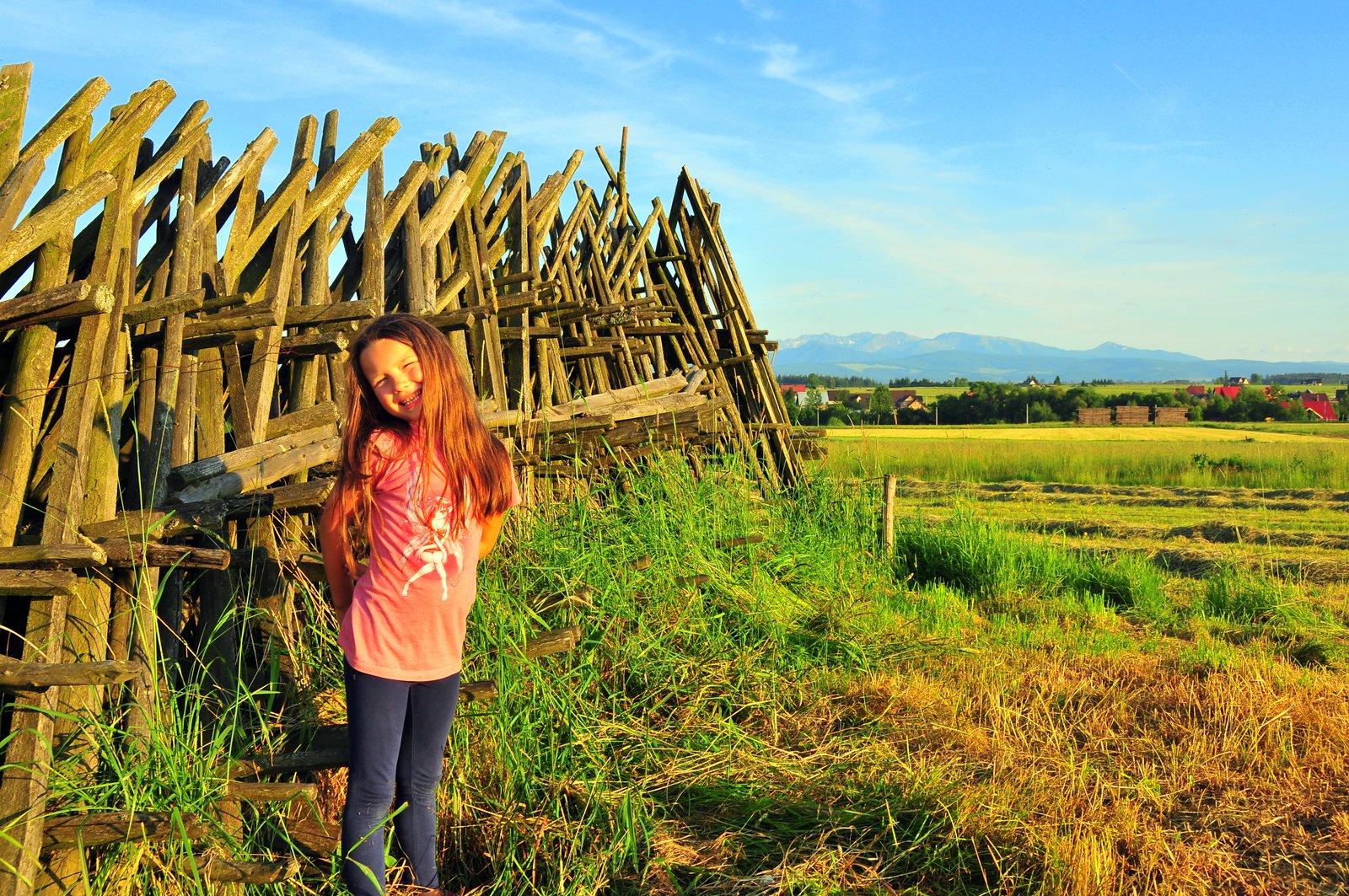
Eventually we make it back to our usual riverside retreat. A man is fishing there, a man who turns to look at me and smile his crooked smile and make himself immediately recognizable.
“Pawel!”
“Dobry wieczor, Pan.”
I haven’t taught him in probably a decade; we’re both adults now, and he’s likely in his thirties, but he still calls me “Pan,” the respectful third-person form children use with adults and strangers use with each other. K still talks to her teachers the same way when she meets them. In fact, everyone does. It’s just part of the culture. Still, it would be nice for him to see us now as equals. Then again, probably he does: linguistic formality doesn’t always mirror personal opinion.
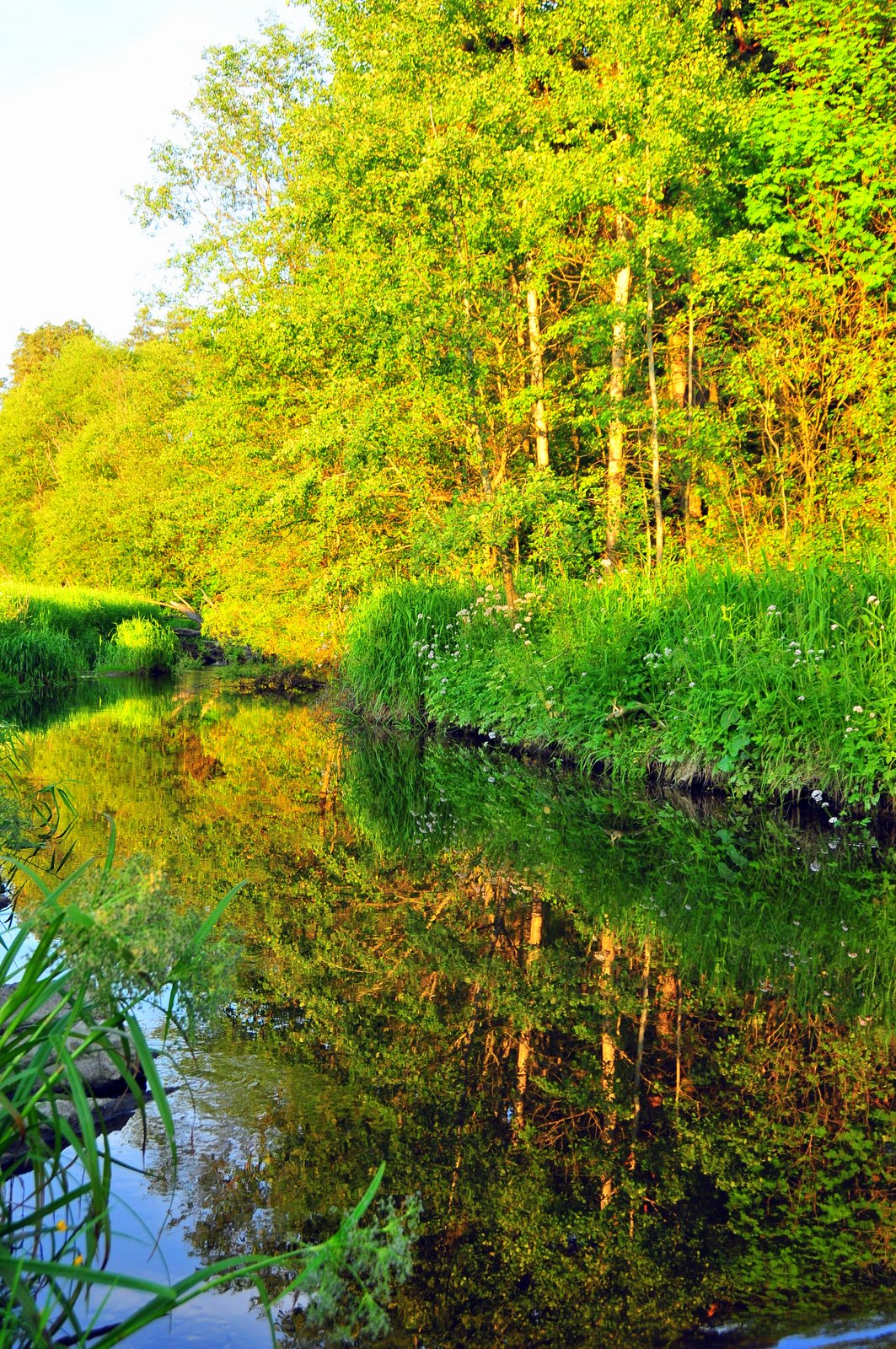
It’s something to accept and move on, like so many things in life. It’s a trifling matter after all. And views like this make sure we keep those trifles in perspective.
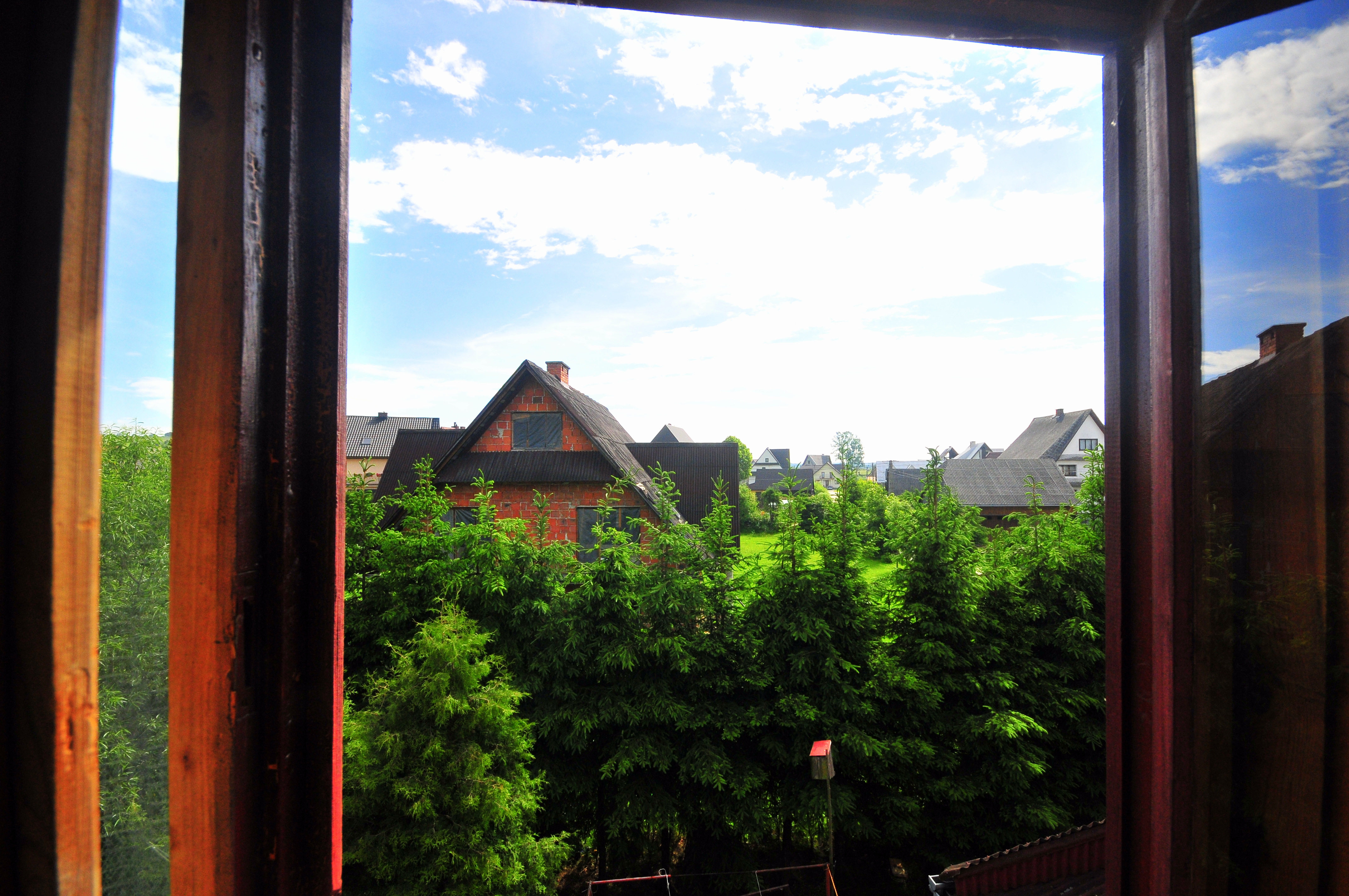
From a Window
Ognisko
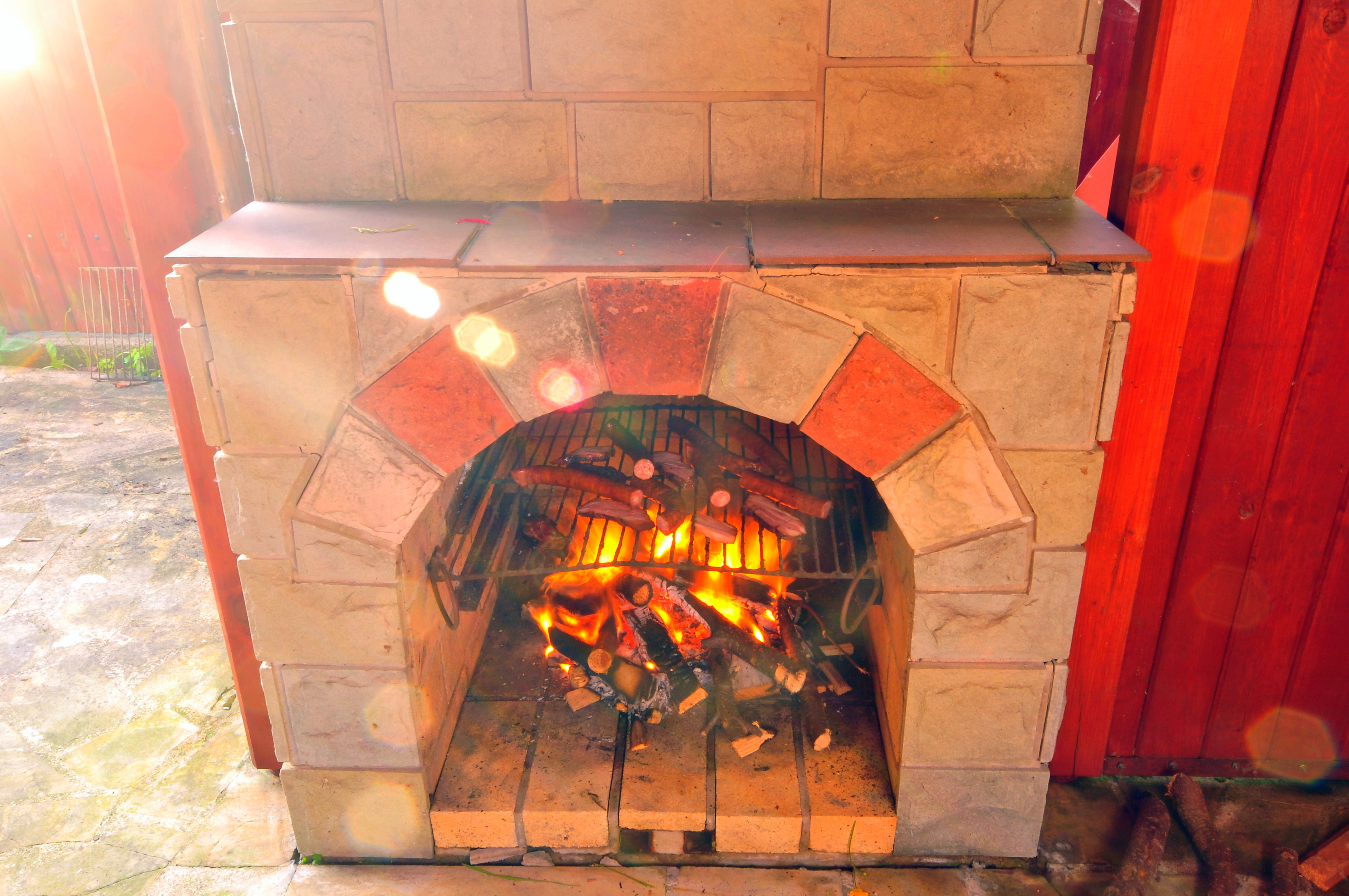
A simple concept: some wood, some sausage, a match or two, a loaf of bread, something to drink, someone to share it all with. Put it all together, though, and it somehow becomes more than the sum of its parts. Add the laughter of children and it becomes positively magical. The conversation winds through topic after topic as the sausage begins to sizzle, and as the sun sets and everyone pats their bellies, literally or figuratively, one gets an almost divine feeling.
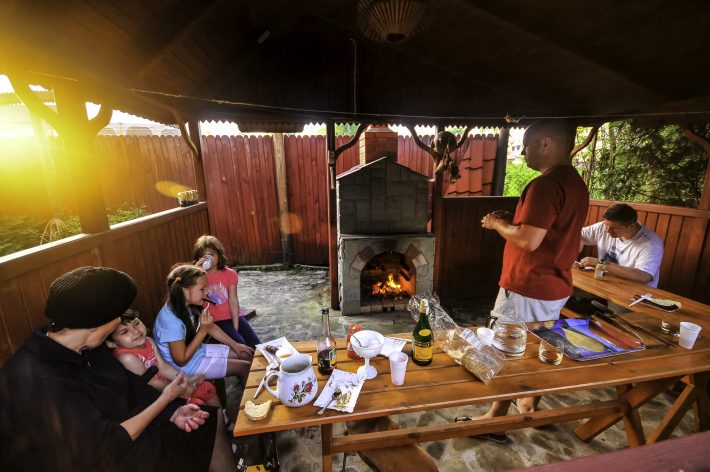
“And we looked out over the sausage and steaming tea, heard the laughter and watched the glowing embers and dimming sun, and lo, it was good.”
Busy Day
Busy, busy, busy day. And this is only about one-third of it.