Matching Tracksuits

fun in fours

polska 2013

Paradise Unseen

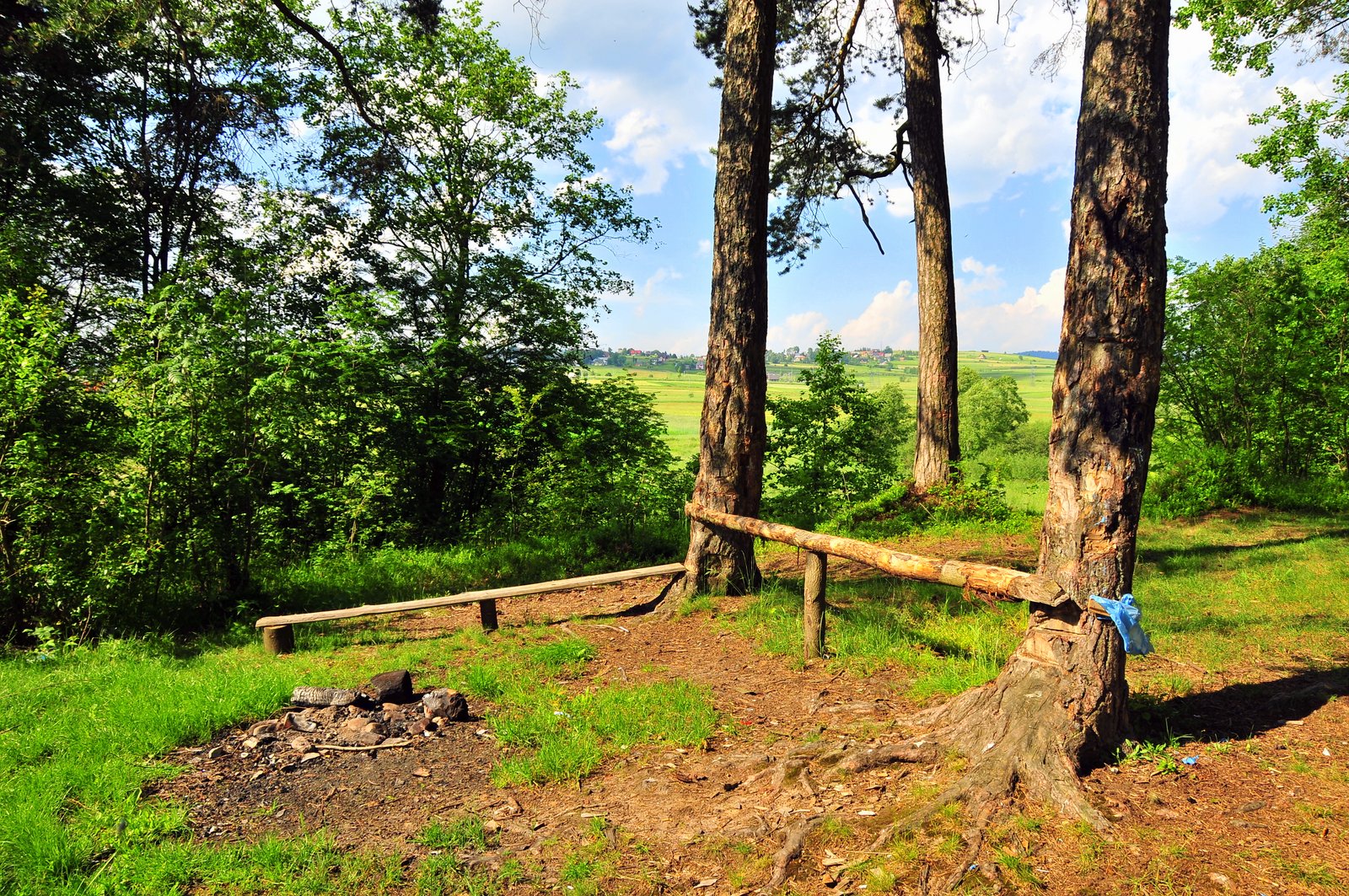
They sit around the fire, complete darkness surrounding them, the only sounds the crackling fire and the occasional truck passing on the nearest road (still a mile away). They sit passing around a shot glass and bottle of vodka. The chaser, a can of beer for each, a cigarette in the other hand. Some talk of escape, of getting the hell out of this little f-ing village. They talk of going abroad, of returning with an Audi, of making it big. Some will escape, if “escape” is even the proper word. Some will return with with an Audi, though used.
VIV_3412

Who will look around them, at the bark of pines glowing in the firelight, at the embers and sparks as they pop and rise into the jet-black night, joining the stars and the mysteries around them, and realize that they already have all that they really need? Who will look into others’ faces, listen to their girlfriend’s laughter, smell the magic of smoke in a hay-flavored summer sky and realize that what they have, others would kill or die for–and in fact already have?
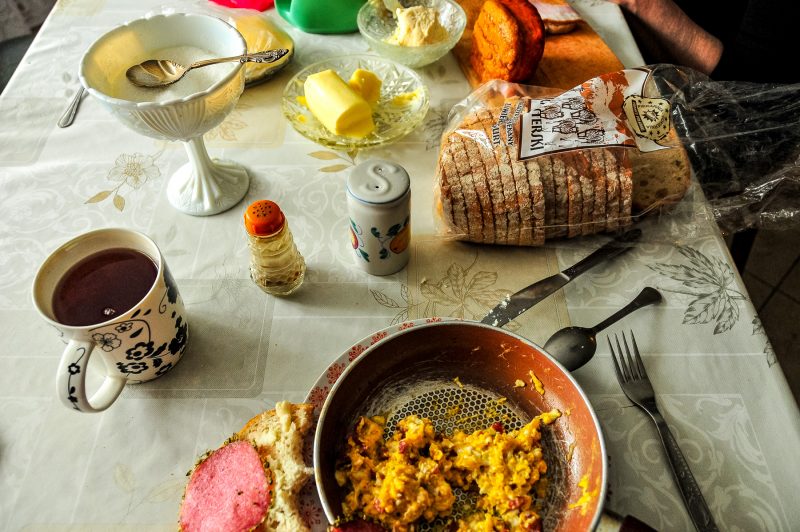
Breakfast

Unfinished

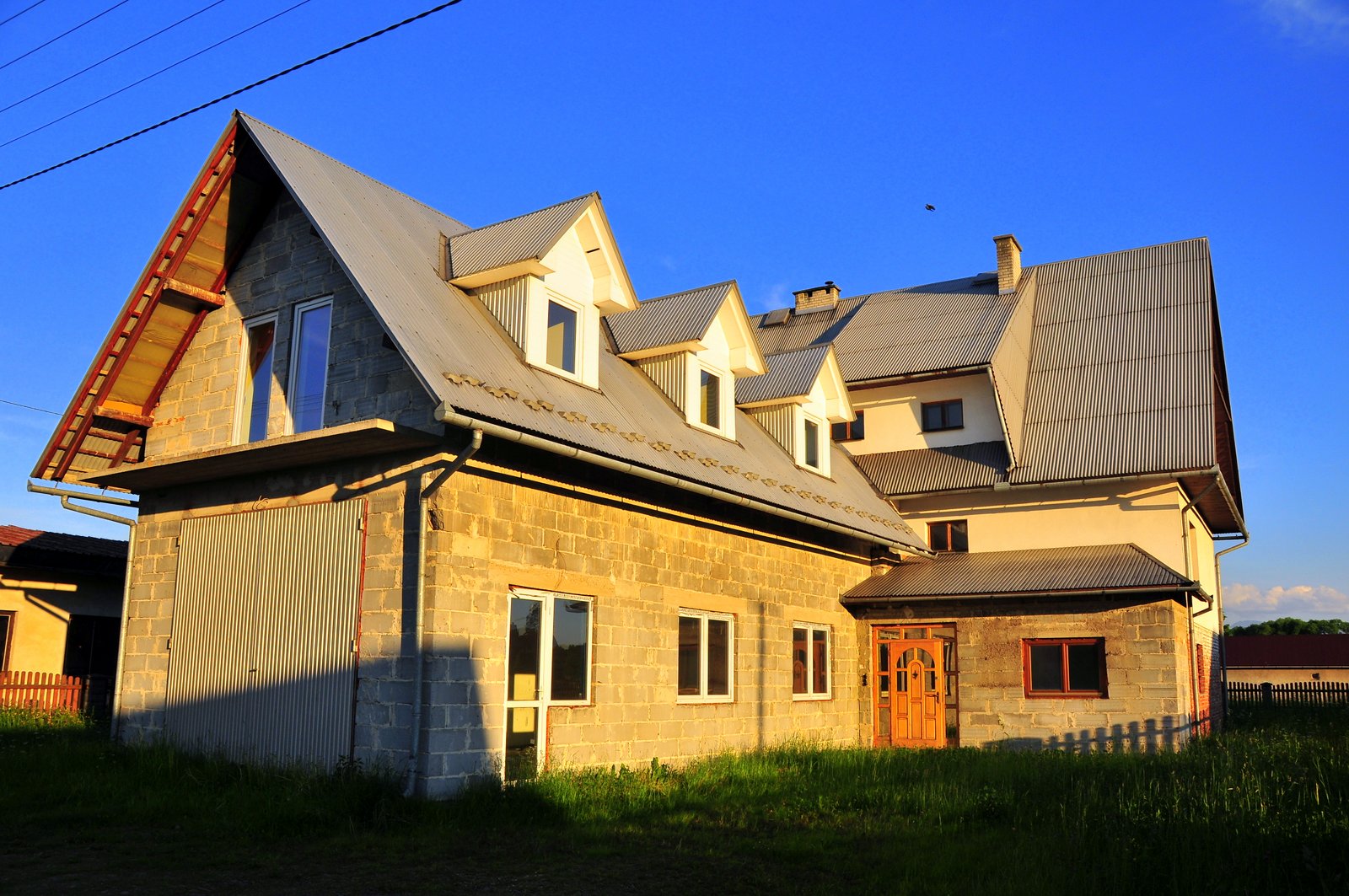
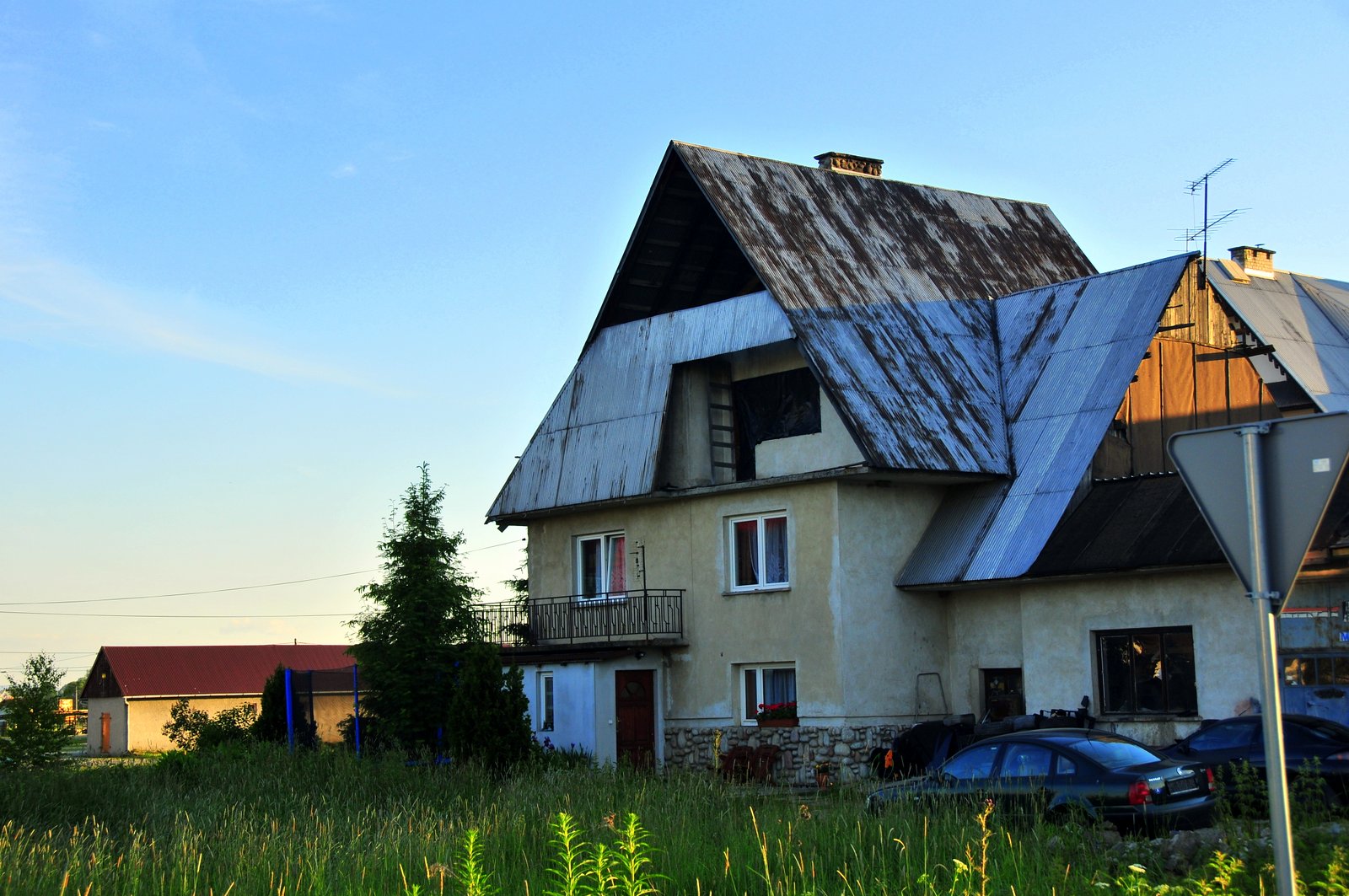
Certainly not a strictly-Polish phenomenon: the occupied yet unfinished home. (Not the best example, but this house has had an unfinished upstairs since at least 1996, when I first saw it.)

VIV_3304

Likely a phenomenon most common in Poland: the finished yet unoccupied home.

VIV_3305

Certainly a purely Polish phenomenon: the two houses side by side.

Evening Walk

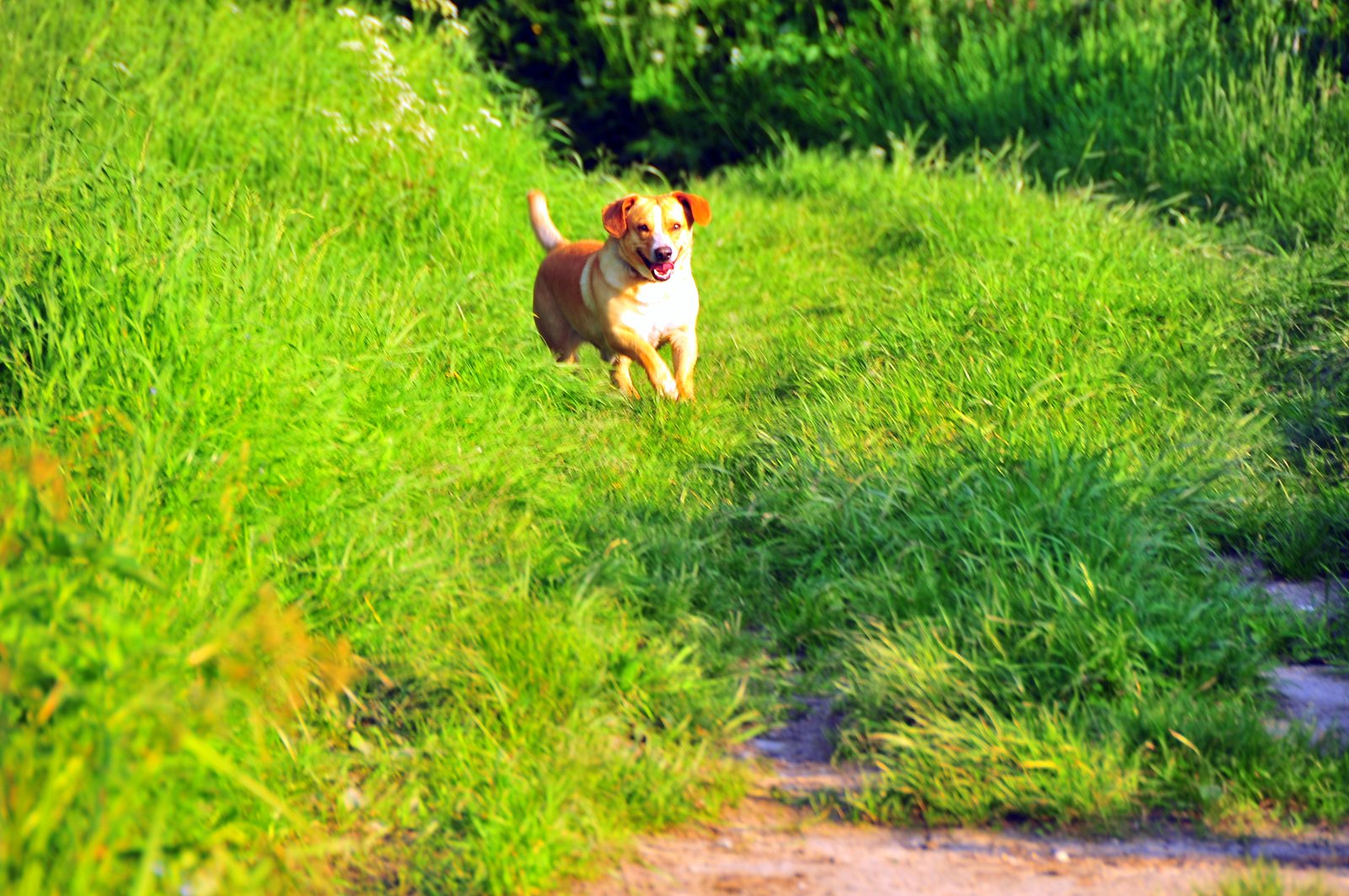
The first of many. "Your job, your daily responsibility," Babcia explains, "is to take the dog for a walk daily."

Wandering around Jablonka

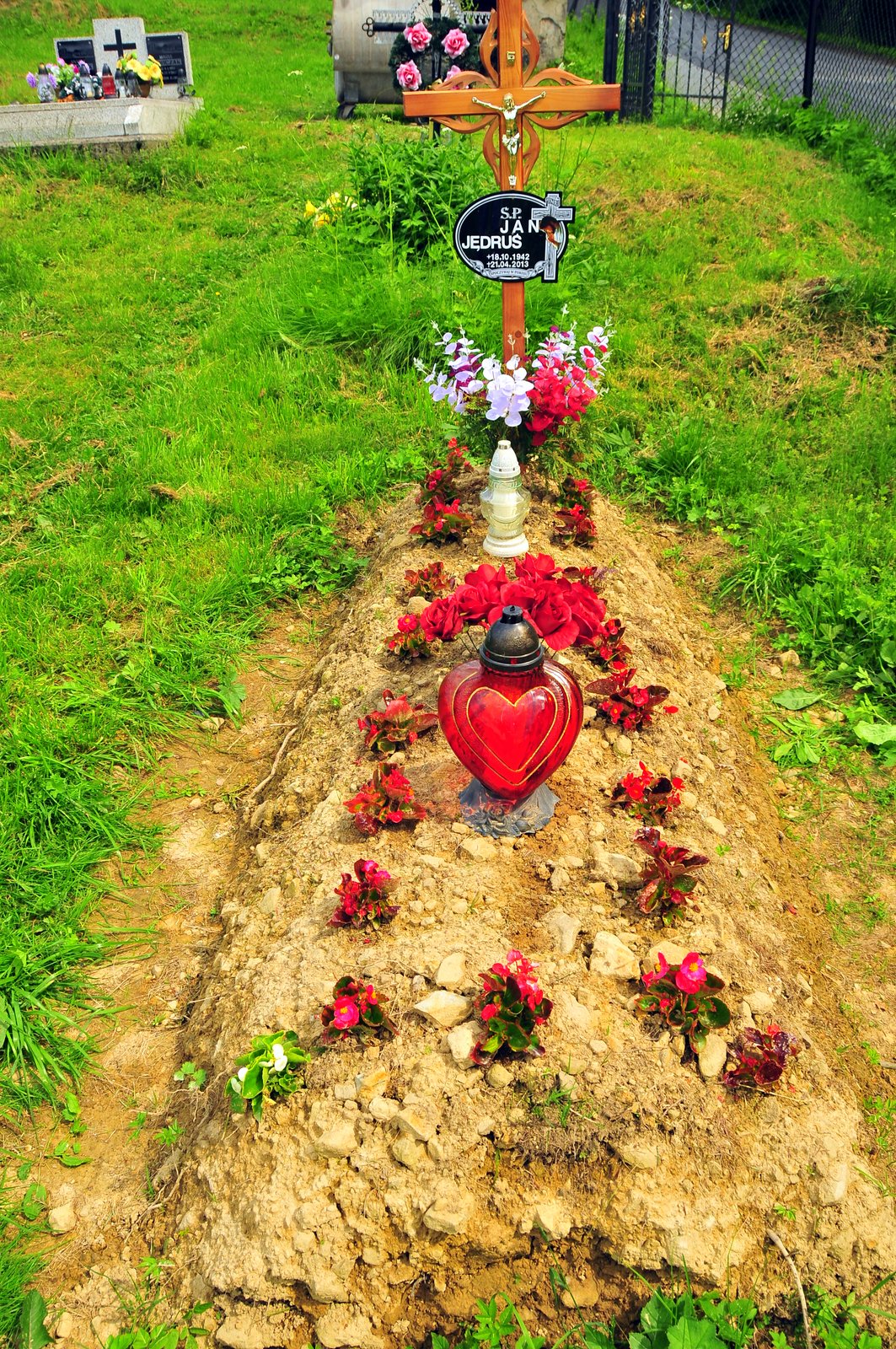
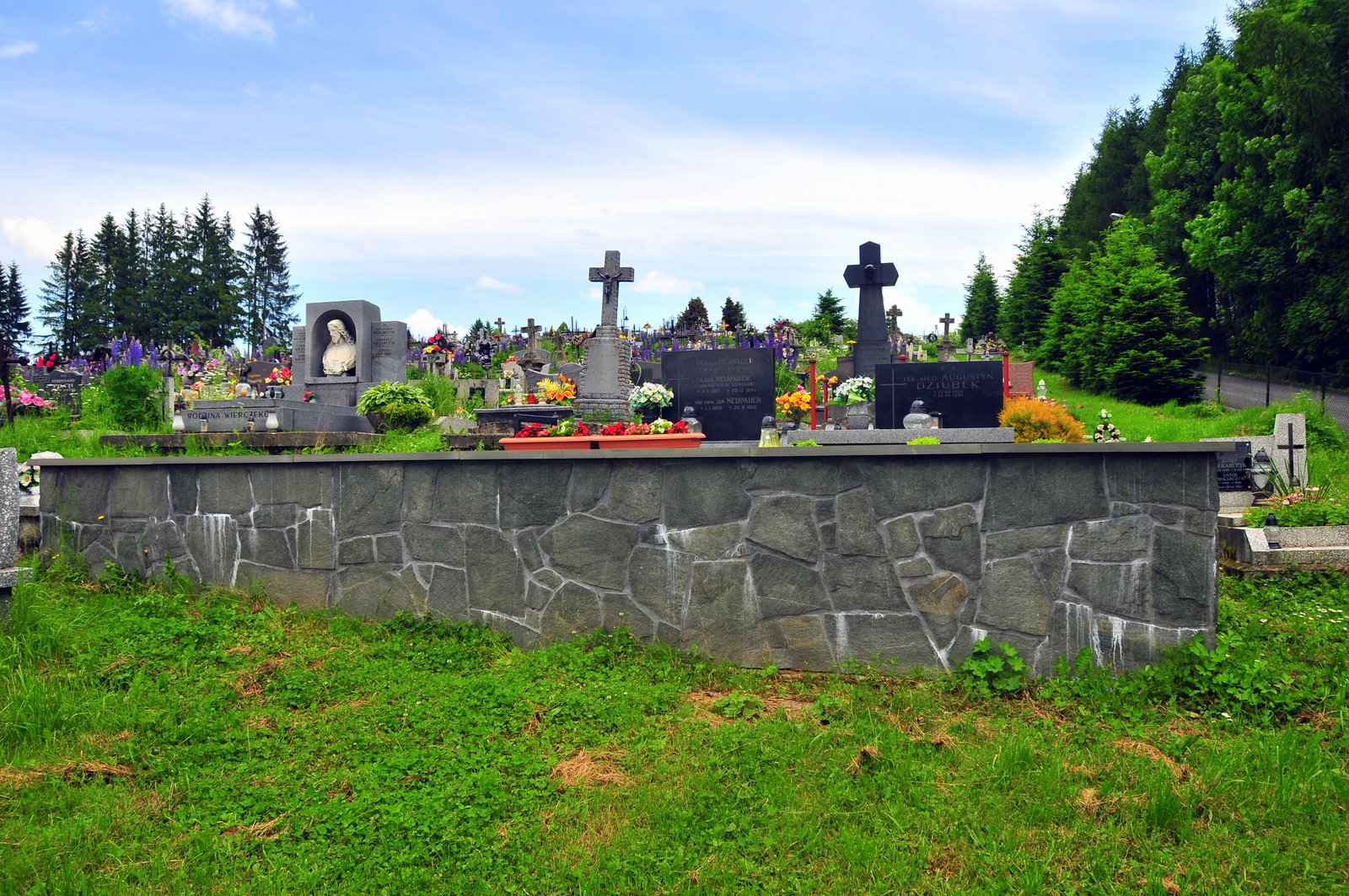
We begin the day in bed: L and I are so exhausted that we sleep most of the morning away. When we finally get going, we take Babcia to the cemetery to tend Dziadek's grave. We clean off the candle holders and light new candles, pull weeds, water the flowers.

VIV_3307

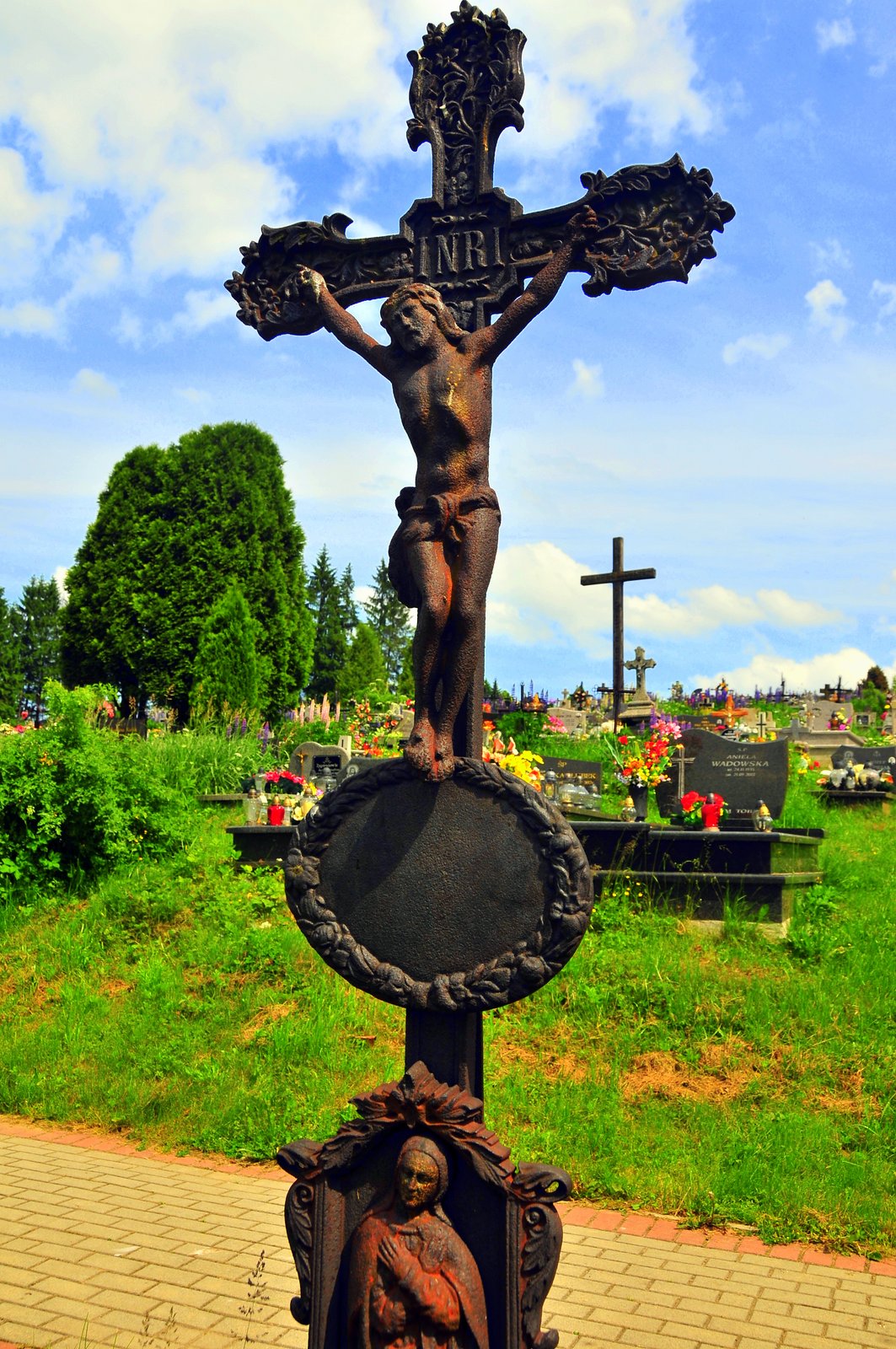
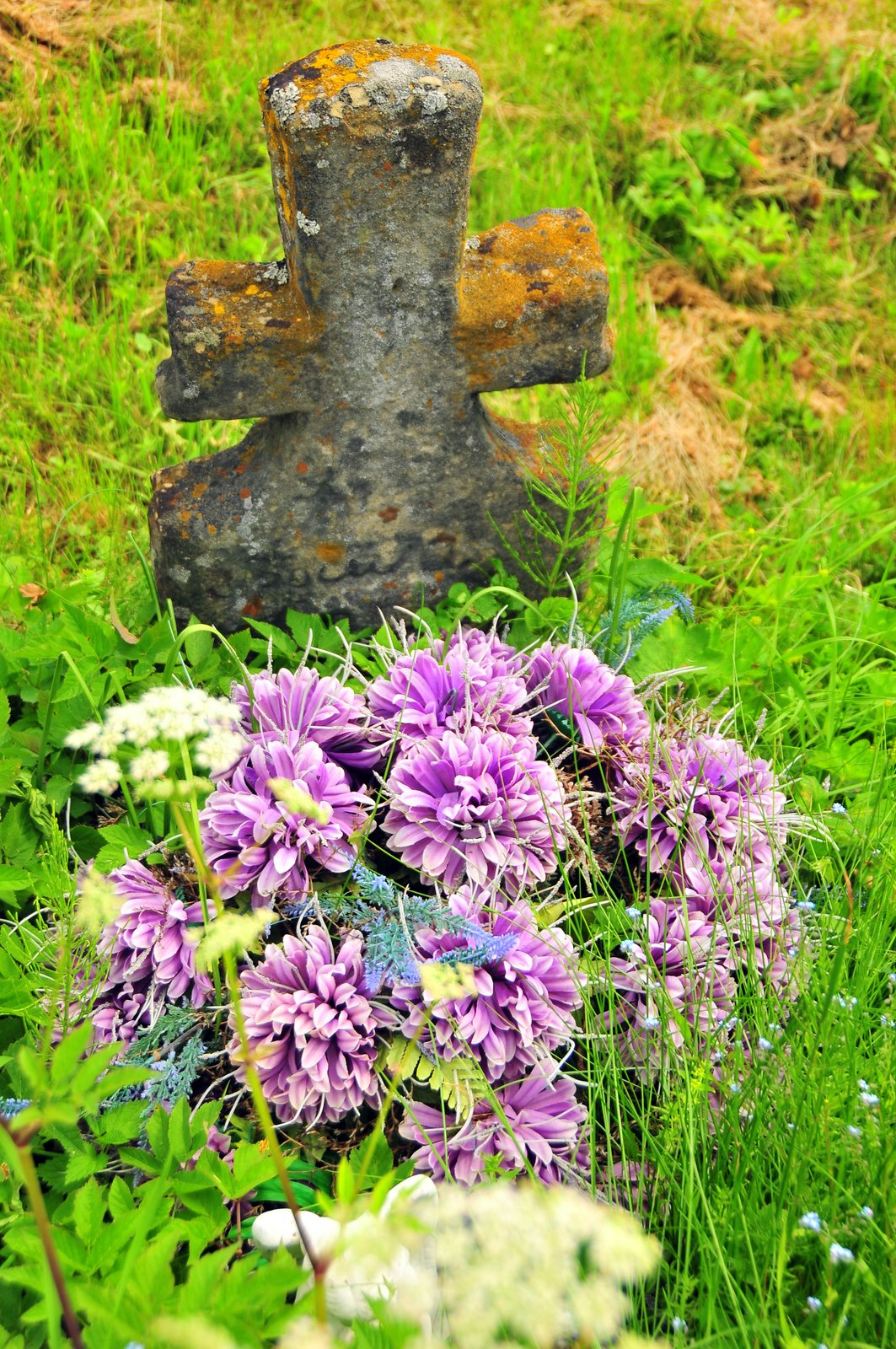
We walk around the cemetery afterward, looking at graves dating from the beginning of the last century, graves so old that the name has disappeared from the grave marker, whether iron or stone. Who cares for these graves?

VIV_3309

Do any family members still live in the area? Does anyone even remember?

VIV_3311

Clearly someone remembers: there are flowers on some of the seemingly-forgotten graves.

VIV_3312

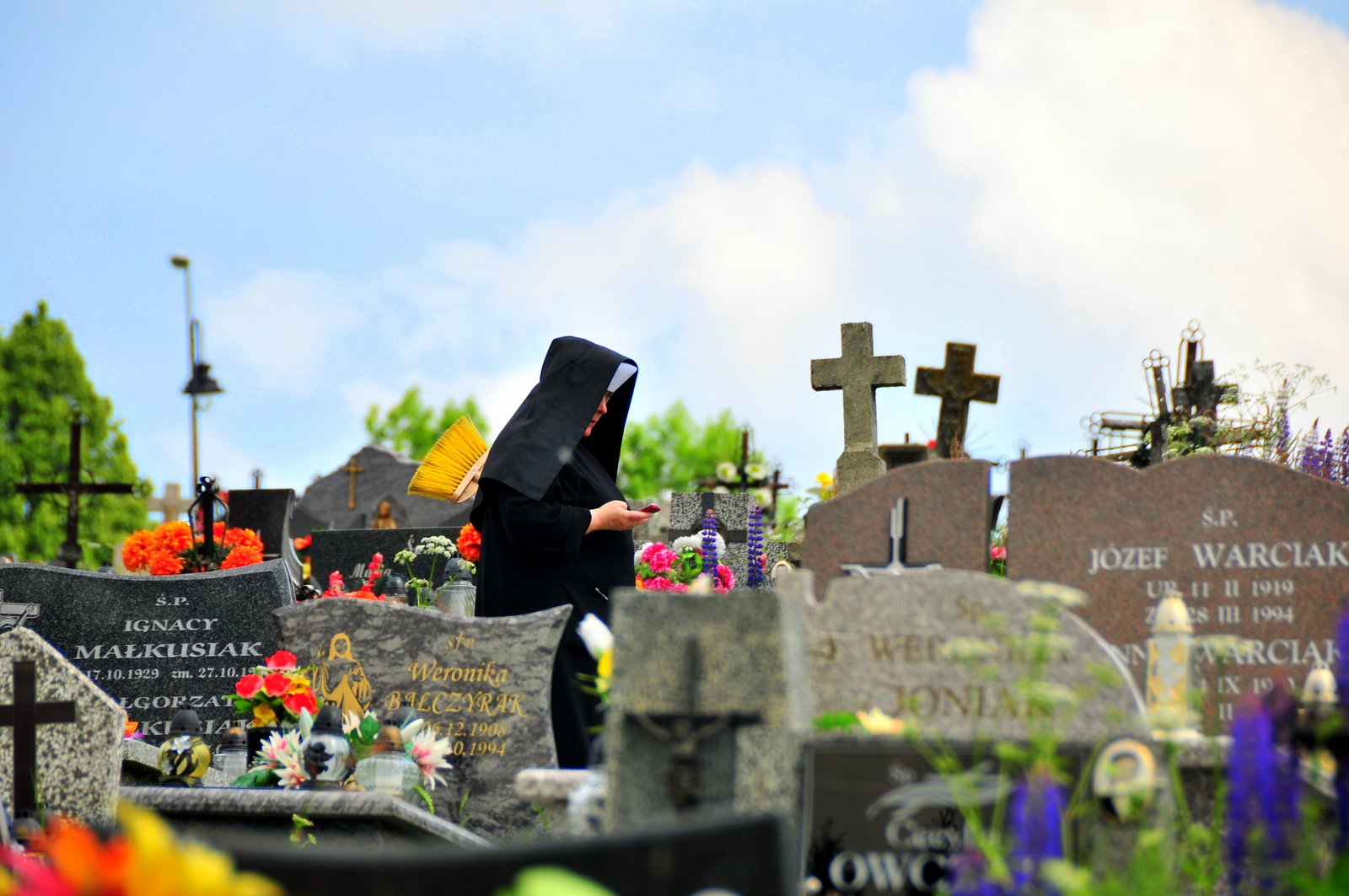
Maybe the nuns take care of these graves. There's one walking through the cemetery, and from a distance, it looks like she's walking among the graves praying a rosary. Perhaps she is -- there are apps for everything, including prayers. Perhaps. Or maybe she's checking her Facebook page.

VIV_3316

Everywhere we've gone in Poland thus far, we've seen the changes that accompany becoming a richer country. Instead of Polski Fiats and Trabants, there are more Volkswagens, a few Fords, significant numbers of BMW's and even the random Porche or Maserati.

VIV_3320

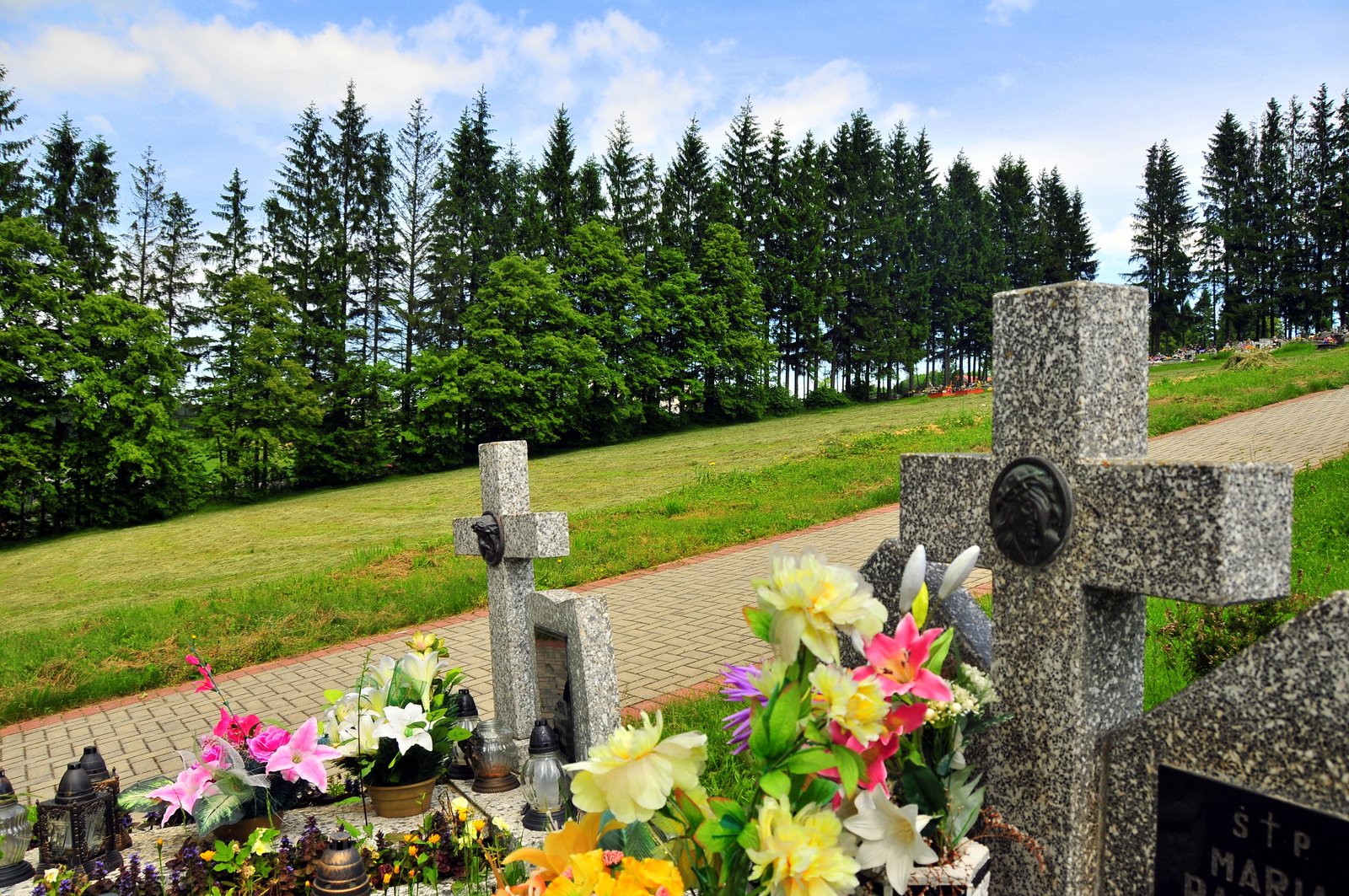
Cemeteries are no exceptions: they show the signs of increased affluence, including some family graves that would have cost likely tens of tens of thousands of zloty.

Yet Babcia has other concerns. Markers require work, upkeep, dedication. She doesn't want to burden others with such responsibilities.

"After all, what is that? A pile of stone."

VIV_3323

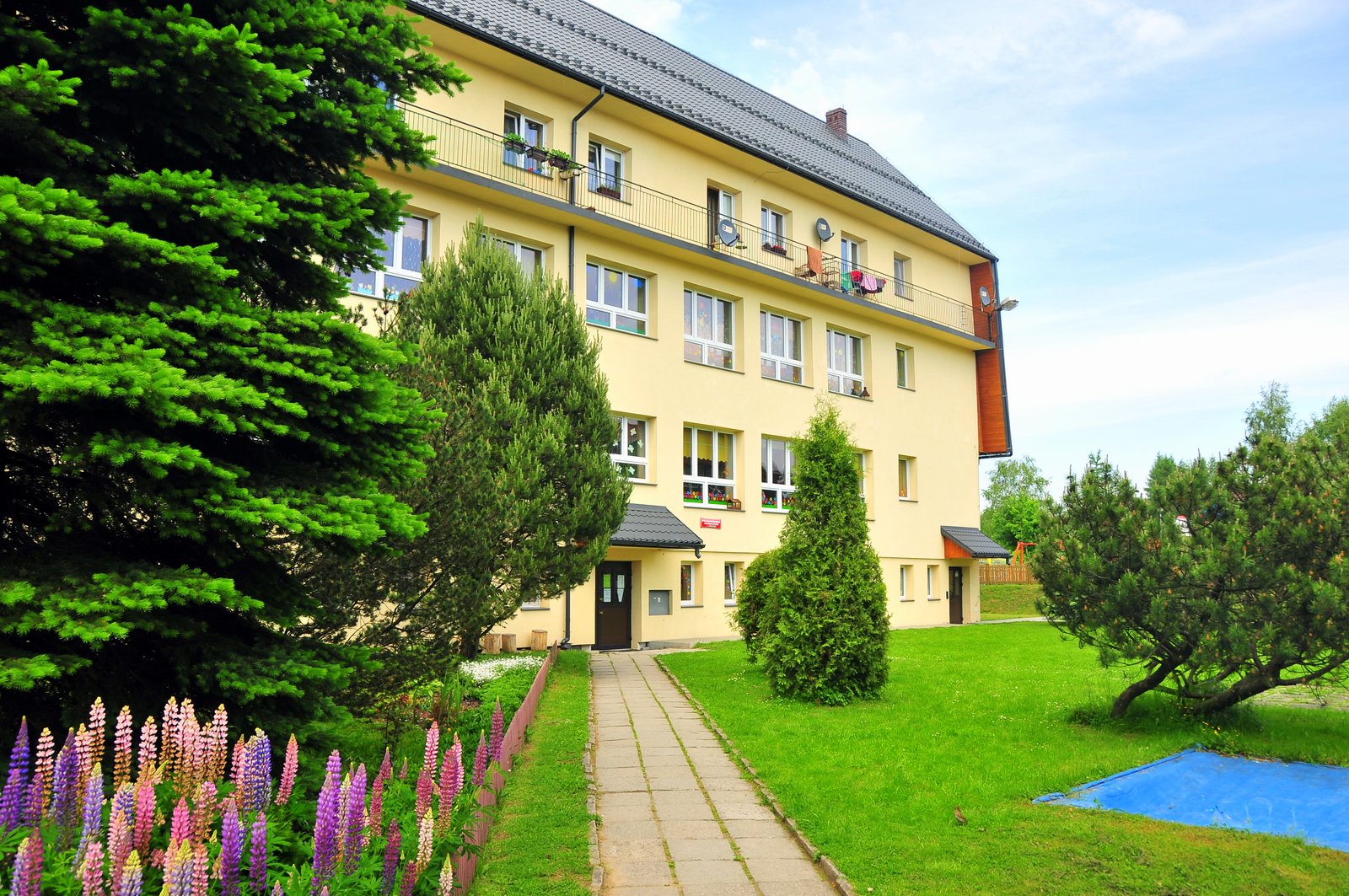
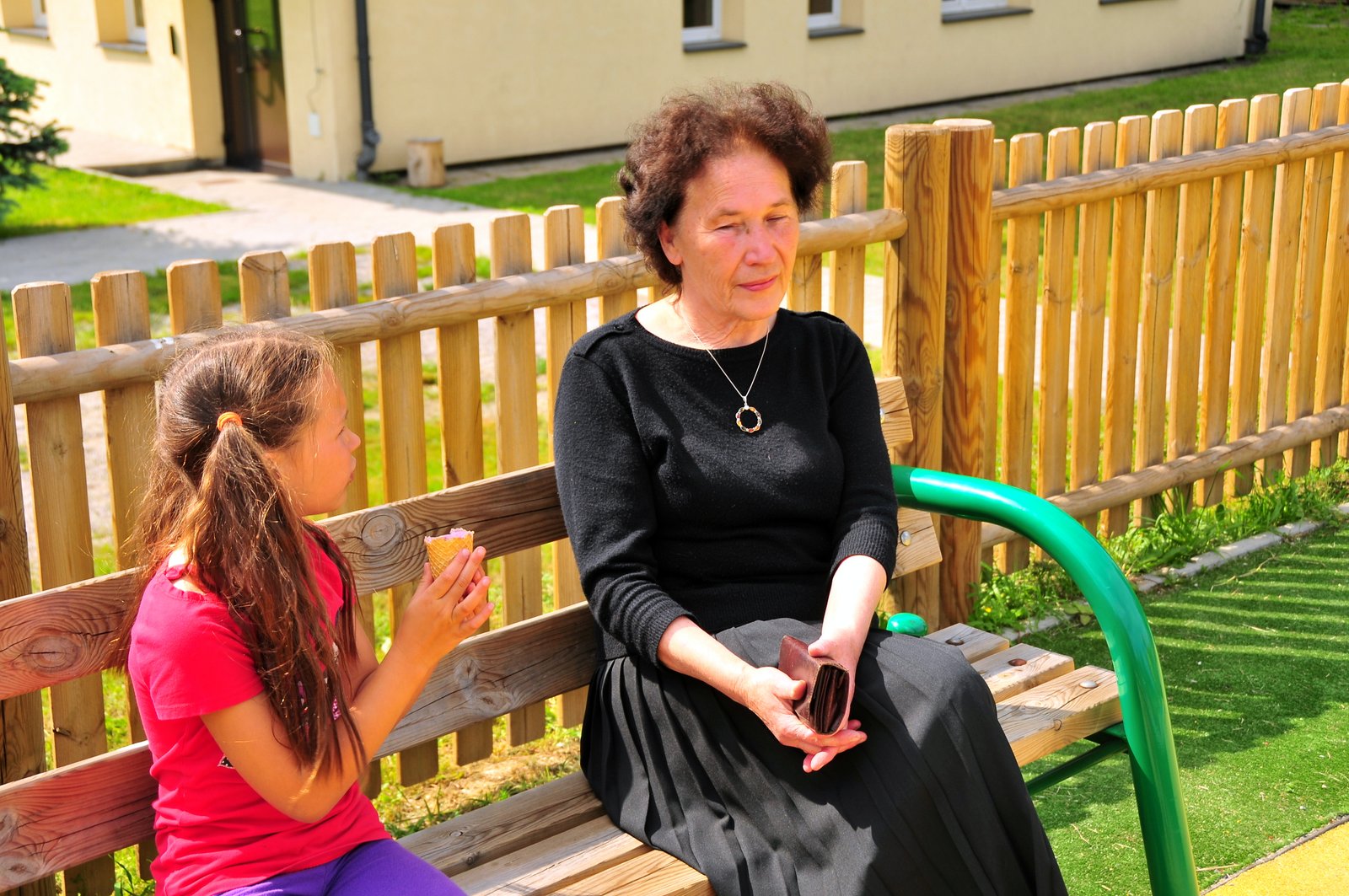
Afterward, we head to a local shop for ice cream, then wander over to the kindergarten where L will be spending her mornings these first two weeks. She's a bit nervous about it, perhaps because she still doesn't feel confident with her Polish.

VIV_3324

When we enter the foyer, though, I see that all her fears are for nothing.

"The principal of this preschool was a student of mine," I explain to L. "She speaks English very well. In fact, she was an English teacher before she became principal here."

VIV_3325

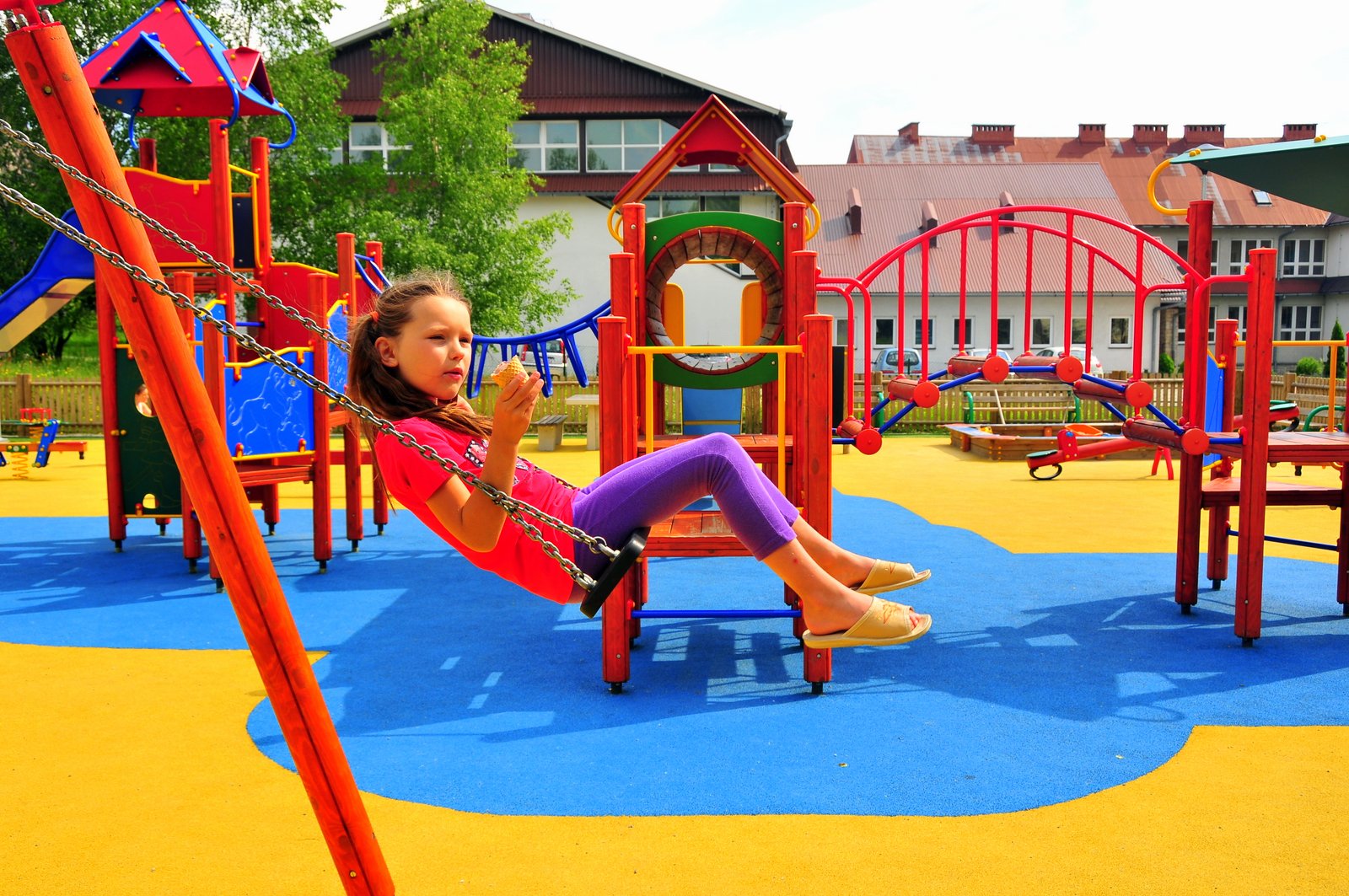
Fears partially assuaged, we spend a bit of time on the playground.

VIV_3326

Arrival 2013

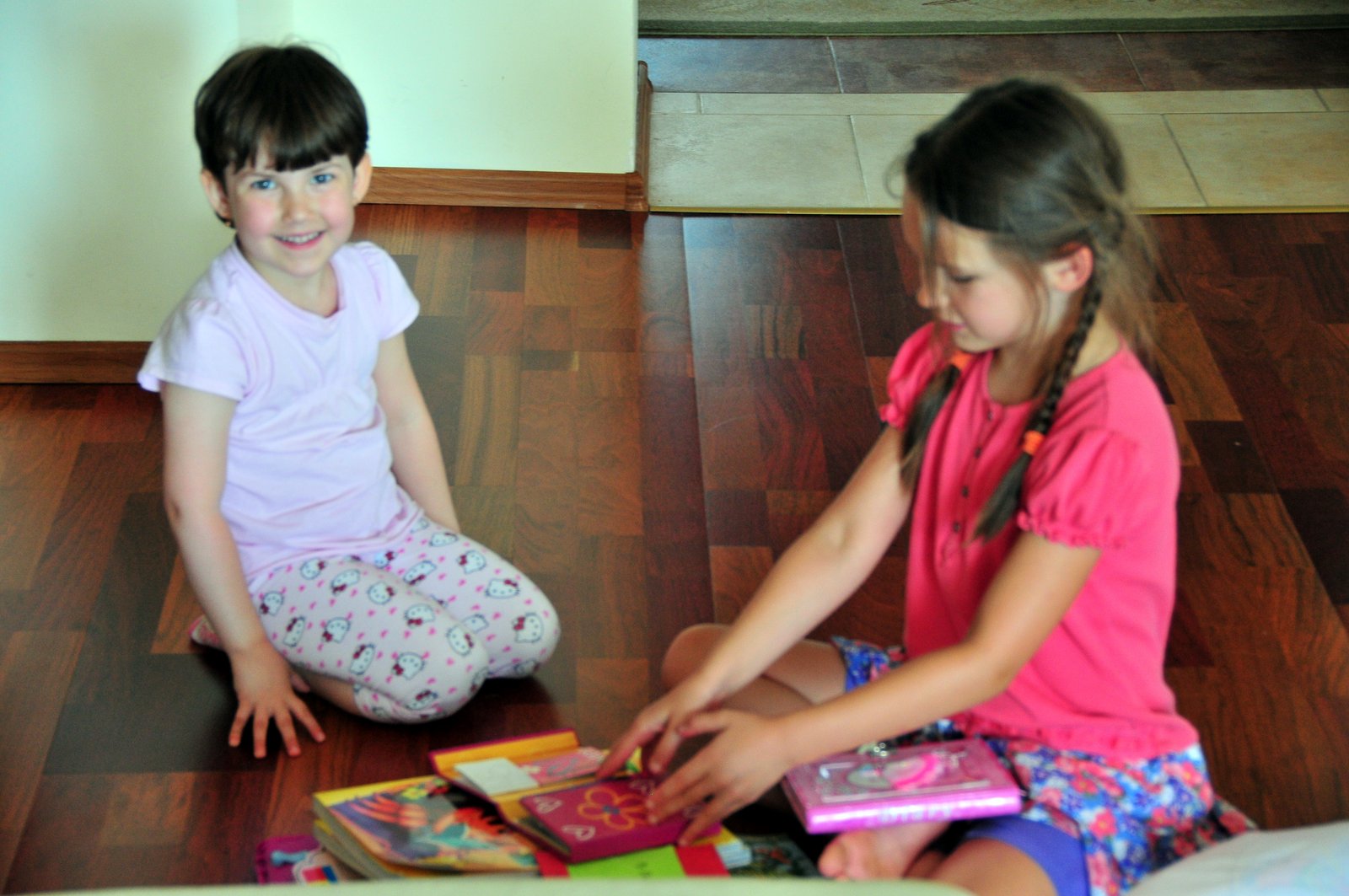
After two flights, a moderate layover, a couple of car rides — it all seems to have gone by in a flash when L showing her youngest cousin, D, the treasures she brought with her. Of course she kept calling her by her older sister’s name, but little D didn’t mind.

VIV_3231

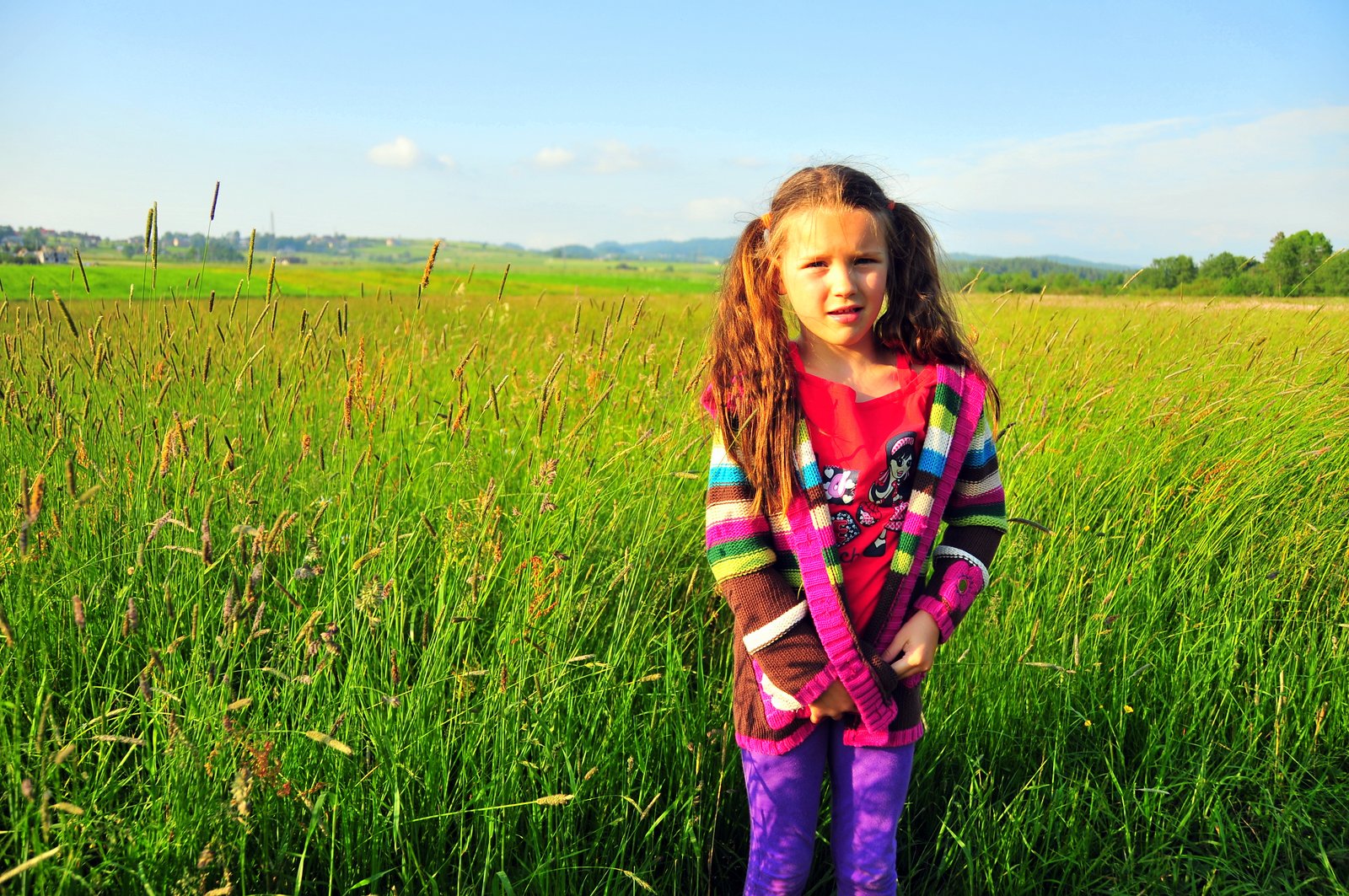
She had someone to swing with, to pick berries and snack on cherries with,

VIV_3236

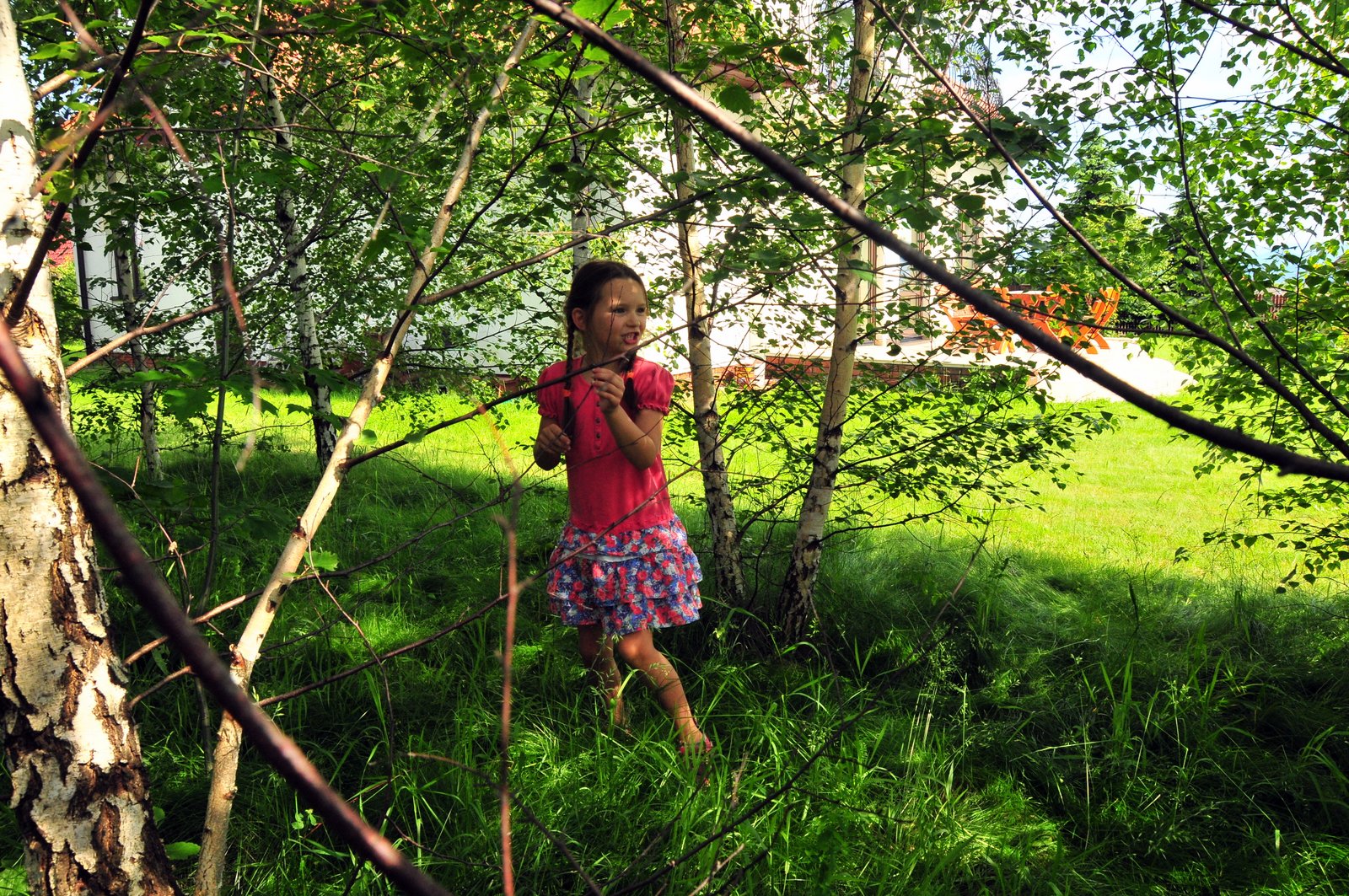
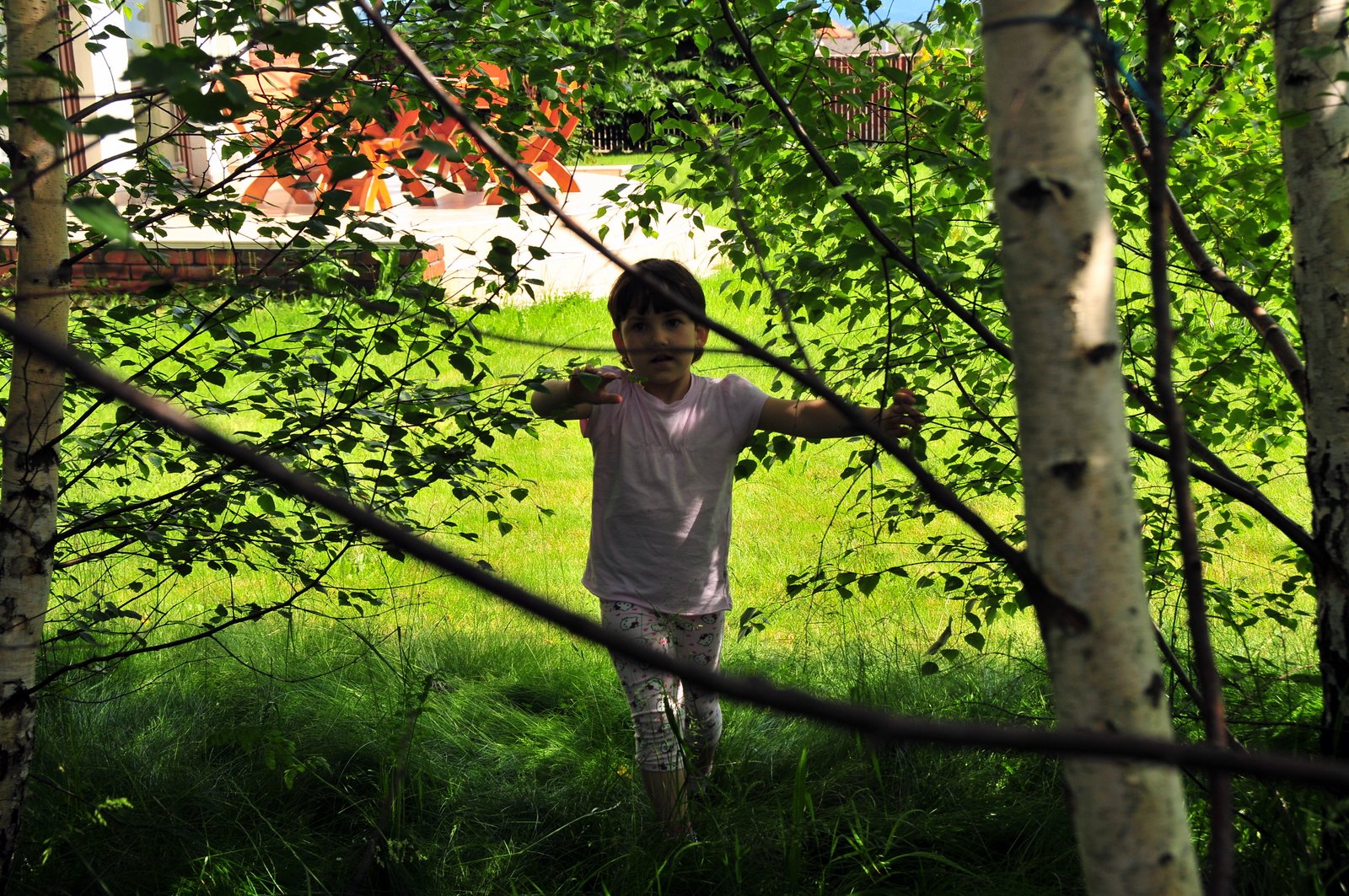
to play hide and seek with

VIV_3245

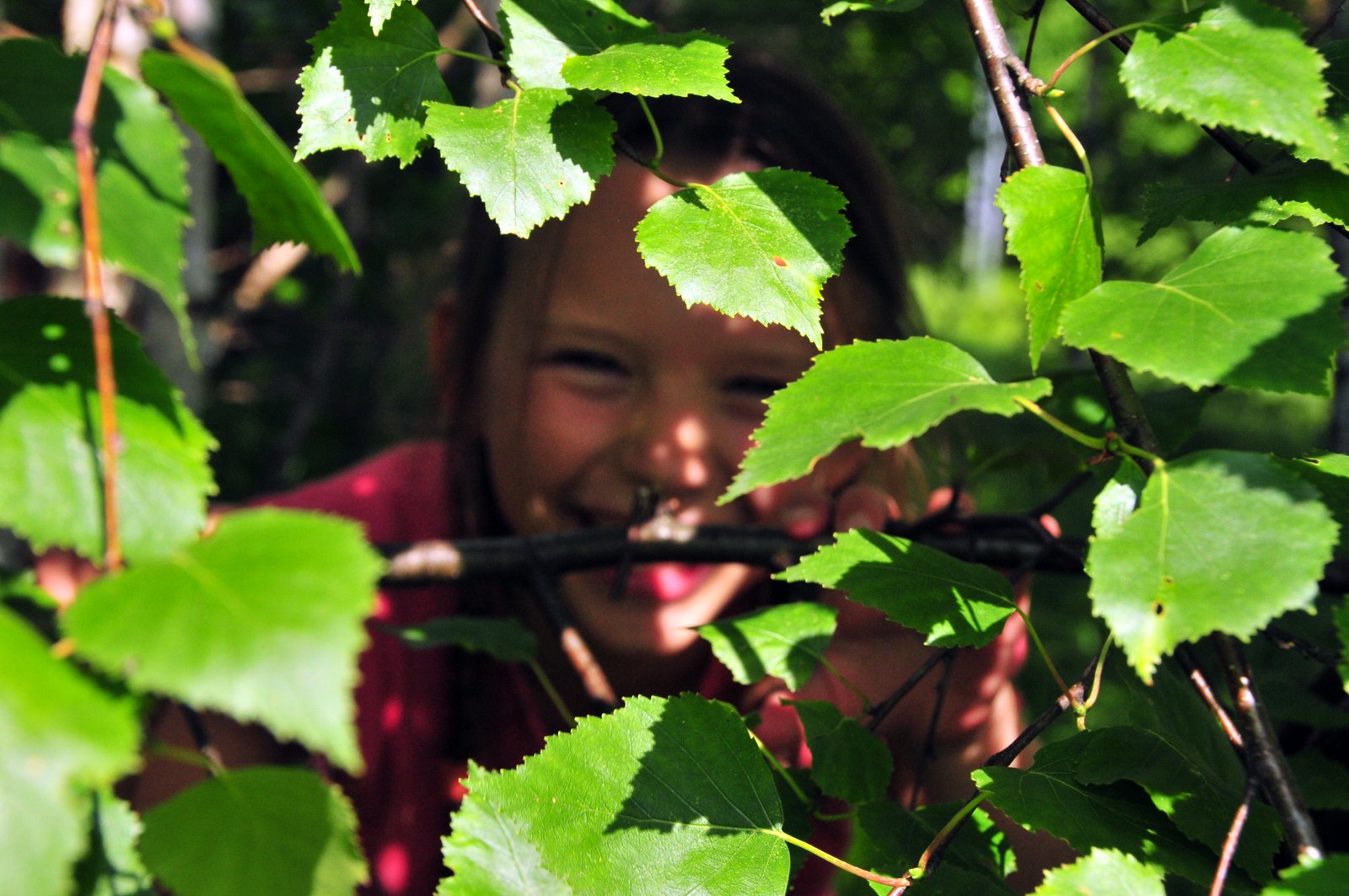
to hide obsessively in the same spot with.

VIV_3248

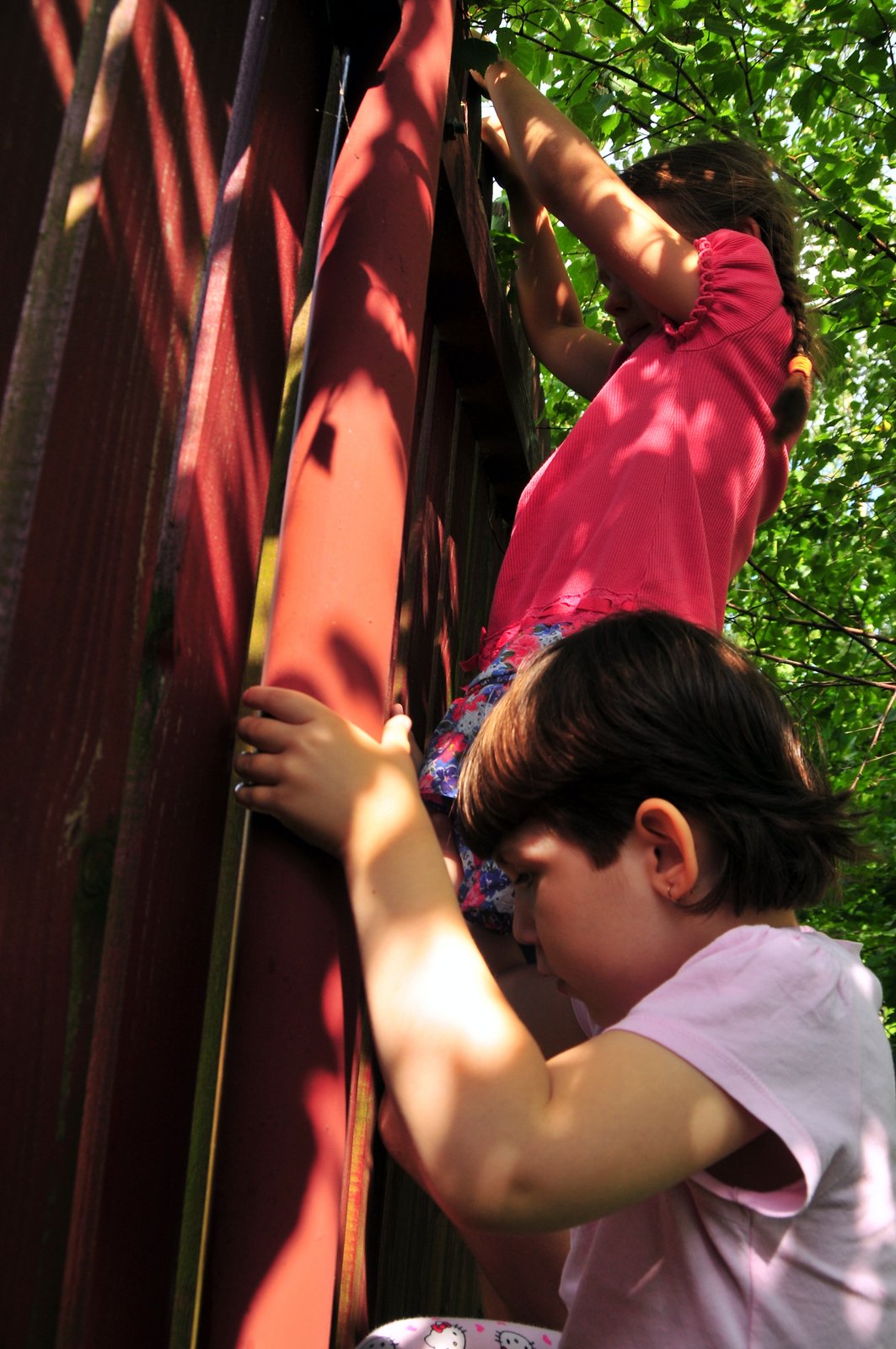
There was someone to climb the back fence with, or at least to try scaling with.

VIV_3252

Each arrival has been somewhat different, and this time began with a visit to wojek D’s house. Met us at the airport, and after bit of time at his place, we took Dziadek’s car and headed south. So for the first time, we arrived with me at the wheel.

VIV_3259

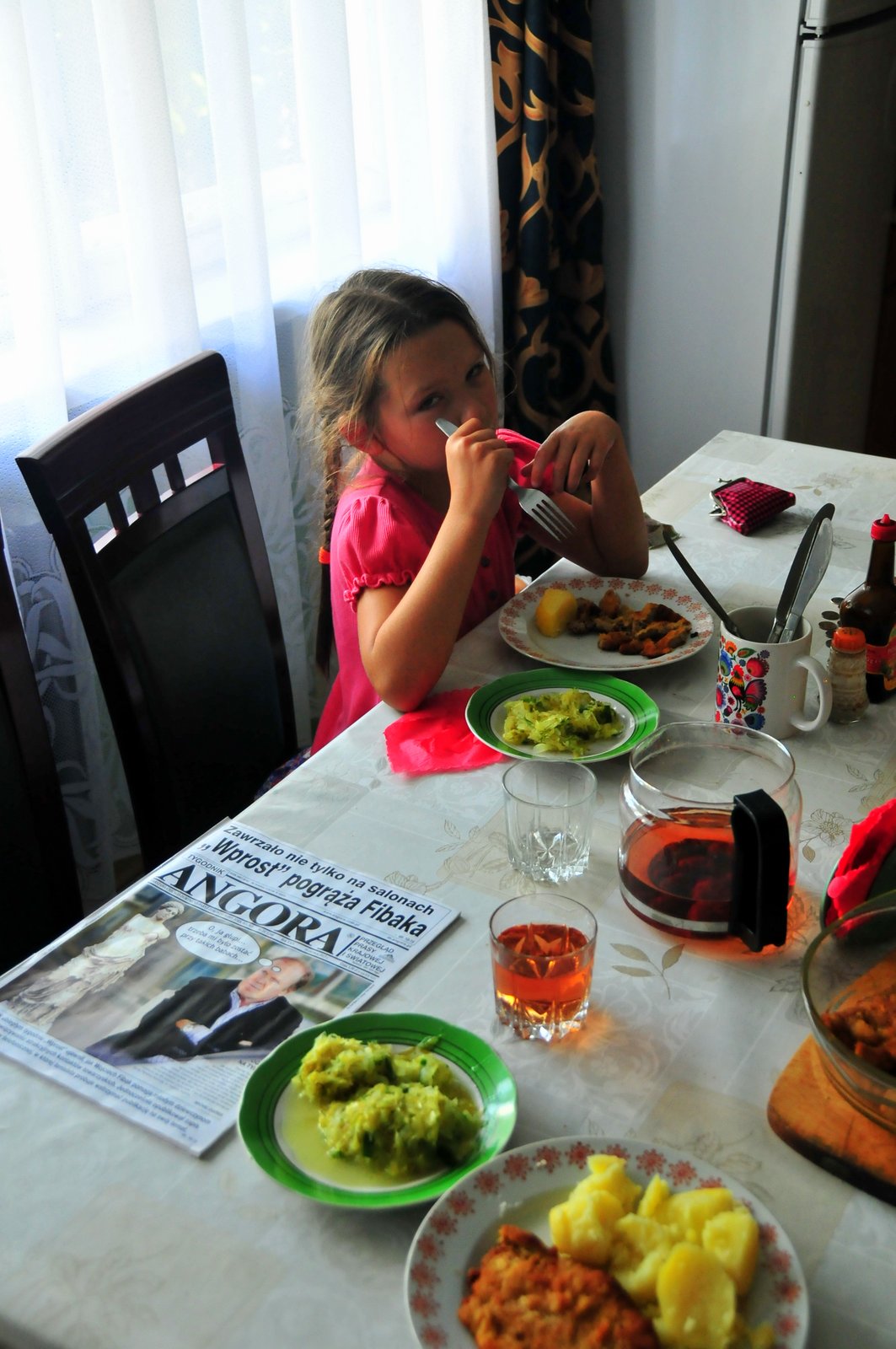
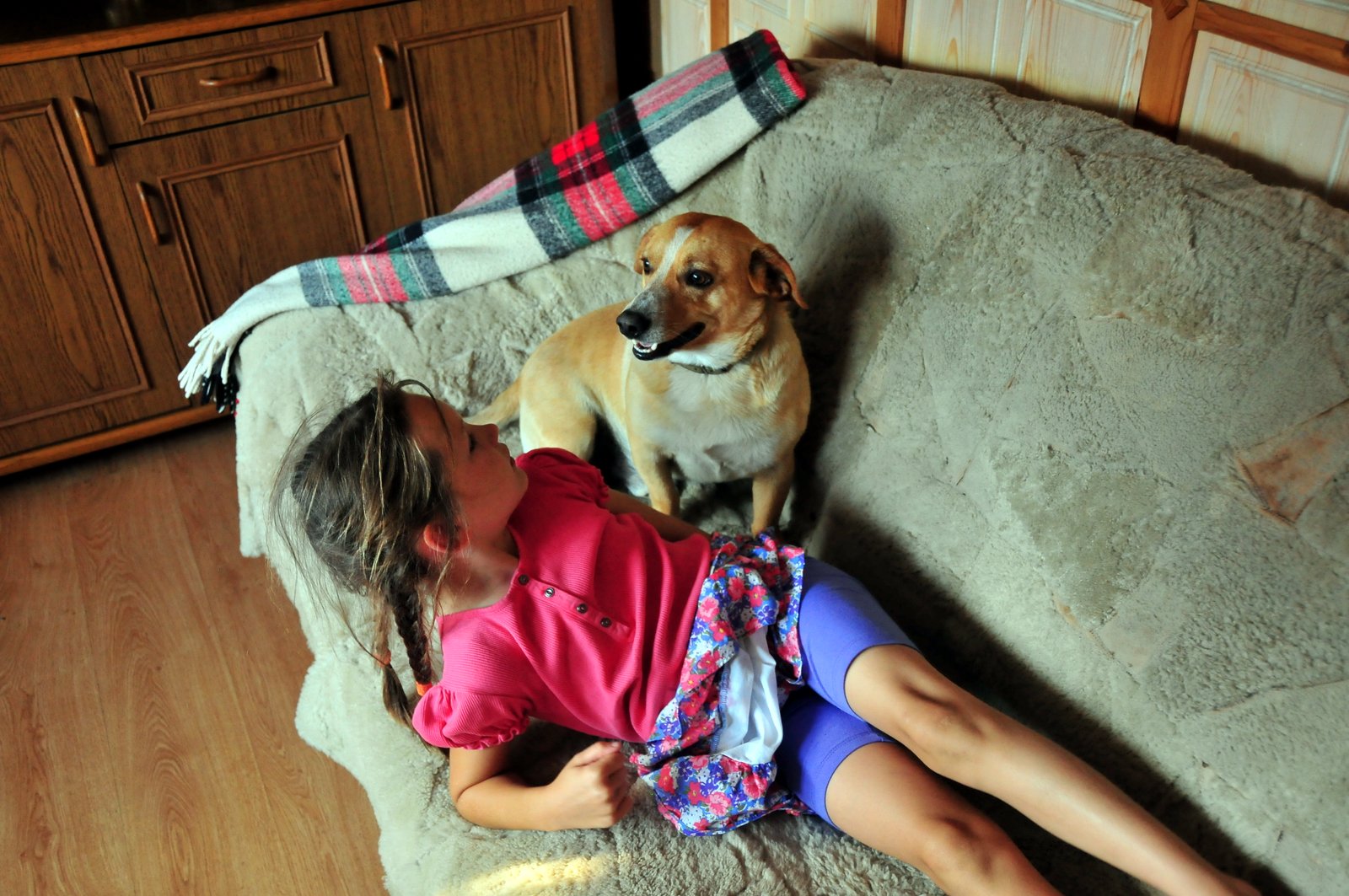
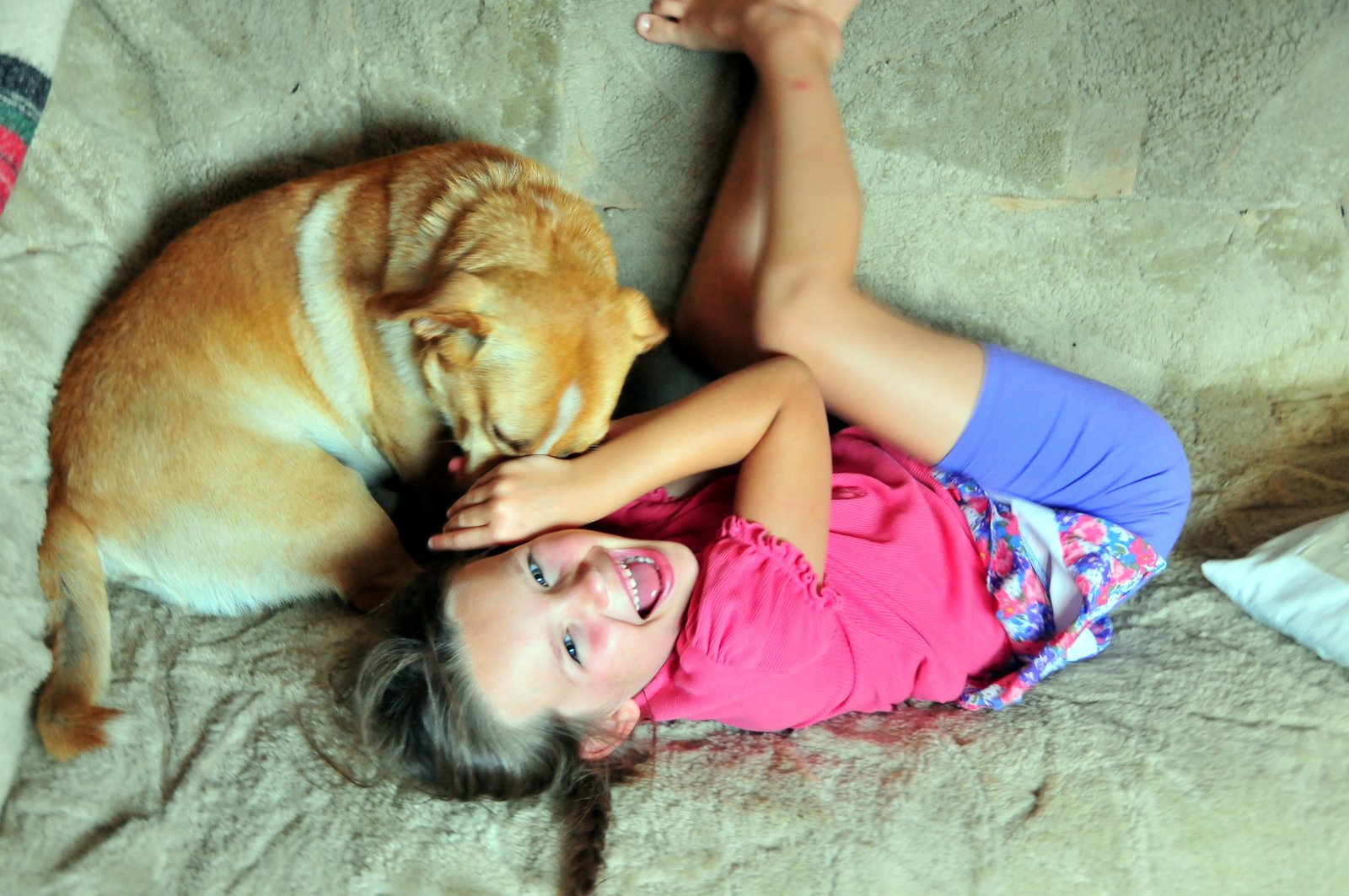
Babcia of course had treats and treasures for us: a big lunch, strawberry compote, and a dog who was so excited to see L that they both couldn’t contain the excitement.

VIV_3261

VIV_3268

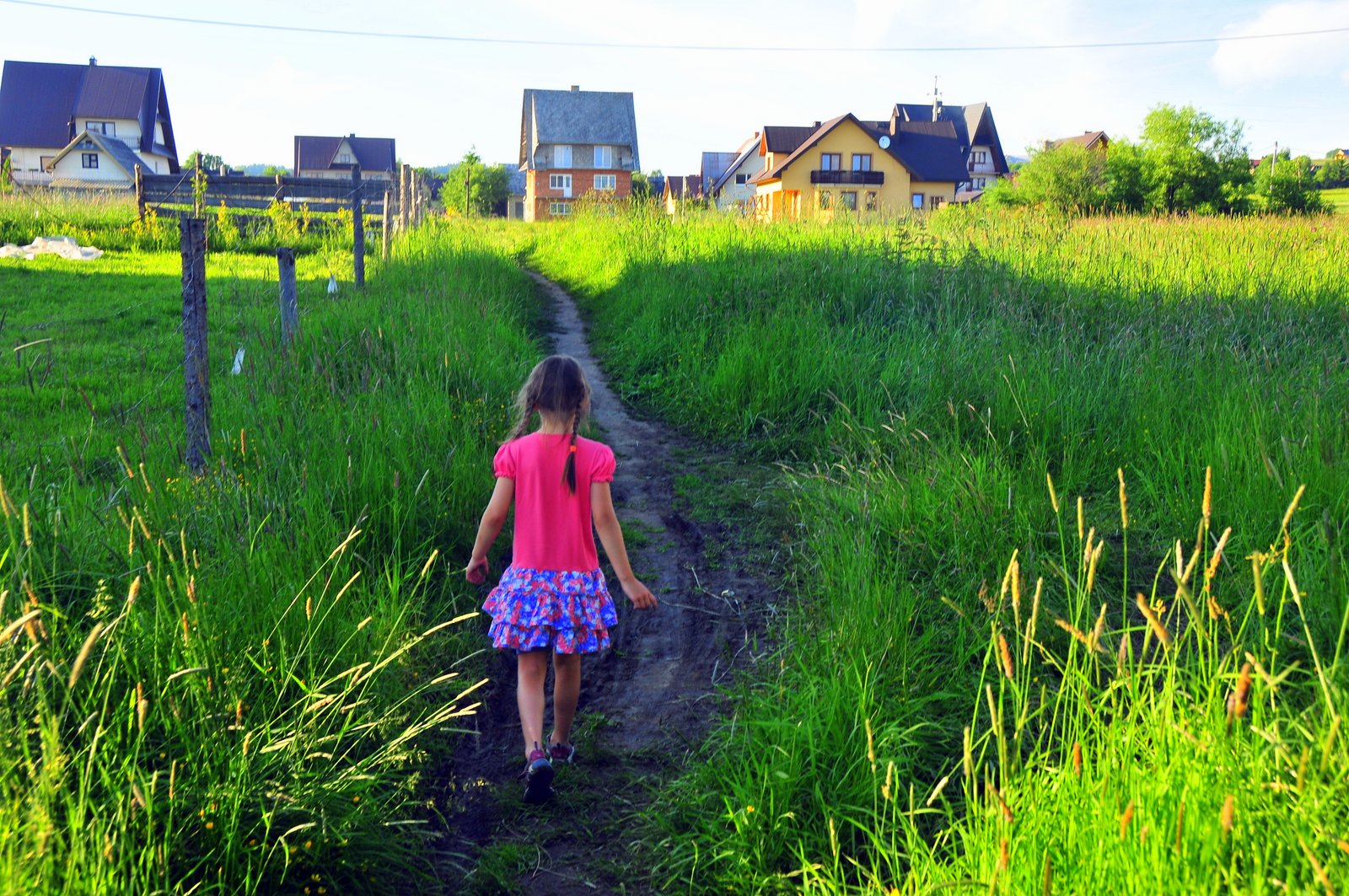
Yet after so long sitting — ten hours in the plane to Frankfurt including two hours on the runway in Charlotte, a two hour layover, an hour-and-a-half flight to Krakow, and a twenty-five minute drive to D’s house followed by another hour-and-a-half drive to babcia’s — there was only one thing to do: go for a walk.

VIV_3271

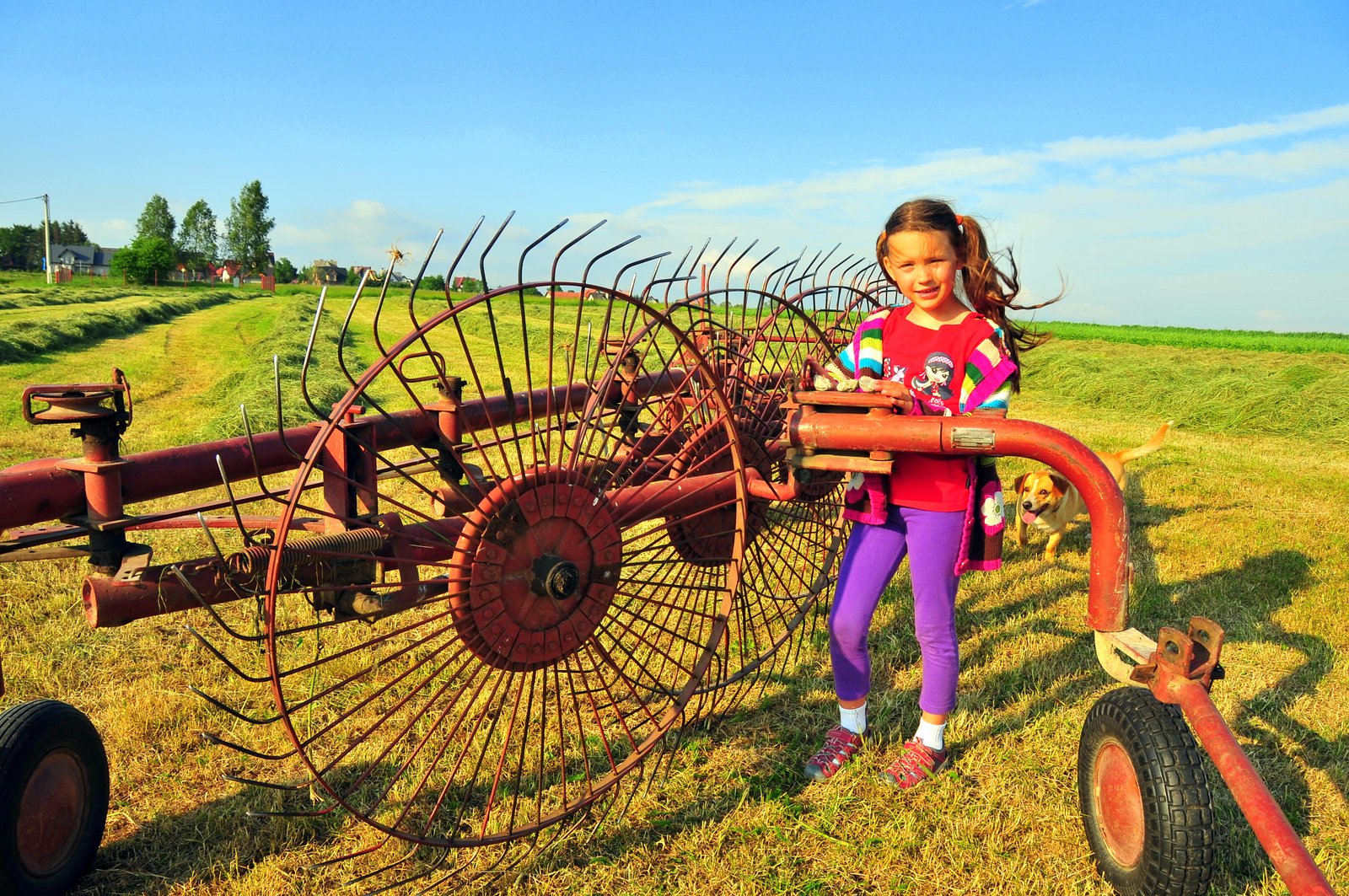
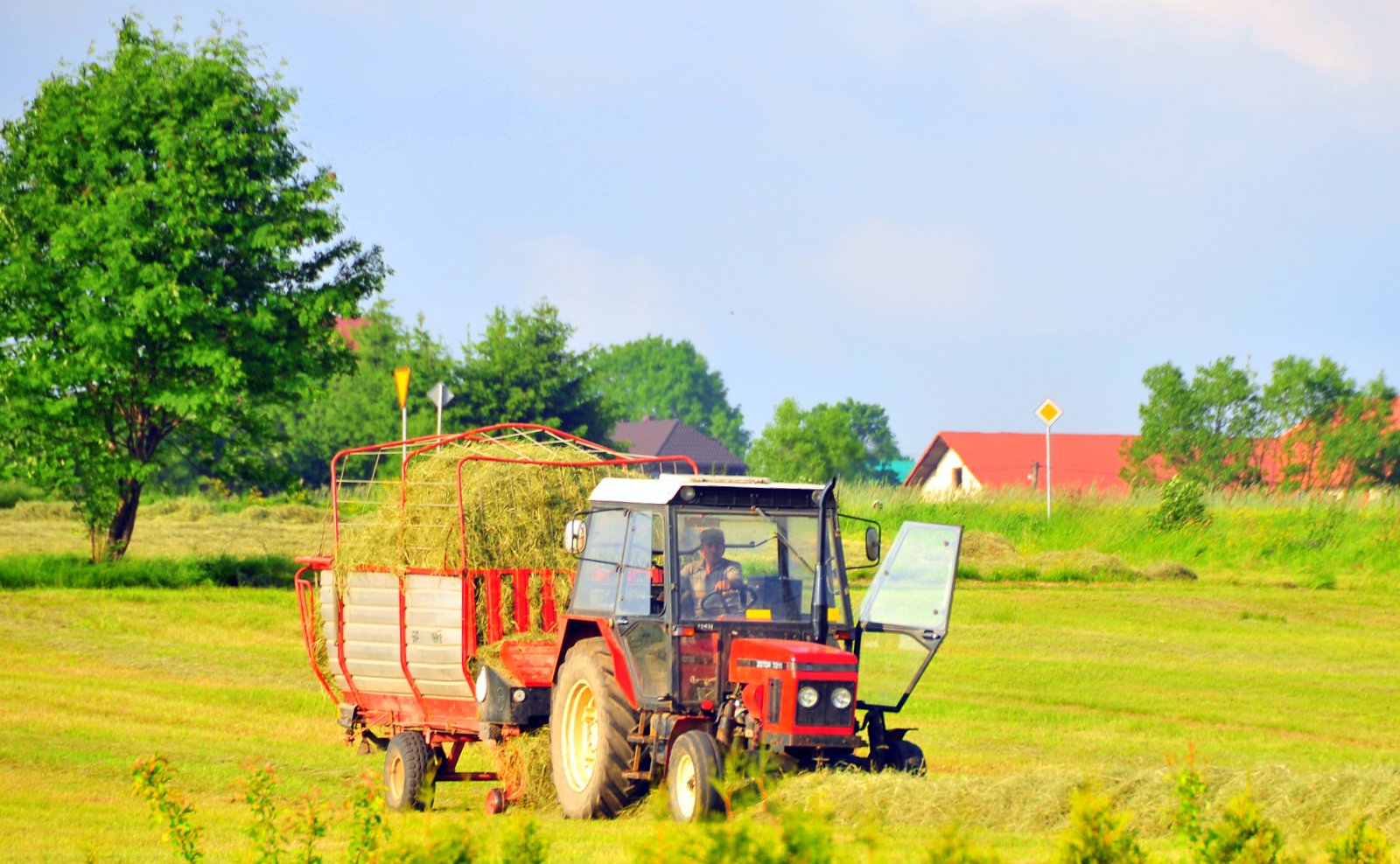
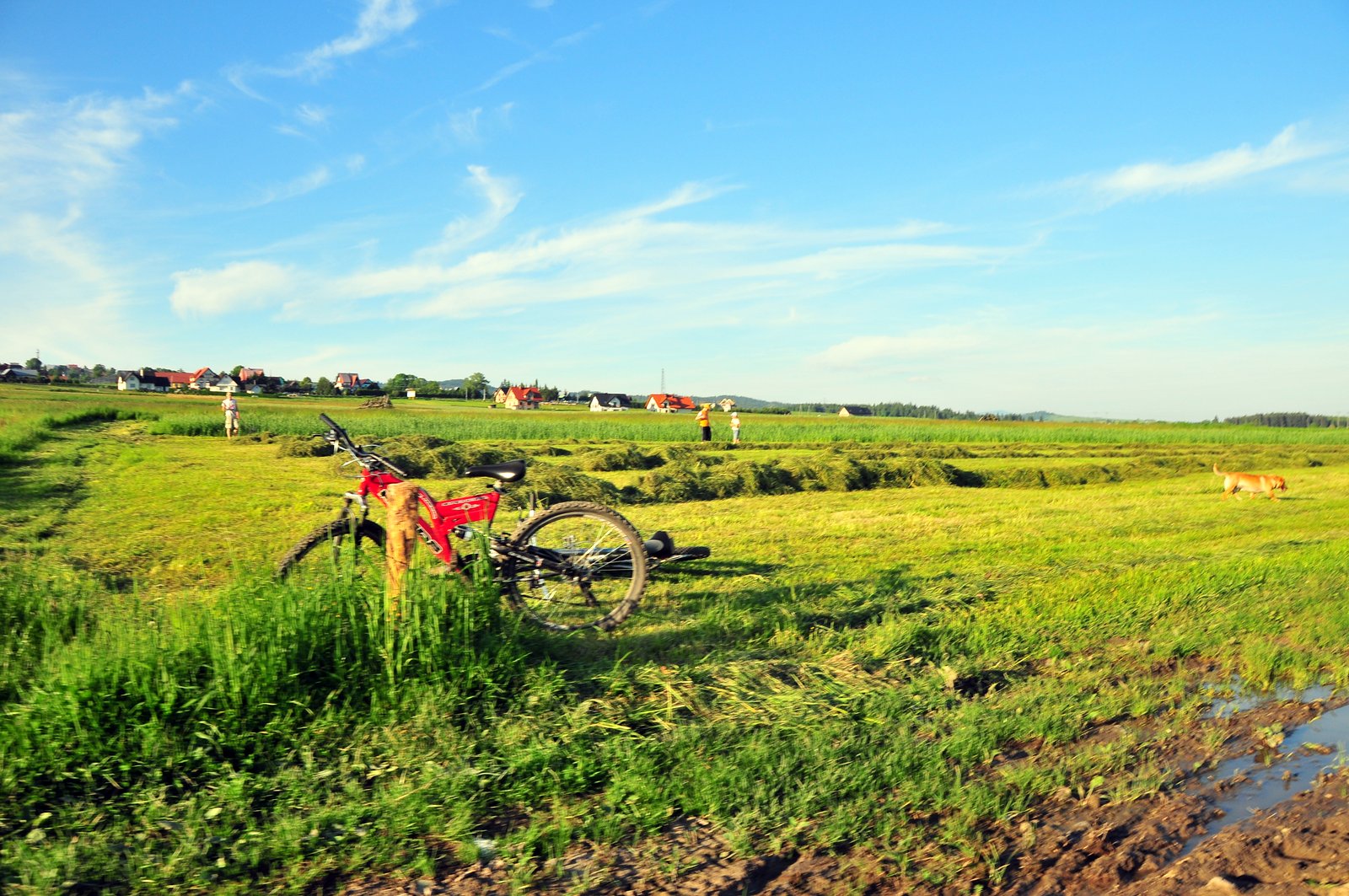
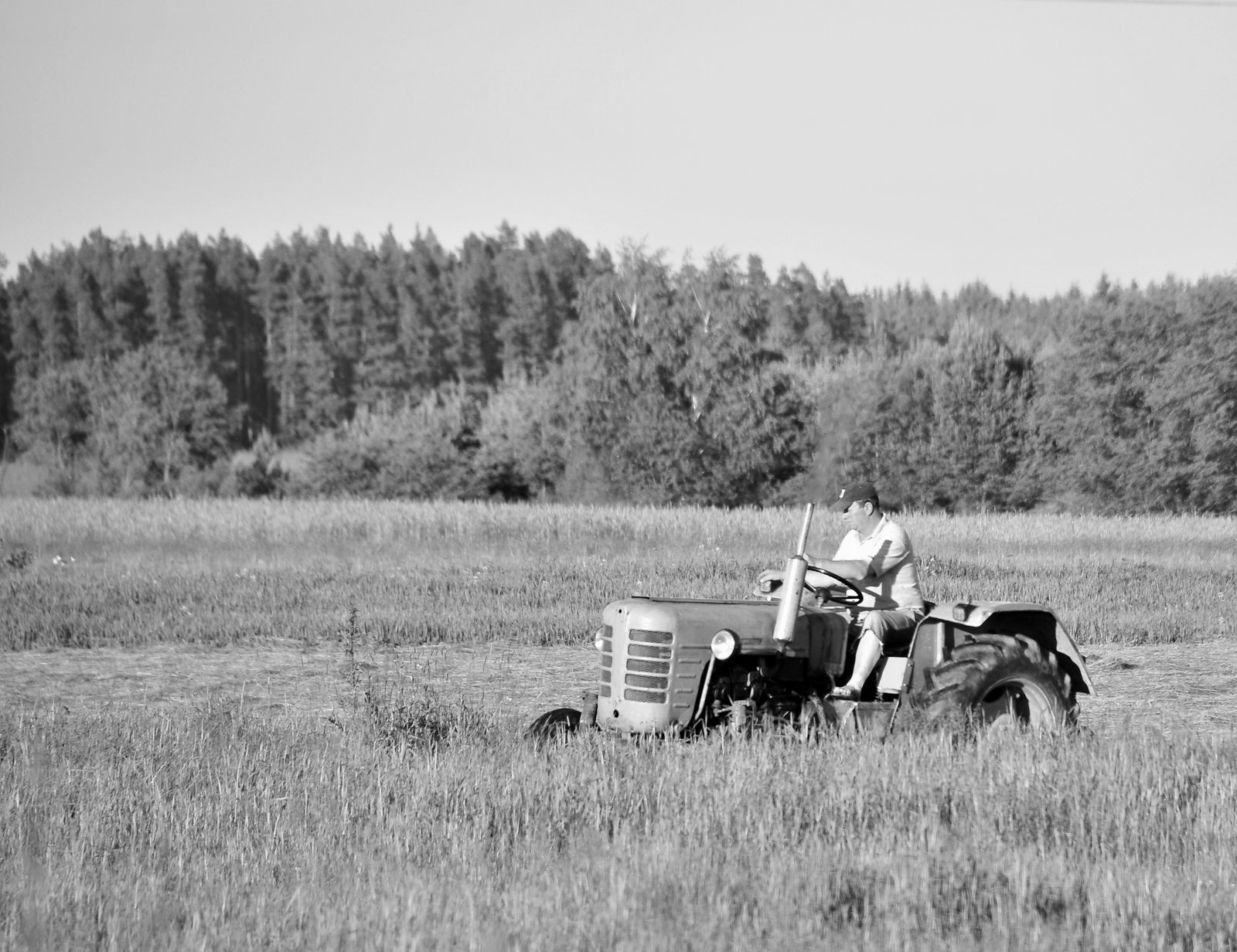
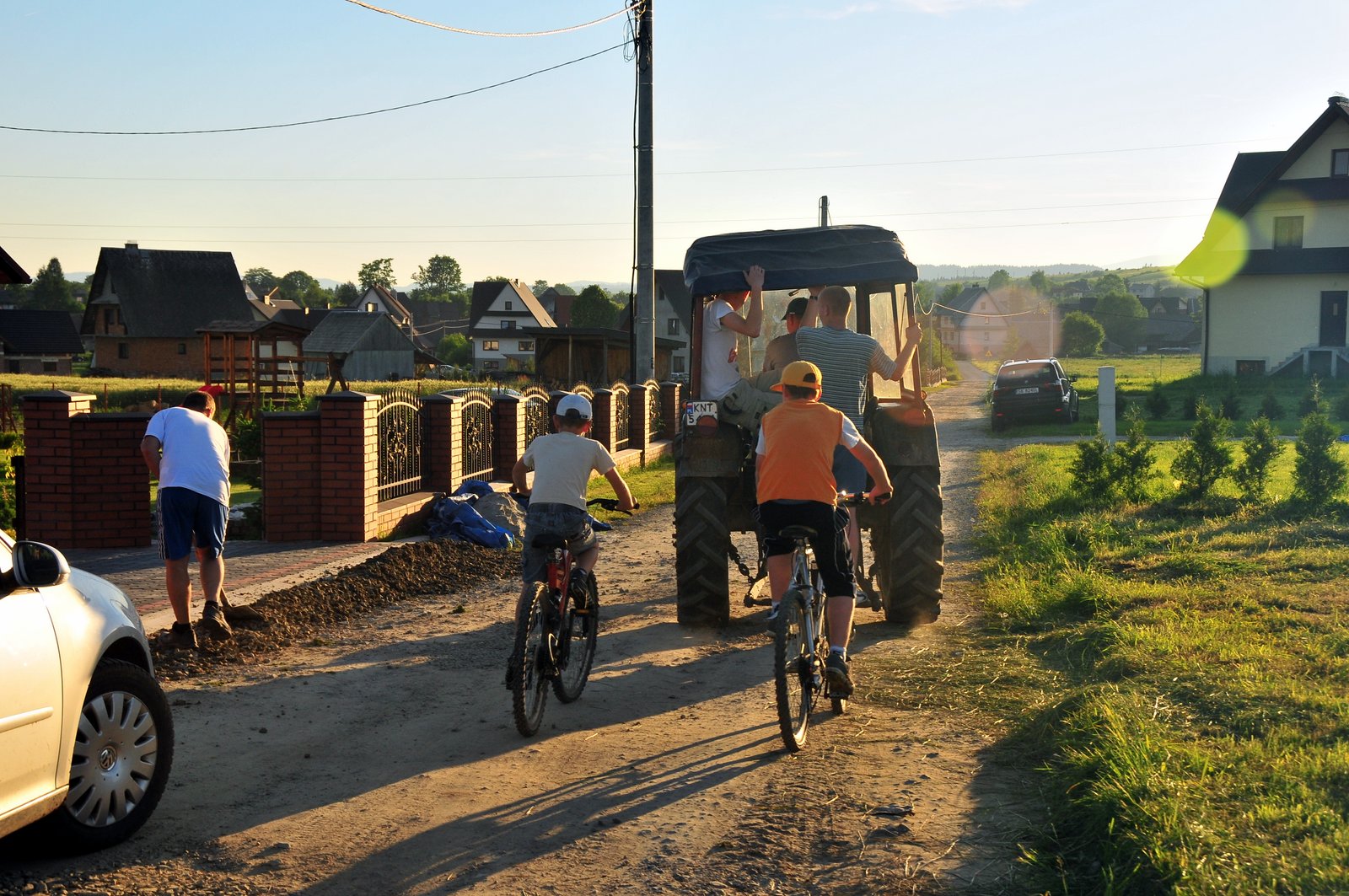
Everywhere there was someone working: kids who’d ridden their bikes out ot the fields to help with raking the hay.

VIV_3281

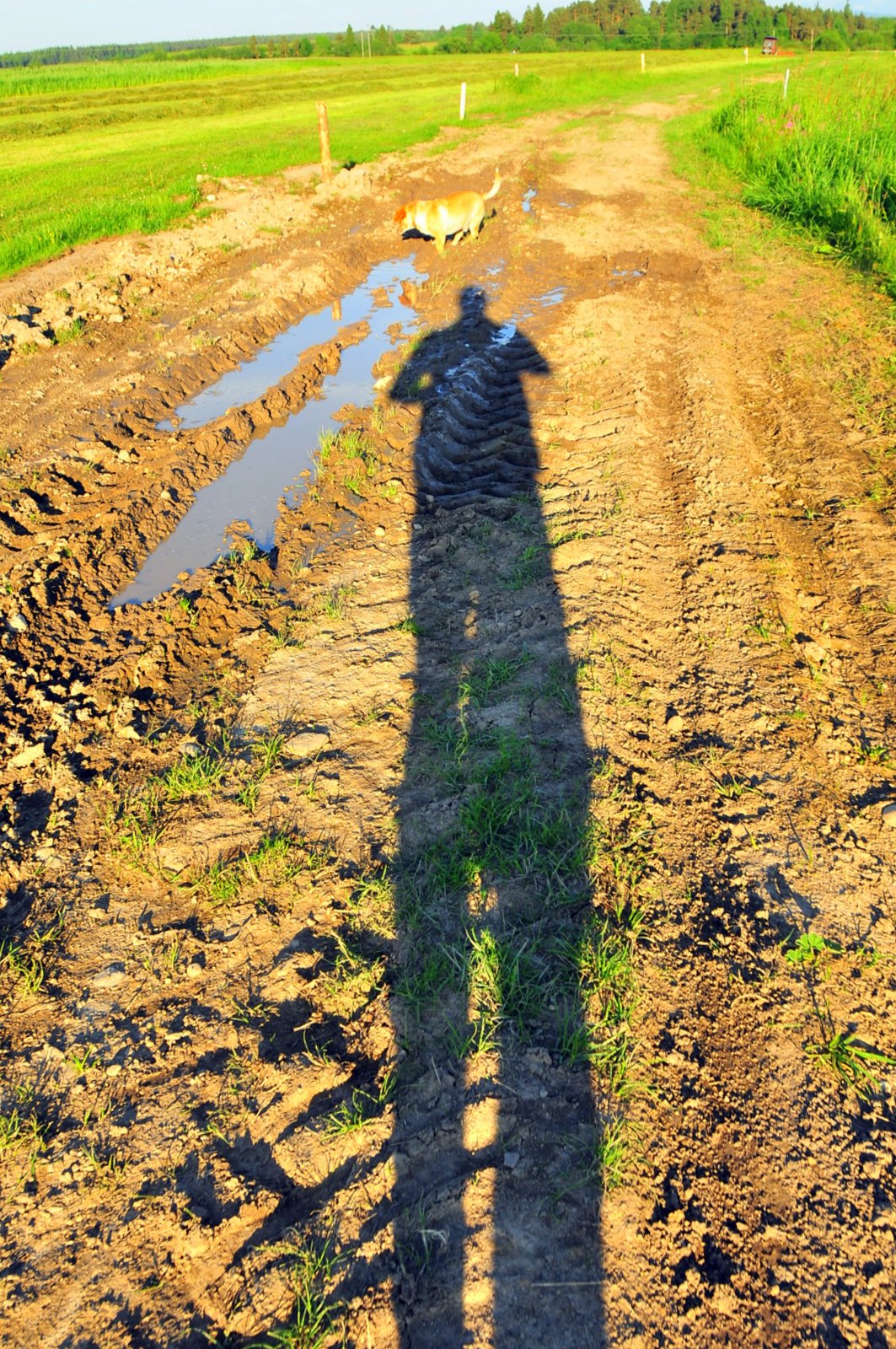
And there I was, camera in hand, tromping along the rutted road that generally leads people to the fields to work,

VIV_3283

and I was just taking pictures of my shadow and worrying about taking pictures of strangers, wondering whether I should ask permission, wondering what that might look like,

VIV_3287

a grown man wandering around the fields he should be working in.

VIV_3289

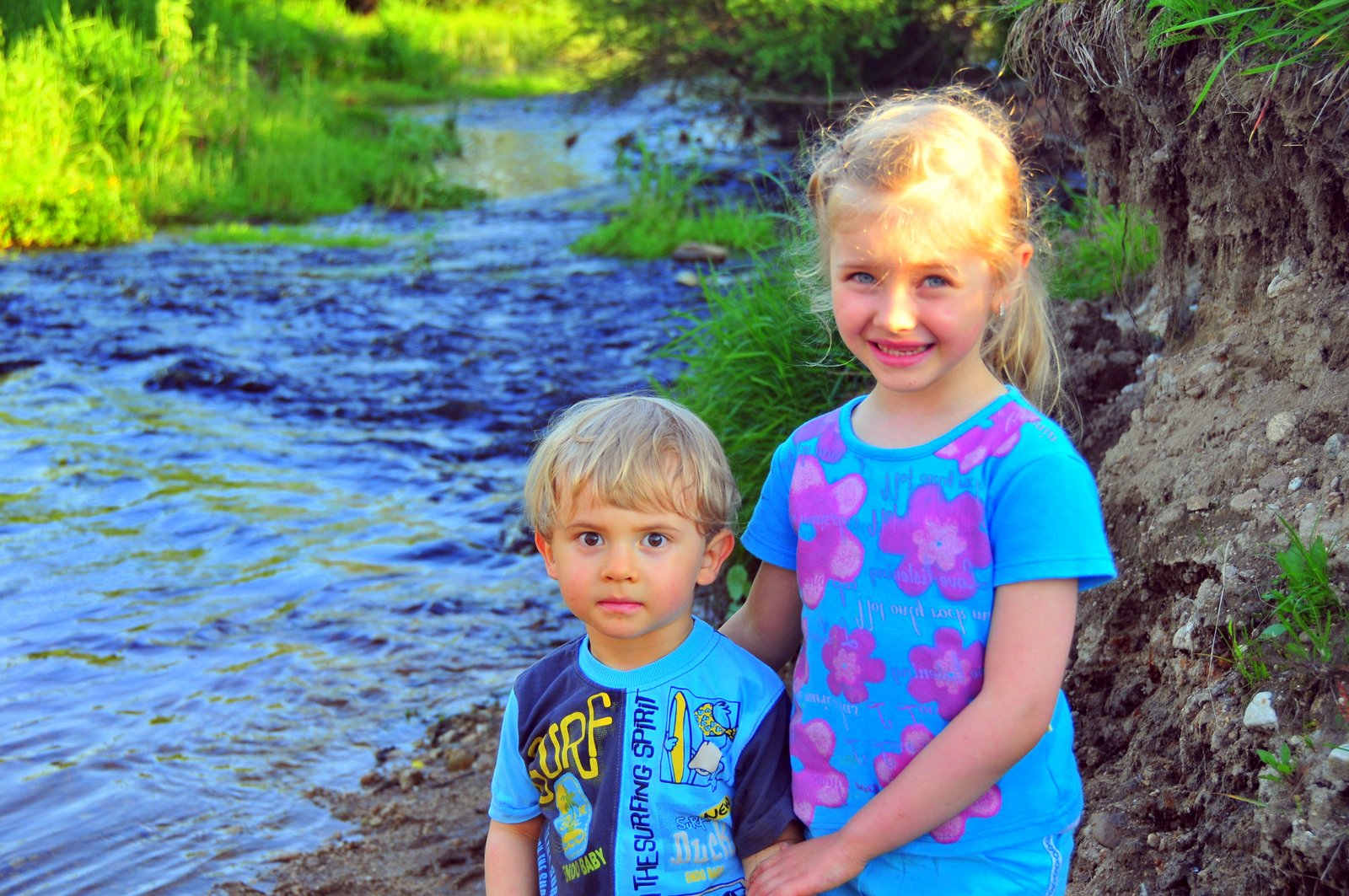
And at the end of the walk, the river, a babcia with her two grandchildren played at the water’s edge, with the boy begging over and over for a picture.

“Honey, I left my camera at home,” babcia answered.

“I’ve got a camera,” I offered, which led to a long conversation about the weather, about moving here and there, about vacation — a wandering conversation that seems like it could have only happened outside the States. But perhaps that’s just me projecting.

VIV_3292

Once we’ve met our goal, though, we turned to return. Everyone else, though contiued working. As long as there’s sun to illuminate the task at hand, they continued working.

VIV_3298

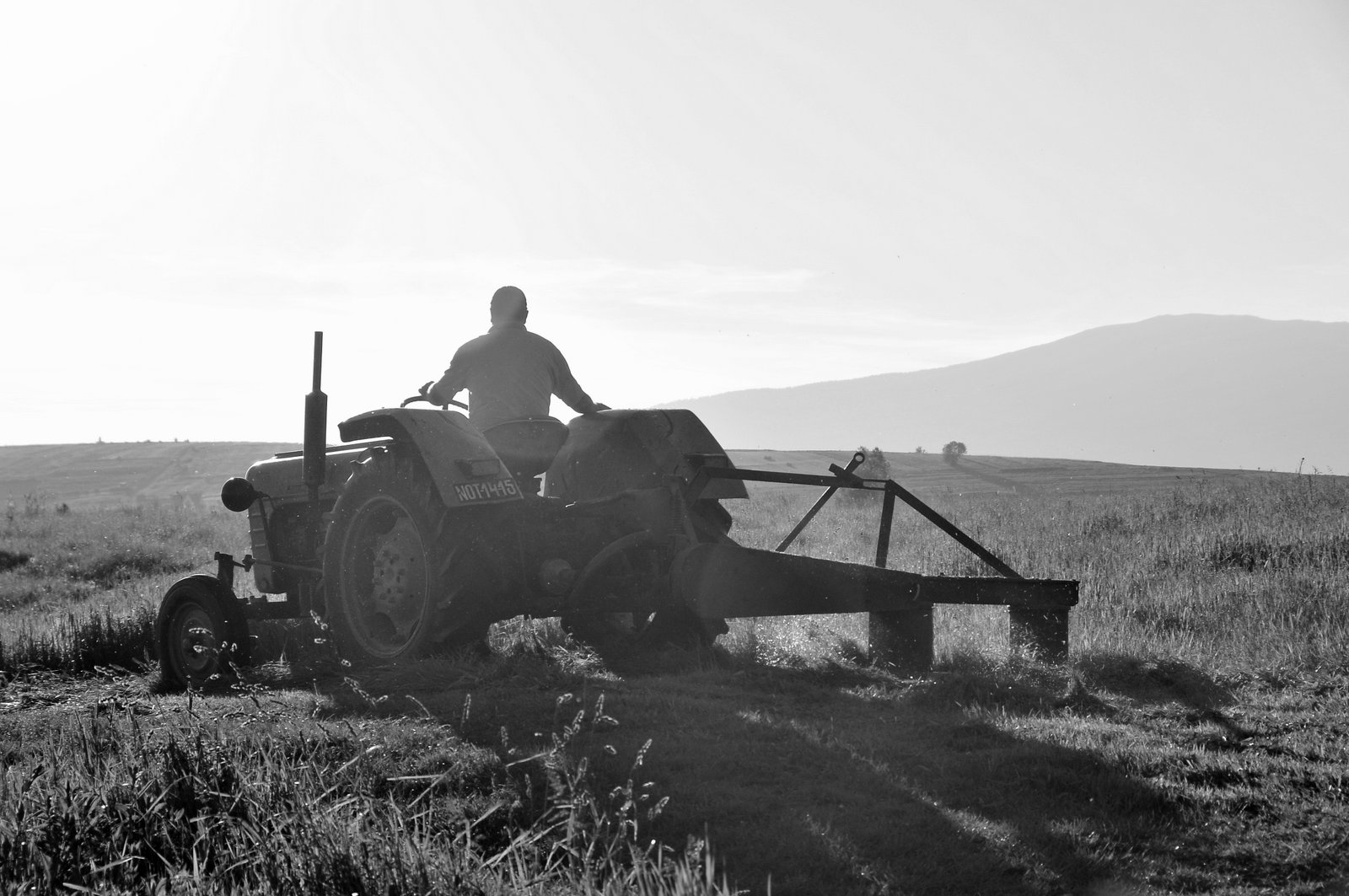
As I neared home, the tractor rattled up behind us, passangers hanging on the back, other helpers coasting along behind.

VIV_3303

Perhaps though not in the same way, we might very well have been thinking, “A good day — a good day.”

Growing

VIV_3273

Arrival 2000

"So what's new in Lipnica?" I asked as we bounced and bumped along the rough roads of southern Poland. It was June 2000, and I'd been gone from Poland for a year. A number of unexpected developments led me back much sooner than I expected, and I was in the car with two of the first guys I met in Lipnica, two guys I'd consider my best friends of my time in Poland, K and J.

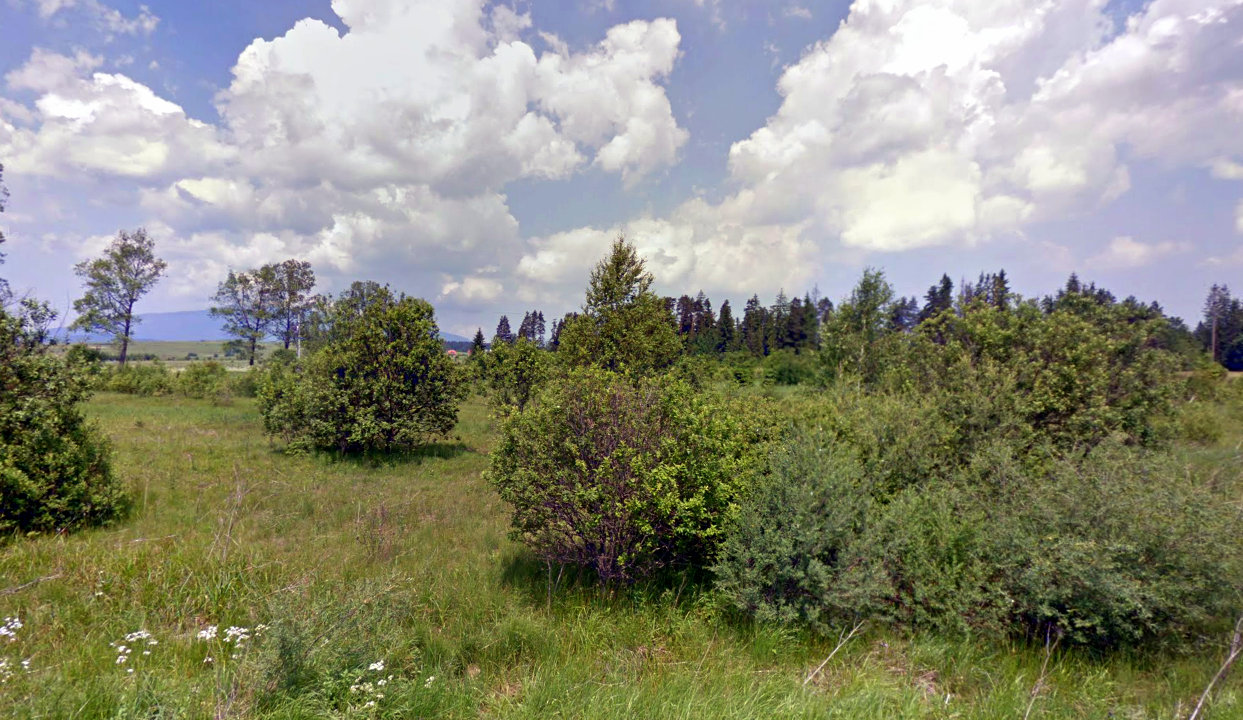
What could have possibly changed in a year, I wondered. Lipnica is the end of the trail: it is on a road that literally led to the base of a mountain and nowhere else. No one passes through Lipnica; one can only go to Lipnica.

1-Fullscreen capture 6102013 104909 PM

"So what's new in Lipnica?" I'd only meant it metaphorically. What could be new in a village that sustains itself through a bit of logging and a lot of working abroad? One could pass by house after shuttered house in the village, its occupants in Germany, Austria, or even America, working to earn money to finish the house, to improve the house, perhaps even to forget about the house. Lipnica is not a village on the rise, I thought.

1-Fullscreen capture 6102013 104323 PM

All images via Google Street View in anticipation.

"So what's new in Lipnica?" Perhaps I was asking about gossip, for everything I saw out the car window as we neared the village looked essentially the same. Fields and forests, forests and fields. Probably the same view for generations.

"So what's new in Lipnica?" I asked as we came out of the last forested area before the village.

"You're about to see," came the reply.

1-Fullscreen capture 6102013 104339 PM

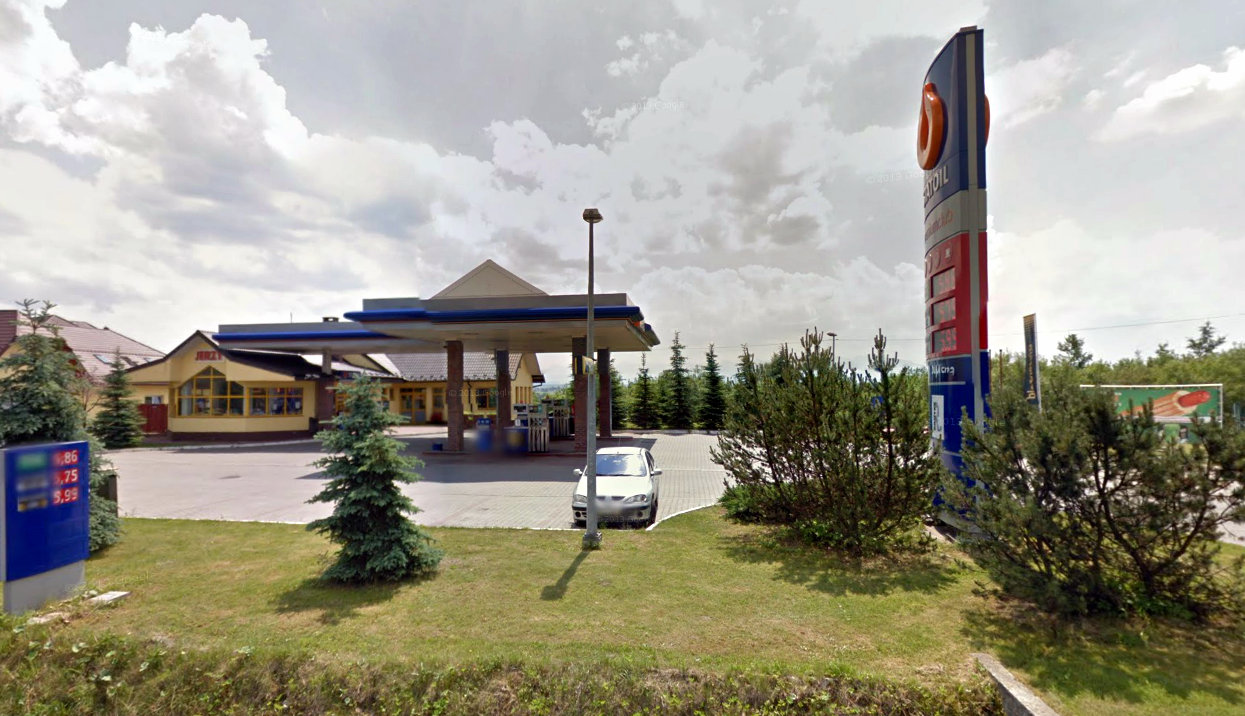
I probably cursed at the surprise of seeing a gas station in the pristine fields leading to the village of my dreams and often frustrating reality for three years. A travesty; a sacrilege; a profanation.

I'm told the changes in Jabłonka are even more shocking. "You won't recognize it," I'm told. "You won't believe it," I hear.

And Lipnica?

Charlotte to Frankfurt

The post I thought about writing: how was this a disaster? Let me count the ways. It began with the simple fact that the owners and operators of Charlotte airport thought it would be a good idea to renovate the parking, but this meant demolishing completely the existing parking facilities, putting everyone in long-term parking, and busing them to and from the facility itself. This means long lines to get to the terminals, long lines to get to the parking, long lines to get from the parking to the buses–long lines everywhere. The next disaster took a while to strike. We checked in without problems; we got through security with no issues whatsoever; we found our gate quickly.

And then the problems started again.

There appeared to be a line, so we stood in it. Only to find it wasn't the line to check in. Check in? Who needs to check in again at the gate? Everyone.
“Are you in line?”

“Yes.”

Five minutes later, I ask again. “Are you in line to check in?”

“No.”

Where is the line for checking in? There is none. There's a mass of people, a gaggle of travelers, bunched up around the check-in desk, but there's no line. And once we wade through this mass, we learn that the gentleman whom we were waiting to speak with now has to do the boarding procedures, thank you, and we'll have to wait for that gentleman, over there. We finally get to the gentleman in question, who makes two pink marks on our boarding passes and hands them back to us, sending us to another mass of people were we'll wait to board the plane.
Once on the plane, the next adventure: a poor child who is in complete panic, screaming, screaming, screaming endlessly. As a parent, I completely understand, and more than anything, I feel sympathy for the child and the parents. But that sound does grate, even when it's your own child. And then the second child, in a different part of the plane. And then the third, in yet another. What I'm really expecting at this point is to hear and endure the complaints of the passengers around me, but thankfully, either they all think the same thing that's running through my head, or they're just keeping their comments to themselves. It's a nice unexpected development nonetheless.

We're about to pull away from the gate when the next adventure strikes: a fault in the electronics of the plane is indicating that a door is open when it clearly isn't.

“Ladies and gentlemen,” the captain begins. “We've got a little malfunction here that is going to require some time to fix. We'll have to wait a few minutes as the maintenance crew performs some checks and diagnostics.” Fifteen minutes later, we receive the all-clear and begin taxiing out.

At which time the next adventure begins: the air conditioning ceases working. And in a plane of that size, it means instant heat, instant high humidity–instant everything unpleasant. A few minutes pass.

“Ladies and gentlemen, as you've probably noticed, we are experiencing some difficulties with the air conditioning. We'll have to return to the gate to have the maintenance crew look at this new issue,” crackles the pilot over the PA system. The diagnostics are estimated to take half an hour; the fix ends up taking another hour or so. All told, by the time we are taxiing back to the runway, we're two hours behind schedule.

The next challenge is only a mild inconvenience, but irritating nonetheless. The audio system for one of our seats doesn't work, and so movies are out of the question one of us–there's little doubt who that “one” is. And of course the airline-provided headphones won't stay in L's ears, so I give her the ones I brought and take hers. Which have terrible sound and are inaudible even at the highest volumes when I plug it into the iPod.

It's easy to complain -- too easy. There are other inconveniences, but there are blessings as well. The flight is without incident. L is able to curl up into her seat and fall asleep. The entertainment selections for L are suitable and enjoyable. I manage to get a touch of rest. Still, on the balance sheet, this airline comes out far behind Lufthansa. The moral: be more flexible with your dates and fly the airline you trust.

Now we sit in Frankfurt airport, waiting for our connecting flight. L plays Angry Birds on the Nexus and I sit wondering if I'll be able to make the drive from Krakow to Jablonka or if we'll end up staying at the brother's-in-law place. The hardest part is behind us, I like to think; the most tiring anyway.

Arrival 1996

It's been almost twenty years since I first went to Poland with seventy-some other Americans in an effort to save the world. We were young. We were idealistic. And truth be told, most of us we were probably a little naive. We were probably there less for altruistic reasons than we would have cared to admit.

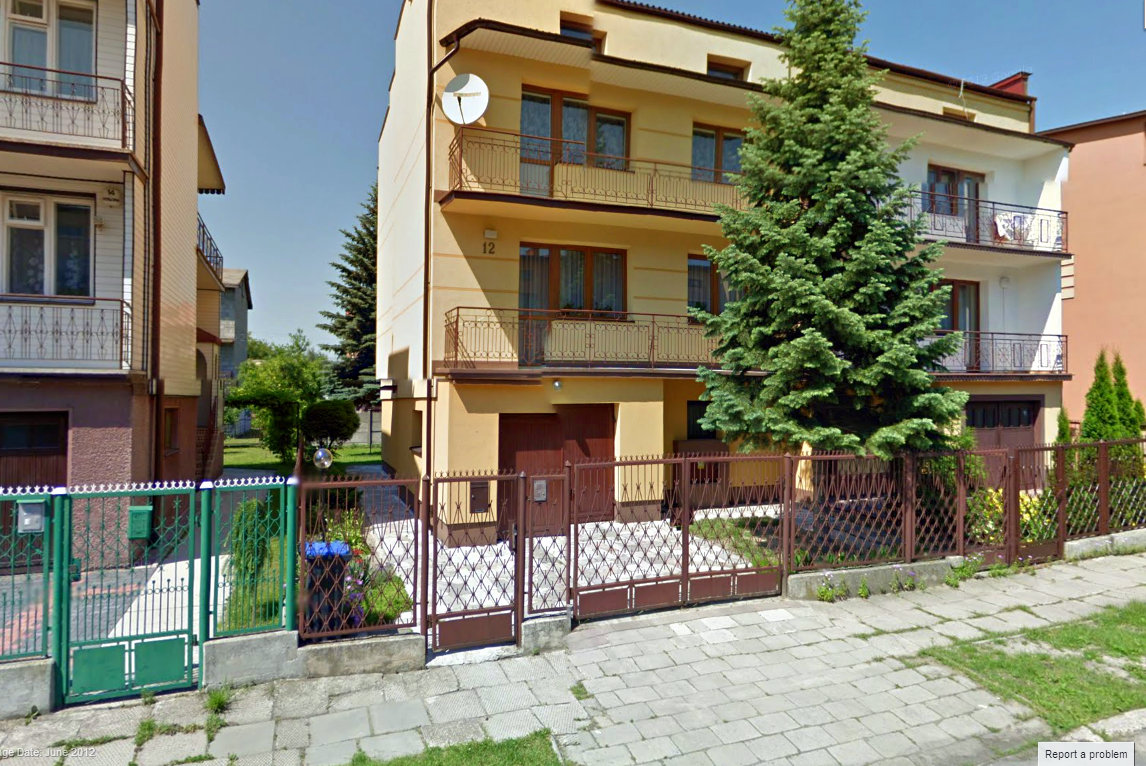
We arrived five hours late, thanks to a mechanical issue with the plane and the necessity of flying a replacement part from Atlanta to Dulles, so when we pulled up to the ul. Bolesława Chrobrego 33, it was early evening as opposed to midday. The sun was setting, and all around the square, socialist-realist building where we volunteers would soon be spending so much time, dozens of Poles -- our host families -- milled about as kids were rollerblading on the sidewalk surrounding the building. We all stood around as the staff matched host families to volunteers, and I stood with my tired bags, wondering where I'd be spending that night. A young man, newly-graduated from liceum, approached me, led by a staff member and accompanied by a middle-aged mustachioed man.

1-Fullscreen capture 682013 85721 AM
Photo via Google Street View

"This is Piotr, your host brother," said the staff member, and soon, I, Piotr (who insisted I anglicize his name to "Peter") and the man I assumed to be my host father were roaring through Radom's streets in a Maluch -- a Fiat 126p, a small, ubiquitous car with little leg room and a 24 horsepower engine -- arriving at ul. Perłowa 12, where I stayed for twelve weeks.

1-Fullscreen capture 692013 111434 AM
Photo via Google Street View

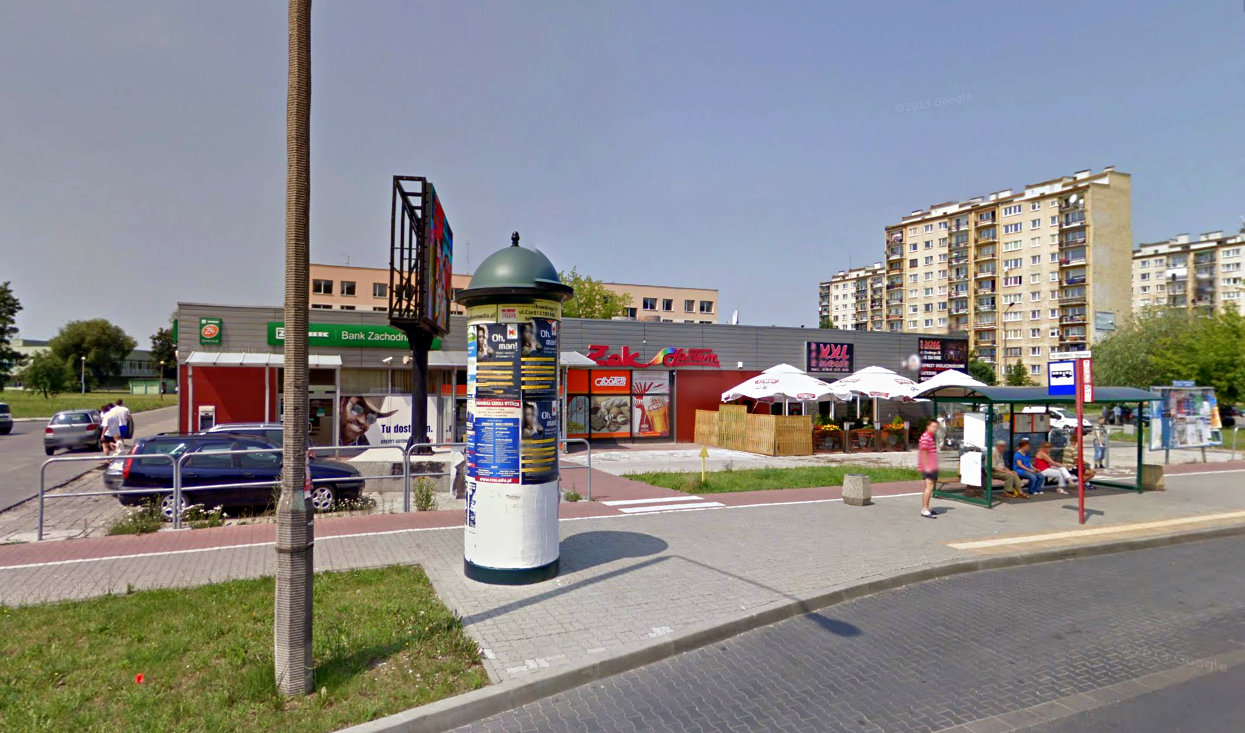
I never saw the man again, but I saw the arrival grounds on a daily basis, taking a bus (the the number fifteen, was it? or twenty-something?) up ul. Słowackiego, eventually getting dumped an empty lot where the bus turned around and headed back the other direction. I and two other volunteers -- a married couple -- were the first to get on, and as the bus lumbered along its route, more and more volunteers boarded until there was a little knot of Americans at the back of the bus.

1-Fullscreen capture 682013 90247 AM
Photo via Google Street View

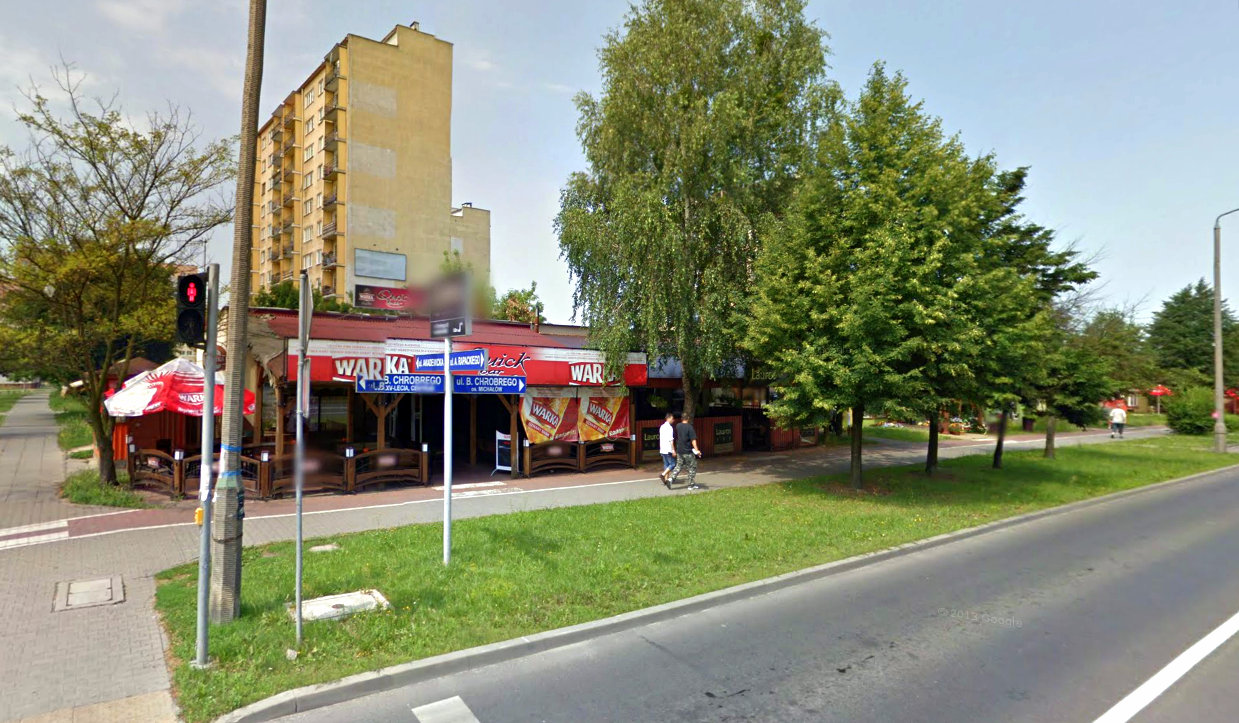
Our days usually started in a small shop next to the bus stop, just a bit in front and to the right of the training facility where we learned to teach English, to speak Polish, to protect the dziennik with our lives, and to do all the little things that were supposed to make our two years in Poland a success. We started at the store, though, because that's where all good days in Poland start, and because we needed water for the day and perhaps a snack or two. The water was obligatory: with no air conditioning, the buildings that housed our classrooms grew almost unbearable by late morning. Learning to decline Polish adjectives with sweat rolling down your back at ten in the morning is unpleasant to say the least, and the water served to mitigate and to hydrate.

1-Fullscreen capture 682013 85753 AM
Photo via Google Street View

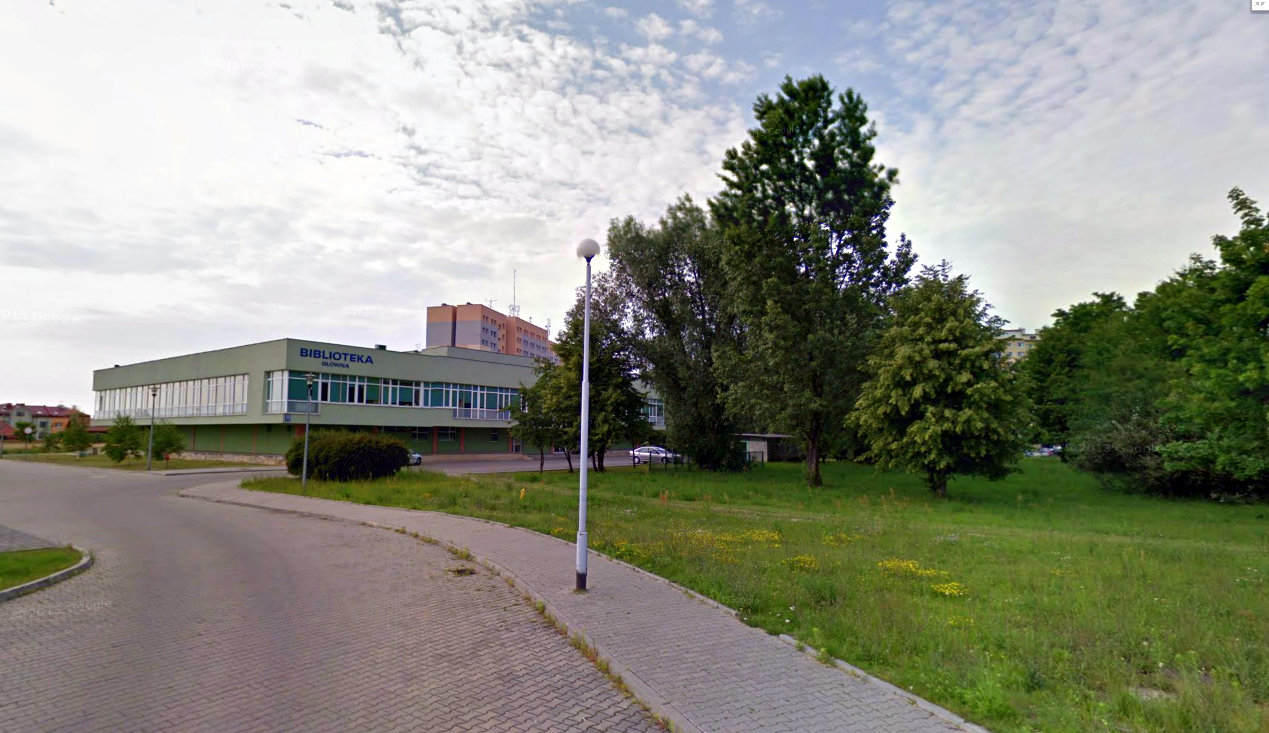
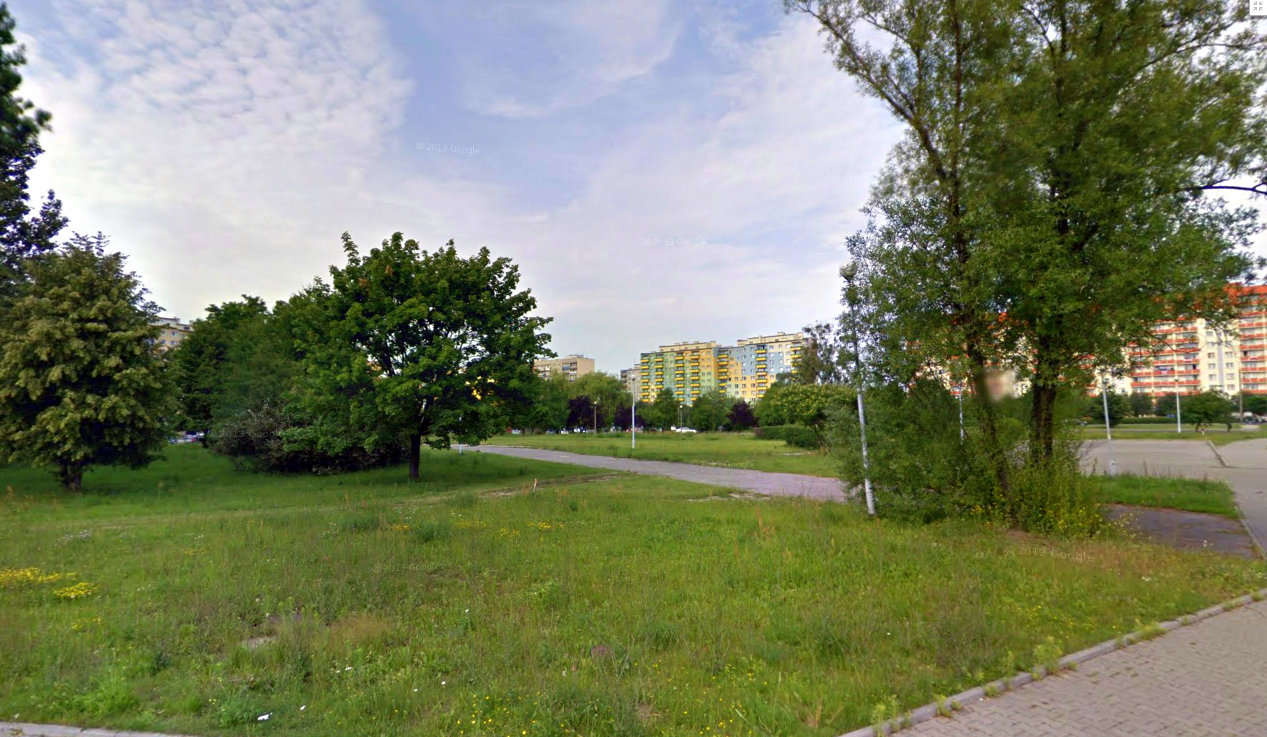
I've only been back to Radom a few times since training concluded, and I returned to the training center only once. Every time I've been in Poland since, I've wanted to return, to photograph the classrooms with the pealing linoleum and stained ceiling. The wonders of the Internet, though, show me that that's now impossible: where the long buildings once stood there is only a grassy field. The socialist-realist building that housed the cafeteria that served potatoes with dill every single lunch and that held the large meeting room where we gathered as a group is now a library for the Uniwersytet Technologiczno-Humanistyczny im. Kazimierza Pułaskiego, a tech/art (what an odd combination) university.

1-Fullscreen capture 682013 90322 AM
Photo via Google Street View

The one thing that really hasn't changed: the clump of bars just across from the bus stop. A group of us almost always ended the day there, having something cool to drink before heading back to the rigors of host-family life.

Every time I arrive in Poland again, I think of these first weeks I spent in the summer of 1996. The frustration of learning a difficult language, the adventure of always being out of my element, the ironic simultaneous newness and oldness of everything around me new -- all these things made each second seem more alive than anything I'd experienced before.

When I return now, nothing is new. Familiarity doesn't necessarily lead to contempt, but it does threaten complacency. K and I always visit the same sites, spend time with the same people, drive the same roads -- it's only natural when you only make it back once every couple of years. This summer, though, I'm determined to see things anew again.