Matching Tracksuits

fun in fours

playing

Day 31: The Walk

I’ve been reading Faulkner and thought it might be fun to emulate him. Forgive me.
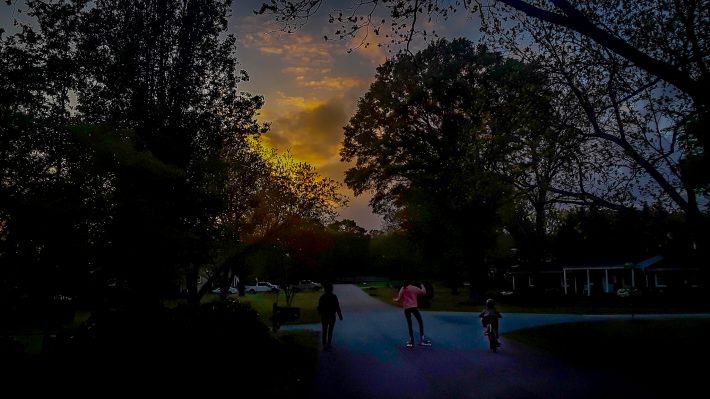
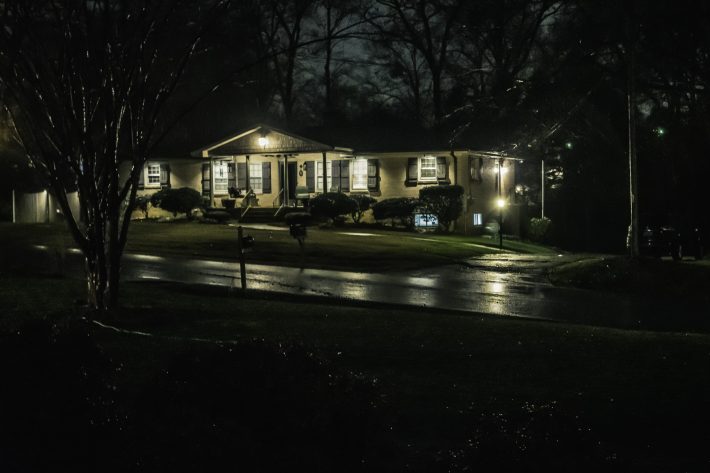
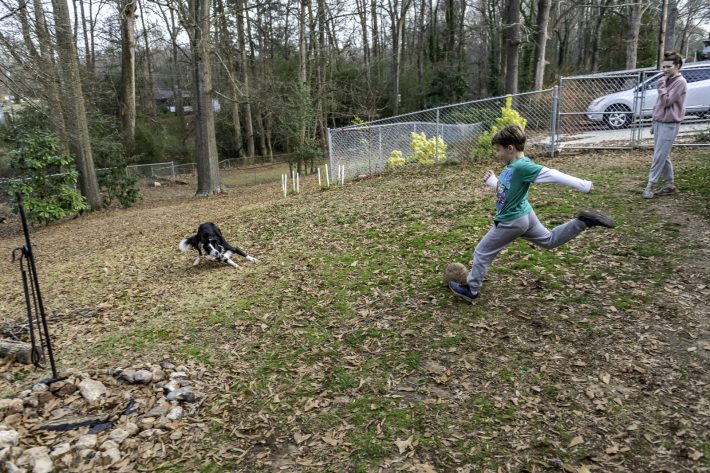
Having cleaned up after dinner, a process that entails both the obvious cycling of dishes back to the dishwasher only hours after having taken them out to hide them neatly in stacks concealed behind cabinet doors only to place them on the table yet again in and endless cycle that is the bane of our children’s existence and the not so obvious assisting Papa in his regimen of oral hygiene procedures foisted on him by childhood dental neglect, a regimen that has become a comforting habit rather than a chore, we head out for our evening walk, a Covid-19-induced habit that might be the best outcome of a worst-case scenario. Tired of the usual routes, we’ve taken to walking a circuit that runs through the neighborhood just across from ours, a newer neighborhood without power lines snaked between crooked power poles but not so new as to have sidewalks, a neighborhood with a slightly more eclectic mix of architecture. For about a year now this has been our favorite route, in part because K likes the feel of the neighborhood more than others, in part because of its distance — almost exactly a mile — and in part because of the long, straight, flat stretch that it includes where the kids, L on her rollerblades and E on his bike, play a strangely frustrating version of tag that includes time outs and random rules that E is convinced — and I am likely to agree — are L’s on-the-spot inventions intended to keep her from being tagged.

Enough — how that man could write like that, though what I did was just a pale imitation, lacking the lugubrious flourish he put into every sentence as if it were the habit of a card cheat. See? Once you start writing like that, start thinking like that, once you start piling phrase upon phrase, clause upon clause, it’s almost impossible to stop, so maybe that’s how he did it: just a big push and off he went, heedless of periods, question marks, semicolons, and anything else resembling in its vaguest form something that someone could accuse of being an ending, a final mark on the paper to suggest “Stop.” The result, in all seriousness, is nothing short of breathtaking. His greatest achievement, Absalom, Absalom!, just sings right from the opening sentences.

From a little after two o’clock until almost sundown of the long still hot weary dead September afternoon they sat in what Miss Coldfield still called the office because her father had called it that-a dim hot airless room with the blinds all closed and fastened for forty-three summers because when she was a girl someone had believed that light and moving air carried heat and that dark was always cooler, and which (as the sun shone fuller and fuller on that side of the house) became latticed with yellow slashes full of dust motes which Quentin thought of as being flecks of the dead old dried paint itself blown inward from the scaling blinds as wind might have blown them. There was a wistaria vine blooming for the second time that summer on a wooden trellis before one window, into which sparrows came now and then in random gusts, making a dry vivid dusty sound before going away: and opposite Quentin, Miss Coldfield in the eternal black which she had worn for forty- three years now, whether for sister, father, or nothusband none knew, sitting so bolt upright in the straight hard chair that was so tall for her that her legs hung straight and rigid as if she had iron shinbones and ankles, clear of the floor with that air of impotent and static rage like children’s feet, and talking in that grim haggard amazed voice until at last listening would renege and hearing-sense self-confound and the long-dead object of her impotent yet indomitable frustration would appear, as though by outraged recapitulation evoked, quiet inattentive and harmless, out of the biding and dreamy and victorious dust. Her voice would not cease, it would just vanish. There would be the dim coffin-smelling gloom sweet and oversweet with the twice-bloomed wistaria against the outer wall by the savage quiet September sun impacted distilled and hyperdistilled, into which came now and then the loud cloudy flutter of the sparrows like a flat limber stick whipped by an idle boy, and the rank smell of female old flesh long embattled in virginity while the wan haggard face watched him above the faint triangle of lace at wrists and throat from the too tall chair in which she resembled a crucified child; and the voice not ceasing but vanishing into and then out of the long intervals like a stream, a trickle running from patch to patch of dried sand, and the ghost mused with shadowy docility as if it were the voice which he haunted where a more fortunate one would have had a house.

Four sentences weighing in at just a little over 400 words, with three of the sentences doing most of the work: that third sentence is so perfectly short (“Her voice would not cease, it would just vanish.”) that it creates the perfect rhythm, a little pause in the thinking that gives both authenticity to the voice and rest to the reader.

I’m reading Absalom now, probably for the tenth or twelfth time, and each time I read it, I notice a little something that had escaped my attention previously: some little piece to the puzzle (for the book is, at its heart, a puzzle to match the puzzle that is living itself), some lovely phrase, some little something. I don’t think I will ever tire of that book, and every time I finish it, I look forward eventually to starting it again: “From a little after two o’clock until almost sundown of the long still hot weary dead September afternoon they sat in what Miss Coldfield still called the office…”
Day 30: Uno

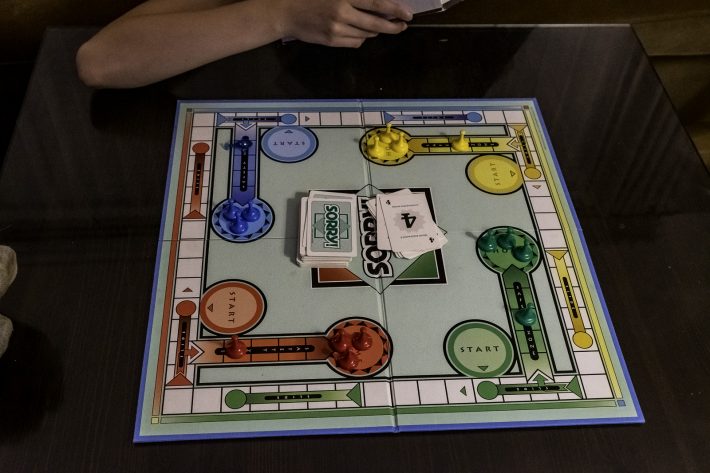
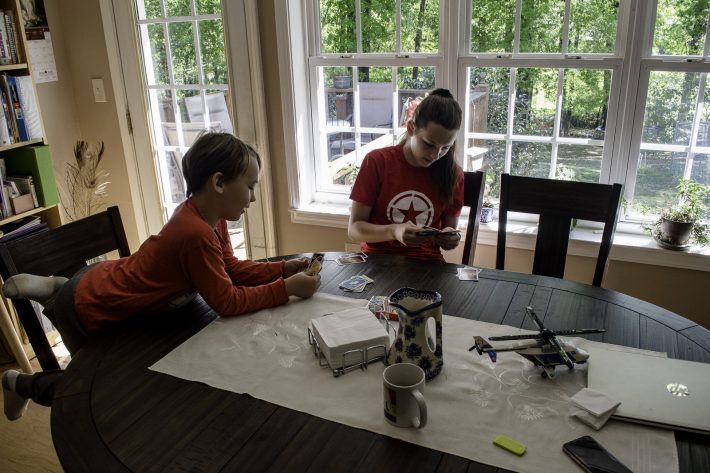
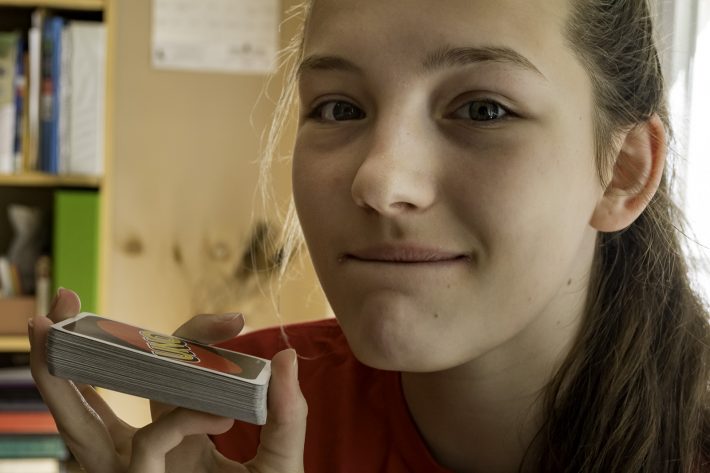
Uno, of late, has taken over Sorry as the game of choice, which in turn displaced Monopoly from the top spot. I don’t know how long Uno will last, but it’s been going strong since the weekend. It has certain advantages over other games — well, one big advantage that I see: Papa willing plays with them. Sorry is just not his game, and I think he dislikes Monopoly more than I do. With those two games, he generally just watched and cheered on the kids; with Uno, he plays from time to time.

But not when the kids get crazy ideas like dealing out 50 cards each. And when the kids play games like this, they have to adapt the rules. After all, they’ve essentially divided the deck between them: what sense does a “Draw 2” card make when there are no cards to draw from? (Simple: just draw from the discard deck.)

How can you possibly manage to organize so many cards? Well, when there are two playing the “Reverse” and “Skip” cards essentially mean the player gets to play again. So just line up all those cards and play them one after another. (Never mind that “Reverse” wouldn’t work that way and would simply have no effect. They’re not worried about logic, just about having some fun. And thinning the herd somewhat.)

Day 24: Legos and “Weeds”

The Boy got a fair amount of money from Babcia for a) his first communion and b) his birthday. Both are over a month away; the latter is sure to happen, the former, not so much. But Babcia sent the money early because she wanted to be sure it got here in time.

“I’m rich!” he squealed and began plotting how to spend the money.

“Not so fast!” K jumped in. The money for first communion must go toward something, well, churchy. “Do you know what Ciocia Z bought me for my first communion?” K asked E. “The image of Saint K that’s over our bed.”

“In your bedroom?”

“Yes.”

“You still have it?” We tried to explain that yes, that is the point.

As for his birthday money, well, that’s his to spend as he wishes. Within reason. “You’re not spending it all on Pokemon cards!” K and I said in chorus — or if we didn’t, we at least thought it at the same time. Roughly.

There is, of course, one thing we’re always willing to let him buy: Legos. Anything that simultaneously builds, I don’t know, the ability to follow technical directions (when building the sets) and encourages creativity (when building everything else after the set has been demolished and all the blocks added to the growing collection) is to be valued.

“Daddy, I’m going to take my time with this set!” he proclaimed as he opened all the numbered bags and carefully poured them into bowls (that’s where they are, K, when you’re looking for them).

With all the free time he has now, that’s a good idea. But even if it goes faster than he planned, there’s always some trimming to do.

Day 23: Conferencing and Apologizing

Conferencing

We had a chat in English I today about the mad dog scene.

I was helping the kids see the significance of this seemingly out-of-nowhere scene. Students’ reaction to the chapter was fairly unified:

S1: It opened up a lot of questions to me about Atticus; what was his past life? How did he have the knowledge to shoot, and how did he shoot so well?

S2: I was in shock, mostly because of how I was pondering it’s relevance to the book. The act it’s self didn’t perturb me but it did show how close the community is.

Once I got the kids to see that the scene is there to set up one way that Atticus has, contrary to his children’s view, hero qualities in the traditional sense (read: macho sense), we’re ready for them to understand why he kept it under wraps for so long. (The Mrs. Dubose scene is critical for that.)

At the end of the conversation, one student asked me about our dog. (When experimenting with Flipgrid, I made a video for the kids, and in it, I showed them our dog.) There was a bit of a misunderstanding in our conversation today, though:

S1: How’s your dog?

Mr. Scott: She’s in heaven

S1: Wait, did she die???

Mr. Scott: She’s never had so much attention or gone on so many walks

S1: OH

S2: I was worried.

S3: I thought she died too-

S4: O I thought you meant she died

It struck me as odd that they thought I might use a phrase like “She’s in heaven” to tell them the dog had died.

Apologizing

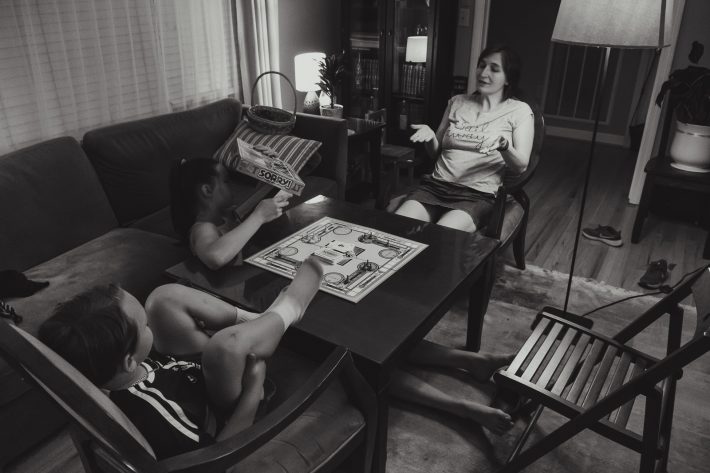
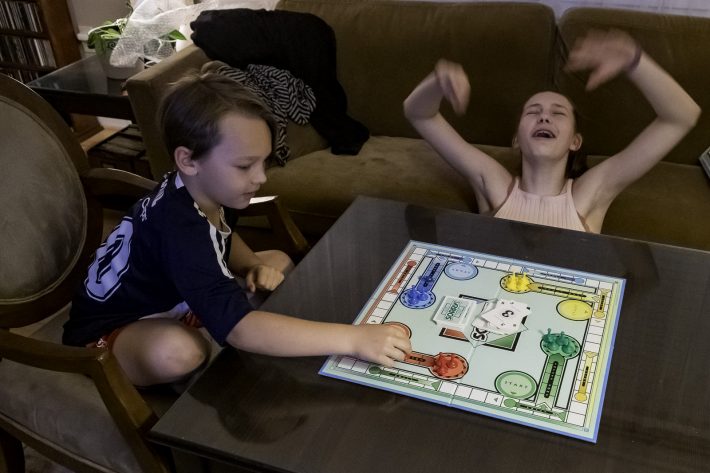
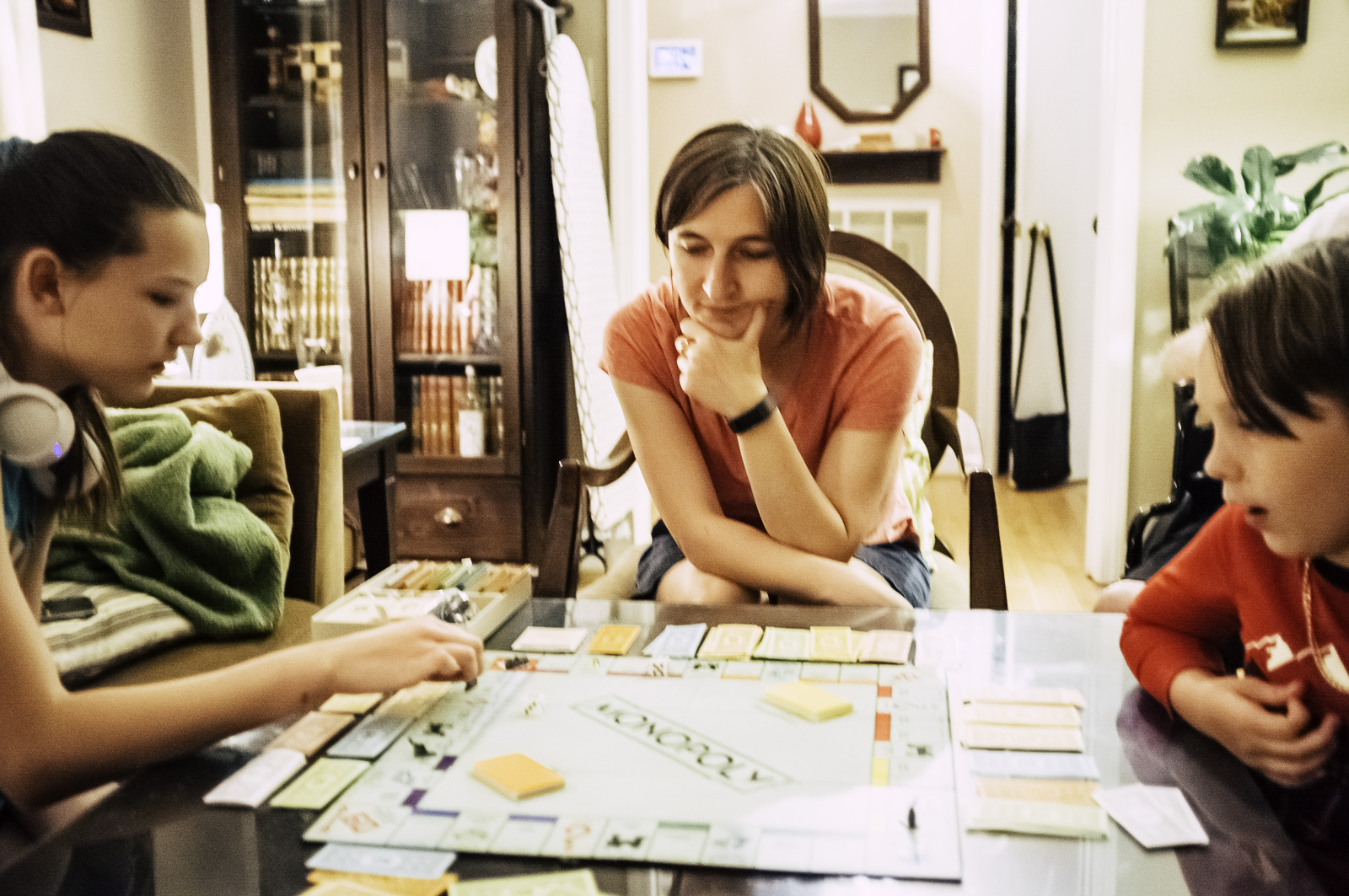
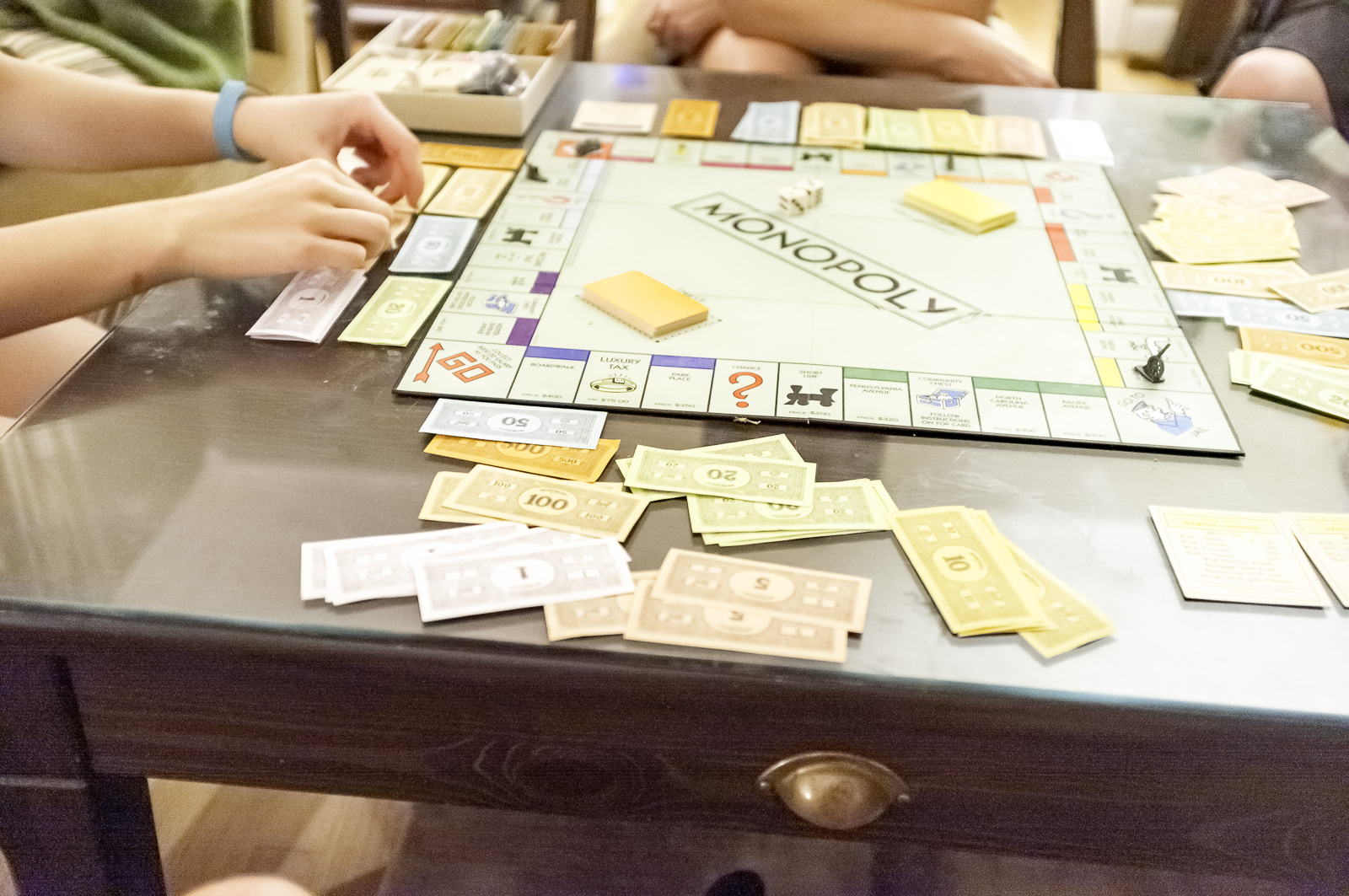
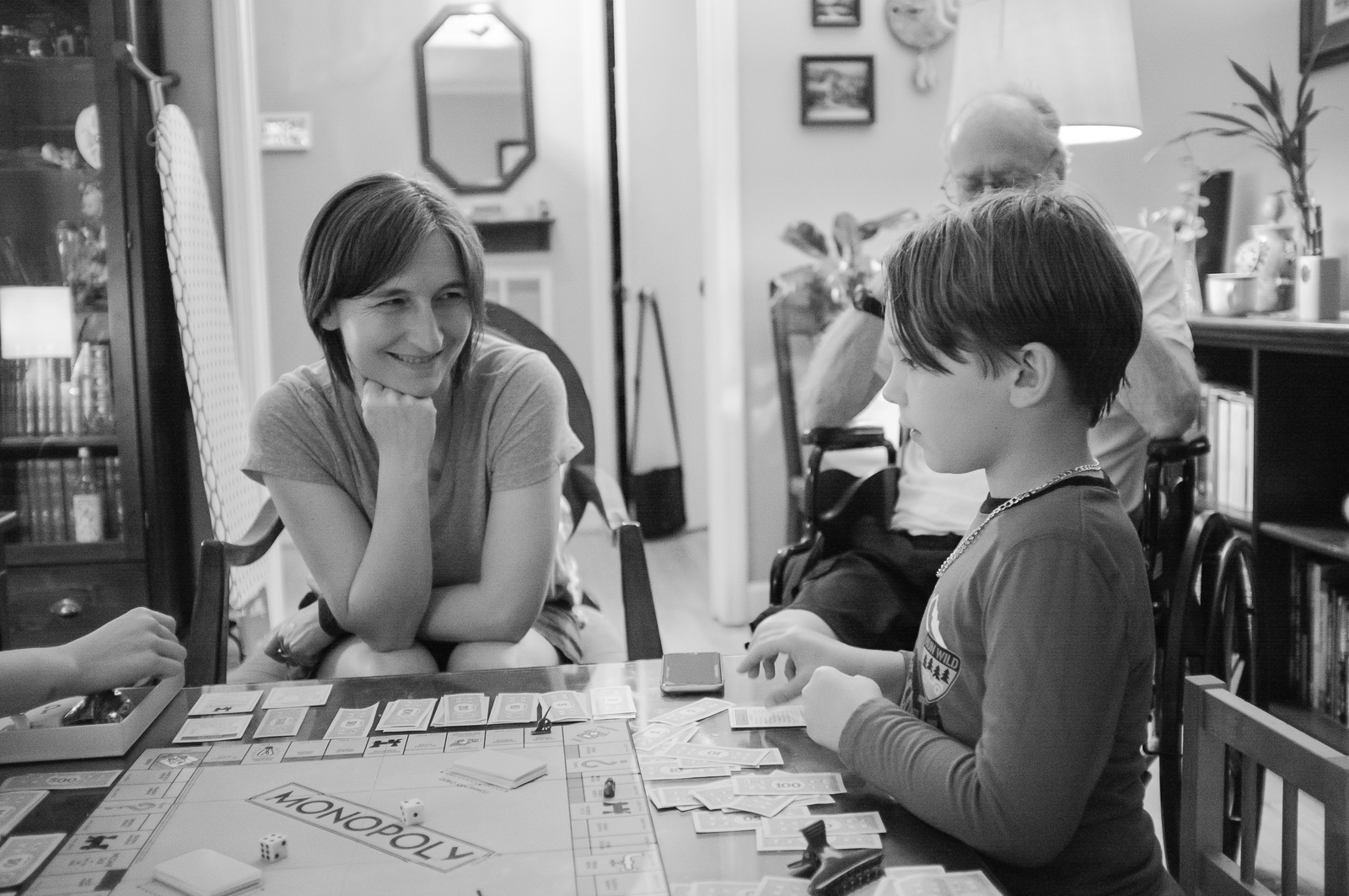
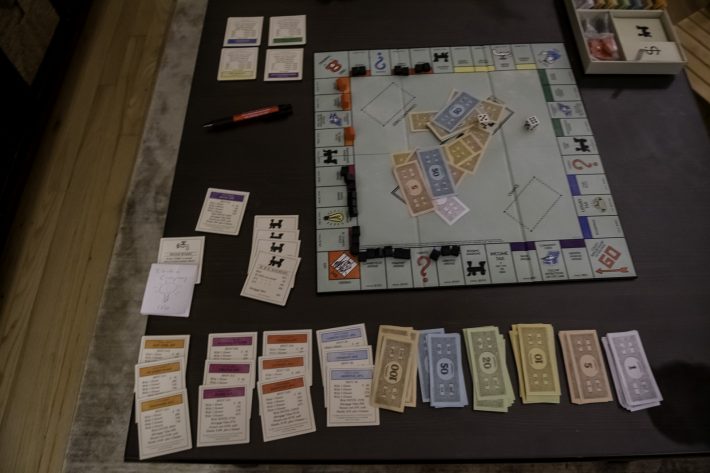
We go on a walk just about every single evening these days, and when we come back, if we have time, the kids want to play a game. Monopoly has held a monopoly lately, but today, the Girl talked E into trying Sorry again.

She was probably sorry she did.

E jumped into the lead and before almost any of us had more than one pawn in the “Home” circle, he had three. And his remaining pawn was stuck at “Start.” Forever. And ever. So long that we all caught up to him.

I have to admit, I was really rooting for him. When I drew I “One,” which would have allowed him to start moving, I wished I could slip it back in the deck for him. He’s so frustrated with board games because he never seems to win.

I wasn’t exactly helping L, though. I Sorry’ed her a couple of times, and at least once, when I drew the “Move forward ten or back one” card, I moved back one just to knock her back to start. Part of it was to see how she dealt with frustration. She did admirably well — that girl is growing up. (Slowly, but I guess we wouldn’t have it any other way. Well, about most aspects.)

The game kept going until it was a four-way tie: all four of us had three of our four pawns in the “Home” circle and the other pawn three or four moves away from victory. K stole the win from E, which is fair in a sense: in Monopoly, we’ve taken to calling her “slum lord” because of her property choices and indebtedness. She deserved a win. (Though she did come out fairly strong on the last time we played Monopoly…)

“Can we play for second?” L asked.

I somehow managed to get second place, which I really didn’t want. Again, hoping for the Boy to get a little bit of an upset.

“Can we play for third?” the Girl asked.

And the Boy swooped in to steal third.

Day 14: Another Sunday

The Boy is sometimes too sweet for his own good, I think. "Perhaps all seven-year-olds are like this," I want to say, but I know it's just not true.

There would be the dim coffin-smelling gloom sweet and oversweet with the twice-bloomed wistaria against the outer wall by the savage quiet September sun

This is not to brag on our child, for we've certainly done little, I think, to develop this side of his kindhearted demeanor. And this is not to suggest that he's always like this: he can be as selfish as any other kid his age, but those moments are often short-lived and his sense of generosity and fair play returns.

He often comes with a snack and offers to share with anyone around. When he was collecting rocks today, he wanted to make sure he shared with everyone in the family.

But it often shows in places one wouldn't expect, like normally-competitive situations -- boardgames.

Tonight, while playing Monopoly, K was hemorrhaging cash. She was down to a few ones and fives. Sure, she had a fair amount of property, but she had a definite liquidity problem. E, on the other hand, literally had a pile of $100s. He grabbed a few from his pile -- not even counting -- and gave them to K.

"Here, Mama."

"No, honey. That's very kind, but you don't need to do that," she smiled.

"But it's my money. I can do what I want to with it," he protested.

Later, he tried to do the same with me.

He did not, though, ever offer L any money, so I suppose the generosity doesn't always overcome sibling rivalry...

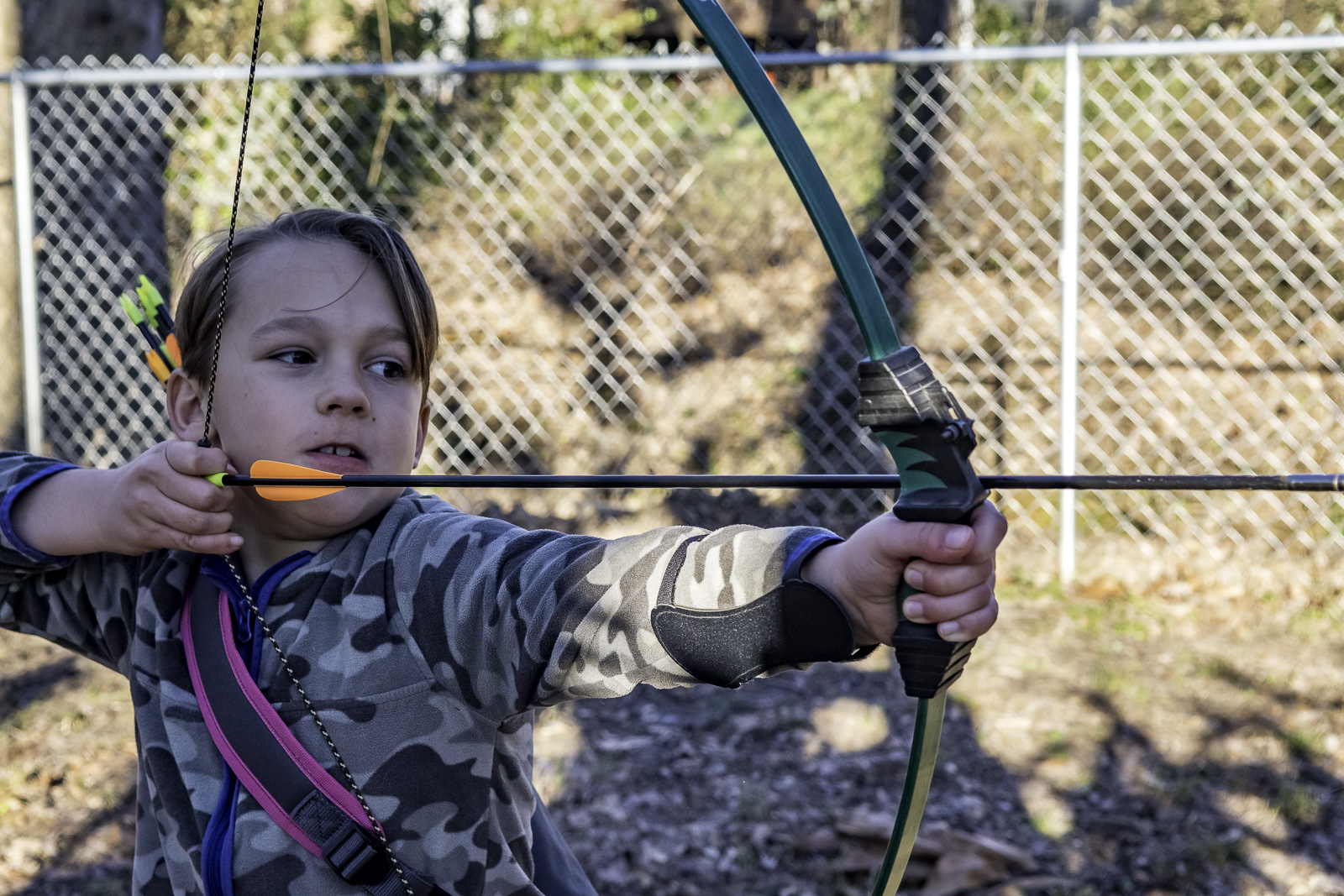
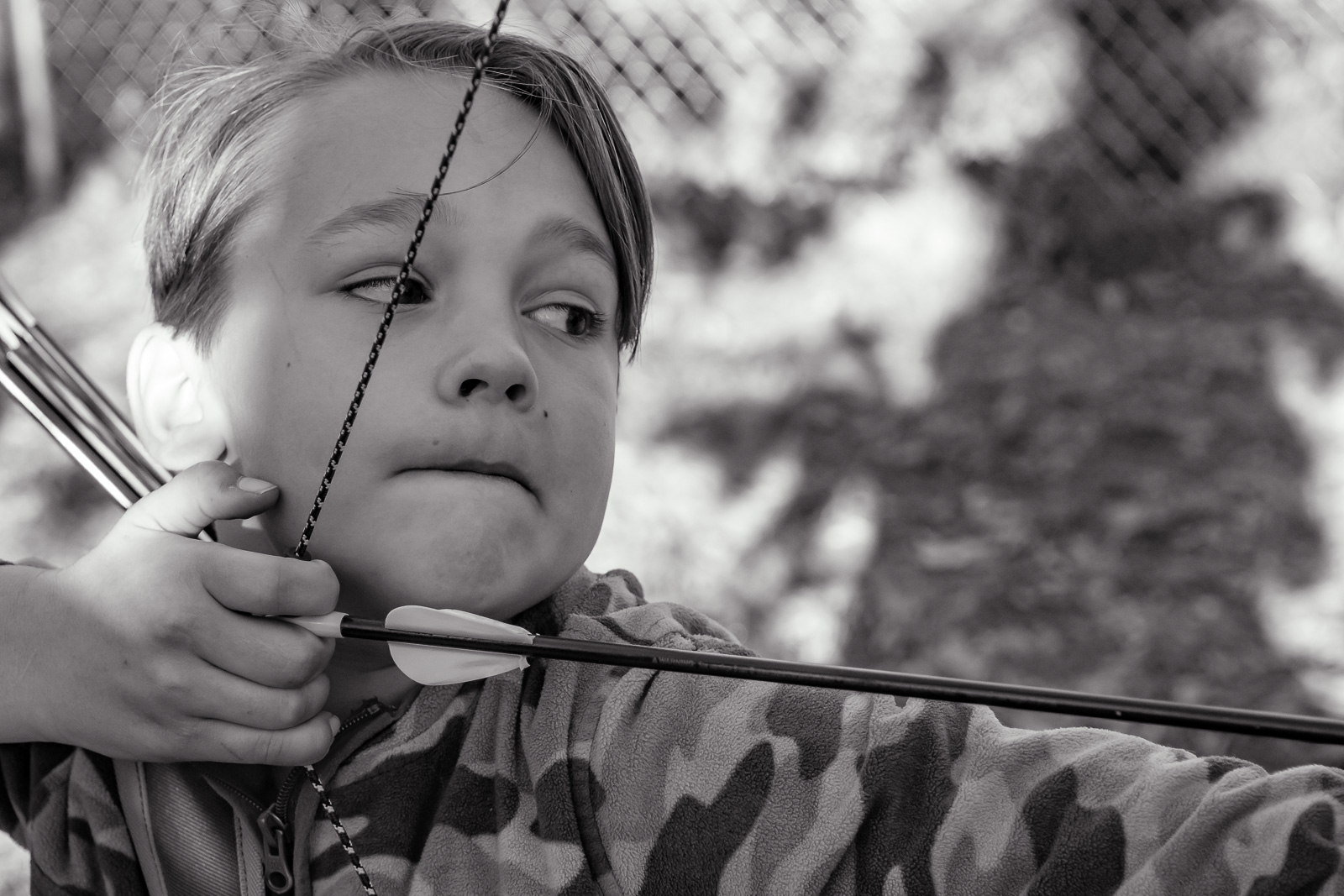
Shooting in the Back Yard

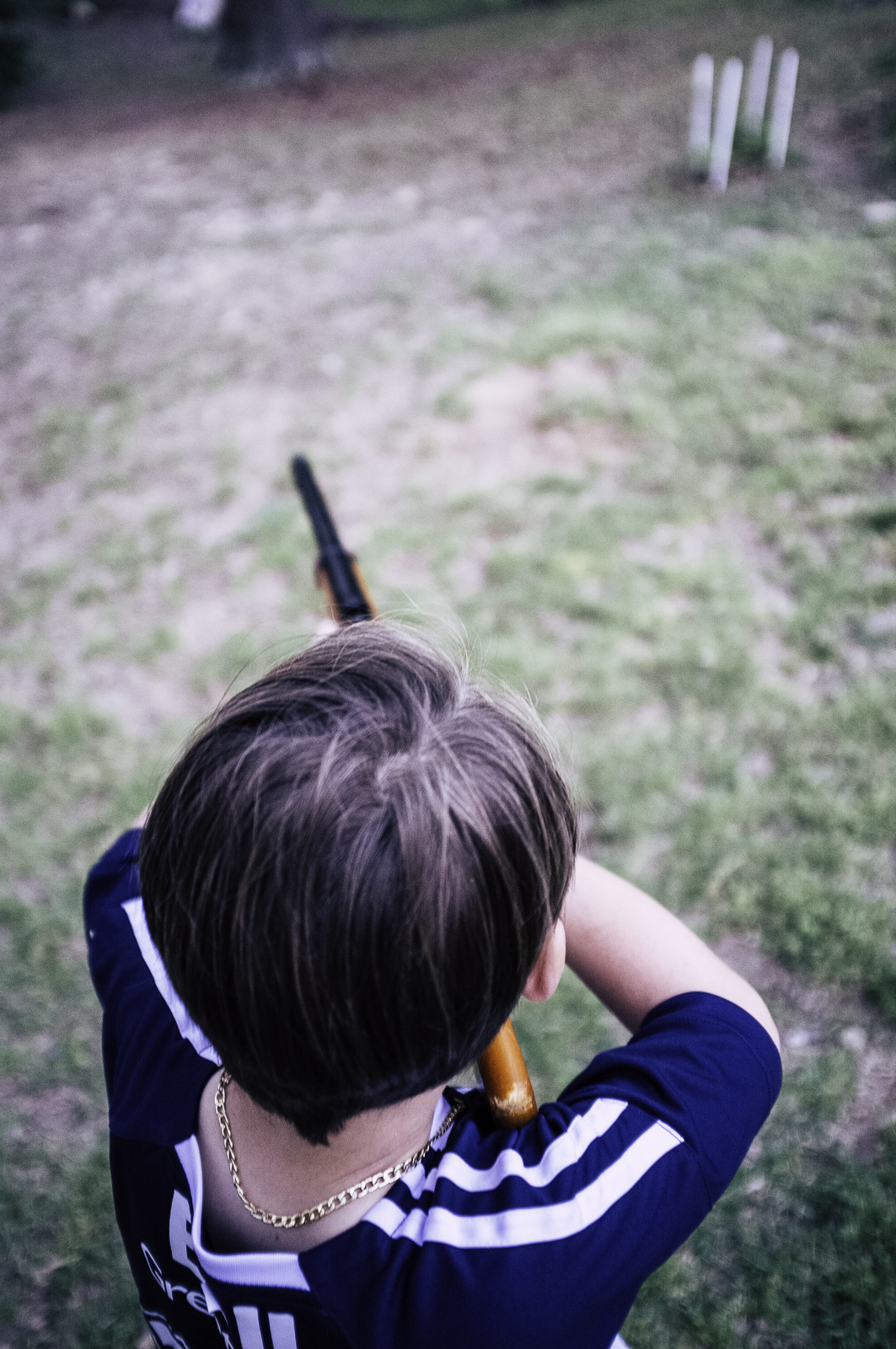
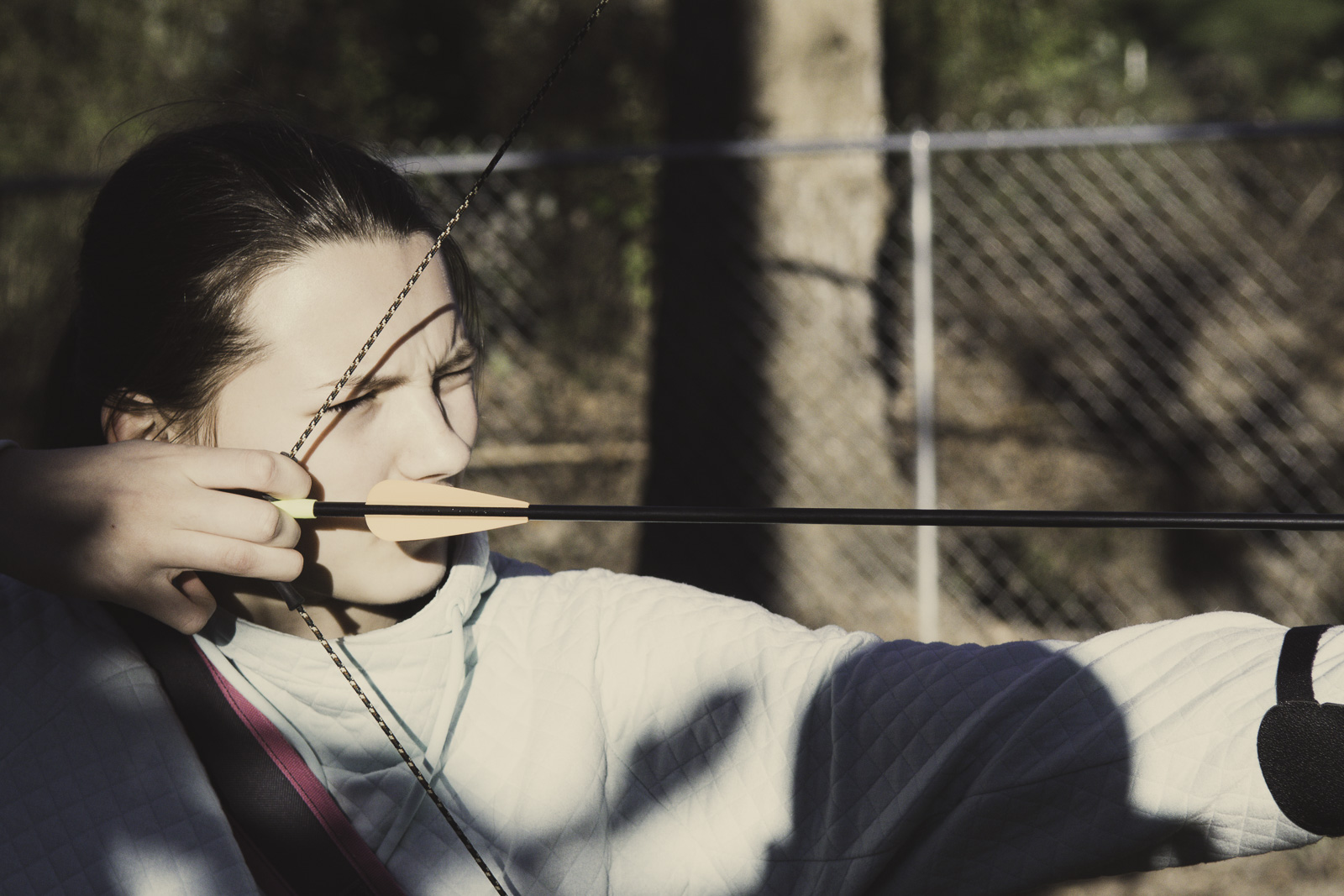
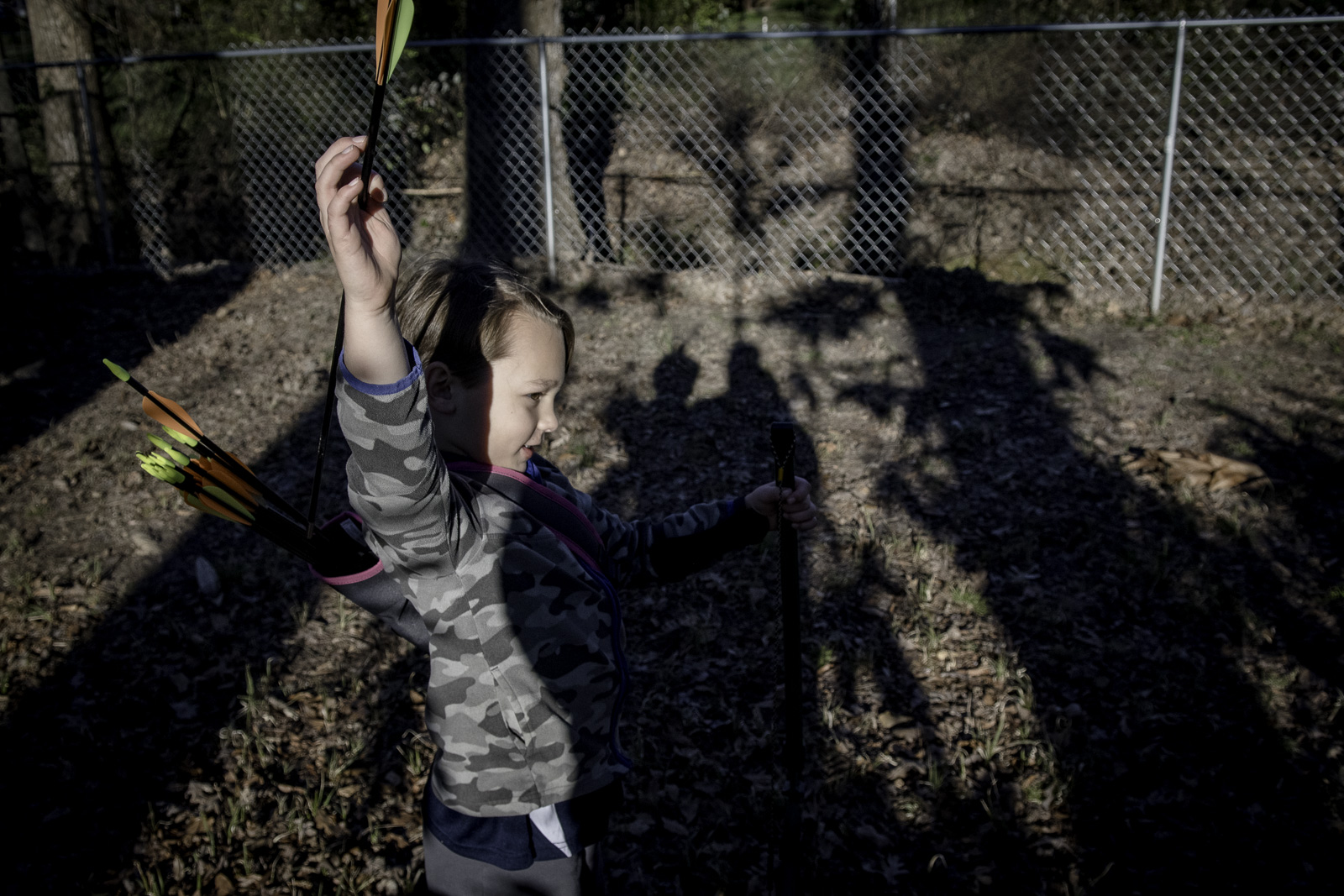
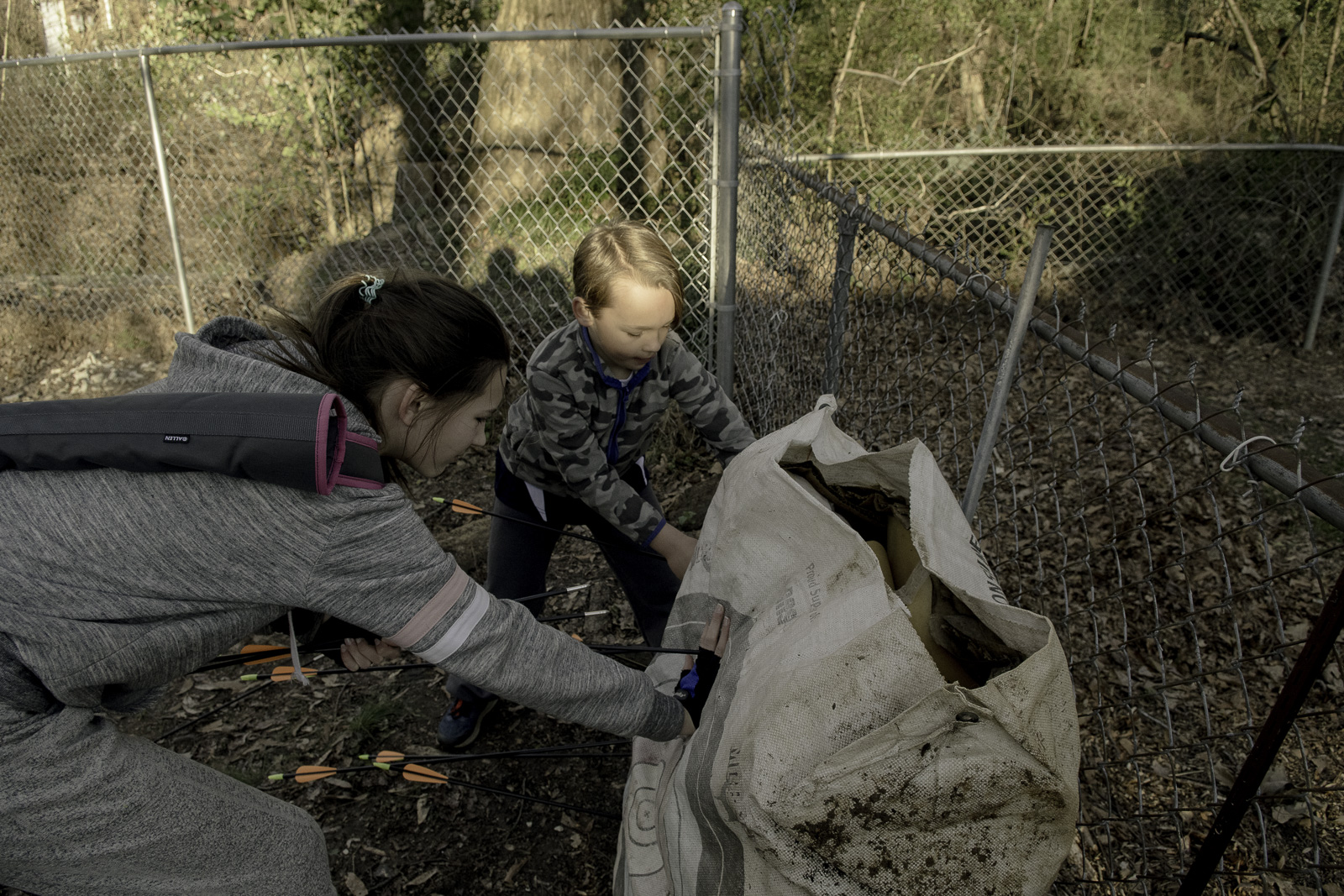
In the afternoon, after almost all the day’s necessities were behind us — shopping, a photoshoot at a local church for the diocesan newspaper, a soccer game (that I didn’t attend because I stayed behind to keep an eye on Papa, hence the lack of photos) — we went out to shoot L’s bow and arrows. K had gone to drum up some clients for her new venture in real estate, but the kids and I were, for all intents and purposes, done. Sure, I still had a consultation call with a client for a web site I’m building for her, but that was easily put off to the evening.

The Girl hadn’t lost her touch. Which is to say that she didn’t put a lot of arrows near the center of the target, but she didn’t miss the target entirely — which was the case when she first started shooting.

For the Boy, though, it was a different matter. He hit the target a few times — many shots fell ineffectually short, but he did hit the target a number of times. The problem was, though, that the bow was just a little too big for him, so he was not able to get enough pull on it, so not enough energy went into the arrow. So every single shot that did hit the target bounced off.

Understandably enough, it was a source of great frustration.

“Daddy, I can’t make any of them stick!”

What to do when your boy is frustrated and wants to quit? Make a joke of it.

“It’s almost like the target is against you, like it has a will of its own. Like it has some kind of Jedi power. ‘Nope,’ it says as your arrows strike. ‘Nah, not this time,’ it says the next shot.” And so on. Soon he was laughing and making his own jokes when the arrows flopped off the target.

“That one slammed into reverse and backed up!”

Value

We were playing Monopoly this evening and the Boy bought his first railroad. It's always his plan to try to get all four railroads. When L landed on the next railroad, she bought it for $200, then offered to sell it to E for $400; he accepted the offer. I tried to explain to him why this was a bad deal, that paying double for this railroad was not worth it at this point, but he was stubborn and would not listen.

"It might be worth it if this were your final railroad," I told him. "As it is, it's certainly not worth this much money just for the second railroad. There's no guarantee that you'll get either of the other two railroads.

A couple of hours later we were looking through a box of old collector cards that I had. There were baseball cards, football cards, basketball cards, and even, strangely enough, some Star Wars cards that I have gotten from somewhere at some point in my childhood. E asked me how much these cards were worth I tried to explain to him that I really didn't have any idea because there was just no way of knowing.

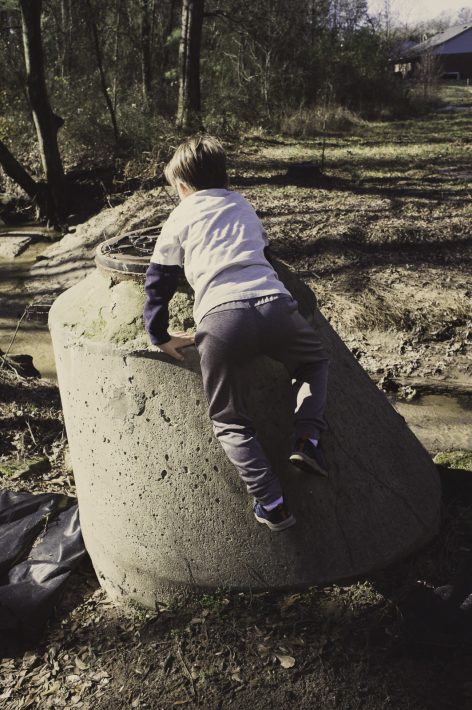
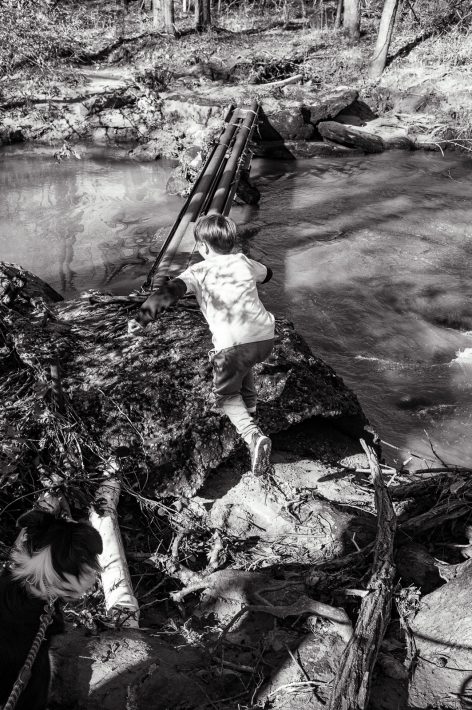
A newly-discovered creek about a mile from our house

"Where on the cards does it show how much they're worth?" he asked.

"It's not on the cards," I explained. "It all depends on how valuable they are and that depends on how rare they are."

"How could we find out?" he asked.

"We would have to go talk to an expert."

"I think I know an expert." He told me of a friend at school so that's mini baseball cards. "A couple of them are worth a few million dollars."

"How do you know that?" I asked.

"Because he told me."

"Do you believe him?"

"No." He thought for a moment then changed his answer.

"Does that make sense?" I asked.

"What do you mean?"

I tried to explain to him that if indeed the family had a card which is are several million dollars they certainly wouldn't let the seven-year-old child keep it.

"Why not?"

"Because remember what I told you about Star Wars characters and every other collector item:  they're only valuable if they're in perfect condition. If you bent it, or wrinkled it, or tore it, it would be worthless."

"Why?"

"It's just the way it is," I sighed.

It's all but impossible to explain to a seven-year-old how the scarcity of an item makes something valuable, something which otherwise would have no value, priceless. Baseball cards are just a bit of paper with a picture printed on them. Then again, change the word "paper" to "fabric" and it holds true for money: just a bit of material was a picture printed on it.

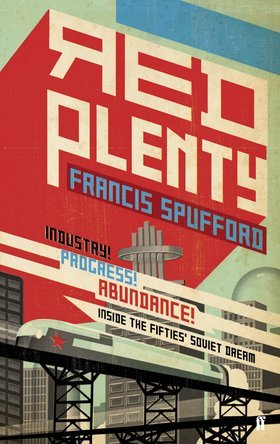
In the midst of all this, I've been re-reading Francis Spufford's fantastic book Red Plenty, set in Khrushchev's Soviet Union.

The premise is simple. When Khrushchev was ruling the Soviet Union. it seemed as if the Communist Utopia could indeed come to pass. A state-planned economy that would bypass all the uncertainty and unfairness of supply and demand capitalism seemed achievable. Vacuum tubes and algorithms made such calculations on such a scale achievable.

View at Good Reads

The book follows various characters as they weave their way through the creation of this Utopia, each playing their own part. Mathematicians, economists, biologists, Politburo members, Eisenhower, Khrushchev, and others all appear in the novel. All of the Soviet characters are searching for the formula that will make the magic Elixir of Plenty. Plenty of meat. Plenty of bread. Plenty of apartments. Plenty of cars. Plenty of everything.

Within all of this, the chief problem is how to assign value to both work and commodities. The book, which is part-novel, part-history, is filled with characters fictional and real; many events of the book are actual events in history. It's nearly 500 dense pages telling the story of just over 70 years of men and women working feverishly to determine a mathematical and certain way of deciding value.

If they couldn't do it, I'm not sure I can explain it to a seven-year-old in one evening.

Rainy, Sick, and Slow Saturday: Three Pictures

Picture One: The Medicine

The Girl has been fighting a sinus and ear infection for some time now; K has now come down with something as well. As such, they’ve amassed quite a little medicine collection: antibiotics, probiotics, decongestants, cough suppressants from the pharmacological side of things; oils, teas, syrups, and nose irrigators from the holistic side of things.

It’s all covered, literally and figuratively.

Picture Two: The Game

The Boy has grown crazy about Pokemon lately. He decided he wanted to buy a deck for himself and another for L using his final Christmas gift money.

“She’s going to teach me how to battle for real!” he declared. The way he’s been playing has been, shall we say, improvisational. The Girl knows how to play; she promised to teach him.

At $20 a deck, it’s quite the investment. I was hesitant to let him go through with it, but two things stopped me: first, it is, after all, his money. He needs to learn how to spend it wisely, so I gave advice, made suggestions, but in the end left it up to him. Second, I thought that if this gave them something to do together, just the two of them, it would be worth more than that $40 for the two decks. So we bought them while we were out today.

At first, he was terribly upset because we couldn’t find the decks. When we found them, there was only one. “But we checked on the computer and they said they had them!” he wailed, about to have a little panic attack there in the toy section. “They lied!” I tried to explain to him that just because they found them on the Walmart site doesn’t mean they have them in that particular store. I pulled up the site on my phone and showed him. In the end, though, he took the disappointment rather well.

As we were checking out, though, he decided to look in the checkout aisles. “They have them there, sometimes.” Sure enough, after we’d checked out, he found some, so we grabbed them and went to the nearest checkout, which was a self-checkout. Which I don’t like. Why should the store get free labor from me? Still, if the other checkouts all have long lines, I’ll go ahead to the self-checkout.

The gentleman in front of us was a prime illustration of the slow South. He picked up each item, turned it about in his hand to confirm where the bar code was, scanned it, placed it in a bag, took the individual bag with one item to his buggy, placed it carefully in the buggy, moving other bags as necessary to get everything just so, then repeated it. He looked to be in his mid-fifties so I couldn’t salve my impatience thinking, “Well, here’s this sweet old man, still clinging to his independence…” Of course, I really don’t know the guy’s story — there are any number of reasons why he moved so very slowly and deliberately. But it’s symptomatic of what I see as a slow Southern mentality. Don’t rush. For anything.
When the light turns green at an intersection, for example, most drivers don’t respond immediately. They wait, even to take their foot off the brake. Sometimes two or three seconds. Sometimes five. Sometimes ten. They creep into the intersection and take what seems like an eternity to get up to the speed limit, and there’s no guarantee they’ll even get to the speed limit: they often drive five, even ten miles an hour below it.

Anyway…

After dinner, the instruction began. And the first game didn’t go so well.

“Go easy on him!” I mouthed to L when she wasn’t looking.

“I did!” she mouthed in reply.

Picture Three: Rain

I spent about four hours working on end-of-the-quarter grades today. When lunch rolled around, I didn’t even have 1,000 steps. By the time shopping and dinner was over, I had just over 5,000.

“After I put the Boy to bed,” I said to Clover, “we’re going on a long walk.”

And then the rain started again.

Beyblade

The Boy has wanted a beyblade for quite some time now. I didn't even know what it was, and even after he explained it to me, I was still a little fuzzy on the details.

It is, in essence, a gyroscope. With pretend blades. That it uses to battle other gyroscopes.

We had a little trouble getting it working, though. Rather, getting "them" working, because he bought a pair so we could battle. I think it's some knock-off version because absolutely nothing in the packaging was in English. That and the price. The whole process resulted in a lot of frustration for E because I wasn't at first helping him figure it out.

At his age, the Boy doesn't have a lot of coping mechanisms when frustration looms. We try to talk him through situations, and we try to get him to take breaks from frustrating situations, ask for help, try to approach the problem from a different perspective, but that's all very cerebral and that frustration, I know, burns with an almost physical presence in the body.

The Dog and the Game

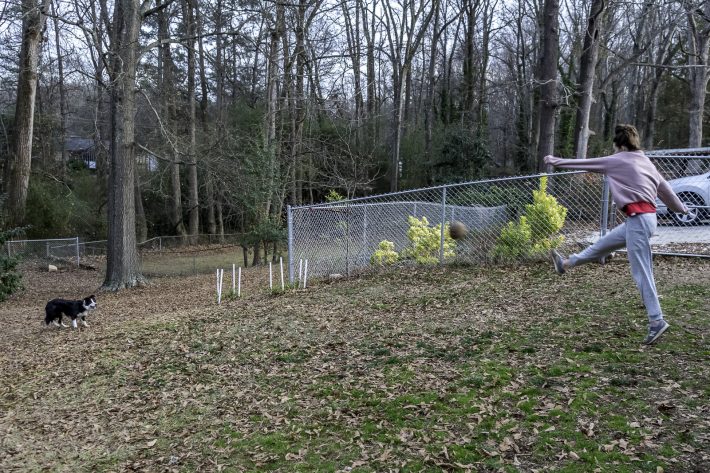
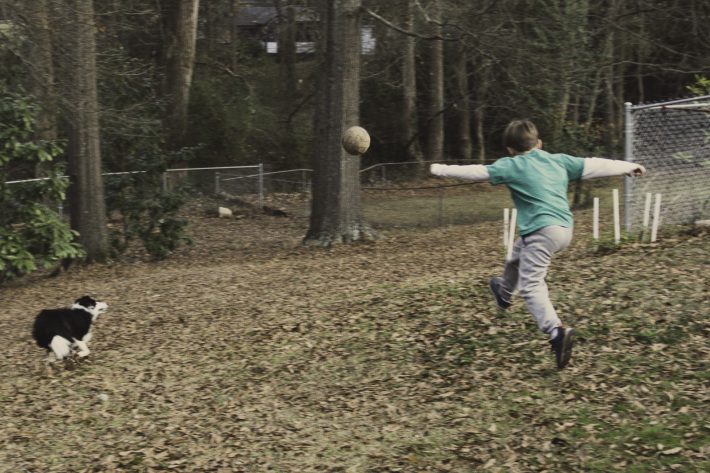
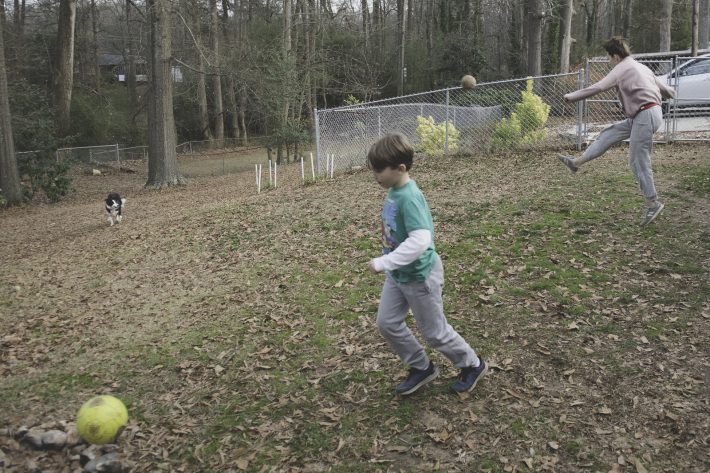
The kids played with the dog a bit this afternoon -- a good thing, because the pup, when neglected, pouts. And a pouting pup does things like dig massive holes in the backyard, run uncontrollably once inside, bark incessantly inside or out.

Afterward, another evening over the board. This time, possibly the most luck I've ever experienced in the silly game. Everything with buildings on it -- I owned. I made my own son cry when he landed on New York Avenue with a hotel and had to pay $1,000. He literally fell into the floor and began sobbing.

"Buddy, calm down. It's just a game. I'm lucky this time." No help. Then I had an idea: "If you can pull yourself together, I'll give you a surprise." I was planning on giving everything I had to him and letting him finish L off, but her turn was right after mine and she landed on Tennessee Avenue (See that? It also had a hotel.) and had to pay $950 one turn after she'd paid me something like $600. She had nothing left: she gave me her little bit of cash and all her remaining property with a pout and said, "You win."