fun in threes, sometimes fours
nana and papa
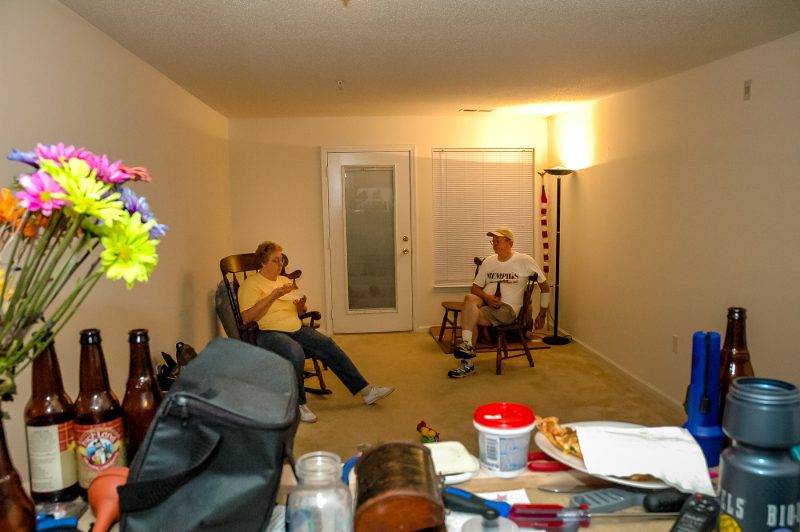
Nana and Papa helping us move from Ashville to Greenville — fifteen years ago.
In some ways, Papa's passing was much more difficult for me than Nana's. When Nana died in 2019, I was more worried about Papa than I was myself. I was heartbroken, to be sure, but Papa was devastated. The love of his life, the woman who, in many ways, literally saved his life, was gone. His constant companion for decades was no longer by his side. How would he take it? Would the sorrow he was buried in bury him, too? So when Nana passed, I had a job to do, and a very important job: look after Papa, physically and emotionally (and, while he could still get out of the house, spiritually as we made sure he got to church for the services and community that did so much for him).
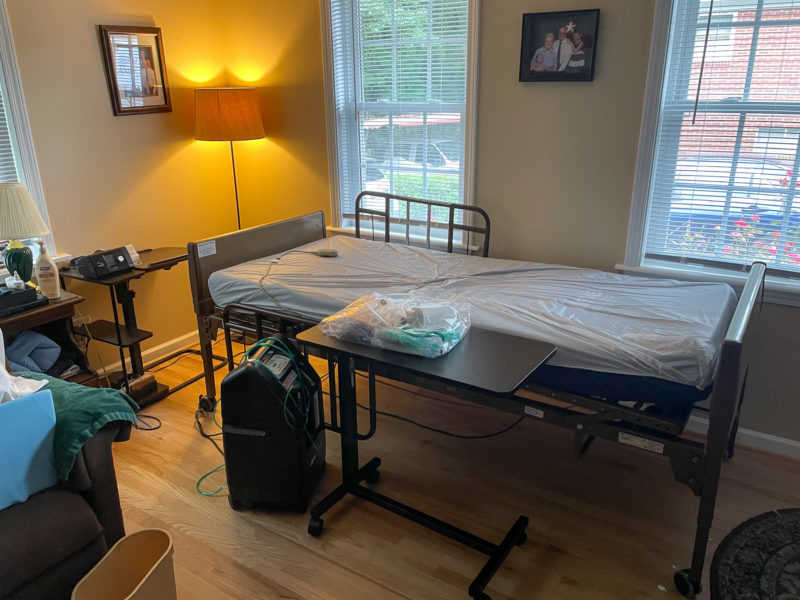
We played family games with him, sat and talked to him, watch movies with him, helped him with his exercise and, after his Parkinsons kicked in fully, his physical therapy. As Parkinsons took control, we took on even more responsibilities, more basic responsibilities, more primal responsibilities: feeding him, cleaning him, and all the complications a more bed-bound existence comprise.
Nana's death was also easier for me emotionally because I had all the support around me that Papa had around him. K and the kids gave me as much support, directly and indirectly, as we gave Papa.
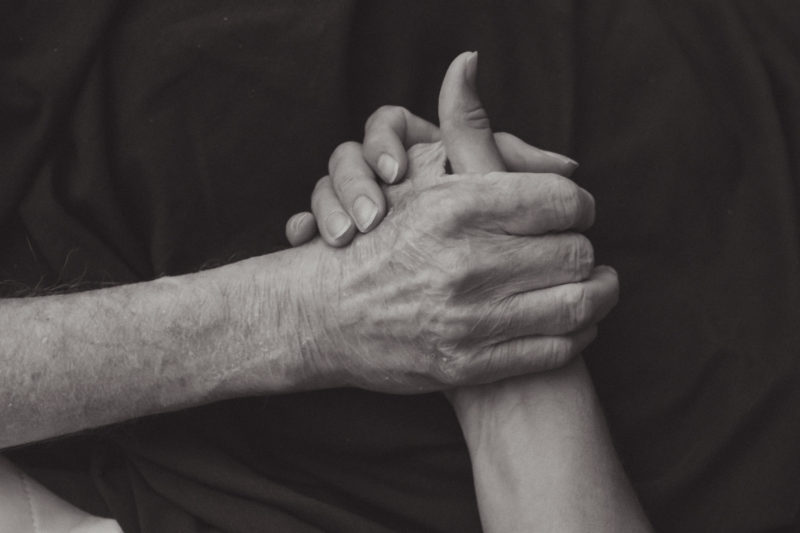
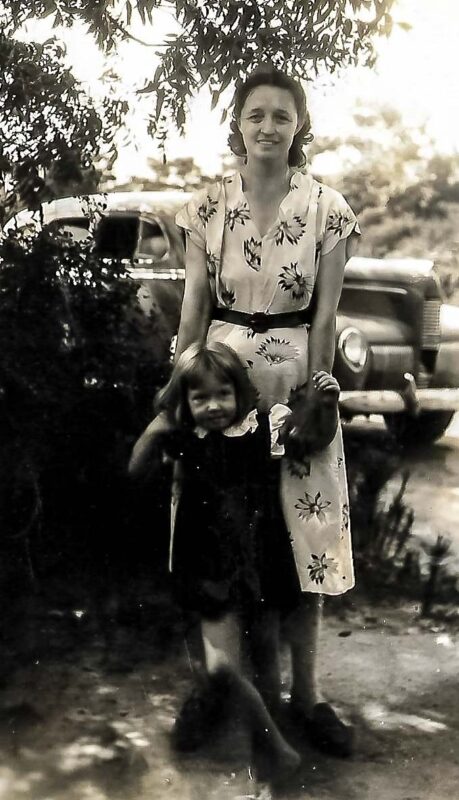
Sometimes, I just get to thinking about Nana...
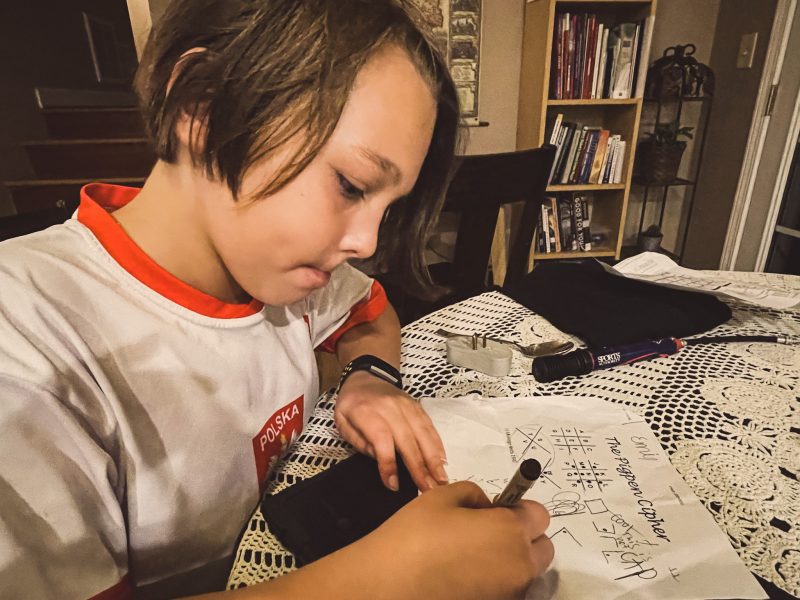
The Boy has become interested in ciphers and codes. They learned about them in school this week and so he wants to learn about more of them. Tonight, he and I were writing things back and forth in pig pen cipher:

It’s a simple replacement cipher, but the Boy loves it.
During our evening walk, I mentioned to him that Papa knew a real code: Morse Code.
“Really?!”
I thought Papa had mentioned that so many times, doing his “da-dit-dit” routine to spell various words out in code, that no one could have forgotten about that. Apparently, E had.
“I wish Papa was still here.”
We’ll be having those moments for some time to come, I think.
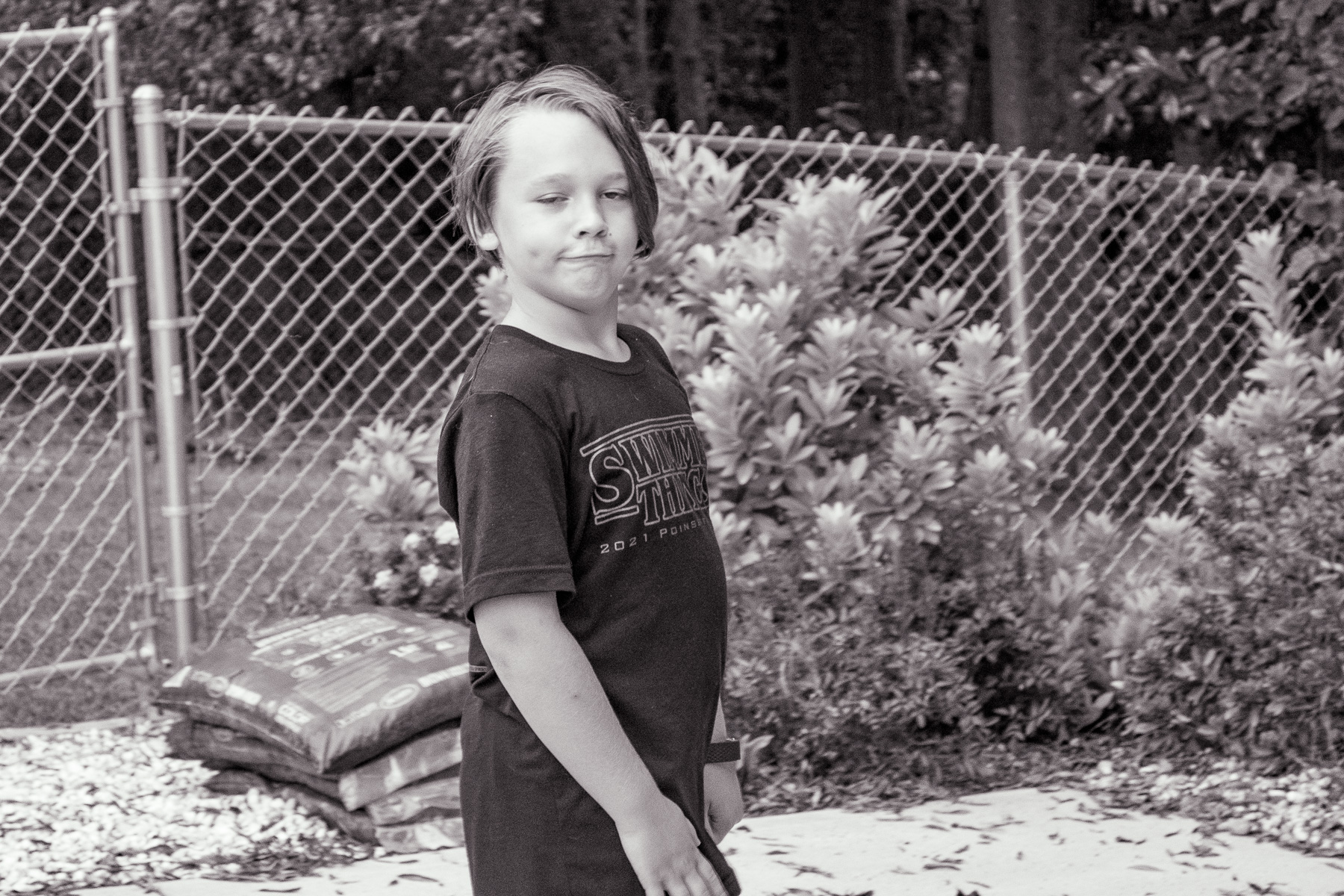
As we go through life, we start to see things differently. That really goes without saying, I know, but looking over old photographs makes this so much more literal. I saw today a photograph from 2015 and immediately saw flaws in it. The newest iteration of Lightroom allowed me to fix some of the flaws, but not all of them.
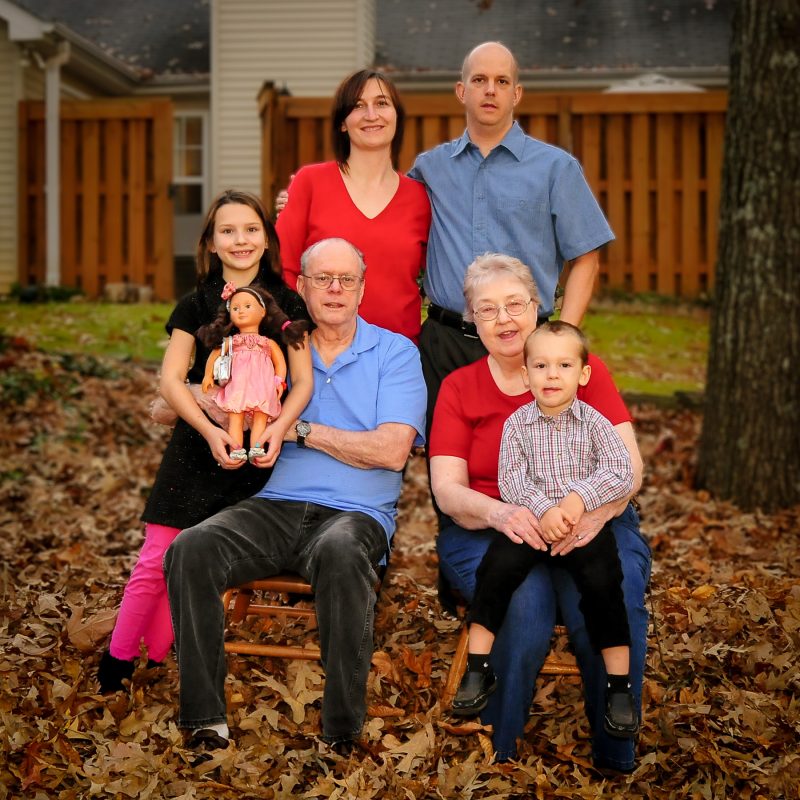
It was the little things.
That gate behind us -- why didn't I think to close it? It would have made the background that much more fluid. (Perhaps I thought I had. Maybe I closed it, but something opened it back up -- wind, gravity, a squirrel.)
Why didn't we move further down the hill so that more leaves would be behind us? It was a simple fix -- why didn't we see it? (Maybe we did -- maybe we were as far down as possible. Perhaps just beyond the bottom of the frame the leaves disappear.)
Why didn't I open the aperture a little more to get a little creamier background? (Perhaps it was as wide open as possible -- in 2015, we still didn't have a great portrait lens. Truth be told, we still don't, but we've got a much better lens than I would have used for this picture.)
It's no big deal, obviously, but looking back, I see so much wrong with this.
I had a similar thought in Polish Mass today. I hadn't been to Mass since the last Polish Mass a month ago, and the less frequently I go to Mass, the more foreign it seems. Everyone going onto the stage (I know that's not what it's actually called but I can't remember what it is called, and since it's an elevated platform upon which the whole ceremony is conducted, it is, for all intents and purposes, a stage) stopped and bowed or genuflected. When I first saw people doing that in Poland, I was curious: why are they doing all that bowing? Once I learned about the idea of the real presence of Jesus in the host (i.e., the idea that somehow the bread ceases to be bread and is actually the body of Jesus), I understood what was going on. It still didn't make sense because I didn't believe that was the case, but I understood why they did it.
When I tried being a Catholic, that was one of the doctrines that I thought was just a little off but put it out of my mind. I behaved as if I believed it even though, deep down, I know I never did. It doesn't make any sense: the official church teaching is that nothing physically changes. You can press a priest on the matter, and he'll even admit that nothing atomically changes. The logical conclusion: if nothing atomically changes, then nothing changes. Full stop. The bread is made of molecules which are made of atoms which are made of subatomic particles. If nothing in that chain of being changes, then nothing changes. It's not complicated logic -- it's quite basic in fact.
Yet Catholic apologists will start talking about substance and accident and making Aristotelian moves to suggest that the thing that makes bread bread -- the substance -- changes but the outward appearance doesn't. Yet nothing makes bread bread. "Bread" is the name we give molecules of wheat, water, and usually (though not in this case) yeast that have undergone chemical changes through the application of heat. The atoms themselves didn't change even in the cooking. It's not complicated logic -- it's quite basic in fact.
Still, as someone attempting to be a believer I watched everyone bowing, I was a little jealous that they seemed actually to believe. I knew I didn't, though I would not have admitted it to anyone. As my doubts resurfaced several years ago, I eventually realized I didn't have to pretend I believed anymore that the little tasteless wafer was Jesus himself, and I felt a bit of relief about that.
Today as I watched as the altar servers bowed before going on stage, as the lector bowed before going on stage, as all the parishioners bowed before taking the bit of bread, I found myself back where I started, knowing exactly why they were doing it but still thinking it made little objective sense.
Where is the re-visioning in all that? It's not that I believed the wafer became anything different; it's that I saw myself as someone who should believe that but never really did. The re-vision is an understanding that I was almost purposely deluding myself.
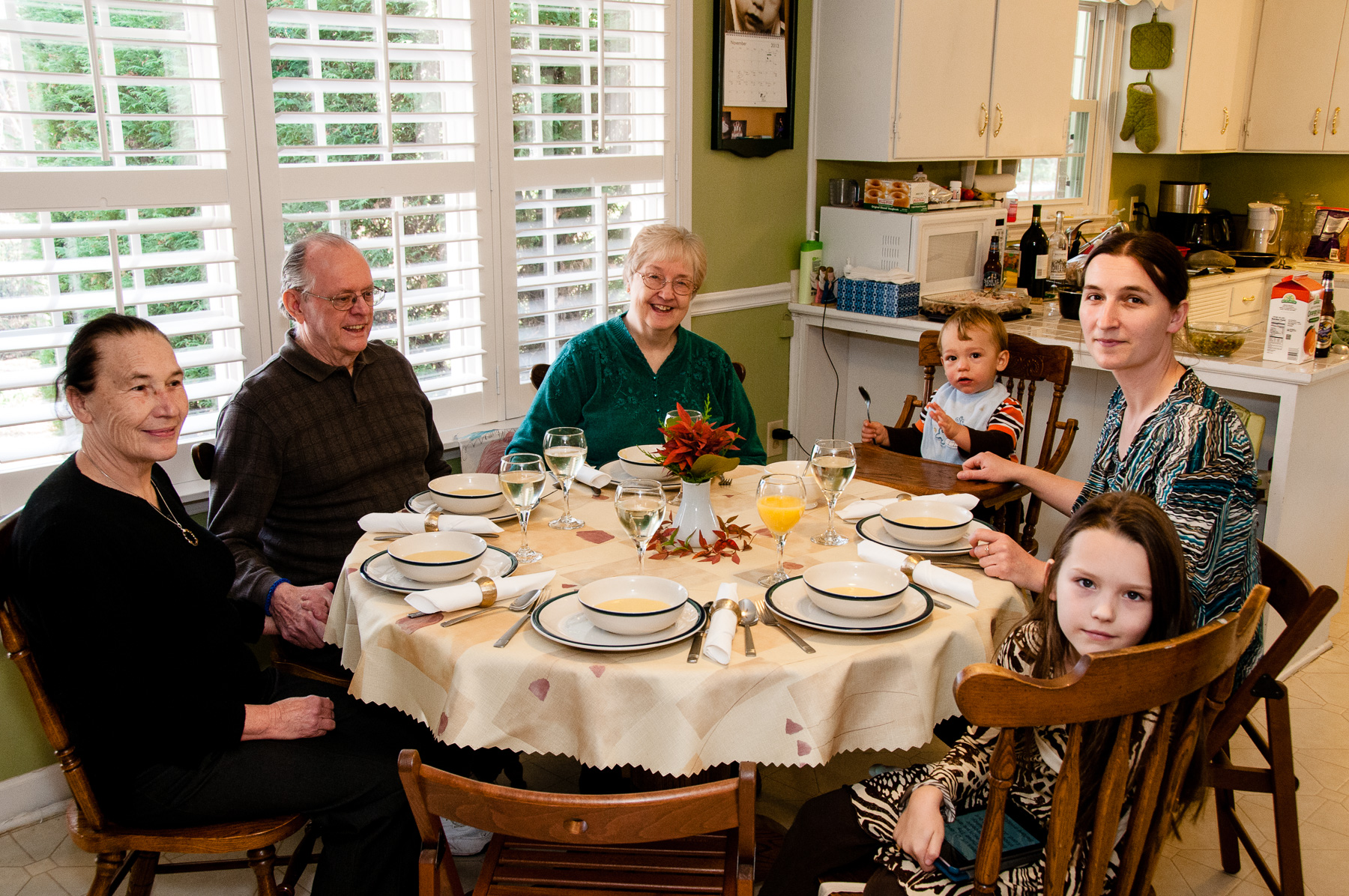
Thanksgiving for fifteen years always included Nana and Papa. We went to Nashville to visit Nana's brother our first Thanksgiving back in the States in 2005. Less than a year later, he'd passed away. We haven't been back to Nashville since.
From that point, we went to Papa's side of the family every year. There were various cousins, aunts, and uncles there -- never the same group -- but there were always two that never changed: Nana and Papa.
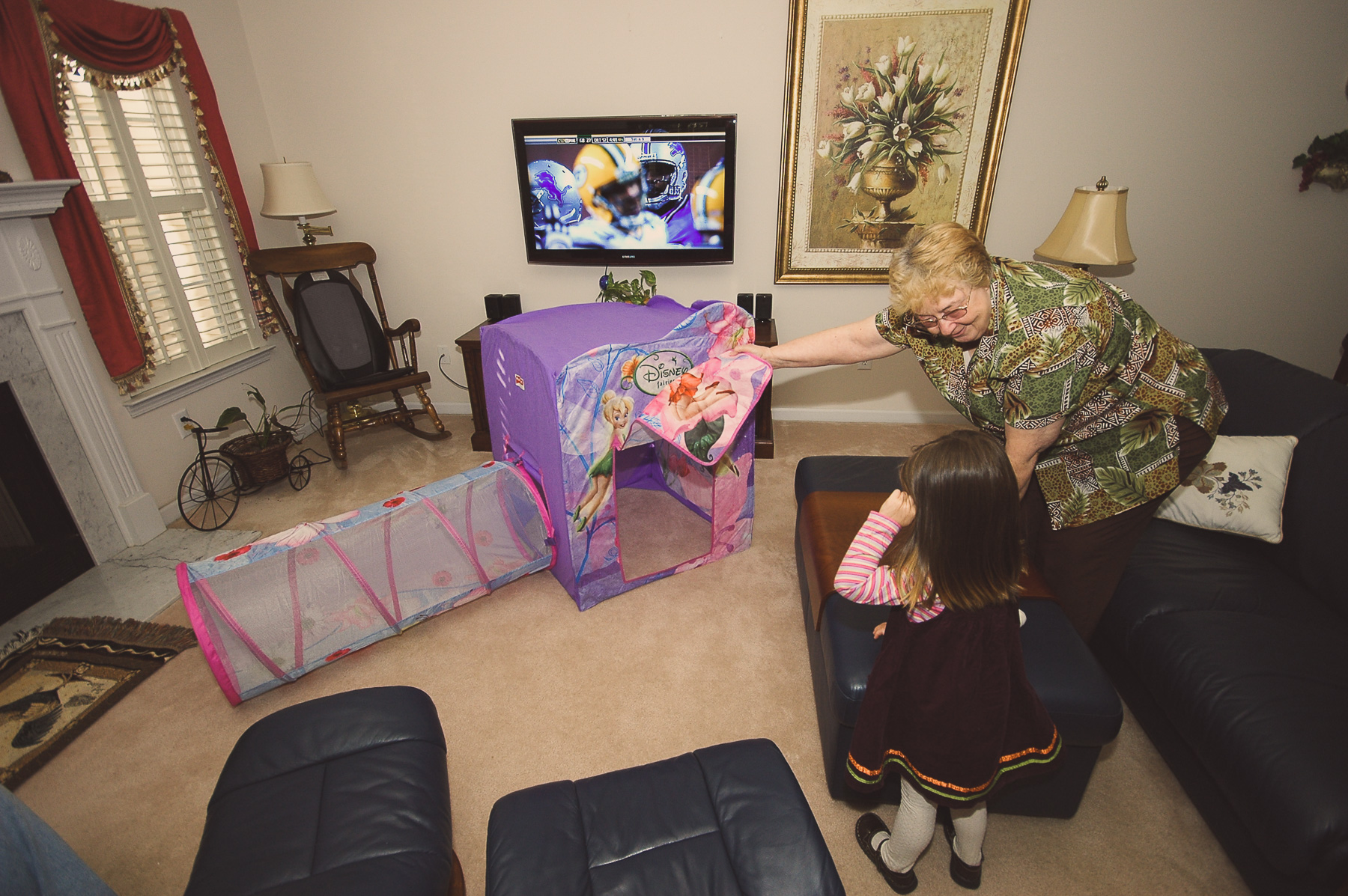
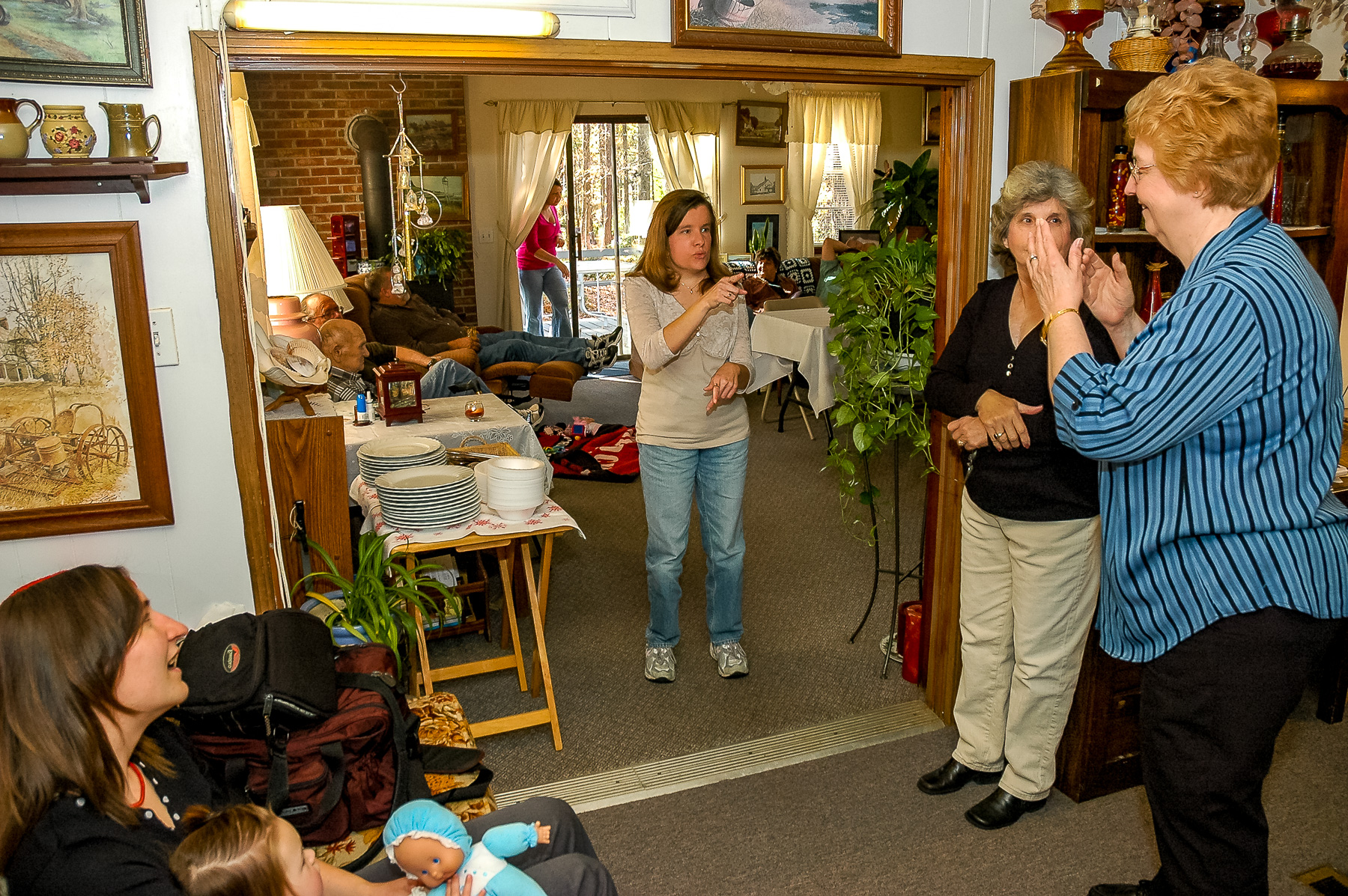
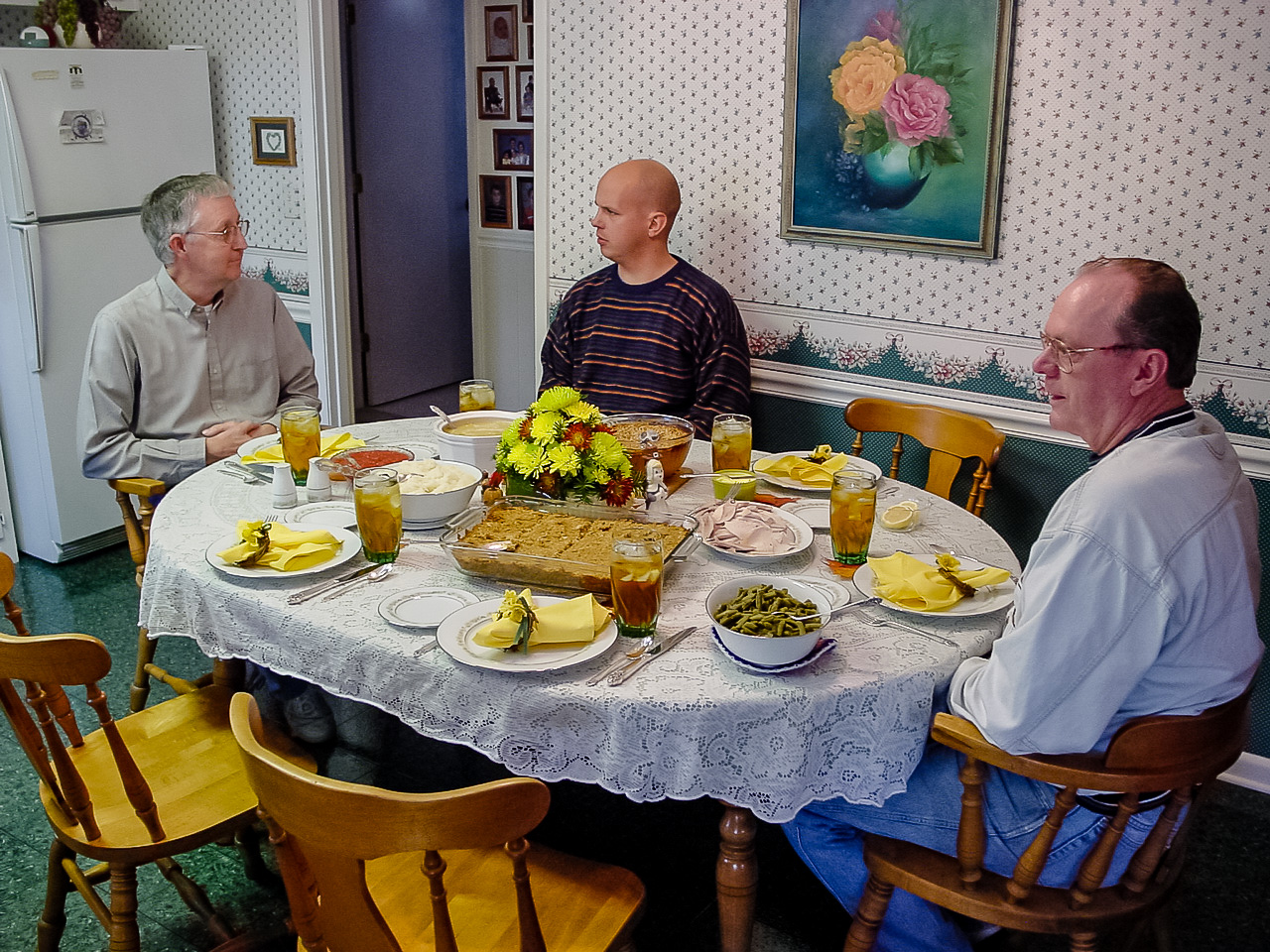
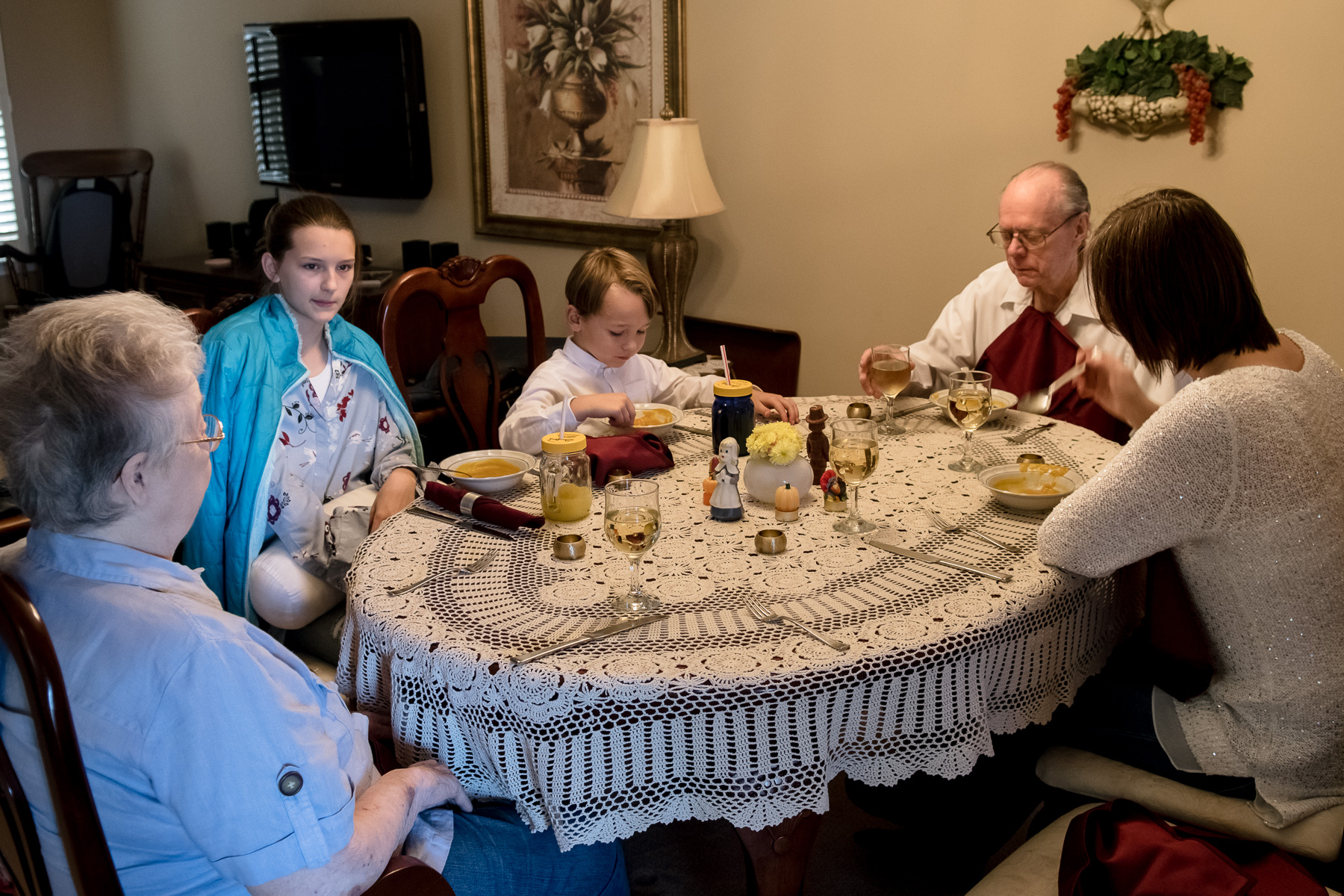
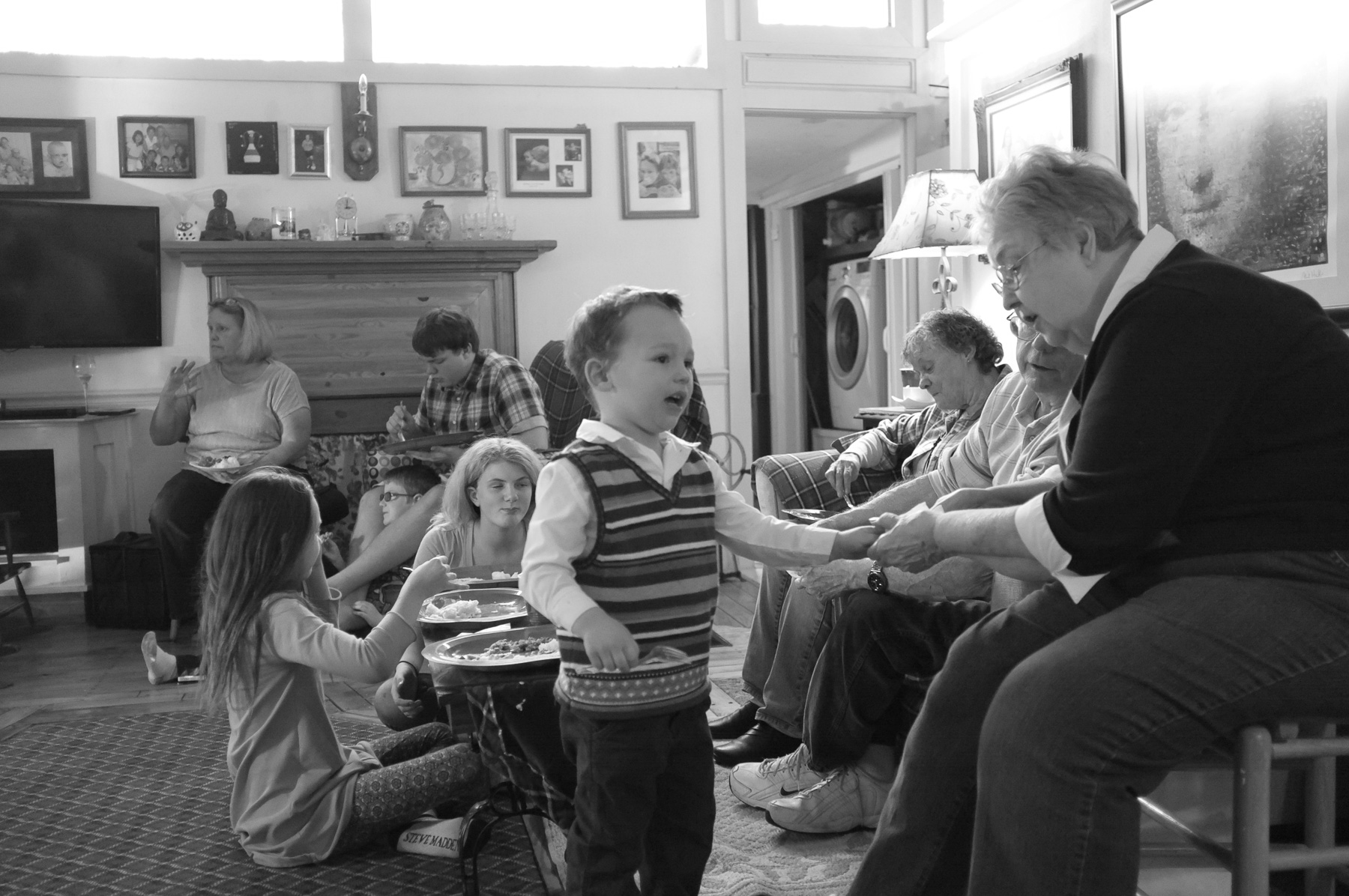
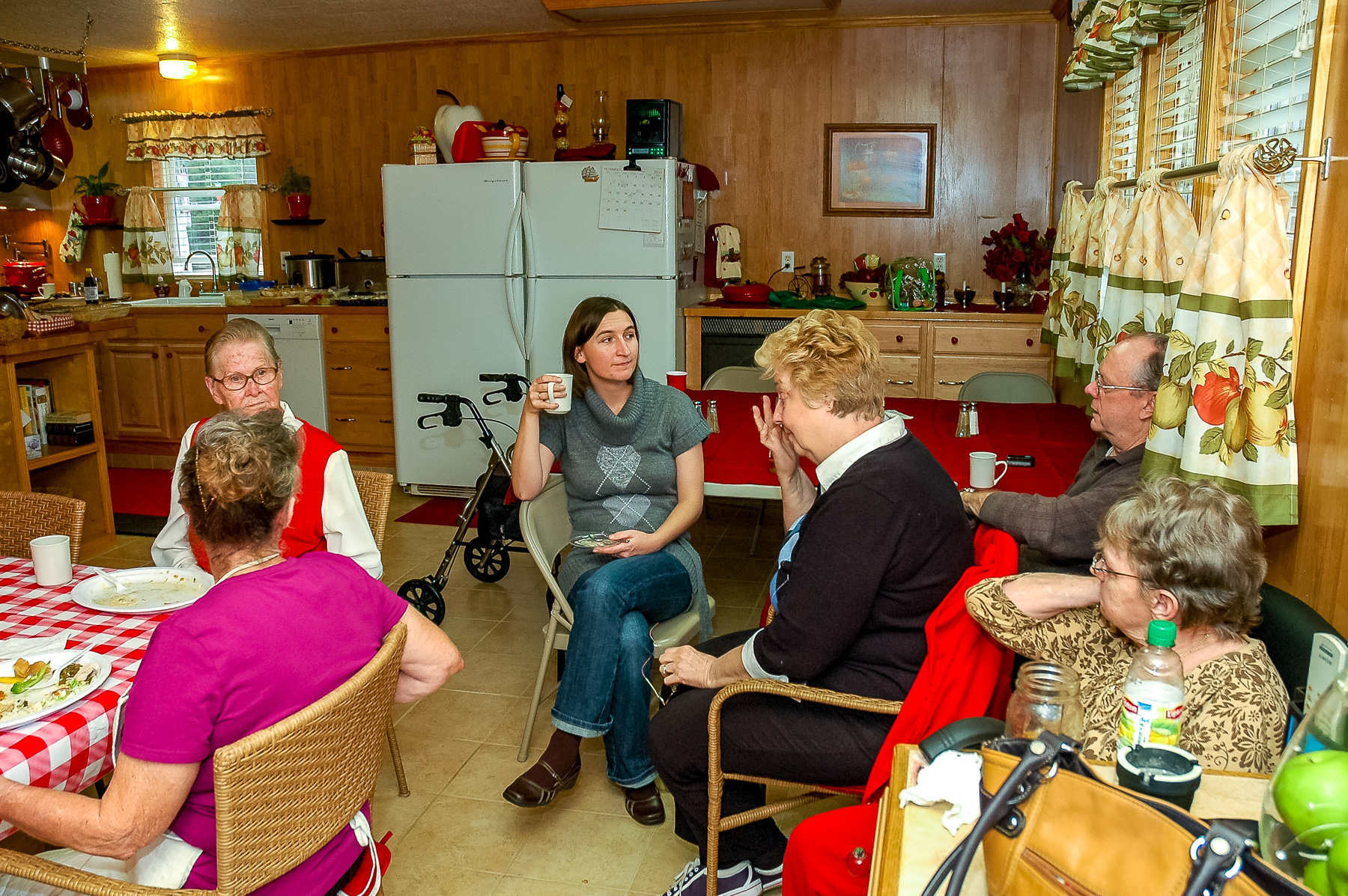
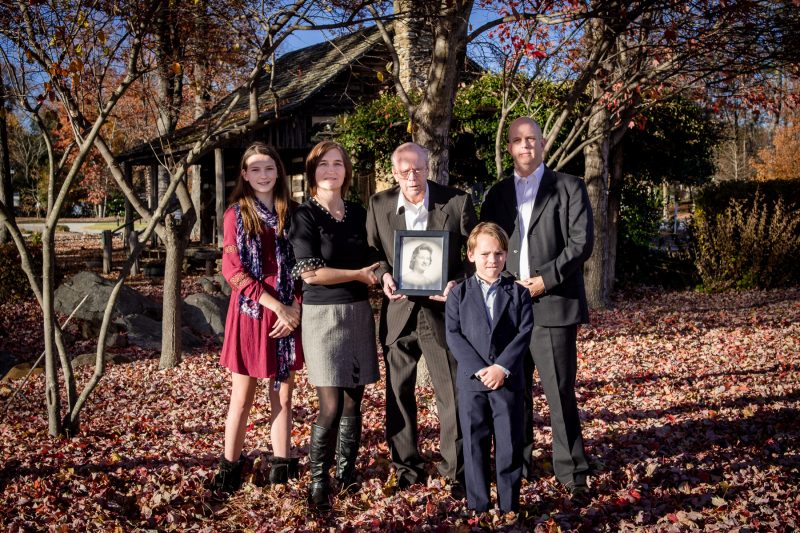
During our first Thanksgiving without Nana in 2019, we all went for a portrait and took Nana with us -- the wound was still raw for everyone, but especially Papa. His first Thanksgiving without Nana in forever.
This is our first Thanksgiving without either of them. The plan to go visit Aunt D, who helped take care of Nana when she first came back from rehab, fell through as did our plan to visit with cousins. Our Polish family from North Carolina -- family in all ways that count, at any rate -- had other plans for Thanksgiving, so we spent it just the four of us. Without turkey.
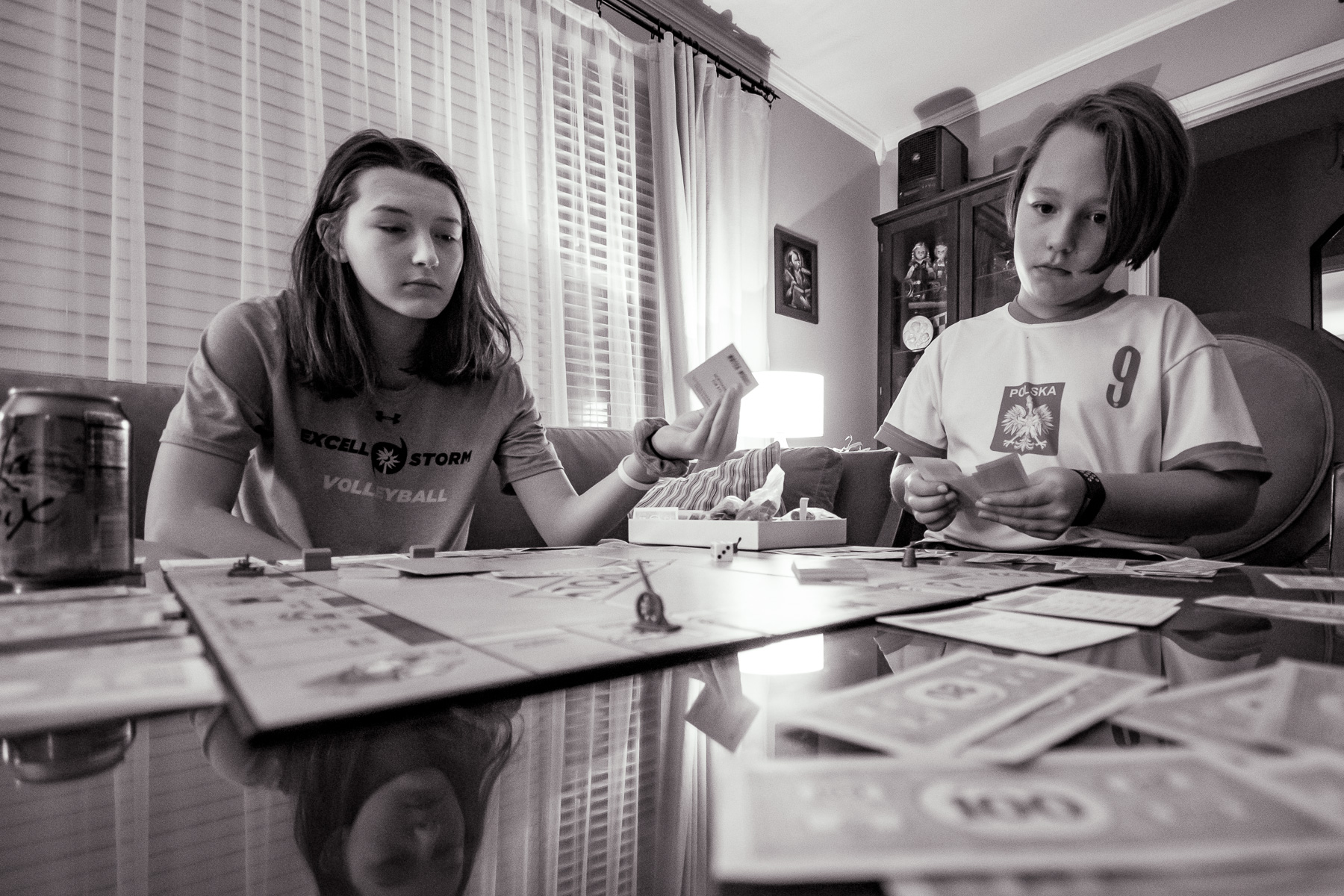
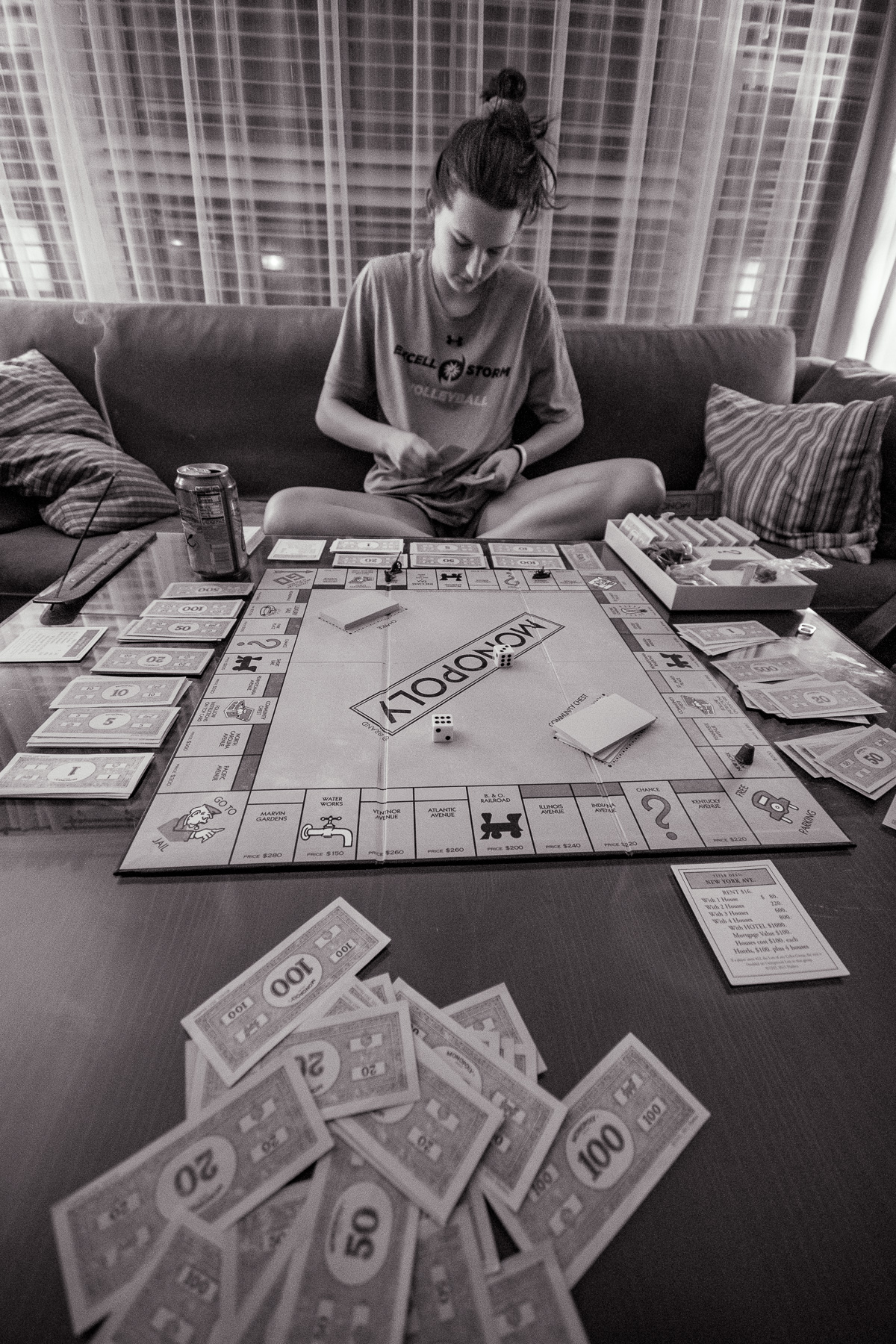
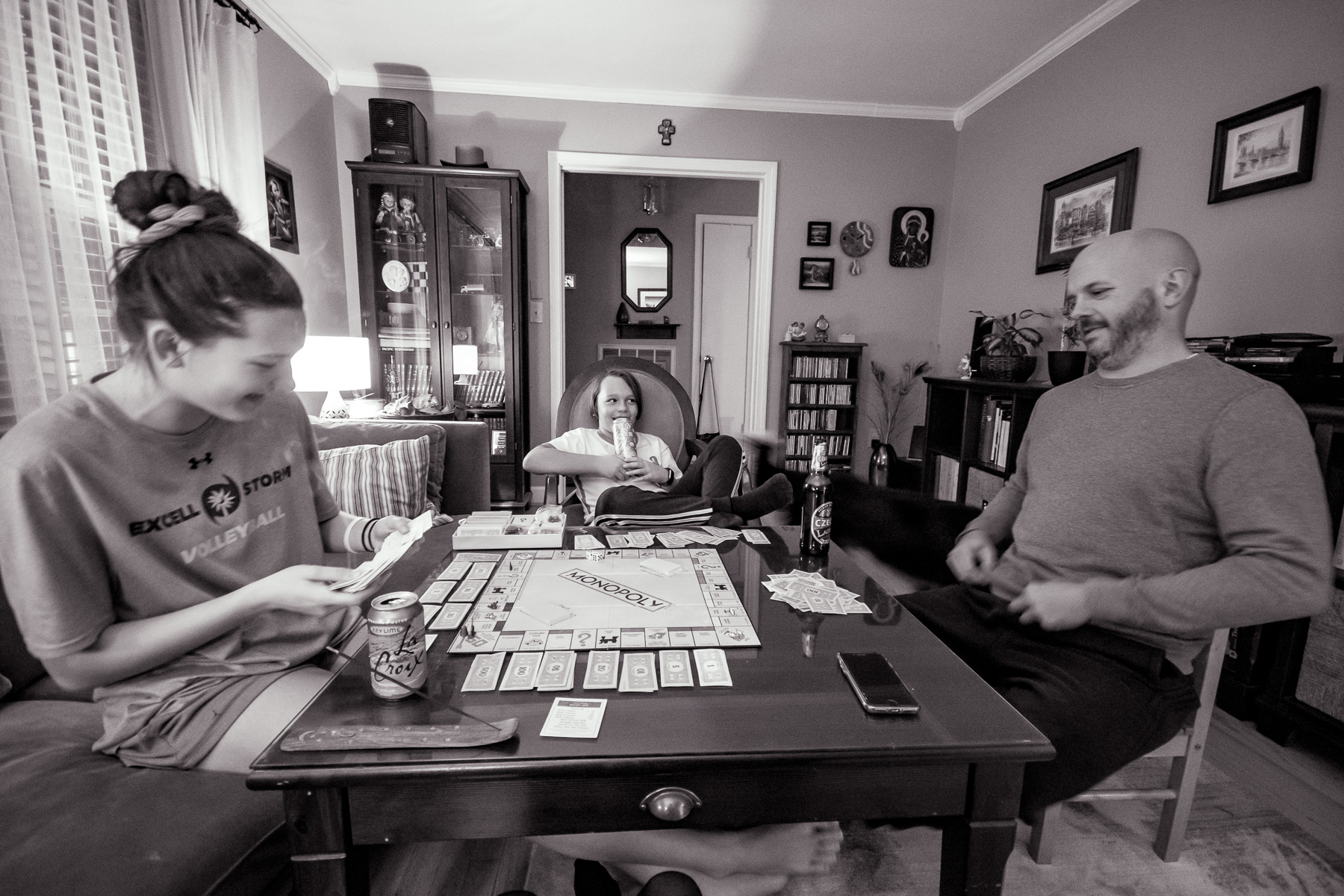
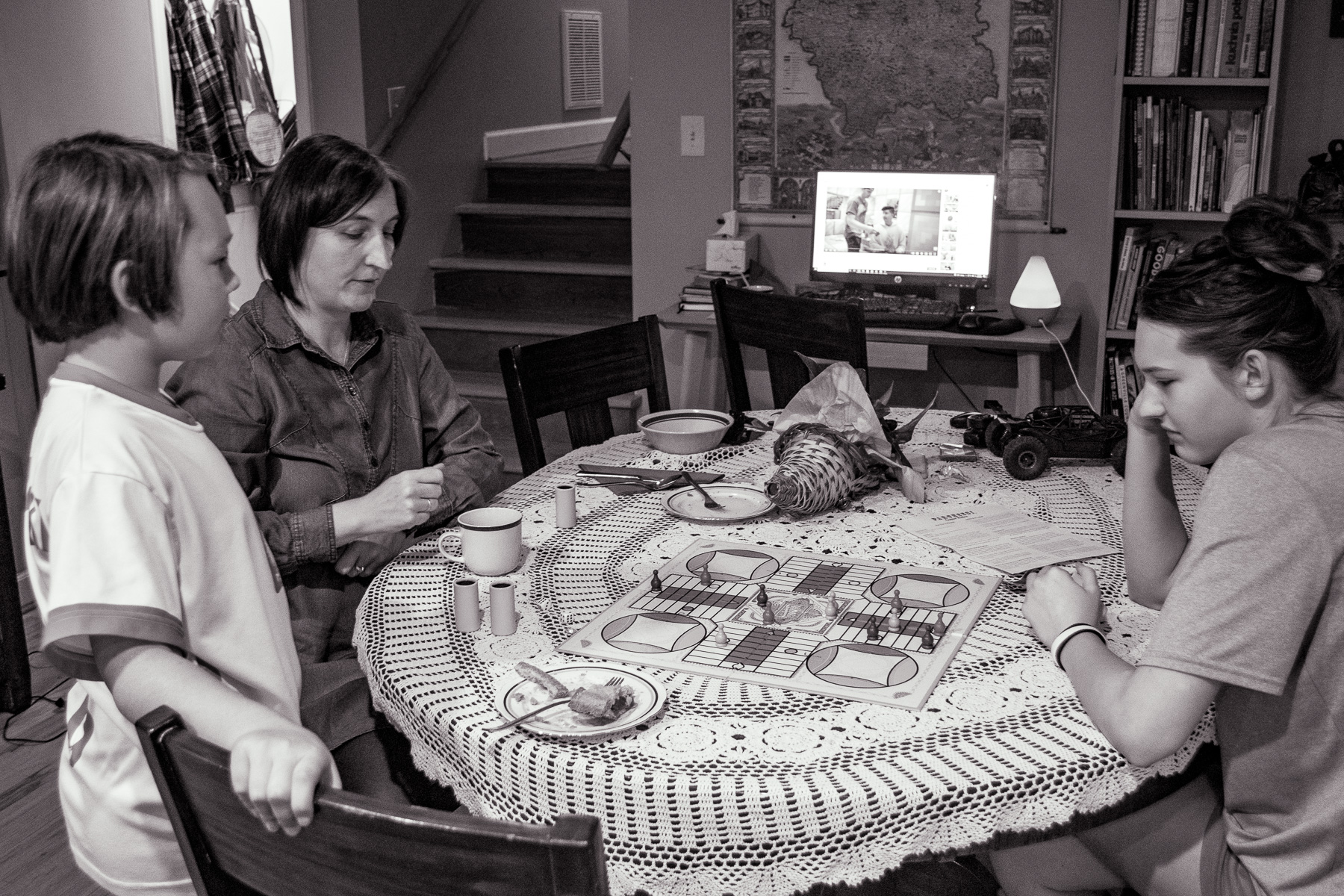
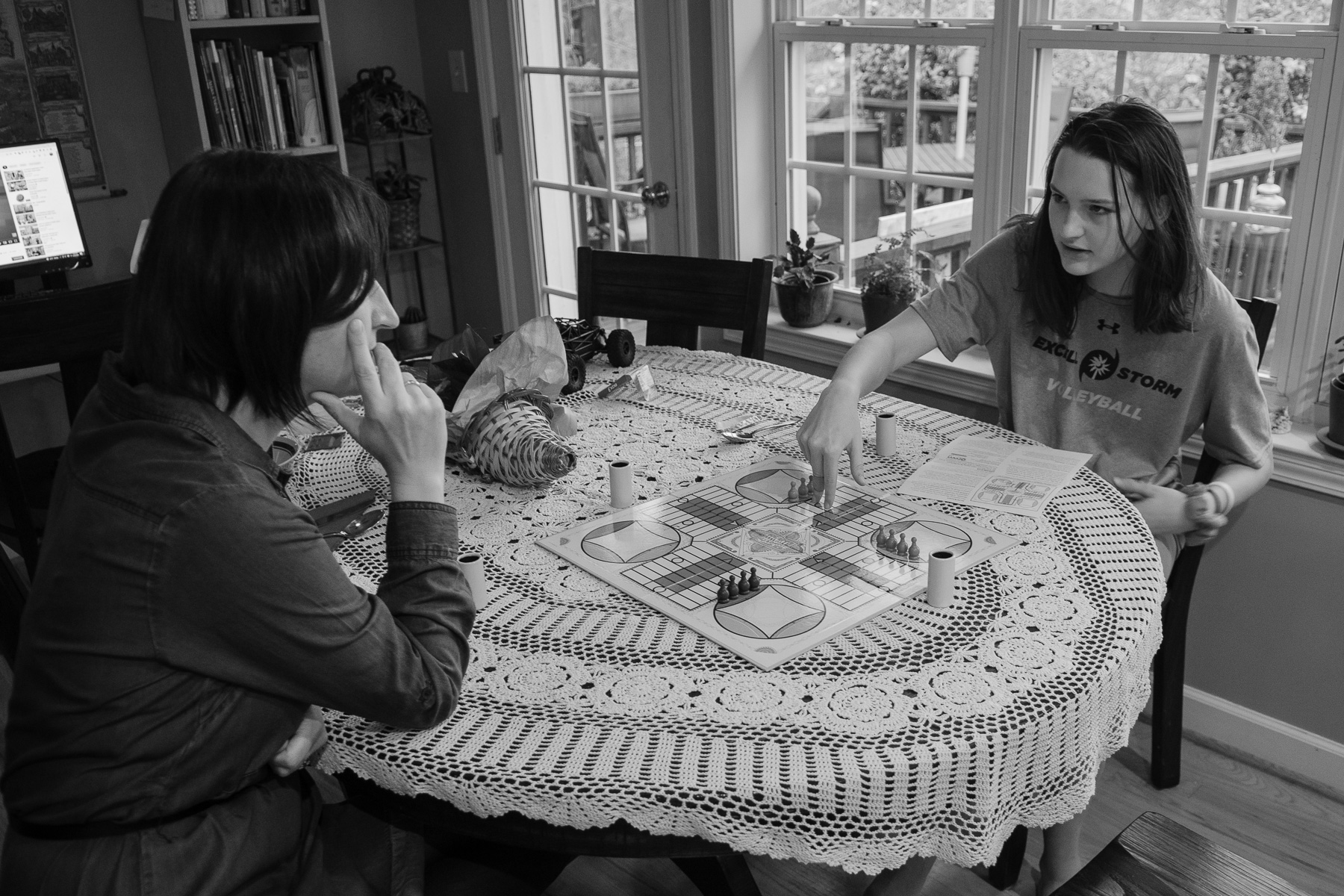
But with games. What's Thanksgiving without games?
Thanksgiving 2020
Thanksgiving 2019
Thanksgiving 2018
Thanksgiving 2017
Thanksgiving 2016
Thanksgiving 2015
Thanksgiving 2013
Thanksgiving 2012
Thanksgiving 2011
Family and Food: Thanksgiving 2010
Interrupted
Fourth Thursday
Thanksgiving Games
Thanksgiving 2006
Thanksgiving 2005
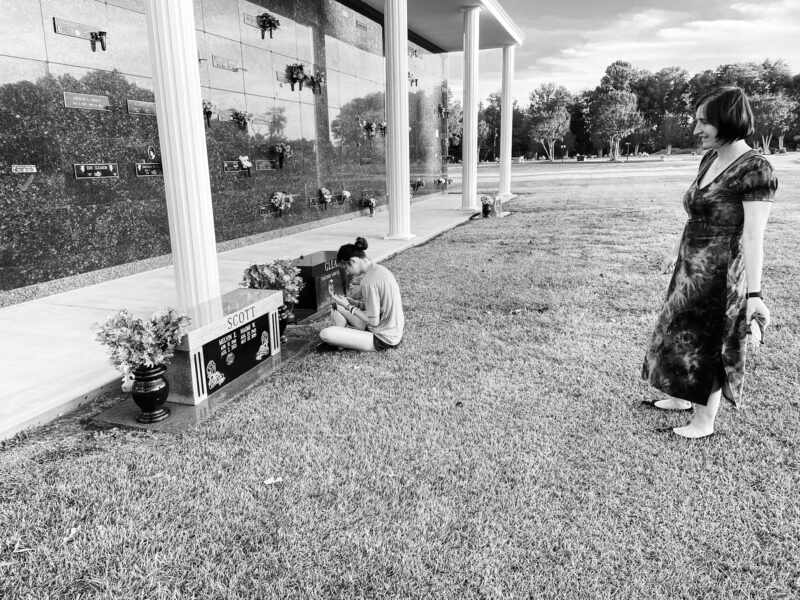
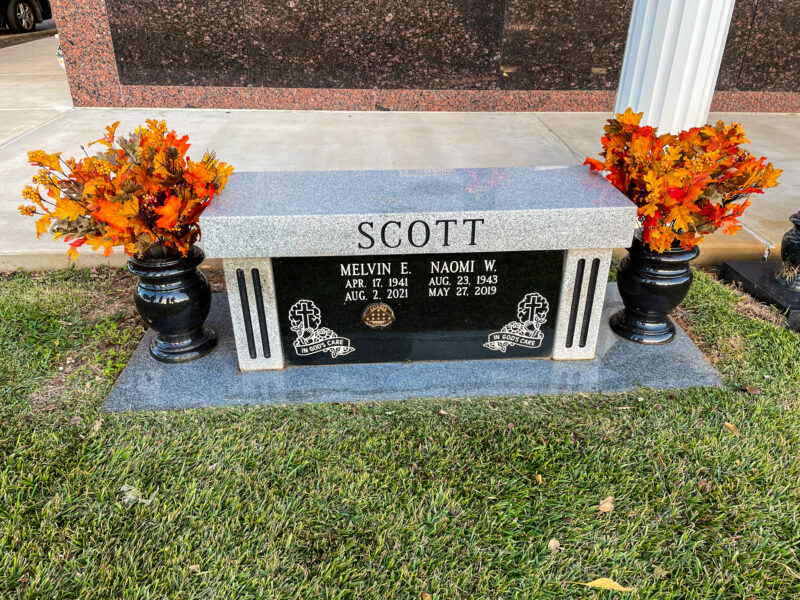
This year was the first All Saints' Day that we visited both Nana's and Papa's grave. I guess it was always their common grave from the time the bench was set in place but now both their remains are resting there.
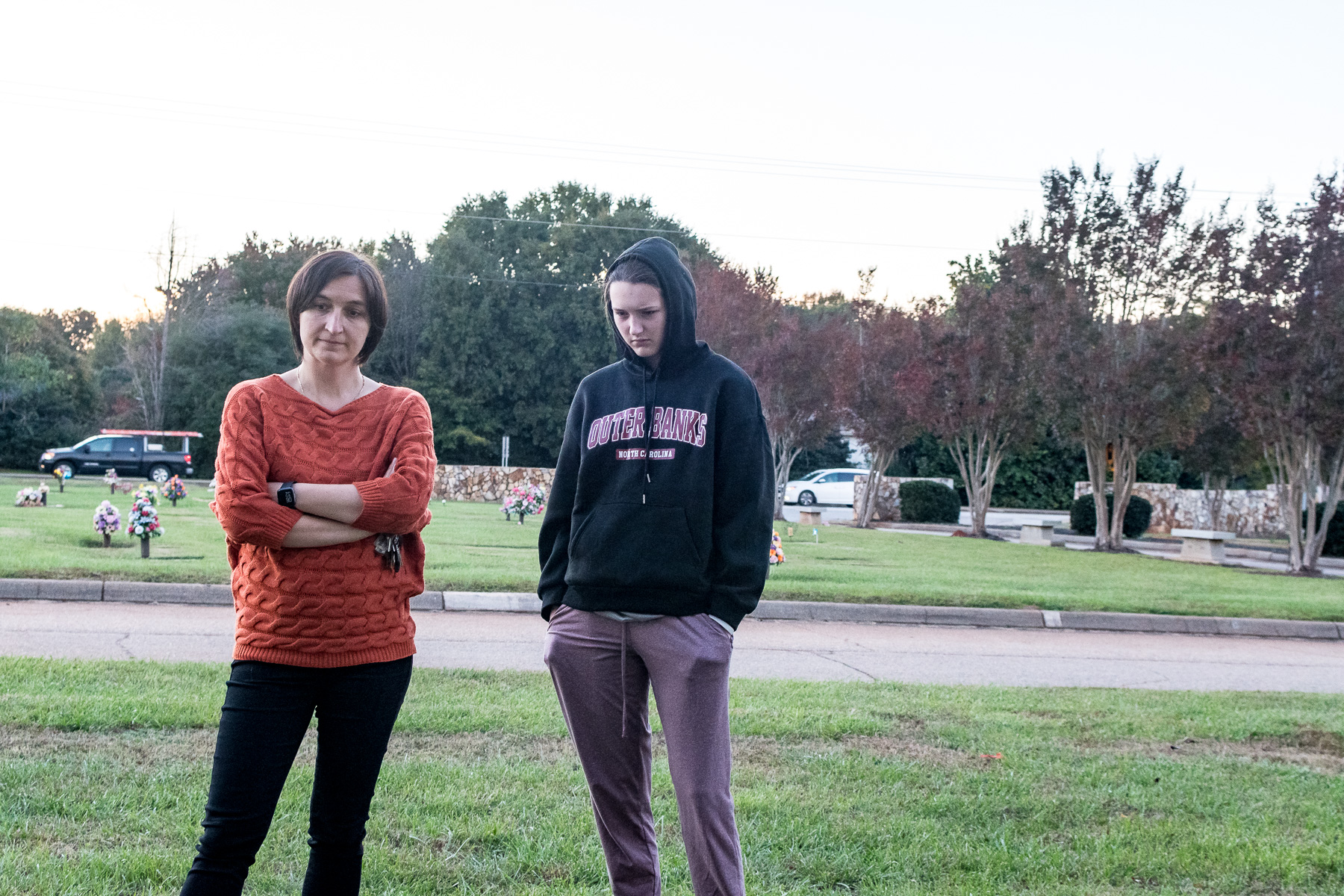
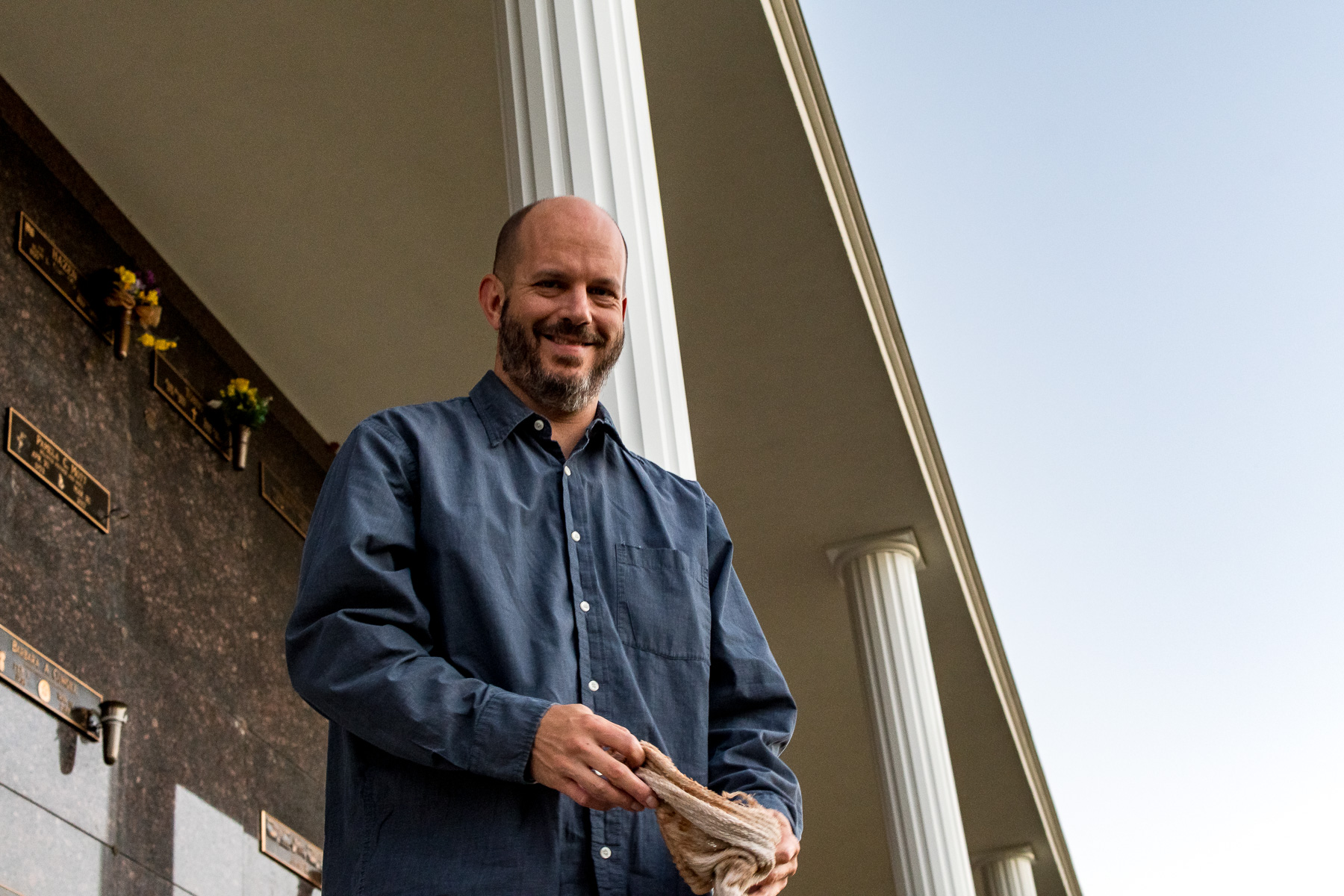
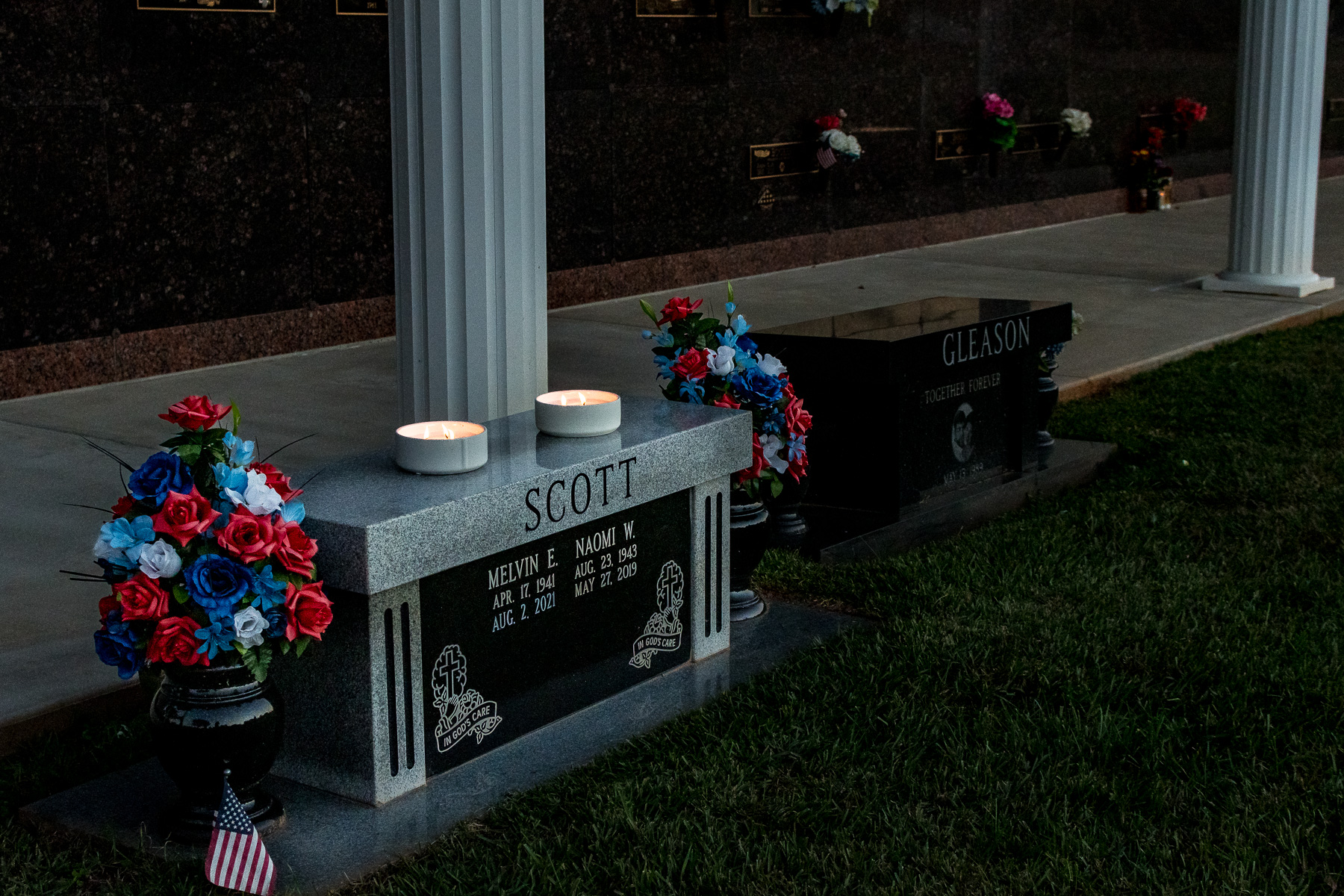
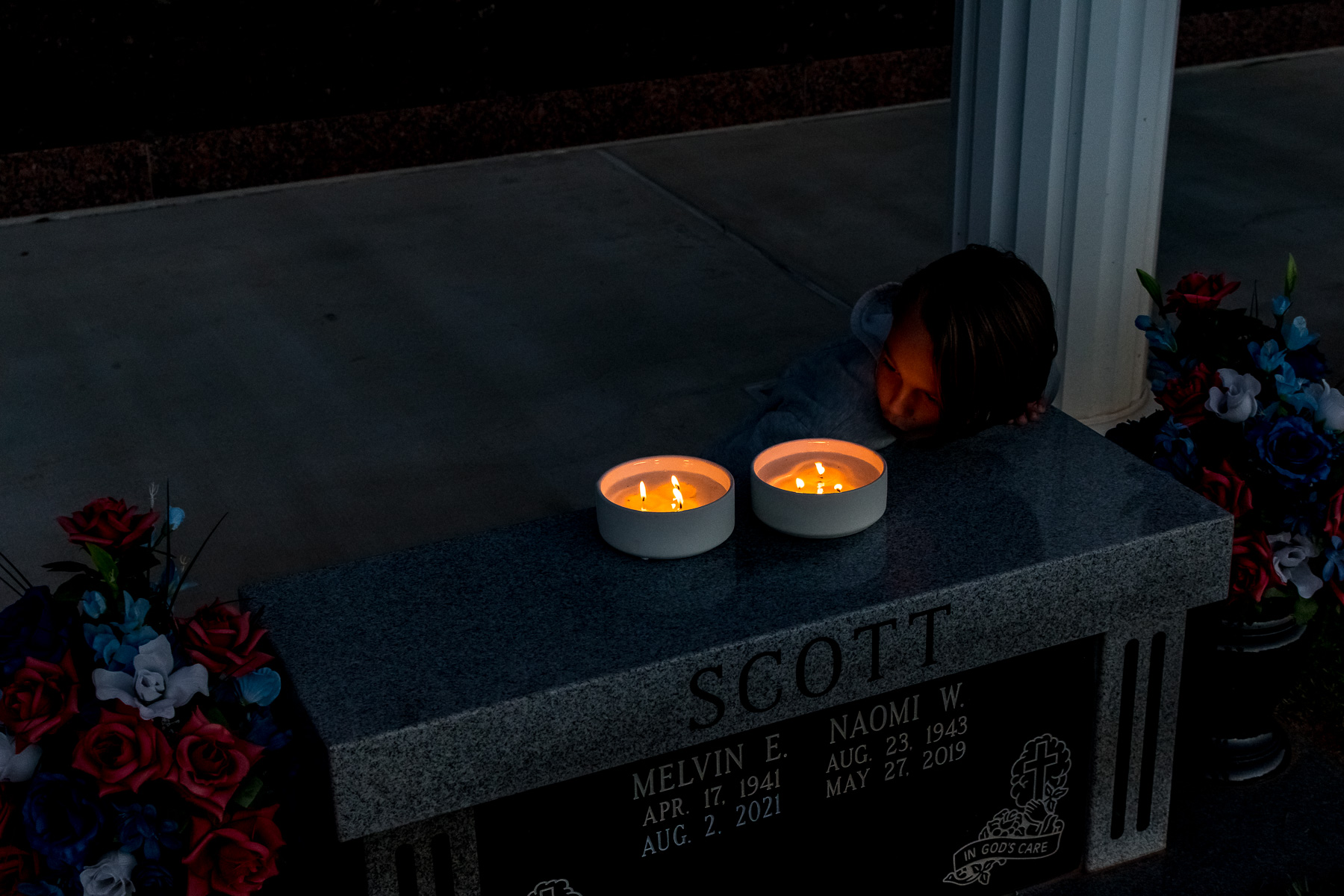
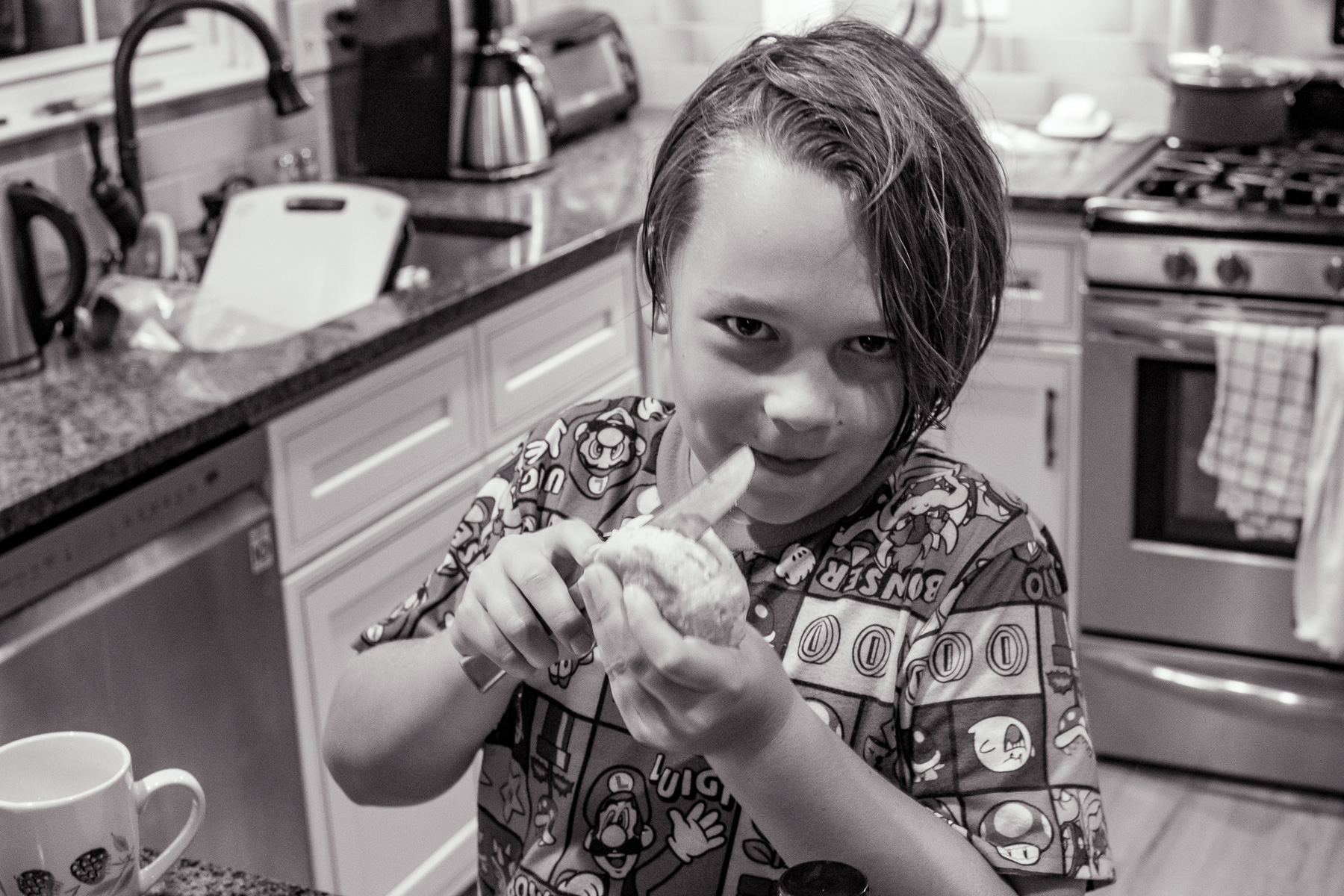
It's strangely normal already.
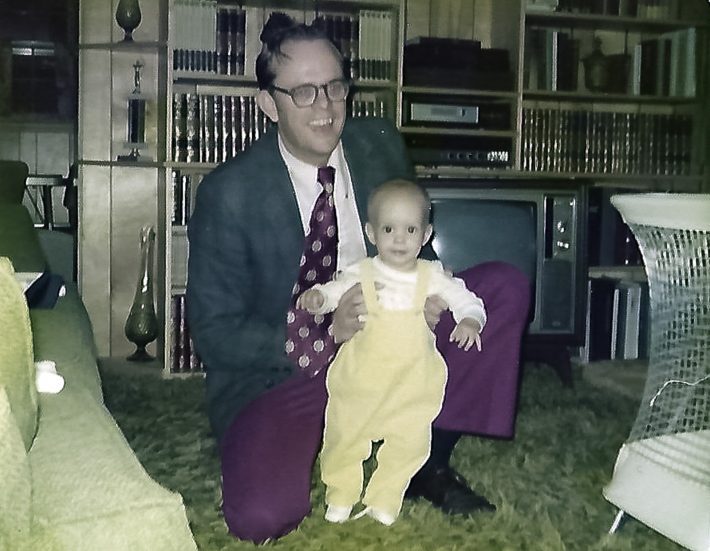
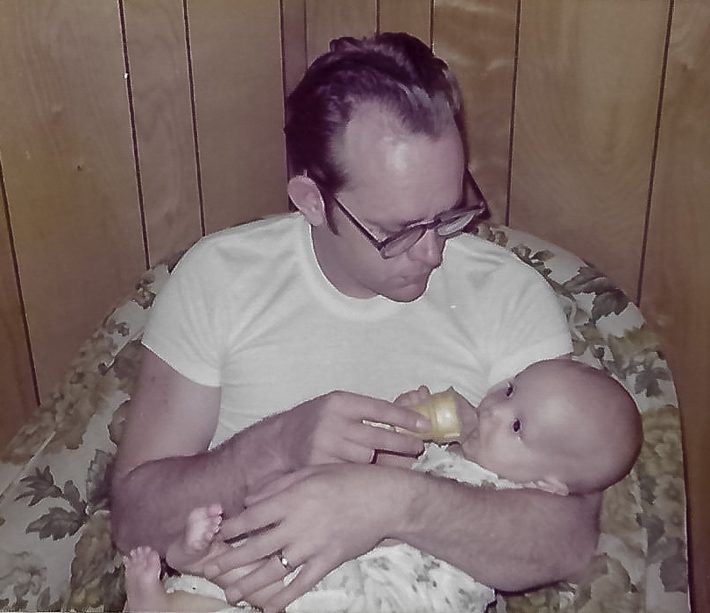
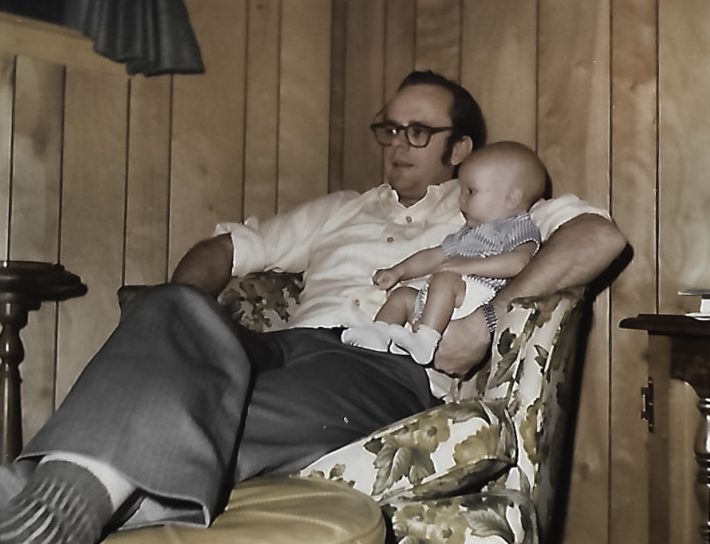
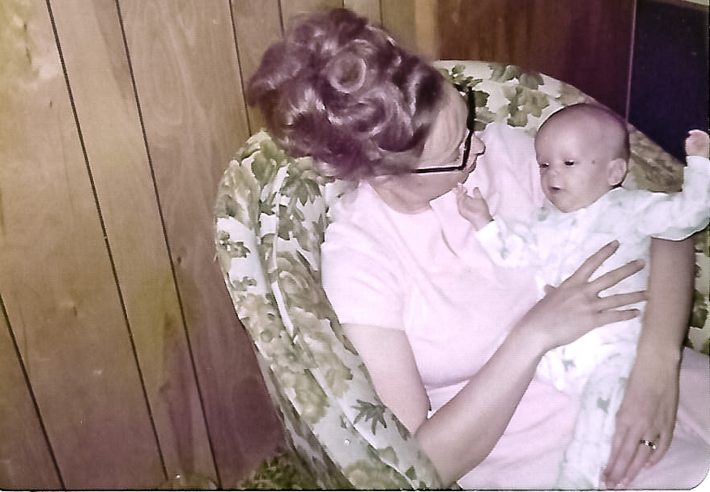
When we put Nana's ashes in the memorial bench, I had one thought lingering in the back of my mind the entire time: soon enough, we'll be doing this for Papa as well.
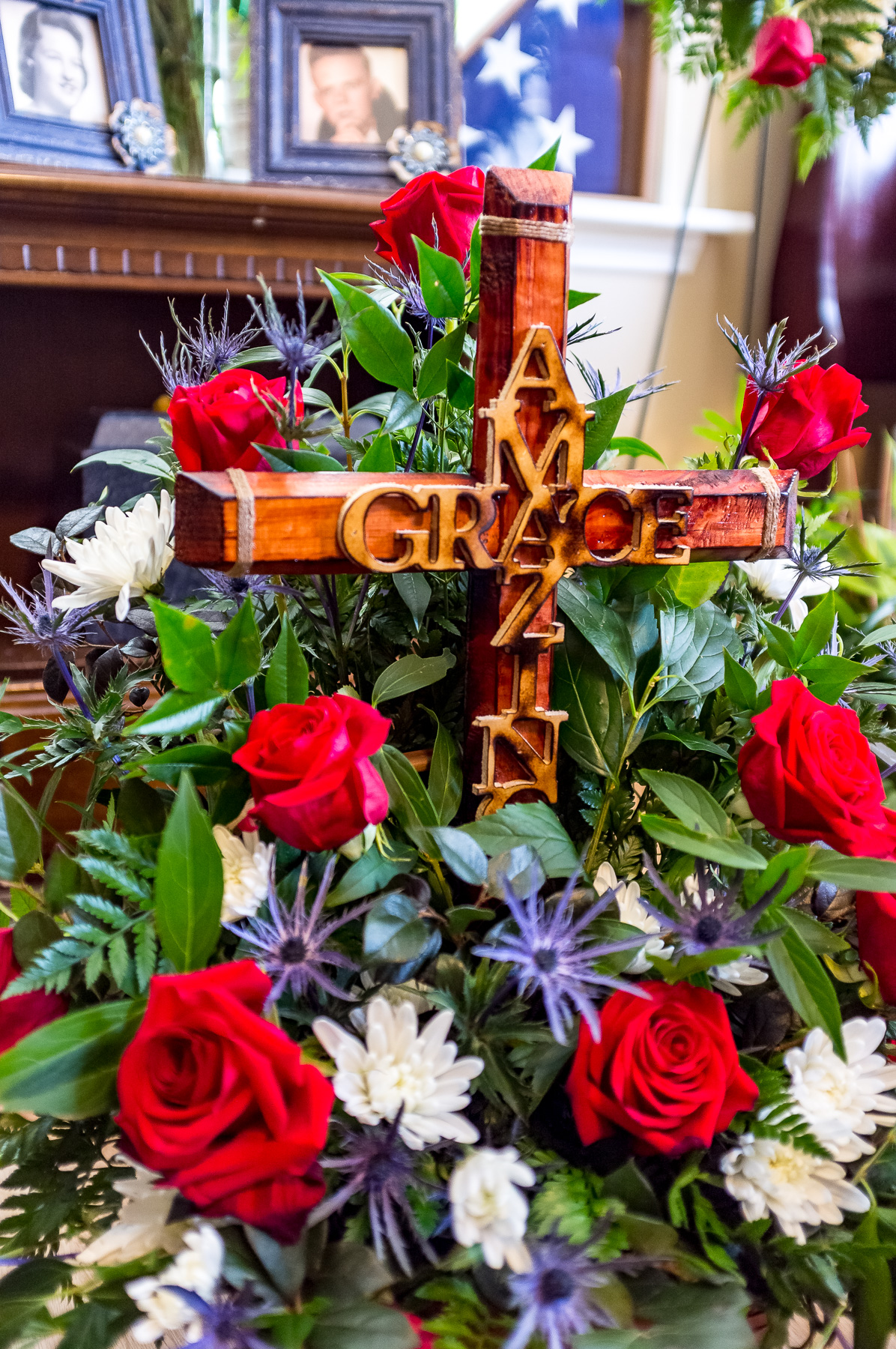


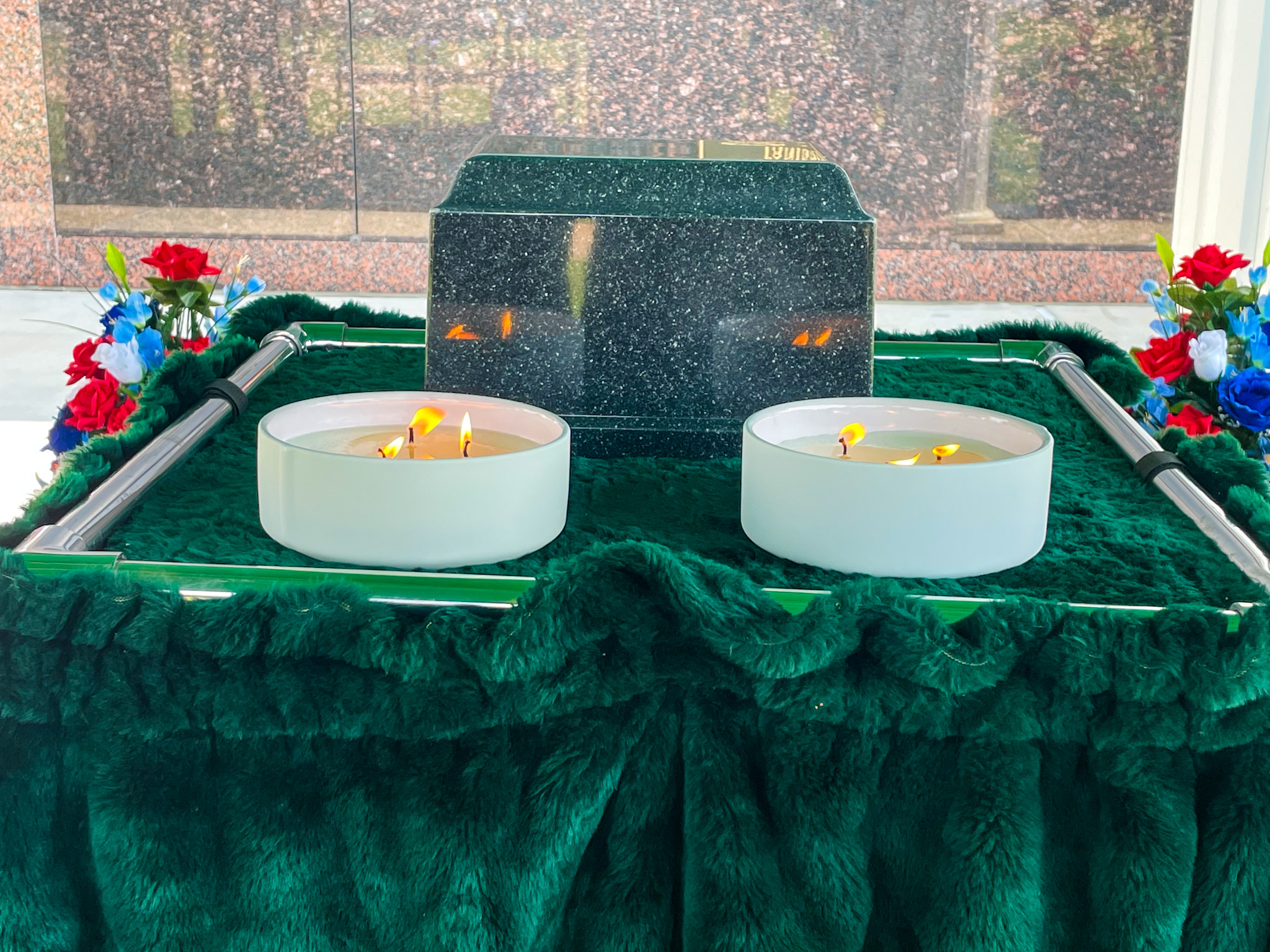
So today brought a certain closure to it all. My parents are in their final resting place. Their urns are touching, together again.
During the short service, led by Nana's and Papa's pastor, there was talk of the hope we have in Jesus, the hope of eternal life together with God. I sat staring at Papa's urn, hoping the topic wouldn't come up in the after-service chat. I always feel awkward in those moments because I play along, agree with whoever is talking, and even say things that I don't even mean or believe. Our neighbor, for example, was talking to me the other day about Papa's passing.
"Well, he's with Omi now, and they're probably still hugging," she said.
"No," I laughed, "she probably isn't done fussing at him yet."
I don't believe that, but I felt it was something that would give our neighbor a smile, and having lost her husband only this spring, I thought laughs are probably all too uncommon in her life these days.
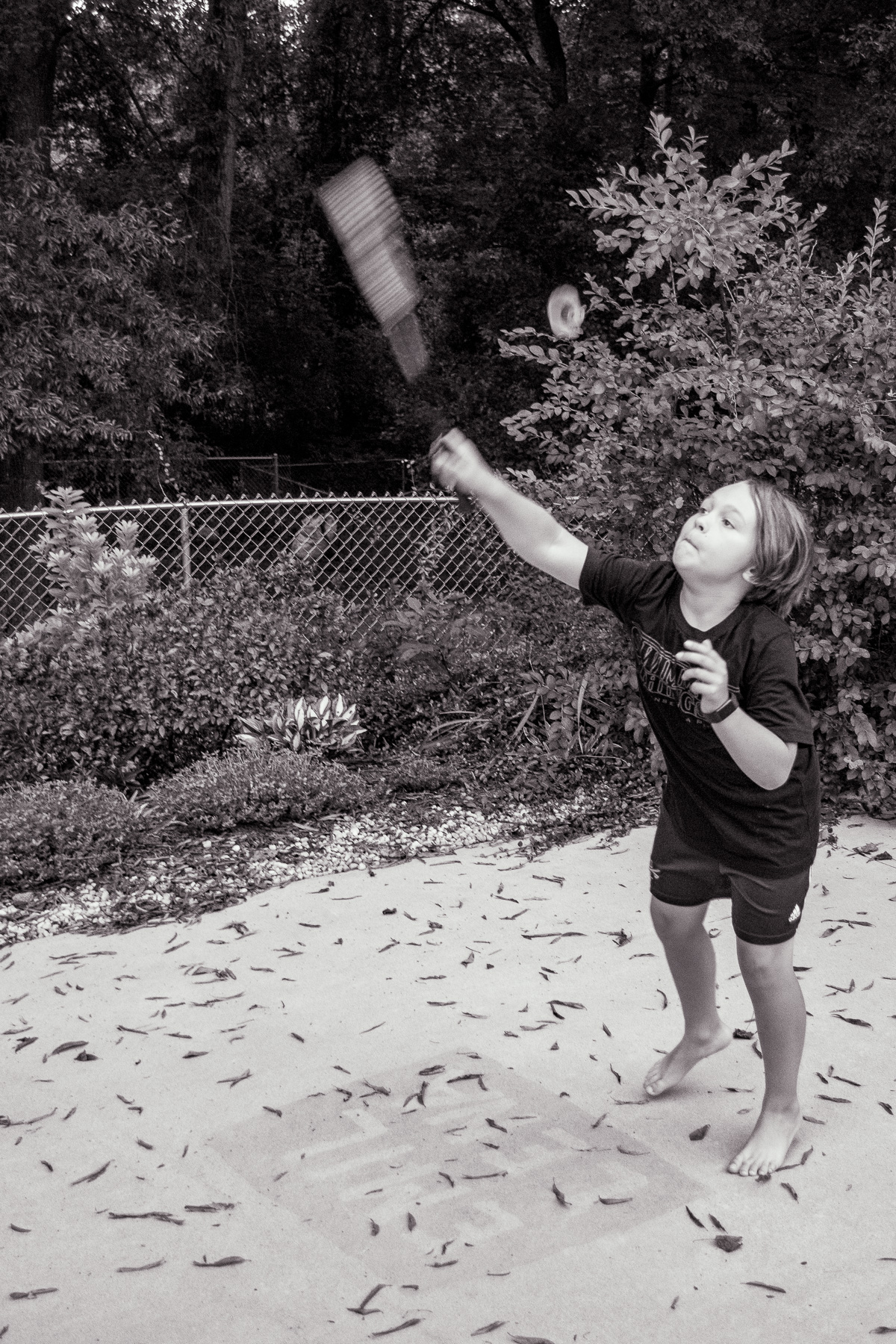
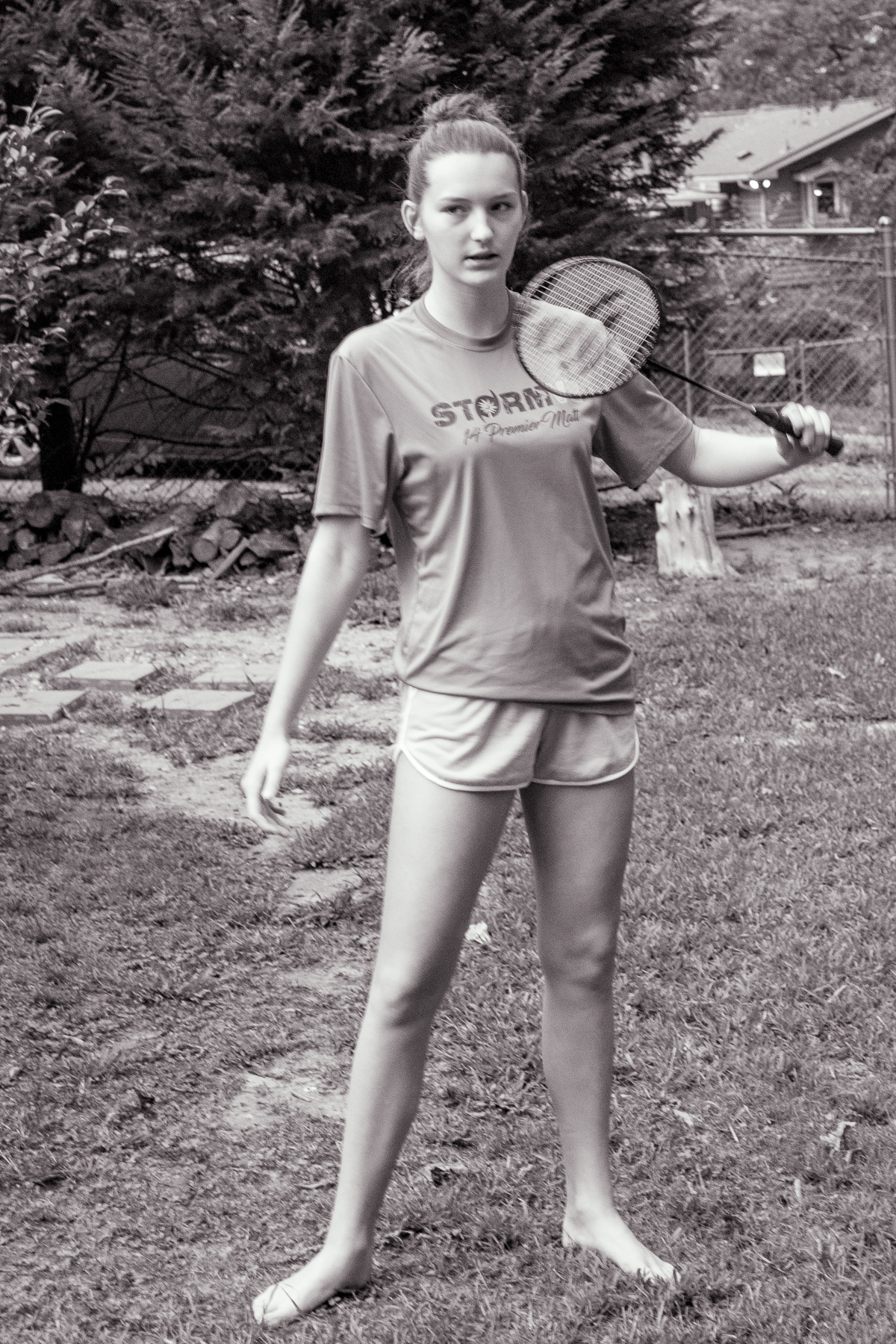
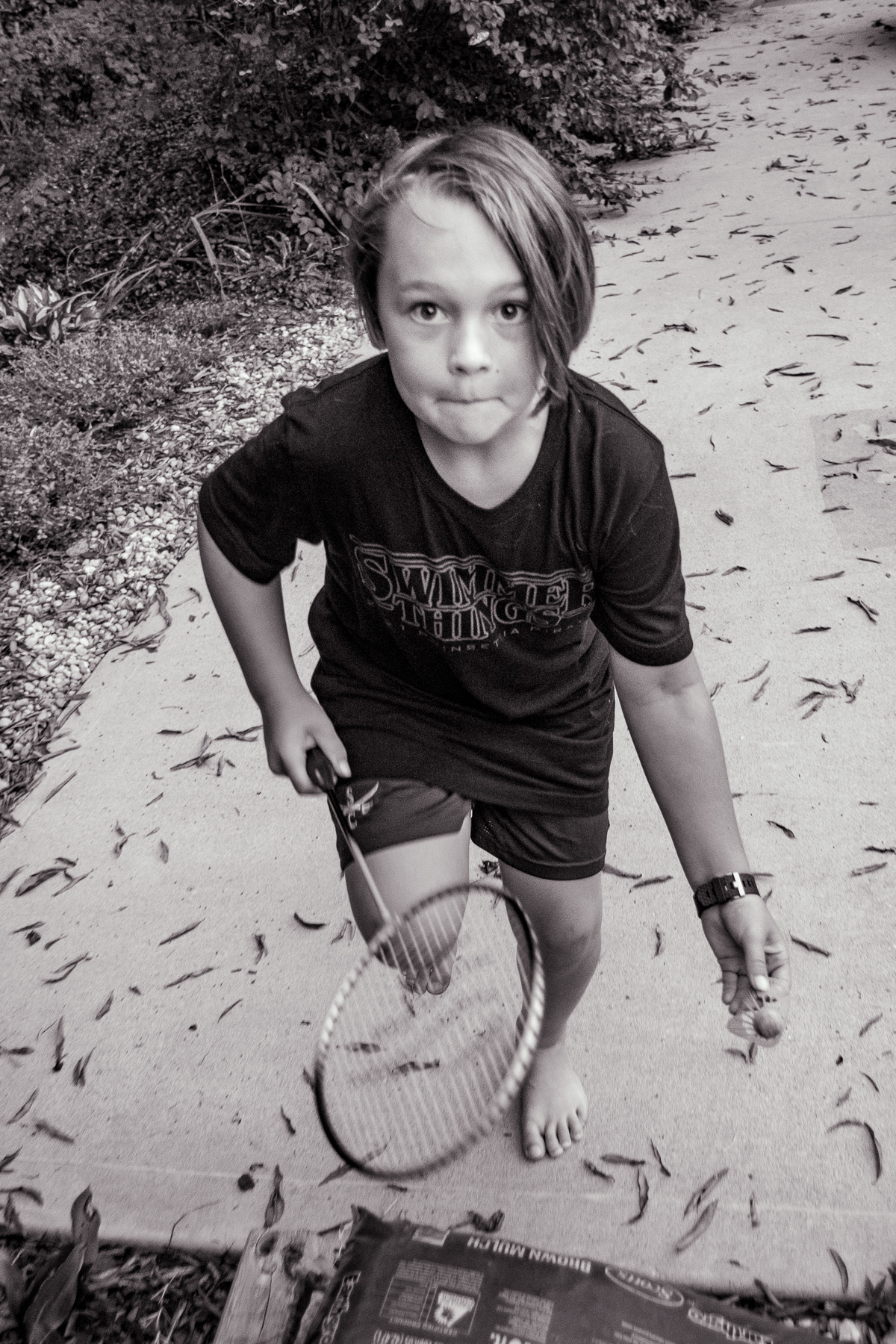
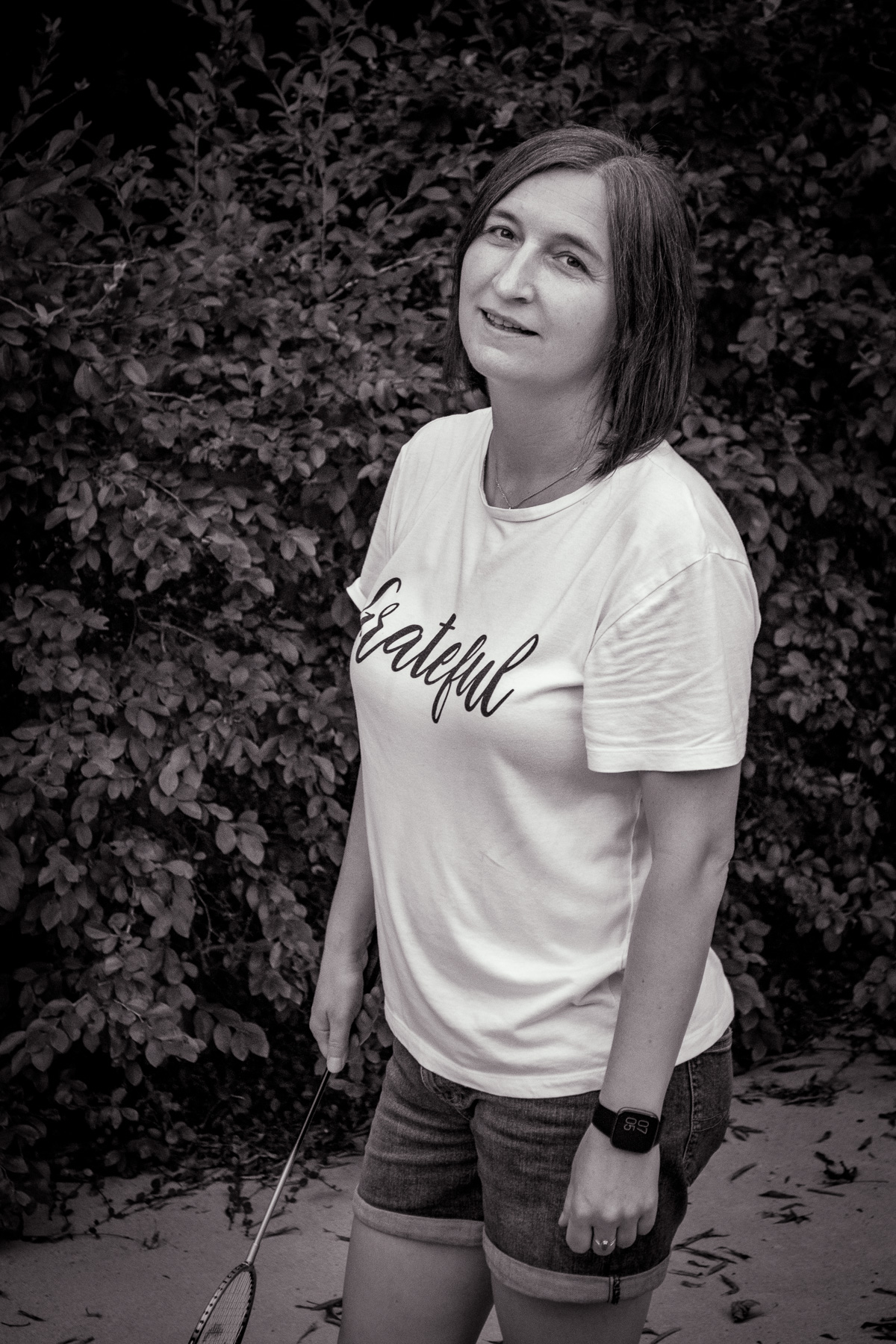
In the evening, some family Uno, three-hand cribbage, and of course, our family favorite, badminton.