Matching Tracksuits

fun in fours

literature

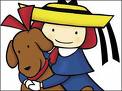
Madeline

madelineClassic opening lines:

In an old house in Paris that was covered with vines,
lived twelve little girls in two straight lines.
They left the house at half past nine […]
The smallest one was Madeline.

Madeline is fast becoming one of L’s favorites. We only own one book (Madeline’s Christmas), but we’ve borrowed several from the library, all of them hits. And what’s not to love about them? Lovely stories and a recurring theme: don’t judge by appearances.

Lately, L’s been fascinated with the Madeline cartoon. So far as adaptations go, these cartoons are wonderful. Christopher Plummer as the narrator has a warm, grandfatherly voice.

It seems to worm its way into your heart and stay there:

This show hasn’t been popular since I was in kindergarten. I am almost thirteen now, and sometimes, when I am up late, I stumble across “Madeline” on the Disney channel. I loved this show when I was little and I wonder why they don’t show it at times when little children can see it. It’s a lot better than the junk they show on “Playhouse Disney” these days. (Koala Bros., Higglytown Heroes, etc.) If they could bring this show back, it would be just as popular, if not, more than it once was. I think that Madeline had a big influence on children between the ages of two to six. Heck, I would still watch it. I hope to see Madeline on Disney Channel really soon. (IMDb)

The best part: the theme song. We’re all going around singing it.

Eighth Grade Shakespeare

Shakespeare is a challenge to our modern ears, no doubt about it. Even the most knowledgeable experts halter a line or two of a performance before they settle in to the poetry. In my experience, it takes me about a few minutes before the language on stage sounds completely natural and non-foreign.

I've been teaching Shakespeare to eighth graders of various academic levels for the past week: an enlightening, frustrating, ultimately rewarding experience. We're reading an abridged version of Much Ado About Nothing. It is, in fact, part of the required eighth grade curriculum here in Greenville County, and I'm thrilled that those who designed the curriculum had the wisdom of chosing a comedy rather than, say, Julius Caesar. (A perfectly fine play in its own rights, it's an absolute bore to teenagers.) Much Ado has all the elements adolescents can relate to: unrequited love; jealousy; the twittery, jittery joy of new love.

Yet it's still been difficult enough for them that it's been, at times, a chore. And so to remedy that, I changed my unit plan and decided to show the Branaugh Much Ado concurrently with our own reading. We've completed the first two acts in class; we watched the first two acts today.

What a joy to watch the kids watch Shakespeare and enjoy it. What was most rewarding for me was to hear them laugh at lines that had been omitted from our abridged version. "They're really getting it," I almost said aloud.

Identifying Passages

As part of our recent test on Romeo and Juliet, I included seven passages from the play for identification.

The instructions:

Identify the following passages. Who is the speaker? To whom is he/she speaking? How is this a critical passage in the play?

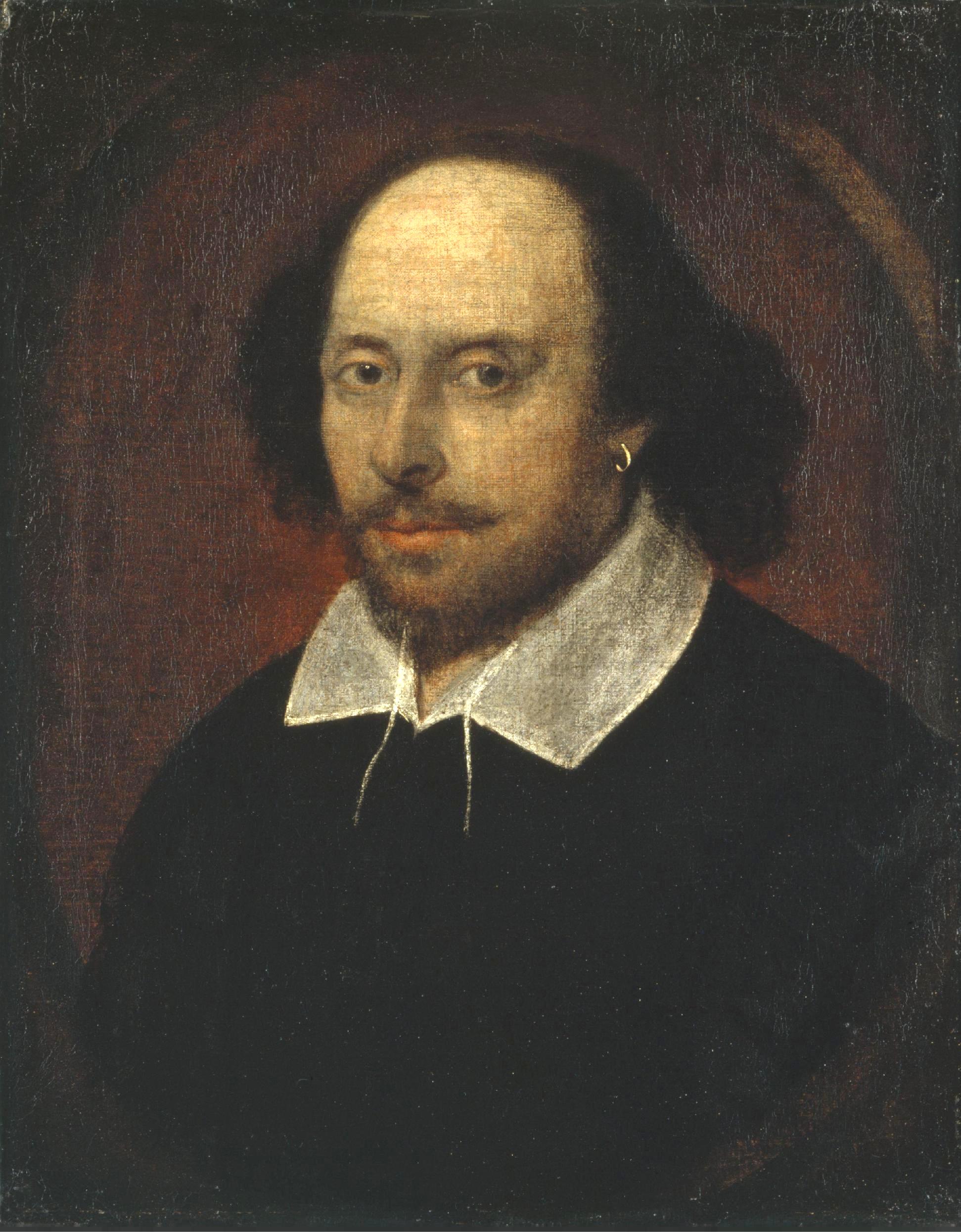
shakespeare

Here are the passages

  1. A plague on both your houses!
  2. I pray thee, good Mercutio, let's retire:
    The day is hot, the Capulets abroad,
    And, if we meet, we shall not scape a brawl;
    For now, these hot days, is the mad blood stirring.
  3. Compare her face with some that I shall show,
    And I will make thee think thy swan a crow.
  4. 'Tis but thy name that is my enemy;
    Thou art thyself, though not a Montague.
    What's Montague? it is nor hand, nor foot,
    Nor arm, nor face, nor any other part
    Belonging to a man. O, be some other name!
    What's in a name? that which we call a rose
    By any other name would smell as sweet;
  5. There is no world without Verona walls,
    But purgatory, torture, hell itself.
  6. What if it be a poison, which the friar
    Subtly hath minister'd to have me dead,
    Lest in this marriage he should be dishonour'd,
    Because he married me before to Romeo?
  7. Death, that hath suck'd the honey of thy breath,
    Hath had no power yet upon thy beauty:
    Thou art not conquer'd; beauty's ensign yet
    Is crimson in thy lips and in thy cheeks,
    And death's pale flag is not advanced there.

Some are easy; at least one is a little obscure (but covered in class as one of many examples of the Bard's incessant foreshadowing).

See how many you can get. No Googling!

Billy Collins

I have not been "into" poetry for some years now. I once thought I might be a poet at heart, but I can't even write compelling blog entries, so that is a dream long lost.

I do have to teach poetry, though, and I discovered, while teaching a unit on imagery, my new favorite poet: Billy Collins. Poet Laureate from 2001 to 2003, he is accessible, witty, and charming.

The poem we read in class was "The Country." While searching for an online version, I found an animated version of the poem. Then, I discovered "Forgetfulness." It has all the elements of a poem of genius: enlightening observations, a uncommonly commonplace topic, perhaps even a cliche turned inside out.

There are several more animated poems available here.

The Bard on the Wane

In a study entitled "Vanishing Shakespeare," the American Council of Trustees and Alumni found that 55 out of 70 "English departments at the U.S. News & World Report's top 25 national universities and top liberal arts colleges, as well as the Big Ten schools and select public universities in New York and California" don't require English majors to take a course in Shakespeare. Instead, we're replacing the Bard with Madonna:

Increasingly, colleges and universities envision a major in English not as a body of important writers, genres, and works that all should know, but as a hodgepodge of courses reflecting diverse interests and approaches. See Appendix B.) After redesigning the English major at the University of Pennsylvania, for example, the department's undergraduate hairman told The Daily Pennsylvanian student newspaper that We might not agree on what we think English is, but we could all agree that our curriculum should reflect the makeup of our faculty. Such a philosophy results in course offerings being driven not by the intellectual needs of students, but often by the varied interests and agendas of the faculty. As a consequence, it is possible for students to graduate with a degree in English without thoughtful or extended study of central works and figures who have shaped our literary and cultural heritage.

It's difficult for me to imagine not studying Shakespeare as an English major. Shortly after I graduated, the professor who taught the Shakespeare course at my small liberal arts college introduced a second Shakespeare course in which students spent a whole semester studying a single play, with the ultimate aim of performing it. It was offered every other year, with a more traditional, 12-play Shakespeare course offered on off years. I wish I'd had the opportunity to take both.

But not to study his work at all? "A degree in English without Shakespeare is like an M.D. without a course in anatomy. It is tantamount to fraud."

"Vanishing Shakespeare"

Madeleine L’Engle

Madeleine L’Engle, author of one of the most famous books in the adolescent literature canon, A Wrinkle in Time, died last week. (Madeleine L’Engle: News)

A Wrinkle in Time was one of the first science fiction books I ever read, and it’s one that has stayed with me for twenty-some years now. I read it again in college for the required course on adolescent lit, and it was just as enchanting in my early twenties as it had been twelve or so years earlier.

Potter v Pope

In Poland, the Catholic Church is very much against Harry Potter -- sort of like religious conservatives here.

Why?

We all know the standard reasons: wizards and sorcery are simply forbidden in the Bible. It's that simple.

Yet K pointed out the "real" reason Potter worries the Polish church. I read the BBC News article opening to her:

The seventh and final Harry Potter book has broken sales records on both sides of the Atlantic, selling 11 million copies in its first 24 hours.

Harry Potter and the Deathly Hallows sold 2.7 million copies in the UK and 8.3 million in the US. (BBC)

She responded, "See, that's why the Polish church is so scared of Harry Potter. That's real power."

Reading List

Frederick Wirth writes in Prenatal Parenting of an experiment Anthony Casper conducted at the University of North Carolina regarding parental reading and prenatal development. He had mothers read Dr. Seuss’ The Cat in the Hat to their unborn children twice a day. A few days after birth, the infants were given a chance to hear the story again. However, using a device fitted with a special nipple, the infants could change the story being read by changing the rate at which they were sucking.

As demonstrated by their sucking speed, the newborns remembered The Cat in the Hat better. Furthermore, they preferred it read forward instead of backward. (Wirth, 37)

So I guess in a way I was wrong when I suggested that our daughter might prefer Shell Silverstein to Robert Frost.

Or, looking at it another way, here’s a chance to get my daughter interested in all the nerdy literature I love.

Of Mans First Disobedience, and the Fruit
Of that Forbidden Tree, whose mortal tast
Brought Death into the World, and all our woe,
With loss of Eden, till one greater Man
Restore us, and regain the blissful Seat,
Sing Heav’nly Muse

I aim to give L a headstart on senior lit…

Reading and Walls

Wirth CoverIn my "Currently Reading" pile of books lies Prenatal Parenting by Frederick Wirth, M.D. Most interesting so far have been the sections on fetal sensory development, particularly the development and growth of the auditory system. Wirth writes that at "twenty-two weeks of gestation the developing infant will respond to sounds from outside the womb. By twenty-eight weeks the infant responds to sound in very consistent ways." (28) And so K talks to her walk driving to work, and I press my cheek to K's belly nightly and tell our daughter how much we're looking forward to meeting her.
K and I have been playing a little music box for our daughter nightly for some weeks now, but recently, we've added reading to the ritual.

It should have a noticeable effect:

I can always tell which of my full-term newborn infants have been read to. They have more mature orienting behavior to auditory stiumli. I can even tell which fathers have been active in reading to their unborn child. I do this by holding the infant between me and his father while we compete for the infant's attention by calling the child's name. If the dad has been actively involved in the reading and singing, his child will turn his head toward him, looking for the source of the sound. Invariably, when their eyes meet they both react positively. (Wirth, 29)

SidewalkOften, it's selections from Where the Sidewalk Ends, not so much because L will like it more -- obviously, fetal brain development at this point is not that advanced -- but because K likes Silverstein's playful language.

Tonight, Robert Frost, concluding with one of his best, one of the best, period: "Mending Wall." It has one of the truest passages ever written:Wall

Before I built a wall I'd ask to know
What I was walling in or walling out,
And to whom I was like to give offence.
Something there is that doesn't love a wall,
That wants it down.'

Such concerns seem largely forgotten these days.

Writing about Literature

Why am I no longer interested in studying literature? Is it simply that I don’t understand most of it, particularly contemporary poetry? Perhaps, but regardless of whether I understand it or not, it all feels so fake to me, so much like a game. The rules of the game are simple: Make nice flowery language that doesn’t necessarily mean anything in particular; make nice vague language that sounds nice but doesn’t necessarily many anything. It’s as if poets are not writing for people but for other poets. Even the criticism and analysis of poetry seems as if it’s coded for poets. I read descriptions of poetry and it tells me nothing. I understand what the words mean, but I don’t see how you can possibly describe poetry in that way and it mean anything. In that way, poetry critism is its own form of creative writing. No one simply says, “This is what the poet is getting at,” but the critic must turn her essay into a prose-poem itself.

Take for example Christian Wiman’s essay in the January 1997 issue of Poetry. He says of Heaney’s “The Harvest Bow,” “The poem has an equable, utterly accomplished feel to it, a pleasing sense of formal fulfillment and completed experience.” Or comparing Heaney’s work to Ruskin’s “sacred laws”: “Both are as yet unrealized, but they are not merely illusory expectations; the promised revelation is implicit in the work at hand.” Of course I am taking these quotes completely out of their context and not even supplying the poems about which Wiman is writing. All the same, while I understand what each word means, the sentences themselves tell me nothing about the poems. In what sense are they “unrealized?” How would an “utterly accomplished feel” differ from a “partially accomplished feel?” Indeed, what would be the opposite of “an utterly accomplished feel?” The words sound nice; they sound academic and deep; but they don’t tell me anything.

The Vintage Book of Contemporary American Poetry is filled with examples of empty and meaningless description. J. D. McClatchy, the editor, writes a brief biographical introduction to each poet, but when he sets about describing the poetry, he often loses me. He introduces Mora Van Duyn by saying, “Her intellectual balance, as well as her preferred narrative and formal strategies, serve to heighten the ordinary (what she calls the ‘motley and manifold’), and control the bizarre.” What exactly does he mean by “intellectual balance” and how does this manifest itself in Van Duyn’s poetry? He describes Robert Penn Warren’s later poetry as “craggy.” This tells me nothing.

Some of McClatchy’s description makes sense, but seems to be more than a little overstated. Concerning J. V. Cunningham, he says, “Though small in bulk and scope, Cunningham’s work is honed to a mordant precision of style and feeling.” I read this, and I have no idea what he’s talking about. Even after I read Cunningham’s poetry, I think, “How does McClatchy mean this is ‘honed to a mordant precision?’” Not all of Cunningham’s work is filled with the biting sarcasm implied in “mordant precision.” And once again, what would the opposite be?

It is not as if McClatchy writes entirely like this. About May Swenson’s work he says that she “relies on wordplay, odd viewpoints, unexpected juxtapositions, and puzzling riddles.” That tells me something; it gives me an idea about what to expect concerning her poetry. He describes Richard Wilbur’s work as being “grounded in a detailed observation of the natural world.” I read that I come to anticipate many physical details in his poetry.

I believe this style comes directly from the forms used by poets when they write about other poets. Robert Lowell wrote to Theodore Roetke and said, “One of the things I marvel at in your poems is the impression they give of having been worked on an extra half day.” What does that tell me about Roethke’s poetry? About Anne Sexton Lowell wrote, “Her gift was to grip, to give words to the drama of her personality.” The latter half I understand, but what does he mean, “to grip?” To grip what?