fun in threes, sometimes fours
learning
In a flash, the cherry tomatoes were rolling across the concrete floor like greased bearings -- E had been unloading the shopping cart when, in a moment of slightly careless abandon, the container of tomatoes crashed into the side of the buggy as he was lifting them out, then crashed to the floor.
"It was an accident!" he said, looking up at me.
"Well, clean up the accident, then."
He began picking up the tomatoes and hustling them to a garbage can. Behind us, a mother and her daughter, probably around four, stood watching. When E returned for another load, the little girl walked over and began picking up tomatoes with him.

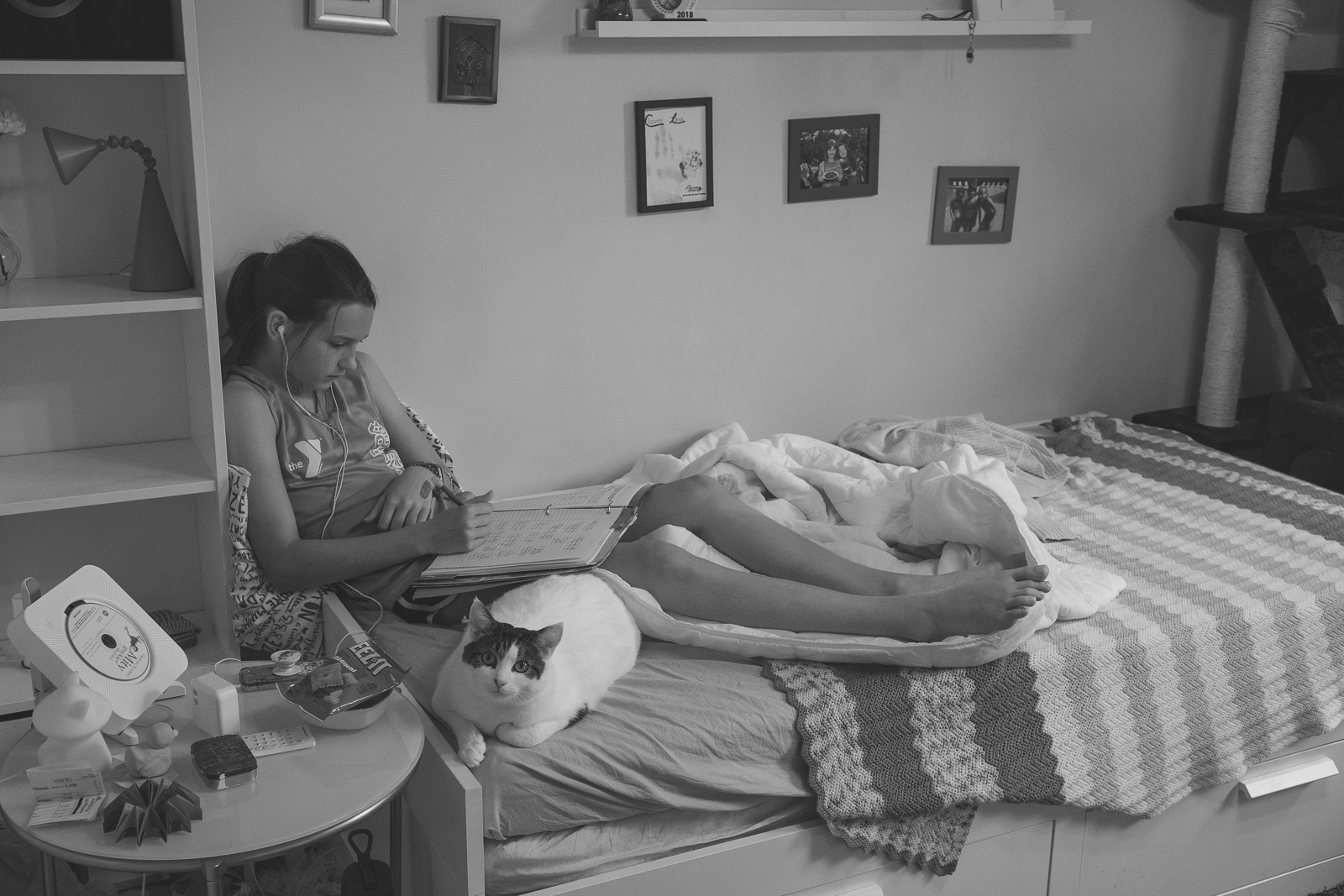
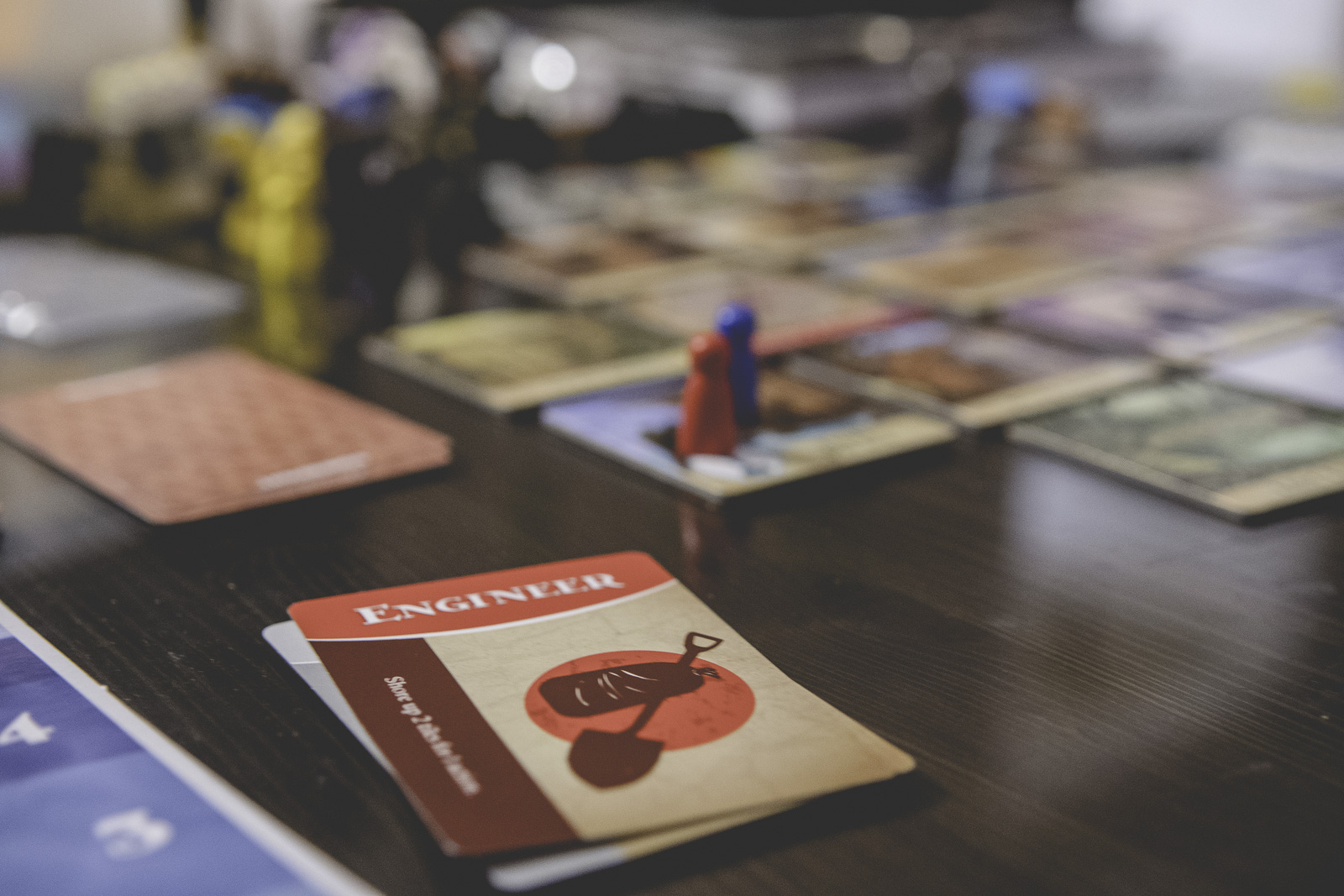
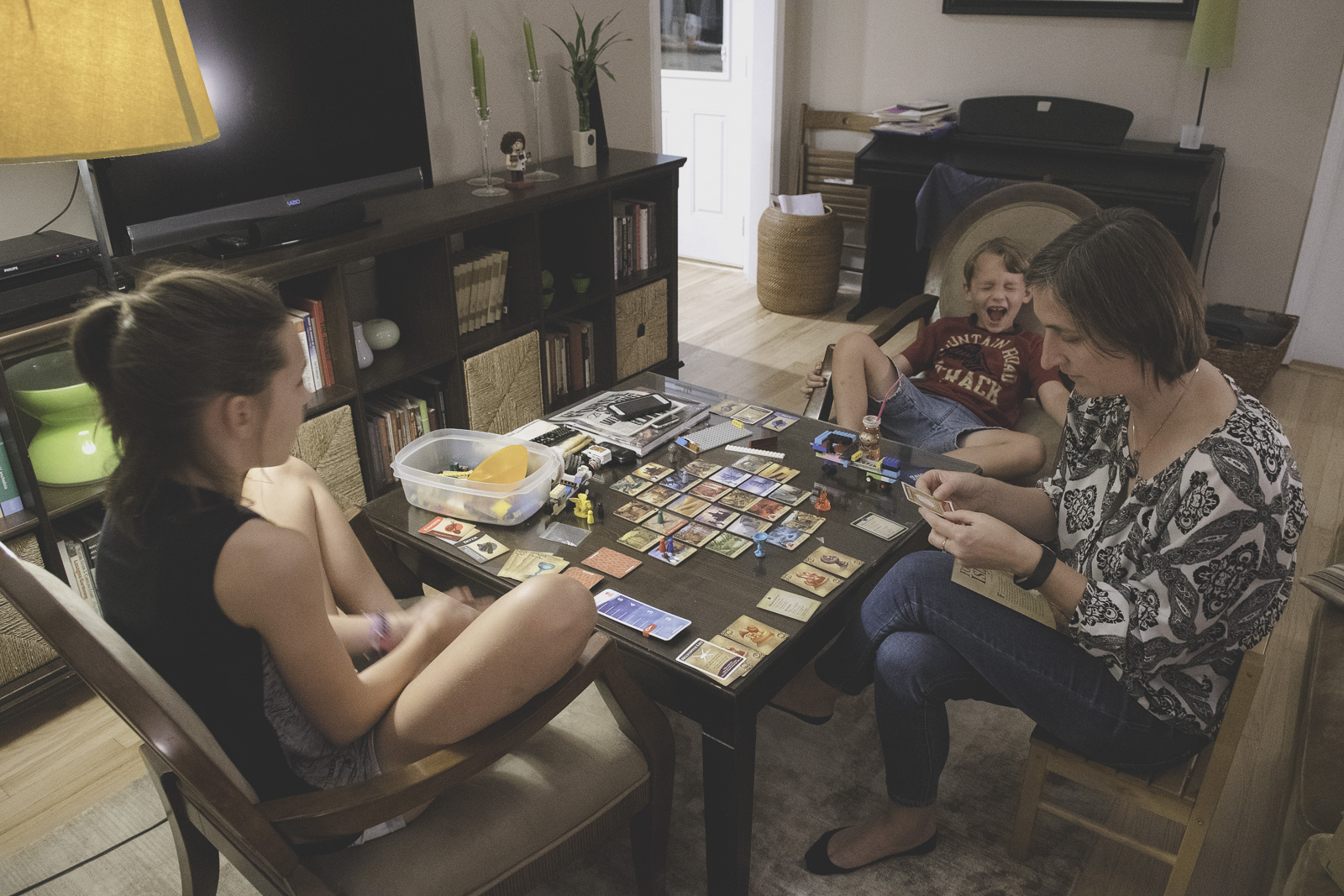
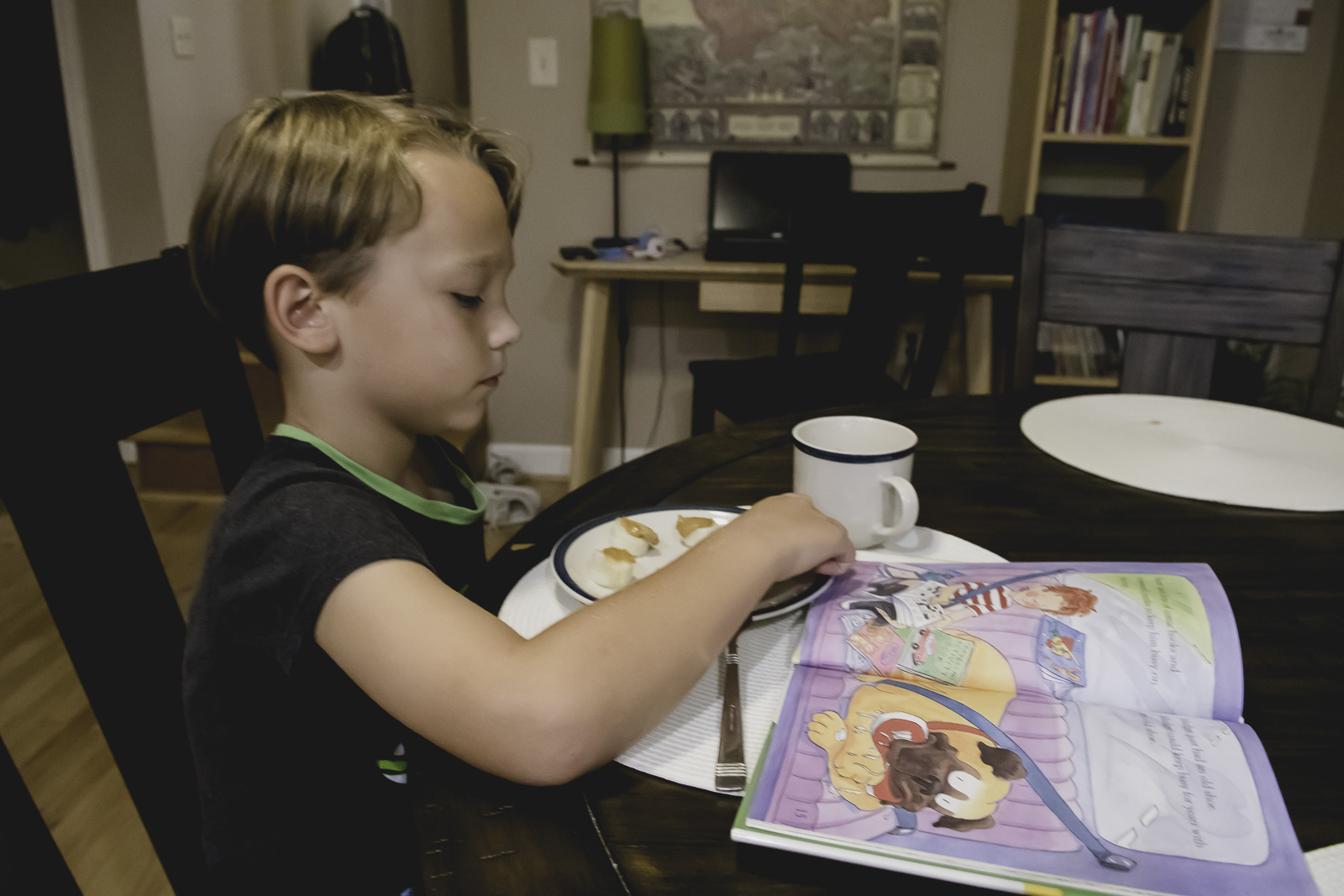
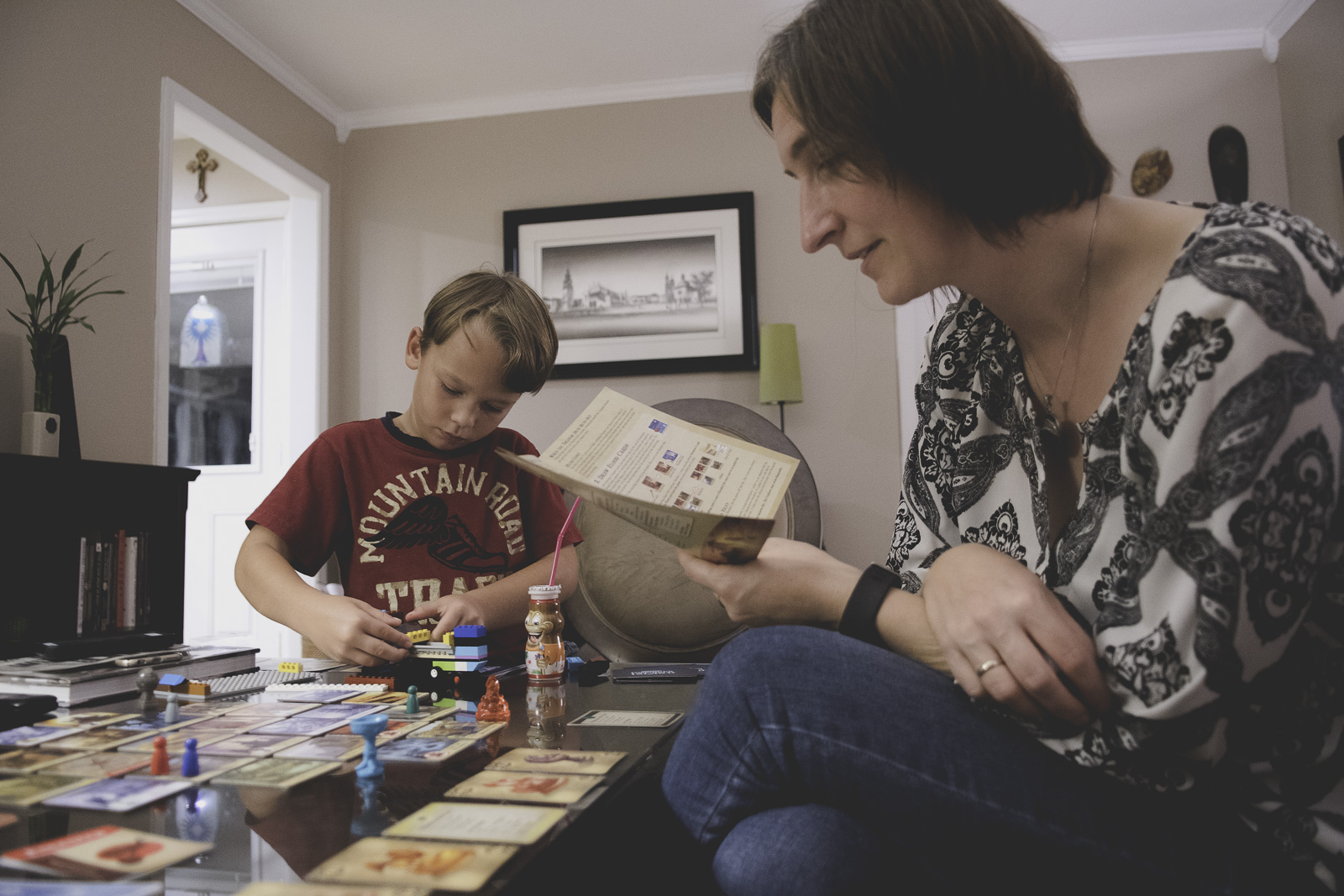
When we returned home, K and L were in the midst of figuring out a new board game. Well, not quite a board game -- there's no board to speak of. Still, a game. An exceedingly complicated game. With multiple decks of cards. And two different sets of tokens. And so many rules to remember that it seemed impossible that a human could keep that many exceptions in her mind at once.
Of course, I started making silly comments.
L, very much wanting to play, naturally got a little irritated with my silliness.
E, content to entertain himself, worked with Legos as all this went on.
And K, determined to make it through all the instructions -- a multi-page book, mind you, not just a few short paragraphs on the underside of the box -- kept explaining the game to us.
"We have fifteen minutes before it's E's bedtime," K said. "We have a little time to play." Between all the complicated rules and steps, everyone got a single turn in those fifteen minutes.
The Boy had no homework tonight, so we played Scrabble, which was sort of assigned as homework when you don't have homework. "Play a word game," the instructions said, and what better word game than the word game?
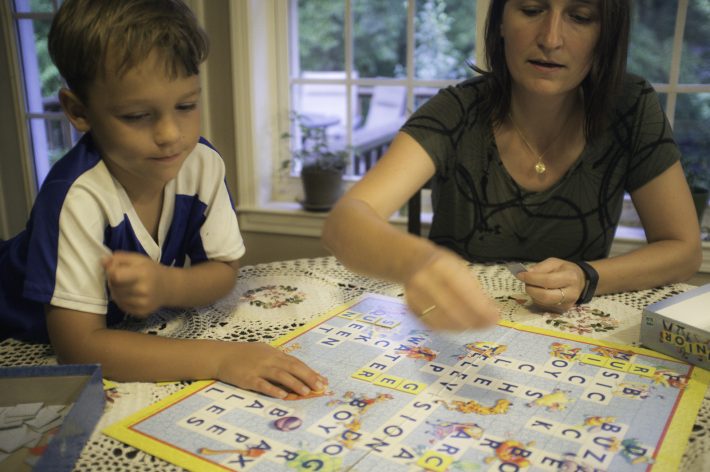
We played the basic version of Scrabble Junior, which has words laid out for young players -- good for working on spelling and reading. We looked through the instructions but couldn't find anything on how to play that version. The back of the board is a more traditional, blank graph for players to make their own words, and the instructions dealt exclusively with that, so we made up our own rules.
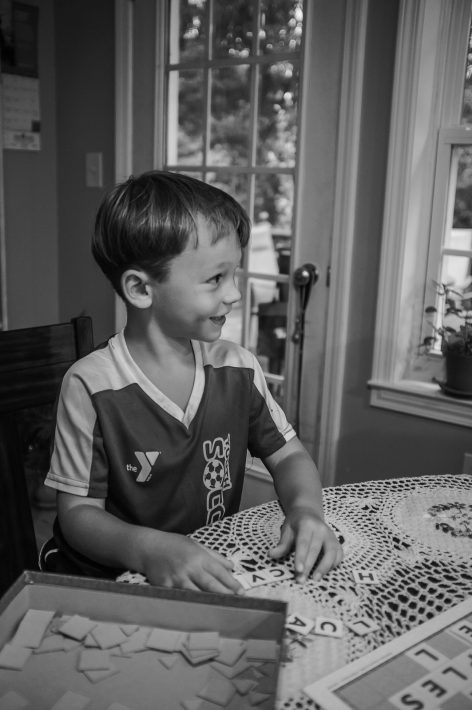
We could, in short, build words letter by letter, and one only got a point when one finished a word. E got the first point, finishing "ball" like a champ.
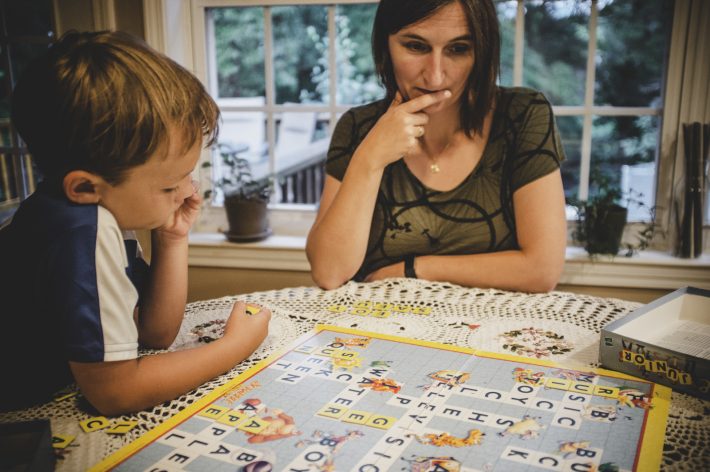
But at one point, I finished a word knowing that the Boy could have finished it in the following turn. K had had the opportunity to do it earlier, but he'd have fallen behind, so she elected not to take the point from him. I was the only one with no points, and I decided to offer him a learning opportunity.
He was not happy.
Storming off to the living room, he declared, "I'm not playing!" At first, we tried to get him back through his competitive spirit: "Okay, you'll just lose your turns."
"I don't care!"
We needed more drastic measures, so I simply and firmly instructed him to return. "This is not good sportsmanship. There is no need to get upset because someone else gets a point. No one else at the table was upset when you got points. Indeed, we were all happy for you. Now, calm down, sit down, and play with a mature young man."
A few minutes later, he drew a G, which meant he could finish "dog" and "grapes" for two points. (We were playing one point per word, not one point per letter of completed words.)
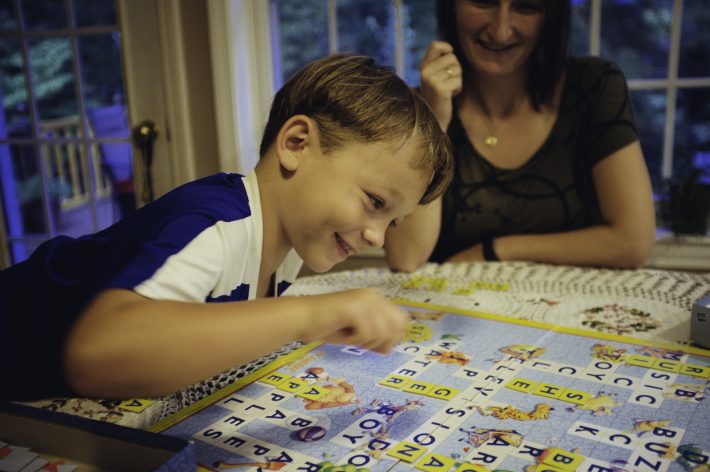
In the end, he came in last place, but we were all separated by single points, and by then, he didn't care. Hungry, he didn't even stick around to count points.
Mission accomplished.
As a teacher, I've been in a number of meetings. I'm fortunate to say that I can't make a claim like, "Not a day goes by that I'm not in some meeting or another," but I suppose that's possible.
We have grade-level meetings every Friday. We sit around and talk about what's going well with the logistics of our grade -- moving from class to class, getting materials out of lockers, going to the bathroom, going to lunch, heading back from lunch, getting to related arts classes. All these things and a million more. We talk about students who are showing bad behavior in multiple classes and make a plan for dealing with the kid, hopefully with more positive outcomes for the kid than he is currently experiencing.
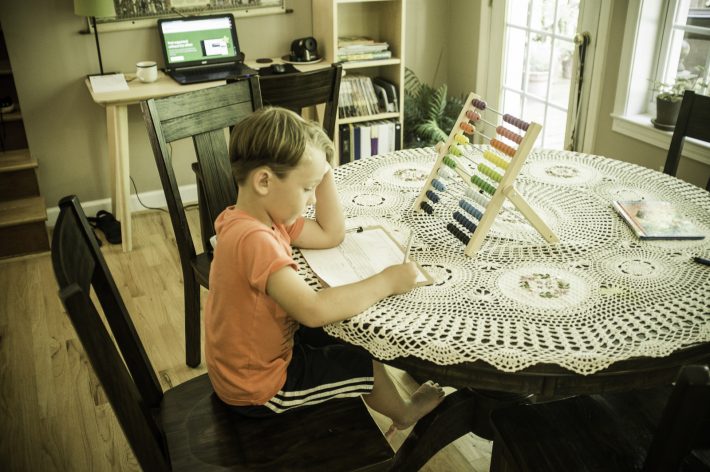
Every Tuesday we have professional development. We learn about new websites, new methodologies, new laws, new tools, new books, new paradigms. We go over how to accommodate children with mental and behavioral challenges in ways that are productive and in accordance with the documentation (IEPs/504s) in place for them.
Lately, we've been learning about the new way the district requires us to write our lesson plans. It's tempting to think that since the lesson plan is a tool primarily for the teacher that the district would allow a great deal of flexibility in this endeavor, but that would be a faulty assumption. Verbiage, formatting, pacing, sequencing -- all of this is decided for us. And when the district decides that it wants to make a change to this or that element of our lesson plans, we, as far as I know, have little to no input into the changes and are simply told, "This is how you do it now." Perhaps some select few teachers get to attend those meetings where such matters are decided, but I've never met anyone who's had a sense of having any input into these issues.
On altering Wednesdays after school, we have faculty and department meetings. These usually just turn into information-dissemination sessions, and I'm sure many participants find themselves thinking, "If you could just give me this in writing, I can read it on my own time." Sometimes department meetings provide professional development as well.
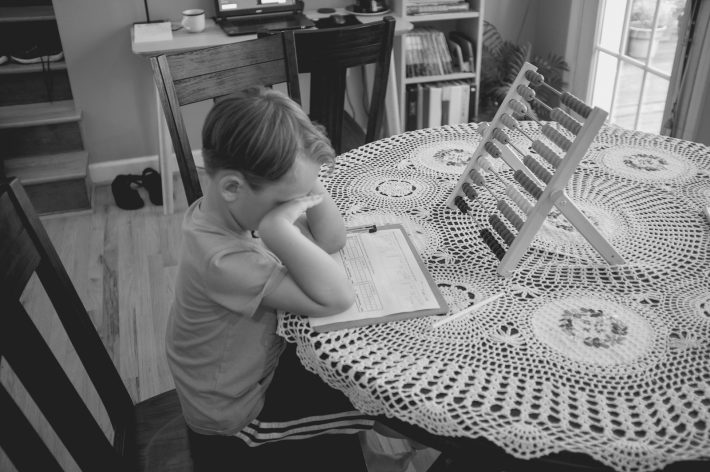
While sometimes there's a distinct feeling in the room that everyone would like to be doing something else (planning lessons? assessing student work? recording grades?), many of these meetings are indeed helpful. A large organization has to have meetings.
Today, however, I attended a first in my meeting-strewn career: we had a meeting about upcoming meetings. A meta-meeting.
Sometimes, the Boy can be his own worst enemy. It's true of all kids his age -- and older. He'll get upset about something, fuss about it, then escalate it when the resolution doesn't appear to be going his way. The trick is to get him to see that habit and stop it.
Today he was upset about something. About what, it doesn't really matter, but it involved L, who was helping me clean the bathrooms in preparation for the Boy's birthday party Saturday. We have too much to do in too little time, so some of Friday's cleaning shifted to today. The incident spilled over to a whine-fest with his mother, then with me. I sat him down and talked to him about what was going on.
"We're all getting things ready for you. For your party. Every single thing we're doing, we're doing it for you. I think if someone was doing this much for me, I wouldn't be upset because they weren't paying enough attention to me at that moment. I'd be thankful. I'd say, 'What can I do to help?'"
He calmed himself down with the little breathing exercise I taught him -- basically, slow, measured breaths, in through the nose, out through the mouth -- and then went to ask K if there was anything he could do to help. She set him to washing dishes, a chore he adores.
"Thank you for showing me how fun it is to work together today," he told me in the midst of his toothbrush session. "If I'd kept fussing, I would have missed out on a lot of fun."
Later that night, as we read Tashi in bed, Tashi had an opportunity to escape from bad guys who'd kidnapped him. He ran by the river, where he saw the wife of the Chief Bad Guy drowning. I stopped.
"Do you think Tashi should stop and help her?"
"No!" the Boy said incredulously.
"Why not?"
"Because she's his enemy. If he helps her, she might just grab him and take him back to the other bad guys," he explained earnestly.
"Or," I said, thinking carefully how I could explain it, "she could be so impressed and touched that he helped her that she stops being his enemy."
"Yeah, but in Smurfs: the Lost Village, when [some character whose name I don't remember] fell of the boat and the Smurfs helped him out of the water, he said, 'Yeah, but I'm still bad!' and captured them. And it was their boat. They made it themselves!" His patience in explaining that was enchanting.
"Yes, that happens sometimes," I replied, "but sometimes, something different happens. Sometimes they stop being enemies." I knew this was going to happen in the book, and it rings true in my own life.
Just today, I had an encounter with a student that made me feel I was in Groundhog Day. During morning duty, I'm charged with keeping all the kids sitting in the hall quietly and the hall calm and to do this, we teachers enforce a basic rule: "You can whisper, but you can't talk." Suzie -- not her real name, of course -- always talks. She speaks in a fairly low voice, but she's engaging her vocal cords, which means she's talking. Plus, I can occasionally hear her thirty or forty feet away.
"Suzie, whisper please," I said calmly. Respectfully. As I've done every day I'm on duty for the entire school year. Her response is to quiet her voice at first but to continue talking, not whispering. Her response to being redirected again is to suggest that because other people are also talking, that I'm unfairly targeting her. Today I explained the simple fact: "That's because you've taught me to expect it from you. The other people are not consistently disobeying me. The other students do it once and a while; you do it every single day." Again -- quietly, calmly, respectfully.
Today, I talked to her about it again. It turns out, she doesn't know what whispering is. "I am whispering," she insisted. I explained again that if she puts her hand on her throat when she talks and she feels vibrations, she's not whispering.
"Go ahead, try," I said, smiling.
"No!" she cried, breaking into a smile herself. "It's embarrassing!'
I pointed out to her that I wasn't picking on her, that I in fact like her a lot and see a lot of potential in her. "As long as you can keep these little things under control." (She also has a tendency to grow increasingly disrespectful when redirected multiple times.)
Here's a girl that could have easily become my enemy. I could have simply snapped at her, signed her discipline card, or by this time, probably, simply have written an administrative referral. But instead of seeing an enemy, a rebellious little brat (like many adults would), I try to see something a little different: someone who just hasn't had anyone take the time to show a genuine interest in her regarding the little things. It's easier just to brush if off with sarcasm or a referral.
The funny thing is, in spite of the fact that she still grows disrespectful with me, I'm fairly certain she doesn't see me as an enemy either. Sure, it's not the same as saving the life of the wife of the bandit who threatened to pull all your nose hairs out like Tashi did, but it's moving in that direction.
We took Clover for her first intermediate-level training session tonight. I was a little worried about it: we've been neglecting her training, and I thought for the first few minutes that the Dog might not be up to par with the other students in terms of obedience. Once she calmed down a bit though -- she's always so excited around new dogs -- she did just fine.
The trainer, who was a different young lady from the trainer who led us through the beginner training, mentioned that she used to train Border Collies almost exclusively. K and I looked at each other, knowing exactly what the other was thinking.
After class, we asked her about some of Clover's issues, specifically her continued nipping. She explained that we needed to provide her with a way to exercise that instinct -- she is a herding breed, after all -- in play and not with us. She suggested using a yoga ball. "It's too big for her to get her mouth around, so she can't pop it. But it's big enough that she can nose it around, which is what she needs."
L just happens to have a yoga ball. It's now Clover's.


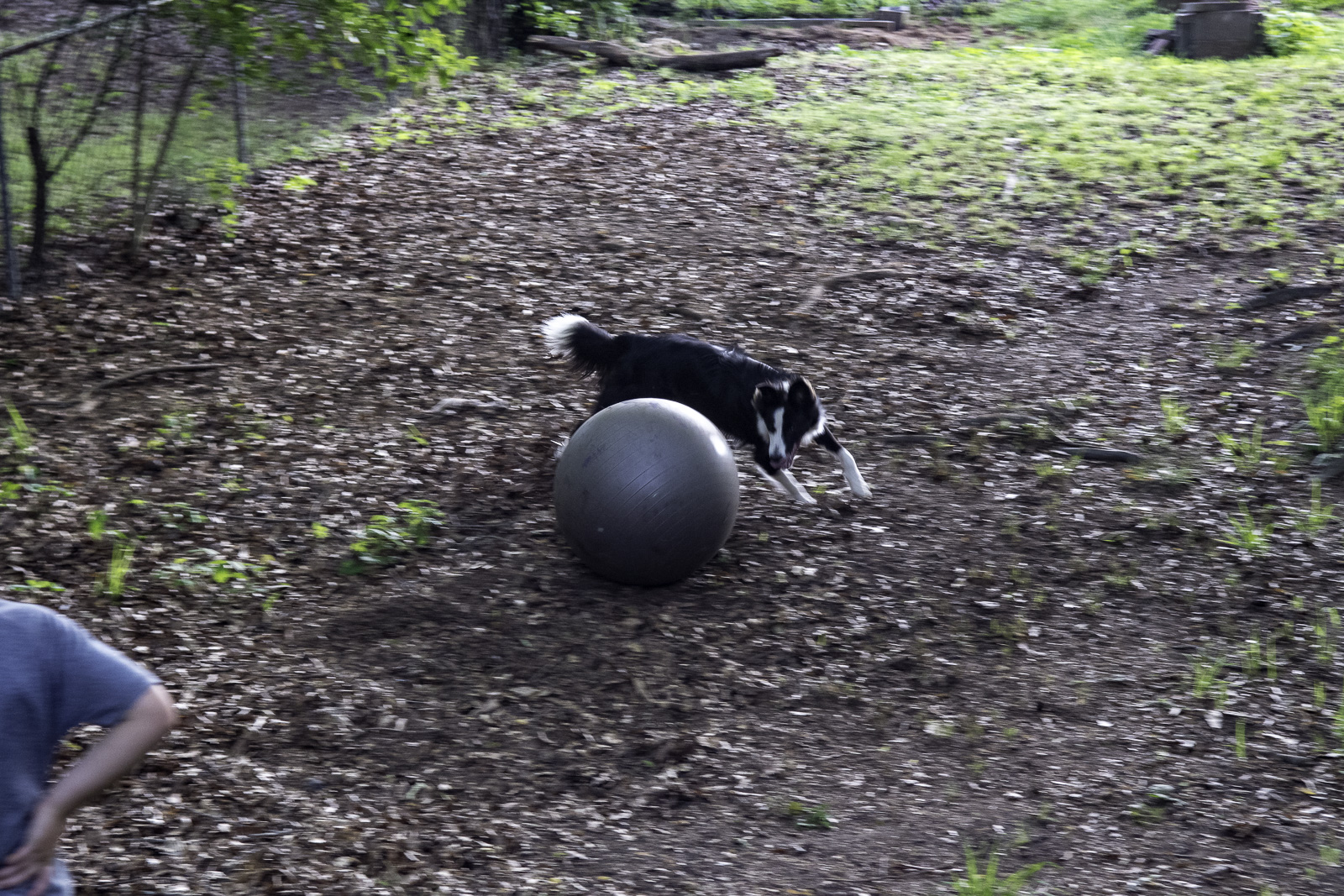
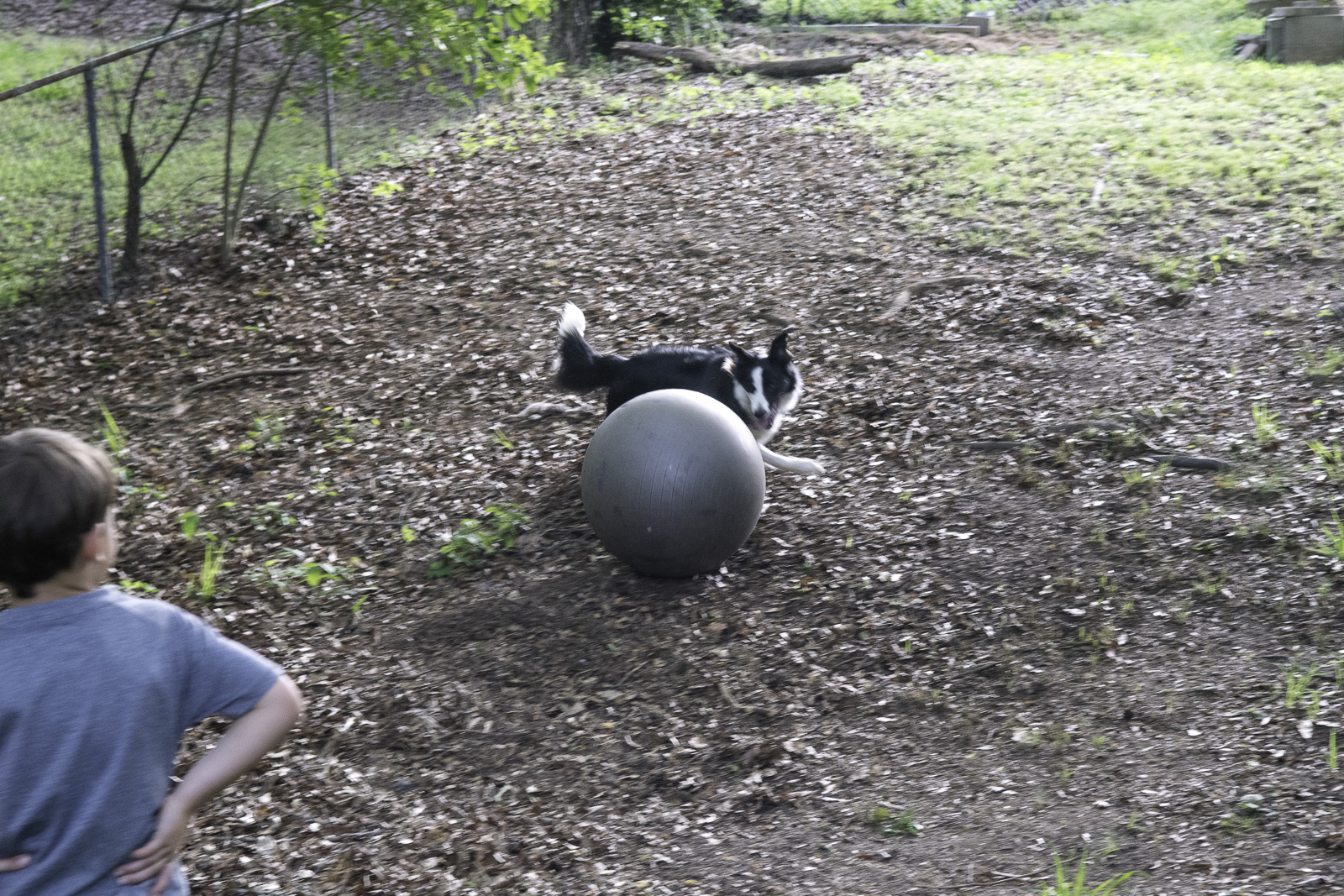
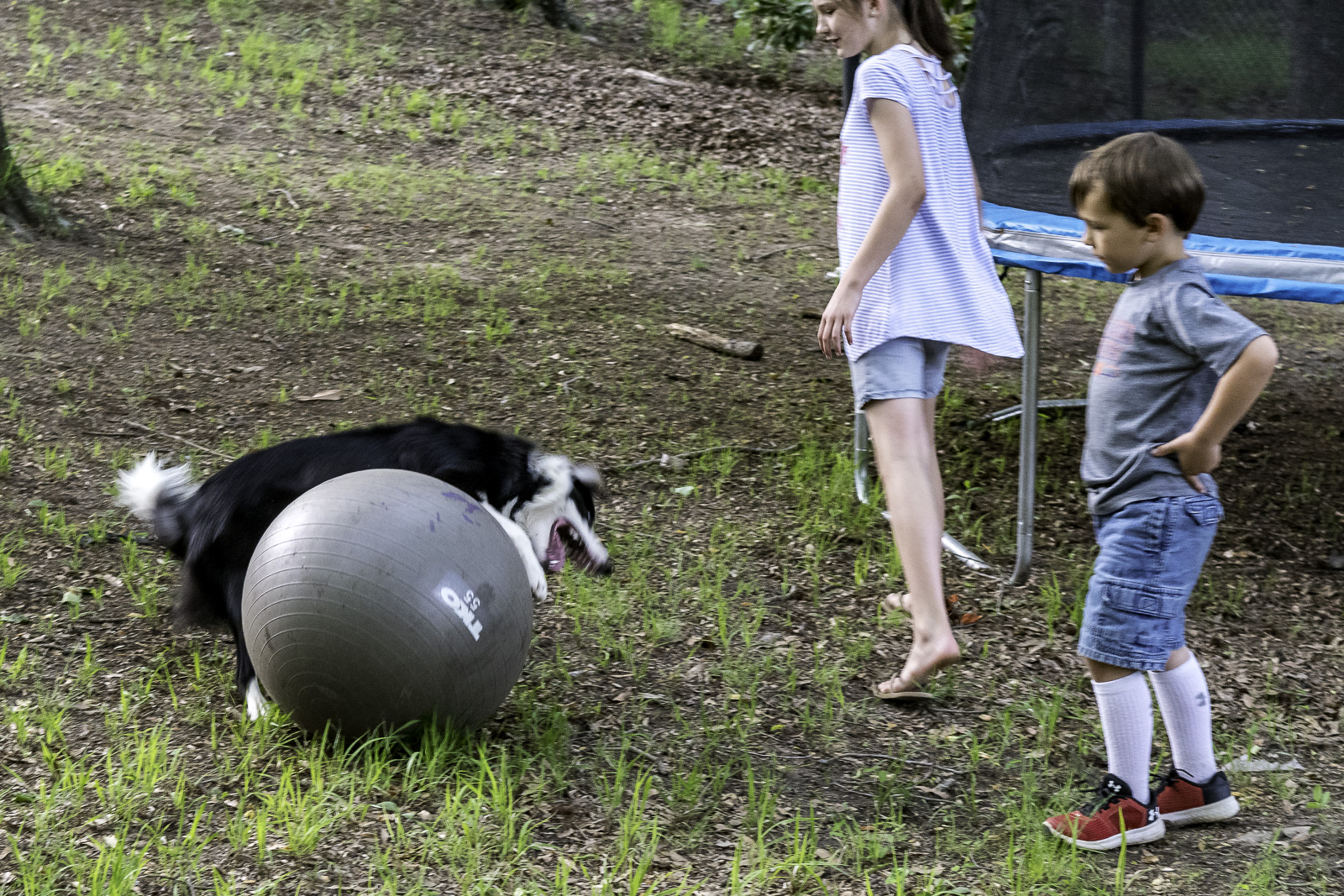
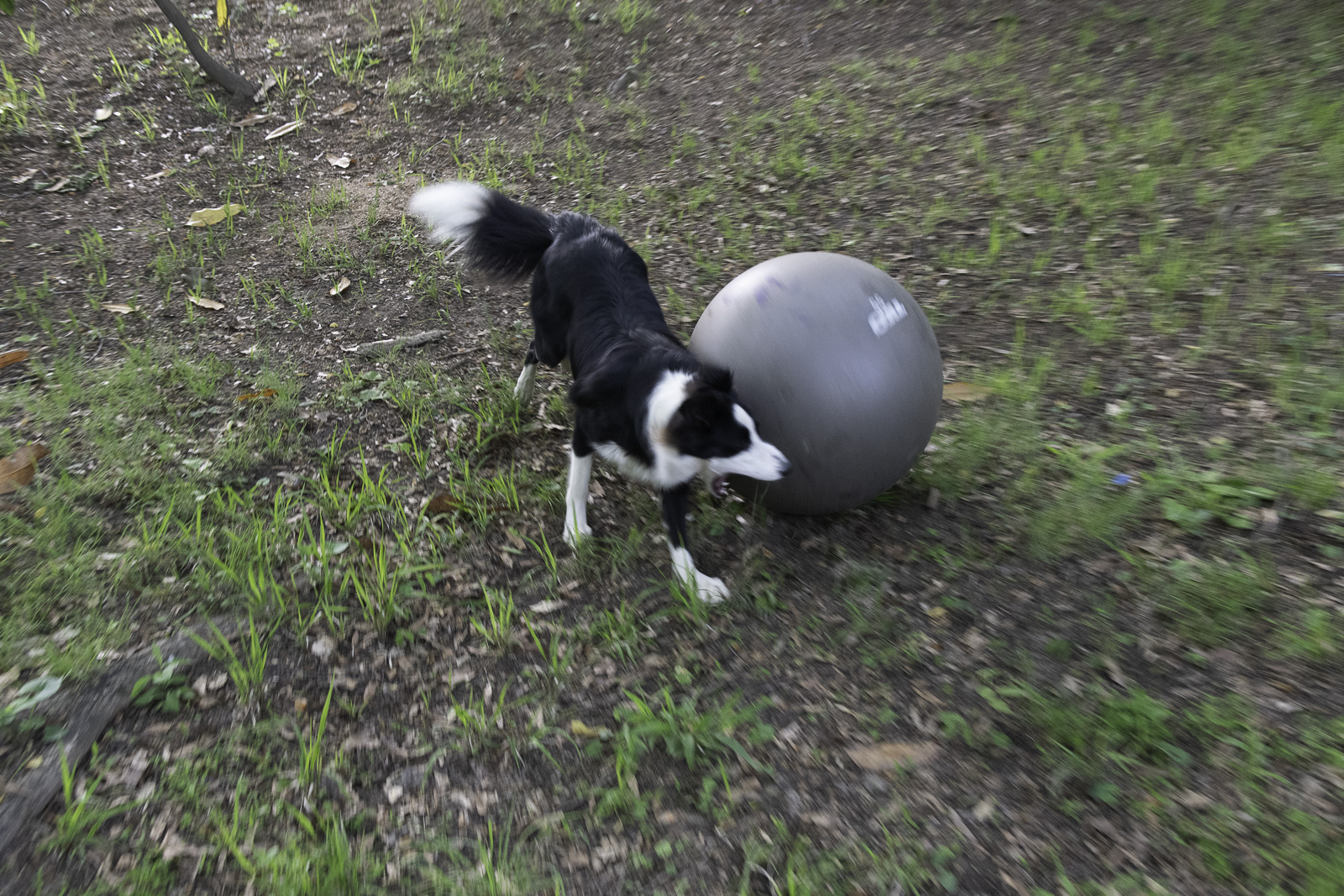
In short, she went wild. She pushed that silly ball all over the backyard, nipping at it, herding it.
This evening we took the dog for her second group training session. After last week's fiasco, I was a little nervous about the whole thing: Would she regress? Would she act like she'd made no progress at all? We walked in and everyone immediately recognized us. They might not have been saying it, but they were thinking, "Oh, they're the ones with the dog that went completely berserk last week."
The other clients weren't the only ones who paid attention to our arrival: Sandy, the instructor, walked in and went straight to Clover, loving on her a bit and taking her out for a quick walk around the training area.
Overall, the evening was much less stressful for all of us.
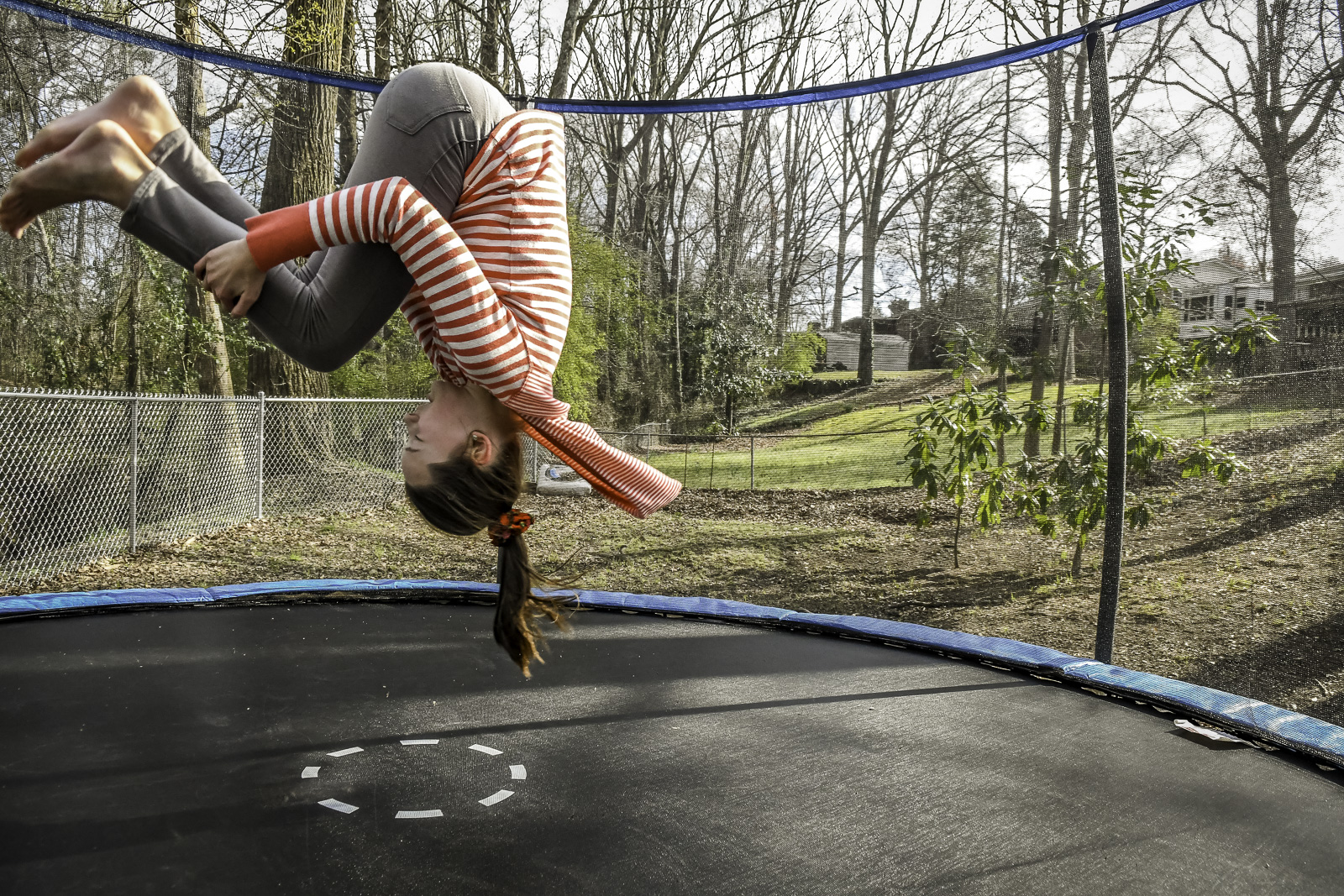
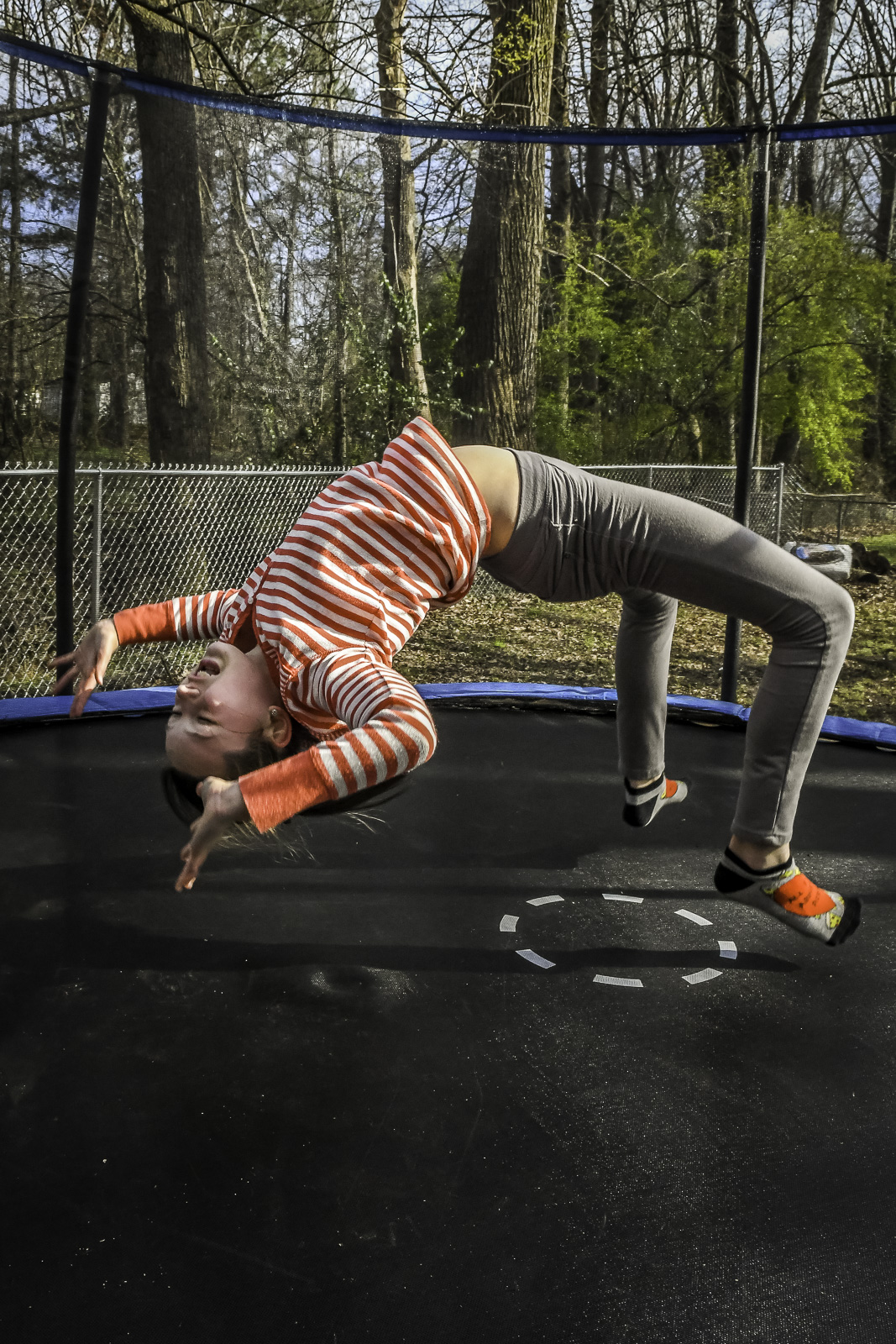
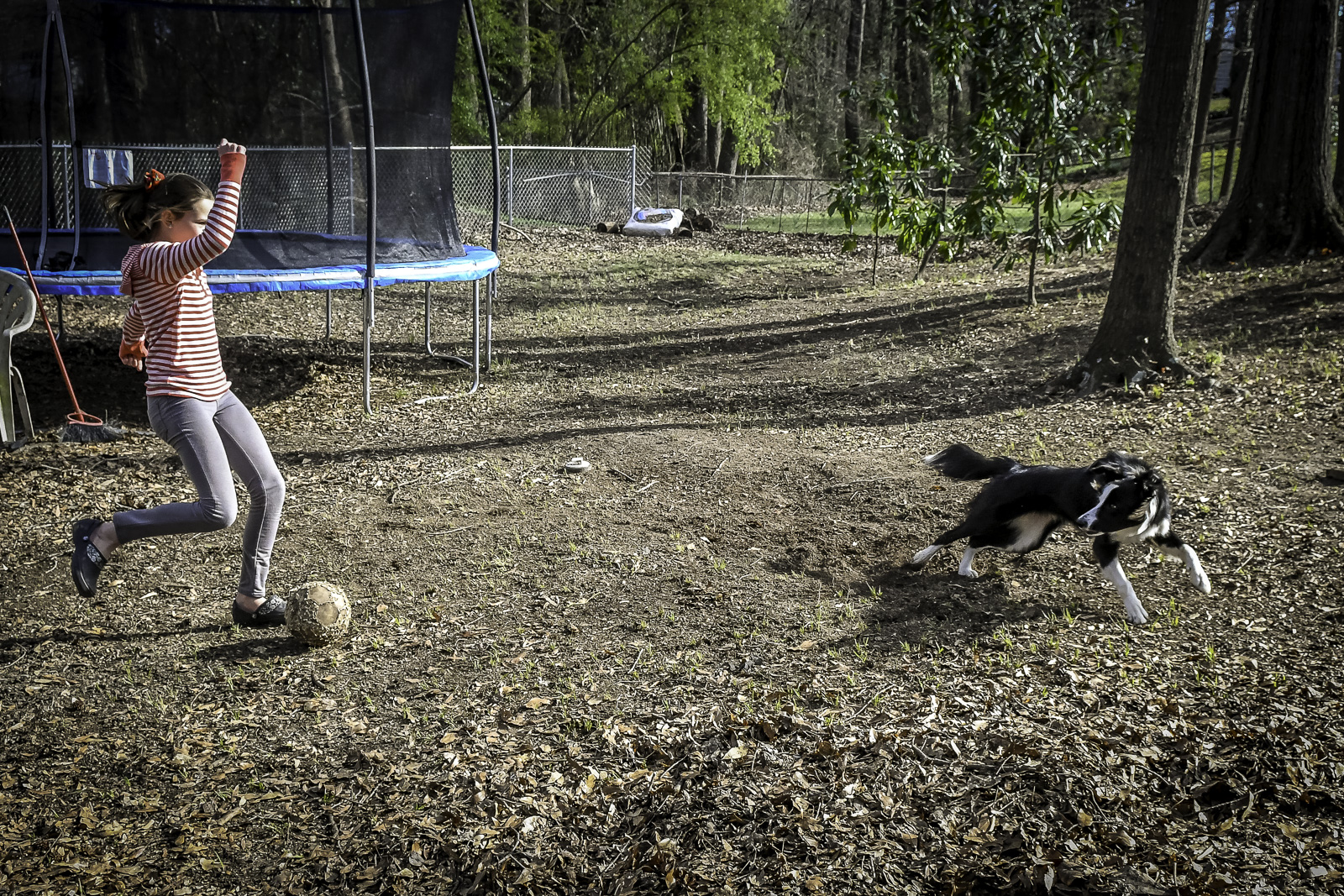
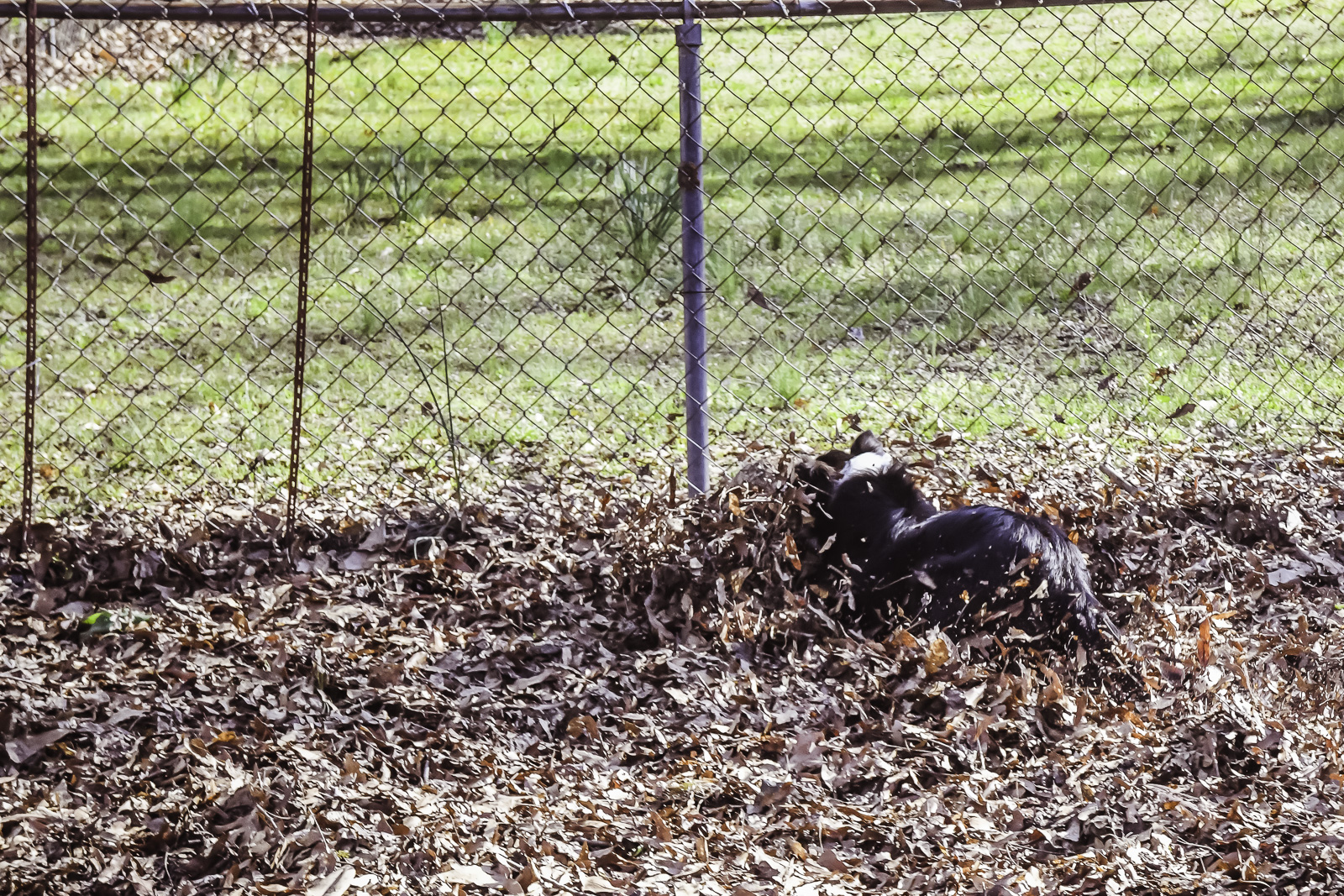
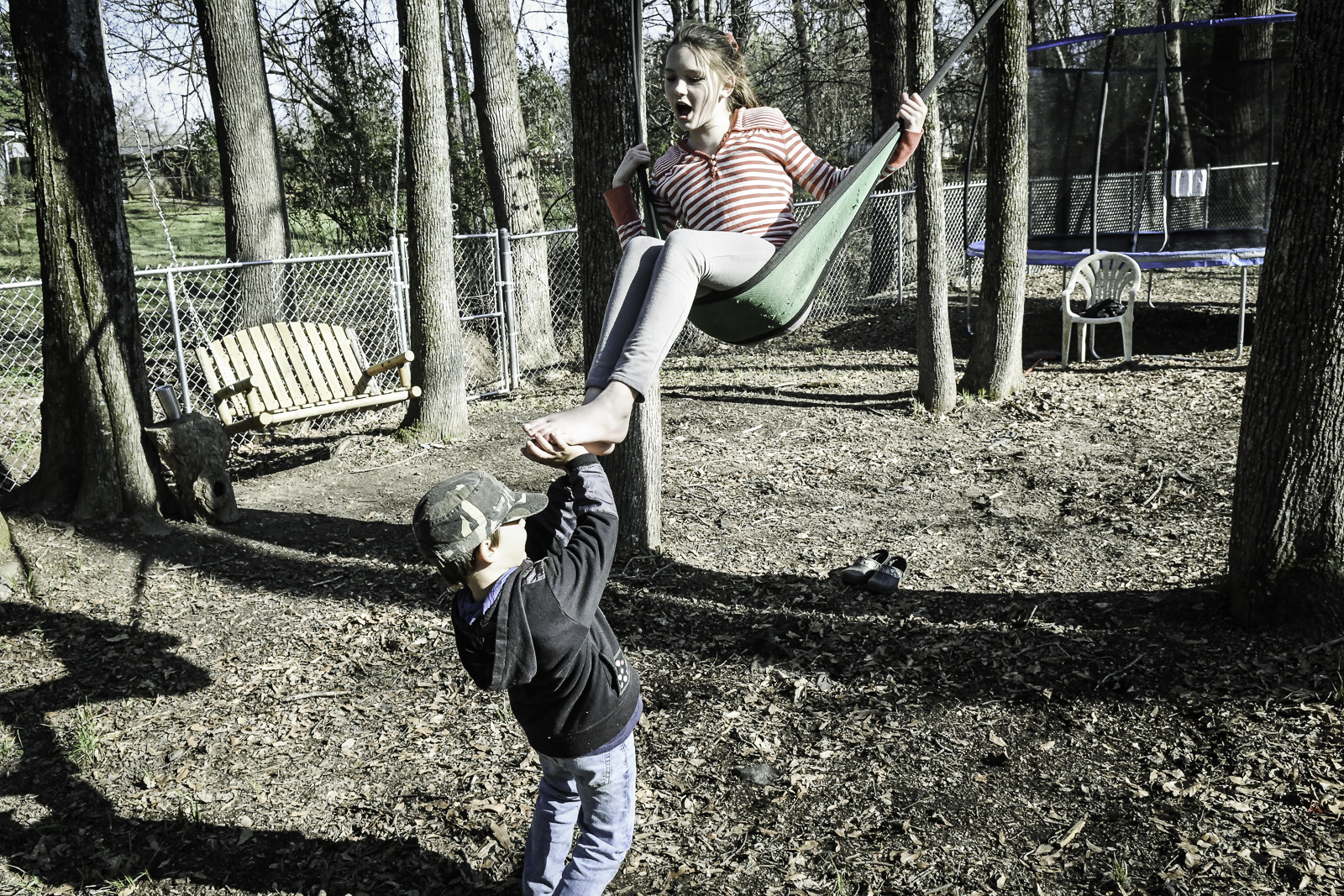
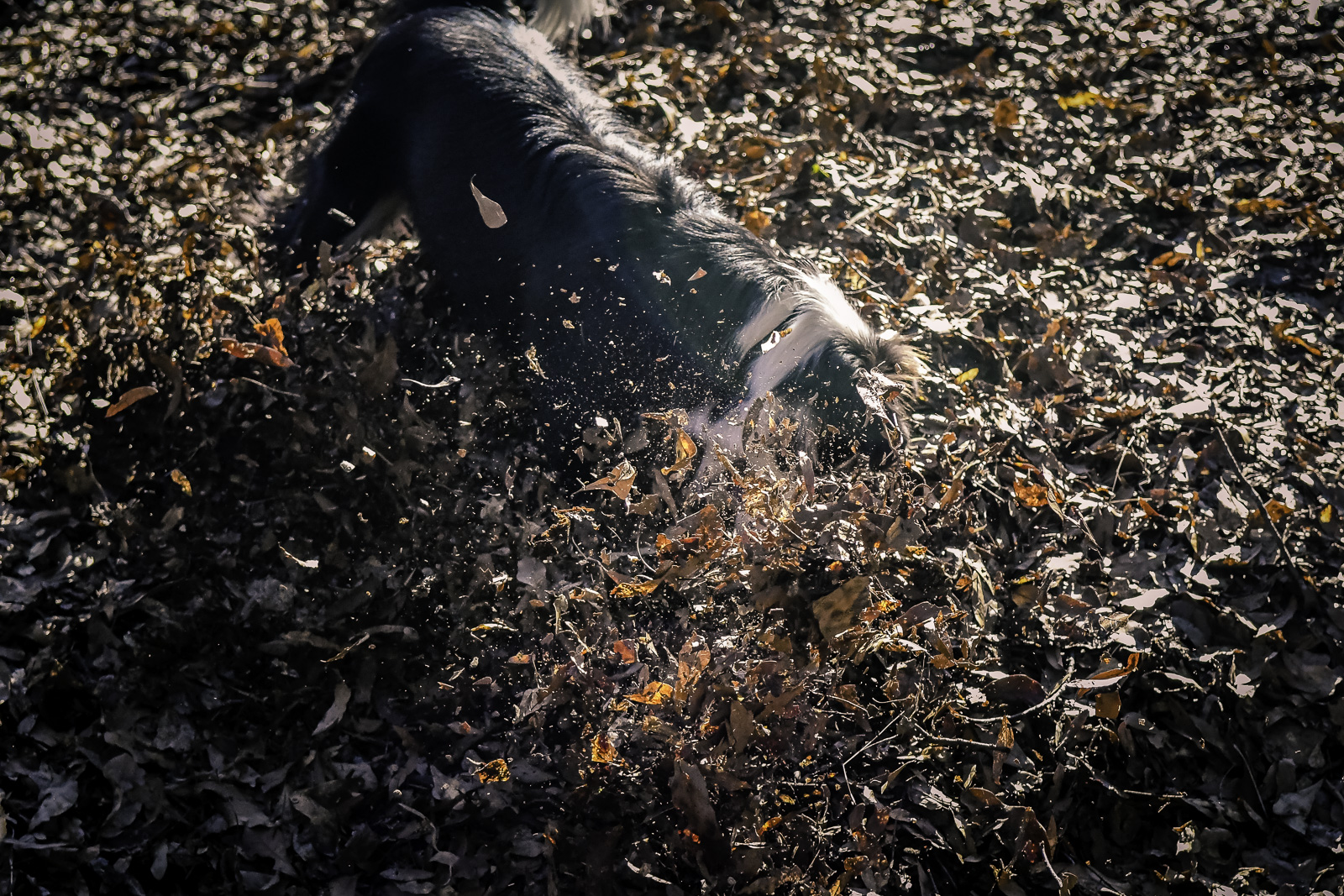
Perhaps working to tire her -- and the kids -- a bit before we left helped as well...
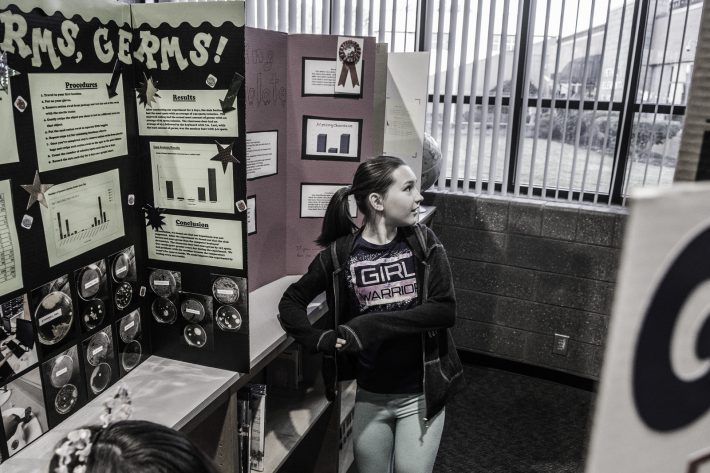
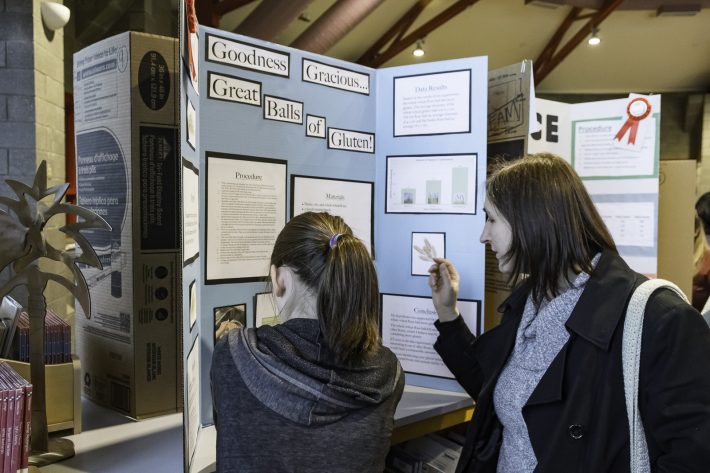
I find it hopeful when we take L for the science fair project display. Of all disciplines, science is the one we as an American populace most obviously show a general, nationwide deficit. The fact that millions of people don't understand the basic tenants of evolutionary theory, that millions of people think global warming isn't a reality and if it is, isn't the cause at least in part of human activity, that millions of people think vacations are a greater risk than they are a benefit, that millions thousands (thankfully not millions -- yet) think that the moon landing was faked and the earth is actually flat, that millions of people think the earth is only 6,000 years old despite an overwhelming amount of scientific evidence to the contrary -- all these facts make it clear that as a society, we have some work to do regarding basic science education.
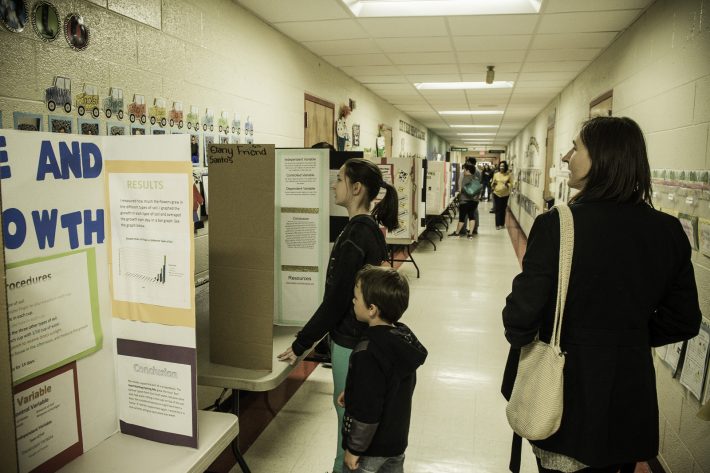
It's not the science education, per say, that is so important -- it's the critical thinking that goes along with it. The methodical, analytical, self-critical way of thinking. The notion that no single answer will always stand the test of time and peer review. The humble idea that you could be wrong. Go to a presentation of scientific findings and you'll hear people constantly couching their findings in self-effacing comments designed to show everyone in the room that the presenter doesn't think she knows it all. For every scientific finding, there are other researchers chomping at the cliché bit, attempting to replicate a given experiment, hoping to prove something wrong. Science is about putting forth a hypothesis and then watching a bunch of people try to show you you're wrong. It must be a humbling experience.
Ironically, on the other end of the knowledge spectrum, we find the Dunning-Kruger Effect, a cognitive bias that essentially says that the less a person actually knows, the more superior that person feels about his knowledge; the less competent a person is, says Dunning-Kruger, the less likely he will recognize his incompetence.
It's a scary thought, the idea that I could have an inflated opinion about my own talent and knowledge and not even see it. Fortunately, I don't think I suffer from this: I see what other teachers do and know that I'm a "fair to middling" teacher: I do some things well, but I know perfectly well that I quite frankly suck at other aspects of teaching. The same goes for just about everything else. And K -- she's even harder on herself.
Or perhaps I'm just fooling myself about myself -- indulging in self-reflection filtered through a carnival mirror.
At any rate, we walked around the project posters and witnessed kids getting a good first or second (or third or fourth) exposure to experience with the research methods of the scientific process, and I found my hope for humanity lifted just a bit.
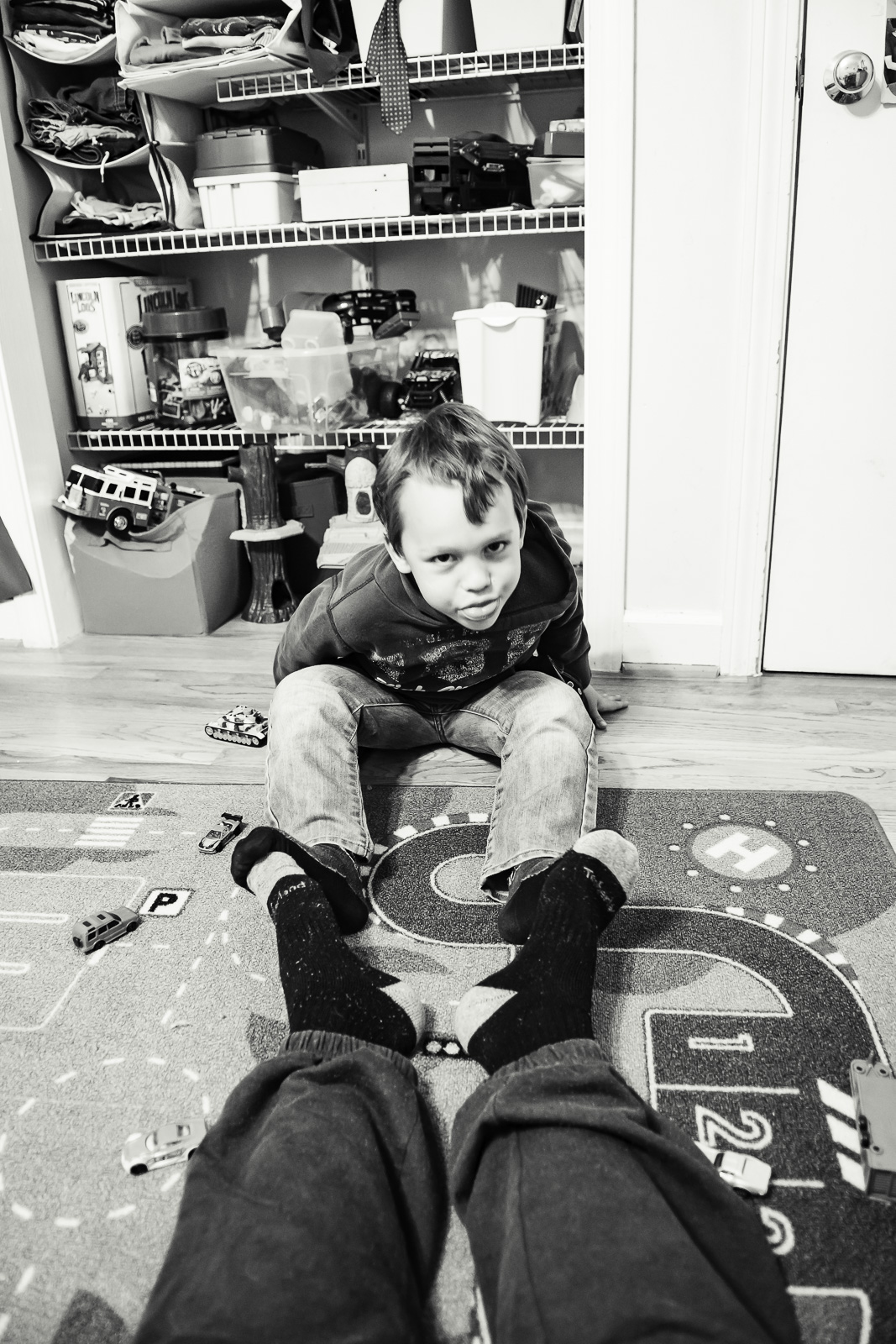
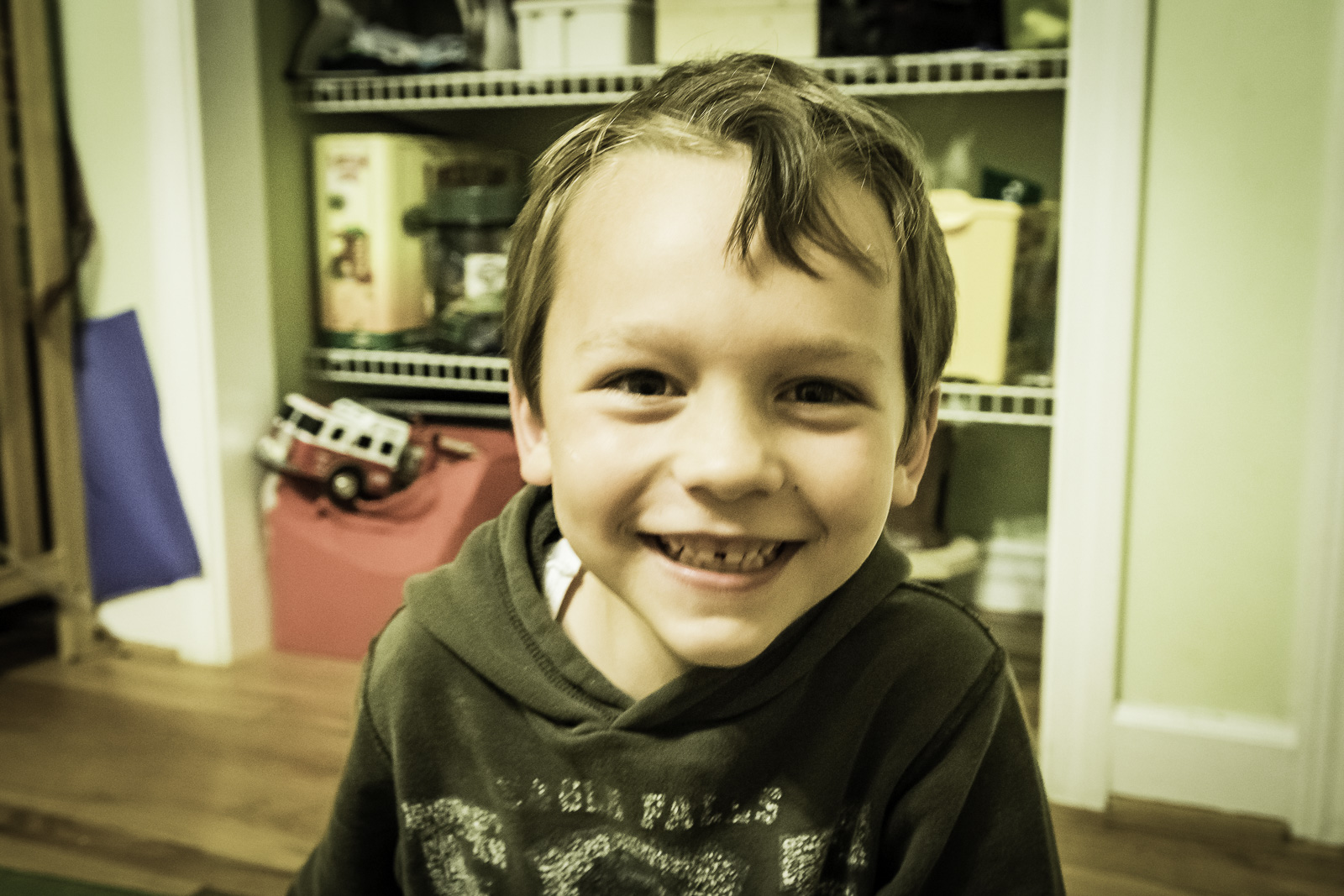
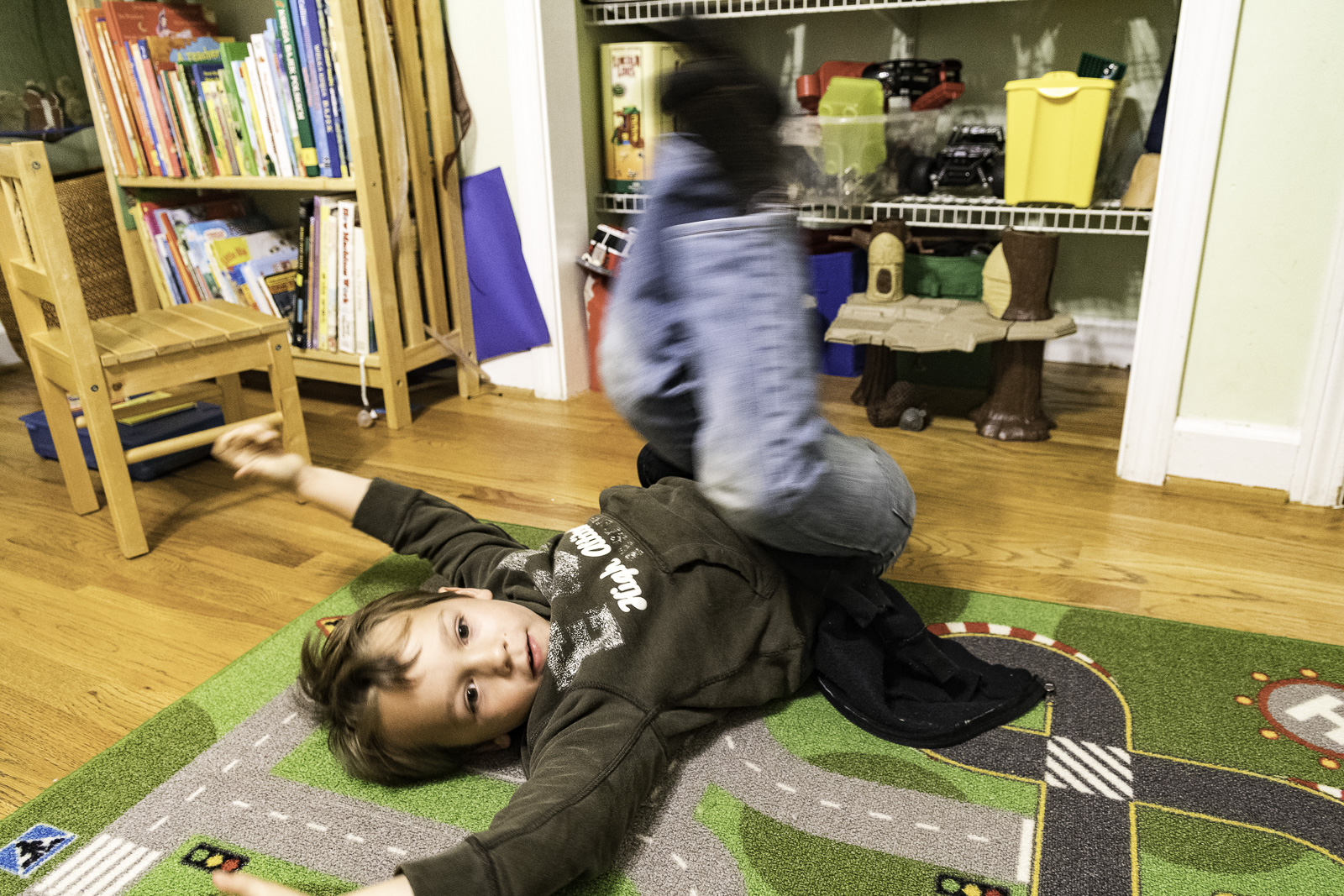
Coming home and playing with the Boy did more for me, though.
The Boy gets on a kick and stays on it for some time. For the last few weeks, it's been Go Fish. Now it seems to be shifting to Memory.
We have an animal-themed version we brought back from Poland, and it has a ridiculous number of pairs. I haven't counted them, but I'd say it's close to forty. I can say this because we were organizing them for a morning game and E wanted more than the fifteen pairs we played with yesterday. I pulled out twenty pairs and there seemed to be just as many still in the stack.

"Why can't we play with all of them?"
I thought of how playing with fifteen went. It was a surreal experience. I wasn't really trying to remember anything, to be honest; I was turning up cards, letting the Boy see them, then turning them back over. But somehow, as if by instinct, I was turning over cards to make pairs. It's not that I didn't want the pairs; it's not that I was trying to let the Boy win. I just wasn't putting forth much effort myself, or so I thought.
We compromised on twenty, but it was a bit overwhelming for the Boy: after several minutes, he'd only found one pair, and I'd found two.
The Go Fish obsession continues. Someone plays with the kids every night, and they occasionally play together by themselves. We've yet to tackle a four-player game, though I'm not sure why. The kids don't seem to eager for whatever reason, and so perhaps that's why we haven't tried.
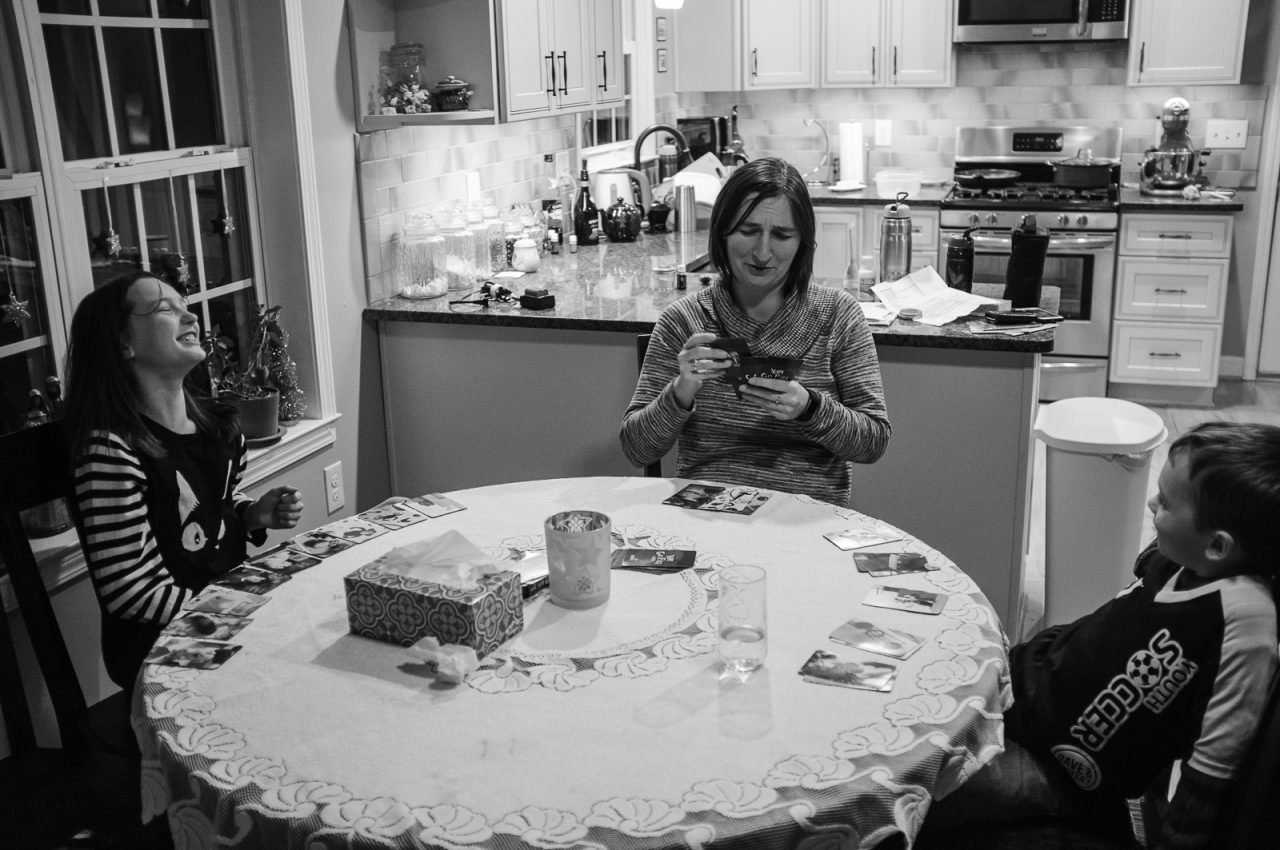
Tonight, as I was playing with them, I stood to get something from the other side of the room, and I accidentally glanced at the Boy's cards. (He has them spread out in a chair beside him, so the natural gesture to avoid seeing someone's cards -- looking down when passing -- doesn't work.) I did notice that he had a yo-yo (we play with a picture-based card set), and since I had a yo-yo, I thought I'd do a little experiment.
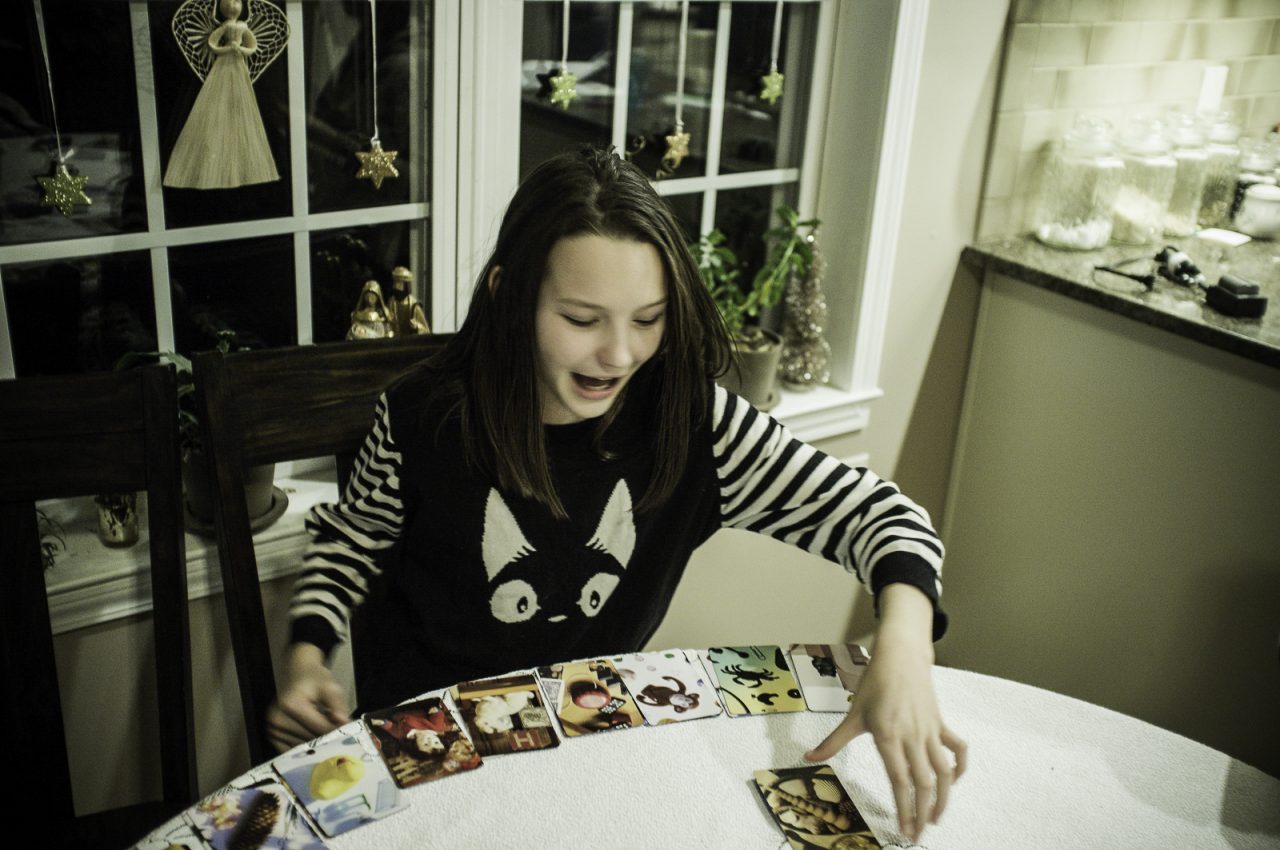
"L, do you have a yo-yo?" I asked during my next turn. E was set to go next, and I was ready for him to ask me if I had a yo-yo. He had been a little distracted, though, and asked instead, "L, do you have a yo-yo?"
L looked at me; I smiled back at her.
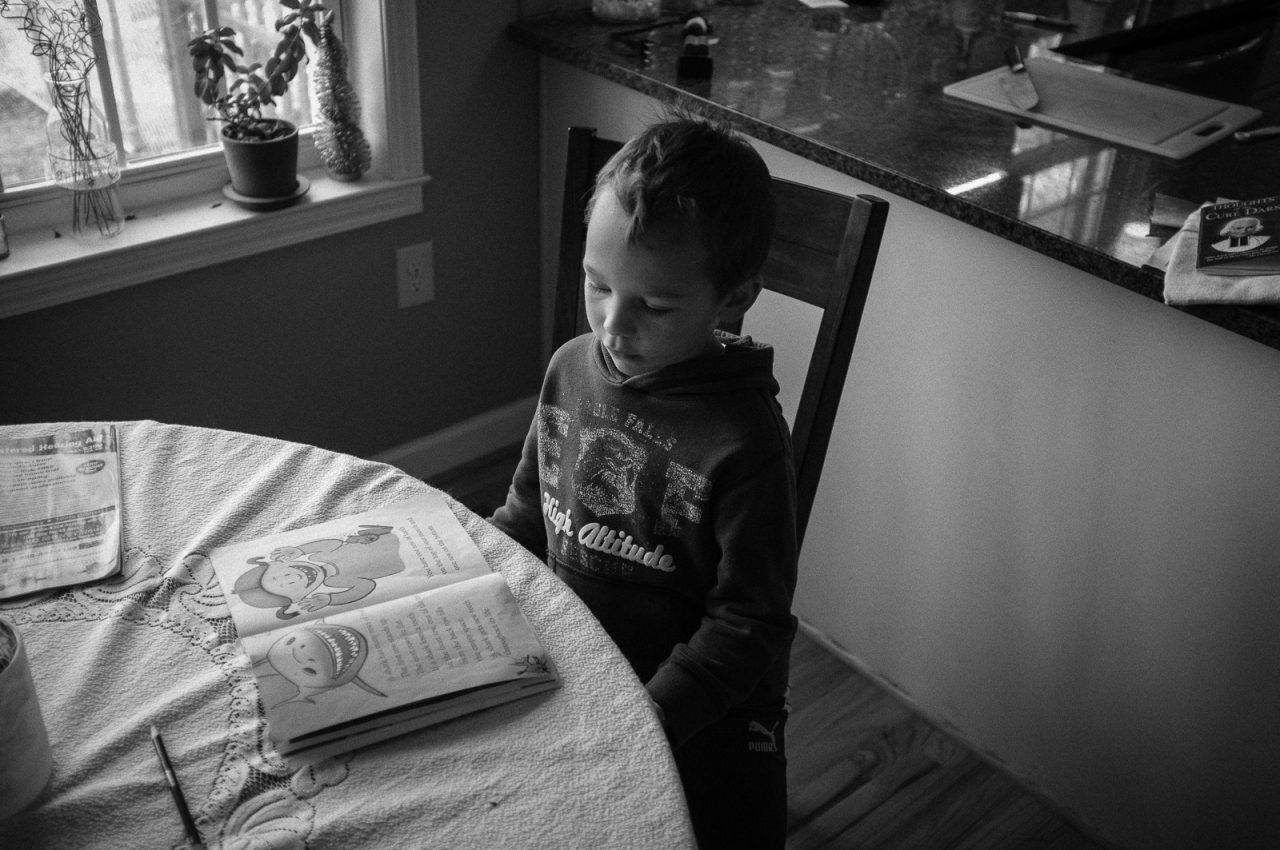
"E, I just asked her that," I laughed. "You should have asked me that just then. Now, I'm going to ask you for it next turn."
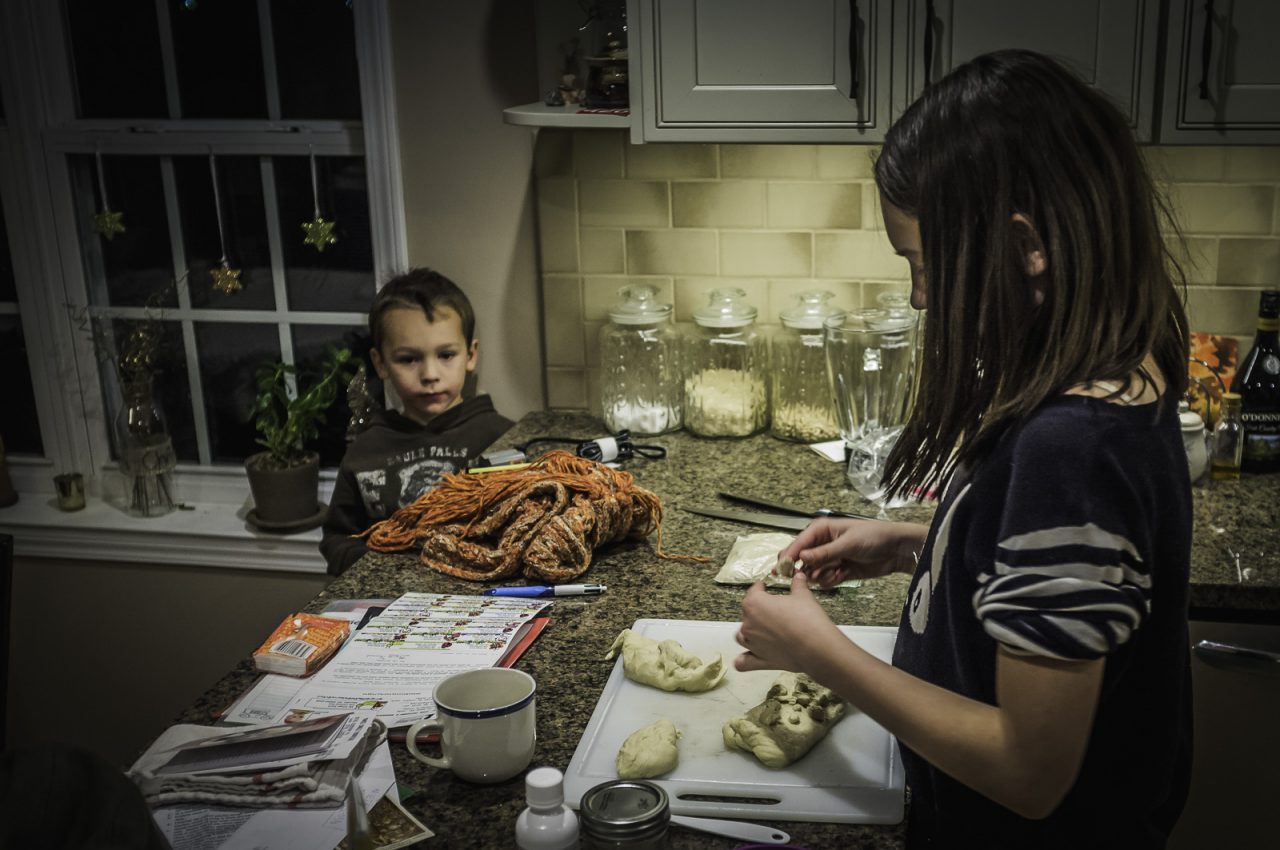
He just smiled.