Matching Tracksuits

fun in fours

language

Reading List

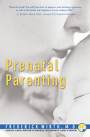
Frederick Wirth writes in Prenatal Parenting of an experiment Anthony Casper conducted at the University of North Carolina regarding parental reading and prenatal development. He had mothers read Dr. Seuss’ The Cat in the Hat to their unborn children twice a day. A few days after birth, the infants were given a chance to hear the story again. However, using a device fitted with a special nipple, the infants could change the story being read by changing the rate at which they were sucking.

As demonstrated by their sucking speed, the newborns remembered The Cat in the Hat better. Furthermore, they preferred it read forward instead of backward. (Wirth, 37)

So I guess in a way I was wrong when I suggested that our daughter might prefer Shell Silverstein to Robert Frost.

Or, looking at it another way, here’s a chance to get my daughter interested in all the nerdy literature I love.

Of Mans First Disobedience, and the Fruit
Of that Forbidden Tree, whose mortal tast
Brought Death into the World, and all our woe,
With loss of Eden, till one greater Man
Restore us, and regain the blissful Seat,
Sing Heav’nly Muse

I aim to give L a headstart on senior lit…
Reading and Walls

Wirth CoverIn my "Currently Reading" pile of books lies Prenatal Parenting by Frederick Wirth, M.D. Most interesting so far have been the sections on fetal sensory development, particularly the development and growth of the auditory system. Wirth writes that at "twenty-two weeks of gestation the developing infant will respond to sounds from outside the womb. By twenty-eight weeks the infant responds to sound in very consistent ways." (28) And so K talks to her walk driving to work, and I press my cheek to K's belly nightly and tell our daughter how much we're looking forward to meeting her.
K and I have been playing a little music box for our daughter nightly for some weeks now, but recently, we've added reading to the ritual.

It should have a noticeable effect:

I can always tell which of my full-term newborn infants have been read to. They have more mature orienting behavior to auditory stiumli. I can even tell which fathers have been active in reading to their unborn child. I do this by holding the infant between me and his father while we compete for the infant's attention by calling the child's name. If the dad has been actively involved in the reading and singing, his child will turn his head toward him, looking for the source of the sound. Invariably, when their eyes meet they both react positively. (Wirth, 29)

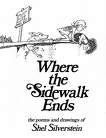
SidewalkOften, it's selections from Where the Sidewalk Ends, not so much because L will like it more -- obviously, fetal brain development at this point is not that advanced -- but because K likes Silverstein's playful language.


Tonight, Robert Frost, concluding with one of his best, one of the best, period: "Mending Wall." It has one of the truest passages ever written:Wall

Before I built a wall I'd ask to know
What I was walling in or walling out,
And to whom I was like to give offence.
Something there is that doesn't love a wall,
That wants it down.'

Such concerns seem largely forgotten these days.

Language Log

My new favorite site:Language Log. “Weblog run by University of Pennsylvania phonetician Mark Liberman, with multiple guest linguists.”

This entry on Dan Brown from a couple of years ago left me wiping the tears from my eyes. In another entry about Brown books, we read, “In short, to call this novel formulaic is an insult to the beauty and diversity of formulae.” (Source)

Really worth a look.

Recent Listening: Gender Grammar and Names

“Who cares about grammar?” some ask. That devil-may-care attitude I suppose works for some. There are a few jobs were clarity seems critical. “Spiritual leader” seems to be just such a job.”

Yet, uneducated preachers, it seems to me, are the ones most likely to follow a line of thinking like this: “My job is to communicate. If they understand me, then that’s all I care about.” You’d think if souls are on the line and all that a little more care might be in order. Apparently not.

Other times, grammatical goofs result in little more than humorously muddled texts.

The worst source of well-advertised, over-exposed bad grammar is the lyrics of popular songs. For instance, countless singers have used the subjective “I” instead of the objective “me” to make a rhyme. I guess that’s okay — it doesn’t really change the meaning.

The he/him and she/her difference, however, can make a huge impact on the song’s meaning. Consider two examples from songs I listened to recently.

First, “Hard to Handle,” the Alvertis Isbell/Allen Jones/Otis Redding song made famous by the Black Crowes:

Action speaks louder than words
And I’m a man of great experience
I know you’ve got another man
But I can love you better than him

Wiry Chris Robinson tried so hard to be masculinely sexy in that video, and it’s just difficult to imagine him deliberating between another man and some curvy groupie. But apparently, if the lyrics are to be believed, he did…

John Lennon did no better with the Beatles’ “If I Fell.” Weighing the advantages and disadvantages of two girls he’s interested in, much like I was checking tomatoes at the farmers’ market the other day, he tells one,

If I give my heart to you
I must be sure
From the very start
That you would love me more than her

Granted, it is a fantasy of a great many men to be with two women at once, but I don’t think Lennon had that in mind in penning this line. Or maybe he was thinking something along the lines of Chasing Amy.

In both instances, of course, the “lyricist” simply didn’t understand that they were writing elliptical statements. “I can love you better than he [can love you].” “You would love me more than [she would love me].”

Johnny Cash, however, had no such problems writing one of his best, “A Boy Named Sue.” The narrator’s father, just before skipping out on his responsibilities, names his son “Sue,” prompting the grown Sue to hunt him down. Just before his son shoots him, Sue’s father says,

“Son, this world is rough
And if a man’s gonna make it, he’s gotta be tough
And I knew I wouldn’t be there to help ya along.
So I give ya that name and I said goodbye
I knew you’d have to get tough or die
And it’s the name that helped to make you strong.”

He said: “Now you just fought one hell of a fight
And I know you hate me, and you got the right
To kill me now, and I wouldn’t blame you if you do.
But ya ought to thank me, before I die,
For the gravel in ya guts and the spit in ya eye
Cause I’m the son-of-a-bitch that named you ‘Sue.'”

I want my children to have courage (though not necessarily such foolhardy courage), but I don’t think we’ll resort to naming our son Sue…

Learning Polish

From my journal, ten years ago.

I’ve been working with my host mother on the basic Polish sounds and I have hit a real break through in [the] pronunciation of sz and rz. It’s great!

Earlier in the evening I was trying to pronounce one of the many “sh” sounds and after several failures I finally threw out a last attempt accompanied by a significant amount of spittle, and she cried “Tak!” with great delight.

Learning Polish was unlike learning Spanish and French for me because it occurred in Poland out of necessity. Survival even. And so the result is that I know much more Polish than I ever did French or Spanish, and I have an understanding of linguistic subtitles that escaped me in high school and university.

And I can finally say “chrząszcz” without drowning my conversational companions.

Mów po polsku!

“Have you ever noticed how few of these children of Polish families actually speak Polish?”

Kinga asked -- in Polish, of course -- the other evening. She was speaking mainly of the children of a Polish couple who have been in America for more than twenty years, and who rarely if ever go back to Poland as a family. The children of these very nice folk usually speak to their parents in English, even though their parents often simply speak Polish to them.

Kinga and I both want our children to grow up bilingual, but that’s difficult enough when both parents are foreigners. When only one is a foreigner, it might be all but impossible. The language of society dictates what is Language One for the child, and not the language at home.

Where there is a community to support the use of the foreign language, it’s much easier. But North Carolina is no Chicago, and the opportunities to use Polish will be rare.

“We’ll just have to send the kids to Poland every summer,” I replied to Kinga. There’ll be Polish music in the house; we’ll eat Polish cuisine; I’ll try to speak more and more Polish at home; we’ll have Polish books in our library; we’ll just cram Polish culture down their throats! (That is a joke -- in reality, there’d be no better way to turn them off of all things Polski.)

Will all that even be feasible, though?

One would think that instilling in them a sense of pride in and love for their heritage would suffice. But at a certain points in their lives, the “un-coolness” of being different would stifle any urge to speak Polish.

Perhaps I’m wrong? Hopefully I’m wrong. We shall just have to read a few books about raising bi-lingual children.

Substandards

Yesterday evening Kinga and I watched Człowiek z Marmuru  ("Man of Marble"), something of a 70’s Polish Citizen Kane, directed by Andrzej Wajda. I decided to watch it with the subtitles on, with the thought of possibly reviewing it for Anvil and Sprocket, a friend's film review site.

I was horrified, though, at the pathetic translation for the subtitles. I would say no more than sixty-five to seventy percent of what was said was actually translated. The subtitles were more a summary of the dialogue than the dialogue itself. So many subtleties were completely dropped as a result that some of the more interesting characters in the film were simply flat, boring characters. If I didn’t know Polish, I would have said, “Oh, it’s okay.” But it’s not just “okay.” It’s a brilliant film, which does lose a bit of momentum at the end and Krystyna Janda does over-act a bit here and there. Still, the idea is solid – a Polish Citizen Kane that tracks the rise and fall of master mason Mateusz Birkut, a humble man who becomes a symbol of Polish Communist labor through propaganda films. It is one of the most accessible films for non-Poles, for there is a lot that depends on an intimate knowledge of Polish culture. But if you don’t know the language and rely on the subtitles, it is significantly diminished.

It got me to thinking about the art of subtitles. You certainly can’t write everything the characters say, for no one could read that fast and keep up with what the visual aspect of the film – which is, after all, somewhat important in film! And yet, you have to leave enough in to round out characters, else you get a film with flat characters.

ESubL

Being bilingual can really be a troublesome affair when trying to teach English – if your student’s L1 is different than your L2.

Today, while subbing, I worked with a student of Latin origins who spoke very limited English. I speak even more limited Spanish, though I’ve decided I must learn that language. At any rate, I found that while working with her it was a constant and very conscious struggle not to lapse into Polish. “She doesn’t understand what you’re saying,” a voice was screaming in my head, “So use another language.”

Unfortunately, Polish was not terribly helpful.

The world of ESL is frightful in some ways. The responsibility is enormous.

As an EFL teacher, I was teaching a foreign language, which means it’s not going to be used that often. It’s not often going to be the basis of all other learning. And teaching English as a foreign language also affects the skills stressed. My primary goal for my students was verbal communication. Writing is important, but not nearly as important as speaking.

I confess, then, that I probably didn’t spend enough time with my students working on writing, until the national testing standards changed and forced my hand.

ESL is an entirely different animal. The goal is simple: get students’ English up to a level where they use it as their primary language for instruction. Think about it: it’s re-wiring a house, re-pouring a foundation. No, wrong analogy. It’s adding a second set of wires to a house, putting a foundation within a foundation.

And what do students do in the meantime? If they have limited English, how do they learn science? The idea solution is bilingual education, with L1 gradually being phased out. But the ideal is often just that.

I ustacould

“I ustacould, but I cayn’t no mo.”

“Me and Mama, we was there yesterday.”

“I ain’t never said such a thang.”

Kinga had her first encounter with southern accent, virtually unintelligible southern accents over the Fourth of July weekend. Visiting my family in South Carolina, poor Kinga probably said “Excuse me?” more times in those few days than she’s said in the last few years combined.

It’s not just the accent that’s difficult. There are so many quirks of a southern, South Carolinian accent that cause problems.

  • Present perfect usually is created with a form of “have” plus the past particle (i.e., “done”). Southern present perfect is created with “done” plus either the past simple form (“ate”) or the past participle — usually the former. So instead of “I’ve already eaten,” be get “I done ate.”
  • “Be” in the past simple is always “was.” “Were” is virtually non-existent. “We was gonna try, but…”

Now she has an idea how difficult the local dialect in Poland was for me.

-ation

I did a lesson on word formation with a group of juniors today. We worked on turning nouns to adjectives (i.e., beauty to beautify) verbs to nouns (i.e., improve to improvement), and then I stunned them with the news that they were going to learn more than a thousand new words during the lesson.

It's an easy lingustic trick, really. Words that end in "-ation" in English usually are virtually identical in Polish, only with an "-acja" (pronounced "aat-see-ya") suffix, or a variation.

  • "revolution" is "rewolucja"
  • "inflation" is "inflacja"
  • "distribution" is "dystrybucja"

I don't think I need to elaborate on what word young Rafał blurted out in class...