matching tracksuits

fun in threes, sometimes fours

education and teaching

-ation

I did a lesson on word formation with a group of juniors today. We worked on turning nouns to adjectives (i.e., beauty to beautify) verbs to nouns (i.e., improve to improvement), and then I stunned them with the news that they were going to learn more than a thousand new words during the lesson.

It's an easy lingustic trick, really. Words that end in "-ation" in English usually are virtually identical in Polish, only with an "-acja" (pronounced "aat-see-ya") suffix, or a variation.

  • "revolution" is "rewolucja"
  • "inflation" is "inflacja"
  • "distribution" is "dystrybucja"

I don't think I need to elaborate on what word young Rafał blurted out in class...
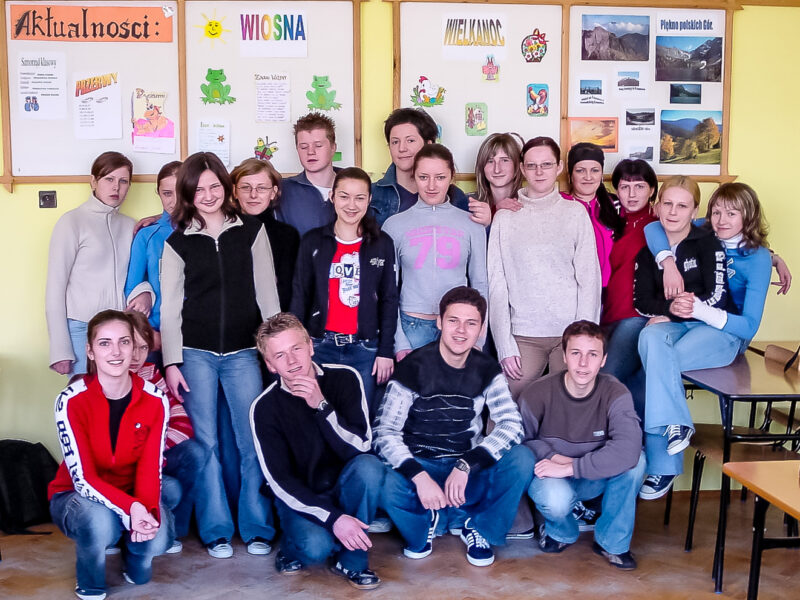
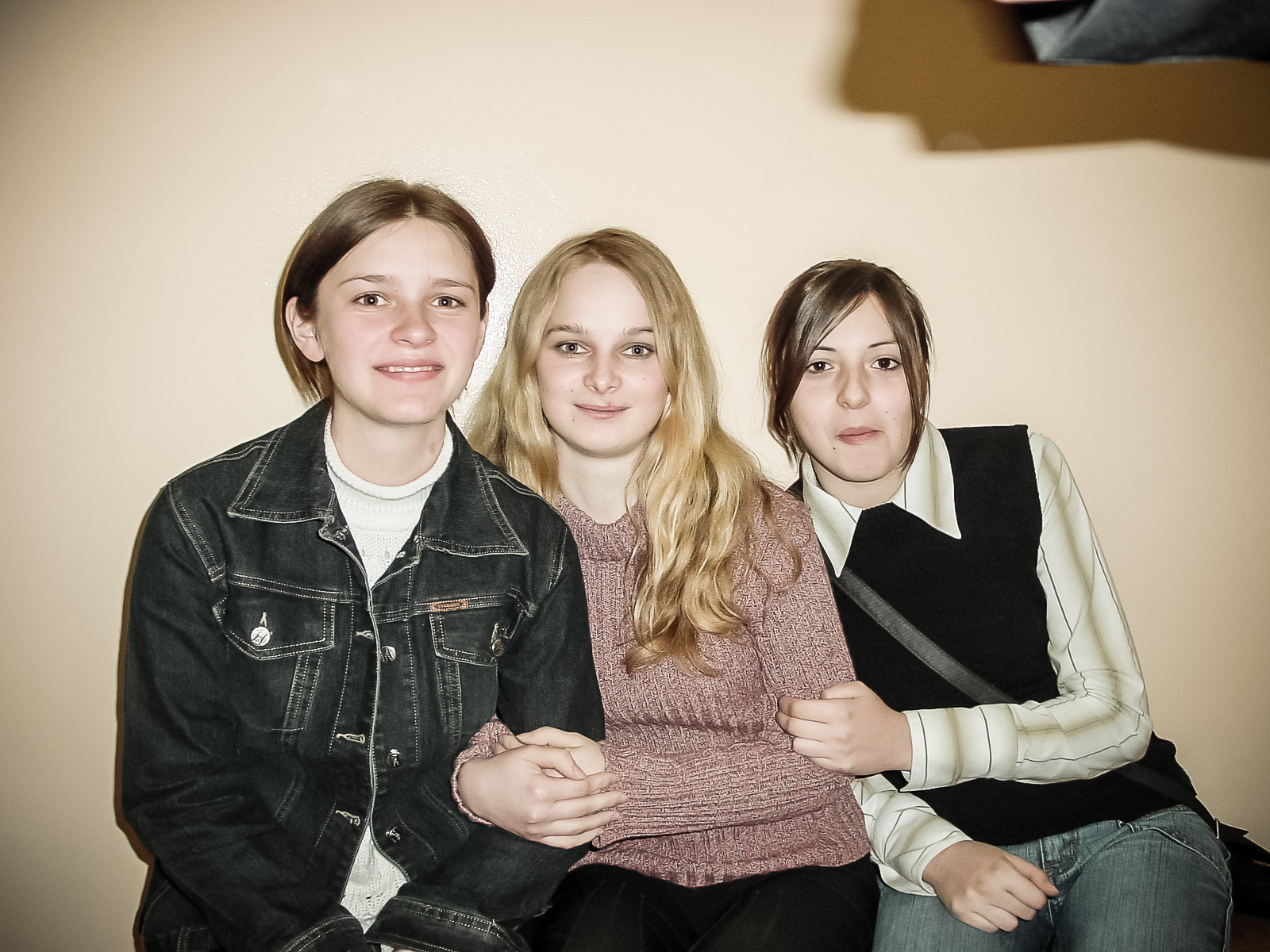
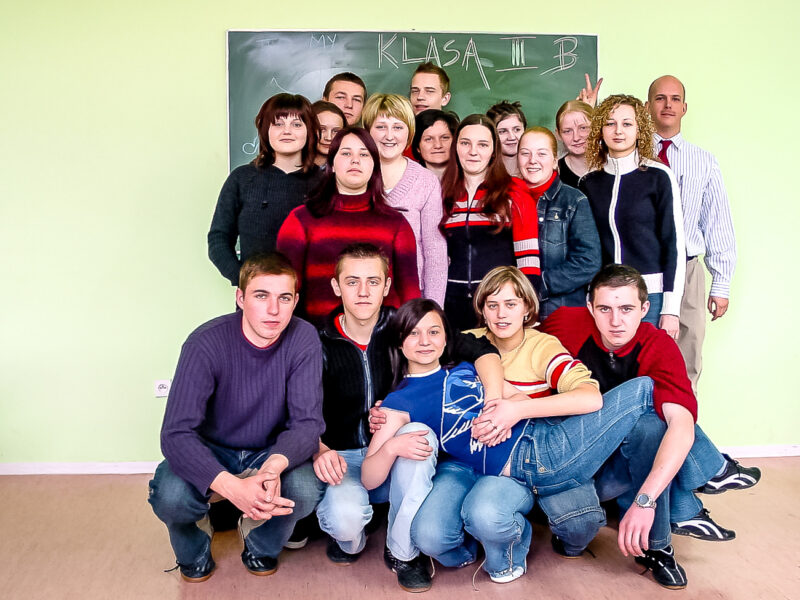
Class 2d

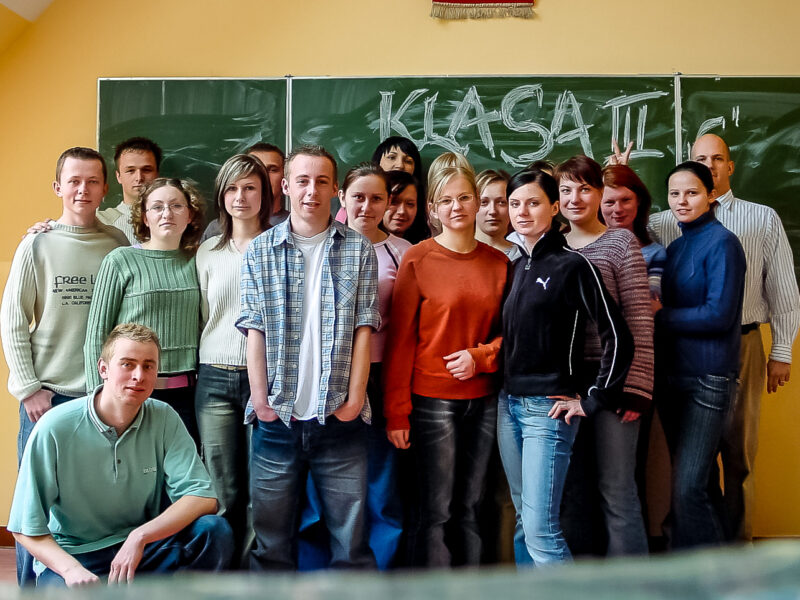
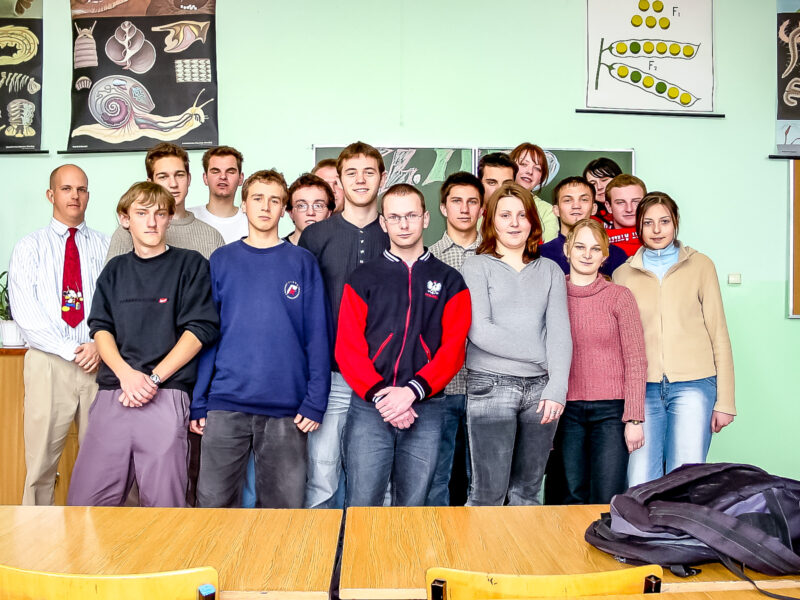
Not supposed to have favorites, but I'm not going to lie -- this was one of my favorite classes.

Matura

Here in Poland, the bane of high school students’ existence has just begun: the matura. This year is exceptional because it's the first time in many years that the matura has been significantly revised.

The old matura was hell. The new matura -- well, we'll see.

This year the order is reversed: first the oral exams (in both Polish and a foreign language), then written exams (in Polish, a foreign language, and a third, student-chosen subject).

It is also, in my opinion, much easier. The foreign language exams, at least the basic level exam (there's also a possibility to take an "extended" exam), depends more on students' ability to communicate than on grammatical knowledge.

The English Matura

The English exam has four parts: three situations/dialogues, and a picture. The situations have three sub-points that students have to complete in order to get the full credit. Usually the situations are something like, "You are on vacation in England and you read an advertisement about excursions to Scotland. Call the given number and find out," with the three sub-points being something like:

  • cost of the trip;
  • what's included in the price;
  • when and where the departure will be.

Pretty basic stuff, and most of the kids who'd put forth any effort whatsoever during the last three years will have no problem with it at all.

The picture is always of one or more people, doing some obvious, clear activity. Students have to describe the picture, than answer two questions about it.

Again, pretty basic stuff.

Still, a lot of the students are scared silly. Many of them have no cause to be frightened -- they'll pass despite their jitters. But a few have reason to be nervous.

I too am a little worried about it. It's at least a partial reflection of my teaching ability. It shows, I think, students' communicative skills (or lack thereof) much more so than my teaching, but still...

Teaching

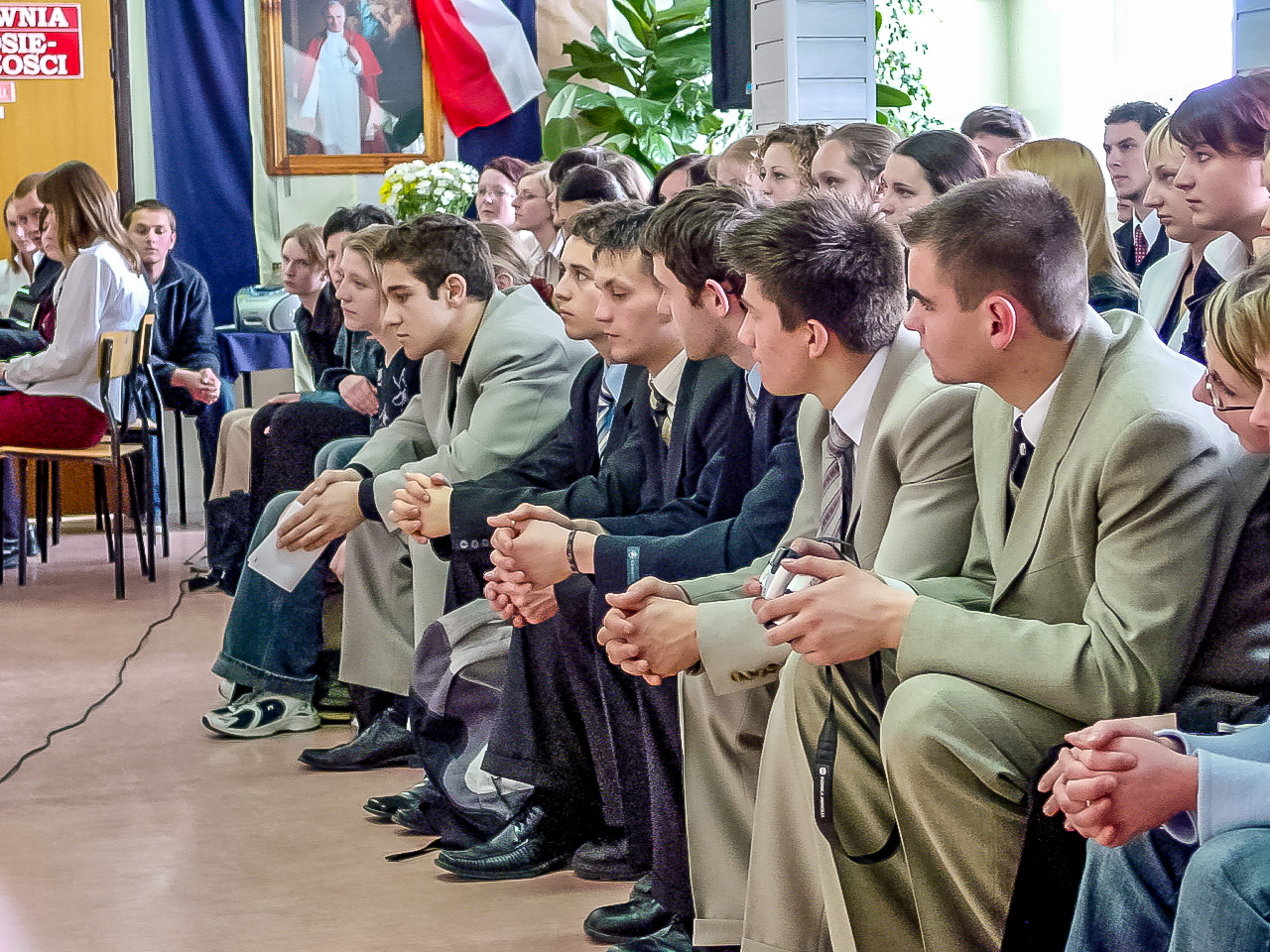
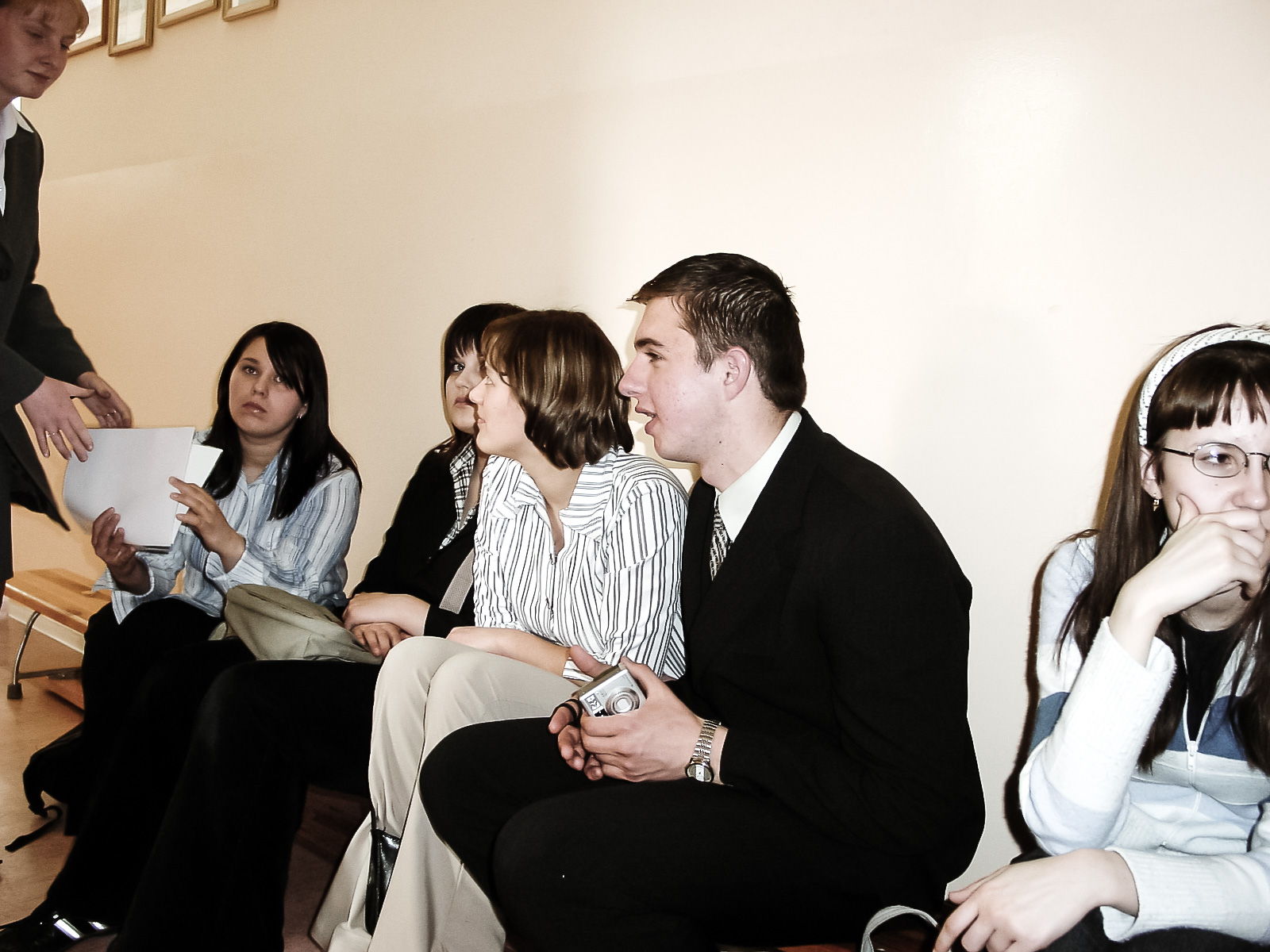
The end of the school year for seniors – today was the last time they’ll all be together, and as of this afternoon, they are officially graduates, with only the matura (exit exam) awaiting them. There was of course something like a graduation ceremony, complete with a series of skits and songs performed by juniors, as per tradition. Naturally, among the songs was that school classic, “Ale to już było / I nie wróci więcej”

(“But that has already been, and won’t return again”).

I sat there, facing the seniors, watching some of the girls get teary-eyed and sing along, and I couldn’t help but smile. I wasn’t happy because of their obvious sadness, but because of the privilege I was experiencing – to be that close to so many young people that are of no relation to me at all. I see their joys and troubles, and sometimes have to put up with their troubles jointly when they come pouting to class. When I’m extremely fortunate, I’m even part of the cause some of their joy; and unfortunately, I’m certainly the cause of their troubles too often. But young skin, hearts, and bones mend quickly, I tell myself.

I’ve taught these seniors for three years – their entire high school career. I’ve seen some of them go from being complete beginners to relatively eloquent English speakers.

I’ve seen some of them come in and leave with the same level. Most have improved, as evidenced by letters that I had them write to themselves at the end of their first year in high school and then gave back this week. What a feeling, watching them read and hearing them laugh at their own silly mistakes, and what a sense of accomplishment for them that they can now see those mistakes.

But it’s not only been their English that has improved. Girls have become young ladies, in appearance and behavior. Little boys in teenagers’ bodies have become responsible young men. Nerdy outcasts have improved their social skills and have even become semi-popular. Boys learned how to comb their hair and became young men, and awkward young girls became attractive young women.

That’s the best thing about having taught in the same place for a while – you see the kids grow up. It’s like parenting, without as many of the worries.

Class 3

It’s not often

that I get to make a student's day, but I think I did just that this morning.

I handed back tests to a class of first year students, by far my favorites. I love teaching beginners because it's really a kick to end a year talking to a group of kids in English that didn't know a single word a few months earlier. This group in particular is wonderful. There's a very positive dynamic in the class: they're very enthusiastic, but easily controlled.

Grazyna (not her real name) has been having problems since the beginning of the school year, and has to struggle to pass. I think she's one of those of us who have little talent for languages.

Today, I gave her back her test. She made a "three" on it, the equivalent of a "C" in the States.

It was her highest grade ever for a major test in English.

She literally screamed, and her face glowed with the loveliest smile I've seen in a long time.

Those are the moments that make teaching my dream job.

There are lessons that go so badly

that I stand there with the awful truth rattling around in my head--that which I only admit even to myself only rarely. Sometimes the class dynamic is such that I could teach the class drunk or sober, I could teach new material or review material that I know is problematic, I could be a hard-ass or totally relaxed, and the result in each case would be the same: a complete waste of time.

Really, I walk out of some lessons thinking I wasted my time and their time together. A class of twenty -- that's fifteen man-hours down the tube.

And I wish I could put all the blame at students' feet. After all, it's only human not to want to fess up to your own failings. But truth is, I waste as much time as they do sometimes. The trouble is, I only realize that after the time has been wasted. (Nice passive attempt to avoid responsibility.)

The upshot is that there's always tomorrow's lesson to make up for it. But sometimes tomorrow's schedule looms instead of sitting there passively.

Tough Breaks

I never thought I'd complain about too many breaks, but I always find myself doing just that during the second semester of a Polish school year.

Basically, the beefy part of the Polish school calendar ends with Christmas break. Because the two-week Christmas break does not coincide with the completion of the semester, it marks the beginning of the on-again, off-again season of the school year.

This is how it's playing out this year:

  • After three weeks back at school after Christmas break, the semester ended and the students got a much deserved two week break.
  • At the end of the first week back, seniors got two days off to go to CzÄ™stochowa to spend all night praying for their exit exams. (I wish I was making that up, but I'm not. More later.)
  • This year, we get an entire week back at school for everyone after the senior prayer session before "rekolekcja" begins. After the first three lessons on Monday, Tuesday, and Wednesday, students head to the church for something like a revival -- an effort to get everyone spiritually prepared for Easter
  • Which provides about another week off in late March.
  • Three weeks back and it's time for the matura -- exit exams.
  • After the matura, there are no seniors -- not exactly the same as a break, but my hours this year will be cut almost in half.

Put all that together and it's clear why the last day of school is 24 June.

Hootin’ ‘n’ Hollerin’ in Polish Schools

We have an apartment above an elementary school. That's living hell when they have school dances. They usually last from two in the afternoon until eight at night: the first two hours for the younger kids and the last four hours for the older elementary school students.

I remember the after-school dance I chaperoned while student teaching in a junior high school. It was an hour and a half.

Four hours seems a bit of an exaggeration.

Our apartment is one floor above the area where they dance, though not directly above it. The junior high kids who come in and serve as DJs turn the music up so loud that the floor of our apartment literally vibrates, and the you can hear the super-low-frequency bass tones reverberating throughout the whole apartment -- walls, glasses, ceiling, everything shaking.

You never truly notice how repetitive techno music is until you can only hear the bass and drums. Then, "variation on a theme" seems to be too generous a description.

For an elementary school dance.

I asked one of the teachers if she didn't think that was perhaps a bit too loud for such young ears.

"It could do serious, lasting damage," I said.

"Yes, but if we didn't play it so loud, they couldn't hoot and holler as they like to do during dances," was the response.

I'll pause for a moment to let that one sink in.

All sorts of things were swirling in my mind, and the delicacy of the moment was highlighted by my lack of Polish fluency.

First reaction: "Hum, I always thought it was the teachers who ran a school." Tactless no matter the level of fluency.

I settled for something along the lines of, "Well, why not simply tell the kids, 'Look, it's too loud. You'll have to be quiet or you won't hear the music,' or, 'This is as loud as we'll play it. So if you don't like it, you don't have to come.'"

"We should," she laughed.

But they won't.

So here I sit, thirty-six minutes into a four-hour marathon of "thum-thum-thum-th-th-thum-thum-thum" techno hell.

Honest

I recently told of an unexpected admission from students. "What to do!?" I ruminated.

"Why do you have to do anything at all?" my wife asked.

Because a teacher can't just give some assignment, take it up, reprimand the students on it, then let it float of into oblivion. In the end, I'll probably take the easy way out for myself: say, "I understand it this time, and won't make you redo it, nor will I give you failing grades for the work turned in." After all, less work for me.

But the desire for blood did rise again, the next lesson.

It's a tough class, in other words.

I've always had a strange relationship with "tough" classes. At some point, I usually storm back to the teachers' room saying, "I hate that class," and then a few days later say, "That's not just a bad class after all. I kind of like them, in fact." By their final year, I often find myself liking those classes, usually because we've fought our way to a sort of equilibrium.

But it's important to point out that the class does not represent the students. In a weird way that I never would have understood before being a teacher, a class is without a doubt much more than the sum of the students in it.

Some of the students in the class that so angered me are among my favorite students. (Yes, yes, teachers shouldn't have favorites, but we're only human.) Understand: they're not my favorite students because they're such hardworking angels. Indeed, often some of these favorites even contribute to the problem.

Classes simply have their own dynamic, independent of any given student in it. It's frustrating, precisely because it's somewhat uncontrollable.

There are checks and balances, but it remains out of the control of any one teacher.

It's not mob psychology, in other words.