matching tracksuits

fun in threes, sometimes fours

education and teaching

Addition

Such an up and down job I have. If only I had a performance car with the handling of my average day: to say it turns on a dime would be an understatement.

Two boys give me hell in the morning. In the afternoon, one of them comes up to apologize, and the other faces off against me in a friendly game of air hockey. I know the apology was not voluntary, and my participation in the air hockey game was by self-invitation, but let’s not get too picky here.

Progress will be progress in the little things, the program director has told us several times, and slowly the little things will add up.

Prank

PenJust before my senior year in college, I invested in a beautiful fountain pen: a Cross Townsend. I later learned that somehow I got the pen for almost half the actual price thought a pricing mistake or something. Now a new one costs roughly four times what I paid.

That pen accompanied me through Europe and was instrumental in recording thoughts about Strasbourg, Prague, Berlin, Amsterdam, and a number of other cities.

For twelve years, I’d never even misplaced it.

Today, at work, it was stolen. Or was it?

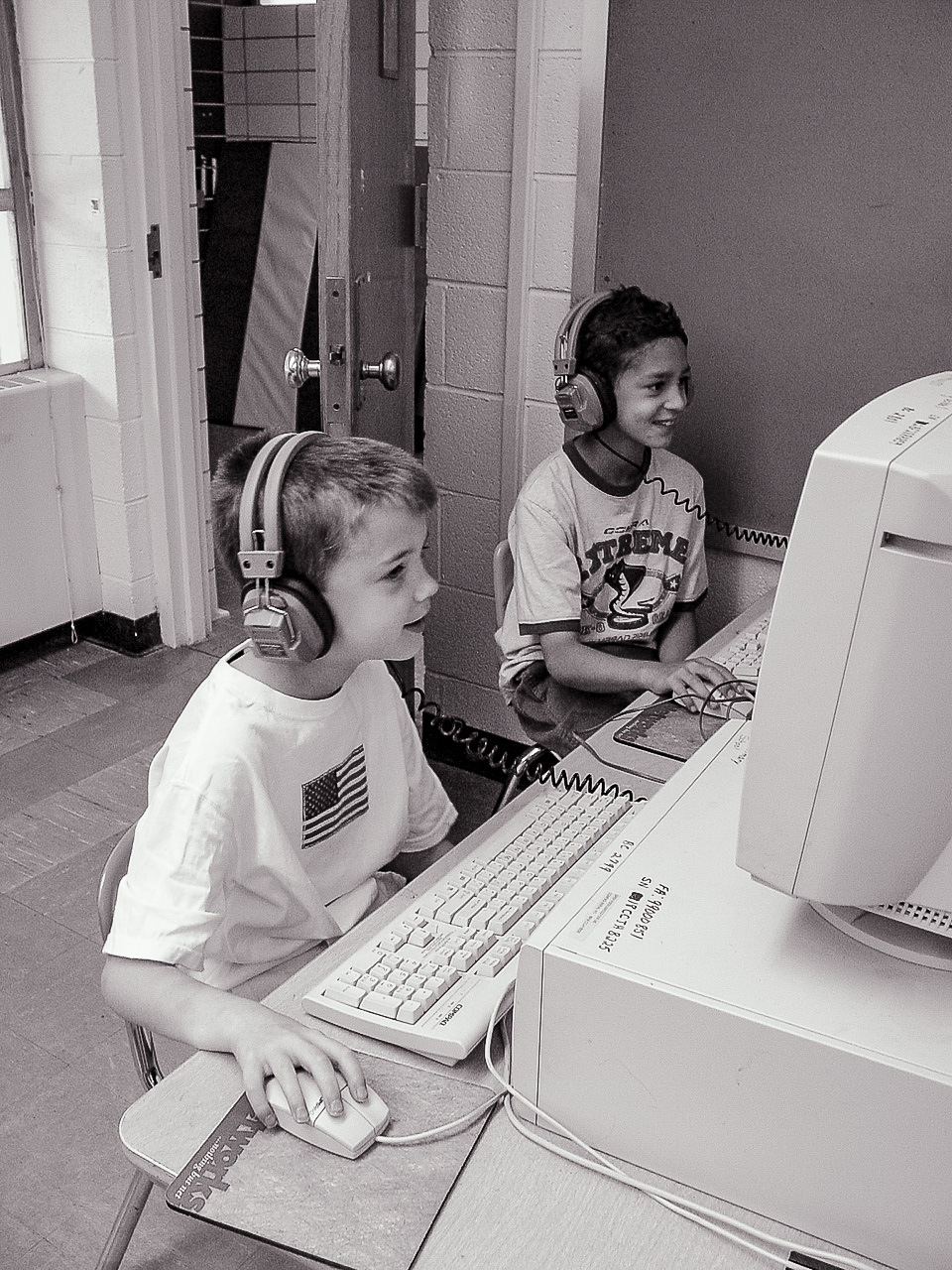
I had inadvertently left it by my computer, tucked in a notebook I’d been using for notes during a training session we’d had on Friday. After four of the lads had been using the computer, it was missing.

“Stealing is not beneath some of them,” I’d been told. Still, is that something one really wants to communicate to one’s students? “Alright, you jerks — I don’t trust any of you. Who stole my pen?!” Not the best way to build relationships with young men in need of help.

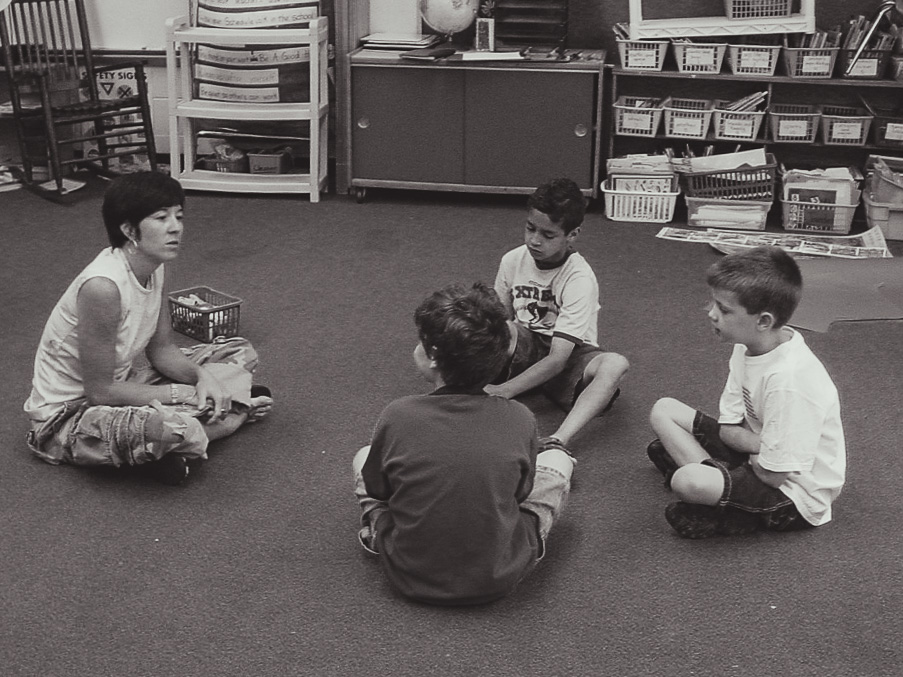
Instead, I gathered the lads together, told them that my pen was missing, and asked them if any of them saw it, to put it on my desk and then let me know it’s there.

A few minutes later, a boy came to ask me if I’d checked in all the desk drawers. “Maybe someone put it there — you know, like a joke.”

Sure enough, in the second drawer was the pen.

A prank? A bit of mercy? Misunderstanding or malice?

So much of our lives is inexplicable like that. Indefinable. Was this a reconsidered theft? Was it a joke? All I know is the pen was missing and then it wasn’t. Almost like I lost it…

Still, for safe measure, I unplugged my SanDisk memory stick and put it in my pocket.

I want to trust these boys, to give them the benefit of the doubt. But at what point does trust become naivety?

Reunion

I dropped by the “old school” yesterday to see the kids. They were walking out into the breezeway just as I was turning to go into the office to sign in as a visitor. They saw me and suddenly I was attacked by six children in a simultaneous hug. One, who liked to call me “stupid old man” last year in times of crisis, hugged me about three times while we were standing there.

One child wasn’t there, having already gone to eat lunch with her one-on-one. I snuck up on her and simply squatted beside her and said, “Hi, [Catherine].” She looked at me without recognition for about two seconds, then dropped her fork, squealed “Mr. Gary!” and threw her arms around me.

That gives you a fine feeling indeed.

Thoughts on the First Week

After a week on the job, I’ve already been called names and cursed, yet I’ve also begun building decent relationships. The two, it seems, are not mutually exclusive.

Working with autistic children got me accustomed to the idea that a child can express great joy at working with me one minute and then call me “stupid teacher” the next. Life in the special ed classroom was life on a swing.

The same, it appears, can be true working with “tough kids.” Indeed, the similarities are sometimes overwhelming. The difference is with TKs, I’m left wondering, “Is it a choice  conscious or otherwise or is it something automatic?”

As an example, take the ability to generalize. Some autistic individuals have great difficulty taking something out of its context and applying it more generally. “Don’t run in the hall” should be generalized to “Oh, then I probably shouldn’t run in the school in general.” Perhaps not the best example, because younger, non-autistic children might have difficulty making that leap.

The opposite can be the case as well: the ability to realize that a general rule doesn’t apply in a specific circumstance. “Don’t run in the school,” we tell someone then find she was refusing to run during gym class because, after all, we’d said, “Don’t run in school.”

During the first week with the TKs, I realized that this is a popular method of defiance. Extremely popular. “You never said” was one of the most oft-heard phrases during my first week.

Difficult Demographic?

Asheville School is a private school on the west end of town. Like most private schools, tuition for four years would buy a small house. The students are easily engaged and eager to learn.

I guess. I don't really know because I don't work there.

I do, however, now work at a school on the other side of town -- in more ways than one. Beginning next Monday, I'll be working with young men and women, between fourteen and sixteen years old, who find themselves out of school because of either long-term suspension or adjudication.

They would constitute, for many -- if not most -- a "difficult demographic." And they very well may be. One thing's for certain: they represent an often neglected demographic.

My job description includes teaching subjects that I'm not certified in: science and social studies. But beyond that, I'll be working with them in community service projects and helping with general "personal development."

In all honest, with most of the folks I'll be teaching, that means anger management and accepting authority. The practical consequence of this, I'm told, is that I'll be yelled at from time to time, and cursed. The "stupid teacher" I heard sometimes last year will be tame in comparison. The old teacher's adage "Don't take anything personally" will certainly be a mantra for me.

Yet with great challenges come measurable rewards. Teaching at a private school would be easier, from many points of view, but I doubt it would be more rewarding than what I'll be doing.

It will be tough, but my new boss assures me they provide psychiatric help...

Seven Months

Playground

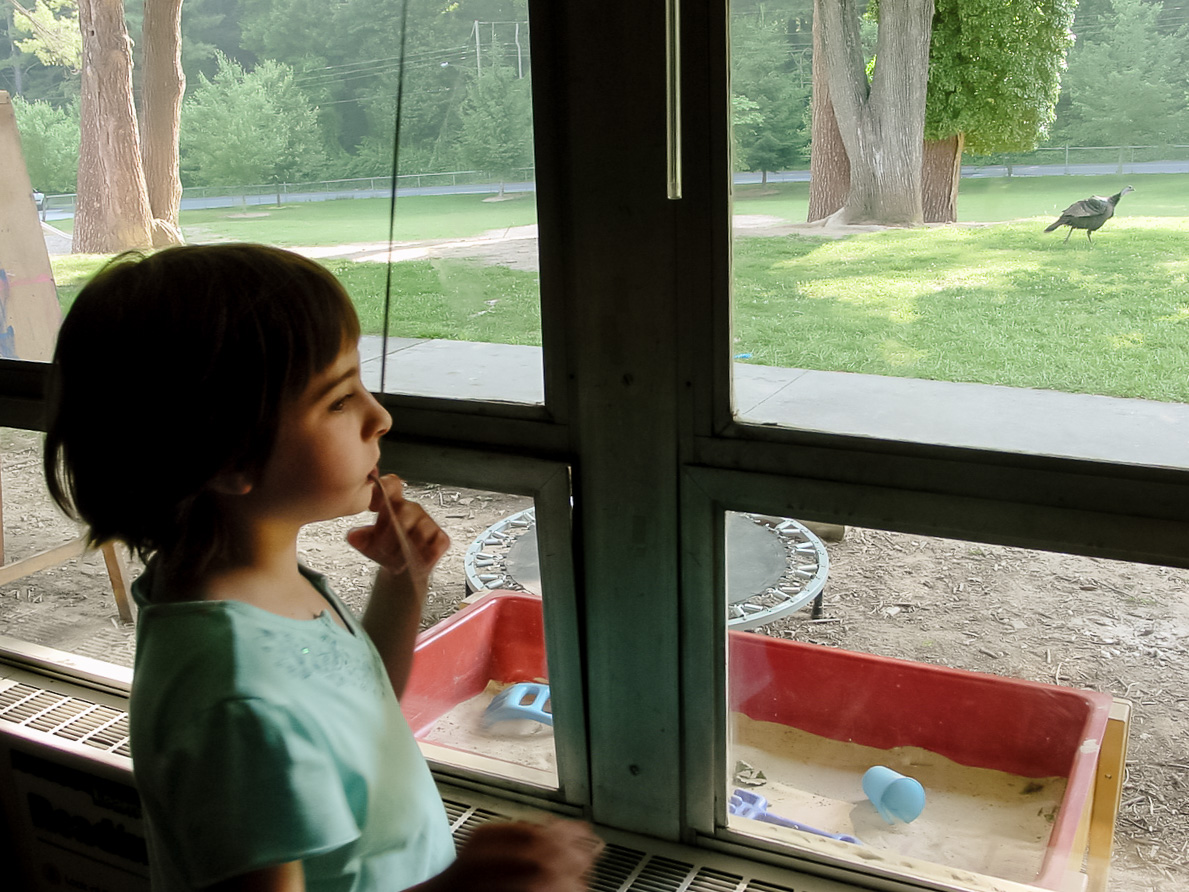
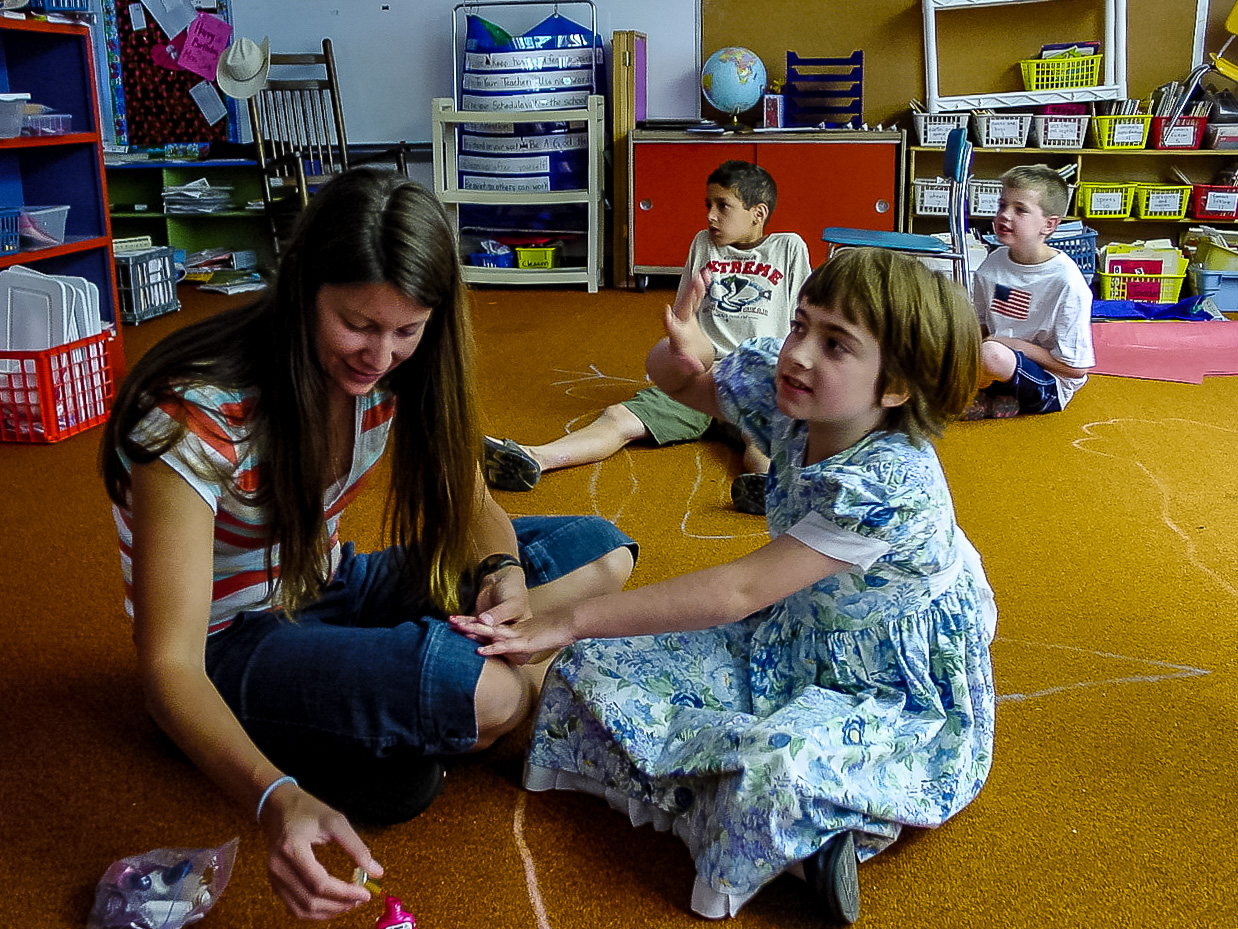
Seven months’ work with seven autistic children came to an end last Friday, the last day of school. “I feel I’m a better person for the experience,” I said to a colleague. So many daily lessons – as Elie Wiesel often says of his students, I learned far more than I taught.

I learned how to separate the behavior from the child. The child and the behavior – and I’m talking of crises: spitting, hitting, screaming, kicking, crawling under a table, self-destructive behavior, etc. – are not equivalent. Indeed, it is very seldom the child actually behaving that way, but rather the condition taking over and running things for a few moments, or minutes. You can see it in the eyes, and hear it in the voice.

I learned that there are far more difficult things to deal with as a teacher than a belligerent teenager. Countless times during the last seven months I was at a complete loss as to what to do, what to say, how to behave. This was partially a function of my lack of education in the EC field. When a child is in crisis, it’s a natural reaction to try to discuss it, to try to “talk him down.” In the world of autism, that seldom works. I learned to do so many things in exact opposition to my every instinct.

I learned what true student progress can entail. A couple of the students finished the year as completely different children than when they started. Gains in reading ability, social interaction, verbal expression, math skills, and general life skills left me simply astounded, and understandably proud that I had something to do with it.

I learned that even many regular education teachers feel they wouldn’t be able to work with such “difficult” children. “You guys are the saints of the school,” someone once told me, and a couple of others expressed an inexplicable admiration of “what we do.” What we did was not very different from regular education: try to teach children and minimize the behavior issues that impede learning. It’s just in special ed, the behaviors can be more concentrated. It’s sometimes a triple espresso to regular education’s thin, pale diner coffee.

As something of a correlate of the previous two points, I learned how to recognize true appreciation in the eyes and voice of parents. When I began working there as a substitute teacher, I was told that most subs last one day and refuse ever to come back. Full-time aides must be relatively difficult to find as well. Almost to a parent, everyone told me, “We really hope you’ll be back next year, though given the pay, we’d all understand if you didn’t.”

Finally, I learned that I have a patience I never knew I had, and it also has its bounds.

I leave with a greater understanding of autism, a greater respect for the parents of autistic children who live with autism every day.

Most of all, I leave with greater sympathy and respect for children with autism. They are the ones caught in a trap with varying degrees of understanding what that trap _is_, let alone how to get out. And yet they so often show those of us working with them things we never would have noticed because of the unique perspective from which they see every little thing.

Lunch Rules

Lunch Rules

Last Days in EC Classroom

Zep Kittens

Something mildly amusing one of our students found while looking for pictures of kittens on the internet.

Pressing Flesh For Effect

This Monday I participated in an education flesh fair: an education career fair. Hundreds of us unemployed teachers (or at least not employed teaching in one’s subject area) were queuing in front of tables where representatives from various school districts sat, taking resumes and asking assorted questions.

I’d checked all the websites of districts I knew to be participating and found very few jobs listed there. “Perhaps they’re just not listing them on the site, opting instead to wait until after the career fair to see what jobs remain open.” Wrong.

There were very few school systems looking for English teachers, and a couple of them that had posted vacancies just about two weeks ago had already filled the positions. That’s fast – two weeks to get resumes, conduct interviews, make the first selection, call back those who made the cut, interview a second time, make a decision, make an offer, and have the offer accepted. At some point in that process one would think that the district would update its vacancy page to reflect the filled position, but that’s a bit naive I guess. Two of them are still there.

At any rate, I went from table to table (county to county essentially), flashed a smile, answered questions, and generally schmoozed. The outcome: one interview set for mid-June, with two more schools expressing interest. “We’ll call you,” they said.

I’d interviewed at this same school near the beginning of the school year when an unanticipated vacancy appeared literally days before the school year began. My first interview in years. It obviously didn’t go so well. It also didn’t go so badly, it seems, for the director of personnel remembered me and was willing – interested, might I even say? – in having me “come by to talk again.” The downside: the school is forty miles away.