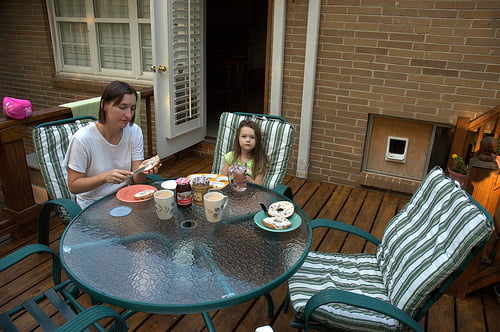
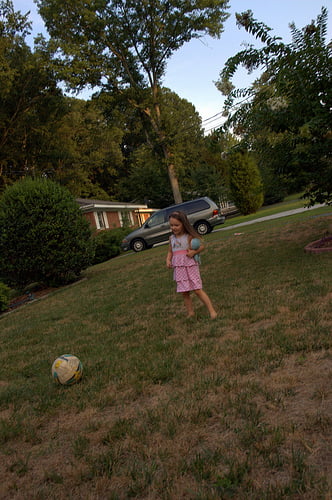
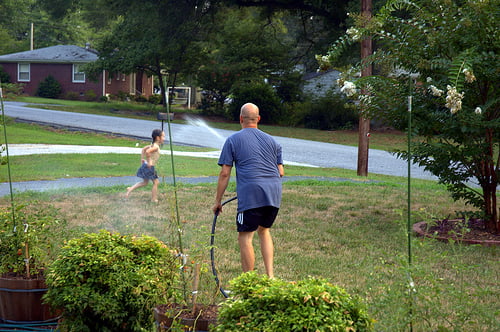
matching tracksuits

fun in threes, sometimes fours

education and teaching

Big Hand, Little Hand

I've been in education long enough to realize that most of the fixes that have been floating around only treat this or that symptom; what's at the heart of the condition remains untouched.

Whatever is at the core usually appears to me as a nebulous confluence of technology complacence, with perhaps a bit of torpescence mixed in for thoroughness. I'm no Neo-Luddite, but I'm beginning to wonder if technology, combined with good old fashioned oppression, is not at work in our society, pushing our relative education level down, down, steadily down.

I had an eighth grade student ask me turn on the television so she could find out what time it was. I leave my television on channel fifteen, which is the channel for school announcements and such. When no announcements are posted, a digital clock appears.

I pointed to the analog clock on the wall.

"Why don't you just look at that?" I asked.

"I can't read that!" came the response, as if I'd suggested she translate the Odyssey for kicks.

Mildly shocked, I mentioned it to other teachers at lunch. They all agreed: a shocking number of students don't know how to tell time with an analog clock.

Now a reasonable case can be made that analog clocks are on the way out, that it's not that critical a skill because such clocks will almost certainly disappear in the near future. Point taken. However, what disturbed me more than anything was the girl's reaction: there was no hint of even trying to figure out what time it was. She just gave up.

Math teachers tell me this is rampant in their classrooms these days. "They want instant answers," one told me. "They're not willing to take the time to work through something, step by step." She conjectured that this was due to the ease of information availability on the internet.

I mentioned all this to K, and she sympathized, then added, "On the other hand, our grandparents knew how to do things we have no idea how to do, simply because they're not necessary anymore. Could you guide a horse and buggy?" she asked.

"No," I replied, adding, "But I would at least try to figure out how."

Granted, I'm talking about fourteen-year-olds, and they're a special breed in and of themselves. Still, taking my personal, anecdotal evidence with the fact that America is sliding steadily downward in international academic rankings, and it's obvious that something is terribly, terribly wrong. The anecdotal evidence further indicates it's not just a problem with the education system; it's a problem with the culture, with the Facebook, iPhone zeitgeist.

I find myself asking, "Don't politicians and high-level educators realize what's going on?" Don't they realize that it's a problem so much deeper than making sure teachers know how to "incorporate student test data into their planning"?

If they don't, they're seriously out of touch. There is a breakdown in communication of catastrophic proportions.

Lately, though, I've been thinking that perhaps they do know. And the state of the US education system is just what they -- and the real people running this country -- really want.

An educated public is capable of critical thinking. An educated public stops to think, "Do I really need a BMW when I won't be saving anything for my retirement as a result of my payments?" A public capable of critical thinking would wonder whether the cable news station they watch is giving them the whole story and seek out other points of view, thinking, "There might be something more to this." A public that is knowledgeable about chemistry and biology will look at the labels of most of the "food" that's for sale and demand something real. They'll wonder whether their weekends are best spent in front of the television watching sports and amassing football trivia. An educated public questions, and that's not what corporate America wants.

An uneducated population that, by and large, lacks critical thinking skills is easy to rule. They don't stop to think, "Wait -- those special interest groups and lobbying agencies are spending billions to circumvent my vote."

But what are the options? We have elections every two years for Congress, every four years for the President, and every six years for the Senate, and nothing ever changes. We throw out the Republicans and put the Democrats in; nothing changes. We throw the Democrats back out and put in the Republicans; nothing changes.

The only way this can happen is through the "pressure" of interest groups and lobbying agencies, hired by the corporations that are run by an insignificant percent of our population, people who only want more. They give the Senators, Representatives, and the President the money to get elected and reelected; what do we give them? A meaningless vote.

Maybe this is why the education system is not improving. Perhaps the corporations don't want it to improve. As George Carlin said, the corporations want citizens bright enough to run the machines and do the accounting, but stupefied enough to be content buying meaningless trinkets and ignorant enough not to realize all of this.

Trust and Teaching

Christmas break has disappeared behind a pile of compare/contrast essays, journals, and persuasive essays. The school year has resumed, and the consequence of my inability to keep on schedule means I have in one weekend a pile of grading that I was intending to spend two weekends and the intervening week plowing through.

Plowing through -- as if this were a drudgery. It's the amount, not the work.

This week has forced me to reevaluate my career choice. Most would expect a paragraph that begins like that to end bemoaning the decision to go into education. My thoughts led to quite the opposite conclusion. Every now and then it occurs to me how fortunate I am to be doing what I love most: working with kids. Teaching is a privilege, an honor.

Most significantly, it is a position built around trust. Perhaps it's not voluntary trust, and maybe it's not trust in me personally, but public education is built on trust. One parent said told me, "You're raising my child; you see him more than I do," Parents hand their children over to me daily, believing that I will do my best to help their children grow -- intellectually and even emotionally. I feel a surge of pride and honor every time I think of the role these parents trust me to play in their children's life, and that's why the piles of paperwork this weekend don't phase me.

Ideally, there should be another relationship of trust in education: between teacher and student. If there is mutual trust, there must be mutual respect: it's hard to trust someone you don't respect, and vice versa.

I must have faith that, all variables being made equal, my students all want to learn. Some days it's more difficult than others: those variables -- parental support, presence of adult role models, family educational history (i.e., socioeconomic status) -- have a resiliency that can be frustrating. But if I didn't believe all students wanted to learn (not necessarily what I'm teaching, but simply learn), how could I go to work in the morning? It would be the ultimate Sisyphean task.

The trust my students must have in me is much more multi-faceted. If they've had several bad experiences with adults, I start already behind. If they've had less-than-effective teachers in the past, I start even further behind. So many ways to gain and lose their trust.

When working with thirteen- and fourteen-year-olds, it's a thin line of trust. They can have such a heightened sense of "fair," and they often confuse fairness and equality.

How many of my students would say they trust me? Certainly not one hundred percent: it's not a perfect world, and I'm not a perfect teacher. I can honestly say, though, that a good number trust me to keep their best interests in the forefront of all we do. Even in moments of classroom management crisis (e.g., acting out),

The End

The school year ended today. It was as I predicted: lots of joy, fair amounts of crying. I told one tearful girl, "It gets less painful every time you reach the end of something like this." Did I lie? She seemed to think, at the very least, that I didn't know what I was talking about.

Why is it nostalgia is so much more potent when we're young? Perhaps it's simply our general lack of experience, and we're often thinking, "It can't get any better than this was," and so we're melancholy. Maybe it's part of the naivete of youth, but this too is a result of being inexperienced in the cycles of contemporary life.

Of course, there were as many not tearful as there were with glistening cheeks. Perhaps they're not as sentimental as the rest of us. Perhaps they have more experience in their fourteen years that has taught them the transience of most things. Sadly, it might be that they learned about temporariness from the love, attention, and affection they've received.

I have at least one such student every year. I always feel like I let him down. I always look back at the year and see countless opportunities to do more, to be more, for such students.

It leaves me wondering, once again, about the marks of a successful year. Testing-wise, I was very successful: I met my MAP score goals, and my E1H EOC grades average was just where I thought it should be. Yet what use are acronyms in determining a successful year? It seems a relatively shallow metric.

The truth is, I became a teacher because I simply love working with kids. Perhaps a selfish reason: I do get a certain high when I connect with a kid and feel I've somehow helped him. It's hardly altruism, especially considering the times I'm doing the opposite: the moments when the urge to take a ridiculous behavior personally and become viscous becomes overwhelming. So maybe it's not surprising that I have the depressive phases to go along with the manic moments.

This is all to explain why I'm feeling down even though it's the end of the year.

Another kid left today that I find myself thinking, "I'd like to have another shot with him." I'd like to have him in my classroom another year and manage to get myself out of the way and see what he needs and give it to him. His needs were not to be met by following the curriculum or making him play by all the admittedly arbitrary rules of the classroom. There was more going on in his life than iPods and texting friends, and I've a suspicion a large amount of it was negative. My class might have been one of the few bright spots in his day, but looking back over the year, I doubt it. I communicated to him all the things I swore I never would express through body language and tone to a student.

I finally caught on at the end of the year. (Why did it take so damn long? I knew -- I had a similar student last year, and I swore I wouldn't do what I did this year.) While other students were working on a final project, I realized the project might easily turn into yet another zero for him, and so I differentiated: I had him write an essay on three things he could do next year to meet with more success in the classroom. I gave him a pencil and a legal pad (he seldom had materials), and he always replaced the items on my desk at the end of the class.

What I read when he was done was a stinging condemnation, though he was polite in his tone and word choice. He didn't even mean to condemn me. He just shared some feelings. Feelings of inadequacy that I fear I only heightened. Feelings of hopelessness that I worry I did nothing to assuage. Feelings of being trapped and only vaguely realizing it.

Real success in the classroom is not measured in completed assignments and MAP/ITBS/PASS scores. Success in the classroom is measured with a metric that, like black holes and dark matter, is hypothetical at best. We can infer it from a student's smile, or a boy's pride at walking into class having pencil and paper, or a girl's wide eyes at getting a C on a test.

I forget this too often.

The school year ended today. It was as I predicted: lots of joy, fair amounts of crying. One girl said, "It's not going to hit me until tonight. Then I'll be sad." And another student added, "And happy, cause we're in high school."

I know just how they feel. If only I can keep all this in mind until next August, when I'll surely another Denny.

Final Days

The school year is nearing completion: just under two more weeks remain. Everyone — teachers, students, administrators, custodial staff — everyone in the building is counting the days.

Such an odd thing: we’ve spent 170+ days working together, and we’re all sick of each other, rather like a family on a long vacation. A bit of time apart and all would be well. Yet “a bit of time apart” is impossible: the students move on, and we teachers remain, waiting for the next group.

It’s as if we’re on a cosmic treadmill. We take a few steps with the kids, and though we all (teachers, students, parents, administrators) keep walking, the students slowly move on ahead of us teachers, occasionally looking back with a smile of thanks, occasionally staring straight ahead, occasionally — tragically — looking down.

“I’m so sick of all this,” we all mutter, but come what may, there will be tears on the final day, and I’ll probably be accused of laughing at someone’s tears as I was last year. “No, no, I’m not laughing at you,” I’ll insist. “I’m just smiling because it’s all rather sweet.”

It’s this time of year that I start making resolutions for the next year. Knee deep in all the mistakes I’ve made this year, I resolve not to do this or that, promise myself to be more systematic about some thing or other, commit myself publicly to more of this, less of that. I’ve a six-page, detailed outline of changes I’ll be making in one course next year, and I’ve only just begun recording my thoughts and plans. (A lesson learned from last year: all the brilliant ideas one has about changes to this or that unit tend to disappear the day school is out.)

And in the midst of all this planning for next year while making sure this year ends positively and productively comes a call from a parent. The long conversation includes a story about how her son came into my class apprehensive. Now he admits that the class is “alright” because I’m a “cool” teacher.

And another student sends me an email: “Thank you for helping me get through this year maintaining my grades.”

Bittersweet moments, indeed.

The Promise of the Future

We took our students on a field trip to a district vocational school where students can learn everything from cosmetology to aircraft repair.  We weaved in and out of the classrooms, learning a little about the requirements and salaries of the jobs the students were preparing for, as well as the expectations of the class. Students asked questions and occasionally listened with wide eyes at salary possibilities.

Though they're only fourteen, they're already thinking about their future and their careers. It's an exciting and uncertain time.

At age fourteen, I was sure I was going to be architect. I was thrilled at the prospect of taking drafting in high school, and though the thrill was gone by the end of the second year, I stayed on for a third year of drafting. In a sense, I regret it: I never directly use those skills now. Auto shop would have been of much more practical value.

I thought about telling the students all this as we walked from room to room, but we almost always learn -- truly learn -- such lessons firsthand.

MAP Testing

When I walk up behind her, she's already read the question:

Read these two sentences:

  • The odor of the blossoms drifted across the field.
  • The fragrance of the blossoms drifted across the field.

What is the primary difference between these two statements:

  1. connection
  2. connotation
  3. context
  4. conceptualization1

She's selected "connotation," but she's not sure. She clicks "context" and then "connotation" again. She clicks back and forth, several times.

I linger to see what decision she makes. I cross my fingers, hold my breath, hope that she's going to select the right answer. Glancing away for a brief moment, I'm disappointed to see that she's made her selection while my attention was diverted. Being forbidden to discuss the test, I'll never know if she got it right.

There's a lot pedagogically wrong with that simple fact. 2

  1. Not the actual question, nor realistic choices.
  2. This is not to disparage the MAP test. It's actually a fairly useful tool.

Teaching to Share

We've been teaching the Girl to share. With no siblings, she's fairly accustomed to having all her toys all to herself. Yet sharing is not something you can force or even teach like tying a shoe. It's something in which she needs to see the intrinsic value herself. And the only way to convey that -- the joy of sharing, you could call it -- is to model it.

"Here, Mama. Would you like some of my cake?" I ask K. She has a slice herself, but she gladly accepts. We smile, but they're genuine smiles: it's amusing, the whole process, and it's difficult to do it with a straight face.

L is beginning to catch on. The other day, she brought me a bit of candy she'd tried, saying, "Tata, I'm sharing this with you. I don't like it."

Cat Gut

“Mr. Scott, is it true that chewing gum is made out of cat guts?”

The question floated up in the midst of a quiet, productive moment. It was, in a word, a gift.

“Of course,” I answered, deadpan. “What else would it be made out of?” I was wondering how long I could keep the straight face.

“Really?” She wasn’t buying it, and quite frankly, she shouldn’t have: I’m a bad liar.

“Seriously.”

A pause as she searched my face for some sign of deceit.

“Would I lie to you?” I asked, still holding the straight face.

“Yes!” she laughed.

At that moment, a young man seated behind me stood up, marched to the garbage can, and violently spat out his gum.

That question was a gift, I tell you.

January Reads

I have decided to complete the "52 Books in 52 Weeks" challenge. I shouldn't be much of a challenge at all, given the amount I read for the classes I teach and the fact I'll be starting grad school (again) shortly. Still, I thought for a year I'd keep track of everything I'd read, regardless of the reason or, for that matter, the "quality."

January's list was varied, to say the least:

AuthorBook
Dean HamerThe God Gene: How Faith Is Hardwired into Our Genes
Bart EhrmanGod's Problem: How the Bible Fails to Answer Our Most Important Question--Why We Suffer
Robert BaerThe Devil We Know: Dealing with the New Iranian Superpower
Bel KaufmanUp the Down Staircase1
Paul LanganShattered 2, 3
Paul Langan and D. M. BlackwelBlood is Thicker2, 3
Anne SchraffSomeone to Love Me2, 3
Anne SchraffUntil We Meet Again2, 3

The Bluford books really shouldn't count, I tell myself. They were something I read because some students were reading them. At the same time, I learned a great deal from them.

The series is aimed at African American students, and many of my black students say they can truly relate to the characters and situations.

In the case of Someone to Love Me, that is truly tragic. It tells the story of Cindy, a high school freshman who has only a distant relationship with her mother, who is constantly going out with her boyfriend Rafe (I believe that was his name -- some shortened form of "Raphael"). She is constantly leaving her daughter at home with a couple of cats and a freezer filled TV dinners while she goes out on the town, eating out, buying new clothes, and generally acting selfishly irresponsible. When an elderly neighbor invites Cindy over for a hot dinner, she relish it: "It had been years since Cindy had eaten such wonderful homemade food." Perhaps the most damning passage in the book. The girl goes on to get involved with an abusive older boy and has to face her mother's anger -- and physical abuse -- when she tries to convince her that Rafe is a dealer. It is an emotional, sordid affair from page one.

If this is in any way the reality of any of my students, it's little wonder they have difficulty focusing on school work.

1. Re-read
2. For school
3. Bluford series (for school)

Adolescent Dhammapada

In "The Childish Person" from the Dhammapada we read:

Childish, unthinking people
go through life as enemies of themselves,
committing detrimental actions
that bear bitter fruit.

Glenn Wallis, in his notes about his translation of the Dhammapada, explains that "childish" in this context as several meanings: "childlike" is certainly relevant, but the Buddha also meant a "person who ambitiously pursues material fortune, being pushed along by an ever-strengthening current of "I, me, mine." (125) (Other translations render "Bāla-vaggo" simply as "the fool", but I prefer Wallis' less vitriolic "the childish person.")

Later, in "The Practitioner", we find a similar notion:

Do not carelessly swallow a copper ball and,
burning, cry out, "This is pain!"

All too often, we cause ourselves the pain we're certain has exterior source. And nowhere is this more evident than the middle school. In that setting, it might sound like this:

Teacher: You display your buttons for anyone to see. You don't hide anything, and so if teachers wanted to pick on you, you make it easy for them. I know exactly what I could say to get you upset, and so I virtually control you.

Student (in a very disrespectful tone): Oh no! No! Let me just tell one thing. You don't control me. You don't. Ain't nobody in the world controls me. I control me.

Teacher: I just did it. I got you angry. I just got you to mouth off. A teacher would be justified for writing you up for the tone you used with me. If you were really in complete control of yourself, you would have sat quietly, thinking, "Right. Let me show this joker who's in charge of me."