matching tracksuits

fun in threes, sometimes fours

education and teaching

Boot Heel

Dear Terrence,

bootToday was it. I do honestly like you all; I do honestly believe in your abilities and your intelligence; I do honestly see in you potential. But you all don’t see it in yourself, and because of that, you disrupt. Constantly. We’ve been in school three weeks now, and you’ve shown me that when given the chance to act like adults, you act like infants: you fuss about infantile things, you laugh uproariously and chaotically about infantile things; you fight over infantile things; you talk constantly about infantile things. You’ve shown me you’re just not ready to be treated like adults. What this means is that I must treat you like children. I must seem harsh in order to protect you, from yourselves and from your self-destructive habits. And so tomorrow, though I don’t really want to, I will be putting my foot down. That’s a cliche that doesn’t really adequately explain just how hard I’m going to hit you all tomorrow, so to speak. I expect to send at least ten students – that’s fully one third of you – to the assistant principal for being disruptive, because I’m going to define “disruptive” in such a harsh way that sneezing might get you sent from the room. I do this because you can’t handle the slightest amount of freedom: one off-hand comment to a peer turns into complete chaos in the class in a matter of seconds. One giggle sets ten others giggling. You are lemmings, robots – your behavior is so predictable. And so I am going to make my behavior equally predictable.

I expect to get calls from parents. I expect to see frustrated students. But I’m doing it for one reason: I will not let you screw up your own education because you find everything else in your tragic world more important.

So take a deep breath, and hope for a change in everyone else soon, because you can only change yourself, no one else. And until you do, all privileges in my classroom are indefinitely suspended. I know it sounds like I’m angry when I say this, and I am, but I’m not doing this to make my life easier or to torture you: I’m doing it to protect you.

Tying my boot laces already,
Your Teacher

Lost Cause

Dear Terrence,

I thought today was a lost cause. I thought you guys would never get it all back together. I was convinced that getting you refocused would be all but impossible. After two interruptions like you guys experienced, it would have been difficult for anyone to get back to the task at hand.

First, the fight. If you could call it a fight. I still don’t know why James attacked Bryce, and I don’t know why Bryce just sat there in the desk and took it. Disturbing on so many levels, not the least of which was the entertainment factor it seemed to have for most of you. A young man was getting pummeled, and you guys laughed. Such brutality is so foreign to me that I can only recoil, but you guys find it funny. Or was that laugh something else?

Then there was the verbal altercation with the girls while I walked the two boys down to the grade-level administrator. I know even less about that incident than I do about the fight, but I know they were angry, ready to fight themselves. I saw it in their eyes.

So when I tried to rein you guys in, I was doubtful about the ultimate success. I’ll admit that part of me was convinced class was a wash. But somehow, you guys pulled it together. And I have to say I was impressed. No side conversations about the fights. No comments when the girls came back (well, almost none). Well done. More promise.

With hope,
Your Teacher

Your Daughter

Dear Frank,

The other day I did something I doubt you have ever done: I met your daughter. She's really something: smart, amusing, sincere, beautiful. Though she's only thirteen, she's got a maturity about her that is striking. Sure, she's an at-risk kid, but the difference is, she knows it. She's aware of it. And she wants to change it.

You could do a lot to help her, but she doesn't know where you are. Indeed, she doesn't know who you are -- she told me herself. I didn't ask. She volunteered the information. (Don't worry: your daughter is not the only one to share family secrets like that. In fact, she's not the only one to share that family secret. But that's a post for politicians and pundits.) You could help her, but instead, you left.

I think of my own children, and I try to imagine leaving them before they even knew me. What kind of a father would I be if I did that? The answer is simple. You know the answer. And statistically speaking, you know the answer on a firsthand basis: I'd venture your dad skipped out on you and gave you the example of how to be a "man" that led you to skipping out on your daughter.

Perhaps it's for the best. After all, what could someone who doesn't have the courage to accept the consequences of his actions teach a girl who's trying to learn how to do just that? You'd probably drag her down, and maybe you knew that, and that's why you left. But you see, here's the catch -- it's a real paradox. If you had stuck around and had tried, you'd have been everything she needs. Perfect? No way, but no one is. Still, being a father is just like anything else: the more you do it, the better you get. And it's not too late to start. Or is it? Would she want you waltzing back into her life? Certainly not: waltzing is not humble. How about contritely contacting her? That might work. Maybe a letter.

Let me start if for you:

Dear Daughter,

I don't even know your name, and for that I'm ashamed. I have done so wrong by you that it's hard for me to look myself in the face every morning when I shave. I hate what I've done to you, but I want to make it up to you. I don't know if you want this, though, so I'll leave it for you to decide. I'll let you decide all the boundaries, and I'll keep to those boundaries like they came from the mouth of God. And if you don't want to meet me, I understand. In your shoes, I might not want to meet me either. Still, I want to apologize for what I did to you, and I want to try, somehow, to make it up to you.

There. Simple. To the point.

Of course, if you don't even know her name, how could you send it?

Sadly,
Your Daughter's Teacher

Your Shoes

Dear Terrence,

We had a fire drill this morning, and I knew it was coming — we always know, for the administration sends us emails about them — and yet it wasn’t the disruption of the actual fire drill that I was dreading. I knew it would, of course, break up the flow of a lesson, and it never fails that the class with a high number of Terrences and Teresas is going exceptionally well when a fire drill occurs. There is that to consider. But what I was more concerned about was what would happen when we came back in, because I knew you and most of your classmates would be worried about one thing: your shoes.

I could hear it before we got back to the classroom, thirty-some kids all asking to go to the bathroom to clean the wet grass clippings from their shoes. Instead, I handed out paper towels. I heard a lot of thanks, but it still ate up a lot of class time.

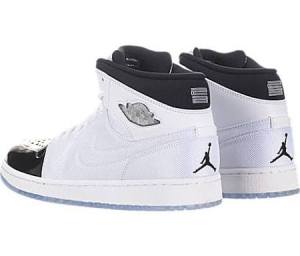
shoppingIt was a judgement call, really. I could have simply told everyone to get over it, but I thought I might use the situation to win some points with you guys. Besides, when I heard you say, “Man, my mom paid $140 for these shoes,” I knew that it wouldn’t just blow over. You would spend all your time trying to wipe the grass from your shoes, and you’d likely mutter your displeasure at having to do so, and that would only drag your neighbors into the frustration, and soon the whole class would follow. So the paper towels were preventative.

Still, I’m concerned about your worries: they’re just shoes. Even if they’re a little dirty, they will come clean when you get home. And even if they don’t come clean, even if there’s a bit of green left on your perfectly white basketball shoes, they’re just that, shoes. They’re material objects, tools, bit of rubber and leather designed to protect your feet.

Or are they?

Of course that’s not all they are. To suggest that is to be naive, I understand that perfectly. They represent status. They represent some kind of success. And thus they represent respect to you, which I suppose adds to your sense of self-worth. And that, for me, is the real tragedy. You talk constantly in class. You’ve been to alternative school. You’re wearing a home-arrest ankle bracelet (that began chirping the first day of school, I might add). And yet what you’re most worried about is whether or not your expensive shoes are clean.

Don’t you see your shoes are meaningless? Don’t you understand your self-worth comes from being a child of God, created in God’s image, destined for so much more than hunkering over your over-priced shoes, frantically scrubbing them? Can’t you understand that it’s your heart, your soul, that you need to be worried about? Don’t you worry what path you’re on, what that heart of yours might look like? From here, it looks good. Not perfect, but good. But it’s kind of like your shoes: eventually, it can get so dirty that it’s all but impossible to clean but through grace.

Ever concerned,
Your Dirty-Shoed Teacher

Enter: Terrence and Teresa

Dear Terrence and Teresa,

When I said yesterday that I didn’t know whether I would meet you or not, I wasn’t joking. I can’t always tell immediately who you are. Today, I could. Boy, could I ever. In fact, there was just about a whole room of Terrences and Teresas. In almost every row, there was someone whose body language was screaming, “I have had no success in school, and I find it utterly useless.” Lots of kids saying this with signs, inattentive glazed faces, attempts to engage in side conversation – the usual behaviors that give you guys away.

Teresa, I saw you first. I had my suspicions when you were standing outside my classroom, loudly proclaiming that right now you have “John Doe” for class. A student who uses a teacher’s first name like that is saying a lot by doing so. That was the first clue. It’s hinting at a familiarity that a student will never have with a teacher, and it shows that you sometimes perhaps don’t really think before speaking.

There were a few other behaviors that gave you away, but I knew I’d pegged you when, after class, we were talking and I asked you, “How many referrals did you get last year?” You glanced up at the ceiling, obviously counting. We talked about those referrals, then I stopped you in your tracks by saying, “Did you notice what I asked? I didn’t ask you ‘Did you get any referrals last year?’ but rather ‘How many did you get?’ which is a totally, radically different question.” You looked at me confused. I do this trick every year with someone, and I’m never surprised at your confusion because I’ve come to understand that you sadly you don’t understand how clearly you communicate your past behavior with your present actions. When I offered to help you figure out how to rein in those compulsive behaviors, I wasn’t sure whether your affirmation was heartfelt. We’ll find out. But remember, I’m always willing to help.

Now you, Terrence, didn’t make your grand appearance until the end of the day, after I’d already had you in class. I have to admit: you’d sort of slipped through my radar in class. You didn’t when I saw you walking down the hall, virtually yelling about how much you hated this school and how much everyone is always on your back. Believe me, it was hard to miss you. I don’t often step in between a teacher and a student, but I could tell you needed some help, and I was sure I could get you in a calm place. And after a few moments, we were just talking.

“You look really frustrated,” I said.

“You look like you feel trapped between the demands of two teachers,” I said.

You said a lot, but you did so respectfully. And that gives me a lot of hope, and I hope it does the same for you as well. I’ll check in with you tomorrow, and I’ll try to get you ready for the inevitable, because it’s coming: I have a sense that we’ll develop a great relationship until I have to call you down in my class. It’s happened before, with other Terrences from other years. We’ll cross that bridge when we come to it, but until then, just remember the two simple ideas I shared with you:

  1. As unfair as it seems, adults can get by with talking to you in a tone of voice that you cannot use with them without getting into serious trouble. But don’t worry too much about that: all of us adults have been through it too. Just remember that’s how the rules work: as long as you’re not trying to play basketball by football rules, you’ll be fine.
  2. Count to three before you speak. As you’re counting, ask yourself some simple questions: “Do I really need to say this? Is this likely to make the teacher more upset or less?”

I’ve got a thousand and one other tips to help you out, Terrence, and you too, Teresa. We’ll get to those later this year. In the meantime, remember: breath, count, and don’t tackle any point guards.

Pleased to have met you,
Your New Teacher

Photo by Kevin Krejci

Meet You Tomorrow

Dear Terrence,

We haven’t met, but by the time twenty four hours pass, we will have met. I might not even realize it yet, for you sometimes manage to keep yourself hidden in the rank and file, just another face in a sea of first day jitters, but more than likely, I’ll have a pretty good idea who you are, and how many of you there are as well.

picPart of me wants to say something like this: It’s all up to you. Whether I meet you or not is a simple question of self control. You could simply blend in, follow the examples you see around you of successful students, and you could just disappear before you even make your entrance. I want to say that’s possible, but I’m not sure a thirteen-year-old has that kind of fortitude. At your age, you tend to make things more complicated than they really are, and combined with your fatalism, that makes it highly unlikely that I won’t meet you. You’ll feel unjustly accused, or you’ll suspect someone across the room is talking about you, or you’ll simply need some attention, or a thousand and one other motivations might click and then we’ll meet.

I could actually be on the lookout for you: all I have to do is take my roll sheets down the seventh-grade hall and ask for references. It seems unfair now, and I strenuously avoided any comments from anyone about any of my students, but truth be told, that’s what “real life” — whatever that might be — is like.

All that being said, I have no doubt I’ll figure out who you are fairly quickly. At risk kids wear their cracks on their sleeves even when they think they are being impenetrable, and your body language will likely give you away. So the real question is, what then? When I figure out who you are, when I tell you the jig’s up, what then? Hopefully, I’ll do better with you this year than I did last year, which was better than the year before that. But will it be enough? Can we make it?

We’ll start to see tomorrow.

Concerned as always,
Your Future Teacher

Updated

It took me four years and two principals, but I finally succeeded in my brilliant plot to take control of and completely redesign the web site for my school. It went live today.

Update

The district decided a year later that WordPress had such significant security issues that they couldn't continue using it. Funny, Washington Post, Time magazine, and the New York Times all seem to feel differently since they use it, but what do for-profit companies know about using secure software?

Back Again

We’ll be starting school in a week, meeting (some) students in two days, but today, the faculty gathered to do two things: deal with the myriad administrative announcements and clarifications that make up the bureaucracy of public education, and get caught back up with colleagues.

01-VIV_9437

Last year we faced the stress of a new principal: what will change? What will stay the same? After a year with this man, who has done an excellent job at transforming some problems at our school as well as keeping everyone on their toes, we know that we’re in for more of the same this year. It’s good and bad. I have this lurking fear that changes we know are coming are going to make me let go of some of my most prized pedagogical possessions — lessons, units, techniques that might not work with the new approach (educational fad or not? too early to tell) well be taking as a faculty. Yet change is often good. Still, on this end of it, it’s a bit daunting.

Will and Temptation

prayerIt’s far too late for this little girl to be heading to bed, but in these last few days of summer vacation, we’ve grown lax.

We kneel for evening prayers, and I think of something Father L said to me today during confession, and it gives me an idea.

“In the name of the Father and of the Son,” we begin, already falling into that rhythm that shows we aren’t really thinking about what we’re saying. We begin, and as we pray “Thy will be done,” I stop L.

“What’s something you can do to help make this come about, to help bring about God’s will on Earth?” L shrugs, so I clarify: “What is God? He’s love, right? So to fulfill God’s will, we must love. So what’s something you could do to help fulfill that?”

She thinks for a moment. “Not yell at E,” she replies confidently. We all do it: we get frustrated or worried with what the little two-year-old bundle of fascination and excitement is about to do, see potential disaster (or sometimes actual disaster), and call out, “E!” He heads for furniture with a drill: “E!” He snaps the head off a doll: “E!” So L and I talk about how we should all take that to heart.

Returning to the prayer: “and lead us not into temptation.” Time for reteaching: “What are we sometimes tempted to do, something that really goes against God’s will of love?”

“Yell at E.”

That seems to be the key to meaningful prayer for a seven-year-old: connect it to real life, make it simple, and reinforce. Sort of like teaching in the classroom…

The Queen of England

Sure, I’m just basing this claim off anecdotal evidence I’ve experienced in my own classroom, but I’ll make the claim nonetheless: today’s kids just don’t have the imagination of past generations. I base this on the experience of students in creative writing classes having nothing to write about, and when given help with discovering the wealth of topics that surrounds them, they usually wrote about video games or thinly veiled remakes of various films.

1-DSC_5309

The scene that greets me almost every day arriving at school goes a long way in explaining this, I believe.

DSCF0003

The Girl, at this point, doesn’t suffer from such a lack of imagination. She’ll take a blanket, old sheer for window treatments, and heavy winter gloves and declare herself the queen of England.