matching tracksuits

fun in threes, sometimes fours

education and teaching

Gone

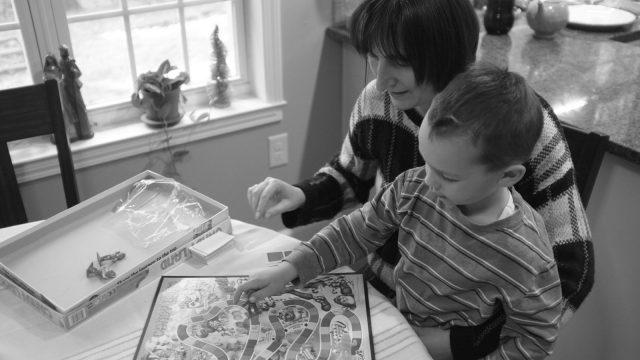
The Boy was playing CandyLand with K, and after he'd won the first game, he was eager to play another.

"I'm going to win again!" he proclaimed, and for a moment, it looked as if he were going to do just that. He shot ahead with double color after double color. Then K drew the gum drop and zoomed ahead.

"Oh, I'll never win!" he proclaimed, frustrated.

"Yes, but you might draw another candy piece and move ahead, or Mama might draw the candy cane when you're way past it and have to go back many, many spaces," I reasoned. But as I often remind The Girl, there's no reasoning with a four-year-old. He continued playing a bit halfheartedly. He drew a candy piece eventually, but K had shot so far ahead by then that his chances of winning really and truly were gone.

And with that loss, his desire to play was gone as well.

I remembered the whole time they played the new buzzword in education: grit. It's really nothing more than perseverance in the face of difficulty and setback, but educators and researchers in education like new jargon. (I suspect it's mainly from the latter.) And so "grit" is thrown around in education blogs and educator gatherings quite often these days. It was rewarding to see The Boy showing some of this perseverance. It took a good bit of encouragement, but he finished the game, learned the lesson (?), and we had a nice close to the afternoon.

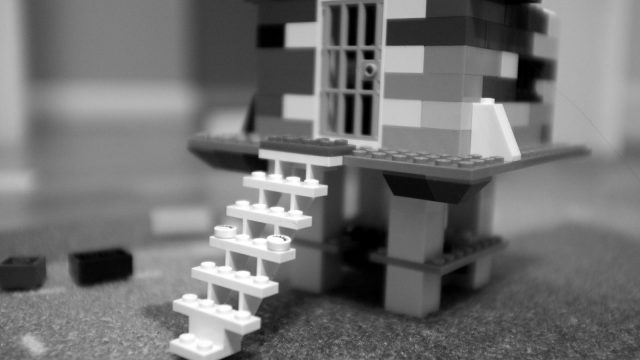
The next night, The Boy and I are working with Legos. I was building a jail for him, and he was building a mystery. Not having a plan, he found the process a little slow-going and frustrating.

"I just can't get it," he fussed as he couldn't get two pieces joined. He threw them down, and for just a moment, I thought the chances of a relaxing evening of Lego-ing were gone. But just for a moment. Seeing everything as a teaching opportunity -- or at least trying to -- I showed him how to get the pieces together, then pulled them apart and had him try again.

"I got it!"

Two opportunities to teach that could have disappeared but didn't. The trick for me, though, is to transfer that to my students. Everything can be a moment to teach, a learning opportunity, for the at-risk kids in my charge. They lack social skills, patience, anger management methods, volume control, grit (there it is again), a growth mindset (another edu-speak jargon term that's hot now). Every teaching moment can't bloom -- I'd never get to the curriculum some days. The balance must be there, but there's so much they need before they're gone off to high school...

Inspired by the Daily Post’s prompt of the day: Gone.

Motives

“I’m not putting it up.” The kid has a book bag on his shoulder at the start of fifth period — verboten in our school. “I told all the other teachers, too.”

How did this happen? How did no one come down on you like a ton of bricks for such insubordination? How come your mentor, who works in this building, didn’t say something? How come I’m making assumptions?

“Why?” I asked.

“Because my locker is beside Samuel’s locker, and it stinks, and every day my bookbag stinks, and I’m not going to have it stinking anymore.”

Do you not realize that most teachers are so imminently reasonable that they would find your reluctance reasonable and offer a solution? I explain this to him.

“Now, explain to me your problem just like I showed you.”

He does. I offer to let him lock his bookbag in my closet until we can work out a solution.

“Thank you,” he says on the way out.

That all problems could be so easily solved.

Curriculum

Three events today, happening within moments of each other, reminded me just what challenges some students in my class face, and how I am often really not teaching what I thought I would be teaching to thirteen-year-olds.

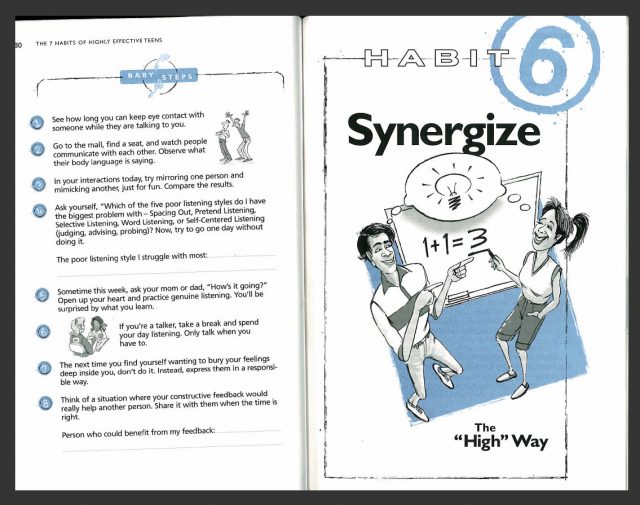
We're working on a cross-curricular unit that incorporates Sean Covey's Seven Habits of Highly Effective Teens as the anchor text. Since I'm the literature/reading teacher, the unit starts in my room. To make the process simpler and faster, as well as to hit more standards, I've designed a unit that includes a jigsaw reading of the article: independent groups read one chapter of the book, then present their chapter to others who read other portions of the book. Each group gets a habit.

I copied the book to make my life easier: we don't have enough books for two classes to use them simultaneously, and because I have a class-set of Chromebooks due to an elective I teach, I told the other English teacher that I could just scan the book in for my students. I scanned them in two pages at a time, which meant that, because the first page of each chapter was on the right side of the page, there was always a page from the previous chapter as the first page. I knew it might be confusing for some, but I thought that most thirteen-year-olds could figure out that it must be part of the previous chapter, especially since I'd already shown the kids how to read the PDF versions of the novel: Left page, right page, scroll down; left page, right page, scroll down. When I found that some students were having trouble with that and were in fact treating the first page visible as the first page of their chapter, I was frustrated, disheartened even.

1-fullscreen-capture-11162016-50017-pm

Later, as I was moving around the room, I noticed some students having problems with Google Docs' outline feature. It turned out that, instead of turning on the automatic-numbering outline feature, they were manually adding numbers -- like it was just a typewriter instead of a computer. Since I had showed the students how to do this, since we had spent time working as a class, working as groups, working even as individuals with simple outlines, I thought everyone knew how to do it But if a student is not paying attention, if a student is more interested in most everything else other than what is being taught, it shouldn't come as a surprise. Yet it happens to these students time and time again, and they can never figure out why. What are the chances of someone who can't pay enough attention to learn how to use a simple outline feature ever going to keep a job? Perhaps these students will learn some focus, but they've made it this far without paying attention: what's in it for them to start now?

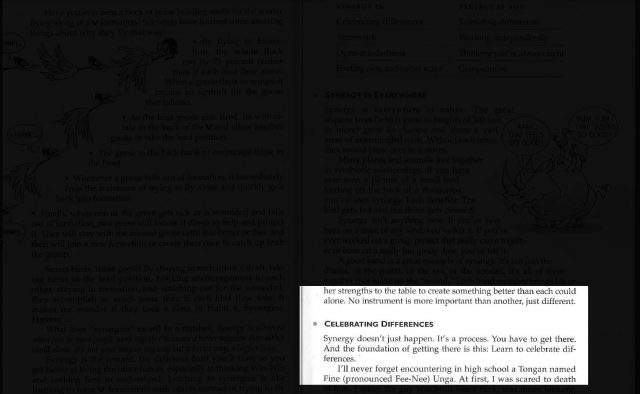
Finally, I had a vivid reminder of how poorly some of the students read. A student was struggling to figure out what to put as a sub-point in his outline. To his credit, he had figured out that the heading immediately above would be a main point and knew that something below it must be the sub-point. The first paragraph after the heading was short:

1-fullscreen-capture-11162016-50036-pm

"Synergy doesn't just happen. It's a process. You have to get there. And the foundation of getting there is this: Learn to celebrate differences."

I sat down by the student and quickly assessed the problem. "Read the first paragraph under the heading," I said. He read it. "Tell me something about 'synergy' from the paragraph." "It's a process," he said after a moment's hesitation. At this point, I was thinking that another helpful question or two and I'd be on my way. "And what is the foundation of that process?" He made a wild stab -- something completely outside the text. "No," I reminded him, "no, it must be in the text. It's right there in the text." Another wild stab. "Find the word 'foundation' in the text," I instructed, growing a bit frustrated with my ineffectiveness. He found it. "And what does it say is the foundation? What's right after it?" Another wild guess. I sat there, wondering what was going on in his head, wondering if he was seeing, what he was thinking, what even he was feeling.

This evening, I called the Girl to the computer and had her read the paragraph. "What is the foundation of synergy?" I asked. "It's a process. You have to get there," she began. "No," I redirected, "one thing. It's in the text." She re-read, then said, "Learn to celebrate differences."

I don't say this to brag about our daughter. I point this out to show the level of reading of so many of my students, students who should have responded like L, for she is, according to testing, reading at about an eighth-grade level. The level my students should be reading at. What's most frustrating about all of this is the shortsightedness of these same students. They don't see how far behind they are -- and how could then? They divide school into two, fatalistic groups: the smart kids classes and our classes.

Add to this all the students lacking social skills who need instruction in this simply to reach a state of mind in which they can functionally work with someone. No, that's not even correct -- to get them to the point that they can stand to be in the same group as someone they find irritating. Several students in my lowest level class are incapable of getting along with much of anyone. "He annoys me." "She gets on my nerves." "He's a pain." "We might fight." So on top of basic reading, I have to try to teach them how to deal with each other. Given their fatalistic worldview, that's nearly impossible. "When I'm mad, I just react. It's just how I am." For them, it's as immutable a fact as the inevitability of tomorrow's sunrise. There is nothing they can do to stop it. Is this laziness? Learned victimhood? Personality? Nature? Nurture? All the above?

It's not that I'm feeling pessimistic about my chosen profession. I'm just not sure those who don't teach, who don't interact with such kids on a daily basis, really know the extent of the problem we face in the American education system today, and all too often, those very people are the ones making the decisions, about funding, about testing.

Twenty Years Ago

Twenty years ago, I was only a couple of months into my big adventure of teaching English in Poland. I came home from school and wrote this:

I had a bit of a run-in with Agnieszka today. While arranging the new seating today she got rather rebellious. She refused to sit with Greg because “I don’t like him.” She plopped down beside Iwona and didn’t acknowledge me at all. At first I was polite: “Please, move over there.” When she did nothing, I became a bit mad, for she was forcing me into a power struggle. “I’m not asking now, I’m telling: move to that seat.” She did nothing. I knew the critical moment had arrived: if I said nothing and let her sit there, I would have lost a major portion of my classroom control. If I continued in that fruitless way, I would have made a fool of myself. So I did the only think I could think of: “Could I speak to you in the hall?” I asked/demanded.

“Why are you making this a difficult situation?” I asked. We talked about it and reached a compromise. I explained to her the situation her stubborn belligerence (redundant) had put me in. And I told her that at the same time I didn’t want anyone to be uncomfortable unnecessarily. So we reached a compromise, but in the end I still lost a great deal of credibility.

I should have handled it differently.

I wish I could say that, twenty years on, I don’t have these moments. Twenty years later, I’ve learned something. Twenty years on, I’m not repeating myself.

I wish I could say that, but I can’t.

Preconceptions

Every year, my students begin Romeo and Juliet with certain preconceptions, both about the play and about the character of Romeo. It’s a Shakespeare play, they reason. Shakespeare’s hard to read, noble and magnanimous and all that. He writes about noble ideas, noble dilemmas, high-minded philosophy. They don’t expect it when the play starts out and within a few lines, characters are saying things like this:

GREGORY

The quarrel is between our masters and us their men.

SAMPSON

‘Tis all one, I will show myself a tyrant: when I
have fought with the men, I will be cruel with the
maids, and cut off their heads.

GREGORY

The heads of the maids?

SAMPSON

Ay, the heads of the maids, or their maidenheads;
take it in what sense thou wilt.

GREGORY

They must take it in sense that feel it.

SAMPSON

Me they shall feel while I am able to stand: and
’tis known I am a pretty piece of flesh.

I take them through the text enough to get them to realize that these two characters, like Donald Trump, are fond of locker room talk that involves suggestions of sexual assault. (No, I don’t bring in the politics, but the thought crossed my mind to make the connection at least today.) I don’t point out to them what Sampson really means when he says, “Me they shall feel while I am able to stand,” but I suspect some of them get it.

Then there’s Romeo: He’s going to be a good guy, they reason, because the play is the most famous love story of all time, and the most famous love story of all time can’t possibly have anything other than the ideal man in it. So we begin reading and find this passage in response to Benvolio’s queries about what exactly is making Romeo’s days so long:

Well, in that hit you miss: she’ll not be hit
With Cupid’s arrow; she hath Dian’s wit;
And, in strong proof of chastity well arm’d,
From love’s weak childish bow she lives unharm’d.
She will not stay the siege of loving terms,
Nor bide the encounter of assailing eyes,
Nor ope her lap to saint-seducing gold:
O, she is rich in beauty, only poor,
That when she dies with beauty dies her store.

“How has Romeo tried to win her?” I ask. We mark the text and make a list.

“She will not stay the siege of loving terms?” I ask, and the students figure it out.

“He’s used smooth words.”

“Nor bide the encounter of assailing eyes?” I ask, and the students get it.

“He’s been making eyes at her.”

“Good. Finally, ‘Nor ope her lap to saint-seducing gold’?” Here they stumble.

“Money?”

“No — how do guys use gold to win girls?”

Finally, someone gets it: “Oh, jewelry!”

“Right!” Then the question — should I pursue the issue further? Should I lead them to see just exactly what Romeo’s saying here? Some years, I don’t. This year, I did.

“And what about the rest of the line?”

They look at each other quizzically.

“What do you think he means by ‘ope’?” I ask.

“Open?” a student suggests.

“Correct. Now, she will not ‘ope her lap to saint-seducing gold’?” I see in some of their eyes that they’ve got it, so I suggest what I suggest every year. “We’ll have to behave as adults in this unit and not giggle and be immature about some of the topics. So what’s he saying?”

They get it. They’re mildly shocked. The girls are a little angry and disappointed that this supposed hero of the greatest love story of all time is a fairly typical male and simply trying to get Rosaline in bed — to spread her legs, literally.

“Nothing ever changes,” one student observes.

1-dscf1197

The Girl tonight hit on her own preconceptions and battled them mightily. Beans are nasty. She’s decided that already. Of course, at her age, I’d decided the same thing about a lot of things, most beans as well. But we have a rule in our house as Nana and Papa had when I was growing up: you have to try everything. In L’s case, it was about three bites of beans.

We jokingly took a picture with a time-stamp (that’s in fact illegible) to see how long it took her to eat them. Although she didn’t have to sit at the table the whole time, she had her final bite around ten minutes before bedtime.

I remember doing the same thing.

Nothing ever changes.

Curve

Recently, our school district changed its grading scale for all high schools and middle schools, switching from a seven-point scale to a ten-point scale. In the past, the lowest A one could get would be a 93; now it’s a 90. Not a big change at the top end of the scale. But by the time you get to the bottom, it’s ten points. To pass with the old scale, you had to get a 70; now, it’s a 60. There was a grading floor of 61 with the old scale — the lowest grade a teacher could give was 61. That’s now a D. The new grade floor is a 50, which is the lowest F as well. In other words, a student can do absolutely nothing for an assignment and be 10 points from passing.

How does that affect the overall curve? When I put my quarter’s grades into the handy-dandy spreadsheet I use to calculate the letter grade spread of the class, I realized that I hadn’t updated the look up table that determines whether grade X is an A or a B, and so before I updated that table, I saved the old version for comparison.

A B C D F
16 33 39 46 33 26 17 21 34 13

It more than doubles the number of A’s and cuts by almost 67% the number of F’s. On the bright side, look how much better kids these days are doing!

1-fullscreen-capture-10222016-85031-am

Mixed feelings on this. On the one hand, a lot of the people getting D’s now instead of F’s might need a bit of a confidence boost that finally not failing might give some of them.

On the other hand, most all of the students who have F’s have them because they don’t complete a significant number of assignments. It’s not that they’re trying, struggling, and failing — they’re not even make it past the “r” in “trying,” let alone the rest of the sentence. So what does this teach them?

I can’t help but feel that this is just another example of trying to rig the system so that the results look better. How do we decrease the number of high school drop-outs? Lowering the standards for passing might be one way. But in the end, what does that do?

Locker

It's really not always been a pleasant task, morning duty. I stand by my doorway, keeping an eye on the kids in the morning as they head out to their lockers in shifts (girls, boys, then late-comers) and keep an eye on my room as well. In some years, it's been horrific: because of the fact that the lockers for my class are, logically, more or less by my door, I'm surrounded by my homeroom class, and when it's a class that's challenging, it's exhausting. There's misbehavior in the hallway; there's misbehavior in the classroom -- watching one means neglecting the other.

This year, though, I have a class of high achievers for my homeroom, which always means few if any behavior issues. And just outside my door, one of the sweetest students I've ever had the pleasure of teaching has her locker. She always, always is in a good mood, and it's evident in everything she does.

1-dscf0835

Today I mentioned to her that I'd noticed that and really appreciated it.

"Are you always in a good mood?" I asked.

"Pretty much."

"Why?"

"I see other people happy, and it makes me happy."

1-dscf0823

Other people's joy makes her joyful. Such a radical notion, it seems, when you're jaded with the behavior of some of they challenging students, students who have such warped worldviews that it's difficult to believe it took only thirteen years to reach that level fatalism.

"Other people's happiness makes you happy," I said as I headed back into my classroom to get a paper for an student. "That's beautiful."

At the Dinner Table

We sit around a few tables during a planning period and talk about how to use the data we've received from this year's fall MAP testing, a test which provides information about skill levels of our students. There's a general score that summarizes everything called the RIT score. (I don't know what it stands for.) That in turn can be correlated to grade levels by looking at national norms. For the longest time, eighth grade nation norms were 220 at the beginning of the year and 222 at the end. This year, the re-calculated norms have fallen three points. In addition, the data show that in a single, mixed-group classroom (something like science or social studies that is not grouped according to ability), a teacher can have a student reading at the kindergarten level and another reading at the level of a college sophomore, with all the other levels mixed in.

How does one teach a group like that?

There is a predictable corollary to that: the students who read at a second-grade level often behave on a second-grade level. Or perhaps worse, because they exhibit second-grade behavior in nearly-adult size bodies. A dangerous combination at times.

1-dscf0802

At the dinner table, we talk about our day. L tells us the latest adventures with Timmy, a student who moved here recently from up north and has been seated in L's group. He refuses to work. He's mean to other students. He cursed at a teacher today. He flagrantly disobeys. I suggest that he's probably acting out because he doesn't want to be there, and he's hoping his behavior will somehow get him moved back up north. It's a fairly logical assumption. But here's the thing: his behavior is affecting my child's education. The teacher is having to take time out of instruction to deal with him.

"He's even worse that Demarcus, and I thought he was bad." Demarcus has been the subject of a few stories, and I've found myself thinking that I have a few older versions of him in my classes. Struggling in class. Unable to work and so entertains himself. It's a common cycle, a chicken-egg mystery by the time they reach my classroom: does the behavior cause the low academic achievement or does the low academic achievement cause the behavior? It's probably a bit of both.

I kept my story to myself and let E tell how Jameson picked a scab in class and now it will bleed forever. I love how he's always trying to join in "adult" conversations. He aims, shoots, and hits the target but generally only grazing it on the side.

E's problem is relatively insignificant; L and I, though, are facing the same issue from two different sides of the desk at two different ends of the same problem. What I can do as a parent is quite different than what I can do as a teacher.

But there's a third role: citizen. This is an issue that is larger than just my school, L's school, our district, our state. It's likely the condition of the majority of schools around the country.

It's hard not to be pessimistic about this reality.

First Impressions

Dear Teresa,

You caught my eye from the very first moment I walked into the room. You were sitting at the end of one of the two-seat tables your teacher uses instead of desks, talking to your friend. It was obvious you weren't supposed to be there: the lab tables are designed for two people, not three. When I moved to the front of the classroom, clipboard in my head, obviously ready to take role, you didn't move back to your seat. I hadn't said anything earlier because I didn't want to assume you were being anything other than a friendly student who knew when to move back to her seat. So your behavior from the beginning was something that called attention to you.

When I asked you to move to your seat, you insisted that that was your seat. I'm a patient man, and I thought that perhaps you were just being a typical playful seventh grader, so I calmly and politely repeated that you needed to move to your seat. When you again insisted that you were in your seat, I saw the whole interaction unfold before me. I knew you were going to be defiant. I knew you were going to show an attitude. I knew that you were going to be disrespectful. I knew all these things because I've seen people behave like you behaved many times, and I know the behaviors that lead up to it. As I stated, I had my eye on you from the moment I walked into class because of your behavior: you called attention to yourself immediately.

Now, what was most troubling about our interaction was when I asked you what your name was. I asked you, and you said nothing. I asked you again, and you were silent. Your rigid body language said plenty, though. It said, "I will not respond to you. I will not reply." However, someone in the classroom said your name. The problem with that is simple: I wasn't asking the question "What's her name?" to the class. I was asking you, "What's your name." So when you didn't answer, you were being defiant yet again. And when I kept insisting and you finally said, "You hear my name. You hear them telling you," I knew we were close to the end.

It was our discussion in the hallway that sealed it. You refused to look at me. You answered in a very disrespectful tone. You huffed and puffed, smacking your teeth. You all but flipped me off with your behavior. Your behavior screamed profanity, screamed disrespect. I'm very sorry that you didn't see that. I'm very sorry you didn't realize the horrible things your body language was saying. However, it was at that moment that I knew there was no way to salvage the situation. I knew that, if you stayed in the room, you would not have a positive impact on the class. so I asked the administrator to take you out.

Look at the situation from my perspective: I come into your classroom during my planning period to cover for a lacking substitute teacher. I simply asked you to move to your seat. And from that, you have created a very strong and very negative first impression. Should I see your name on my role next year, it will be hard for me to start with a clean slate with you. However, that's just what I'll do, for two reasons: first, because I'm an adult. Simple as that. Second, I don't know what happened to you this morning leading up to our encounter that might have soured your whole day. I don't think I deserved for you to take it out on me, but still, you're a kid, and kids often don't have the cognitive and emotional mental tools yet to deal with such situations. (Truth be told, many adults don't either.)

So I just wanted to let you know that, should you still be a student here next year, I'll do my best to let that first impression side. But here's the thing: if that's how you always behave, you'll quickly create that same first impression with every teacher in the eighth-grade hallway, and you'll find yourself in situation after situation like the one you experienced today. You might say to that, "I don't care," and perhaps you don't. That would be a tragedy. But I think you do care.

If you'd like some help learning how to make better first (and second and third) impressions, I'd be happy to help you out. Just let Ms. Smith know, and we'll figure out something we can do.

Regards,
Your One-Period Sub

Planning Help

My students are about to embark on a paired-down version of the short story project I've been using for years. Paired down is hardly accurate: it's radically changed. Instead of reading The Tell-Tale Heart and writing three analytic paragraphs about it, they're adding on to something they did earlier this year. More choice. Less grading. Seems like a win-win situation.

Less is sometimes more for everyone.