









fun in threes, sometimes fours
education and teaching
Dear eighth graders,
As a teacher, it can sometimes be hard to remain optimistic. Every year there are those students who try one’s patience, who test one’s resolve, who feel they are incapable of doing anything good and seem determined to bring everyone down with them. And then there are just the immature attention-seekers who do anything they can to be the center of attention. Within the first class period or two, I can usually tell who all these folks are, and the rest of the year becomes a battle with their stubbornness as I try to help them see that their behaviors and choices are not only not helping them but in fact detrimental. Some never see the light, at least during this school year, and that’s why it can be difficult to fight the pessimism: those students left just as they came in, and I wonder if I helped them at all.
This year is one of the few in recent memory that is devoid of any such students. Sure, some of you tried my patience at times. Some of you sought attention in inappropriate ways. Yet all of you—each and every student—showed growth and maturity this year, and it has been a true privilege to work with you this year. I can honestly say this has been one of the best years I’ve experienced in my nearly-twenty years of teaching. I’ve seen growth in reading skills, gains in emotional maturity, a surge of confidence in cognitive ability, and most importantly, an increase in maturity in so many of you that it gives me real hope for the future.
Many of you developed new reading and thinking skills that help you approach problematic texts in new ways. Instead of throwing up your hands and saying, “I don’t get it,” you dig in and figure out some meaning, understanding that you don’t have to comprehend everything perfectly in order to understand the text as a whole. That kind of persistence will serve you well in the future, and I am very pleased to see that so many of you developed that newly-found tenacity.
Several of you noticeably grew emotionally over the course of the year. You learned to keep your anger in check, to keep your frustrations from determining your path, and to see yourself as in control of your own life. This is one of the most rewarding aspects of teaching eighth grade: kids genuinely mature in a very clear way over the course of the year, but some of you seemed to grow emotionally two or three years. Belligerence gave way to cooperation; fatalism gave way to self-confidence; apathy gave way to self-concern. Instead of worrying how you’ll make it emotionally in high school, I find myself calmly confident about how you’ll handle the challenges of high school.
Many of you became observably more confident in your cognitive abilities. You came into the class thinking that perhaps you couldn’t do the work, that perhaps things might be a bit more challenging than you’d expected, or that it would be just the same struggle as it always is. Instead, you found that your success doesn’t come just from your intelligence, which most of us underrate anyway. Most success comes from behaviors and decisions, and as your behaviors and decisions changed, so too your view of your own intelligence, and that self-possession produced still more confidence.
Finally, almost all of you grew more mature as the year progressed. You began handling challenges like an adult. You started accepting disappointments with calmness. You learned to set goals and priorities, understanding that achieving those aims often requires sacrifice.
To those of you who chose not to live up to your fullest potential, I can only say that I hope at some point in the not-too-distant-future you make the changes necessary for your success. Hard work and focus are never wasted, and it is through challenging ourselves that we grow stronger. Fortunately, you’re only a young teen: there’s still plenty of time to grow into this adult thing.
To those of you who did your best in this and other classes, thank you. Your focus and hard work are rewards in and of themselves, and they bring rich dividends, but I’ll willingly (and somewhat selfishly) admit that they make my job easier.
I have only one wish for you as this year closes out: I hope that you can look at your life at any moment and truthfully say to yourself about yourself, “I am doing the best with what I have where I am.” If you can always say that about yourself, the brightest of futures awaits. Thank you again for a wonderful year.
Best regards,
Your teacher
They dread and fear it all year. It’s always lurking under every question, every assignment, every activity. It’s the biggest and most significant English test they’ve ever taken: the End of Course Exam, or EOC. A state-mandated, state-created test that counts as 20% of English I Honors students’ final grade. A truly high-stakes test. It’s a stressful test for them.
And for me: a previous principal reassigned a teacher’s English I Honors classes to another teacher because her classes’ scores weren’t to his satisfaction. That’s the rumor, at any rate. While I’ve never worried that my students’ results would be dismal enough to merit such draconian measures, I always worry. The test is, in my eyes, a measure in part of my success as a teacher. Sure, it’s more the students, but I have to present the information. I have to guide the kids through the mandated standards.
Today, we got back the scores. With a mean of 89.04 (one point shy of an A), it meant that a lot of kids left with smiles. It’s not often that I deliver such good news.
Sometimes, the Boy can be his own worst enemy. It's true of all kids his age -- and older. He'll get upset about something, fuss about it, then escalate it when the resolution doesn't appear to be going his way. The trick is to get him to see that habit and stop it.
Today he was upset about something. About what, it doesn't really matter, but it involved L, who was helping me clean the bathrooms in preparation for the Boy's birthday party Saturday. We have too much to do in too little time, so some of Friday's cleaning shifted to today. The incident spilled over to a whine-fest with his mother, then with me. I sat him down and talked to him about what was going on.
"We're all getting things ready for you. For your party. Every single thing we're doing, we're doing it for you. I think if someone was doing this much for me, I wouldn't be upset because they weren't paying enough attention to me at that moment. I'd be thankful. I'd say, 'What can I do to help?'"
He calmed himself down with the little breathing exercise I taught him -- basically, slow, measured breaths, in through the nose, out through the mouth -- and then went to ask K if there was anything he could do to help. She set him to washing dishes, a chore he adores.
"Thank you for showing me how fun it is to work together today," he told me in the midst of his toothbrush session. "If I'd kept fussing, I would have missed out on a lot of fun."
Later that night, as we read Tashi in bed, Tashi had an opportunity to escape from bad guys who'd kidnapped him. He ran by the river, where he saw the wife of the Chief Bad Guy drowning. I stopped.
"Do you think Tashi should stop and help her?"
"No!" the Boy said incredulously.
"Why not?"
"Because she's his enemy. If he helps her, she might just grab him and take him back to the other bad guys," he explained earnestly.
"Or," I said, thinking carefully how I could explain it, "she could be so impressed and touched that he helped her that she stops being his enemy."
"Yeah, but in Smurfs: the Lost Village, when [some character whose name I don't remember] fell of the boat and the Smurfs helped him out of the water, he said, 'Yeah, but I'm still bad!' and captured them. And it was their boat. They made it themselves!" His patience in explaining that was enchanting.
"Yes, that happens sometimes," I replied, "but sometimes, something different happens. Sometimes they stop being enemies." I knew this was going to happen in the book, and it rings true in my own life.
Just today, I had an encounter with a student that made me feel I was in Groundhog Day. During morning duty, I'm charged with keeping all the kids sitting in the hall quietly and the hall calm and to do this, we teachers enforce a basic rule: "You can whisper, but you can't talk." Suzie -- not her real name, of course -- always talks. She speaks in a fairly low voice, but she's engaging her vocal cords, which means she's talking. Plus, I can occasionally hear her thirty or forty feet away.
"Suzie, whisper please," I said calmly. Respectfully. As I've done every day I'm on duty for the entire school year. Her response is to quiet her voice at first but to continue talking, not whispering. Her response to being redirected again is to suggest that because other people are also talking, that I'm unfairly targeting her. Today I explained the simple fact: "That's because you've taught me to expect it from you. The other people are not consistently disobeying me. The other students do it once and a while; you do it every single day." Again -- quietly, calmly, respectfully.
Today, I talked to her about it again. It turns out, she doesn't know what whispering is. "I am whispering," she insisted. I explained again that if she puts her hand on her throat when she talks and she feels vibrations, she's not whispering.
"Go ahead, try," I said, smiling.
"No!" she cried, breaking into a smile herself. "It's embarrassing!'
I pointed out to her that I wasn't picking on her, that I in fact like her a lot and see a lot of potential in her. "As long as you can keep these little things under control." (She also has a tendency to grow increasingly disrespectful when redirected multiple times.)
Here's a girl that could have easily become my enemy. I could have simply snapped at her, signed her discipline card, or by this time, probably, simply have written an administrative referral. But instead of seeing an enemy, a rebellious little brat (like many adults would), I try to see something a little different: someone who just hasn't had anyone take the time to show a genuine interest in her regarding the little things. It's easier just to brush if off with sarcasm or a referral.
The funny thing is, in spite of the fact that she still grows disrespectful with me, I'm fairly certain she doesn't see me as an enemy either. Sure, it's not the same as saving the life of the wife of the bandit who threatened to pull all your nose hairs out like Tashi did, but it's moving in that direction.
A day of contrasts. At school, the kids in eighth-grade English as working on performances of small excerpts from The Diary of Anne Frank, the play based on Anne's diary. Most of the groups are doing great: they work well together; they take criticism from each other well since they know part of their grade comes from how well they're performing as a group; they seem to enjoy the challenge. Most of them. One group, not so much. The group just isn't getting along. One girl -- we'll call her Alicia -- has a temper that could be measured in nanometers, and she has to express her thought when she finds herself annoyed, which is frequently. Another girl -- we'll call her Susan -- just doesn't care, and she doesn't care that other people might care, and she doesn't care that her apathy affects them. And she has a temper as well. One boy in the group likes to provoke anyone and everyone he can. And finally, a third girl has made a big turn-around this year in my class and has gone from being nasty to being a fairly well behaved, decent working young lady, but one who doesn't like it when things don't go her way. So while all other groups were developing their ideas, rehearsing their lines, planning who would bring what props, this group broke into fits of frustration and argument literally every three or four minutes.
How can you teach kids any subject when first they need to be taught how to control their temper, how to control their tongue, how to control their sense of self-injury?
At home, the Boy and I initiated what we're going to try to make into a daily activity: a bit of chess together. He knows how to move the pawns fairly well now. He knows the basics of the rooks. Next, we'll introduce bishops, the king, the queen, and finish up with the tricky knights.
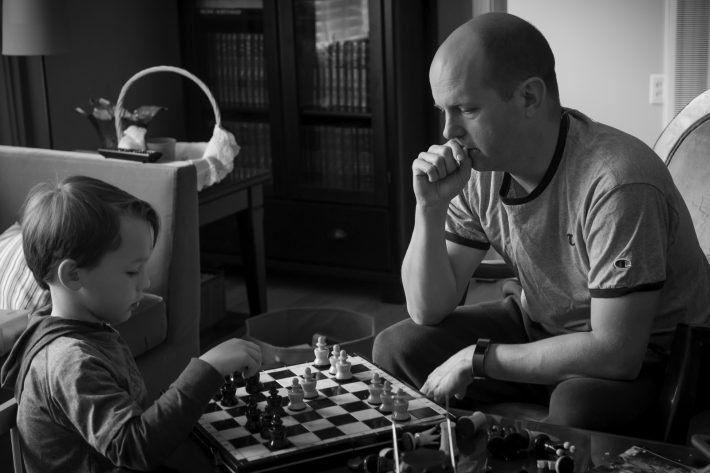
He's learning to pile up attackers and count defenders to determine if he can take a piece or not; he's starting to think offensively and defensively at the same time; he's eager to learn more -- all good signs. His mind is growing. His body, too -- faster, in fact.

Tonight was taco knight (see what I did there?), and the Boy loves Mexican food. We have a little Mexican restaurant down the street where the two of us have eaten dinner when the girls are out on their own, and he's always eager for more.
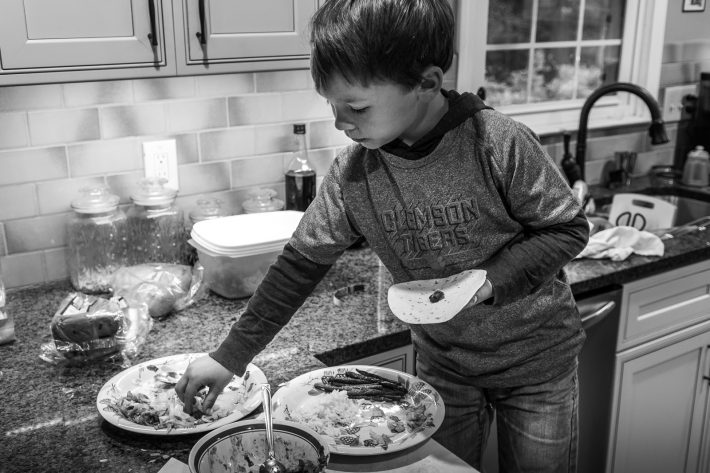
Tonight, he skipped the beans and the rice and ate not one, not two, but three tacos. Half the fun for him is actually making the taco.
The calm and the joy of chess followed by tacos seemed so jarring juxtaposed with the chaos my one group of students was experiencing. Those who were causing the issues -- what kind of jarring, chaotic home life might they have? It doesn't seem that people who would go home to some time with their family and a bit of comfort food would have that much difficulty keeping themselves in check because it would have been modeled for them and perhaps taught explicitly.
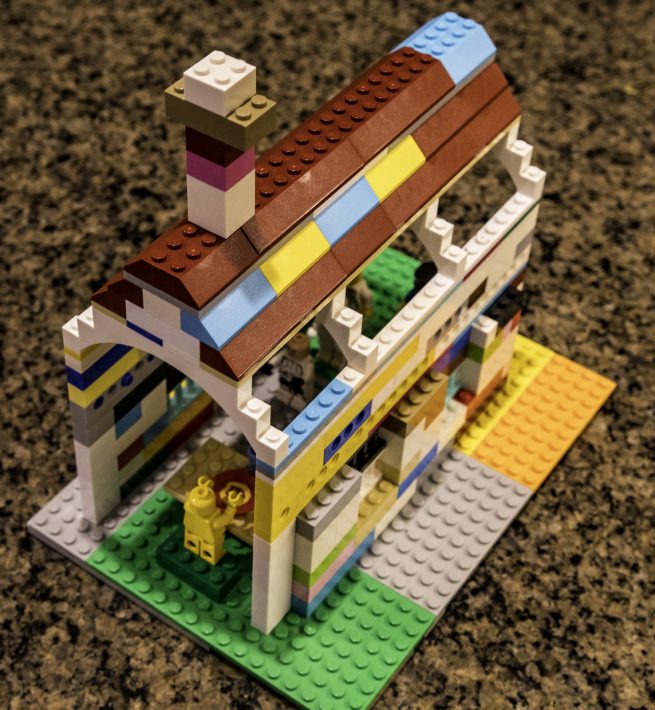
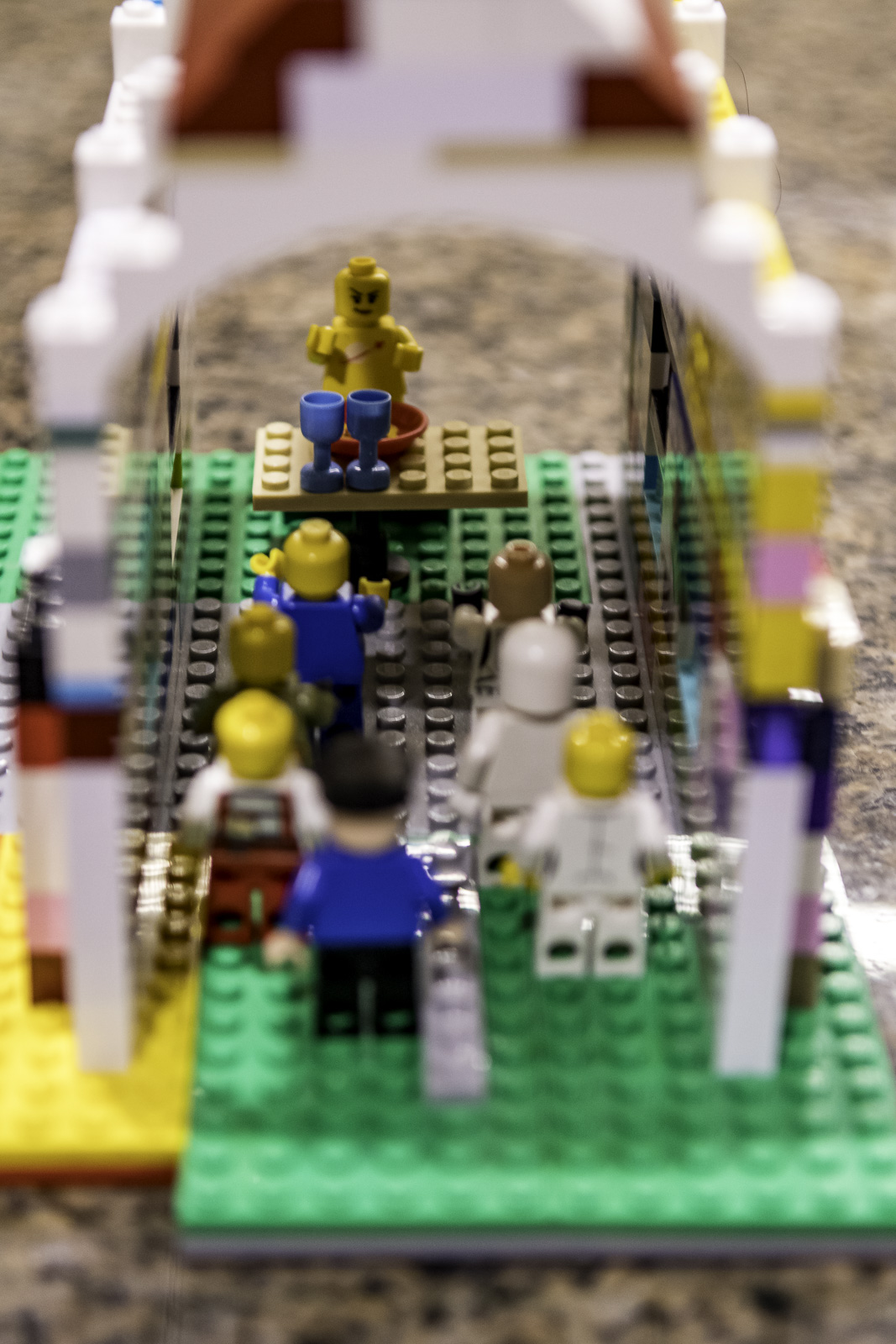
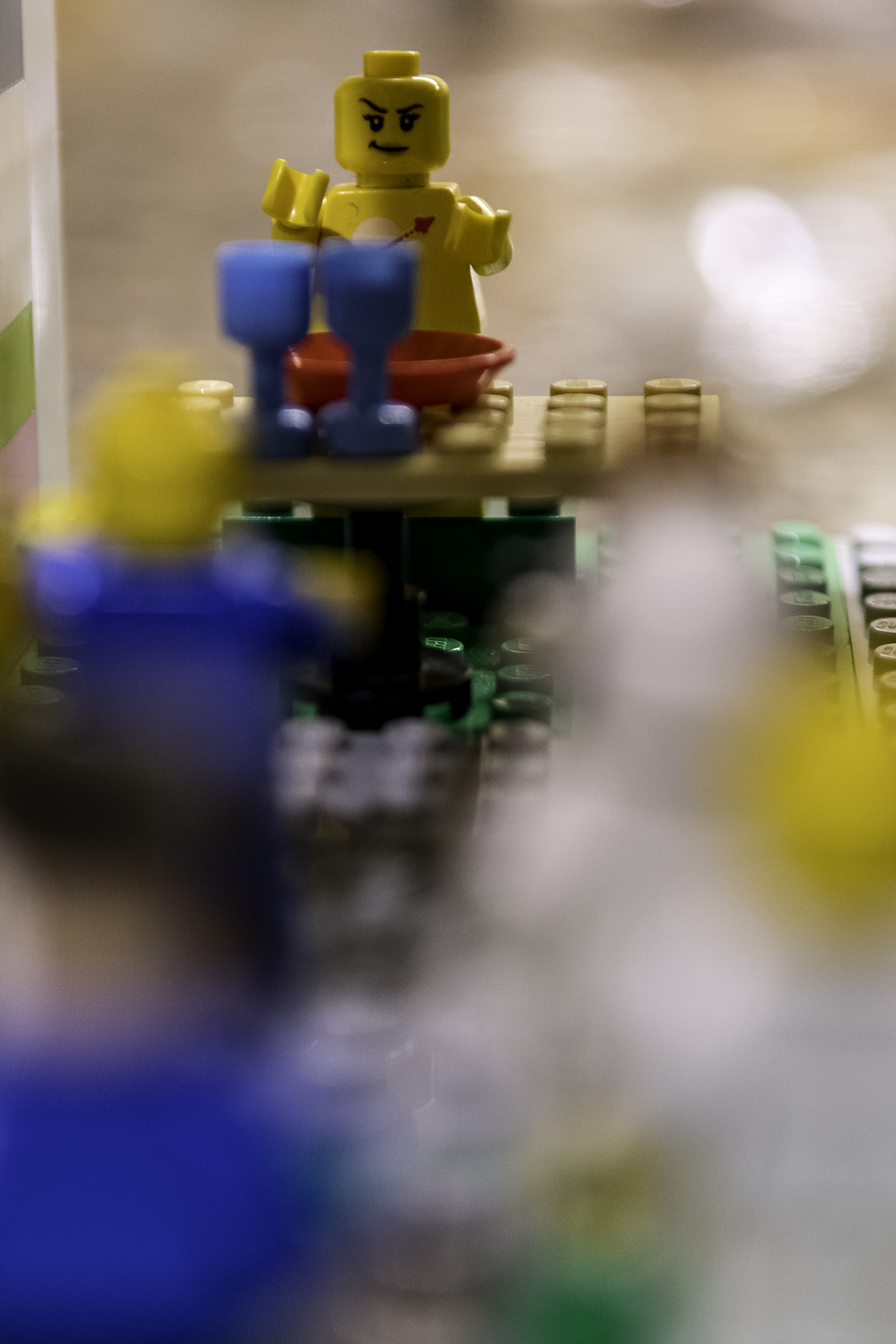
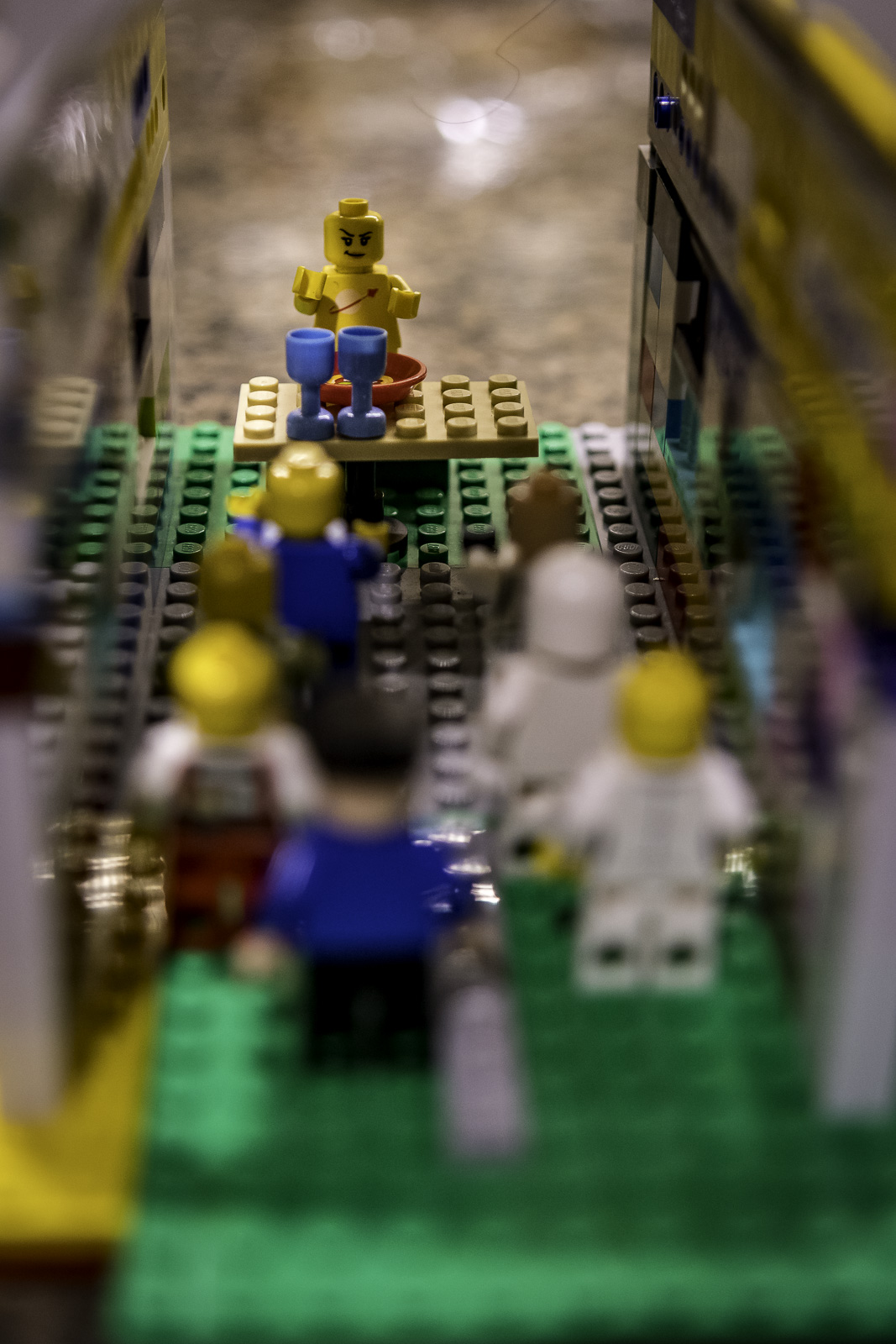
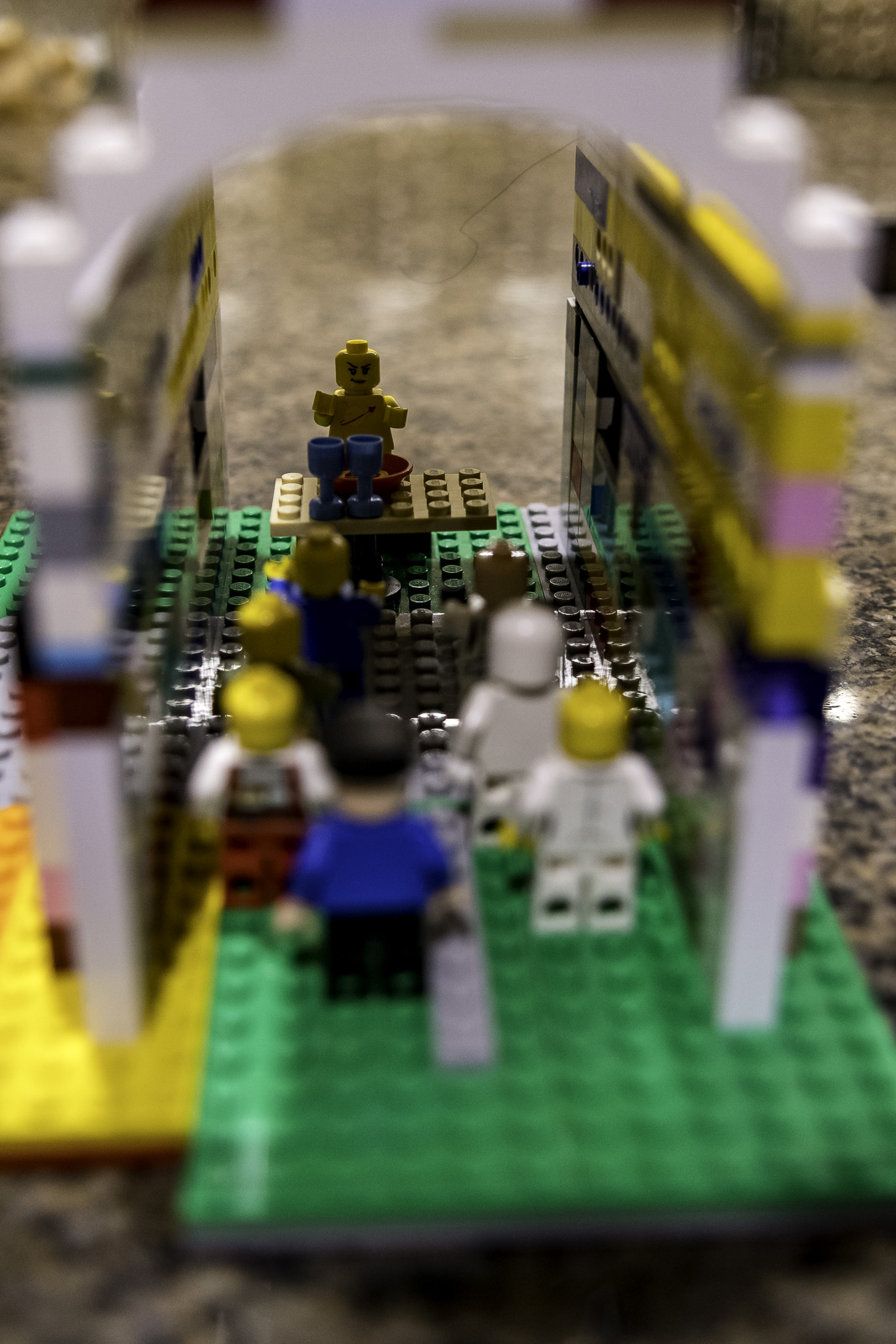
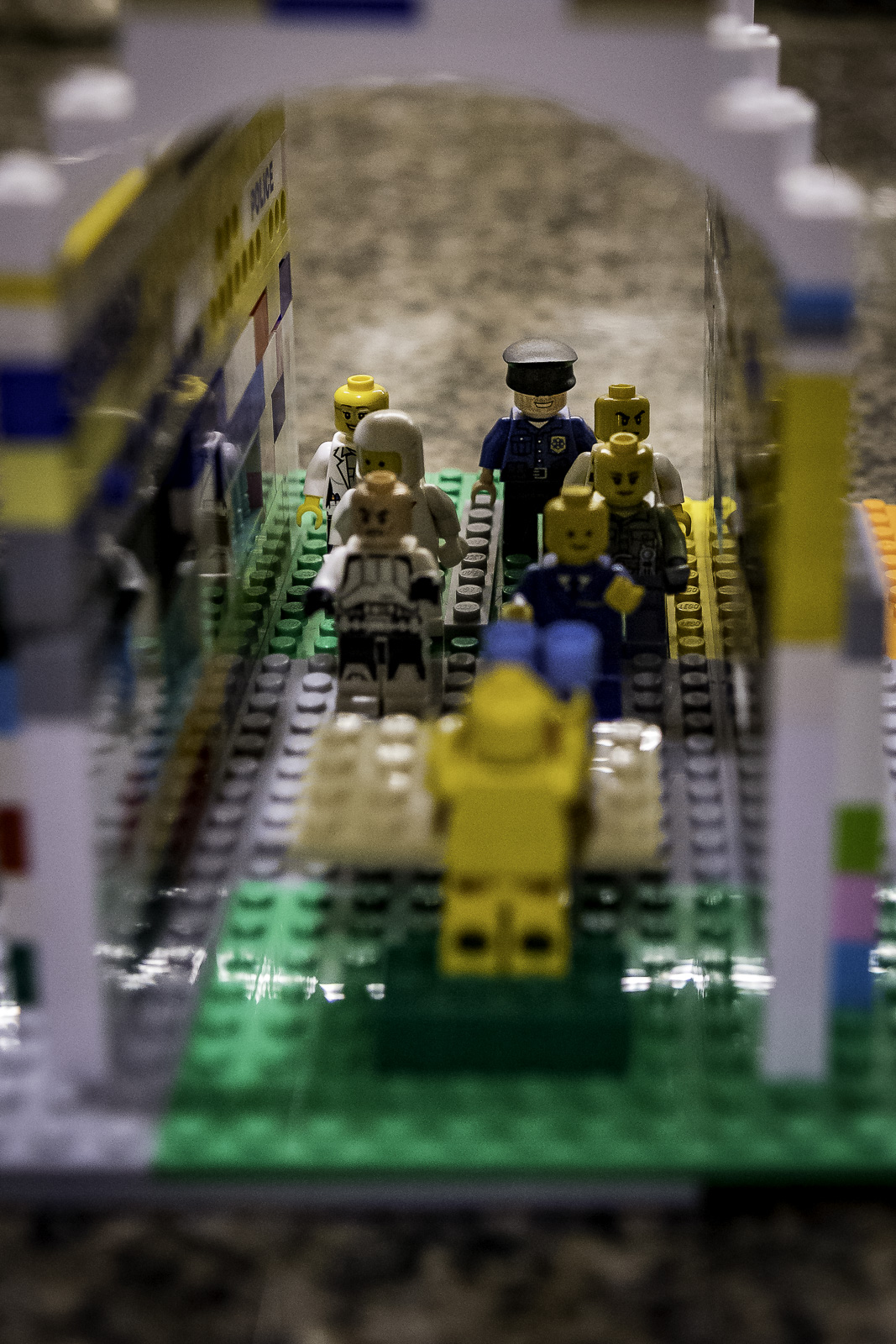
In the evening, when the girls have gone to gymnastics and shopping, the Boy and I decided to play with Legos, and we decided we needed to make something we'd never made before. We decided on a church.
As I was building the roof, the Boy declared that he would start working on things for the inside. After a few minutes, he showed me something he'd made.
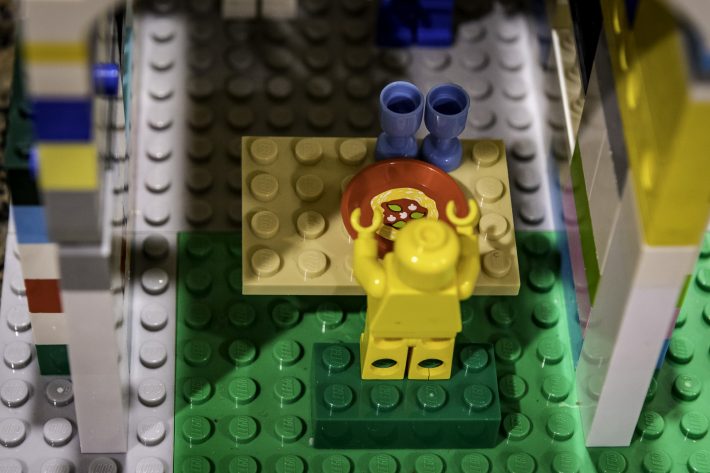
"It's that table, where they do everything," he explained.
"The altar?"
"Yeah."
And he made it complete with chalices and a paten.



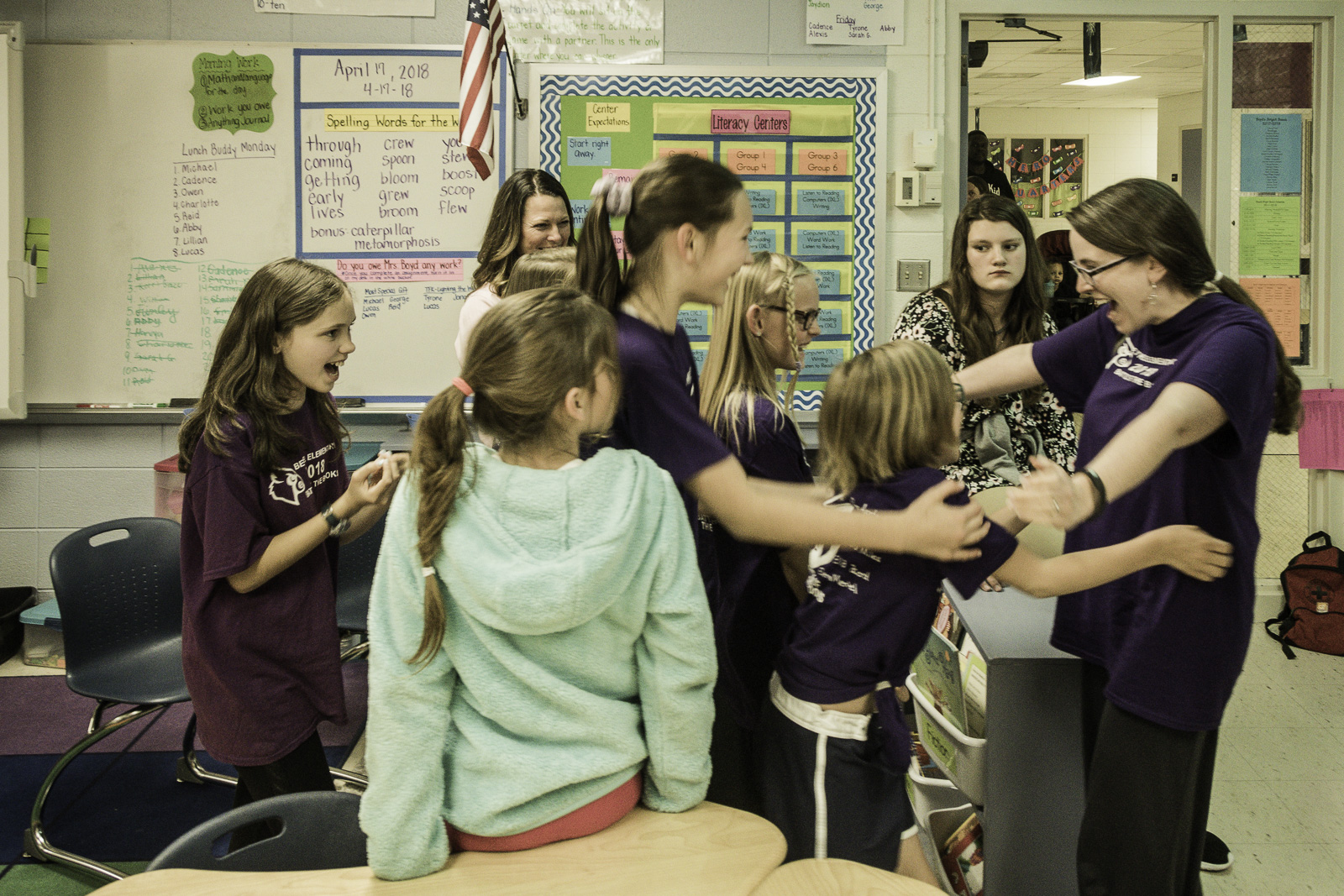
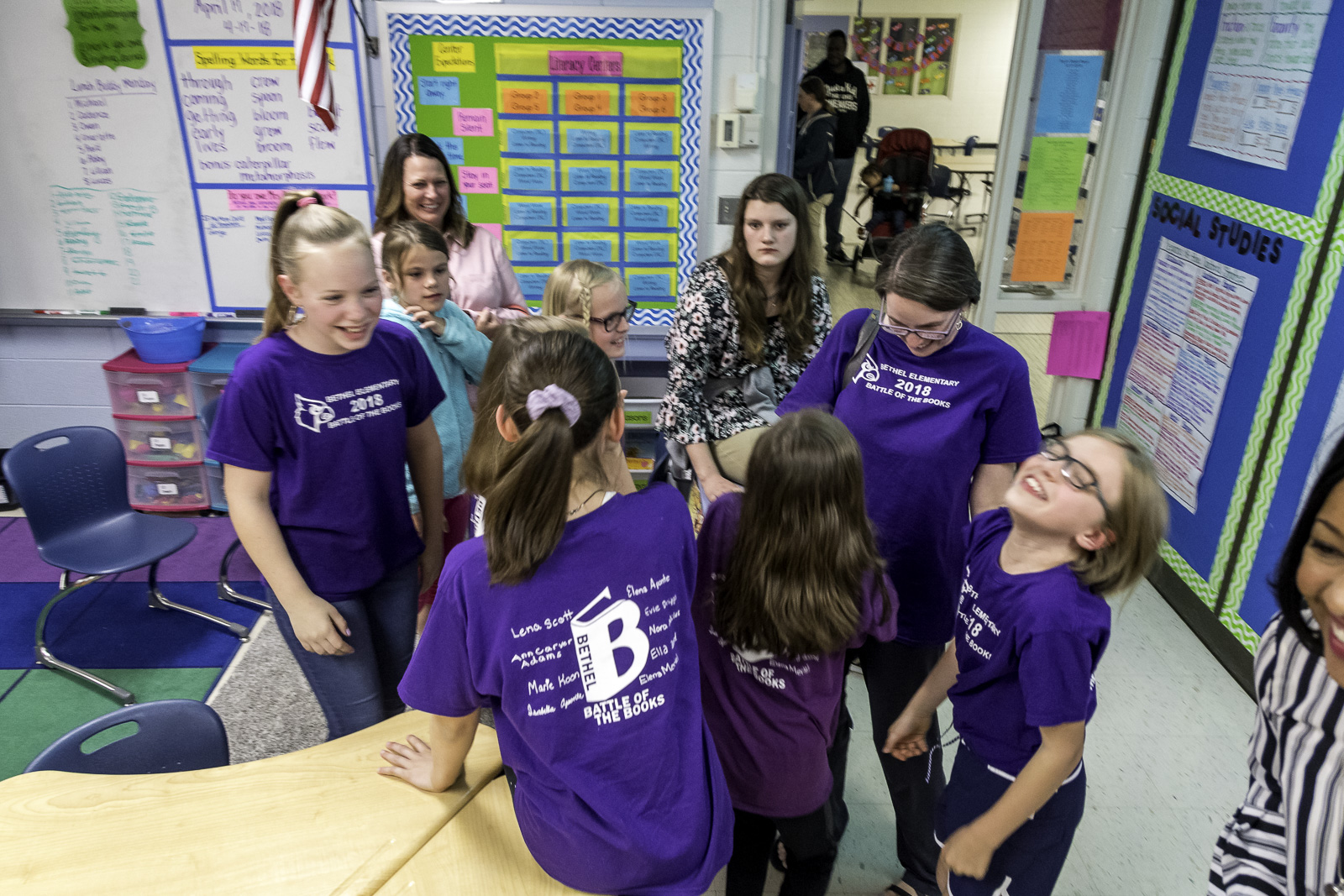
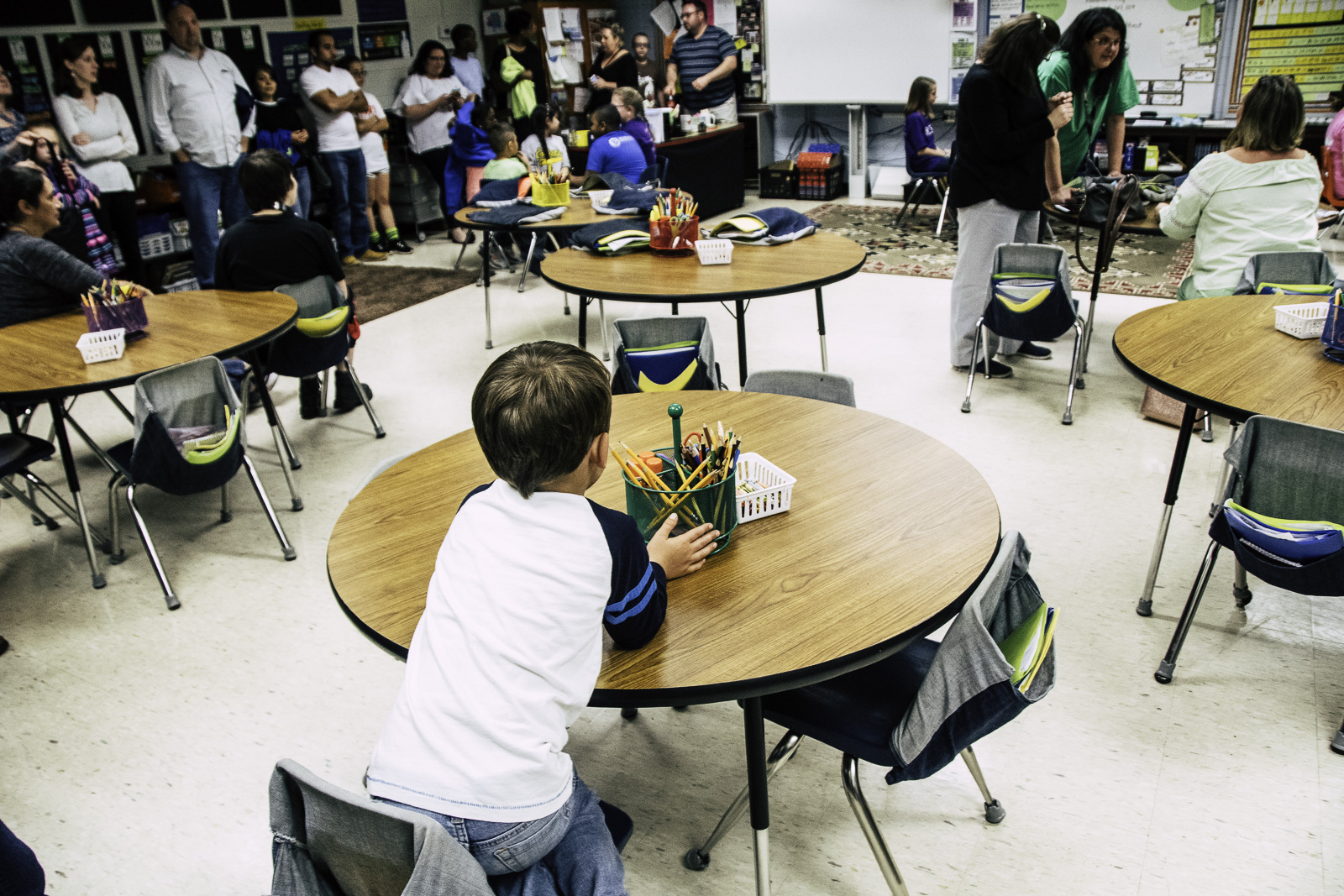
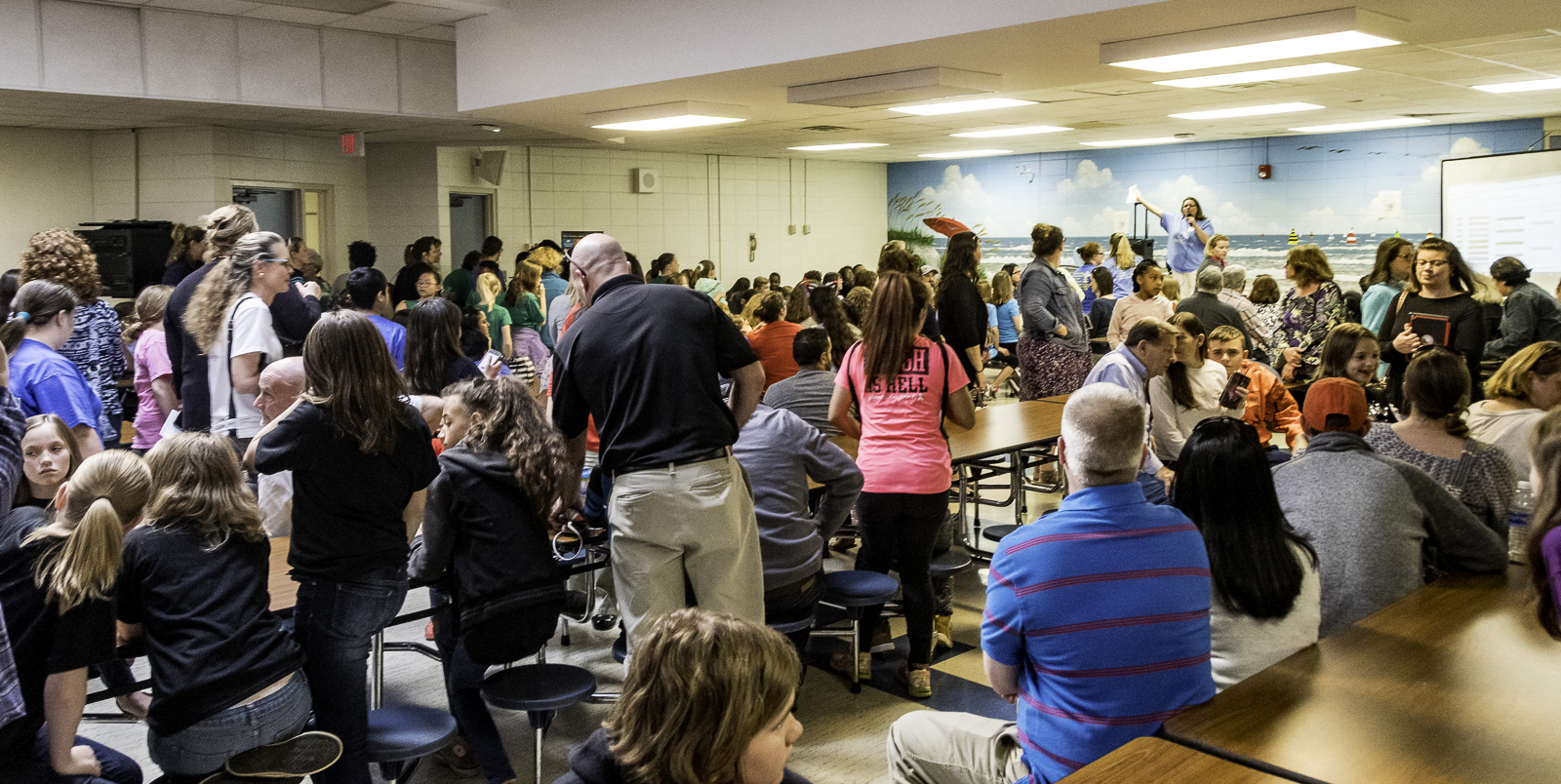

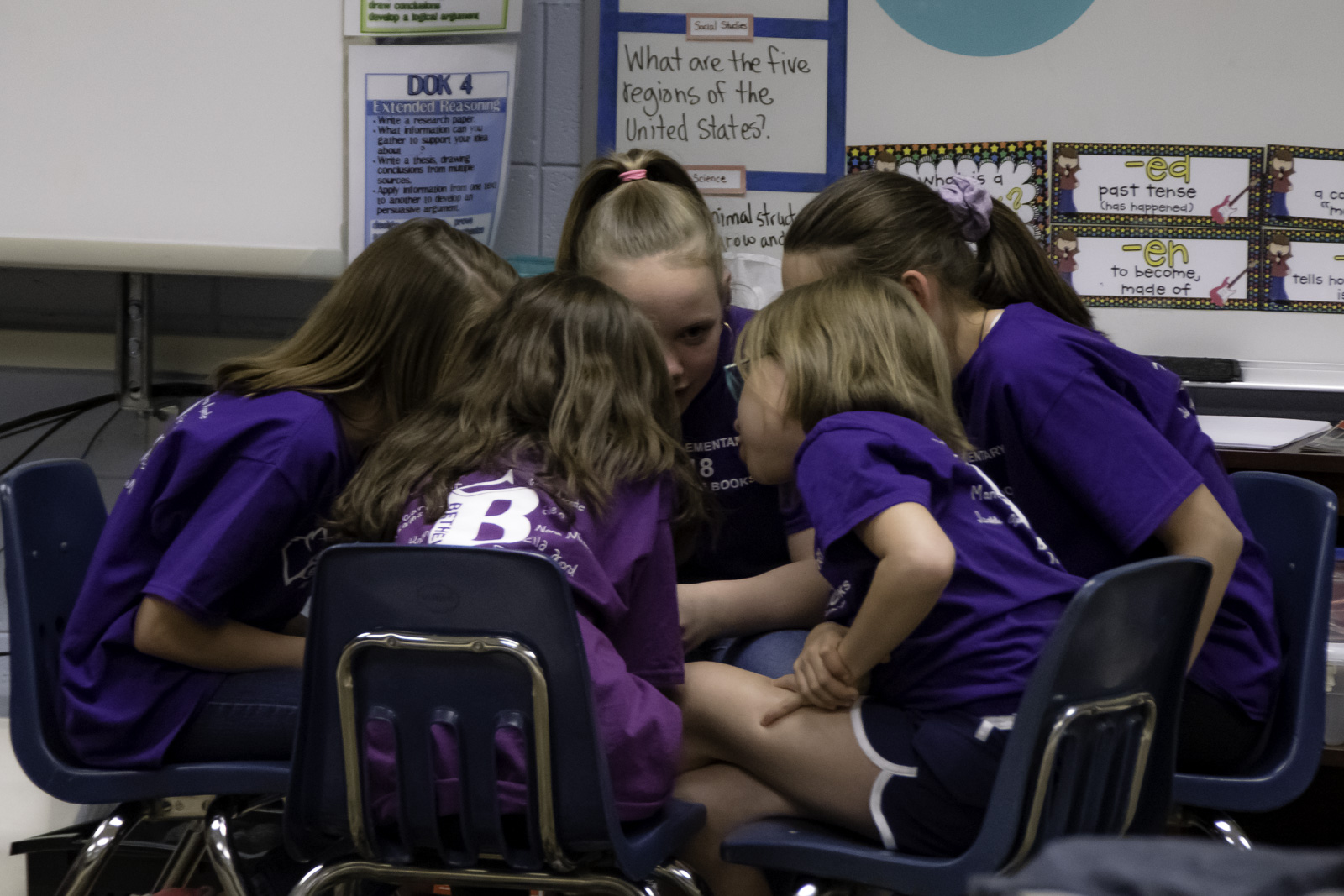
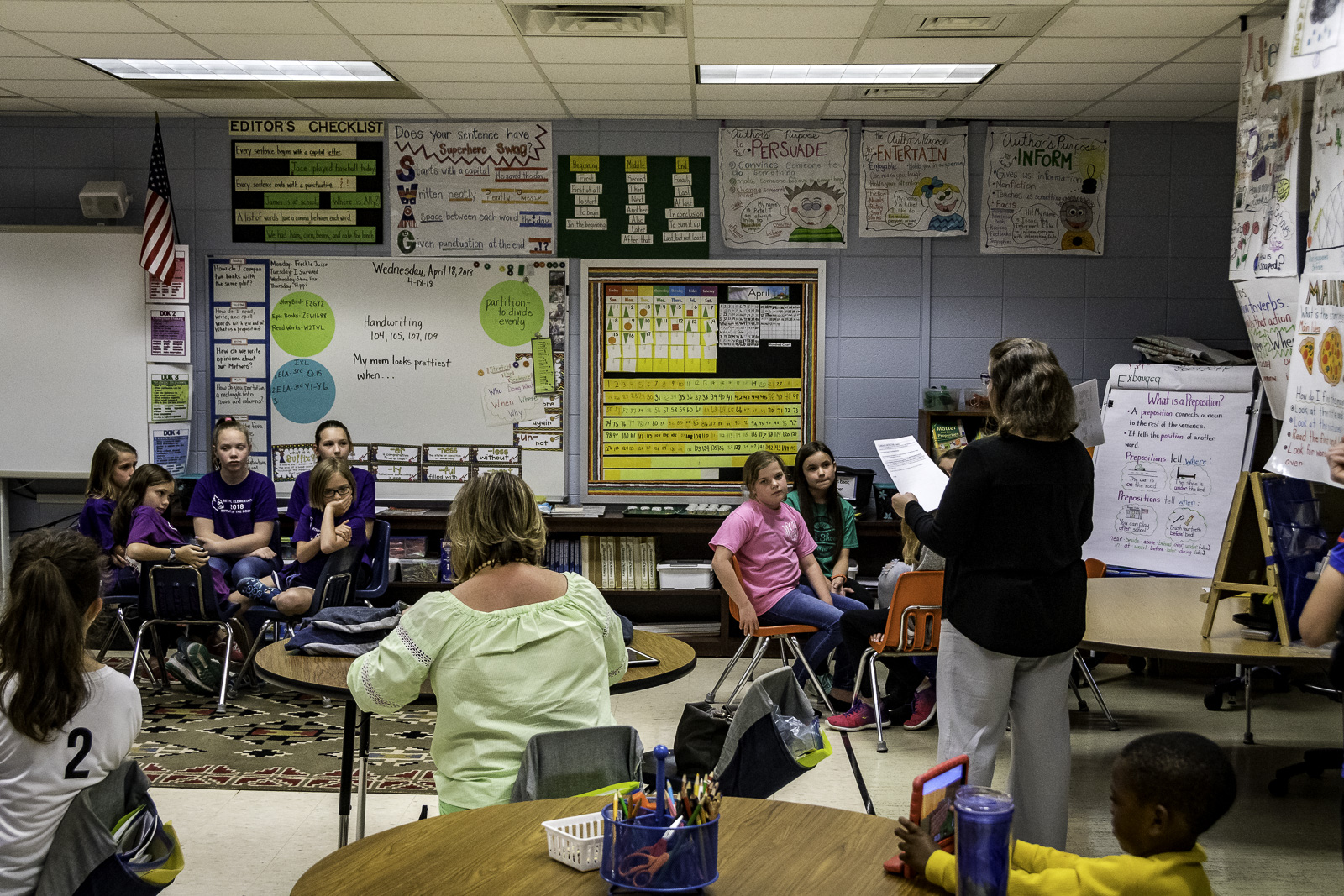

There's a lesson I share with my students every year that I both look forward to and dread. It's at the beginning of the Anne Frank unit, and what I try to do is simple: make them empathize with the plight of Anne and all the other Jews (and non-Jews) who were victims of the Nazis' fury. It's a two-part lesson, with both parts running simultaneously. The main portion involves a presentation to build students' background knowledge of the Holocaust. We begin with the rise of the Nazis, go through the systematic alienation and stigmatization of the Jewish population, touch on the ghettos, and end with the stark directions of Nazi doctors at the Birkenau train station: left or right. Death or imprisonment.
Through this whole process, students stop to reflect. We start with putting ourselves in Anne's place:
We're all unique in some way, and we all belong to a group that is itself unique in some way. Find the one thing that connects you to one group of people yet makes you different from many other people. It can race, religion, political views, where your family comes from—anything.
As we move through the lesson, students have other opportunities to reflect:
Leaders are blaming you subgroup for all the country's problems. They are taking steps to remove your group's power and influence in society. Write a diary entry about how your group is being singled out and treated differently.
Could this happen in the States? Many of my students divide themselves mentally in this exercise along racial lines, and many of my students are African American. It sounds to them like a return to the worst of the Jim Crow days. Could anything like that happen in 2018?
One day, soldiers come to your house and tell you and your family that everyone must move to a new section of town. You're given ten minutes to gather your belongings. What do you take with you?
I'm surprised at how many students immediately write, "Cell phone." Surprised and not surprised.
You hear rumors that people are being rounded up in other parts of the country and murdered. Write a dialog you overhear among adults.
Could this happen in 2018? Could an oppressed people be completely cut off from the reality of their situation? As students write, I find myself doubting it. Yet didn't many Jews in the West doubt the initial reports of the Holocaust? "Why kill us? We're their workforce!" The Jews who'd been shipped into concentration camps from the east knew, though. They'd already seen the Holocaust of bullets: men, women, and children, lined up in front of ditches, shot in the back of the head. Repeat.
One night, soldiers burst into your house and force you into trucks that begin speeding down the highway to an unknown location. Write a description of the experience for your diary.
I go over how wretched the transport was to the camps. Standing room only in boxcars. Need to go to the bathroom? There's only one option. Back aching from standing for days on end? Too bad.
You arrive at the camp. You're split apart from your family and forced into a small barracks with many other people. Write a conversation you might have in the barracks with someone your age who has been there for several months.
What is there to say? I tell them about the reality of many of those who made it through selection: some inmate or another pointed at the smoke billowing out from the chimneys of the crematoria and said, "There's your family."
As all of this is going on, we play a game. "I have a lot of little slips of paper with an 'X' on it. You don't want this slip of paper. You want to avoid getting one at all costs. And if you get one, you want to avoid getting a second one. Your goal is two-fold: end the lesson with as few of these slips as possible, and figure out what leads to getting one of these slips." In the past, I made it more obvious: the paper had a small image of a bullet on it. The exercise was more explicit: "You're going to try to avoid getting one of these bullets." They figure out pretty soon -- immediately, in fact -- that I'm putting them in the situation of Jews in a ghetto or concentration camp. With the mass shootings that have been taking place in the last few months, I decided a bullet wasn't a good idea, and it provided an unexpected benefit. The kids didn't initially know what was going on with the slips. They didn't know what they represented.
I passed them out in increasingly random fashion. The first people to get a slip were those who talked out of turn. Then I started handing them out to students who just asked a question. To students who simply raised their hand. To students who just made eye contact with me. At one point, I had all the students stand up. I counted them off and gave every fifth student a slip. Sometimes, toward the end of the lesson, I'd ask a student, "Do you have a slip?" He'd say, "No," and I'd give him one. Then I'd ask another student the same question. She wouldn't get a slip.
"What was the point of the slips?" I asked at the end of the lesson. By then they'd figured it out. "How could you avoid getting them?"
"You couldn't," one student answered immediately.
"Precisely. You had no rules by which you could simply put your head down, play by the rules, and make it safely to the other side. This was the reality of the Jews of Europe between 1939 and 1945. This is what Anne Frank and her family were trying to avoid by going into hiding."
I think they're actually excited to begin reading it tomorrow.
What a depressing way to end the day. Fortunately, the kids provided just the perfect antidote to such thoughts.
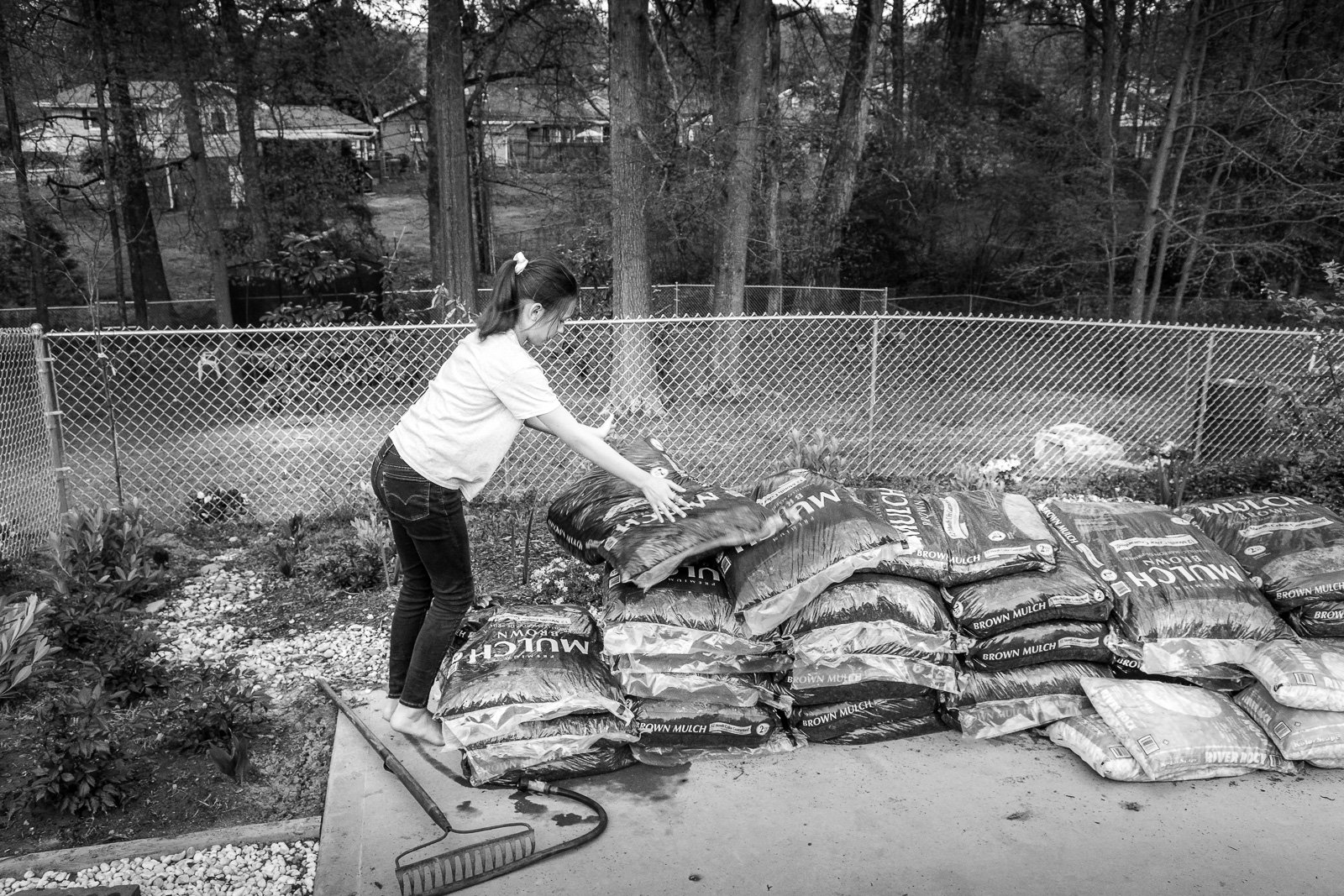

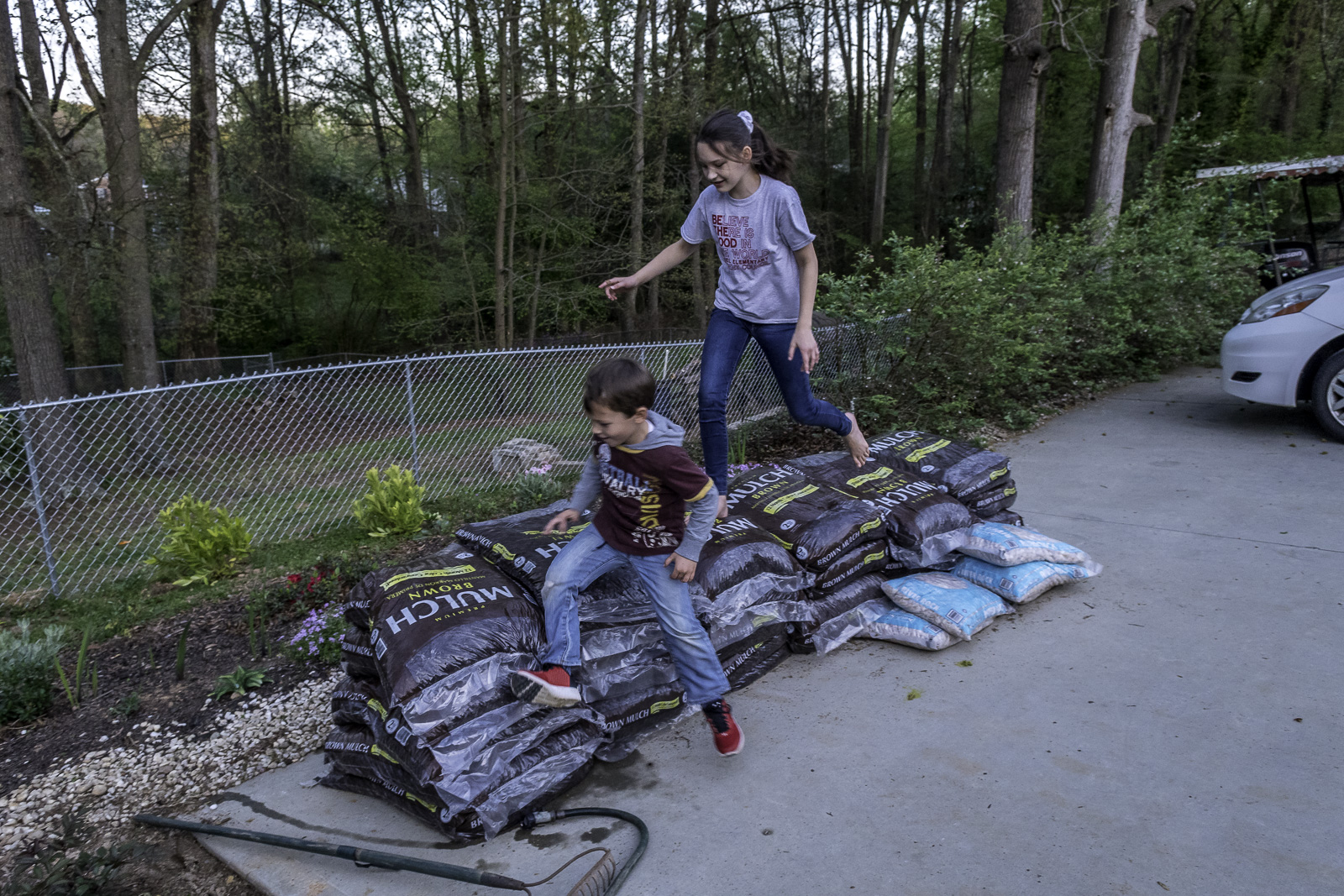
They made up a game. What was the goal? I have no idea -- I couldn't really figure it out. E, I think, couldn't figure it out either. What were the rules? They changed, as they always do. What was the result? Isn't it obvious?
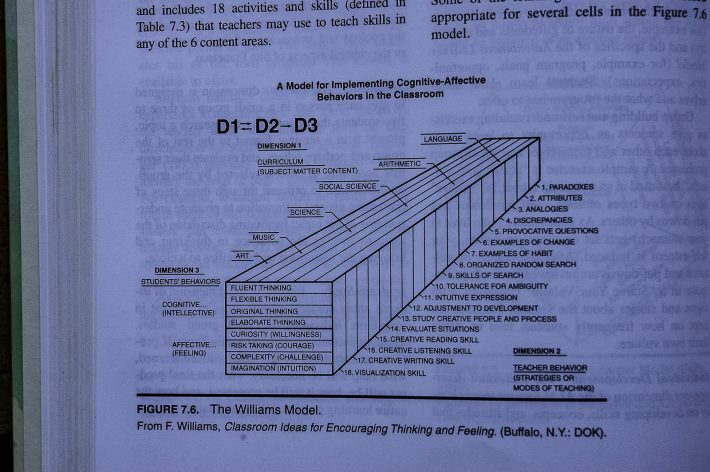
with modern educational thinking…
I don’t know how many times I’ve told students that, nine out of ten times, it’s not what you do that gets you in trouble but rather how you react to being corrected. It’s not the phone out that’s the problem; it’s how you responded when told to put it away. It’s not the mild horseplay that’s the problem; it’s how you responded when told to stop. It’s not the talking; it’s the reaction to being told to be quiet.
Today, when I had hall duty, one young man insisted on chatting in the time before school actually begins, when all students sit in the hallway, leaning against the walls, and relatively silent. There’s always some whispering, and all teachers ignore that because it’s not a problem. It’s when the kids start talking, and then others talk, and then the first group has to raise their voices to be heard above the increasing din, and soon, it’s chaos on the hall. So we — as well as all other grade levels — insist on silence. This young man, though, insisted on chatting despite being told to stop talking.
In such situations, I take a simple strategy: I tell the kid to go to my classroom and wait for me there. “When it’s locker time and my duty is therefore over, I’ll come talk to you about this.” Most kids comply without issue. And what do I do when I talk to them? Sometimes I sign their school behavior cards (ROCK cards they’re called) on the positive side for complying without problems and tell them next time, it’s a negative. And sometimes, it’s a negative.
Today, I had a batch of kids that I’d never had to call down, so I took their names and told them I was pressing them into service for tomorrow: “You’re going to be my leaders, my CEOs, those who set the good example and get the others around you who are talking to stop and whisper instead.” I looked at them with a pause for effect, then asked, “And you know what happens to CEOs who don’t perform well, right?” One girl answered, “They get fired.” “And you know what that means for you, right?”
But one boy just couldn’t get past his sense of victimization. I told him, “P, you need to go to my room please.”
“What’d I do?” he asked indignantly.
“You just need to go to my room, alright.”
“I didn’t do nothin’.”
“You just need to go to my room, alright.”
“I didn’t do nothin’.”
“You just need to go to my room, alright.”
“I didn’t do nothin’.”
“You just need to go to my room, alright.”
“I didn’t do nothin’.”
Literally about that many times. Well, maybe not that many times: I don’t have that much patience. I just ended the encounter with him still sitting where he had been sitting, leaving him with the comment that he can discuss it with the assistant principal when I complete the disciplinary referral.
What will happen to him? He’ll get a day or two of In-School Suspension. Will that change him? Not at all. He sees himself as a victim — I don’t teach him, but all his teachers confirm this first impression.
It’s such kids’ futures that seem so bleak to me. How can someone like that hold down a job? How can someone like that even make it to an interview?
The only hope is age: perhaps in the next four years, by the time he becomes an adult, something will click.