matching tracksuits

fun in threes, sometimes fours

education and teaching

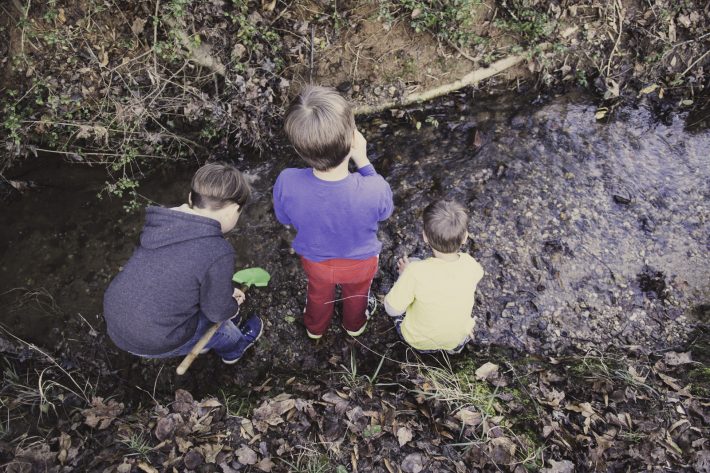
Three Boys, a Creek, and Pain

N and R came over for a little play time today after the Boy spent a couple of hours at their house this morning as K and I went to visit a dear friend who is in the final stages of a battle against cancer.

"The fight's gone. It's done," said our friend. And what a fight he'd put up: this summer I helped him with an addition to his home, and he worked with a chemo backpack on, pumping him full of pain to fight the ultimate pain.

Seeing the boys playing, with all their energy, excitement, and passion was jarring in juxtaposition. All three of those boys will, at some point, grow old and die, long after I've done the same thing.

That's what we all assume. We all wake up every day and work under that assumption without even thinking about it. We obviously can't paralyze ourselves thinking every day, "Something could happen this day that takes someone we love away from us," but a little reminder about our mortality is a good thing from time to time. It inspires us to do the little things that we might not have done because we're tired, we need to do something else, or we just have other priorities at that moment.

Perhaps that's what's just beyond the edges of the addiction to pain some athletes feel. I'm nowhere near that level, but three nights of running have left my muscles aching in a way that I almost look forward to the next run, the next shot I have at pushing through the pain, of bettering the pain, because I won't always be able to do that. There will come a time when I have to give up the fight, but each night I run, I can push against it.

Seeing that perseverance, limited though it might be, in my own children would be the purest blessing. One of the character traits I consistently see less and less frequently in my students is perseverance, or "grit" as edu-speak likes to call it these days. So many give up before even trying, convinced that they can't do it, persuaded before they even begin that there's no use in even trying.

It's a natural enough inclination, I think. I already see it in E: he sometimes gives up on something so quickly that K and I just look at each other, that concerned parent look on our faces simultaneously.  So when E suggested tonight that he might want to join me on my run, it brought such a smile.

"But we'll run the whole time, Daddy," he said.

We did half a mile in just under seven minutes, with three short walking breaks and a lot of sweet, nonsensical chatter.

So I left for my solo run with a lighter step: the Boy took a little step toward becoming a fighter, toward realizing that that excitement in the creek with his friends can be found even in moments of pain.

Opłatek

As a teacher, I often don’t always say the things I want to say. Most would interpret that negatively: “He doesn’t call kids jerks when he thinks they are.” That’s certainly the case, but for not so obvious reasons. Most obvious is the lack of professionalism such a pronouncement would exhibit, not to mention cruelty. More to the point, though, I don’t really experience that because I rarely — not never, but very, very rarely — hold such an opinion of a kid. They are, after all, kids. They’re still learning, still growing, and their impulse control and social skills are often simply not up to par because of a lack of maturity or a lack of consistent examples. I could count on one hand all the kids, over twenty years of teaching, that I just didn’t like as people. I haven’t met such a kid in several years now.

What I had in mind is the flip side of that — as a teacher, I don’t always tell a kid when I’m absolutely in love with some part of his journey, some portion of her personality, some facet of his persistence, some element of her youthful excitement.

I certainly tell a lot of kids a lot of positive things. But those moments seem relatively few and far between.

Why don’t I say those things? Probably because of a sense of vulnerability that seems to include for myself. Possibly because of a worry of how it might be taken. Perhaps because of a lack of time.

“Wouldn’t it be nice to have some sort of occasion, some sort of event, that seemed actually to encourage such things?” I thought. And thinking back to my seven years of teaching in Poland, I realized such an occasion exists, just not in American culture.

In Poland, though, a tradition that invites such honesty has existed for centuries: sharing the opłatek.

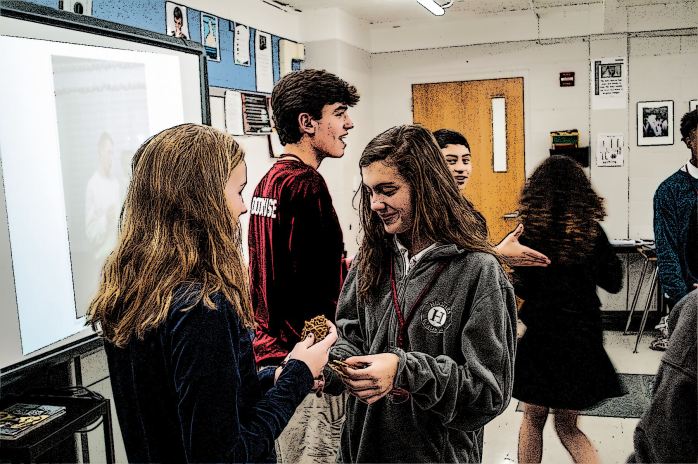
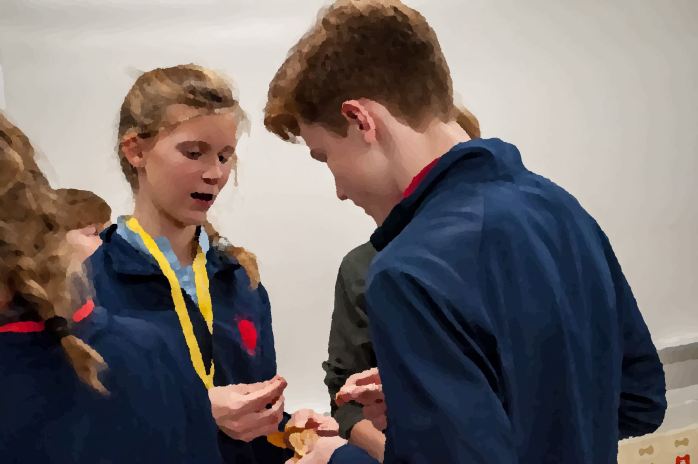
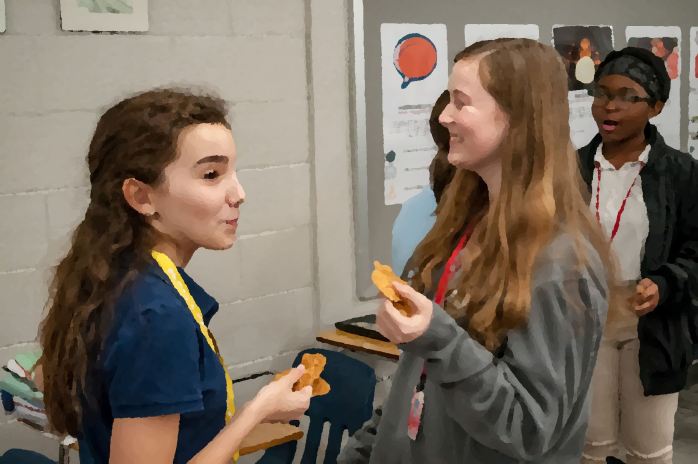
I’ve done it for several years now, explaining it to the kids with a slide show and a bit of explanation about Christmas in Poland and substituting pizzelle from Aldi for the actual wafer.

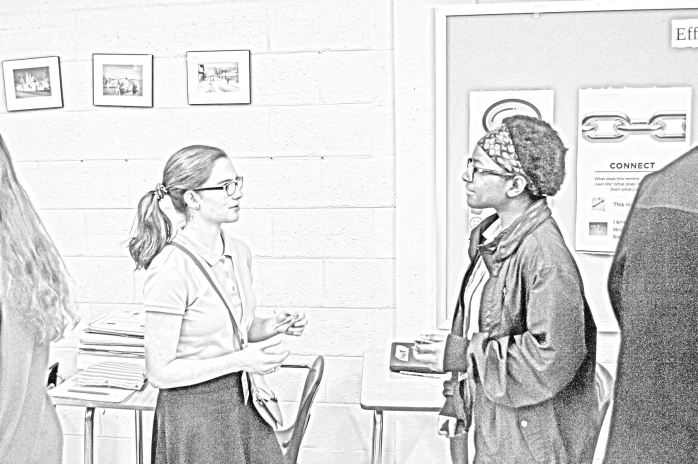
This year, instead of just taking pictures, I participated. I always had a pizzelle in hand, but I waited for students to come to me; this year, I went to them. And told the shy kids who were coming out of their shell how exciting it was to watch them, to hear them assert themselves, to see the faces of other students as they share their often-striking ideas. I told the troubled students how much growth I’d already seen, how much I was rooting for them, how much it irritated me when I had to ask them to leave the classroom because their disruptive decisions were robbing others of opportunities. I told the kids who had started doing their work after a quarter, perhaps a quarter and a half of apathy, how proud I was of them.

And in return today, I got the loveliest Christmas card I have ever received from a student, thanking me for my words, thanking me for my encouragement and motivation, and assuring me that she was my favorite student.

Perhaps, but she’s tied with 120 others this year.

Homework

Meetings and Homework

As a teacher, I've been in a number of meetings. I'm fortunate to say that I can't make a claim like, "Not a day goes by that I'm not in some meeting or another," but I suppose that's possible.

We have grade-level meetings every Friday. We sit around and talk about what's going well with the logistics of our grade -- moving from class to class, getting materials out of lockers, going to the bathroom, going to lunch, heading back from lunch, getting to related arts classes. All these things and a million more. We talk about students who are showing bad behavior in multiple classes and make a plan for dealing with the kid, hopefully with more positive outcomes for the kid than he is currently experiencing.

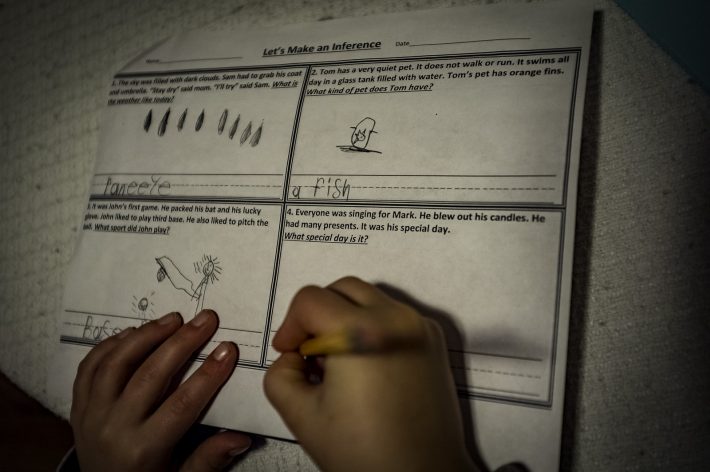
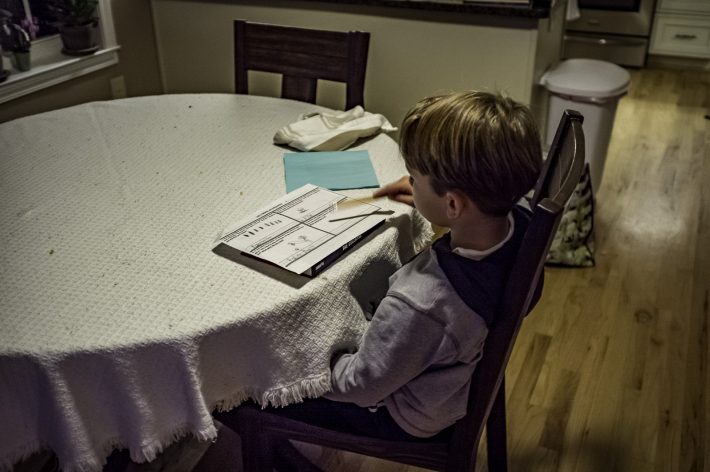
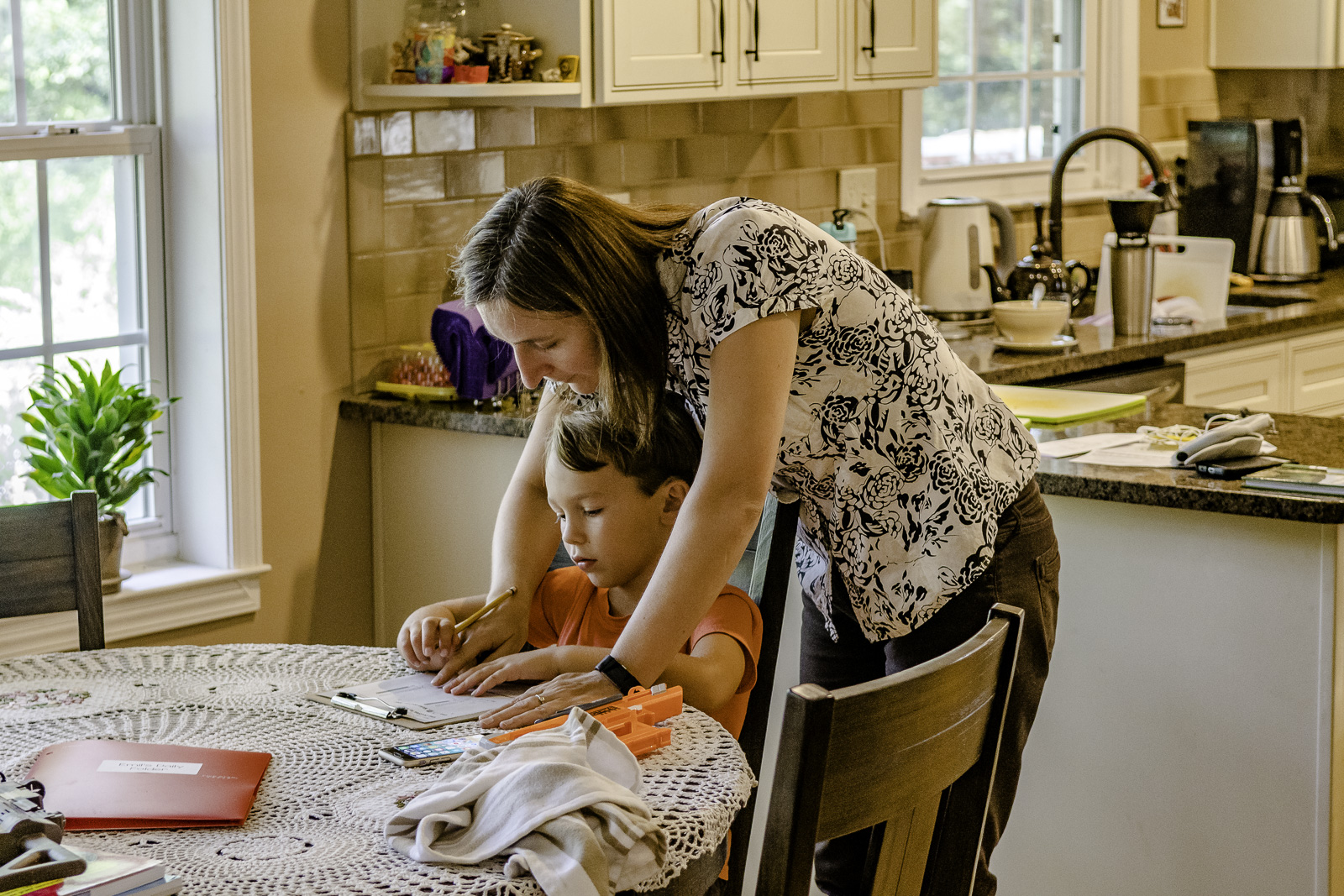
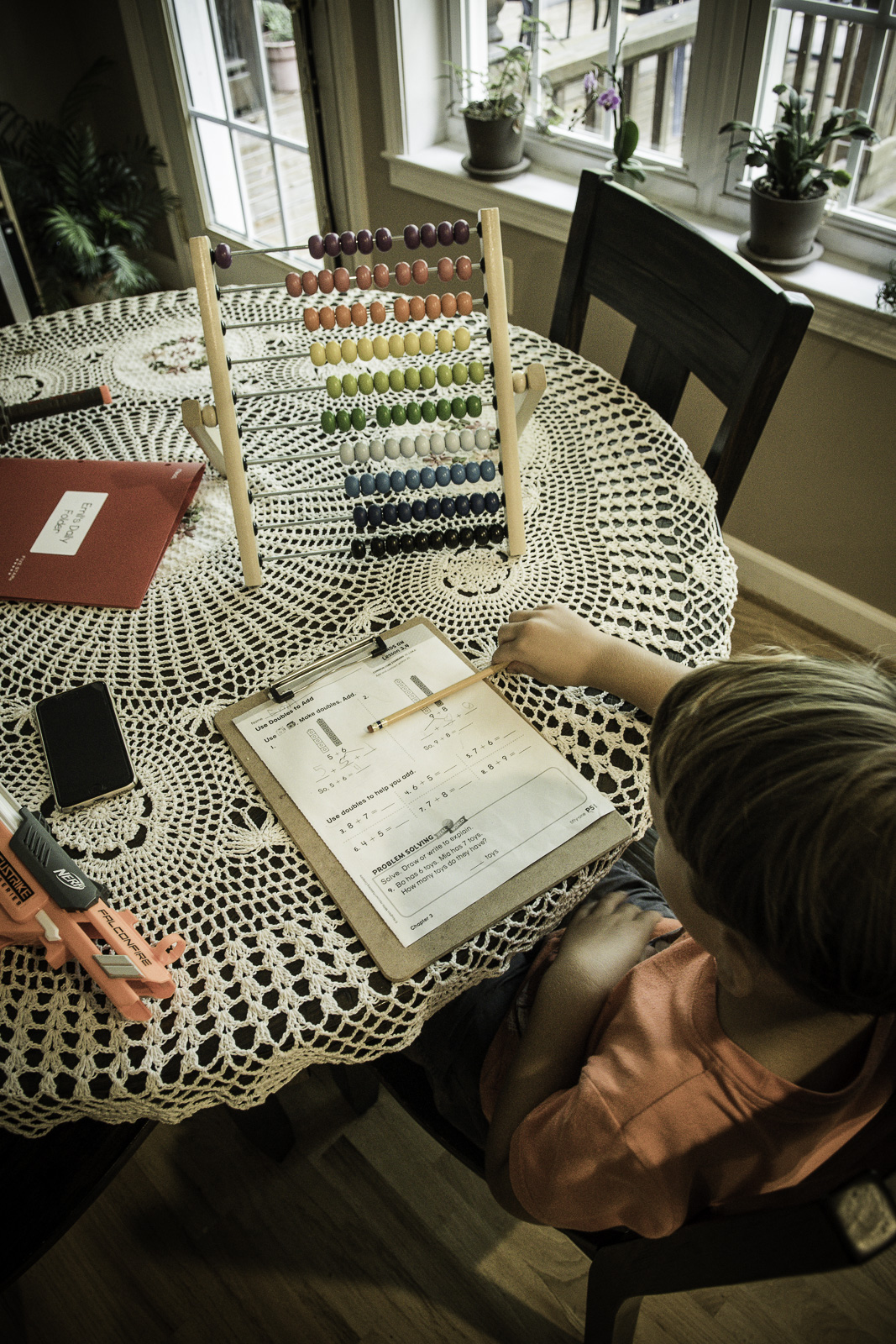
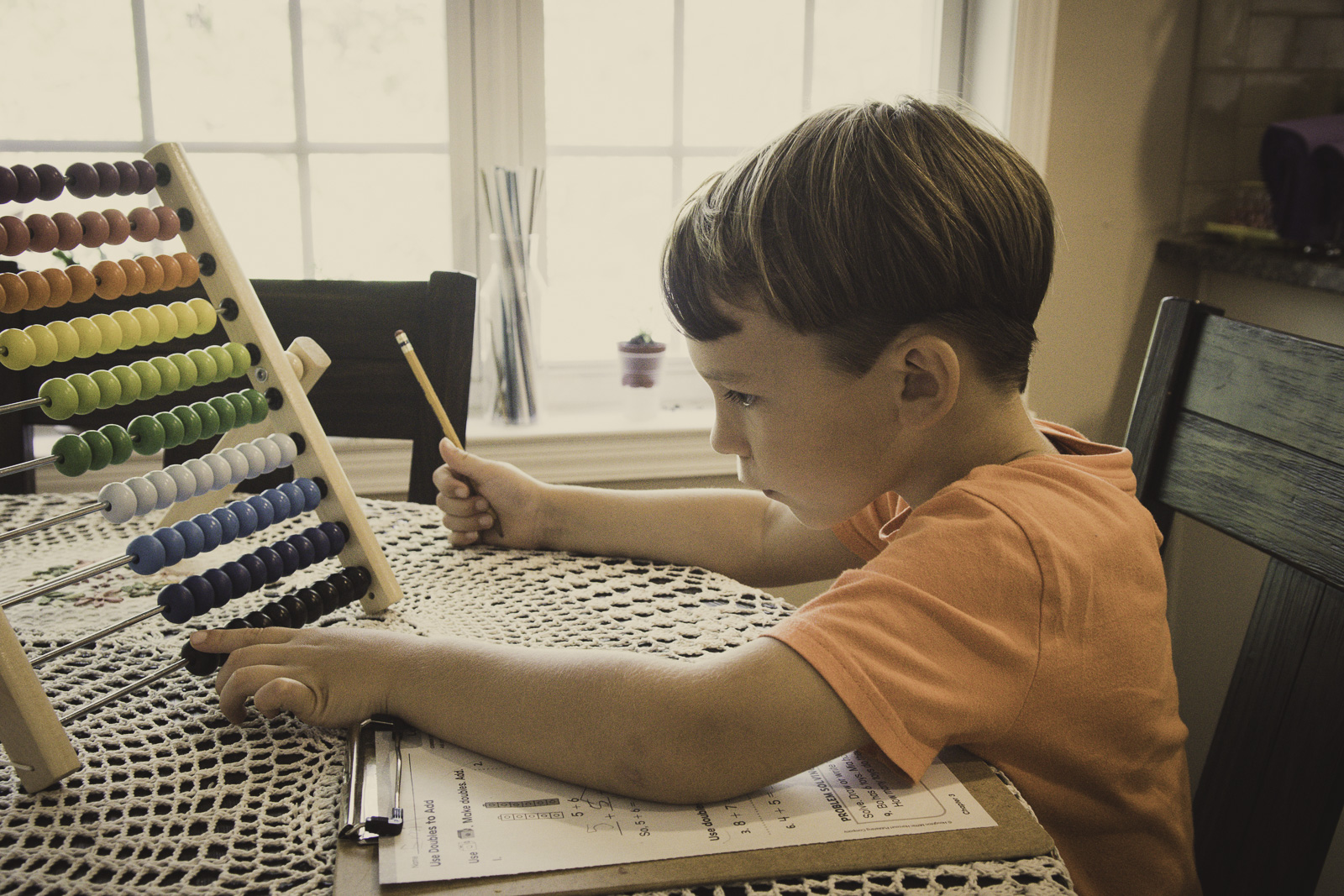
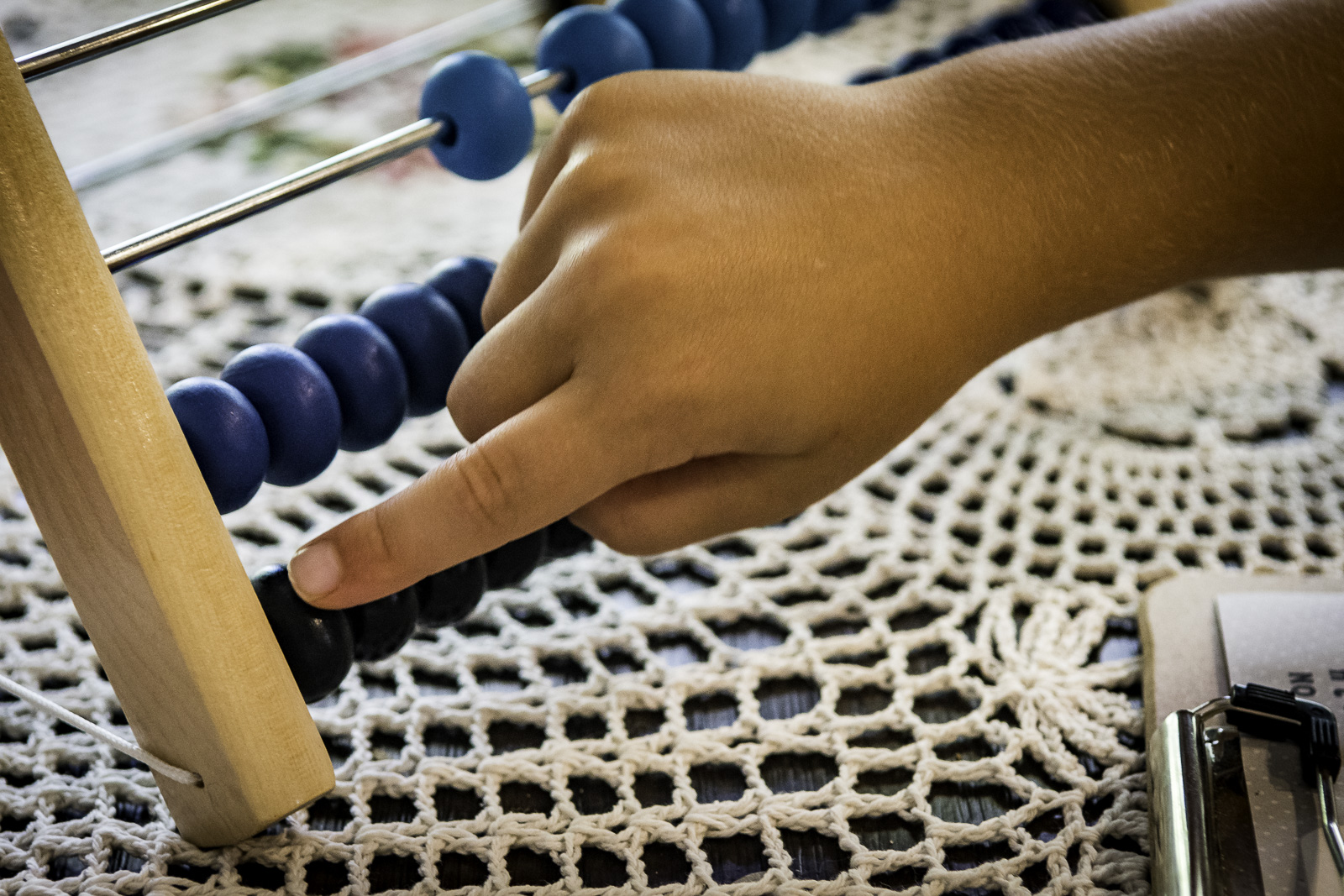
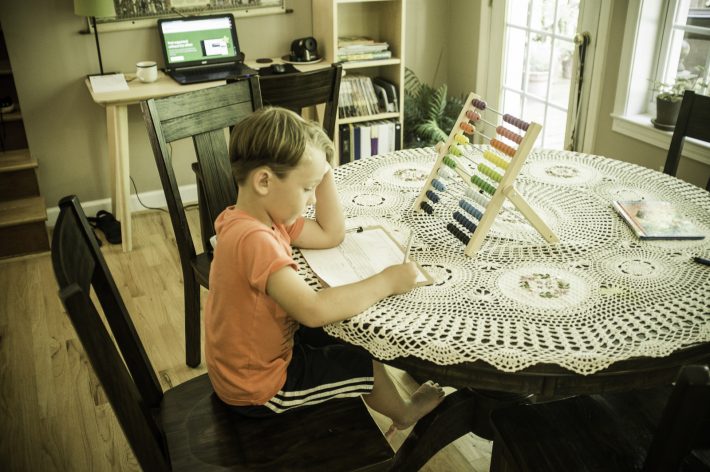
Working on math homework

Every Tuesday we have professional development. We learn about new websites, new methodologies, new laws, new tools, new books, new paradigms. We go over how to accommodate children with mental and behavioral challenges in ways that are productive and in accordance with the documentation (IEPs/504s) in place for them.

Lately, we've been learning about the new way the district requires us to write our lesson plans. It's tempting to think that since the lesson plan is a tool primarily for the teacher that the district would allow a great deal of flexibility in this endeavor, but that would be a faulty assumption. Verbiage, formatting, pacing, sequencing -- all of this is decided for us. And when the district decides that it wants to make a change to this or that element of our lesson plans, we, as far as I know, have little to no input into the changes and are simply told, "This is how you do it now." Perhaps some select few teachers get to attend those meetings where such matters are decided, but I've never met anyone who's had a sense of having any input into these issues.

On altering Wednesdays after school, we have faculty and department meetings. These usually just turn into information-dissemination sessions, and I'm sure many participants find themselves thinking, "If you could just give me this in writing, I can read it on my own time." Sometimes department meetings provide professional development as well.

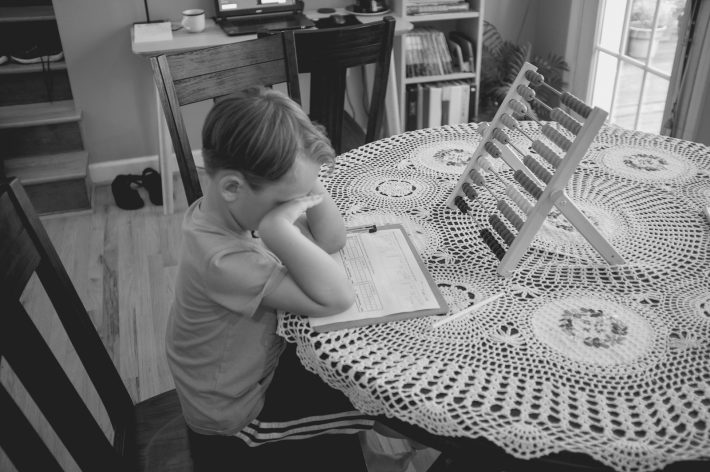
A frustrating moment

While sometimes there's a distinct feeling in the room that everyone would like to be doing something else (planning lessons? assessing student work? recording grades?), many of these meetings are indeed helpful. A large organization has to have meetings.

Today, however, I attended a first in my meeting-strewn career: we had a meeting about upcoming meetings. A meta-meeting.

First Day 2018

A lot of new things this year: first, we have homeroom classes for the first time since I’ve been teaching at this school, which is about eleven years now. The new schedule takes some of the time after lunch (or rather, all the time after lunch) and moves it to the beginning of the day. It’s odd: I have several students in my homeroom that I don’t teach at all for the rest of the day. Then I have two students in my homeroom class as well as one of my English I classes and my journalism class.

Another big change: I have not two but three English I Honors classes this year. That means about 80 well-adjusted, well-behaved, hard-working students, and that’s a blessing and a curse. It’s a blessing for the obvious reasons: there will be few if any behavior issues, and they’re all fairly motivated. The curse is connected to this: they’ll almost all do their work, which means an increased workload. I control how many assignments I give, so I control my ultimate workload. Still, what I’ve done in the past works, and I’m inclined to do the same thing even if it means more work.

The kids had a good first day as well. E’s worries about school turned out to be for naught: he loves his teachers already, and this evening he declared that his school is surely the best school in the world. L’s worries about the uniform disappeared as soon as she saw everyone else in a uniform — she suddenly didn’t feel like she looked so stupid.

The Show Begins Tomorrow

The first day of a new school year is like the moment the curtain rises on a play that is often improvisational and responsive to the audience's reaction. Each year, I reinvent myself as a teacher a little bit, especially during those first days when I'm setting a tone for the year. Always looking for that sweet spot between commander-in-chief and coach, I waver between the "don't smile before Christmas" type of teacher and the warm-and-welcoming-almost-a-friend type of teacher. Neither is sufficient in and of itself, and I really like the coach mentality more than the authoritarian mentality, but kids will be kids, and sometimes, I have some really emotionally damaged students who add a whole new dimension and need that forceful approach -- if only for a second, like a splash of cold water to get their attention -- so I waver between the two in the beginning.

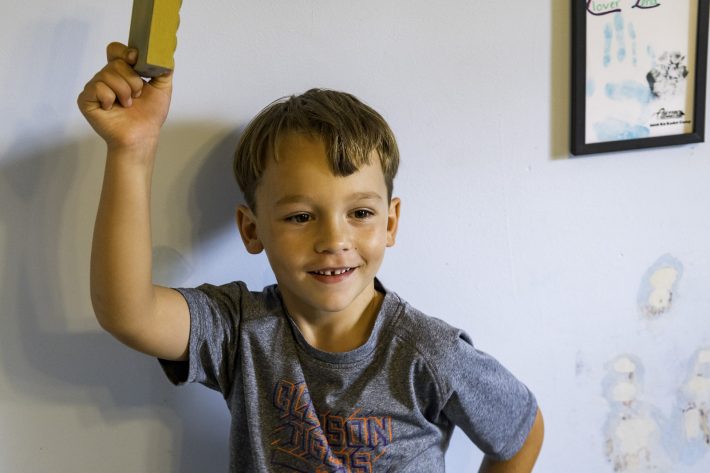
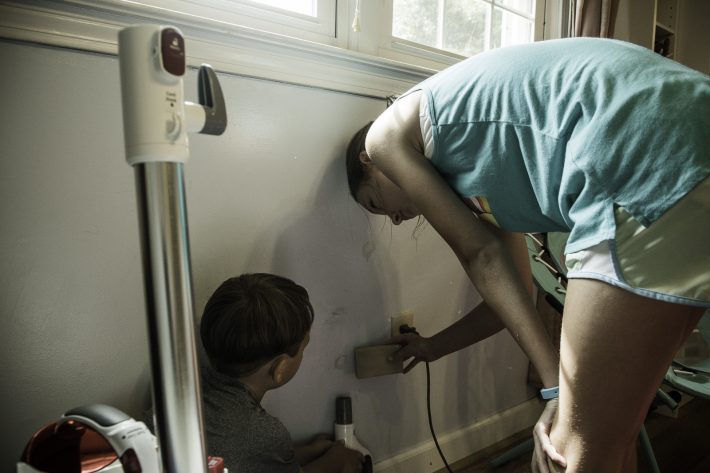
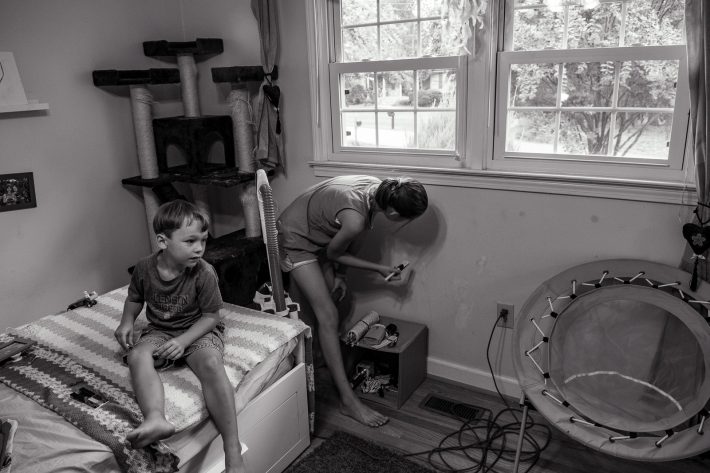
"Here's the sanding block, L. I hid it!"

And yet it always depends on the class: some groups come in and I see immediately that Joey in the back is going to be a living terror if I don't make sure I set the right tone (which might not be the authoritarian despite the initial impression that he needs a "strong hand"); other groups come in and I see, though not immediately, that there aren't any students set on hijacking the class, and I breathe a bit easier. Still, that hint of "I can become the strictest, meanest teacher in the world if I need to" must be there, around the edges, because you never know what's going to happen in October when the honeymoon is over.

"E, you have to hold the vacuum hose right under where I'm sanding."

So the night before, I sit thinking about who exactly I'll become tomorrow. I know who I'll end up being: I have enough experience that I can get to the coach stage fairly quickly once I've established that I know how to drop the hammer, but those first few days -- I never really know.

The magic begins tomorrow, too. I'll see wave after wave of totally foreign faces and look at attendance sheets that are just a bunch of names, and by the end of the first quarter, I'll be able to predict how each student is going to react to a given assignment. By the end of the semester, I'll even know what words a given student might use.

First coat

The End, 2018

A Letter to Students

Dear eighth graders,

As a teacher, it can sometimes be hard to remain optimistic. Every year there are those students who try one’s patience, who test one’s resolve, who feel they are incapable of doing anything good and seem determined to bring everyone down with them. And then there are just the immature attention-seekers who do anything they can to be the center of attention. Within the first class period or two, I can usually tell who all these folks are, and the rest of the year becomes a battle with their stubbornness as I try to help them see that their behaviors and choices are not only not helping them but in fact detrimental. Some never see the light, at least during this school year, and that’s why it can be difficult to fight the pessimism: those students left just as they came in, and I wonder if I helped them at all.

This year is one of the few in recent memory that is devoid of any such students. Sure, some of you tried my patience at times. Some of you sought attention in inappropriate ways. Yet all of you—each and every student—showed growth and maturity this year, and it has been a true privilege to work with you this year. I can honestly say this has been one of the best years I’ve experienced in my nearly-twenty years of teaching. I’ve seen growth in reading skills, gains in emotional maturity, a surge of confidence in cognitive ability, and most importantly, an increase in maturity in so many of you that it gives me real hope for the future.

Many of you developed new reading and thinking skills that help you approach problematic texts in new ways. Instead of throwing up your hands and saying, “I don’t get it,” you dig in and figure out some meaning, understanding that you don’t have to comprehend everything perfectly in order to understand the text as a whole. That kind of persistence will serve you well in the future, and I am very pleased to see that so many of you developed that newly-found tenacity.

Several of you noticeably grew emotionally over the course of the year. You learned to keep your anger in check, to keep your frustrations from determining your path, and to see yourself as in control of your own life. This is one of the most rewarding aspects of teaching eighth grade: kids genuinely mature in a very clear way over the course of the year, but some of you seemed to grow emotionally two or three years. Belligerence gave way to cooperation; fatalism gave way to self-confidence; apathy gave way to self-concern. Instead of worrying how you’ll make it emotionally in high school, I find myself calmly confident about how you’ll handle the challenges of high school.

Many of you became observably more confident in your cognitive abilities. You came into the class thinking that perhaps you couldn’t do the work, that perhaps things might be a bit more challenging than you’d expected, or that it would be just the same struggle as it always is. Instead, you found that your success doesn’t come just from your intelligence, which most of us underrate anyway. Most success comes from behaviors and decisions, and as your behaviors and decisions changed, so too your view of your own intelligence, and that self-possession produced still more confidence.

Finally, almost all of you grew more mature as the year progressed. You began handling challenges like an adult. You started accepting disappointments with calmness. You learned to set goals and priorities, understanding that achieving those aims often requires sacrifice.

To those of you who chose not to live up to your fullest potential, I can only say that I hope at some point in the not-too-distant-future you make the changes necessary for your success. Hard work and focus are never wasted, and it is through challenging ourselves that we grow stronger. Fortunately, you’re only a young teen: there’s still plenty of time to grow into this adult thing.

To those of you who did your best in this and other classes, thank you. Your focus and hard work are rewards in and of themselves, and they bring rich dividends, but I’ll willingly (and somewhat selfishly) admit that they make my job easier.

I have only one wish for you as this year closes out: I hope that you can look at your life at any moment and truthfully say to yourself about yourself, “I am doing the best with what I have where I am.” If you can always say that about yourself, the brightest of futures awaits. Thank you again for a wonderful year.

Best regards,
Your teacher

Endings

They dread and fear it all year. It’s always lurking under every question, every assignment, every activity. It’s the biggest and most significant English test they’ve ever taken: the End of Course Exam, or EOC. A state-mandated, state-created test that counts as 20% of English I Honors students’ final grade. A truly high-stakes test. It’s a stressful test for them.

And for me: a previous principal reassigned a teacher’s English I Honors classes to another teacher because her classes’ scores weren’t to his satisfaction. That’s the rumor, at any rate. While I’ve never worried that my students’ results would be dismal enough to merit such draconian measures, I always worry. The test is, in my eyes, a measure in part of my success as a teacher. Sure, it’s more the students, but I have to present the information. I have to guide the kids through the mandated standards.

Today, we got back the scores. With a mean of 89.04 (one point shy of an A), it meant that a lot of kids left with smiles. It’s not often that I deliver such good news.

Enemies

Sometimes, the Boy can be his own worst enemy. It's true of all kids his age -- and older. He'll get upset about something, fuss about it, then escalate it when the resolution doesn't appear to be going his way. The trick is to get him to see that habit and stop it.

Today he was upset about something. About what, it doesn't really matter, but it involved L, who was helping me clean the bathrooms in preparation for the Boy's birthday party Saturday. We have too much to do in too little time, so some of Friday's cleaning shifted to today. The incident spilled over to a whine-fest with his mother, then with me. I sat him down and talked to him about what was going on.

"We're all getting things ready for you. For your party. Every single thing we're doing, we're doing it for you. I think if someone was doing this much for me, I wouldn't be upset because they weren't paying enough attention to me at that moment. I'd be thankful. I'd say, 'What can I do to help?'"

He calmed himself down with the little breathing exercise I taught him -- basically, slow, measured breaths, in through the nose, out through the mouth -- and then went to ask K if there was anything he could do to help. She set him to washing dishes, a chore he adores.

"Thank you for showing me how fun it is to work together today," he told me in the midst of his toothbrush session. "If I'd kept fussing, I would have missed out on a lot of fun."

Later that night, as we read Tashi in bed, Tashi had an opportunity to escape from bad guys who'd kidnapped him. He ran by the river, where he saw the wife of the Chief Bad Guy drowning. I stopped.

"Do you think Tashi should stop and help her?"

"No!" the Boy said incredulously.

"Why not?"

"Because she's his enemy. If he helps her, she might just grab him and take him back to the other bad guys," he explained earnestly.

"Or," I said, thinking carefully how I could explain it, "she could be so impressed and touched that he helped her that she stops being his enemy."

"Yeah, but in Smurfs: the Lost Village, when [some character whose name I don't remember] fell of the boat and the Smurfs helped him out of the water, he said, 'Yeah, but I'm still bad!' and captured them. And it was their boat. They made it themselves!" His patience in explaining that was enchanting.

"Yes, that happens sometimes," I replied, "but sometimes, something different happens. Sometimes they stop being enemies." I knew this was going to happen in the book, and it rings true in my own life.

Just today, I had an encounter with a student that made me feel I was in Groundhog Day. During morning duty, I'm charged with keeping all the kids sitting in the hall quietly and the hall calm and to do this, we teachers enforce a basic rule: "You can whisper, but you can't talk." Suzie -- not her real name, of course -- always talks. She speaks in a fairly low voice, but she's engaging her vocal cords, which means she's talking. Plus, I can occasionally hear her thirty or forty feet away.

"Suzie, whisper please," I said calmly. Respectfully. As I've done every day I'm on duty for the entire school year. Her response is to quiet her voice at first but to continue talking, not whispering. Her response to being redirected again is to suggest that because other people are also talking, that I'm unfairly targeting her. Today I explained the simple fact: "That's because you've taught me to expect it from you. The other people are not consistently disobeying me. The other students do it once and a while; you do it every single day." Again -- quietly, calmly, respectfully.

Today, I talked to her about it again. It turns out, she doesn't know what whispering is. "I am whispering," she insisted. I explained again that if she puts her hand on her throat when she talks and she feels vibrations, she's not whispering.

"Go ahead, try," I said, smiling.

"No!" she cried, breaking into a smile herself. "It's embarrassing!'

I pointed out to her that I wasn't picking on her, that I in fact like her a lot and see a lot of potential in her. "As long as you can keep these little things under control." (She also has a tendency to grow increasingly disrespectful when redirected multiple times.)

Here's a girl that could have easily become my enemy. I could have simply snapped at her, signed her discipline card, or by this time, probably, simply have written an administrative referral. But instead of seeing an enemy, a rebellious little brat (like many adults would), I try to see something a little different: someone who just hasn't had anyone take the time to show a genuine interest in her regarding the little things. It's easier just to brush if off with sarcasm or a referral.

The funny thing is, in spite of the fact that she still grows disrespectful with me, I'm fairly certain she doesn't see me as an enemy either. Sure, it's not the same as saving the life of the wife of the bandit who threatened to pull all your nose hairs out like Tashi did, but it's moving in that direction.