matching tracksuits

fun in threes, sometimes fours

education and teaching

Montressor

We had one of my favorite lessons in English I today. I love that moment when everyone has the realization that Montressor is receiving the sacrament of Last Rites. It always kind of frustrates me that no one has ever gotten the importance of that one word, that little “You” that gets the ball rolling. I sometimes think that if I could set things up with some background knowledge, get them reading some texts that deal with the idea of confession, that they might figure that out. But still, how to do that without giving it to them immediately? As I told Emily A, the struggle is almost more important than the right answer. The struggle is where we build our mental muscles.

All classes have gone fairly well today. I’m exhausted, yawning and longing for a cup of coffee, but that is always a good sign. But still, on this end of seventh period, feeling the heaviness in my head, wishing I could just lie down and take a little nap, I wish I wasn’t quite so tired even if that means lessons didn’t go quite so well.

Band

I stopped and listened to the band rehearse a little while after my morning duty, and I realized how much I love the fact that Hughes has a band. It teaches kids a lot of valuable lessons — above all, teamwork. It is the ultimate group project because no one can slack if it’s to sound right in the end, and unless it’s a concerto or something, there are no stars so to speak. Everyone has their little part to play, and often those things don’t even sound all that good by themselves — a bit plain, a bit boring, a bit repetitive — but in the end, it all comes together to create something greater than the sum of its parts.

Other benefits: the self-control (one cannot play what one wants as loud as one wants), the discipline (practice, practice, practice!), and the simple value of learning music, which improves cognitive abilities and creativity among many other things.

I played sax in the band in fifth and sixth grade, but once I got to junior high (we didn’t have middle school, just junior high — seventh and eighth grades), I quit. In eighth grade, I talked my folks into letting me sell my sax and use the money to be a CD player. CD players weren’t brand new then, and that’s why my father agreed to let me buy one: it was clear it wasn’t just a fad, something that would disappear in a couple of years like Beta Max tapes did. Still, thirty-some years later (I was in eighth grade in 1986, I guess), they have proven to be little more than a long-lived fad.

Fear

Dear Teresa,

There are some students that I would believe could be afraid of me. I do try to seem sterner in the opening days of the school year than I actually am — it’s not an accident. It’s an act, but not an accident.

You, though, try to come off tough as iron, as if nothing moves you, frightens you, or disturbs you. That was certainly the impression I got when I met you, and it was certainly the image previous teachers painted. Or at least, that that was the impression you wanted everyone to have of you.

So when Mr. Smith told me that you absolutely refused to come to my room during advisory period to get help with your work on account of being afraid of me, I had to smile a bit.

Don’t get me wrong: I don’t really want you to be afraid of me. But a little fear does go a long way: It has shades of humility that you try so hard not to exhibit. It has shadows of understanding one’s place and accepting it, which you try so hard to suggest you don’t do, won’t do, for anyone. Those attributes are essential for being able to accept help. And we all need a little help.

With hope for a fear-free, help-filled year,
Your Teacher

The Year So Far

During homeroom, students had a simple task:

Go to the Hughes Website and select two teachers/administrators/counselors and send an email to them telling them how your year has been so far.

A few minutes after everyone had left for first period, I had a chance to check my email. I wasn’t really expecting anything other than the torrent of emails from parents, administrators, spammers, salespersons, teachers, students, and sundry interested parties about the usual things: Try this new product! My child is worried about your class! Here’s more paperwork for you! Instead, there was an email from a young lady in one of my classes with the subject, “Hello, Mr. Scott!”

During homeroom, I got to thinking about how my year had been going so far. I’ve one student whose behavior already worries me, and another student whose behavior today took a slight turn that was both unexpected and sadly anticipated. Other than that, no issues. Everyone has been respectful and engaged, perhaps because I try my best to model that respect and engagement. I like to think so, anyway.

I’m behind already in all my classes, but that’s just because I’ve slowed down to accomodate the needs of students. In past years, I’d be worrying about when I might make up the time; this year, I’m just thinking, “It’ll play out as student needs dictate.”

I’m lucky to have that kind of freedom. I have a district pacing guide that indicates where I should be, but it’s general enough that fudging here and there is not problematic. Plus, I work with administrators who would wholeheartedly support my decision to slow down as needed: student achievement and learning trumps all.

All in all, I’m pleased — very pleased — with how the year is turning out, all the more so because students seem to feel the same way. The letter?

[Sentence of embarrassing accolade.] Yes, your class is challenging, and yes, you hand out a lot of work. However, where would society be today if nobody worked? I enjoy your class–both of them. Your sense of humor makes me laugh everyday, and I learn something valuable and new in each of your classes. I am so excited to see where you take me, and I know that I will be prepared for high school and beyond. Thank you!

The initial accolades embarrass me a little, hence the redaction, but the rest of it confirms that everything I’ve been trying to do has, at least for one student, been working.

We should probably be sending these types of letters to students every week…


Random memory from the time machine:

First Day 2019

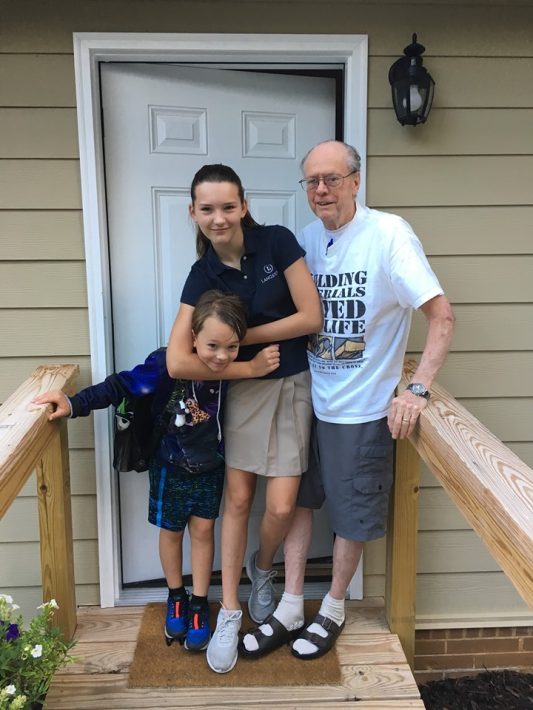
The Girl started seventh grade today, the Boy began second grade. The Boy, in his multi-age classroom, is now an “older friend” as opposed to a “younger friend.” “I know my teachers,” he explained when I asked why he was so confident about going to second grade. There’s a lot to be said for the continuity of having the same teachers for a couple of years.

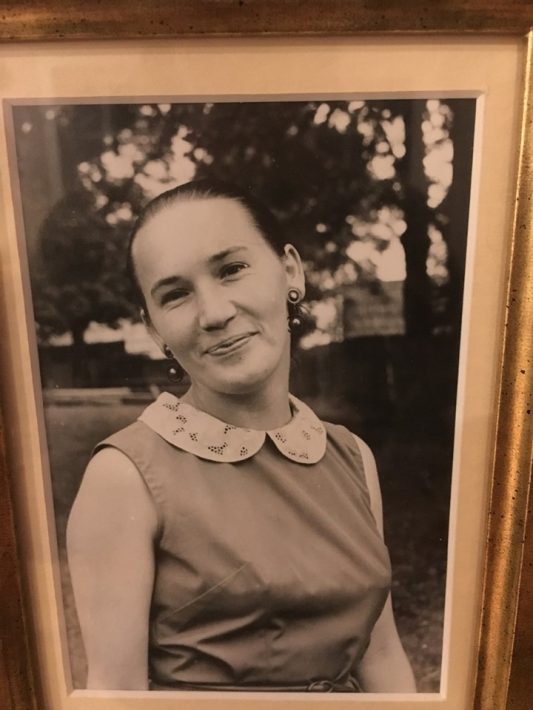
The Girl starts algebra this year, and she’s on the school volleyball team, and she makes her own breakfast and packs her own lunch. Our little girl is no more; she’s a young lady, looking more and more like her maternal grandmother every day.

I began, I believe, my 20th or 21st year of teaching. I could count it up, I suppose, but what’s the point? More or less is more or less enough. Taking all I’ve learned from teaching, I began all classes with very little worry, very little concern: I know what works for an opening day; I know what doesn’t work. I filled the day with the former and successfully avoided even a hint of the latter. The kids are sufficiently assured that I can be as tough as I need to be and adequately convinced that my class can even be — dare I say it — amusing and fun at times.

Reading with the Boy

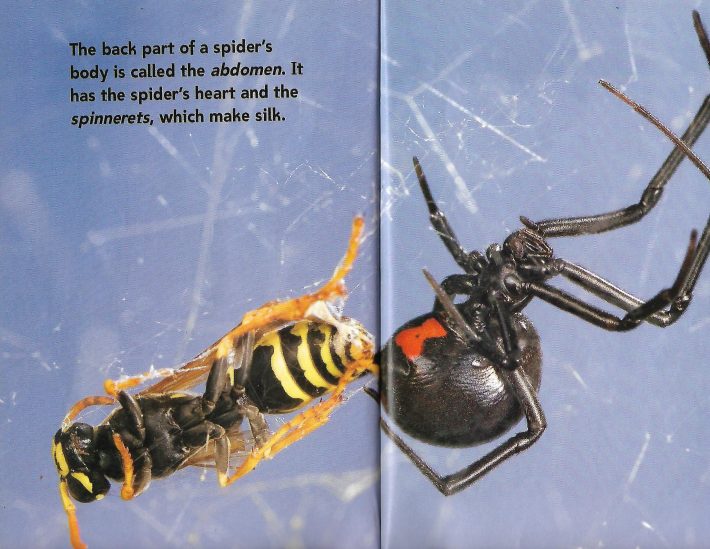
We try to get the Boy to read a little every night. Tonight we worked on L's old book about spiders. I found the place we'd left off, but the Boy insisted that he'd finished with K last night.

"Well, it doesn't hurt to read it again," I said. It might have sounded like I was just being lazy, but being able to read a tricky passage fluently will build his confidence. We learn by repetition, especially recognition of new words.

"The back part of a spider's body is called the abdomen," he began.

"Wow -- you read that tough word like a pro," I added.

"What word?"

"Abdomen."

He sighed. "Daddy, I recognized the word."

"I know. And that's a long word to know. How many letters?"

He counted: "Seven."

"You recognized a seven letter word!"

"No, wait," he said, counting hopefully again. "No, just seven."

He continued, stumbling a bit: "It has the spider's hear -- hear?"

"Heart," I helped.

"Heart and the spinnerets, which make silk," he continued.

"Spinnerets?!" I gasped. "Are you kidding? You read that like a pro as well!"

"But daddy, I stumbled over a" and he paused to count. "A five-letter word." He often stumbles over words, words that sometimes surprise me.  And he recognizes and reads fluently words that sometimes surprise me. It's part of learning to read.

"That's okay," I reassured. "You stumbled over that word, but you nailed 'spinnerets.'"'

Many of my students over the years have face similar struggles, and struggling readers are not confident readers. I've sat with kids who were reading, asked them to read aloud, and heard difficult passages come out like this: "It has the spider's hea hear -- whatever -- and the spin spin -- I don't know -- which make the silk." If that's what's going on in their head as they read silently, and there's no reason to think it wouldn't be, it's no wonder they don't feel confident with reading: the struggle produces nothing but a confusing text. And they're likely to anticipate all this: before they begin reading, they've convinced themselves that they won't understand it. And all of this builds and calcifies into not a mere reluctance to reading but a positive aversion to it.

Confidence eliminates those "whatevers" and "I-don't-knows." And so I have the Boy read books a second, third, and fourth time.

"But I already know this book," he complains.

"I know -- that's the point," I think.

Fifth Grade Questions

This week’s project: clean out the basement. Again. To be fair (to us), the last time I did this was in 2015 when I was alone as everyone else cavorted in Poland. It’s a bit more time-consuming this time around because everything has a layer of concrete dust on it from having our windows replaced. Why didn’t they clean it up? Why did I raise hell about them not cleaning it up?

In today’s work, I made a few discoveries, including several pictures stuck in bins that had nothing to do with photography, memorabilia, or anything similar. One was my fifth-grade class picture.

I look at the faces of my classmates and realize I can remember more names than I would have expected. Granted, I went with most of these kids from first grade through high school graduation, but still, my last memory of them is of them seven years older.

In fifth grade I got in trouble for cheating. We traded test papers with a peer, marked it, then went back over it with our own tests to make sure there were no mistakes in the marking. Lo and behold, Brett, who’d graded mine, had made more mistakes than he’d gotten right — so naive was I that I didn’t think. So little experience did I have cheating that I didn’t even give such things as thought. How do you cheat without making it obvious? I had no idea. I still remember the conference with the teacher and both my parents. I don’t remember the punishment; I remember the tension of the meeting.

I look over the faces, remembering names of kids, then look at the teachers. There’s Dr. Hale on the far right. Beside her? I can’t remember. At the other end is Mr. Eades, the first male teacher I ever had. And beside him? My mother.

“How did Nana get in that picture?” I think she was a class mother or something like that. And then it happened — I realized that I couldn’t do what I wanted to do most: ask her about it.

How many times will this happen? Doubtlessly, countless.

Another End

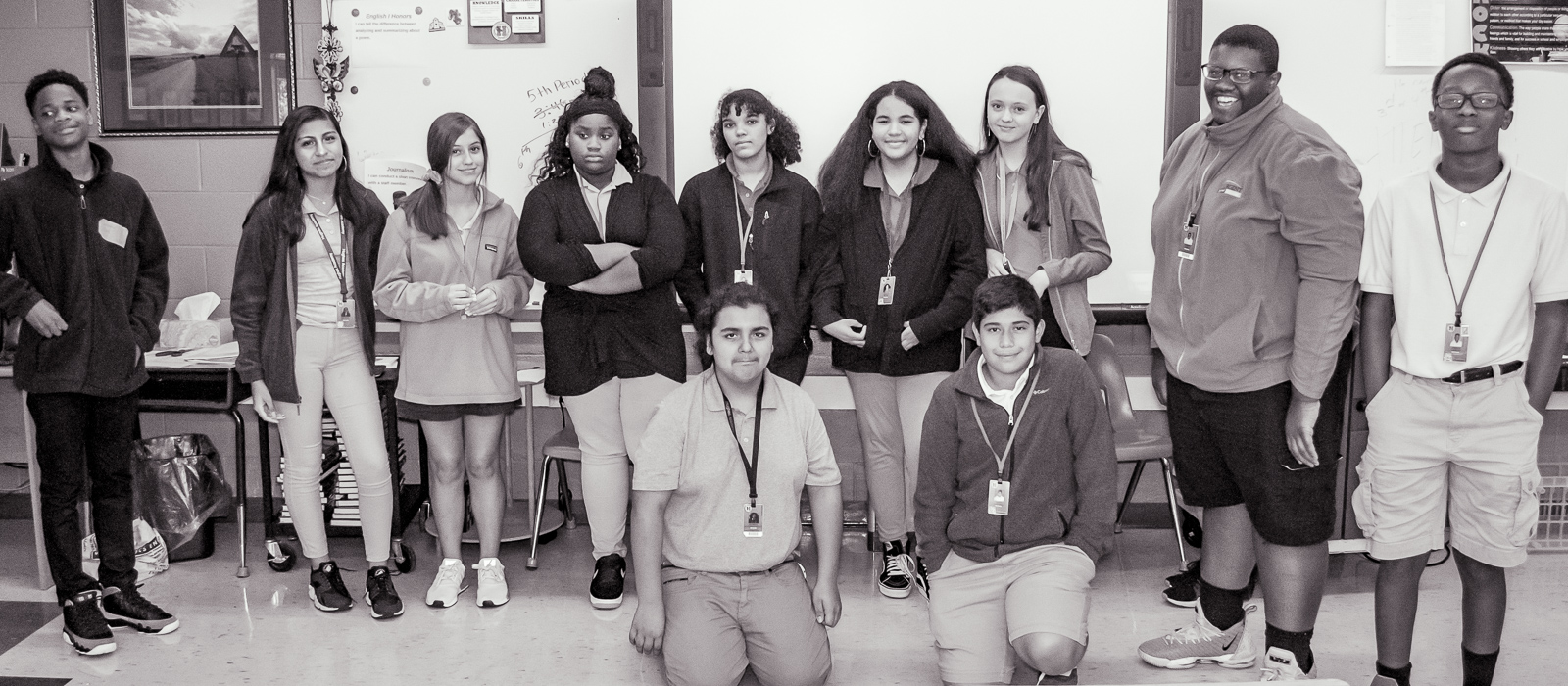
Tomorrow I will say goodbye to 110 or so eighth-graders I have been teaching, comforting, battling, frustrating, encouraging, and 147 other -ings for the last 180 days. The tears will be flowing, the end of the world approaching, and there I'll be, smiling at their innocence.

Reread

The sign of a good book is that when you reread it, you notice something new in it -- no matter how many times you reread it. My favorite book of all time passes that test easily: I've read Absalom, Absalom! at least six times, maybe more, and every time, I catch something new. And with language like this, who cares if you see something new:

From a little after two oclock until almost sundown of the long still hot weary dead September afternoon they sat in what Miss Coldfield still called the office because her father had called it that-a dim hot airless room with the blinds all closed and fastened for forty-three summers because when she was a girl someone had believed that light and moving air carried heat and that dark was always cooler, and which (as the sun shone fuller and fuller on that side of the house) became latticed with yellow slashes full of dust motes which Quentin thought of as being flecks of the dead old dried paint itself blown inward from the scaling blinds as wind might have blown them. There was a wistaria vine blooming for the second time that summer on a wooden trellis before one window, into which sparrows came now and then in random gusts, making a dry vivid dusty sound before going away: and opposite Quentin , Miss Coldfield in the eternal black which she had worn for forty- three years now, whether for sister, father, or nothusband none knew, sitting so bolt upright in the straight hard chair that was so tall for her that her legs hung straight and rigid as if she had iron shinbones and ankles, clear of the floor with that air of impotent and static rage like children's feet, and talking in that grim haggard amazed voice until at last listening would renege and hearing-sense self-confound and the long-dead object of her impotent yet indomitable frustration would appear, as though by outraged recapitulation evoked, quiet inattentive and harmless, out of the biding and dreamy and victorious dust. Her voice would not cease, it would just vanish. There would be the dim coffin-smelling gloom sweet and oversweet with the twice-bloomed wistaria against the outer wall by the savage quiet September sun impacted distilled and hyperdistilled, into which came now and then the loud cloudy flutter of the sparrows like a flat limber stick whipped by an idle boy, and the rank smell of female old flesh long embattled in virginity while the wan haggard face watched him above the faint triangle of lace at wrists and throat from the too tall chair in which she resembled a crucified child; and the voice not ceasing but vanishing into and then out of the long intervals like a stream, a trickle running from patch to patch of dried sand, and the ghost mused with shadowy docility as if it were the voice which he haunted where a more fortunate one would have had a house.

What an opening to a novel!

This year I'm teaching Lord of the Flies for the first time in probably five years, and so as might be expected, I'm rereading it. Goodness, that is a great book with layer upon layer upon layer.

I was reading it today when I noticed anew the change: the boys at first change “Kill the pig! Cut it throat! Spill its blood!” but then change it to "Kill the beast! Cut his throat! Spill his blood." That got me thinking about the nature of the beast itself.

Finally trying out the "new" (i.e., from Christmas) equipment

At first, it's just the littleuns' fears, but with the landing of the dead pilot still attached to his parachute, the beast becomes something they can see. The beast is unknown. There is a logical explanation, a perfectly natural explanation, but the boys turn immediately to the supernatural.

This first happens when the twins are reporting about their encounter with the beast. In reality, all they do is see the decaying body of the pilot from a distance. When the wind pulls on the parachute, the body pulls up, and the boys panic and run. They make it back to the other boys and explain:

“That was awful. It kind of sat up—”

“The fire was bright—”

“We’d just made it up—”

“—more sticks on—”

“There were eyes—”

“Teeth—”

“Claws—”

“We ran as fast as we could—”

“Bashed into things—”

“The beast followed us—”

“I saw it slinking behind the trees—”

“Nearly touched me—”

At this point, even the bigger boys become convinced. Without realizing it, they create a cult of worship around it. They make a sacrifice for the beast and create a ritualistic dance and chant.

Later, Jack uses the beast to maintain control.

"—and then, the beast might try to come in. You remember how he crawled—”

The semicircle shuddered and muttered in agreement.

“He came—disguised. He may come again even though we gave him the head of our kill to eat. So watch; and be careful.”

Stanley lifted his forearm off the rock and held up an interrogative finger.

“Well?”

“But didn’t we, didn’t we—?”

He squirmed and looked down.

“No!”

In the silence that followed, each savage flinched away from his individual memory.

“No! How could we—kill—it?”

"If I ever suggest I'm not teaching this book again," I told a fellow English teacher this morning, "slap me."

Beginning Lord of the Flies

My kids are reading Lord of the Flies as their final selection in English I Honors. It's been years since I last taught it; it's been even longer since I actually read it.

As I reread it, passages that never stood out as significant take on new importance. For example, Ralph laments the fact that there are no adults who "could get a message to us," expressing a fear that many of the boys have: "If only they could send us something grown-up.. . . a sign or something." The next paragraph reads:

A thin wail out of the darkness chilled them and set them grabbing for each other. Then the wail rose, remote and unearthly, and turned to an inarticulate gibbering. Percival Wemys Madison, of the Vicarage, Harcourt St. Anthony, lying in the long grass, was living through circumstances in which the incantation of his address was powerless to help him.

Young Percival is doing exactly what his parents taught him: he's lost, and he's simply reciting his address.

"If you're ever lost," we can imagine his parents calmly telling him, "find a police officer and tell him your address."

"The Vicar- vicar," Percival, who is six, struggles.

"Vicarage," his father, obviously an Anglican priest, prompts.

"The Vicarage, Hardcourt..."

"No, son. No 'd.' Just 'Harcourt."

"Harcourt..."

They practice it a while. It becomes a morning chant with breakfast, an afternoon game, an evening blessing.

When he has it, he's got it for good. He recites it at blistering speed a few days later through smiling lips.

"That's wonderful!" his mother applauds.

And now, trying to come to grips with the terrors that plague him endlessly, he falls back on his incantation -- what a wonderful choice of words -- and tries to will himself out of the place. He can't be convinced that there is no beast lurking on the island, but he has no idea what he should really fear.

The older boys do, though. Jack and Ralph have begun their irrevocable split, with Jack resorting to his first violent act: punching Piggy in the stomach and then knocking his glasses off, simultaneously blinding Piggy and cutting all the boys off from civilization, as it was Piggy's glasses they used to light the signal fire.

"I know there isn’t no beast—not with claws and all that, I mean—but I know there isn’t no fear, either.”

Piggy paused.

“Unless—”

Ralph moved restlessly.

“Unless what?”

“Unless we get frightened of people.”

I imagine my own six-year-old in this situation, watching the closest things to adults around him -- the boys of thirteen and fourteen -- descend into fighting and arguing, with chaos unimaginable just days away, and I shudder.

When we reach this part of the book, I'm going to break with tradition and help the kids see all the foreshadowing. "If you're not terrified imagining yourself in this situation, you're not really reading this book."