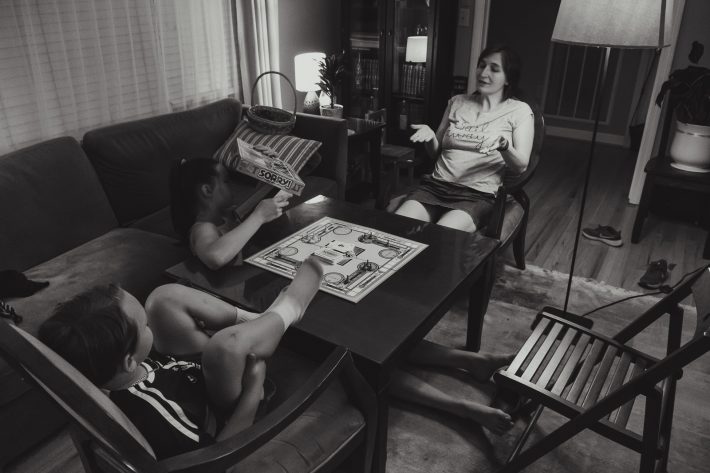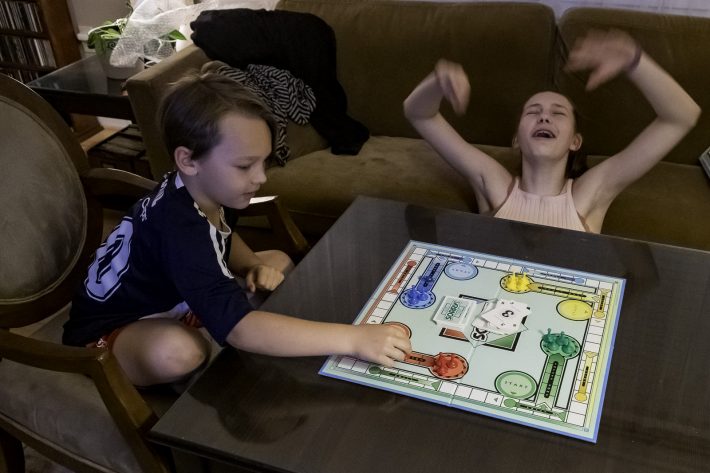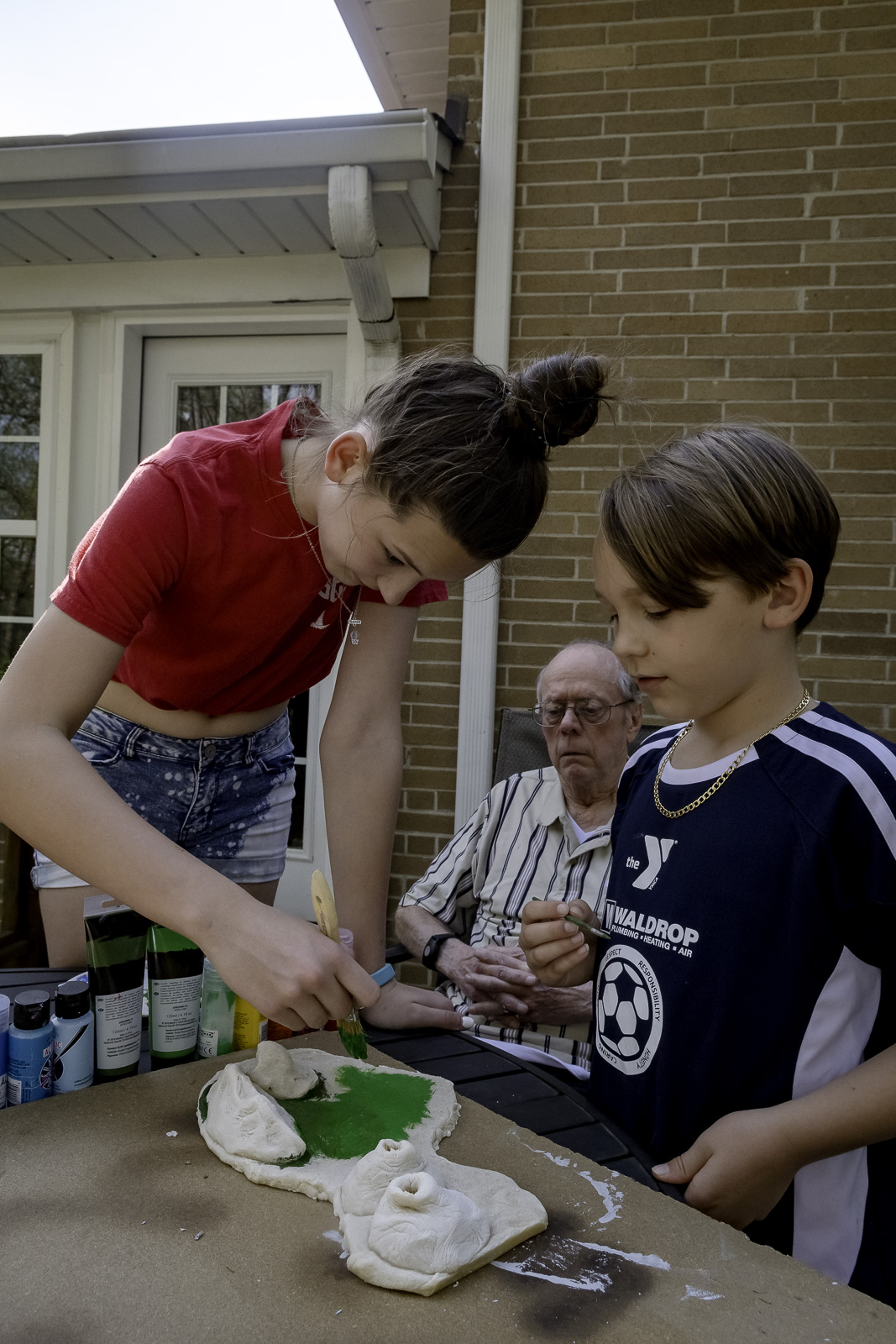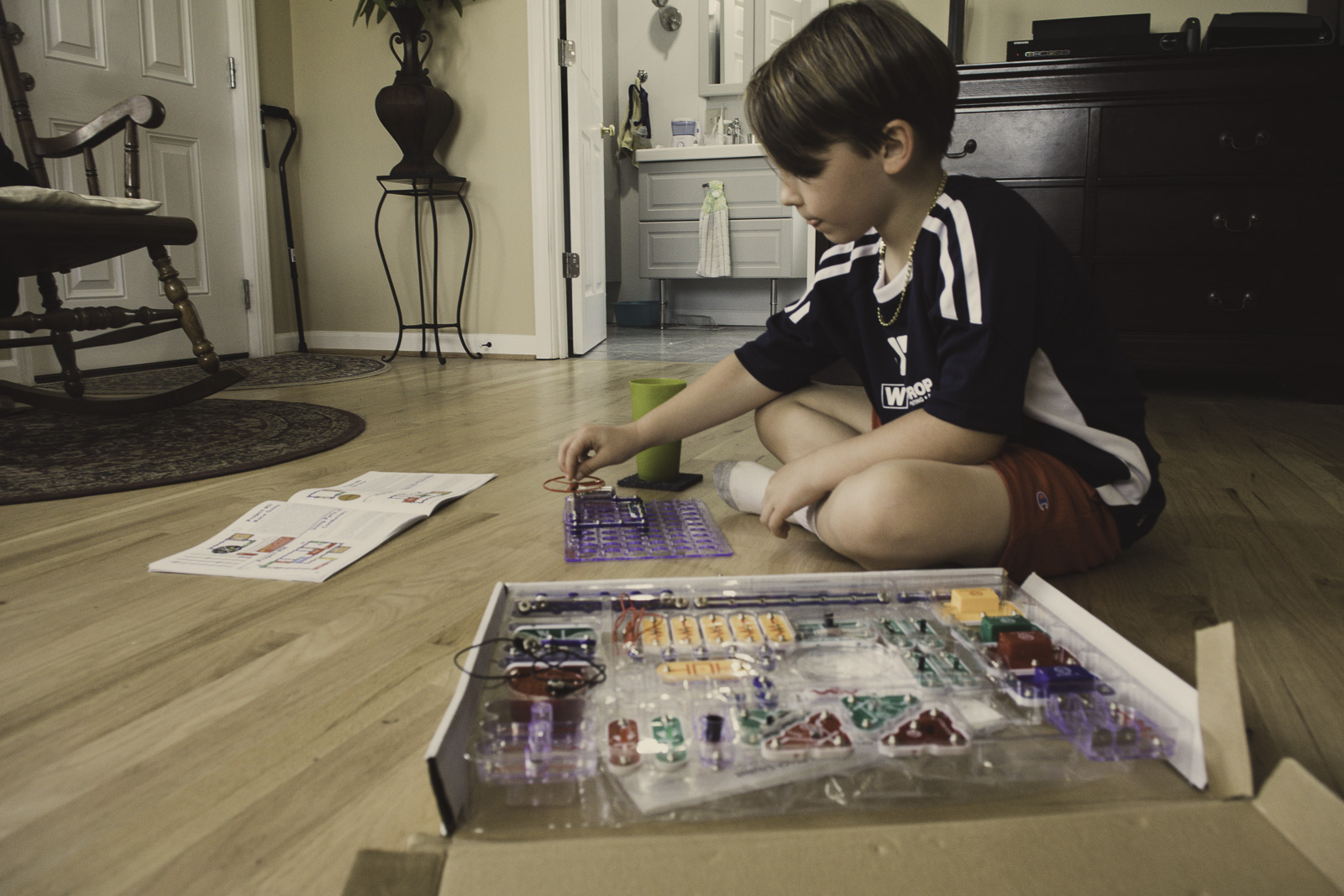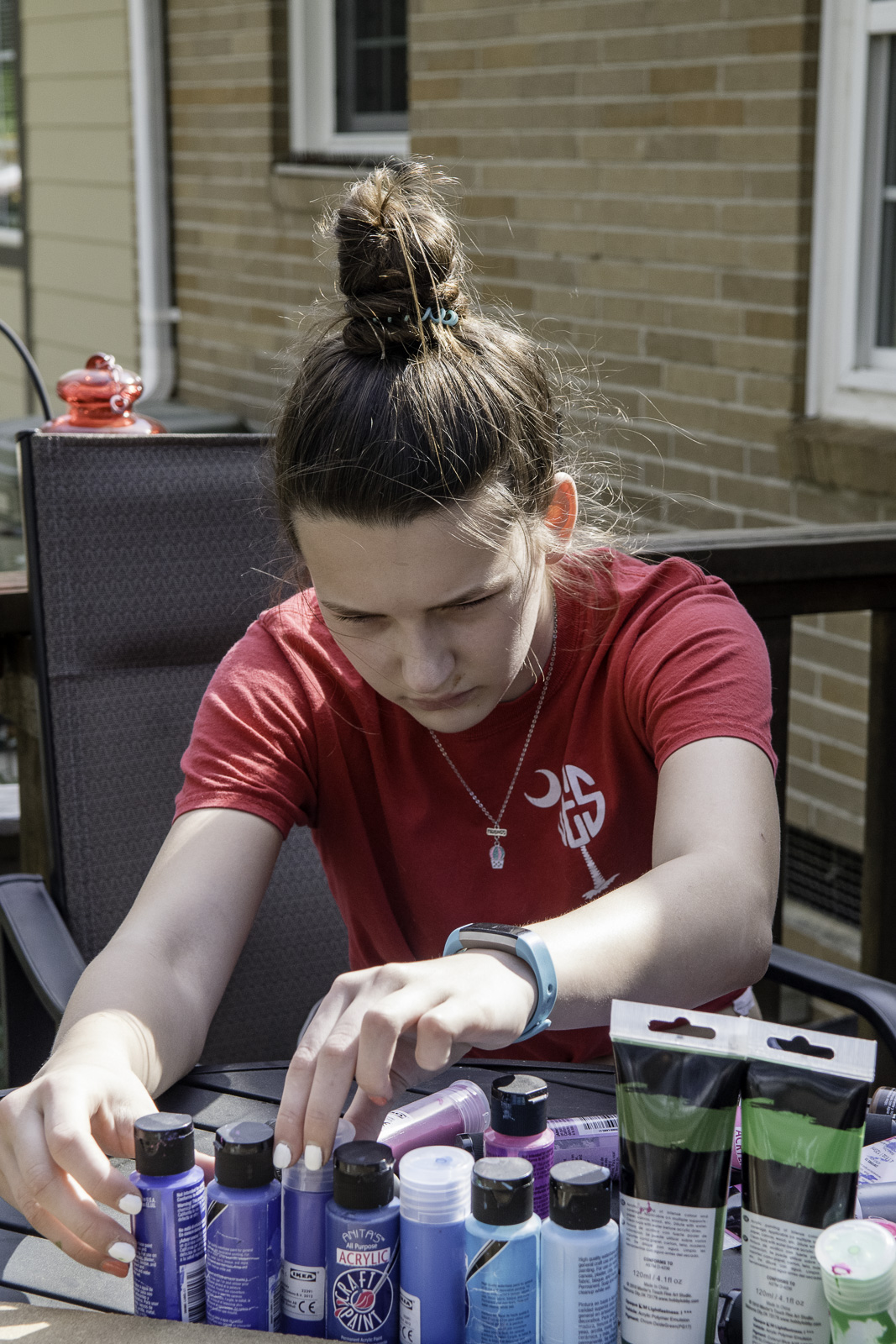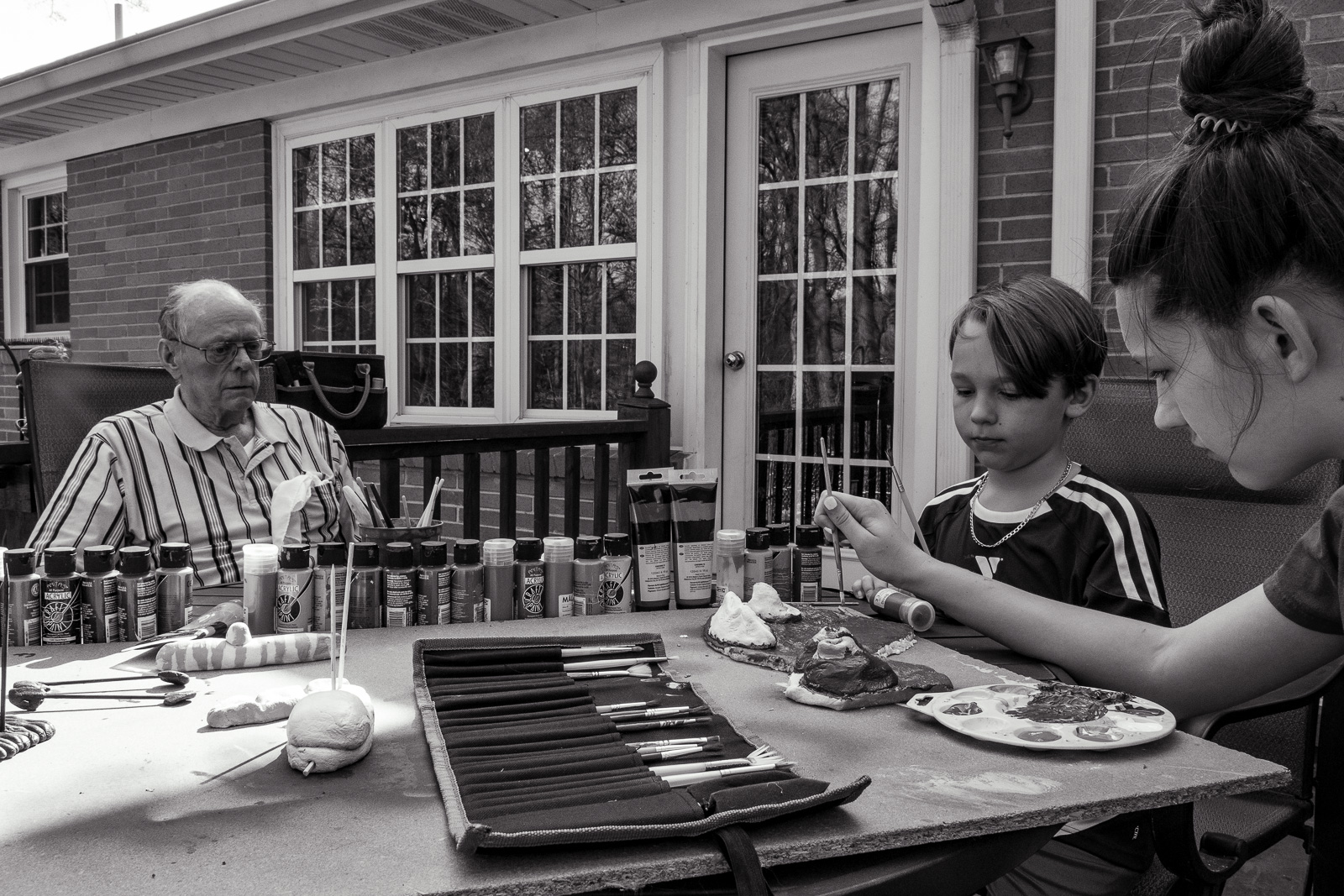
matching tracksuits

fun in threes, sometimes fours

education and teaching

Day 9: Conferencing

Our admin staff held the first video conferencing session today at 9:30 on Google Meet. We'd had an informal one earlier in the week, but with everyone talking, it was far too chaotic for me. I thought I'd lose it. Very hard to follow. It seems everyone learned from the experience: the principal was unmuted, everyone else was asked to mute themselves. Questions went in through the chat box option.

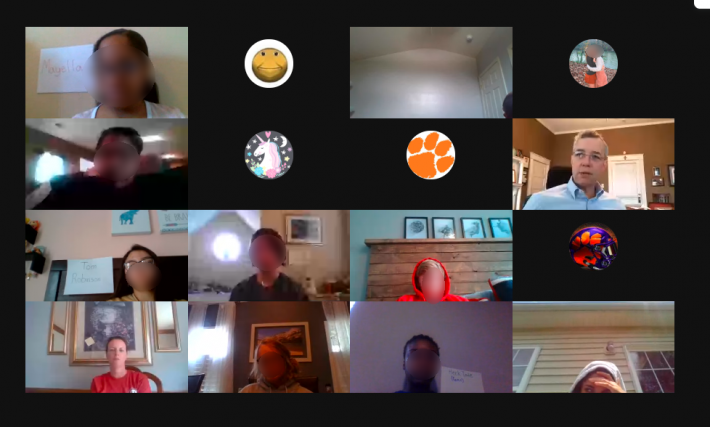
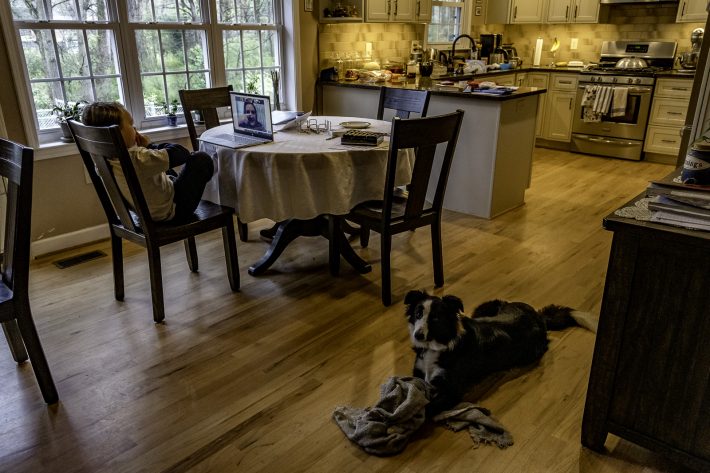
E's class had their first video conferencing session on Zoom today. At 12:30 everyone logged on and the chaotic chatter began. The teacher had a clever idea: use classroom management techniques for quieting everyone. "If you can hear me, touch your nose." Everyone got a chance to chat and tell everyone what they were up to. The Boy seemed awfully quiet. When his turn came, he simply passed.

I held my first online conferencing session with students just after the Boy's. I used Google Meet. It stinks. After participating in a Meet and leading one, I've determined that it is useful for chaotic nonsense only unless everyone is muted but one or two. Next time, Zoom.

Still, it was a relief to see the kids again. It's only been a little over a week, but it feels like so much longer. "It's so much different than, say, spring break," I told them. "During a break, you know that in a week or two, you'll see your students again. Here -- who knows when we'll meet in person again?"

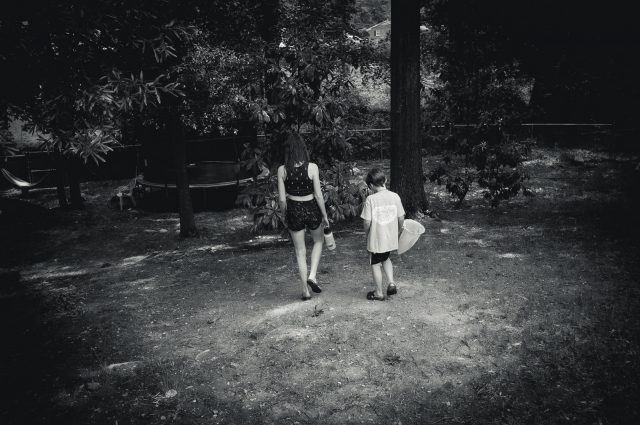
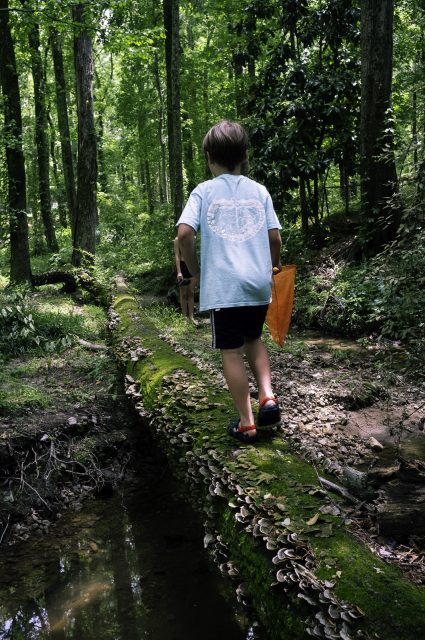
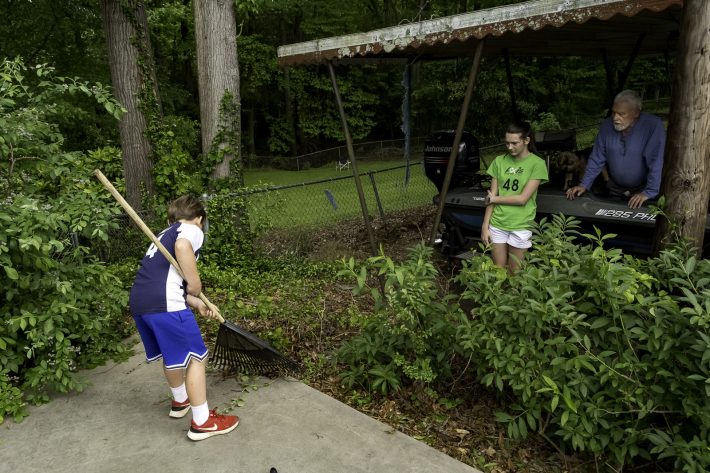
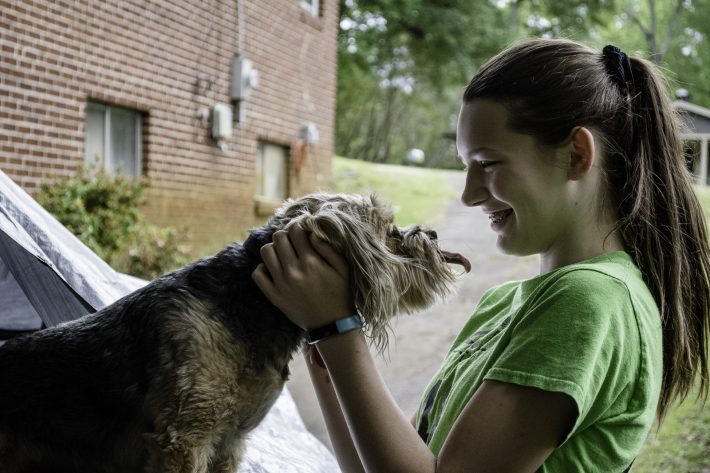
Afterward, once it finally stopped raining, I suggested to the kids that we take the dog for a walk. They jumped on it enthusiastically. The simple pleasures are becoming pleasures for them again. If there's one bright side to this whole pandemic, it's that.

On the walk, the Boy and I got to talking about favorite books and authors. "I think my favorite author is Roald Dahl," he said, then asked me about my favorite books.

"I think Absalom, Absaom! is the best book ever written," I said, wondering how he'd respond.

"Is that a book a kid could read?"

"No, most definitely not." I wouldn't even suggest to my best readers in honors classes to tackle that book. It's beyond challenging the first time through. Perhaps not as bad as Finnegan's Wake or even Ulysses, but quite a challenge.

"What other books do you like?" he asked when I'd finished explaining all that.

"I'm partial to Charles Dickens," I said.

"Didn't he write Moby Dick?" asked L.

"No, that was Herman Melville. But now that I think about it, I believe I see a little similarity between Dahl and Dickens."

E raised his eyebrows as he does when he's excited.

"They both tend to give characters names that somehow reflect their character." I explained how "Trunchbull" from Matilda seems to be a portmanteau of "truncheon" and "bull."

When we got back, I introduced E to "Lunch Doodles with Mo Willems." "Do you know how he is?" I asked.

"Yeah, he wrote the pigeon books and pig and elephant."

Then, at a little past three, I get this statement from the governor:

At this time, students, parents, and families should plan for South Carolina’s schools to remain closed through the month of April. Our dedicated teachers and school administrators have done a tremendous job in making it possible for our students to learn at home. We understand that the prospect of schools remaining closed for an extended period of time places stress and strain on parents and children. Rest assured, if there is any way to safely open our schools earlier, we will do that, but schools must remain closed to protect the health and safety of South Carolinians.

So it seems our adventure is just beginning. The worries will build, I'm sure, as the cases rise in our little state, and as our president begins to make noises that indicate he thinks money is more important than lives, I wonder if a crisis in government might accompany the crisis in our national well-being.

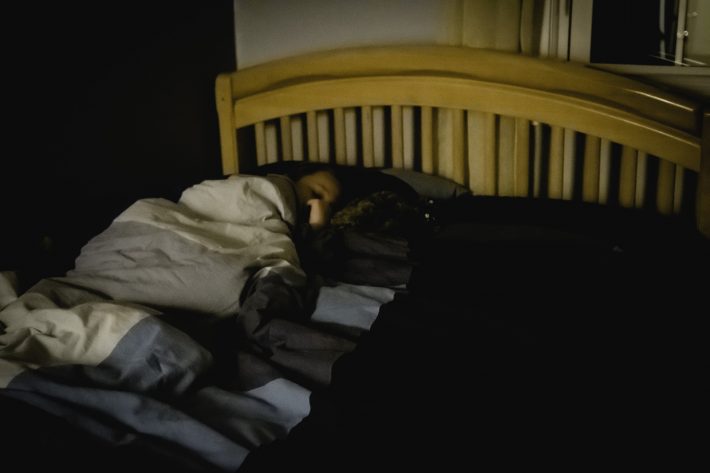
But as long as everyone ends up safely tucked in their beds at night, my primary anxiety is assuaged.

Day 6: A Realization

While working in the yard today, I got to thinking about the rumor I heard from a neighbor that the rest of the school year was going to be canceled, moved to online learning. I’d thought this myself, but hearing another person say it made it seem like less like one of the silly thoughts that sometimes rumble around my brain and more like a possible outcome.

What a sad realization then when I thought, “It’s a very real possibility that the last time I saw those kids was that Friday, just over a week ago now.” In some ways, this has been my favorite group of students: a fun mix of varied personalities with relatively few high-maintenance (i.e., poorly behaving) students. Sure, there are some talkers, but that’s nothing compared to issues I’ve faced in the past.

And instead of saying goodbye to them, wishing them well, sending them on their way, it just came to an end.

That’s the fear — because deep down, despite the facade I wear at school, I’m a sentimental schmuck and things like this bother me…

Day 3: First Day of School

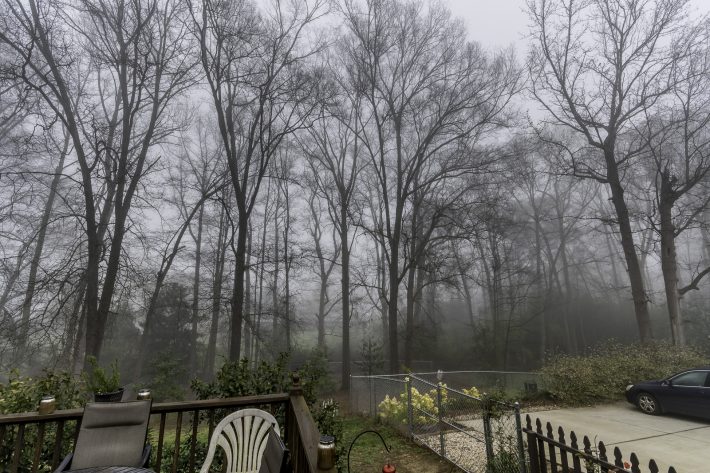
The day started out foggy and stayed dreary -- it could be a kind of metaphor for everyone's mood, I suppose. But we're fortunate: we have food; we have (a bit of) toilet paper; we have money in the bank; we have a home; we have a family that's together. That's what's most important.

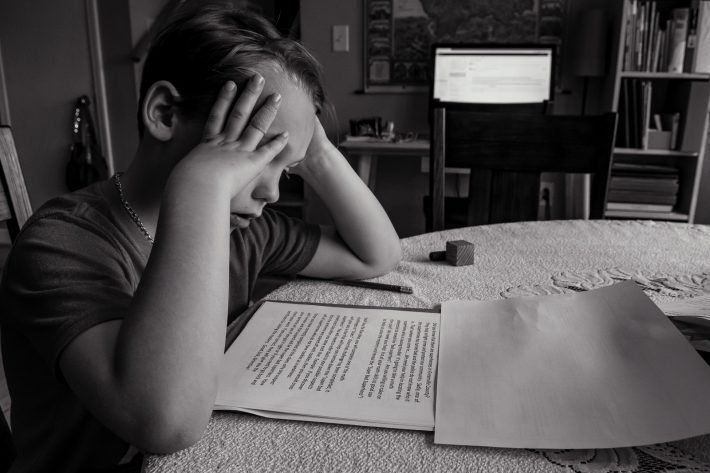
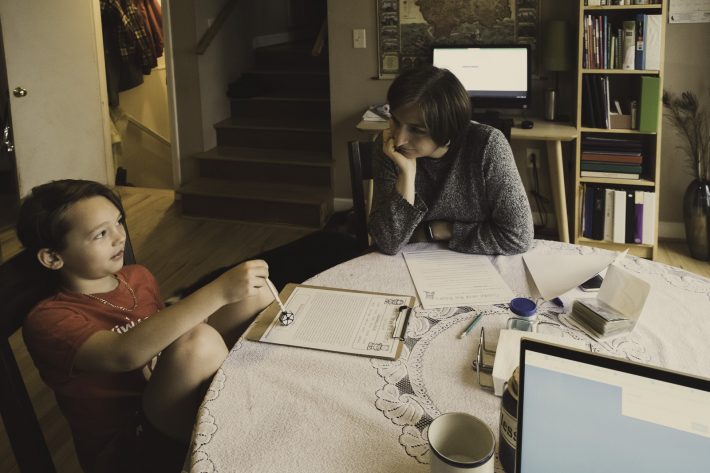
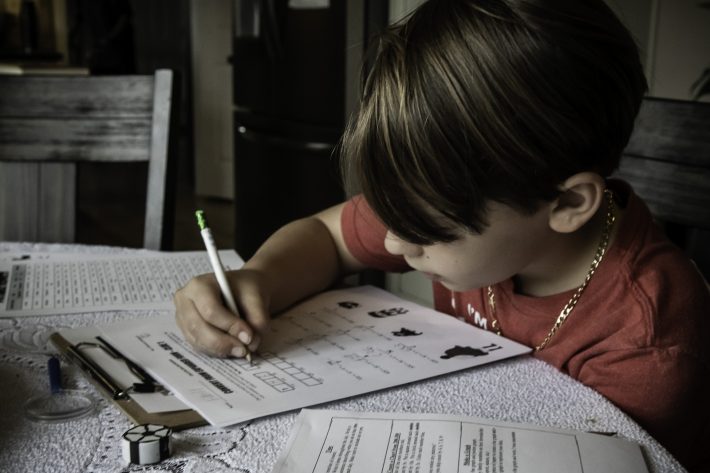
Today was our district's first day of online learning. There's a vast spectrum of what this means. For E, it was a 90-page packet of reading, math, social studies, and science work. He took on the reading first, making it through a fairly long retelling of Goldielocks with relative ease and breezing through the questions.

"We're not seeking to further their education," was the mantra as teachers in my school prepared for our own students earlier this week. "We're just tasked with providing work that will keep them from slipping."

That seems like a fairly succinct description of the work E got.

I helped him with some of it; K helped him with some of it; he did a fair amount of it on his own without direct help. Helping him usually just means giving a nudge when he gets overwhelmed and frustrated -- a kind encouragement, a hint. Sometimes it becomes too much, though, and we need a break. Such was the case today.

Still, we managed to work through all the challenges and completed the work just after lunch.

L had video conferencing with teachers and they went over some new material. Of course, she goes to a charter school, which means there is a bit of a semi-natural selection process involved in the enrollment.

As for my kiddos, I got a few emails, exclusively from honors kids and mostly about outstanding assignments.

"When is that paper due?"

"When can I take my makeup test?"

As for the rest of them? I'm not sure. I didn't hear from them. And I got word today that if kids are not doing the work within two days, I need to be contacting parents. That ought to be fun.

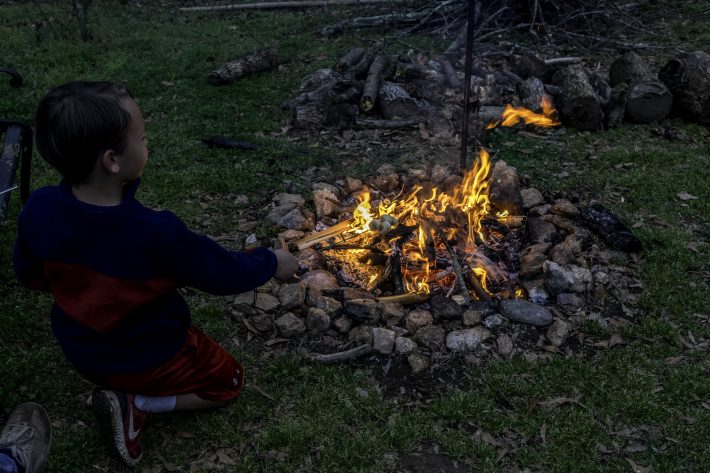
Not as much fun as our little fire this evening, but fun.

Day 1: Achievement Gap

There was one overriding concern at today’s faculty meeting: we have to do everything we can to make sure that this national emergency does not expand the achievement gap any more than is inevitable. We spent the morning talking about how to prepare materials for students to work at home with one underlying assumption: vast numbers of kids won’t do anything during this time. The “high flyers” will do everything we give them; the middle-of-the-roaders will do some of it; the ones who need the most help will do the least.

“They don’t even do much work when we’re hovering over them” was the common refrain.

So as we embarked on our planning this afternoon, working to create ten days of material for students to work on while we’re closed, we kept that in mind — a frustrating project, planning materials that we know will most likely not be used by kids who really do need to use it.

And the common refrain during that planning process: “We need to go ahead and plan for the next ten days because there’s no way we’re coming back at the beginning of April.”

We’ll cross that Rubicon when we arrive at its banks…

A View into a Mind

It was a difficult poem, to be sure. But I'd adjusted accordingly.

First, I'd given students plenty of footnoted definitions. Words like "smouldered" and "pungence" (the poem used British English) would have left them flummoxed otherwise.

Additionally, I'd asked a fairly simple series of questions as part of our weekly inference practice: "What can we tell about this lady? What does she look like? Is she old or young?" As always, I expect the students to back up their answer with the text, and I've given them a simple formula to follow.

  • Make a claim: "The lady is x."
  • Back it up from the text: "I know this because the text says..."
  • Explain your thinking with one or two sentences: "This shows she's x because..."

I really don't feel like it's all that challenging. Besides, it's something we do every Friday -- inference work.

"It's like shooting free throws," I tell them. "It's the most basic skill we do when we read, inferring." It's why we do it every Friday, week after week.

Thirdly, I'd cut the text: we were only working on the first stanza. The rest of the poem, I felt, might confuse them more.

Finally, I am always walking about the room as students work, offering help and answering questions, helping redirect or clarify thinking or ask questions that help them see the text in a new way, and there is a co-teacher in the room as well.

The text itself was a poem by Amy Lowell, "The Lady."

You are beautiful and faded
Like an old opera tune
Played upon a harpsichord;
Or like the sun-flooded silks
Of an eighteenth-century boudoir.
In your eyes
Smoulder the fallen roses of outlived minutes,
And the perfume of your soul
Is vague and suffusing,
With the pungence of sealed spice-jars.
Your half-tones delight me,
And I grow mad with gazing
At your blent colors.

So given the questions -- "What can we tell about this lady? What does she look like? Is she old or young?" -- and the formula we've been using all year, something like this was my objective for student achievement:

The lady in the poem is beautiful. I know this because the poem starts with the words, "You are beautiful." The poem wouldn't say "You are beautiful" unless the lady was beautiful. The writer might be joking, but I don't think so.

Also, the lady in the poem is old. I know this because the poem says, "You are beautiful and faded." I know from my own experience with clothes that usually it's old things that fade. So if the writer says the lady is faded, she must be old.

Of course there would be varying degrees of writing proficiency with that (I don't teach writing -- I'm the literature/reading teacher), and I would have to help some students reach that second realization. Also, that final sentence of the first paragraph requires some evidence as it makes a claim. What in the poem suggests the writer Still, most of them saw these things and wrote something similar.

Many, but not all.

There are several students who receive special ed services in that class -- it's an inclusion class, and there's a co-teacher in there for that very reason. Many of the inclusion students have behavior issues that accompany their learning disabilities, but some just quietly do the best the can.

One such student produced the following in reply to the above prompt:

we know about this woman that she is beautiful and she likes an old opera tune and the perfume of her soul and she is young and her appearance is a grow mad with gazing and eighteenth-century boudior and her personality is blent colors

The lack of punctuation and capitalization is fairly typical of average eighth-grade students these days, at least in my school. That's not my concern with this excerpt. What initially fascinates (and saddens) me is the content: it simply makes little to no sense at all past the first two clause-like elements: "we know about this woman that she is beautiful and she likes an old opera tune." Beyond that, it seems like just a random collection of elements from the original text.

There is, however, a pattern. She clearly referred back to the questions: she explains about "her appearance" and then "her personality." So this was not an apathetic student just randomly grabbing some words and throwing them together. This was not a vindictive act of "I'll just put complete nonsense there because..." It's a genuine effort at answering what was for her an incredibly difficult question.

Yet there's more than just that. Look closely: she links "appearance" with "gazing," a verb connected to seeing. She links "personality" to "blent colors" because the poem says "your blent colors," so she clearly recognized that possessive pronoun and made a stab that that might be related to "her personality." It's not a bad interpretation, to be honest.

It's really a valiant effort, truth be told.

But I didn't see that at first. Grading so many such assignments, week in, week out, I get to where I'm only scanning, truth be told. Which is to say, I read it, but I read it so very fast that I'm not really reading it in the truest sense of the word. I'm not reading it like I read a book that I'm really enjoying, or even an email from a colleague. I'm looking for specific things very quickly.

I'm doing what I tell my students not to do.

Speech

Since I've managed to hoodwink and bamboozle all my fellow teachers into thinking I know a thing or two about teaching, they chose me as the teacher of the year this year, for which I politely thanked them and promptly forgot about it. The head of the school's Beta Club chapter didn't forget, though, and started asking me in December if I would be the keynote speaker for the induction ceremony.

I said no thank you. She asked again a week later. I said no thank you. She asked again a few days later. I said no thank you. She asked again the next day. I said no thank you. She asked again the next day again. I said no thank you. She asked again later that same day.

I started thinking the only way to get her to leave me alone was to agree to do it.

"Five to ten minutes," she said. "Something about community service." Here's what I came up with:


Chapel was at nine in the morning Tuesdays and Thursdays. During my freshman of college year I didn't have class until 11 on Thursdays. Since I didn't live on campus, getting up and driving to the college two hours before I had to be there for a class was less than inviting to an 18-year-old. (You might have noticed I only made an excuse for Thursdays; I have no excuse for the Tuesdays I missed other than to say I was 18 and not terribly bright.) As a result, I failed to fulfill the Chapel requirements that my small Presbyterian college placed on all students. To make up for the missing chapel attendance, the college required community service. I chose a soup kitchen downtown where I went to spend an entire Saturday to make up for my missing chapel requirements.

I had heroic visions of what this would be like. I saw myself serving homeless veterans, giving them hope and soup and a smile. I saw myself giving joy to those who had no joy of their own simply by showing I cared. I saw myself bravely facing the cruelties and injustices of the world and making a difference. I saw myself battling back the apathy of society and showing these poor souls that someone cared. I saw myself changing a life or three just by handing out some beans. In short, I saw myself.

By the time that Saturday rolled around, I was more than ready. I was excited. I was optimistic. I was going to change the world through my heroic self-sacrifice!

So I was a little surprised when, on my arrival, the director of the homeless shelter led me to a small pantry illuminated by one dim dingy light bulb hanging from the ceiling.

"Our pantry needs reorganization," he said. "That's what we'd like you to do."

It was true: the pantry shelves had cans of fruit next to cans hot dog chili and squeezed in between them were cans of condensed milk and packets of tuna. Mysteriously there was canned cat food hidden here and there. It was chaotic. And dark. And dirty.

"We also need you to check to see which cans have expired. Set them aside so we can throw them out," the director said over his shoulder as he left.

I stood looking at the chaotic mess and wondered how anyone could find anything. There was no denying it: the pantry shelves needed reorganization.

Still, this was not how I was going to become a hero.

The first thing I discovered was that many of the cans were not just dusty but filthy: something had leaked on these; those were so ancient that they had a cake of dust on them; some were sticky; some were missing labels. Being somewhat OCD about such things, I couldn't just re-stack them and leave them a mess, so I requested some water and rags and wiped off most of the cans as I worked.

All told I spent almost six hours in that pantry, not talking to a soul, not giving out soup to anyone, not listening with patience to anyone's stories, not sharing a bit of comfort or joy with anyone.

It was the antithesis of what I'd anticipated.

And that's probably why, nearly thirty years later, I still vividly remember that Saturday. I did more community service while I was in college, though for less-than-altruistic reasons: once I discovered how relatively easy it was to knock out a third or half of the chapel requirements on a single Saturday, I started skipping chapel with abandon. But I don't remember much about those other occasions. Just that first one, when everything seemed to be the opposite of what I was expecting but just what was needed.

Today, you are becoming members of the Beta Club, which most people see as recognition for your academic effort and perseverance. And it is that. You have shown great resolve and fortitude in maintaining the grades you have maintained. It is a laudable achievement and a reflection of the character of both you and your parents. But this prestige is not the greatest benefit of being in the Beta club.

The greatest gift to you is the opportunity the Beta club provides to do community service regularly.

Throughout the school year, the club will provide you with many opportunities for service within the school community, and many of these projects will bring a smile to your face. You'll go to Build a Bear to create teddy bears for Ronald McDonald House and Children's Hospital. You'll conduct the SouperBowl food drive in the school for the Samaritan House. You'll participate in the Acts of Kindness week for the Department of Juvenile Justice. All of these activities will, in their own way, be fun.

But I would argue that you need to fulfill some of your community service hours by doing something that's not fun, that is in no way Romantic (capital r -- you'll learn about Romanticism in American lit), that is in no sense enjoyable. Something hard. Something that gets you dirty and makes you sweat. Something practical. Something you most decidedly wouldn't want to put on Instagram.

This is not because I think you should punish yourself, because such work is not punishment. Such work, especially when done surreptitiously, is the stuff of character because it is often not recognized and seldom lauded. Rearranging that pantry was in a sense miserably boring. But I know that I helped other people help other people. In organizing that pantry I made the job of the cooks easier, and they were the ones doing the real work, day in and day out, not some little college freshman hanging around on a Saturday because he'd been too lazy to go to chapel. It was a little thing, but that's why I remember it. That's why, in a sense, it was big, because it taught me that often it's the little things that make the difference.

So go out and find the bigness that's in those little moments of self-sacrifice accomplished by completing less-than-glamorous community service. Go seek out jobs that bring no glory, the little things that you don't think anyone notices. Before you know it, that type of service will become a reward in and of itself. You'll do these things not for the Beta club service hour credits you earn but for the sense of accomplishment and character they bring. And then you'll stop doing it for those reasons as well: it will just be a habit. It will be something you do without thinking, something you do because that's who you are. And when you reach that level of serving others, of helping those in need, you'll be someone who really makes a difference, someone who changes the world, one grimy soup can at a time.


In the end, I cut some of it on the fly. (I indicated what I remembered cutting above.) An odd experience overall: my brain was calculating several different trajectories at the same time:

  • Am I speaking too quickly?
  • Do I know the speech well enough to make eye contact at this moment?
  • I need my notes! I need my notes! I have to break eye contact and gracefully let my eyes fall on the spot where I should be next -- without panic.
  • Who does she look like? She looks like someone I've seen before.
  • Am I speaking too slowly?
  • Didn't I teach his brother? He looks a lot like Z from two years ago...
  • Is this making sense?
  • Can I cut this part short? As I say it aloud, it doesn't sound as good as I thought it would.
  • If I skip this next part, will I have transition problems?
  • Why the hell don't they have a mic stand? I hate standing here holding this mic.

In the end, my final version felt like it lasted about eight minutes, but I really have no idea.

An interesting experience, but not one I'm keen on repeating, but it's not because it terrified me or anything of the sort: I make little public speeches multiple times a day. I'm just used to winging the exact words and having only a general plan in mind.

Changes

Photo by susanjanegolding

A kid makes a decision to sell something at school and soon, every part of her life is sucked into the whirlpool of consequences that follows. Another kid makes a comment about violence in school and soon, every part of his life is not sucked into the whirlpool of consequences because of parental denial.

Both these kids intersect my own life, and those intersections coincide with other intersections making this web that moves on one end when you tug on the opposite end. Both these changes affect me only coincidentally and fairly significantly -- the paradox of the nature of modern life.

Both these changes get me thinking about our own daughter, the same age as these two non-hypothetical kids who go to schools not all that different from our daughter with peers not all that different from our daughter's friends. So much of these three families' lives line up, and it leaves me thinking, "There but for the grace of God go we..."

I want to say it's not grace. I want to say it's better parenting. But I know that's not necessarily the case. And I add "necessarily" because to think otherwise is almost unbearable.

3 Hours

We had a three-hour delay today, which meant classes lasted less than half an hour and were for all intents and purposes useless unless, like me, teachers had something from previous days that could logically wrap up in that little bit of time.

And the conditions that prompted this? Dry roads...

Decisions

There was supposed to be a horrible storm coming through the area. Or there was the possibility of a terrible storm. Or at least the potential for bad conditions that might make driving unsafe for those unaccustomed to wintery weather. Or something like that. Here in the south, we have snow days without any actual snow because the district calls off school if the forecast is bad. That’s not an exaggeration.

Now, I’m not complaining about this. The district is looking out for its students’ safety when making these decisions, and to some degree minimizing the potential for lawsuits as well. That’s cynical, that last comment, but I don’t mean to be terribly cynical: I do honestly believe the schools have their students’ safety in mind.

The real fun comes in looking at social media reactions to this. Today, for example, the district implemented an early dismissal and the Facebook announcement has almost 700 comments, many of which leave one feeling a little hopeless for humanity:

Progress

Working with eighth-grade kids, I've learned to accept progress in small steps. Behaviors don't change overnight. They don't even change over-week or over-month. But small changes can happen suddenly. Small changes that can grow. Small changes that serve as a foundation. Small changes that aren't so small.

I have a student that I love. And hate. And hate to love. And love to hate. He's got potential. He's got a great personality. Everyone loves him. But he talks.

Constantly.

No, constantly.

No, I mean constantly.

No, I really mean constantly.

That is almost not an exaggeration. A slight exaggeration, but only very slight. He loves gossip. He loves knowing something someone else doesn't know about someone they know in common. He loves telling people things they don't know. He loves being a clearinghouse of useless personal information about others.

In the midst of this gossiping, this chatting, this constant sharing of information, he often gets called down. And this behavior he consistently exhibits makes him the focus of teachers' attention so that they call him down for everything. And that frustrates him. Leads him to argue. Leads him to be disrespectful. Leads him to making very bad decisions sometimes.

I have him in homeroom and English class. Almost every day as he leaves, I tell him, "K, make good decisions today."

"Yes, sir," he says. (Did I mention he can be a perfect example of Southern manners?)

Later in the day, before eighth-grade students came back from related arts, I saw him again.

"K, have you been making good choices today?"

"Yes." He proceeded to tell me about an instance when a teacher called him down and told him to close his Chromebook. "I was going to argue with, but I just closed my Chromebook."

Two little actions from one decision: to do one thing and not do another. Two actions that most of us would do without thinking about it when told to do so by an authority figure. Two actions that would go unnoticed in other students. Two little actions; one little decision. And so much pride.

"See? It wasn't that hard, was it?" I said.

"No, sir."

"And the whole conflict -- it just vanished instantly, didn't it?"

"Yes, sir," he smiled.

Next step: get him to repeat it. Often.