matching tracksuits

fun in threes, sometimes fours

education and teaching

More Questions

We’re meeting with our kids once a week: each class is divided into four groups, with each group meeting on a given day. The other days the students are engaged in online learning or e-learning or whatever it’s called now. So here was my question: how do I plan lessons around that. Two options seemed obvious:

  1. Teach a special lesson on the day that the kids are with me and something else for the other kids. This seems to make the most of the fact that we’re together, in person. We don’t want to spend that time on activities that don’t need me right there — like reading a short text. We want that time for discussions, for one-on-one help. For things like that.
  2. Teach the same thing to the kids at home and at school.

Obviously, from the argument I just made, I was leaning toward option one. But then there’s all the potential disasters:

  • It will be almost impossible for the kids to keep up with what’s what.
  • Forget the kids — it would be tough for me to keep track of who’s where doing what.
  • What happens if we have a fire drill or something on that day? Those kids just lose out on that particular lesson.
  • What happens at the end of the quarter? Everyone is not at the same place at the same time. How can I equitably grade them?

Yet the second option has similar issues. I have to make sure that the activities are equitably spaced out among the days: I can’t have Monday kids always doing close reading with me and Thursday kids always writing things based on Monday’s close reading. Then there’s the question of how to assess and provide feedback to the kids who were at home that day. Do I come home from school and spend another six hours going over what kids did online?

The argument for e-learning until things to back to normal grows stronger…

What I Didn’t Consider

We had our eighth-grade meeting today, held in the cafeteria in desks spaced far enough that we didn’t have to wear masks according to CDC guidelines. The meeting began at 8:30; it ended just before noon.

What all could we talk about for that long? Well, truth be told, things were rushed at the end to try to keep it from going even longer.

What could we talk about for so long?

  • Masks — how do we make sure students wear them? How do we deal with students taking them off?
  • Bathroom — how does that work to ensure social distancing and such?
  • Lunch — how do we get them in and out while maintaining a safe distance? (And making sure they’ve all washed their hands.)
  • Attendance — how do we take roll for those students who are working at home that day?
  • Behavior issues — how will we deal with chronically misbehaving students since to suspend them three days would mean actually suspending them for three weeks?
  • Fire drills — what will they look like? And can we take into consideration that missing 15% of a class period for a fire drill is missing 15% of the week’s time with those given students?

Just a few things that will keep me up at night for the next few weeks.

The Coming School Year

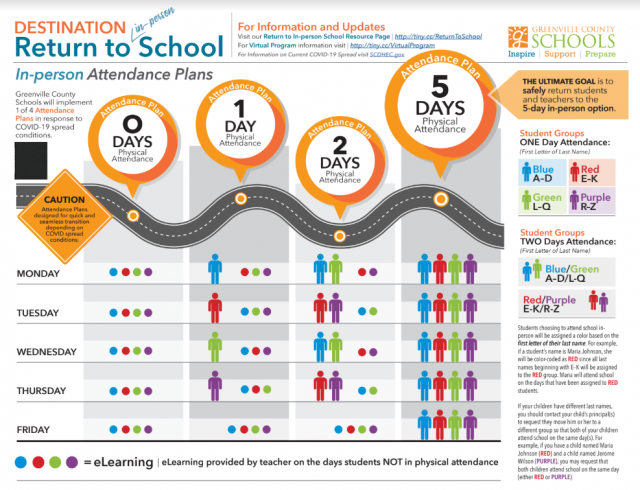
Today the district released the attendance plan for the beginning of this school year:

The latest DHEC COVID-19 spread ratings are out. Greenville County remains HIGH overall, but continues to show improvement. Greenville ranks HIGH in incidence rate (296) and the percent of positive tests (13.7%), but since our numbers overall are decreasing, we are rated LOW in the trend in incidence category.

As a result, GCS is announcing later this afternoon that we will return to school on August 24 under Attendance Plan 1. On the GCS Roadmap, this is the plan in which students in our traditional program attend school one day each week and are on eLearning the other four days.

Said roadmap looks like this:

So I will be meeting all my students one day a week. I counted that up this evening and had a little epiphany, which I mentioned to K: “That means I’ll teach the same lesson sixteen times in a row each week.”

At first she thought I was talking nonsense: “Won’t you just do the same thing with every class but some of them will be online?”

“That would require preparing two lessons a day, one for the online kids and one for the in-person kids, trying to figure out how to do the same thing two different ways.” She saw the problems with that method. “What I need to use my in-person time for is practice when I need to be there to lend a helping hand and be available for in-person help.”

In my mind, that means staggering lessons among students, though: if online lessons 1, 2, and 3 are meant to culminate with the in-person lesson for individual practice, every class will be at a different place on that continuum each day. That would be a nightmare to keep everything straight in my head and my planning.

This will really require us to re-think teaching in a lot of ways. Perhaps that will have some good long-term effects.

Raven Cliff Falls

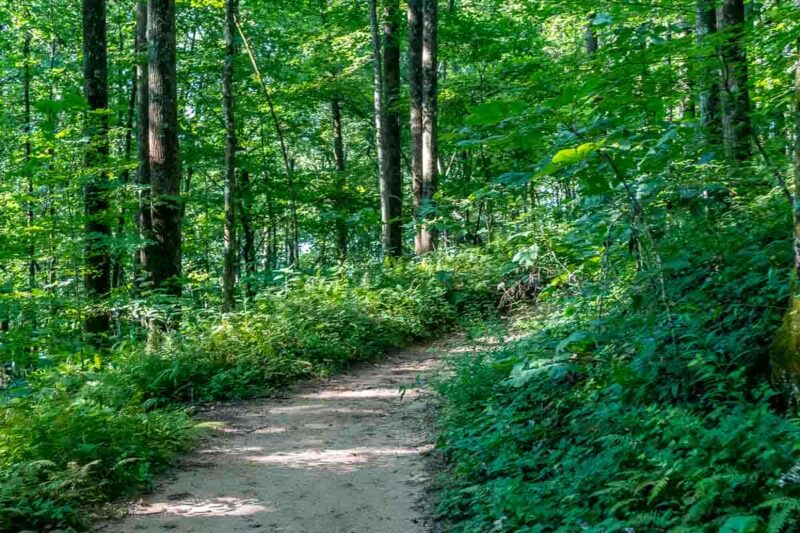
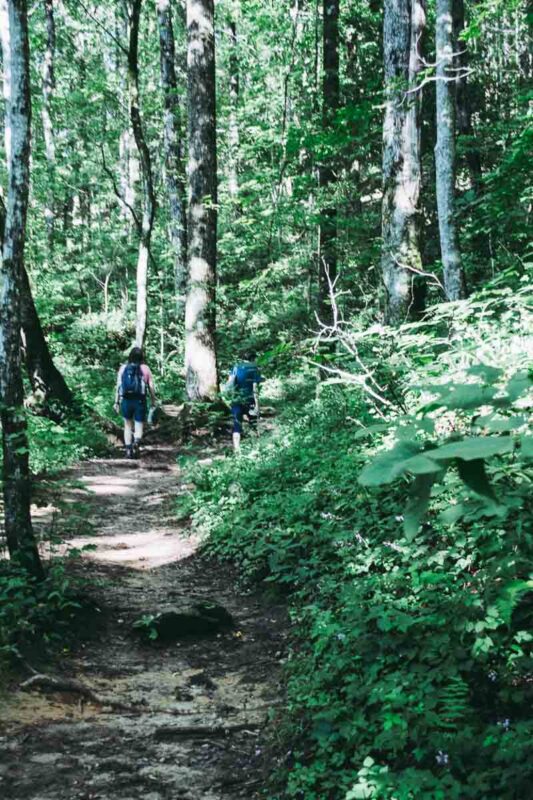
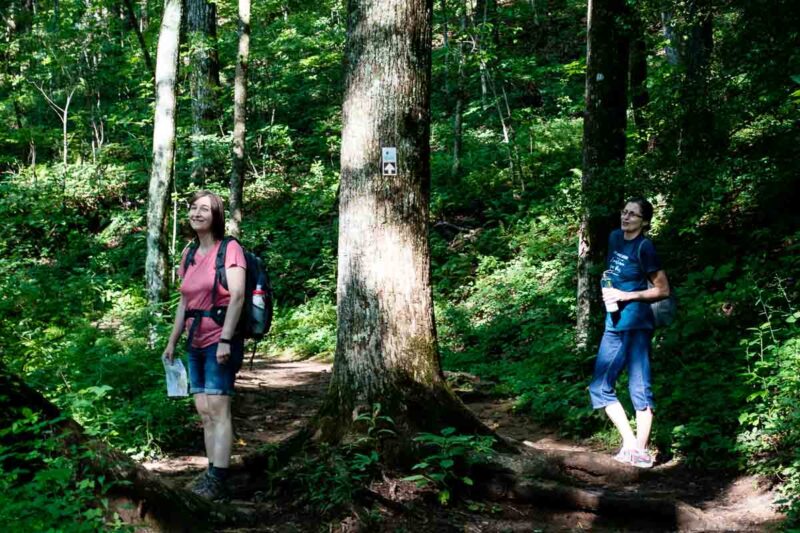
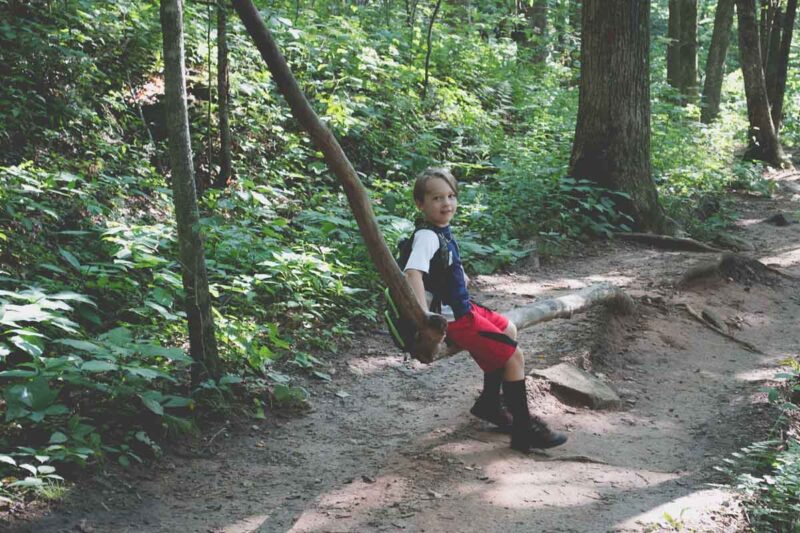
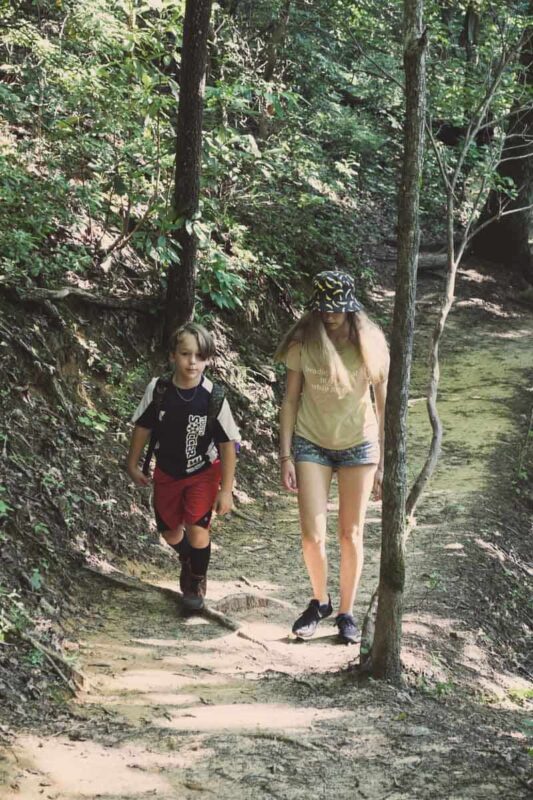
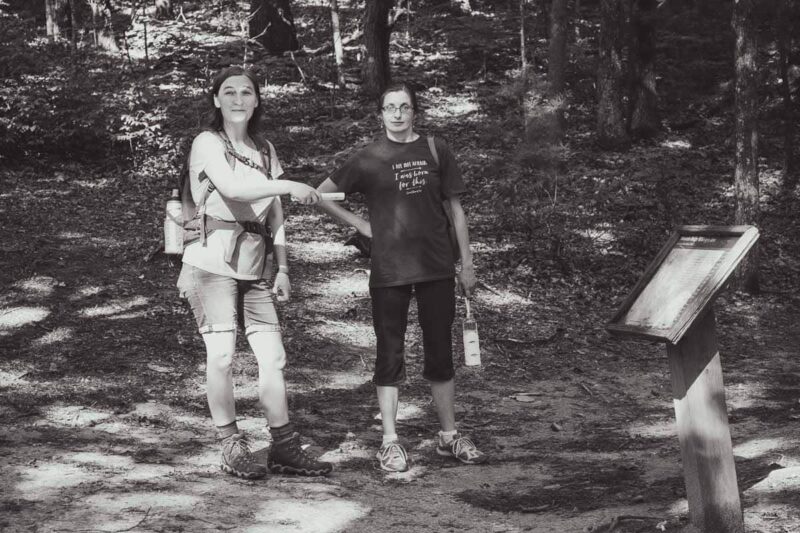
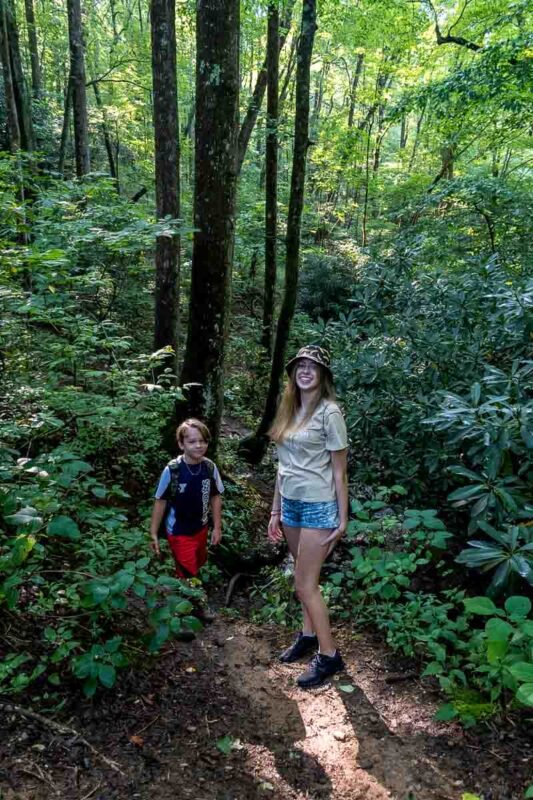
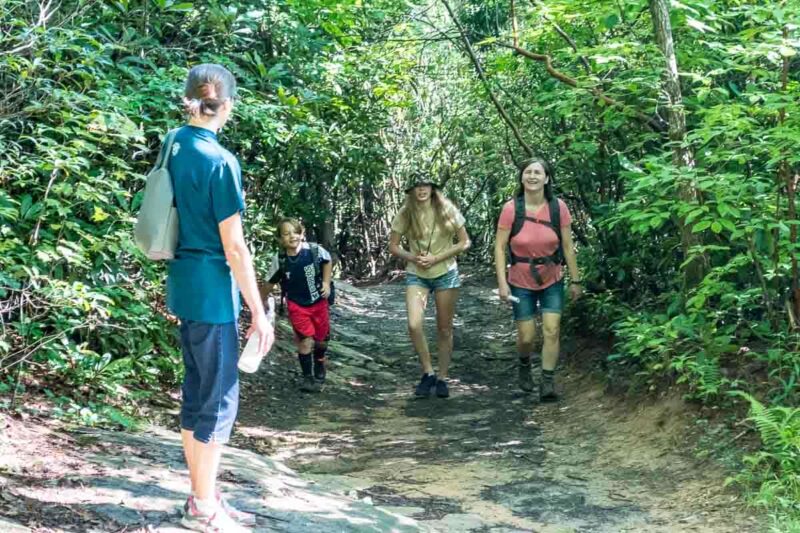
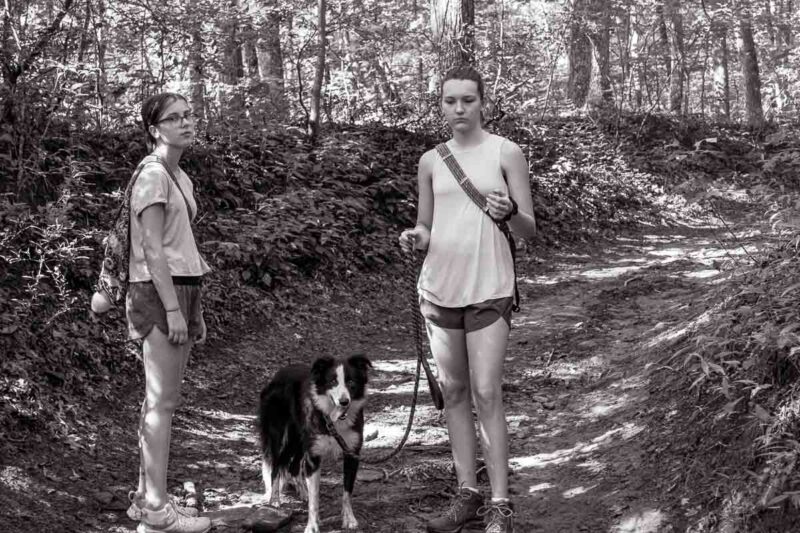
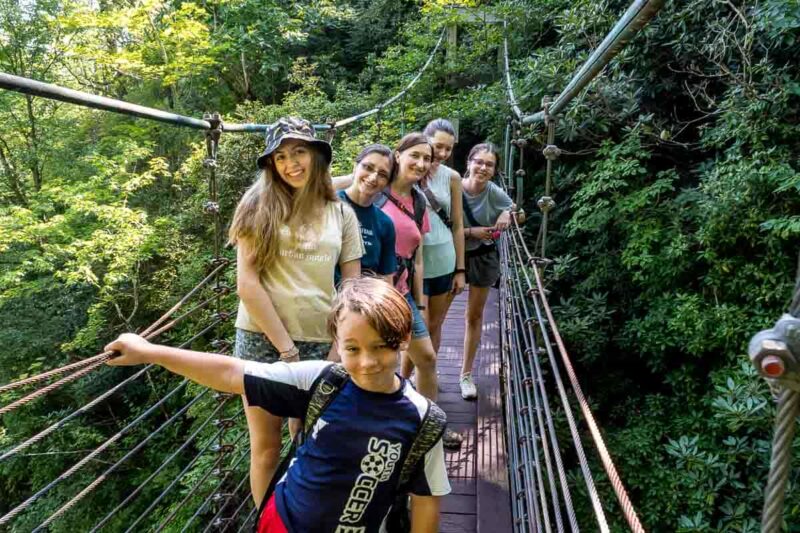
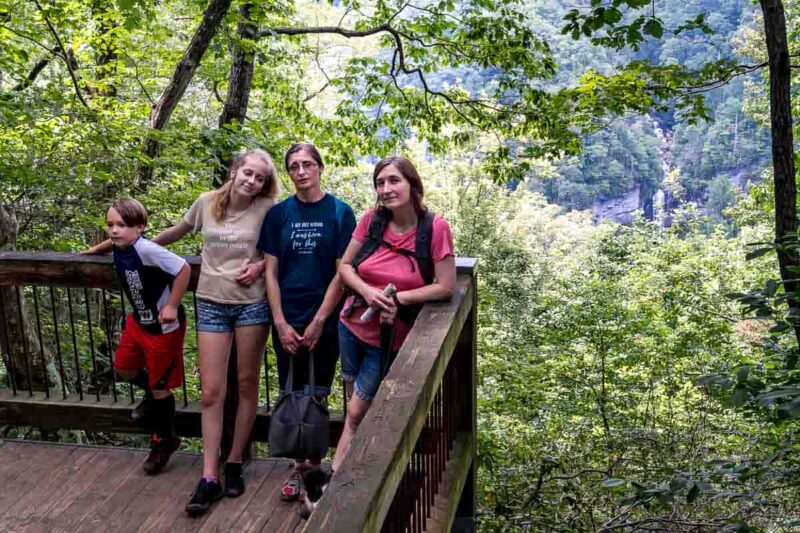
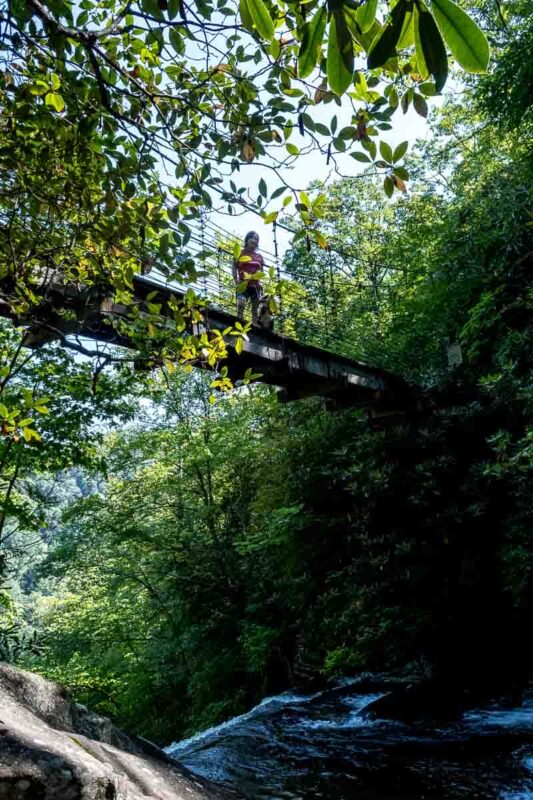
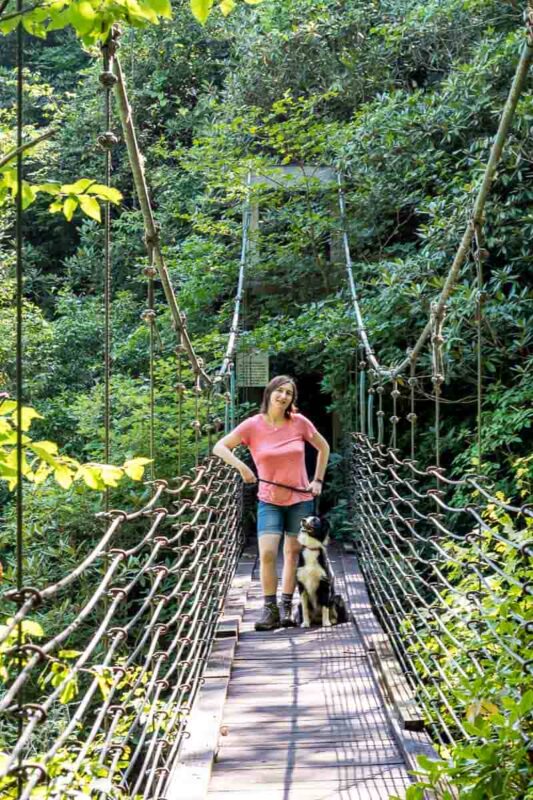
Today was the last Sunday before the school year starts, so we made the most of it with a hike that was supposed to be 5 miles total but ended up being 8. A lot packed into that sentence.

Starting school. What does that even mean this year? For weeks we've been wondering about what the year will look like. When our average daily new C-19 statewide case number was 100-200, we ended the school year in March and spent the rest of the year online babysitting for the most part. Now our daily numbers are 1,000+, and they have been for weeks. And we're talking about going back to school? It seems like madness. But we've got a Republican governor and a staunch Trump supporter to boot, so science be damned -- let's send those kids back to school. (Our governor pointed out that there's little risk in school-age children dying from this. When asked about the risks to teachers and their families, our fine governor said, "Well, they signed up for the job" -- as if he were talking about police officers or infantry soldiers.)

As for the 8-mile-should-have-been-5-mile hike -- what can we say? We used AllTrails.com to calculate the distance and didn't realize it was only calculating the portion of the hike that was on the red trail, neglecting the portion of the blue and pink trails we had to go on to reach Raven Cliff Falls. One would think that "Raven Cliff Falls Trail" leads to -- guess -- RCF. But it only gets you so far -- the rest is whatever the blue and pink portions were called.

But all the kids made it -- with minimal complaining. Well, "minimal" is often so very relative...

New New Year

We had our first staff meeting of the 2020/2021 school year this afternoon -- via Zoom. I think that's fairly indicative of what the year will be like.

What do we know now? We know what our various schedules will look like. We have four possibilities:

  1. Remote learning 100% -- no days in the school.
  2. In-person learning 25% of the time -- every kid comes to school one day a week, with the other days being online-only. (Reduces class sizes to about 7 per period.)
  3. In-person learning 50% of the time -- every kid comes to school twice a week, with the other days being online-only.
  4. Full-time in-person learning.

But we've known about these possibilities for weeks now. What exactly will we be doing? We're supposed to find out 10 August -- the first day teachers head back for in-school work days. If we go with option 1, which would be the sensible option given how awful our state if faring because of the high proportion of anti-maskers in our lovely red state, all our "getting rooms ready" time will be for nothing. No big deal -- more planning time.

Still, there's a lot more behind the scenes than I'd really thought about. What about kids who would otherwise be suspended? If we're in scenario 2, a three-day suspension would mean in reality three-week suspension. "We're just not going to do that if we can at all avoid it," our principal said. That was a scenario that I'd never considered, though.

I expect in the coming weeks, we'll be encountering much we didn't expect, no matter what our schooling looks like.

Seeing the Future

I have encounters with students sometimes that leave me wondering whether there is any good left in the word. I know there is; I see it all around me. But some interactions make me realize that some don't see that, and so for them, it doesn't exist. There is no good; it's all bad. Even what they see as good is in fact probably bad.

Suzanna is a young lady who makes an impression immediately: she is, in a word, strikingly beautiful. All the teachers on the eighth-grade hall willingly admit it: she's probably one of the most physically attractive young ladies we've had in the eighth grade in a long time. With a perfect dark complexion and hair that's always in lovely curls, she's striking. When she grows up, she'll be the time of woman that commands everyone's attention and admiration the moment she walks into a room.

Until she opens her mouth, for she is as unattractive on the inside as she is beautiful on the outside. Case in point: the first day of school, one of her teachers was taking roll. He called out her name, Suzanna Smith-Jones.

"Don't call me 'Smith.' That's my daddy's name. I don't like him. And I don't like you."

The first words out of her mouth. Her first impression.

"She said it with such anger, with such hatred," the teacher explained to me later as I was checking up on her -- I don't teach her -- after she and I had had a run-in one morning in the hallway.

"What kind of life has she lived to get that messed up in only thirteen years?" I asked. "What kind of a future does she have?"

The encounter I'd had with her was instructive as well. It was in the morning, before the actual school day started when students who arrive early are to sit outside their homeroom teacher's door and wait quietly and patiently. I'd noted early in the week that she was sitting at the top of the hall, so I assumed that was where her homeroom was. I was stationed at the middle of the hall, so when she came to my area and plopped down with some friends, I politely said, "You need to go back up there to your homeroom, please."

"I ain't goin' up there," she said, her voice instantly on edge with anger.

These types of reactions -- instant and unqualified disrespect when I've made a conscious effort to be respectful -- constitute my one big button. I don't lose my temper with students often, but this does it. Still, I've been conscious of it for some time now, and I've largely managed to get that under control. So instead of responding like some teachers would, with instant anger and disrespect in return, I simply restated my instructions: "I'm afraid I'm not asking you. I really need you to go back up the hall, please."

"I'm just gonna sit here like I do every day."

"Don't do this, please. Make a better choice."

At this point, her friends began encouraging her: "Come on, Suzanne, just do what he says." I find that when I'm polite at all times, I earn a reputation among students for just that, and in such encounters, they often respond by suggesting that their friend is making a mistake. I was glad to see it happening then, and I really hoped she would comply. That would be the end of it. But she wasn't giving in.

"I ain't doin' nothing. I'm just sittin' here."

It occurred to me that perhaps her homeroom was in fact in the middle of the hall, and I realized that this was going nowhere: I couldn't force her to move, and she wasn't complying, so I simply stated, "Well, I'm afraid you'll just have to talk to Mr. M when I refer the matter to him."

"I guess I will."

After some checking later in the morning, I learned that her homeroom was not at the top of the hall, not in the middle of the hall, but at the far end of the hall.

Often, with such kids, I make a special effort: I actively try to cultivate a new relationship after such an encounter. These relationships sometimes turn into some of the closest, warmest relationships I have with students. I become something of a coach to them, something of a mentor. Such students often seek me out when they're having a conflict with another student or a teacher because they know they can vent their frustration safely with me and that the only thing they'll get in return is a little coaching and a lot of encouragement.

I tried to cultivate such a relationship with Suzanna. She was not simply ambivolent; she was openly hostile to the idea. I waited, tried again. Still the same reaction.

A girl trapped in her own frustration, feeding off her own anger, has such a dismal future in my eyes that it makes it difficult to watch that person move through her day. She's a pinball, batted about by the whims and accidents of the people around her.

Recommendations

This year, I had a student, E, who was exceptional in many ways, but most noticeable was her certainty that she would be a published writer. Indeed, that she would make her living writing. I have no doubt that she will: she has the talent and the drive. What she’s lacking, of course, is what all young writers lack: experience. Not just live experience — reading experience is just as important. So at the end of the year, I made her a list of books I’ve read which seem to me to teach something important about writing and a few films that teach something about good storytelling:

Books

Title

Author

Reason Why It’s Important/What To Learn

Absalom, Absalom! William Faulkner This is simply the best book ever written. There is so much to learn from this book:

  • Non-linear, fragmented plot
  • Multiple narrators
  • Untrustworthy narrators
  • Multiple conflicting narrators
  • Absolutely gorgeous language
  • A gripping, engrossing plot

This is unquestionably my all-time favorite book, and I read it at least once every two years.

The Unbearable Lightness of Being* Milan Kundera This novel mixes philosophical musings, random bits of weird history, and a fantastic story set in Prague, with the Prague Spring as its setting. (Google it before you read this.) Kudera uses an unconventional point of view in this book: not really first person, not really third, it’s a curious mix of both. You’ll never forget your first time reading this, and you’ll walk away wanting to imitate its totally original point of view.
As I Lay Dying William Faulkner Each chapter is told by different 15 different narrators, and it uses a non-linear plotline.
Red Plenty Francis Spufford Historical fiction at its best. This excellent novel blends actual historical characters mixed with invented characters. Each chapter is a different time and different place in the USSR with different characters, but there are a few overlaps that provide continuity, so it’s a good study of fragmented plot development.
The Adventures of Tom Sawyer Mark Twain Twain is the master of making jokes by leaving much of the joke in the reader’s mind: he gets you going and then stops, knowing your train of thought will end in humor. He’s also a master of writing in comic dialect.
The Adventures of Huckleberry Finn
My Ántonia Willa Cather There’s nothing complicated or groundbreaking in this novel. It’s just simple, linear, first-person story-telling at its best; a lovely, lovely book.
Tales of Galicia Andrzej Stasiuk This novel mixes magical-realism, untrustworthy narrators, non-linear and completely fragmented plotlines to create a masterpiece. One of my all-time favorites.
Bleak House Charles Dickens It’s Dickens — read all his works. He’s a master. He’s especially good at creating multiple plotlines and weaving them together.
Great Expectations
4 3 2 1* Paul Auster The book of multiple plotlines: this novel takes one character and imagines four different lives for him. There are overlaps and similarities, but it’s the differences that make the book incredible. And that ending: you see it coming a thousand miles away, and yet it still shocks you and takes your breath away.
The Noise of Time Julian Barnes This novel is told in short fragments. There is a plot, but it’s not immediately obvious.
The New York Trilogy Paul Auster The meta-fiction masterpiece in which the author mixes real life with the story, this novel layers different realities (including the reader’s) into a mind-bending blending of storylines.
East of Eden John Steinbeck Possibly the greatest straight, simple, linear-plotline novelist America has produced, Steinbeck simply tells unforgettable stories in a straightforward, compelling manner.
The Grapes of Wrath
Being There* Jerzy Kosiński This novel utilizes something like magical realism in a subdued way.
One Hundred Years of Solitude* Gabriel Garcia Marquez The master of magical realism, Marquez is a spellbinding writer. You will never read a book with a story told in quite the odd, confusing, compelling way as this book. One of the most original books you will ever read.
Go Set a Watchman Harper Lee This was the first draft of To Kill a Mockingbird. It will teach you how much a story can change upon revision.
To the Lighthouse Virginia Woolf This book completely blew my mind the first time I read it. There’s no way to describe what you can learn from this book. Just read it. It’s incredible.
Brothers Karamazov Fyodor Dostoyevsky These are long, complicated novels. They are also perfect novels. Demons is my favorite and his best, but most people put Brothers Karamazov in that slot. They’re difficult to read because they require a lot of background knowledge, and the Russian names are difficult at first to someone not familiar with the language. Read along with an audio version.
Demons
Crime and Punishment
The Haunted Bookshop  Christopher Morley Everyone who loves books should read this one–a story about a bookshop?! What could be better. 
A Gentleman in Moscow Amor Towles This is just a charming story. Nothing experimental or bizzare — just a great story told expertly.
Jane Eyre Charlotte Bronte A surprisingly modern novel that’s relatively old (1847). You’ll learn how to maintain a theme throughout a novel, how to give that theme a surprising twist toward the end.
Wide Sargasso Sea Jean Rhys One of the most original books written. This was written some 120 after Jane Eyre, and it is something of a prequel to Bronte’s novel. DO NOT read this without reading JE first. You’ll learn how to find inspiration from other books.
Angela’s Ashes Frank McCourt This book will teach you how to write a memoir like a novel.
The Outsiders S. E. Hinton She wrote it when she was 16. Enough said.
The Plague Albert Camus An example of existentialist (look it up) writing — it’s a novel with a philosophical agenda.
Wild Swans: Three Daughters of China Jung Chang Family history at its finest. It will also teach you a lot about Chinese history.
The Name of the Rose* Umberto Eco Historical fiction that’s incredible: a mystery set in a 14th-century monastery. How could you not want to read that?
The Master and Margarita Mikhail Bulgakov What happens when a Russian writes a novel with the devil as one of the main characters? Perfection happens.
The Diving Bell and the Butterfly Jean-Dominique Bauby I mentioned this in journalism; we read one of the chapters. From this you’ll learn how to write short, powerful observations about some of the most mundane things.
Into Thin Air: A Personal Account of the Mount Everest Disaster Jon Krakauer This is history written like it’s a novel.
The Sense of an Ending* Julian Barnes A slim book about confusion that puts the reader in the exact same spot of ignorance as the protagonist. It will teach you pacing.
Breakfast of Champions* Kurt Vonnegut A meta-novel that’s mind-bending, Breakfast also incorporates little sketches into the novel.

* Indicates mature content.

Films

Title

Reason Why It’s Important

In the Mood for Love (PG) A Chinese film. A slow, measured story that seems simple yet has incredible tension just beneath the surface. Excellent ending.
The Lives of Others (R) A German film. Absolutely the best ending of any film on the planet. My all-time favorite drama.
Conspiracy (R) This film features a bunch of men sitting around a table talking for 90% of the film. Incredible acting, though, and it will teach you what good dialogue sounds like.
Dangerous Liasons (R) Intersecting plots and plotters plotting against each other, this film will teach you how to tell a story in which emotions (in this case, fury and contempt) are always present, always hinted at, yet never fully shown — until the end. I think there was a remake of this. I’m referring to the 1988 original with John Malkovich, who is utterly brilliant in this film.

Sadly, most of these are rated R, so your folks will have to make the call on them.

Please Advise

Over the course of the last few weeks of school, I completed an online course to fulfill my tech proficiency requirement for my teaching certificate. I got a notice from someone in our administration earlier in the year that I needed to take care of that, and so I did. Now, I don’t want to sound rude or anything — it’s not that I think I’m so technologically amazing or anything — but the course I took was, for my level, useless. I learned nothing. It was all just a bunch of busy work for me. But still, busy work or no, it was required. So I got my certificate of completion and put it in our district’s professional development web site.

Shortly after that I received the following email:

Your request for Out-Of-District credit (for ” Collaboration Renewal Greenville”) has been denied.

You must login to Professional Development to view the reason your PD was denied.

Please login to Professional Development, view the reason your PD was denied, and make corrections and resubmit your request, if applicable.

Thank you,

The Professional Development Team

Why they couldn’t tell me the reason in the email is a mystery. I logged back into the professional development site and found the following explanation:

This is SDE credit and must be entered directly onto your certificate at the State Dept. Please email your documentation to [email redacted].

So I loaded the state department of education’s web site and quickly enough determined the email of the individual I needed to contact. I wrote a quick email and attached my documentation:

Ms. B—,

I have completed my tech proficiency course (see attached). My certification ID is: [redacted].

What steps do I need to take to update my certificate?

What was the response?

Good Afternoon G,

I don’t need this information. You will need to follow-up with the Greenville PCS Coordinator. This may be someone in the Greenville District Office.

Note: Technology Proficiency isn’t a requirement for your teaching certificate renewal. As of a few years ago tech proficiency is no longer printed on certificates.

I forwarded it to the district personal with a single sentence: “Please advise.”

On the sunny side of things, I took a bike ride this morning at 6:30 and saw this lovely view as the sun came up:

Karma

Written several years ago during the school year.

A young man this morning had a run-in with me. I say “he had a run-in with me,” but I guess the opposite is equally true: I had a run-in with him. But in a way, it’s a matter of semantics, for it seems all our interactions are negative like this morning’s. In short, he does not like being told what to do by anyone, and though I don’t teach him, I am still responsible for him as a teacher on the hall, so I have to tell him to do things. Like get in dress code. Or take off the headphones. Or stop chasing this or that girl. Or get to class. Or get to your locker. Any number of things that he knows perfectly well he’s expected to do. This morning’s encounter was another in a long line of meaningless conflicts that arise from his instant disrespect whenever he’s told to do something.

At about six-two, Terrence is taller than almost all his eighth-grade peers, perhaps because he’s supposed to be in ninth grade. He struts down the hall and is admired by boys and girls alike. Boys and girls who see his supposed toughness as a virtue. Boys and girls for whom his probation-related ankle-bracelet adds to his prestige. Most teachers think a little less highly of him than do his peers.

“Terrence, you need to get to your class. It’s girls’ locker time, not boys’.”

Instant conflict: “Man, you see my teacher ain’t here. You see I gotta wait in the hall!” in such a bellicose and hateful yelled tone that it’s a wonder he was surprised at all what was coming next: a reprimand for disrespect.

“There’s no need to talk to me that way…” and he turned his back on me and stood with his back to me. Fairly typical behavior.

“That’s fine, Terrence. I’ll refer this matter to the administrator.” Which means really nothing because he’ll get a day or to OSS for it, and kicking a kid like this out of school is no kind of punishment at all. It is, of course, a relief to his teachers because they don’t have to deal with his nonsense. It’s a relief to his classmates because now they can get some work done. But for Terrence? It’s meaningless, and he didn’t mind telling me so.

“Man, I don’t even care.”

That could be his mantra, and he’s not the only student like that. They’re the ones that are the toughest to care about because they don’t even seem to care about themselves or others enough to see the harm their behavior causes, to themselves or to others. Their lack of self-confidence displays itself in bellicosity and anger, and the only way to get through a protective shell like that is not to take their verbal strutting personally — much easier said than done. And so such students just jostle about through the day, bouncing from one conflict to another, all of which serves as just more evidence to their victim mentality that the whole world is out to get them.

Later in the day, he was sauntering down the hall while I was out working with a couple of students who’d asked to work in the hall to avoid a potential conflict in the classroom (Some days, it’s all about the “drama” as the kids call it). Terrence stopped briefly to chat with a friend who was returning to another classroom from the bathroom. He explained that he had a day of OSS.

“Why?” his friend asked.

“Because of him,” he said, pointing at me.

I’d written the administrative referral during my morning planning period, and the grade-level administrator had already processed it. It’s telling because of the simple fact that Terrence’s referral received top-level priority. I’m not sure he would have grasped the significance or irony. In honesty, though, none of that entered my mind at the moment. I simply replied with my own mantra of sorts, the standard response I give to students who blame a teacher for their behavior issues: “No, Terrence, it was because of the choices you made.”

“Man, I didn’t even want to talk to you,” he sneered.

There, in less than ten words, was the summation of his whole problem. In fact, he only needed four: “I didn’t even want…” If Terrence doesn’t want something, he doesn’t do it; if he wants something, he does it. Anything that gets in the way is going to cause a conflict, and Terrence has learned that if he is aggressive enough, disrespectful enough, and consistent enough, he can get what he wants from a lot of people who in fact are in positions of authority over him. Clearly, he behaves thus with his parents (or, more likely, with  his mother — statistically speaking, he’s likely from a single-parent home), and clearly it works, else he wouldn’t do it. It’s probably also worked with teachers who are just tired of the fight and give in from exhaustion. But I’ll stand my ground with a Terrence. I’ll be part of the wall that he crashes himself against. “It’s better that he learn now when the stakes are not as high,” I might even justify it to myself. Truth be told, a significant portion of it is pride — same as Terrence.

“It doesn’t matter whether you wanted to talk to me or not. I’m the one in authority, and when you don’t…” but it was useless.

What I really wanted to say was, “Well, there will be lots of people you don’t want to talk to, like the judges you’ll appear before throughout your life. But they won’t really care whether or not you want to talk to them, and if you talk to them as you speak to any and all adults in this building, you’ll have some pretty hefty consequences.” I thought of Ebony Burks and her encounter with a judge during her arraignment.

We might be troubled by the way the judge seems to antagonize the situation, but in the end, Ms. Burks is responsible for what comes out of Ms. Burks’s mouth, and she could have stopped at any moment. Terrence is easy to imagine responding in a similar fashion.

That’s what I wanted to say but of course would never say. “Less said, easier mended” our previous principal’s email signature read, and it was something I really took to heart. Besides, to tell Terrence that would be to tell him one day he’s going to sprout wings and become a flying turnip: he’d never believe it.

Terrence is the type that has such an impact on the hall that when he’s missing, it’s immediately obvious, and so in the afternoon, I noticed he was missing but assumed he’d just been sent to ISS for the remainder of the day. Perhaps he’d given another teacher trouble, and the teacher simply sent Terrence to the administrator straight from the classroom.

It turns out he’d continued making poor decisions after our first encounter, but the decisions of the morning were nothing compared to the decisions he’d made even earlier in the day, before he left for school, as he was packing his materials, such as they are, for a day of instruction — choices so dire that his hypothetical appearance before a judge I’d been imagining transformed to the afternoon’s certainty. In short, having brought a pistol to school, he is in about as much trouble as a young man can be in, and he will not be coming back to school.

And my reaction? I smiled at the thought of almost-instant karma. In fact, walking out to the car, I couldn’t wipe the stupid grin from my face. It was as if I’d experienced the greatest “I told you so” moment in my life. “Of all the kids to bring a gun to school,” all the teachers had been saying, “I would have picked him.” Of all the students to do something that would land him in front of a judge, I would have picked Terrence. Our clairvoyance instantaneously confirmed.

And now? I think to myself, why in the hell was I smiling at another human being’s misfortune? Certainly his misfortune was a self-created condition, borne of his consecutive poor decisions. In short, from a certain point of view, he got what he deserved. But for a child of that age, no more than fourteen, perhaps fifteen (if he’s been held back a year), it’s tragic to think that his worldview, his reactions, his existence has been so poorly shaped that he already has virtually no future. He had no input regarding his environment. He had no input into the involvement of his father in his life. He adapted to the laws of the street and simply never learned to turn those behaviors off when in a situation with said behaviors were no longer positive but in fact detrimental.

I’m not saying he’s just a victim, for he’s had seven or even eight, possibly nine, full years of school in which to watch other students who don’t find themselves constantly in trouble and learn to copy their behavior. Still, there is an element of victimization here that only leaves me shaking my head, determined to try to get through to the next Terrence I meet (I have a couple in my own classes every year) and thankful that I am able to provide my own children with the stability that these children never experienced.

Addendum: Background

The above was written some time ago–I held off publishing it because I really didn’t know how the story would end.

I know now.

Terrence appeared before a judge and faced charges. He appeared before the school board and was expelled. And he committed another crime in the meantime and is now locked up.

I held off publishing also because I thought he might end up back at our school if he’d been expelled. Unlikely, but a possibility, for expulsion in our county means expulsion for a full year, after which, the student can return to the school and pick up where he left off, so to speak. With his later charges, Terrence likely won’t be coming back ever again.

We heard more about his situation as the year progressed. Apparently, his father had just gotten out of prison when all this started. I can only imagine the sense of complete failure his father felt when he learned what his son had done, the frustration he felt driving to the school to meet with administrators and police officers about the choices his son had made. I can imagine a conversation like this when he sees his son:

“Didn’t I teach you anything going to prison?”

“Yeah, you taught me plenty.”

Day 79: Celebration

The eighth-grade assistant principal, Mr. M, retired this year. What a year to retire -- everything tossed in the air and mixed up, then tossed again.

"Are you going to stay another year so you can end normally?" I joked.

"Oh, no!" he laughed -- Mr. M's famous "Oh, no!" that's his default answer to silly questions or ridiculous situations.

Mr. M, the legend

"Just wanted to let you know that student X decided to get up and tell student Y how very fine he thought she was and how..."

"Oh, no!"

Mrs. M (unrelated), who retired in 2019 after 50 years of teaching

Mr. M, who seemed to know everyone, who seemed able to remember more names than a telephone book. "You remember So-and-so? About six years ago? Well, I saw her working at the Spinx on X Road..." There was not a student he couldn't remember, unless the student was one who flew under the radar the entire three years. "Oh, he's a good kid -- I don't know many of them," he joked. But he was joking about not knowing them and the false dichotomy he had just created -- he didn't really believe in "good" kids and "bad" kids. They're just kids. Some of them seem more determined than others to make their life's share of bad decisions before turning sixteen, but he didn't see them as bad. That's key in an administrator. Or a teacher.

So what could the school do for a man who'd given decades to the school and its students, who was known and loved throughout the community, respected as a tough but fair administrator who wanted all the kids to succeed but wouldn't suffer any foolish behavior that might jeopardize that -- what does a school do when he retires in 2020, when in this last week of school it's been two and a half months since we've even worked together in the same building? In a normal year, we'd have a party with cake and speeches, pictures and laughter, people standing in line to congratulate him, to pat him on the back, to hug him. But this is not a normal year, in any sense of the word.

What do we do? We have a party in the new 2020 fashion -- a drive-through party, with honking horns, cheers, signs, and well-wishers blowing kisses from their cars.

Sixth-grade, eighth-grade, and seventh-grade assistant principals and the principal (l to r)

What a thing to be so loved, to be so respected. It's likely every one of us would have a group of people who loved and respected us this much, but some of us might have fewer in that group than Mr. M.

But then again, not all of us are legends.