matching tracksuits

fun in threes, sometimes fours

education and teaching

In Which the Teacher Screws Up

Last Thursday, the kids had an e-learning day as the whole district took a day off for teachers to get vaccinated. I gave the students the following work:

So many issues with this. First of all, the time I was supposed to be online (and therefore the time students were expecting me) was 9:00-9:30. When I got online at 9:30, everyone was leaving. How did I look at the school schedule and think I was supposed to be online during math teachers’ time? Oh well — it was no big deal.

The real problem, though — did you notice that fourth point? “Read chapters 13-16 by Wednesday.” But on Wednesday to have them read by Monday. So when I began class today ready to work with chapters 13-16 of To Kill a Mockingbird, a substantial number of students hadn’t done the reading.

“You said on Classroom to have it done by Wednesday,” a sweet and honest girl said. She offered me her Chromebook with the assignment pulled up: “See?”

I stood there, looking at the clear evidence I’d screwed up, wondering what happened (I just mixed up the chapters — it should have been chapters 17-20 for Wednesday), and wondering if there was any way to salvage the day.

“Reading day.”

“Seriously?” they asked incredulously.

What else was I to do?

In the Moment

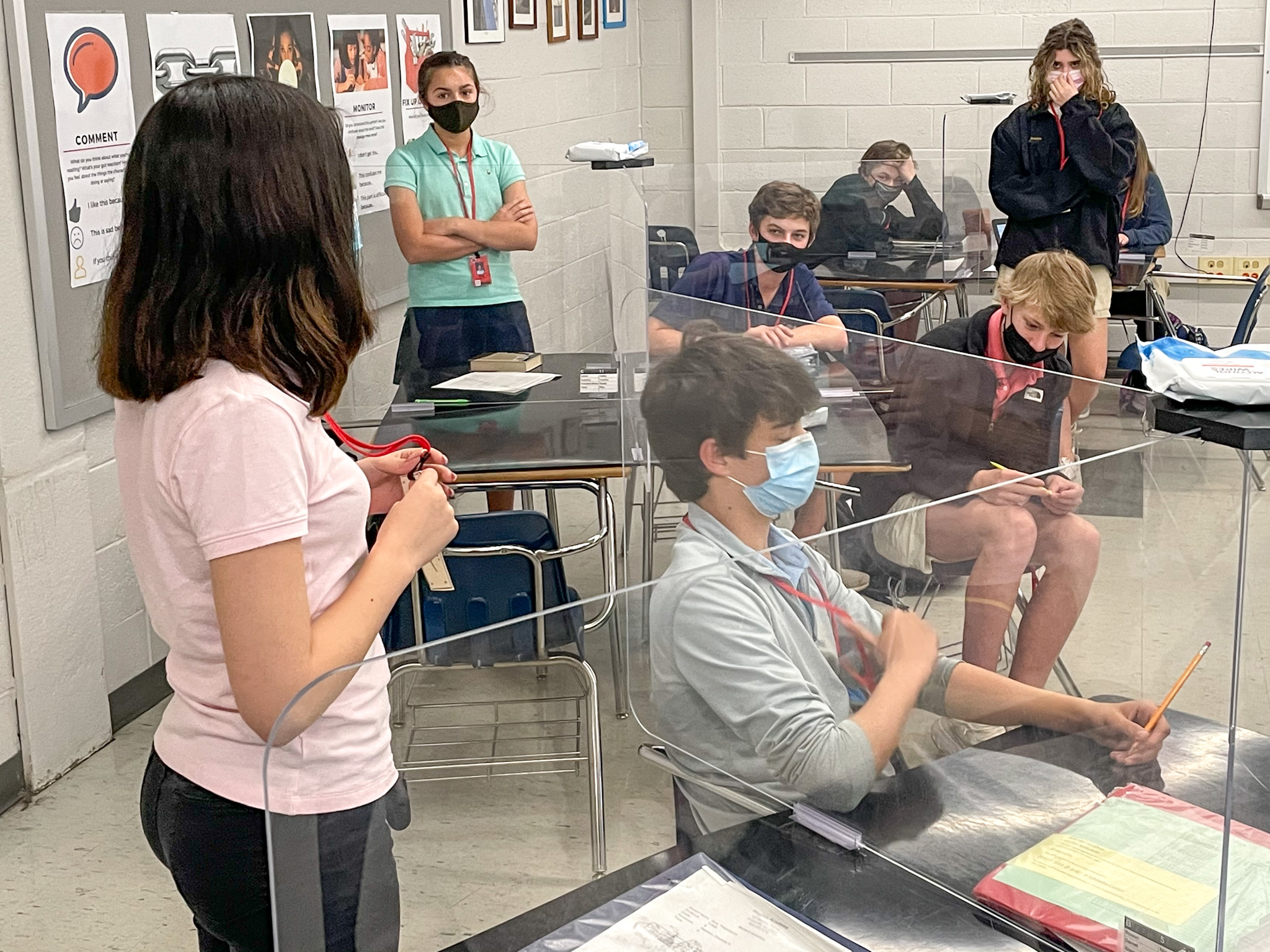
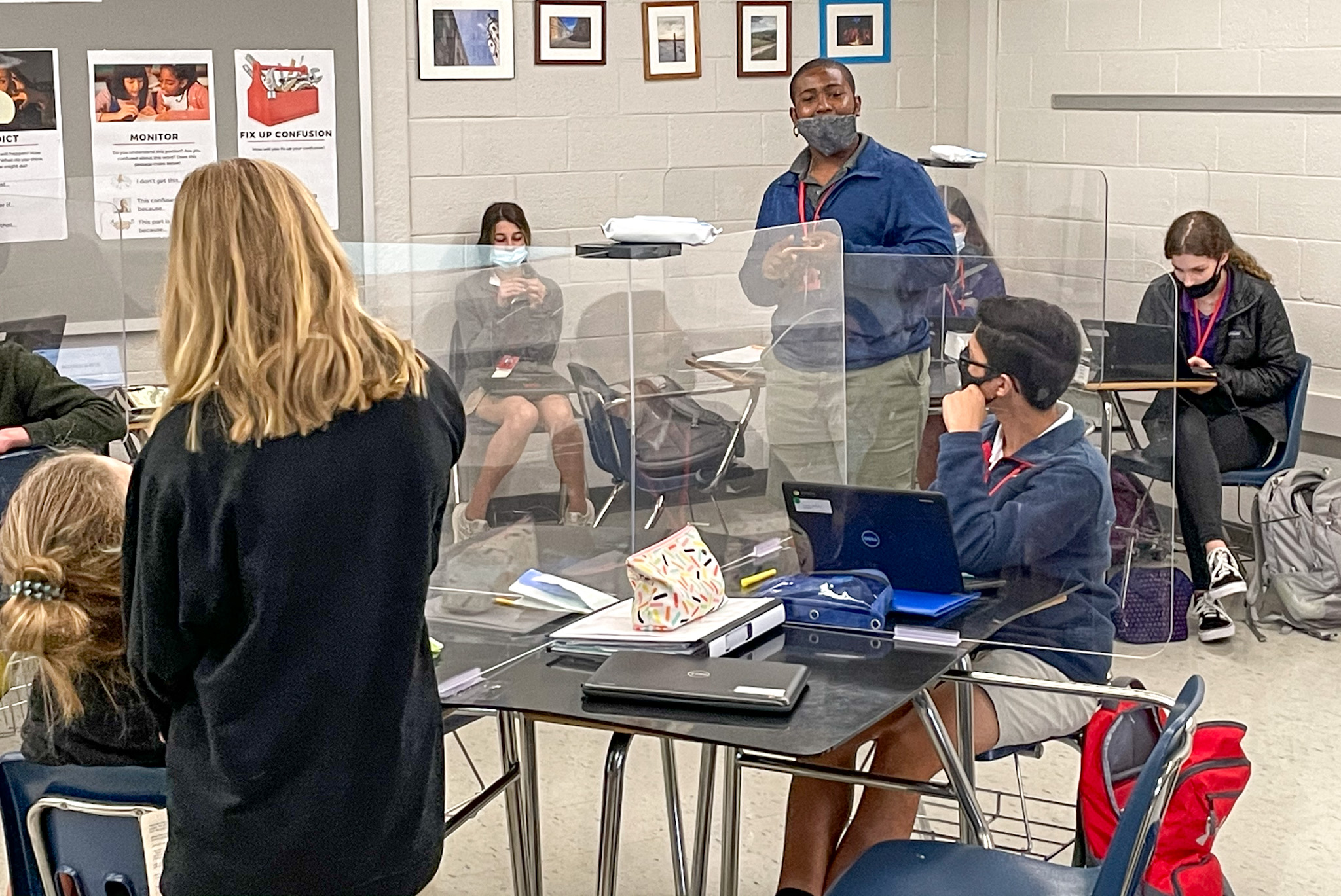
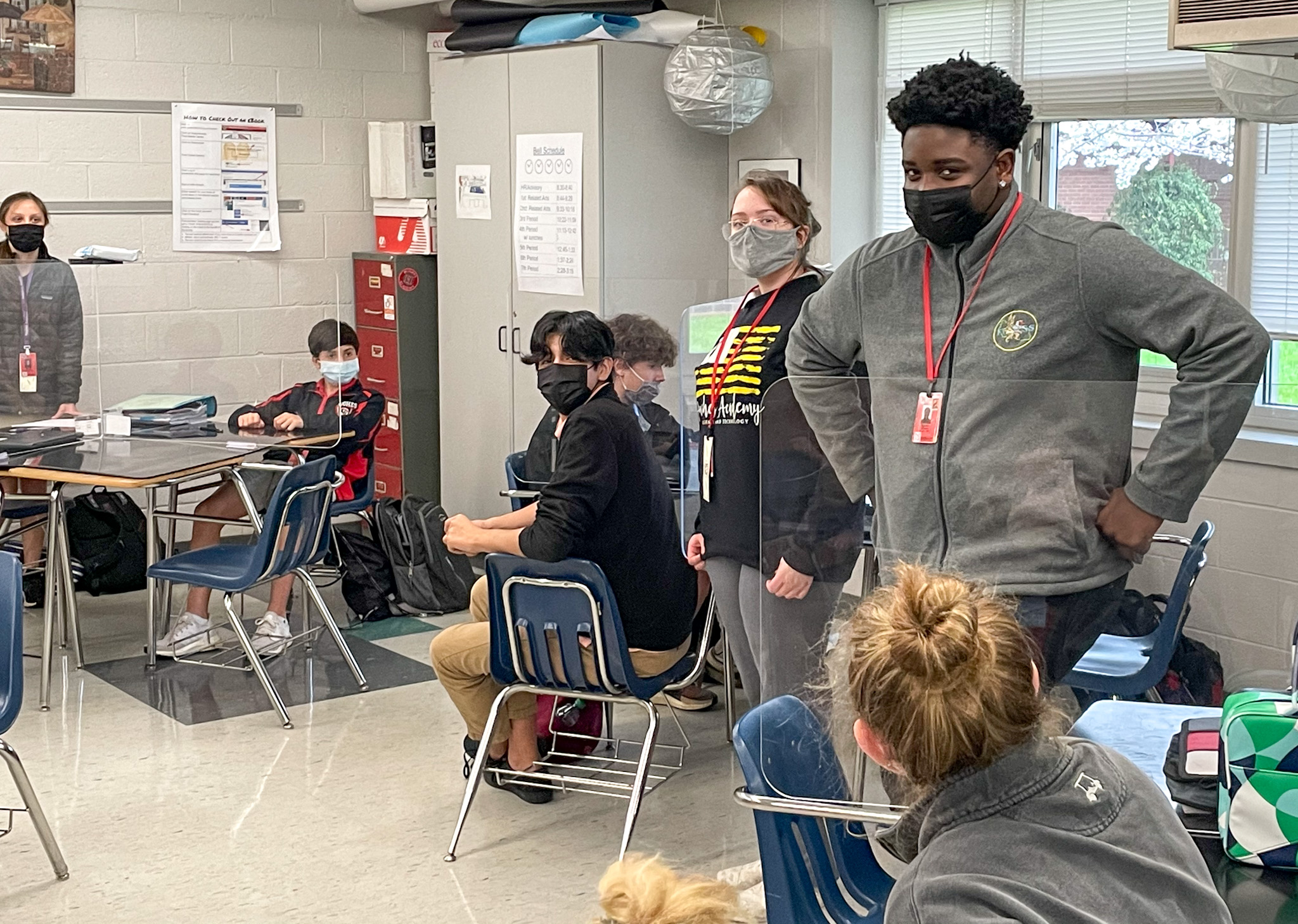
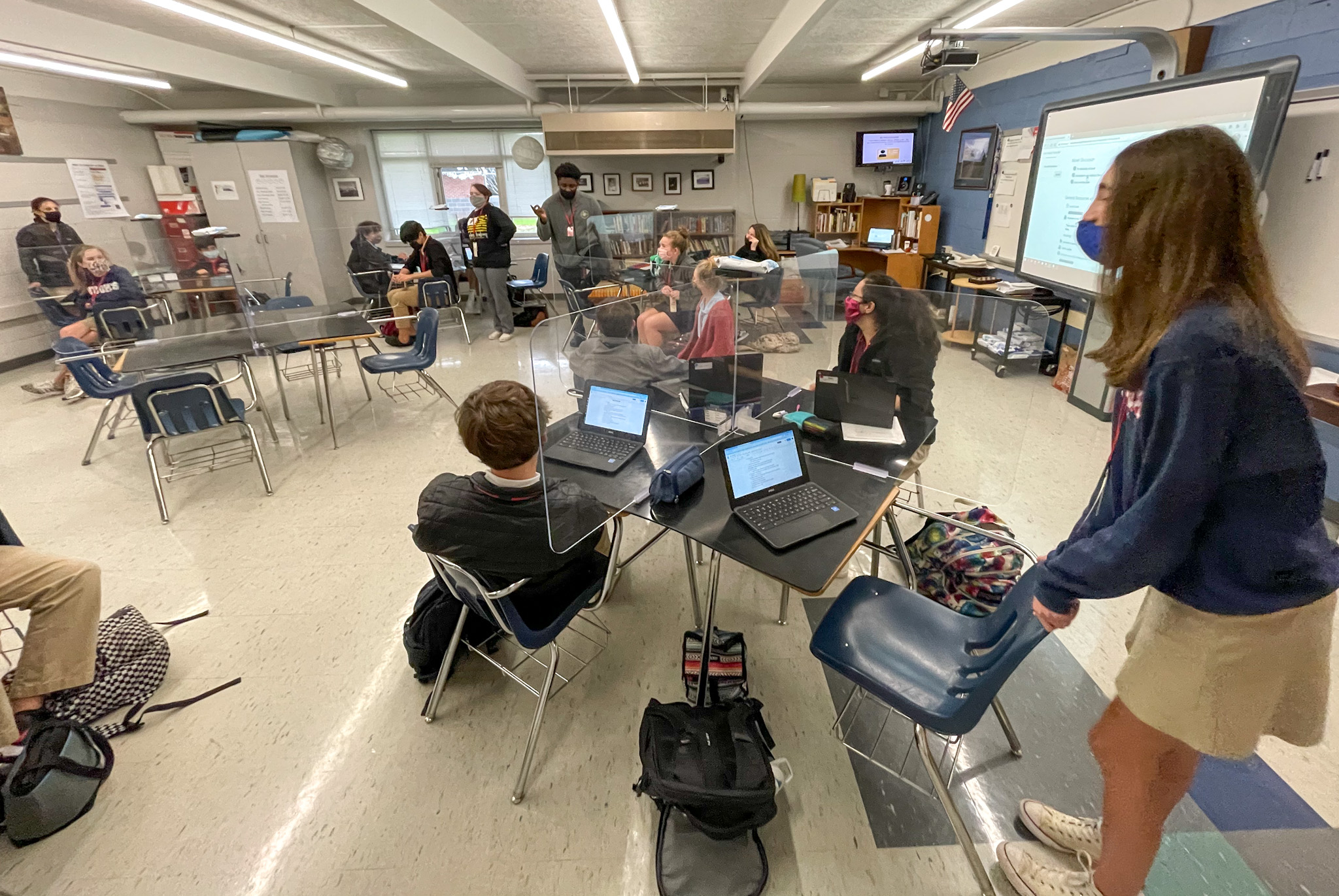
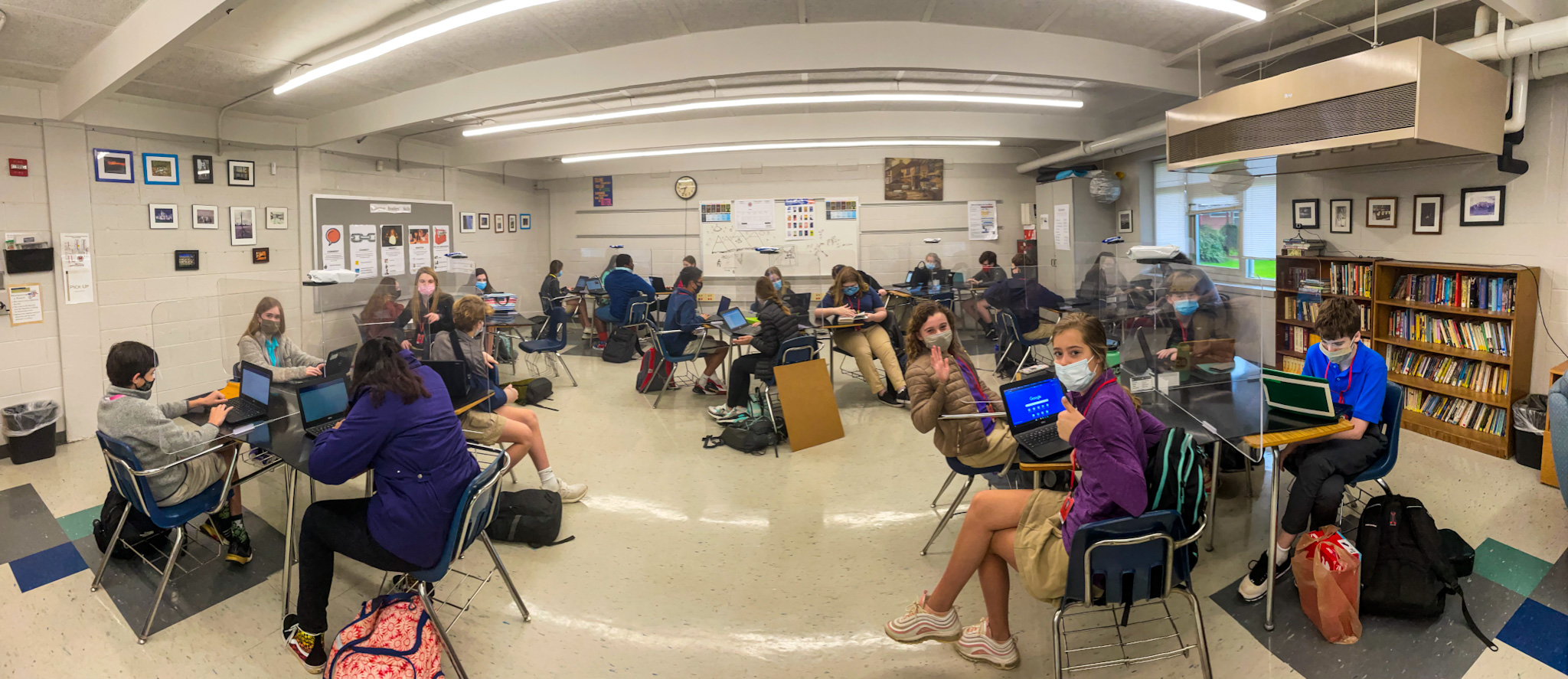
The two girls were having an argument over how they were supposed to complete their homework. One girl insisted that they were supposed to write much more — much more — than I’d required. And she wrote much more. (That’s her in the upper left corner with the puffy jacket on, hair in a bun, looking down at her computer.)

“You know, H, I’m really going to miss you next year,” I said with a laugh when we got everything cleared up. “You’re the type of kid who never takes the easy way out, and that’s going to serve you well as an adult.” She smiled a little (or so it appeared — it’s hard to tell with masks on), thanked me, and headed back to her seat, shooting playful daggers at the girl she’d been arguing with and jokingly hissing, “See? I told you!”

All Here

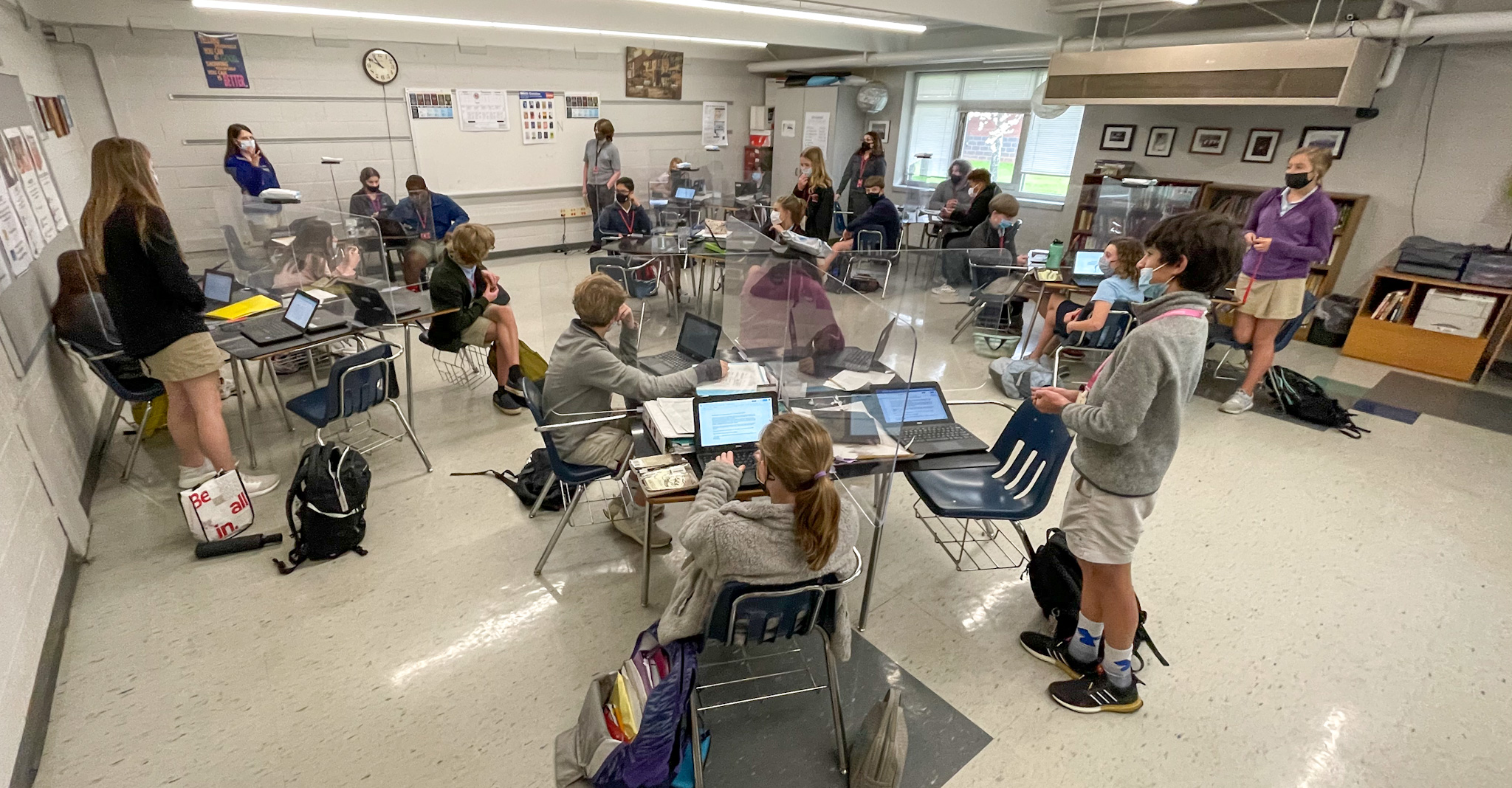
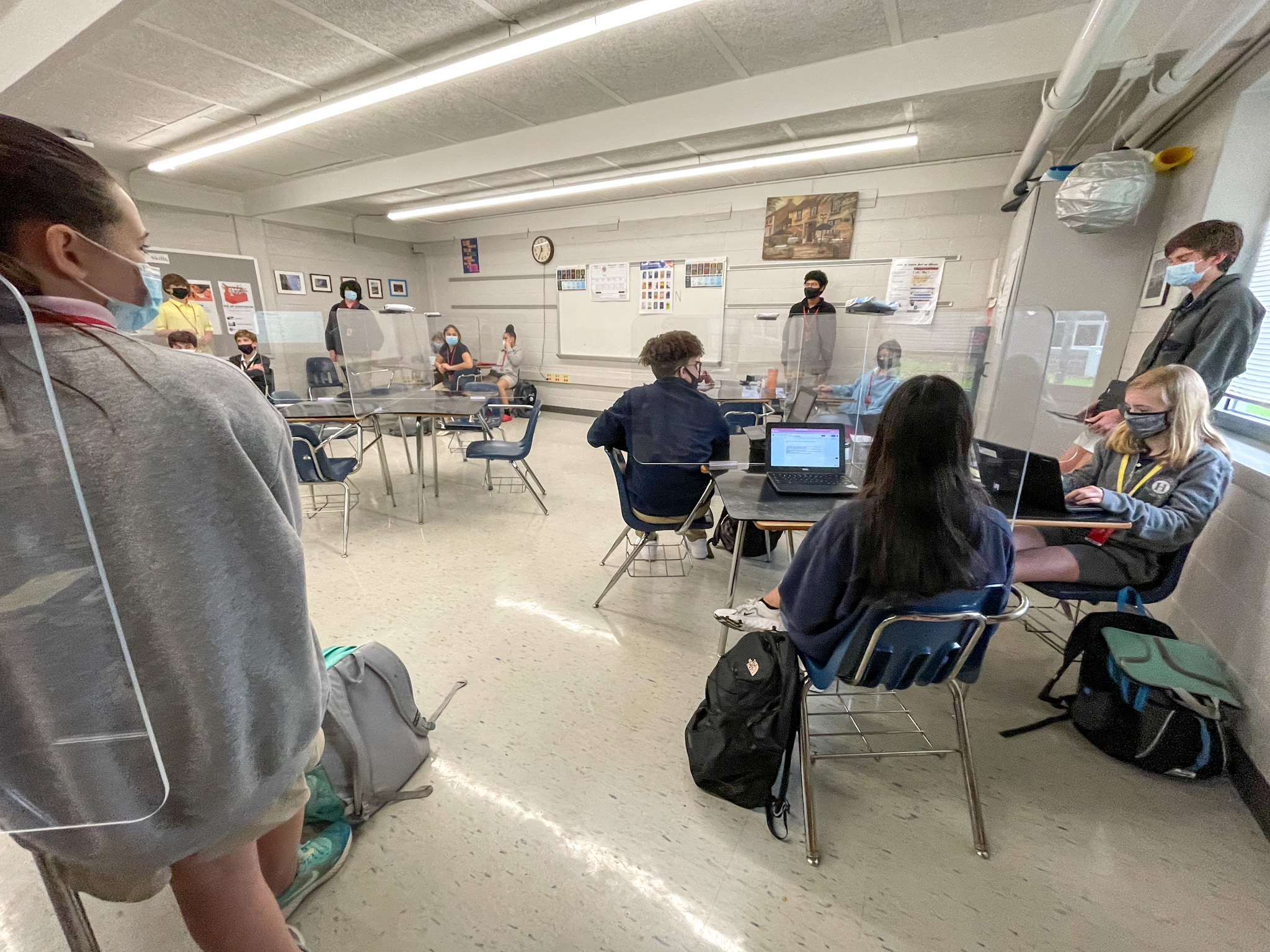
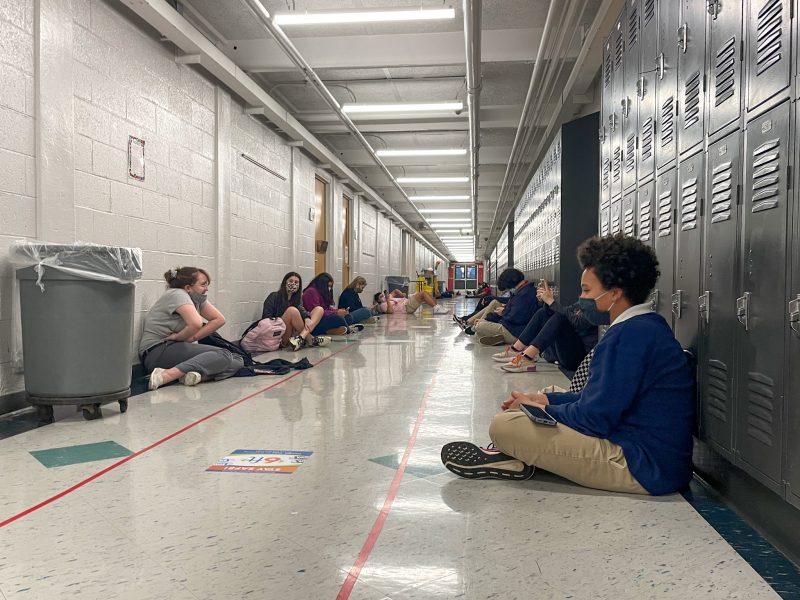
Everyone was in first period for the first time in weeks.

Cliche

In class today, we went over formal voice, and one of the rules I presented concerned the avoidance of cliche. “Avoid them like the plague” is the old joke — they didn’t get it because they’d never heard the cliche.

Cliches are a little depressing: they’re victims of their own popularity. Someone comes up with a clever metaphor or conceit, then everyone wants to use it. Suddenly, it’s everywhere, and just like that, a clever saying has become a dreaded cliche. Even “tired old cliche” is cliche.

When it came time for creative writing at the end of the day, I gave them a simple prompt: “Based on what we talked about in English, do the opposite. Try to come up with a text (about anything) that is filled with as many cliches and colloquialisms as you can.”

Here was my effort:

So, I lost track of time when thinking about cliches. Initially, I was like a kid in a candy store when the teacher told us, “Try to be like, ‘I’m such a bad writer’ and include a lot of cliches.” But I feel like a fish out of water trying to write badly. I always feel like Big Brother is watching me when I write. (I guess you can read between the lines on that.)

Writing in cliches is a snap in a way because it’s just a matter of time before anything and everything turns into a cliche. Soon it’s going to require nerves of steel to avoid cliches because everything can become a cliche. Sure, it’s likely every saying lives in heart-stopping fear that everyone will fall head over heels for it and use it all the time, thus turning it into a cliche. At that point, the saying, now a cliche, slinks off with its tail between its legs when it should be going around without a care in the world. After all, even if it’s ugly as sin, it’s not the cliche’s fault that everyone uses it. I’m just saying the saying shouldn’t cry over spilled milk. I mean, the writing is on the wall, and it’s the thought that counts.

And I’m sure some sayings just want to go straight for the cliche phase, but better late than never. They want to move right past that fresh-as-a-daisy, I’m-a-new-saying phase and straight to the tired old cliche phase.

Whatever your view on cliches, I guess we should all just live and let live.

That’s 19 cliches and 8 colloquialisms.

Arguing

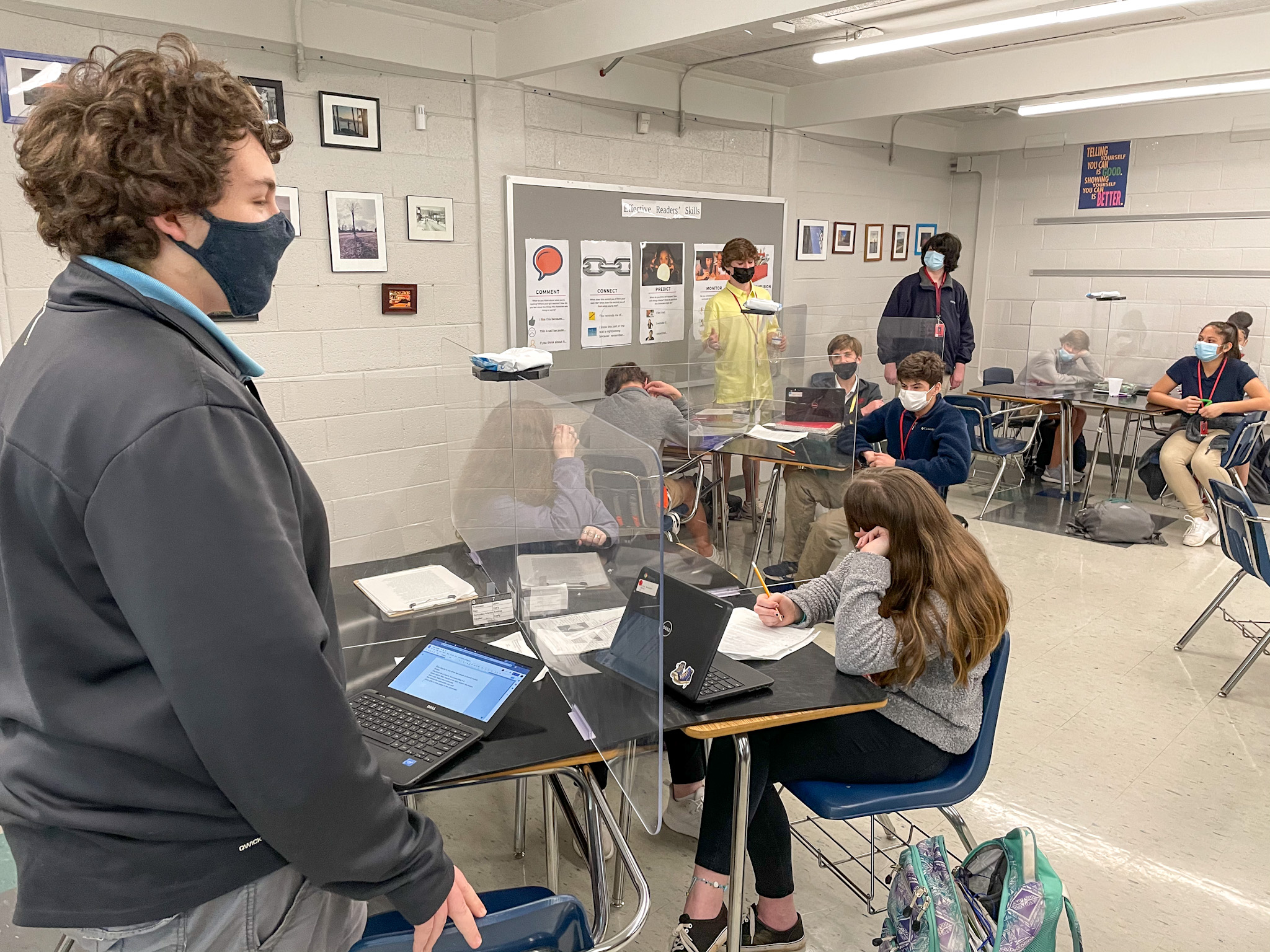
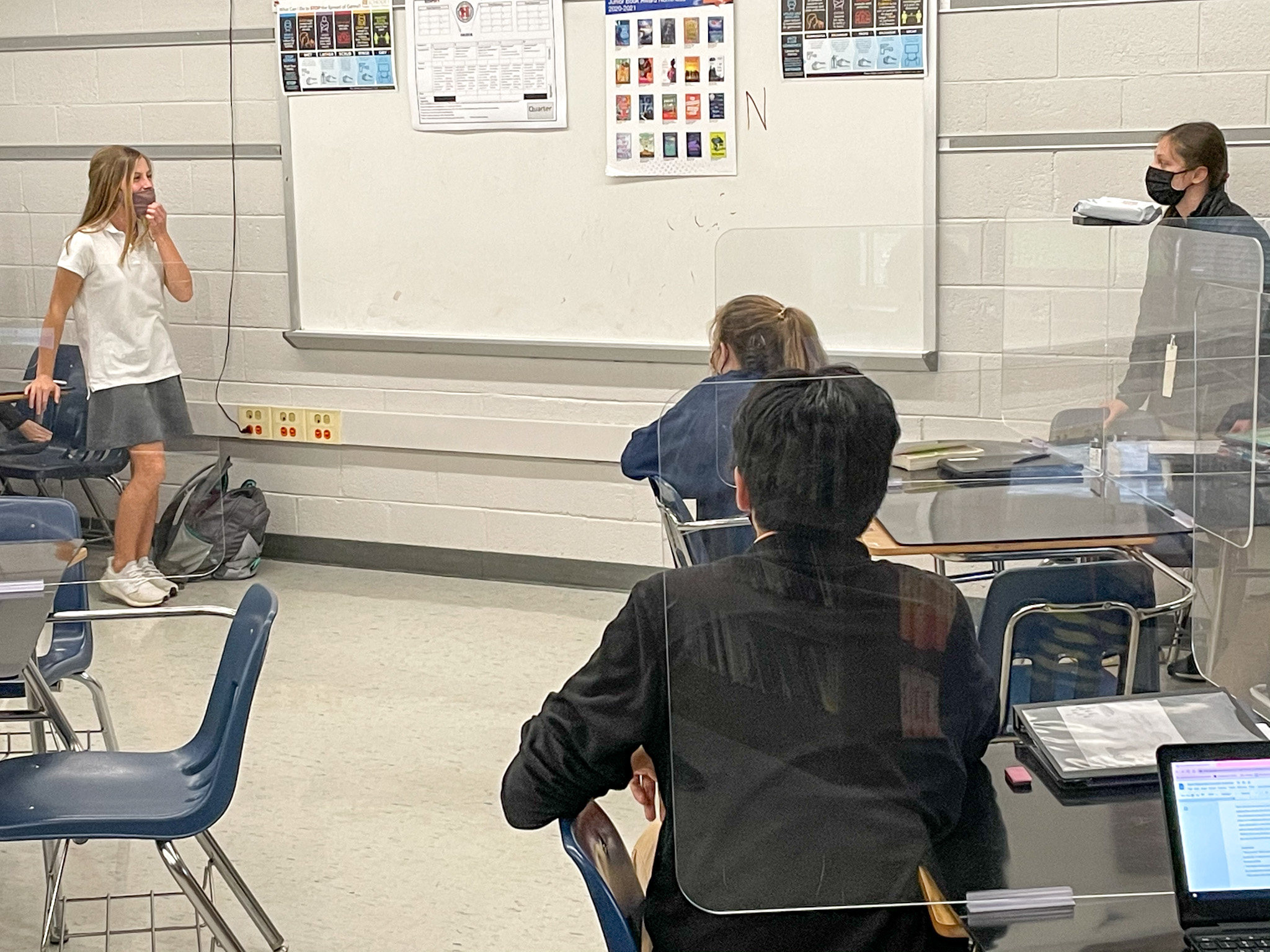
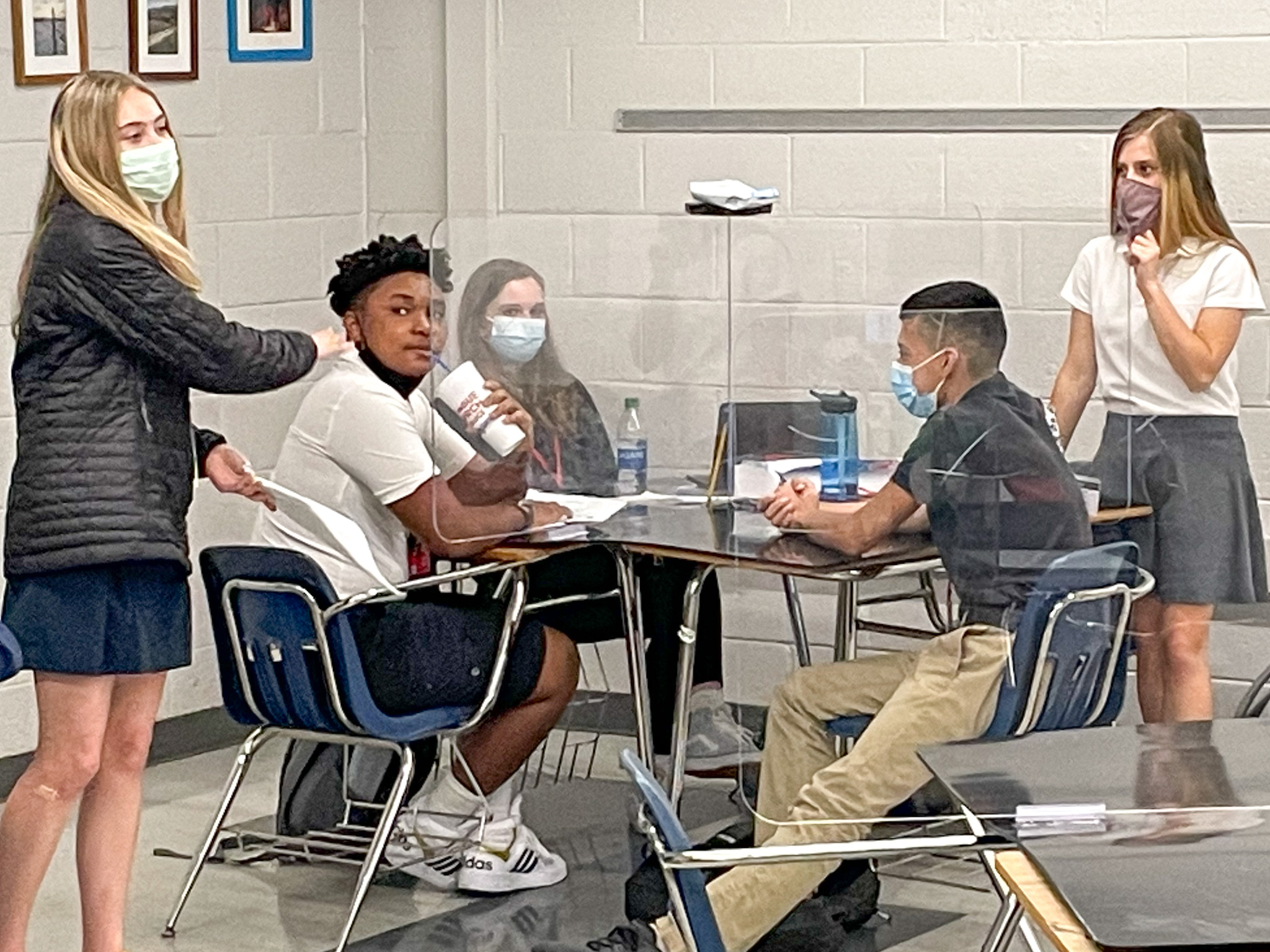
It’s a good sign when kids in fifth period walk into the classroom already arguing about the topic up for discussion that day: who is ultimately culpable for the deaths of Romeo and Juliet?

Final Speech

We looked at the final soliloquy in the play, when Romeo loses all sense of rationality and makes a horrible decision based primarily on emotion. We examined how Shakespeare develops this idea within the text by

  • extensive use of "O";
  • chaotic changes in the soliloquy's subject;
  • references to a loss of control;
  • and other techniques.

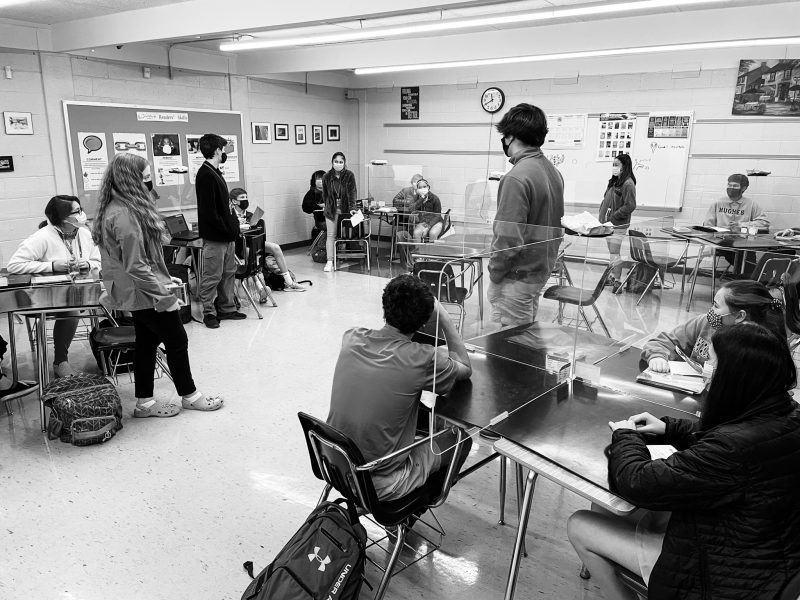
Students first presented their claims about the text, many of which led naturally into the observations I wanted students to have later in the lesson.

They were doing some pre-teaching for me, in other words.

It was a good day to be a teacher.

And Repeat

Today, after some girls in homeroom were working on our door decoration for Black History Month (that’s Lisa on the far left), I went back to grading study guides. And I found four more in another class who were copying off a different paper. You’d think that, after all of the raging gossip about the incident yesterday, they would wonder if perhaps it wasn’t time to cut their losses and confess before getting caught — throw themselves on the mercy of the court and all that. But no. So I sent them to Mrs. D, and she ran them through the ringer, then sent them back to class. More gossip.

At the end of the day, when I went back to grading the final batch of study guides, and, well, you probably know what I discovered…

Reputation

The last question for the act three study guide was to complete a paraphrase of lines 94-103. It was one of the few questions I actually check -- the rest of them, I skim and make sure they put something close to correct. This one I read.

One young lady (we'll call her Lisa) turned in the following:

I'm so upset about my cousin's death that I'll never be satisfied with Romeo until I see him dead. Mother, if you could find a man who sells poison, I would mix it myself so that Romeo would be dead. My heart hates hearing his name and not being able to go after him, not being able to avenge the love I had for my cousin.

The second part wasn't as simple: explain the paradoxical/ironic phrases in this passage.

This passage is ironic because Juliet has to pretend that she hates Romeo and wants to kill him even though in reality she loves him and wants to protect him. Juliet says that she will never be satisfied until she sees Romeo dead when in reality she won’t be satisfied until she sees Romeo and can hug him and be with him. Juliet tells her mother that she wants to mix up the poison to kill Romeo but she really wants to mix up the poison so she can protect Romeo and make sure that the poison doesn’t kill him. Also, Juliet hates to hear Romeo’s name and not go after him, but she says that she hates hearing Romeo’s names and not being able to avenge Tybalt’s death to cover-up that fact that she loves Romeo.

My comment: "Good work. A thorough examination of all the levels of irony." Lisa is, in all respects, a star student. She never gives less than 115%, and she absolutely hounds me to death for extra feedback and additional help. As a result, she finished the second quarter this year with an eye-popping grade of 100. She had a 99 without the extra credit for the quarter, but she did every possible bit of extra credit so I was more than happy to give that one point, though she didn't have to do everything to get that point. But she would have done it all even if I'd told her she didn't have to. "I just want to make sure," she'd likely say.

A couple of students later, I was skimming through the answers, thinking how much more complete these answers seem than what I'm used to receiving from the boy (we'll call him James). Then I get to the paradox question and read his answer:

This passage is ironic because Juliet has to pretend that she hates Romeo and wants to kill him even though in reality she loves him and wants to protect him. Juliet says that she will never be satisfied until she sees Romeo dead when in reality she won’t be satisfied until she sees Romeo and can hug him and be with him. Juliet tells her mother that she wants to mix up the poison to kill Romeo but she really wants to mix up the poison so she can protect Romeo and make sure that the poison doesn’t kill him. Also, Juliet hates to hear Romeo’s name and not go after him, but she says that she hates hearing Romeo’s names and not being able to avenge Tybalt’s death to cover-up that fact that she loves Romeo.

A few more students later, I read another boy's work. We'll call him Nate. Nate has been struggling with the class, but he's constantly saying he wants to do better. I read his paradox answer:

This passage is ironic because Juliet has to pretend that she hates Romeo and wants to kill him even though in reality she loves him and wants to protect him. Juliet says that she will never be satisfied until she sees Romeo dead when in reality she won’t be satisfied until she sees Romeo and can hug him and be with him. Juliet tells her mother that she wants to mix up the poison to kill Romeo but she really wants to mix up the poison so she can protect Romeo and make sure that the poison doesn’t kill him. Also, Juliet hates to hear Romeo’s name and not go after him, but she says that she hates hearing Romeo’s names and not being able to avenge Tybalt’s death to cover-up that fact that she loves Romeo.

At this point, there was only one thing to do: go back through all the other papers and check. Nothing else seemed suspect, but these Lisa's, James's, and Nate's study guides were, upon closer inspection, identical. Completely. Perfectly. A medieval scribe would be jealous of the letter accuracy.

I was puzzled, though. I couldn't get a single thought out of my mind: "This just does not seem like something Lisa would do." James and Nate -- maybe. Conceivably. But Lisa? Never.

I took the three papers to Mrs. D, the eighth-grade vice principal, and she sweated a couple of more names out of them. I got a call during my planning period asking if I'd print out Sam's and Jacob's paper. I did so, but they were identical to the other three. Mrs. D applied a little more pressure while I stood there: "You want to tell me what happened or should I immediately just start suspending people?" It turned out that both James and Nate had gotten the study guide from Jacob.

While they were providing details, I looked down at Lisa. Her brow was furrowed in confusion; her eyes glistened; her chest was heaving slightly. She was utterly terrified.

It wasn't difficult to understand why: here was a girl who'd probably never gotten in trouble at school. Ever. For anything. She's chatty because she's so very bright, and she just wants to share all the thoughts she has. (She puts Post-It notes on her article of the week in addition to all the marginal comments. "I just have a lot to say," she explained with shrug of the shoulders when I asked her why she was doing so much more than was required.)

I left the room to get ready for class -- their class. Students began filing in, and I heard the talk:

"Who else got called to the office?"

"Lisa's in there."

"Then it must be some star student thing or something."

"No, I think she's in trouble."

Just before class started, the vice principal came down to my room to tell me that Jacob had rather casually admitted that he'd swiped the study guide from Lisa. While she had gone to the restroom, he noticed the study guide was up and quickly jumped on her computer to send a copy to himself. He then shared it.

Poor Lisa, I thought.

I went back into the classroom and made sure everyone was working, then called Lisa outside.

"Are you okay?" I asked.

"Yes. Did Mrs. D tell you what happened?"

"Yes, and I'm glad it all came out. I'm sure you were quite confused."

"Very," she said, shaking her head vigorously.

"Well, this should serve as a lesson to you that's a little different than the lesson the boys are going to learn." I asked her if Mrs. D had told her what I'd said initially.

"No, not really."

"Well, I told her that it just didn't seem like you. That I doubted you'd just shared this. I didn't have any way to explain it, but I really didn't think you would do something like this." She smiled, and I continued, "So the lesson I hope you learn in a very real way is how valuable the reputation you've created for yourself is, how important it is to maintain such a reputation because it will serve you well in ways you probably didn't previously imagine."

She smiled again, and we went back inside and had a great class, making a decision tree of Juliet's concerns about taking Friar Lawrence's potion.

Farewell! God knows when we shall meet again.
I have a faint cold fear thrills through my veins,
That almost freezes up the heat of life:
I'll call them back again to comfort me:
Nurse! What should she do here?
My dismal scene I needs must act alone.
Come, vial.
What if this mixture do not work at all?
Shall I be married then to-morrow morning?
No, no: this shall forbid it: lie thou there.

Laying down her dagger

What if it be a poison, which the friar
Subtly hath minister'd to have me dead,
Lest in this marriage he should be dishonour'd,
Because he married me before to Romeo?
I fear it is: and yet, methinks, it should not,
For he hath still been tried a holy man.
How if, when I am laid into the tomb,
I wake before the time that Romeo
Come to redeem me? there's a fearful point!
Shall I not, then, be stifled in the vault,
To whose foul mouth no healthsome air breathes in,
And there die strangled ere my Romeo comes?
Or, if I live, is it not very like,
The horrible conceit of death and night,
Together with the terror of the place,--
As in a vault, an ancient receptacle,
Where, for these many hundred years, the bones
Of all my buried ancestors are packed:
Where bloody Tybalt, yet but green in earth,
Lies festering in his shroud; where, as they say,
At some hours in the night spirits resort;--
Alack, alack, is it not like that I,
So early waking, what with loathsome smells,
And shrieks like mandrakes' torn out of the earth,
That living mortals, hearing them, run mad:--
O, if I wake, shall I not be distraught,
Environed with all these hideous fears?
And madly play with my forefather's joints?
And pluck the mangled Tybalt from his shroud?
And, in this rage, with some great kinsman's bone,
As with a club, dash out my desperate brains?
O, look! methinks I see my cousin's ghost
Seeking out Romeo, that did spit his body
Upon a rapier's point: stay, Tybalt, stay!
Romeo, I come! this do I drink to thee.

I've always loved this lesson: the decision tree helps them literally see how increasingly irrational Juliet is becoming:

Lisa was classic Lisa: she took control of her group; she offered her ideas enthusiastically but humbly; she listened to others and helped everyone synthesize their thoughts. Back to normal. Classic Lisa. The Lisa everyone was thinking of, scratching their heads, wondering, "Lisa, in trouble?"

And the boys? Well, I didn't talk to them. After all, what could I say that Mrs. D hadn't already said?

Timeline

Yesterday and today, we covered one of my most favorite mini-lessons in the Shakespeare unit. It tags onto the end of one day’s work and requires a couple of minutes the next day to answer the question, “Just how much time has passed in this play?” For several scenes in the play, it’s a little unclear to a reader who is not looking for clues, but they’re there, scattered throughout, but it doesn’t become obvious until 3.4, when Paris comes to talk to Capulet again about Juliet’s hand, we know it’s late, for Capulet explains, “‘Tis very late, she’ll not come down to-night: / I promise you, but for your company, / I would have been a-bed an hour ago.” But late on what day? We get the answer shortly when Capulet, deciding when the wedding will be, asks what the day is: “Monday, my lord,” responds Paris.

Juliet won’t come down because she’s weeping for Tybalt, or so the Capulets think. In the scene before, she learns of Tybalt’s death, and while she’s initially upset with Romeo, she reconsiders: ” Shall I speak ill of him that is my husband? / Ah, poor my lord, what tongue shall smooth thy name, / When I, thy three-hours wife, have mangled it?” She explains that she’s only been his wife for three hours, so the wedding had to have taken place sometime after 12 but before the evening. We know that Romeo doesn’t fight Tybalt because he’s now related to him:

I do protest, I never injured thee,
But love thee better than thou canst devise,
Till thou shalt know the reason of my love:
And so, good Capulet,–which name I tender
As dearly as my own,–be satisfied.

This means that the fight between Romeo and Tybalt happens after twelve but before the evening, because Juliet says she’s only been Romeo’s wife for three hours. But how do we get the twelve I keep referring to? Simple: in 2.4, when Juliet is waiting for the nurse’s return, she complains that “from nine till twelve / Is three long hours, yet she is not come.” We know from the balcony scene in 2.2 that Romeo is supposed to meet with someone to arrange the wedding at nine the next morning.

But how do we know for certain that the balcony scene was the night before? Simple: when Friar Laurence makes his entrance in 2.3, it’s clearly dawn:

The grey-eyed morn smiles on the frowning night,
Chequering the eastern clouds with streaks of light,
And flecked darkness like a drunkard reels
From forth day’s path and Titan’s fiery wheels:
Now, ere the sun advance his burning eye,
The day to cheer and night’s dank dew to dry,
I must up-fill this osier cage of ours
With baleful weeds and precious-juiced flowers.

Shortly after that, he encounters Romeo at his door and pondering how it is that Romeo is up so early, he suggests “then here I hit it right, / Our Romeo hath not been in bed to-night.” Romeo confirms that he’s been with Juliet the night before and hasn’t gone to bed: “That last is true; the sweeter rest was mine.” This puts the balcony scene and the party on Sunday evening/night.

When Lady Capulet comes to speak initially to Juliet about Paris, she asks, “What say you? can you love the gentleman? This night you shall behold him at our feast.” This would put the scene in which it happens, 1.3, sometime in the late morning or early afternoon on Sunday.

In the scene before, Paris asks Capulet for Juliet’s hand. Capulet refuses the offer, insisting that they wait two more years. He then tries a deflationary tactic:

This night I hold an old accustom’d feast,
Whereto I have invited many a guest,
Such as I love; and you, among the store,
One more, most welcome, makes my number more.

This happens concurrently with Lady Capulet’s discussion with Juliet or just before it. We know that Capulet’s conversation with Paris is almost immediately after the opening fight scene because he explains, “But Montague is bound as well as I, / In penalty alike; and ’tis not hard, I think, / For men so old as we to keep the peace.” So the fight that opens the play must have happened Sunday morning.

Benvolio, in explaining to the Montagues in 1.1 why Romeo was fortunately not involved in the fray explains to Lady Montague,

Madam, an hour before the worshipp’d sun
Peer’d forth the golden window of the east,
A troubled mind drave me to walk abroad;
Where, underneath the grove of sycamore
That westward rooteth from the city’s side,
So early walking did I see your son:

With all this in mind, we returned today to 3.5 and examined the opening lines: “Wilt thou be gone? it is not yet near day: / It was the nightingale, and not the lark, That pierced the fearful hollow of thine ear.” Clearly, it’s morning, but just to make it clear, Shakespeare has Juliet later say ask, “Who is’t that calls? is it my lady mother? / Is she not down so late, or up so early?” So it’s early Tuesday morning.

They met Sunday evening.

“How many of you thought it was a matter of weeks that had passed?” I asked, as I do every year. Most hands go up. “It puts the whole thing in a new perspective, doesn’t it?”

Catching Up

The Boy is often playing catchup with his school work. I've often brought it up here. We're both tired of it -- K, too. Recently, we made a deal with the Boy. Well, not so much a deal as a threat. A hostage situation. No electronics of any kind until he is all caught up. No TV in the morning with breakfast. No YouTube on the weekends. No Minecraft. Nothing. And so he has really buckled down and began doing the work.

Most of it -- on his Chromebook...