Matching Tracksuits

fun in fours

current affairs

Gas, the Obligatory Complaining

I know — we’re all suffering from gas prices. But it’s been ridiculous around here since we moved. At one station here in Asheville it was $2.11 about three weeks ago. This station sells gas mixed with ethanol, and so it was about ten cents cheaper than every other place around. Then it jumped up to $2.23. A few days later: $2.32. A week after that, last Friday: $2:44.

As of yesterday: $2:52.

That’s an 18% increase in about three weeks. How is that possible? Has the price of a barrel of gas increased proportionately in the last three weeks? No. It’s finally broken the $60 a barrel mark, and seems to be bearing down on $70 a barrel, but it hasn’t gone up that much.

It’s a good thing there’s not a milk cartel to go along with the oil and drug cartels. Can you imagine if the prices of everything fluctuated this badly?
Geodezja w Stanach

Pierwszy tydzien pracy mam za soba. Pierwszy projekt juz prawie zakonczony, w piatek zaczelam juz drugi. To czego dowiedzialam sie w tym tygodniu to zapewne tylko namiastka tego czego jeszcze musze sie tutaj nauczyc ale juz dostrzegam mnustwo roznic pomiedzy geodezja w Polsce a geodezja w Stanach.

  1. Nie maja Osrodkow Dokumentacji Geodezyjno-Kartograficznej. To znaczy ze nie musz uzupelniac zadnych materialow ale z drugiej strony nie maja zadnych materialow wyjsciowych, wiec kazdy pomiar jest pomiarem od zera.
  2. Nie kompletuja operatow. Zleceniodawca otrzymuje tylko mape, na ktorej sa wszystkie wymagane informacje. Nie ma zadnej instytucji, ktora odpowiadalaby naszym PODGiK gdzie nalezaloby skladac jakiekowiek dokumenty zwiazane z wykonywanym projektem. Instytucje odpowiedzialne za infrastrukture techniczna w miescie same prowadza swoje archiwa i zlecaja inwentaryzacje. Swoje mapy udostepniaja na stronach internetowych.
  3. Ilosc informacji zawarta na mapie zalezy od zleceniodawcy. W tym tygodniu opracowywalam mape do celow projektowych. Przedmiotem bylo skrzyzowanie, ktore w tym momencie nie jest zbyt bezpieczne i maja tam wprowadzic pewne poprawki. Poniewaz teren jest mniej wiecej plaski w tamtym miejscu, zleceniodawca uznal, ze nie potrzebuje topografii, na mapie nie bedzie wiec ani jednej wysokosci. Nie do pomyslenia u nas.
  4. Nie maja zadnego odpowiednika naszej instrukcji K-1. Dobor symboli i ich wielkosc jest zupelnie dowolna, za to na kazdej mapie musi sie znajdowac legenda. Na tych mapach, ktore widzialam wiekszosc symboli jest opisana bezposrednio na mapie. Poniewaz jednakstosuja wieksze skale niz my, nie zaciemnia to rysunku.
  5. Slala rowniez zalezy od zlecenia ale uwielbiaja duze skale. Wiekszosc map rysuja w odpowiednikach naszych 1:200 do 1:300, my zaczynamy podklady projektowe od 1:500.
  6. Mapy eidencyjne sa ogolnie dla wszystkich dostepne na stronach internetowych odpowiednika naszego Urzedu Powiatowego. Sa to tylko pogladowe mapy, mozna je ogladac na podkladzie zdjec lotniczych lub na podkladzie planu miasta i dowolnie dodawac rozne informacje. Wiekszosc miast ma tego typu bazy GIS. Dokladne informacje o granicach dzialek znajduja sie w odpowiednikach naszych ksiag wieczystych. Jeszcze do konca nie wiem jak oni tutaj sie tym posluguja, wiem ze maja z granicami nie mniejsze problemy niz my.
  7. Ksiegi wieczyste — sa dostepne dla wszystkich na stronach internetowych. Tak jak i u nas archiwum prowadza sady.
  8. Szkice terenowe — Boze jak ja teskie za szkicami Grzeska i Michala. To co dostaje to sterta smieci. Nie uzywaja symbloli, posluguja sie tylka kodami a i tutaj panuje pelna dowolnosc. Kazda ekipa terenowa stosuje dowolnie przez siebie ustalone kody. Szkice sa bardzo szczatkowe, dostaje przewaznie jedynie wykaz numerow pikiet z kodami — masakra.
  9. Zleceniodawca nie placi za projekt ustalonej na poczatku kwoty, placi za robotogodziny poszczegolnych pracownikow. Kazdy z nas wypelnia codziennie formularz, gdzie wpisuje ile godzin pracowal nad danym projektem i co konkretnie danego dnia zrobil.

Pierwsze wrazenia

Przepraszam za brak polskich liter ale na razie nie udalo nam sie zainstalowac polskiej klawiatury na komputerze rodzicow.

Dotarlismy. Nasza podroz trwala 25 godzin. Dlugo, bardzo dlugo, to mi uswiadomilo jak jestesmy daleko od domu. Pozegnanie z rodzina — mame caly czas widze zaplakana a tate widze na tarasie widokowym lotniska w Balicach jak trzyma w gorze zacisnieta piesc jakby chcial powiedziec “trzymajcie sie”. Bedziemy sie trzymac, chociaz wiem ze bedzie to trudne, bo ja juz okrutnie tesknie, ciazy mi strasznie ta mysl, ze bedziemy tu najprawdopodobniej tak dlugo I ze jestesmy tak daleko od rodziny I przyjaciol.

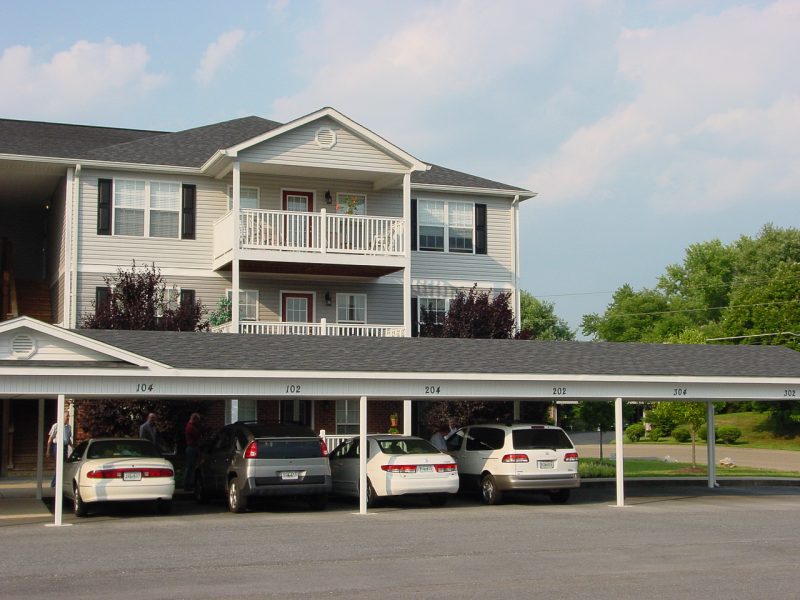
Rodzice Garego mieszkaja w bardzo ladnej okolicy. Wszystko bardzo przestronnie urzadzone, duze dzialki, ladne domy, wszedzie bardzo czysciutko I duzo, duzo zieleni — przeyjemnie. Mieszkanko bardzo przytulnie urzadzone, wszystko bardzo funkconalne I wygodne, maksimum udogodnien na kazdym kroku, szczegolnie w kuchni. Rozsmieszyly mnie amerykanskie lozka, ktore przez dwa lata z rzedu scielilysmy z Ewa w Wisconsin Dells. No I prosze, znowu spie w amerykanskiej poscieli.

Kingsport — maja tutaj ogromna fabryke chemikalow, dluga na 2 mile (3,2 km), nie pytalam jak szeroka. Jak na fabryke nadzwyczaj czysto tam wszedzie. Przejechalismy wczoraj przez miasto, oczywiscie szerokie przestronne amerykanskie ulice, w centrum troche murowanych, prostokatnych budynkow — mam wrazenie ze wszyskie te miasteczka wygladaja tutaj tak samo. Centrum miasta jest zupelnie plaskie a wokol wyrasaja takie smieszne pojedyncze stozkowate gorki. Wyrastaja ponad
miasto ok 200 m, nie sa zamieszkane ani w zaden sposob zagospodarowane cale porosniete lasem lisciastym.

Zabawnie wygladaja, takie zielone kopki.

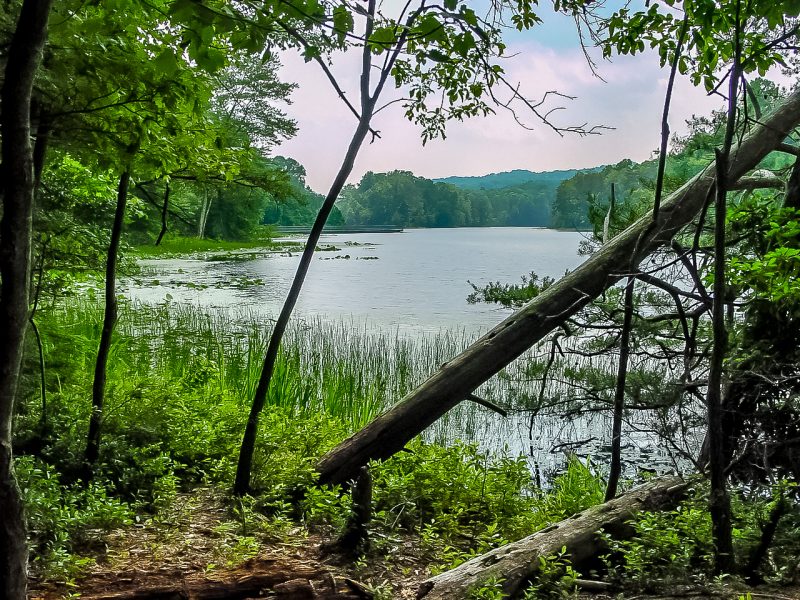
Bylismy wczoraj w parku wypoczynku i rekreacji. Usytulowany w lesie pomiedzy tymi stozkowatymi gorkami, wokol sztucznego jeziorka. Maja tam takie male zoo w tym lesie. Wybieg dla wilkow, saren, basen dla wydr itd. Ladnie tam ale wszystko tak zaplanowane i obwarowane zakazami i nakazami jak mowil Stachu o Holandii. Wszedzie sciezki asfaltowe, tu wolno, tam juz nie wolno, nie pozostwiaja wiele swobody. Mozna tam pojezdzic na rowerach ale oczywiscie tylko scisle oznaczonymi sciezkami, no i nie mozna przyjechac do parku na rowerze, trzeba go sobie tam przywiezc. Oj czuje, ze nasza turystyka rowerowa bedzie tutaj troche inaczej wygladala. Coz to za przyjemnosc wywiezc gdzies rower zeby przejechac sie kawalek po parku.

Pocieszyla mnie jednak rozmowa ze spotkanym rowerzysta. Opowiadal nam o klubie rowerowym jaki maja w Kingsport i o trasach rowerych w okolicznych lasach. Pomyslalam sobie ze moze jednak nie wszysko stracone i moze jednak mozna tutaj powaznie pojezdzic na rowerze.

Back in the States

Kinga and I arrived safely at Newark at 4:45 Monday afternoon — ten minutes early, much to our shock. Our first flight to Charlotte was cancelled, so we we didn’t arrive home until after two in the morning, with the trip from Charlotte and everything.

Yesterday was spent unpacking. Today, the first installment of the family arrives.

No rest for the weary…

The Balance?

At Google's news site, the top two headlines currently:

  • Newsweek Retracts Koran Desecration Story
  • Soldier Is Found Guilty in Abu Ghraib Abuse

Nice balance.

Tatical Nuclear Theater Ticket Stike

In Moscow, Putin angered Poland. How? By failing to mention Poland’s tragic victimhood in the Second World War. Poles were infuriated. But the president of the republic said nothing -- he was a perfect politician.

In cafes and bars, plans for a strategic nuclear strike were drawn up and then abandoned with the realization that Poland doesn’t have nukes. The thought of using the forty-eight F-16 fighters in a mass attack was also abandoned because, well, they haven’t been delivered yet, and the fighter is rather ill-suited for bombing runs.

In the end, Poles did what they could – the one voice of protest and ill-will Poles could manage: they gave back their theater tickets. In Warsaw, a Russian dance troupe was scheduled to perform. Virtually all the tickets were returned.

Counter-strike, thought Putin. Now, instead of coming to Poland for a ceremony celebrating the end of the Second World War, he’s sending the a henchman.

Russia’s actions are widely seen here as a gigantic, Slavic middle finger extended in Poland’s general direction. I’ve wondered what the Russian interpretation of all this is, but since I don’t know Russian, I’m left imagining. The old master-and-servant mentality? Colony and colonizer? I don’t know.

Movin’

In less than fifty days, Kinga and I are moving.

It’s not a cross-town move, probably the worst, because you are reasonably sure you can do it all yourself with a little help from a few friends. And so you rent a truck and put all your possessions in it and drive across town and unload it and then do it again.

And again. The what-to-ditch filter is not so incredibly fine, and you end up ditching precious little, and regretting it when it’s ten at night and you started before seven and you’re still not done.

It’s not a cross-country move. I’ve done that too. Well, sort of. My parents did half the work, because I was moving back from Poland to Boston. They brought most of my stuff up from Virginia, and so I guess they did the hard part.

No, Kinga and I are doing a trans-oceanic move. A continental move, which is both easier and more difficult than a cross-town move. What gets left behind is a much larger pile than what comes along.

Of course all the furniture stays.

Of course all the artwork should go, but – and here’s where it’s more difficult than a cross-town move – the possibility of damage necessitates tough decisions. We have two amazing glass paintings, one of which will stay due to its size of about thirty-six by twenty-four inches.

Of course most of the clothes go. But trans-oceanic moves also force you to clean out your closet. I’ve already ditched one pair of shoes. It was on a recent three-day bike trip to Slovakia. Instead of hauling the old, worn-out things back to Poland, I left them in the hostel, much to Kinga’s delight. Like many wives, she doesn’t appreciate old, comfortable shoes

Books occupy a curious place in the move – they’ll be packed up, but not all sent. Once we get a decent place to live, we’ll have them sent. Until then, most of them are staying in Poland.

Then there’s the question of computers, cameras, and other fragile electronics. And bikes – we have three.

Decisions, decisions.

Perhaps the most difficult part of it is the fact that a cross-state move awaits. My folks have been collecting furniture for us the last few months, so we’ll have to rent a truck, pack it up, and…

Vigil and Patience

A ride through the village yesterday afternoon revealed that almost all houses have a picture of John Paul II hanging in a window, often with a black ribbon across the lower right corner. School has been called off for Friday so students can watch the funeral. Students Tuesday began coming to school in suits and dresses. On Wednesday most of the students were wearing semi-formal wear. Meetings are being held every night in town squares.

In Lipnica, there's a daily eight o'clock mass for the pope. It's followed by "Apel Jasnogorski," which a special meeting where participants sing the song sung every evening at nine at Czestochowa, home of the Black Madonna -- the most revered holy object in Poland.

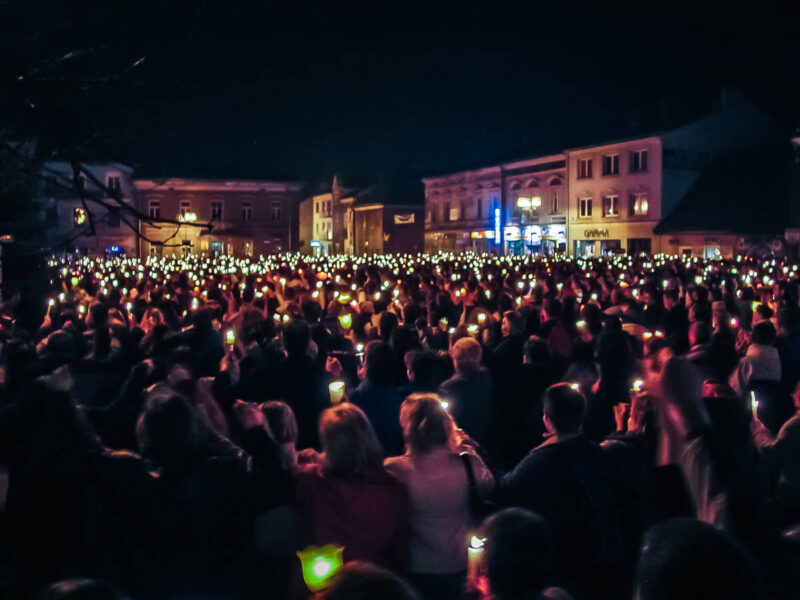
In nearby Nowy Targ, there are daily outdoor masses at the airport as well as nightly vigils in the rynek (town square).

Crime and accident rates have fallen, police report. Rival soccer hooligans have been holding common masses. John Paul, even in death, is bringing out the best in everyone, even people waiting in line to see his body.

Police made a few exceptions. A Mexican family with two weeping teenagers and a small child was allowed to cross through the barricade and over the bridge to join the end of the line. Rather than protest, the crowd applauded (CBC)

And it’s not just the “little people” who are getting caught up in it.

Back at the Vatican, workers have set up hundreds of seats in St. Peter's Square for the crowd of expected kings, queens, presidents, prime ministers and religious leaders – many of them political foes united in a funeral (Reuters)

I read yesterday that Bush is going to have to sit very close to Mohammad Khatami, the president of Iran -- one third of his “axis of evil.” Perhaps that would do them good. Better would be for the two of them to have to wait in line together for twenty-four hours like the rest of the people did -- perhaps in sub-zero weather, with one blanket.

Commercial Free

Since Sunday, most of the radio stations as well as television stations have been broadcasting commercial free. Radio stations have been playing mainly classical music, my wife tells me. I don't know -- I don't listen much to the radio, so...

John Paul

Poland produces a revolution every five hundred years, and it’s always the same revolution: a man comes along and challenges the way we all look at the universe, challenges us to stop thinking we’re the center of the universe and that all things circle around us.

Copernicus was the first, at least in the western world, to suggest that the Earth was not the center of the universe. He dethroned the heady notion that literally everything revolved around us, and modern science has pushed us to the point of virtual cosmic insignificance.

Karol Wojtyła, with his famous words, “Do not be afraid,” challenged us to stop thinking of ourselves as the center of our own worlds. Love is the greatest of all these, said Saint Paul, and John Paul, in his insistence on the universal recognition of human dignity and freedom, showed how to put that into practice.

“Nie lękajcie się!”

Don’t be afraid.

Fear not.

How can we not fear? Look at the world, and the injustice that hounds it, and it seems the only thing we can do is be afraid. How can that possibly work? Perhaps when we start following John Paul’s example and love others more than ourselves, we will stop fear. After all, what is fear? It’s fear of what will happen to me. When I start loving others more, I stop thinking of my self so much, and I stop fearing.

John Paul in that sense was a Copernicus for the soul.

Smoke and Mozart

We were in Adam’s bar with Johnny, Kucek, and Marta. I was playing chess with Rafał, and I heard Mozart’s Requiem and though I didn’t consciously think it, I knew what had happened. After a few moments, Kinga called my name (they were sitting behind me) and told me. I turned to Rafał and told him, then suggested we put the chess away.

I went back to the table where everyone else was sitting, and we just sat there quietly for about ten minutes. No one was saying a word. I can’t remember who initiated it, but someone said, “Idziemy?” and we all got up and left the table covered with full beer glasses and extinguished, half-smoked cigarettes.

Without saying, we all began walking up to the church. No one said, “Let’s go to the church,” we all just headed there. As we were walking, the fire station’s siren began wailing. It was strangely and peacefully quiet other than that.

We got to the church and it was locked. It had been open all day, and the night before, for prayers, but it was closed. “They’ll come open it,” I told everyone confidently.

“There’ll be a mass going within half an hour,” I said. But we stood waiting, and nothing.

After some time a nun walked into the church, and the bells began ringing, but the front door never opened. We walked around to the door to the sacristy to ask the nun if they were going to open the church. We stood there waiting, and just as she was coming out, another group of three young people – two girls and a young man of about nineteen – came up.

“Is the church going to be opened?” he asked.

The nun’s reply was somewhat surprising, and completely disappointing: “It was open all day. It was open all night last night. It was open until nine this evening, and no one was here,” she said in the tone of voice that’s so known to me know – it was the tone of a bureaucrat annoyed that you’ve come to require services of him. It was the tone of voice I encountered every time I went to the regional court offices while getting the official permission to marry a Pole. It was the tone of voice that I’ve heard in post offices, shops, buses – everywhere.

The young man would not be put off, though. “I know, I know. But not to open the church now?! At this moment?!”

The nun again: “The proboszcz said to ring the bells. He didn’t say anything about opening the church,” she said, locking the lower of three locks on the sacristy door.

“Let’s go,” said Johnny, starting to walk away.

“No, no! Don’t go!” said the young man. And he just repeated to the nun again, and again, “Not to open the church?! At this moment? At this moment?”

Reluctantly, she opened up the sacristy and we filed into the church quietly.

We knelt in the first row, with our three companions simply falling on their knees once they were in front of the tabernacle. All heads bowed, not a sound – I even prayed. “If you’re up there, God, I sure hope you’re welcoming such a great man into your presence now, because if a man like that isn’t with you now, no one else has a chance.”

The five of us had just come from a bar, so we reeked of cigarettes, and probably the smell of alcohol was noticeable, but none of us were even buzzed (we’d drunk perhaps two beers each), but Kinga felt very awkward about it the more she considered it. We left after only about ten minutes.

Kinga and I went back home and made some tea and listened to the radio.

They’ve been playing nothing but classical music on several of the stations. Last night they played Górecki’s “Amen,” interspersed with quotes from the pope.

A Country of Orphans

“Poor country,” Kinga said. We sat up late talking about John Paul’s life, and his philosophy, and his love of fellow humans.

“If Poles lived by his words, I’d never want to leave this place,” I said. “It would be a paradise.”

Poor Poland -- wracked now with increasing corruption in every part of the government. A country with more than 18% unemployment, a country that must be the richest country in the world, as my father-in-law says, because everyone steals and there still remains something for others to pilfer.

And now, broken-hearted Poland. Kinga’s grandmother spent Sunday crying. Masses are pouring into churches and staying. It is a country of orphans.

Lech Wałęsa said that it was like losing a mother, “for the pope looked after Poland like a mother over her children.”