Matching Tracksuits

fun in fours

COVID-19 quarantine

Day 71: Playing and Counting

Games We Play

This morning, E and I decided to play a game we hadn't played in ages: Pentago. It's a simple concept: Get five marbles of your color in a row. But the challenge is that each of the four nine-by-nine quadrants can be rotated. It's a great game for the mental manipulate of objects because players have to turn those quadrants in their heads and make plans to try to surprise their opponent with an unseen 5-row connection.

At first, the Boy just tried to connect five in a row. I showed him quickly how easily stopped that could be, and how I could simply build on my efforts to stop him and create my own row with a twist here or there. Then he got it.
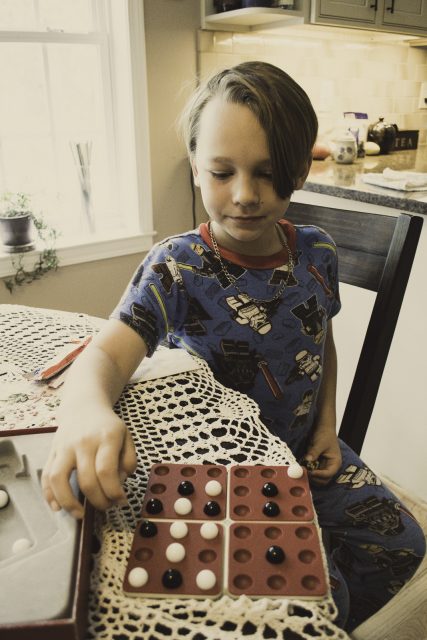
Did I "let him win"? Well, not so much. Once he figured out the importance of the twist, I played a while without really paying attention to anything other than his obvious efforts and he sneaked one or two by me.

After each game: "Can we play again?"
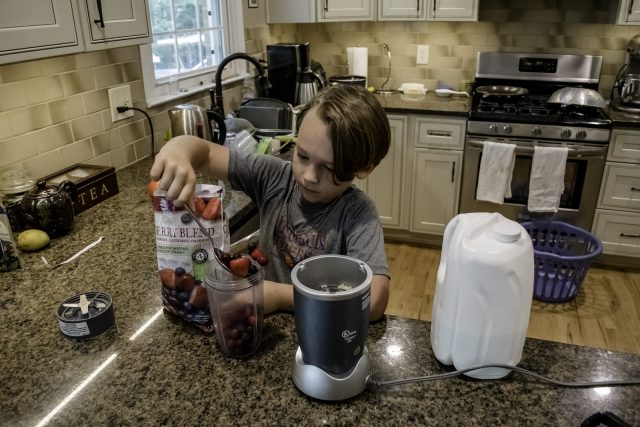
Snack

In the afternoon, the kids brought the old Rummikub satchel out: "Can you teach us how to play this?" they asked.

Indeed -- I could barely remember myself. Something about runs and threes- and fours-of-a-kind. That was about all I could remember, and there were no instructions in the game.

It's moments like that which make me really appreciate YouTube. A quick search, three minutes of watching the video, and off we went, playing a game I hadn't played in decades.
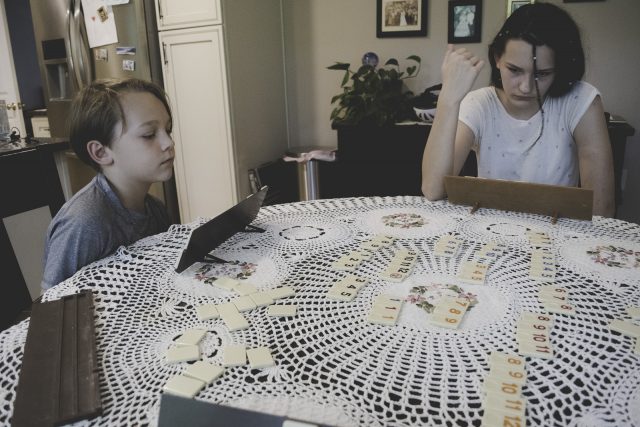
I last remember playing it in Nashville with Uncle N and Aunt L over the Thanksgiving weekend. We might have played it the last time we were there for Thanksgiving, which would have been 2005. Though we could have just played dominoes and Uno -- that's all I have photographic evidence for:
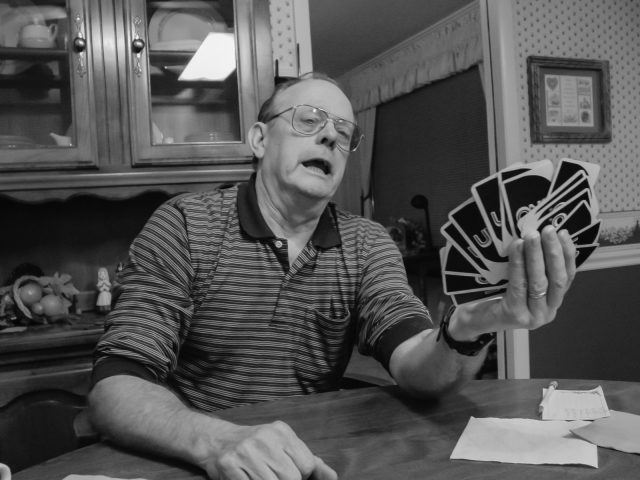
Uncle N passed away less than a year later from ALS, and we never went back there for Thanksgiving. So it might have been even longer since I played Rummikub. At any rate, the kids loved it. The Boy, less so because he couldn't see all the combinations and such. L, however, fit into the game perfectly: that type of kombinowanie is just what she does best.

Yesterday

We watched last night the 2019 film Yesterday, in which a failing musician somehow enters an alternate reality in which only he knows anything about the Beatles. He subsequently recreates their catalog as his own. As expected, there are lots of Beatles songs in the film.

"Is that a Beatles song?" L asked as one started.

"Is that a Beatles song?" E asked with the next one.

"Yes, they're almost all Beatles songs," I explained.

"How many songs did they write?!" the Boy asked incredulously.

As a result, we listened to a lot of Beatles music this afternoon. They kind of liked it -- we kind of encouraged them.
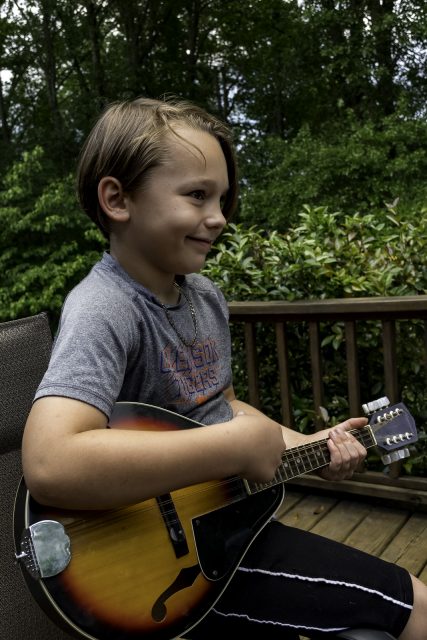
It did inspire some musicality from them. The Boy has a little guitar that he suddenly became interested in. However, it is missing strings, so I suggested he play my mandolin, which I bought in high school because R.E.M. had released Green, which featured the mandolin on a number of tunes. It's a $100 plywood job that's a perfect size for him.

Tonight, I worked with him on some basic ideas: pressing down strings just behind a fret to change the pitch. Chords? They're a long way off. (Besides, I can only remember four or five chords on a mandolin.)
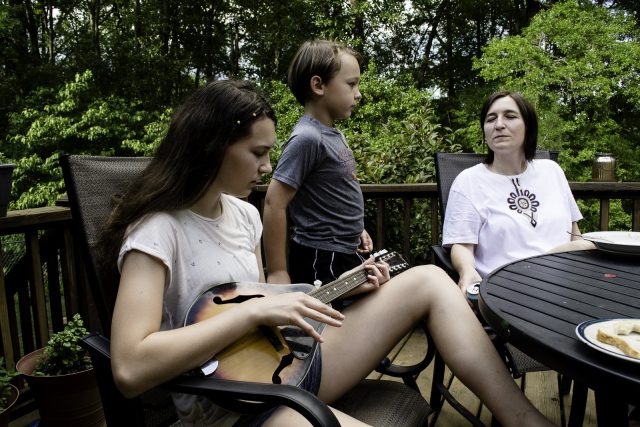
The Girl, who has been toying with a ukelele from time to time, gave it a try only to be shocked at how very different it was tuned from her uke. (When she first got the uke, I was surprised to find that, like a five-string banjo, the highest string is actually in the position where the lowest string is for most other instruments. They both just have that one out-of-place string that always gives me fits.)

We'll see how this develops, but hopefully, the interest will remain.

When do I stop counting?

When is this quarantine officially over? When do I stop prefacing every post with "Day X"? I started the first day we were supposed to go to school and yet didn't -- March 16.

Yet because we don't have any coordinated national approach and since every state is easing restrictions step-by-step, there's really no firm date for me to stop doing that. When we head back to school on a normal routine? (Will we do that in the fall?) I've decided that the most logical date to stop doing that is June 4, which would have been the last day of school were this a normal year.

On the other hand, I'm fairly certain that we will see an enormous uptick in cases after states have eased these restrictions. Just look at Cocoa Beach in Florida this weekend:

florida beach memorial day coronavirus

It's concerning, to say the least:

On the Sunday talk shows, Dr. Deborah Birx, the coordinator of the White House coronavirus task force, said she was "very concerned" about scenes of people crowding together over the weekend.

"We really want to be clear all the time that social distancing is absolutely critical. And if you can't social distance and you're outside, you must wear a mask," she said on ABC's "This Week." (Source)

If we have an explosion of cases, the very thing we were trying to avoid, then this entire 70+ lockdown will have been for nothing. Absolutely nothing.

Are we smarter than that as a species? Most days I have my doubts.

Counting

I'm on a run: I've never posted so many consecutive days on this site. Not even close. I've posted daily since December 21, 2019. Counting roughly, that's 130+ consecutive days. Why? Why not?

Not only that, but for the month of May, I've written an average of 1,047 words a day. That's like my journal writing when I first arrived in Poland and everything -- everything -- fascinated me endlessly.

Of course, I have cheated a few times: I included long quotes from books I'm reading, in part because I was honestly interested in writing a little something about them, in part (at least once) because I just wanted to reach that arbitrary number (like I just did in this paragraph). One thousand words. At least. Every day.

I can't possibly keep that up. The quarantine is helping with that. But daily posts? Could I make it a full year? Probably. Will I? No idea.
Day 70: Flood

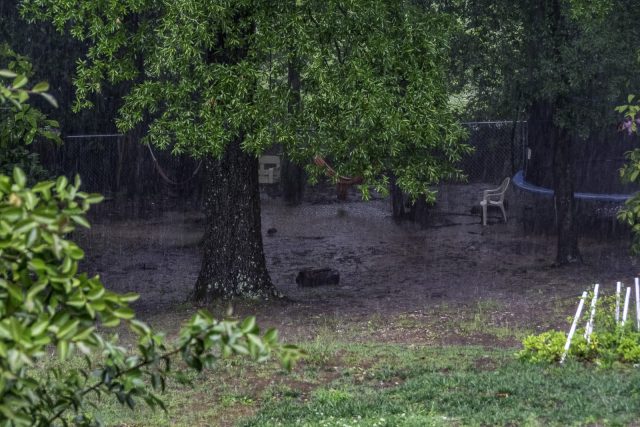
It started raining around two this afternoon, first sporadic rain with fat, lazy drops, then steady rain, then torrential rain.

In the past, such rain worried me because of flooding in our basement. With the leak in our roof, I now have different concerns. As the storm grew and the wind blew harder, I wonder whether or not I'd secured the two tarps protecting our roof well enough to keep them in place with such a storm. There was really nothing I could do about it at the time, of course: it would not have been remotely safe to head onto the roof in a storm to put down additional weight to keep the tarps from flying off.

In the end, my worries were for nothing: the tarps stayed in place; the sump basin didn't even have much water in it, so the basement wasn't even close to being threatened.

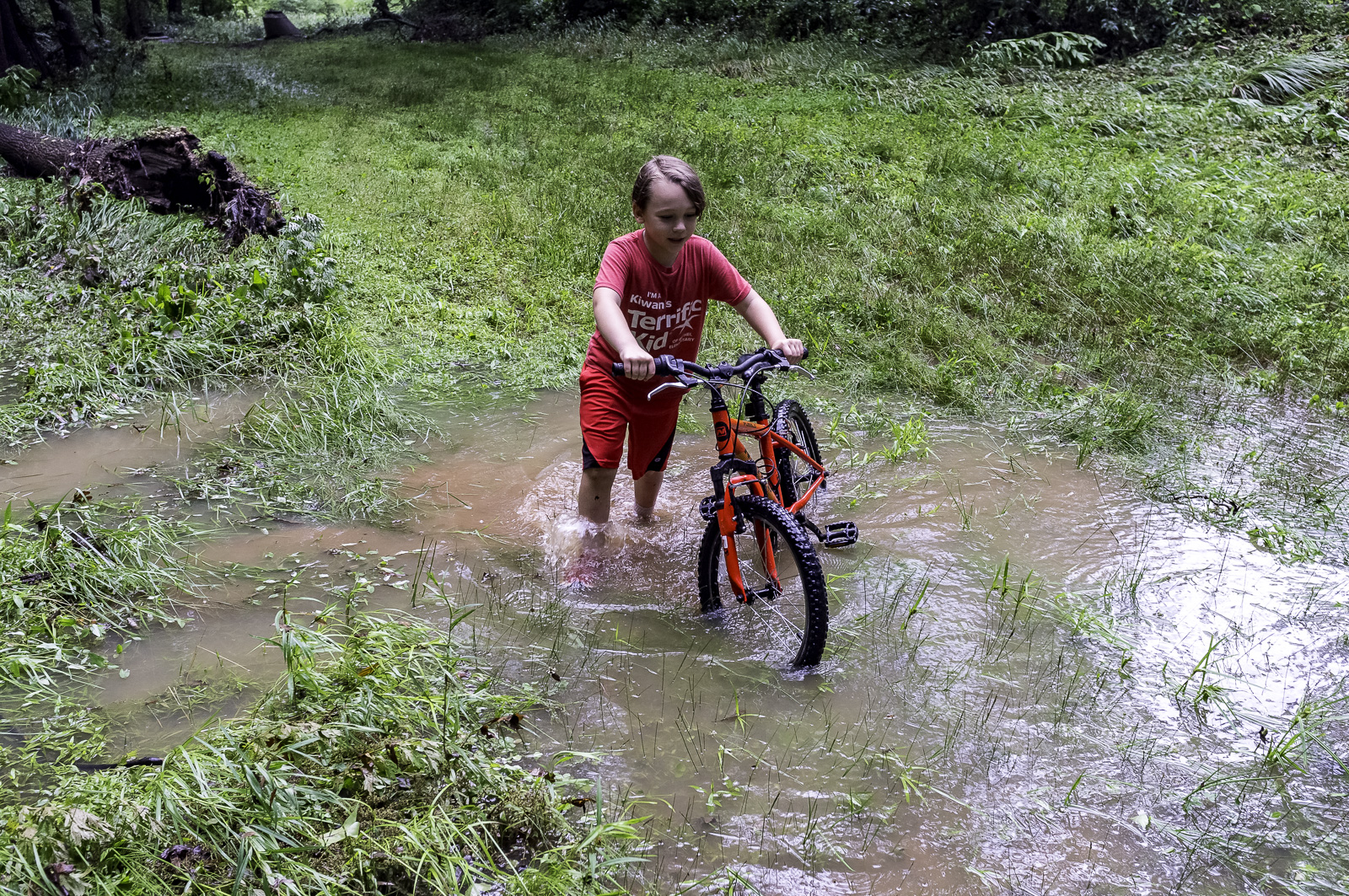
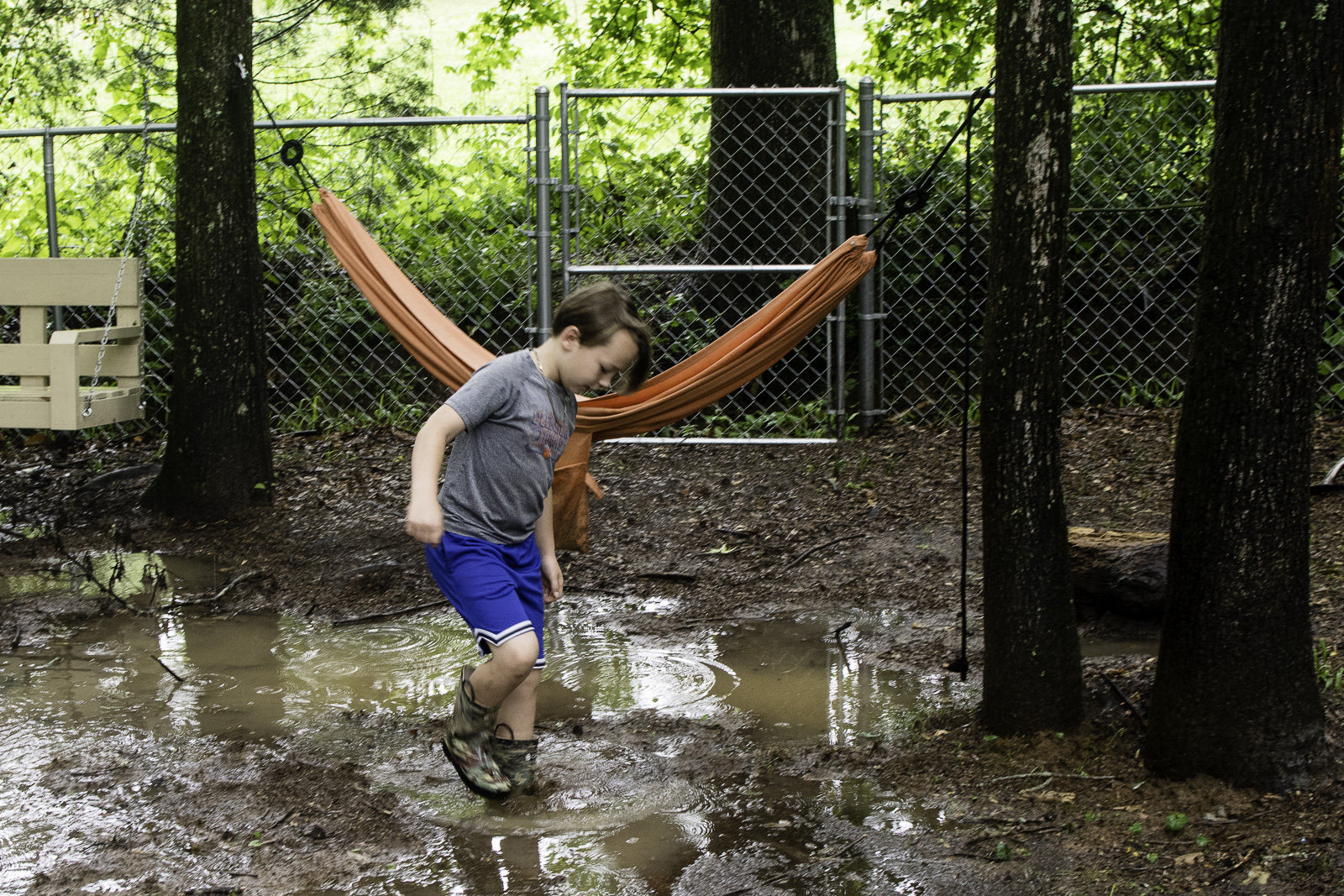
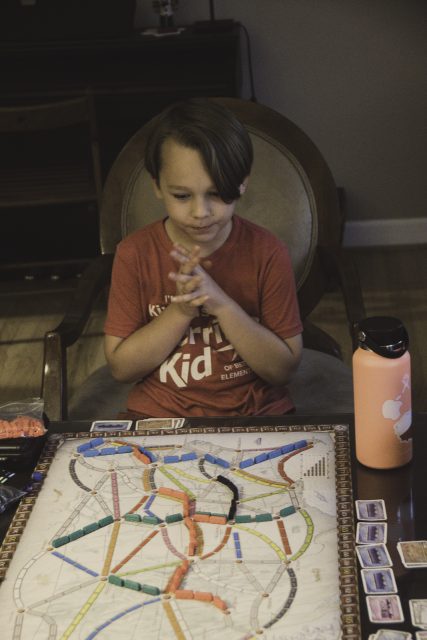
Yet we still had a lake in our backyard: the creek didn't crest but we had essentially one big puddle in the lowest part of our yard, so after we finished playing a game ("Ticket to Ride" -- I never play to win; I play to block other players -- you can't lose if you're not trying to win!), E and I struck out to see what was going on in the neighborhood.

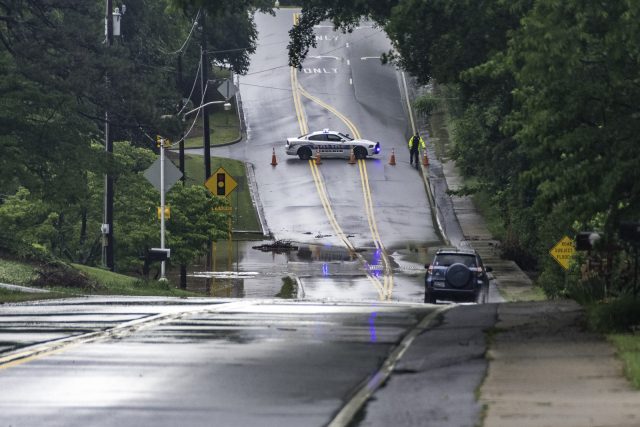
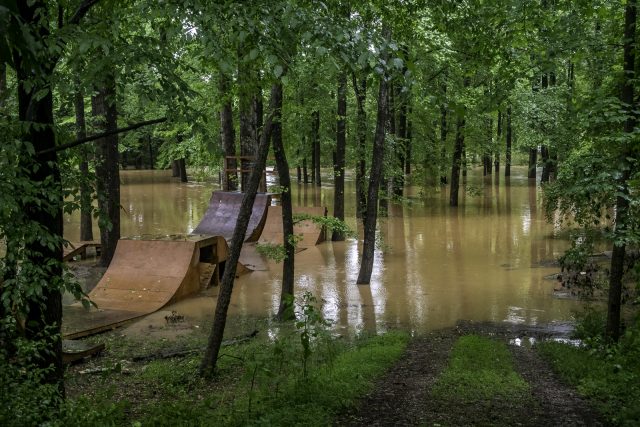
We weren't prepared for what we found:

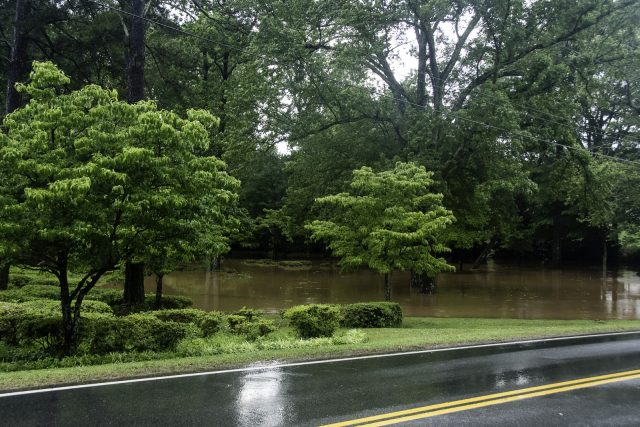
To begin with, there is a house basically in a hole that has an enormous backyard -- I thought it was a park when we first moved here.

The road that goes by it was closed because their yard, which is in reality just a drainage basin for the surrounding community, was completely flooded.

Completely.

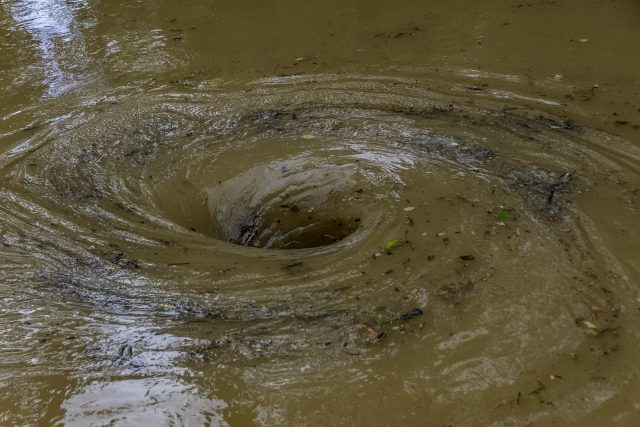
So much so that the culvert under the road was completely submerged, creating a whirlpool as the water tried to drain.

We stood in the road looking at the whirlpool, right at the edge of the water. We're past the time of E asking questions like, "Daddy, what would happen if I fell in that water?" He knows. He likes to show he knows. "Boy, Daddy, if I fell in that..." and his voice trailed off for effect.

It gave me a little shudder, the shudder of a parent having nightmarish visions of the worst possible outcome. Once such thoughts enter my mind, it's hard to shake them. The Boy seemed to realize that. "Come on, Daddy, let's go back to the other side.

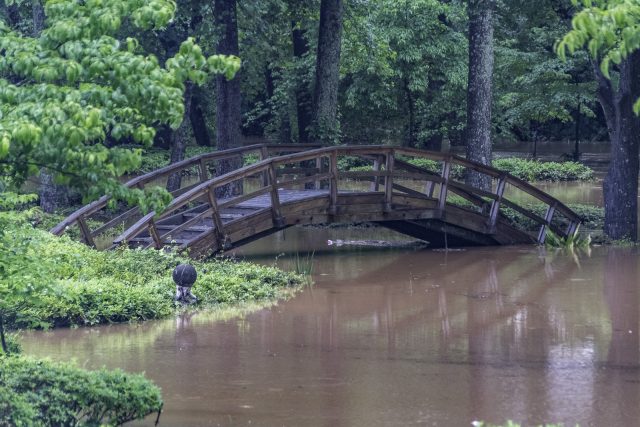
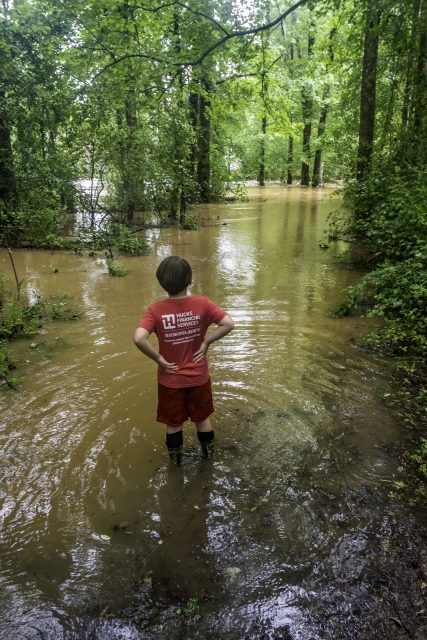
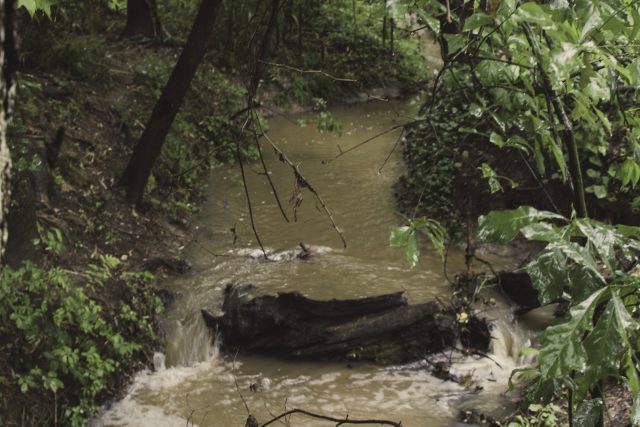
All that water -- undoubtedly the worst flooding we've seen there. It was still nothing compared to what we saw later, downstream. We walk by here almost every night -- it's K's favorite walk.

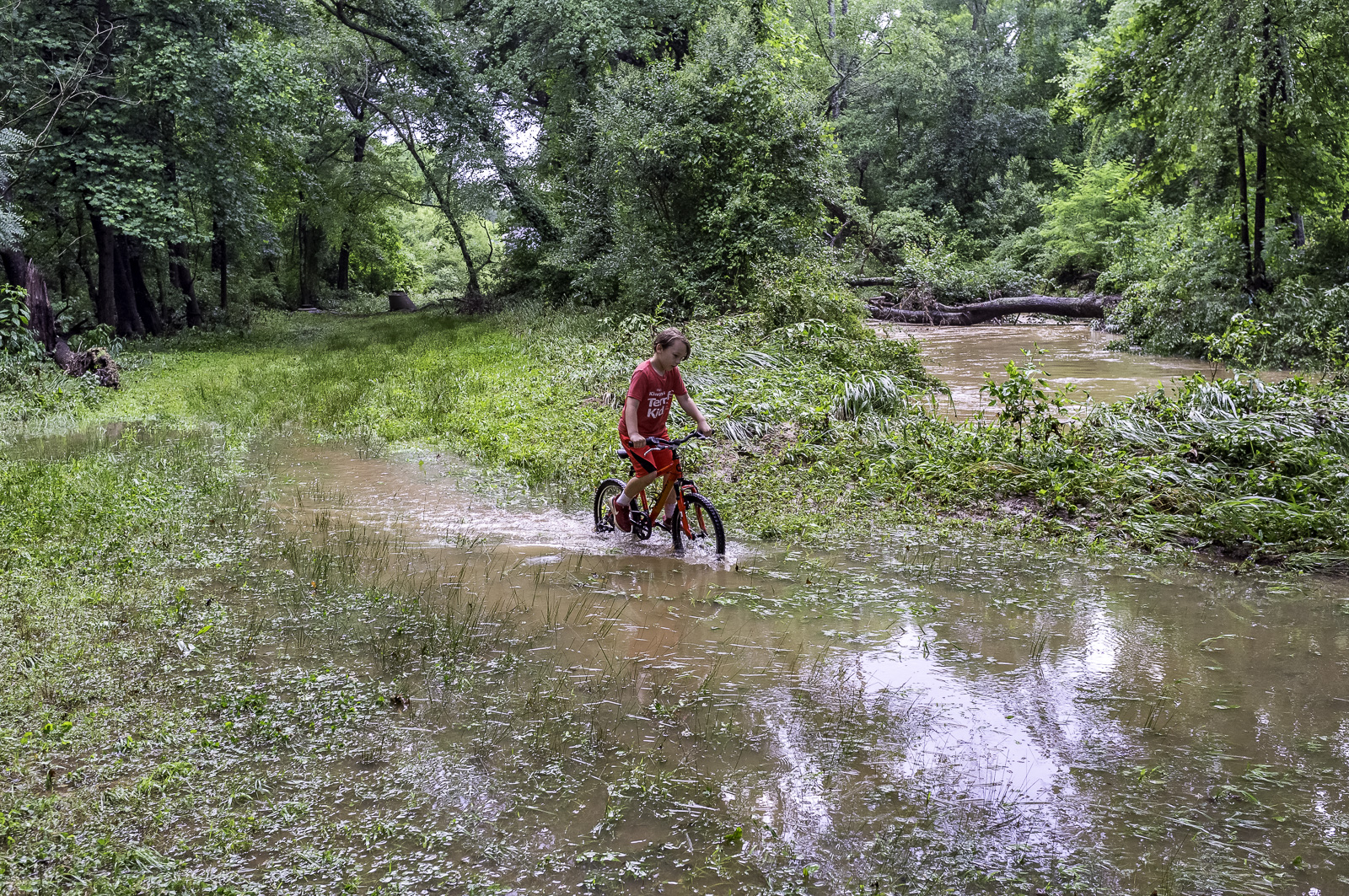
The creek that was forming the whirlpool earlier joins with another creek at this point, and the two completely covered the flat land around it.

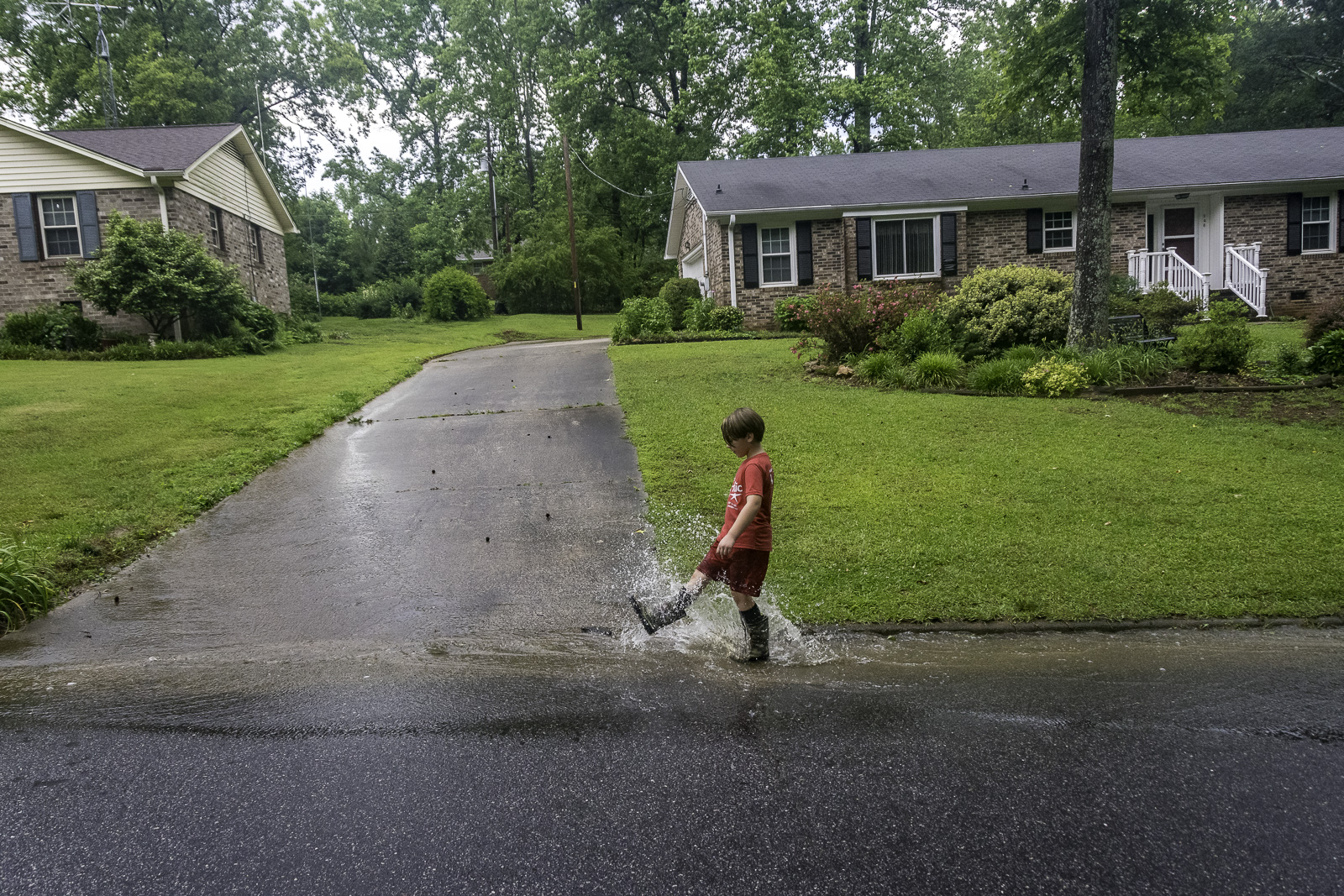
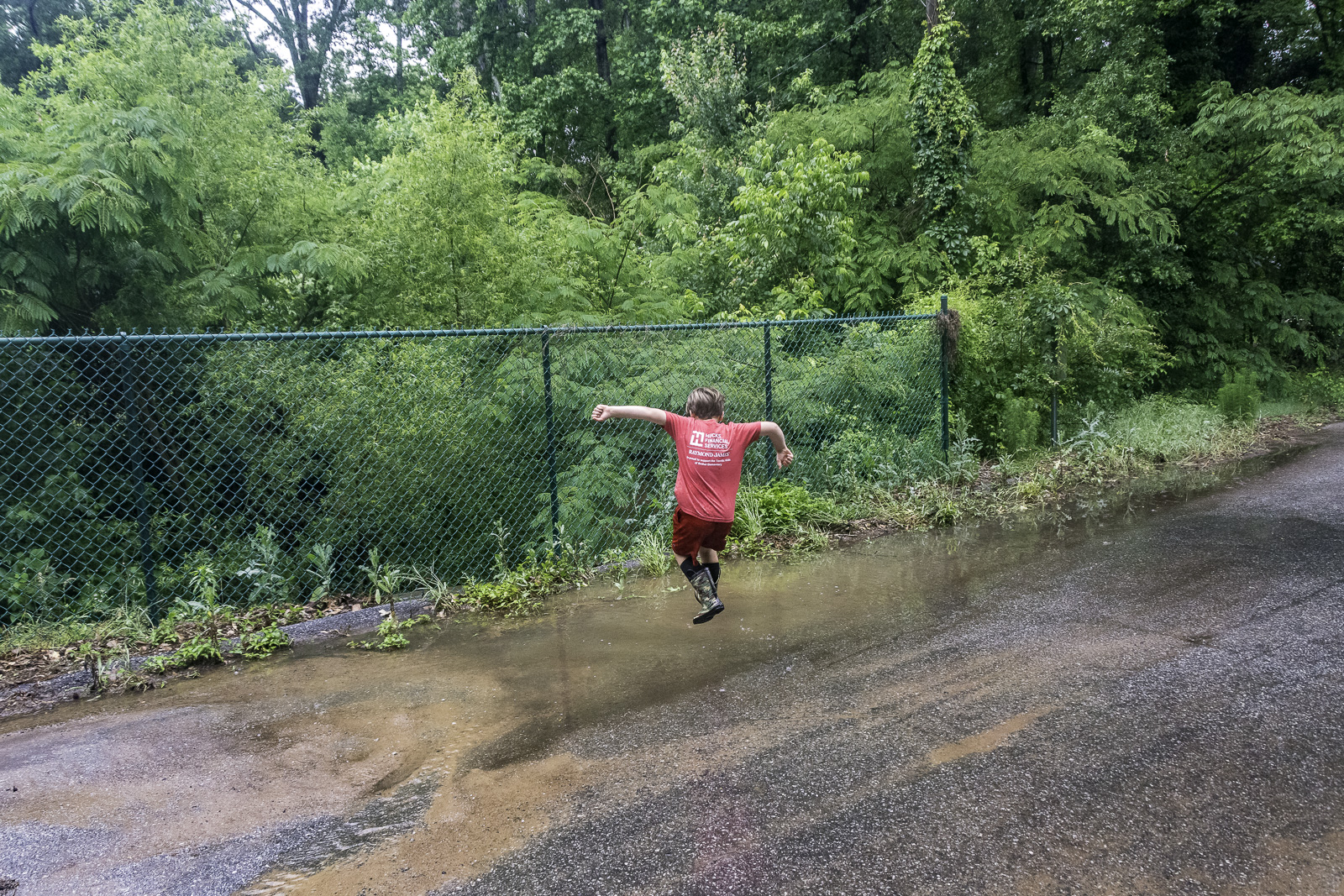
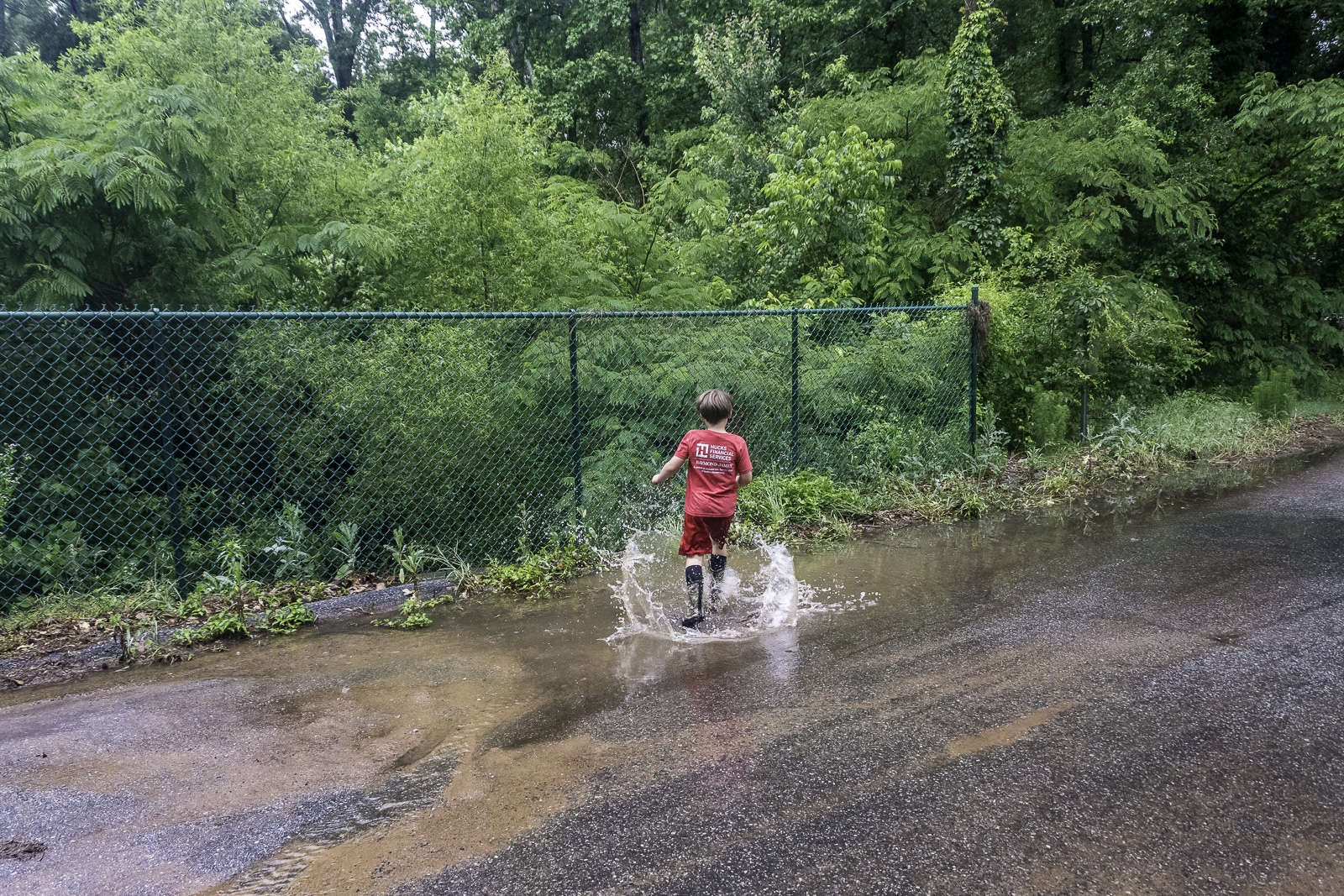
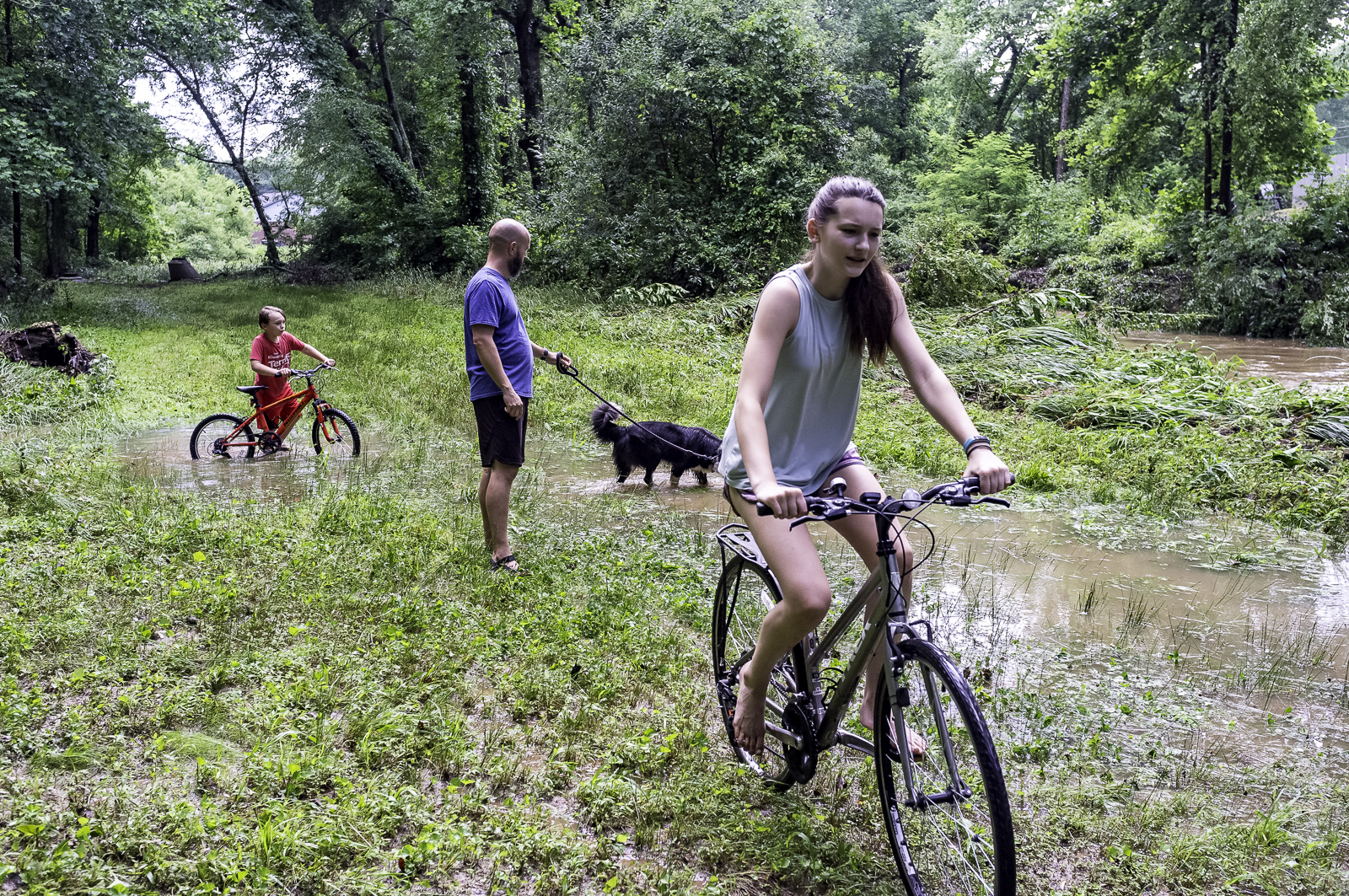
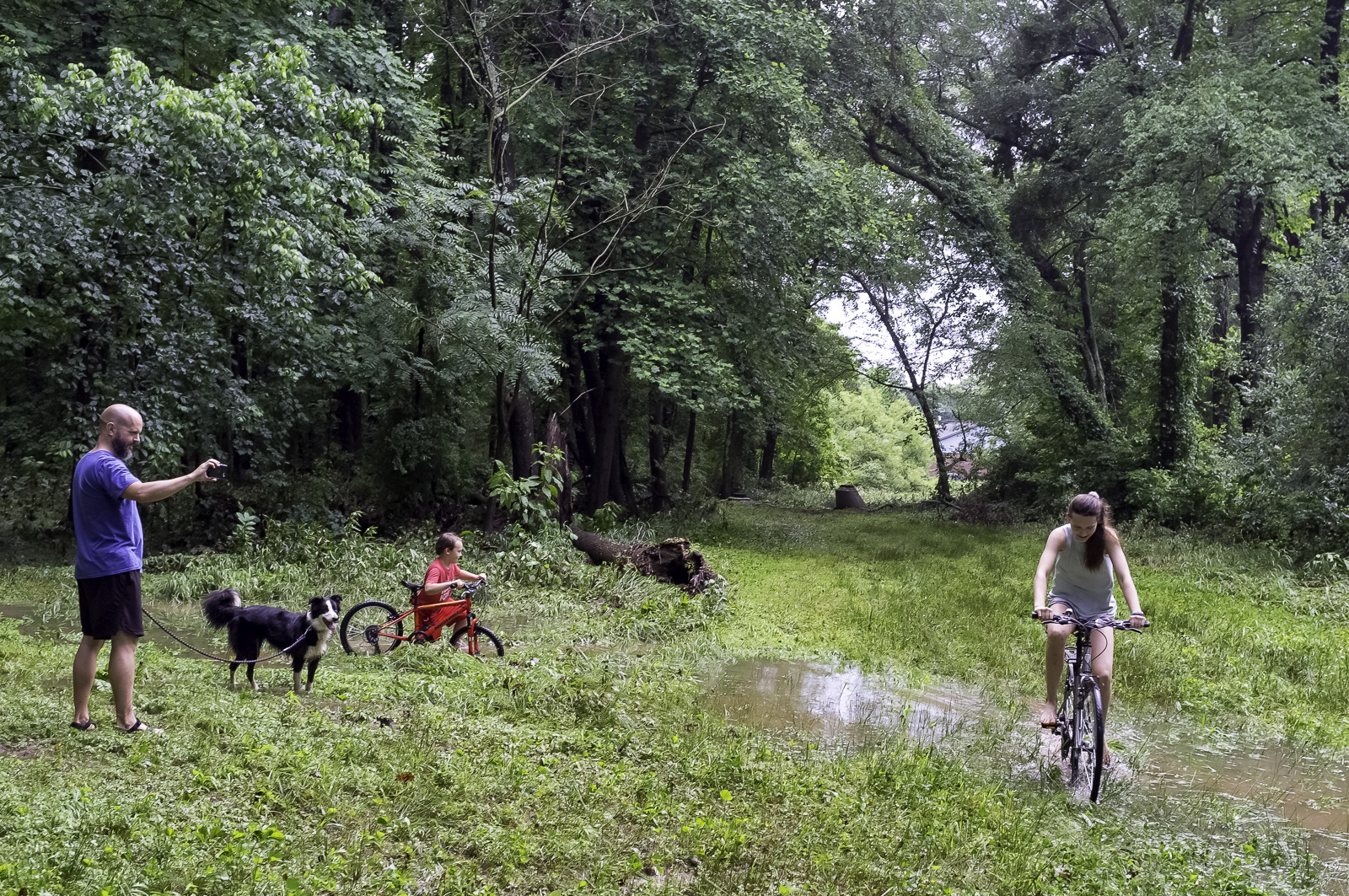
We headed back home, still having fun on the way.

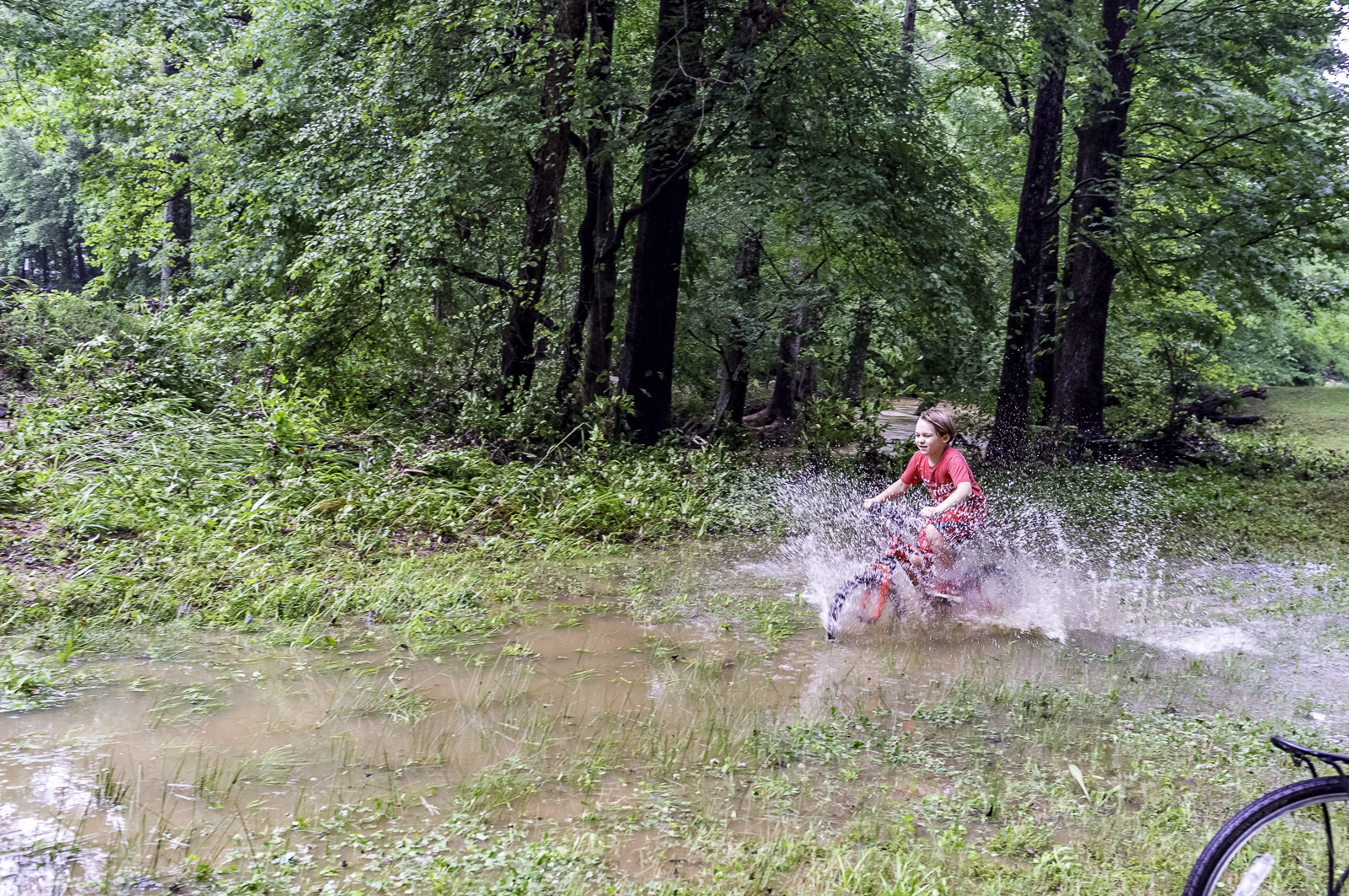
In the evening, we went for a walk to show the girls what it looked like. Of course, most of the water had subsided, but there was still enough to be impressive, and just enough to enjoy safely.

Day 69: Training, Cleaning, and Reading

Our pup has come a very long way. I thought, when we got her, that since she’s a border collie (smartest breed on the planet, right?), things would be easy. She’d be easy to train, easy to control (after all, you can get those dogs to do the most amazing tricks herding sheep), easy to house-break — just easy. But it turns out that BCs are too smart for their own good: it makes them a little stubborn at times. And that describes our Clover perfectly: stubborn, stubborn, stubborn. But we didn’t give up on her: we took her for some obedience training, we left her a couple of times for one-on-one days with a trainer, and for the last year, things have been going great.

Now, we have a few tricks with her.

  • You can, for instance, drop a piece of the most tempting meat in front of her and she’ll just sit down at it, shifting her gaze from the meat to you and back to the meat, a pleading look in her eye, and she won’t touch it until you tell her, “Eat.”
  • In the morning, you can open the door and tell her, “Siusiu,” and she’ll go out and immediately relieve her self and come back inside.
  • You can call her and she comes and sits beside you.
  • If you want her on the other side, just say “Other side” and she’ll switch sides.
  • You can tell her to stay and then kick ever her most beloved ball and she won’t go darting after it until you tell her “free” or “go get it” or “release.”
  • “Heel” means “heel.”
  • When you’re taking her for a walk and stop moving, she sits — sometimes immediately, but usually after a bit of hesitation. (There’s that stubbornness.)

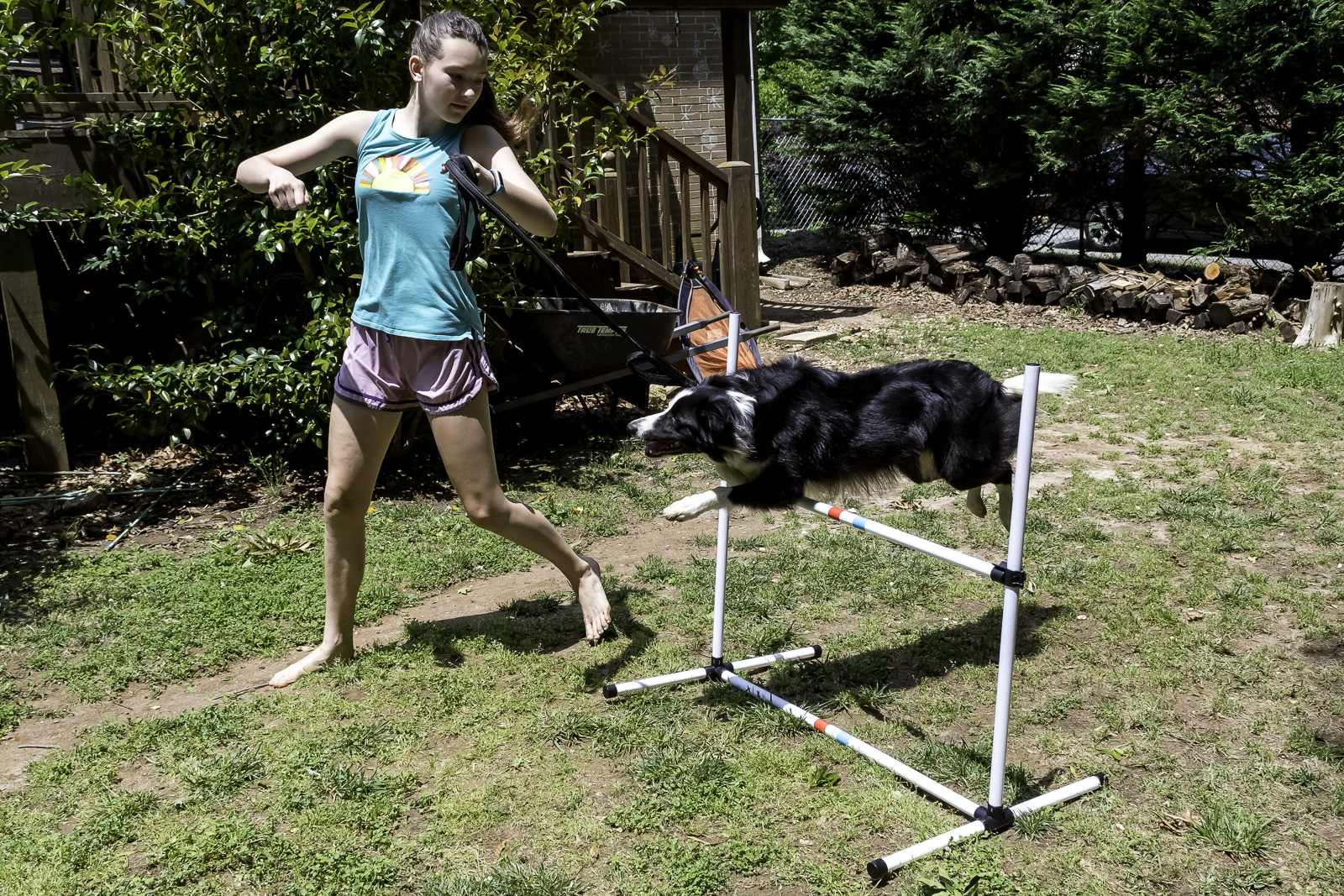
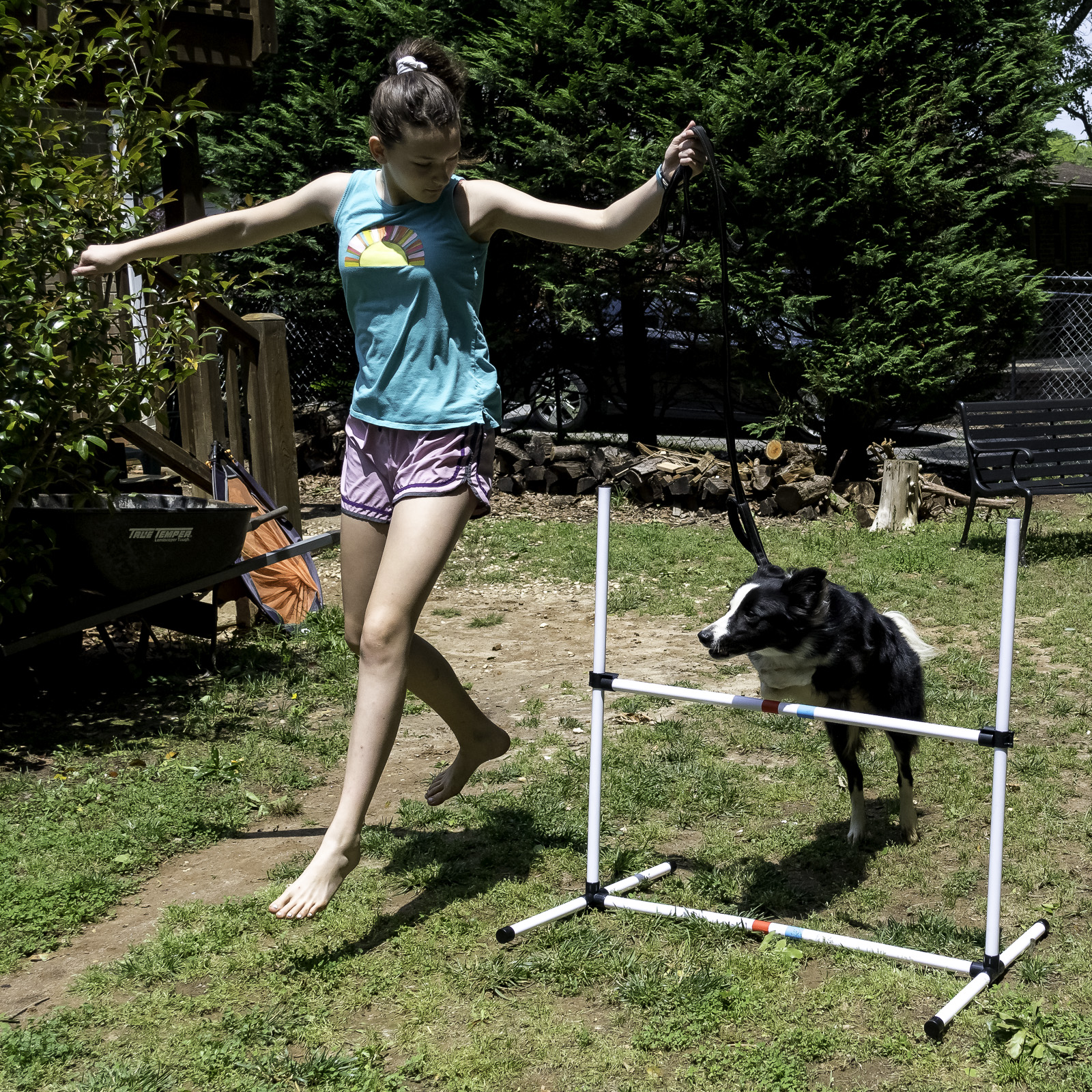
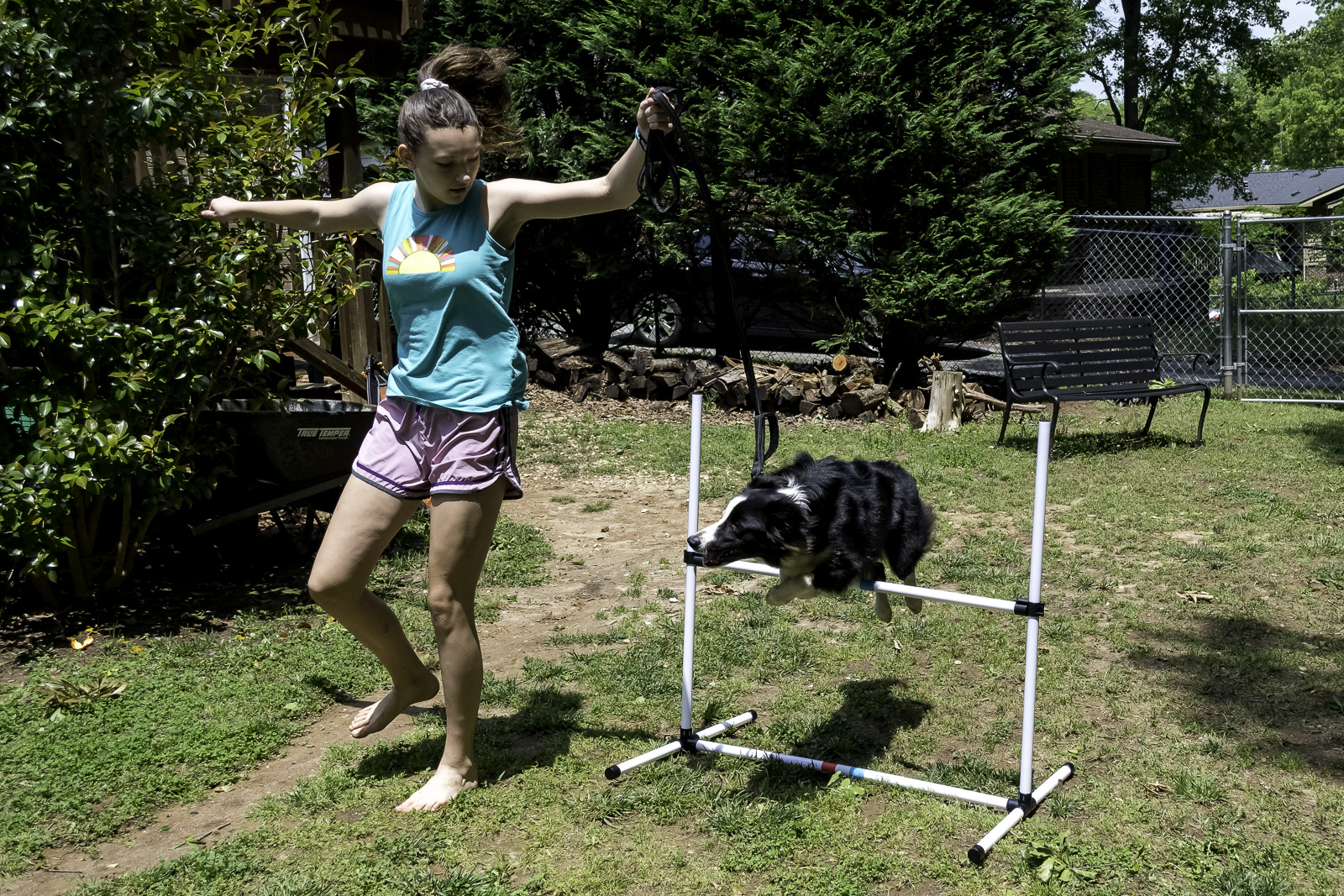
For her birthday, though, we got her an agility course. The Girl began training her yesterday. It was fairly simple: she figured out that she had to jump over the bar, had to jump through the hoop. Easy-peasy. She looked up at L like she looks up at me when we go for a run: “Was that supposed to be a challenge or something?”

Today, the Boy got in on the fun. He had a little difficulty getting her to jump without a leash on her to guide her, but soon enough, he’d worked out his own way of bribing her with a little treat.

My Ántonia

I finished reading My Ántonia today — or rather, listening to it on Spotify. I first read that book in college, and it astounded me, particularly one quote: “Some memories are realities, and are better than anything that can ever happen to one again.” More than O, Pioneers! (the only other Cather book I’ve read), I really connected with the sense of nostalgia that pervades My Ántonia. That’s why I remember that quote almost a quarter of a century later: I read it shortly after some emotionally traumatic losses (not deaths, just losses) in my life, and I was wallowing in nostalgia about those lost relationships.
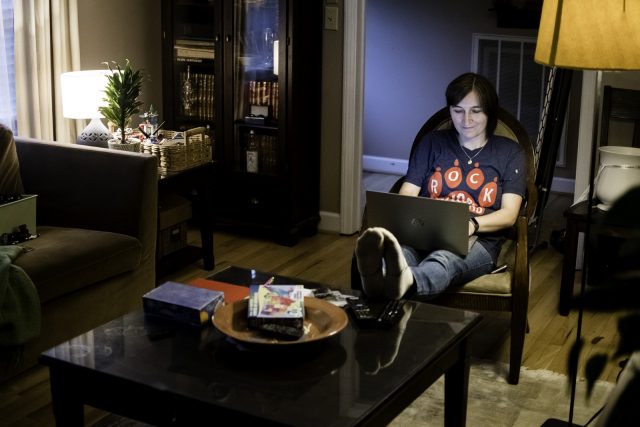

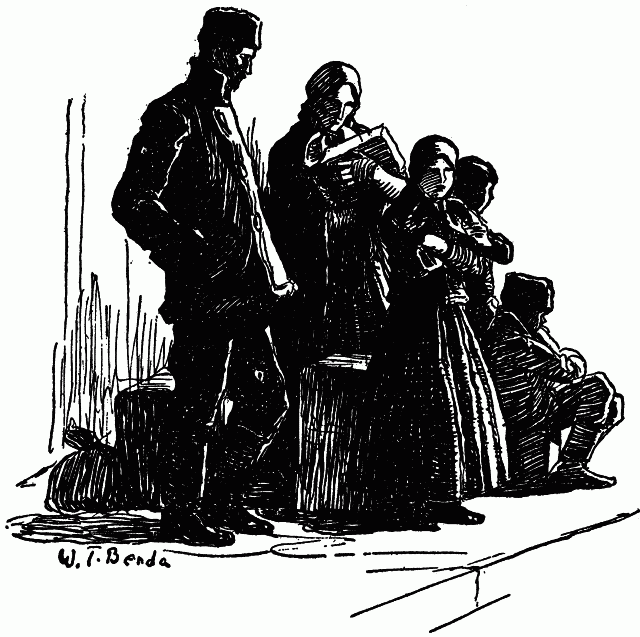
Illustration: Immigrant family huddled together on the train platform

I had forgotten, though, about the ending:

This was the road over which Ántonia and I came on that night when we got off the train at Black Hawk and were bedded down in the straw, wondering children, being taken we knew not whither. I had only to close my eyes to hear the rumbling of the wagons in the dark, and to be again overcome by that obliterating strangeness. The feelings of that night were so near that I could reach out and touch them with my hand. I had the sense of coming home to myself, and of having found out what a little circle man’s experience is. For Ántonia and for me, this had been the road of Destiny; had taken us to those early accidents of fortune which predetermined for us all that we can ever be. Now I understood that the same road was to bring us together again. Whatever we had missed, we possessed together the precious, the incommunicable past.

“What a little circle man’s experience is.” What a lovely notion, what a great truth.

Returning to Dickens

“What to listen to now?” I thought, as I finished the Cather novel early in the day and still had plenty of outside work to keep me occupied. Much of the morning I spent cleaning rocks. Yes, cleaning rocks. The drainage trough (for lack of a better term) I made at the base of our driveway has, over the years, become more and more clogged with dirt. Now instead of wicking water away from the drive, it just serves as a barrier and makes it puddle water. What’s more, with all that dirt, weeds had a great place to grow. So I pulled out all the rocks down to the landscaping fabric, washed the dirt off the rocks, and put them back. (Coronavirus quarantine has lent itself to long-ignored, not-necessarily-critical projects.) Anyway, I was still working on the rocks and the book finished.

Spotify is sort of hit-or-miss with audiobooks: there’s very little (that I’ve found) that’s relatively recent, and a lot of the older books are actually in translation — lots and lots of German audiobooks I’ve found.

When I lived in Poland, I had some difficulty finding affordable English-language books. Penguin Classis, though, were plentiful and relatively cheap. That’s how I read almost every Dickens book in the space of three years. There are a few that I never found, though, and I thought today might be a good day to return to Dickens.

I hadn’t really read him in almost twenty years. I teach Great Expectations some years to my English I Honors students, but that doesn’t really count: the last year I taught it (two years ago, I think), I didn’t even read it with the students.

So today I began Dombey and Son. I’d forgotten how clever and witty Dickens can be, and how gifted he can be at beginning a novel. Think of his most famous, A Tale of Two Cities:

It was the best of times, it was the worst of times, it was the age of wisdom, it was the age of foolishness, it was the epoch of belief, it was the epoch of incredulity, it was the season of Light, it was the season of Darkness, it was the spring of hope, it was the winter of despair, we had everything before us, we had nothing before us, we were all going direct to Heaven, we were all going direct the other way— in short, the period was so far like the present period, that some of its noisiest authorities insisted on its being received, for good or for evil, in the superlative degree of comparison only.

Or my personal favorite Dickens beginning, which I’ve mentioned here before, Bleak House:

London. Michaelmas term lately over, and the Lord Chancellor sitting in Lincoln’s Inn Hall. Implacable November weather. As much mud in the streets as if the waters had but newly retired from the face of the earth, and it would not be wonderful to meet a Megalosaurus, forty feet long or so, waddling like an elephantine lizard up Holborn Hill. Smoke lowering down from chimney-pots, making a soft black drizzle, with flakes of soot in it as big as full-grown snowflakes—gone into mourning, one might imagine, for the death of the sun. Dogs, undistinguishable in mire. Horses, scarcely better; splashed to their very blinkers. Foot passengers, jostling one another’s umbrellas in a general infection of ill temper, and losing their foot-hold at street-corners, where tens of thousands of other foot passengers have been slipping and sliding since the day broke (if this day ever broke), adding new deposits to the crust upon crust of mud, sticking at those points tenaciously to the pavement, and accumulating at compound interest.

Fog everywhere. Fog up the river, where it flows among green aits and meadows; fog down the river, where it rolls defiled among the tiers of shipping and the waterside pollutions of a great (and dirty) city. Fog on the Essex marshes, fog on the Kentish heights. Fog creeping into the cabooses of collier-brigs; fog lying out on the yards and hovering in the rigging of great ships; fog drooping on the gunwales of barges and small boats. Fog in the eyes and throats of ancient Greenwich pensioners, wheezing by the firesides of their wards; fog in the stem and bowl of the afternoon pipe of the wrathful skipper, down in his close cabin; fog cruelly pinching the toes and fingers of his shivering little ‘prentice boy on deck. Chance people on the bridges peeping over the parapets into a nether sky of fog, with fog all round them, as if they were up in a balloon and hanging in the misty clouds.

Dombey, though, has a clever opening:

Dombey sat in the corner of the darkened room in the great arm-chair by the bedside, and Son lay tucked up warm in a little basket bedstead, carefully disposed on a low settee immediately in front of the fire and close to it, as if his constitution were analogous to that of a muffin, and it was essential to toast him brown while he was very new.

Dombey was about eight-and-forty years of age. Son about eight-and-forty minutes. Dombey was rather bald, rather red, and though a handsome well-made man, too stern and pompous in appearance, to be prepossessing. Son was very bald, and very red, and though (of course) an undeniably fine infant, somewhat crushed and spotty in his general effect, as yet. On the brow of Dombey, Time and his brother Care had set some marks, as on a tree that was to come down in good time—remorseless twins they are for striding through their human forests, notching as they go—while the countenance of Son was crossed with a thousand little creases, which the same deceitful Time would take delight in smoothing out and wearing away with the flat part of his scythe, as a preparation of the surface for his deeper operations.

Of course, Dickens can be tiring with all his subplots and sub-subplots (after all, the longer he stretched novels, which were always published in syndication in magazines, the more money he could make from a given book), but I’m thinking he’ll be a lot easier to listen to than read.

Day 68: Training Death and the Maiden for Exploring

Death and the Maiden

My friend M grew up on a farm with his grandparents. His father passed away; I never really knew what happened to his mother. But from the time I met M, he lived with Ma and Pa as he called them, and as I came to call them.

Their farm was just outside the city limits, a place in the county that felt so different and distant from my suburban, cookie-cutter neighborhood that I felt I might be in a different state. In a different country.

We spent a fair amount of our time there shooting .22s and shotguns. We'd shot at birds and usually miss. We'd shoot at squirrels with the .22s and miss; we'd shoot at them with the shotguns and, well, it wasn't pretty. We were stupid -- what can I say?

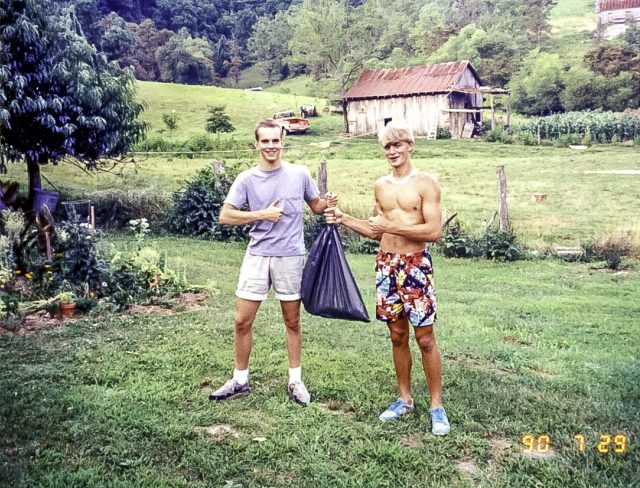
One Sunday afternoon in 1990, just before I started my senior year of high school, Pa gave us a task. "There are raccoons that are just givin' the garden a hard time. How about sittin' up on the hill above the garden and seein' if you boys can take care of the problem?" He needed to say no more. We took a bottle of Mountain Dew, Pa's double-barrel 16-gauge shotgun and Papa's bolt action 20-gauge (a bolt-action shotgun? really?) and took positions on the slope just behind the garden.

About an hour before sundown, the raccoons made their way into the garden. We waited until they were among the cornstalks, reasoning that they would sustain the least damage from stray pellets, then fired away. Papa's shotgun had a two-shell clip and held one in the barrel. I discharged those in short order then reloaded as quickly as I could. M fired one then the other barrel, broke the gun over his knee, tossed out the spent shells, and was firing again before I knew it. I think we reloaded twice. M might have reloaded thrice.

All told, we killed three raccoons that afternoon and earned the gratitude of both Ma and Pa. And we had a hell of a good time.

I've long ago lost touch with M. I last saw him in 1998 during the summer I came home after two years in Poland and one more year waiting. He'd made some bad decisions, and the place of our meeting was something out of an O. Henry short story. After that, we corresponded a few times, but the last we communicated was in late 1999.

That was almost thirty years ago now, and I still think back on that day fondly. Not because of the death we dealt but because of the innocent friendship lost. I don't feel guilty for killing those 'coons, though: they were doing real damage to the garden, and we took care of the problem in the country-folk way. Sure, we probably could have trapped them and released them somewhere else, but Pa was not a sentimental man, and he would have regarded that as a waste of time.

Years later, I thought of this day when I read the poem "The Early Purges" by Seamus Heaney:

The Early Purges

I was six when I first saw kittens drown.
Dan Taggart pitched them, 'the scraggy wee shits',
Into a bucket; a frail metal sound,

Soft paws scraping like mad. But their tiny din
Was soon soused. They were slung on the snout
Of the pump and the water pumped in.

'Sure, isn't it better for them now?' Dan said.
Like wet gloves they bobbed and shone till he sluiced
Them out on the dunghill, glossy and dead.

Suddenly frightened, for days I sadly hung
Round the yard, watching the three sogged remains
Turn mealy and crisp as old summer dung

Until I forgot them. But the fear came back
When Dan trapped big rats, snared rabbits, shot crows
Or, with a sickening tug, pulled old hens' necks.

Still, living displaces false sentiments
And now, when shrill pups are prodded to drown
I just shrug, 'Bloody pups'. It makes sense:

'Prevention of cruelty' talk cuts ice in town
Where they consider death unnatural
But on well-run farms pests have to be kept down.

Today, the Boy made his first kill. Birds were in our blueberry bushes, and the Boy had his bb gun. Somehow, he was close enough that one shot dropped a robin that was making an evening snack of our still-unripe berries.

The Girl was furious about it. She was literally in tears, shouting at him that he had no right to kill an innocent bird that had done nothing to us.

"In this time of the pandemic, we have to share," she muttered as we ate dinner -- fish our neighbor caught a couple of weeks ago when the governor let boat ramps open again before reclosing them due to a general failure to follow the newly-established guidelines.

I didn't point out the obvious irony, nor did I point it out when she popped chicken nuggets into the toaster oven for her evening snack.

Training

The other day was Clover's birthday. I think it was her birthday. L insists -- positively and passionately insists -- that it is the 21st of May. Or the 20th. Or maybe it was the 19th. I'm not sure. I'm not sure about her certainty. But we celebrated Clover's third birthday this week nonetheless by getting her an agility course.

She's already got a few new tricks up her, well, I guess tangled in the long hair on her hindquarters. (Cliches sometimes break down, I suppose.)

Exploring

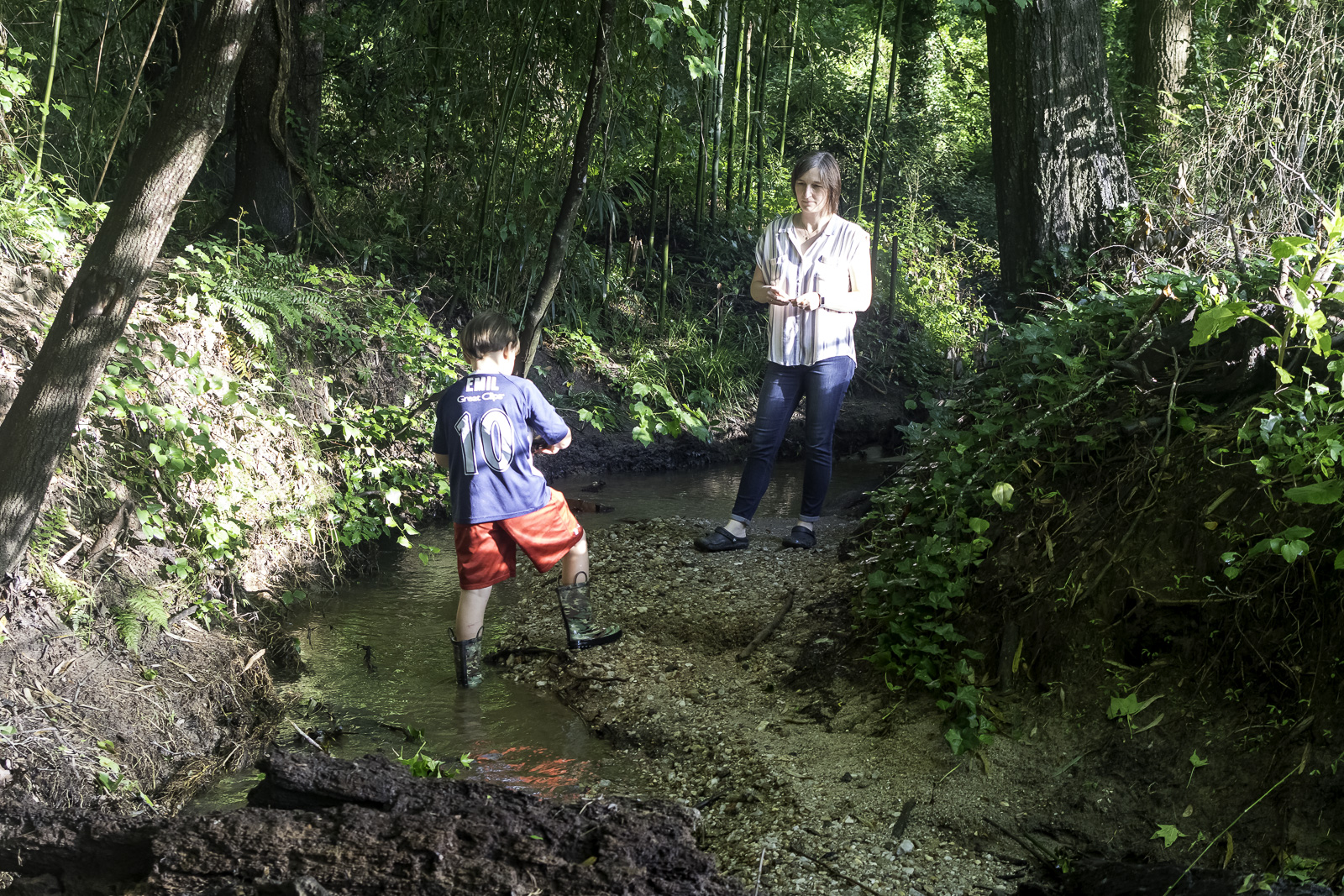
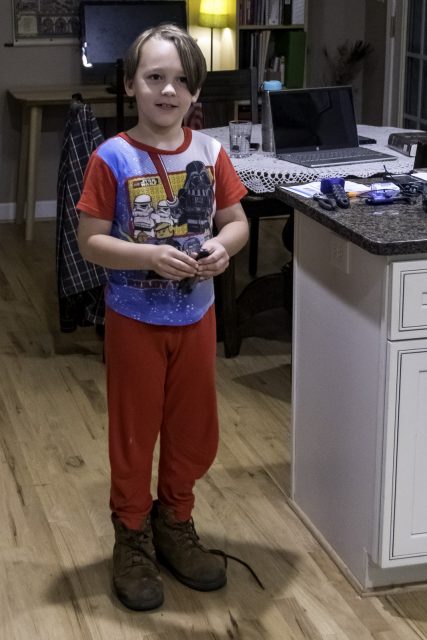
E talked K into doing a little exploring after dinner. While K was still in her good clothes.

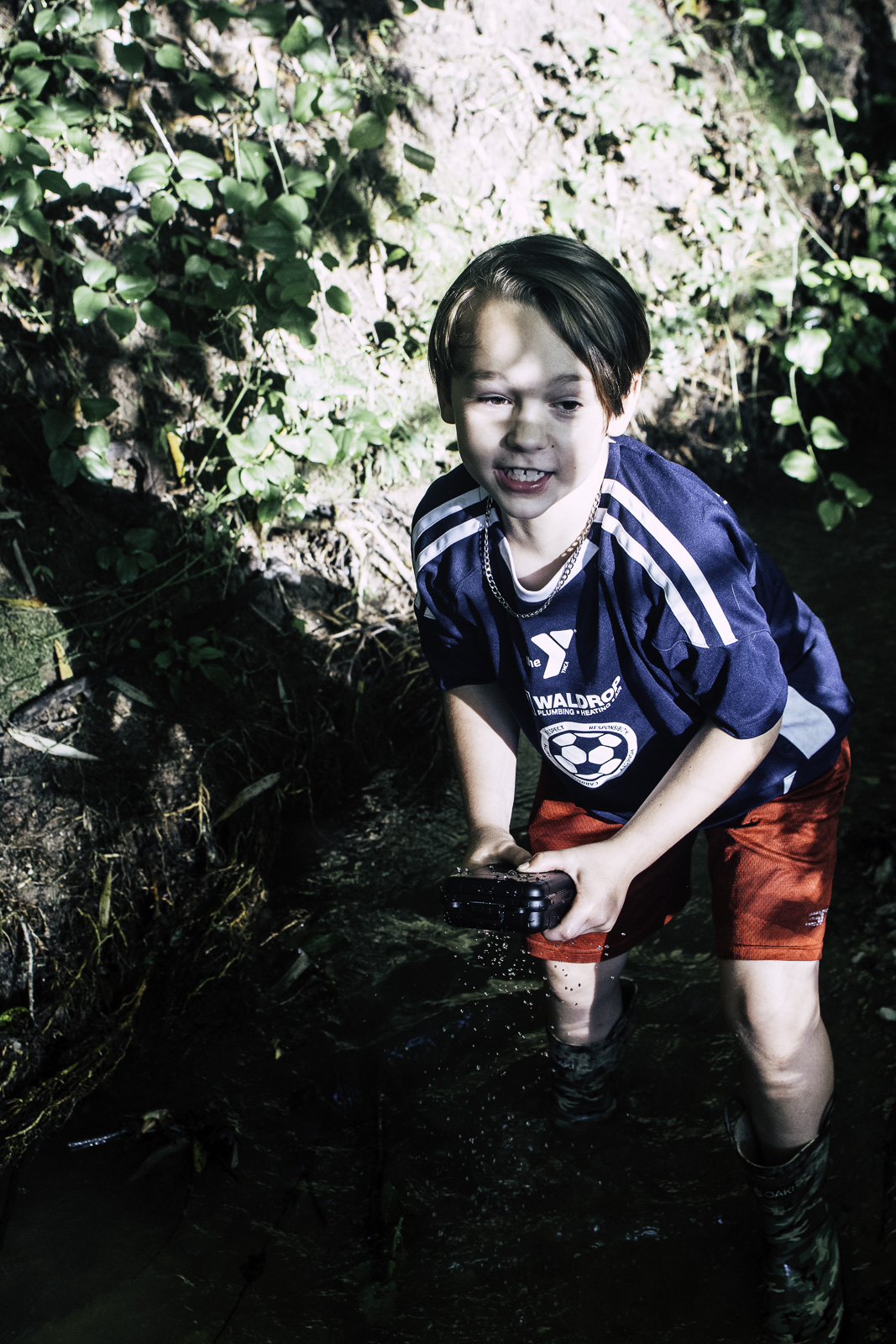
He was keen to show her how the plastic box his survival gear came in is, in fact, watertight.

Day 67: Cleaning, Surveying, Surviving, and Commenting

Cleaning Out

The end of the school year always brings a lot of cleaning and paperwork. We have an entire list of things we teachers have to do before going home for the summer.

  • We have to return materials to the media center.
  • Emergency guides need to go back to an administrator.
  • We have to make it easy for everything to be removed from our room, so that usually means packing up all the books on my bookshelves and storing them somewhere.
  • The plant engineer needs to check our room for any issues that will hamper the cleaning of our room over the summer.
  • We have extensive checks about grades as well as reports we have to print out for the office staff in case there are any questions about grades over the summer.
  • We have to return our keys to the a designated administrator.
  • We have to return our receipt books to the accountant.
  • We have numerous meetings about various things, some of which feel incredibly important and some of which feel not so important.
  • Prepare letters to go home with final grades.

The first year I was a teacher at this school, it took three days to get everything ready because, in addition to all this (and a lot of stuff I’ve forgotten/neglected to mention), we had to put copies of the final report cards in permanent records and then organize the permanent records based on which high schools students were attending. These last two steps are now out of our hands, but it still takes a while to get all this done.

Part of the challenge is getting signatures. At the end of the whole process, we are to provide the principal with a checklist that has been initialed by everyone involved to show that we’ve done all the steps above. Sometimes, it’s a bit of a trick tracking down a given administrator.

I went to the school today for the end-of-year checkout, arriving at around ten in the morning, and by twelve, I was done.

This is just another way that this year is exceptional.

I’m not complaining: I didn’t have to move my books at all because the custodial staff, in an effort to get a head start on the summer’s duties, has already cleaned my room, most significantly the floor (cleaned and waxed). Turns out they just worked around the bookshelves. The curmudgeon in me will forever after complain, “Why can’t you just do that every year? It’s not like I ever move my room around — everything goes back to the same place, year after year.” Still, I would have preferred a regular ending to this year, and for that, I would have willingly done the whole check-out procedure — twice, if necessary.

Surveying the Changes

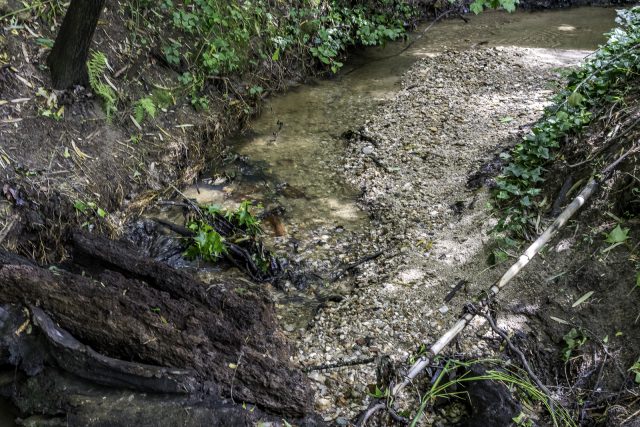
Every time we have a significant rainfall that results in the creek behind our house rising to food or near-flood levels, the Boy and I like to go out and see what has changed. The surging waters bring new flotsam and jetsom after it washes away existing flotsam and jetsom.

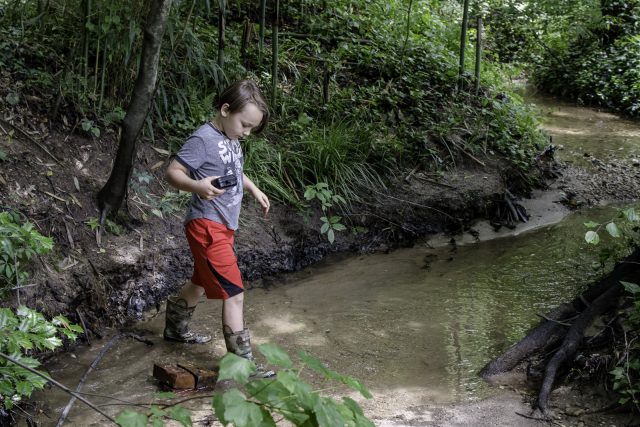
It changes the flow of the creek, too. For example, the spot where we usually cross was just wide enough that I could step over it with one stretching step. Now it’s much wider. As I was wearing tennis shoes during our afternoon adventure, I was unwilling to take the chance of getting them wet. The Boy kindly built a stepping pylon out of the bricks we’d brought down last year to help with the crossing in another spot.

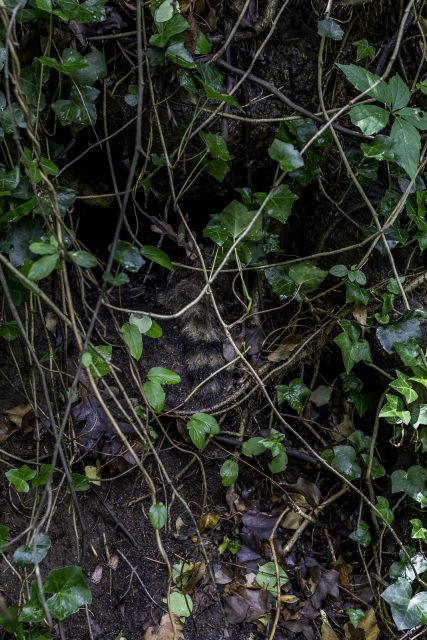
During our exploring, the made a grisly discovery: the raccoon we thought was just inexpertly hiding the other day was in the same spot.

“So it died there?” the Boy asked. “Did it attack something there? What could kill a raccoon?!” He related some video he’d watched in which a farmer explained how raccoons killed some of his chickens. “It would have to be something really big to take down a raccoon!” I could see the wheels turning: he was thinking about what type of enormous preditor could be lurking in that wooded area we explore with seemingly careless abandon.

I suggested that perhaps it was just sick and crawled in there to die.

“Or maybe the snake we saw bit it and that’s where it died,” the Boy intelligently suggested.

That sounds reasonable.

Survival Gear

The Boy is into survival skills. He’s been watching a couple of YouTubers who do survival stuff as their main content. The primitive building of two weeks ago, with plans to build a vast underground bunker complete with swimming pool — forgotten. Completely. Not a word about it.

He used some of his money this week to buy a survival kit.

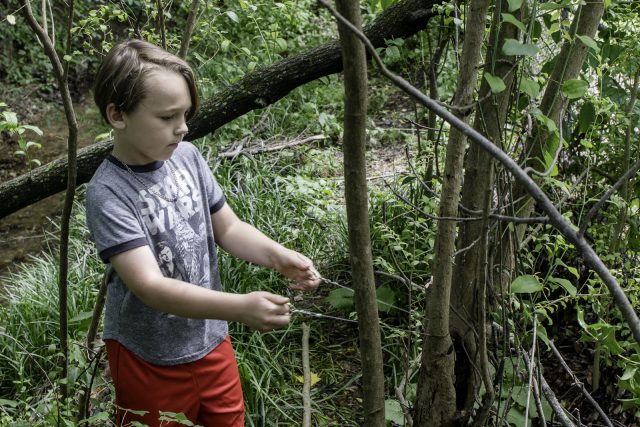
He just had to try out the saw today.

The Comment

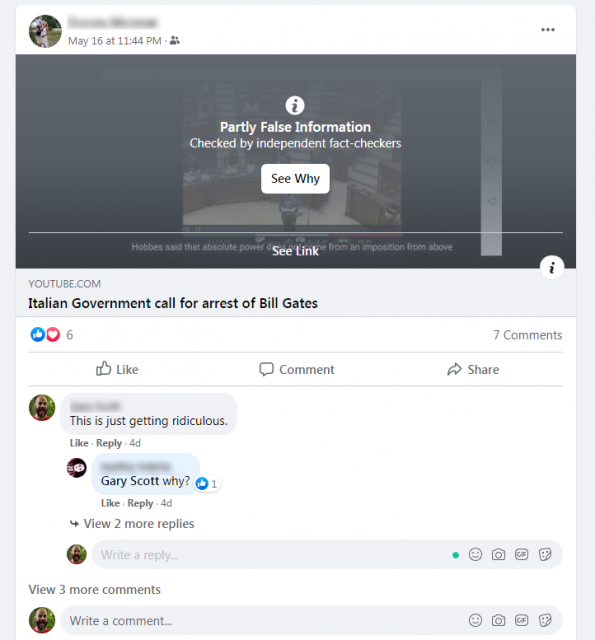
A former student shared a video on social media. I watched about 5 minutes of it. Bill Gates and 5G networks are conspiring to spread the virus. I made a comment: “This is just getting ridiculous.”

“Why?” someone asked.

My response was admittedly a bit barbed: “If I have to explain it, there’s no point. You’ve swallowed the conspiracy theory Kool-Aid.”

My former student took me to task:

You wrote something is ridiculous without explaining why, so it’s normal to ask ‘why?’

What did you think was ridiculous? Which one of the statements that this parliamentarian was providing was ridiculous? I know we don’t hear these statements in MSM but I think that it’s better to check all information available before ridiculing anyone. It’s too easy to discredit something just because it sounds ridiculous. There were many things in history that sounded absurd to many and yet with time they proved to be true.

Anyway wherever the truth is, it’s always a good idea to ask questions and there can be nothing and no one that should be unquestionable.

After the comment, I went back to watch the video, only to find it had been flagged by fact-checkers. I simply pointed them to a couple of articles and left it alone.

What I wanted to say:

  • “What did you think was ridiculous?” The whole thing. The idea that someone could possibly take this nonsense seriously.
  • “Which one of the statements that this parliamentarian was providing was ridiculous?” Every single one of them. Each sentence that came out of the woman’s mouth. They’re all demonstrably false and completely illogical.
  • “I know we don’t hear these statements in MSM” — there’s a reason for that: it’s called presenting facts as opposed to obviously false, idiotic statements. It’s like the old joke: there’s a name for alternative medicine that works — medicine.
  • “but I think that it’s better to check all information available before ridiculing anyone.” Point taken. Now, go check the facts.
  • “It’s too easy to discredit something just because it sounds ridiculous.” At least you’re admitting it sounds ridiculous. That’s a start.
  • “There were many things in history that sounded absurd to many and yet with time they proved to be true.” Other than quantum theory, name one.

I should be used to this kind of nonsense now, but I’m not. Nor should I be. It’s normal now but it shouldn’t be.

Day 66: Morning Ignorance of the Below and Above

Morning

The morning, post-breakfast ritual during this time of lockdown and isolation:

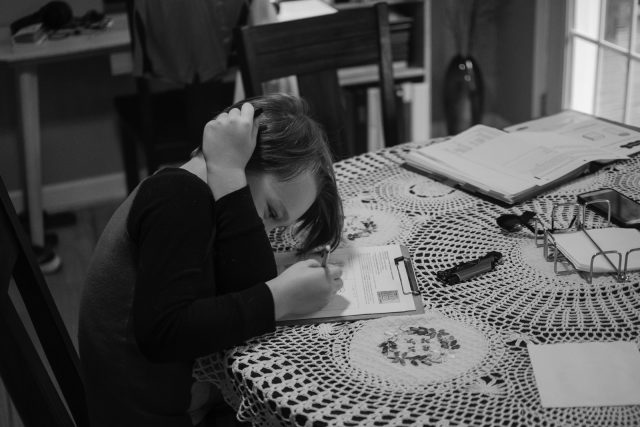
The Boy works on his schoolwork. We try to pace it: whatever’s going to be more challenging for the day we tackle first. Lately, things have been fairly balanced: everything has been much easier, in short. Still, old habits persist, and he’ll start fussing if he gets the slightest bit frustrated some mornings.

Today, we made it through everything fairly quickly with minimal fussing.

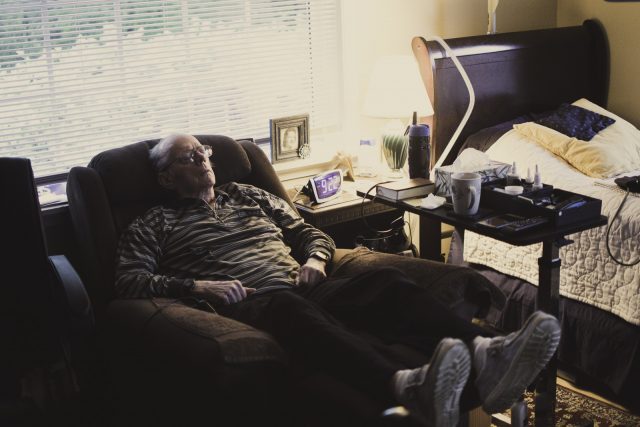
Papa often takes a nap. He doesn’t necessarily intend to take a nap — he’s just comfortable, full, content, watching television or listening to a book, and what else is there to do?

K works on emails for her real estate clients. She’s trying to work two jobs now. We all tell her that she needs to focus on one or the other. We know which one she’d like to focus on. We also know that that job doesn’t have a set pay schedule.

I am usually either helping the Boy or working on my own school work downstairs. Or as in this case, taking pictures.

The Girl — well, she does what a teenager does best.

Below

Ever since we had our first flood in the basement several years ago, a heavy rainfall makes me just a bit nervous. I look at the puddles forming in the backyard. I check the weather. I duck into the crawl space to look in the sump pump basin. I repeat the cycle. I worry, worry, worry. Until our big flood in February, I’d gotten to the point, though, that I really fretted very little. It had gotten a little wet but it hadn’t flooded flooded. Still, I’m always probably going to be a little worried about water coming up from below, the hydrostatic pressure building to the point that it forces water through the smallest of cracks and starts filling our basement again. It will happen. And though I have taken steps to remediate the situation, there are no more steps I can take that don’t involve massive work and a sizeable fiscal commitment.

Option 1

Our neighbor up the street had a drainage system put in his basement recently: around the entire parameter of the basement, workers busted up the concrete and the applied perforated drain pipes that lead to a central sump pump. It was a five-figure job.

That might be the next step if the basement continues flooding. It’s the type of job that, having the summer off every year, I’d be keen on tackling myself. At the very least, I could rent a jackhammer and bust up the concrete and dig down to the footer, cutting the cost significantly, I would think. Or at least hope.

Option 2

The other option: when we pull out the landscaping front of the kids’ bedrooms, I could dig down to the footer there and re-seal the foundation, perhaps installing a French drain system there while everything is dug up.

And Above

I was playing pool with a friend in the basement probably almost decade ago when water started pouring onto the pool table. It turned out that the shower pan in the master bathroom had failed.

Count Me Out, In

We ended up renovating the whole bathroom as a result.

There was one other time when the water came from above instead of below: somehow, the water came in between the upstairs deck and the door sill and started dripping from the top of the door in the basement. I never figured out what caused that, but I caulked well around the door and it never happened again.

But most of our experience with water entering the house comes from below.

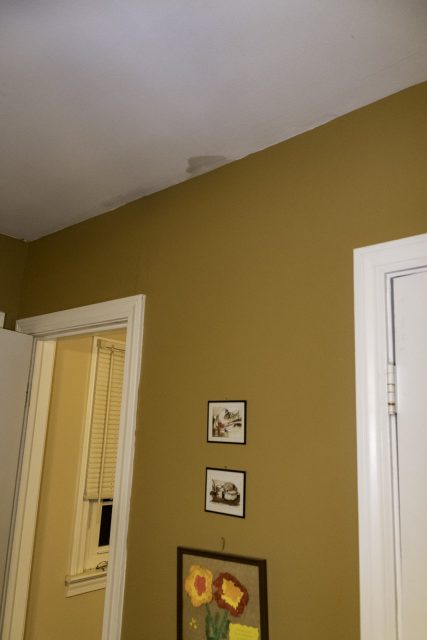
But tonight, the Boy was getting ready for his bath when he looked up and asked, “Daddy, is that a leak?”

Shit.

I went to get a chair so I could reach up and feel the dampness I knew would be there. Still, as I walked to the Boy’s room and returned with the chair, I found myself thinking, “Please, oh please just be a dark spot on the ceiling that I’ve never noticed though we’ve lived here almost thirteen years.”

I looked carefully at where the stain was and realized quickly what had likely happened: the roof vent flashing had somehow failed. Perhaps it had gotten cracked. Perhaps it was torn. Perhaps, perhaps, perhaps.

“Maybe it’s just running down the sewer vent,” I thought.

I climbed on the roof to see if anything was amiss. “Perhaps the hail we had a few days ago damaged something and insurance will pay for an entire re-roofing job,” I thought both hopefully and sickeningly. Examining the flashing, I couldn’t see any sign of compromise. We covered it with some plastic and hoped for the best.

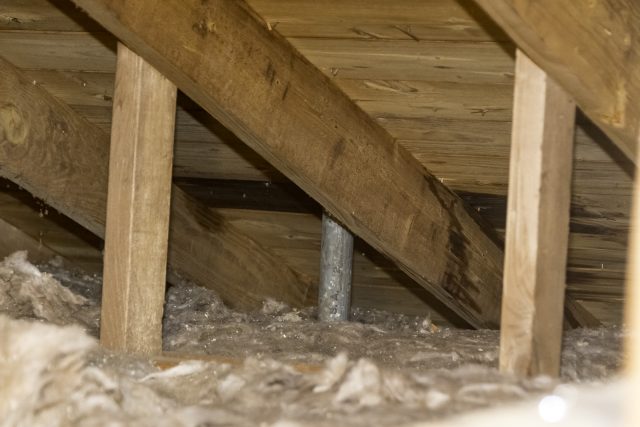
Still, I needed to check in the attic to see just how bad the problem was.

I don’t really know if that’s bad or not. Part of me says, “That’s horrible: it’s bad enough that it’s saturated the ceiling sheetrock enough to make a stain.” And yet, I really don’t know.

So tomorrow we’ll call the insurance adjuster and a roofer to see what they say.

When I got back down and talked to K about what I found, the Boy discovered my boots and couldn’t resist.

Later in the evening, K thought the spot is damper than it was earlier. We decided to go all out: we brought out the two tarps we use for camping, overlapping one with the other so that water can run under the tarp, weighing the whole thing down with bricks and cinder blocks. And doing all this in a light rain. At 10:30.

Lightroom Revisit

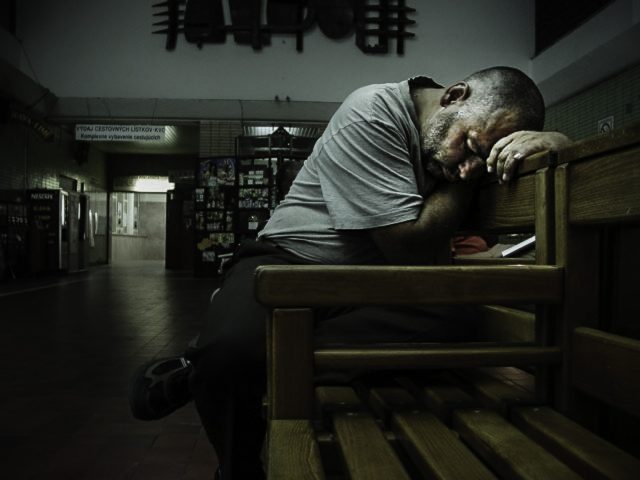
In August 2003, K and I rode our bikes south through Slovakia to Hungary to spend a week in Budapest. When we returned, we rode to Sturovo, a town in southern Slovakia, where we caught a train to Zilina, where we waited for another train to Trstena, just across the border from where we lived in southern Poland. We had to wait in the Zilina train station for most of the night to catch the 5:00 a.m. train to Trstena. This guy was waiting for a train, too.

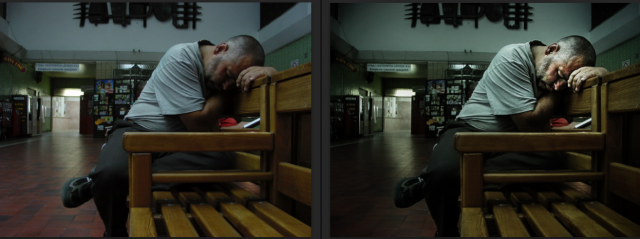
This is one I’m particularly pleased with the Lightroom reworking. The before-and-after shows how much of a difference it makes to do selective editing:

Day 65: Inferring in the Rain

Inferring

Authors often say a lot without saying much. A good author leaves a lot for the reader to piece together for herself, and that's one of the things that can make a book engaging. But filling in those gaps is a skill that readers must learn. It doesn't come naturally.

This is one of the things I spend a lot of time and energy teaching my eighth graders how to do. The honors kids are usually fairly adept at it, but the on-level students often struggle. I have to model it for them, doing think-alouds in which I say aloud all the inferences that are running through my head when I read. I infer; I predict; I connect to previous knowledge; I comment on what I read. I model, model, model, then turn it over to them to try as a class before they try it in groups and finally as individuals. Scaffolding, that's called: model it, practice as a whole class, practice in groups, practice individually -- the bread and butter of my teaching.

Tom Sawyer is providing ample chance for me to begin exposing the Boy to this kind of critical thinking.

Presently [Aunt Polly] stepped into the kitchen, and Sid, happy in his immunity, reached for the sugar-bowl -- a sort of glorying over Tom which was wellnigh unbearable. But Sid’s fingers slipped and the bowl dropped and broke. Tom was in ecstasies.

I pause: "What do you think will happen?" I ask the Boy.

"Aunt Polly will think that Tom broke the sugar bowl," he said after a moment's thought.

"Right. That's called predicting..." I begin.

"I know, Daddy. You tell me that every time we read something." Perhaps not every time, but often enough.

We continue:

In such ecstasies that he even controlled his tongue and was silent. He said to himself that he would not speak a word, even when his aunt came in, but would sit perfectly still till she asked who did the mischief; and then he would tell, and there would be nothing so good in the world as to see that pet model “catch it.” He was so brimful of exultation that he could hardly hold himself when the old lady came back and stood above the wreck discharging lightnings of wrath from over her spectacles. He said to himself, “Now it’s coming!” And the next instant he was sprawling on the floor!

"What does 'sprawling' mean?" the Boy asks.

I explain, then ask, "Do you understand what happened?"

There is a lot going on in that passage, particularly in the final two sentences: "He said to himself, 'Now it’s comin!' And the next instant he was sprawling on the floor!" Missing from this is the fact that Aunt Polly slaps Tom so hard that it knocks him off his chair.

I explained it to the Boy. He thought it was horrible that someone would slap a child so hard that it knocks him out of his chair. I think that's a fairly reasonable concern, to say the least. Why do we adults find that passage funny, though? I think it's because of all the work Twain makes us do, all the thinking, all the blanks we fill in. Twain is a master of implication.

In the Rain

It rained all day today. K and I were concerned that it might turn out to be enough to threaten our basement again. Granted, I have filled all the termite treatment holes with hydraulic cement: those holes shouldn't let any more water into our basement, let alone the geysers and fountains that were gushing in during our last storm. And the crack by the fireplace? I drilled it out completely and patched it with more hydraulic cement.

So part of me was thinking, "Okay -- bring it on. Let's see if I've got you licked" (to employ a usage from Tom Sawyer that still tickles the Boy).

But most of me was just hoping that it didn't come to that. When the Boy and I headed out in the morning to see how much rain had fallen, things were looking bad but not dreadful.

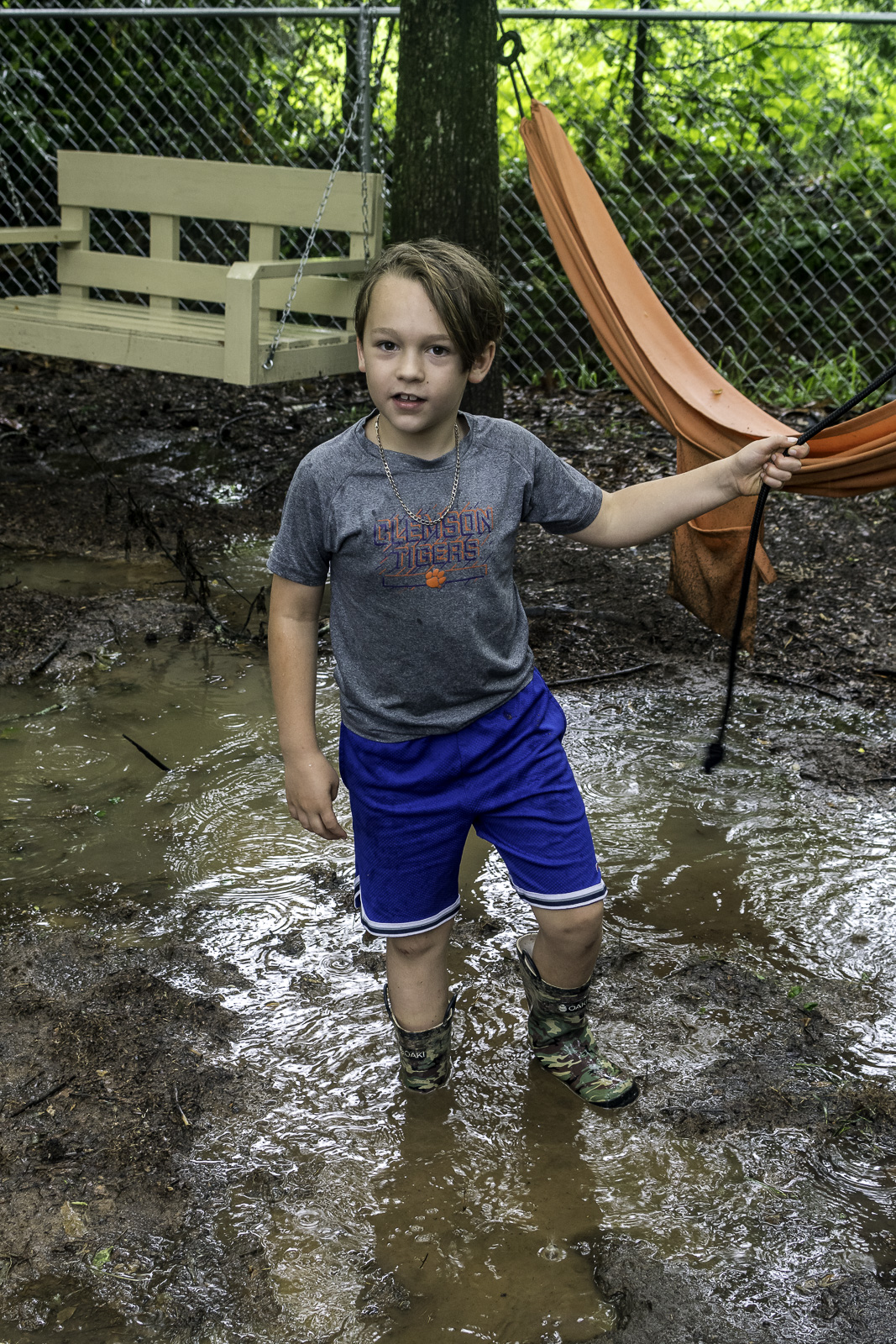
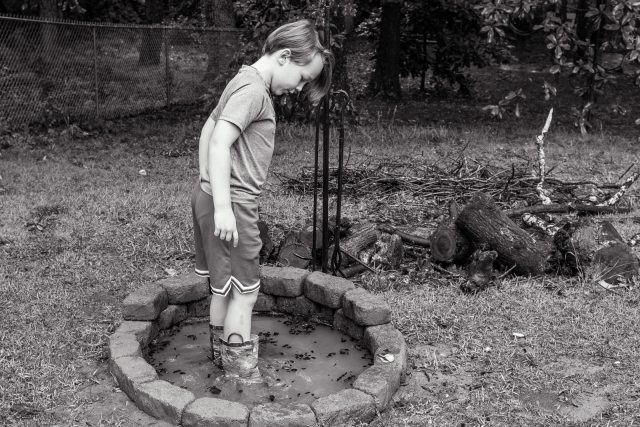
We went back out in the afternoon after more rain. We went ahead and crossed the creek at this point like usual: the water was only a few inches above our feet. I held the Boy's hand, and we ventured up a bit further. The rain continued, and by the time we made it back to this point, the water was waist-deep for the Boy. I held his hand firmly, and we made it across easily, but it was a lesson: "See how quickly the water can rise?" That's the epitome of flash-flooding.

Scare Politics

I noticed this particular meme this evening on social media:

I find it hard to imagine what kind of simplistic thinking could lead to something like this. Surely no one so naive as to believe that it's as simple as this meme suggests. To think that we could go from Trump-istan to this worst-case-scenario, utterly exaggerated vision of progressive ideas run amuck in one election cycle -- I just don't get it.

What I do get is the fear buttons this kind of meme pushes. The left has their own versions of these memes, of course. I could probably browse the tweets of friends who lean much further to the left that an avowed centrist (don't we all see ourselves as centrists? no -- we certainly don't) like me and find the equivalent: we're one step away from living in a real-life Handmaid's Tale. (Come to think of it, I believe there was a protest with women dressed as handmaids from the novel/movie/series.) Making decisions from fear is bad enough, but making them from a sense of fear that might very well have been intentionally manipulated -- that in itself is terrifying.

The Dog

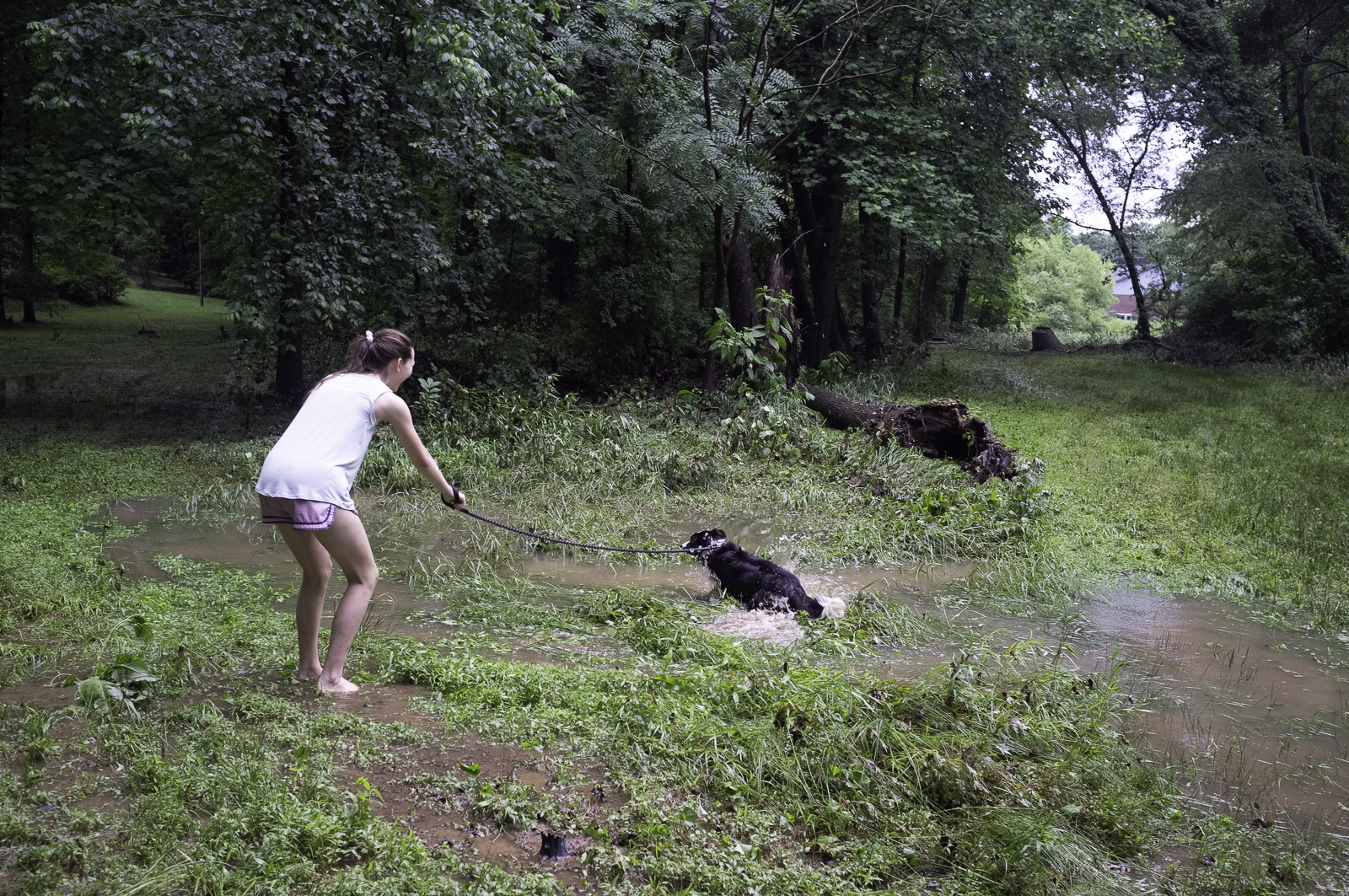
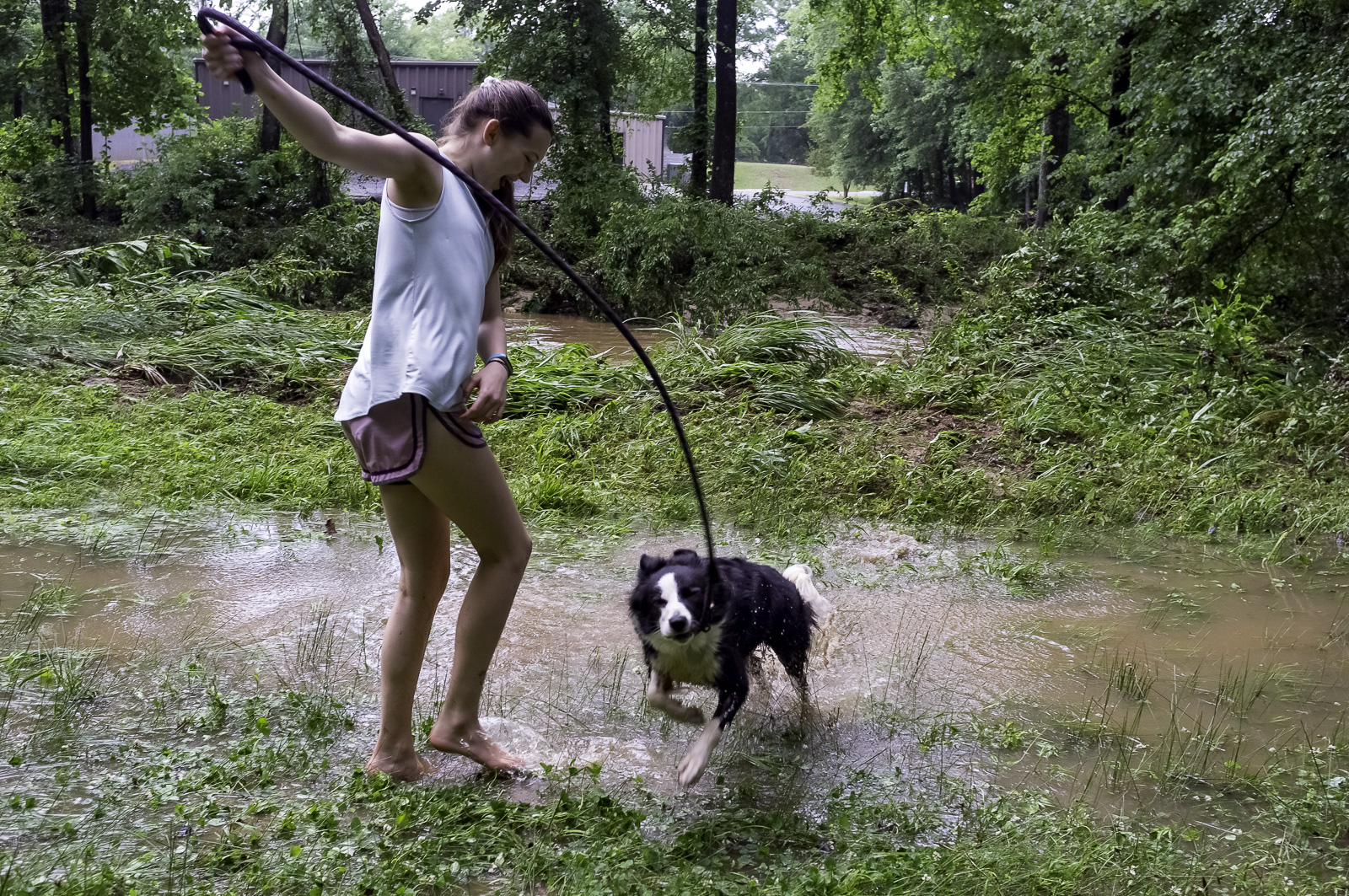
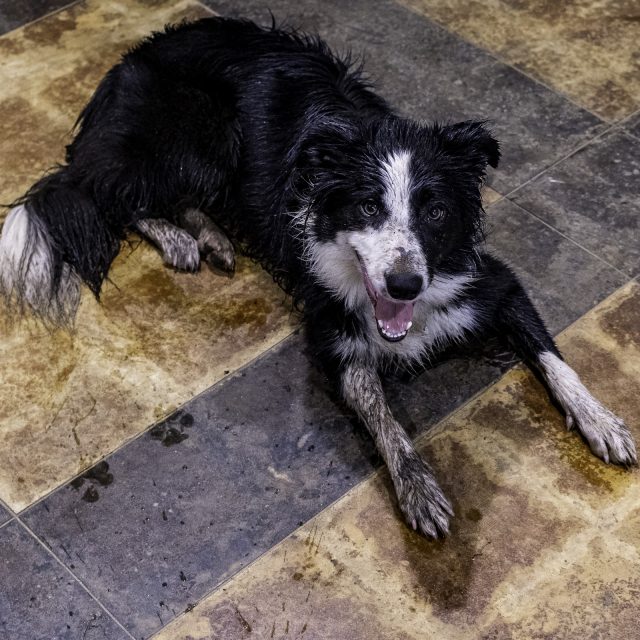
Two things: how can a dog get that dirty in a matter of seconds? And how can it seem to disappear as soon as she's dry?

Day 64: Working, Ending, and Reading

Working and Ending

We’re nearing the end of the year — only a couple of weeks to go. These weeks promise to be anything but typical. For one thing, I’m giving assignments with the understanding, on both sides, that I will provide minimal feedback and that the grade depends more on effort than accuracy. That’s the district policy during our quarantine teaching. It might be the state policy. So some kids do their absolute best, like this analysis of chapter 24 of To Kill a Mockingbird:

Chapter 24 is important because it shows how the town of Maycomb isn’t as “Christian” or as “nice” as they claim to be. For example, Mrs. Farrow Mentions how they can educate them and try to make them Christians but till there will be, “no lady safe in her bed.” The antecedent ambiguity that Mrs. Farrow makes using “them” as in the African Americans shows a sense of judgment she has towards them. Not only that but when she mentions how much they are fighting a losing battle and women still can’t be safe shows the hierarchy these white people have put themselves in showing that no matter what an African American will never be better as a person of white ethnicity. Similarly, Merriweather states how there are some, “Misguided people” in the town who think they were “Doing right”, but all they did was “Stir [them] up.” This second case of antecedent ambiguity this time towards Atticus shows the real hypocrisy of Mrs. Merriweather. Mrs.Maudie backs that up with a remark showing how Mrs. Merrieweather doesn’t feel any ounce of remorse talking trash, but eating Atticus’ food. Showing how really bad Mrs. Merriweather actually is.

Other students don’t turn in anything. Despite calls to parents. Despite emails. Despite encouragement. Despite the constant reminder that this the only time they’ll have to pull in a handful of 100s (nine of them, in fact) for simply doing the work. Just putting forth the most minimal effort. It’s frustrating, not to mention tiring.

The Boy, though, gets no mercy. Just try to skip something, or not do his absolute best — K is on him to get everything done, and when she’s not, I am. Truth be told, though, she’s done the lion’s share of the work with him — probably something like 95% of the work with him even if I’m being generous with myself. I have spent most of that time in the basement, “grading” things, sending emails, planning things, meeting on Google Meet. She has kept him on his toes, kept his nose to the cliche grindstone, which means she’s been keeping her own to the grindstone as well.

I am usually keeping my own students’ noses to the cliche at this time of year, especially the English I students. They’ll soon be writing their letters to next year’s students, and I have to make sure their final impressions of the class will help them create the appropriate first impressions in next year’s classes. They’re usually finishing up Great Expectations or Lord of the Flies at this point in the year. They’re out of breath, academic legs aching, making the last mad dash for the finish, and I’m there cheering them on and behind them whipping them faster, mixing metaphors left and right. The letter is supposed to be completed in one class period. That’s what makes it so impressive to the students next year.

“How would you rate this letter’s organization?” I ask. They usually are moderately impressed.

“How would you rate this letter’s length?” I ask. They usually are moderately impressed.

“How would you rate this letter’s persuasiveness?” I ask. They usually are moderately impressed.

“Last year’s students wrote these letters in one class period. These are, therefore, first drafts.” I pause for effect. Everyone begins looking at each other. “Whose opinion of these letters has risen noticeably?” Every hand — every single one — goes up.

And this year? How can I make sure each student only spends the equivalent of one class period on her letter? In short, I can’t.

Not the end of the world, but frustrating.

Reading

E and I finished Twenty Thousand Leagues Under the Sea last night. After complaining about how he didn’t understand everything for the last couple of weeks, he changed his tune when I realized we wouldn’t find out what happened to Captain Nemo.

“Is there a sequel?”

“I think there is. Or at least he appears in another book,” I say.

“Can we read it?”

No — not now. Enough Jules Verne for now.

Our next book: The Adventures of Tom Sawyer. We begin with a history and culture lesson: I talk to the Boy about the n-word. It appears in the book. There’s no escaping it. He’ll encounter it in one way or another soon enough.

Then we begin reading. I’m hoping he’ll find it amusing. If he doesn’t… well, I guess we’ll have to try something else. But soon enough, he’s laughing:

The summer evenings were long. It was not dark, yet. Presently Tom checked his whistle. A stranger was before him—a boy a shade larger than himself. A new-comer of any age or either sex was an impressive curiosity in the poor little shabby village of St. Petersburg. This boy was well dressed, too—well dressed on a week-day. This was simply astounding. His cap was a dainty thing, his close-buttoned blue cloth roundabout was new and natty, and so were his pantaloons. He had shoes on—and it was only Friday. He even wore a necktie, a bright bit of ribbon. He had a citified air about him that ate into Tom’s vitals. The more Tom stared at the splendid marvel, the higher he turned up his nose at his finery and the shabbier and shabbier his own outfit seemed to him to grow. Neither boy spoke. If one moved, the other moved—but only sidewise, in a circle; they kept face to face and eye to eye all the time. Finally, Tom said:

“I can lick you!”

“I’d like to see you try it.”

“Well, I can do it.”

“No you can’t, either.”

“Yes I can.”

“No you can’t.”

“I can.”

“You can’t.”

“Can!”

“Can’t!”

The Boy is laughing so hard by the time we get here. We reenact the dialogue a number of times, each time to more uproarious laughter. I’m not sure what he finds more amusing: the idea of “whip” meaning “to beat up” or repetition of assertion and denial.

We continue:

An uncomfortable pause. Then Tom said:

“What’s your name?”

“’Tisn’t any of your business, maybe.”

“Well I ’low I’ll make it my business.”

“Well why don’t you?”

“If you say much, I will.”

“Much—much—much. There now.”

The whole “much-much-much” just about doubled him over. It’s what an eight-year-old might do, after all.

After his evening dental hygiene session (what a way to describe an eight-year-old boy brushing his teeth), we embark on chapter two, the most famous of all Twain’s passages: the whitewashing scene.

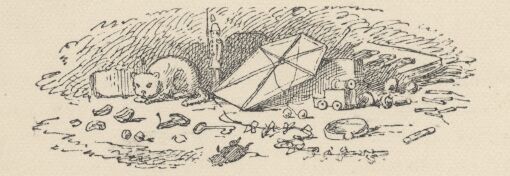
Tom gave up the brush with reluctance in his face, but alacrity in his heart. And while the late steamer Big Missouri worked and sweated in the sun, the retired artist sat on a barrel in the shade close by, dangled his legs, munched his apple, and planned the slaughter of more innocents. There was no lack of material; boys happened along every little while; they came to jeer, but remained to whitewash. By the time Ben was fagged out, Tom had traded the next chance to Billy Fisher for a kite, in good repair; and when he played out, Johnny Miller bought in for a dead rat and a string to swing it with—and so on, and so on, hour after hour. And when the middle of the afternoon came, from being a poor poverty-stricken boy in the morning, Tom was literally rolling in wealth. He had besides the things before mentioned, twelve marbles, part of a jews-harp, a piece of blue bottle-glass to look through, a spool cannon, a key that wouldn’t unlock anything, a fragment of chalk, a glass stopper of a decanter, a tin soldier, a couple of tadpoles, six fire-crackers, a kitten with only one eye, a brass door-knob, a dog-collar—but no dog—the handle of a knife, four pieces of orange-peel, and a dilapidated old window sash.

The idea of “a dead rat and a string to swing it with” was just terribly amusing for the Boy.

As he was drifting off to sleep, he remembered another favorite line — once I explained key vocabulary — and muttered it one last time: “would have bankrupted every boy in the village.”

Day 63: First Mass

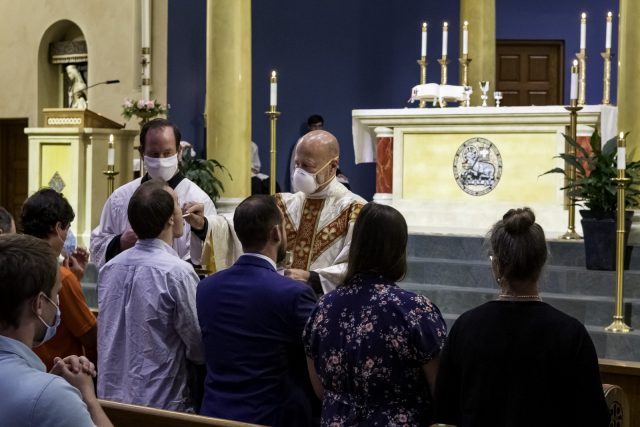
Today, parishes across the state were able to have public Mass for the first time in two months.

The local Catholic newspaper hired me to photograph Mass at a couple of locations.

A surreal scene, to be sure.

Day 62: Camping in the Backyard

We’ve gone camping as a family quite a few times: Stone Mountain, Deep Creek, Lake Jocassee, and Huntington Beach come immediately to mind. Memorial Day was always a great weekend to go camping, and we went most often to the beach. But then life got complicated, family got sick, schedules changed, and responsibilities grew so that now, even if there weren’t a pandemic to worry about, we would not be able to go camping as a family for quite some time. For how long? We really don’t know.

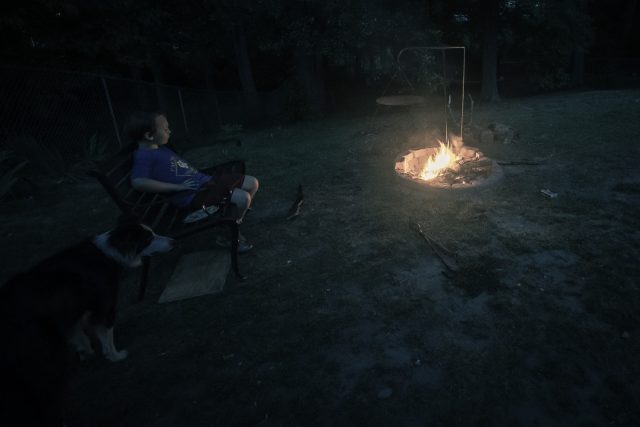
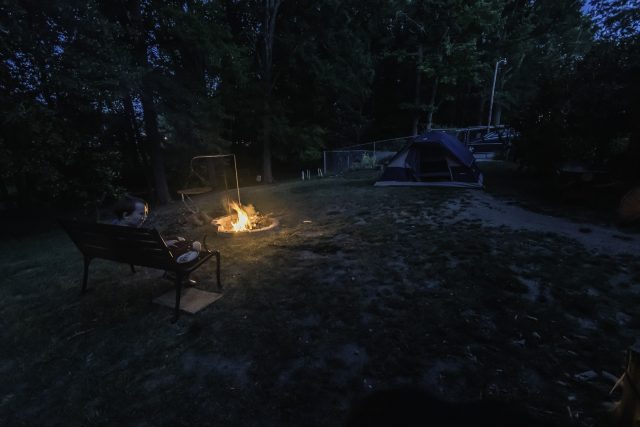
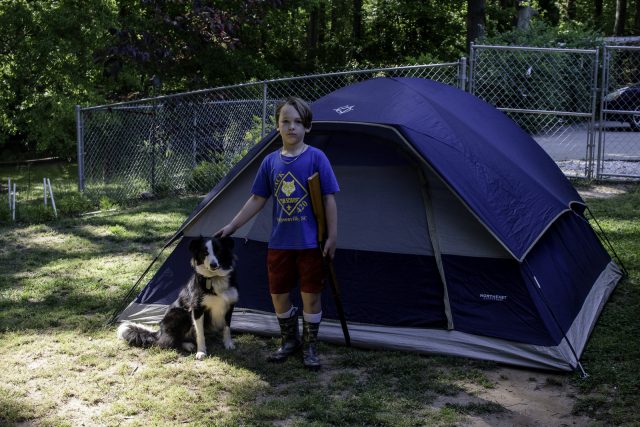
The Boy, though, wanted to go camping. So we did the obvious thing last night: we pitched a tent in our backyard and spent the night in it. There — camping.

Well, not quite. We took our pillows down with us. Somehow, we never remember to bring our pillows — or any pillows really — when we go camping.

Also, I went in to get E’s blanket in the middle of the night when I woke to find him only barely covered with the sleeping bag because he was sleeping under it instead of in it.

And we didn’t have to strike camp this morning. We just left it up, thinking we might go camping again.

Finally, and most significantly for me, I took a shower without flipflops this morning.

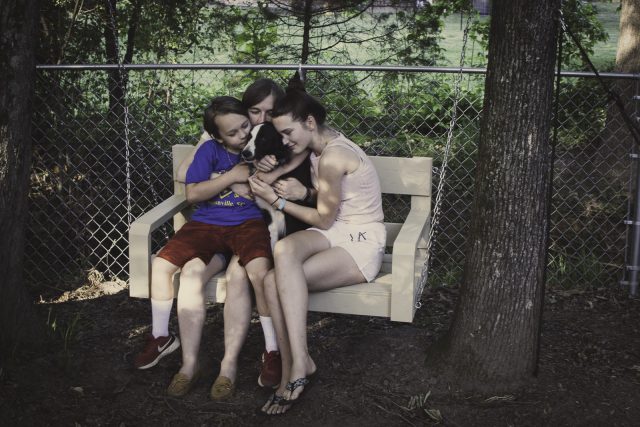
Yesterday afternoon, we also put up K’s new swing. It’s hanging a little wonky now, and I didn’t have a chance to figure out today why, but it’s there. And the dog even likes it.

As for today, other than the single picture from this morning, I never had occasion to take out the camera. Who wants to see pictures of bathrooms in the midst of weekly cleaning or the crawl space as I examine the water pipes to try to figure out why they’re banging and knocking?