christmas
Jasełka
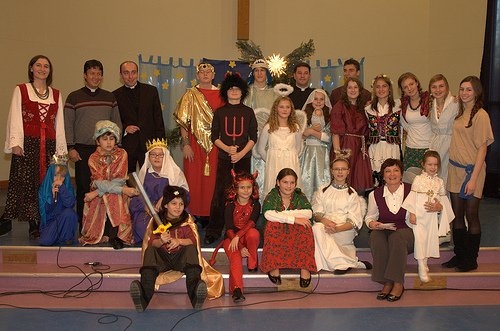
Nativity plays date at least from the time of St. Francis of Assissi, eight hundred years ago. This weekend, the concept was, once again, Polish-ized.
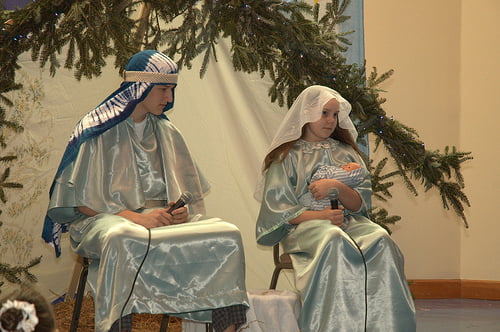
To be fair, it was not a one-off occurrence. Nativity plays, called jasełka (ya-sewl-ka) in Polish, are as customary during the Christmas as wreaths and carols.
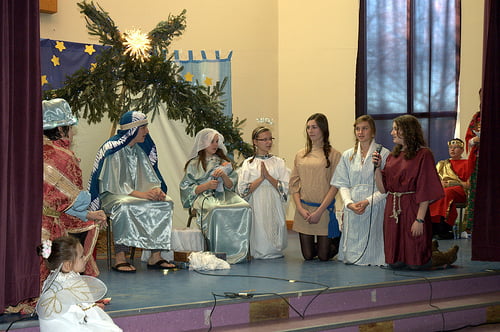
Unlike the modern American nativity play, which is often relatively high tech and performed by adults, Polish nativity plays are almost always entirely a production of children and adolescents -- under the direction of adults.
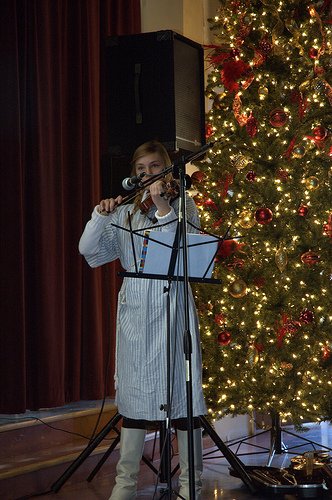
So in schools and churches throughout the Polish community worldwide, children are have been putting on nativity plays much like the one the small Polish community here watched this afternoon.
Yet this play was somehow different -- incredibly different -- than all the plays I watched while teaching in Poland. During the final days before Christmas break, students and faculty gathered to watch the year's play: it was often, it seemed to me, an attempt by the directing teacher simply to impress the other teachers.
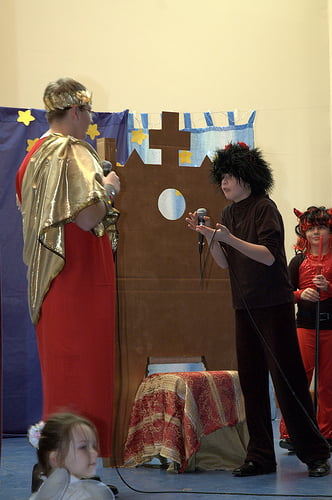
These actors were American children of Polish heritage, children who speak English naturally and Polish only when spoken to by an adult. Their Polish has the traces of limited exposure: accents, weak grammar, lower-level vocabulary: they speak Polish like I do, in other words. For all intents and purposes, Polish is a virtually-foreign language to them.
For them, it's the language of parents and parents' friends, a language to be spoken only when spoken to. When they sit around, waiting for their scene during rehearsal, they lapse to the more comfortable English, the language they speak without thinking.
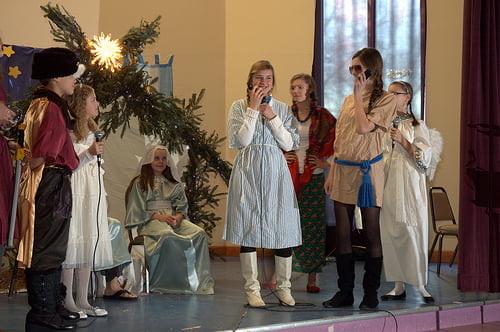
And yet they memorized line after line, exchange after exchange, and performed it with few cues.
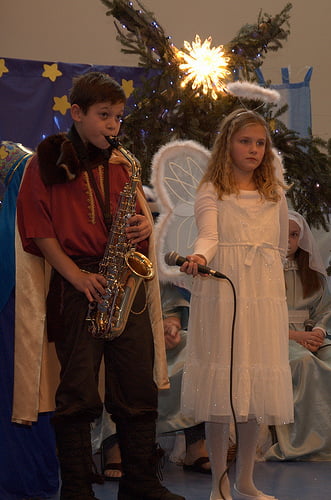
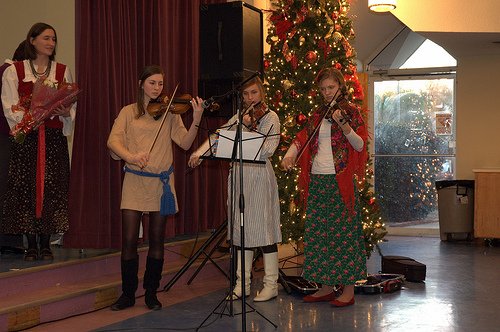
It was a showcase, a moment for kids to show their musical, acting, and linguistic talent. It was a celebration of one of the pivotal events in history -- the pivotal event in the West.
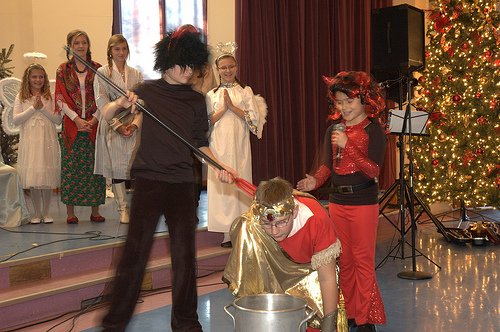
At the heart of the afternoon was the sense of community, the sense of belonging. In between scenes, the audience joined the kids in various renditions of the most popular Polish carols. Put ten Poles in a room together and they'll end up singing: yet somehow, in suburban America, it had a special glow.
For K and me, there was a first -- a first of many, I'm sure. As part of the finale, L sang a solo.
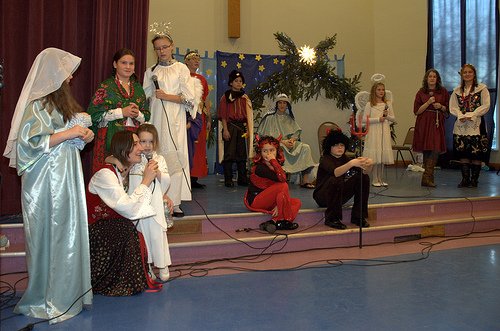
She was was off pitch and out of tune, but it was the sweetest moment I've ever experienced as a father.
Lighting the House
We’re moving up — literally. This year was the first year we put up lights around the house.
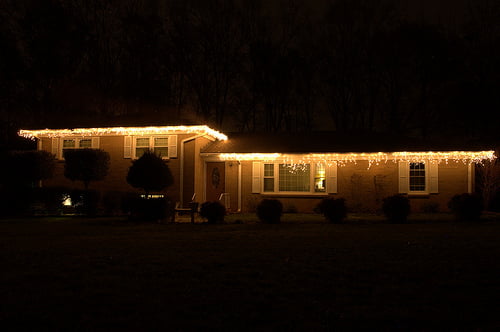
It was easier than I was expecting, just a matter of up and down and up and down the ladder.

And the realization that what comes up before Christmas must come down shortly thereafter.
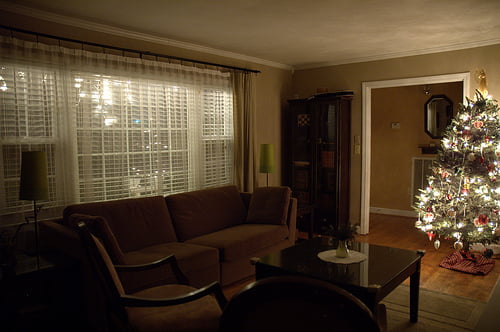
Still, to sit in the living room is a double pleasure now.
The Tree
We sit in the living room, K writing Christmas cards, L drawing on them. I alternate between reading student journals and whatever book my eye falls on -- skimming books of my past and those I still haven't made it to (Berger, Weil, Schleiermacher, Smart), all within reach of my chair.
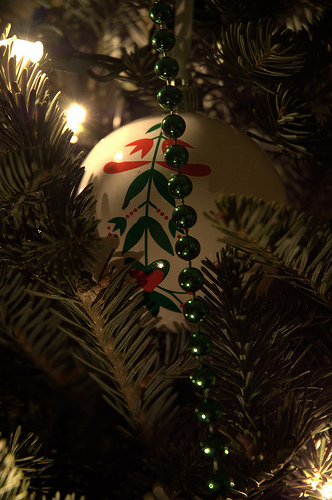
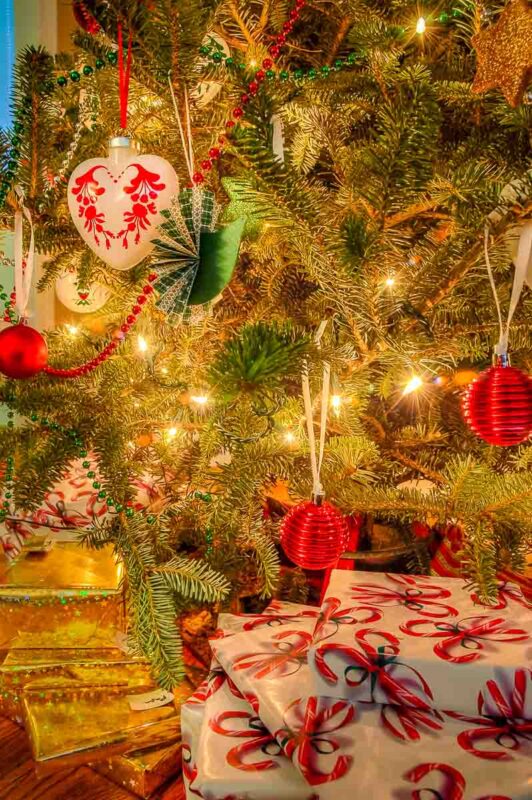
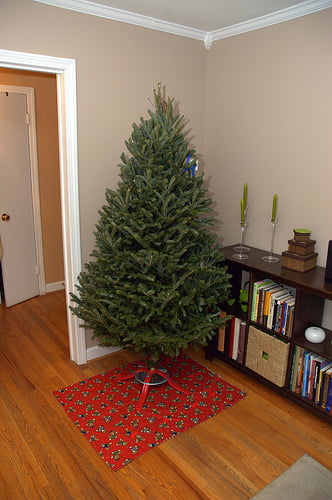
The tree is done; the mess cleaned up. It sits glowing in the corner. Were there a fireplace in the living room, it would probably be snapping and crackling now.
Shawn Colvin's Holiday Songs and Lullabies finishes, setting the mood.
There's tea steeping in the kitchen (a rooibus that L chose), and it's actually cold outside.
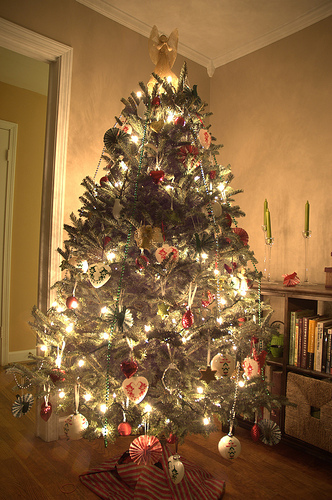
We switch to Polish carols and dream of snow.
Smells
On the way, we stopped to tank up. Fortunately, I thought to take off my gloves: who wants the smell of gasoline on one's gloves?
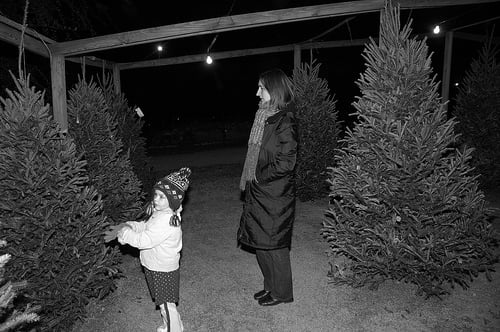
Once we got back home, a new odor permeated everything.
Lights
Lights are an integral part of Christmas. Certainly everyone breathed a Christmas sigh of relief with the proliferation of electricity: no more candles on dried firs. And outdoor displays enter the realm of possibility.
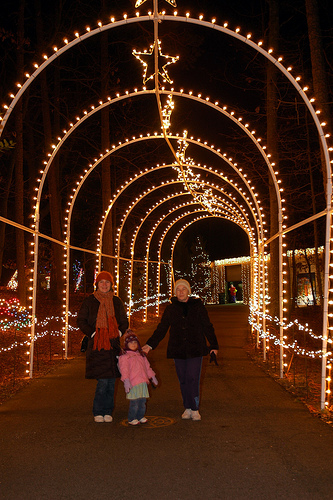
Add the invention of the airplane, digital cameras, powerful flashes, and unleaded fuel and you get the perfect Christmas image -- post-Christmas, of course.
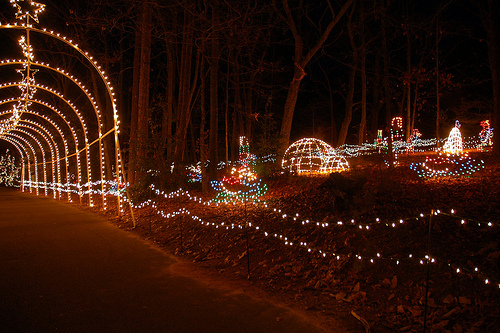
Most of the Christmas exhibition at Roper Mountain was open to cars only, though -- how thoroughly American.
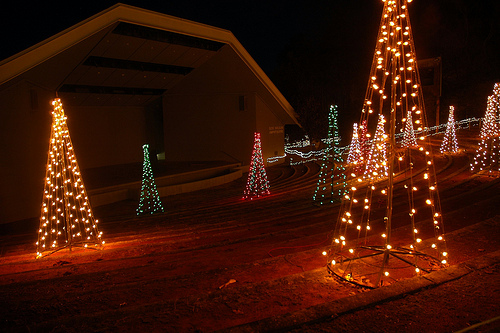
We walked through the small pedestrian portion,
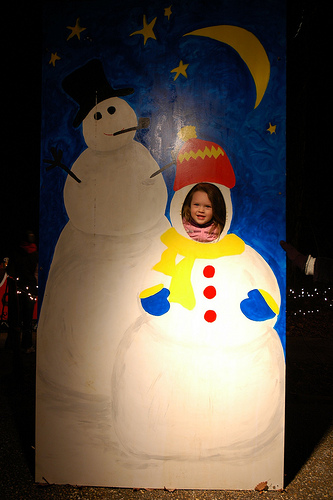
took some pictures, and still more
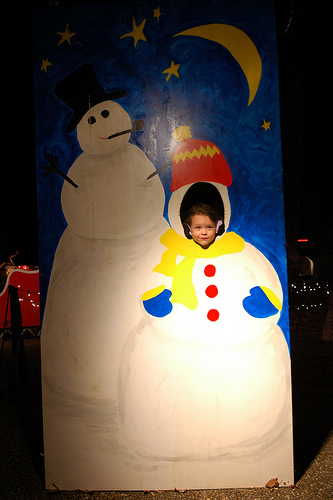
before getting back in the car and continuing on the winding road through the lights. Stopping was prohibited, as was exiting the car, so the pictures end here.
What a shame we couldn't have the option of exploring it all on foot. Then again, much of that would have entailed L in arms, so perhaps it's for the best.
Accidental Christmas Present
We were leaving the church after a Christmas Mass in Polish when we noticed a group of men standing around the priest's new Volvo. Apparently, someone had hit his car and driven off without anything. I saw a little scratch, but I couldn't discern any significant damage.
The priest was angry.
He called the parish pastor to let him know it had happened, and he requested that the local priest announce it in Mass, asking for information.
"I guess this is my Christmas present," said the Polish priest sarcastically.
Perhaps it was.
It seems to me that the material should not be terribly important to a priest. It seems to me he should have been more concerned with the individual who hit his car: what would cause someone to do this? Is this a lack of conscience or a fear of facing consequences? It would have been heartening to hear the priest say something like this.
So maybe it was a Christmas gift. Maybe it was an opportunity to show instead of tell the parishioners that the spiritual is more important and things like cars and iPods are of little value. Perhaps it was a chance to preach with actions rather than words, to show forgiveness and express concern about the mental state -- the soul -- of the individual who committed the act. Possibly it was an occasion to show selflessness, to show concern for others before showing concern for one's own silly objects.
The homily had been about having Christ in one's heart and how God doesn't force himself on anyone -- a fairly common sentiment among Catholics and Protestants alike. I suppose the gift of salvation isn't the only gift God doesn't force humans to accept.
Wigilia 2009, Redux
More pictures from Christmas Eve dinner and festivities
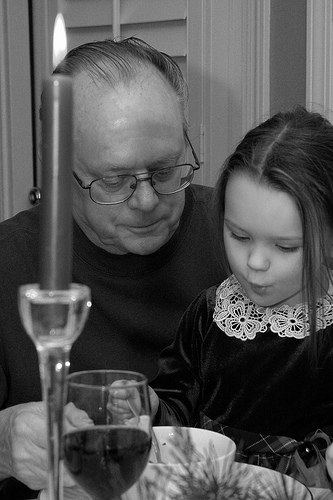

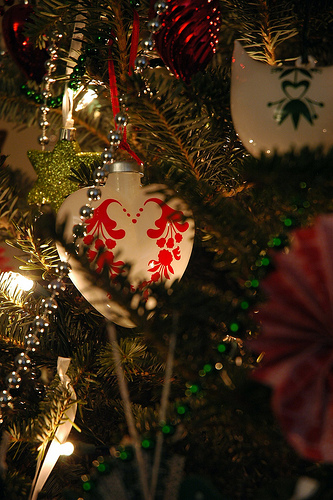
Wigilia 2009
Everyone began preparing in the morning. Truth be told, K started weeks ago: making pierogi and uszki (two different types of dumplings) and freezing them. Still, with two soups, dumplings, kraut with wild mushrooms, and a main course (accompanying salads and such not counted) on the menu, we had to get a quick start.
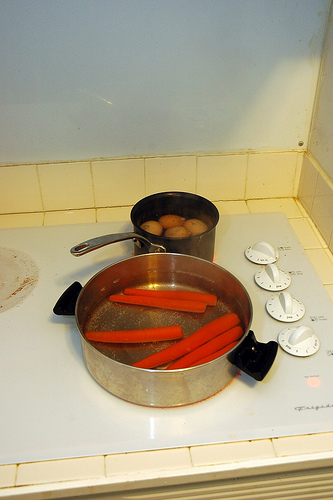
There was a salad to make, beginning with boiling veggies and eggs -- lots of this. And sauteing onions on a cosmic scale.
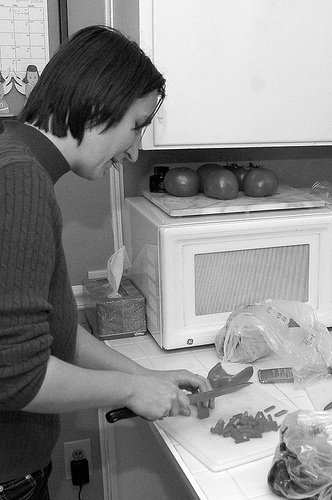
There was chopping galore: before and after the boiling; during this; before that. "Click, click, click," was the soundtrack of the morning.
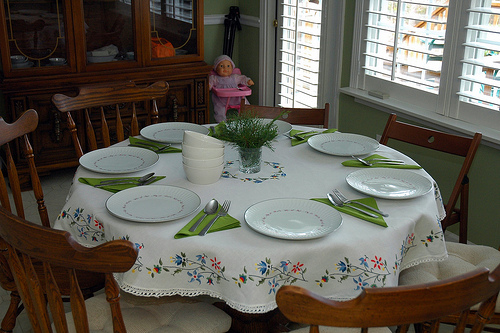
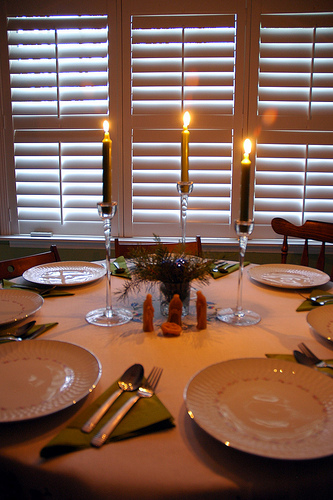
And there was ironing and setting of places.
In the end, it was the common lament: all the time spent cooking, and the food disappeared so relatively quickly. There's the eternal entertaining conflict: one wants them to savor everything, yet while everything is warm and the fish is still moist, one wants everyone just to hurry up and get to the next course.
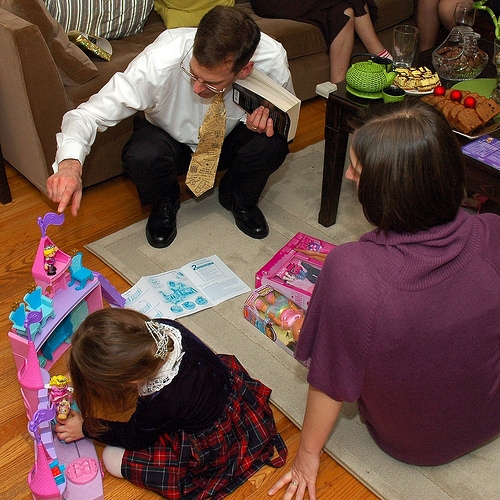
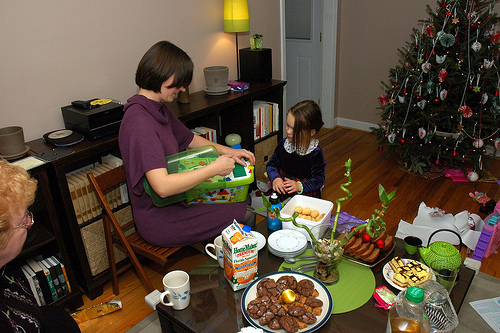
It was a special wigilia for us because it was a special Christmas Eve for L: the first one she knew what was going on, possibly the first one in her memory for some time. She ate the barszcz; she devoured the mushroom soup; and she sat calmly as the rest of us ate. Afterward, Nana and Papa successfully spoiled her with their generosity (not to mention us: as I write, I'm listening to Madeline Peyroux's excellent new album, Bare Bones, on a new iPod -- the woman is incapable of making a bad album). With guests, gifts, and attention, the Girl danced, sang, smiled, laughed, and was the center of the evening. It's likely to be that way for, well, the foreseeable future.
Previous Years
Merry Christmas