Matching Tracksuits

fun in fours

christianity

The Priest

Priests in the Catholic church have always been afforded special status. Priests in Poland have almost god-like status. Why is this? A post on a Catholic social media stream might offer some insight:
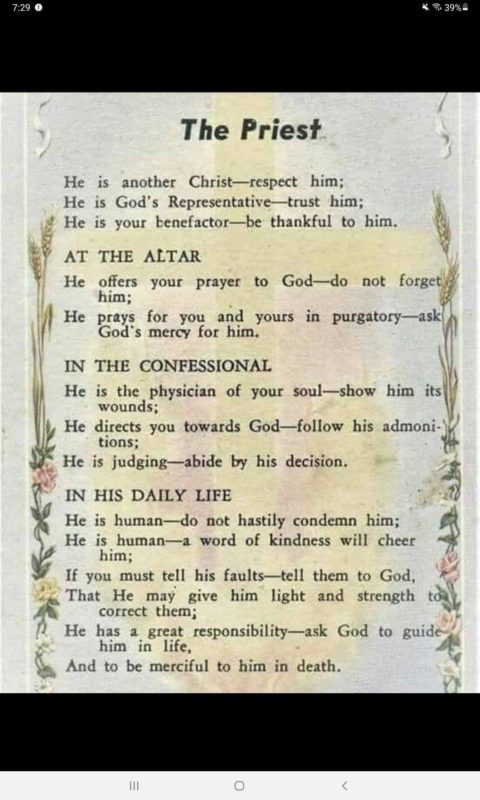
If he is "another Christ" and "God's Representative," how could his status increase except by being declared an actual god?

5 Shocking Proofs of Jesus’ Resurrection?

Apologist Allen Parr posted a video in which he made the following bold claim:

Have you ever wondered whether the resurrection of Jesus really happened? I get it. I mean, how can we know FOR SURE that the resurrection of Jesus was an actual event in human history? Or have we been believing some myth or fable that has been passed down about the resurrection of Jesus for nearly 2000 years? In this video I give you 5 undeniable proofs of Jesus' resurrection.

Video Description

Undeniable?! That's a strong term. Let me see what I can do with them.

Proof 1: The Precautions of the Romans

Parr suggests that "[i]n order to prevent Jesus' body from being stolen, the Romans took three precautions (Mt. 27:64-66)," which he lists a guard, a stone, and a seal.

According to Parr, the Romans "posted a squad of 10-30 soldiers to protect and guard the tomb where Jesus' body was laid." This suggests that the Romans were worried that someone would steal the body. This seems like a legitimate precaution to prevent theft of the body. In addition, the Romans "placed a stone weighing close to 3,500 pounds in front of the tomb preventing people from coming in or out." Again, a wise precaution if they're worried about grave robbing. Finally, the Romans "placed a Roman seal across the stone that, if tampered with, was punishable by death." This is all very logical.

There's only one small problem with all this: it depends solely on one source, the Bible. This is a problem not because we have reason to doubt that Romans would not have set guards; it's problematic because we have reason to doubt that they would have disposed of Jesus's body in any other way than was customary: a mass grave.

Proof 2: The Faith of the Disciples

This is a favorite among apologists: Parr asks, "WHY WOULD THEY RISK THEIR LIVES FOR SOMETHING THEY KNEW WAS A LIE?" (The all-caps screaming was from him not me.) Parr's reasoning goes like this: "Before Jesus' crucifixion, the disciples were fearful and ran for their lives (Mt. 14:50). After the resurrection, they became fearless, willing to get beaten, burned, beheaded, sawed in two, stoned and crucified!"

Yet it doesn't follow that the only other option to "Jesus was really resurrected" is "The early Christians knowingly promoted the like that Jesus was resurrected." In other words, this argument rests on a false dichotomy.

Furthermore, there's very little evidence that anyone died because they were Christians who refused to renounce their faith. Certainly, Nero persecuted the Christians, but this was because they were a convenient group to scapegoat. It's not at all clear that Christians could have saved their lives by renouncing their faith. Furthermore, the persecution of the Christians was, at least to some degree, an exaggeration developed later in Christian history to back up the notion Jesus taught that people would be "persecuted in [his] name."

Proof 3: Jesus' Post-Resurrection Appearances

Parr here makes two simple points. First, he says, "The Bible teaches that Jesus spent 40 additional days on earth after His resurrection making convincing proofs that He was alive (Acts 1:3)." Again, the only source for this is the Bible, which is not exactly an unbiased source of unquestionable authorship. Much of the New Testament was written two or more decades after the events it supposedly narrates, and the gospel authors are completely anonymous.

Parr's second point is that in addition "to appearing multiple times to His disciples, Paul recounts when Jesus appeared to over 500 people at one time who were still alive to give testimony at the time of Paul's writing (1 Cor. 15:6)." This is a second- or third-hand account at best and even if they do exist, these 500 are completely anonymous.

Proof 4: Secular History Confirms It

Parr argues that if "the Bible was the only book that recorded the resurrection, people might criticize us for using circular reasoning." He insists that "it is well documented in SECULAR history books," then lists two: Josephus, The Words of Flavius Josephus and Thomas Arnold's History of Rome. These are problematic for several reasons, including the most basic being that Josephus didn't write anything called The Words of Flavius Josephus. He wrote The Jewish War and Antiquities of the Jews, and these works appear in The Works of Flavius Josephus. It might just be a typo, but it certainly wears at the credibility. But what does Josephus actually say about Jesus?

About this time lived Jesus, a wise man, if indeed one ought to call him a man. For he was the achiever of extraordinary deeds and was a teacher of those who accept the truth gladly. He won over many Jews and many of the Greeks. He was the Messiah. When he was indicted by the principal men among us and Pilate condemned him to be crucified, those who had come to love him originally did not cease to do so; for he appeared to them on the third day restored to life, as the prophets of the Deity had foretold these and countless other marvelous things about him, and the tribe of the Christians, so named after him, has not disappeared to this day.

Yet the bit about "He was the Messiah" is clearly a Christian addition as Josephus was a Jew and would not have accepted Jesus as the Messiah.

There is a second mention of Jesus in Josephus, but it is weaker than the first:

Having such a character [“rash and daring” in the context], Ananus thought that with Festus dead and Albinus still on the way, he would have the proper opportunity. Convening the judges of the Sanhedrin, he brought before them the brother of Jesus who was called the Christ, whose name was James, and certain others. He accused them of having transgressed the law and delivered them up to be stoned.

It's not even about Jesus but about his brother, James. What's important to note, though, is that neither of Josephus's passages deals with Jesus's supposed resurrection. We might use them to confirm that Jesus existed but nothing more.

As far as Thomas Arnold's History of Rome goes, I'm not even sure why Parr would suggest that this is pertinent in any way since it was published in 1838, a full 18 centuries (or if we're going to put it in the context of the Old Testament, 180 decades) after Jesus's death. That Parr includes this is simply laughable.

After this, though, Par includes a list of "ATHEISTS WHO BECAME CHRISTIANS"

  • Frank Morrison, Who Moved the Stone?
  • Lee Stroebel, The Case for Christ
  • Josh McDowell, The New Evidence that Demands a Verdict

I have no idea why he included this -- it has nothing to do with secular historians confirming Jesus's resurrection.

Proof 5: The Missing Body Was Never Found

Parr's final argument is the weakest: the body never turned up. He argues, "If Jesus never rose from the dead, then the Romans could have produced the body, thus destroying Christianity forever." But this assumes that the first-century Romans cared enough about Christianity or viewed it as any threat to do something like this. Remember: this is just after the supposed resurrection. How many Christians were there? How much of a threat did the Romans think they posed? Apocalyptic sects were all over the place: why would they have cared about this particular one?

Parr concludes, "But…the body was never found in the tomb because Jesus rose from the dead!" Or maybe because it was tossed in a mass grave like all other crucifixion victims' bodies.

Key Takeaway

Parr writes in his "Key Takeaway" that the "reality of the resurrection will not only give you more confidence about what you believe, but also give you the knowledge and ammunition you need to silence those who are skeptical about the Christian faith." If this is the best he's got, I'd advise his followers not use these arguments on any vaguely-informed skeptic.

Original Video

More Pack Nonsense

You'd think a man would eventually learn. After setting the date for Jesus's return at least five times that I know of, David Pack has set yet another date just days after his latest failure. Jesus was supposed to come back a little over a week ago, on 26 September. This last Saturday, Pack explained he'd learned a lot of new things in the previous week. God had blinded him before; now he can see.

If you listen to him talk about the prophetic world he's created for himself and his followers, it's easy to see how far from reality the man has strayed.

The 1,335 days, the ten-day period, the fifteen-day kingdom -- all his followers know exactly what he's talking about (well, perhaps not exactly as those who have recently left point out that Pack has been changing these doctrines on a whim over the last few years) but no one else knows. It might as well be gibberish. It might as well sound like this:

But like all good cult leaders, he's not afraid ultimately to tell his followers where their place is:

"Shut up and learn." That's their job.

Monday Evening Thoughts

A couple of hours after dinner as the Girl went to do homework and relax after volleyball practice, the Boy, K, and I along with a good friend of the Boy's went to the local YMCA for some swimming. It's an outdoor pool but we're in South Carolina: it's chilly but only at first. After a bit of movement, the water is fine.

We've been trying to go to the Y like this regularly, but Monday night is just about the only night lately that we can definitely make it -- that we can schedule it well ahead of time. And so we go and swim some laps, then the Boy frolics about in the water as we swim a bit more, then we head home. At this point, some thirty years after I last swam regularly, I can manage for an entire workout what I used to do for a warm-up. It's discouraging in a way, but when we began doing this a few weeks ago, I couldn't even do that. So there's progress.

Tonight, as I was swimming backstroke for a change, I noticed that the moon is almost full. A full moon in early October can only mean one thing for me: it's almost time for the Feast of Tabernacles, the eight-day festival I grew up celebrating in the sect in which I was raised. It's been nearly thirty years since I last attended that ridiculously warped version of a Jewish festival I grew up attending annually. Nearly thirty years and the realization that it's about time (its first day was always a full moon in mid-September to mid-October) still creeps up somewhat unawares. Certainly, I still keep up with a few of the little groups that try to cling to those old cultic ways, but it's not something I think about regularly.

I do find myself wondering how things might have turned out if Tkach, the leader of the organization after its founder died, had not made the changes in the early nineties that led the sect to abandon all its heretical teachings and embrace plain vanilla Evangelical Christianity. Would my parents have remained in the group? Would I have remained for some period? Would I have become the skeptic I now am? Would I now be getting together lesson plans for a substitute teacher to fill in while I headed off for my religious conference (as it would have likely been seen)? Would I have gone to Poland after college and met K? Would I have enrolled in graduate studies at Boston University in the philosophy of religion (only to drop out after a year)? Questions without answers.

I am, of course, very glad I'm out of such a warped religion, but there is a certain nostalgia that accompanies this. The Feast was the greatest week of the year. It was Christmas and a beach vacation combined. How could one not miss that in some way?

More Predictions

Dave Pack is at it again. He's predicting Jesus's return within the next nineteen hours:

19 Hours

In case that's not clear, that's tomorrow:

2 Choices (Tomorrow)

We can forgive him for not having figured it out sooner -- after all, no one else has figured this out:

Figured it out

He's figured out lots of other things, so we should be grateful for that.

Tickle

He'd predicted this earlier, and it didn't come to pass, but in the end, he was just a day off. A day and nine years:

9 Years off

Still, it's a relief to know the return of Jesus is happening tomorrow.

At least, that's what he said on 17 September...

Exchange

But God is NOT a commanding officer, now is He??

Of course, he is.

Who made him commanding office? One of higher authority had to do so. So who was it?

Don't be silly with semantics. You know what I meant.

As you do mine. God IS and IS in command. So why do you rebel against your commander? And don't pull this crap that He's not YOUR commander.

But he's not. Sorry -- had to pull it.

What any rebel should say. Any treasonous rebel. Any delusional, treasonous rebel.

I'll bet you just can't wait to be in heaven watching me writhe in hell, right?

But what about YOU??? Evidently you wrote and then deleted. Afraid of your own lie? Yeah it's hard work figuring new ways to ignore truth. Why are you avoiding the issue?

I originally said that there's no hate like Christian love. You're a great example of that. Then I thought you'd probably say something like, "I look forward to watching you roast," or some such nonsense. I'm not afraid of anything; I'm not ignoring the truth; I'm not avoiding any issues. I just don't believe. But I'm not dripping with only slightly concealed hatred like you are.

Why is it "hatred" to say you are a rebel against God? Or why is EVERYTHING that is a contrary view labeled "hatred" by you people?? It's like the only verb you know.

So many Christians can't see themselves as others see them. It's a form of hatred because it's a judgment made on a personal standard that insinuates that joy I suggested you feel when you contemplate me in hell. It suggests that you will stand in judgment alongside your god and say with mock sadness, "Lord, you know best, but of course, I can't say anything about this miserable wretch other than to say he's rebelled against you -- which of course you already know, Lord," all the while anticipating getting watch me get my dues. "I told you so!" you can say. So on second thought, perhaps it's not hatred as much as childishness.

And how others see is always right and correct, huh? So we must cater to what YOU think? How bout non-Christians can't see themselves the way God sees them? And once again, the unbeliever makes a shambles of Christian doctrine while congratulating himself in his mockery. Dude…we were ALL rebels. We say nothing about you that we couldn't say of ourselves.

"How bout non Christians can't see themselves the way God sees them?" -- See? You're speaking for your god, standing by his side and passing judgment, eager to see your so-called enemy cast into the flames. As for "And once again, the unbeliever makes a shambles of Christian doctrine while congratulating himself in his mockery." -- I don't even see where that came from. I watched a couple of your videoes, so I know you have a real persecution complex like so many Christians, and you'll read into things persecution that's not even there, but I wasn't even talking about any Christian doctrine. I was talking about your attitude. This whole thing started with me making an off-hand comment about the Christian god being a sort of commander-in-chief (You know, like "Onward Christian Soldiers"?), and you've blown this up into -- I don't even know what. I'm just shaking my head in disbelief: I don't get you or your attitude. I never said anything derogatory about Christians or Christian beliefs. I just made a silly comment. Calm down, man. This has gotten way out of hand: you're frothing at the mouth.

No I'm nailing you to the wall for bring so flippant. You make it sound like you're not even referring to Christianity. Liar. Persecution complex? Not here, bud. You don't know what that is anymore more than you understand rebellion.

I read that imagining John Wayne was saying it. Very effective.

Please identify this "hate". You make reference to it but do not state what you consider hateful.

I did. A few comments ago. (That comment didn’t sound so great in a John Wayne voice. I was hoping for more “nail you to the wall” kind of bravado.)

Genocide

The commands to genocide in the Old Testament are particularly troubling for most people except for the most basic, literal-thinking fundamentalist (Protestant or Catholic). For them is simple: God said it, so it's morally right. Most other Christians take a little more nuanced approach -- at least the ones who know about the passages and want to deal with them honestly.

Capturing Christianity -- a YouTube apologetics channel -- invited Dr. Randal Rauser, who describes himself as "progressively evangelical, generously orthodox, rigorously analytic, [and] revolutionary Christian thinking," to discuss the troubling passages. He wrote Jesus Loves Canaanites, a book that deals with the various Christian attempts to explain these passages. I listened to the interview on my run this evening, and two things stood out.

How do we make sense of the fact that God is supposed to be love and yet he commands all these awful things? Surely this creates some cognitive dissonance that Christians want to deal with. How do we deal with it?

Rauser explains that, in dealing with these passages, Christians need to "develop different reading strategies to minimize the cognitive dissonance that is created when we read these passages." Earlier he mentions a new convert who discovered these passages and found them troubling, and Rauser suggests that new converts who haven't been "inculcated" with these reading habits might find these passages to be stumbling blocks to their faith. It's interesting that he uses the word "inculcated" because the definition Oxford is "instill (an attitude, idea, or habit) by persistent instruction." Persistent instruction -- drilling this into one's head. So in order to deal with these issues, one has to have drilled into one's head certain reading habits. What are these habits?

One of them is to ask if a given interpretation develops a love of God and man. If it doesn't, it's not the intended interpretation. But this puts the cart before the horse: one should not have to read the Bible with an ideal interpretive framework in place that automatically defaults to erring on the side of the Bible. That's not critical study; that's mindless acceptance.

Another reading technique is to apply what we know about God and ask if a certain interpretation reflects that.

He uses the extreme example of Dena Schlosser, who in 2004 used a knife to amputate the arms of her eleven-month-old baby because it was a sacrifice God had asked her to make. Rauser insists that

the vast majority of people today, we don't even give it a moment's consideration that God possibly willed such a thing to happen because we believe it is fundamentally inconsistent with who God is. And we would say, maybe she was influenced by a demonic entity or she is mentally ill, schizophrenic or something else, but what we don't think seriously is that God maybe or possibly commanded that.

Yet I don't see why we can't imagine God commanding that: he did command Abraham to do just the same thing. If we're going to accept that Abraham was justified in what he did, we have to at least consider that Schlosser was justified in what she did. After all, who are we to say that God wasn't talking to her?

But of course, we will say that because it's the only thing we can say. To suggest that God might be getting back into the business of having people slaughter each other at his bidding opens up such potential chaos and terror that it's unimaginable.

A favorite question of skeptics when the story of Abraham and Isaac comes up is to ask the Christian, "What would you do if God commanded you to kill your child?" Most Christians will hem and haw and suggest that they'd have themselves checked into a hospital to check for mental illness and yet at the same time deny that possibility for Abraham.

I commend Rauser for dealing with the issue, but like Trent Horn, he seems just to be offering possible ways out that allow a Christian some breathing room from the crowding cognitive dissonance that rattles thinking Christians' faith.

Strawman

This whole discussion starts with a sort of ad hominem attack on Harris, suggesting his view is "naive" and (later) silly. That's amusing since all Harris was doing was paraphrasing the basic core of the Biblical account of the ascension and second coming. There's a literal up motion and a down motion: Up toward the sky for the ascension, down toward earth for the second coming. All this "vast" and "rich" and "nuanced" theory that Davis presents is simply modern apologists' attempts at recasting these events in a way that doesn't so clearly contradict science. The fact is simple: for most of Christian history, a literal upward motion to heaven above us and vice versa was the only understanding. If you're criticizing Harris's view, you are in fact criticizing the Biblical account. All the theories Davis presents are simply speculative apology that has absolutely no support in the Biblical text.

Bullying?

Saw the following Tweet in my feed the other day.

The general response (at least the tweets the algorithms showed me) was along the lines of "good for the school."

This is the Christian persecution complex in action: they want to "share" their good news (which also condemns some people, but only because they're sinning -- see, it's an act of love) and then when people push back against having those views shoved down their throat, they claim persecution.

Forgiveness

It's a pretty impressive feat of short-sighted hypocrisy that most of the people most opposed to student debt forgiveness are practitioners of a religion that is built upon the idea of a debt being paid undeservedly...