Matching Tracksuits

fun in fours

catholicism

Regret and Repetition

It's early June: my thoughts always turn to an arrival in Polska. I wrote this last summer, after our return, and discovered only now that I had never posted it.

1

"Never regret anything, because at the time, it was exactly what you wanted."

When I went to vist the school in Lipnica in which I taught for seven years, the English teacher, a former student of mine, invited me to her English lesson. As she was taking roll, I wandered about the room, looking at how the relatively new Foreign Language Workshop had been decorated. I found a poster with English sayings, including one about regret that I couldn't recall ever having heard.

"Never regret anything, because at the time, it was exactly what you wanted."

"So true," I thought initially. Further thought made me wonder, though: perhaps this quote takes a simplistic view of both desire and regret.

Desires don't come from nowhere. They aren't frivolous imps that leap into our head, unbidden, unwanted. They arise, consciously or unconsciously, from our values, habits, and worldview. As a Catholic, I have to view some of these desires as sinful, as inherently evil. They are temptations, and I am called to overcome those temptations. If I choose not to, I've betrayed God, myself, and to some degree or another, my fellow humans. (After all, the Confiteor we Catholics all recite at the beginning of Mass includes this notion: "I confess to almighty God and to you, my brothers and sisters, that I have greatly sinned, in my thoughts and in my words, in what I have done and in what I have failed to do, through my fault, through my fault, through my most grievous fault; therefore I ask blessed Mary ever-Virgin, all the Angels and Saints, and you, my brothers and sisters, to pray for me to the Lord our God." Emphasis added.) So if these desires are temptations to sin, and I give in to these temptations, and later I want to repent, how can I possibly not regret them? True, these actions were exactly what I wanted at the time, but that was because I don't yet have a perfectly formed conscience. Further, if I don't truly regret the sin, how can I confess the sin?

Yet not all desires are sinful desires, and yet we still end up wishing we had made different choices. Is this regret? I suppose. Is it the same kind of regret discussed above? Somehow, it seems different. Perhaps, then, we need to differentiate, look at some synonyms:

apologize, be disturbed, be sorry for, bemoan, bewail, cry over, cry over spilled milk, deplore, deprecate, disapprove, feel remorse, feel sorry, feel uneasy, grieve, have compunctions, have qualms, kick oneself, lament, look back, miss, moan, mourn, repent, repine, rue, weep, weep over

"Regret" seems the correct term for the theological notion associated with sin and forgiveness, as do deplore, lament, and grieve. For the second, less theological (and in some senses, then, less important or significant emotion), miss, feel sorry, or even rue seem appropriate. Working with those differentiations, I regret some of the sinful choices I've made in the past, which means I wish not to repeat them; I rue some of the poor decisions I made in the past, which means to me not so much that I wouldn't make the same choice but that I dislike some of the consequences that came with that choice. I rued having left Poland, so I went back.

I think early in my life, I confused those two forms of regret, as do many people, I think, and that confusion as the source of the quote got me thinking of all this. In my case, I disavowed the existence of theological regret, and I overemphasized the things I rued.

2

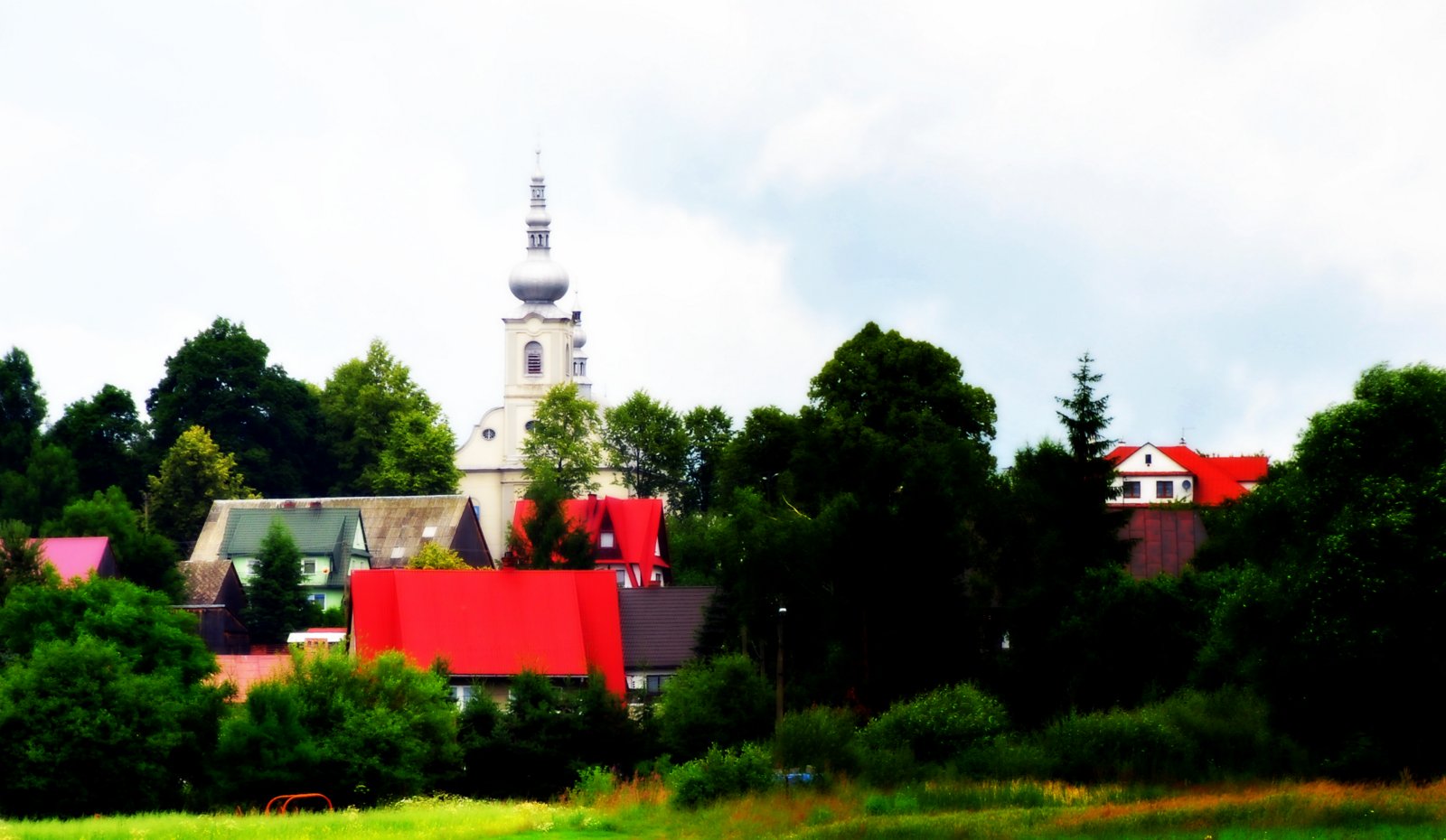
Every time we come to Poland, we repeat: Krakow, Zakopane, even the outdoor museum in Zubrzyca (though this year, it was part of a class trip with L). This repetition is understandable in large measure because much of the repetition comes from meeting with friends and family. Yet it doesn't change the fact that very little changes in our visits to Poland.

Lipnica Wielka Centrum

It occurred to me, though, the other night that part of it might be an unconscious unwillingness to move outside of a certain comfort zone in Poland. Yet that seems simplistic: it's not as if I don't know my way around the country and culture; it's not as if I'm fearful of new situations here. I speak the language with passable proficiency: there are few times that I feel unable to express myself, and I even managed to talk myself out of trouble a time or two.

Yet as I wandered about the fields of Lipnica, with views I know almost better than the area in which I grew up, I wondered if it might be something else, something that I hadn't experienced in literally years but which I knew all too well earlier in life, and multiple times at that. It struck most forcefully in 1999, when I left Poland for the first time and soon found I was desperate to return to Poland. It wasn't that I wanted to return to the place as much as I wanted to return to that part of my life, to relive it in a sense. Returning for a short visit in the summer of 2000, I found a line from a song running through my head constantly, for I wanted to "hold on to these moments as they pass." And so it occurred to me one evening this summer in Poland that I do the same thing every visit, revisiting places in order to relive the past, if only for a brief moment. Then that moment passes, we all move on, temporally and physically, and I find myself later reliving the relived moment again, only in my mind.

DSC_5885
Dom Nauczyciela

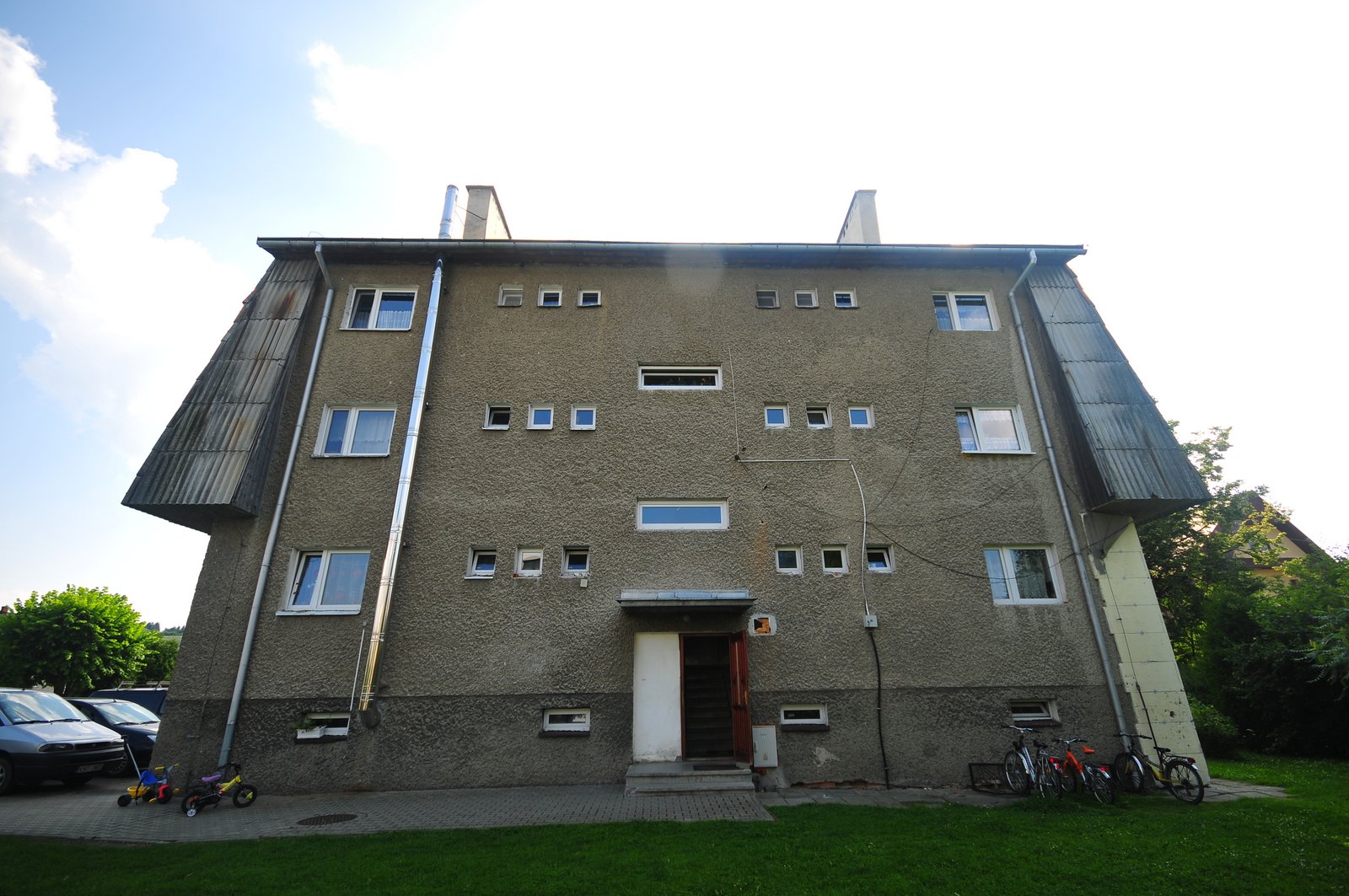
And so I find comfort in the places that haven't changed much over the years. The exterior of the teachers' housing block in Lipnica, for example, hasn't really changed a bit since I first arrived in 1996. There are new windows; there is a new flue for the oil furnace in the basement; there are a few more cables strung across the facade. Other than that, though, it looks identical. It gives the illusion that, while the rest of the world has moved on, I've stayed the same, which is a ridiculous notion. But for a brief moment, it's comforting.

Why?

Human time does not turn in a circle; it runs ahead in a straight line. That is why man can't be happy: happiness is the longing for repetition.

Milan Kundera

The easy answer is that it's a vain attempt to deny my own mortality to myself, the stuff ironically both of melodrama and of great literature. And while there might be some element of unconscious truth to that, I don't feel I really fear death or even give it much of a thought at all. Occasionally in the last few months I've surprised myself with the realization that I'm now in my forties, but this is not a mid-life crisis but a how-time-has-slipped-by-so-quickly crisis. And besides, this doesn't explain the same longing I felt -- only much, much more intensely -- in 1999 and 2000 that led to my return to Poland. Surely I wasn't fretting about my mortality in my mid- to late-twenties. Only nineteenth-century poets do that.

The longing, in fact, was much simpler (and significantly more naive) than that. It arose from the fear that the past was better than the present, and worse still, that the past was likely better than the future. A bit melodramatic, I'm sure, but those were the worries and concerns I had at times. It explains a lot of the angst I experienced when younger.

I no longer feel that way at all, though. Children make it impossible to look backward with the same longing. Children make it impossible to think the past was better than the future. Children make it impossible to regret the passing of time. Hence, as I wandered the fields of Lipnica, that strange longing to return to the past, while present, was only so strong as for me to notice its relative absence in recent years.

Re-reading Kundera's The Unbearable Lightness of Being, though, I discovered a forgotten quote that had so struck me the first time I read it that I made not of it on the slip of paper I'd slid into the back of the book and discovered as I opened it anew a few days ago. "Happiness is the longing for repetition." Perhaps I've had it wrong: perhaps this repetition is simple happiness?

Children understand this simple truth: it's why they can say or do the same thing over and over and over and over and still find it just as funny and enjoyable the tenth time as it was the first. It's why they can swing -- the ultimate in repetitive activities -- for hours on end and still do the same tomorrow.

Religions understand this simple truth: it's why all religions have ritual calendars, calling for the repetition of rituals throughout the year for all eternity.

Holy Saturday 2014

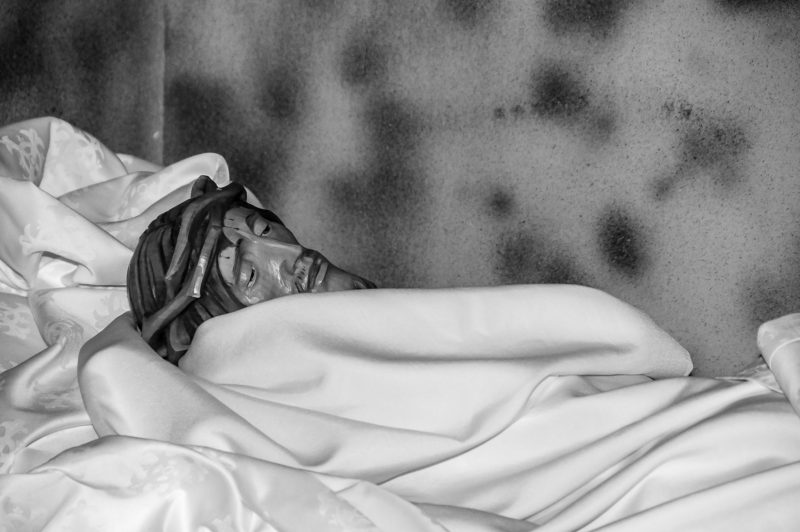
Jesus is in the grave. Crucified yesterday, he lies wrapped in ribbons of burial cloth, awaiting tomorrow’s resurrection. Such is the teaching of the Church, which we recite every Sunday:

For us men and for our salvation
he came down from heaven,
and by the Holy Spirit was incarnate of the Virgin Mary,
and became man.
For our sake he was crucified under Pontius Pilate,
he suffered death and was buried,
and rose again on the third day
in accordance with the Scriptures.
He ascended into heaven
and is seated at the right hand of the Father.

And so he is buried.

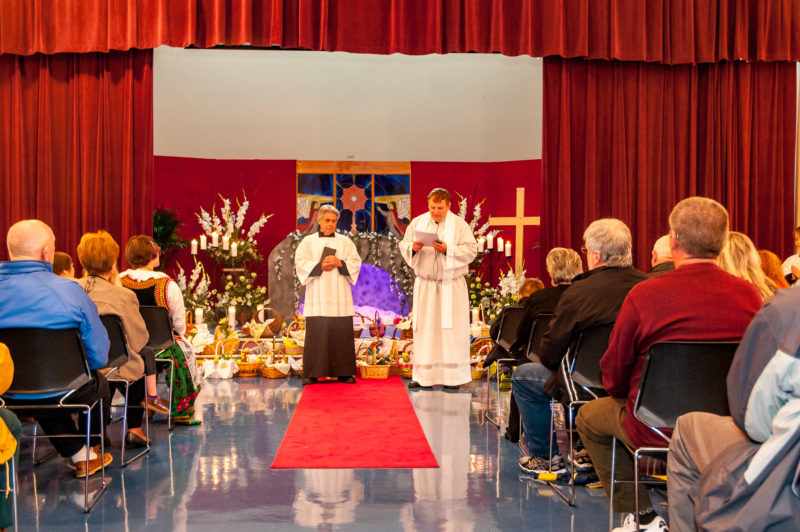
The Polish tradition — and the tradition of other cultures, I’m sure — is to create a tomb for Jesus’s body in the church. One of the figures is taken from the cross and laid in the tomb, and parishioners — usually firemen — stand watch until Sunday morning.

One of the vicars in our parish is Polish — this year, he decided, with the pastor’s blessing, to bring the tradition of Jesus’s tomb to the parish of St. Mary Magdalene. And so the Paschal Triduum feels a little more like we’re in Poland every year.

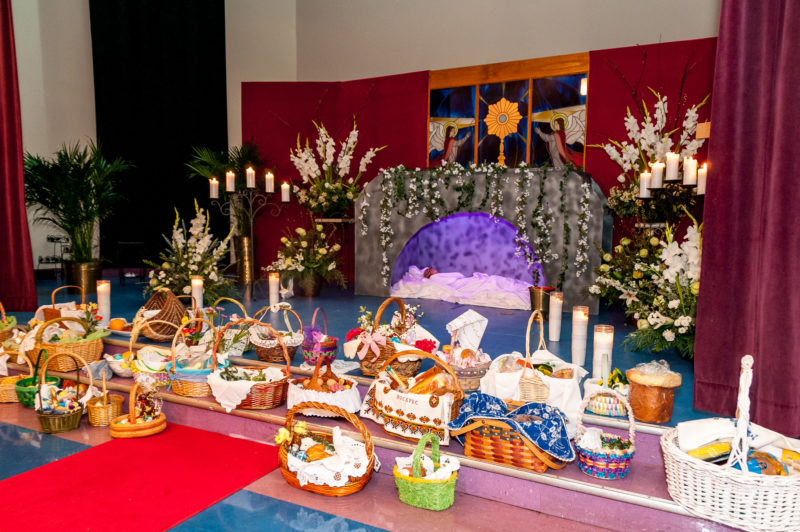
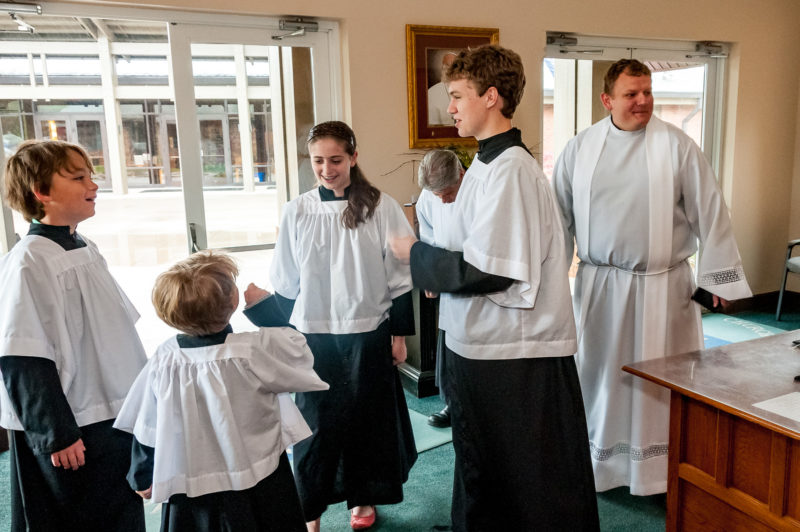
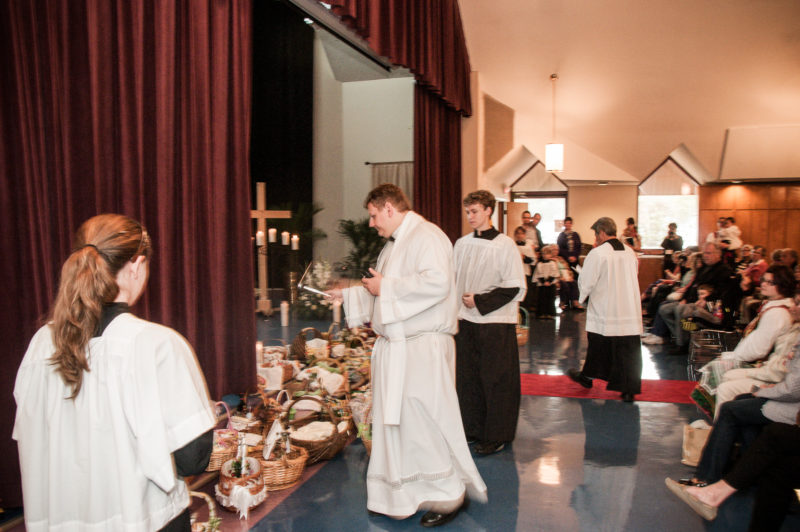
Past years involved the pastor, who had never performed the traditional Holy Saturday basket blessing, coming for a quick prayer of the baskets of perhaps fifteen Polish families. Our pastor, however, has fallen in love with the tradition, has it announced several times before Holy Saturday, and has put it on the altar servers’ schedule so that we have a full procession.

The number attending has grown as well. After an opening prayer in Polish, Father W asked, “How many of you don’t speak Polish?” At least a third of the assembled raised their hands. Seeing so many, Father W, like last year, turned it into a primarily-Polish-but-quite-bilingual-blessing-nonetheless.

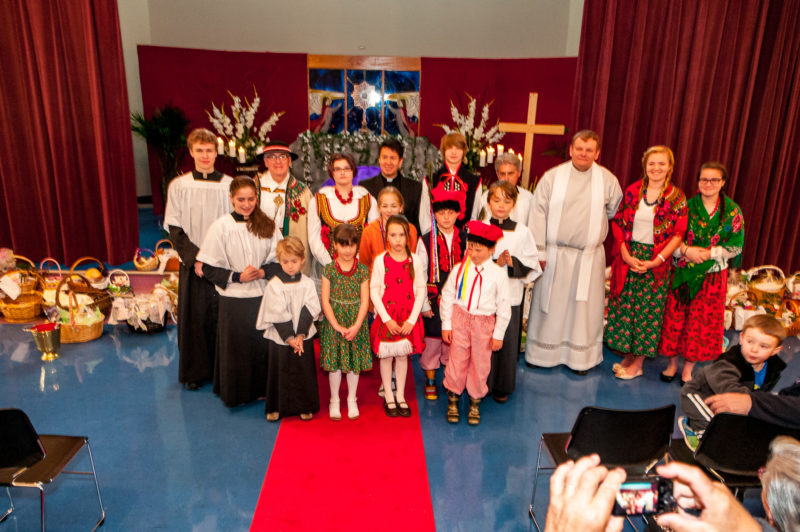
There are some things still missing, though. No crucifix lay at the front of the grave, with parishioners standing in a line, dropping to their knees at the fourth or fifth pew and continuing the rest of the way on their knees, all bending to kiss various parts of the crucifix. Blocks of wood have not replaced bells during the Lenten Mass. The day was not preceded with a Good Friday of manic baking and cleaning, just baking and cleaning. More reminders that the Polish community here is a distinct minority, a group that has largely assimilated into mainstream culture but still managed to keep the most important of traditions. In other words, it didn’t feel Polish; it felt American-Polish.

And then there are the things that would never occur in Poland: the fascination with the custom (after all, custom often becomes merely customary), the eagerness for photos of the regionally dressed (after all, if you see it almost every day in one form or another — especially when you live near a tourist region — it’s nothing special, merely every day)

But when it’s something you see once a year? Well, who can blame us all?


Leaving

One thing I dislike about the Catholic church: you get a really good priest in your parish, one who gives thought-provoking homilies and is a fantastic confessor, and then the diocese transfers him...

After the Rain

DSC_5955
Church of the Transfiguration, Jabłonka

Odpust

It’s a hard word to translate: odpust most strictly means “indulgence” or “pardon.” But there are other, wider meanings. In Pyzówka today, it would best be translated as “church fair” or “church fete.” In short, today was the Solemnity of John the Baptist, the patron saint of Pyzówka’s small parish. (Technically, the Solemnity is tomorrow, but who wants to have a church fair on a Monday?)

VIV_3994

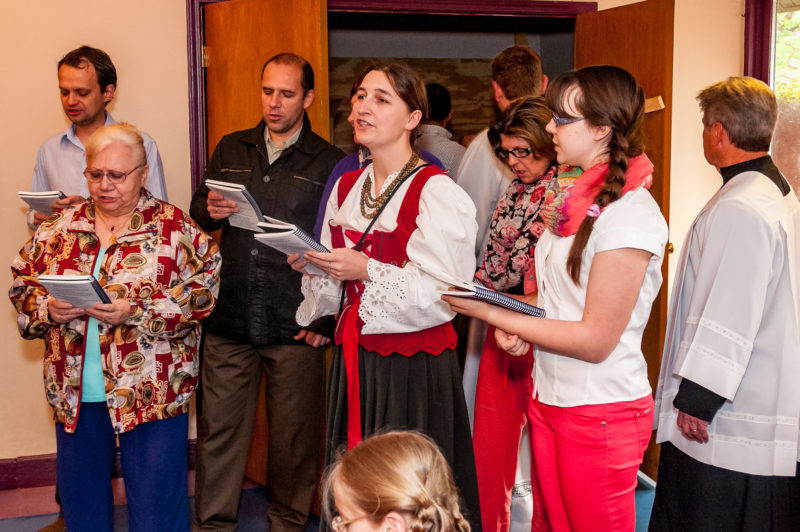
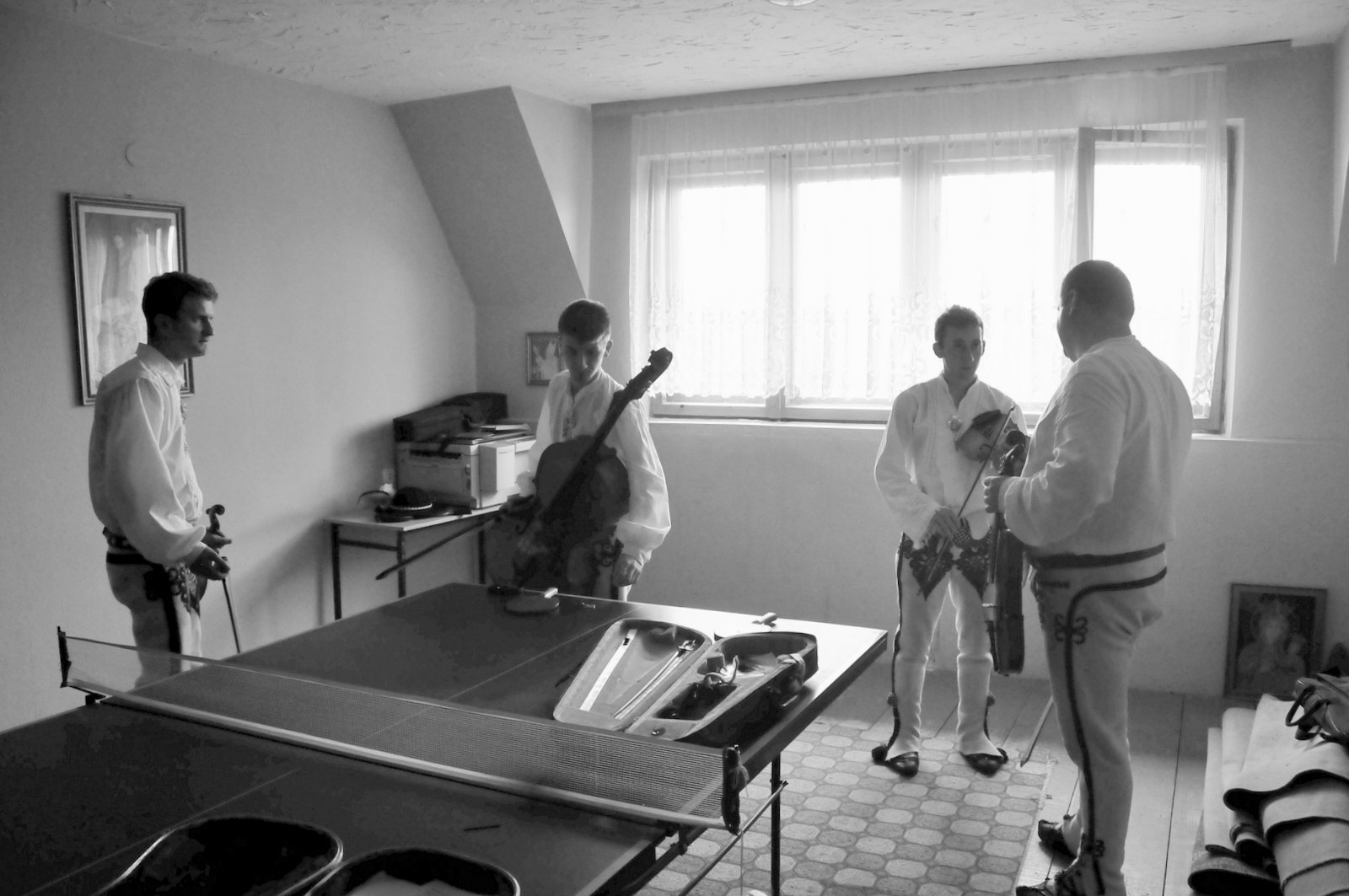
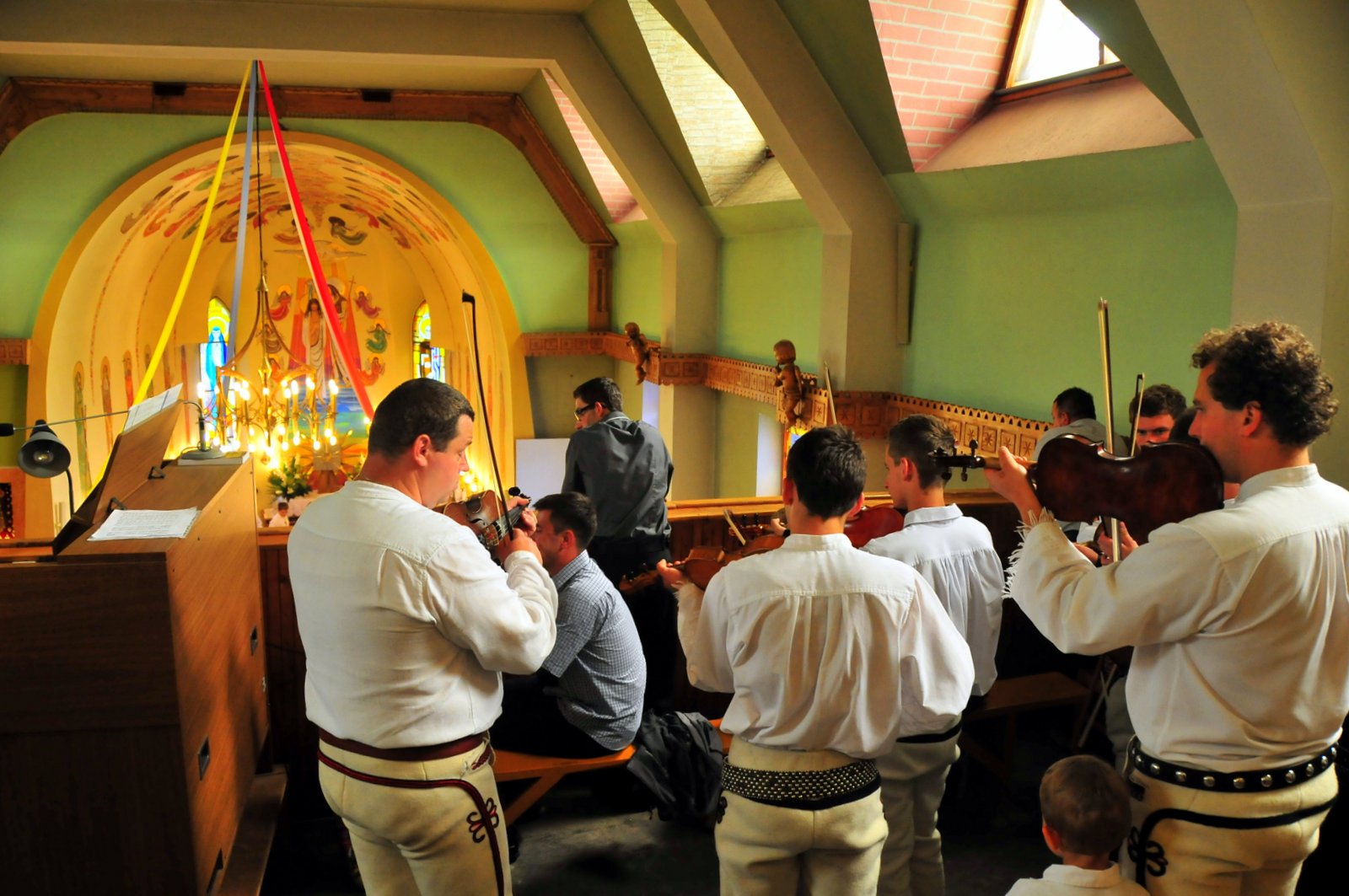
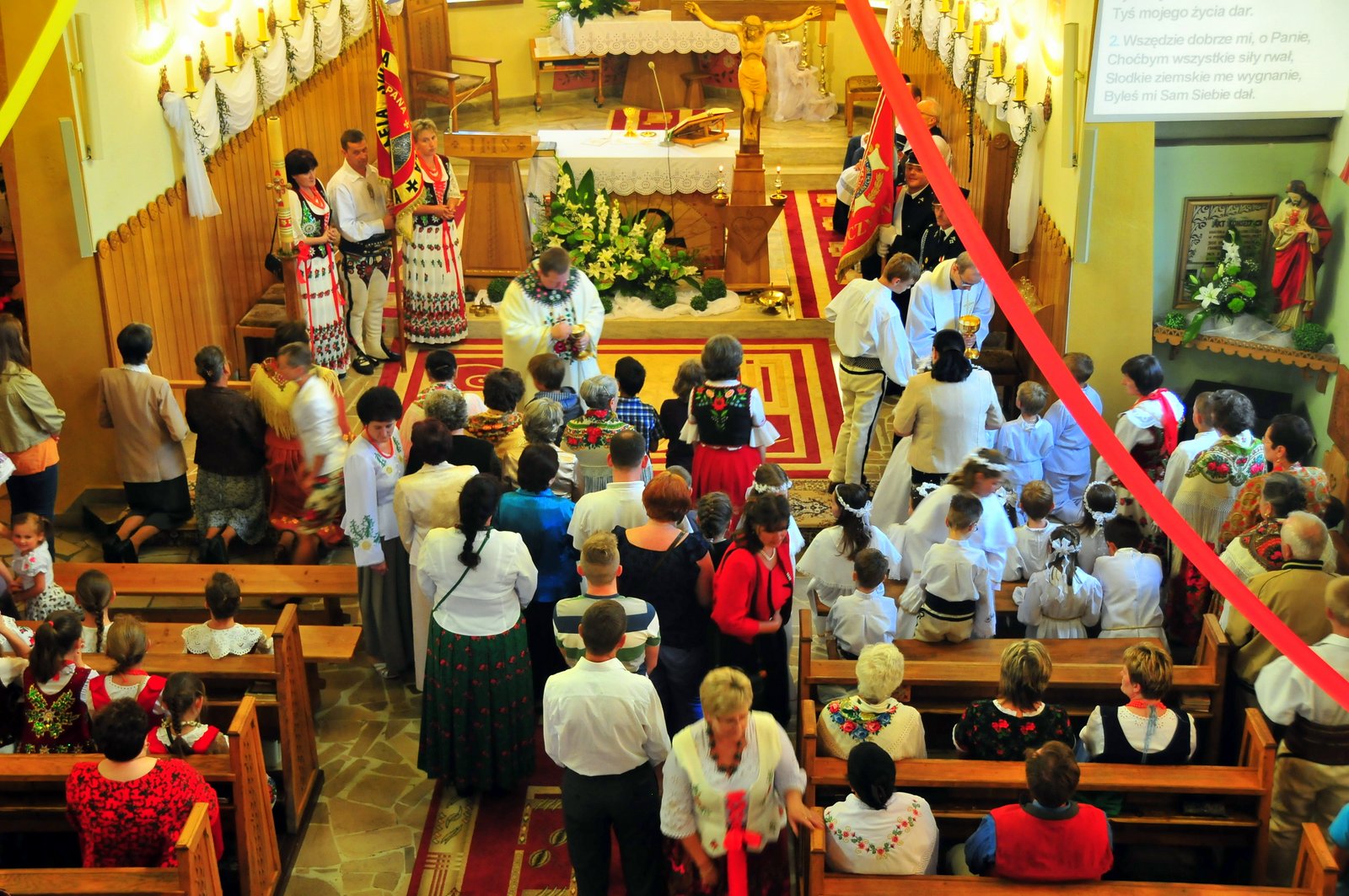
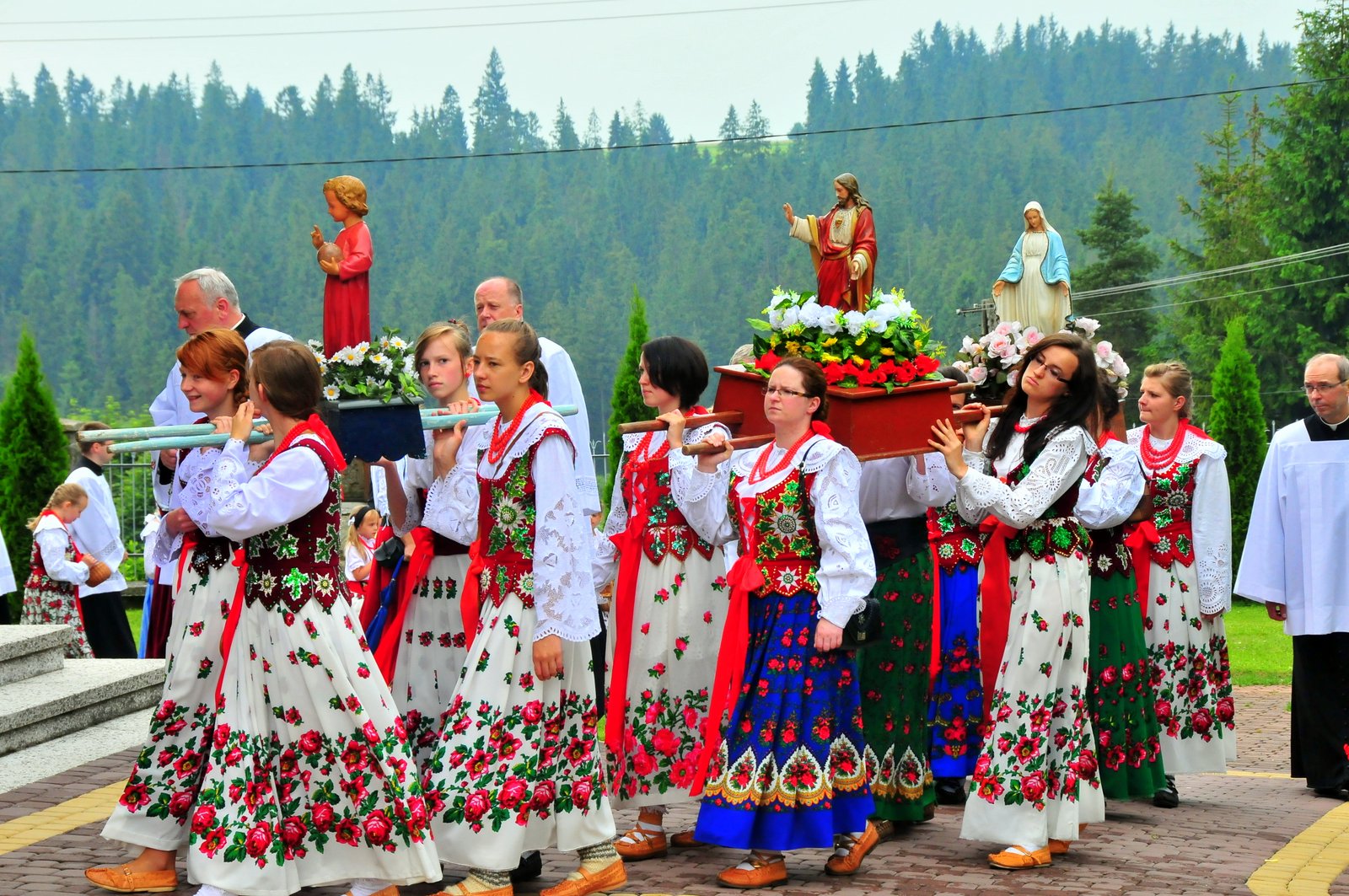
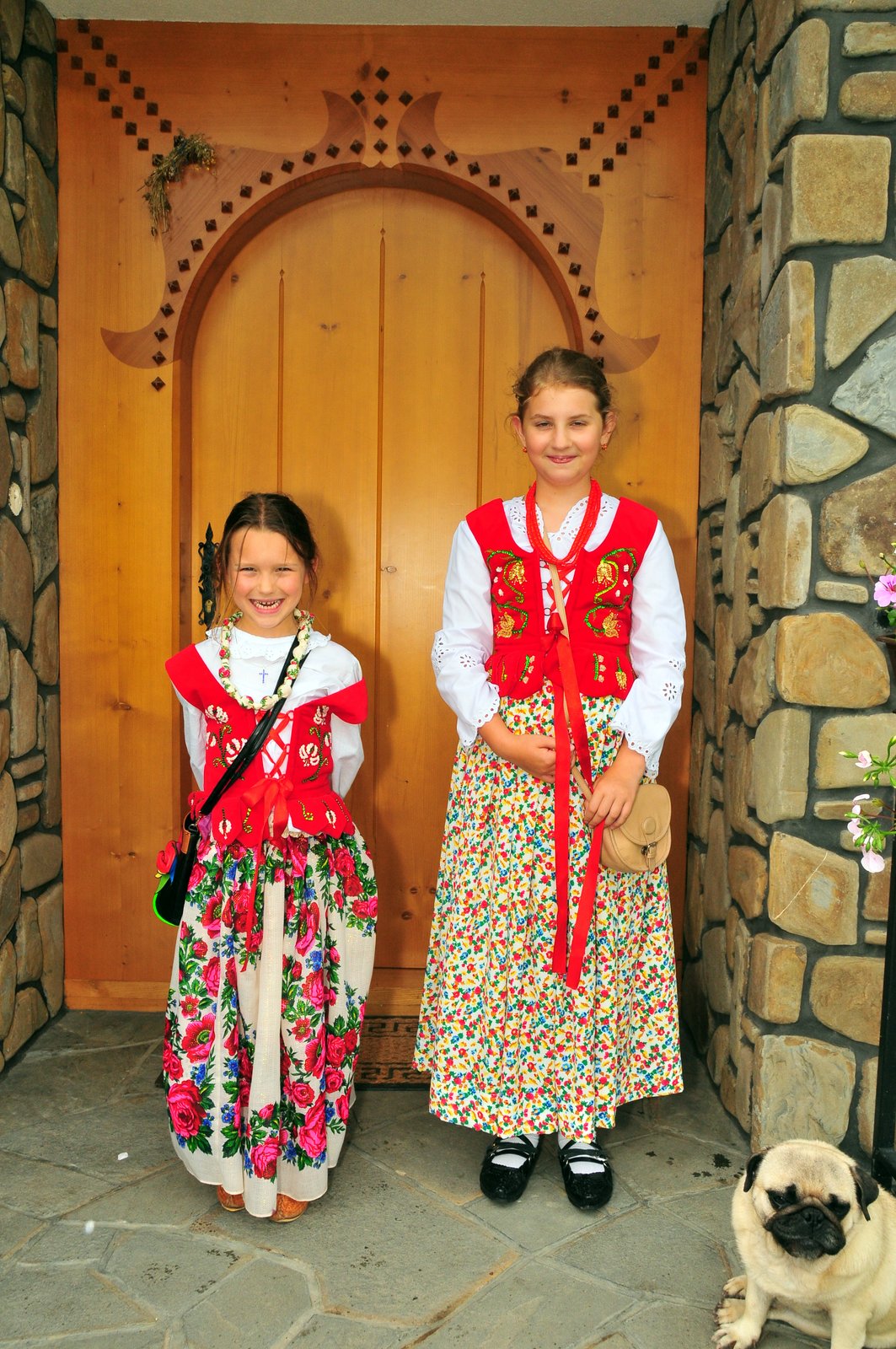
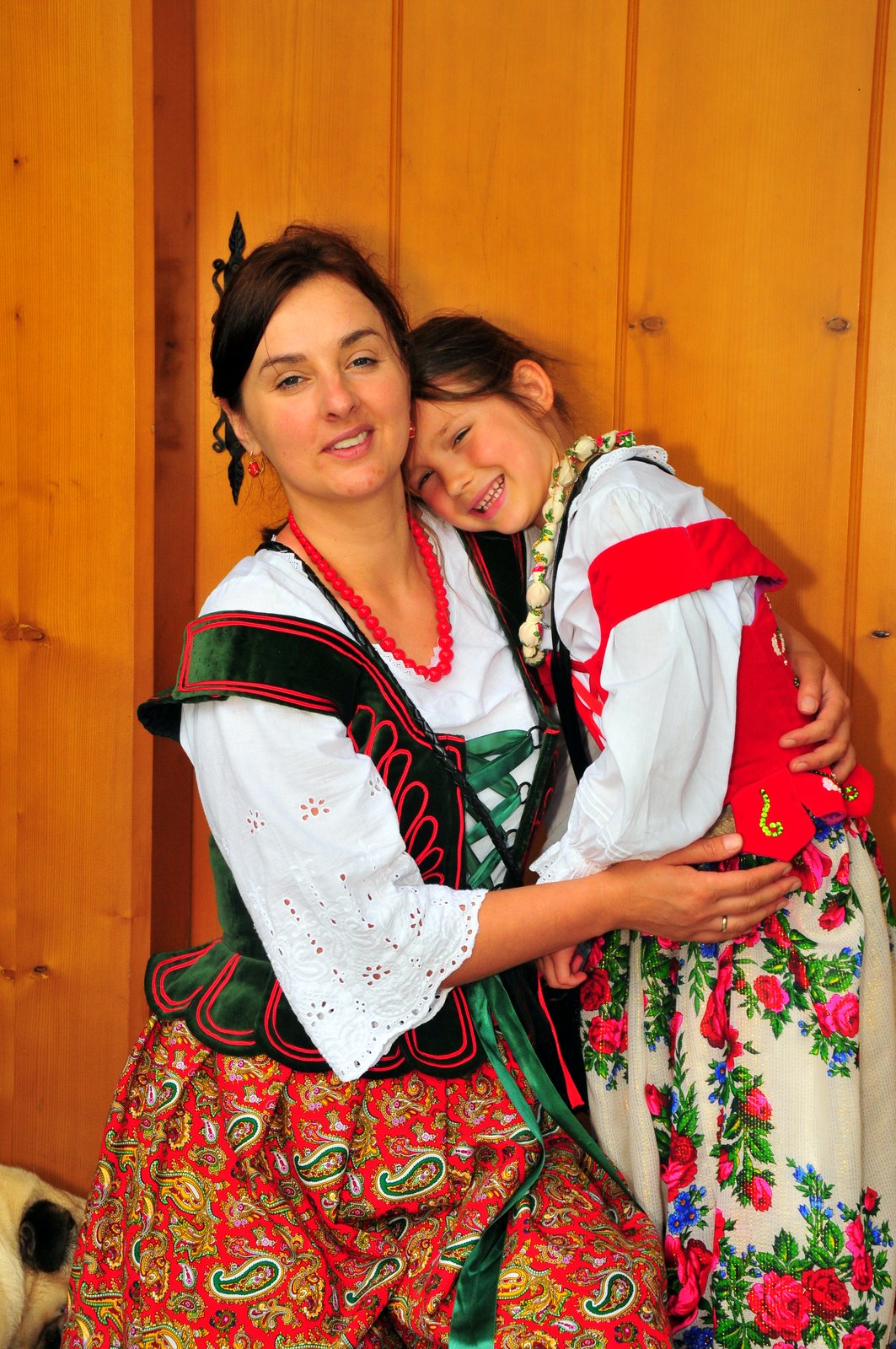
That means a festive Mass, with the majority of parishoners dressed in traditional highlander clothing and a string band playing during the offering and communion. And because G is a member of the group, I was able to join them before Mass as the got in tune and rehearsed for a moment.

VIV_3997

Mass began and I stayed with the band as they took their place in the choir loft. And suddenly, there was the reminder of what Catholicism in America used to look like: no Extraordinary Eucharistic Ministers; the priests alone distributed Communion. Additionally, while there was no actual rail, so to speak, parishoners behaved like there was an altar rail.

VIV_3999

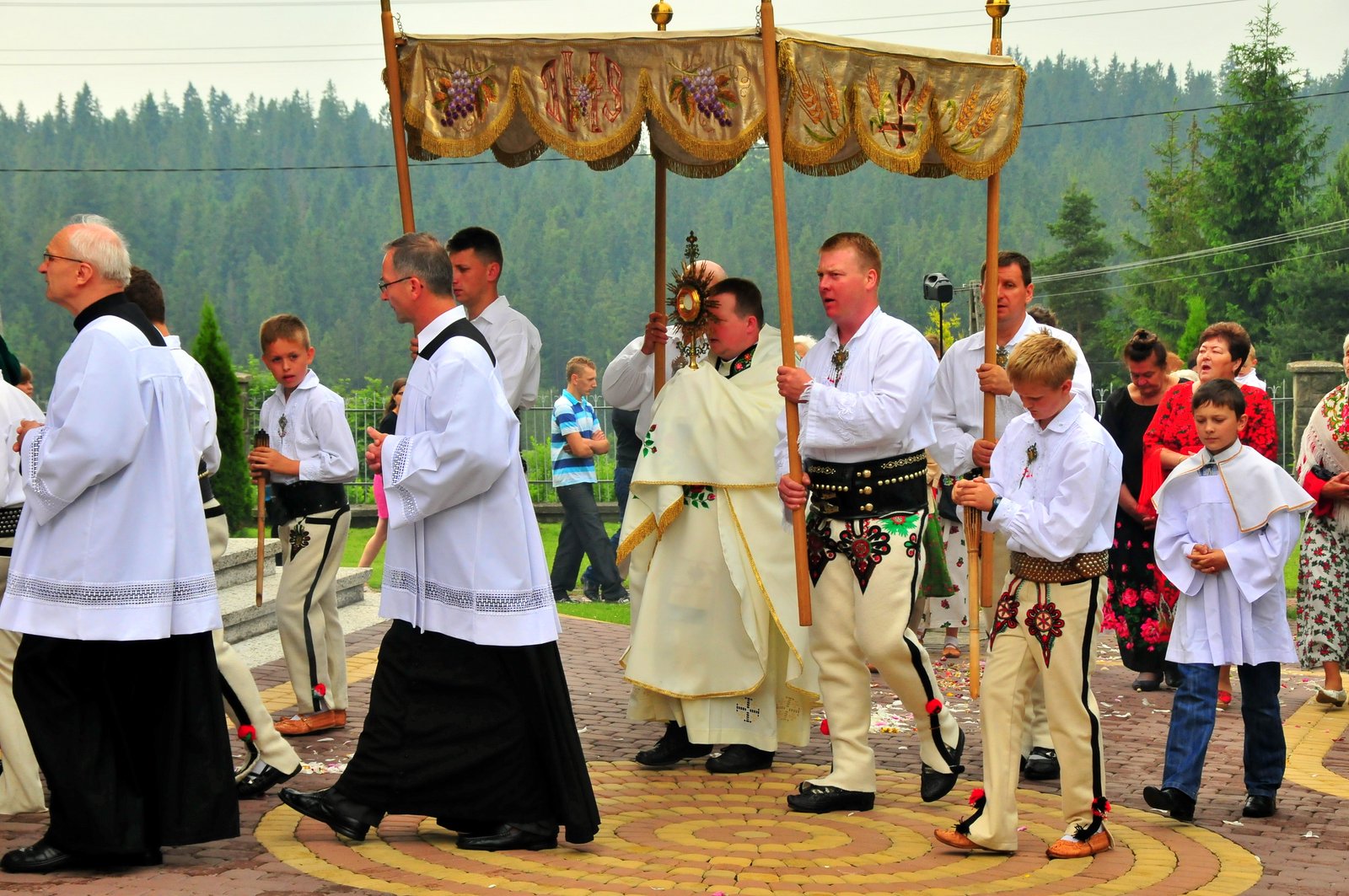
After Mass, there was Adoration complete with a procession around the church.

VIV_4008

VIV_4020

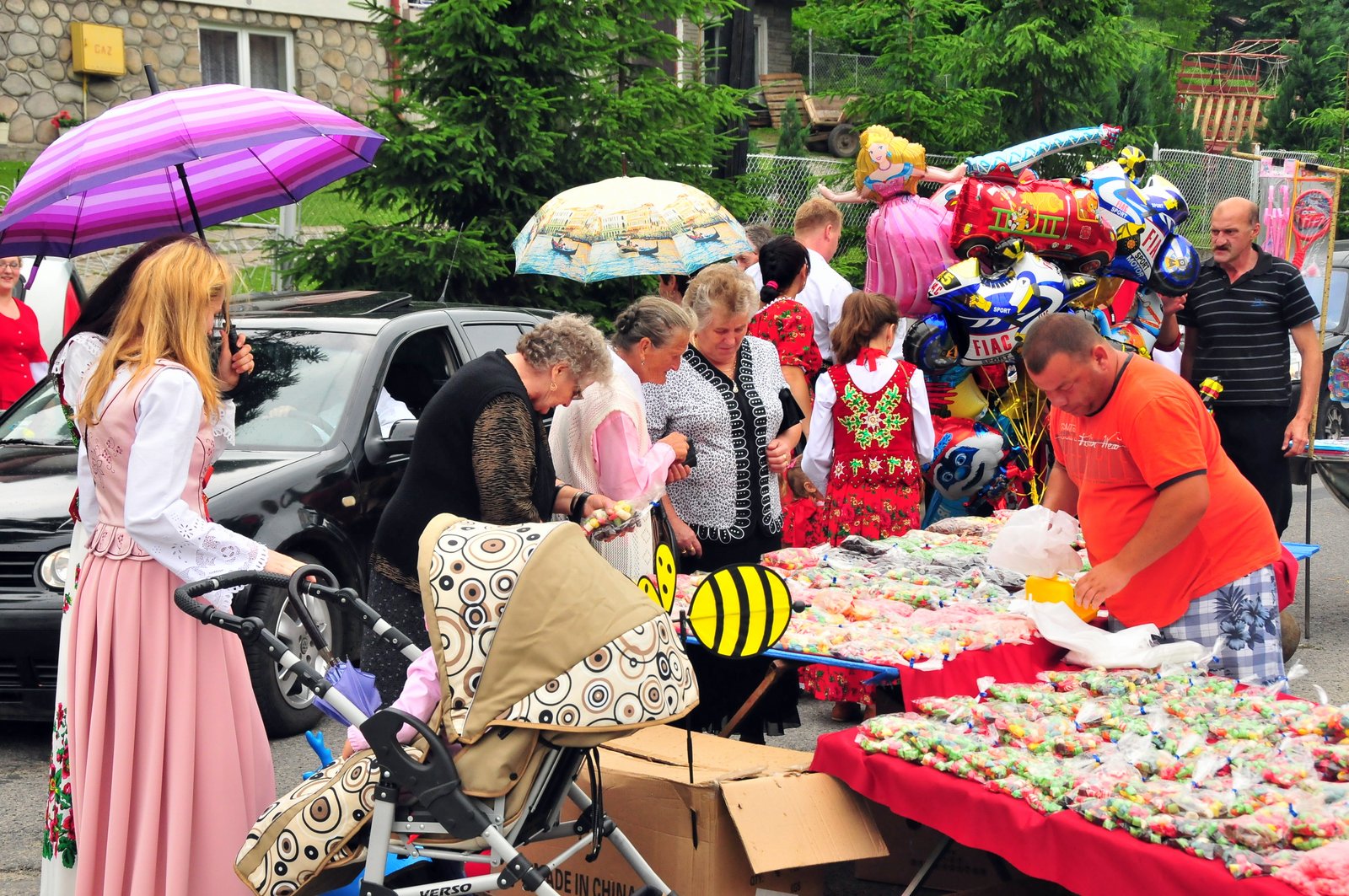
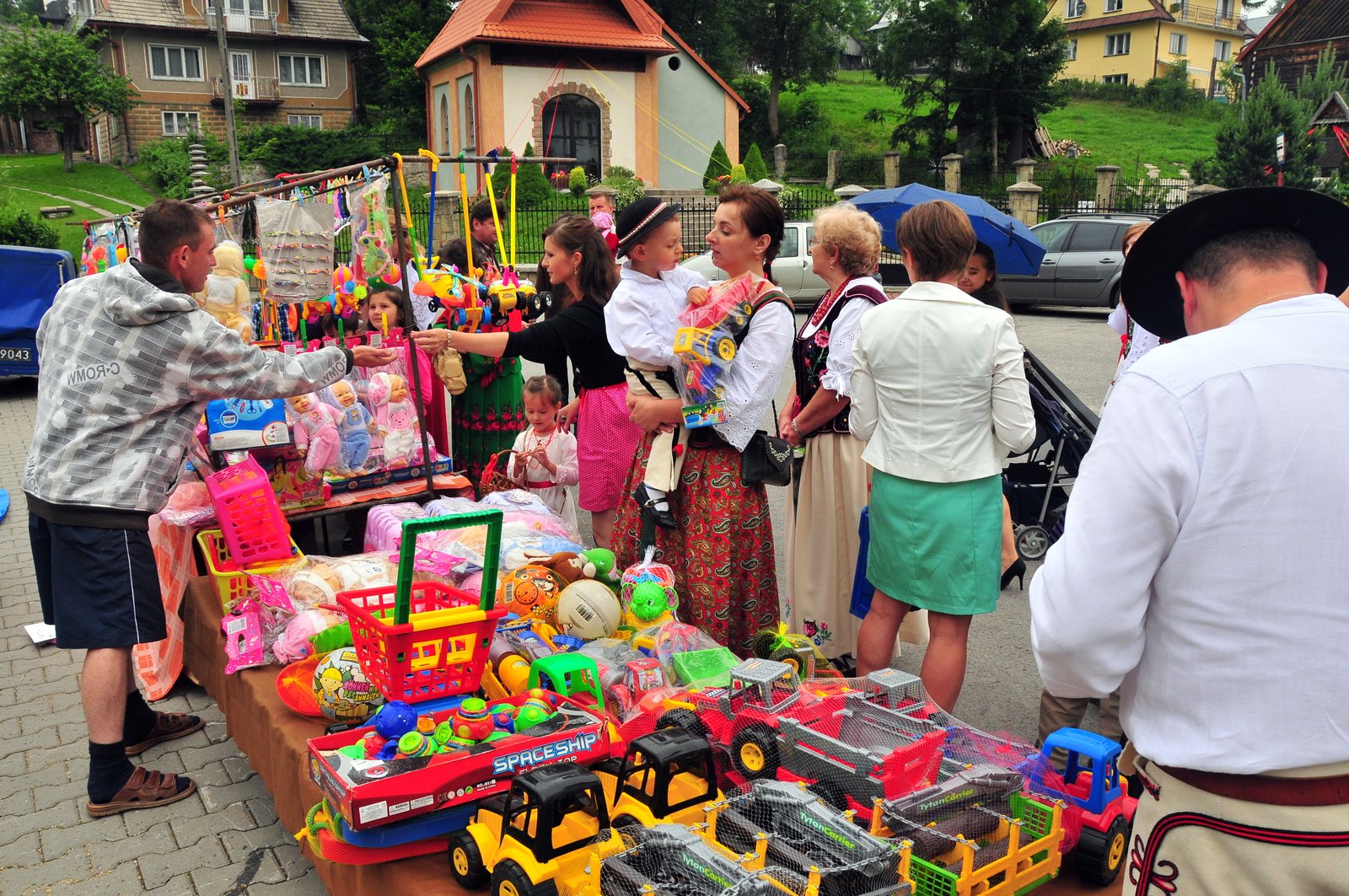
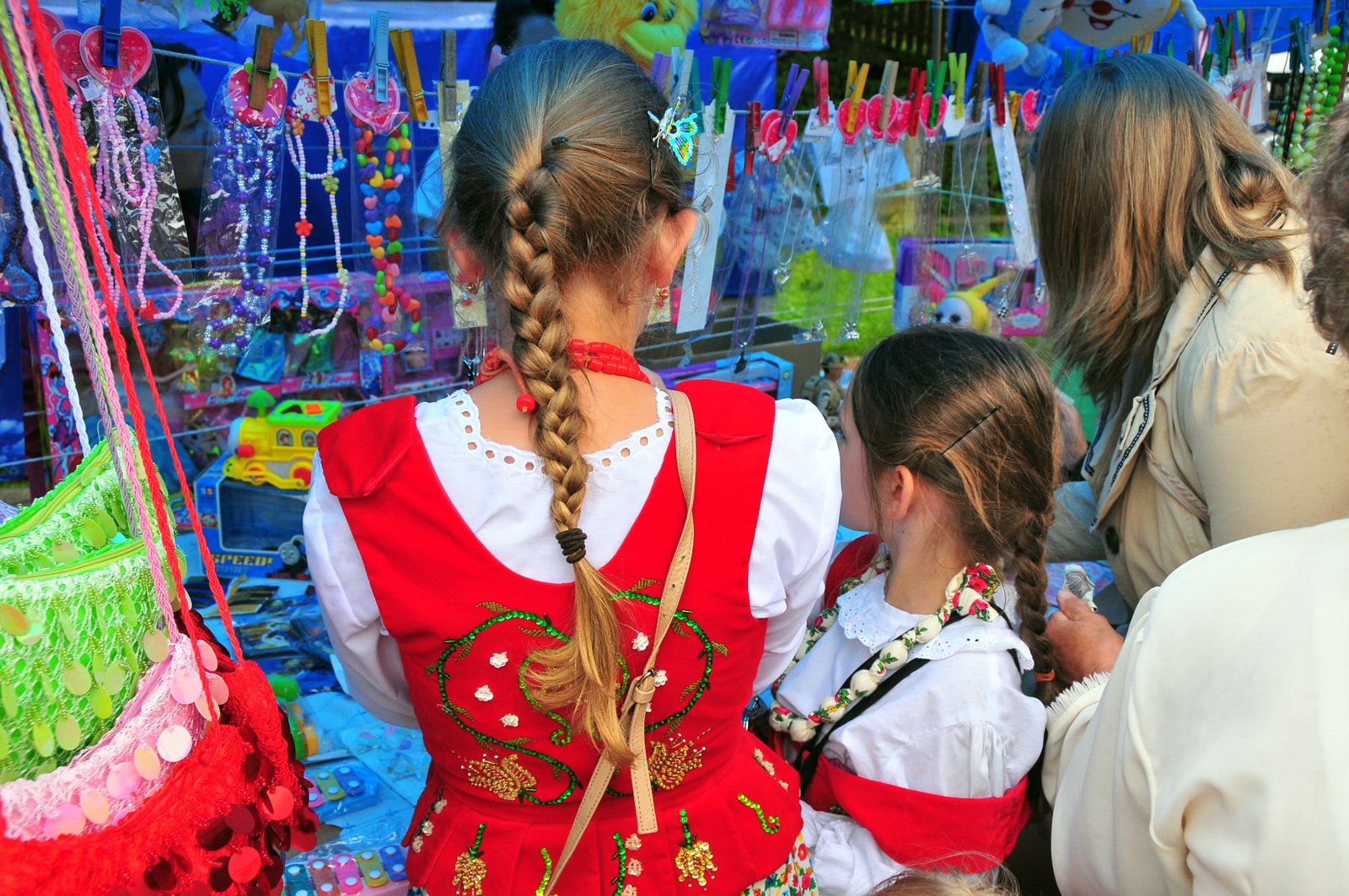
But for the children, all that was, in a sense, only a prelude to the real highlight of the day: stall after stall of venders selling one (or more) of four things: cheap plastic toys, cheap plastic jewelry, bags of candy, and/or fireworks.

VIV_4026

Dolls, gummies, tractors, bracelets ping pong sets, rings, lawn mowers, hard candy.

VIV_4027

A jarmark for kids. We returned with mountains of silliness and sweet gesture. The Girl decided we needed to buy something for the Boy. She chose a toy, asked how much it was, and paid for it with her own money. And she even haggled (with some encouragement from me) the price down five zloty.

VIV_4028

She becomes more Polish every moment.

VIV_4042

VIV_4045

With her godmother

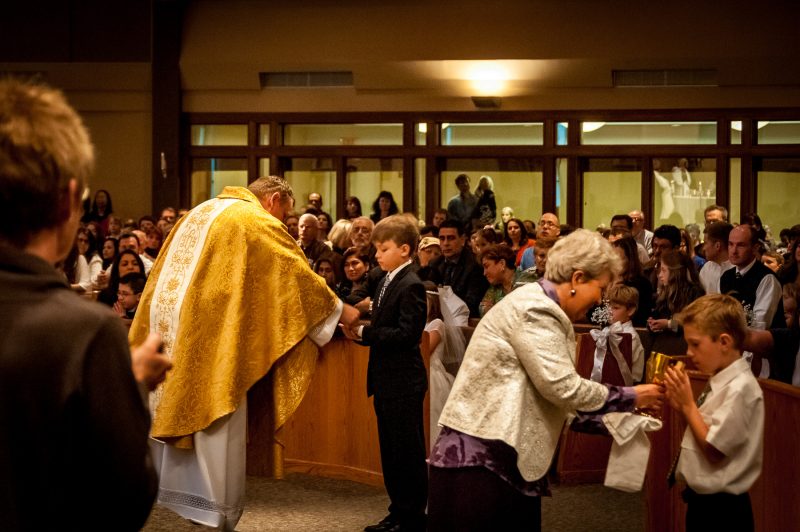
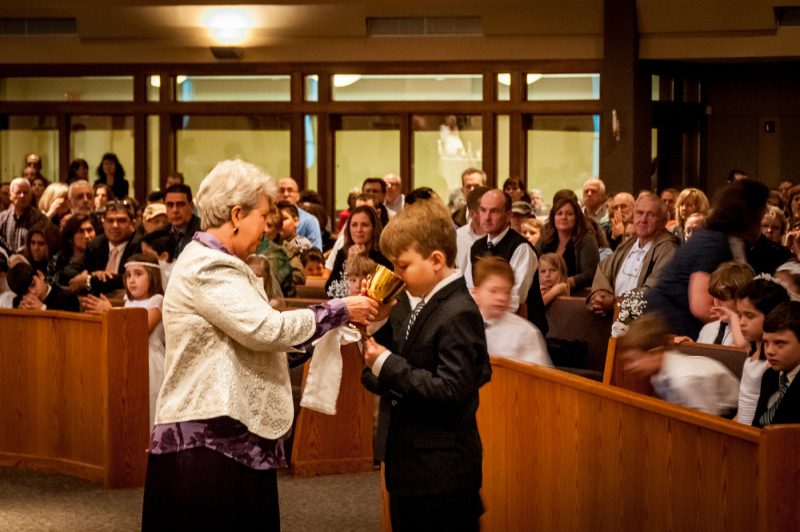
First

F must have heard it a dozen times today. "You won't remember your baptism," all the "aunts" and "uncles" would have begun, "but you'll always remember your first communion."

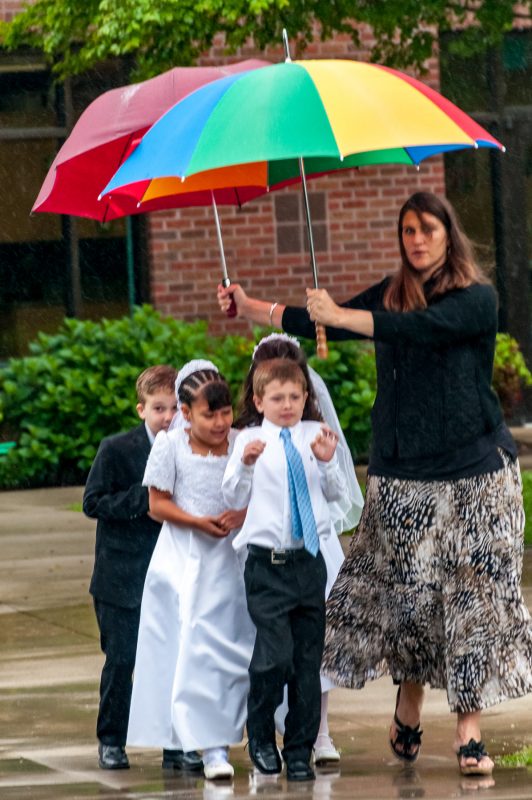
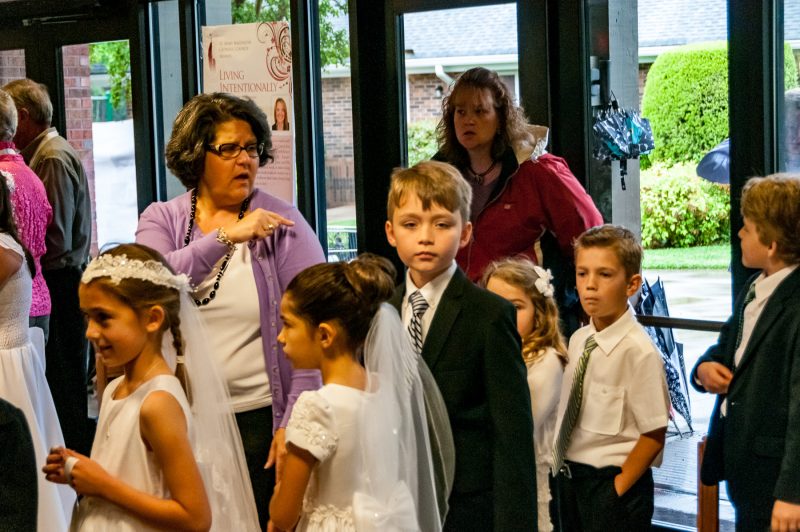
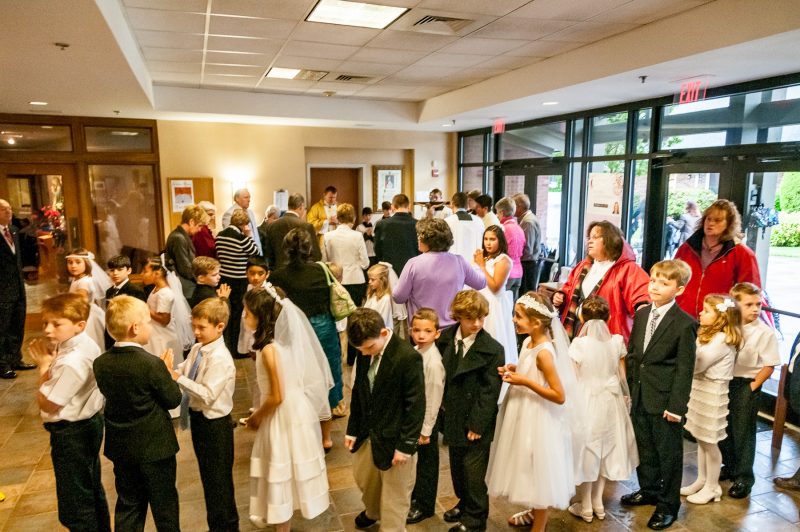
The rainy weather will also stick in your memories -- the huddling under umbrellas as you make your way from the parish center to the church, some more others less worried about getting soaked. With so much white on parade, there must have been worries about soiling the all-white outfits so many wore.

But everyone made it inside relatively safely, with F standing toward the rear of his line stiff as a soldier.

"You won't remember your baptism," he would soon hear, but those are words from people baptized in Poland in infancy, like the vast majority of Poles. "You won't remember your baptism" is much like saying "you won't remember your birth," but it's not always quite the case.

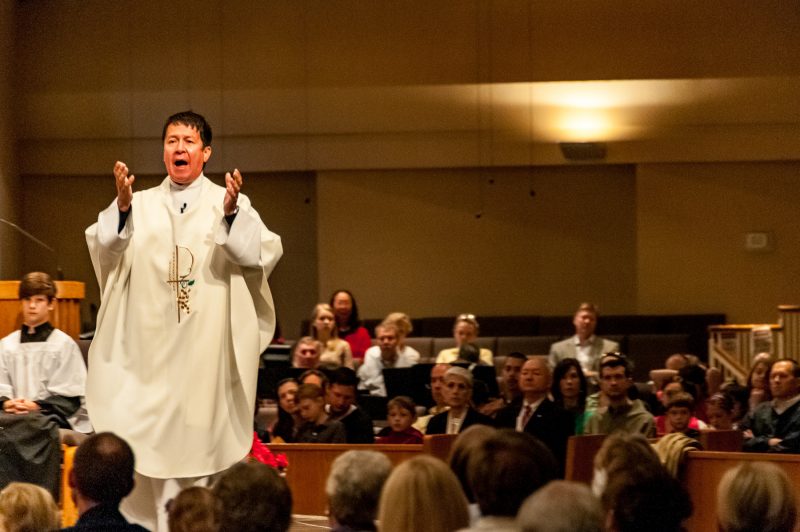
Some of us have such a memory. The same priest who baptized me two years ago gave the homily today, the same kind of warm, welcoming homily he always gives. Our dear Father Theo from Columbia, a man from whom his love of God almost glows.

"Welcome, my brothers and sisters, to this holy place," he begins every Mass, and though he says it consistently, it always sounds fresh and inviting.

But today wasn't about the homily, or the hymns, or the responsorial psalm. Today, it was about a group of kids taking their first communion -- as big an event in most Catholic families as a wedding, I'd wager.

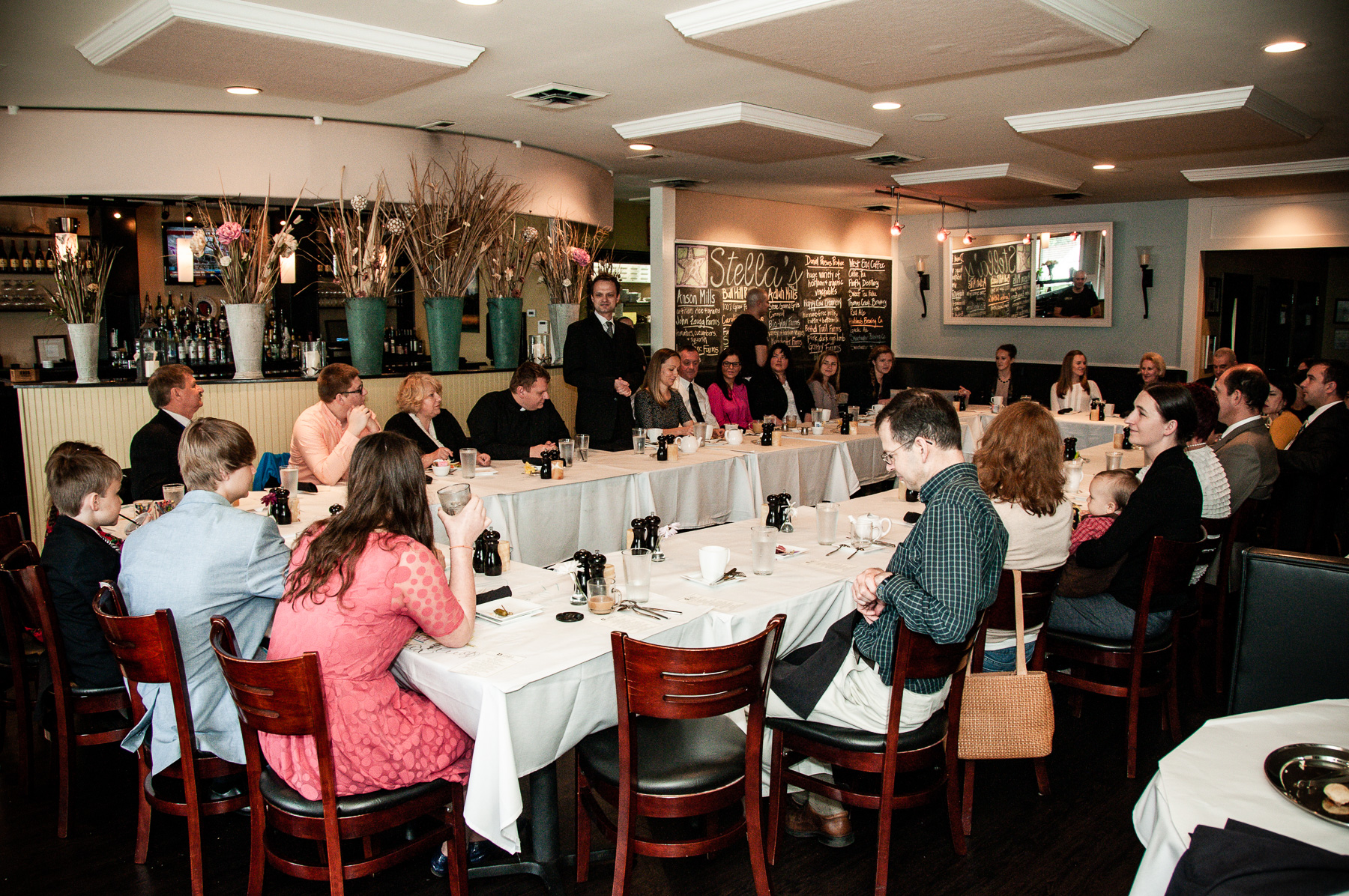
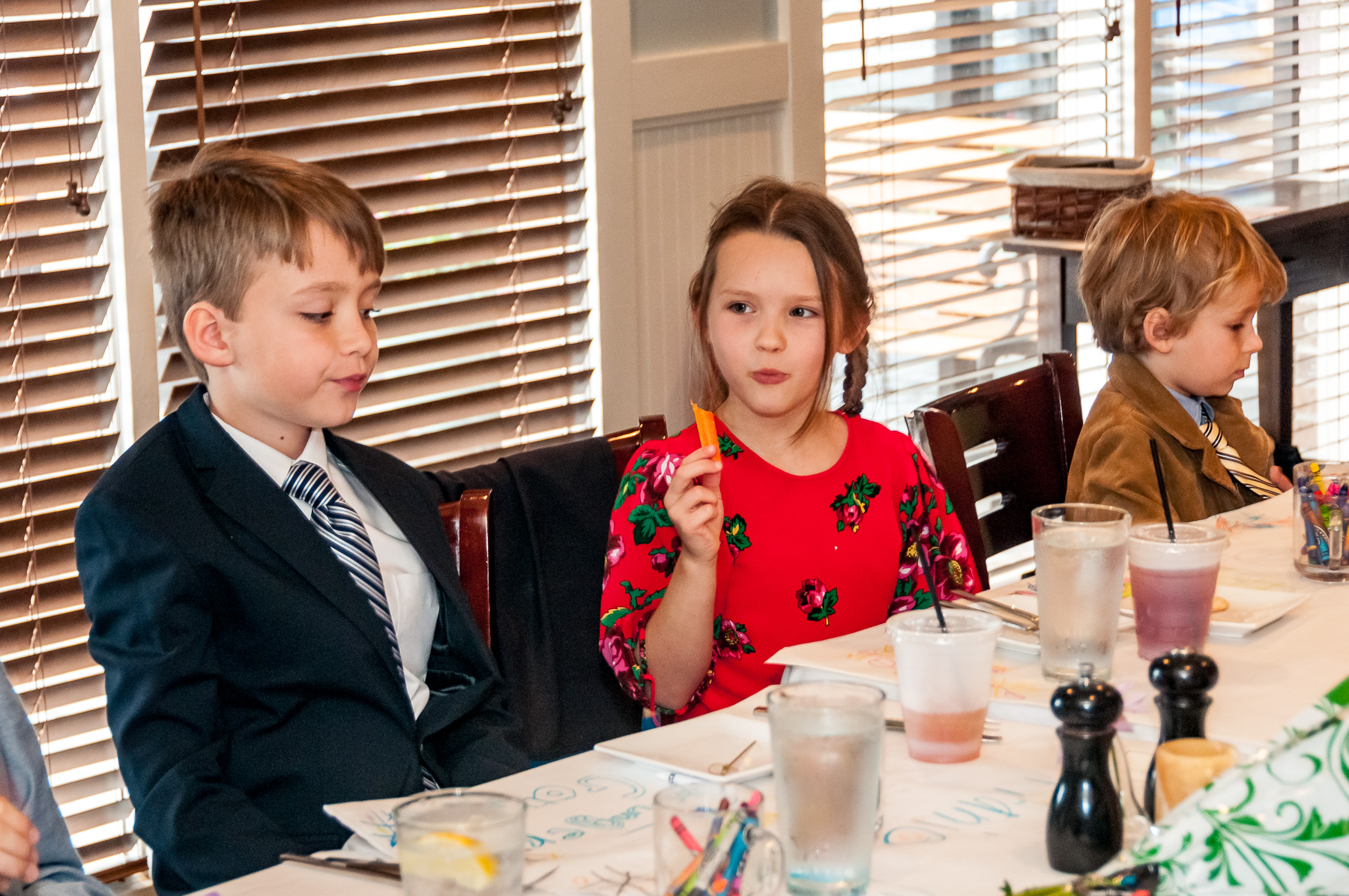
Indeed, in a Polish family, the similarities are striking. Both are highly social events, always including a large party afterward with food and drink, conversation into the evening.

Barber for Chorus

#39 — Destroying Frescoes of Happiness

The tendency to spread evil beyond oneself

In 1715, officials transferred Rembrandt van Rijn's The Night Watch from its location at the Kloveniersdoelen, which served as rehearsal grounds for local militia, to the Amsterdam Town Hall. These officials wanted to place the painting between two columns.

The problem was, it wouldn't fit. So they did the obvious. They trimmed it.

17th century copy with indication of the areas cut down in 1715. || Image from Wikimedia

Such a cavalier attitude toward art is completely unthinkable today. Modern cultures value historical works of art and go to great lengths to protect and preserve them.

Taliban destruction of Buddhas of Bamiyan || Image from Wikimedia

When the Taliban dynamited the Buddhas of Bamiyan in March 2001, the world decried the destruction of art of such historic value -- an artifact of the world cultural heritage. Prior to the destruction, a delegation offered something of a ransom for the statues, offering to pay the Taliban not to destroy them.

I am horrified at these acts of destruction, but how often do I commit worse acts with my words? Weil writes,

The tendency to spread evil beyond oneself: I still have it! Beings and things are not sacred enough to me. May I never suely anything even though I be utterly transformed into mud. To sully nothing, even in thought. Even in my worse moments I would not destroy a Greek statue or a fresco by Giotto. Why anything else then? Why, for example, a moment in the life of a human being who could have been happy for that moment? (49)

Cutting someone down with a comment or a gesture is infinitely easier and quicker dynamiting statues or trimming canvases, and what I'm cutting when I do that -- a soul -- is vastly more precious than even the most beautiful creation of humanity. Why am I so willing to do this while I'd never think of destroying this or that painting, this or that sculpture? Perhaps it has to do with the ease and the lack of immediately visible consequence. An injured soul reveals itself only in the eyes, in the tone of voice, in a slumped posture, and it can skillfully hide the injuries behind a mask.