Matching Tracksuits

fun in fours

catholicism

Review: Letters Between a Catholic and an Evangelical

McCarthy admits up front, in his foreword, that both he and Waiss had one aim: to convert the other. That the book is published by an evangelical publishing house testifies to the fact that Waiss failed; that the book is not titled “Letters that Converted a Catholic Priest” testifies to the fact that McCarthy failed.

Who won the debate is more a question of readers’ preconceptions than anything else. Catholics will be unconvinced by McCathy’s arguments, and few Protestants will be moved by Waiss’s somewhat bland presentation.

Of the two, McCarthy is much more aggressive, and in many ways, much more rational. But there is a mystical element in Catholicism that doesn’t mix well with pure rationalism. Recall that after consecrating the host in Mass, priest speak of the “Great mystery of faith.”

At the heart of the book is the question of authority: both accept the Bible as an authority, but evangelicals stop there, where as Catholics see Tradition and the Church as on equal footing as the Bible, comprising together the Word of God. Much of the book, then, revolves around Waiss trying to show how the Church’s extra-Biblical notions (i.e., those not specifically detailed in the Bible, such as the papacy, Mary’s Immaculate Conception, etc.) are, in some way, Biblically based while McCarthy chips away at Waiss’s arguments. The tables turn from time to time, especially discussing “sola scriptura,” but by and large, it’s a game of “Prove it from the Bible.”

As such, McCarthy and Waiss toss one phrase (or a derivative) at each other quite often: “No where in the Bible do we find X.” McCarthy fills in the variable with Papal authority, Marian devotion, the importance of Tradition; Waiss replaces “X” with the notion of “sola scriptura,” the Trinity, and a couple of other ideas. With the exception of “sola scriptura,” Waiss’s contention seems to be that McCarthy and evangelicals are essentially “guilty” (my term, not his) of the same thing they accuse Catholics of: incorporation of extra-Biblical doctrines. Waiss could have pushed McCarthy a bit harder on this point, I think, for he doesn’t even mention a host of non-Biblical based notions that “sola scriptura” evangelicals accept: Sunday worship, non-observance of Jewish holidays (i.e., no where in the Bible does it explicitly say that followers of Jesus are to stop observing the Jewish festivals), Easter, and Christmas come to mind.

This shows the Protestant notion of wanting to have its theological cake and eat it, too. Protestantism accepts the early Church councils’ decisions about the New Testament canon, the proper day of Christian assembly, the appropriateness of celebrating Jesus’ birth and resurrection, but most denominations (especially evangelicals) are unwilling to accept the Catholic Church’s continuing authority. This is one of the paradoxes of the Protestant movement, which necessarily implies that the Church started off correctly, but somewhere got tangled up in a mess of legalism and false belief. Sadly, questions like “At which point?” and “Why would God let such a thing happen despite his promise to the contrary?” aren’t mention in the book. It leaves me feeling that Waiss pulled some of his punches.

On the other hand, McCarthy demolishes some Waiss’s arguments in support of Catholic theology. His handling of whether Jesus had half-brothers (i.e., whether Mary remained a virgin her whole life and whether “brothers” in the New Testament should be translated “cousins,” as the Church maintains) is well done, for example.

As I mentioned earlier, who won the debate depends on readers’ preconceptions. As a non-Christian skeptic, I found the debate to be a draw. This is because “Letters” is a debate about the tenants of a religion based on a self-contradictory book, a notion neither McCarthy nor Waiss would take into account. For example, is one saved by faith alone or by faith and works? It depends on where you look in the Bible. Did Saul/Paul’s traveling companions on the road to Damascus hear a voice or not? It depends on which chapter of Acts you read. Does the bread and wine become Jesus’ actual body? It depends on how you read a couple of different NT passages. With such a flawed starting position, a draw is the best outcome either participant could hope for.

When such contradictions arise, the great literal/figurative differentiation arises. Indeed, much of the book also seems to be an argument as to whether or not to interpret this or that passage literally or figurative, with each side accusing the other of taking the passage out of context.

On the other hand, it is refreshing to see debate that doesn’t often (though sometimes, to a slight degree) slip into personal insults. While many Protestants (and this almost always includes fundamentalists, and often includes evangelicals) think the Catholic Church is the Whore of Babylon and the Pope the Anti-Christ and many Catholics regard Protestants as heretics, McCarthy and Waiss keep things civil the whole time.

One final criticism: the length precluded truly in-depth discussion, and many of McCarthy’s and Waiss’s comments go unanswered.

Overall, I would say it’s an interesting read for the simple fact of seeing to opposing views clearly (though perhaps too succinctly) presented.
Chapels

Poland is a Catholic country — in spades. Some ninety-seven percent of the population claims Roman Catholicism as their religion, though estimates of practicing Catholics is around seventy percent.

Of this seventy percent, I'm not sure how much of it is from habit and from true faith. I've had many a discussion about this with friends here about it. It calls to mind a college professor who'd "accepted Christ" at age five, which seems more from environment than from inner conviction. Regardless, the vast majority of Poles go through the motions, anyway. And certainly, many of them are devout and sincere.

There are quite a few who go to daily mass. It's mainly elderly women, judging from the small stream of people I see leaving the church. This raises a question: how does one draw the line between sincerity and habit? And what if it seems only to be habit despite the individual's protests that it's not? Pious until proven habitual? Or maybe I'm begging the question of them being mutually exclusive.
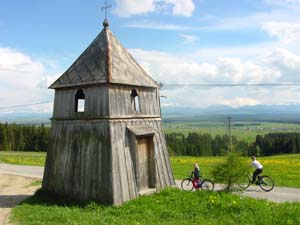
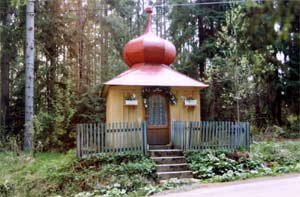
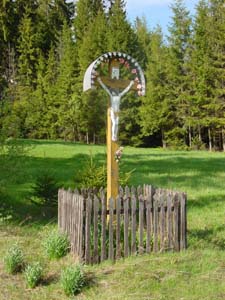
This Catholic piety spills over into every facet of life here, something striking to someone coming from a relatively irreligious country like the States. Separation of church and state — a completely foreign concept here.

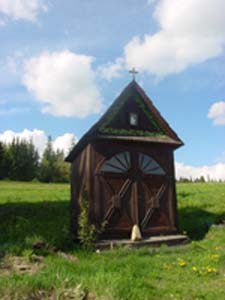
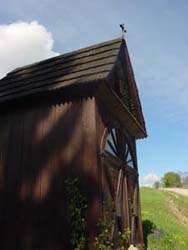
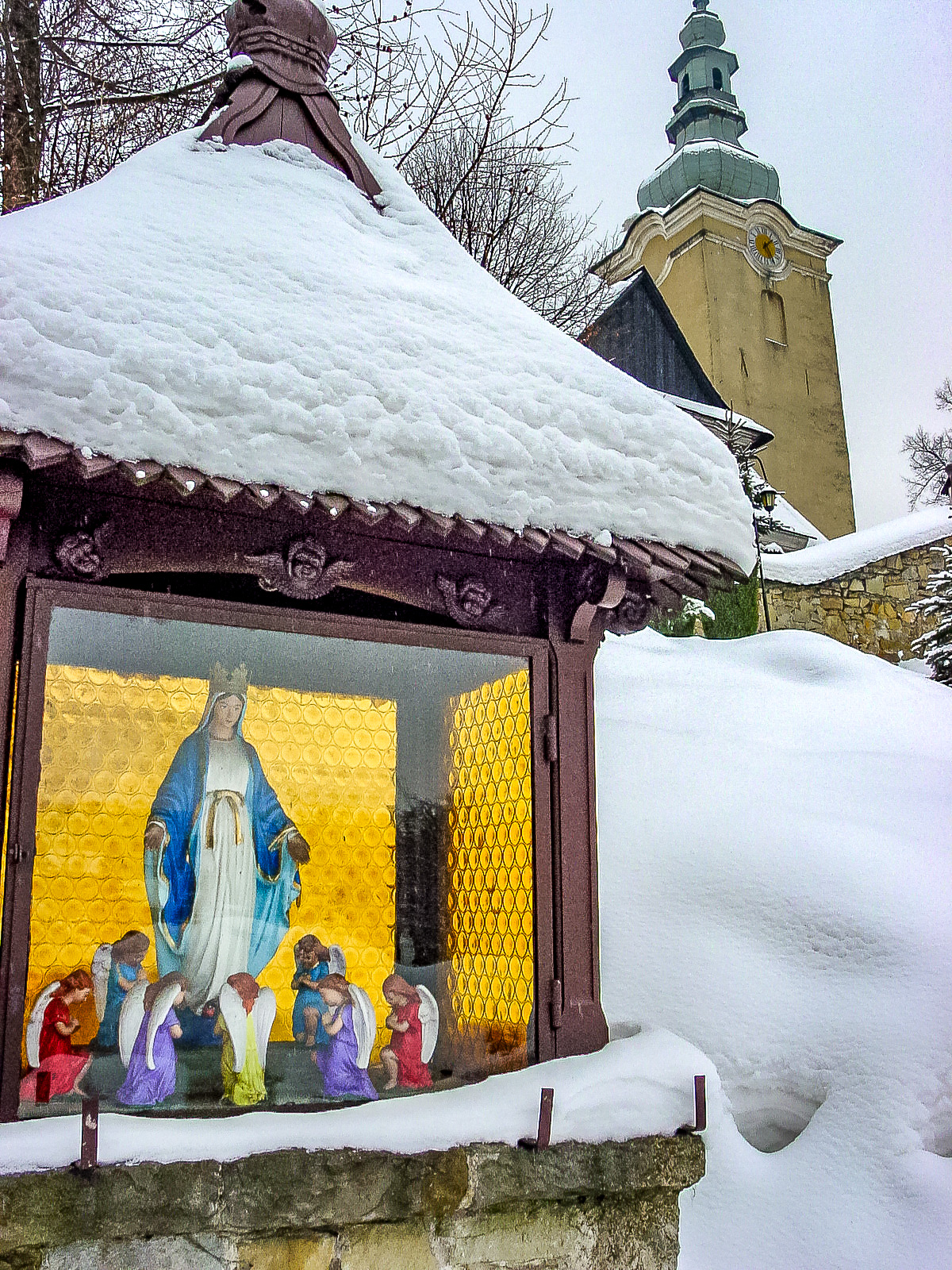
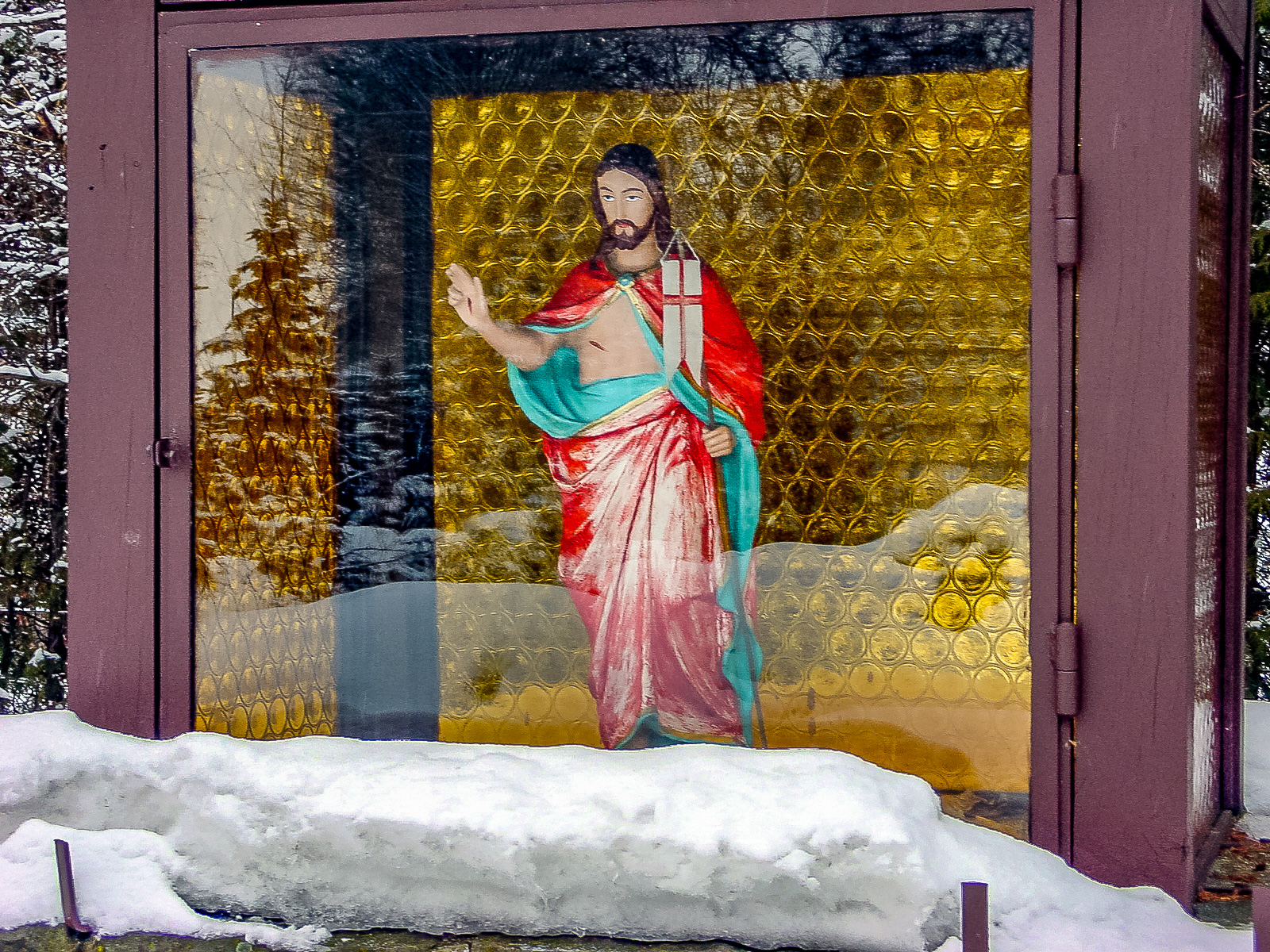
One of the many results of this piety is the proliferation of chapels —roadside chapels, yard chapels, even gable chapels.

Roadside Chapels

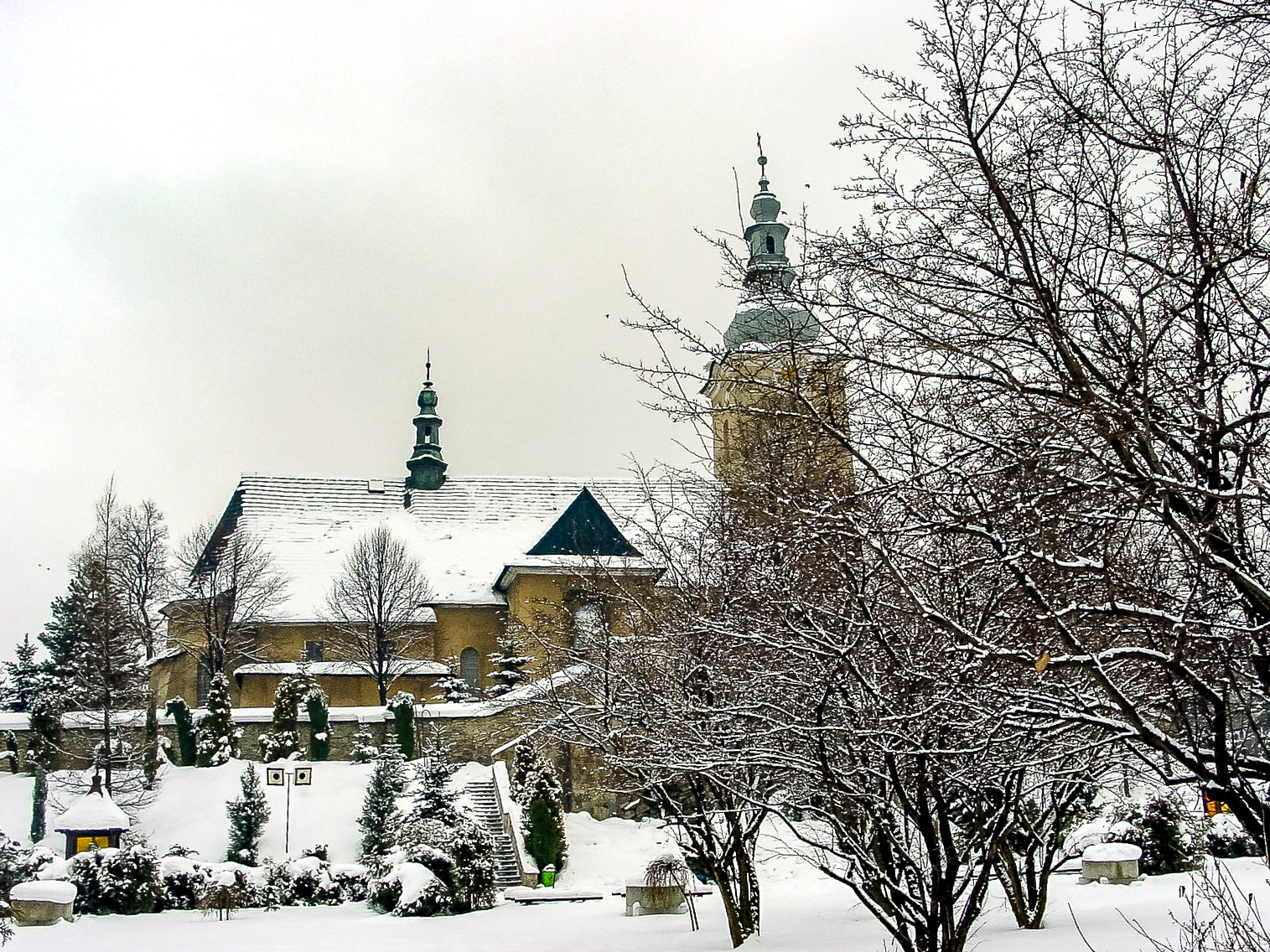
Belltower in Jablonka

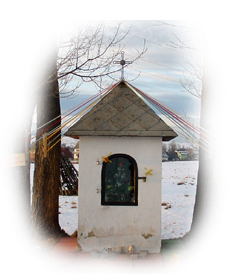
Roadside chapel just outside of KiczoryRoadside chapels are everywhere in Poland. They're by highways (or the Polish approximation of "highways") and roads you think are probably traveled once a year.

And they're all different: from small, simple, covered crucifixes to elaborate buildings.

I've rarely seen people there praying, but it does happen occasionally. It seems to be most common around high holidays in the spring and summer when the weather is conducive to spending all that time outside praying. And in many ways, it's quite admirable, that kind of religious dedication.

Some Protestants might suggest that building chapels like this is not necessary, that no building contains God.

Theological differences aside, it's still a pleasant idea for me, even as a non-believer.

Pre-Wedding Seminar

So we survived this Catholic church’s inability to treat its believers like responsible adults—i.e., we survived the pre-wedding, weekend-long marriage class. I would say “seminar,” but “seminar” implies more interaction than actually took place. The first half of the first day especially was nothing more than a long lecture.

Kinga and I decided that the people who really need such a thing don’t benefit at all from it, because they don’t really pay attention to it; and the people who don’t need it obviously don’t benefit from it all that much. The price was not worth the benefit in our case, I would say. It didn’t really cover anything Kinga and I hadn’t heard/thought/realized before.

What was especially frustrating was the repetition of the Catholic birth control talk. It began with an attempt at justifying it logically (and of course theologically, and even thought “logical” is in the word “theological,” it often isn’t). The presenter hung up a poster of Van Gogh’s Sunflowers and asked us to imagine we’d painted it. In comes a friend who rips the painting and she had us brainstorm what we would feel toward that friend: anger, surprise, hatred, desire for revenge, etc. were the words that came to people’s minds. She then pointed out that we weren’t physically harmed by our “friend’s” action, but that our creation was. “Ah,” I began thinking, “That’s how they’re going to try to justify the church’s absurd position on birth control.” And sure enough, she pointed out that we’re God’s creation, and that according to the Genesis account (which apparently we’re to interpret literally), we were created with four critical aspects/commands. One of them was our fertility and the command “be fruitful.” So the reasoning went, that when we’re tampering with our fertility, we’re tampering with God’s creation, and so on and so on.

She then went on to frame it as a question of faith, and I believe that was a great mistake. “Checkmate,” I thought, recalling my upbringing. In short, I wanted to talk to her about this and say the things I’m about to write, but I didn’t. If it’s a question of faith in God’s almighty power, then going to the doctor is just as much a questioning of that faith as using birth control. It’s one and the same. Catholics pray to God for healing—and then use medicine. If it’s an act of anti-faith (for lack of a better term) to use birth control, it’s just as much to use birth control.

Another one of the critical aspects of the Genesis account that they brought out was the control over creation that God supposedly gave Adam and Eve. So we’re supposed to “panować” all of creation except our fertility…
The church’s position is an antiquated position based on a time when infant mortality was much higher than now, and global overpopulation was an unthinkable concept. “Be fruitful” makes a lot of sense when perhaps half of the children you bring into the world live to be adults. In today’s society, it just makes no sense whatsoever. So the church is left scrambling to explain a first century (and earlier) tradition in a twenty-first century reality.

Interesting that the woman presenting said that the church’s position was not a question of the church wanting to have as many Catholics as possible—having babies for the church, in other words. And yet, just the day before, the priest said just that. That children were a blessing, and that by having many of them (he suggested three!) we would help our “fatherland” and the church.

The whole weekend wasn’t a waste. There were some interesting moments, but it could have been done in an afternoon as opposed to two full days. And the fact that it was required was ridiculous. Of course those conducting it had nothing to do with that, as they pointed out at the beginning when they said that no one would be excuse for any reason, we had to sit there throughout the whole thing. And then actually said bottom line themselves: “Ci który mają świadecwy mają władca.” “Those who have the certificates have the power.” It was meant as a joke, but I didn’t find it terribly amusing.
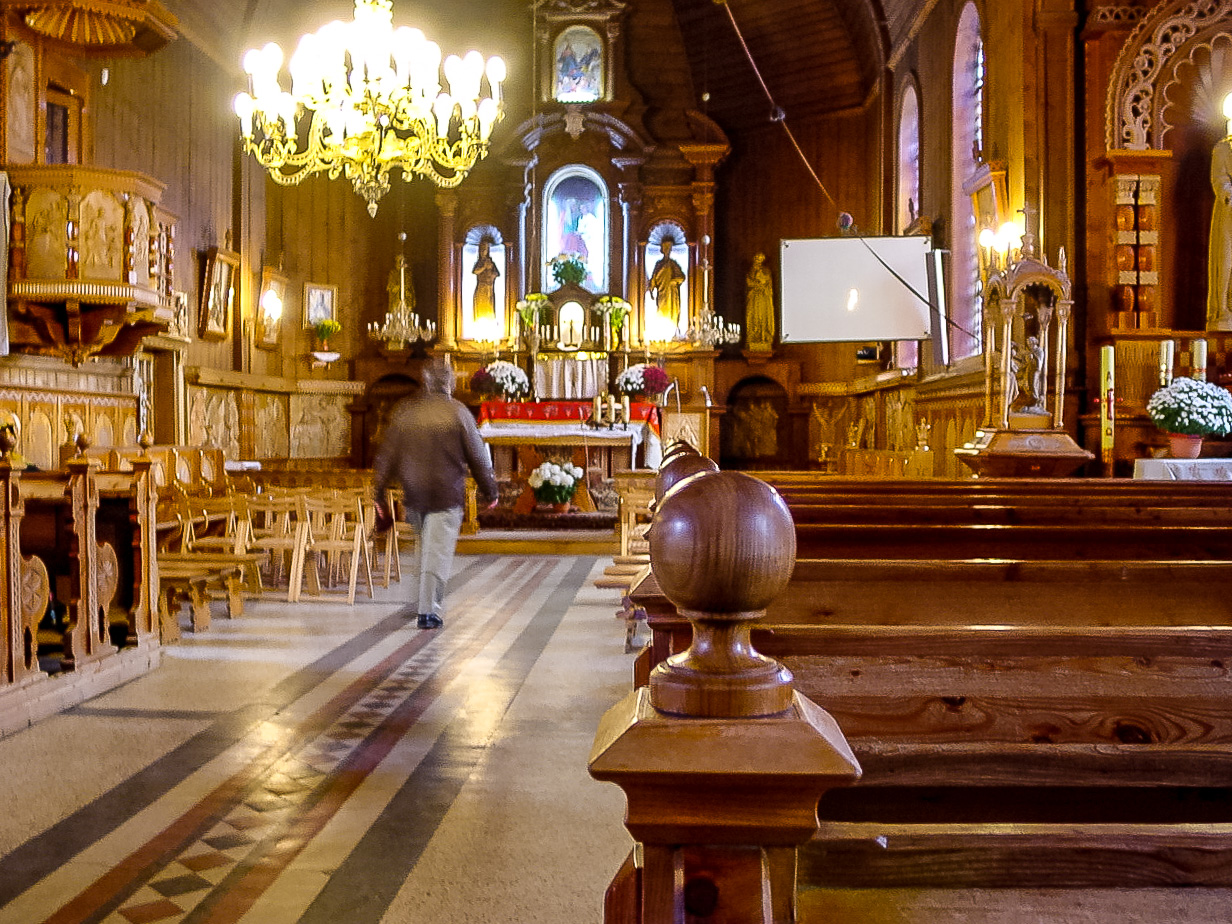
NT Church

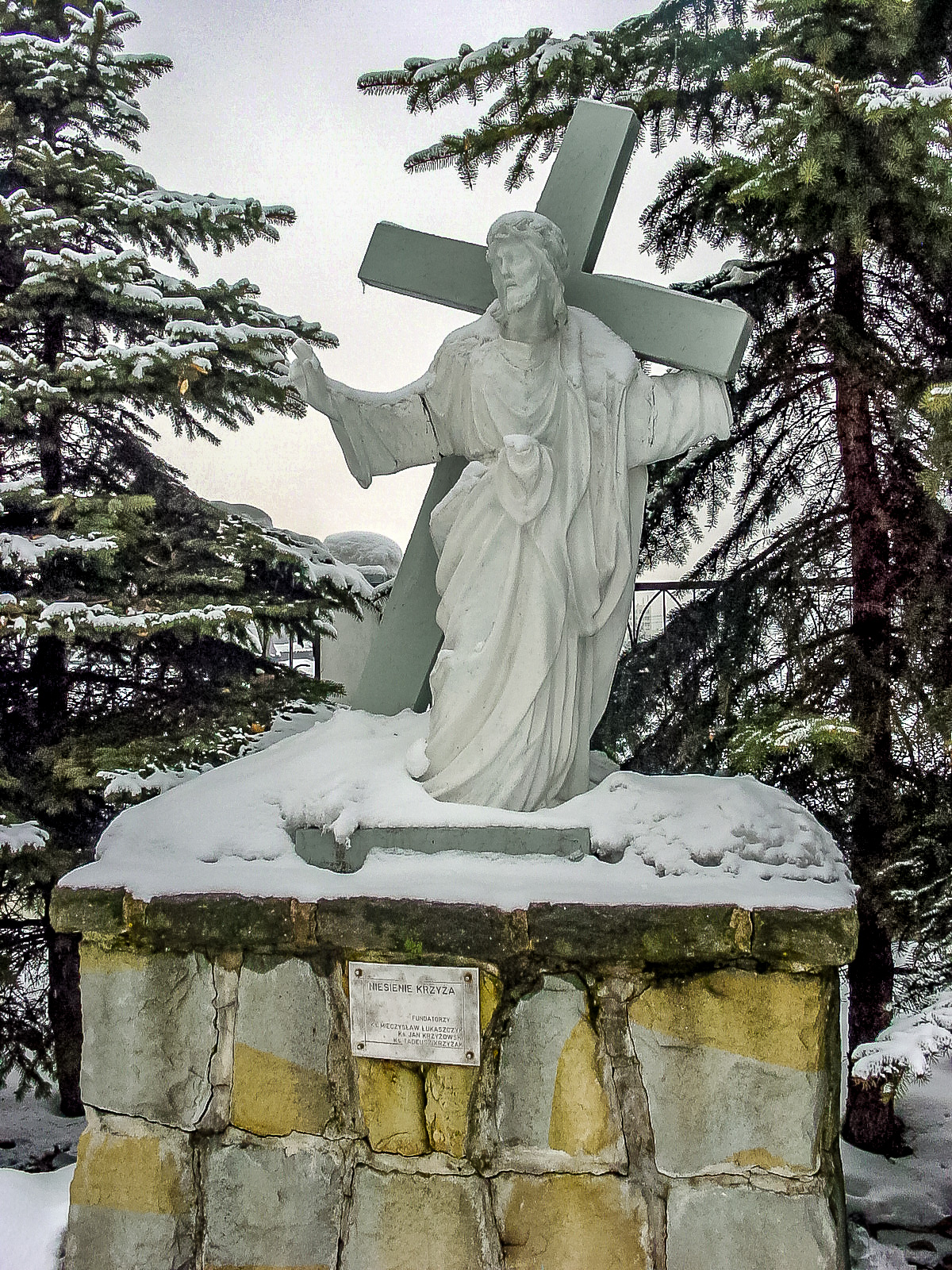
NT Stations of the Cross

Change of Venue

The wedding will not be in Orawka. The priest found out how much more (paper) work is involved in a mixed marriage and decided he didn’t want to give of his time to help us. He was very rude, Kinga said — gave her his decision in a single sentence, said goodbye, and hung up, not waiting for her response.

Very Christian.

And people wonder why I’m not a Christian. If it’s true, and Jesus lives in you and all that nonsense, then why don’t we see an effect? Why is the country where something like 97+% of the population professes to be Christian one of the most corrupt in Europe? Why are the rudest, most selfish people those who serve a boss who supposedly gave his life for them?

More on Will and Belief

Peter Kreeft was talking at KC about the logical impossibility of religious pluralism, that all religions are true. “Either Mohammed was a prophet of God or he wasn’t,” he reasoned. I find it increasingly difficult to believe that he said that. As a Catholic, he believes, for example, that even though the host looks like bread, tastes like bread, feels like bread, and would be shown under scientific tests still to be bread, that it’s actually the body and blood of Jesus. That Jesus can be completely two different things.

It’s a question of faith, and I read an article on a Catholic website that took this even one step further. The author argued that only Jesus’ disciples — those who believed — could have seen him after his resurrection. In other words, if Jesus had appeared before Pilate, Pilate wouldn’t have seen him because he didn’t believe. That sounds suspiciously like willful self-deception.

Recall that Pieper writes that the chief obstacle to belief is the question, “Why should man be dependent upon information which he himself could never find and which, even if found, is not susceptible to rational examination?” Exposure to religion is a cultural experience, and it’s not something various individuals have independently worked out as they tried to figure out what this weird Unknown is that they’ve been experiencing. In other words, the seed is sown by cultural exposure to the idea of a crucified and risen god.

I wonder why that Franciscan bloke never wrote back. Perhaps he didn’t receive the email? Perhaps he thinks there’s no point? Perhaps he realizes that there’s no hope for me?

Will to Believe

Just before Christmas, I sent a letter to “Ask a Franciscan” on a Catholic website. I’m not sure why. Silly thoughts of conversion that I’ve since (or rather “sense”) put aside. The original letter:

I’m an American living in Poland, and I’ve been thinking about conversion lately. A lot of it has to do with the fact that I'm marrying a Polish woman in a few months (June) and everyone is asking me why I don't convert. “It’s simple,” I say. “I don’t believe.”

However, I can’t deny a certain pull I feel toward Catholicism – the ritual and the beauty of the faith. I’m an atheist, though, and for more intellectual reasons than anything else. I don’t know that I could ever say, “I believe this faith is true,” but I’m finding myself thinking sometimes, “It would be nice if this is true.” Or even, “I hope this is true.”

So the question is this: is it enough simply to say, "I hope these things are true?" Where does hope that something is true end and faith that it is true begin?

The response:

Thanks for writing and I do appreciate your honesty both intellectual and moral. The Catholic Church has a very strong teaching that a person’s conscience is the ultimate criteria for that person’s decisions and behavior. At the same time, it is important that the conscience be correctly and well formed.

You are correct. You could not be true to yourself if you said, “Well, I just pretend I believe, go through the motions.” You could not do that nor would any real church want you to do that.

At the same time, it might help if I explore the idea of faith just a little bit with you. As Catholics, we believe faith “is a gift” of God…..and that that gift is offered to every person. The reason it is a gift is that faith means that we believe in what we cannot see or fully understand.

Yet, from a purely human point of view, you and I live by faith every day. You believe that when you shop for food, the labels on the cans say what they mean. You don’t have to presume to have every can tested “just to make sure because you never know.”

In fact, society is based on truth for its people. That’s why perjury is such a terrible crime….if a person lies under oath, then there is no way for true justice to be accomplished. No one could trust anyone any more and society would be thrown into chaos.

When it comes to religious truth, we are dealing with great and unfathomable mysteries. But one thing to keep in mind is that a mystery is not something about we know nothing; it’s really something about which we just don’t know EVERYTHING. I’m sure the deepest human mystery you’ve experienced is your love for your fiancé and her love for you. You know what that is but still I’m sure you stand back at times and realize that “this love is bigger than the both of us.” When a mother and father hold their first child, they are stunned by what they hold in their arms and what they feel and experience may not be able to be put into words. In fact, some of our deepest experiences deal with the mysteries of life and death and of our human relationships.

In regard to faith and religion, there are three questions that come to mind:

  • Where did I come from?
  • Where am I going?
  • What am I doing in the meantime?

In a way, the way I answer those question will determine to a very high degree the way I live my life and for that matter why I even care about how I live my life. If I say, “I came from pure chance out of nothing; in time (who knows when) I will go back into nothing; in the meantime I’ll just do what I think is right.” Those are questions, though filled with mystery, are questions your fiancé comes up with a different answer. And perhaps the best way to see what faith is, is to look at it in another person whom you love and admire. What is it that you love the most? She beautiful, loveable, and all those good things. But is there something inside her, her values, her convictions and her beliefs that make you wonder, “Why does she believe the very things I can’t make sense of?” When my Dad married my Mom in 1930, my Mom was an Irish Catholic and she jus his heart. He was a faithful man and he was an inspiration to me and my sister.

So, what I would suggest is that you ask your fiancé just for the opportunity to explore her faith, take instructions and see how it turns out. If after you are finished you are still where you are, then you have in good faith explored the faith and found it lacking. On the other hand, you never know what will happen. It’s still your conscience and you must follow it. I know your fiancé would not want you to pretend.

I liked your expression, “I hope this is true.” But the hope might well turn into faith in time as you learn more about our faith. Remember also, you don’t have to figure out everything…what you are looking for is an understanding of our view of those three questions. What from; Where to; What now?

I do hope this helps. And remember Gary, if you have any more question or issues, please feel free to write back. I’m the only one who answers on this website and I’ll remember your name.

And so after almost six weeks, I took him up on the offer and wrote this back — a desperate effort, I suppose.

Thanks for your answer to my question. I’ve been meaning to write back, but I’ve simply been too busy. And also, I’ve been working on this reply for some time — a little here, a little there.

I didn’t initially tell you the whole story, because I wanted it to be short. The thing is, I was raised in a Christian home; I studied at a private Christian college; I did a year of graduate work in philosophy of religion at Boston University; and I’m constantly obsessed with religion and theology. I’ve read Aquinas, Augustine, and Pieper among the Catholic “greats” and Luther, Niebur, Bonhoffer (sp?), and Calvin among the Protestant “greats.”

This is not to try to brag — “Oh, I’m so well read.” I know in fact I’ve barely scraped the surface. It’s simply to show that, as far as taking instruction, in some ways I don't need it. To a certain degree, I know more about the Catholic Church and theology than my fiancé does. That sounds a little presumptuous, but she’s even told me, “You know the Bible and theology better than I do!”

I say that in response to your comment that you suggested I “ask [my] fiancé just for the opportunity to explore her faith, take instructions and see how it turns out.” Lately, I’ve read a great deal about Catholicism, its history, theology, etc. I’m currently working my way through The City of God (slow going and I only read a few chapters every few days) as well as Przekroczyć Próg Nadziei, which is the Polish translation of “Crossing the Threshold of Hope.” (I would say it’s probably not a translation in reality, since, as I understand it, John Paul writes his encyclicals and such in Polish and then others translate it into Latin and Italian.) I’ve gone from knowing little about Catholicism to knowing quite a bit, from regarding it as essentially misled (the old Protestant upbringing still lingered/lingers in me though I have considered myself a complete non-believer for years now) to having a great deal of respect of many of its teachings.

In fact, I would even say (and have said, to my fiancé, Kinga, and her family) that if I ever “re-converted,” I would be a Catholic. Indeed, I’ve even defended the Church’s theology to fundamentalist, anti-Catholics! You might say I’m the ultimate debater, able to argue positions I don’t even believe. (To be fair, I wasn’t misrepresenting myself and saying I believed any of it; I was simply arguing that these fundamentalists were misrepresenting the Church and her teachings).

All this is not to brag or anything, simply to show you where I’m coming from. I’m cerebral to the point of — well, I don’t know what. I think too much, I’ve been told; I’m a “classic intellectual,” Kinga says. She wasn’t the first to say that! That always sounded corny to me and I resisted the label, but perhaps everyone’s right. Two examples perhaps further illustrate this: First, and somewhat amusingly, I was voted the “Most Intellectual” senior superlative in high school. Secondly and more of an indictment, in college I went to the school counselor for a while after the unexpected dissolution of a close friendship, and with her help I came to the realization that even with feelings, I think. I think first — analyzing the feeling — and “feel” later!

So, all that out of the way, you see that the issue for me is — an intellectual issue, in short.

You wrote, “Remember also, you don’t have to figure out everything. What you are looking for is an understanding of our view of those three questions. What from; Where to; What now?” I wonder. The thing is, I never think about those things. Honestly. Well, I should rephrase that — I never think of the first two questions. The third — well, we’ll get to that.

Regarding the first question, it’s always dumbfounded me that people can get so upset about the thought, for example, of evolution. “I did NOT evolve from monkeys!” some cry, as if suggesting that somehow affects their self-worth now. My point of view is this: my self-worth comes from me. That’s why it’s called “self-worth.” I don’t see how the prospect of “coming from monkeys” makes me any less valuable or any less human.

It seems we can’t conclusively answer the first. Even if we say we’re created by God, that doesn’t fully answer the question, for the specter of evolution and the “how’s” of it all still linger, with their shadowy, intellectual implications.

The same goes for the second question: where am I going? Again, I can’t conclusively answer that, and neither can anyone else. (What I mean by “conclusively” is “empirically provable,” I suppose.) That is more of a question of faith than the first question, it seems to me.

More important I would say is the third: What am I doing in the meantime? Good question. But the more I think about it, the more I’m convinced that it’s less what we believe and more what we do.

An improbable scenario: You’re a father, and in the country in which you live, it’s customary for the father to grant permission for the son to live beyond age eighteen. In making your decision, would you really say, “I’m afraid I’ll have to banish you or kill you, son, because you didn’t believe this or that?” Would you even take into consideration what he believes? For that matter, unless he’d committed some atrocious act — say, killing your wife, his mother — would you even consider what he’d done? And in the end, if you had to base the decision on one or the other, which would you chose? Belief or action?

Now of course, this improbable scenario is doubly so because it’s probably a false dichotomy. Neither actions nor beliefs would really come into the picture if you truly loved your son, right? You would want to say even if he’d killed a thousand innocent children, “Well, I don’t want to see him die.”

God — and I’m assuming here he/she/it (and if God is God, I don’t think any of those pronouns do justice) — is supposed to be the ultimate father. In fact, that’s what Freurbach suggested in the nineteenth century, if you recall: God is the projection of our ultimate, perfect father figure. (One of the best books I’ve ever ready is Peter Berger’s A Rumor of Angels, in which he says basically, “Even if God is a projection, atheism/the non-existence of God doesn’t necessarily follow from that premise.”) So if God is only as good as a human father, it seems fear of missing out on some eternal bliss is unfounded, that God would give us chance after chance, opportunity after opportunity.

So part of me is thinking, “What am I even considering this stuff? If God exists, he will certainly take care of me in spite of all my shortcomings and intellectual pride.”

You wrote, “At the same time, it might help if I explore the idea of faith just a little bit with you. As Catholics, we believe faith ‘is a gift’ of God…..and that that gift is offered to every person.” But how does one know that faith is from God and not simply wishful thinking? Self-deception?

One of the most useful and fruitful ways of looking at religion secularly is through the eyes of sociology, and one thing that sociology points out is the importance of plausibility structures: those things that make it easier for us to say, “I believe this.” For example, not many inhabitants of New York City believe in voodoo because there’s not support for it; in Haiti, there’s significantly more plausibility structures. Among the things that serve as a plausibility structure is Mass and the congregational recital of the various prayers. It’s visible and audible backing for our own beliefs. “What I believe isn’t so crazy! How can it be if all these other people believe it too?” Such might be an explanation of how plausibility structures work. (Forgive me if you’re well versed in all this.)

So where does this leave us? Faith in our faith? Faith that our faith is faith in God and not a form of willful self-delusion?

It seems to me faith is a faith in experience — something that happens, which some interpret as being from God. It’s not ultimately a question of logical proofs. It’s a question of experience.

Yet I lack that experience. I’ve never had anything happen that makes me think, “Undoubtedly this is from God.”

And yet I know that going to look for that experience means I’ll find it. It reminds me of what one of my professors said about Biblical interpretation: if you go to the Bible expecting to find something specific there — proof of this or that — no matter how ridiculous it is, you’ll find it. The proof of this is all the Protestant sects that derive the most bizarre beliefs out of the Bible because of their poor exegesis.

But it just brings us back to the willful self-deception question. As the devil says to Ivan in The Brothers Karamazov (probably the best novel ever written in my opinion), “What's the good of believing against your will? Besides, proof is no help to believing, especially material proof. Thomas believed, not because he saw Christ risen, but because he wanted to believe, before he saw.”

And I’m also reminded of Kirkergaard in Fear and Trembling: “Faith begins precisely where thinking leaves off.”

And Josef Pieper in Belief and Faith: “The obstacle [to religious belief] which must be leaped rather than climbed consists in the difficulty of understanding why man's nature and situation should be such that he cannot make do with what is naturally accessible to him. Why should man be dependent upon information which he himself could never find and which, even if found, is not susceptible to rational examination?”

So why the draw? Why did I even contact you in the first place? Why am I thinking these things which a year ago — less, even — I would have brushed aside as silliness?

The only answer I can come up with now is ritual. I go to Mass with Kinga, my fiancé, occasionally (only occasionally because we live in different villages), and I find the ritual of it all very enchanting. Hardly a reason to consider conversion, I know. And as I said, the idea is something I sort of hope is true at some level, but which I highly doubt is true

And it seems to me that no matter what I do, it would ultimately be an intellectual game for me. Or an intellectual exercise. A continual effort to justify rationally why I’m trying to believe the things I am, or even more remotely, why I want to try to believe.

All this is why I originally wrote, “I don’t know that I could ever say, ‘I believe this faith is true,’ but I’m finding myself thinking sometimes [. . .] ‘I hope this is true.’” I suppose in asking if that was enough I was more asking from a church law point of view (to which I knew the answer — don’t know why I asked) than a moral/philosophical point of view.

I could go on, but what for? I’ve already turned myself into so many mental knots that it seems of little use, and would simply be a reiteration of what I’ve already ramble. I just thought I’d share a little more of the situation and my reaction to your response.

And the corresponding response? Well, there is none. Perhaps he didn’t get the letter, but why waste my time and risk looking like an idiot for something I don’t even believe?

And why did I even do all that? It’s like admitting I’m gay or something, but the truth is that on some level, I want to believe this nonsense. I’m convinced it’s just that, but I’m still trying. Why? That’s why I can’t figure out. Why can I logically list the reasons I don’t believe and the reasons I can’t ever believe and yet still want to believe? Childlike innocence I’m seeking in some ways. No, not innocence, but naivety.

There is no soul. Jesus apparently thought he was coming back before his disciples died and 2,000 years have passed. Religion arose from a lack of understanding of what happens to a person at death. All these things make sense. And the first two are virtually empirically provable. And yet.

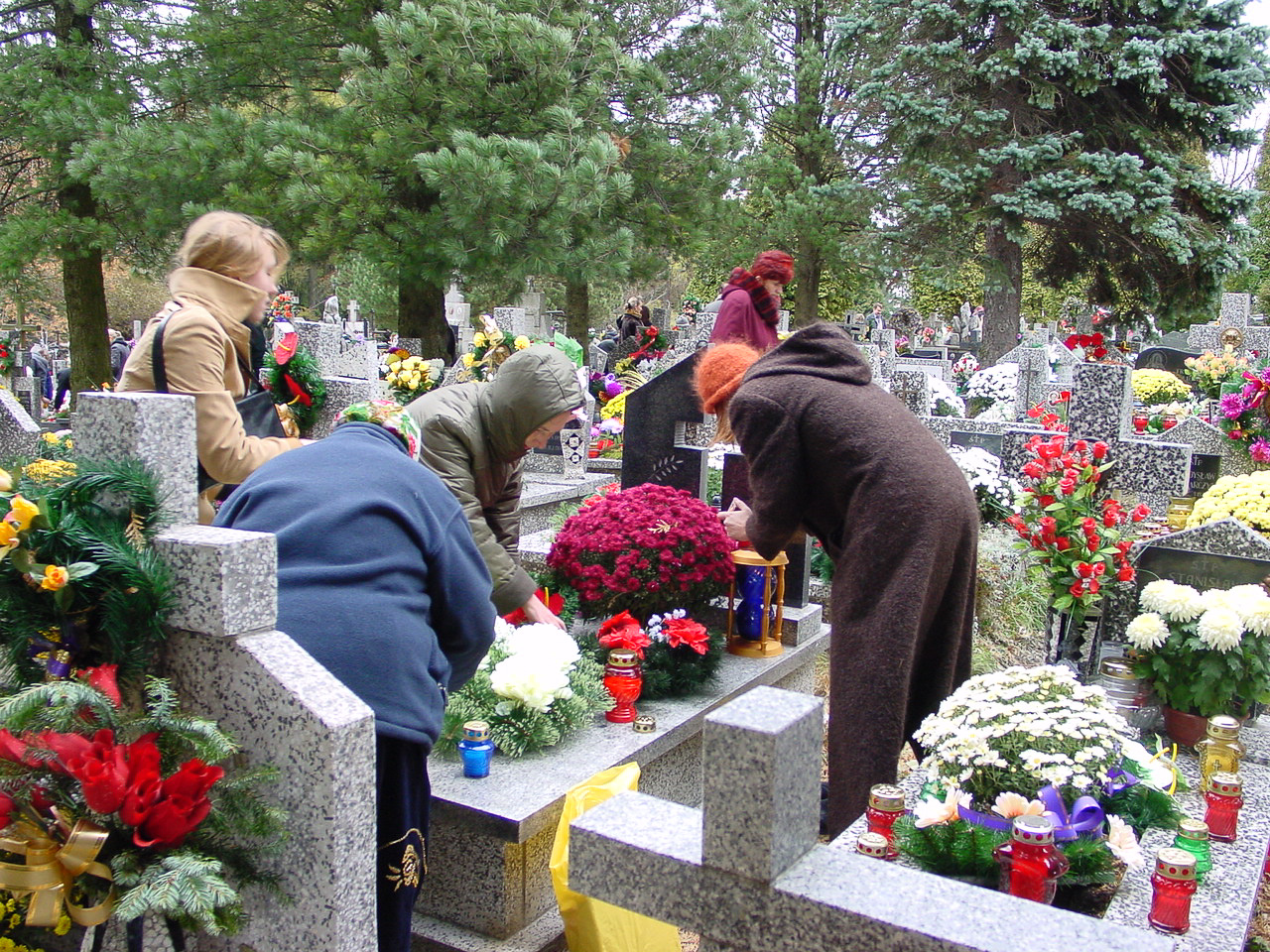
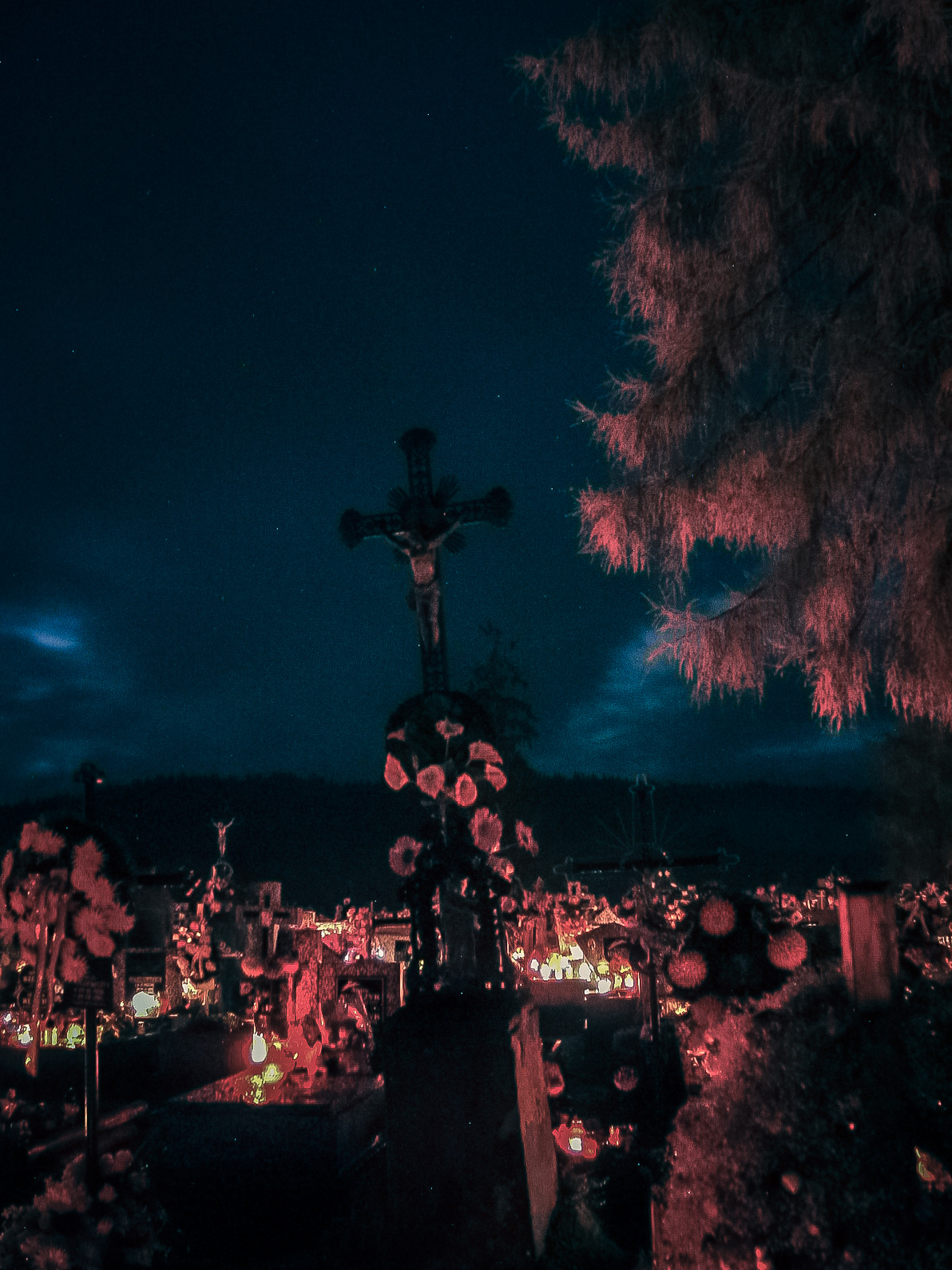
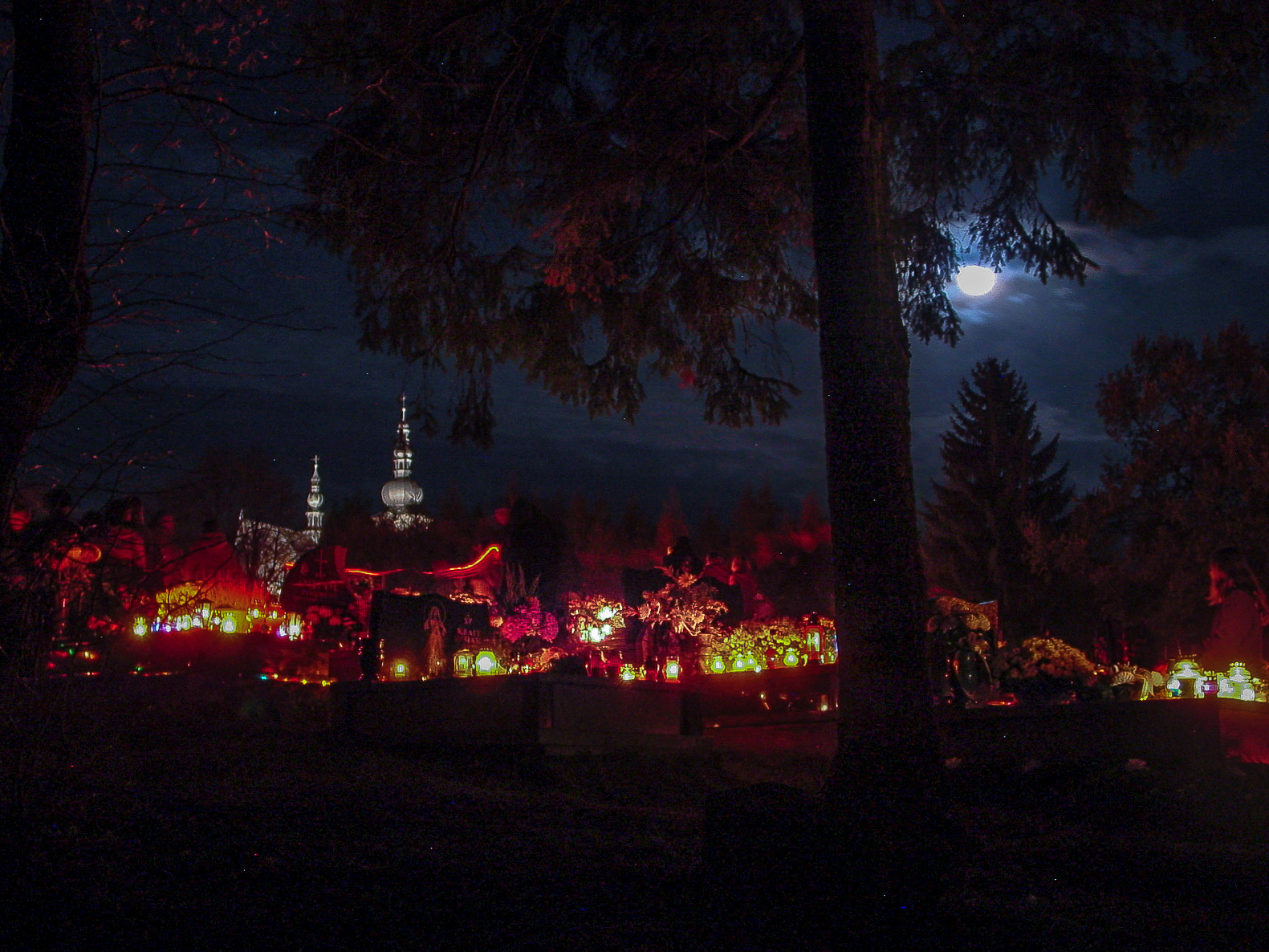
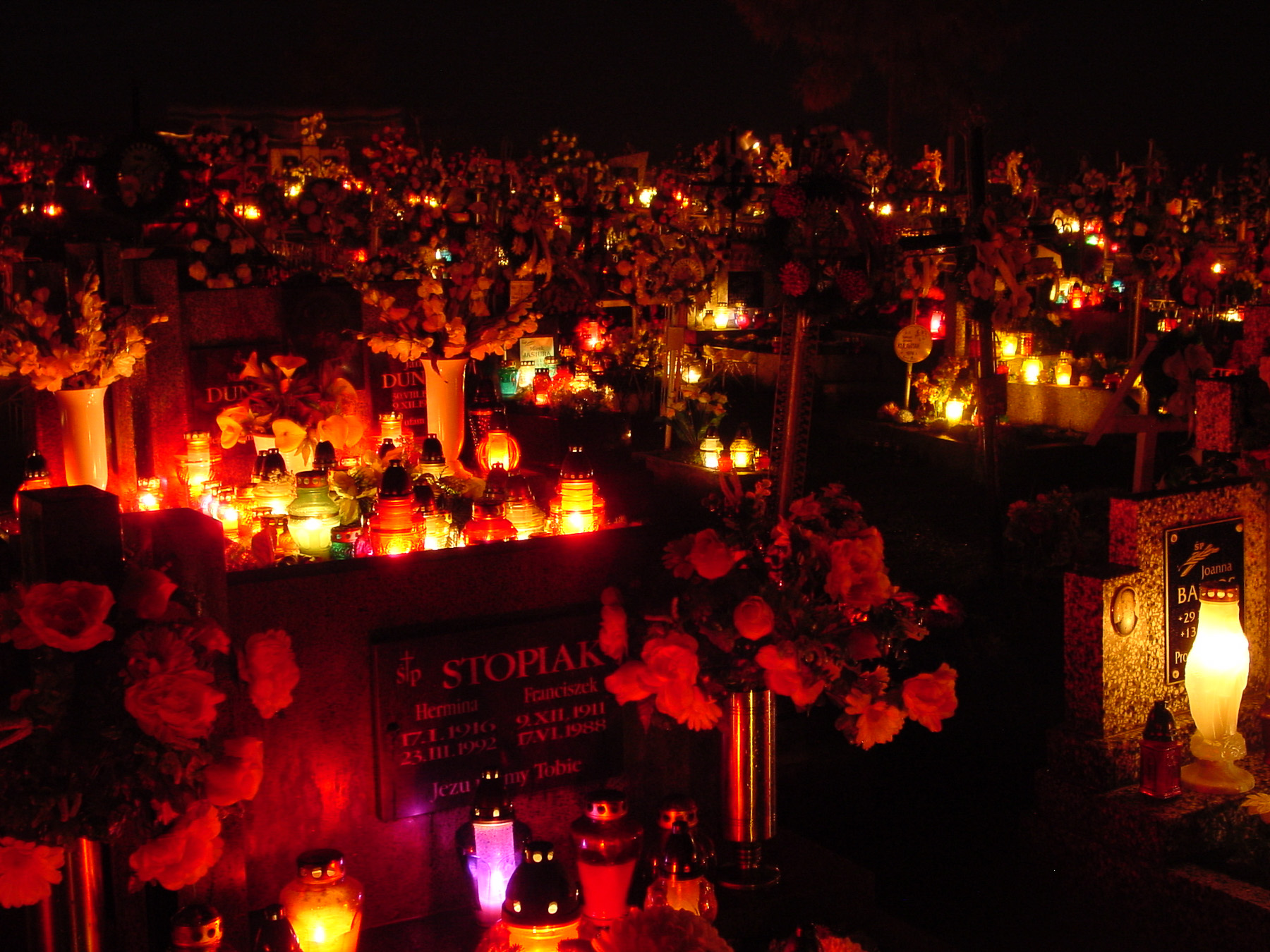
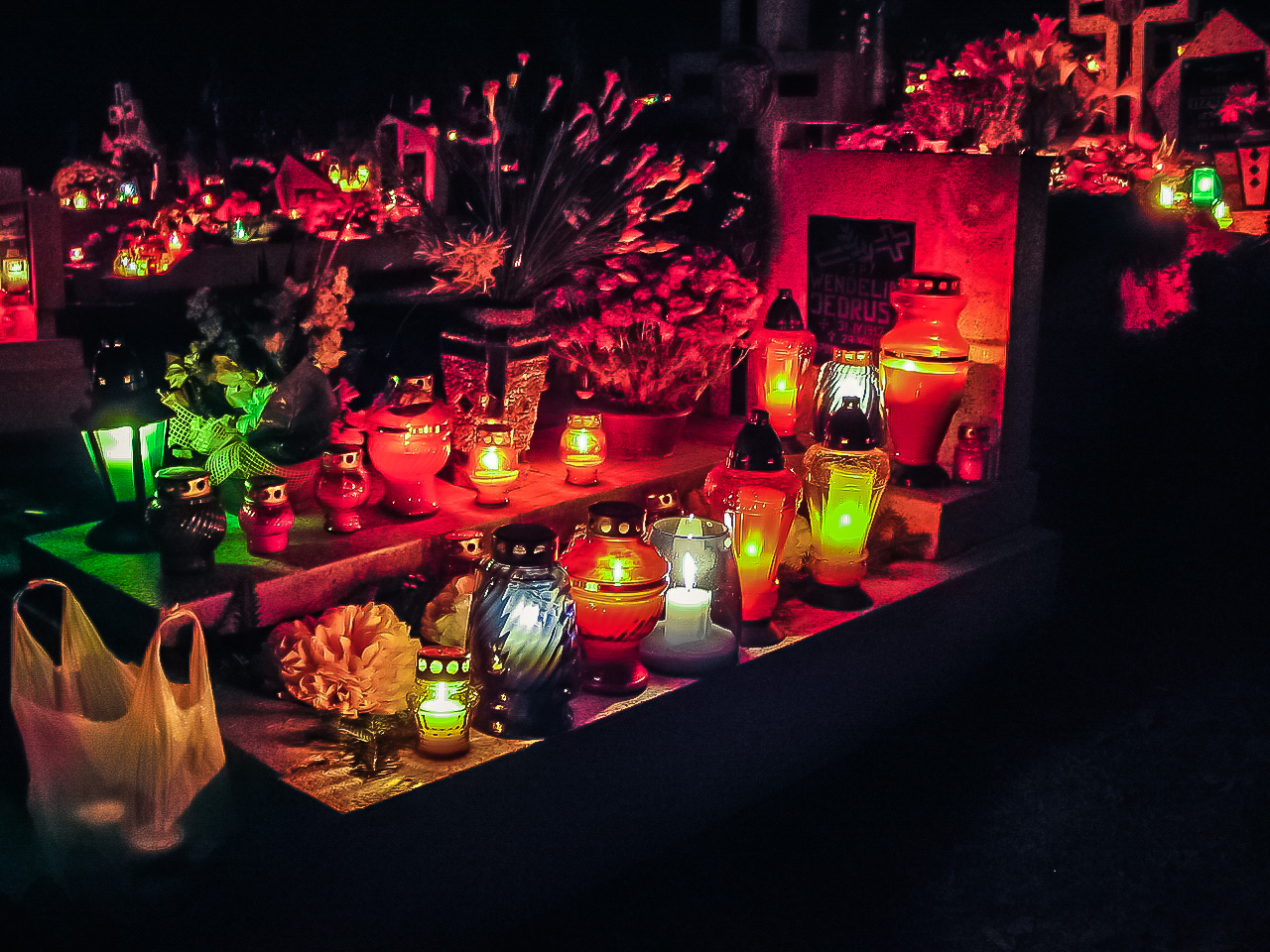
All Saints’ Day 2003

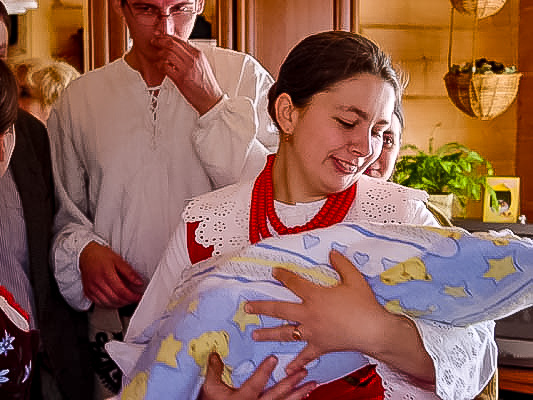
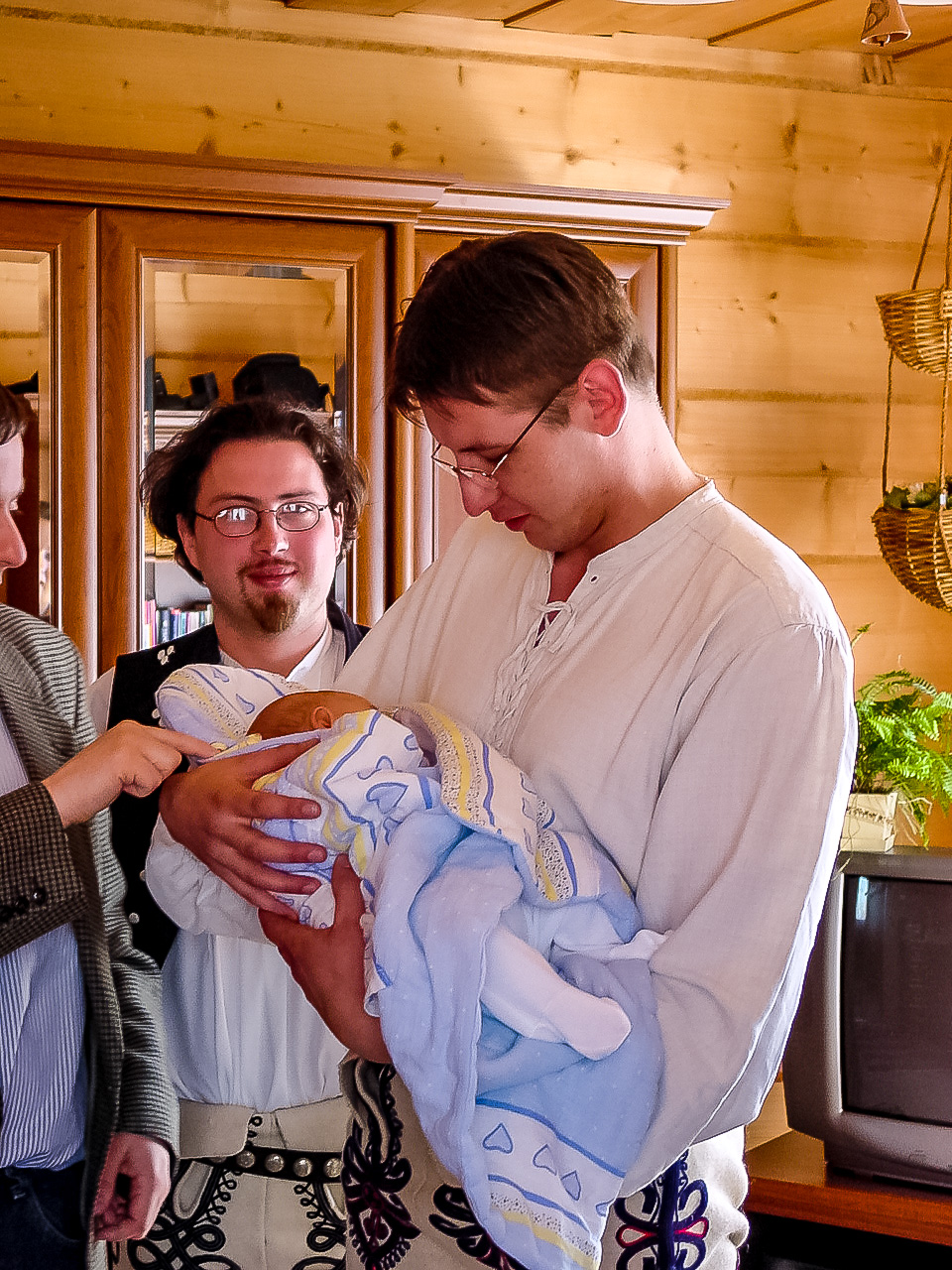
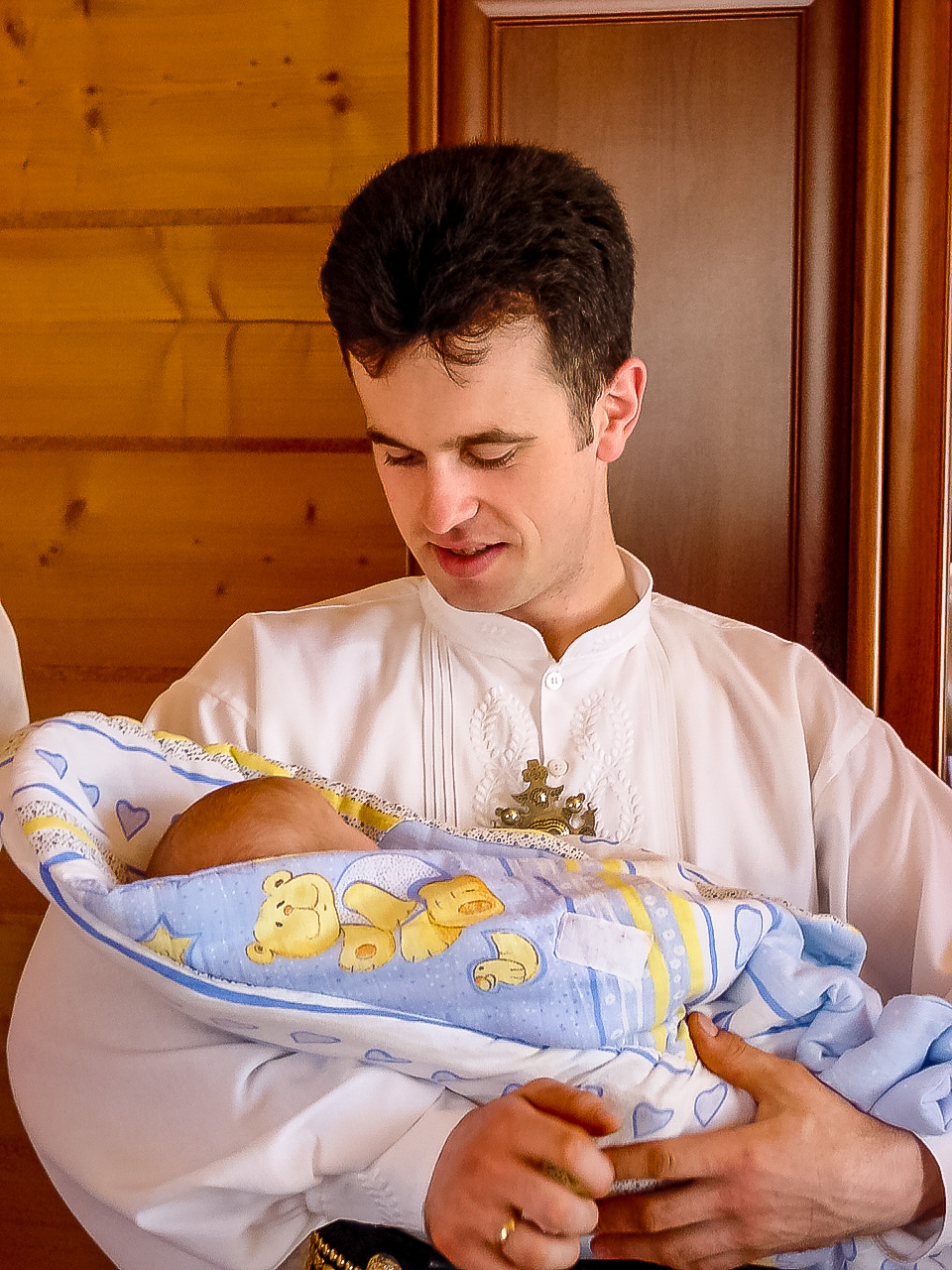
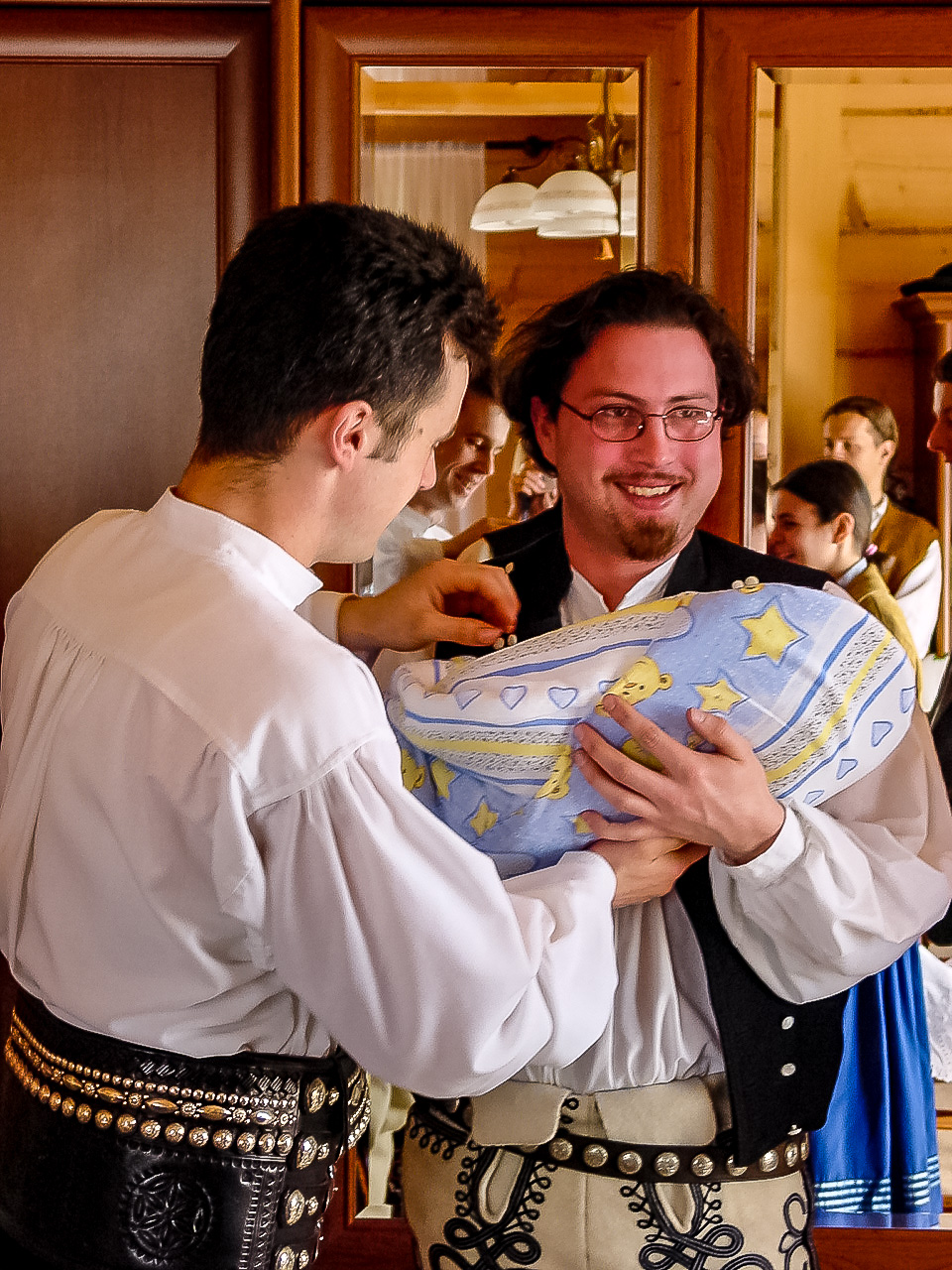
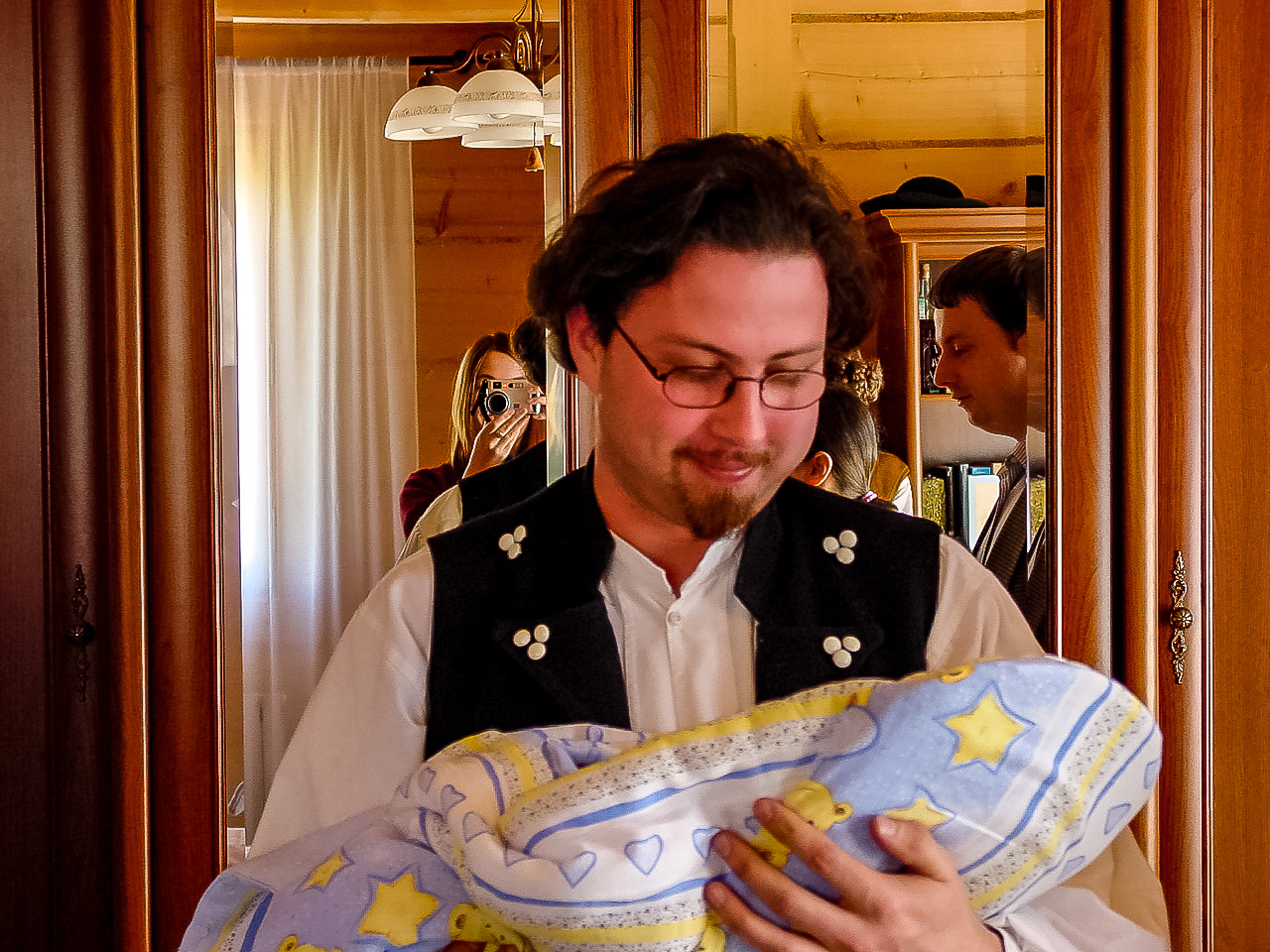
Best Friend’s Daughter’s Baptism