Matching Tracksuits

fun in fours

catholicism

#7 — Sacred Objects

Breaking of the bread.
Image via Wikipedia

Among the elements that sets Catholicism apart from almost all other Christian denominations is the notion of the sacred embodied in the physical. There are a host of sacred objects in Catholicism, while Protestantism considers almost nothing on Earth sacred. Only God is sacred, say Protestants, and that was indeed one of the myriad motivations for the separation of the Protestant denominations from the Catholic church.

Having grown up in a Protestant group (though it would have never called itself "Protestant," it was: if it's not Eastern/Greek/Coptic/etc. Orthodox or Catholic, it's Protestant), the notion of a sacred object was completely foreign to me. It smacked of superstition, of primitive belief that bordered on idolatry.

Websters.com defines sacred as follows:

  1. dedicated or set apart for the service or worship of a deity
  2. a : worthy of religious veneration : holy
    b : entitled to reverence and respect
  3. of or relating to religion : not secular or profane

I grew up, I suppose, with only the second definition; the first definition is more Catholic, though.

In Catholicism, one can't help but be overwhelmed by the number of sacred objects. At the top of the list is the consecrated host, but there are numerous others: the Bible is sacred, especially the Gospels. One will notice this immediately in the how the priest handles the volume of Gospels the priest uses in the Mass reading. Yet it's not limited to the Bible and host: the church itself, the crucifix, the vessels used in Mass, the altar itself, rosaries, statues, and icons are all in their own right sacred.

This is where the Protestant accusation of idolatry arises, especially with the use of icons and statuary. It seems to be a direct violation of the commandments.  Yet Catholics aren't worshiping these objects (except for the consecrated host -- but that's an entirely different theological knot) and in fact condemns such as idolatry.

What I like about sacred objects is they force one out of normal routines and require a reverent thoughtfulness. In a culture in which only radical individualism seems to be sacred, such thoughtful moments are welcome.

#5 — Silence

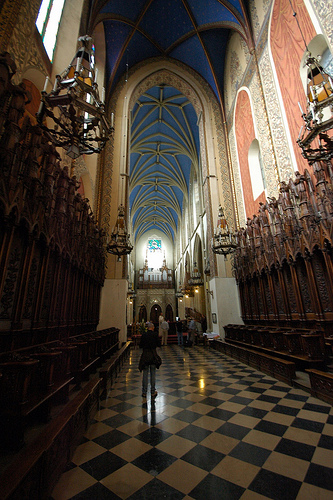
 Catholicism has silence built into it. Silence in Catholicism is everywhere. Walk into any medieval church in Europe and the silence is almost audible. It's as if the walls and icons of the churches produce their own silence, a counterbalance to everything going on outside its walls.

The traditional Tridentine Mass has moments of silence, and that silence even made it into the Novo Ordo Mass: the priest holds the consecrated host up and is silent; he lifts the chalice of consecrated wine and is silent.

A chapel dedicated to the adoration of the Sacrament is silent.

Monks and nuns take vows of silence.

The Catholic Encyclopedia writes of three spiritual principles behind silence:

  1. As an aid to the practice of good, for we keep silence with man, in order the better to speak with God, because an unguarded tongue dissipates the soul, rendering the mind almost, if not quite, incapable of prayer. The mere abstaining from speech, without this purpose, would be that "idle silence" which St. Ambrose so strongly condemns.
  2. As a preventative of evil. Senica, quoted by Thomas a Kempis complains that "As often as I have been amongst men, I have returned less a man" (Imitation, Book I, c. 20).
  3. The practice of silence involves much self-denial and restraint, and is therefore a wholesome penance, and as such is needed by all.

Silence is indeed "needed by all," particularly in today's techno-world. It's one of the great mysteries to me why so many people like the dazzle of multi-media mega-churches: these churches incorporate technology as liturgical baggage; it seems the church is to be a place of worship and contemplation that shuts out the world.

#4 — Location of the Pulpit

In most Protestant churches, it's always the center of attention. Front and center, the pulpit is the center of all eyes, all ears. In mega-churches, the stage has replaced the pulpit, but on the stage, there is a lectern of some sort, making it clear the high point of the service is the pastor's sermon.

Willow Creek Community Church

Protestants sometimes suggest that Christ is not the center of the Catholic Church, but it's hard for them to make such an argument when the pastor is the center of theirs. The sermon is the center of the church service, and so the pastor's personality, wit, or erudition is what ultimately brings congregants to this or that church. In mega-churches, it's often a combination of the show and the sermon.

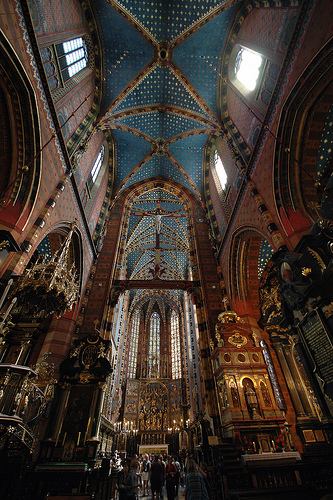
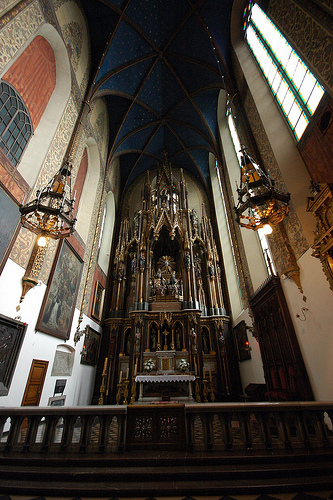
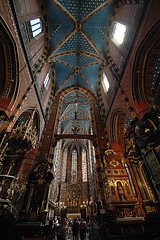
Catholic Church in Krakow

In a Catholic church, the pulpit is always to the side. The priest's homily is not the reason people are in attendance, and as such, the pulpit is tastefully moved to one side.

#3 — The Sacred

The sacred -- an idea that, in the ancient world, was an everyday reality. To be sacred is to be "consecrated: made or declared or believed to be holy." It's only been in the last few centuries that this notion disappeared from the everyday life of Everyman.

In a Protestant church, the idea of the sacred is almost non-existent except in a historical, Biblical milieu. The Ark of the Covenant was sacred; the showbread and the Holy of Holies were sacred; God's name is, in some sense, sacred. But in the sense that time, space, gestures, words, or objects can be sacred, Protestantism proclaims loudly and, for its own part, definitively, "No!" Only God is sacred. Nothing on Earth is truly sacred.

The rest of the religions in the world beg to differ. And Catholicism (as well as the Orthodox East) in particular would argue that there is sacredness on Earth. Indeed, Catholicism is, in part, all about bringing that sacrality to humanity on a daily basis.

#1 — Lent

Ashes imposed on the forehead of a Christian o...
Image via Wikipedia

Today is Ash Wednesday, and all throughout the blogosphere, people are writing about their Lenten sacrifices. I've decided to give Lent a try this year, but for today's post, what I'm giving up is not as important as what I'm incorporating.

I've been fairly negative about religion for much of my adult life. I thought I'd make an effort to be positive about it for a change. And since, by proxy with K, the religion I know best is Christianity, specifically Catholicism, I thought I'd embark on a daily posting schedule throughout Lent focusing on the positive things I see in Catholicism. Forty days, forty things I like -- even love -- about it.

The logical place to start is Lent.

The act of giving up something, of making a lengthy sacrifice in one's convenience, seems nothing but healthy. We tend to get stuck in routines, habits, and even addictions, and to take some time each year to break out of those confines forces us to look at our life from a new perspective. It highlights how some things have become so habitual that we're only aware of them through their absence.

Lent necessitates deliberation. Imagine, for example, that one decides to give up sugar. This is a monumental undertaking in today's processed-food world, for there's sugar in everything unless you buy and make it fresh. Imagine that one sacrifices caffeine. Morning and afternoon habits must disappear.

Lent simply forces awareness, and in our technologically numbed culture, I can think of few things more valuable.

Orawian Time Machine

We’re reliving the past in more ways than one. The promised sun disappears; plans change.

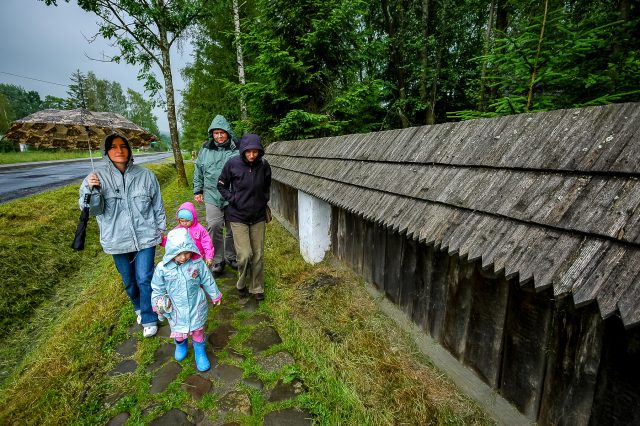
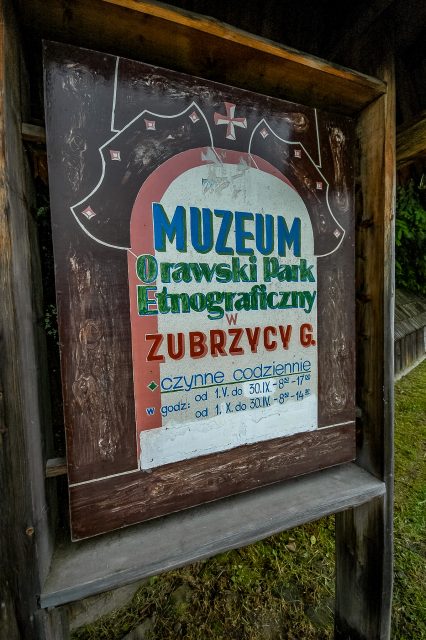
We end up visiting the outdoor ethnographic museum in Zubrzyca Gorna — for probably the fifth time.

Certainly, it was a different age altogether. Survival was at stake; comfort was an after-thought. That was what Christmas and Easter were for: a few creature comforts.

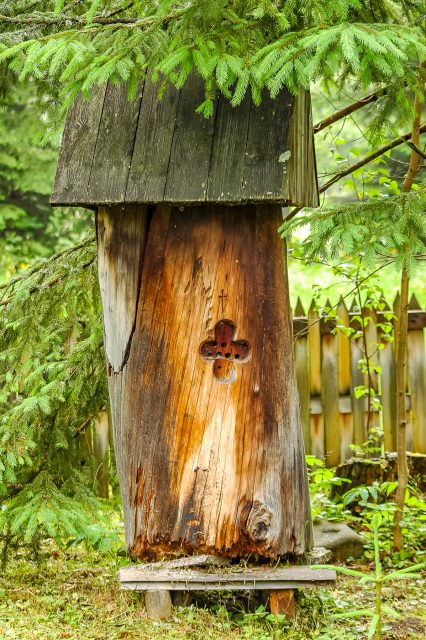
We wind through the museum, seeing how Polish highlanders kept bees in the eighteenth and nineteenth centuries,


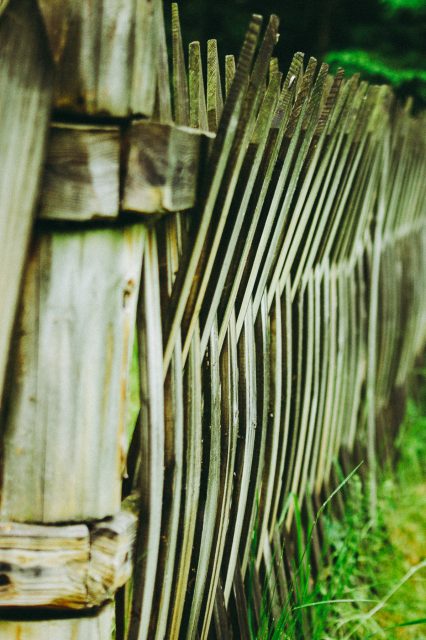
how they made fences (theoretically without nails, but in this particular case, clearly with modern intervention),

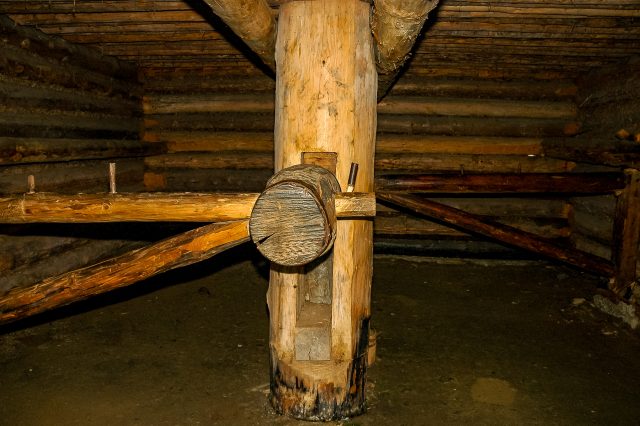
and how they forced oil out of flax seeds long before electricity and hydraulics made the task simpler.

In many ways, such a life is enviable. Sure, no Facebook and cell phones, but the slower pace and rough, subsistence living created in everyone an appreciation for what was, and a realistic understanding of the difference between wants and needs.

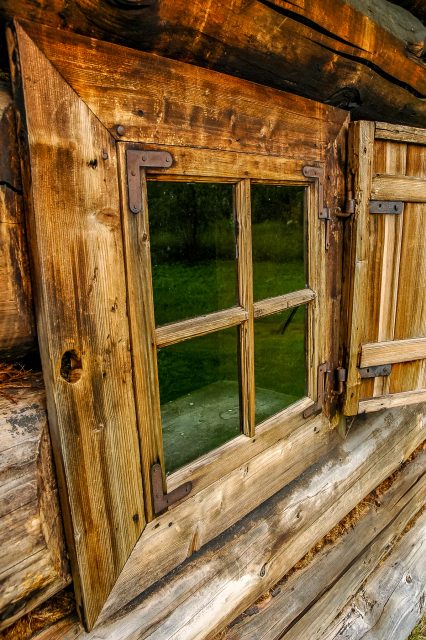
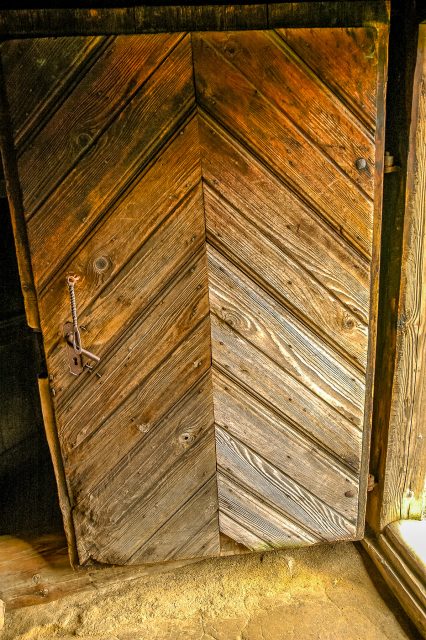
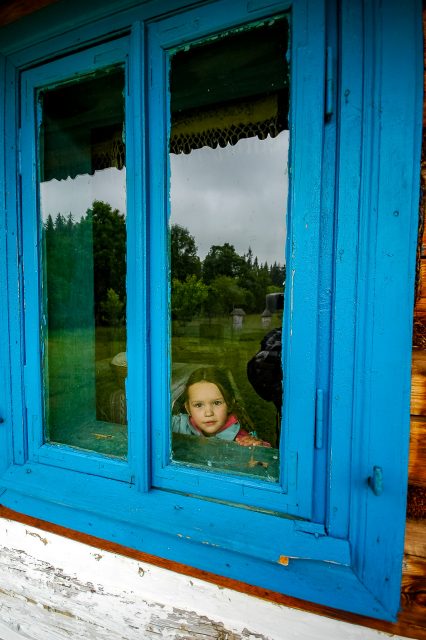
A roof over one’s head, windows and doors to keep out the cold:

Things we take for granted as we reach for more and more were, at the time, the goal.

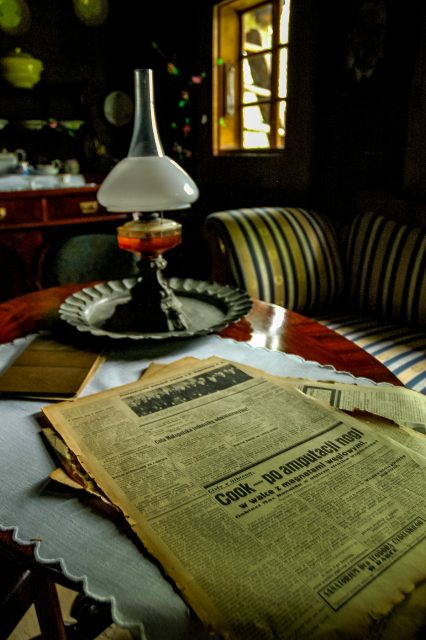
Visible headline: “Cook — after amputation of leg”

Leisure was a thing for the relatively rich. Even then, simple pleasures: reading a month-old newspaper by lamplight.

The same might be said of the soul: spirituality was not something to be squeezed in between recovering from a hang-over and watching the afternoon football game.

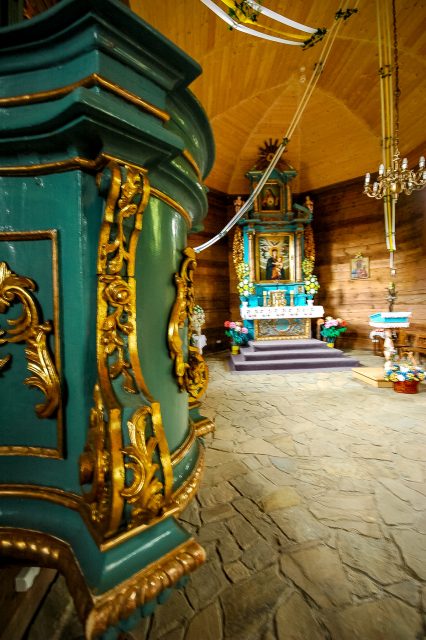
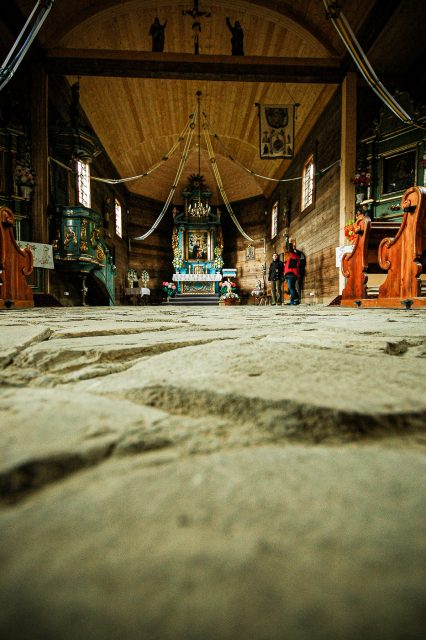
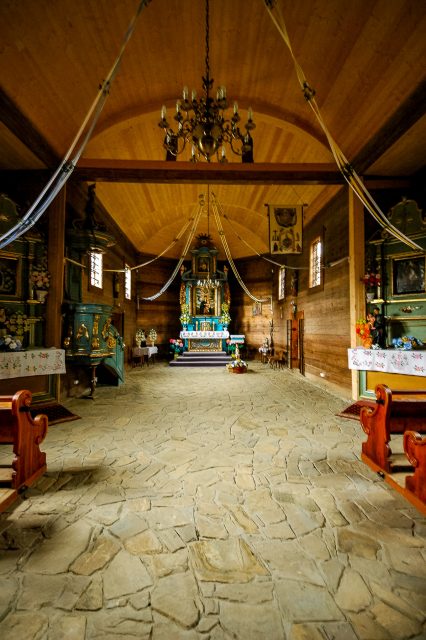
I used to be horribly offended at the reality of beautiful churches built in the midst of poverty. “Think how many mouths those resources could feed,” I’d say, as if the body is the only thing that needs nourishment. In the last few years, I’ve come to understand a couple of things: first, these churches were not built at the expense of the poor: usually, the rich subsidized the construction (probably with mixed motivation).

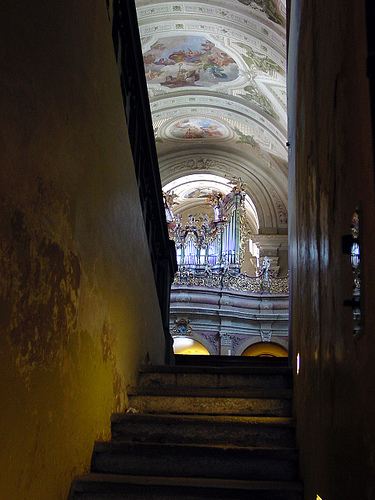
Second, these churches served to provide something of an aesthetic oasis for many. Finally, if one believes in the doctrine of the Real Presence, wouldn’t one want to create the most beautiful house possible?

More photos available at Flickr.

Critical Mass

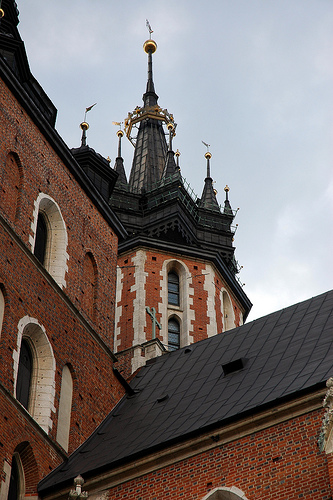
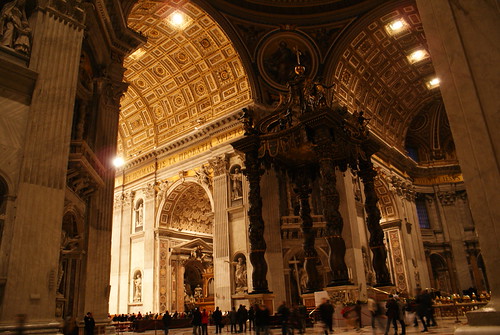
Basilica of St. Mary

To hear Catholic Mass in one's own language was, for centuries, impossible for the majority of Catholics. Vatican II changed all that, allowing Mass to be celebrated in the vernacular. As a result, Catholics worldwide hear the same Mass yet different sounds.

Poles in America experience a certain foreigners in the English Mass, regardless of the individuals' fluency. This goes a long way in explaining the significance of the Polish Mass celebrated in Greenville today. A Polish priest, on loan from Polska, is stationed in Columbia, a mere hour-and-a-half from Greenville. After much persuasion, he came to a little church outside Greenville proper, and probably almost every Pole in a thirty-mile radius was there. The kids stood and knelt at the all the proper times, but being raised in the States, they didn't know the hymns or the responses/prayers. They seemed lost. I would imagine that's what they're like visiting Poland as well: strangers in a land that sounds strangely familiar.

For me, it brought a smile. The first time I ever attended a Catholic Mass was in Poland, and Polish is, for me, the language of liturgy. From hearing alone, I know the prayers and formulations in Polish better than English.

Aside from the language, there are subtle and not-so-subtle differences. Poles still do the mea culpa in the Confiteor. "Moja moja, wina, moja wina, moja bardzo wielka wina," all chant in the church, jabbing their thumb into their chest with each "moja wina."

At the end of the Mass, he asked for a show of hands for a commitment to a monthly Polish Mass. Every hand in the church went up, including mine (after some prodding from K -- I was simply absent-mindedly daydreaming about the oddity of hearing a Polish Mass after so many years).  Critical mass achieved, the priest then announced that there would, henceforth, be a monthly Polish Mass. Applause broke out, and it was then that the significance of the moment was clear. A bit of their heritage, their youth in Poland, their past given place right here in Greenville, home of Bob Jones University, one of the most virulently anti-Catholic institutions in America.

While I was living in Poland, the closest I ever got to getting a taste of my own culture was to drop into McDonald's or watch the latest American blockbuster.

Blessing the Baskets

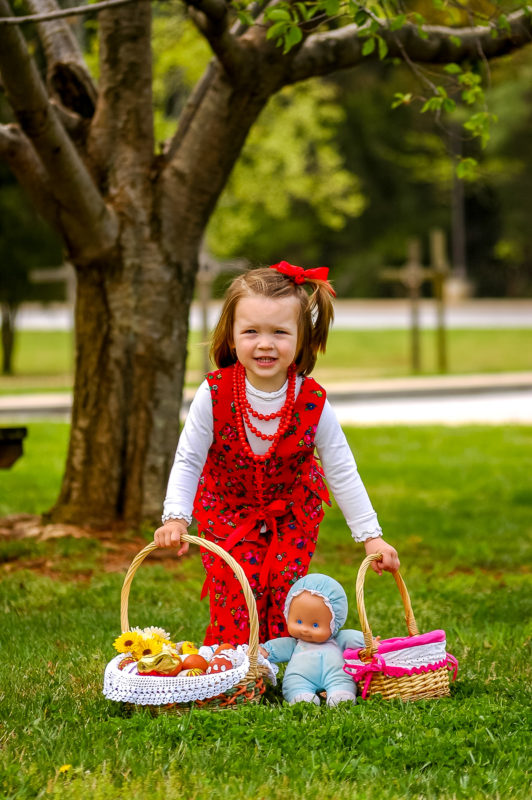
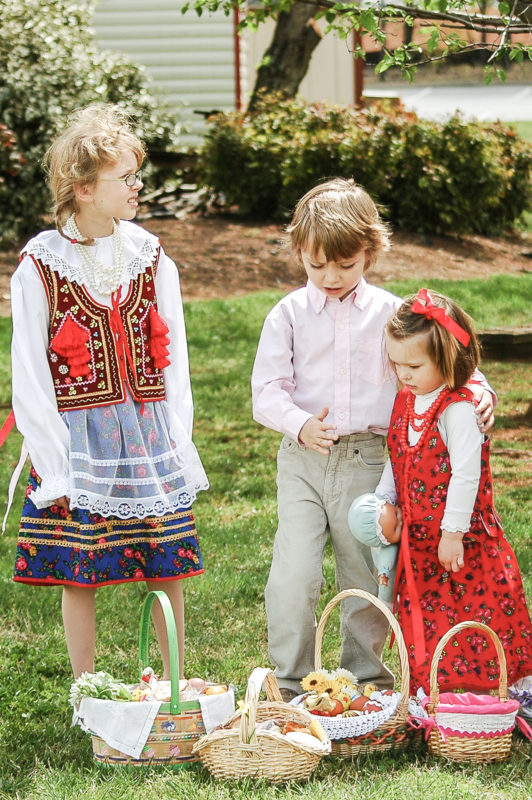
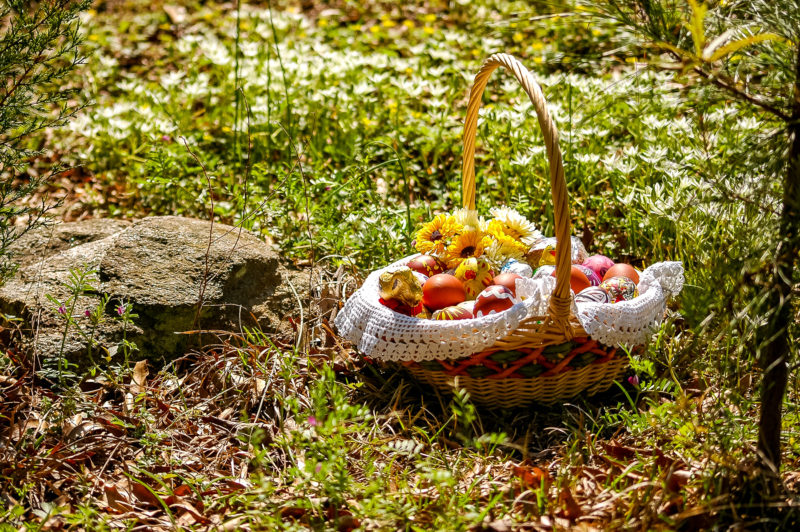
On Holy Saturday (called "Great [as in, big, important] Saturday"), Poles (and others in Eastern Europe) head to the village or neighborhood church to have baskets filled with food blessed.

Usually, the contents are some of the main ingredients of the Easter morning breakfast: eggs, sausage, etc.

In the States, we've always sought out churches that have this tradition. And it's almost exclusively Poles who attend.

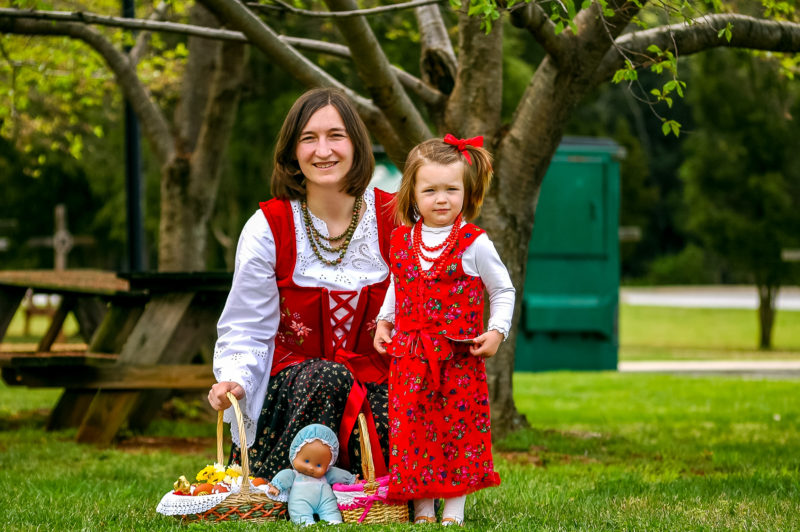
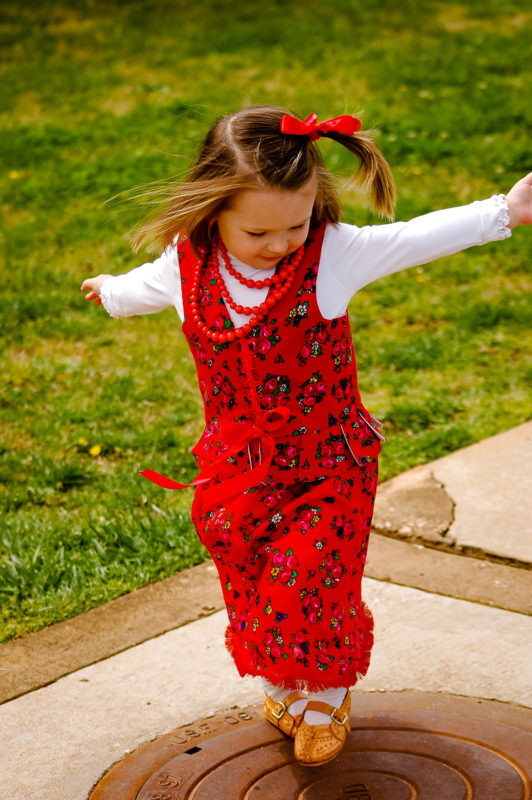
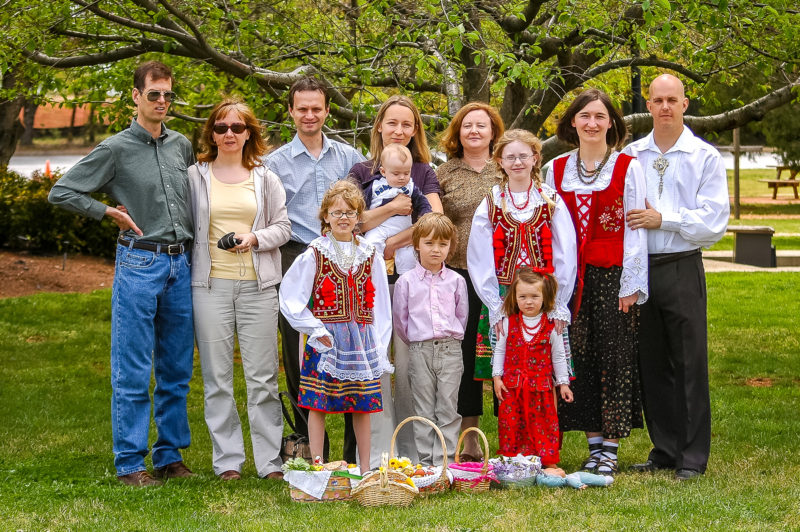
Today was no different. We were different, though: K and L both put on their finest Polish Highlander outfits for the service.

She kept wanting to go dance on the manhole cover.

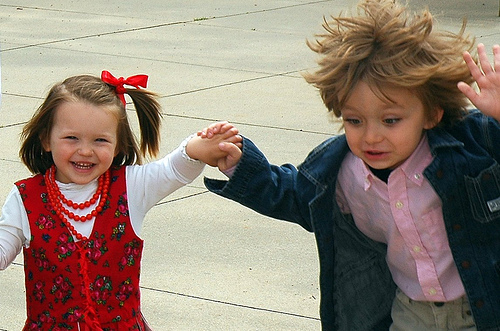
Before long, our friends had arrived, which meant the Girl's friends had arrived: everyone was thrilled.

DSC_4833

A group picture followed, with everyone seeming to forget that we were using digital cameras: "Here, take one with mine!" "Get one with mine next!"

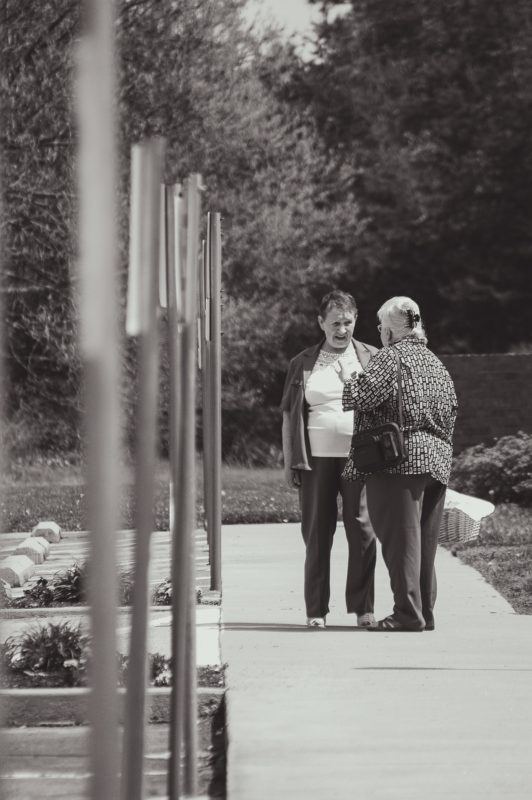
Before leaving, one of L's friends had some words of wisdom to share. We're not quite sure what he said, but it must not have been pleasant: the Girl was fussy and whiny for much of the afternoon.

She wasn't the only one getting advice.

On returning home, K took the basket out for some pictures,

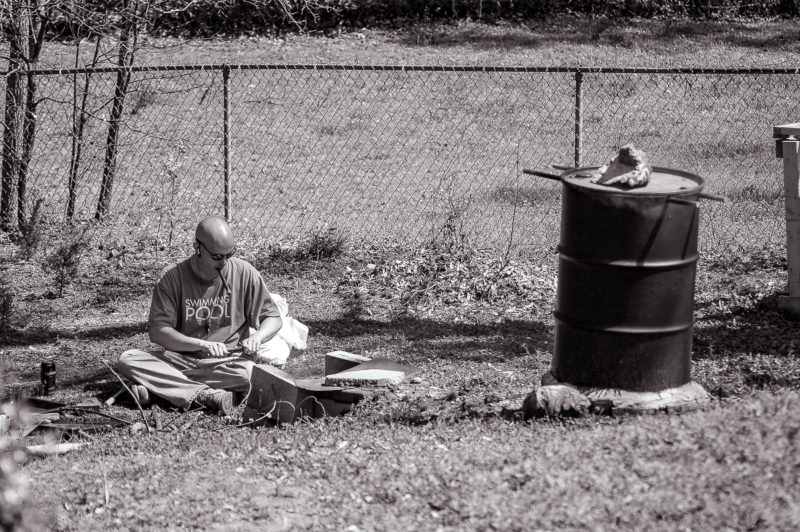
and I, with a cigar, Guinness, and Drive By Truckers in my ears while smoking meat in our barrel/smoker, felt positively conflicted.

Baptism

Pilgrimage

David Heinmann, a pastoral associate of Chicago's St. Ignatius parish church, took a trip around the world in 365 days, each day celebrating Mass in a different location. An intriguing idea, but as I read it, I kept thinking, "What a waste of resources." It sounds like nothing more than a glorified field trip. Toward the end of the article, though, Heinmann is quoted as saying,

America doesn't do pilgrimage because we think we've already arrived[ ... .] We Think this is the Holy Land. In doing so we've lost that sense that there's another journey that we must make, one to the center that lives in the heart of every human being.

I believe that says more about American Christianity than anything I've read in a long time.