Matching Tracksuits

fun in fours

at risk

Peace

I often wonder just how much peace my students experience at home. It seems to be an inverse relationship: the more troubled the behavior, the less peaceful the home. A colleague tells of a home visit that sounds absolutely horrifying: two loud televisions in one room, one with sports and the other with some movie, a loud boom box in a nearby room, someone sticking his head in to yell "When's dinner?!", and all the while, the conversation continues about the student's performance and not once does an adult offer to turn down any of the noise.

"They're surrounded by noise, by motion, by stimulation," another colleague mentions during lunch. "It's no wonder they can't sit still, can't focus."

Not to mention what they consume in the name of food.

I have a rough class before lunch, and when we return from lunch, twenty minutes remain until the next class change. I work on social skills with them; I let them relax a while if they've worked well during class time; but most often, I try to give them peace. I turn the lights off, instruct them to put their heads down -- why is it they won't put their heads down when told but at least one every day wants to put her head down during class time? -- and simply stop. Stop moving, stop talking, stop shaking a leg or beating a finger on the desk. Just stop. Take a moment to collect themselves.

Most of them can't do it.

I try to play soft music for them, but I wonder if, obsessed as they are with rap "music," the classical music I play for them might be exhausting. They might not even know what a melody is, and if that's the case, they can't find much pleasure in classical music. Add to it their painfully short attention spans and it becomes rather obvious that they can't trace out the development of a musical theme, let alone notice when it repeats and begins morphing as it does in Romantic and Classical (as in the period, not the genre) music. I find Haydn works best, better than just about anything else.

Fast forward a couple of hours. K, E, and I have dinner together. What a blessing just to have dinner together. What a blessing that the Boy loves veggies. What a blessing that we had an entire zucchini to feed him.

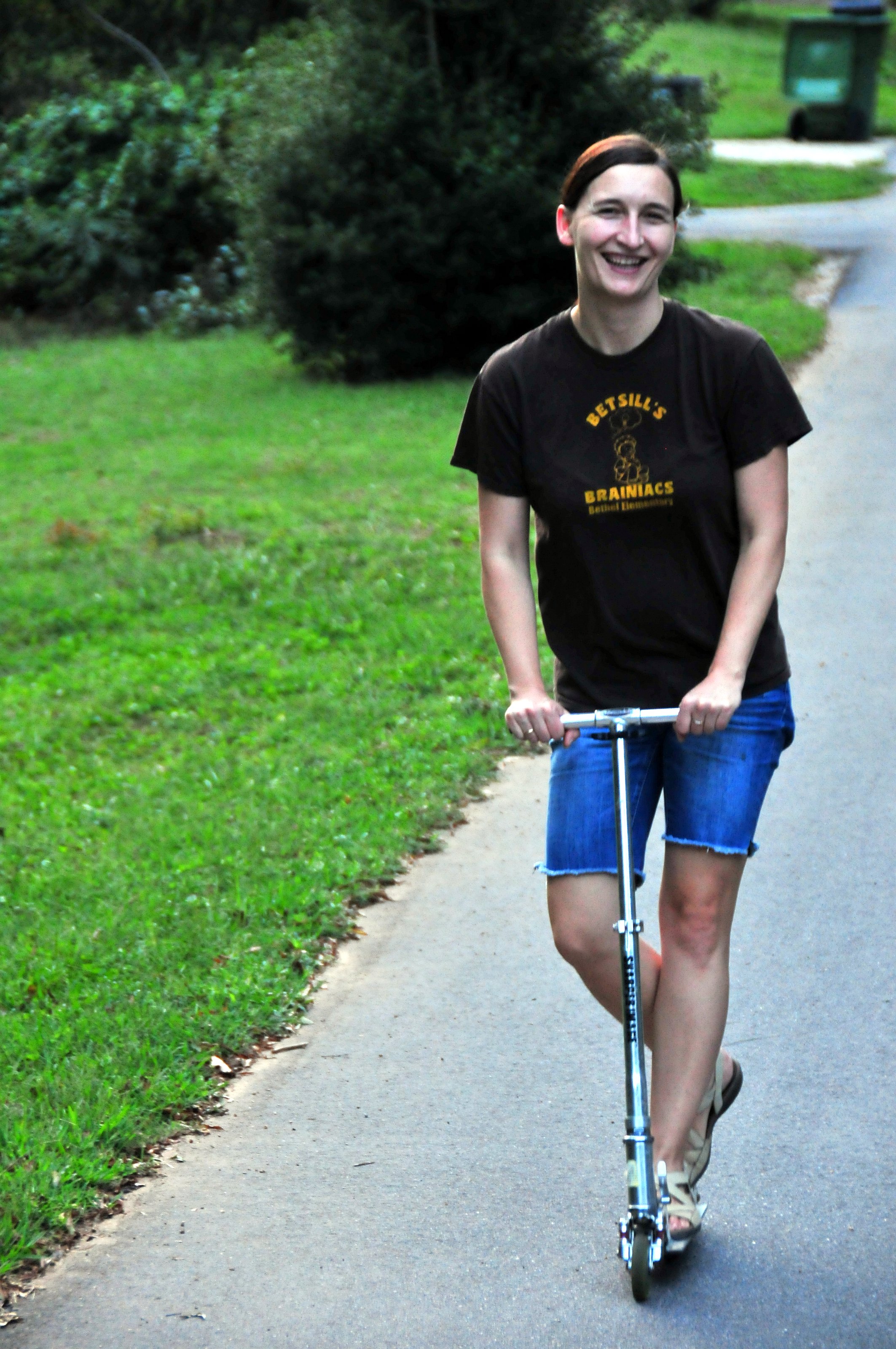
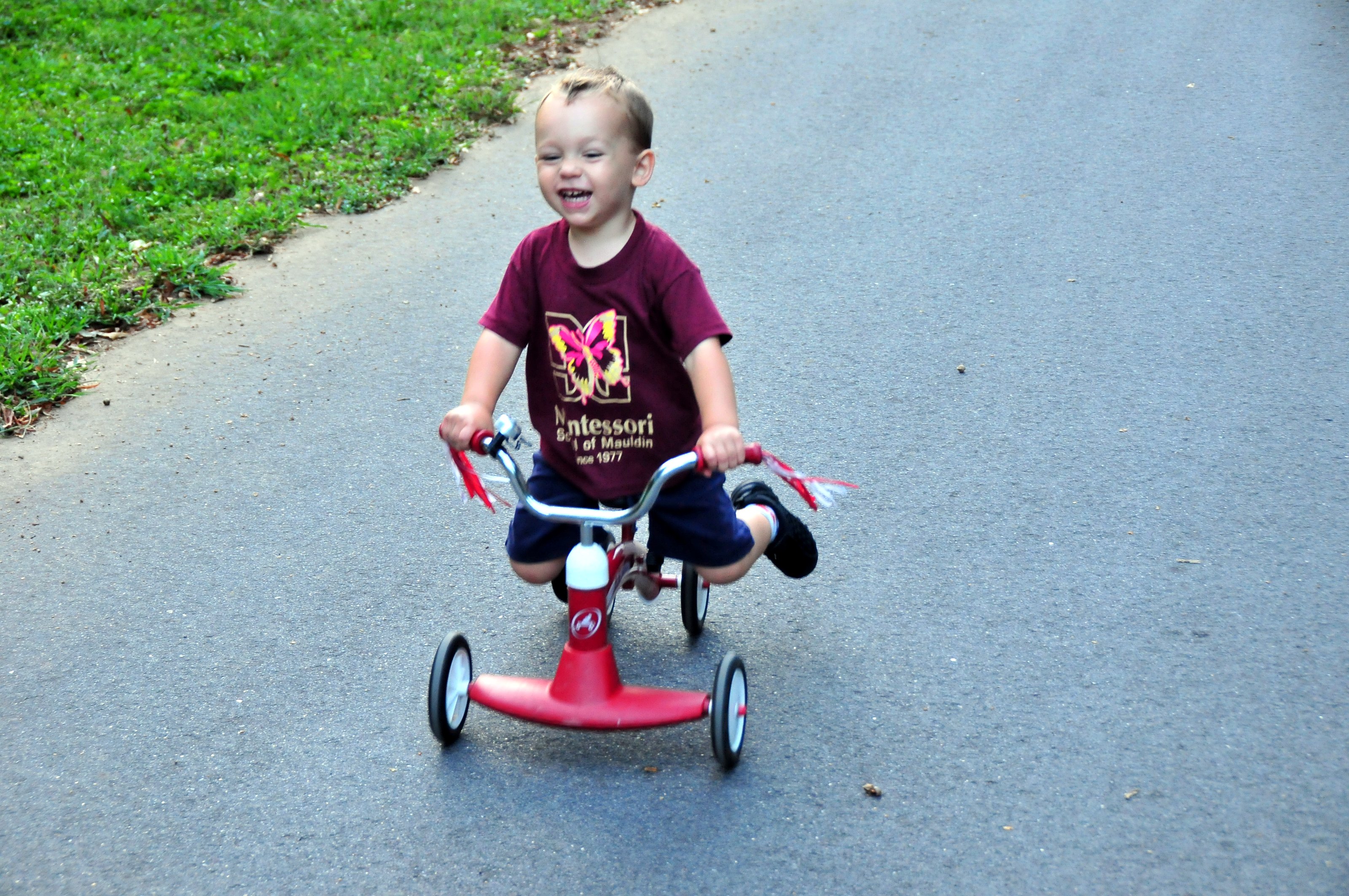
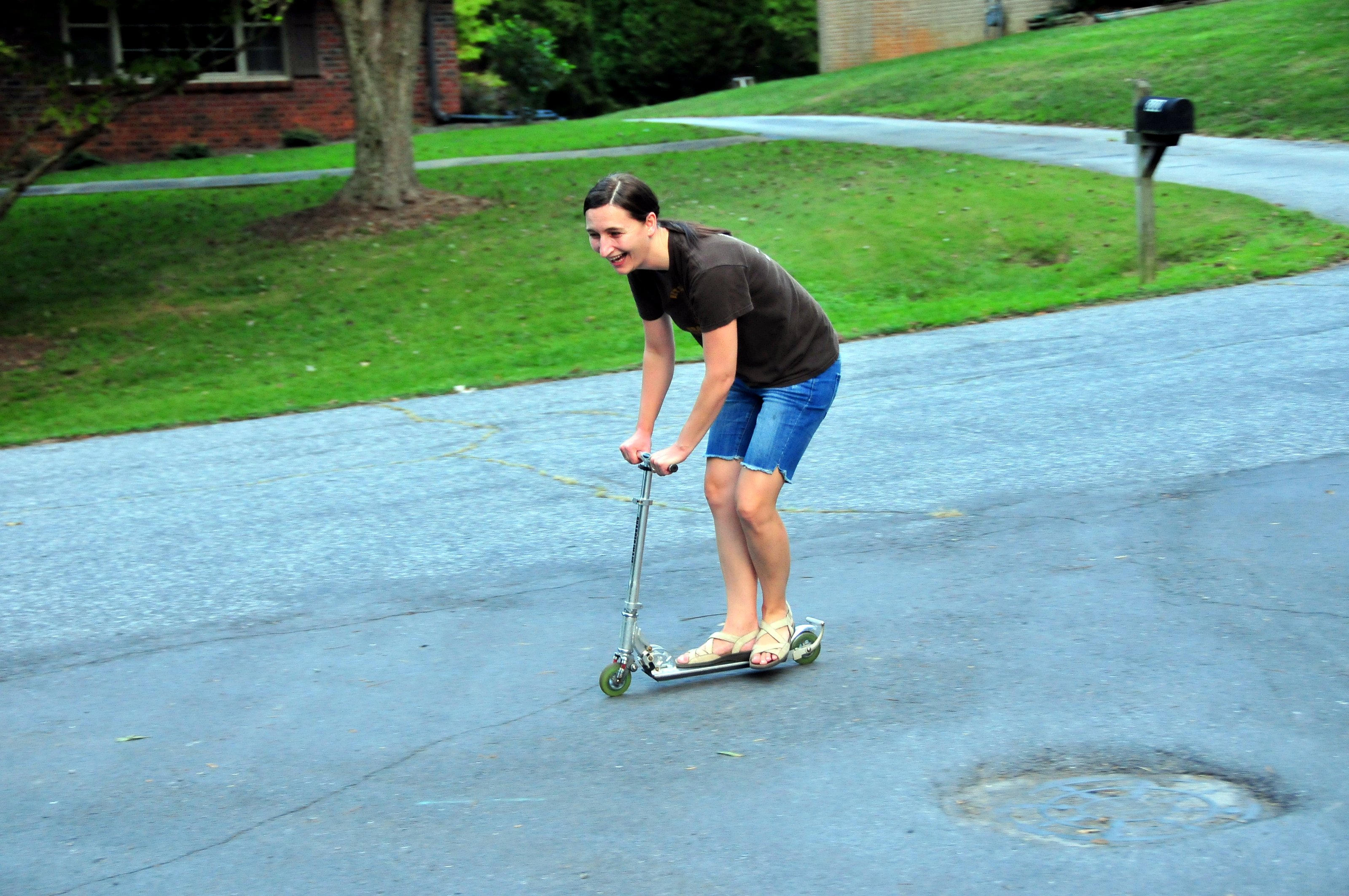
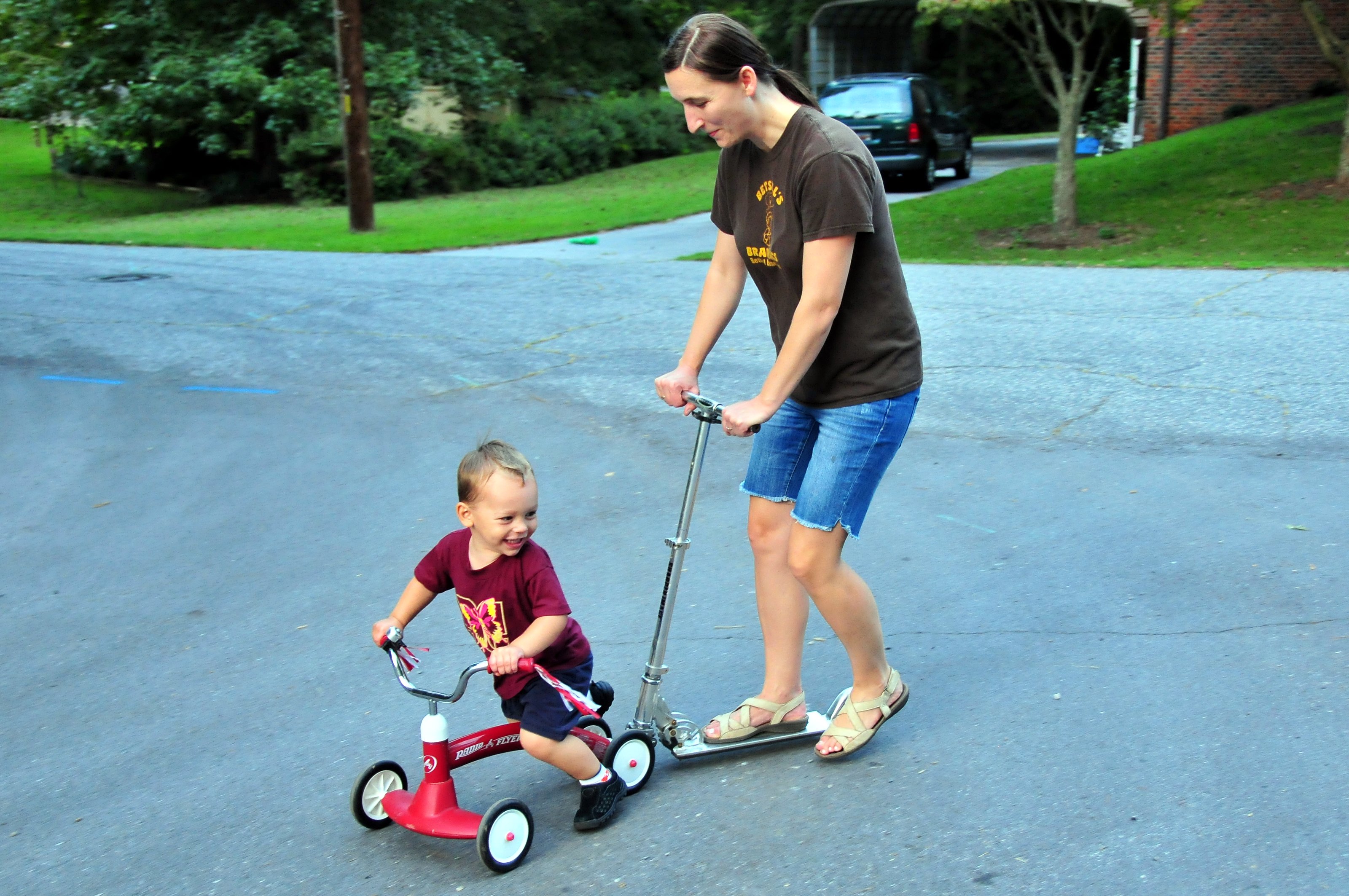
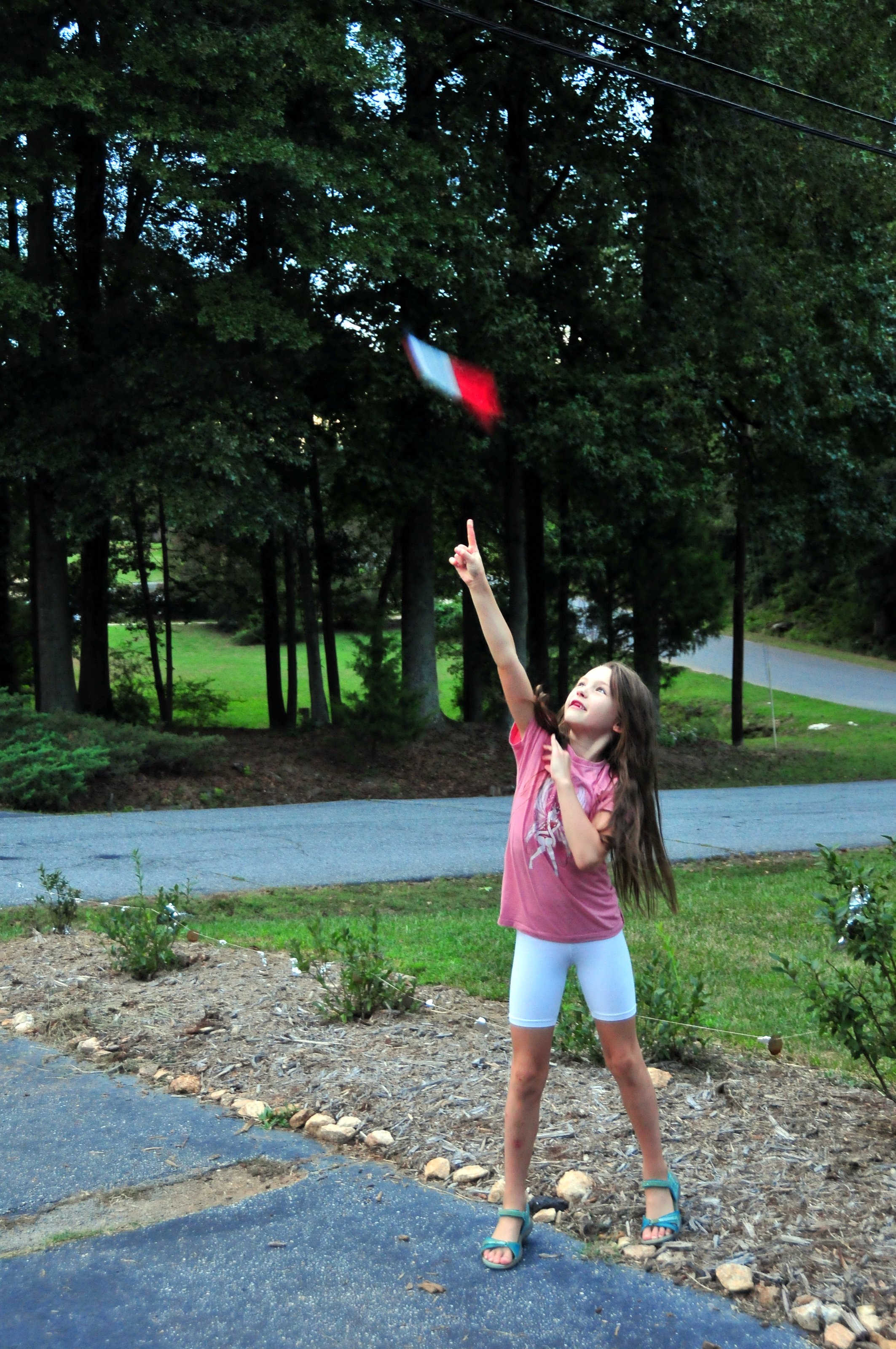
After dinner, we go to the newly-paved street across from our house. K rides the scooter; the Boy coasts around on his whatever-it's-called. They bump each other, chase each other, goof around. I take the pictures.

After riding, Nana and Papa bring the Girl back and everyone sits a while and talks, rides bikes, fusses, cries, laughs.

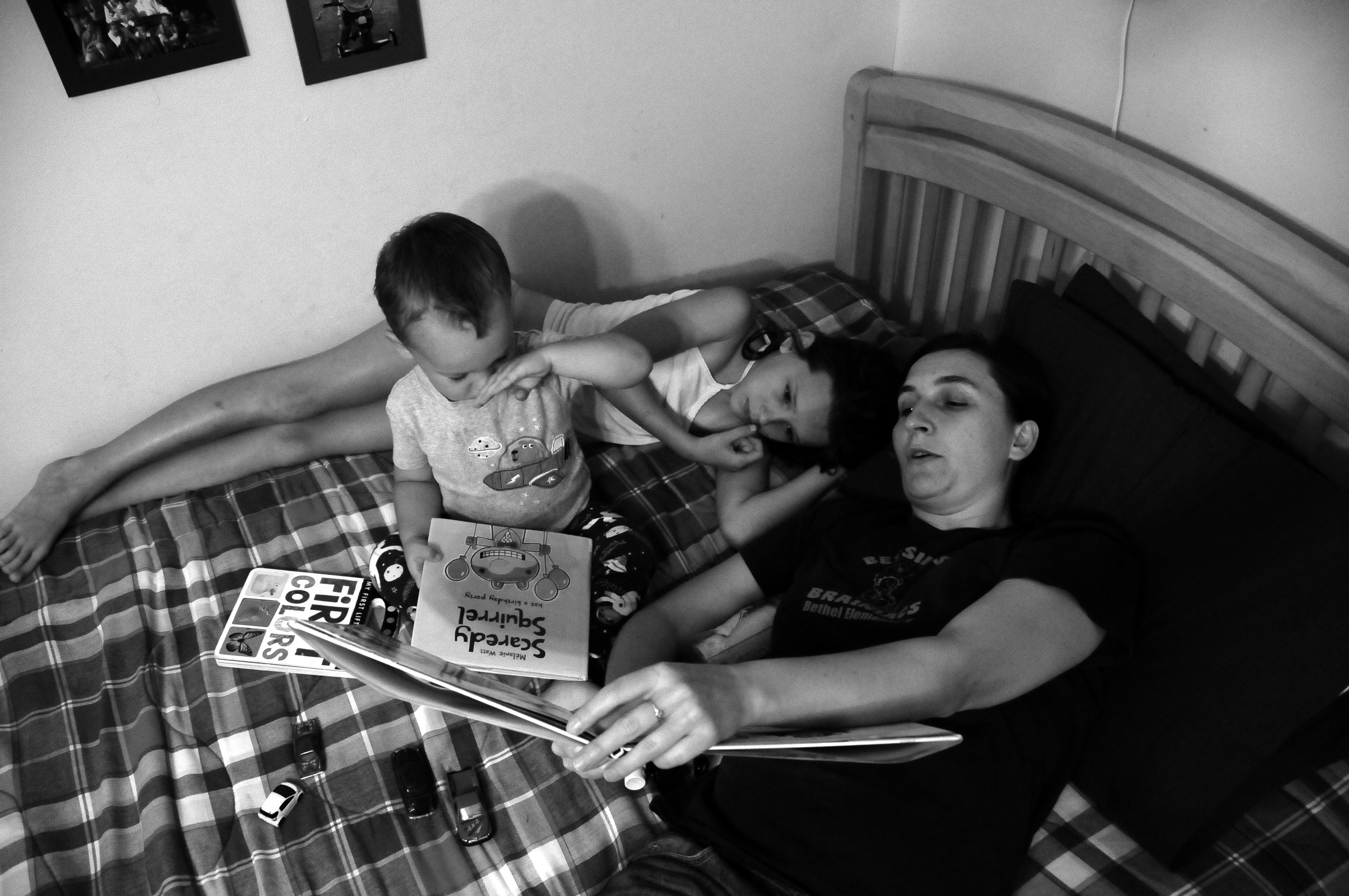
After bath, after snacks, the kids lie on the bed with K who reads a new book from the library, translating the English to Polish to provide the kids with more exposure to the language.

"Co to jest 'snooty'?"

"Go with snobby," I say.

What do all these vignettes have in common? A peace that comes with a family spending time as a family. A peace that I'm not sure some of my students can even imagine.

Boot Heel

Dear Terrence,

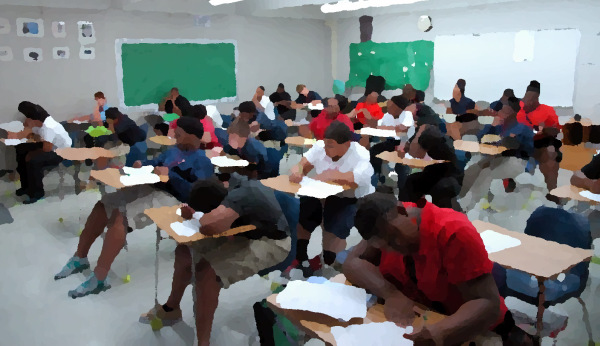
bootToday was it. I do honestly like you all; I do honestly believe in your abilities and your intelligence; I do honestly see in you potential. But you all don’t see it in yourself, and because of that, you disrupt. Constantly. We’ve been in school three weeks now, and you’ve shown me that when given the chance to act like adults, you act like infants: you fuss about infantile things, you laugh uproariously and chaotically about infantile things; you fight over infantile things; you talk constantly about infantile things. You’ve shown me you’re just not ready to be treated like adults. What this means is that I must treat you like children. I must seem harsh in order to protect you, from yourselves and from your self-destructive habits. And so tomorrow, though I don’t really want to, I will be putting my foot down. That’s a cliche that doesn’t really adequately explain just how hard I’m going to hit you all tomorrow, so to speak. I expect to send at least ten students – that’s fully one third of you – to the assistant principal for being disruptive, because I’m going to define “disruptive” in such a harsh way that sneezing might get you sent from the room. I do this because you can’t handle the slightest amount of freedom: one off-hand comment to a peer turns into complete chaos in the class in a matter of seconds. One giggle sets ten others giggling. You are lemmings, robots – your behavior is so predictable. And so I am going to make my behavior equally predictable.
I expect to get calls from parents. I expect to see frustrated students. But I’m doing it for one reason: I will not let you screw up your own education because you find everything else in your tragic world more important.

So take a deep breath, and hope for a change in everyone else soon, because you can only change yourself, no one else. And until you do, all privileges in my classroom are indefinitely suspended. I know it sounds like I’m angry when I say this, and I am, but I’m not doing this to make my life easier or to torture you: I’m doing it to protect you.

Tying my boot laces already,
Your Teacher

Lost Cause

Dear Terrence,

I thought today was a lost cause. I thought you guys would never get it all back together. I was convinced that getting you refocused would be all but impossible. After two interruptions like you guys experienced, it would have been difficult for anyone to get back to the task at hand.

First, the fight. If you could call it a fight. I still don’t know why James attacked Bryce, and I don’t know why Bryce just sat there in the desk and took it. Disturbing on so many levels, not the least of which was the entertainment factor it seemed to have for most of you. A young man was getting pummeled, and you guys laughed. Such brutality is so foreign to me that I can only recoil, but you guys find it funny. Or was that laugh something else?

Then there was the verbal altercation with the girls while I walked the two boys down to the grade-level administrator. I know even less about that incident than I do about the fight, but I know they were angry, ready to fight themselves. I saw it in their eyes.

So when I tried to rein you guys in, I was doubtful about the ultimate success. I’ll admit that part of me was convinced class was a wash. But somehow, you guys pulled it together. And I have to say I was impressed. No side conversations about the fights. No comments when the girls came back (well, almost none). Well done. More promise.

With hope,
Your Teacher

Your Daughter

Dear Frank,

The other day I did something I doubt you have ever done: I met your daughter. She's really something: smart, amusing, sincere, beautiful. Though she's only thirteen, she's got a maturity about her that is striking. Sure, she's an at-risk kid, but the difference is, she knows it. She's aware of it. And she wants to change it.

You could do a lot to help her, but she doesn't know where you are. Indeed, she doesn't know who you are -- she told me herself. I didn't ask. She volunteered the information. (Don't worry: your daughter is not the only one to share family secrets like that. In fact, she's not the only one to share that family secret. But that's a post for politicians and pundits.) You could help her, but instead, you left.

I think of my own children, and I try to imagine leaving them before they even knew me. What kind of a father would I be if I did that? The answer is simple. You know the answer. And statistically speaking, you know the answer on a firsthand basis: I'd venture your dad skipped out on you and gave you the example of how to be a "man" that led you to skipping out on your daughter.

Perhaps it's for the best. After all, what could someone who doesn't have the courage to accept the consequences of his actions teach a girl who's trying to learn how to do just that? You'd probably drag her down, and maybe you knew that, and that's why you left. But you see, here's the catch -- it's a real paradox. If you had stuck around and had tried, you'd have been everything she needs. Perfect? No way, but no one is. Still, being a father is just like anything else: the more you do it, the better you get. And it's not too late to start. Or is it? Would she want you waltzing back into her life? Certainly not: waltzing is not humble. How about contritely contacting her? That might work. Maybe a letter.

Let me start if for you:

Dear Daughter,

I don't even know your name, and for that I'm ashamed. I have done so wrong by you that it's hard for me to look myself in the face every morning when I shave. I hate what I've done to you, but I want to make it up to you. I don't know if you want this, though, so I'll leave it for you to decide. I'll let you decide all the boundaries, and I'll keep to those boundaries like they came from the mouth of God. And if you don't want to meet me, I understand. In your shoes, I might not want to meet me either. Still, I want to apologize for what I did to you, and I want to try, somehow, to make it up to you.

There. Simple. To the point.

Of course, if you don't even know her name, how could you send it?

Sadly,
Your Daughter's Teacher

Your Shoes

Dear Terrence,

We had a fire drill this morning, and I knew it was coming — we always know, for the administration sends us emails about them — and yet it wasn’t the disruption of the actual fire drill that I was dreading. I knew it would, of course, break up the flow of a lesson, and it never fails that the class with a high number of Terrences and Teresas is going exceptionally well when a fire drill occurs. There is that to consider. But what I was more concerned about was what would happen when we came back in, because I knew you and most of your classmates would be worried about one thing: your shoes.

I could hear it before we got back to the classroom, thirty-some kids all asking to go to the bathroom to clean the wet grass clippings from their shoes. Instead, I handed out paper towels. I heard a lot of thanks, but it still ate up a lot of class time.

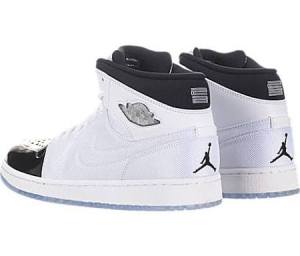
shoppingIt was a judgement call, really. I could have simply told everyone to get over it, but I thought I might use the situation to win some points with you guys. Besides, when I heard you say, “Man, my mom paid $140 for these shoes,” I knew that it wouldn’t just blow over. You would spend all your time trying to wipe the grass from your shoes, and you’d likely mutter your displeasure at having to do so, and that would only drag your neighbors into the frustration, and soon the whole class would follow. So the paper towels were preventative.

Still, I’m concerned about your worries: they’re just shoes. Even if they’re a little dirty, they will come clean when you get home. And even if they don’t come clean, even if there’s a bit of green left on your perfectly white basketball shoes, they’re just that, shoes. They’re material objects, tools, bit of rubber and leather designed to protect your feet.

Or are they?

Of course that’s not all they are. To suggest that is to be naive, I understand that perfectly. They represent status. They represent some kind of success. And thus they represent respect to you, which I suppose adds to your sense of self-worth. And that, for me, is the real tragedy. You talk constantly in class. You’ve been to alternative school. You’re wearing a home-arrest ankle bracelet (that began chirping the first day of school, I might add). And yet what you’re most worried about is whether or not your expensive shoes are clean.

Don’t you see your shoes are meaningless? Don’t you understand your self-worth comes from being a child of God, created in God’s image, destined for so much more than hunkering over your over-priced shoes, frantically scrubbing them? Can’t you understand that it’s your heart, your soul, that you need to be worried about? Don’t you worry what path you’re on, what that heart of yours might look like? From here, it looks good. Not perfect, but good. But it’s kind of like your shoes: eventually, it can get so dirty that it’s all but impossible to clean but through grace.

Ever concerned,
Your Dirty-Shoed Teacher

Class and a Half

Dear Terrence,

I'll be honest: other teachers have looked at you and your class walking down the hall to lunch, a long line that couldn't be said to snake around corners because that implies a silence you guys still haven't even on your best days mastered, they've looked at you and your class and said to me, "That's a class and a half." Or "You really have your hands full." Or something similar. The implication is that you're a tough class, and you can be. The implication is that the teacher would not want to change places with me, and she can't. The implication is that I would probably be glad to be rid of you guys, but I wouldn't be. True, it's the beginning of the year, and I might not always be so sure of my commitment to you guys. Come March, come April, and I'll be tired, not just of you but in general, and there will likely be some days in those warming spring months that make me think, "Man, my life would be a whole lot easier without Terrence and his class."

It might be easier, it might very well indeed, but it wouldn't be better. Indeed, it would be worse. You and your class are a challenge, no doubt, but what some don't understand about me is that I love a challenge. I love a class full of kids that makes other teachers raise their eyebrows and whistle. I love when, minutes after we pass those teachers in the hall, you and your class look like this:

1-DSC_6193
Masters at work

And I love the look in your eyes when I tell you all this.

It's a good start so far, guys -- let's keep it up!

With joy,
Your Teacher

Enter: Terrence and Teresa

Dear Terrence and Teresa,

When I said yesterday that I didn’t know whether I would meet you or not, I wasn’t joking. I can’t always tell immediately who you are. Today, I could. Boy, could I ever. In fact, there was just about a whole room of Terrences and Teresas. In almost every row, there was someone whose body language was screaming, “I have had no success in school, and I find it utterly useless.” Lots of kids saying this with signs, inattentive glazed faces, attempts to engage in side conversation – the usual behaviors that give you guys away.

Teresa, I saw you first. I had my suspicions when you were standing outside my classroom, loudly proclaiming that right now you have “John Doe” for class. A student who uses a teacher’s first name like that is saying a lot by doing so. That was the first clue. It’s hinting at a familiarity that a student will never have with a teacher, and it shows that you sometimes perhaps don’t really think before speaking.

There were a few other behaviors that gave you away, but I knew I’d pegged you when, after class, we were talking and I asked you, “How many referrals did you get last year?” You glanced up at the ceiling, obviously counting. We talked about those referrals, then I stopped you in your tracks by saying, “Did you notice what I asked? I didn’t ask you ‘Did you get any referrals last year?’ but rather ‘How many did you get?’ which is a totally, radically different question.” You looked at me confused. I do this trick every year with someone, and I’m never surprised at your confusion because I’ve come to understand that you sadly you don’t understand how clearly you communicate your past behavior with your present actions. When I offered to help you figure out how to rein in those compulsive behaviors, I wasn’t sure whether your affirmation was heartfelt. We’ll find out. But remember, I’m always willing to help.

Now you, Terrence, didn’t make your grand appearance until the end of the day, after I’d already had you in class. I have to admit: you’d sort of slipped through my radar in class. You didn’t when I saw you walking down the hall, virtually yelling about how much you hated this school and how much everyone is always on your back. Believe me, it was hard to miss you. I don’t often step in between a teacher and a student, but I could tell you needed some help, and I was sure I could get you in a calm place. And after a few moments, we were just talking.

“You look really frustrated,” I said.

“You look like you feel trapped between the demands of two teachers,” I said.

You said a lot, but you did so respectfully. And that gives me a lot of hope, and I hope it does the same for you as well. I’ll check in with you tomorrow, and I’ll try to get you ready for the inevitable, because it’s coming: I have a sense that we’ll develop a great relationship until I have to call you down in my class. It’s happened before, with other Terrences from other years. We’ll cross that bridge when we come to it, but until then, just remember the two simple ideas I shared with you:

  1. As unfair as it seems, adults can get by with talking to you in a tone of voice that you cannot use with them without getting into serious trouble. But don’t worry too much about that: all of us adults have been through it too. Just remember that’s how the rules work: as long as you’re not trying to play basketball by football rules, you’ll be fine.
  2. Count to three before you speak. As you’re counting, ask yourself some simple questions: “Do I really need to say this? Is this likely to make the teacher more upset or less?”

I’ve got a thousand and one other tips to help you out, Terrence, and you too, Teresa. We’ll get to those later this year. In the meantime, remember: breath, count, and don’t tackle any point guards.

Pleased to have met you,
Your New Teacher

Photo by Kevin Krejci

Meet You Tomorrow

Dear Terrence,

We haven’t met, but by the time twenty four hours pass, we will have met. I might not even realize it yet, for you sometimes manage to keep yourself hidden in the rank and file, just another face in a sea of first day jitters, but more than likely, I’ll have a pretty good idea who you are, and how many of you there are as well.

picPart of me wants to say something like this: It’s all up to you. Whether I meet you or not is a simple question of self control. You could simply blend in, follow the examples you see around you of successful students, and you could just disappear before you even make your entrance. I want to say that’s possible, but I’m not sure a thirteen-year-old has that kind of fortitude. At your age, you tend to make things more complicated than they really are, and combined with your fatalism, that makes it highly unlikely that I won’t meet you. You’ll feel unjustly accused, or you’ll suspect someone across the room is talking about you, or you’ll simply need some attention, or a thousand and one other motivations might click and then we’ll meet.

I could actually be on the lookout for you: all I have to do is take my roll sheets down the seventh-grade hall and ask for references. It seems unfair now, and I strenuously avoided any comments from anyone about any of my students, but truth be told, that’s what “real life” — whatever that might be — is like.

All that being said, I have no doubt I’ll figure out who you are fairly quickly. At risk kids wear their cracks on their sleeves even when they think they are being impenetrable, and your body language will likely give you away. So the real question is, what then? When I figure out who you are, when I tell you the jig’s up, what then? Hopefully, I’ll do better with you this year than I did last year, which was better than the year before that. But will it be enough? Can we make it?

We’ll start to see tomorrow.

Concerned as always,
Your Future Teacher

Bouncing Back

Dear Terrence,

When you walked into the classroom today, I knew things were going to be difficult for you. Your face was set in such anger: it looked as if you were about to explode. I've learned from experience that kids in a state like you were in are better off left alone, so I decided to let you sit there for as long as you needed, for until you become disruptive -- always a possibility in such situations.

We began the lesson, things moved smoothly, and I kept my eye on you. You were unmoving for a good ten minutes. Then you loosened up a bit, but not much: your fists were still clinched, but not so tightly; your jaw was quivering with anger, but not so violently. I put the stack of papers to be passed out on the desk at the head of your row: when the stack arrived at your desk, you took one and passed the rest back. A positive step. Still, you weren't in any place to begin work, so I let you sit. Finally, as we began marking the text, filling the pages with our scribblings and lines, our arrows and marginal notes, you raised your hand and asked for help catching up. I numbered the paragraphs, drew the lines between paragraphs for our text clusters, and handed the paper back.

"Thanks," was all you said. And you slowly began working.

Let me tell you now: that behavior was not how a boy acts; it was how a man acts. It was impressive. It filled me with hope for your future. It reminded me again how much you've matured this year.

Now, the next step: set a goal to get to that point a bit faster. Then a bit faster. And before long, you'll find yourself able to set aside even the most troubling situations long enough to deal with the responsibilities at hand. And that will be one of many signs that you're a man.

Impressed and still smiling,
Your Teacher

On the Right Foot

Dear Teresa,

I didn't really know what to do, and so, as all too often happens in such situations, I did nothing. You opened your car door this morning, and I heard an immediate flood of profanity-laden (there was no "profanity-laced" about it -- nothing so delicate) screaming from the female driver, presumably your mother. The f-word tumbled out of the car a few times, and the aggression in the woman's voice was simply amazing. I was about to walk over to the car when the driver must have seen me looking that direction in her rear view mirror, for she suddenly screamed, "Close my God-damned door!" "Thump" went the door, but the screaming was only muffled, not silenced. Finally, the door opened again, you pulled yourself out of the car, and the driver roared off.

I stood there watching you as you knelt down behind a garbage can ostensibly to tie your shoe but clearly an effort to calm yourself. I thought I could see your fingers shaking a little. And I thought of how awful it must be to begin your day like that. And I thought of what might happen if you take all that fear and anger into the school, that you might snap at the nearest teacher and wind up in trouble yourself. No, the abuse you received certainly wouldn't excuse any such response to an authority figure, but knowing what happened just minutes before would certainly put it in a different perspective for the teacher.

I wonder how many of your days begin like that. I wonder how often you get out of the car hearing someone say, "I love you" instead of "F- you." I wonder how I would fare if I began each day like that. I try to keep these things in mind when students fly off the handle at me for no apparent reason in the morning. It happens occasionally, but thankfully not often.

When you walked by me this morning, I offered some half-hearted words of sympathy: "Are you alright?" You nodded. "You sure?" More nodding, head down. I wish I'd ask you your name. I wish I'd have followed up with your guidance counselor. I wish I had another chance to make some positive impact on your life.

I'll keep an eye out for you tomorrow, though, and be sure to give you a smile and introduce myself.

Concerned,
Your Future Teacher (Possibly)