Matching Tracksuits

fun in fours

at risk

A Way Out

You shouldn’t use a student’s behavior as a good example of bad behavior, but I did just that today. We’d finished early, and I was talking to the kids about three questions we should all ask ourselves before speaking:

  1. Does it need to be said?
  2. Does it need to be said by me?
  3. Does it need to be said by me now?

The motivation for this gem of advice was from a young lady who speaks her mind — literally. If it comes into her head, it soon comes out of her mouth.

It can be disruptive, to say the least.

As I was talking about the first question, another student made an unrelated comment to our talker.

“See?” I said to the girl J and class, “that was a time when the answer to the question ‘Does it need to be said?’ was probably ‘No.'” I said that and thought, “Perhaps I shouldn’t have said that.”

And on cue, the girl starts up with the disrespectful arguing: “I was talkin’ quietly. I wasn’t botherin’ you or interrupting anything.”

“Perhaps, but you certainly are now,” I smiled. I glanced over at one of the most studious kids in the class, a girl I already think I’ll remember for the rest of my teaching career, such is the positive impression she’s made with her work ethic and charming personality. She was aghast.

“Make the tension go away!” her face begged.

So I attempted to do that: “It’s okay,” I laughed to the class. “J and I had this all planned as a good bad example.” And I thought, “Please, girl, for the love of all that’s possessing common sense, realize the out I’ve given you, fake a smile, and say, ‘That’s right, Mr. S.’ We’ll drop it. You’ll save face. I will have deflected a challenge to my authority. Everyone else will take a breath and think, ‘God, I’m glad that’s over.’ We’ll all win.”

“No, we didn’t!” she blurted out loudly.

It was really difficult restraining that laughter bubbling up inside me…

Old Friend

M and I were the most unlikely of friends. In many ways, we were as opposite as anyone could imagine. He was raised by his grandparents in the country, and throughout his schooling, I'm sure he was considered "at-risk." He smoked (cigarettes and more), drank, and was, by his own admission, a hellion. When, at a church youth function, the minister gathered all the boys together and asked who'd brought the flask, it was M. If anyone ever got in trouble for making a smartass remark in youth group, it was always M. He was rebellious and sometimes disrespectful, and academic concerns were of little importance in his thinking. He finished high school, but just barely.

Yet on a church youth trip to Disneyworld, he and I ended up spending an afternoon together. We'd been in separate groups during the morning, but the kids in my group had wanted to break up into small groups. "Mr. K said not to do that," I protested. But they did it anyway, and the result was the Mr. K, the minister, followed through with his threat: they had to spend the rest of the day with him and his group of adults. I protested my innocence, and the kids in my group admitted that I'd tried to keep the group together, so I was pardoned. M and I ended up spending the rest of the day together. It was the first time we'd really spent any time together, and from that afternoon, we became close friends.

While we had little in common, what we did have in common was enough, I guess. We both loved hot food, for example, and we'd often get the spiciest salsa we could find with a bag of chips to see if we could handle it, washing it all down with Mountain Dew. We loved music, and we spent a lot of time with his grandparents playing bluegrass, Paw (as I came to call his grandfather just as he did) and I on guitar, M on banjo, and Maw singing. We both enjoyed shooting .22s at anything that would sit still long enough, and though we shot at a lot of squirrels and birds, we never hit them. Old cans and cola bottles filled with water were our favored targets. How many times can you hit that two-liter bottle before all the water drains out? The strategy is, of course, simple: start aiming at the top and work your way down. During the summer, if we needed money, we'd spend an afternoon helping this neighbor or that put up hay, and we'd earn enough for dinner, gas, and a couple of movies.

When he graduated high school the year before me, my parents asked him about his plans. "I'll just get a job in construction, I guess." They encouraged him to at least take a few courses at the local community college. "Then, you could start your own construction firm and you'd have the paperwork skills to run it," my mom explained. "Nah," he laughed, "school's not for me."

One July day that summer, Paw gave us a job: "There's some raccoons that are just giving our garden hell," he said. "I'd appreciate it if you boys'd take care of it." We sat at the edge of a small clump of trees that summer evening, a two-liter bottle of Mountain Dew sitting between us, .22s by our sides waiting. Soon enough, three raccoons trundled into the garden. We waited until the were situated so that we could shoot away from any houses then let loose.

Maw and Paw's farm was in a valley that seemed to echo with the sounds of neighbors' activities, and as we fired away, we heard their nearest neighbors, who were sitting on their front porch, cheer us on: "Somebody's gettin' some coons!" they whooped.

Afterward, we put them in a trash bag and Maw took a commemorative picture.

Eight years after his picture, I came home for the summer after spending two years in Poland and having already committed to a third year. I went to track down M, heading to his grandparents' farm. I didn't know if M was still living with them or if he'd moved out. In point of fact, he'd been moved out.

"He's locked up in the Washington County jail," his grandmother explained. "Breaking and entering."

I went to visit him that same afternoon. After the deputy filled out all the paperwork, I waited in the visiting room. It wasn't a room with a row of chairs and little telephones like you see in the movies. This was no prison, just a county facility: there was a chair on the other side of the bars and the rest of the office with a single chair next to the bars on the visitors' side. Glancing around, I saw a sign that visitors were not allowed to bring anything to inmates. I looked down at the two packs of cigarettes I'd bought him, wondering what I'd do with them, when I heard the deputy call his name: "You've got a visitor." M's face was a mixture of pleased shock and utter embarrassment. We talked for a while -- I'm not sure because we never really talked about anything important. I had friends that I could sit around and talk about the existence of gods, the current political situation, the ironies of life, but with M, it was seldom more than friendly banter.

As the visit ended, I turned to the deputy. "Here's some cigarettes. I guess you can give them to any officers who smoke since I can't give them to my friend." The deputy smiled: "Go ahead. It's no big deal."

When I returned a year later, he was incarcerated again, this time in prison; I was in Boston, starting what I thought would be a long slog to a Ph.D. in the philosophy of religion. We corresponded for about nine months, and then it just stopped just about the time I dropped out of grad school with the realization that while the philosophy of religion is an utterly fascinating topic, it has little practical value. I can't remember who sent the last letter.

Shortly after K and I moved to America in 2005, I got word that M's younger brother, who was in his mid-thirties like I was, had died from an aneurysm in his brain. Paw had died just a few years before that, and I hadn't gone to the funeral because I was still living in Poland, but I was determined to go to C's funeral.

The day before the funeral, though, a horrible storm swept through Ashville, covering the mountain I'd have to drive over with icy snow. K asked me not to take the chance; Nana begged me not to take the chance. I didn't go.

A few years after that, Maw passed away. She'd moved in with her older daughter, and we'd moved to Greenville. For whatever reason, I didn't go.

Some years ago, Nana got a contact number for M from his aunt, who was more like a sister -- or was it the opposite, an sister so much older that she was more like an aunt? I can't remember. I sent a text to that number, but I never got a response.

I find myself sometimes thinking about people from the past, wondering where they ended up. Social media has answered that question for so many of the people I grew up with. Others disappear. But it occurred to me that I might simply Google him.

I did, and I wish I didn't: I find an article from the local paper where we grew up -- "Bristol, Va. man arrested after agents find meth lab." The link is to a Facebook post, so I click through, but the link to the article itself is broken. I go directly to the site and search. I find two hits.

"Please let this be a different man."

It's not.

A Bristol, Virginia man is charged after a tip given to police leads to the discovery of a methamphetamine lab.

Washington County, Virginia Sheriff Fred Newman said a search warrant was secured to examine a home located in the 22000 block of Benhams Road on Monday.

Deputies then arrested Michael Lee Braswell, 44, who is charged with possession with intent to manufacture 28 grams or more of methamphetamine, possess precursors to manufacture methamphetamine, allow a minor under the age of 15 to be present while manufacturing methamphetamine, and possession of meth.

Newman said Braswell is being held without bond in the Southwest Virginia Regional Jail in Abingdon. (Source 1 || Source 2)

The article is from Tuesday, September 20, 2016. I guess had I been in the area then, I could have visited him in the same jail in which I'd visited him almost twenty years earlier.

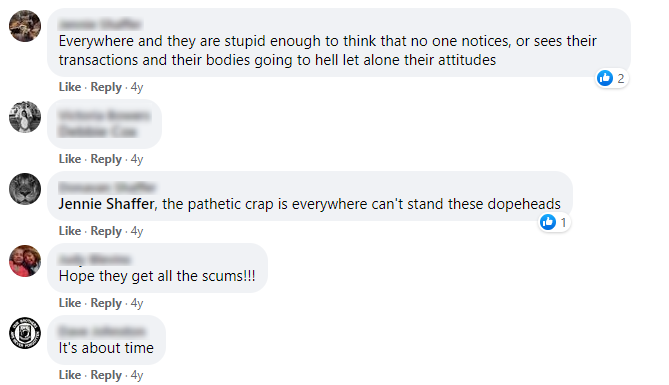
I head back to the Facebook source and read the comments:

A dear friend from my youth is being called a dopehead (I guess that's true) and scum.

I guess I could have seen it coming when we were kids. I did see it coming. I was with him on two occasions when he bought pot. He didn't admit. He didn't show it to me. He certainly didn't offer it to me, but there was no doubt. When you pull into a convenience store parking lot, and your friend gets out, goes over to another car, and sits in that car for a few minutes, coming back stuffing something in his pocket, it's obvious. When you and your friend pull into a driveway, and a scruffy young man walks out to the car, makes small talk, then asks, "How much of that stuff did you want," it's obvious.

I clean up his photo in Lightroom to make him look a little less -- what?

It doesn't work. He still looks too much like a -- what? A thug? An exhausted and frustrated man? I try again, trying to soften the hardness of his skin.

A little better, but there's nothing I can do with those eyes, those forlorn eyes that seem completely lacking in surprise, completely resigned to his reality, completely fatalistic.

Every year, there's a kid or two on the hall that I find myself wondering about, thinking that he or she might end up like this. There's the same resignation about them, the same air of fatalism. Every year I try to help them, to show them that they do have some control over their fate, to show them that more is in their hands than they probably realize (though the cards are often stacked against them). To try to prevent them from being a photo someone looks at thirty years later, wonders whatever happens to them, then loads a search engine and beings looking...

End of the Honeymoon

Dear Terrence,

It’s been a while since I’ve written to you — well over a year, I’d say. Last year I taught only honors classes, and you don’t often end up in those classes. This year, though, with two on-level classes in addition to two honors classes, I thought there was a greater chance of meeting you.

I had my eye on you from the first day. I thought, “That kid might be my Terrence this year.” You were a bit loud, a bit talkative, a bit theatrical, but once we started working, you generally calmed down and did the work.

Today, though, you showed me that you are indeed one of my Terrences this year.

The funny thing is, I warned you all about this at the beginning of the year. I pointed out that people who work hard and are respectful of everyone around them generally get cut a little slack when they do show some attitude — we all do it from time to time, let’s face it. But the people who consistently do the little things that chip away at one’s reputation — well, we come to expect that of them. And so within a few days, you’ve shown that that talkativeness, that machismo, that bravado was a harbinger of things to come.

And just as I told you at the beginning of the year, it wasn’t what you were doing so much as how you reacted when I called you out on it.

“Terrence, stop talking please.”

“Oh, oh, okay. So you’re going to ignore them talking and call me out?! Okay — I see how it is,” you snapped back.

No, Terrence, I’m not ignoring them. I just have one mouth and usually address one student at a time. You’ve shown yourself to be the biggest disrupter in the class, so of course, I zeroed in on you. Was that fair? How was it unfair? If you don’t speed, you don’t get pulled over for speeding. It doesn’t matter if everyone else is speeding. If you’re not speeding, you won’t get pulled over for speeding.

If you don’t disrupt class, you never get called out for being disruptive. It doesn’t matter if other people are being disruptive. If you’re not disruptive, you won’t get called out for being disruptive.

It’s not rocket science, buddy. It’s not translating Sanskrit. If you don’t want to get in trouble for doing X, don’t do X. Simple.

Your teacher for 175 more days,
Mr. S

Never Thought It Could Happen to Me

I was reading old MTS entries in the "Time Machine" widget at the bottom of the page, and this was the first entry.

I hadn't thought of Mike, who went by the hip-hop-inspired moniker M-Jezzy, in years. I thought about him a lot a few years ago, when his case was in the news, though.

The story is a compounded tragedy. I knew M-Jezzy's background from working with him at a program for at-risk kids. To say he'd had the cards stacked against him was an understatement. Both his mother and his older brother were setting a splendid example for him. His mother was a pusher; his brother followed her lead; they were both trying to get M-Jezzy to join the family business.

Take someone from that environment and put him with a child. It's not difficult to see how things could turn tragic.

An Asheville man will spend at least 18 years in prison after admitting Monday that he caused the death of his girlfriend's son, according to District Attorney Todd Williams.

Michael Antonio Dixon, Jr., 24, pleaded guilty Monday in Buncombe County Superior Court to second-degree murder and intentional child abuse inflicting serious bodily injury in the death of 4-year-old Cedric Francois.

Cedric’s mother Taquita Francois said Dixon was taking care of the boy Oct. 19, 2011 while she was at work when he called in a panic because Cedric was unresponsive.

Cedric was taken to Mission St. Joseph’s Hospital where he was pronounced dead. (Source)

The story, I thought, was that M-Jezzy had just lost control -- I'd seen it happen -- and literally beaten the poor child to death. I imagined blow after blow coming down on the little four-year-old's body, and I was filled with fury. "Someone should do some basic math: determine the pounds per square inch he hits with, compare that to the weight of the boy, then beat M-Jezzy with the force proportional to his own body weight," I ranted to K.

But in reading about the tragedy anew, I found a new detail.

Judge Alan Thornburg sentenced Michael Antonio Dixon Jr., 24, to a minimum of 225 months and a maximum of 279 months in state prison for the death of Cedric Francois on Oct. 19, 2011.

Dixon, who originally was charged with first-degree murder, pleaded guilty to second-degree murder and intentional child abuse inflicting serious bodily injury in the plea hearing in Buncombe County Superior Court.

Prosecutor Rodney Hasty said the district attorney’s office agreed to the plea because investigators didn’t believe Dixon intended to kill the boy when he struck him in the face after the child accidentally soiled himself.

Dixon, who was babysitting the boy while his mother was at work, put the child in a bathtub before striking him, Hasty said. Investigators believe the boy, when struck, fell backward and hit the back of his head on the tub, Hasty said.

The boy died from blunt force trauma to the head that caused bleeding around the brain, according to an autopsy report by the Office of the Chief Medical Examiner in Chapel Hill. The boy’s mother, Taquita Francois, told police she left him in Dixon’s care at her Pisgah View Apartments home when she went to work.

“It does not appear to us at the time the defendant hit the child he intended to kill the child,” Hasty told the judge.

Dixon’s attorney, Al Messer, call the child’s death a “tragic situation.”

“Mr. Dixon is accepting responsibility and is pleading guilty,” Messer said. (Source)

It was in the bath as M-Jeezy tried to clean an accidental soiling. Perhaps the child wouldn't sit down. Frustrated with having to deal with the child's feces and irritated that the child wasn't following instructions, M-Jezzy did what his mother might have done to him: slap him across the face. "Do it now!" Back the child flew, his head making a sickening thud against the tub that M-Jezzy must have known confirmed the path of the rest of his life.

But such things don't usually happen in one-off situations. It was unlikely that this was the first time M-Jezzy or someone else struck the boy.

According to the autopsy, the boy had older injuries that were unrelated to the head trauma, including rib fractures on both sides of the chest and a human bite mark on the left forearm.

Asheville police began investigating the child’s death after being notified by Mission Hospital staff about “questionable injuries” discovered on his body. According to court documents, a detective at the hospital observed numerous injuries, including hemorrhages in both eyes, bruises on his face, buttocks and around his ankles, abrasions on his chest, forehead and under his left eye, a laceration on his right ear, a laceration on his lower lip and a bite mark on his arm. (Source)

The child of an impoverished single mother, the trajectory of Cedric's life and death had begun long before, possibly when he was born, possibly before his own mother was born: a straight line that psychologists and social workers could have plotted as the nurses cleaned and weighed the newborn. Abuse begets abuse; parents who don't know how to raise children raise parents who don't know how to raise children; neglect begets neglect.

Did M-Jezzy see the parallel structure of his life and the life he took? Did he have the insight to realize that his life could have ended just as quickly as young Cedric Francois? Did he feel his own mother's hand on the back of his head when he slapped Cedric?

Later, Cedric's mother offered a plea to parents:

“I just want people to know that you need to cherish every moment with your kids because I felt like something like this could never happen to me,” she said. “Whether they get on your nerves, stress you out, just appreciate your kids fullest." (Source)

That's the rub of it all: there are very few people out there who wouldn't feel this way, very few parents who are just willfully abusive to their children.

And that's the other rub: isn't that just an assumption? A projection based on the environment I've spent my whole life in? The news is filled with stories of children being tortured, being abused in the most wretched ways, and the assumption is that they are a minority, but what we see in the news is only a fraction of what actually happens, of parents actually caught and, if the children are lucky, stopped before it's too late, before the last slap that ends in the crush of skull against tub, before the privation of food and water leads to death -- the thousand and one ways parents neglect and abuse their kids to the very end of their short lives.

"I felt like something like this could never happen to me," she said.

Morning in the Hall

He comes in, earbuds screaming, slouches down against the wall, and proclaims, "I'm hungry!" Digging around in his bag, he reveals a bag of Doritos and with a rustle of ____ (Material of chips bags) adding to the chaos of the noise coming from his earbuds, he rips the bag open and shoves a handful of chips into his mouth. This is his breakfast; this is how he starts his day. He feeds his brain with aggressive hip-hop; he feeds his body with empty calories. Is it any wonder that the row of grades trailing after his name is also empty, a trail of "NHI's" (Not Handed In) and grades in the twenties, thirties, and forties.

She sits against the wall, her head down, long hair hiding her face. She hasn't spoken a word since coming onto the hall half an hour ago, and she only looks up with furtive glances that betray a desperate desire to remain invisible, to appear uninterested, to maintain an air of distance.

Seeing the Future

I have encounters with students sometimes that leave me wondering whether there is any good left in the word. I know there is; I see it all around me. But some interactions make me realize that some don’t see that, and so for them, it doesn’t exist. There is no good; it’s all bad. Even what they see as good is in fact probably bad.

Suzanna is a young lady who makes an impression immediately: she is, in a word, strikingly beautiful. All the teachers on the eighth-grade hall willingly admit it: she’s probably one of the most physically attractive young ladies we’ve had in the eighth grade in a long time. With a perfect dark complexion and hair that’s always in lovely curls, she’s striking. When she grows up, she’ll be the time of woman that commands everyone’s attention and admiration the moment she walks into a room.

Until she opens her mouth, for she is as unattractive on the inside as she is beautiful on the outside. Case in point: the first day of school, one of her teachers was taking roll. He called out her name, Suzanna Smith-Jones.

“Don’t call me ‘Smith.’ That’s my daddy’s name. I don’t like him. And I don’t like you.”

The first words out of her mouth. Her first impression.

“She said it with such anger, with such hatred,” the teacher explained to me later as I was checking up on her — I don’t teach her — after she and I had had a run-in one morning in the hallway.

“What kind of life has she lived to get that messed up in only thirteen years?” I asked. “What kind of a future does she have?”

The encounter I’d had with her was instructive as well. It was in the morning, before the actual school day started when students who arrive early are to sit outside their homeroom teacher’s door and wait quietly and patiently. I’d noted early in the week that she was sitting at the top of the hall, so I assumed that was where her homeroom was. I was stationed at the middle of the hall, so when she came to my area and plopped down with some friends, I politely said, “You need to go back up there to your homeroom, please.”

“I ain’t goin’ up there,” she said, her voice instantly on edge with anger.

These types of reactions — instant and unqualified disrespect when I’ve made a conscious effort to be respectful — constitute my one big button. I don’t lose my temper with students often, but this does it. Still, I’ve been conscious of it for some time now, and I’ve largely managed to get that under control. So instead of responding like some teachers would, with instant anger and disrespect in return, I simply restated my instructions: “I’m afraid I’m not asking you. I really need you to go back up the hall, please.”

“I’m just gonna sit here like I do every day.”

“Don’t do this, please. Make a better choice.”

At this point, her friends began encouraging her: “Come on, Suzanne, just do what he says.” I find that when I’m polite at all times, I earn a reputation among students for just that, and in such encounters, they often respond by suggesting that their friend is making a mistake. I was glad to see it happening then, and I really hoped she would comply. That would be the end of it. But she wasn’t giving in.

“I ain’t doin’ nothing. I’m just sittin’ here.”

It occurred to me that perhaps her homeroom was in fact in the middle of the hall, and I realized that this was going nowhere: I couldn’t force her to move, and she wasn’t complying, so I simply stated, “Well, I’m afraid you’ll just have to talk to Mr. M when I refer the matter to him.”

“I guess I will.”

After some checking later in the morning, I learned that her homeroom was not at the top of the hall, not in the middle of the hall, but at the far end of the hall.

Often, with such kids, I make a special effort: I actively try to cultivate a new relationship after such an encounter. These relationships sometimes turn into some of the closest, warmest relationships I have with students. I become something of a coach to them, something of a mentor. Such students often seek me out when they’re having a conflict with another student or a teacher because they know they can vent their frustration safely with me and that the only thing they’ll get in return is a little coaching and a lot of encouragement.

I tried to cultivate such a relationship with Suzanna. She was not simply ambivolent; she was openly hostile to the idea. I waited, tried again. Still the same reaction.

A girl trapped in her own frustration, feeding off her own anger, as such a dismal future in my eyes that it makes it difficult to watch that person move through her day. She’s a pinball, batted about by the whims and accidents of the people around her.

Karma

Written several years ago during the school year.

A young man this morning had a run-in with me. I say “he had a run-in with me,” but I guess the opposite is equally true: I had a run-in with him. But in a way, it’s a matter of semantics, for it seems all our interactions are negative like this morning’s. In short, he does not like being told what to do by anyone, and though I don’t teach him, I am still responsible for him as a teacher on the hall, so I have to tell him to do things. Like get in dress code. Or take off the headphones. Or stop chasing this or that girl. Or get to class. Or get to your locker. Any number of things that he knows perfectly well he’s expected to do. This morning’s encounter was another in a long line of meaningless conflicts that arise from his instant disrespect whenever he’s told to do something.

At about six-two, Terrence is taller than almost all his eighth-grade peers, perhaps because he’s supposed to be in ninth grade. He struts down the hall and is admired by boys and girls alike. Boys and girls who see his supposed toughness as a virtue. Boys and girls for whom his probation-related ankle-bracelet adds to his prestige. Most teachers think a little less highly of him than do his peers.

“Terrence, you need to get to your class. It’s girls’ locker time, not boys’.”

Instant conflict: “Man, you see my teacher ain’t here. You see I gotta wait in the hall!” in such a bellicose and hateful yelled tone that it’s a wonder he was surprised at all what was coming next: a reprimand for disrespect.

“There’s no need to talk to me that way…” and he turned his back on me and stood with his back to me. Fairly typical behavior.

“That’s fine, Terrence. I’ll refer this matter to the administrator.” Which means really nothing because he’ll get a day or to OSS for it, and kicking a kid like this out of school is no kind of punishment at all. It is, of course, a relief to his teachers because they don’t have to deal with his nonsense. It’s a relief to his classmates because now they can get some work done. But for Terrence? It’s meaningless, and he didn’t mind telling me so.

“Man, I don’t even care.”

That could be his mantra, and he’s not the only student like that. They’re the ones that are the toughest to care about because they don’t even seem to care about themselves or others enough to see the harm their behavior causes, to themselves or to others. Their lack of self-confidence displays itself in bellicosity and anger, and the only way to get through a protective shell like that is not to take their verbal strutting personally — much easier said than done. And so such students just jostle about through the day, bouncing from one conflict to another, all of which serves as just more evidence to their victim mentality that the whole world is out to get them.

Later in the day, he was sauntering down the hall while I was out working with a couple of students who’d asked to work in the hall to avoid a potential conflict in the classroom (Some days, it’s all about the “drama” as the kids call it). Terrence stopped briefly to chat with a friend who was returning to another classroom from the bathroom. He explained that he had a day of OSS.

“Why?” his friend asked.

“Because of him,” he said, pointing at me.

I’d written the administrative referral during my morning planning period, and the grade-level administrator had already processed it. It’s telling because of the simple fact that Terrence’s referral received top-level priority. I’m not sure he would have grasped the significance or irony. In honesty, though, none of that entered my mind at the moment. I simply replied with my own mantra of sorts, the standard response I give to students who blame a teacher for their behavior issues: “No, Terrence, it was because of the choices you made.”

“Man, I didn’t even want to talk to you,” he sneered.

There, in less than ten words, was the summation of his whole problem. In fact, he only needed four: “I didn’t even want…” If Terrence doesn’t want something, he doesn’t do it; if he wants something, he does it. Anything that gets in the way is going to cause a conflict, and Terrence has learned that if he is aggressive enough, disrespectful enough, and consistent enough, he can get what he wants from a lot of people who in fact are in positions of authority over him. Clearly, he behaves thus with his parents (or, more likely, with  his mother — statistically speaking, he’s likely from a single-parent home), and clearly it works, else he wouldn’t do it. It’s probably also worked with teachers who are just tired of the fight and give in from exhaustion. But I’ll stand my ground with a Terrence. I’ll be part of the wall that he crashes himself against. “It’s better that he learn now when the stakes are not as high,” I might even justify it to myself. Truth be told, a significant portion of it is pride — same as Terrence.

“It doesn’t matter whether you wanted to talk to me or not. I’m the one in authority, and when you don’t…” but it was useless.

What I really wanted to say was, “Well, there will be lots of people you don’t want to talk to, like the judges you’ll appear before throughout your life. But they won’t really care whether or not you want to talk to them, and if you talk to them as you speak to any and all adults in this building, you’ll have some pretty hefty consequences.” I thought of Ebony Burks and her encounter with a judge during her arraignment.

We might be troubled by the way the judge seems to antagonize the situation, but in the end, Ms. Burks is responsible for what comes out of Ms. Burks’s mouth, and she could have stopped at any moment. Terrence is easy to imagine responding in a similar fashion.

That’s what I wanted to say but of course would never say. “Less said, easier mended” our previous principal’s email signature read, and it was something I really took to heart. Besides, to tell Terrence that would be to tell him one day he’s going to sprout wings and become a flying turnip: he’d never believe it.

Terrence is the type that has such an impact on the hall that when he’s missing, it’s immediately obvious, and so in the afternoon, I noticed he was missing but assumed he’d just been sent to ISS for the remainder of the day. Perhaps he’d given another teacher trouble, and the teacher simply sent Terrence to the administrator straight from the classroom.

It turns out he’d continued making poor decisions after our first encounter, but the decisions of the morning were nothing compared to the decisions he’d made even earlier in the day, before he left for school, as he was packing his materials, such as they are, for a day of instruction — choices so dire that his hypothetical appearance before a judge I’d been imagining transformed to the afternoon’s certainty. In short, having brought a pistol to school, he is in about as much trouble as a young man can be in, and he will not be coming back to school.

And my reaction? I smiled at the thought of almost-instant karma. In fact, walking out to the car, I couldn’t wipe the stupid grin from my face. It was as if I’d experienced the greatest “I told you so” moment in my life. “Of all the kids to bring a gun to school,” all the teachers had been saying, “I would have picked him.” Of all the students to do something that would land him in front of a judge, I would have picked Terrence. Our clairvoyance instantaneously confirmed.

And now? I think to myself, why in the hell was I smiling at another human being’s misfortune? Certainly his misfortune was a self-created condition, borne of his consecutive poor decisions. In short, from a certain point of view, he got what he deserved. But for a child of that age, no more than fourteen, perhaps fifteen (if he’s been held back a year), it’s tragic to think that his worldview, his reactions, his existence has been so poorly shaped that he already has virtually no future. He had no input regarding his environment. He had no input into the involvement of his father in his life. He adapted to the laws of the street and simply never learned to turn those behaviors off when in a situation with said behaviors were no longer positive but in fact detrimental.

I’m not saying he’s just a victim, for he’s had seven or even eight, possibly nine, full years of school in which to watch other students who don’t find themselves constantly in trouble and learn to copy their behavior. Still, there is an element of victimization here that only leaves me shaking my head, determined to try to get through to the next Terrence I meet (I have a couple in my own classes every year) and thankful that I am able to provide my own children with the stability that these children never experienced.

Addendum: Background

The above was written some time ago–I held off publishing it because I really didn’t know how the story would end.

I know now.

Terrence appeared before a judge and faced charges. He appeared before the school board and was expelled. And he committed another crime in the meantime and is now locked up.

I held off publishing also because I thought he might end up back at our school if he’d been expelled. Unlikely, but a possibility, for expulsion in our county means expulsion for a full year, after which, the student can return to the school and pick up where he left off, so to speak. With his later charges, Terrence likely won’t be coming back ever again.

We heard more about his situation as the year progressed. Apparently, his father had just gotten out of prison when all this started. I can only imagine the sense of complete failure his father felt when he learned what his son had done, the frustration he felt driving to the school to meet with administrators and police officers about the choices his son had made. I can imagine a conversation like this when he sees his son:

“Didn’t I teach you anything going to prison?”

“Yeah, you taught me plenty.”

Day 53: Changes

Schedule

A couple of weeks ago, I got an email from my principal. It read, in part,

We are working on the schedule for next year, and I wanted to run something by you. In an effort to simplify people’s assignments and avoid teachers having 3 preps, we are looking at the possibility of you teaching all of the English 1 sections. [...] My one hesitation is that 4 sections of E1H is a lot for one person. A lot to grade and be responsible for.

English I Honors is indeed a handful. Each class is about 30 students usually, and whereas 60-65% of students in English 8 turn in a given assignment, it's something like 90% in English I. Many English 8 students often have issues with time management and apathy, so it's rare for a student in those classes to turn in all assignments in a given quarter. English I is exactly the opposite thought: it's rare to have more than two or three students in a given class not turn in a given assignment.

Another element adding to the E1 workload is the simple fact that, compared to English 8, it's two classes combined into one: reading and writing are separated into two classes for English 8, and I have always taught the reading/literature portion. English I isn't, so I have to teach both, which means a lot of writing to assess.

So I was hesitant to accept such an offer. At the same time the idea of working with students who have almost no serious behavior problems, who are all working hard most of the time, who all see the value of education, is pretty hard to resist.

My other concern was regarding the fact that having all the English 1 classes would mean Mrs. H, the other English I teacher, would have none. I knew how she enjoyed teaching that class, and if the tables were turned, I would not want to give up English 1 even for the tempting offer of having only one prep. I expressed my concerns to the principal, and he, in turn, discussed those concerns with Mrs. H. It turned out that for her, the thought of having only one prep was indeed enticing enough to give up English I. In fact, she was somewhat worried about the workload that I would be facing, and she emailed me about those concerns. Receiving this email and having assurances from my principal that Mrs. H would not feel as if I were somehow taking these classes away from her (because that's how I felt: if I to take these classes, that means she loses them, and I can always say no), I agreed to take the 4 English I classes.

Yesterday the official master schedule for the 2020-2021 school year was released.

And there I am back-to-back-to-back-to-back English 1 classes.

I'm happy about this for a number of reasons, not the least of which that I will have very few behavior issues to deal with. It's also a great joy to work with students of actually do want to learn and you actually do put forth their best effort on a consistent basis.

On the other hand, working with a class that includes a significant number of at-risk students has its own rewards. I often feel I have the opportunity to teach them even more important skills like anger management, delayed gratification, empathy, impulse control, and appropriate self-efficacy.

The change will be significant. The increased workload will be noticeable. The rewards? Well, it is indeed a trade-off.

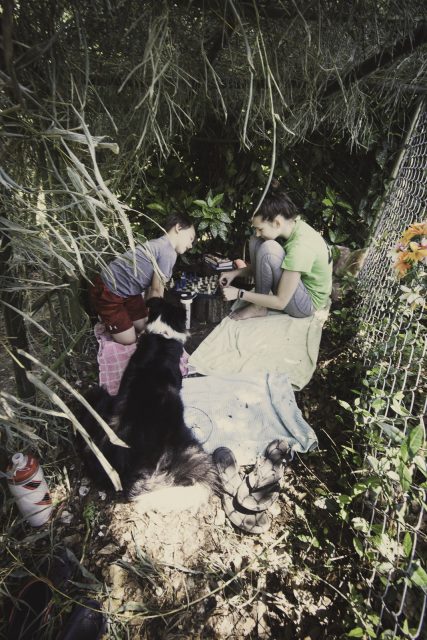
The Fort

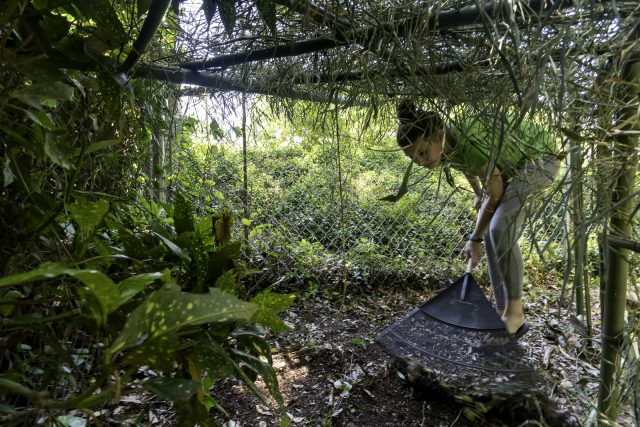
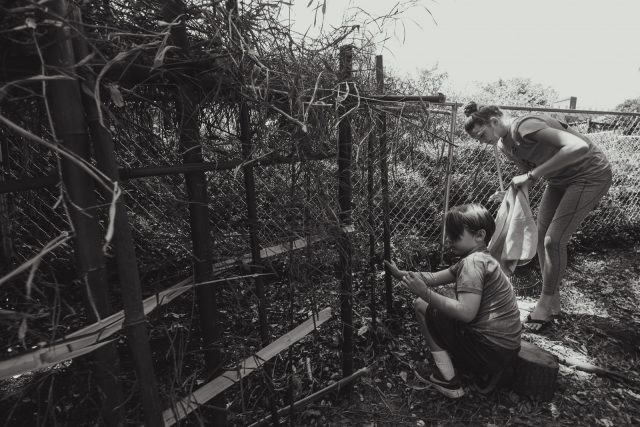
L decided today that she wanted to get involved in the fort.

"You guys did the hardest part," she said, "But still -- I want to help."

She brought an interior design eye to the project, bringing ground covering (old towels), decorations (old silk flowers), entertainment (books, a chess board, and more), and snacks.

Day 1: Achievement Gap

There was one overriding concern at today’s faculty meeting: we have to do everything we can to make sure that this national emergency does not expand the achievement gap any more than is inevitable. We spent the morning talking about how to prepare materials for students to work at home with one underlying assumption: vast numbers of kids won’t do anything during this time. The “high flyers” will do everything we give them; the middle-of-the-roaders will do some of it; the ones who need the most help will do the least.

“They don’t even do much work when we’re hovering over them” was the common refrain.

So as we embarked on our planning this afternoon, working to create ten days of material for students to work on while we’re closed, we kept that in mind — a frustrating project, planning materials that we know will most likely not be used by kids who really do need to use it.

And the common refrain during that planning process: “We need to go ahead and plan for the next ten days because there’s no way we’re coming back at the beginning of April.”

We’ll cross that Rubicon when we arrive at its banks…

A View into a Mind

It was a difficult poem, to be sure. But I'd adjusted accordingly.

First, I'd given students plenty of footnoted definitions. Words like "smouldered" and "pungence" (the poem used British English) would have left them flummoxed otherwise.

Additionally, I'd asked a fairly simple series of questions as part of our weekly inference practice: "What can we tell about this lady? What does she look like? Is she old or young?" As always, I expect the students to back up their answer with the text, and I've given them a simple formula to follow.

  • Make a claim: "The lady is x."
  • Back it up from the text: "I know this because the text says..."
  • Explain your thinking with one or two sentences: "This shows she's x because..."

I really don't feel like it's all that challenging. Besides, it's something we do every Friday -- inference work.

"It's like shooting free throws," I tell them. "It's the most basic skill we do when we read, inferring." It's why we do it every Friday, week after week.

Thirdly, I'd cut the text: we were only working on the first stanza. The rest of the poem, I felt, might confuse them more.

Finally, I am always walking about the room as students work, offering help and answering questions, helping redirect or clarify thinking or ask questions that help them see the text in a new way, and there is a co-teacher in the room as well.

The text itself was a poem by Amy Lowell, "The Lady."

You are beautiful and faded
Like an old opera tune
Played upon a harpsichord;
Or like the sun-flooded silks
Of an eighteenth-century boudoir.
In your eyes
Smoulder the fallen roses of outlived minutes,
And the perfume of your soul
Is vague and suffusing,
With the pungence of sealed spice-jars.
Your half-tones delight me,
And I grow mad with gazing
At your blent colors.

So given the questions -- "What can we tell about this lady? What does she look like? Is she old or young?" -- and the formula we've been using all year, something like this was my objective for student achievement:

The lady in the poem is beautiful. I know this because the poem starts with the words, "You are beautiful." The poem wouldn't say "You are beautiful" unless the lady was beautiful. The writer might be joking, but I don't think so.

Also, the lady in the poem is old. I know this because the poem says, "You are beautiful and faded." I know from my own experience with clothes that usually it's old things that fade. So if the writer says the lady is faded, she must be old.

Of course there would be varying degrees of writing proficiency with that (I don't teach writing -- I'm the literature/reading teacher), and I would have to help some students reach that second realization. Also, that final sentence of the first paragraph requires some evidence as it makes a claim. What in the poem suggests the writer Still, most of them saw these things and wrote something similar.

Many, but not all.

There are several students who receive special ed services in that class -- it's an inclusion class, and there's a co-teacher in there for that very reason. Many of the inclusion students have behavior issues that accompany their learning disabilities, but some just quietly do the best the can.

One such student produced the following in reply to the above prompt:

we know about this woman that she is beautiful and she likes an old opera tune and the perfume of her soul and she is young and her appearance is a grow mad with gazing and eighteenth-century boudior and her personality is blent colors

The lack of punctuation and capitalization is fairly typical of average eighth-grade students these days, at least in my school. That's not my concern with this excerpt. What initially fascinates (and saddens) me is the content: it simply makes little to no sense at all past the first two clause-like elements: "we know about this woman that she is beautiful and she likes an old opera tune." Beyond that, it seems like just a random collection of elements from the original text.

There is, however, a pattern. She clearly referred back to the questions: she explains about "her appearance" and then "her personality." So this was not an apathetic student just randomly grabbing some words and throwing them together. This was not a vindictive act of "I'll just put complete nonsense there because..." It's a genuine effort at answering what was for her an incredibly difficult question.

Yet there's more than just that. Look closely: she links "appearance" with "gazing," a verb connected to seeing. She links "personality" to "blent colors" because the poem says "your blent colors," so she clearly recognized that possessive pronoun and made a stab that that might be related to "her personality." It's not a bad interpretation, to be honest.

It's really a valiant effort, truth be told.

But I didn't see that at first. Grading so many such assignments, week in, week out, I get to where I'm only scanning, truth be told. Which is to say, I read it, but I read it so very fast that I'm not really reading it in the truest sense of the word. I'm not reading it like I read a book that I'm really enjoying, or even an email from a colleague. I'm looking for specific things very quickly.

I'm doing what I tell my students not to do.