Matching Tracksuits

fun in fours

at risk

#3 — Choice

When we become conscious that we have to make a choice, the choice is already made for good or ill.

I often speak to my students about choice and habits. So many kids have such ingrained reactions that they've brought into the classroom from various environments -- home, the street, the community center -- which simply do not work in a comparatively-formal setting like a classroom. Perceived slights or insults must be avenged, for lack of a better term, and often very little thought has gone into the decision. These habits, I tell them, are going to get them into some serious trouble at some point in the future. "It won't just be a referral from some teacher who's fed up. It will be dismissal from work."

Hanging on my wall is an almost-cliche but very succinct expression of the principle I'm trying to explain:

Be careful what you think, for your thoughts become your words.
Be careful what you say, for your words become your actions.
Be careful what you do, for your actions become your habits.
Be careful what becomes habitual, for your habits become your destiny.

Yet even when some of them try to break their habit, even when they begin thinking before speaking, there's something in them that just compels them, despite the newly-formed warnings and whistles, to go ahead and say it. That's the habit part, because hidden in every habit is a bit of an addiction. And so these kids are aware of the choice, but in many ways, by the time they're aware of it, they've already made the decision.

Certainly, to a greater or lesser extent, the same is true for almost all of us. The awareness of this tendency, though, like the awareness of an addiction, is the first step toward correcting it. Or so we tell ourselves.
Overheard

Overheard, after passing out report cards:


“My parents don’t care what I get, as long as I pass. Sometimes, when I brought home an F, my dad would yell at me. But I yell back. He knows better. He sometimes forgets, but I yell back, and he backs off.”

Empathy

empathy

The questions for the anticipation guide were seemingly straightforward. One would think that responses -- "Do you agree or disagree and why?" -- to these questions would be somewhat predictable.

  1. Sometimes, it's better to remain ignorant about certain things.
  2. It's fair to treat people differently based on their intelligence.
  3. It is better to be smart and lonely than unintelligent and happy.
  4. Our relationships with other people, not our achievements, are what fulfill us.
  5. It is better to accept your fate than to try to change it.
  6. It is important to have empathy for others.

Granted, for question one, adolescents might not necessarily have learned the beauty of ignorance. It seems unlikely that any adult would disagree with the statement, and in fact, a slight majority of the students agreed this afternoon.

Question two is a bit tricky: most kids think of it as a question of politeness and manners. I'm almost always the only person indicating agreement with the statement. When I explain about differentiation and remind them of special education services, most students understand where I'm coming from and smile at how I "tricked" them.

Question three is fluff. It gets conversation going, but there's really no expected response for what I (and I hope others) would consider a well-adjusted, emotionally healthy individual.

Question four hints at the shallowness of materialism. Students seem split on the issue, but for eighth graders, one might expect that.

Question five is an interesting question for my students because so many of them -- particularly those who struggle in school -- are completely fatalistic. Perhaps they don't see that in themselves, though, because many disagree with this statement.

Question six, though, seems almost painfully predictable in a room of well-adjusted, emotionally healthy individuals. The inability to feel empathy, after all, is one of the most horrifying aspects of sociopaths and one of the most tragic facets of autism.

So when a young man looked at me this afternoon with an expression of disgust and almost anger when I asked him why he didn't think empathy is important, why he disagreed when almost everyone else agreed, why he seemed put off by the fact that I was unable to hide my surprise at his response, it left me briefly speechless.

"You mean don't think it's important to try to understand the lives of those less fortunate than you?" I asked after a moment.

"I never thought about it," came the flippant response.

"And now that you've thought about it?" I continued.

He shrugged and glared.


Repetition

Dear JT,

I'm afraid we in the middle school business have -- how I hate that I'm going to use this cliche -- set you up for failure. We're programming you to be a drop-out, and I wish there was something I could do about it, but this is about it: I can explain a simple reality to you.

You've figured out the system, how things have worked to this point. You understand that chances are slim you'll ever be failed another grade. After you've failed fourth grade, you figured out that, even if you end the year with all F's, the school pass you on. That's a bad choice of words, because you aren't passed. The technical term is "placed." As if you're some object to be arranged in a still life.

However, things are about to change. Though you're failing every single core class, you'll move on to ninth grade next year. I know it; you know it; the principal knows it; all the teachers know it; your mother knows it. We all understand that. What you might not understand is the reality waiting for you in high school: teachers will not simply place you in the next grade as can happen in middle school. If you fail English I, you'll have to take it again. If you fail it again, no one will say, "Well, he failed once; we can't fail him twice," and then place you in English II. If you were to fail it yet again, about the only thing the high school teacher and guidance counselor could say is, "Well, better luck the third time." But by then, and quite probably before the third time, you'll have dropped out. You'll judge things to be a no-win situation and you'll cut your losses and drop out.

At least that's what I fear.

I don't know if you actually believe me when I say these things. You've probably gotten so many empty threats from teachers in the past that you're skeptical of everything an authority figure says. But please understand, this is not a threat, and it's certainly not empty. It's a word of friendly advice. And, quite frankly, a warning.

Frustrated,
Your Teacher in Room 302

Free Time

Dear Terrence,

The other day was a teacher workday, which means we teachers are at school while you kids are free. I wonder what that freedom brings you.

I know you have more “freedom” than the average student because of all the out-of-school suspensions you’ve served. I’ve often wondered about the wisdom of that. I’ll bet in some ways, at least during some of the more tiring stretches of the school year, OSS seems more like a gift than a punishment. After all, there’s no one to make you do this or that. You get to choose who you spend your time with. You can pass that time however you please.

Or can you? Perhaps your mother makes you clean house while you’re serving OSS. Maybe she has a long list of tasks that she expects completed fully and well when she returns from work. Possibly, but somehow I doubt it. She might be struggling just to get enough money to keep a roof over your head and food on your table — she might not sweat the small stuff. Whatever it is you do during those OSS days, I’m fairly certain you prefer it to what you do at school.

And all of this makes me wonder about the wisdom of OSS. I’ve already mentioned to you that I think you would benefit from some direct instruction in how to learn, in how to be successful in school and life. Couldn’t we replace OSS (and ISS, for that matter) with something like that? It would be tricky, because we would have to find a teacher with a certain patience and dedication to young people because, let’s face it, you and your friends can be a real handful in the classroom. It seems possible and even desirable, but I somehow doubt it will ever happen. The American school system likes to think of itself as being cutting edge and progressive, but it’s still relatively set in its old ways in many regards, and how to help students like you is a perfect example.

So I don’t really know what you might be doing today during your day off. Whatever it is, I hope it’s not what I’ve heard in rumor among teachers: I hope you’re not spending all your time trying to impress the members of some gang — for all I know, your gang, for I hear, as the colloquial expression goes, that you “bang.” I have some thoughts I’d like to share with you on that as well, but for now, I’ll let you get back to whatever it is you’re doing on your day off.

With hope,
Your  Friend in Room 302

Lost

Dear Terrence,

I heard today: You’ve been tossed out of alternative school, with your latest offense being the proclamation to a teacher that she could just “– off.”

It’s time I took the gloves off, so to speak. That’s stupid. That’s simply stupid. Look back over your long, checkered school experience: when has something like that ever made a situation better? When has such behavior ever helped? When has such behavior ever brought about anything but more trouble from a teacher? When has a teacher ever replied along the lines of, “Oh my! I’m so sorry to have offended you. Please forgive me!”? When has such language ever helped get you out of trouble? When has that language ever done anything other than get you into more trouble?

I swear, sometimes I think you guys simply don’t think.

Annoyed and saddened,
Your Frustrated Friend in Room 302

Head Down, Finger Up

Dear JT,

I’m ashamed to admit it, but I’ve come lately simply to ignore when you’ve put your head down in my class. There are enough behavior problems in that class to deal with that I don’t want to pick a fight, so to speak, with you. I know I’ll likely only get attitude, and even if you do comply, it’ll only be temporarily.

It bothers me because it’s disrespectful, but quite honestly, you don’t seem to care, and you’re only a kid, so like I said earlier, bigger fish to fry and such. Today, however, you were disrespectful to close to 10,000,000 people. Did you know it was even possible to disrespect so many people at the same time? I really didn’t either: I’d never really given it much thought. But when you put your head down and slept through our Holocaust-based writing exercise as we prepared to read Anne Frank’s diary, you basically put your middle finger up to all those who died in one of the evilest atrocities in history. For all intents and pursposes, you said,

I don’t care about you. I don’t care that you lost your family to a murderous regime. I don’t care that the last image you had of your child was of her being ripped out of your hands, screaming. I don’t care that you had the responsibility of burning the corpses of thousands upon thousands of gassing victims. I don’t care that you were “experimented” upon, shot, kicked, beaten, tortured, and treated like a roach. What I care about is that I’m a little sleepy now in first period, so screw you — I’m going to sleep.

I anticipate your response being something along the lines of, “I don’t care.” That’s fine. No one can make you care about anything. But if you find yourself one day alone, if you find yourself wondering if anyone in the world cares for you, and if you decide that the answer to that question is, “No, no one other than my mother,” perhaps you’ll know how those millions upon millions of Holocaust victims felt. And ironically, the fact that you put your head down during that class session would go a long way in explain why no one cared for you.

Then again, maybe that’s what you’re experiencing now. Maybe you already feel that way. It’s a bit presumptuous of me to suggest that I know you so well as to make such an accurate assessment. After all, I only see you for a small slice of your life. Still, it strikes me as a real possibility.

At the same time, there are plenty of others who have lived lives devoid of anyone really showing them any concern or compassion as children who have grown up to be perfectly empathetic individuals. (And there are plenty who have experienced the opposite.) I do know that you’ll have an easier time in life — a more fulfilling life — if you manage to purge “I don’t care” from your vocabulary.

Still caring for you, but with greater difficulty today,
Your Friend in Room 302

P.S. I said nothing to you when you put your head down the second time after I’d already asked you politely and privately to show some respect. I didn’t want to damage the atmosphere I had created in the classroom. I will, though, address it tomorrow.

Choices

Dear Terrence,

I spoke to your English teacher today. She told me about a problem you had with another student, that this boy did something that so angered you that you were willing to fight him. That you turned over a desk and started marching toward the kid with every evil intent that anyone could imagine glowing your eyes.

Remember, we had a conversation in the hallway about this the other day. You’re letting people push your buttons. You’re essentially giving them a remote control and saying, “Hey, you want me to hop on one leg, press this button. You want me to laugh, press that one. If you want me to hit you, the red button’s the one.”

What saddened me most about what your teacher said, though, was your response later, how you asked in a low voice, “Ms. Jones, did you write me up for that?”

“What choice did you give me, Terrence?” she said.

I know that you feel you don’t have a lot of choices right now, Terrence. I know you feel that no matter what decision you make, things always turn out the same way. I know that a lack of choices feels like a prison, but not a conventional one — this one has invisible bars that seem to change location but hold you fast just the same. I know you feel you have few choices, but I’m wondering if your teachers don’t feel the same way.

“What choice did you give me, Terrence?” asked Ms. Jones, and in that, I can almost hear as much frustration as I hear when you tell me some of your stories. What choice does any teacher have when facing a child like you, a child who really needs some positive attention and someone who can sit down with him and explain and practice, as many times as it takes, some of the rules of the game that you seem somehow to have missed out on?

Before you can learn math, science, history, or English, you need, quite frankly, to learn how to learn. To learn how to be comfortable with your own stillness. To learn how to look at someone who’s giving you instruction the same way you look at me when we’re standing in my doorway, chatting. To learn how to listen with a slight smile of anticipation like you do when I call your name out as you walk down the hall and motion you over to me.

But unfortunately, we’re not in a situation where we can take a lot of time to teach you how to learn. We teachers have got deadlines and testing hovering over us, and it feels like the tests are pressing our buttons. We have choices — I’m convinced of that — but I’m not sure we’re all aware of these choices, of the various options that might lead to more success for you and kids like you in the classroom. I’m certain there are choices, but I’m not as sure that they’ve even all been discovered yet. So in a way, we teachers are just groping around, feeling out these invisible bars just like you.

I do know that for most of us, being in the classroom is a conscious choice. We’re an idealistic group at heart: it’s what led most of us to the profession and it’s what keeps us there. Maybe if you can keep that in your conscious thoughts — that everyone who stands in front of you day in and day out is there because they choose to be there, because they want to help, because they feel called to do what they do — then you’ll start to see some new choices, too.

Sincerely,
Your Friend in Room 302

Our Own Trisha

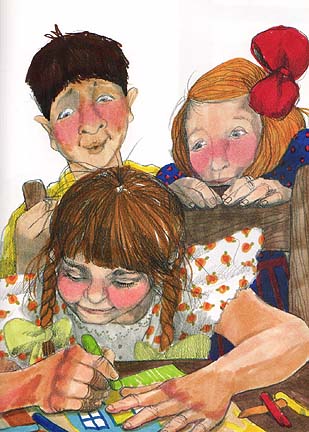
Every year, as we begin a unit on the Gary Paulsen novel Nightjohn, I read Patricia Polacco's Thank You, Mr. Falker. The story of a young dyslexic girl who was suffering the taunts of peers and the seeming neglect of teachers, the book emphasizes the life-changing nature of literacy. Trisha, the protagonist, spends the first four grades of school hiding her inability to read, feeling dumb for not being able to keep up with peers, and taking solace in her one skill, her exceptional artistic ability. It's such a touching story that even a room of rowdy eighth-graders ends up sitting in silence, visibly moved. Every now and then, a girl -- always a girl, for a boy will never show such a "vulnerability" -- sniffles in the back or wipes her eye occasionally as the story nears its conclusion.

"We have Trishas in this room, guaranteed," I tell the class this afternoon. "Someone here has felt stupid about something, been taunted for something out of her control, taken refuge in solitude and some seemingly non-academic talent that doesn't fit today's educational mold."

"We've probably all experienced it," says a boy who has never struck me as being particularly attuned to the pains and sufferings of others. I nod solemnly in agreement. And I think back to the quiet girl a couple of years ago who, leaving the classroom after that particular lesson, murmured, "I have a lot in common with Trisha."

Dead Ends

Mug 2

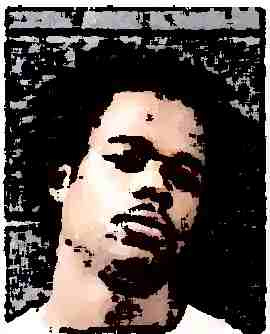
It’s really just how I would imagine his mug shot to be: head cocked at an angle to show that, while he was complying with the police officer, he still wanted it clear that he was his own person. It’s the defiance of the desperate: lacking any other meaningful way to express himself, he showed that he wasn’t going to face the camera straight on.

I met De’Andre (not his real name) while working with at-risk youth in North Carolina. For a year, I and others worked with him (and others) to provide instructions and practice in the basic social skills: accepting “no”; following instructions; managing anger; maintaining eye contact in conversations with authority figures; managing impulses. The things that so many of us learned without direct instruction; the things that make basic interactions in society possible; the things without which success is unthinkable. Some days were successful; others were not.

mug3

Like De’Andre, Clearance had great difficulty with even the most basic social skills. He had a short temper that could quickly grow violent and a mischievousness that could quickly cross all boundaries of acceptability.

For both these young men, life had been a series of dead ends. Clearance’s one bit of pride came from his success in fourth grade as a football player. De’Andre had even less he would express pride about. They lived moment to moment, second to second, without any hope of making it to anything but the next meal. They shuffled in and out every day, unsure what would happen the moment they crossed the threshold, and quite honestly, unconcerned as well.

Mug 1

What can we do with young men — and there are thousands of them in America today — who are so very fatalistic that their probable response to seeing their own mug shots on the internet would be, “Well, it was bound to happen sooner or later?” What do we do to help young men from seeing their lives as a dead end?

It is here that I remain left-leaning with right-leaning motivations. This is not to say that I see these men as victims. They might have been victims as children — and from what I know of the personal histories of individuals like this, they certainly were victims of various forms of abuse — but the only thing they’re victims of now is their own fatalistic thinking and the habits they’ve formed over the years. Their mug shots are now on the internet because of choices they made, pure and simple.

But my left-leaning tendencies emerge when I think of their experience in school. It’s clear that they had no one in their homes to teach them these skills; it’s clear that they had no one in their lives to model these skills. That is the sense in which they are now victims of their neglected childhood. And as a teacher, I wonder if we can’t do something while such young men are children to help them develop the skills they need.

mug4 These deficiencies are as clear in early life as reading problems. In fact, they’re more clearly evident. What are the current options in such situations? There are few, if any. The classroom teacher is responsible for the academic instruction of thirty young children; she has little to no time to instruct little De’Andre or Clearance in the basic skills they seem so clearly to lack. So they get called down, sent to time out, removed from activities, and generally shunned. Instead of learning these skills, they become resentful of those who have the skills and meet with success in school. Indeed, they don’t even recognize that there are different skills successful students are using. “Those kids are just kiss-ups” is the common response.

mug5What do we do with this students are they grow older and more intractable, more incorrigible? We do the logical thing: we suspend them. Talk back to the teacher? Get three days out of school. Fight with a student? Get five days out of school. Initiate a fight that is particularly brutal? Get ten days out of school. And this helps these students how? Giving students who don’t want to be in school because they’ve only met with failure in school a chance to get out of school advances their education how?

What’s in place for habitual offenders — alternative school — seems less than effective. Indeed, De’Andre and Clearance had already been to alternatives school, and they’d met with as much success there as they had in regular school.

mug6I would imagine it’s the same success they’ve met everywhere else in life. And it seems to me that when people aren’t meeting success through the normal channels of life, they begin looking for it in other ways. Or, perhaps as in the cases of these boys’ lives, they apply the techniques that bring them relative success on the streets to institutional situations, where those same methods will bring not success but condemnation. Or even eventual incarceration.

And every day I see flickers of such futures in this or that student. I see reactions that I think, “Young man, that will get you fired in ten years.” And it occurs to me that perhaps the best thing I can do for such young men and women is provide an environment where they experience at least some success without resorting to a thug attitude.