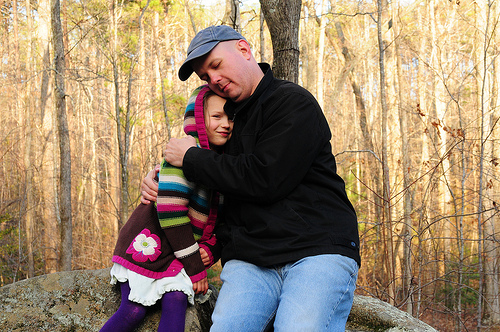
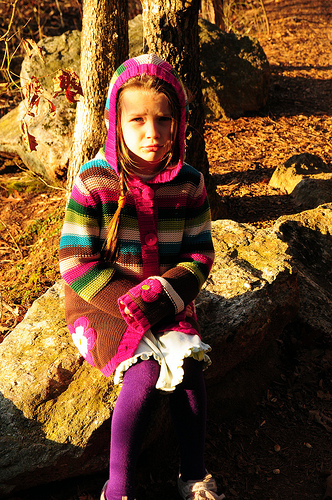
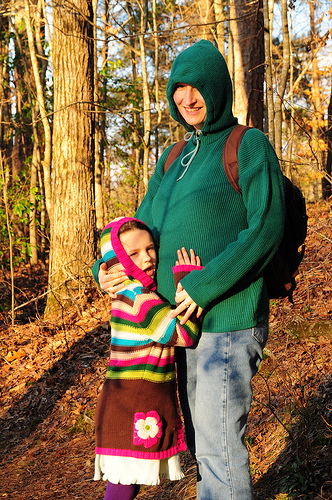
Matching Tracksuits

fun in fours

40 things

Lent 2012: Day 12

One of the great things about Lent is that it takes a break every Sunday. Which means that even if you promised yourself to read something Lenten and write daily about it, you can take a break on Sundays and simply put some pictures up from a walk in the park.
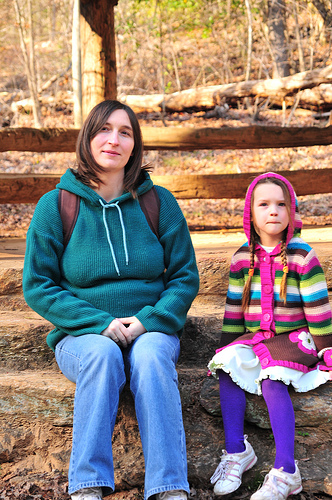

VIV_7294
VIV_7336
DSC_7360
DSC_7353
DSC_7368
DSC_7400
DSC_7395

Lent 2012: Day 11

Religious people are an unkindly lot. Poor human nature cannot do everything; and kindness is too often left uncultivated, because men do not sufficiently understand its value. Men may be charitable, yet not kind; merciful, yet not kind; self-denying, yet not kind. [...] Kindness, as a grace, is certainly not sufficiently cultivated, while the self-gravitating, self-contemplating, self-inspecting parts of the spiritual life are cultivated too exclusively.

One immediately assumes that charity is a sort of kindness, as is mercy. Faber suggests that it isn't. Perhaps I don't understand what Faber means by "kindness" after all.

The quoted excerpt is from Father Frederick Faber’s Spiritual Conferences, excerpted here.

Lent 2012: Day 10

[Kindness] watches the thoughts, controls the words, and helps us to unlearn [youth's] inveterate habit of criticism.

Criticism is easy, fun even. We can easily discern others' faults, and it takes little imagination to capitalize on these faults, aggrandizing ourselves while belittling others. As the fictional critic Anton Ego says in Ratatouille,

In many ways, the work of a critic is easy. We risk very little, yet enjoy a position over those who offer up their work and their selves to our judgment. We thrive on negative criticism, which is fun to write and to read. But the bitter truth we critics must face, is that in the grand scheme of things, the average piece of junk is probably more meaningful than our criticism designating it so.

Yet when we're practicing active kindness, it puts a filter over our lips.

The quoted excerpt is from Father Frederick Faber’s Spiritual Conferences, excerpted here.

Lent 2012: Day 9

A proud man is seldom a kind man. Perhaps nothing more needs to be said -- especially considering how tired I am...

The quoted excerpt is from Father Frederick Faber’s Spiritual Conferences, excerpted here.

Lent 2012: Day 8

Thus does kindness propagate itself on all sides. Perhaps an act of kindness never dies, but extends the invisible undulations of its influence over the breadth of centuries.

“We can only plant the seeds. We never know how they will grow” It’s a common refrain in teaching, and I always kind of thought it was a cop-out. At times I feel like, quite frankly, such a failure as a teacher. Kids spend 180 days with me, and some of them seem none the better for it. It’s perhaps a useful guilt: it might spur teachers to become better at their job, to seek training and experiences that will increase their effectiveness.

Perhaps an act of kindness never dies

But saying, “We can only plant the seeds” seems somehow to alleviate that guilt. We plant the seeds; it’s up to the kids to tend the resulting crop.

Faber suggests otherwise: it’s not a cop-out. We can sow kindness and know, with some certainty, that it will grow into more kindness. We can know that we’ve had a positive impact on someone’s life. Perhaps it’s a good sign that we’re more willing to admit the opposite, or maybe it’s just another sign of our condition.

The quoted excerpt is from Father Frederick Faber’s Spiritual Conferences, excerpted here.

Lent 2012: Day 7

I think, with the thought of the Precious Blood, I can better face my sins at the last judgment, than my unkindness, with all its miserable fertility of evil consequences.

Unkindness is easier than kindness, and sometimes more rewarding in a perverse sense, much like heroin is more "rewarding" than a draft of water. But once the high wears off, we look back at that cutting remark or that sneering body language and think ourselves most wretched. We don't often lie in bed, unable to drift to sleep for the thought of some kindness we shared or even at the thought of some bit of apathy that helped us slide through the day. But unkindness has left me turning in bed and occasionally haunted me into the early morning.

The quoted excerpt is from Father Frederick Faber’s Spiritual Conferences, excerpted here.

Lent 2012: Day 6

There are few gifts more precious to a soul than to make its sins fewer. It is in our power to do this almost daily, and sometimes often in a day.

I've been thinking about my daily interactions with students as a source of some many daily opportunities to show kindness, but certainly the first place one should look is one's own home. Most auto accidents, we're told, happen close to home. This is because of the kernel of truth in the cliche that familiarity breeds, if not contempt, at least indifference and inattention. Perhaps the same is true, sadly enough, of our own home life at times. We take for granted what we see daily if we're not careful, yet nowhere else are the opportunities for the grace of kindness more plentiful than at home. That we need from time to time to remind ourselves of this simple fact is saddening and humbling.

The quoted excerpt is from Father Frederick Faber’s Spiritual Conferences, excerpted here.

Lent 2012: Day 5

the immense power of kindness in bringing out the good points of the characters of others

When I can lift myself above my wounded ego — “What?! How dare you be cruel or disrespectful to me, who is only trying to help you get an education!” — and respond thoughtfully and kindly, a change sometimes occurs, a softening, a reflective moment of calm.

A kind word or tone can transform conflicts into positive experiences. A simple kindness of offering to help a kid by holding books while he rummages through his locker can bring a smile where once there was anger.

Even if all is well in the student’s life at the moment, an act of kindness can echo into the future. Relationships are like bank accounts: we can make deposits through kindness that will give us a buffer against emotionally stressful withdrawals.

The quoted excerpt is from Father Frederick Faber’s Spiritual Conferences, excerpted here.

Lent 2012: Day 4

Probably the majority of repentances have begun in the reception of acts of kindness, which, if not unexpected, touched men by the sense of their being so undeserved.

Reading Faber, I keep returning to thoughts of school and interactions with students. And I can't deny that there are times, based on behavior of various students, that I find myself thinking that this or that student doesn't deserve kindness. When someone is disrupting others, making it difficult to focus on the task at hand, focusing all her energies on getting everyone's attention, she is attempting to take opportunities away from others. It's a myth to think that students today aren't interested in learning -- the vast majority are, keenly so. But it only takes two or three in a classroom to derail the whole process, and an incorrigible student soon draws the ire of other students and the teacher.

It is precisely at those moments that I most decidedly don't feel like being kind. It is in those situations that the temptation to cruelty is most acute. Responses come to mind that are so ineffably and cruelly inappropriate but at the same time seem so perfect. Yet a kind word can sometimes calm the whole situation, while cruelty will only debase everyone in the room. It's the easy way out, which is why kindness can be so difficult.

The quoted excerpt is from Father Frederick Faber’s Spiritual Conferences, excerpted here.

Lent 2012: Day 3

Reading

Such is kindness. Now let us consider its office in the world, in order that we may get a clearer idea of itself. It makes life more endurable. The burden of life presses heavily upon multitudes of the children of men. It is a yoke, very often of such a peculiar nature that familiarity, instead of practically lightening it, makes it harder to bear. Perseverance is the hand of time pressing the yoke down upon our galled shoulders with all its might. There are many men to whom life is always approaching the unbearable. It stops only just short of it. We expect it to transgress every moment. But, without having recourse to these extreme cases, sin alone is sufficient to make life intolerable to a virtuous man. Actual sin is not essential to this. The possibility of sinning, the danger of sinning, the facility of sinning, the temptation to sin, the example of so much sin around us, and, above all, the sinful unworthiness of men much better than ourselves, these are sufficient to make life drain us to the last dress of our endurance. In all these cases it is the office of kindness to make life more bearable; and if its success in its office is often only partial, some amount of success is at least invariable.

It is true that we make ourselves more unhappy than other people make us. No slight portion of this self-inflicted unhappiness arises from our sense of justice being so continually wounded by the events of life, while the incessant friction of the world never allows the wound to heal. There are some men whose practical talents are completely swamped by the keenness of their sense of injustice. They go through life as failures, because the pressure of injustice upon themselves, or the sight of its pressing upon others, has unmanned them. If they begin a line of action, they cannot go through with it. They are perpetually shying, like a mettlesome horse, at the objects by the roadside. They had much in them; but they have died without anything coming of them. Kindness steps forward to remedy this evil also. Each solitary kind action that is done, the whole world over, is working briskly in its own sphere to restore the balance between right and wrong. The more kindness there is on the earth at any given moment, the greater is the tendency of the balance between right and wrong to correct itself, and remain in equilibrium. Nay, this is short of the truth. Kindness allies itself with right to invade the wrong, and beat it off the earth. Justice is necessarily an aggressive virtue, and kindness is the amiability of justice.

Thoughts

The burden of life presses heavily upon multitudes of the children of men and very often, we are the ones adding additional weight to that load.

No slight portion of this self-inflicted unhappiness arises from our sense of justice being so continually wounded by the events of life. We see this daily in the classroom, where twenty-some fourteen-year-old sense of justice collide, often enough with the authority figure. "Everyone else is talking!" proclaims a frustrated young man when called down. We see this daily on the road, and often enough, participate in the injustice, when someone cuts another off or fails to accelerate quickly enough to please us. We feel this when we find that our tax return is not quite what we expected, not quite what seems fair. And all of these injustices are the extent to which the vast majority of us in the developed world ever experience. Yet these are bearable burdens. There are many men to whom life is always approaching the unbearable.

Each solitary kind action that is done, the whole world over, is working briskly in its own sphere to restore the balance between right and wrong. Perhaps this is the ultimate human answer to the problem of evil: as authors of evil, we can also be creators of kindness, and the latter cancels out the former.