matching tracksuits

fun in threes, sometimes fours

2020 school year

Endings and Circles

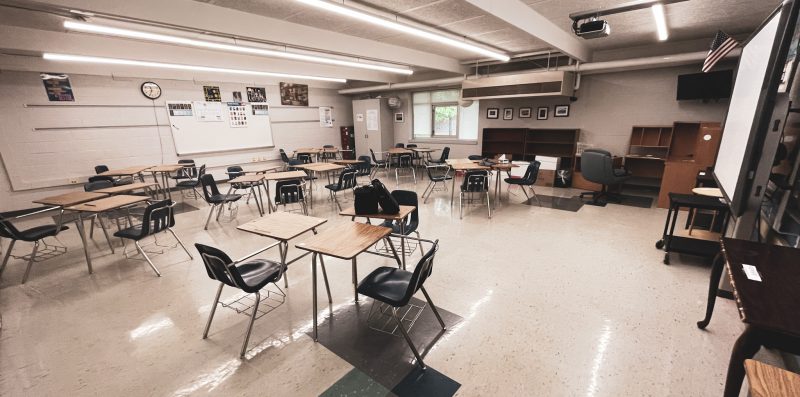
Today was the last day of the 2020/2021 school year: we had a faculty breakfast, acknowledged and expressed our appreciation for the faculty members who will not be returning to the school next year, and packed away the last of our materials, closing up our room for the summer.
Endings used to bother me as a kid because I never could be sure that what came after would be as good as what I'd just experienced. That's no longer the case because I realized as I grew older that, as long as no disaster strikes, there's no better or worse -- just different.
Awards Night 2021

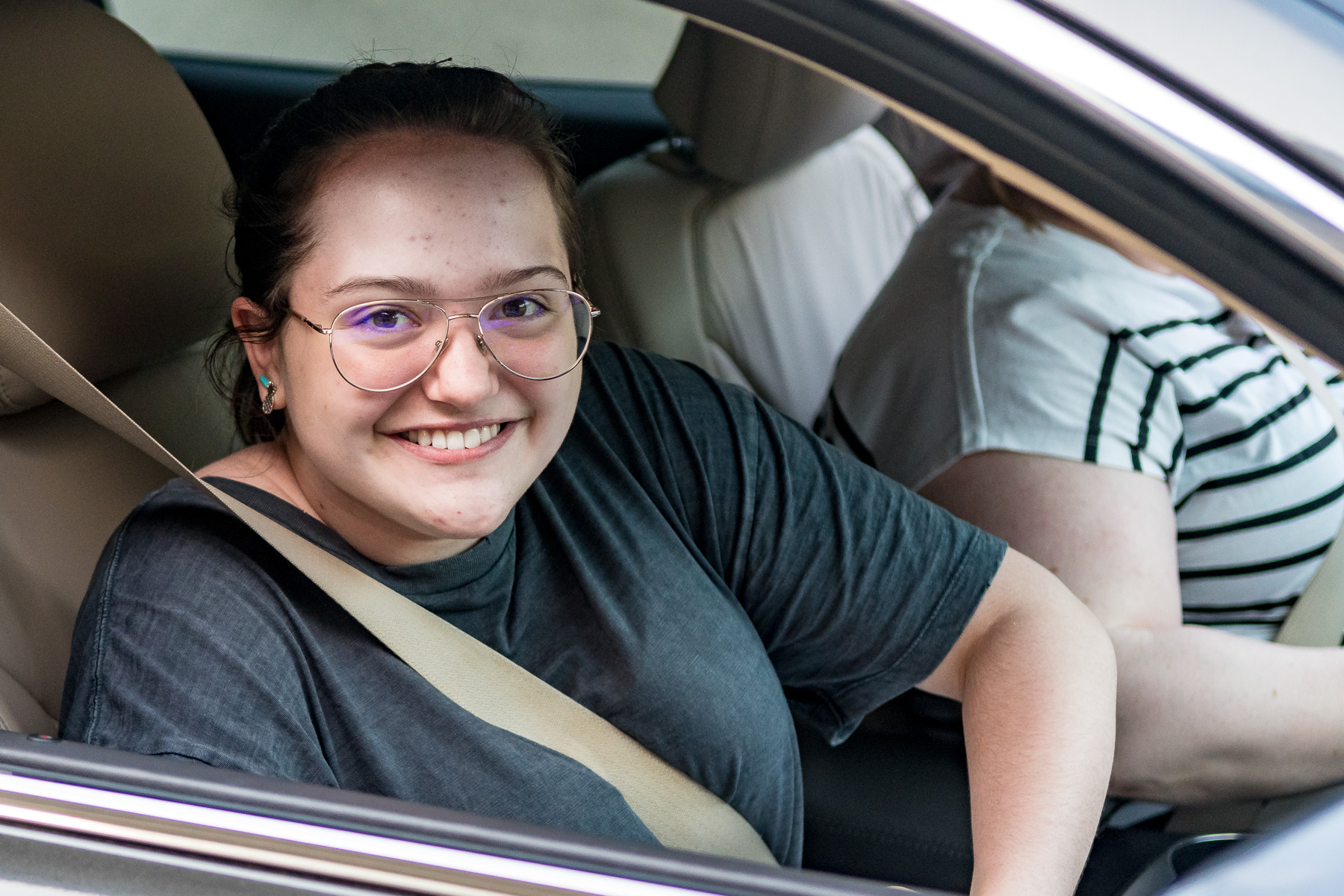
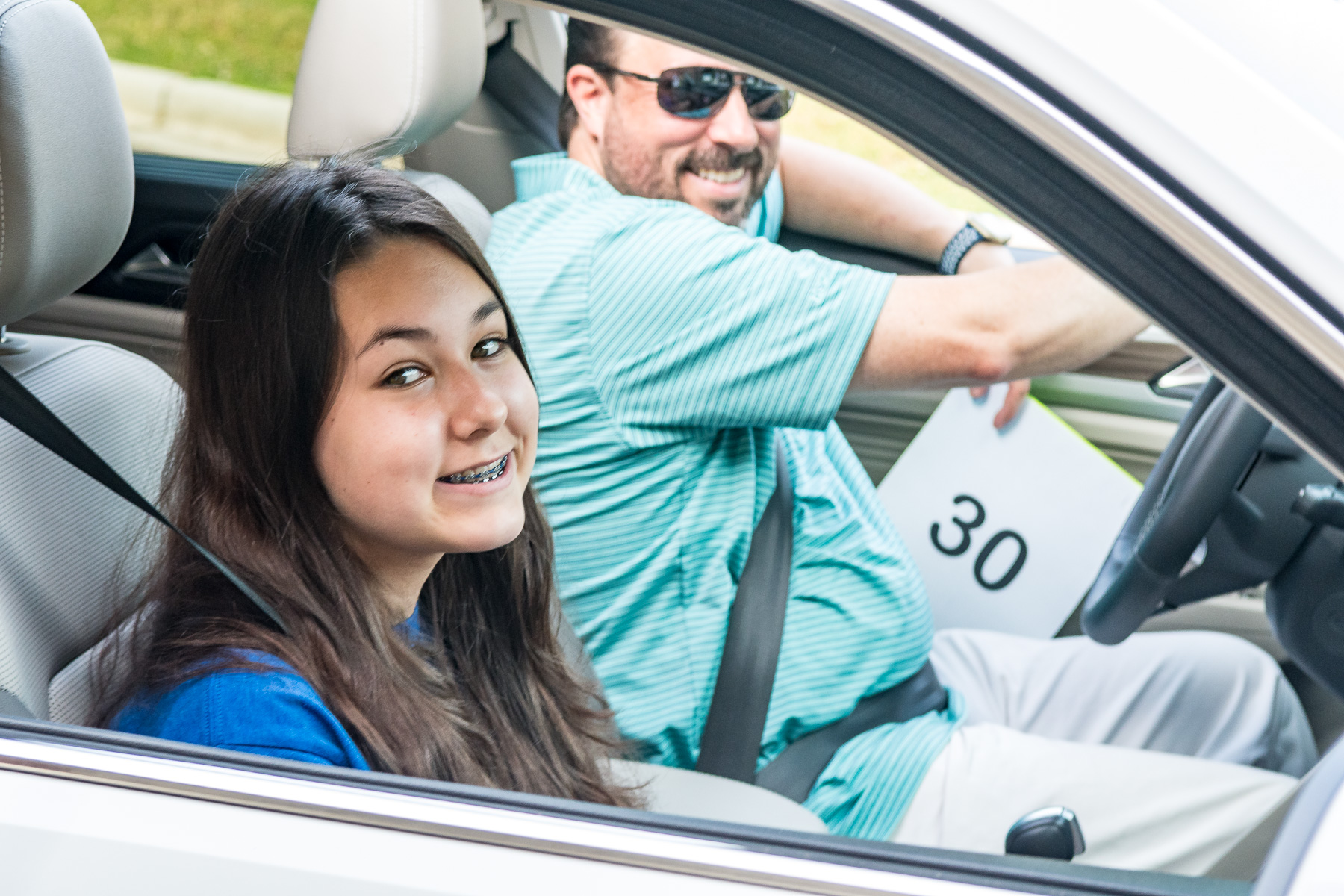
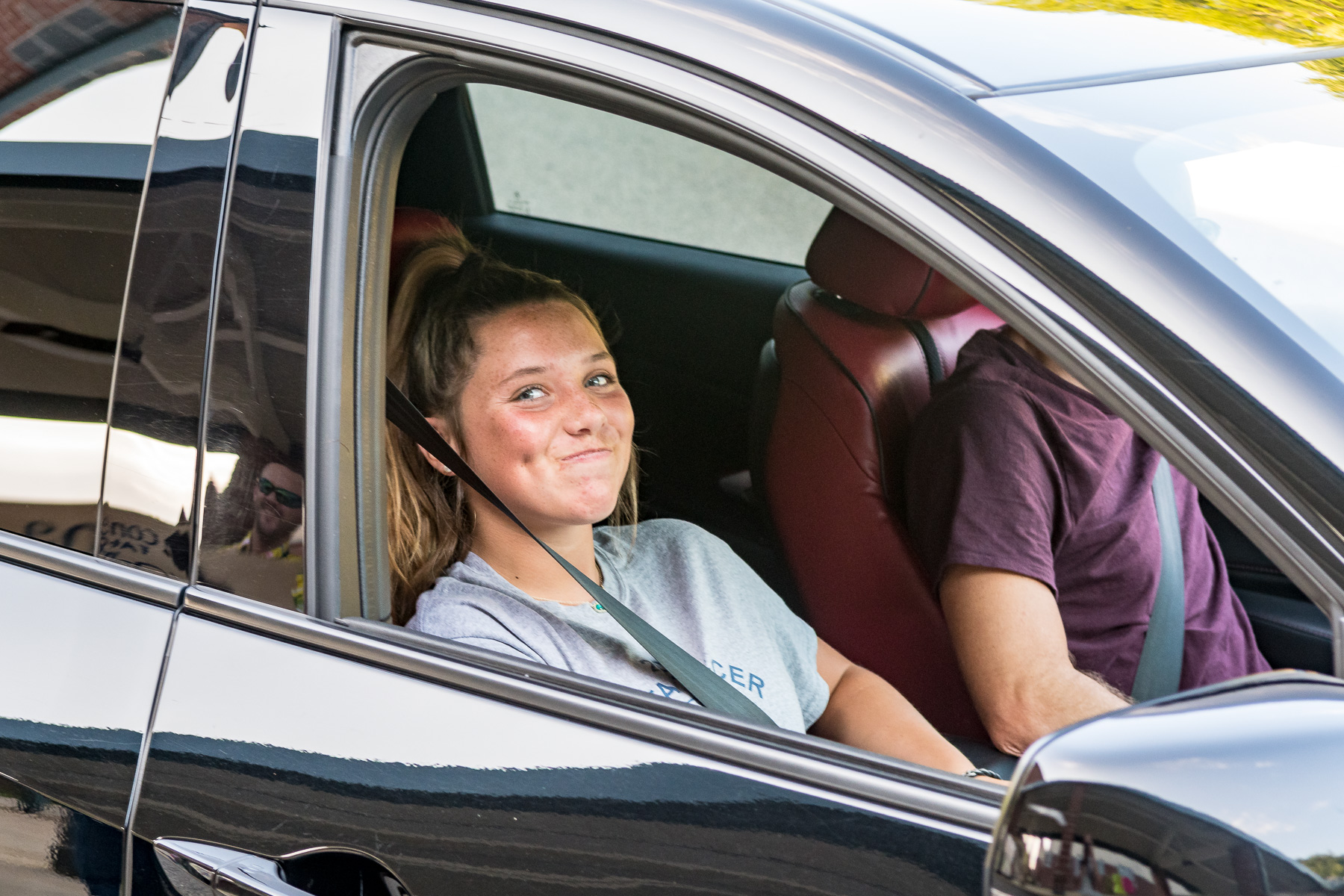
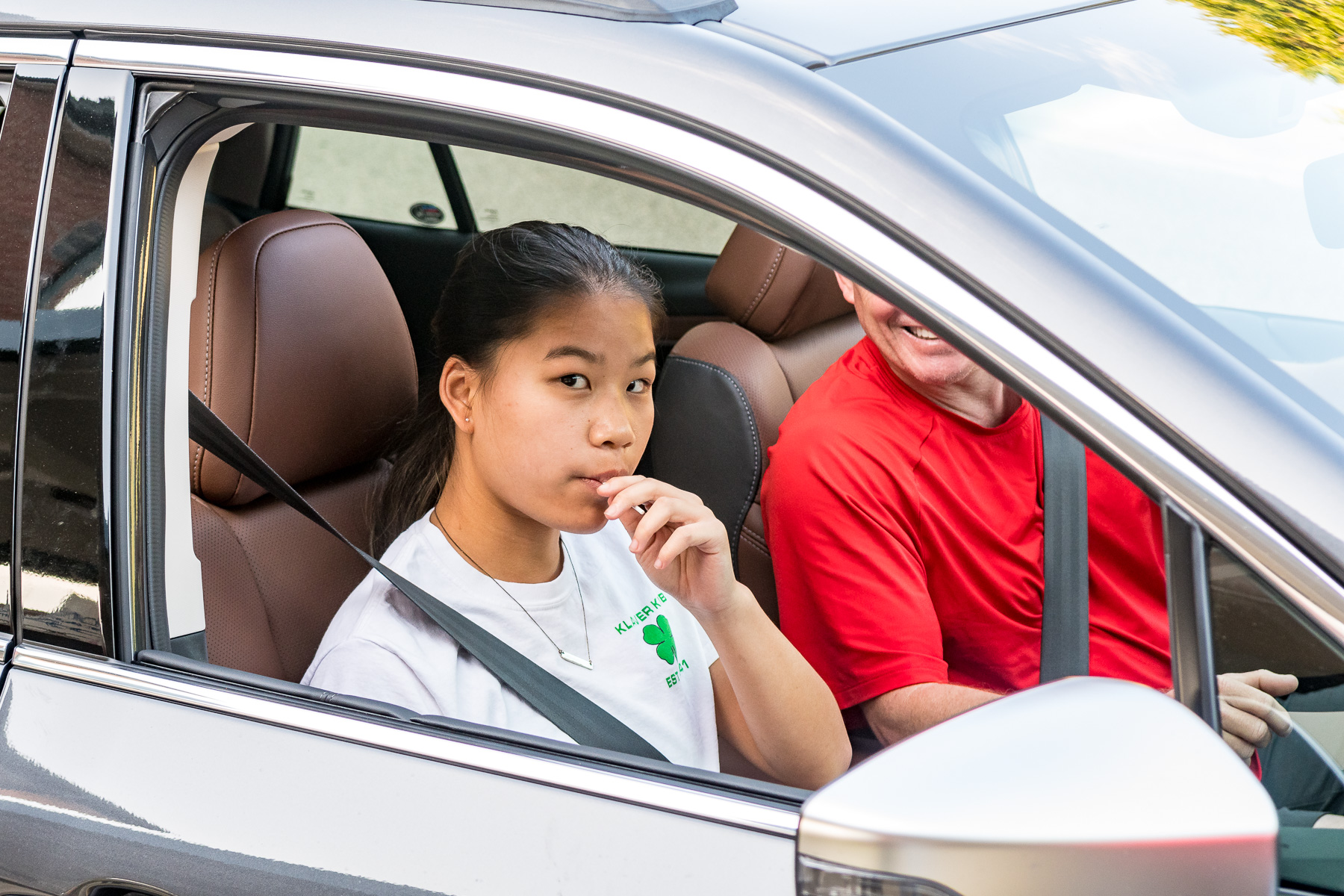
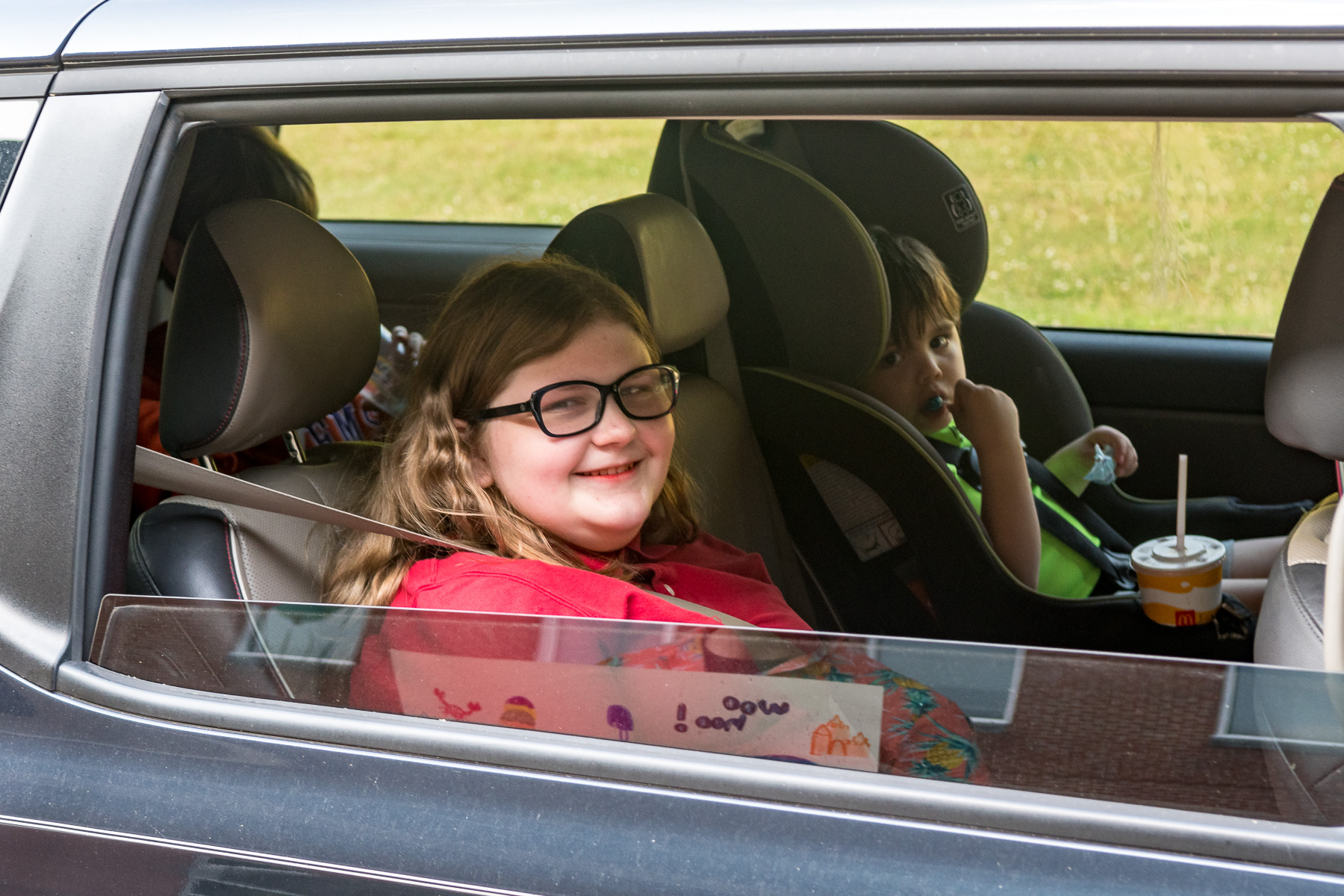
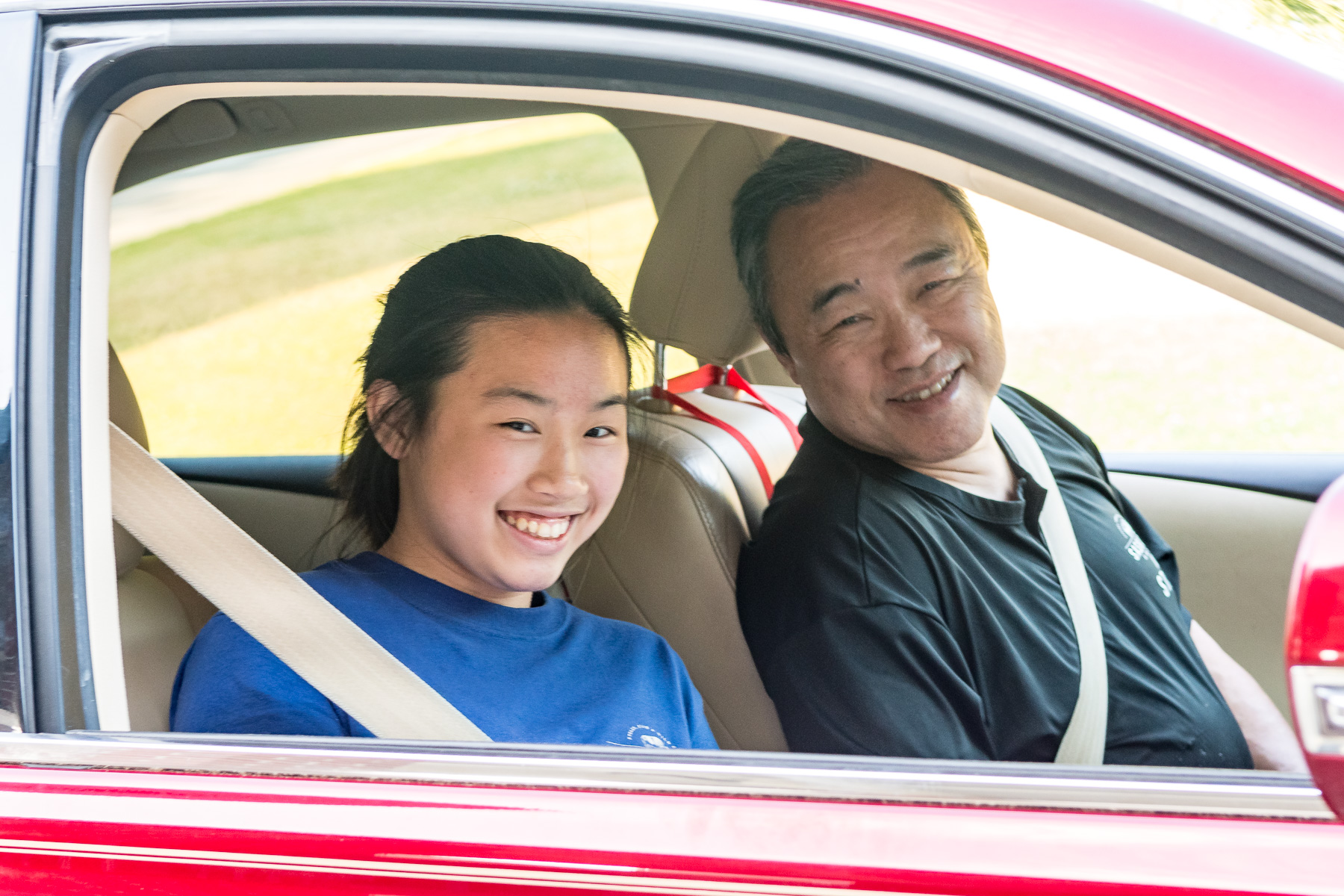
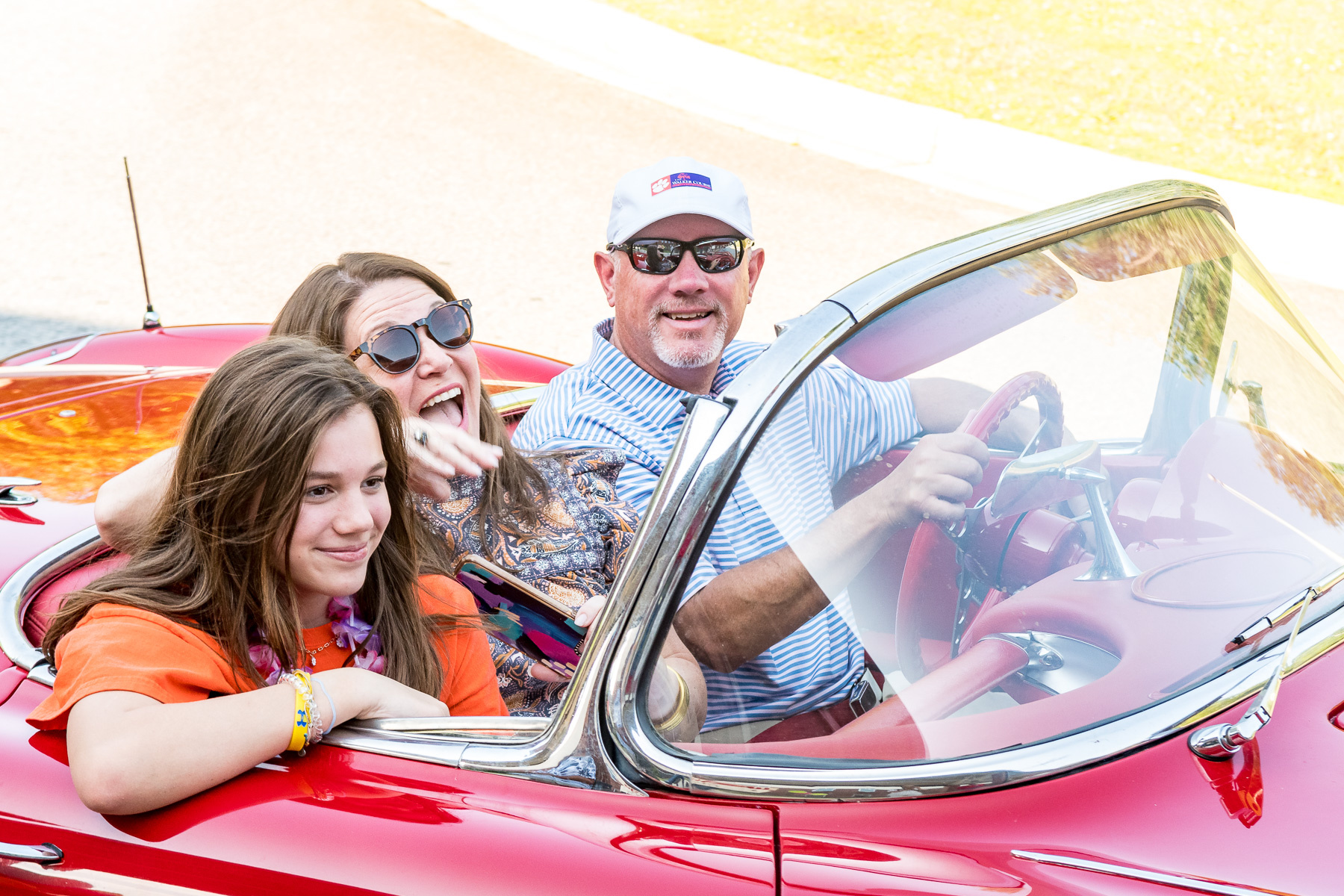
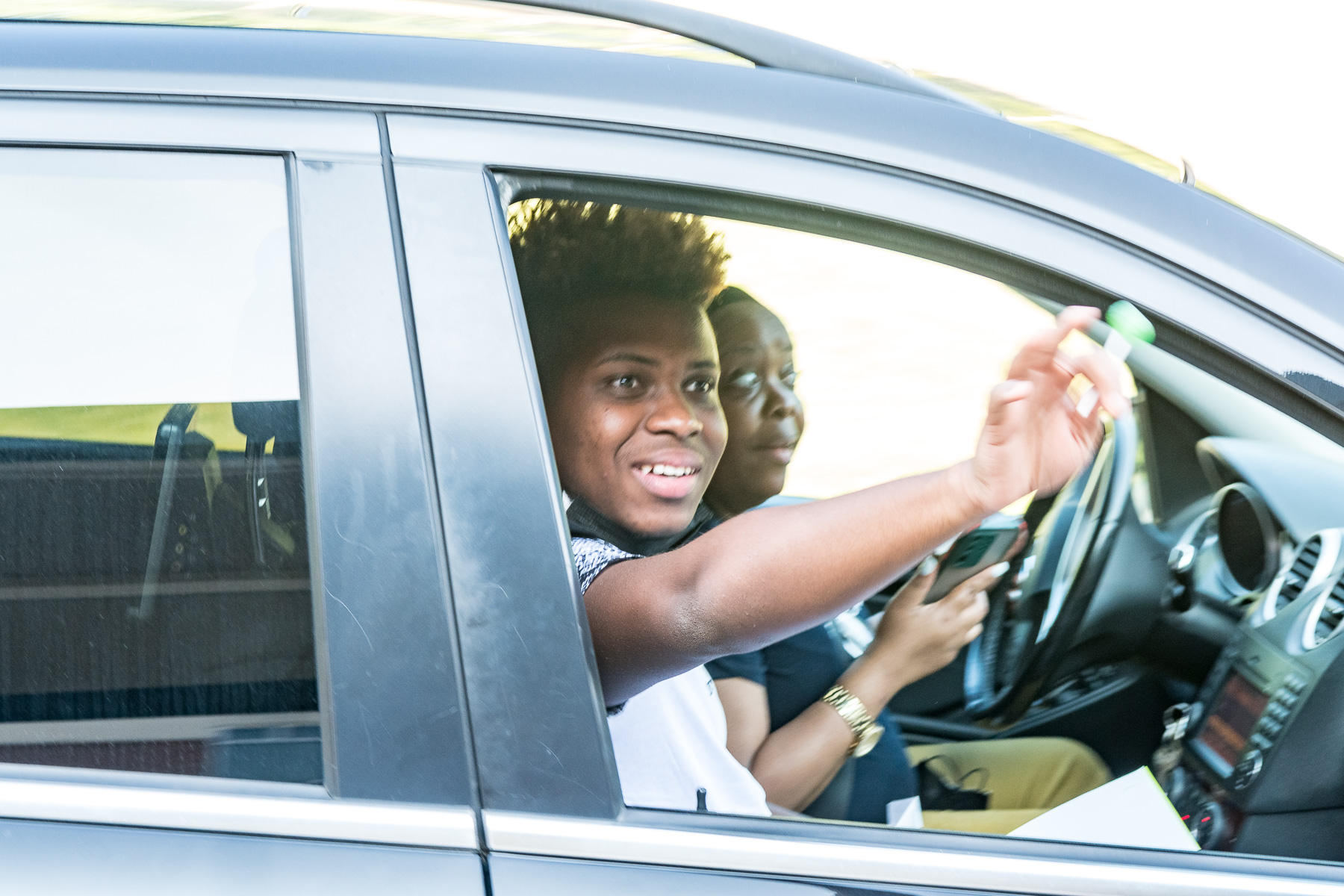
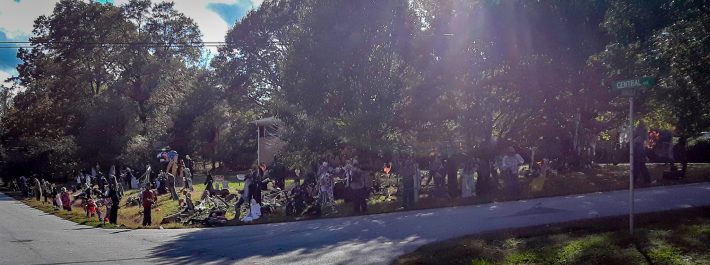
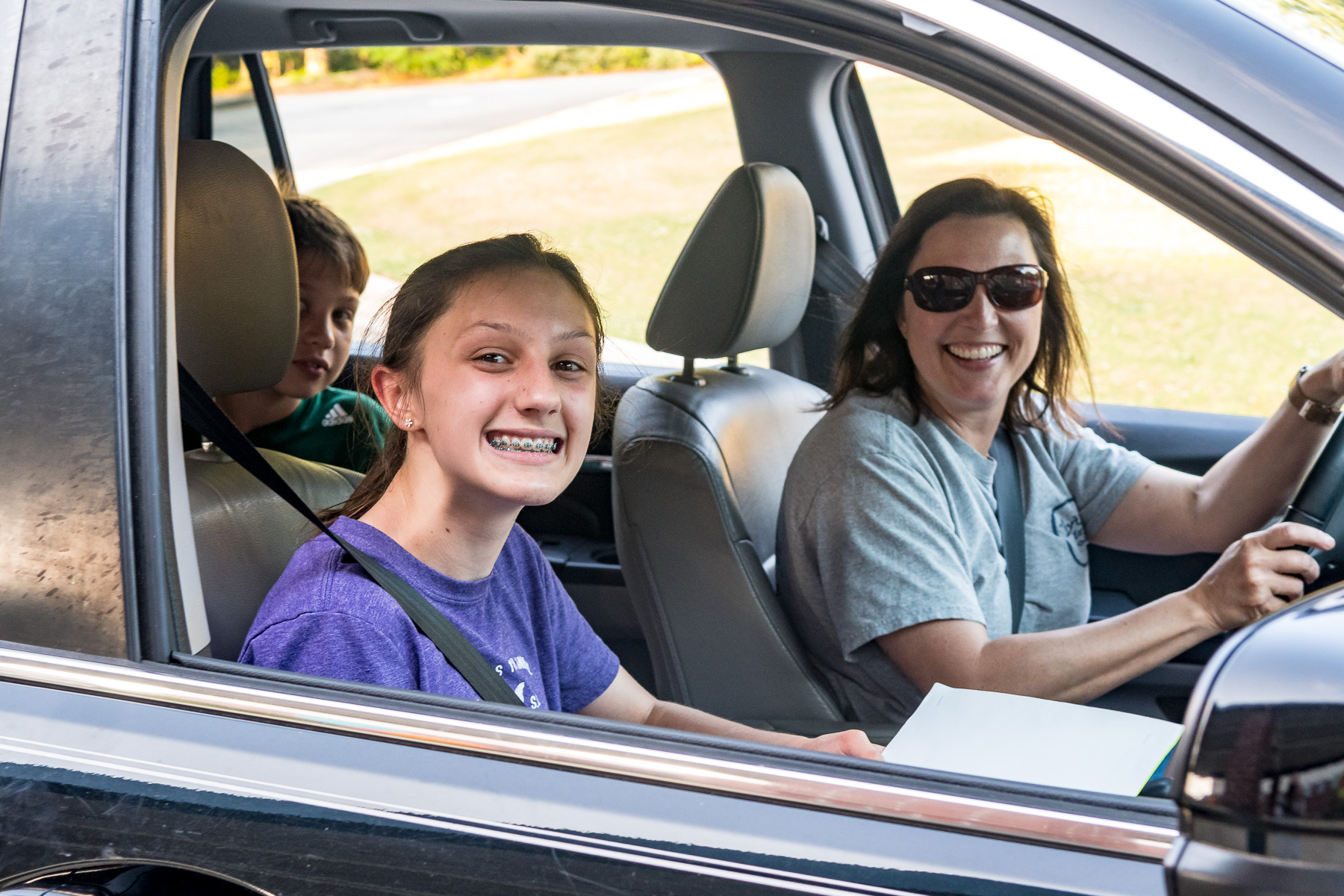
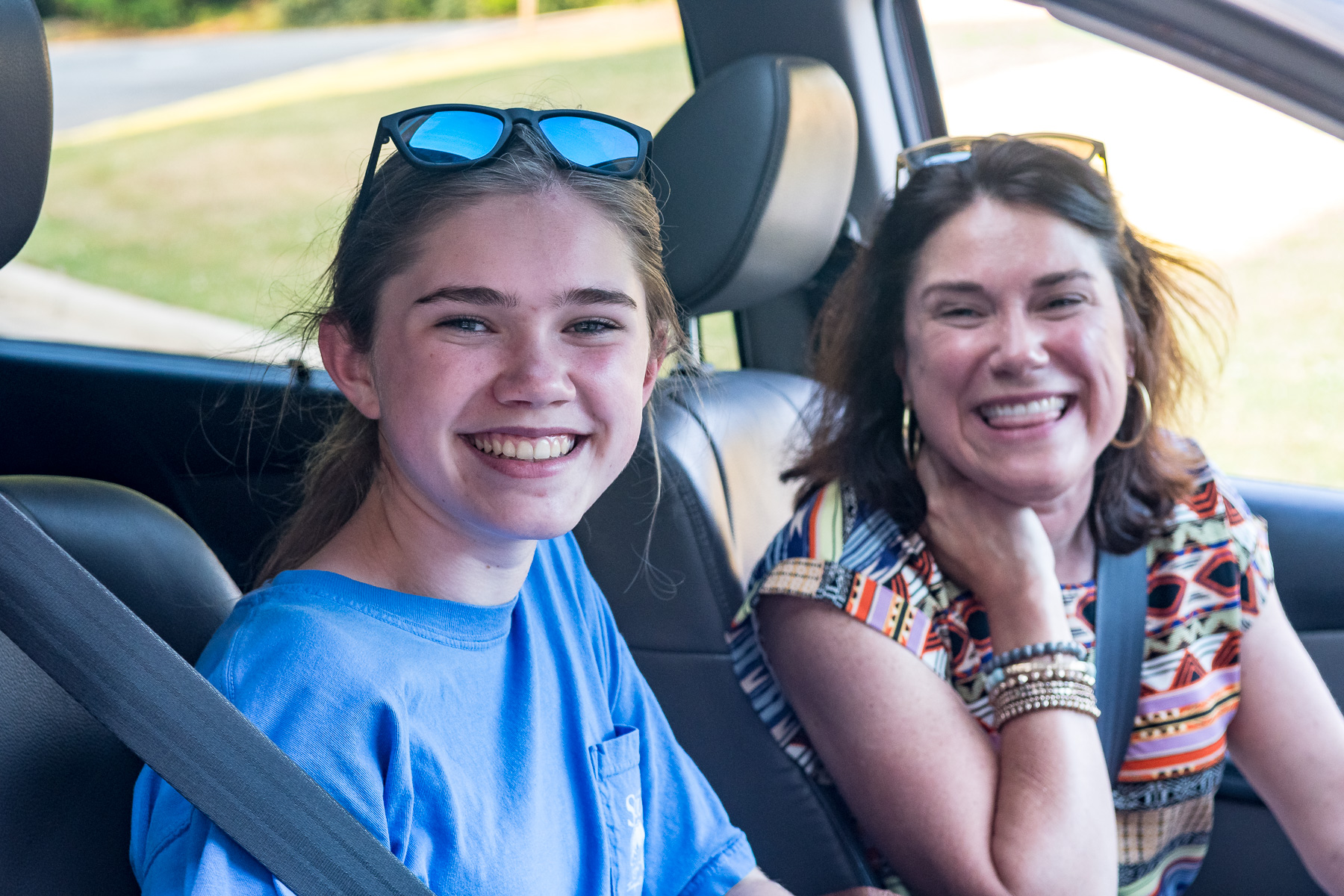
It's been two years since our school held an awards night. This year we held a drive-by awards night.

First Day Maskless

How many kids would come to school with the required parental consent form and no mask? It was the question on my mind the whole way to school. The answer:

Eighty students out of 655 enrolled in person. That's about 15%, which is the district average:

With 87 schools reporting, 7,877 students have opted out of the mask requirement, Waller said. That’s 15% of all Greenville County students. (Source)

And then today, the CDC says that vaccinated individuals can, it seems, go back to business as usual.

The Centers for Disease Control and Prevention says people who are fully vaccinated against COVID-19 can forgo their masks and social distancing in many indoor situations.

"Today, CDC is updating our guidance for fully vaccinated people," CDC Director Dr. Rochelle Walensky said Thursday at a White House COVID-19 briefing. "Anyone who is fully vaccinated, can participate in indoor and outdoor activities, large or small, without wearing a mask or physical distancing. If you are fully vaccinated, you can start doing the things that you had stopped doing because of the pandemic."

It makes me wonder -- will teachers be able to go back to maskless normalcy soon? And how exactly do I feel about that? I was fussing this morning to a colleague that our governor seemed to say "CDC be damned -- we're going our own way."

"I will do what the CDC recommends," I said.

And then today, the CDC relaxes the guidelines.

Ready for Covid-Era Testing

Last year, we didn’t conduct the end-of-year, state-mandated, federally-mandated, all-but-teacher-student-mandated testing because of the blossoming pandemic. This year, we’re having it.

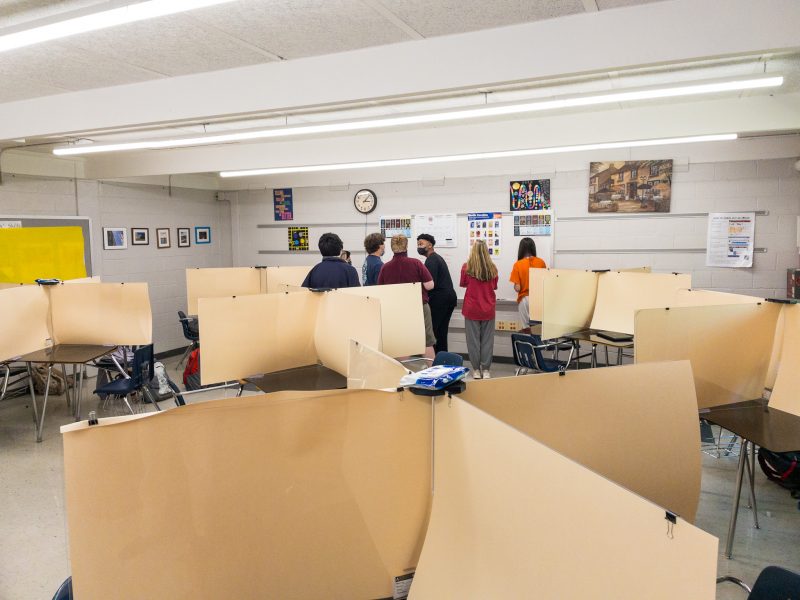
But that presents a new problem: how to keep kids who are facing each other in plexiglass pods from cheating? (Do many of these kids really have an interest in cheating? I find that hard to believe. This test has no immediate effect on their lives, and the only time I see cheating is when a grade that will land in the grade book and affect the report card is at stake.)

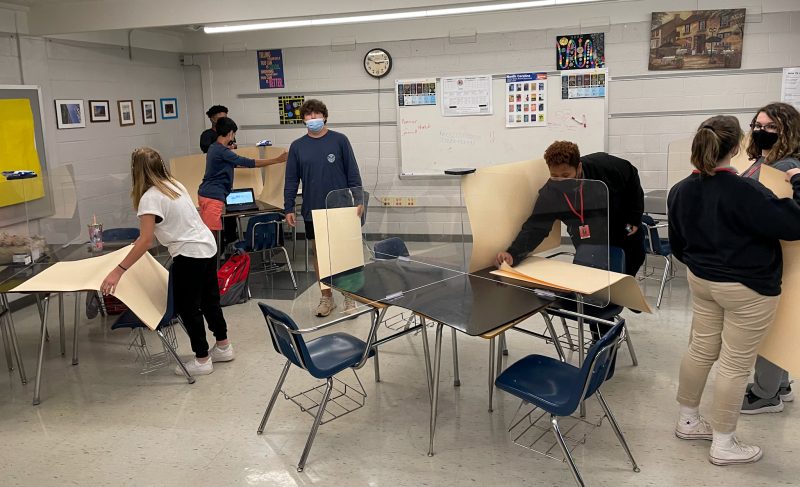
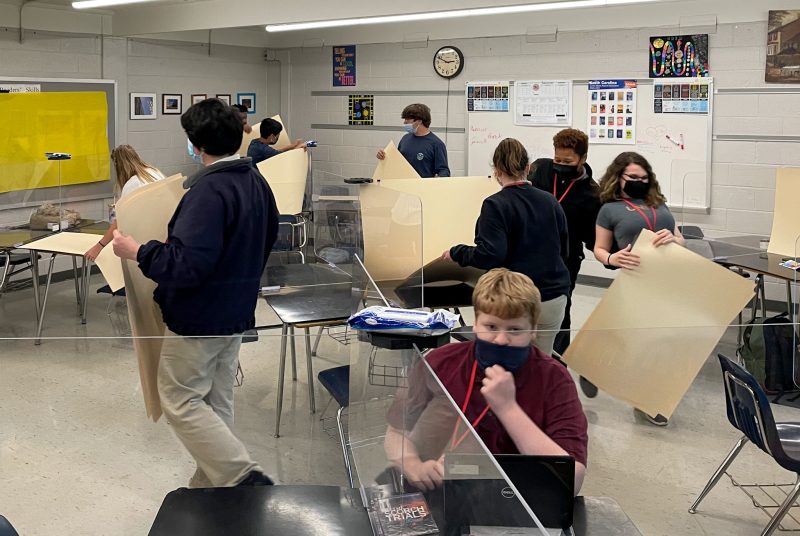
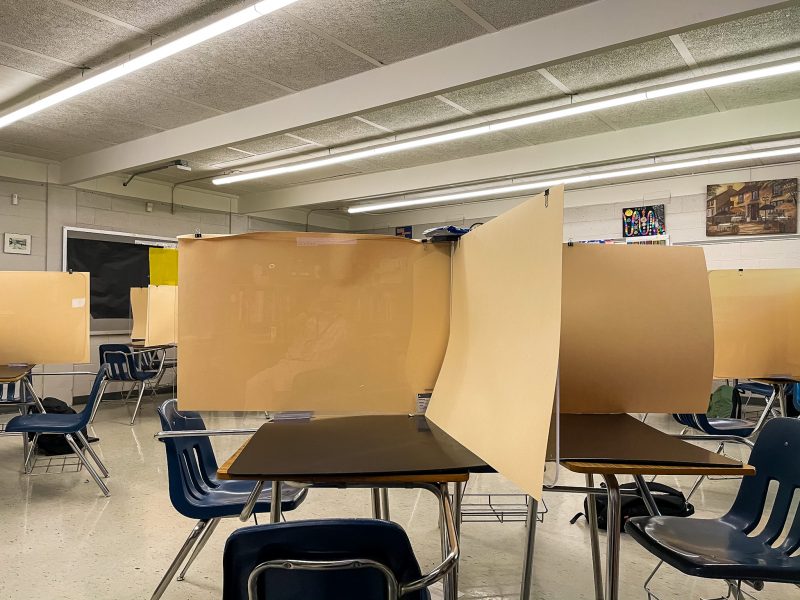
The solution: the district bought thousands of sheets of poster board and even more clips so that we can attach blinders to the plexiglass.

The result: pockets of invisibility throughout the classroom. In fact, as the proctor, I won’t be able to see most of the kids at all at any given moment.

If kids are interested in cheating, the powers that be just made it a whole lot easier for them.

Opłatek 2020

It’s always the highlight of the school year for me, introducing American students to the lovely tradition of sharing the opłatek wafer. The kids love it; the administrators and counselors I invite in love it; I love it.

And I thought that we wouldn’t be able to do it this year. But I’m not one to give up easily when I think it’s something valuable for my kids, so I came up with an alternate plan.

Instead of sharing food, I had kids bring in their own snacks.

“What are we doing, Mr. S?” they asked.

“You’ll see.”

It’s important that they have a bite to eat during the process because that’s what the tradition is all about: breaking bread together.

So the kids divided into two groups, with the inner group rotating in sync, always maintaining social distance, and never touching any other seat.

I showed them pictures from previous years.

“That looks really fun,” one girl said.

Well, it is more fun than what we did today, but perhaps they got a little glimpse of the perfection that is the sharing of the opłatek.

First Impressions

“They actually kind of make me dizzy.”

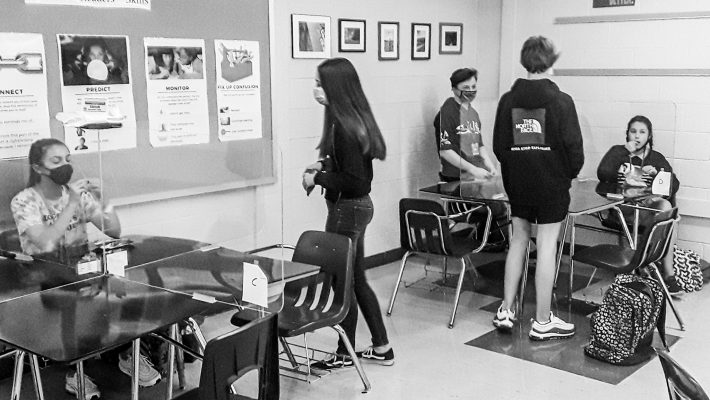
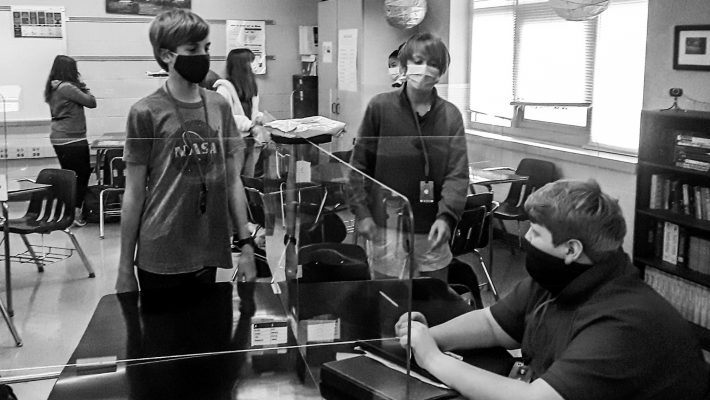
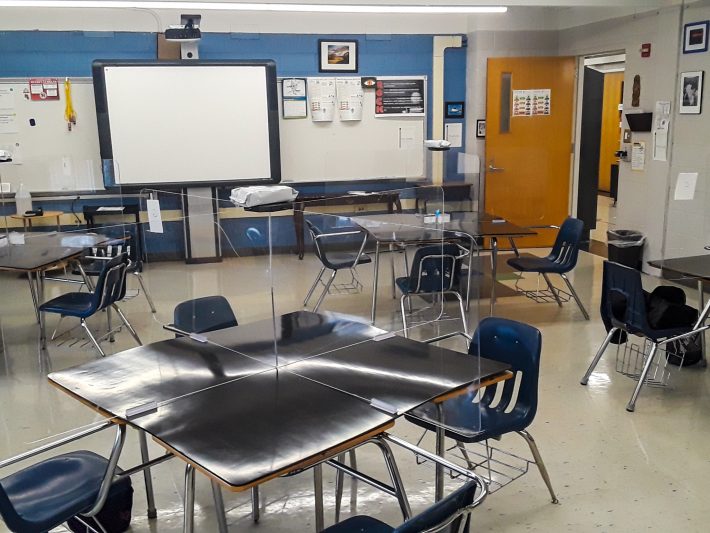
It wasn’t what I was expecting when  I asked Ms. Butler about how things were going in her newly-podded classroom with each student seated in a little box of plexiglass. Perhaps I was expecting something more like, “It’s even more difficult to hear students,” or “It’s weird seeing students through so many layers of plexiglass,” or even, “It’s just weird.” But not dizziness.

“What do you mean,” I asked.

“Well, with all these panels of reflective plastic,” she began, feeling her way through the explanation carefully as if she hadn’t really hadn’t tried to put it into words before. “There’s just all these weird reflections that shift and move as you move around the room.”

“That sounds awful.” I get dizzy easily, and it had me a little concerned about how I might react to it myself.

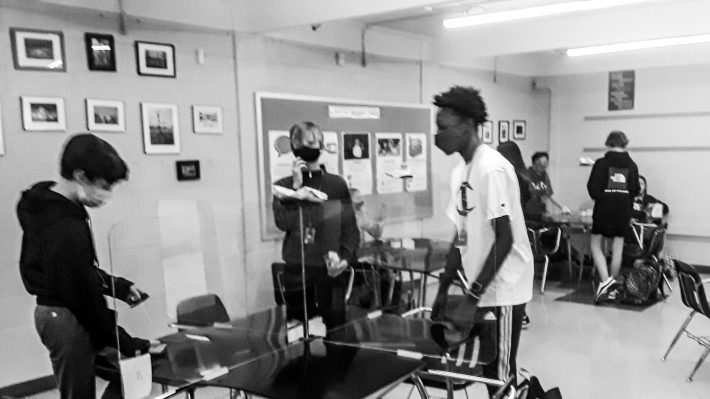
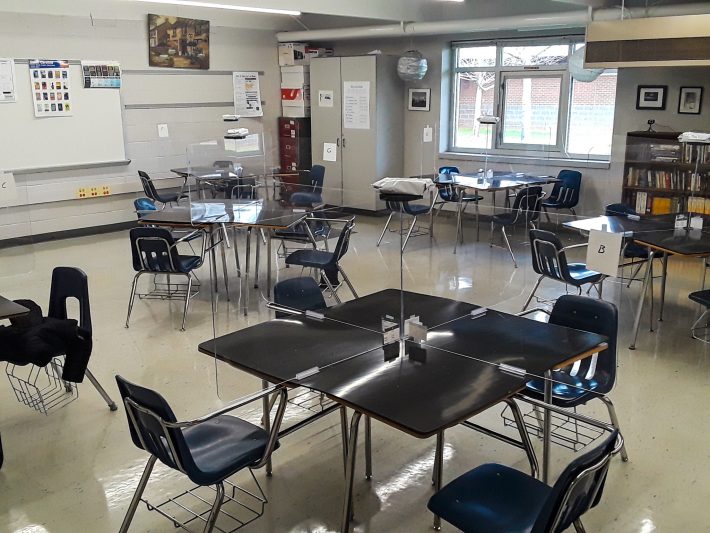
When I got into the classroom this morning and started placing name tags on everyone’s seat, I saw immediately what she meant. The clear plexiglass that divides students into little almost-self-contained cubes reflected images from around the room. These reflections were, in turn, reflected off the black plexiglass bases on which the whole dividers sat, and the play between these reflections and reflections of reflections had me feeling a little woozy within seconds. It was as if everything were somehow in the matrix film, with solid reality turning into liquid, flowing reflections of reality. What’s worse, the whole broad clear barriers reflected again their own reflections from the black bases and also refracted the images of other tables so that we had reflections of reflections of reflections, all moving and shimmering at different speeds and frequencies.

I felt like I was in a hall of mirrors, a corridor of reflections that caved in on themselves, like waves riding on waves that then crash into other ripples, transforming all of reality into a dancing mirage, a dizzying visual cacophony.

“Dear God, what if it’s always like this?”

As I walked around the room affixing the place holders to their right locations, I realized it wasn’t an issue if I didn’t pay attention to it or even think about it. Like baffles in a large gas tank, I thought that perhaps having people in those seats might draw more attention than the reflections themselves.

As the first period with students began, I apologized for some of the changes the new format necessitates -- no real...

Written in creative nonfiction class as students worked on their own accounts of the first days in the new pods.

The Challenge

I texted a picture to K this morning: “This is what my classroom looks like now,” I said.

“Wow — no more rearranging rooms, I guess,” she replied.

I know a lot of teachers are concerned about the impact this will have on their teaching style, on the types of lessons they can do. I for one am not terribly worried about that because this year I’m teaching only honors classes, and most honors students are relatively mature and somewhat adaptable. There are some things that will take getting used to — not as much motion, more teacher-based lessons, etc. — but overall, I think they’ll do fine.

When I got home, I noticed a little paper with Shakespearean insults on the table. Remembering that L’s class has just started Romeo and Juliet, I thought it might have been from her, but the Boy filled me in when he got home from swimming lessons: “The kids in challenge today were working on Shakespearean insults,” he said. He told me about how funny it was when his friends who went to challenge shared it with him, and I’m assuming he got K to help him find a list of insults on the internet and print them out.

It was only then that I realized: E didn’t get an invitation to join challenge when he started this year. The invitations are based on standardized test scores from second grade, and I immediately thought that the Boy must feel a little left out, a little, well, stupid compared to the others.

K had the same concerns, and we talked about it in the evening when the Boy was sound asleep. “He wanted to know if we could sign him up,” she said forlornly, “and I had to tell him you don’t sign up for it; you get an invitation.”

I remember seeing the challenge kids leave — our district was a little worse in their naming: it was the “gifted and talented” group, which makes everyone else feel less gifted, less talented, and that’s exactly how I felt. I watched them troop out of the classroom in elementary school, wondering what they do there, wondering why I wasn’t a part of it.

I got an invitation at the end of fifth grade and spent sixth grade with the GT kids who’d been doing it for several years by that time. I didn’t feel any different, really, and I don’t really recall doing anything all that spectacular. Of course, that was over 35 years ago, so I can justifiably be a little fuzzy on the details, I’m sure.

Throughout high school, I was most decidedly average. I was in the “advanced” classes only insofar as I was not in remedial English or remedial math. I didn’t take algebra until ninth grade; I never took a single AP course; I had no “Honors” affixed to my class names; I didn’t graduate anywhere near the top 10, and I highly doubt I was even in the top 10%. And yet for high school superlatives (how I loath to this day that idea), my peers voted me “Most Intellectual.” (I was tempted to refuse the award during the senior luncheon, but my mother convinced me it would be rude to do so.) So the recognition for my academic achievement was a mixed bag — conflicting signals. In the end, I just didn’t put much stock into what people thought of my intellectual abilities.

But somehow, when it comes to my kids, I feel a little differently. I want them to be geniuses, above and beyond even those who are above and beyond. What parent doesn’t?

The Boy is starting to realize some people work faster than he does, maybe a little more accurately, K and I concluded. And that’s fine. We’re all different. We all have different gifts. But still, I felt the Boy’s sting just a bit, so I went back to his bedroom and cuddled with him a little more.

“You’re very gifted in many ways,” I told him.

“How?”

“You’re a very good reader. You’re an excellent drawer. And you’re very kind and sensitive to other people’s needs and emotions.”

A pause. “Thank you.” He snuggled in a little closer and went to sleep.

The Unknown

I first heard the rumor when the Monday night phone call from E’s school’s principal came through. He began explaining how it is theoretically possible that we might not be back in school next week and might instead go back to 100% elearning for everyone through Christmas break. Then today, the teacher in the room next to mine said that there’s a rumor bouncing around Hillcrest High that everyone should take all their materials home for the weekend because it might last until after Christmas break. In the afternoon, no word from the principal about that, and he’s always very good about communicating things like that to us. No word from the district, who is often not the best about communicating things like this. (They should address the fact that there are so many rumors roiling around like this. And I would think if an elementary school principal were to include such a comment in his weekly phone blast that there is some legitimate basis for it.)

So we all go home in uncertainty…

Thursday at Home

We stayed home today because of potential high winds due to the remnants of Zeta. Since we’re all so used to it, switching to online learning was a snap for everyone. K pointed out the now-obvious: they’ll be more willing to do this in the future with less risk because they know we can do elearning.

No more snow days. More wind/rain/inclement weather elearning days.

Unfortunately, the neighbor up the street with the trashy Halloween decorations suffered little damage to his display…

First Day at 100%

We go to school five days a week now, and this has advantages and disadvantages.

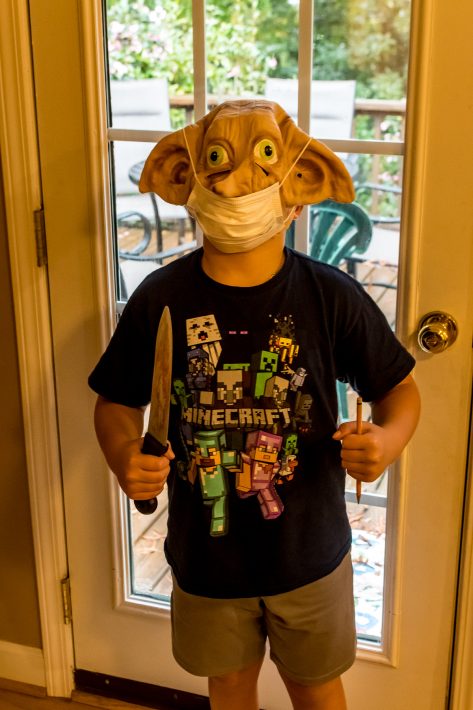
First, I get all my friends back. A and O are my two best friends, and because of Covid, I didn’t have them in class since we went to school in different groups. Today, though, we go five days a week, and we don’t have two groups anymore. We talked about the surprise I’m going to do for their mom. I’m going to take a Dobby mask and try to surprise her and maybe spook her a little bit with a fake knife.

Next, I feel better having a big group of twenty people. I think that everyone in one class should be together and not split up into two groups.

However, I have to wear a mask all day, and this is a disadvantage. A mask is uncomfortable because it rubs on your mouth, and it itches. Even though it’s uncomfortable, I have to do it because covid is bad, and we have to stop the spread. Masks help stop the spread.

I think that it’s very much better than two groups because I get so many people to be with.