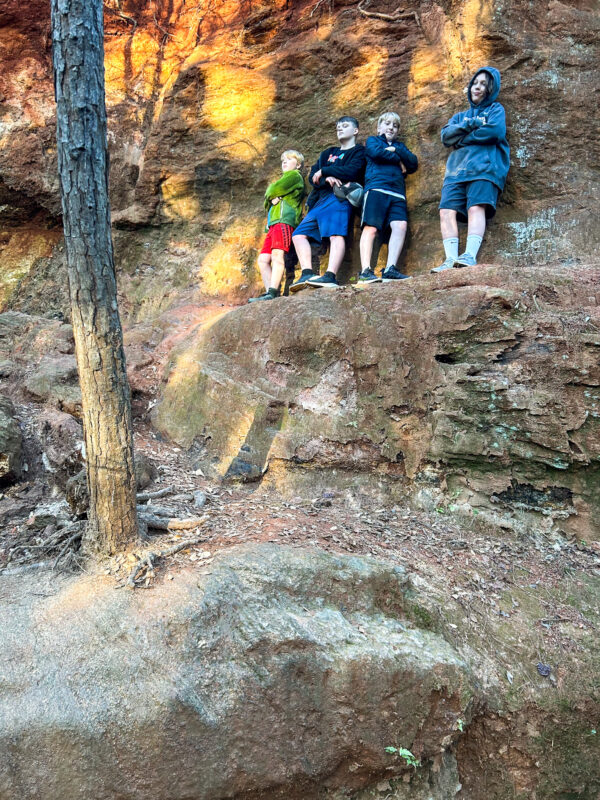
fun in threes, sometimes fours
That we even have it is a sign...
At E's basketball practice a few weeks ago, I noticed some Catholic reading materials free for the taking, so always interested in what others say about religion, I took some copies. One of them was This Is My Body: A Call to Eucharistic Revival by Bishop Robert Barron, whom I've written about here and here (among other posts).
The Good Reads blurb summarizes:
A recent Pew Forum survey revealed the startling statistic that 69% of Catholics do not believe in the Real Presence of Christ in the Eucharist. For the majority of Catholics today, the Eucharist is merely a symbol of Christ, and the Mass is merely a collectivity of like-minded individuals gathering to remember his life.
This indicates a spiritual disaster, for the Eucharist is “the source and summit of the Christian life.” In response to this crisis, Bishop Robert Barron, then the Chair of the Committee on Evangelization and Catechesis for the United States Conference of Catholic Bishops, began working with his brother bishops on a solution. From these conversations, the National Eucharistic Revival was born.
This Is My Body: A Call to Eucharistic Revival is designed to accompany that revival. In this brief but illuminating text, Bishop Barron offers a threefold analysis of the Eucharist as sacred meal, sacrifice, and Real Presence, helping readers to understand the sacrament of Jesus’ Body and Blood more thoroughly so that they might fall in love with him more completely.
Discover the profound truth flowing out of Jesus’ words at the Last “Take, eat; this is my body. . . . Drink from it, all of you; for this is my blood of the covenant.”
I'll have a lot more to say about the topic of the book later, but there was one little bit that caught my eye this evening:
One of the most beautiful evocations of this heavenly meal is found in the twenty-first chapter of John's Gospel. The author of John's Gospel was a literary genius, and his work is marked by subtle and intricate symbolism. Therefore, we must proceed carefully as we examine this story.
It seems this depiction of John writing his gospel (of course, John didn't write the gospel; all four gospels are anonymous, with the names we associate with them becoming attached a century or two after they were written, if memory serves) describes a strictly human author. The human author of the book seems to be the literary genius. But wasn't the author God according to Christians? How can both of these statements be true?
It's really part of the song and dance more liberal Christians use to deal with the trickier parts of the Bible while holding on to the tasty bits they enjoy. The ugly parts? That's human. The beautiful parts? That's God.
But a Catholic like Barron would take a self-contradictory notion that there were human limitations but God's still the ultimate author. Pious Catholics, it seems, don't have a problem with contradictions, but one only need look at the topic of Barron's book -- transubstantiation -- to see that.
Written on Wednesday 14 July 2021 at 6:54 PM
Getting out of bed is so simple an act that we do it without thinking. We might sometimes want to stay in bed a bit longer, but the act of slinging our feet off the bed and hoisting ourselves into a sitting position — we don’t give that much thought.
When I had my hernia surgery some six years ago, I realized how much we use our abdominal muscles to get out of bed, and because those muscles were terribly sore after surgery, I thought very much about getting out of bed. It was painful, and I wanted to get out of bed quickly to lessen the time my muscles burned, but the act of getting out of bed quickly made them hurt all the more. It was a lose-lose situation. The decision to get out of bed, then, was always a reluctant one.
On the other hand, every time I’ve overslept, I’ve leapt out of bed in a single motion, and it’s a conscious act: I’ve got to get out of the bed as fast as possible and into the shower as fast as possible so I can get dressed and bolt downstairs as fast as possible to grab something to shove down my throat as fast as possible so I can get to work as fast as possible.
Other than that, I rarely think about getting out of bed. The physical act is simple, effortless, and without consideration of its simple significance, a significance that doesn’t appear as such until the ability to do so disappears.
In two or three weeks my father has gone from being semi-independent (such that we could leave him alone for stretches up to eight hours) to being completely bedridden. I don’t think he’s quite come to accept that fact or even completely to understand it. There’s still hope in his mind that he will one day be walking again. I don’t think that’s the case; the doctors don’t think that’s the case; and deep down, he probably doesn’t think it’s the case. Several times a day he tries to get out of bed only for us to remind him that it’s not safe for him to get out of bed. He says things like, “I can’t wait until I get out of this bed and get back to normal.” He doesn’t realize that this new normal is just that, nor does he realize that tragically this new normal will only last for some period of time (weeks? months?) before the next dip, the next drop in his condition, the next “new normal.”
Every new normal makes the previous one look like a paradise. Every new normal reminds us all anew that no matter how trying and depressing for all of us involved, it’s only going to get more trying and more depressing. Every new normal makes the old one seem eons ago. Every new normal quickly begins to feel like it will always be normal, that it will stagnate. That it has stagnated. And then another dip. Another episode. Another new normal.
And the bed he occupies becomes his whole environment, his whole world, his prison.
How anyone could watch how this man is suffering mentally and emotionally and believe that the god he dedicated his life to, supported fiscally (so to speak), and was eternally devoted to would turn his back on him in his time of need — how anyone could think in such a situation that a god like that could exist, and if that god did exist, how it could be considered anything other than capricious and evil, I just don’t know. Belief gives hope, apologists claim. Yet it also gives despair. “What have I done to deserve this?” Dad has asked in his lucid moments. “Why won’t God do something after I’ve devoted my life to him?” Nana pleaded. For both of them, I think, it’s not a matter of “Why doesn’t God heal me so I can go back to my normal life” but something more basic: “Why is God allowing me to suffer like this instead of just letting me die peacefully in my sleep tonight? Why do I wake up day after day to this same prison?”
He remains, as far as I can tell, steadfast in his faith. “I know where I’m going” is his general demeanor, and that might give him some comfort. But I can’t help but think that perhaps that comfort is not worth the anguish it also brings.
In the meantime, we try to comfort him in those admittedly-rare moments of angst, keep him calm throughout the day, and help him take each day in his bed one moment at a time. I don’t know that there’s much more we could hope to do.
Babcia made it back to Polska without too much stress or adventure. There's always a little with Babcia, though.
And so everything returns to normal. Even here. At least tonight.
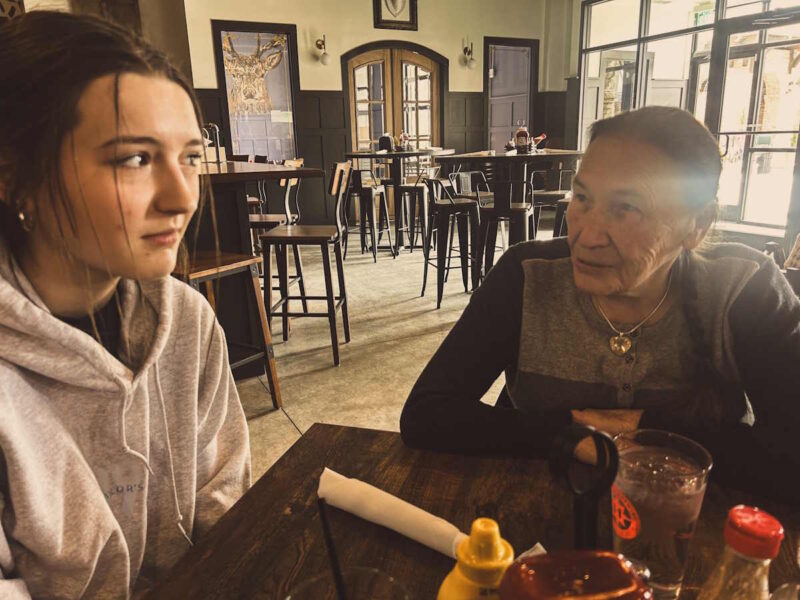
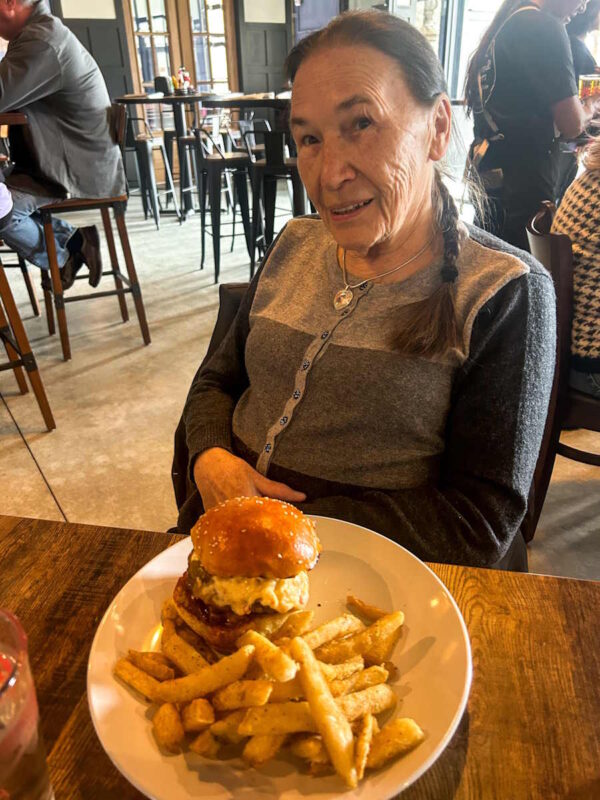

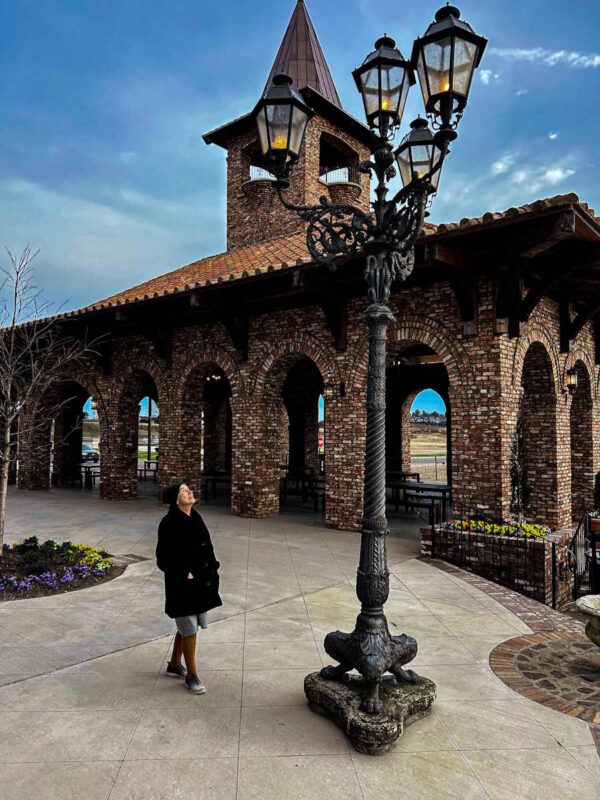
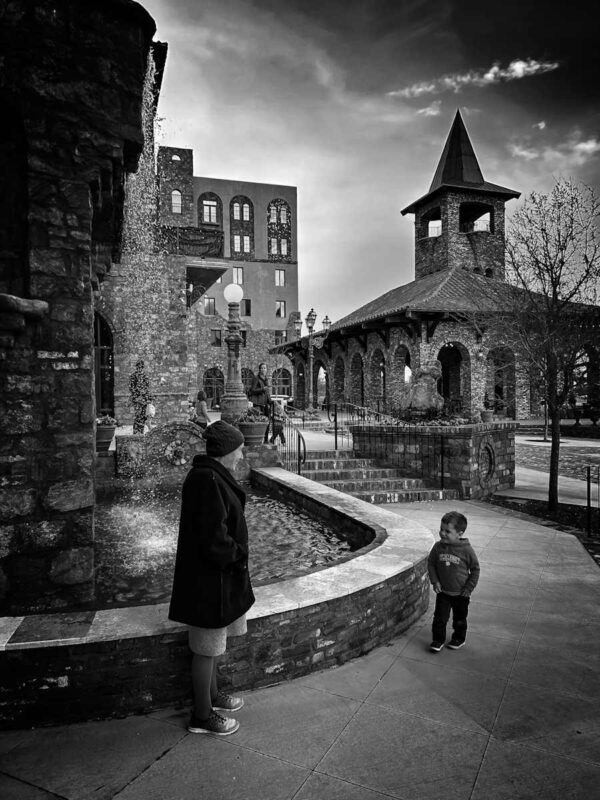
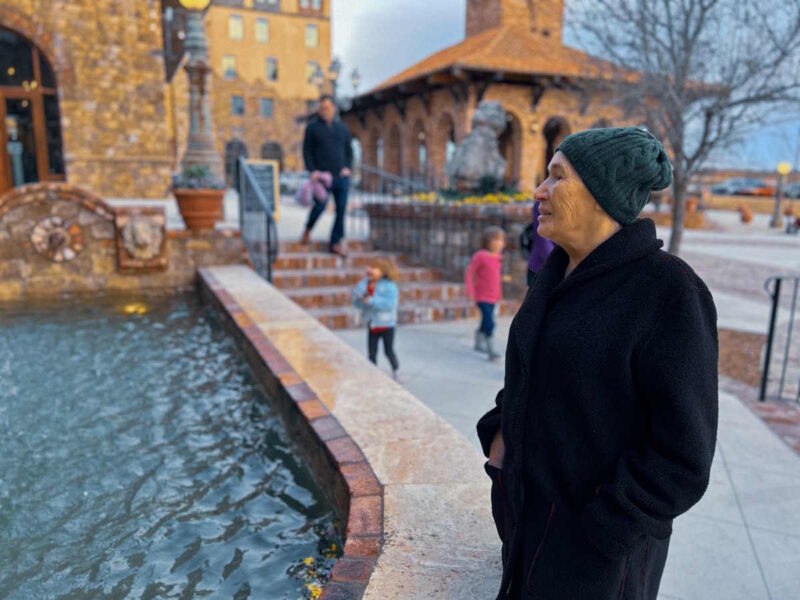
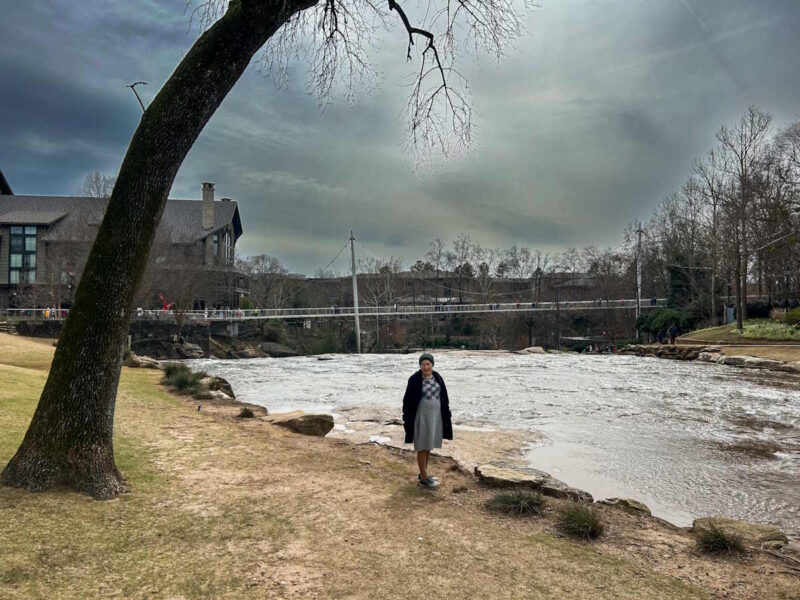
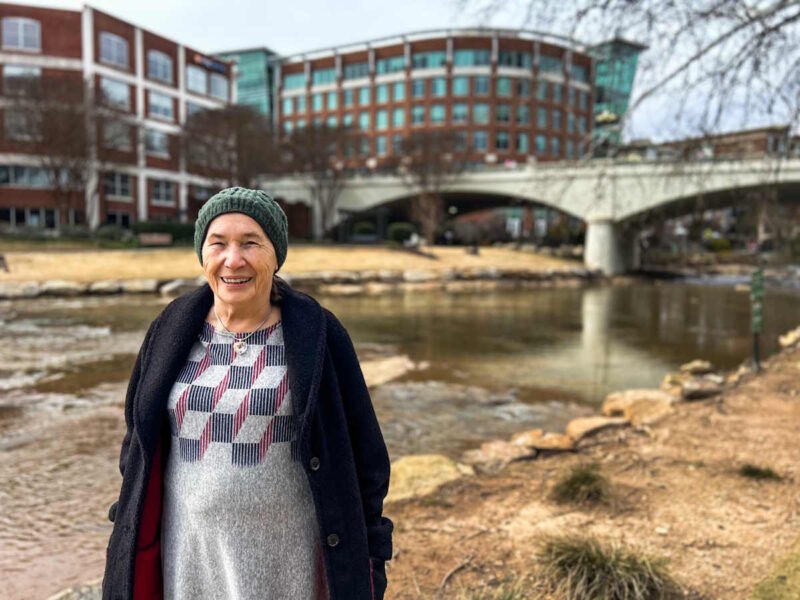
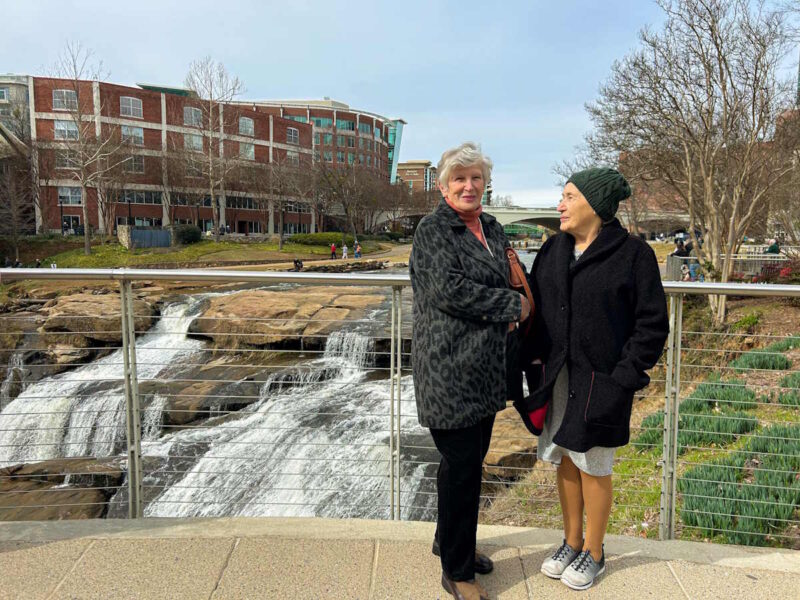
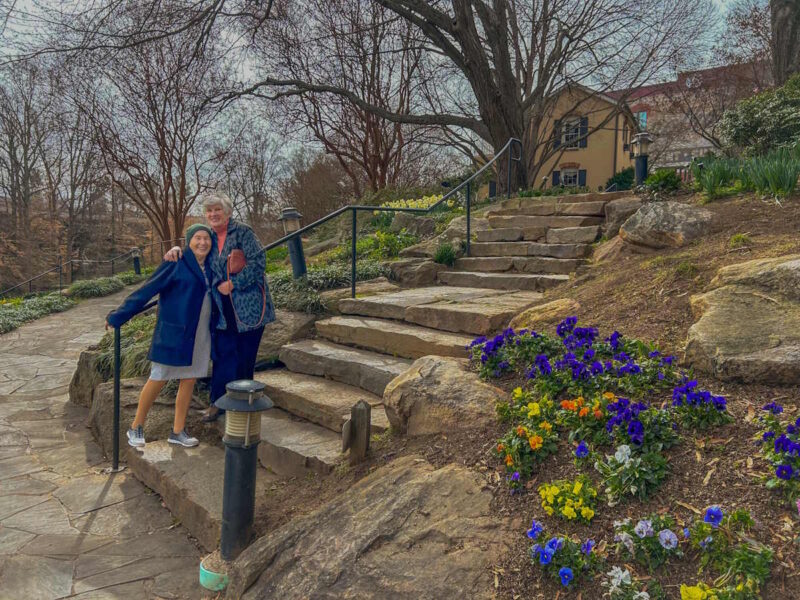
An unpublished entry from the end of our 2022 visit to Poland.
The Boy’s stuff is spread throughout the house: toys on the living room, play money in the kitchen, shoes in a variety of locations. My stuff is spread just as widely. So much to remember tomorrow. I’ve got to clean and cover the fire pit in the gazebo. I’ve got to bring two bikes upstairs, remembering to take the pedals off my bike to take back to the States but remember to leave the shoes for next time.
ANd I sit here wondering if I’ve done all I could have here. Have I rolled in nostalgia enough?” Is another way to put it. I met almost no one from my side here—few former students (always a joy) and no former colleagues. It’s the first time that’s ever happened. We often come back just before the end of the Polish school year, and I simply have to drop in at my former school to meet a lot of people. This year, we didn’t arrive until a week or more after the year was over, so it was only a matter of chance whether or not I met anyone.
I did get to meet with my absolute best friend here, which I was unable to accomplish during our last visit in 2017. I’m not even sure if we got to meet in 2015. Still, we had a chance to sit around drinking beer and talking about nonsense like old times. Sort of. E was with me; neither of us touch cigarettes anymore; we didn’t listen to any music (no exclamations about the perfection of the coming guitar solo); it was in the afternoon in the gazebo he built on his parents’ property during his Covid lockdown. “I had to do something” he explained.
Again wallowing in nostalgia, I guess. Looking for the joy of repetition, even in the small things.
“And it doesn’t come back, but I’ll be looking all of my life.”
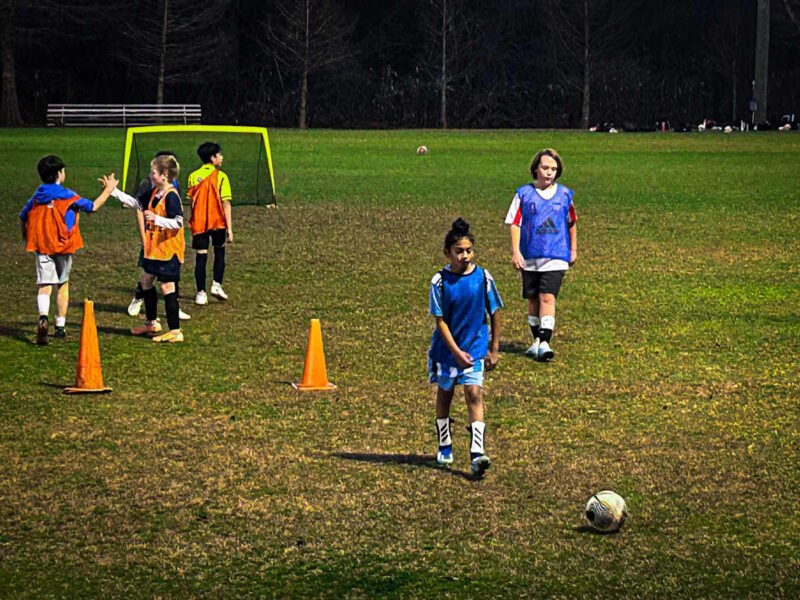
We've begun yet another season of soccer. We managed to get the Boy with the same coach he had last season, which made his day; several of the same boys rejoined the team as well, which made his day even more.