


I grew up in a cult, and that means I grew up learning how to be adept at double-speak and managing cognitive dissonance in many areas but especially in questions of power. We were taught that God was unquestionably in charge and not to be questions -- nothing extraordinarily unusual about that since that's a fairly orthodox position. However, we learned that we had to transfer that kind of blind obedience to God's only true representative on Earth, Herbert Armstrong. Not only were we to obey him but we were also to assist him. Our job was not to proselytize or to try to win converts to our religion. That was God's job through Armstrong's preaching. Our job was simply to support him, and there was only one kind of support he wanted: fiscal. We weren't to question what he did with the money we sent him. We weren't to entertain doubts about the wisdom of his decisions even when they seemed to be causing problems members individually or the church as a whole.
The most wide-spread cult in America today is unquestionably MAGA with its unquestioning loyalty to Trump. Every now and then, I read something that seems so perfectly parallel to how members of Armstrong's cult used to talk that I feel I'm simply hearing a sermon from my youth.
I discovered this picture posted on social media recently, and combined with the poster's own thoughts, it fairly accurately mirrors all the destructive thinking patterns of Armstrong's own cult.

The most immediately obvious parallel of the hagiographic nature of followers' descriptions. This idea of Trump sacrificing so much to save America has been around in memes for a while.

This is one my own mother shared early in Trump's first term. It has much more blatantly messianic tones than this newer one, but the sentiment is the same.
The original post included the author's own thoughts about Trump's recent actions:
Yes! He is TRYING to save our whole world!! Trying to demand peace. The road to that is very rocky, but you have to be willing to do it and endure any roadblocks and hiccups along the way. But if you stay strong and stay faithful, you are doing your part.
Almost every sentence of this echoes the thinking that pervaded my cultic upbringing.
"He is TRYING to save our whole world!" This notion parallels notions that Herbert Armstrong and his organization were literally the only thing holding at bay the complete destruction of not just America but the whole world.
Additionally, Trump is "[t]rying to demand peace." This is in direct opposition to what we're seeing with our own eyes. This gaslighting is critical to cults. It allows followers to ignore their own experience and thoughts when they contradict the official story. He's not killing civilians in American cities, extra-judiciously attacking boats in the Gulf of Mexico, or initiating a completely unprovoked war. That's violence. That's not what he's about. He's about peace. He's said it himself countless times over the last ten years, and just because it seems to contradict his actions, we just have to listen to him and understand that he is trying to create peace through his violence. Doublethink at its best.
However, we must understand that the "road to that [peace] is very rocky, but you have to be willing to do it and endure any roadblocks and hiccups along the way." Again, don't pay attention to your own eyes. Ignore the reality you're seeing. These are just hiccups, roadblocks to our complete supremacy and world peace. Just remember that "if you stay strong and stay faithful, you are doing your part." Your part is not to think. Not to question. It's to support -- without question, without thought, without doubt. Our dear leader knows best. After all, look at all he sacrificed to reach this moment. Ignore the riches he's created for himself by using his position. He sacrificed because he said he sacrificed.
I intentionally retained the pronoun-antecedent ambiguity of the above paragraphs simply to illustrate the fact that one could use either "Trump" or "Armstrong" as the antecedent, and the result would be identical.
Though we did not celebrate Christmas, my parents often bought me something to occupy my time during winter break. One year, likely 1979 or 1980, they bought me an enormous box of Fiddlesticks, plastic building toys consisting of plastic tubes of varying lengths and colors along with connectors of various configurations.

My set came with strange Batman, Superman, Hulk, and Spider-man figures that bent at the waist and had stickers to represent the sides of their bodies, but they all had their heads turned and their fits balled at their waists, making them look more constipated than ferocious.

The first item in the instruction booklet was a gigantic plane that I probably built at least twenty times. The toy required substantial imaginative license as there was actually nothing solid about the plane (or any other toy one created with the set). Everything, then, looked particularly unrealistic, but I, a kid in the early-eighties, couldn't have cared less.
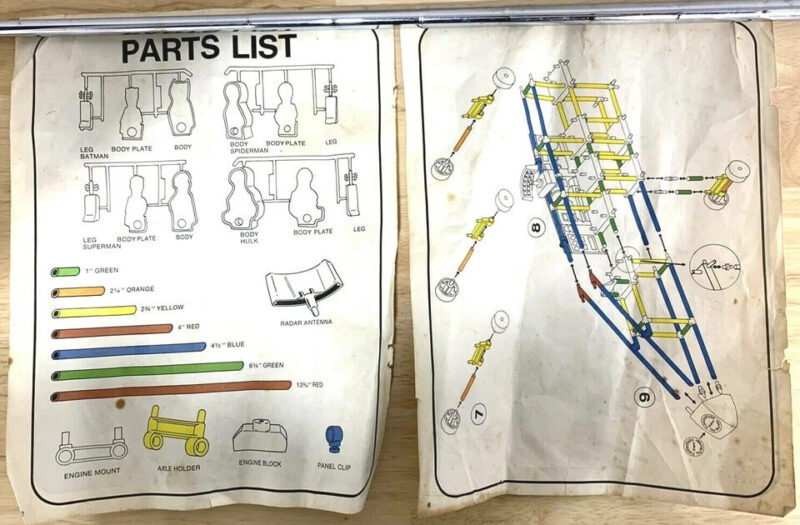
As with many of the other toys I had, I grew tired of creating just the pre-planned planes, rockets, and cars and began creating my own things: guns (it was particularly good for creating assault rifles), stilettos, and incendiary devices.
And the thought of them came to me today out of the blue...
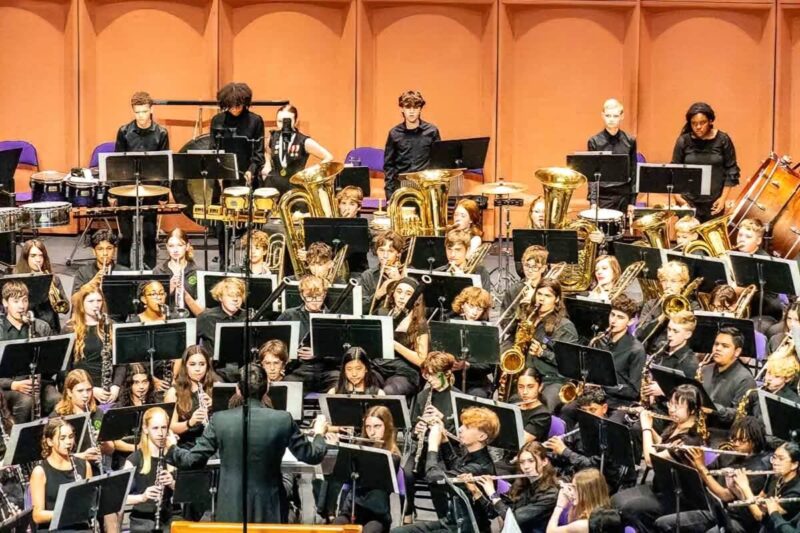
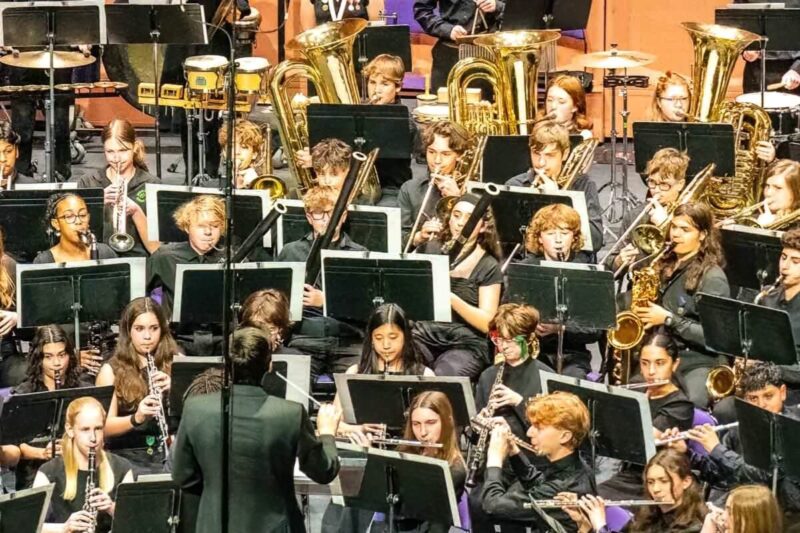
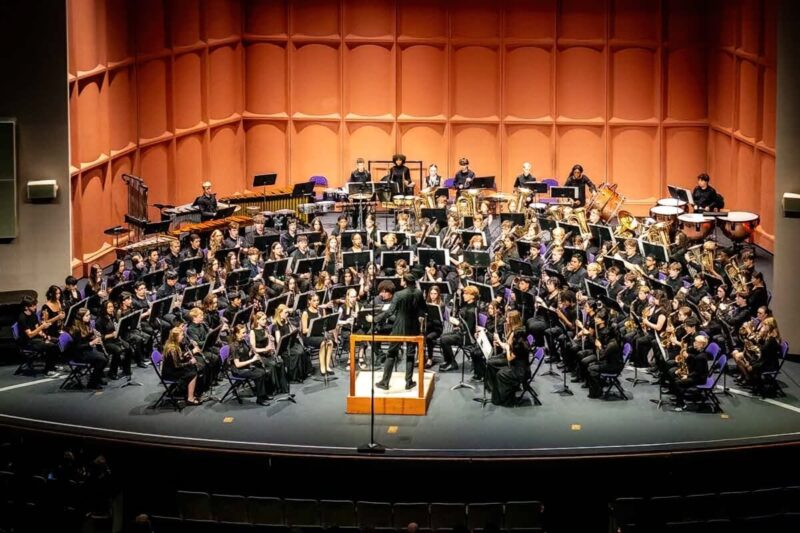
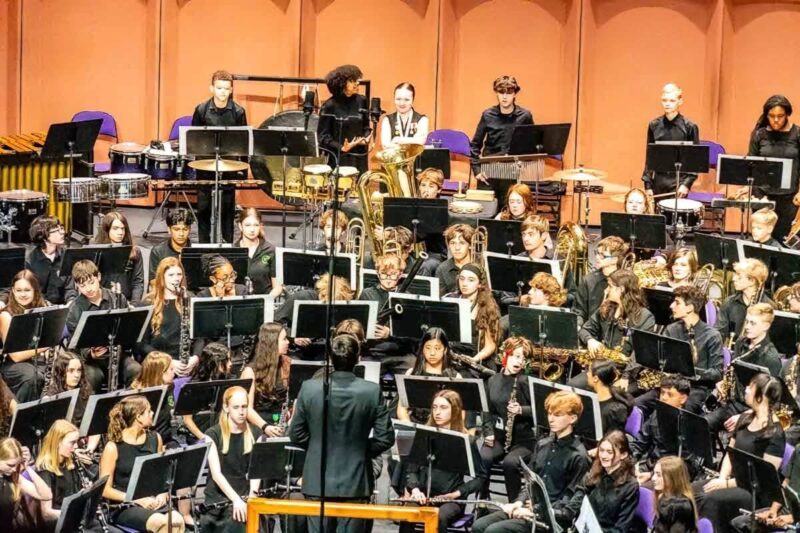
Some days every class seems to go so perfectly. that teachers wish they could have videoed for posterity. Everything seems to click. Every student seems to be focused and hardworking. Every class seems to take a noticeable step forward.
Today was such a day.
We've been looking at how people communicate in the 21st century with an eye to how leaders should communicate in the 21st century. Specifically, we have been examining how leaders might or might not use social media, in general, and memes, and emojis, in particular.
Yesterday, we began the setup for today's Socratic seminar. Students were divided into groups, and these groups were assigned a position. They didn't have choice in the matter. They weren't consulted regarding what their personal opinions were. I simply assigned them a position.
Students meant yesterday, brainstorming reasons to support their own positions, counterclaims the other side might make, and rebuttals they could, in turn, make to those counterclaims. Today, we ran the Socratic seminars.
They were, in a word, spectacular. If you could've been a fly on the wall, you would have seen six and seventh graders, behaving with decorum and dignity. Listening to each other's positions, not interrupting each other, respectfully disagreeing, respectfully pushing each other for evidence and justification of their claims. And even occasionally, laughing. All while arguing positions they might or might not have personally held since they're positions were randomly assigned.
If I could have, I would have recorded today for future years, for future school years. That way, when I taught students how to do a Socratic seminar in the future, it would be easy. I would simply show what those students did today and say, "Here, watch them. Do what they did."
A breakup -- what all adolescents fear yet think will never happen with a first love. No one embarks on their first venture into love with the thought that it likely will not last forever. We meet; we're overwhelmed with these emotions for the first time; we're convinced that something so strong, so beautiful, so pure cannot possibly die. How can perfection perish? How can this intensity ever diminish? All we want to be with our love, and we desire that with the same unquestionable necessity we crave food or water. The sound of her voice is more beautiful than just about any piece of music we've heard. The faint scent of her perfume that might linger after we've sat beside her in the cafeteria keeps us enraptured until we drift into sleep many hours later.
All I want to do is just sit here
Sinead O'Conner "The Emperor's New Clothes"
And write it all down and rest for a while
How does that perfection dissolve, inevitably into tears for one or both of us? How does something so dazzling become so dark? How does such joy transform into such sorrow? It seems impossible until it happens, and once it happens, and we resign ourselves to the loss, it seems unavoidable.
It's been forty years since I went through this myself. I met her at church band camp (we had church everything: dances, basketball games, talent shows), but she lived a full 100 miles away. That first love was a week of intensity followed by months of letters and the occasional phone call until her feelings for me dissolved. I don't remember much about it all but I do remember how sure I was that it was something more real than it really was.
We realize our kids will go through the same thing at some point, but it still hurts to watch.
There's often a sense that gratitude and Monday are incompatible. There's a whole network of memes all suggesting the same thing: there's nothing positive about Monday. It's built, I suppose, on the assumption that, with the weekend complete, the best part of the week is behind us, and we have little to look forward to. But that assumption is, in turn, based on another assumption: that the fun weekend is superior to the business week day, and that Monday is the worst possible of the five workdays because it's waking up from the dream that was the weekend and returning us to the daily reality that seems to have less choice and more obligation. After all, one can choose to sleep in or to get up early on a Saturday morning; a Monday morning lacks the former and demands the latter. So what is there to be grateful for on a Monday?
I went to work, which means I have a job and can provide for my family. That's certainly something to be grateful for. My kids are (relatively) safe at school during the day: certainly not all parents have that same assurance. I woke up in a bed and will return to it: not everyone has that simple privilege. I get to work with some amazingly sweet (though predictably chatty -- middle schoolers are the same everywhere) students. The list could go on and on. We can literally find things all around us to be grateful for.
And I'm especially grateful that I don't have to write any more. It's not a job, not an obligation, and so I can tumble off to bed at 9:16.