


fun in threes, sometimes fours

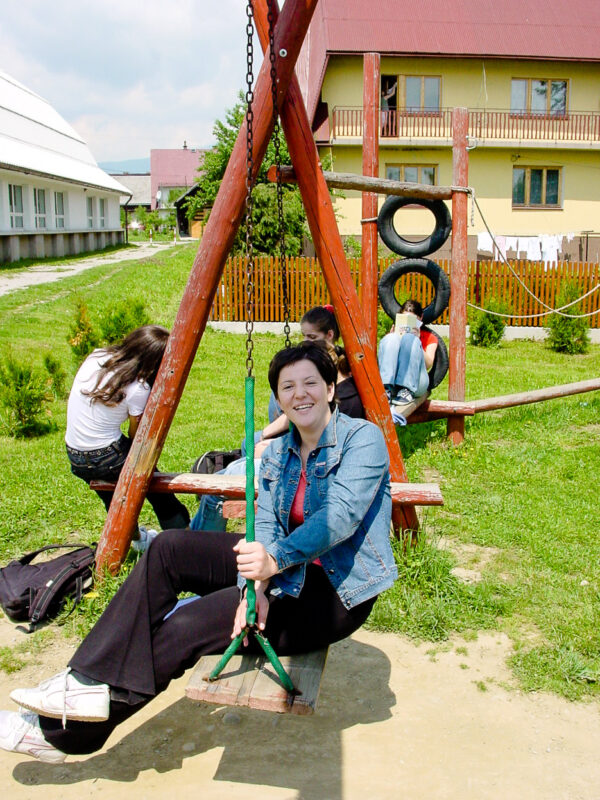

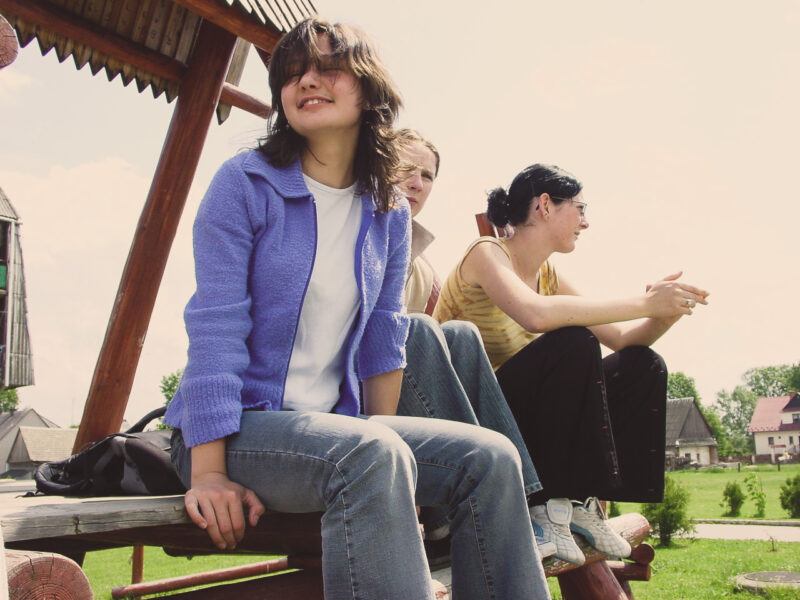
Kinga and I went to Auschwitz-Birkenau today.
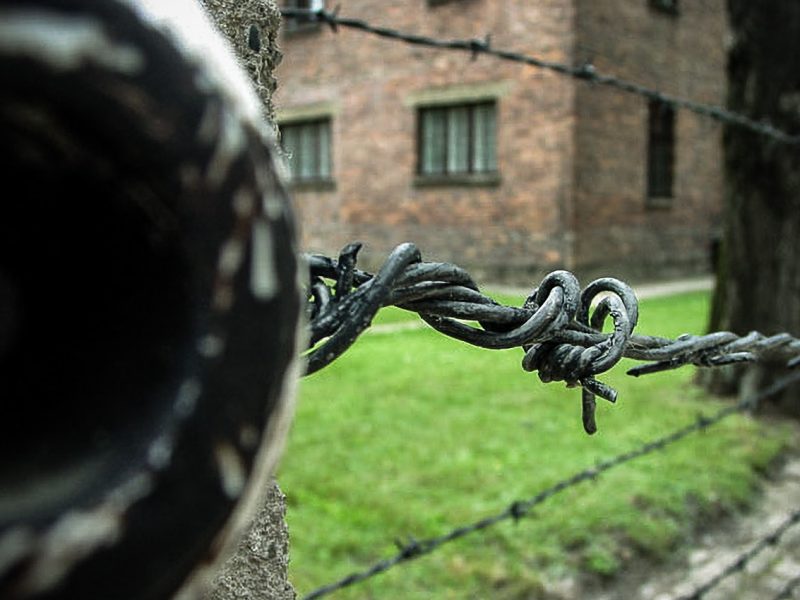
It’s only now that I can appreciate the scale of the Holocaust. Reading Hitler’s Willing Executioners, seeing Schindler’s List, thumbing through albums – it’s not the same. Walking under the sign, “Arbeit Macht Frei,” standing in a gas chamber, walking along the barbed wire, standing by the railroad tracks where the selection was made – only then did the number of Holocaust victims (up to ten million) begin to take on any personal, tangible significance for me.
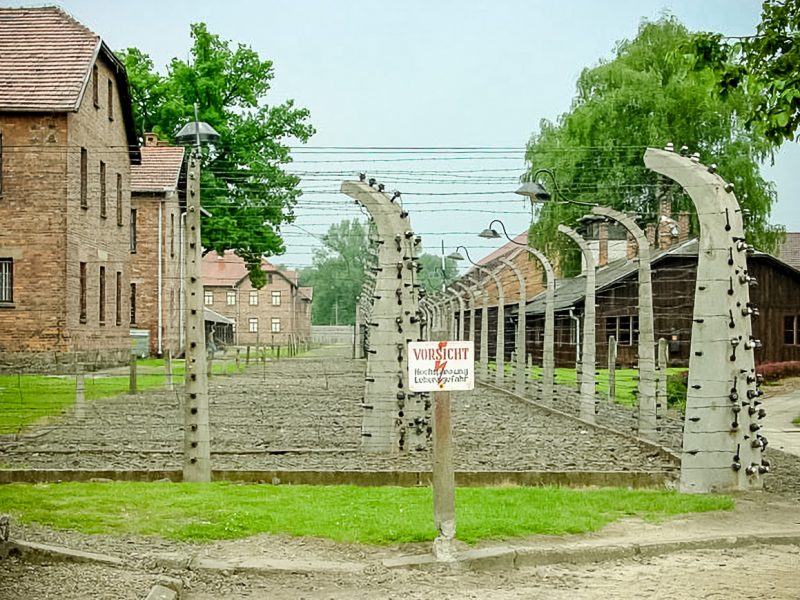
Auschwitz (the main camp -- Auschwitz I) is surprisingly small. A former Polish army base, it doesn’t have such an immediately ominous feel if you ignore the barbed wire and guard towers. Single and double story buildings laid out in a grid, with grass growing in between and birds singing. It could easily be mistaken for an old prison. In fact, that’s really what Auschwitz was.
Despite it’s being associated with genocide, it wasn’t an extermination camp, per se. It was a prison and work camp. That’s not to say that death wasn’t everywhere. Indeed, it was. But it was not a death factory on an imagination-defying scale.
Birkenau was.
Birkenau is three kilometers from Auschwitz, and is actually one of several sub-camps. It was known as Auschwitz II, and it served one purpose: destroying humans.
Birkenau is Auschwitz, for Auschwitz is the synonym of death in the Holocaust, and Birkenau, with its stark and lethal geometry, is the machinery we always imagine when we think “concentration camp.” If one can use the words “stereotypical concentration camp,” then that’s the perfect description of Birkenau.
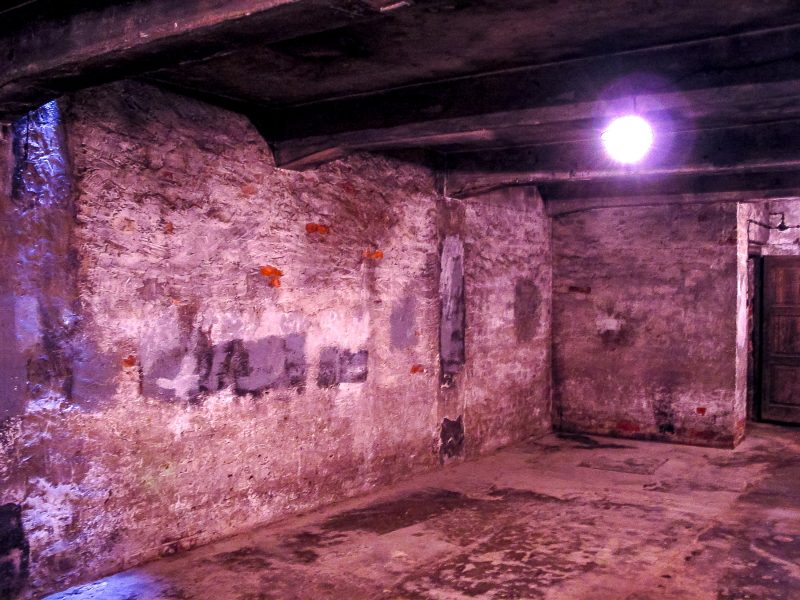
At Birkenau, Nazis had two gas chambers and (as I recall) six crematoriums. Nazis processed humans like animals – herded out of the cattle cars, stripped naked, gassed, shaved and checked for gold teeth, then burned.
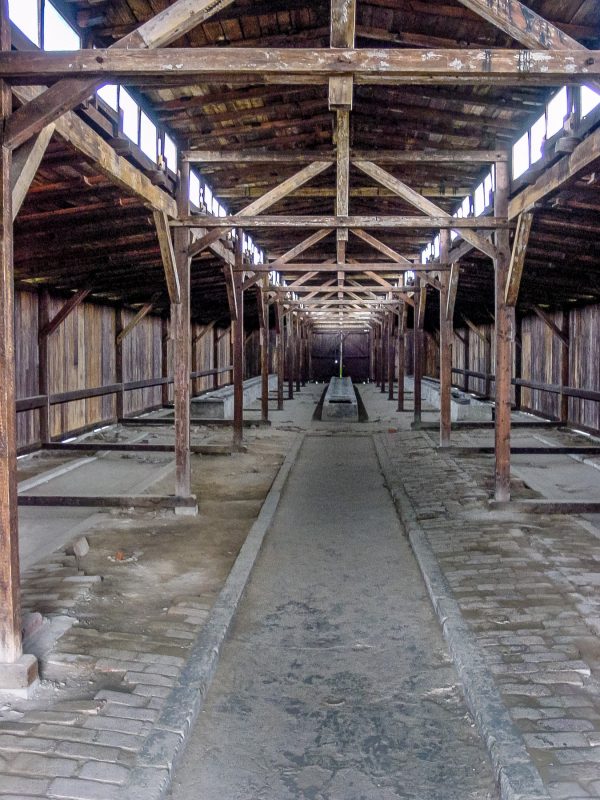
It’s the monotony of Birkenau that is sickening. A mile and a quarter by a mile and a half, it's an enormous camp that had three hundred barracks and housed up to 100,000 people. About sixty of the barracks remain intact: forty-some brick and twenty-some wooden structures stand in the camp, with countless chimneys marking the ruins of the rest.
Most all of the barracks are open, and most all look the same. It’s that monotony – after a few barracks, you don’t even go into them anymore – that made me realize the true horrific scale and monstrosity of the Holocaust. Nazis lulled themselves into a rhythm of killing that resulted in literal mountains of corpses.
Something had to be done, so they started burning bodies. But this was not efficient – shooting people, then making huge bonfires. No – much more efficient to make an assembly line of death. And that’s what they did at Sobibor, Treblinka, Birkenau, and many extermination camps. Day in and day out, trains arrived, people were slaughtered, and the Nazis went back to their warm barracks and listened to Bach and wrote letters to their wives. Assembly line – everything at Birkenau screams it. Lines of barracks, dissected by a railroad track, surrounded by a fence. It’s geometrical, exact death.
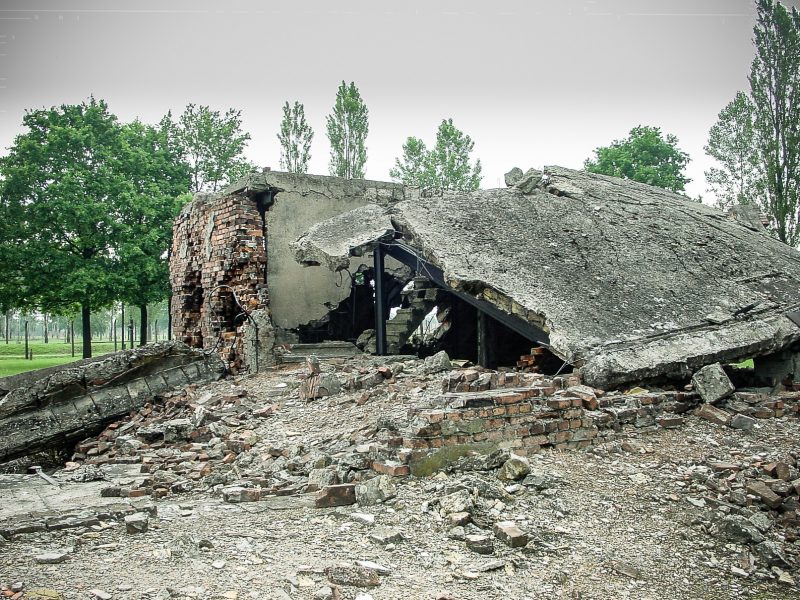
Death times one point five million, to be precise. That’s the death toll of Auschwitz, and it means as you walk along the grounds, you’re walking on literally blood-soaked earth. It’s one of the few places in the world, I would say, where you can throw a stone and know it will probably land within a foot of where someone died. Within inches. Rather, at the very spot.
You walk in the barracks, running your hand along the bunks, realizing that every single morning, the inmates awoke to find someone else had died in the night. And as you’re running your hand along the bunks, you realize that they died in this bunk. And in this one. And in this one. In all of them, chances are.
There is not an inch of that ground that has not seen death, and it seems to root the buildings to the place and make it difficult to lift your legs as you walk.
Tourists crawl over Auschwitz. They’re literally everywhere. Tour groups weave in and out of the barracks and through the streets, making it impossible to be alone. And the languages you hear – Japanese, Arabic, Spanish, French, English, Hebrew, everything.
And you hear German. We bumped into at least two German tour groups, and it somehow seemed eerily appropriate to hear German in that place.
Birkenau, in contrast, has much fewer tourists. Its sheer size, compared to Auschwitz, means more privacy, less competition with other visitors. The parking outside is probably one-tenth, if even that, of what’s outside Auschwitz, and yet it makes such a bigger impression.
My stomach churned the entire time, and for one brief moment, I was sure I was going to vomit. It was in one of the exhibits in Auschwitz, housed in the barracks. Hair – a literal mountain of hair, shaved from victims' heads after being gassed. The hair provides proof to anti-Semitic Holocaust deniers because there remain traces of Zyklon-B in the matted, filthy hair. There are over fifteen-hundred pounds of hair in the exhibit, and at the near wall, just as you enter, is the spot I grew so nauseated that I had to go to the window to get air.
Fabric, woven from human hair, intended for clothes. An entire bolt of cloth – who knows how many were produced in total – with bits of hair placed on top.
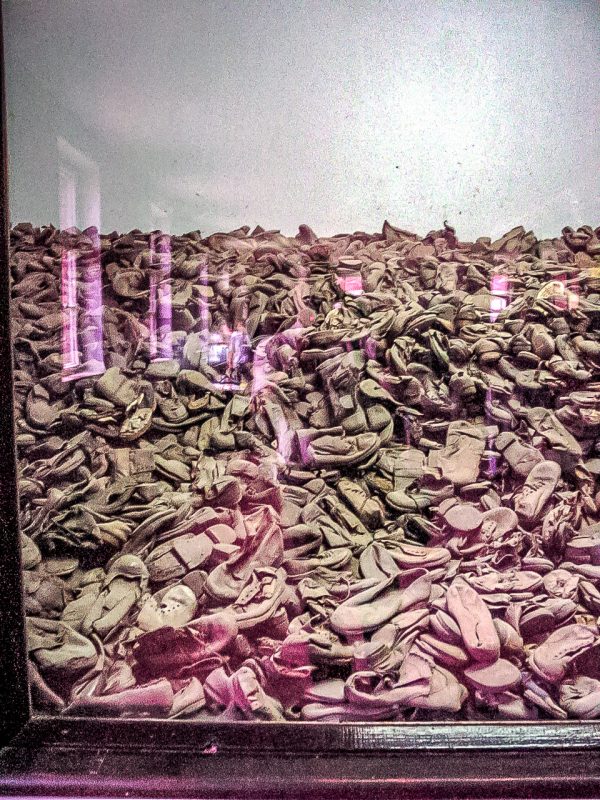
There are hideous mountains throughout the exhibits: of shoes, of combs, of suitcases, of pots and pans and other kitchen utensils, of twisted eye-glasses, of artifical limbs. There are piles of shoe-polish tins, face-cream tins, forks, spoons, baby shoes.
It’s too much. You just want to scream.
The most tragic part for us, in the twenty-first century, I told K as we walked along the train tracks in Birkenau, is that there are thousands, even millions, of people who would gladly see this camp open and operational again. I wasn’t just referring to the anti-Semitism that still haunts our world, the young Neo-Nazis who deny that the camps were death camps – Hitler didn’t know; Hitler got a bum rap; and other absurdities – and yet know what the camps were used for and would like to see them killing again. I was referring to the guards and others responsible who are still living, some of whom no doubt regret that Hitler didn’t finish what he started.
What would have happened if Hitler had won the war? Birkenau leaves little doubt. The Jews would be non-existent, as would Slavs, Roma (Gypsy), blacks, Asians, and anyone else who offended Nazi sensibilities.
What’s most astounding about the concentration camps is that they, to some degree, cost Hitler the war. Hitler could have fought to a stalemate, then resumed again when his forces were strengthened. But what did he do? When supplies were needed at the front, instead of decreasing the shipments of victims to camps and using those trains to get supplies to the army, he increased the number of shipments. The pace stepped up as the inevitable loss approached. The Nazis’ hatred literally consumed them in the end. Its irrationality overwhelmed the cooler heads needed for military strategy, and reduced Nazi leadership to foaming-at-the-mouth, obsessive maniacs.
It’s not just the scale of victims that comes into sharp focus at Birkenau. The number of perpetrators – mostly German, but with help from other collaborators – required to murder that many people becomes obvious. It was not a handful of Nazis that did this. A significant percentage of the European population (again, the vastly overwhelming majority Germans) was mobilized to slaughter ten million people like household pests. And yet, at the Nuremberg trials, Allies brought forward only 24 indictments, resulting in 10 death sentences.
What about the others? If there are surviving victims sixty years later, there are surviving perpetrators. How do they live with that? How can they sleep knowing what they did and what they saw?
It’s another aspect of the Holocaust that defies all sense of reason and decency.
Last night, looking at pictures I took, it seemed like a nightmare. Even when I was living the experience, it seemed dream-like and intangible. Walking around the camp, seeing the barbed wire and barracks and train tracks, imagining what it was like to be interned there, thinking about what happened – it all seemed unreal.
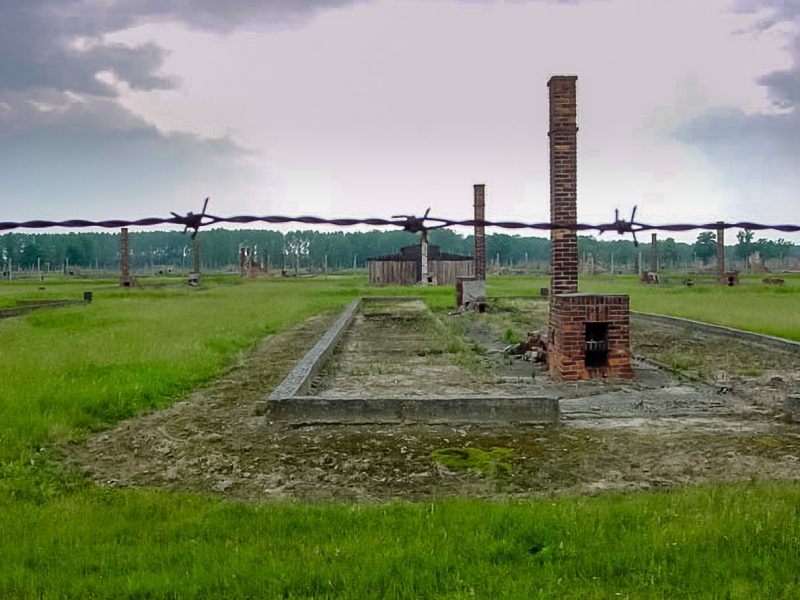
Such is the scale of the Holocaust that even when you’re in the center of the hell it created, it seems impossible. How can people do this to one another? You stand there in the incontrovertible proof of the Holocaust’s reality, and yet it seems insanely unimaginable. “What kind of an individual would think of such a thing, let alone put it into practice?”
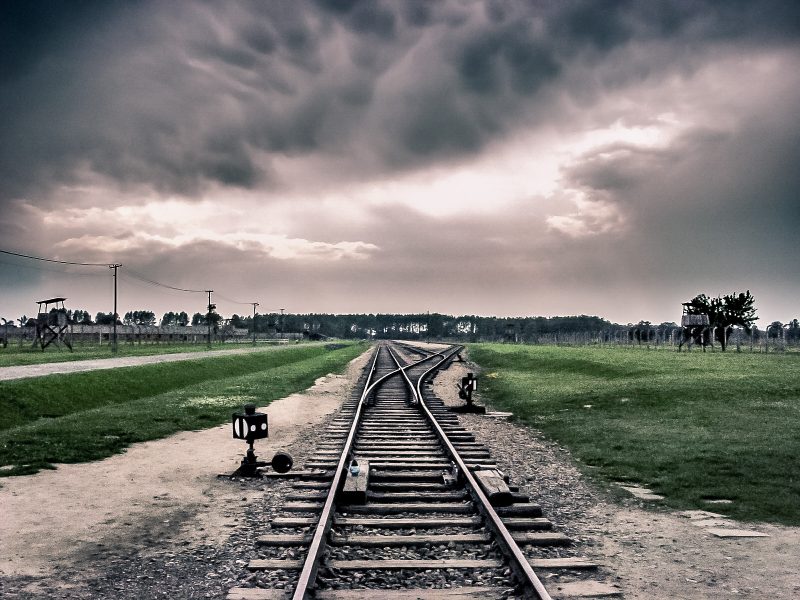
I’ve seen it, but I’m even further from understanding it.
(Re-published for the yea write. Photos re-edited June 2021.)
Tomorrow Kinga and I are hoping to go to Oświęcim, known of course to most of the world as Auschwitz. I’ve lived within sixty miles of it for seven years now, but I’ve never gotten the nerve to go visit. Though it seems a most depressing thing to do in our last week in Poland, Kinga and I decided that for precisely that reason – that we only have a few more days here – we should go while we have the chance.
It’s a bad time to go. Visiting Auschwitz always seemed more appropriate in the winter. Perhaps in some childish attempt to empathize with the victims, I always imagined going in the coldest period of winter, and purposely not dressing properly, as if my few hours of numbness makes up for anything. As if I should be making up for anything. Going in the late spring makes it somehow seem more frivolous, as if I’d feel compelled to stand in front of the famous “Arbeit Macht Frei” sign in my sandals and shorts and pose for a tasteless picture.
The whole issue of pictures itself is troubling. Should I? I don’t want to be a tourist, but what choice do I have? I don’t want to cheapen the experience by taking snapshots, but I also realize that it’s an opportunity of sorts. In then end, I’ll probably take a roll of black and white film and try to take some “artsy” shots.
It also seems like something one should experience alone. Discussion could too easily fall into idle chit-chat, I fear, but the reality is, the weight of the sense of tragedy there will silence us.
American Protestantism has lead the way in using modern technology to spread its gospel. Radio and television have long been the preferred method of evangelism for small Protestant groups (usually "fundamentalist" or "evangelical," however you want to construe those labels historically) that have the money, and when you think about it, it makes perfect sense. Protestantism, though it claims to be a unified body of believers -- a great invisible, church, "unified in Christ" -- is really the biggest religious market in the world. Sure, they all believe in Jesus, but each group wants you to support its version of Jesus. So, much like Pepsi and Coke battling for your soft drink dollar, Rod Parsley is going head-to-head with Benny Hinn, trying to get you to send your "seed offering" (and you just know what some pervert has done...) to his group.
It seems that America no longer holds a monopoly on commercial religion. Indian Gurus are catching on to the fact that not all spiritual teaching has to be done in an ashram.
As the [Indian] national economy blossoms, the role of the guru as someone who helps his followers find enlightenment is evolving: Many spiritual guides are now smooth marketers with, often enough, a considerable knowledge of how to maximize their commercial appeal.
Many gurus have been forced to revolutionize their practices -- packaging and aggressively marketing their religious services to cater to the changing desires of the consumer. Some have adopted the style of Western televangelists to promote their message.
Maybe a Hindu version of TBN is in the offing?
What's amazing is that these gurus are not only copying the televangelist style, but also the content, offering their own health-and-wealth gospel, it seems:
Personnel departments in big firms are calling on spiritual gurus to help new recruits handle the tensions of modern working life.
Spirituality shops offering "health and wealth kits" are doing good business, and newly created religious channels on domestic television are expanding their reach into millions of homes.
Herb, Rod, Benny, Robert (as in Tilton, as in "The Farting Preacher"), and myrad other American "entrepreneurs" would be proud, I'm sure.
I’m sitting in our virtually empty apartment, which won’t be appended with “our” from Monday, I guess. I left the computer here so I’d have something to do during the long break. I’ve got an hour and a half now, it’s raining like crazy, with temperatures below 15 Celsius, and I’m not sure what to write about.
I could write about the attention homosexuality is getting in Poland these days, thanks to a canceled gay pride parade in Warsaw. Parade organizers didn’t fulfill all the obligations for a march, said Warsaw mayor Lech Kaczynski’s office. For example, they didn’t submit a plan for how to re-route traffic in the march area, and they didn’t pay to compensate for the money busses would lose by avoiding the parade route. Now if this had been a march for Polish veterans, I’m sure Kaczynski’s office would have been over backwards to help parade organizers. But concerning gay pride, there’ll be no bending in this country – sexual innuendo very much intended.
Last night, on a Cross-Fire type show, they were discussing the march. Some of the homophobes there were just amazing – they take this whole thing very personally. If you don’t want to see a gay pride parade, don’t watch. But of course the priest on the panel was talking about how “statistically” the “gay lifestyle” is harmful. Seventy percent of people with AIDs are gay; most pedophiles are gay pedophiles (or some ridiculous generalization like that); and so on. The priest actually said, “The homosexual lifestyle is a road to death.”
The parade organizer criticized the church, saying “Catholic” and “Fascist” in the same sentence. He now faces a lawsuit for saying that. In public, no less.
Of the people on the discussion panel, guess which ones were virtually foaming at the mouth at times? The homophobes, of course.
During the course of the show, there was a survey: Is there a problem with homophobia in Poland? Fifty-one percent said yes. Tomasz Lis, the host, commented on the station’s web site, though, the results were opposite: fifty-one percent said no.
Yes, I could write about homophobic Poland, but I don’t want to.
I could write about the weather. But what for? How much can I write about rain? It’s ridiculously cold, too. The temperature the last few days has topped out in the low 50’s. About ten days, it was literally forty degrees warmer. So the weather is not a good topic either.
Moving – there’s something. Packing so many boxes for shipping has made Kinga and me experts with tape. But who wants to read about taping?
Enough…
 My name is [GS] and I have an account with Plus GSM. In order to prove my identity, I offer the following information:
I am writing about two things. First, I would like the billing address changed for the remainder of my contract to: [deleted]
I called customer service and was informed that I can do this through the mail. I trust this is sufficient.
Second, I am declaring that I have no intention of renewing the contract. Do not renew it automatically. I realize that you want this done thirty days before the expiration of the contract, but I will be in America at that time and will be in no position to contact you. Not only that, but it is unreasonable to expect me to keep track of a cell phone contract that I will not even be using personally. Therefore, I am making the request now. Please bear in mind that if you do renew the contract against my wishes, as expressed here, the bills will go unpaid.
I must confess, though, that I’m very disappointed with your customer service and the ridiculous inability to perform such simple tasks by phone or internet. In addition, the 30-day-before time requirement for canceling the account is outrageous, and is nothing but an immoral attempt to trick unwitting customers into another contract, leaving them with the choice of continuing in an unwanted contract or paying an unjustifiably high cancellation penalty. As a company in an EU nation, you really should bring your customer service up to an appropriate level.
I appreciate your attention in this matter. Please send the appropriate confirmation to the above address.
Kinga mentioned as we were getting ready for bed that this is “one of the last nights” we’d be sleeping in the apartment. “The next to last, actually,” I said, for we’re moving out tomorrow.
One of the most haunting and yet most disconcerting aspects of moving is the consciousness we have of being in a stream of “lasts.” The last time we’ll sleep in this apartment. The last time we’ll lug stuff up these steps.
The last morning coffee here.
Generally, we have no idea a “last” is approaching, though. They take us by surprise and can leave us reeling if it’s a significant last – the last time she talked to her father, for example. You’d think that foreknowledge is a good thing, then. But it tempers everything and makes every moment both indefinitely long and breathtakingly short.
Lying in bed last night, thinking these things, I recalled a poem by W. S. Merwin:
For the Anniversary of My Death
Every year without
knowing it I have passed the day
When the last fires will wave to me
And the silence will set out
Tireless traveller
Like the beam of a lightless star
Then I will no longer
Find myself in
life as in a strange garment
Surprised at the earth
And the love of one woman
And the shamelessness of men
As today writing after three days of rain
Hearing the wren sing and the falling cease
And bowing not knowing to what
Heading back home--I had a break between lessons--I stopped at the shop across the street where I've done all my shopping for seven years to buy coffee. I picked up the big half-kilo package from habit and headed to the cashier.
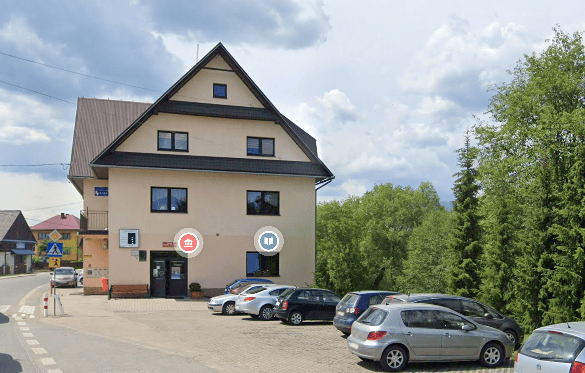
"When will you be leaving?" she asked as she rung up my puchases.
"About two weeks. A little less," I replied. "But Kinga and I will be moving out of the apartment this Thursday," I continued.
So what are you buying this huge coffee for, you dolt, I thought.
Indeed, I should have saved money -- a few groszy (Polish cents, really), but money is money -- and bought the smaller coffee.
The weird things one has to take into consideration when moving...

I knew it was going to be an interesting evening when, browsing the hosts' bookselves, I saw the title Astral Projection.
"I'm a pagan," explained the hostess, and suddenly I wished I had a hidden camera.
Learn how to leave your body--walk through walls--fly around your neighborhood--meet your deceased loved ones and astral spirits--communicate with your guides and teachers--experience other dimensions--and even travel through time to witness past or future events! And Much Much More! 100 percent Guaranteed...
Later in the evening, I overheard the hostess saying, "When I mention love spells, people ask me, 'Oh, you can cast spells?! Can you make that cute guy fall in love with me?!' I just laugh and say, 'It doesn't work that way.'"
It works, just not that way. How, pray tell, would a "love spell" work, then?
Of course, I wandered around the 'net for a while the next day. I found this:
Hi. My name is Bob. I'm slowly becoming more and more interested in astral travel but have a few questions. Would you please help me with these?? I included all of you after reading the testimony you gave on machoneaudio.com. Serious responces [sic] only please.
- Are you ever in any danger when you are having an OBE? (i.e. demons, evil spirits, danger of not being able to come back, ...)
- Can you use these OBE for the purposes of becoming a person more loving??
- Do you meet angels/gardian [sic] spirits??? If so, what do they say to you??
- Have you ever attempted to draw near to the heavenly realms, and what happened if you did??
Again, please bare with me. I always was under the impression that this kinda thing was either dangerous or unhealthy.
I simply have some questions that I want to ask people who have done this theirselves, instead of simply reading a book.
I would appreciate your time and advice, whatever you think I should hear!
I knew that he didn't want a smart-ass response, and I realized as I typed away, giggling, that I was being very childish...but I couldn't resist:
Some tips about astral project/travel:
- It's the 21st century, so don't get caught up in silly gimmicks. Stick to the basics when it comes to obe.
- Because it's only something that exists in your mind, you need to bear in mind that everything you see is not what it seems but only an illusion produced by your gullibility.
- It's the 21st century, so remember that most people have replaced superstition for scientific knowledge. Keep that in mind during your travels.
- If you encounter a fellow traveler or a demon, it's probably just an acid flashback.
- It's perfectly safe to leave your body – nothing will hurt it – as long as you leave a shotgun by your body's side so it can protect itself.
- The body has a mind of it's own, so always lock the door before leaving your body.
- If you're tempted to take this all as a joke, you're probably too intelligent to be messing with astral projection.
- It's the 21st century. Remember that.
- If you've had as much fun reading this as I have writing it, you're probably too intelligent to be messing with astral projection.
- It's the 21st century. Remember that all religious hoaxes have been cleared by the bright dawn of scientific literacy. If you're tempted to believe this, you're probably not firmly in the 21st century.
Hope this helps.
In the exchange that followed, I got called "sagaciously stupid," "sophmoric [sic]," "childish," and he referred to my thoughts as "the luminous pearls of wisdom you so enlightened me with."
Guilty on most counts, I guess.
Astral projection makes objective claims that should, in theory, be testable: your spirit can leave your body. As a non-believer, I have a great problem with the whole notion of a ghost in the machine, but that aside, it's still problematic. If astral projection is possible, where's the proof? If it's this great feat that anyone, with a bit of training and practice, can master, why not prove it?
How could we do this? Easily. Early in the NASA program, before any probes had made it to a foreign planet, an astral projectionist (I don't know the correct term.) could have "gone" to Venus, for example, an given a detailed account of what we'd find there. Then, when we send a probe ourselves, we check it. If astral projection is true, bingo: we have the evidence.
Funny thing is, something like this was indeed done, only not with Venus but with Jupiter. Of the claims made, something like 15-20% were true, but obvious from current knowledge (i.e., it's gaseous, there are storms on the surface). A small proportion were unverifiable because either the claim was ambiguous or the data received was ambiguous. The vast majority of the astral projectionist's claims were dead wrong. Proof that it doesn't work? Not really. But it certainly makes it extremely suspect. (You can read more about this in James Randi's Flim-Flam.)
This week Kinga and I finished getting DSL installed for my her dad's computer, as well as a general overhaul of the whole thing -- re-installing Windows (that basic computer admin hell known only to Microsoft victims), cleaning out old files, etc.
And teaching him how to use a webcam. Actually, much to his credit, he figured that out for himself. We'd shown him how to use Skype: for voice chatting, but it doesn't include video chatting at the moment. For that, I reluctantly installed MS Messenger, and he figured out the rest while Kinga and I were at home Saturday morning.
He does catch on fairly quickly, I must admit -- once you show him something, he remembers it.
But like many people new to computers, he's not comfortable learning as I did: clicking around, thinking, "Hum, wonder what this does."
It has, once again, shown me how relatively "ahead of his times" my father is. Our first computer was a TRS-80, with, I think, a staggering 8kb of memory. Those were the days -- plugging your computer into the television as a monitor, and connecting it to a cassette recorder in order to load a program.
Next we had an IBM PC Jr. It was a waste of time, I think, and Dad quickly upgraded to "the last computer we'll ever need." It had a mind-blowing 40 MB hard drive.
Jan, Kinga's father, didn't touch a computer until Kinga bought one for university. But in his typical, admirable fashion, he bought books and magazines and read up on the world of computers, even if he didn't understand it all.
Now that he's got DSL, he doesn't feel guilty sitting for hours at the computer, just wandering around the internet.






June is finally here -- the month of our return. After four years in Poland, I’m moving back to America. After twenty-some years in Poland, Kinga is moving to America. Big transitions for both of us.
“You’re more European now,” she said last night, not commenting though on what I’m more European than. I suppose than I was. She mentioned the almost cliche change some Muslim men exhibit when, after marriage and returning home with their new wife, they suddenly revert to ultra Islam and become a new person -- much to the bride’s dismay. I suppose that’s what she meant -- more European than American, and her concern was about me becoming a fast-food bubba.
In the process of packing, I found the old photos I’d taken before coming to Poland the first time, almost ten years ago now.
They were intended to be spare identification photos, though I doubt they’d suffice. Looking at them, I’m shocked at how much I’ve changed and how little I’ve realized that. I look in the mirror every day, after all, and so the changes -- receding hairline, more mature eyes, lack of the scars of adolescence -- slipped by me. I imagine that’s how it’ll be with Kinga as time passes. “What will she look like when she’s forty?” I ask myself, knowing the answer will still be “beautiful.” But it’s hard to imagine the marks time will make, and now I see it’s doubtful I’ll even notice until I look at our wedding album.
Back to America. I haven’t been to the States in three years -- too-busy summers and a lack of money will do that to you. “Reverse culture shock” is something you hear about from time to time, and I’m wondering if it’s hovering there, a few weeks in the future. When I went back for the first time in 1998, after two years in Poland, the difference was profound. The quality of roads was something I’d totally forgotten about, so used to bumping along I’d become. The ability to understand almost everyone around me without trying felt almost like a dirty secret. “Do they realize I understand everything they’re saying?”
But most shocking was the choice -- fifty-seven varieties of everything. The entire row of paper products (paper towels, napkins, etc.) at Super Wal-Mart literally stopped me mid-stride. Channel after channel on the television, all in English. Restaurants for every conceivable palate and wallet.
And so I know the feeling of “My oh my” that awaits Kinga.
It seems all I do is complain about Poland lately. But the truth is, I’m not the only one.
Many people here feel that the country is in bad shape, due primarily to corruption, and only getting worse.
There are so many wonderful things about this country — it’s a shame that the most visible thing for me and many is the negative.