Today’s Prompt: Delivery
Every morning, I have a student thumb through the myriad writing prompt books I've collected and choose a prompt for the day's journal writing. While I've tried other starters (or kick-offs, or bell-ringers, or whatever one wants to call the activities intended to get kids actively productive from the moment they enter the classroom), I like journal writing the best. It ensures that, no matter what else happens in the lesson, the kids have done some writing.
As I prefer to teach by doing, I too take a moment to write a response to the day's prompts, especially when kids choose a particularly thought-provoking one.
Today's was one such prompt:
You answer a knock at the door and find a delivery guy holding a package for you. You open it up to find ... what? Describe the best package you can imagine receiving.
What could I possibly want that would fit in a box? I want my daughter to grow into a self-assured woman. I want my wife always to smile when she thinks of me. I want my parents to stay healthy and active for many, many more years. I want my students to leave my class with skills and knowledge that will serve them for a lifetime.
How could I put these things into a box? Perhaps the box contains a photo album recording my daughter's successes, my wife's smile under gray hair, my parents standing with my daughter after graduation, my students holding college diplomas -- a peek into the future that's a reflection of the past.
Long Weekend
A three-day weekend allows us to do things we wouldn't ordinarily do over the weekend. Trips and mini-vacations come to mind on Labor Day weekend, but we elected to stay at home. A hurricane brewing and a coughing daughter made us cancel our plans of camping at the beach, so we did things out of the ordinary.
Like go to Target.
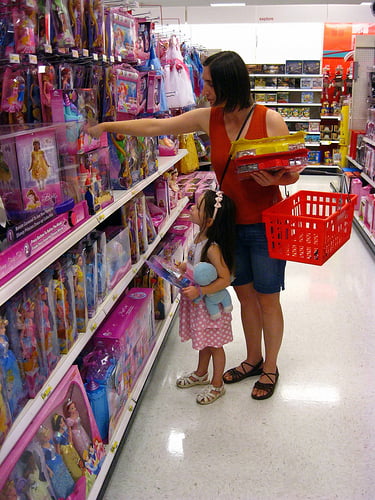
L spent her own money, which Nana and Papa (from whom else would she have received it?) had intended the money for our trip to Polska. She'd received so many gifts -- from friends, family, and a particularly sneaky godmother -- that we simply didn't encourage her to spend it.
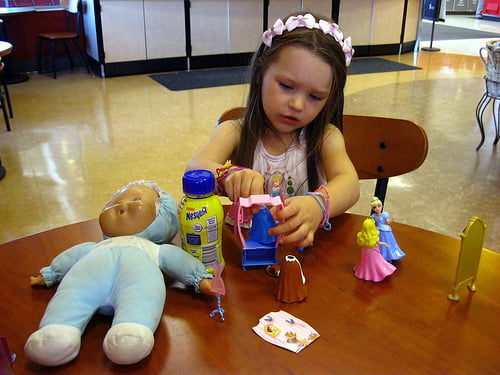
Now the encouraging begins. What to buy? So much cash, so many princesses, so little parental support. In the end, she went with Cinderella and Sleeping Beauty. The classics.
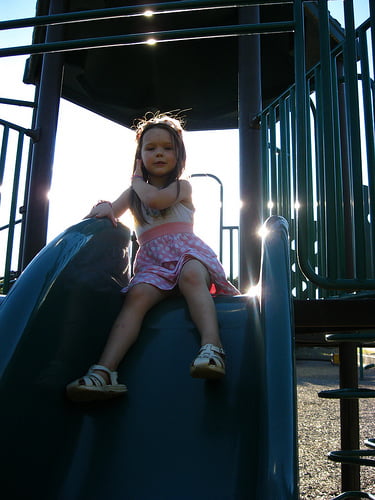
We finished Saturday at the park, with K and I musing how much she's grown since the first time we went to this neighborhood playground. Saturday she ran wildly, losing sight of us and popping up here and there giggling. Our first visit was cautious: no running without knowing where Mama and Tata are. No climbing without a protective hand on the bottom. No swinging without a toddler swing seat.
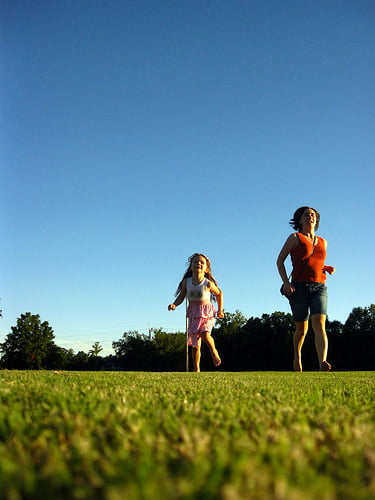
The follower has become the leader. "Come on, Mama!" she cried out when we went to the empty baseball field. "Chase me! Catch me!" We can still catch her, but it's not a question of three quick steps and swoosh! she's in our arms.
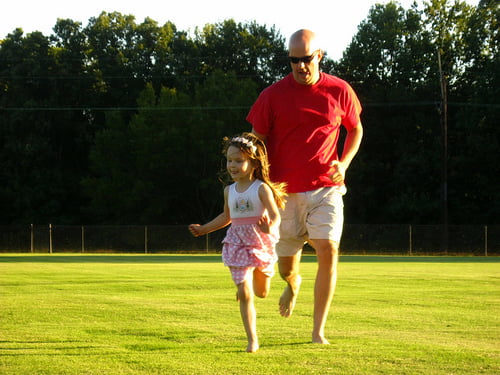
She's become a moving target, with a sure, steady gait and a strong sense of independence.
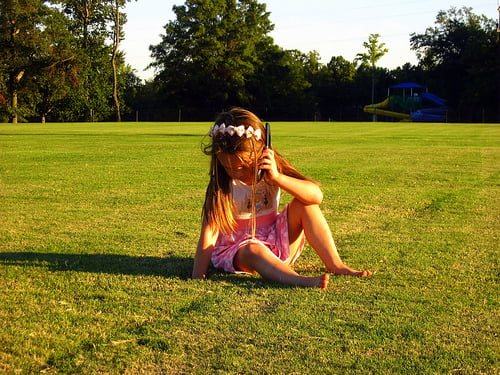
As she sat, talking to Nana and Papa, the "I can see her as a tween, as a teen, as an adult" moment washed over me all over again. The independence, the quick feet, the willingness to explore: all these things indicate the inevitable, but we so infrequently notice it.
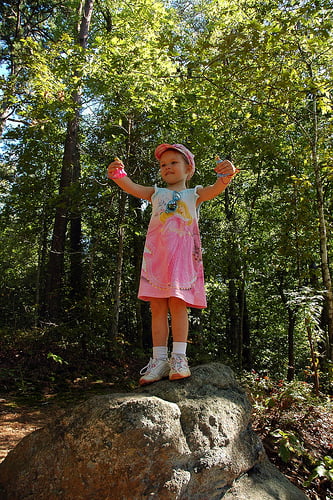
Sunday, we headed back to the park, but this time, a large state park with a couple of lakes, a few miles of trails, and plenty of rocks for climbing.
And boats.
Blue boats.
Blue glittery boats.
"The only thing that would make this more perfect," I suggested as we neared the paddle boats, "would be for the sparkles to be pink."
"Right!" came the response.
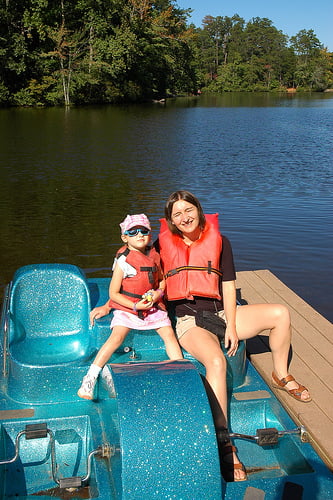
Where did this love of pink come from? Pink is the stereotypical girl color, and we have in fact tried to avoid purchasing pink clothes for her. Yet pink remains the eternal runner-up in the "my favorite color" contest.
The only way to make the day more perfect was a picnic. "A picnic!" L cried. "I'm so happy!"
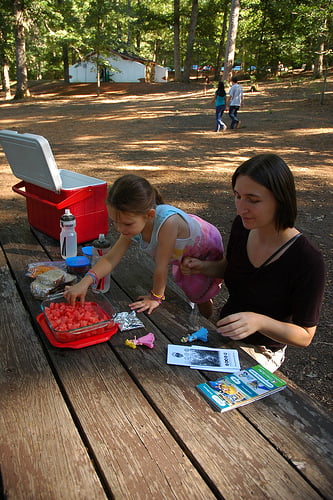
With a mayonnaise-cheese sandwich (what odd taste little girls can have) and all the watermelon she could eat, she certainly had cause for joy.
The walk that followed somewhat damped that joy. "I want to go home!" was a common refrain,
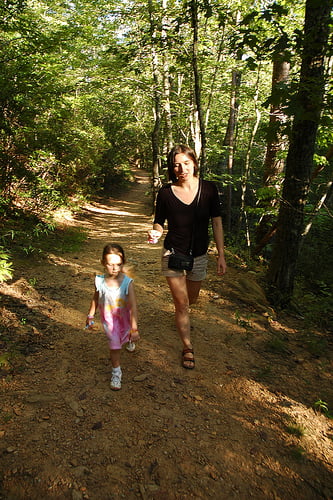
until we reached a small clearing with plenty of rocks for skipping ("making ducks" in Polish) and general tossing.
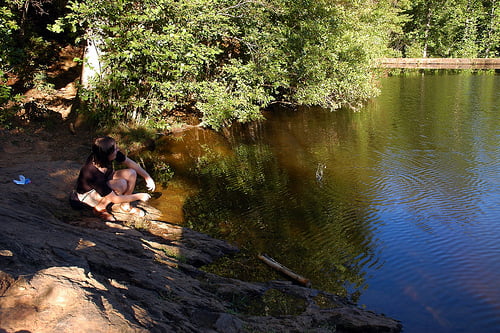
As might have been expected, L modified the previous refrain, adding a quick "don't" when we suggested it was time to go.
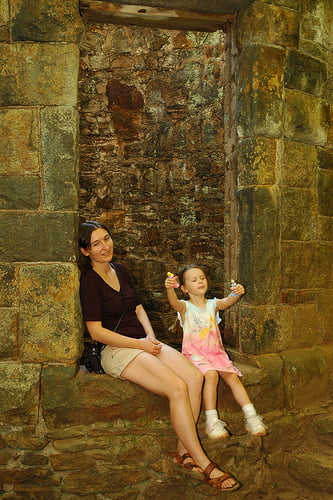
But we were all tired, and bedtime was approaching. Only the princesses were still on their feet.
Other Side of the Desk
I sit quietly, looking at the long list of assignments upon which the professor will be basing our grade. Thinking of all my other obligations, I find myself wondering if I'll survive the next few months.
And I am pleased with that.
Being a teacher without being a student on a regular basis is about like being a mechanic who never drives. It's one thing to "dish it out." It's another to take it.
To see the classroom from both sides of the desk is to ensure reasonable expectations from one's own students.
Beginnings
L has been dancing whenever she hears music from the time she could stand. At first, it was only rhythmic bouncing with her knees and upper body. As her motor control improved, so did her moves.
So great is her love of motion that she’ll gladly sit and watch others dance. One of her favorite videos to watch is a clip about one young English lady’s ballet instruction, and from the first time she watched, she declared, “I’m a ballerina!”
Now, at close to four years old, she’s finally of the age that we can actually begin to make that reality.
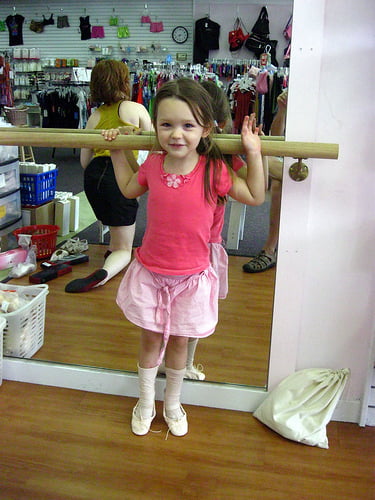
A quick trip to the ballet supply store, a few phone calls, and we have a reluctant ballerina.
L is a cautious girl: she doesn’t just dive into this or that without concern. She is, in short, a worrier. And so on the first day of ballet, though she had been talking about it all week, she fretted that she might not like it after all.
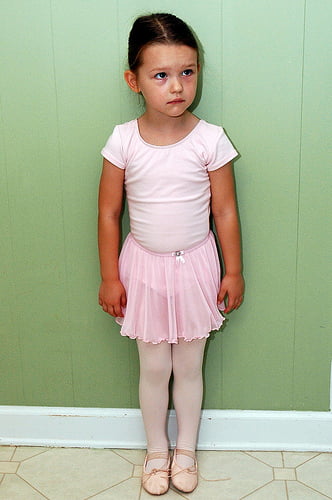
Fear set in, and before long, she was declaring, “I don’t want to go.” No amount of cajoling could convince her.
The Opportunities-We-Never-Had dilemma set in: we never want to force her to participate in anything creative — where’s the joy in that? Yet we knew that if we could just get her there, just let her see the other girls dancing, that all would be well.
Finally, K simply declared that in order to cancel the lessons, L herself had to go with Mama to cancel the lessons.
She ended up staying.
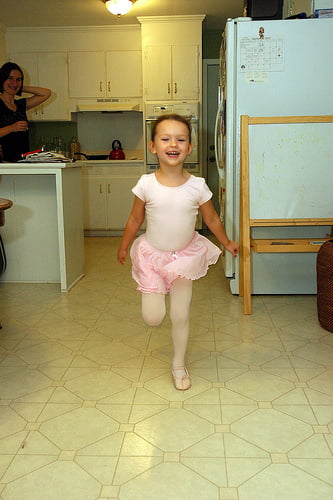
Saturday morning, before her second lesson, L was all smiles.
Why I?

A student in class today asked why we capitalize the first person singular subjective-case personal pronoun, I, but none of the other personal pronouns. "Why don't we capitalize 'he' or 'she'?" the curious young lady asked.
Indeed.
"I'll look into that," I replied, scribbling in my little notebook.
The New York Times offers an answer:
England is where the capital “I” first reared its dotless head. In Old and Middle English, when “I” was still “ic,” “ich” or some variation thereof – before phonetic changes in the spoken language led to a stripped-down written form – the first-person pronoun was not majuscule in most cases. The generally accepted linguistic explanation for the capital “I” is that it could not stand alone, uncapitalized, as a single letter, which allows for the possibility that early manuscripts and typography played a major role in shaping the national character of English-speaking countries. (New York Times)
The whole article is quite interesting.

First Things
The first week of school is behind us. A hectic week of bureaucracy and smiles. The former comes from all the forms and materials we distribute to students and then take back up almost immediately. "Bring this back before the end of the first week!" The latter comes from my yearly effort to be genuinely friendly.

There's an old saying -- advice to new teachers, really -- that a teacher should never smile before Christmas. By the end of every school year, I'm so frustrated with my failures in dealing with this or that disruptive or disrespectful (somewhat synonymous in many ways) student that I promise myself that next year I will be a rock until Christmas. I will lay down the law and accept no compromise. I will be a drill instructor. I will pound them into submission and then convince them I'm a decent and nice guy.
Yet summer wanes, my planning progresses, and I inevitably turn my thoughts to what I want to do during the first days of school. And it occurs to me that I would most definitely not like to be beaten into submission as an initial experience with anyone. It would be hard to overcome the negative feelings such a first impression would create.
So when the first day of school arrives, I begin again to walk the ever-wiggling line between being a kind authoritative and devolving into a kind permissive teacher. Students might find the first overbearing at times but have a general faith -- now and in the future -- that all was done for their best; students find the second to be a favorite teacher while in middle school, only to look back on the teacher as one who was "nice but didn't teach us much."
Last week -- the first week back -- was the honeymoon period. The real test now begins. The sad thing is, I already have my eye on one or two that I believe will be major problems before the end of the first quarter. If I can work effectively with students and keep it only to one or two, it will be a great success.
Six
The passage of time has always fascinated me. “X years ago today, this happened,” I would think, marveling at all the things that happened in the meantime. Often, it wasn’t an exact day, but instead, within a month or so of the actual anniversary, I would find myself thinking such nostalgic thoughts.
Many of those events later turned out to be insignificant, of little more importance than what one had for breakfast nine days ago.
Today’s is the most significant of my — and K’s — life.
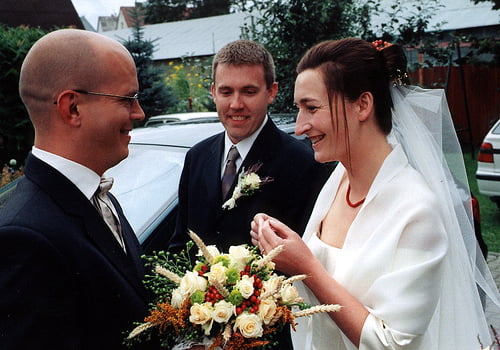
When I reflect on the patience necessary for us to get married (a non-Catholic American getting married in Poland requires only slightly less bureaucracy than starting a war or passing a stimulus bill) and the patience necessary to put up with my foolishness for six years, I realize how fortunate I am.
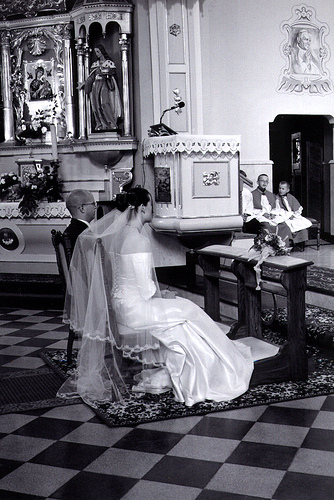
Six years — an awfully short time. Wars and debates have lasted much longer — and marriages. But when I look to the next six years, and the six years after that, and the six years after that (ad infinitum),
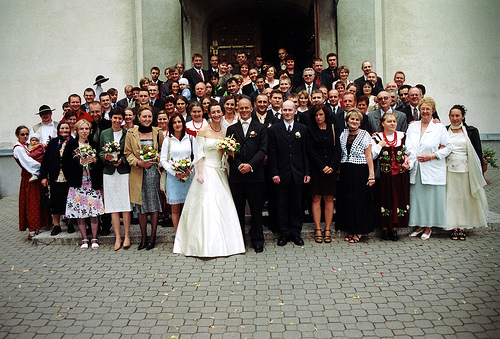
when I think of a time when my few remaining hairs have turned gray and migrated to my nose and ears, when my mind moves slowly and my body more so,
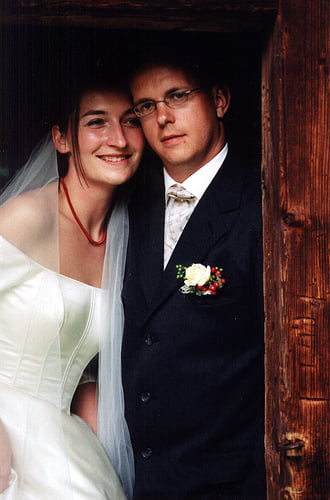
I will still have the most intelligent, beautiful, and thoughtful (among countless other superlatives) woman at my side. Perhaps only then will I truly understand the significance of our love.
Or maybe it’s to remain our ultimate mystery.
Endings and Beginnings
The summer's end nears. Morning temperatures are back in the lower seventies, and we return to eating breakfast on the deck occasionally. Bagels for us all, but the Girl prefers to dip hers in maple syrup. In a sense, it's hard to argue with that kind of logic.
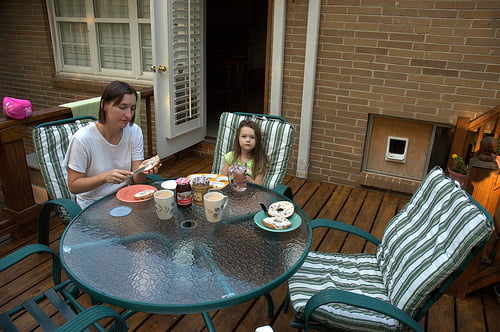
Here in the south, the end of summer is about the only time we can go outside and play comfortably. In July, it's still 90 degrees as the sun sets. We try to head out sometimes for a little outdoor time, but no one wants to melt.
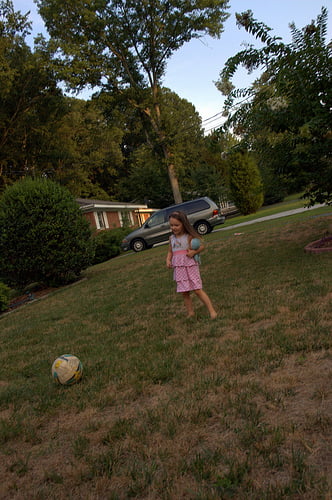
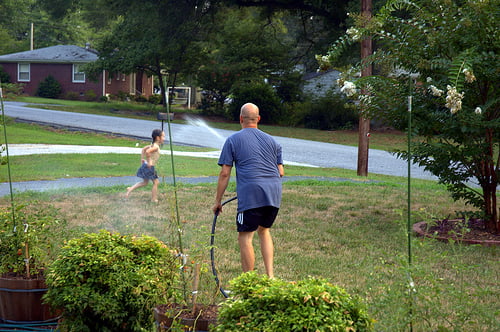
Still, there are options. And does it ever bring back memories: a few minutes of running through misted water on a hot summer afternoon was my idea of paradise when I was a kid. A few overlapping garbage bags fastened to the ground with whatever one could find would sometimes serve as a slide, though never for too long. Since we don't have a sprinkler (they've all broken), L has somewhat limited options. It's more fun for me, though.
The last of the crape myrtle blossoms begin falling.
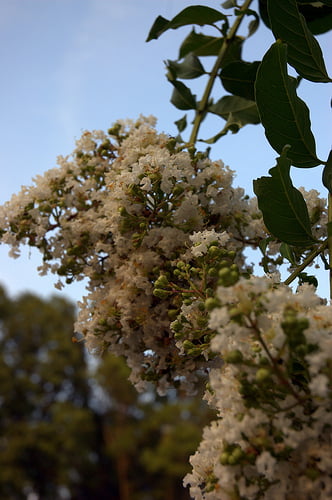
And in this end is my beginning: a new school year both sparkles and looms.
Lost

In the first installment of the Toy Story series, Woody, thinking he's been left behind, falls to the ground and decries his new, depressing status: "I'm a lost toy!"
Surely there can be many things more terrifying than being lost. One of our great childhood fears is getting lost, being separated from our parents and unable to find them. It's the stuff of every child's nightmares, and in a modified way, the plot of great books of the past.
Losing something dear to us is like losing a part of us.
Today, before Mass, somewhere between getting out of the car and walking out of the restroom, L lost her Madeline doll. "She may be teeny tiny, diminutive, petite." L's Madeline doll was all those things, and she even had a scar from having her appendectomy.

I walked back to the car, looking for the doll that I thought surely would be easy to find. No such luck. K and L went back to the restroom. No doll. After Mass, I talked to the ushers. Sadly, there's no lost and found bin anymore, but they informed me that people often leave lost items on the tables outside the sanctuary. No Madeline. We checked the bathroom once more and looked carefully as we went back to the car.
No luck; no Madeline.
Fortunately, L was not terribly attached to the dolls, so a few tears and it was all fine.
But I'm genuinely curious about what happened to that doll. Did someone take it? If so, why? Isn't it obviously a lost toy? If someone found it in the parking lot, isn't it a reasonable assumption that the owner will return to look for it? In short, who would simply take a toy when it's obvious where the owner is? Who would take a doll from a church parking lot?
Perhaps it will show up next week. There's always that hope -- the idealism that led me to be a teacher still says, "Someone will play with it for a week, then return it."
Face Bóg
Facebook is truly becoming ubiquitous, to the point that it can be used in Polish religious advertising.
Below was a poster at the entrance to one of the many churches in Krakow.
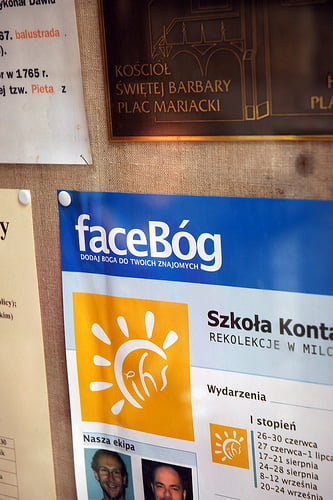
"Bóg" ("God") is pronounced much like the English "book," but with an obvious "g" instead of "k."
"Dodaj boga do twoich znajomych" literally means "Add God to your acquaintances," but a more Fackbook-eque translation would obviously be, "Add as friend."
Sing, Sing a Song…
K grew up so close to Slovakia that it's fairly easy to pick up Slovakian programming from her folks' home. Indeed, that part of Poland used to be Slovakia: there's still a weekly Mass said in Slovakian, and K's father's high school exit exam was in Slovakian.
The program itself has hints of the old communist form.
Zoo
Shortly after she woke up, L declared, "I'm ready! Let's go to the zoo!" Never mind that she was still in her pajamas, still unbreakfasted, and still rubbing sleep out of her eyes. We'd promised a trip to the Atlanta zoo (K wanted to go to Ikea, see?), and she was ready.
Much larger than our quaint (but lovely) zoo in Greenville, the Atlanta zoo has many species that L had never seen before. The first new friends: warthogs.
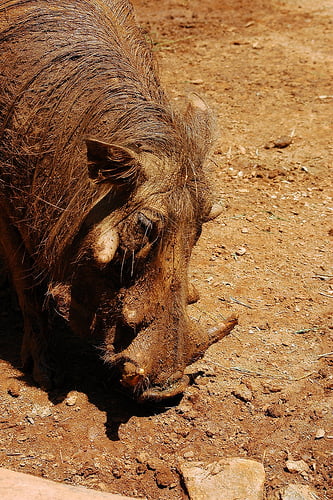
I'd never seen them myself except in The Lion King, which hardly counts.

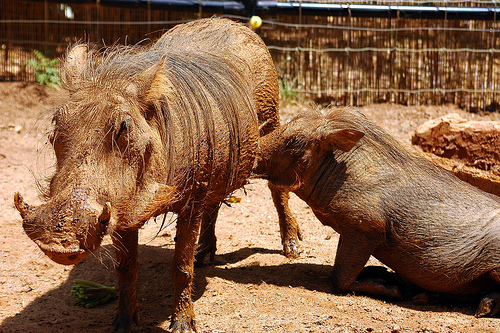
They were shockingly ugly, like the product of some kind of cross-breeding experiment gone horribly, horribly wrong. Yet like most things we deem "ugly," they were oblivious to their decided lack of charm.
Then again, these creatures must certainly enchant someone.
Just down the path, though, were animals whose grace and beauty were inversely proportional to the warthogs'. Black horses with white stripes or vice versa, the zebras were lovely in a stark and simple way. Supposedly they are very difficult to domesticate, but certainly many have tried: who could resist?

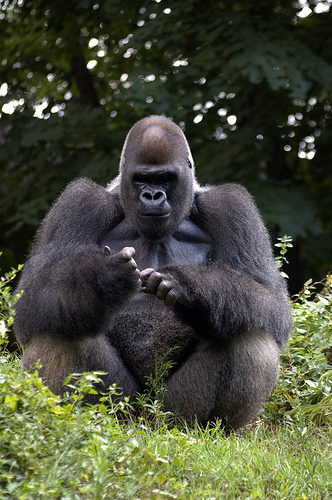
For me, though, the highlight of any trip to a zoo is the great apes. It's as if we're watching ourselves, they're so intelligent and anthropomorphic.
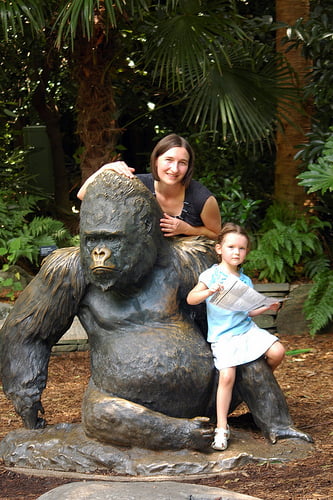
They seem to stop and think. They fight. They play. They're among the closest to humans biologically and behaviorally among the whole animal kingdom. I always get the feeling they're the ones watching us.
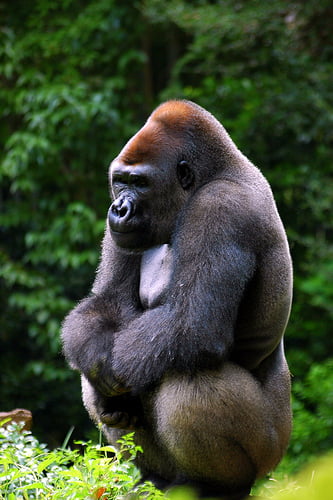
During today's visit, we were privileged -- if that's the correct term -- to watch two enormous males contend for the attention of a female. They chased each other about a bit, then fell into violence. One smack echoed, and I shuddered as I realized the certain impossibility of a human surviving such a blow.
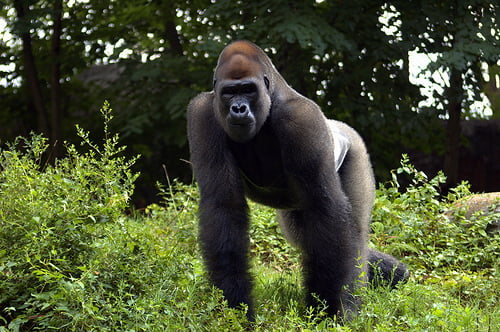
They calmed down a fairly quickly, and they even decided to pose for a few pictures.
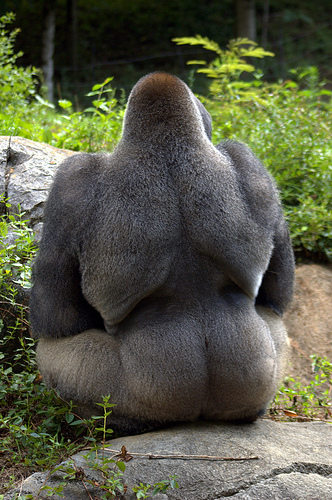
In between hygiene breaks, of course.
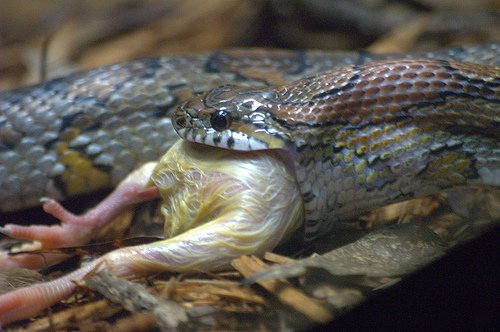
At the serpentarium it was feeding time, and a small constrictor -- some kind of boa, if memory serves -- swallowed a bird whole. Those who'd arrived first assured those of us who arrived only to see the last few inches of the bird, "It was dead when the keeper put it in the cage." What irony: some would have been appalled by what goes on everyday in nature. Animal cruelty.
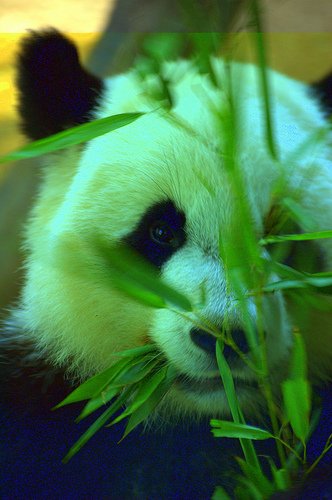
Giant pandas were having their dinner as well, but it was a considerably more benign process: after all, bamboo doesn't register pain, does it?
Despite all the new animals we saw, L's response to the on-the-way-home question, "What was your favorite part?" was really quite predictable.
Who could put silly warthogs, zebras, constrictors, or pandas above an elephant ride?
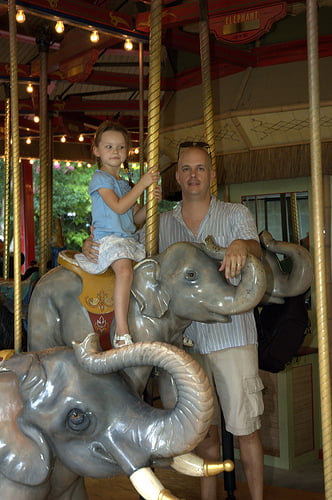
Even though the heat was unbearable, the elephant ride was blissful.
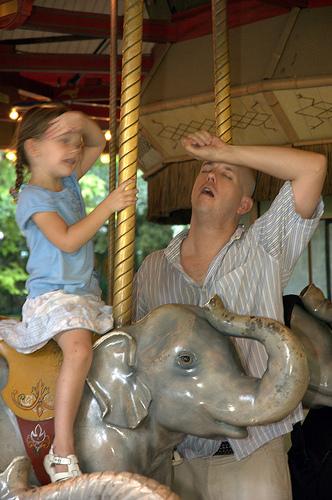
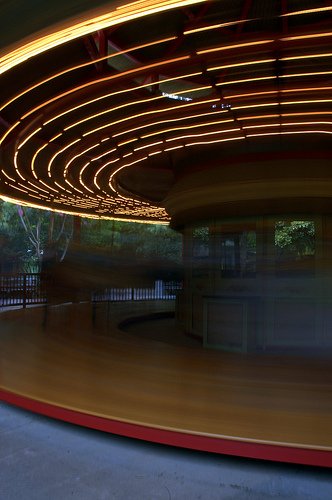
If she could, she would have ridden into the night, I'm sure.
Basilica of the Holy Trinity (Krakow V)
“You know what I’m looking forward to?” I asked K before we left for Poland. “The smell of an old church.”
“Oh, me too,” she replied.
It’s an odor of slightly metallic dampness, old incense, leather, wool, and a thousand other notes that probably only a sommelier or blender of fine pipe tobaccos could notice and describe but which merge for us mere mortals into “old church.” It is to be in the midst of history: the structure is older than America. It is to be in the midst of profound calm: even in the most tourist-filled church, there is reverent silence.
A day in Krakow, responsible only for myself. I decide there is only one thing to do: go into churches. I begin with one of K’s favorites: the thirteenth-century Gothic Basilica of the Holy Trinity.
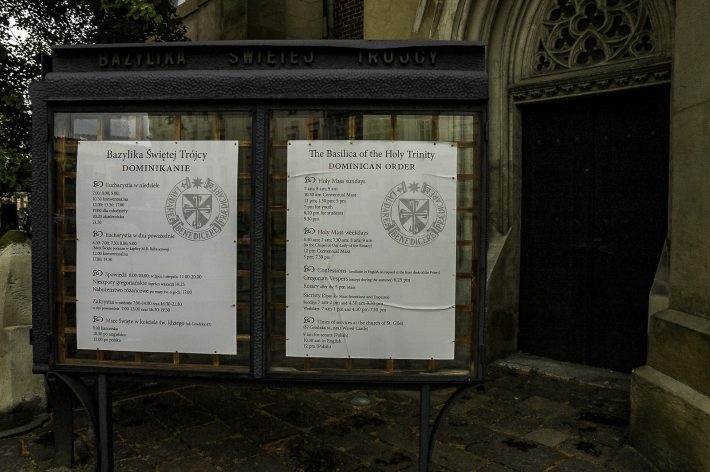
With so many churches in the Old Town of Krakow, it’s surprising how many masses the Basilica has. There are more on a weekday than on a Sunday at an average Catholic church here in the Old South, a clear illustration of the difference in relative demand. Then again, this particular church is popular among university students in Krakow.
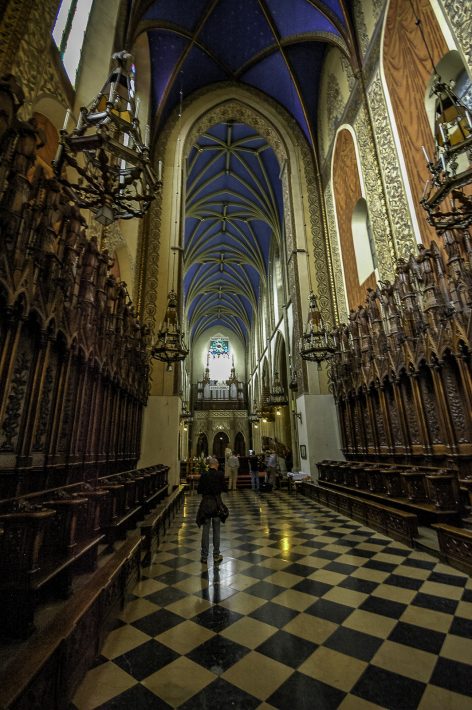
So many of the churches in Krakow — they begin to blend together after a while. That’s the tourist view, I’m sure. To parishioners, there’s a history and a relationship.
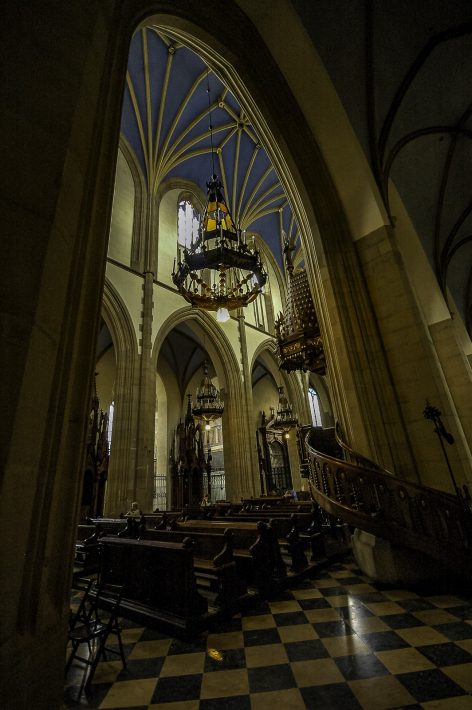
Yet, there are little details in each church, little architectural touches that set each one apart. The basilica, for example, has a small upper chapel.
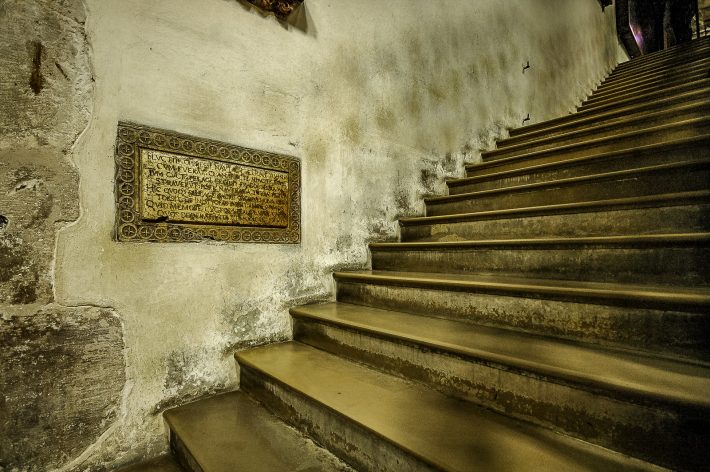
The view provides a little different perspective. Instead of looking up — a common action in gothic churches, and very much by design — one has the opportunity to look down. Somewhat blasphemous in a certain sense: we mortals are to be looking up to God, and here I am looking down. And on what?
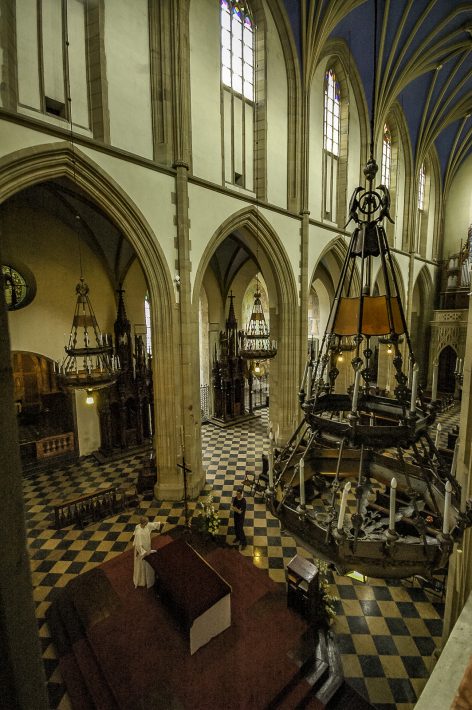
A young monk explaining an upcoming ceremony to four young men. I can’t hear what they’re saying, and every picture I take turns out later to be completely, irredeemable blurry. I make a logical assumption: these young lads are about to become monks themselves, but I’m not certain. I can’t eavesdrop without making it obvious, and something prevents me from simply walking up to them and asking. What’s stopping me?
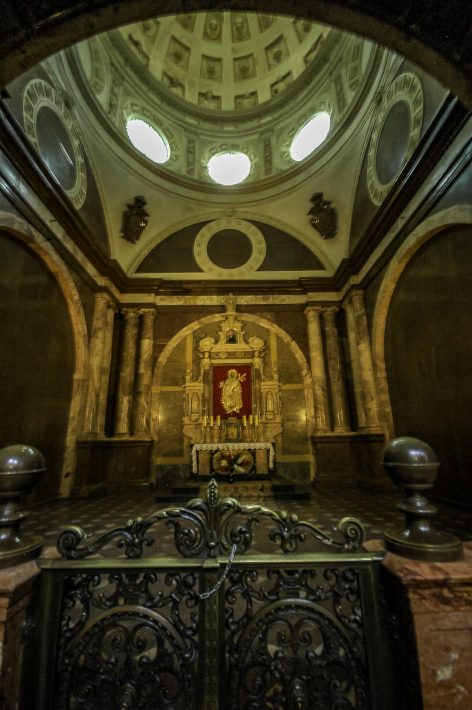
The conspicuousness I always feel as a tourist certainly has something to do with it. Walking around, snapping pictures, changing lenses, taking more photos, changing lenses again — I’m simply a cacophony.

What’s worse, unlike the Catholic tourists, I don’t genuflect as I pass the altar, and I don’t cross myself on entering. I surely stand out, but what’s the problem? We all stand out.
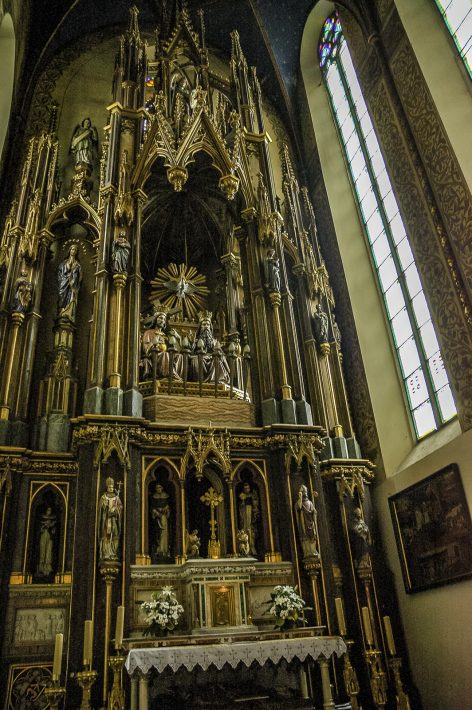
Is it false modesty or simply an overactive ego?
Festival
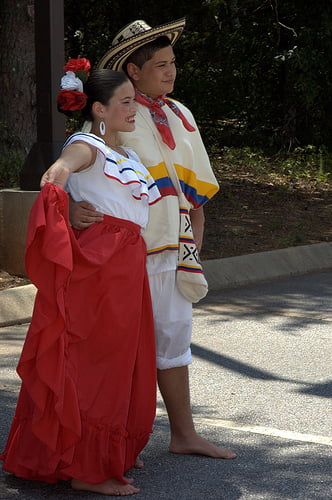
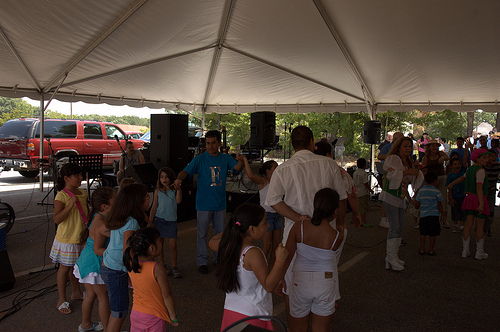
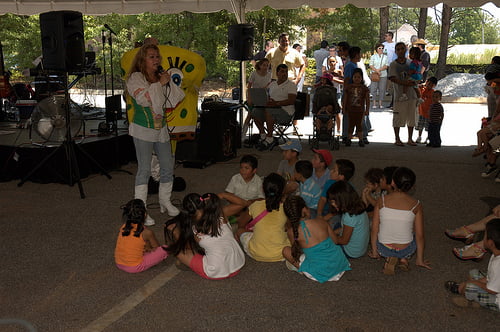
The church we attend is Saint Mary Magdalene Catholic Church, and since it was recently the Feast of Mary Magdalene, what else was there to do but have a festival? Never mind that the temperature was 101, with humidity that made it feel ten to fifteen degrees hotter -- in spite of all risen mercury, the turn out was fairly impressive.
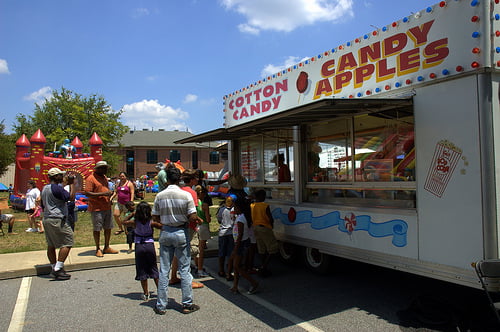
It did make for some challenges. The inflatables were hot to the touch -- so hot, we were afraid L would burn her feet without socks, so we didn't let her romp about on them. (After she touched one, she didn't want to either.)
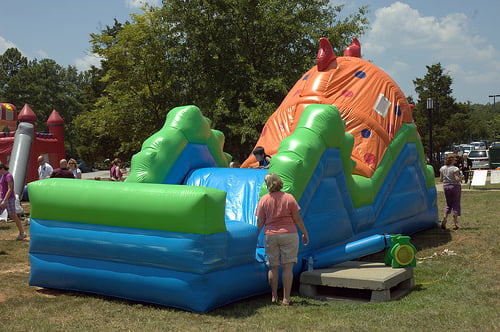
The other rides probably weren't much better.
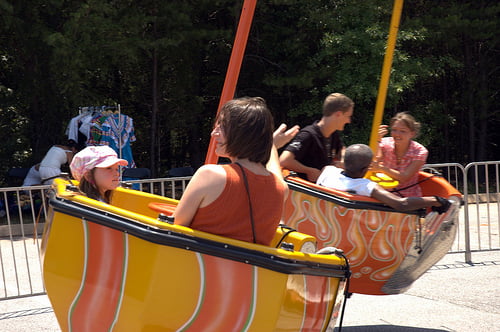
Due to the high attendance, though, I didn't usually find out. I wasn't too upset about missing the whirley ride, though. Dizziness mixed with heat would be potentially embarrassing. How odd: such rides rarely turned my stomach as a kid. As I get older, though, I get more sensitive, which is itself odd: the general trend in aging is to grow less sensitive to so many things.
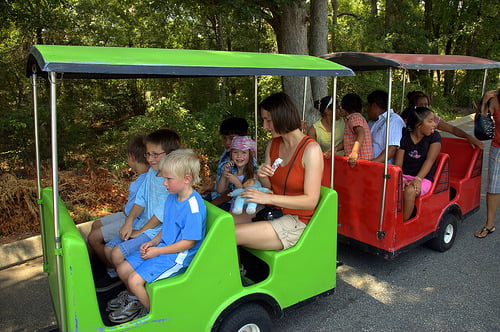
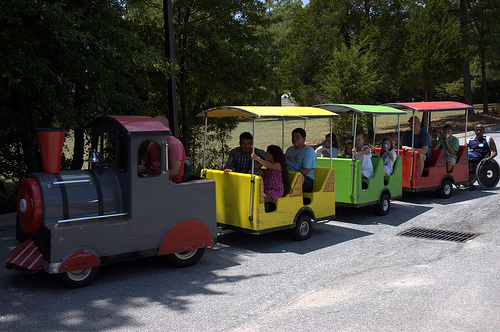
As always, the highlight for the Girl was the dancing. L will dance -- and has danced -- to just about any music: bluegrass (one of her favorites), traditional Polish highlander music, Bach's "English Suite No. 2", the Grateful Dead, Sonny Stitt, etc.
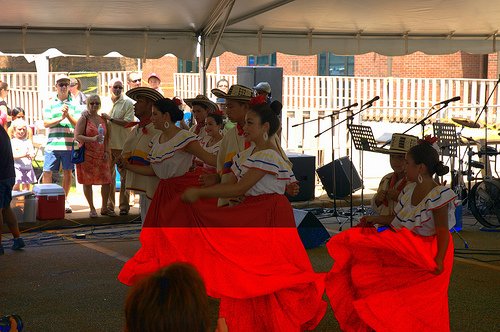
One of the things I like about the Catholic church in America is how it tends to draw so many cultures into its community, and these communities often have a strong sense of their heritage, which they pass through the generations. It's most evident with the Hispanic cultures, but that's probably more a question of demographics than anything else.