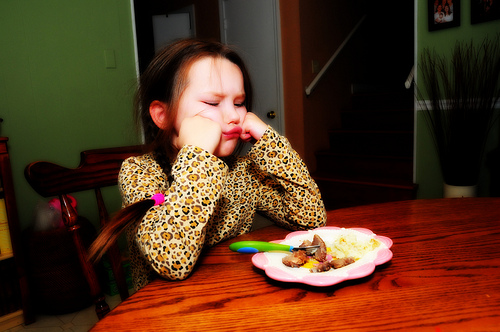
[Kindness] watches the thoughts, controls the words, and helps us to unlearn [youth's] inveterate habit of criticism.
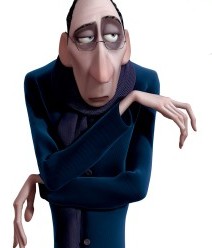
Criticism is easy, fun even. We can easily discern others' faults, and it takes little imagination to capitalize on these faults, aggrandizing ourselves while belittling others. As the fictional critic Anton Ego says in Ratatouille,
In many ways, the work of a critic is easy. We risk very little, yet enjoy a position over those who offer up their work and their selves to our judgment. We thrive on negative criticism, which is fun to write and to read. But the bitter truth we critics must face, is that in the grand scheme of things, the average piece of junk is probably more meaningful than our criticism designating it so.
Yet when we're practicing active kindness, it puts a filter over our lips.
The quoted excerpt is from Father Frederick Faber’s Spiritual Conferences, excerpted here.

 The weakness of man, and the way in which he is at the mercy of external accidents in the world, has always been a favorite topic with the moralists. They have expatiated upon it with so much amplitude of rhetorical exaggeration, that it has at last produced in our minds a sense of unreality, against which we rebel. Man is no doubt very weak. He can only be passive in a thunderstorm, or run in an earthquake. The odds are against him when he is managing his ship in a hurricane, or when pestilence is raging in the house where he lives. Heat and cold, drought and rain, are his masters. He is weaker than an elephant, and subordinate to the east wind. This is all very true. Nevertheless man has considerable powers, considerable enough to leave him, as proprietor of this planet, in possession of at least as much comfortable jurisdiction, as most landed proprietors have in a free country. He has one power in particular, which is not sufficiently dwelt on, and with which we will at present occupy ourselves. It is the power of making the world happy, or at least of so greatly diminishing the amount of unhappiness in it, as to make it quite a different world from what it is at present. This power is called kindness. The worst kinds of unhappiness, as well as the greatest amount of it, come from our conduct to each other. If our conduct therefore were under the control of kindness, it would be nearly the opposite of what it is, and so the state of the world would be almost reversed. We are for the most part unhappy, because the world is an unkind world. But the world is only unkind for the lack of kindness in us units who compose it. Now if all this is but so much as half true, it is plainly worth our while to take some trouble to gain clear and definite notions of kindness. We practice more easily what we already know clearly.