Choices
Dear Terrence,
I spoke to your English teacher today. She told me about a problem you had with another student, that this boy did something that so angered you that you were willing to fight him. That you turned over a desk and started marching toward the kid with every evil intent that anyone could imagine glowing your eyes.
Remember, we had a conversation in the hallway about this the other day. You’re letting people push your buttons. You’re essentially giving them a remote control and saying, “Hey, you want me to hop on one leg, press this button. You want me to laugh, press that one. If you want me to hit you, the red button’s the one.”
What saddened me most about what your teacher said, though, was your response later, how you asked in a low voice, “Ms. Jones, did you write me up for that?”
“What choice did you give me, Terrence?” she said.
I know that you feel you don’t have a lot of choices right now, Terrence. I know you feel that no matter what decision you make, things always turn out the same way. I know that a lack of choices feels like a prison, but not a conventional one — this one has invisible bars that seem to change location but hold you fast just the same. I know you feel you have few choices, but I’m wondering if your teachers don’t feel the same way.
“What choice did you give me, Terrence?” asked Ms. Jones, and in that, I can almost hear as much frustration as I hear when you tell me some of your stories. What choice does any teacher have when facing a child like you, a child who really needs some positive attention and someone who can sit down with him and explain and practice, as many times as it takes, some of the rules of the game that you seem somehow to have missed out on?
Before you can learn math, science, history, or English, you need, quite frankly, to learn how to learn. To learn how to be comfortable with your own stillness. To learn how to look at someone who’s giving you instruction the same way you look at me when we’re standing in my doorway, chatting. To learn how to listen with a slight smile of anticipation like you do when I call your name out as you walk down the hall and motion you over to me.
But unfortunately, we’re not in a situation where we can take a lot of time to teach you how to learn. We teachers have got deadlines and testing hovering over us, and it feels like the tests are pressing our buttons. We have choices — I’m convinced of that — but I’m not sure we’re all aware of these choices, of the various options that might lead to more success for you and kids like you in the classroom. I’m certain there are choices, but I’m not as sure that they’ve even all been discovered yet. So in a way, we teachers are just groping around, feeling out these invisible bars just like you.
I do know that for most of us, being in the classroom is a conscious choice. We’re an idealistic group at heart: it’s what led most of us to the profession and it’s what keeps us there. Maybe if you can keep that in your conscious thoughts — that everyone who stands in front of you day in and day out is there because they choose to be there, because they want to help, because they feel called to do what they do — then you’ll start to see some new choices, too.
Sincerely,
Your Friend in Room 302
Tilt
I’ve heard it all my life: the mainstream media has a liberal bias. When I considered myself a liberal, I didn’t really believe it — how can one see one’s on bias? Now that I’m moving more politically to the right, it seems more obvious. Of course one could argue that I see what I want to see, that just as I didn’t see liberal bias as a liberal because I didn’t want to, now I see liberal bias as a moderate because I want to. But as I watched the debate this evening, I couldn’t keep myself from snapping a few screen shots to see if I was right.
I was.
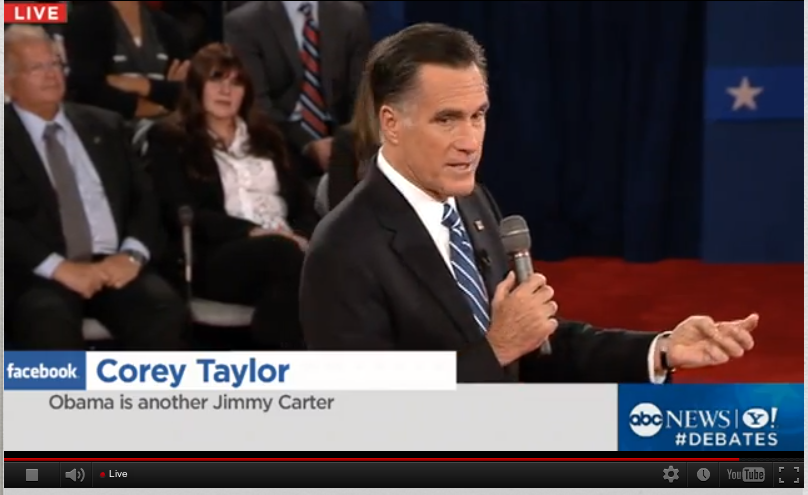
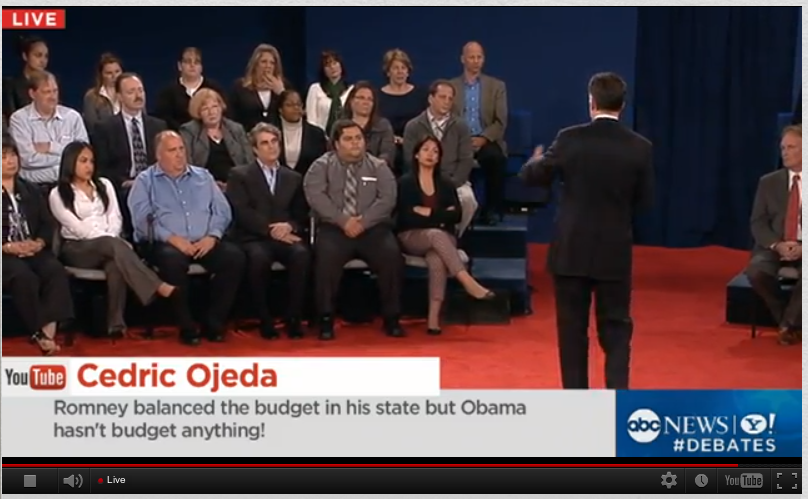
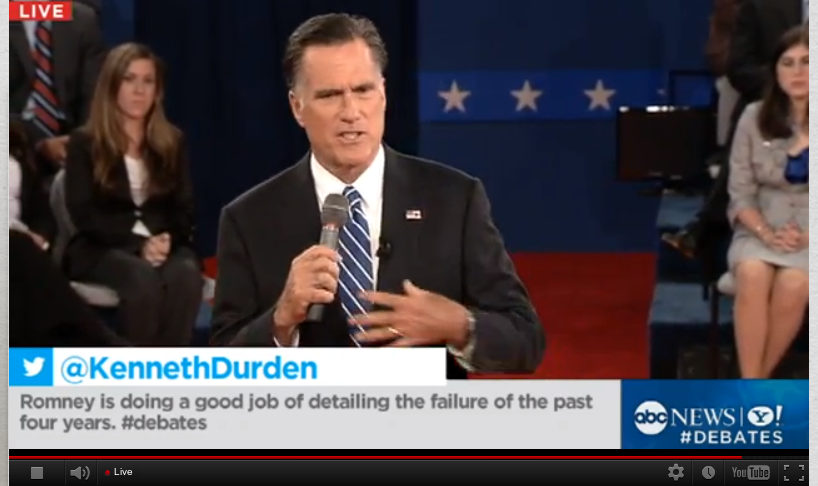
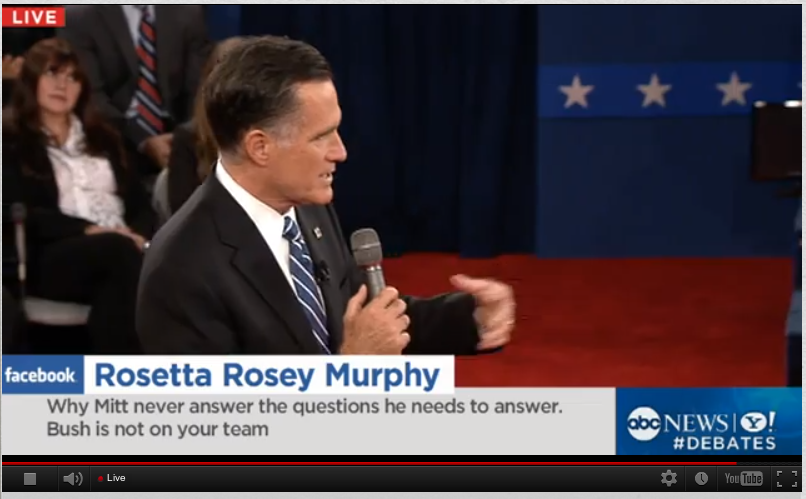
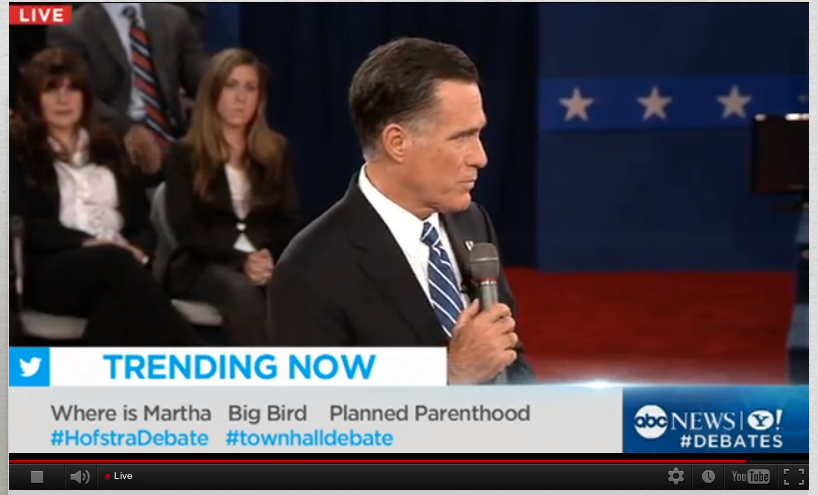
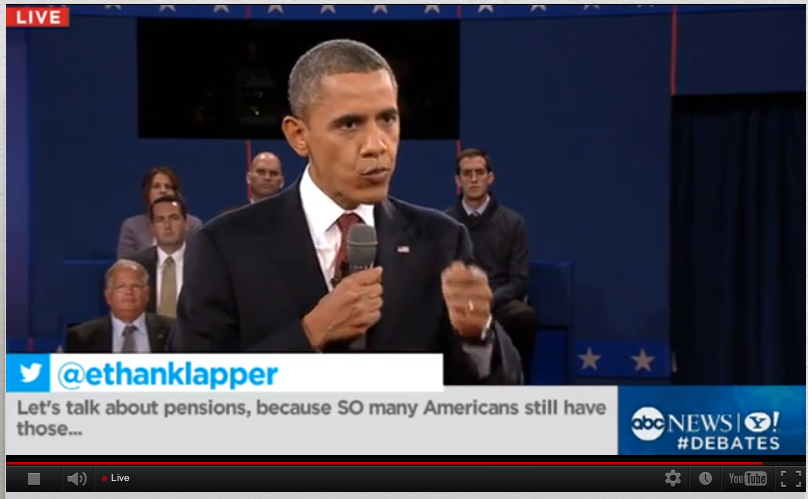
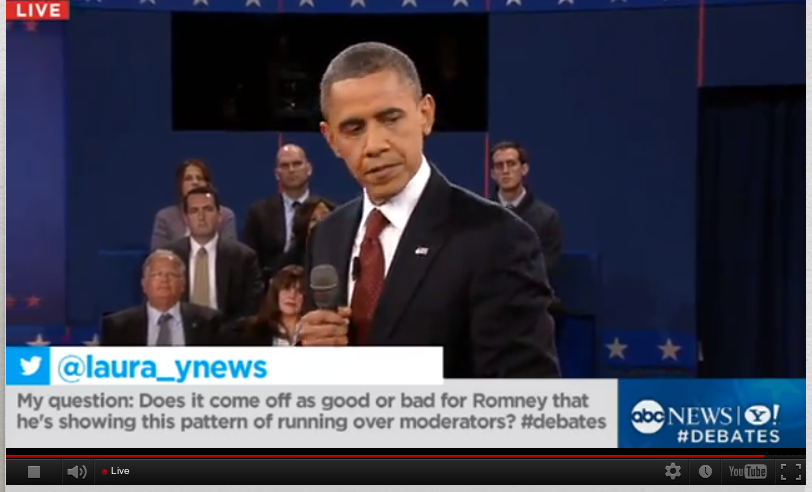
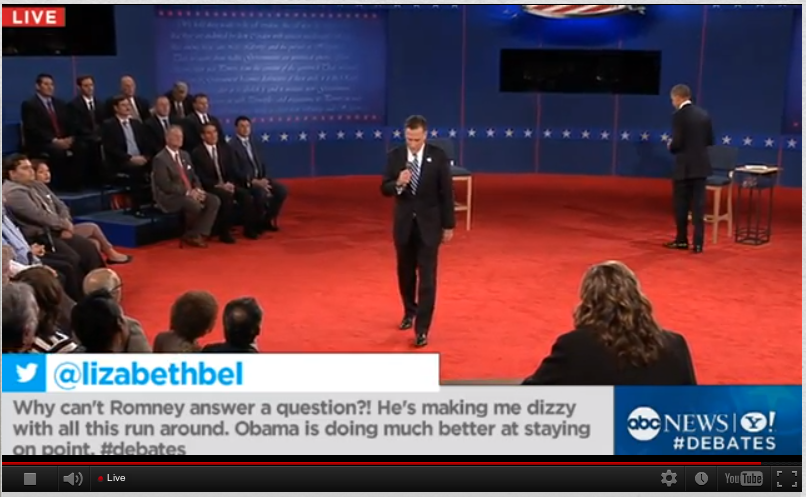
First, there’s the question of selecting which social media comments (Tweets and Facebook updates) to run across the screen. During the few minutes I watched, I saw a few anti-Obama comments:
I saw a few anti-Romney comments:
This is by no means a scientific sampling: I’m sure I missed a lot, and I certainly missed some anti-Obama ones among them. But the vast majority were highly critical of Romney. Now, someone had to choose which Tweets and FB status reports to post, and something had to inform that choice. Perhaps they wrote some scripts to pull random samples. It would be nice to believe that, but it would be naive given the independent polling that shows the two candidates just about even.
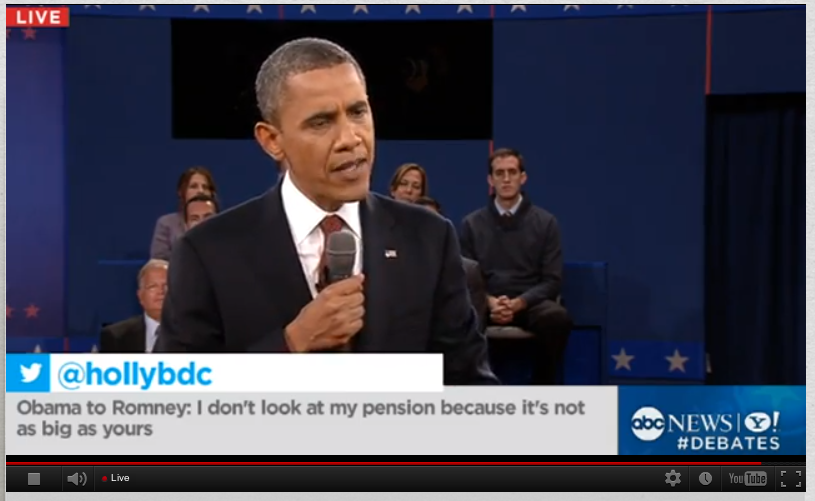
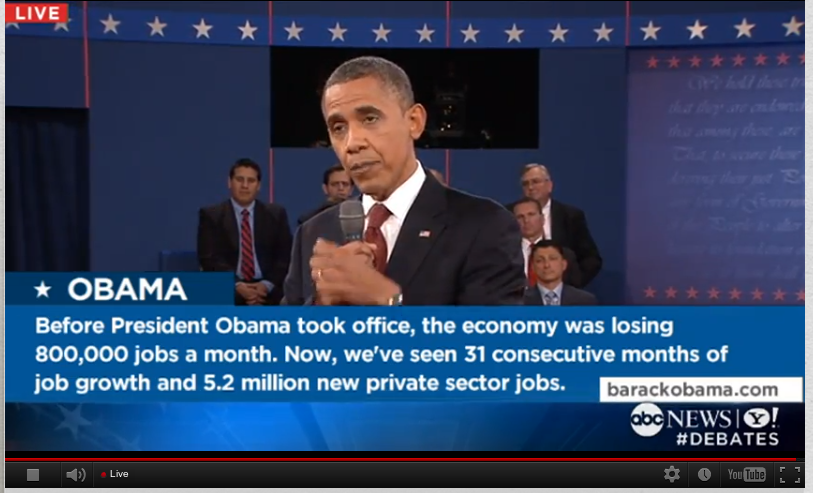
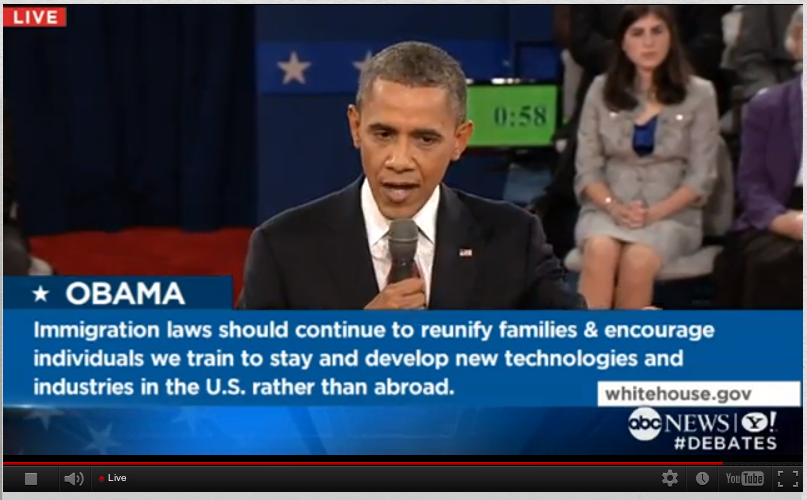
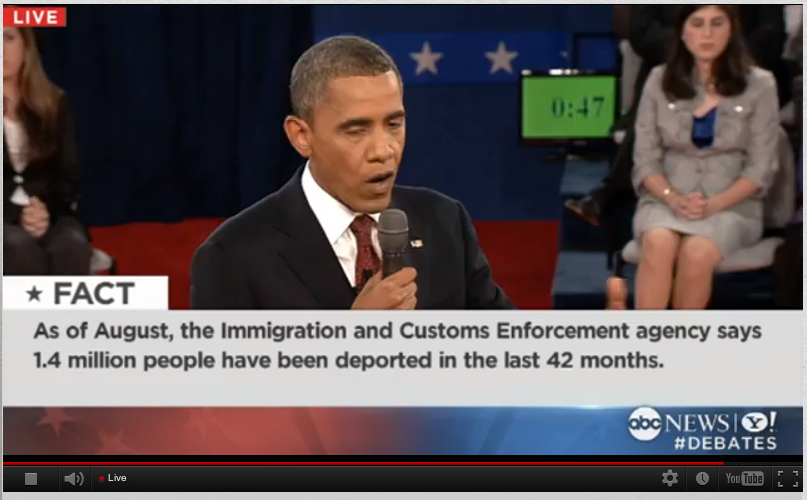
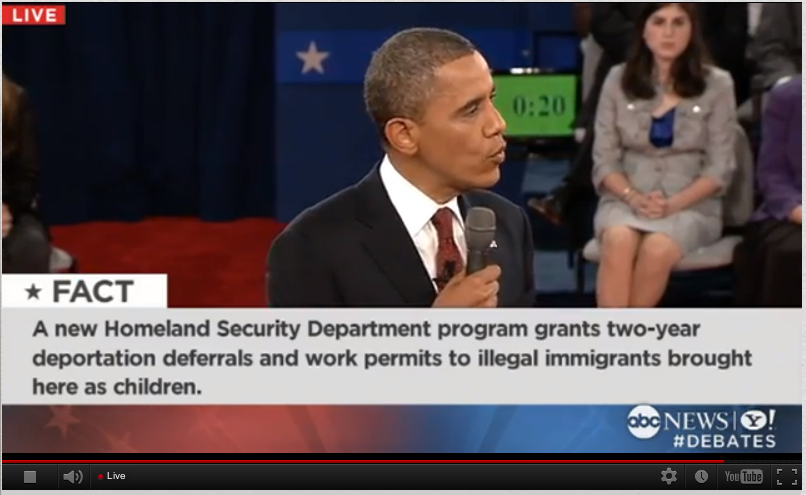
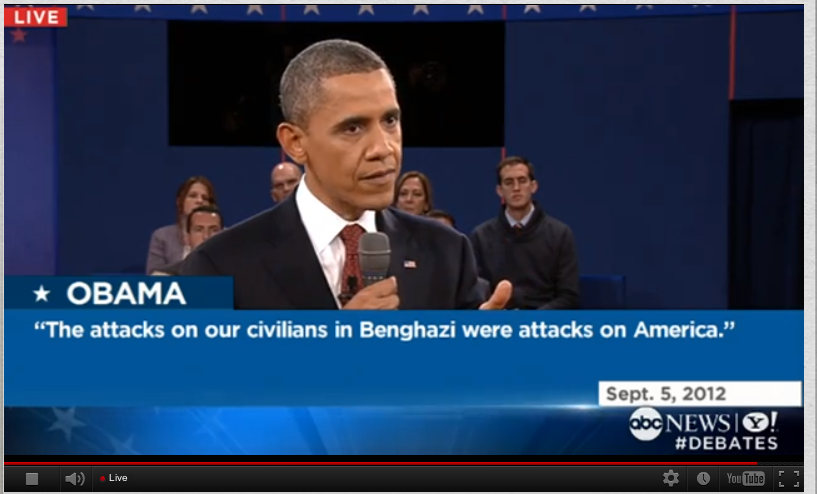
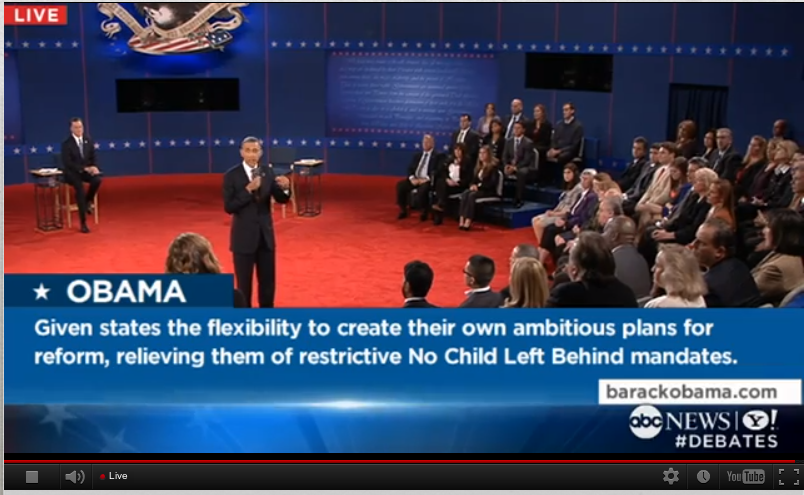
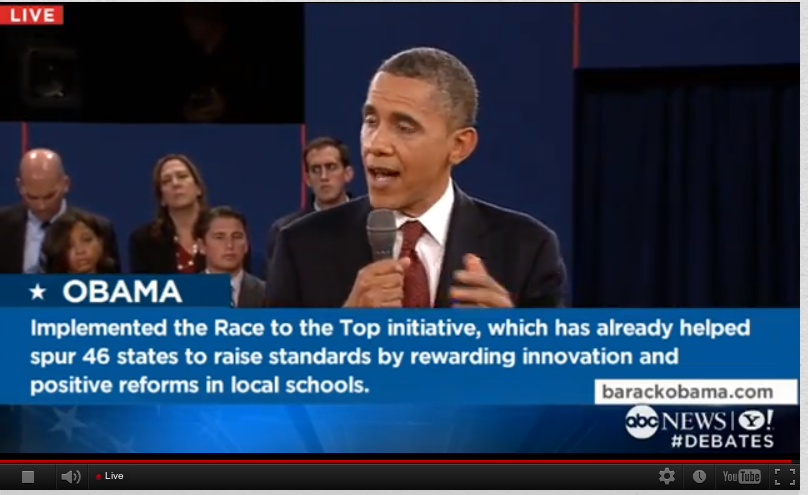
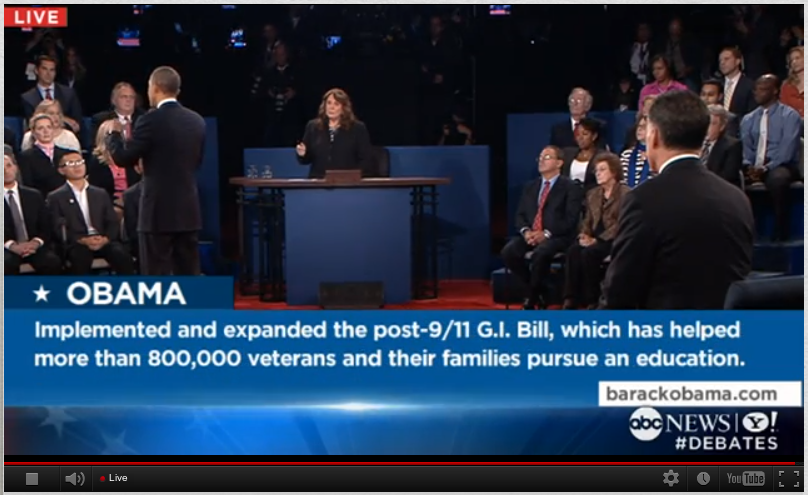
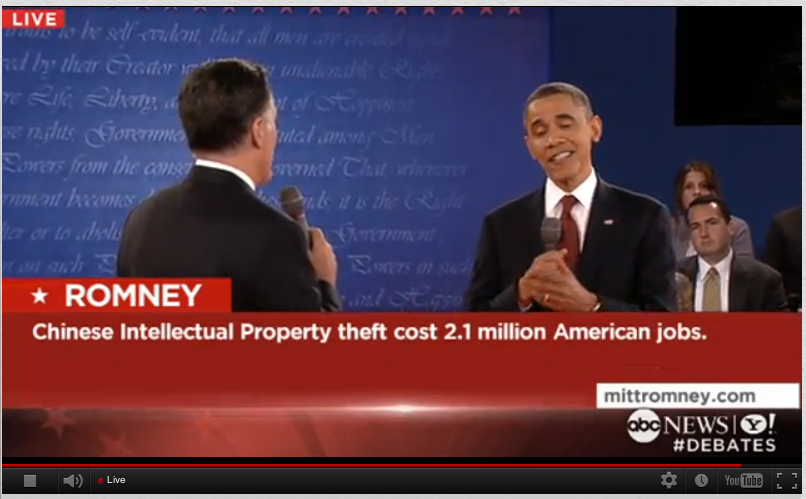
The next type of bias came in the form of info-blurbs flashed on the screen while a candidate was speaking. While Obama spoke, all sorts of facts about the administration’s achievements were flashed on the screen. It almost seemed choreographed:
All these factoids do what? They present an image of a man who is faithfully conveying facts, devoid of rhetorical twists or omissions. It’s Cliff Notes, in essence: it makes sure that viewers fully understand all of Obama’s accomplishments.
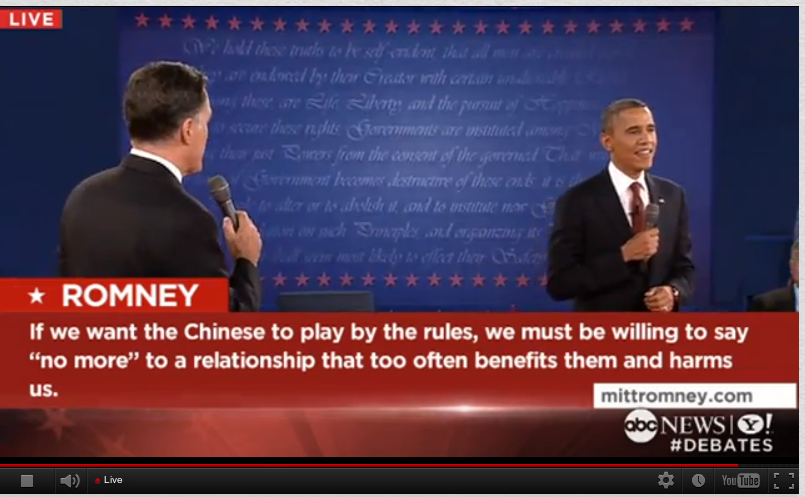
During the same period of time, I saw two such factoids flashed for Romney:
I didn’t watch the whole debate, so perhaps I was missing something at the beginning. But the somewhat random sample I got, within about a twenty-minute period of time toward the end of the debate, seems to be blatantly pro-Obama.
This of course doesn’t even take into account the moderator’s defense of Obama regarding the declaration that the attack in Benghazi was a terrorist attack and not some spill-over from a protest. K looked at me and asked, as if she were missing some nuance of the language, “Is she defending him?” I nodded. “That’s embarrassing,” she concluded.
Well, it should be.
Trusty
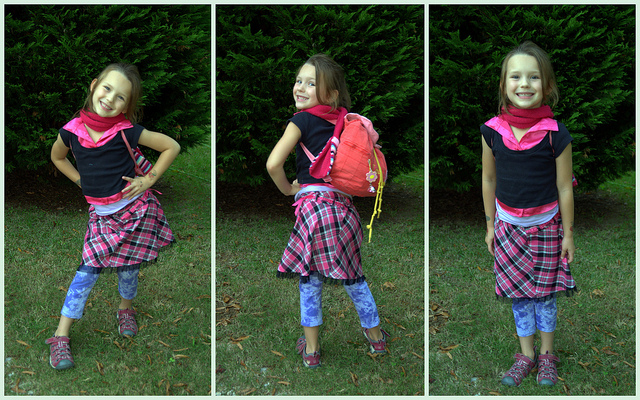
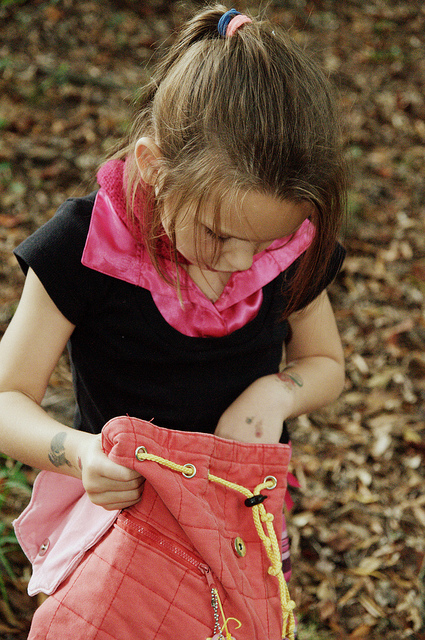
“Will you need your trusty gloves?” the Girl asks. We’re getting ready to go another backyard adventure — our own little version of the Backyardigans — and she is packing her bag. Among other things, she has retrieved her and my work gloves (in as much as hers are work gloves), but she can’t decide if we need them.
“Go ahead and pack them,” I tell her, and we’re off — first for a series of pictures.
“When I say ‘snap,’ you take the picture,” she instructs. She says it three times; I take three pictures. Simple.
As we march through the backyard, I learn that everything is “trusty” today: I have with my my trusty camera; she has packed her trusty binoculars; she’s worried about her gloves in her trusty bag.
Everything is so trusty, and I ask her what it means to be “trusty.”
“That means it knows you can trust it,” she explains.
And it gives me pause. In that case, am I trusty? As a parent, I almost assume I’m trusty. Perhaps it’s parents’ eternal worry that they are never as trusty as their children assume and need them to be. Maybe it’s easier said than done. There are certainly times when doubt seems to be the only appropriate response — a moment of reflection that makes us think, “I guess I could always do better.”
In the end, I know I always want my children to think of me as their “trusty Tata,” and I always worry a bit that I’m not living up to that.
Throw Away
I think we're almost all pack rats by nature. Sure, there are the few that throw away everything and anything the moment it's clear that the object no longer has an immediate use. Then there are those whose homes are garbage heaps with little paths through the clutter, people who ironically enough stand a reasonable chance of ending up on this or that reality show.
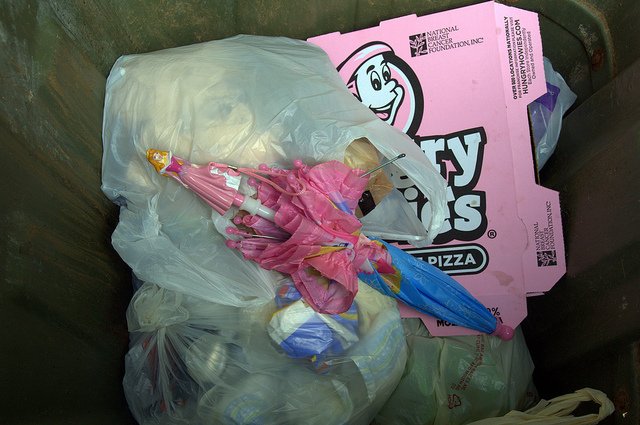
L has always been a bit of the latter. She'll try to keep broken objects for sentimental reasons, even if she has a replacement. A prime example of this is her princess umbrella collection. Various department stores sell them, and L has bought three or four over the last few years. They're flimsy, though, and break easily.

Convincing her that she needed to throw the broken umbrella away, though, has always been tricky. It took her a bit of time to warm up to the idea. Today, we pointed out that the umbrella is broken -- again. "We'll need to throw it away," K began, probably sure that the conversation wouldn't result in much more than a bit of begging and fussing.
"Okay," came the reply.
Some days, she's a bigger girl than I realize.
Autumn Saturday
Mark Up
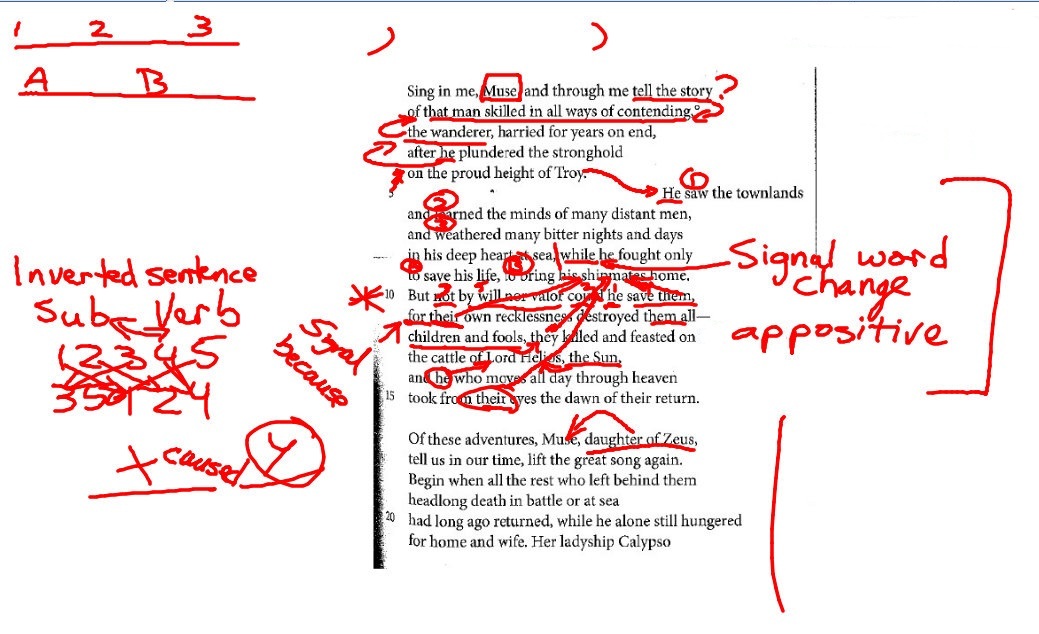
One class I teach -- though I'm fortunate to teach two sections of this course -- has begun one of my favorite pieces of literature, the Odyssey. Highly figurative language with a tendency toward oddly inverted sentences, it's a struggle for them at first, though. We take the time during the first reading to pick apart the opening lines to see how Homer works.
The first famous lines include it all (in this particular translation). There's inverted sentences like this: "But not by will nor valor could he save them." We work through the sentence, determining the subject, the verb, and the object, writing it out in normal order: "He could not save them by will or valor." Numbering the words, students realize just how inverted the sentence is.

"Lord Helios [...] took from their eyes the dawn of their return" the stanza ends, and while many of us might find that easily enough understood, the average eighth grader doesn't have a lot of experience with figurative language.
As we work, there's a bit moaning, a bit of boredom, especially among the boys. Who wants to put this much effort into reading, and a poem at that? That's alright. I know that when the blood starts flowing -- Cyclops starts crunching bones and Scylla begins picking off men -- they'll all come around.
Connections
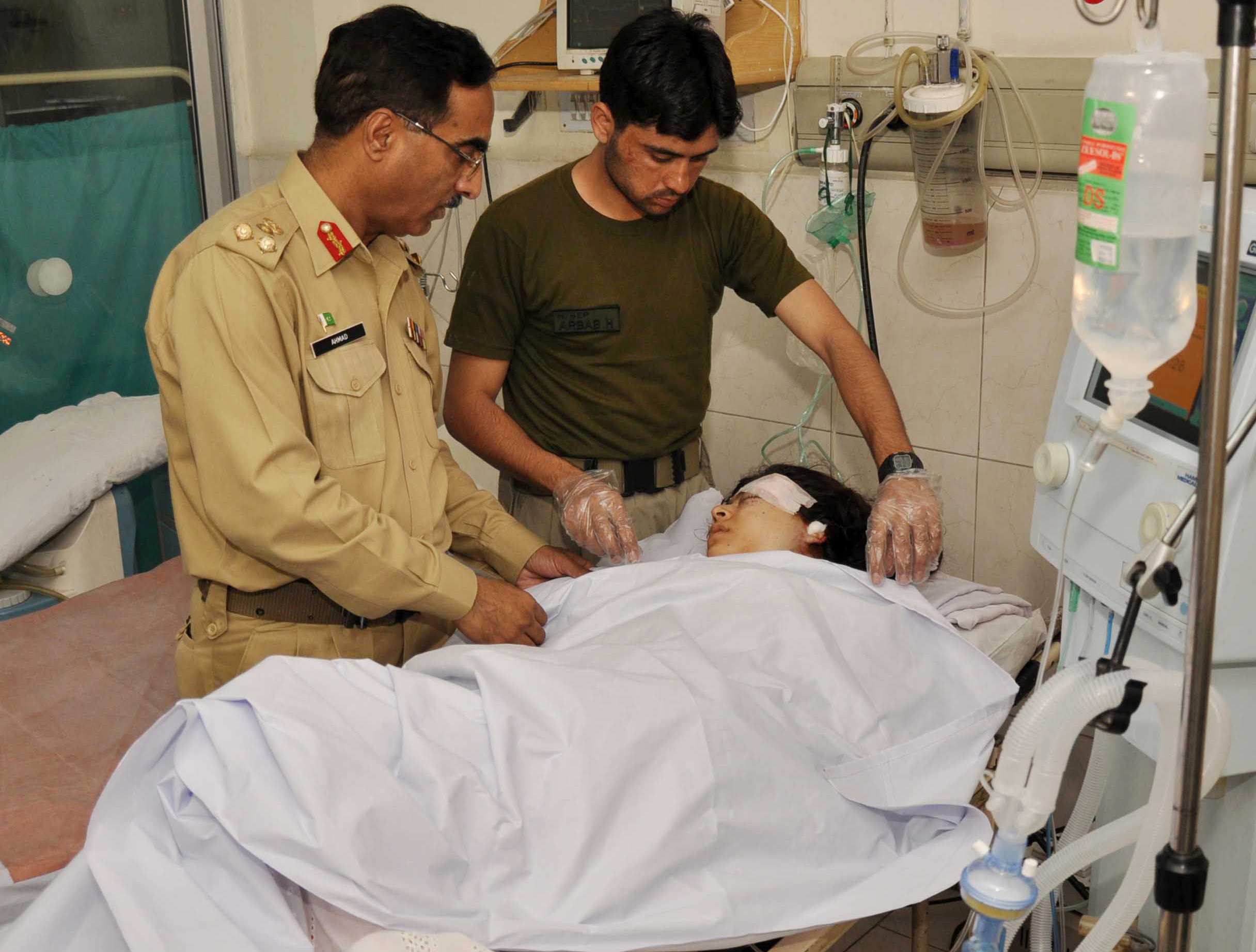
Nightjohn tells the story of a young slave girl, Sarny, who surreptitiously begins learning how to read -- an act that is utterly forbidden for a slave. She and John, her teacher, face potential whipping and worse in scratching out letters in the dust of the slave quarters. It's a vivid example of the power of education and literacy, and the two classes of mine that are reading it have become utterly engrossed. So when I was munching on peanuts during my planning period, taking the ten minute news break I allow myself, and I read the story of Malala Yousafzai, I knew I had to incorporate her story into our unit.

Yesterday I had students read an article from the Washington Post, practicing some literacy strategies we've worked on this year to make sense of the difficult passages, then had students write a brief compare/contrast paragraph about Malala's situation and the dangers Sarny faces in the book. The parallels are striking: both girls are risking death for an education; both girls are being denied an education because of xenophobia; both girls defiantly stand up to the xenophobia; both girls suffer because of their courage -- the list could be virtually endless.
Today, the students came into class talking about the story.
"I watched it on the news. The article we read said she was shot in the neck, but on the news, they said she was shot in the head," one girl explained.
"Yeah," another added, "but I heard she's been moved to another hospital and should be okay."
They continued this way for some time and were excited when they discovered the bell ringer included passages from Yousafzai's diary.
At the end of the day, when my first period comes back for the final thirty minutes of "flex time" (which doesn't seem to be as flexible as the name would indicate), a girl who often seems disengaged and occasionally even refuses simply to do anything in class came in excited to tell me that the Yousafzai story was featured on the daily kids news show students watch in social students.
"Mr. Scott, she wasn't shot in the neck," she explained. "She was shot in the neck and the head!" She, who sometimes would sleep through class if I allowed it, was excited, engaged, and eager to discuss it -- one of those moments that make me realize what a blessing it is to be a teacher.
Autumn Sun
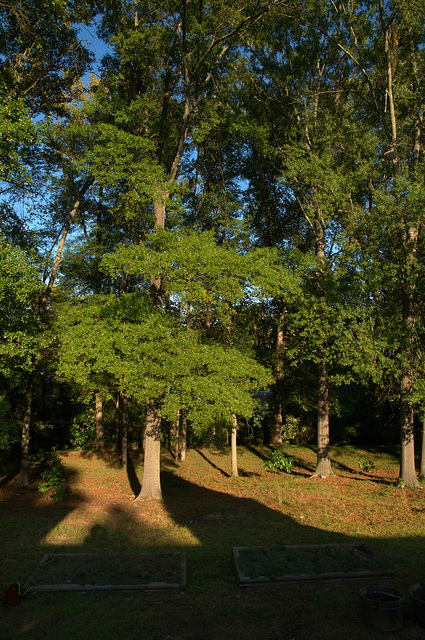
It’s the angle — no doubt. The sun is hitting the earth at a decreasing angle as the northern hemisphere moves further and further away from the sun. Yet that astro-mechanical explanation somehow doesn’t do justice to the quality of light this time of year. We sit down for an early dinner and the light outside is simply magnetic. One must head out to the deck to get a closer look.
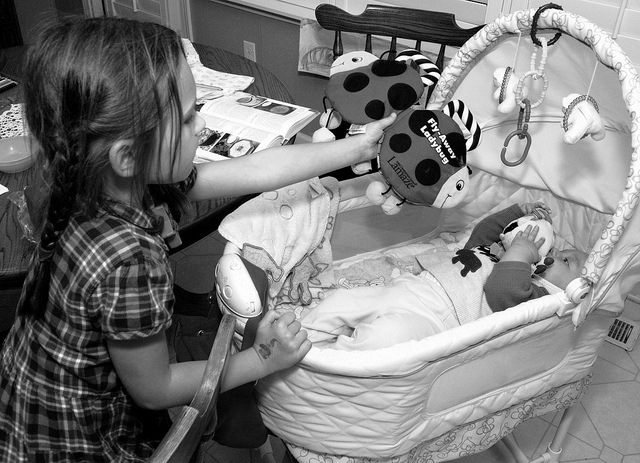
As the sun goes down, though, attention turns to more important things. The Girl can now read a book — a single book — to E. Perhaps in the recent past it would have been more a question of memorization than anything else, but these days, there’s no question she’s reading.
Of course, this doesn’t necessarily mean that the Boy is comprehending.
Shoulder
It’s amazing what you can do if you just put your shoulder into it.

Push
The Moment
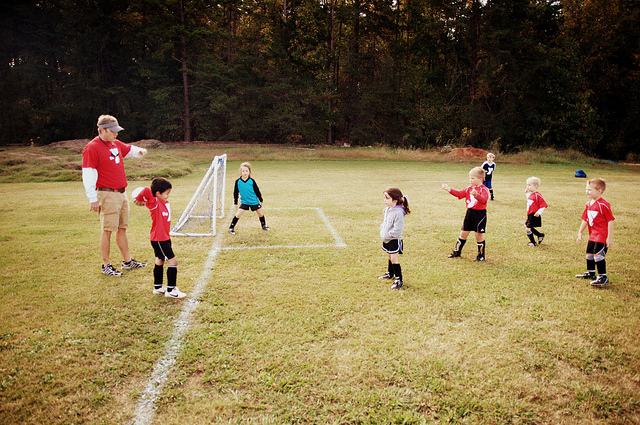
She Shoots! She Scores!
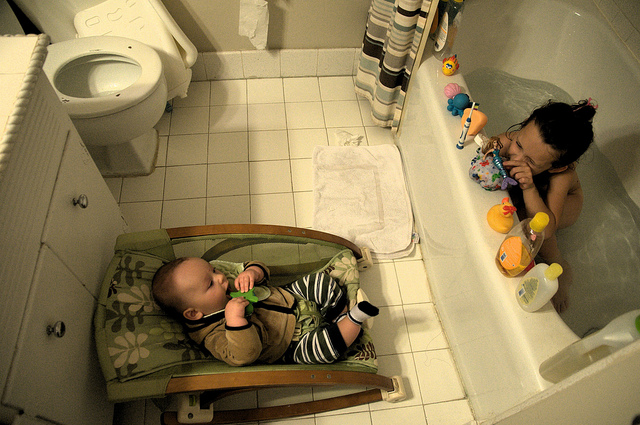
The Boy and the Bed
Lately, the Boy has been making the oddest noise...