L says, "Daddy, you're the master of playing with kittens. Elsa just adores you! When you play with her, it's a joy to watch, even."
Kuchnia Góralska
"Do you think she could make us kwaśnica before she leaves?" P once asked K some weeks ago.
"Of course!" And what's not to love about kwaśnica, the tangy Highlander regional soup made of sauerkraut, stock, and magic.
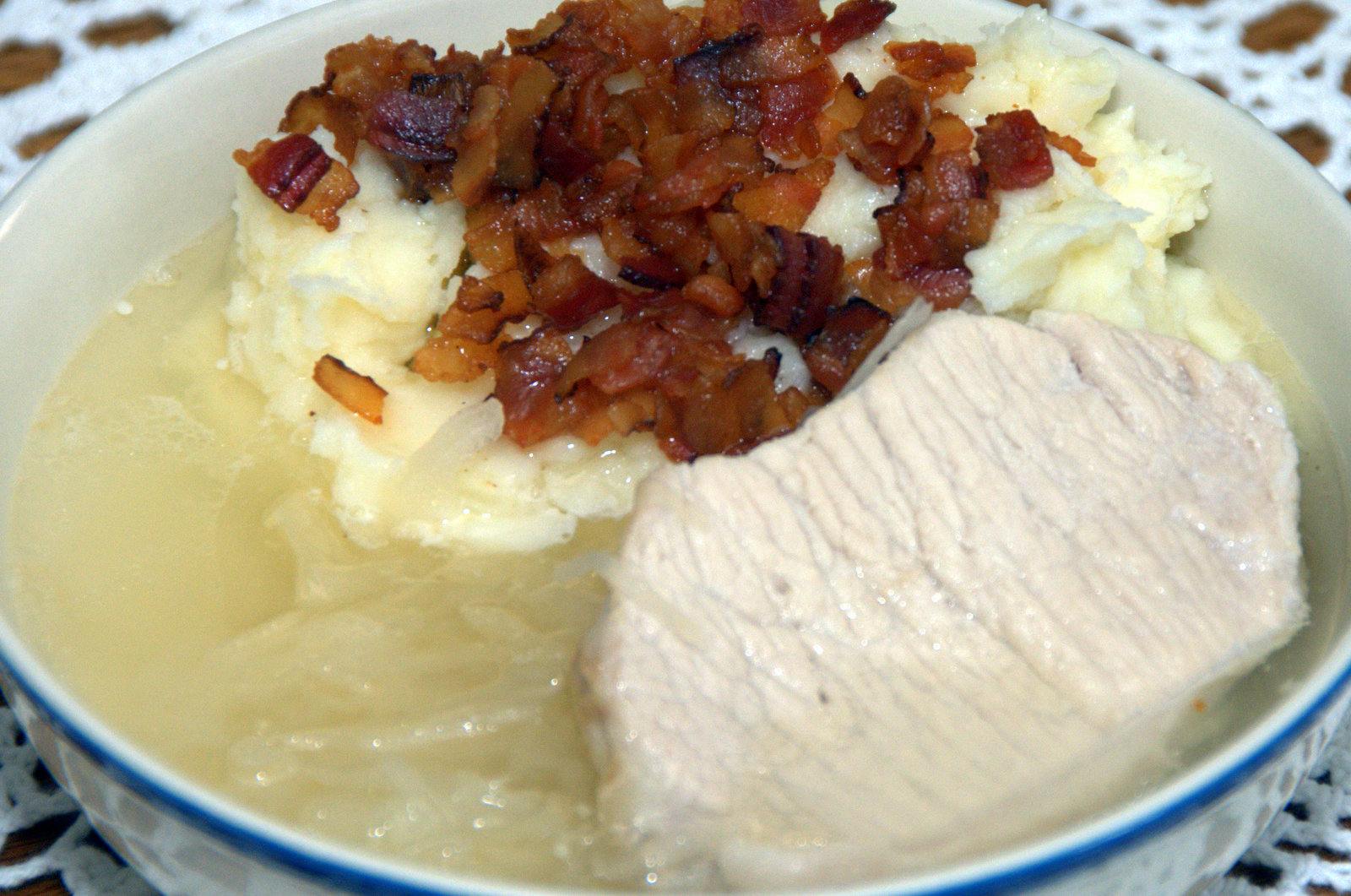
I fell in love with this soup the first time I tried it. It's a little like any regional dish: every family makes it a little differently, and every family serves it a little differently. Babcia always served it with a heaping spoon of mashed potatoes pressed into the side of the bowl, liberally sprinkled with freshly fried bacon bits. The strands of kraut are crisp and sour; the bacon is smoky and crisp; the soup is bracing and warm; a bit of pork pulled from the sliced tenderloin that's been boiling in the soup grounds everything; the potatoes keep it all together. It's perfection in a every single spoonful.
And so P and his wife and two sons came over for dinner this afternoon, a long, warm afternoon promising spring but with bare trees as reminders of the actual date. Still winter, technically, but only a perfect day for kwaśnica in as much as friends have gathered together. A perfect day, perfect in every measure for kwaśnica, includes copious amounts of snow, gray skies, and below-freezing temperatures with a sun that sets just as a four-o'clock dinner is put on the table. Still, friendship is more important than snow, and besides, we have more than kwaśnica on the menu -- a bit of a surprise. A meaty, meaty surprise.
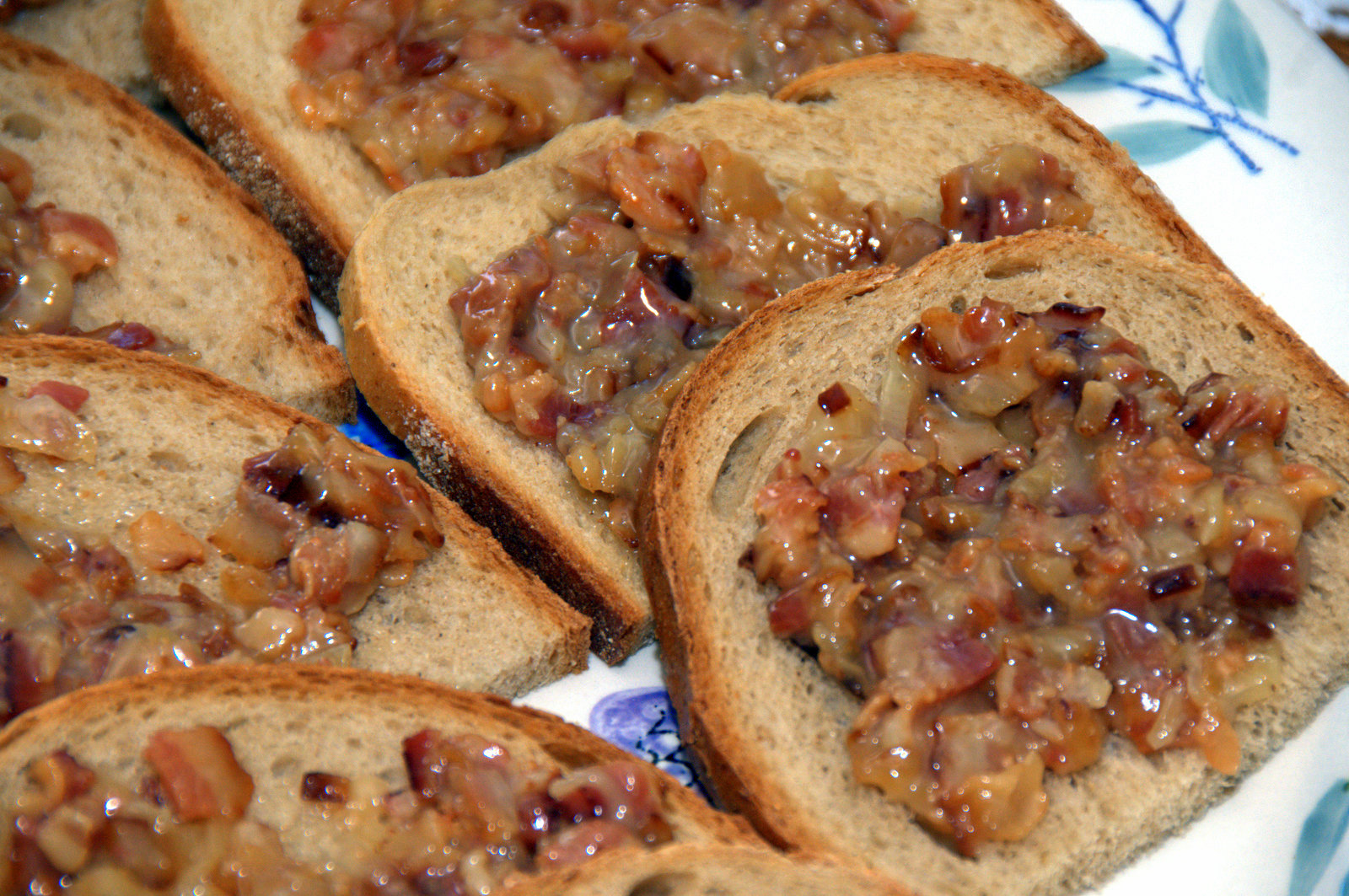
The translation for chleb ze smalcem hardly does it justice. After all, who would find lard spread on bread all that appetizing? But as always, a literal translation makes a farce of the actual meaning of the original. Chleb ze smalcem is a little touch of meat-lovers' heaven, another regional favorite from the mountains of southern Poland that calls for snow and reminds us once again how often "simple" is synonymous with "perfect" when it comes to food. The recipe only hints at the alchemistic perfection of the finished product:
- finely sliced bacon fried, with the drippings remaining
- sauteed onion
- sauteed apple
Take those three simple ingredients, mix them together with the drippings (preferably in something small and ceramic), and then set it in a cool place to let the drippings solidify a bit. Smear on fresh bread -- real bread that's solid with chewy, thick crust -- and then prepare yourself, because the number of neurons that will be firing that first bite will overwhelm.
It's a dinner that I'd ask for if I were on death row...
Elsa
"Mr. S, do you like cats?" students ask.
"No, not really," I reply pausing before continuing my usual silly joke whenever someone asks me about my preferred pet. "They're much to difficult to cook right, and they always end up too chewy for my preferences."
"Oh, Mr. S! That's horrible!" they respond on cue.
And I suppose it is horrible, but the truth is, I really have no preferences either way about animals, other than the fact that I'd prefer not own one at all. Still, it's good for the kids, and if push comes to shove, I prefer cats: much more independent, much lower maintenance.
Our poor cat, though, is so old that she's virtually toothless and prefers sleeping to anything else -- more so than the average cat, that is. Try as she may, L can't get our poor cat Bida (which literally means "poor little thing" in Polish -- she was a rescue cat, and that was the only thing K could say about the poor cat) to play with her, and as she ages, Bida just wants to spend all her time in her little basement lair. So L has been pestering us for the last year or so for a kitten, a cat that she can raise from playful kitten to hopefully playful adult.
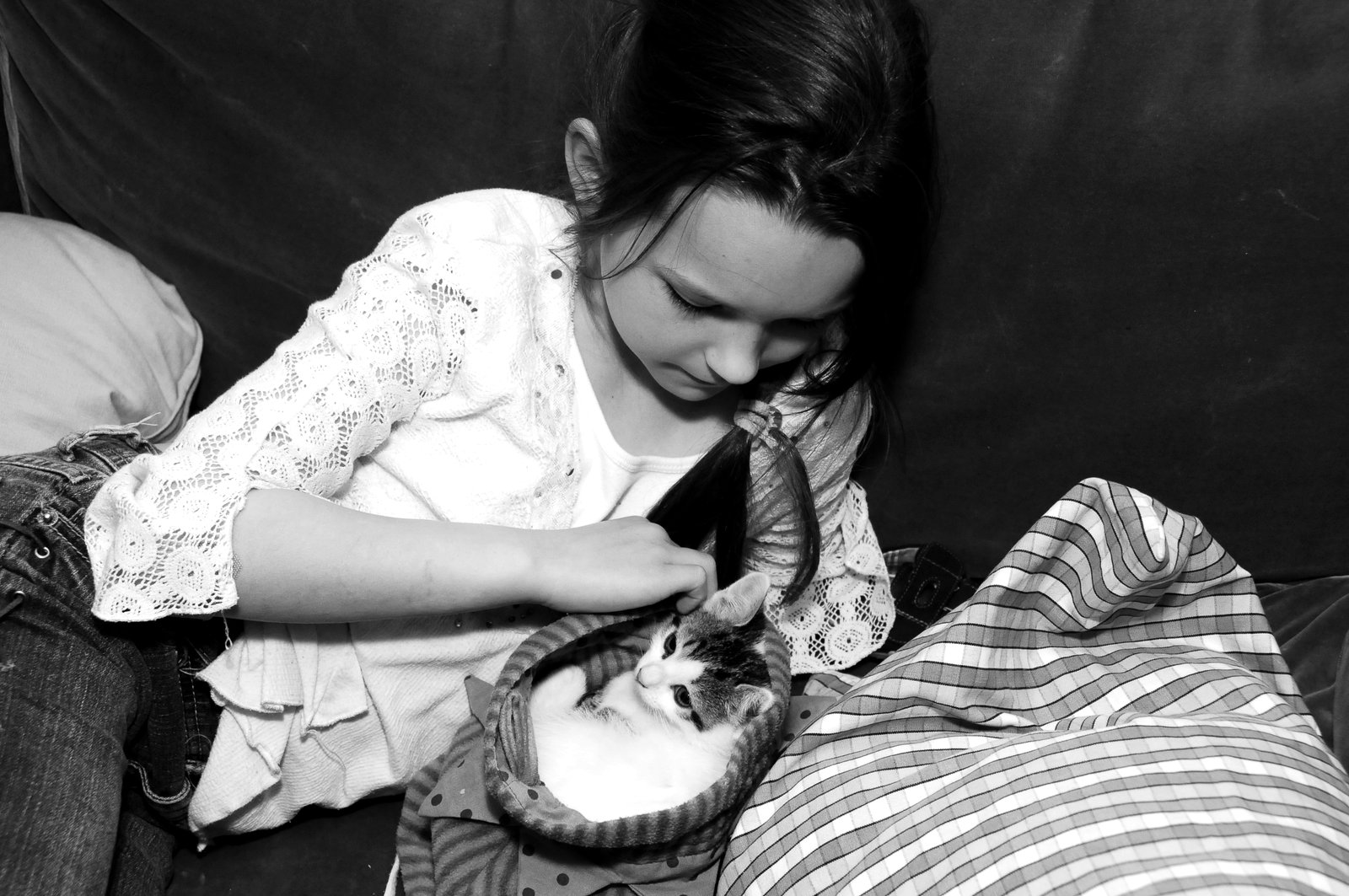
Today, she got her wish, and we welcomed Elsa (L provided the name from her current favorite film, Frozen) to our family. She mostly trembles and meows now. "Imagine that same thing happened to you," we explain to a confused little girl. "She's been taken from her mother, and she's around strangers in a strange house. She's absolutely terrified, so you just have to give her time."
Tonight, when it was bed time, we put Elsa in her little bed we've put in her temporary abode in the cleaned out floor of L's closet, and then we kissed our little girl goodnight and waited. Sure enough, in a few minutes L appeared at the top of the stairs. "I can't sleep. She just keeps crying." In the end, L made a small bed on the floor and had Elsa come over and sleep with her because she just couldn't handle Elsa's sad crying.
Instant bond, and reassurance for us: she'll be a good cat servant indeed.
Professional and Parental Thoughts on the Common Core
Conservatives around the country are expressing dismay at the implementation of the Common Core Standards, a set of educational standards that forty-five states have adopted. Some of the concerns are philosophical-political worries about excessive Federal control, about the perception that the Federal government is taking control of something that should be in the hands of the states. Ironically, one of the ideas conservatives have been pushing for years was a major impetus the adoption of the Common Core Standards (CCS). Conservatives have long wanted performance-based testing as a measure of teacher and school success, and many would love to implement merit-based pay. The logic is simple: the better you teach, the better your students' test scores should be. There are a whole host of problems with this approach, but I'm not delving into those right now, tempting though it may be. Instead, look at the problem state standards have when used for measuring teacher success:
- States have different standards. That means we're trying to look at for the same "success" markers through a whole variety of different metrics.
- States have different tests. South Carolina, for instance, is known for having a more difficult test than neighboring states. This means that according to these tests, South Carolina schools are doing worse than its neighbors when in reality it's just a question of test bias.
The CCS implementation is an attempt to use a uniform measure for all states, simple as that.
More specifically, though, many conservatives have a problem with how they perceive some of the methodologies that the Common Core Standards encourage teachers to implement. For example, the CCS pushes teachers to get students to perform close readings of texts. Wikipedia gives as good a definition of close reading as I've ever found:
The careful, sustained interpretation of a brief passage of text. Such a reading places great emphasis on the single particular over the general, paying close attention to individual words, syntax, and the order in which sentences and ideas unfold as they are read.
In other words, students are learning how to pick apart texts word by word, to wrestle with the text on an almost molecular level. The problem? The model lesson included for teaching the Gettysburg Address encouraged teachers to avoid giving much background information.
"How can you teach the Gettysburg Address without background information?!" conservative commentators cried.
"What kind of education is this!?" conservative bloggers moaned.
Yet such an assignment is intended to get students to read to understand for themselves. Historically, teachers have been guilty of giving too much background information, and students can rely on this instead of the text itself. Taking some -- and note that by no means did the model lesson say no context should be provided -- of that away forces all students to look to the text itself for understanding, not what the teacher provided before reading.
When we turn to math, the situation is similar. Conservative critics bemoan the fact that elementary level math uses terms like "number sentences" and encourages "guess and check." They eagerly post photos of their children in tears from the difficulty of the homework.
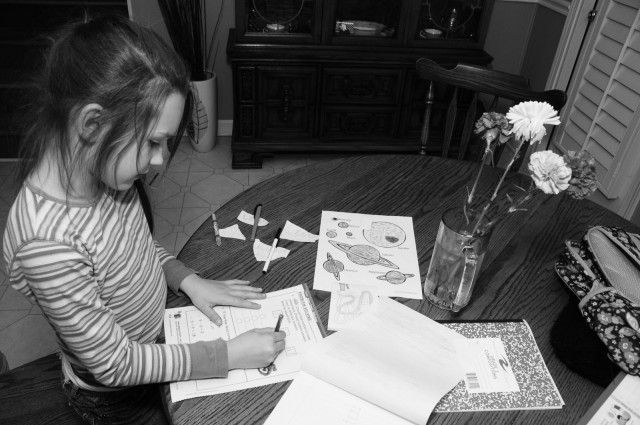
L, of course, is encountering CCS math now, so we're getting a first-hand view of the supposed horrors, and I have to say so far, I'm impressed. Far from being convoluted and confusing, it seems to me that CCS math concepts teach a fluent understanding of basic mathematical concepts rather than rote memorization of math facts.
One problem that L recently encountered had the following instructions:
Choose three numbers to make related math facts. Choose numbers between 0 and 18. Write your numbers. Write your related facts.
"Math facts" is CCS-speak for equation, but it goes beyond that: it teaches students to see the relationships between the three numbers as a matrix of facts rather than a bunch of randomly memorized equations.
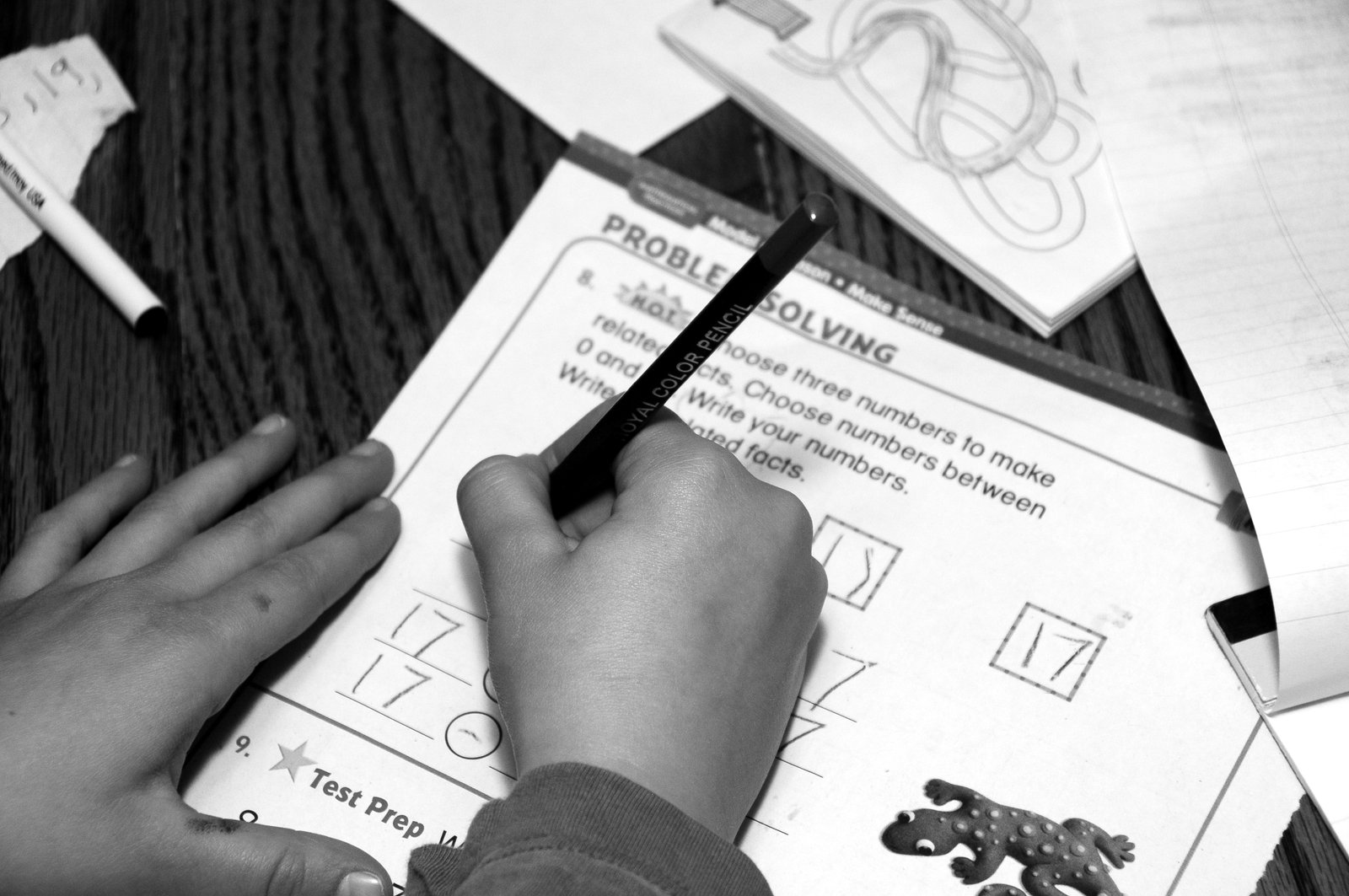
It gets them thinking that if 6 + 11 = 17, then similarly 11 + 6 = 17. It teaches them that they can reverse the numbers and change a sign for another group of facts: 17 - 6 = 11 and 17 - 11 = 6. By drilling students in this kind of thinking, CCS-based math seems to encourage students to think of clumps of math facts and see them as interrelated.
As to the vocabulary, using "number sentence" or "math facts" as opposed to "equation" seems to be merely semantic. They're all valid descriptors of the same thing.
Here is a recent example of uninformed criticism of "guess and check."
L has yet to start "guess and check," but I can already guess about the thinking behind that: it's an effort to teach children from an early age how to estimate, something that I find with my own students is a skill that is sorely lacking. Granted, I don't teach math, but I use math in the classroom from time to time. For instance, as we're nearing the end of the third quarter, we begin informing parents and students who might fail that repeating the eighth grade is an impending danger. To help students who might be facing such a situation calculate how much they need to improve for the fourth quarter, I present them with the following scenario:
In order to pass, you must have an average of 70 for the year, which would also work out to an average of 70 for each quarter. Therefore, you can add those four quarters up to determine how many points you need to pass: 280. Take your first semester grade, multiply it by two, add your third quarter grade, and subtract all that from 280. You'll come up with your necessary fourth quarter grade.
They look at me like I'm speaking Greek, so we break it down. 280 - (first semester grade * 2 + third quarter grade) - what you need to pass. Then we plug in some hypothetical numbers: 280 - (68 * 2 + 63) = x. "So what's 68 times 2?" I ask. Blank looks. No one has ever taught them the multiple ways you could estimate this in your head. Indeed, not even estimate: it's easily calculated. 60 * 2 + 8 * 2, or 120 + 16, or 136. You could also do it with 70 * 2 and then subtract. Either way, you end up with the answer in a matter of moments. Or you just estimate with 70 * 2. Yet for so many students, this is completely foreign thinking. (In the above example, in case you're curious and not inclined to finish the calculation, the hypothetical student would have to score an 81 for the fourth quarter to pass.)
Common Core math, it seems, is trying to teach students these skills from an early age by getting them to do it all the time. It's not meant to be a replacement for actually working the problem. Indeed, it's called "guess and check," not just "guess."
For me, as a right-leaning moderate, I find it embarrassing that so many who share some of my other political views can be so very ridiculously uninformed and, quite frankly, can show such a frightening lack of critical thinking. Maybe it would be a good idea for these critics to add "and check" to their own guessing.
Aldi Quarter
"Daddy, can I have my quarter back?"
"Just a second," I say, reaching into my pocket as I come to the stoplight. To find my pocket is empty. The irony brings a smile: "Honey, I think I left it in the buggy."
Aldi saves money in many ways, but one method is based on the simple principle that we like physical things, that the slightest bit of actual money has more value than the minute or two we might save in leaving a shopping cart in the middle of the parking lot. The theory was, I'm assuming, that if people have to put down a monetary deposit, they'll want it back, no matter how insignificant. And so we all dutifully roll our carts back to the long outdoor line of carts, snap the metal tab back into place, and retrieve our quarter. (Actually, since we leave our cart at the checkout for the next customer, it's the quarter belonging to the guy who beat us to the checkout lane.) In doing so, we save work for the employees, because no one has to go out and round up all the carts, thus reducing overhead, which leads, in part, to Aldi's famously low prices.
Why do we return the shopping carts? After all, it's just a quarter, and we could easily just tack that on as a shopping expense like gas. But we don't. Not a single one of us: I've never seen a single buggy left in the parking lot at Aldi. Not one. Yet in the parking lots of grocery stores that have buggy corrals and regularly send out young employees to rustle them up, we see shopping carts left here, there, everywhere. Customers must feel that, since someone is already coming out to release the carts from their little prisons that they could just as easily walk a few more steps and pick up the buggy left a few yards away. It's rare that you see a good Samaritan pushing back someone else's cart, but therein lies the beauty of the Aldi system: it relies not on motivating customers to return their own carts but in motivating other customers to round up abandoned carts, because, hey, free quarter. So the rest of us must internalize that thought and tack on a little sense of competition: "Someone's going to get that quarter -- it might as well be me."
At least that's my idea. Any others?
Teaching the Boy
The Boy and the Girl often end the evening together in the tub. "Bubbles!" cries the Boy as he runs to get L.
Sometimes, L gets an urge to play teacher.
Double Down!

Refill
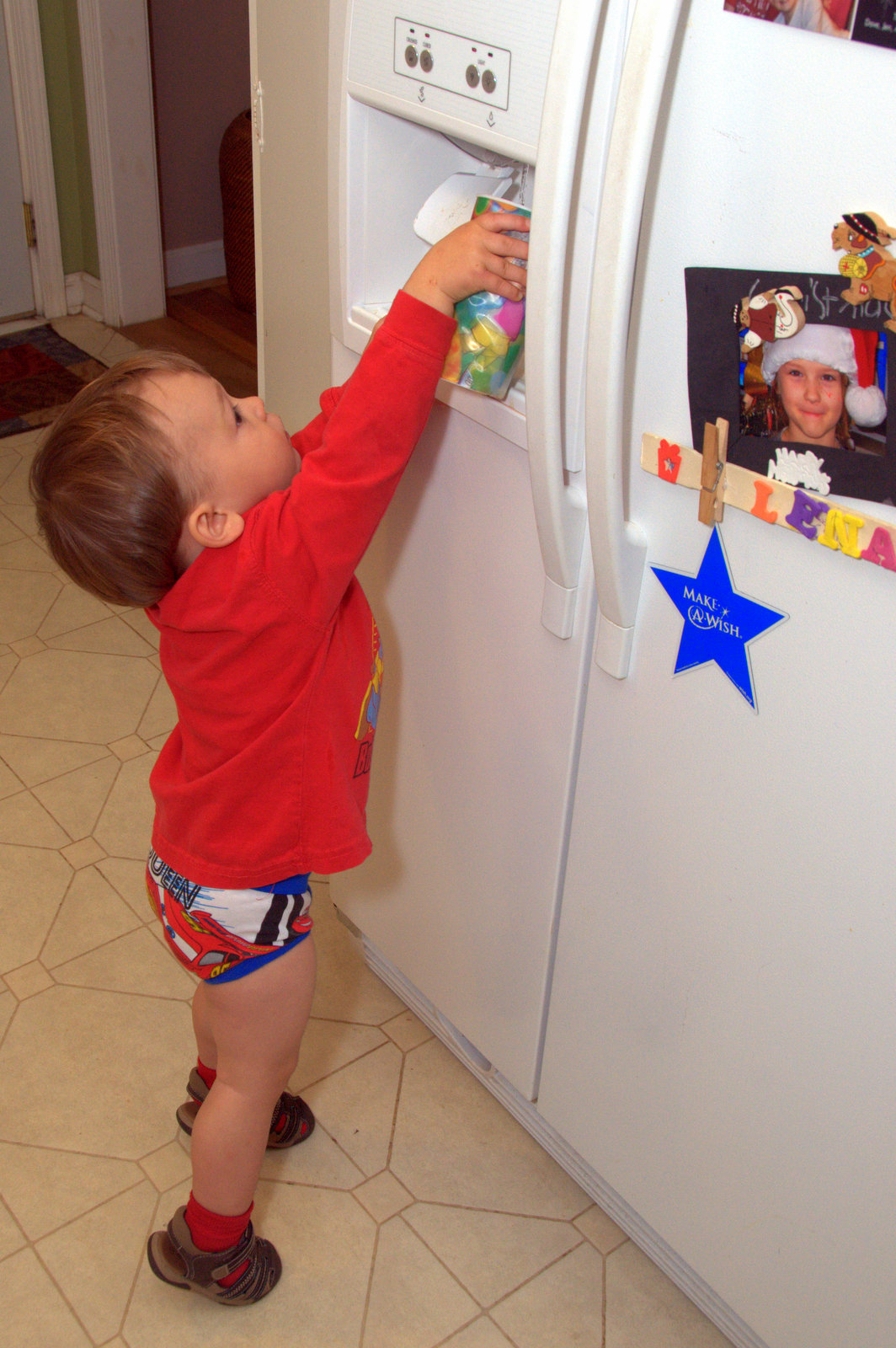
The Boy has learned how dispense water from the refrigerator. He makes a circuit of it: fill up a glass, take a drink, toddle over to the sink, pour out the remainder. Repeat.
Sorting
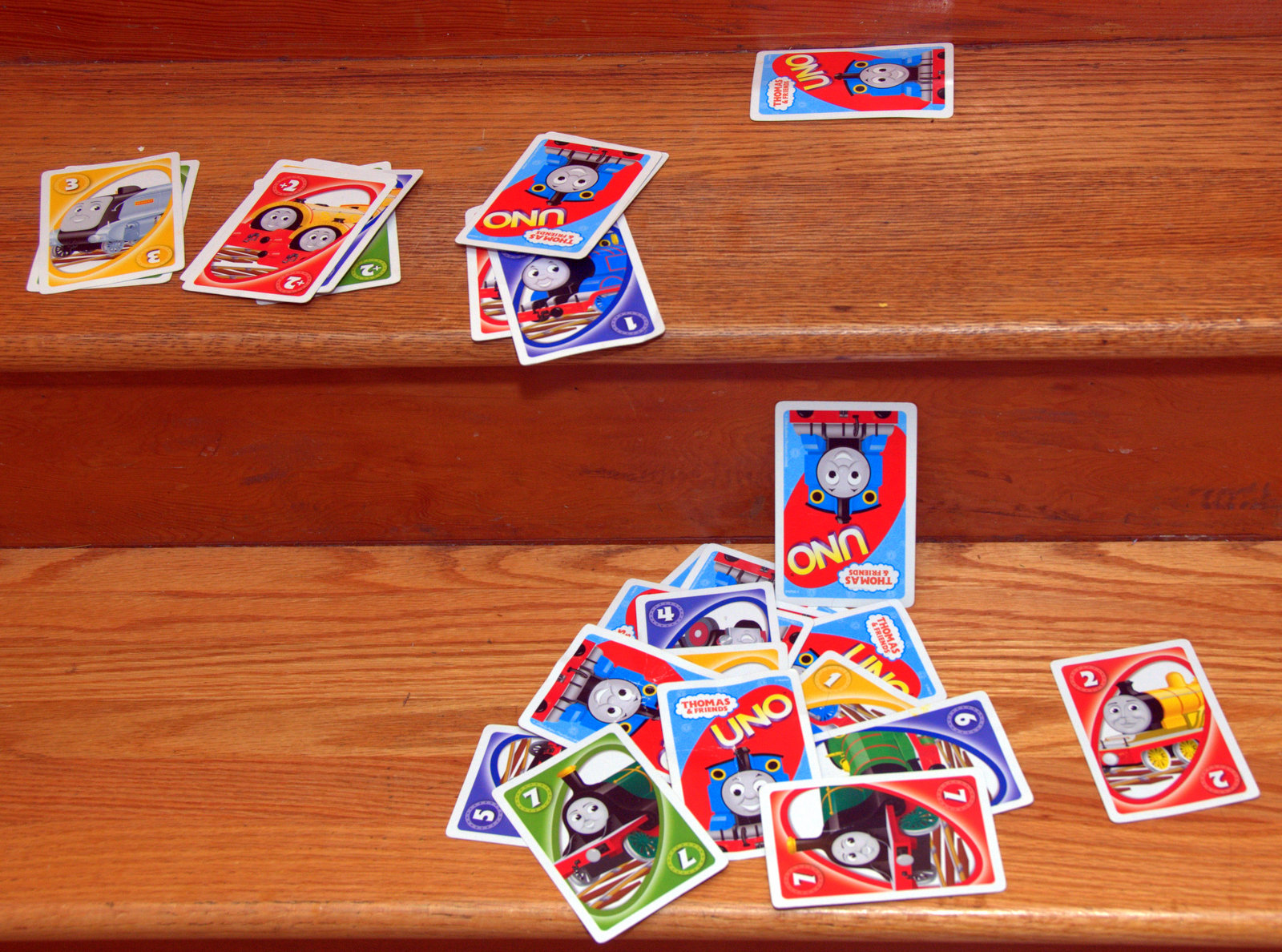
Evening play with the Boy: we put the cards out on the steps, one at a time, sorting. We place Emily on Emily, Thomas on Thomas, and it's all going quite well for the first few cards. E takes a card, looks at it, and places it on the right stack. Soon there are three stacks, and the accuracy decreases. Soon, with five, six stacks, he loses interest in place them on the right stack and simply begins tossing cards on the stairs.
Later, as L is working on her homework, the Boy begins rifling through a pack of bandages. One variety: no sorting, but still there's the question of manipulation, of getting them all in a stack, all in a row, so to speak.
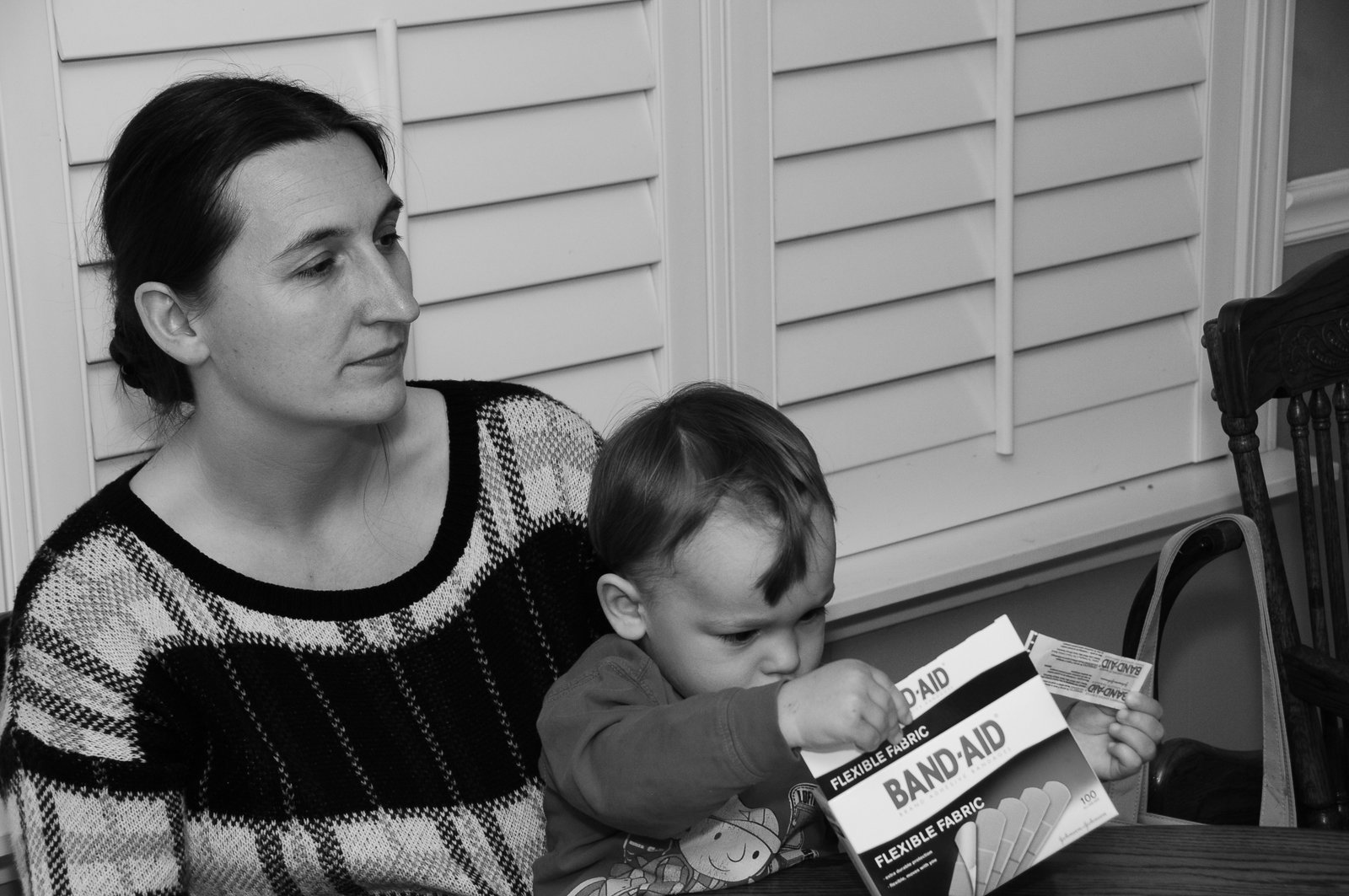
It's captivating to watch, whether cards or Band-Aids, because we never really know what he's trying to do, and I'm not sure he does, either. Patterns emerge that seem to be purposeful then disappear into new chaos.

Home Again
When I was a kid, my father went on business trips once or twice a year -- South Africa, England, and various states in the US. For me, it was a highlight, because we often got to take him to the airport. Watching planes take off and land from the observation deck was sheer heaven for a small boy. Of course the real highlight came on his return, for he always brought something back for us from wherever he sent. It was a bit like Santa in September.
An acquaintance at church mentioned at the post-Christmas-concert pot-luck that in 2013, he'd been in something like fifty countries on business. That's a lot of time in a plane, a lot of time away from one's family, a lot of nights in hotels. I both envy him and pity him. Seeing that much of the world would certainly be a blessing, and it would certainly help one appreciate what's here in the States and likely produce a sense of the possibilities based on what's in other countries. Travel changes the traveler forever. Still, so much time away from home, from family, makes it a bad trade.
As a teacher, I don't get many opportunities to go on business trips. Conferences are about the extent of it. So when I do go for a conference somewhere, I realize anew how much of an aggravation ten countries a year -- let alone fifty countries a year -- would be. But I also smile at the thought of seeing L's smile when I say, "Come here, sweetie, I brought something back for you."
Hurt

I've never been a fan of Trent Reznor's band Nine Inch Nails. Industrial just doesn't really get it for me, and their seeming sense of self-importance was always a turn-off. Their song "Hurt" seems to me a perfect example of this. A whinny voice that belies the lyrics: any pain this guy's felt is first-world pain, that strange phenomenon that often manifests itself in teens as cutting. Of course, a close listening shows that it's about heroin addiction.
Still -- first world issues with that voice.
Then I heard that Johnny Cash had done a version.

Nothing new or all that surprising: Cash has covered bands as non-country as Danzig and Soundgarden. He's musically adventurous. But it was more than the novelty of it that excited me as I began listening: it was his voice, that deep bass-baritone that, unlike Reznor's nasally voice, didn't belie the text.
"He's a man who's felt pain, and whose voice won't sound like a whinny kid."
The real musical test of a song, though, is to remove the vocals, to strip it down to the the music alone. If it stands that way, it's a good song. Enter: 2cellos.
Perfection
It's always been one of my favorite songs, Sting's "Fragile." But this particular version is one of the most beautiful things I've ever heard.
PD
It's four thirty; no one really wants to be here, yet at some level, we're all keenly aware of how important it is to be here. Still, we've wished our students well for the day, we're hungry, and really the last thing we want is to sit through professional development -- i.e., a Power Point presentation.
In all honesty, it's a great disservice to the district head of secondary English instruction to reduce down all her research, planning, and background conversations to three words: "a Power Point." Mrs. B has done a superb job helping us all get a grasp on the changes Common Core mean for our teaching, and without her quarterly professional development (PD), I'd be much further behind the curve than I am now. I walk away from each session feeling better about my teaching, feeling I have a lot of new strategies to implement, and feeling generally more confident in my ability to prepare kids for high school. But in the tired haze of a Thursday afternoon, it can all seem just a bit much.
"You want me to teach for eight hours, then sit for ninety-minutes on the other side of the desk?" You can see that question almost visibly in thought-bubbles above every attendee's head. Glance around the room and you're not likely to be surprised at what you see: bottles of various sizes and materials, filled with diet soda, iced tea, water, and various mysteries -- no, not those mysteries -- as well as coffee cups, snack wrappers, smart phones, laptops, watches, jewelry. It's like we're all getting ready for bed and watching television at the same time: we're all as comfortable as we can be without actually kicking off our shoes. The presentation starts, and you see someone surreptitiously scrolling through messages on her phone, someone else looking at the news on her laptop. You hear someone desperately trying to open a snack -- perhaps a bag of pretzels -- without making too much noise. You see two teachers huddled together, finishing a conversation that started before the presentation. You think of how tired you are, of how much you'd like to be napping. And then it occurs to you: "We're just as bad as our own students."
Barszcz in the Family
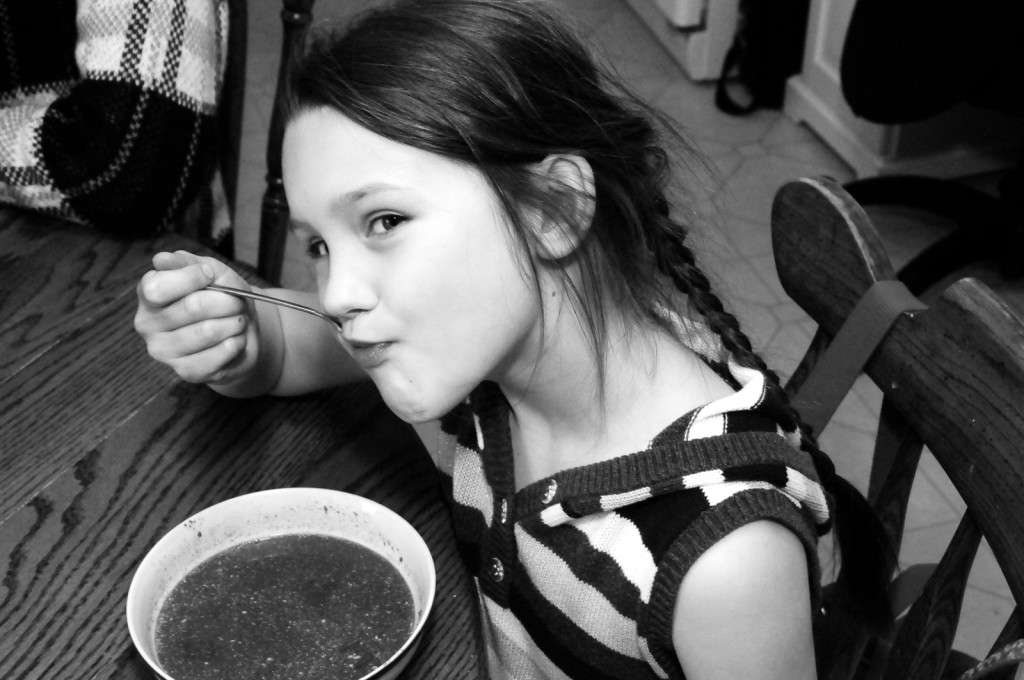
What Polish family would be truly Polish if barszcz weren't a favorite? For as long as I can remember, the Girl has adored it, placed it almost at the very top of her favorite food list -- just below pizza, of course.
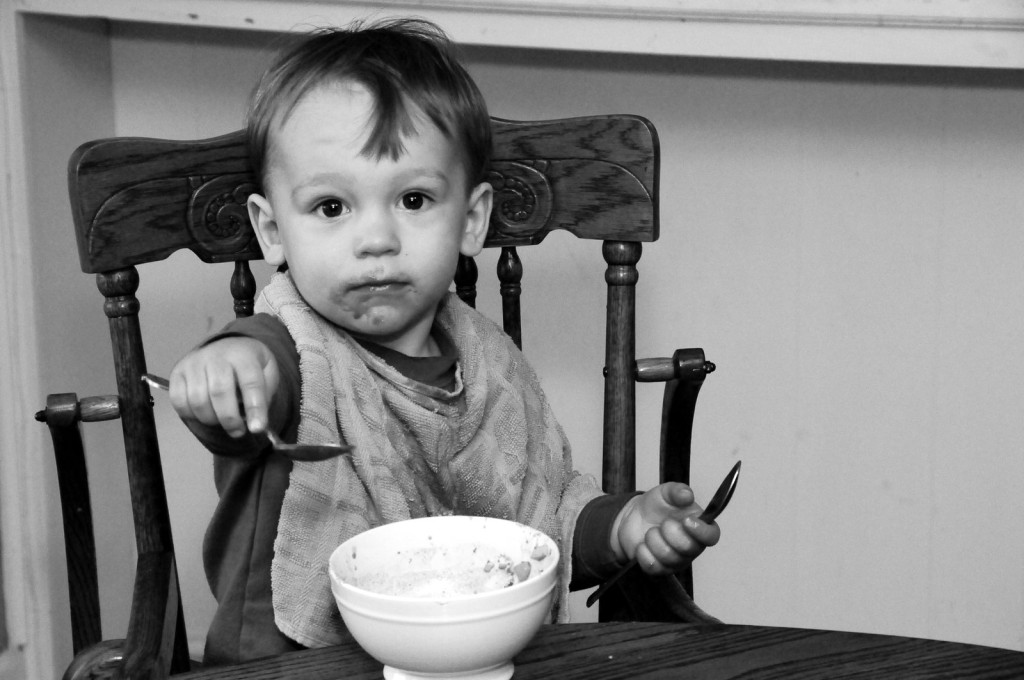
The Boy has been warming to the idea, and tonight, he decided it was time to get serious about beet root soup.
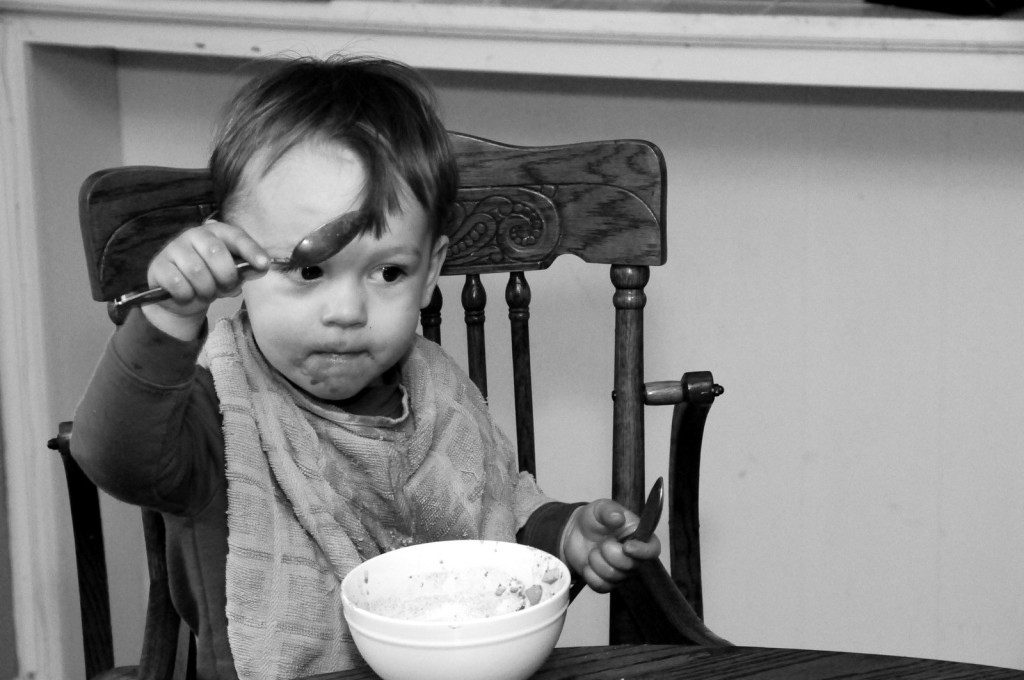
Somehow he managed to get two spoons, and he did make use of both of them.
That only left one family member: the cat. K, though, solved that problem today, taking a few seconds that L hadn't managed to finish, running them through a food processor to grind up the sausage (the poor old girl has lost almost all her teeth), and pouring the resulting purple mush into Bida's bowl.
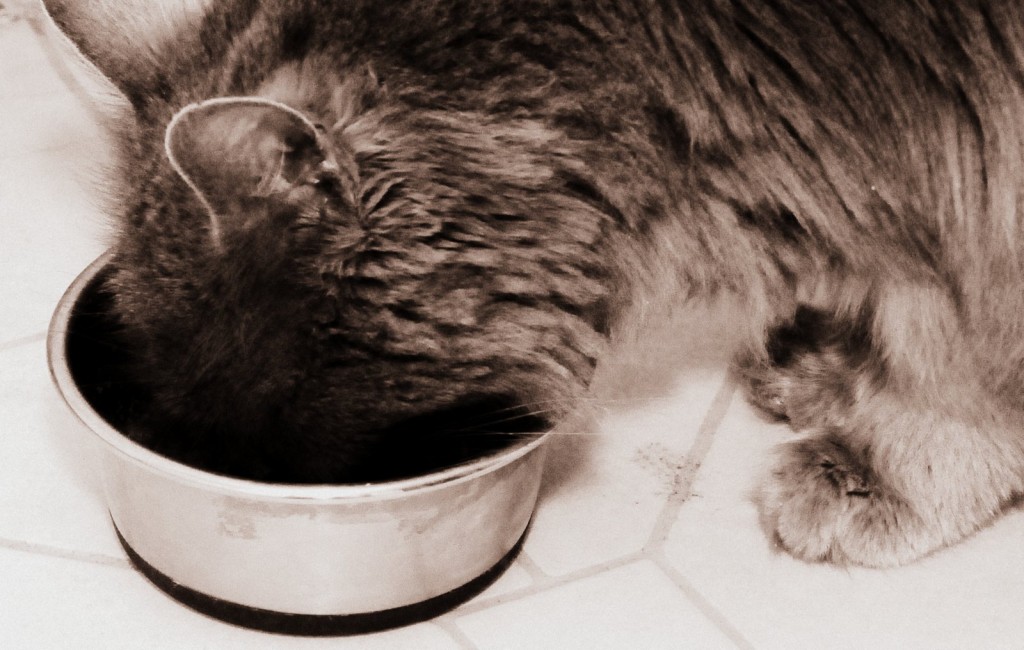
And so now it's official: the Scott family, to a person/cat, loves beetroot soup.
Bubbling Sentences
He dashed to the bathroom as soon as he heard the water running, squealing "Bubbles!" He tends to pronounce that final "s" as a voiceless palato-alveolar fricative, though; in other words, he says "bubblesh!" Such a mouthful to describe such a simple sound -- admittedly, I didn't even know what it was until I asked Google -- seems an apt illustration for how the Boy in fact uses language. Seeing the bubbles foam in the bathtub, he returned to the back top of the stairs and called, "L! Bubbles! Chodz!" Three little words that communicated a whole cosmos of new understanding and excitement.
At it's most simple level, the Boy's utterance was a highly simplified, mixed-language group of sentences. "Hey, L! Dad's running the bath, and he's put the bubbles in! Come quick!" But the excitement in his voice added more: "Hey, I'm able to communicate a complete thought!"