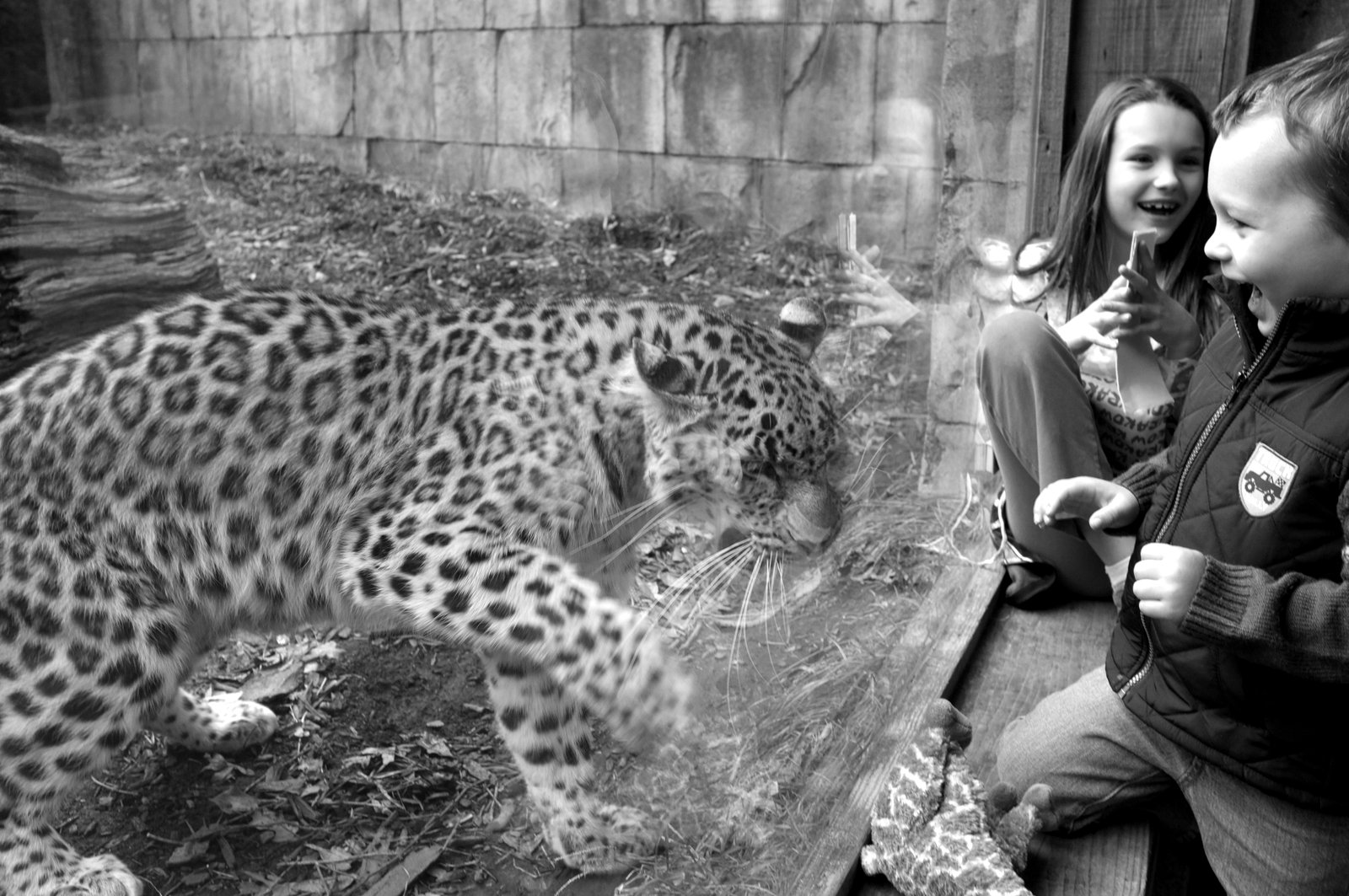
matching tracksuits

fun in threes, sometimes fours

Review: Flights

Do I have to actually finish a book in order to review it? Doesn't the fact that I couldn't bring myself to slog through another page constitute a review in and of itself?

I wanted to like this book. I went into it with such high hopes. After all, Tokarczuk just won the Nobel, and this is her most-recommended book.

I found it to be a collection of random, vapid, and shallow "observations" -- thoughts that anyone who has traveled at all has had a million and one times -- strung together in a random mess of I-don't-know-what.

A more eloquent Goodreads review put it thusly:

Gosh. What a load of disjointed tripe.

Not a novel. Not a book. More like the author collected all kinds of things: personal notes, FB statuses, random thoughts, more random scramblings and mixed it all together into some sort of text.

Extremely dull, disjointed ramblings on all sorts of things.

It could be read but personally I don't find it very interesting or illuminating.

Overhyped graphomania, nothing more, nothing less.

If this is her best, I'd hate to see her worst.

It really reminds me of modern visual art. Take a jar, urinate in it, toss in a crucifix, take a picture -- voila! Piss Christ. Paint a picture of the Madonna. Add some elephant dung. Voila! Art! Chris Ofili's The Holy Virgin Mary. I get it -- it's postmodernism and post-postmodernism.

It's still just nonsense to me.

Speech

Since I've managed to hoodwink and bamboozle all my fellow teachers into thinking I know a thing or two about teaching, they chose me as the teacher of the year this year, for which I politely thanked them and promptly forgot about it. The head of the school's Beta Club chapter didn't forget, though, and started asking me in December if I would be the keynote speaker for the induction ceremony.

I said no thank you. She asked again a week later. I said no thank you. She asked again a few days later. I said no thank you. She asked again the next day. I said no thank you. She asked again the next day again. I said no thank you. She asked again later that same day.

I started thinking the only way to get her to leave me alone was to agree to do it.

"Five to ten minutes," she said. "Something about community service." Here's what I came up with:


Chapel was at nine in the morning Tuesdays and Thursdays. During my freshman of college year I didn't have class until 11 on Thursdays. Since I didn't live on campus, getting up and driving to the college two hours before I had to be there for a class was less than inviting to an 18-year-old. (You might have noticed I only made an excuse for Thursdays; I have no excuse for the Tuesdays I missed other than to say I was 18 and not terribly bright.) As a result, I failed to fulfill the Chapel requirements that my small Presbyterian college placed on all students. To make up for the missing chapel attendance, the college required community service. I chose a soup kitchen downtown where I went to spend an entire Saturday to make up for my missing chapel requirements.

I had heroic visions of what this would be like. I saw myself serving homeless veterans, giving them hope and soup and a smile. I saw myself giving joy to those who had no joy of their own simply by showing I cared. I saw myself bravely facing the cruelties and injustices of the world and making a difference. I saw myself battling back the apathy of society and showing these poor souls that someone cared. I saw myself changing a life or three just by handing out some beans. In short, I saw myself.

By the time that Saturday rolled around, I was more than ready. I was excited. I was optimistic. I was going to change the world through my heroic self-sacrifice!

So I was a little surprised when, on my arrival, the director of the homeless shelter led me to a small pantry illuminated by one dim dingy light bulb hanging from the ceiling.

"Our pantry needs reorganization," he said. "That's what we'd like you to do."

It was true: the pantry shelves had cans of fruit next to cans hot dog chili and squeezed in between them were cans of condensed milk and packets of tuna. Mysteriously there was canned cat food hidden here and there. It was chaotic. And dark. And dirty.

"We also need you to check to see which cans have expired. Set them aside so we can throw them out," the director said over his shoulder as he left.

I stood looking at the chaotic mess and wondered how anyone could find anything. There was no denying it: the pantry shelves needed reorganization.

Still, this was not how I was going to become a hero.

The first thing I discovered was that many of the cans were not just dusty but filthy: something had leaked on these; those were so ancient that they had a cake of dust on them; some were sticky; some were missing labels. Being somewhat OCD about such things, I couldn't just re-stack them and leave them a mess, so I requested some water and rags and wiped off most of the cans as I worked.

All told I spent almost six hours in that pantry, not talking to a soul, not giving out soup to anyone, not listening with patience to anyone's stories, not sharing a bit of comfort or joy with anyone.

It was the antithesis of what I'd anticipated.

And that's probably why, nearly thirty years later, I still vividly remember that Saturday. I did more community service while I was in college, though for less-than-altruistic reasons: once I discovered how relatively easy it was to knock out a third or half of the chapel requirements on a single Saturday, I started skipping chapel with abandon. But I don't remember much about those other occasions. Just that first one, when everything seemed to be the opposite of what I was expecting but just what was needed.

Today, you are becoming members of the Beta Club, which most people see as recognition for your academic effort and perseverance. And it is that. You have shown great resolve and fortitude in maintaining the grades you have maintained. It is a laudable achievement and a reflection of the character of both you and your parents. But this prestige is not the greatest benefit of being in the Beta club.

The greatest gift to you is the opportunity the Beta club provides to do community service regularly.

Throughout the school year, the club will provide you with many opportunities for service within the school community, and many of these projects will bring a smile to your face. You'll go to Build a Bear to create teddy bears for Ronald McDonald House and Children's Hospital. You'll conduct the SouperBowl food drive in the school for the Samaritan House. You'll participate in the Acts of Kindness week for the Department of Juvenile Justice. All of these activities will, in their own way, be fun.

But I would argue that you need to fulfill some of your community service hours by doing something that's not fun, that is in no way Romantic (capital r -- you'll learn about Romanticism in American lit), that is in no sense enjoyable. Something hard. Something that gets you dirty and makes you sweat. Something practical. Something you most decidedly wouldn't want to put on Instagram.

This is not because I think you should punish yourself, because such work is not punishment. Such work, especially when done surreptitiously, is the stuff of character because it is often not recognized and seldom lauded. Rearranging that pantry was in a sense miserably boring. But I know that I helped other people help other people. In organizing that pantry I made the job of the cooks easier, and they were the ones doing the real work, day in and day out, not some little college freshman hanging around on a Saturday because he'd been too lazy to go to chapel. It was a little thing, but that's why I remember it. That's why, in a sense, it was big, because it taught me that often it's the little things that make the difference.

So go out and find the bigness that's in those little moments of self-sacrifice accomplished by completing less-than-glamorous community service. Go seek out jobs that bring no glory, the little things that you don't think anyone notices. Before you know it, that type of service will become a reward in and of itself. You'll do these things not for the Beta club service hour credits you earn but for the sense of accomplishment and character they bring. And then you'll stop doing it for those reasons as well: it will just be a habit. It will be something you do without thinking, something you do because that's who you are. And when you reach that level of serving others, of helping those in need, you'll be someone who really makes a difference, someone who changes the world, one grimy soup can at a time.


In the end, I cut some of it on the fly. (I indicated what I remembered cutting above.) An odd experience overall: my brain was calculating several different trajectories at the same time:

  • Am I speaking too quickly?
  • Do I know the speech well enough to make eye contact at this moment?
  • I need my notes! I need my notes! I have to break eye contact and gracefully let my eyes fall on the spot where I should be next -- without panic.
  • Who does she look like? She looks like someone I've seen before.
  • Am I speaking too slowly?
  • Didn't I teach his brother? He looks a lot like Z from two years ago...
  • Is this making sense?
  • Can I cut this part short? As I say it aloud, it doesn't sound as good as I thought it would.
  • If I skip this next part, will I have transition problems?
  • Why the hell don't they have a mic stand? I hate standing here holding this mic.

In the end, my final version felt like it lasted about eight minutes, but I really have no idea.

An interesting experience, but not one I'm keen on repeating, but it's not because it terrified me or anything of the sort: I make little public speeches multiple times a day. I'm just used to winging the exact words and having only a general plan in mind.

Changes

Our daughter now leaves the bathroom trailing a Monet scent of blossoms and linens, the mingling of surf and grass -- the thousand and one scents of a young teenage girl. She started out smelling of "pinkness and warmth and contentedness," a warm mix of comfortable and soft scents that came from her effortlessly, naturally. It was who she was; it was how old she was, or rather how young.

Now, too, her scents bloom from her age, though now from deliberate choice and purposeful will. They come from body washes and facial scrubs, hand creams and lip balms, shampoos and exfoliants. They are from her will and a representation of her will -- a desire to be pleasant, to be sweet, to be pretty.

To what end? As far as I can tell, she's not seeking the eye of anyone, not interested in any such things, and though the time is right for such interest to begin budding, we've not heard a word.

But realistically speaking, would we? Didn't I try desperately to hide from my parents the fact that I no longer found girls foreign and frightful? Didn't I try desperately to hide from my parents the fact that this girl or that had caught my eye? Didn't I try desperately to save myself from that embarrassment, because how could they possibly understand?
Giggles

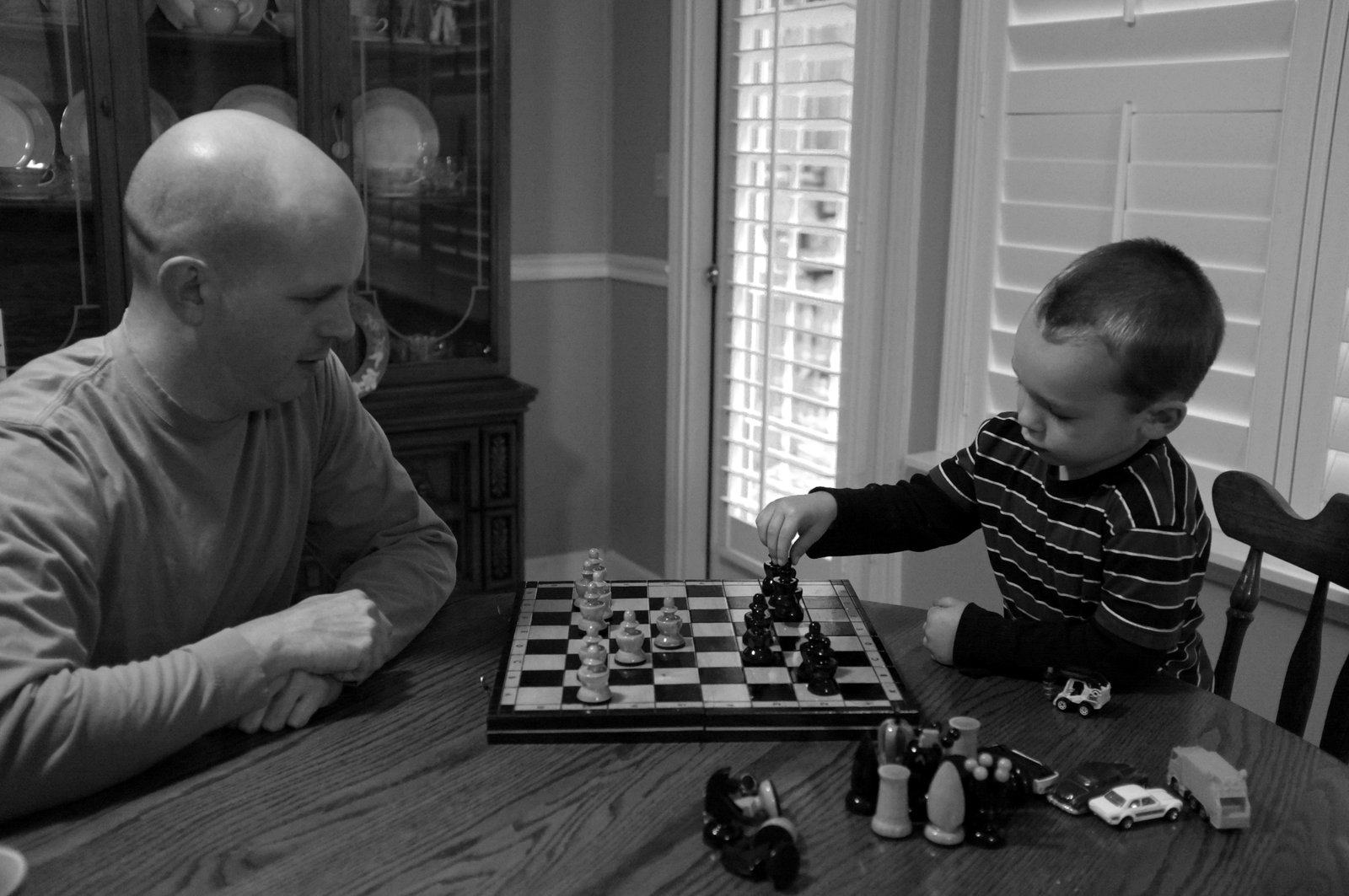
When putting to bed a 7-year-old, the giggles are sometimes inevitable. Just about anything can set them off. A giggling 7-year-old is usually a joy, but it bedtime there's a touch of gray to it as well: the kid needs to go to sleep, but it's so much fun just to lie there giggling together.

Tonight the word "nipple" the boy giggling and he couldn't stop. "Such a funny word!"

I put my index finger to my lips to shush him.

"Daddy," he said, "you're trying to shush me but you still laughing."

"I know," I laughed.

In the end, I had to leave. I knew he would never get and I would never stop laughing if I didn't.

There was an added tenderness to that moment from a passage I had read earlier in the evening in a book by Paul Auster. One of the characters is a man named Peter Stillman who's father had literally locked him up in a dark room from the age of three so he would forget English and revert to the natural language of God.

Needless to say, it didn't work.

The only thing the father's cruelty accomplished was to create a scarred man who could barely speak.

No father would behave way. Depravity is possible but not to that degree. At least we tell ourselves that. Insanity is the only explanation for such horror.

It seemed to me then that I was not only having a sweet moment with my son but also giving him an extra helping to make up for other children's horror. As if that would help. 

Reading Paul Auster

paul auster photo
Photo by david_shankbone

I've read two Paul Auster books in the last couple of weeks: The Brooklyn Follies and The Book of Illusions.

It's been a while since I read Auster, and I'd forgotten what it's like to read his works. It's like playing cards with a known cheat. You know when you sit down with him that he's going to be slipping cards from the deck and sliding them up his sleeve. You know that he'll likely be talking about sliding or hiding or even cheating as he's concealing the cards, all but announcing that he's doing it, all but saying, "Hey, watch me slide this ace into secrecy that's no secret at all."

You know that as he continues playing that he's got them up there, and when you think he's going to pull one out, nothing happens. He makes it obvious when he's hidden them and then slides them into play without a whisper and you only notice it a couple of hands later. And all the time he's led you to believe you're winning. He's laughed off his frustrating losses, smiled at his occasional wins, but made it clear without making it clear that he knows he's losing. Except he's not. He's got that one last card sure to when that one last hand when all the money's on the table and there are twenty pages of the book left, he'll pull that card out of your sleeve and play it himself. You look at your sleeve, look at his, and realize that all those cards he put up his sleeve were somehow a distraction for putting one ultimate winner up your sleeve.

It's not that he creates surprise endings. The Sixth Sense is a surprise ending. No, he just gets you to look straight ahead for the entire book at some scene right in front of you and then makes you look over to your right to see what he's been building the whole time. Subtle, deft endings that come out of nowhere and yet are no surprise at all.

Shots from Yesterday’s Rite

Shooting in the Back Yard

In the afternoon, after almost all the day’s necessities were behind us — shopping, a photoshoot at a local church for the diocesan newspaper, a soccer game (that I didn’t attend because I stayed behind to keep an eye on Papa, hence the lack of photos) — we went out to shoot L’s bow and arrows. K had gone to drum up some clients for her new venture in real estate, but the kids and I were, for all intents and purposes, done. Sure, I still had a consultation call with a client for a web site I’m building for her, but that was easily put off to the evening.

The Girl hadn’t lost her touch. Which is to say that she didn’t put a lot of arrows near the center of the target, but she didn’t miss the target entirely — which was the case when she first started shooting.

For the Boy, though, it was a different matter. He hit the target a few times — many shots fell ineffectually short, but he did hit the target a number of times. The problem was, though, that the bow was just a little too big for him, so he was not able to get enough pull on it, so not enough energy went into the arrow. So every single shot that did hit the target bounced off.

Understandably enough, it was a source of great frustration.

“Daddy, I can’t make any of them stick!”

What to do when your boy is frustrated and wants to quit? Make a joke of it.

“It’s almost like the target is against you, like it has a will of its own. Like it has some kind of Jedi power. ‘Nope,’ it says as your arrows strike. ‘Nah, not this time,’ it says the next shot.” And so on. Soon he was laughing and making his own jokes when the arrows flopped off the target.

“That one slammed into reverse and backed up!”

Lost Stories

In 1986, I went to Austria with a group of about 120 teenagers from various congregations of our church. We didn’t go as part of a mission trip — our church members didn’t proselytize, for that was the responsibility of the leader through his television program. (Members’ job was to support him, i.e., pay for his TV time.)

The program was called the Winter Education Program, and it was intended to teach us kids who went about two things: winter sports (like the church’s SEP did for summer sports) and theology (which could more aptly be called programming since questioning was out of the question). It was, in reality, an extended ski trip for the kids whose parents could afford it.

I really remember very little about it other than two salient points: first, I never really connected with anyone there and didn’t develop any close friendships. When I went to the summer equivalent a few years later, I made great friends, some of whom I’m still in contact with. Second, I bought my first Pink Floyd cassette on this trip, A Momentary Lapse of Reason. My father, taking his duty to protect me very seriously, had to approve a given band before I could buy anything by them, and I had a suspicion that Pink Floyd wouldn’t make the cut. (There’s a double pun in there for anyone familiar with their discography.)

I hadn’t even thought of this whole adventure in probably 25 years when going through photos we took from Nana’s and Papa’s condo, I found these images. It’s a significant event (in a sense) of my youth, and it’s something my wife and children know nothing about. And that realization is what really got me thinking.

I’m forty-seven years old now. That’s roughly 17,155 days and change. By any conservative estimate, I’ve had thousands of little experiences that I remember to some degree or another, making them at least slightly significant, about which my family knows nothing about. They were insignificant at the time, but I remember them years later — that provides some degree of import, I think. There is, of course, no way or reason to share all these experiences with them, but that means much of my life is a mystery for them.

The same, though, is true for my own parents. I know only what they’ve told me, and now that Nana has passed, there are stories upon stories that I will never know.

Changes

Photo by susanjanegolding

A kid makes a decision to sell something at school and soon, every part of her life is sucked into the whirlpool of consequences that follows. Another kid makes a comment about violence in school and soon, every part of his life is not sucked into the whirlpool of consequences because of parental denial.

Both these kids intersect my own life, and those intersections coincide with other intersections making this web that moves on one end when you tug on the opposite end. Both these changes affect me only coincidentally and fairly significantly -- the paradox of the nature of modern life.

Both these changes get me thinking about our own daughter, the same age as these two non-hypothetical kids who go to schools not all that different from our daughter with peers not all that different from our daughter's friends. So much of these three families' lives line up, and it leaves me thinking, "There but for the grace of God go we..."

I want to say it's not grace. I want to say it's better parenting. But I know that's not necessarily the case. And I add "necessarily" because to think otherwise is almost unbearable.

New Normal

"Normal" is a relative thing. When Nana went down into a mass of struggling breath, wild eyes, and confusion in the bathroom doorway in December 2018, we thought it was just a brief interlude in "normal."

"Things will get back to normal," we all said. "She'll spend some time in the hospital; we'll work out a plan; things will get back to normal."

She came back home largely bedbound but still able to get up and move about. "You'll be out of this bed in no time," we said. Physical therapists came daily, and she was standing and walking -- until she wasn't.

"We're taking Nana back to the ER," K texted. "She fell during her therapy."

This was when the mini-stroke happened. She sat in the ER bed, mumbling incoherently, unable to name the year or the president. She said things like, "We have to get home soon because Mama will get mad."

That stay was longer. More stressful.

But we still thought things will get back to normal.

Then came the shingles and the pain associated with them. In rehab she was unable and/or unwilling to do anything other than lie in the darkened room, the shingles hurt her so much.

By then, we were beginning to realizing that "normal" had shifted. That what we hoped would be our everyday reality was not what it had been in early December before everything started. "Normal" kept changing. And it kept changing until "normal" no longer included a living, breathing, laughing, fussing, loving Nana.

We knew the same process would happen with Papa. The only question was when.

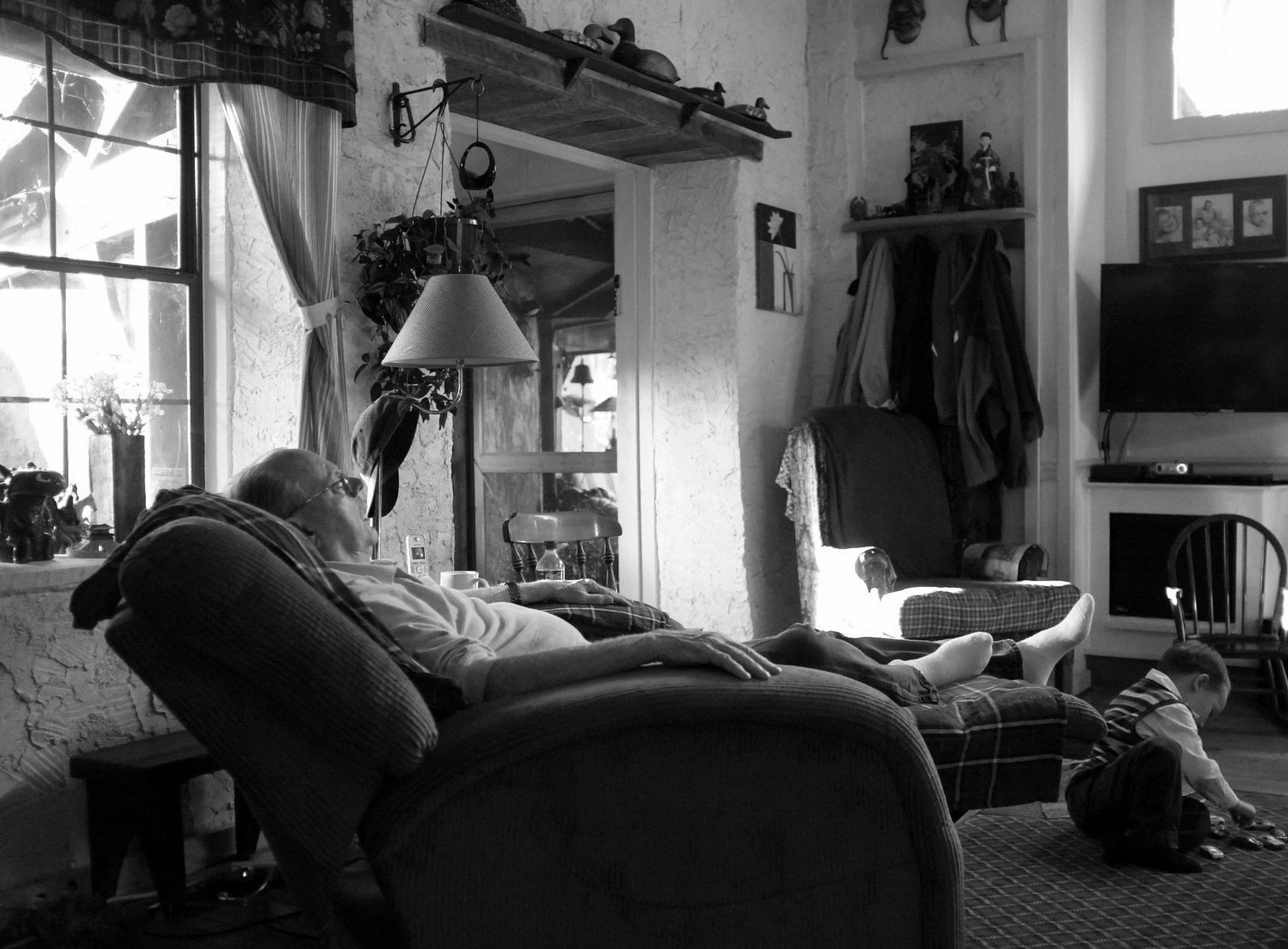
Well, "when" seems to be now. This week, he's taken such a turn that it's difficult to imagine how he'll ever get back to where he was.

The changes are staggering:

  • He can't walk even with his walker more than a few feet -- literally.
  • When he's trying to walk with his walker, he reaches a point when he just freezes. He stops walking; he stops responding; he becomes a statue.
  • We've resorted to using a wheelchair Foy lent us to move him anywhere.
  • He doesn't even go to the bathroom by himself: we have to wheel him in there.
  • We have to get him ready for bed: wheel him into the bathroom; help him with his hygene; wheel him over to the toilet; help him change clothes for bed.
  • He forgets things almost instantly.
  • There's so much weakness in his body and motions that it's difficult for me to believe that just a week ago he was able to do all these things by himself.

We keep saying that once Dr. McFarland figures out what's causing all this, we'll get the situation stabilized and things will go "back to 'normal.'" But tonight, watching him feebly try to brush his teeth, I thought, "No, this is the new 'normal.'"