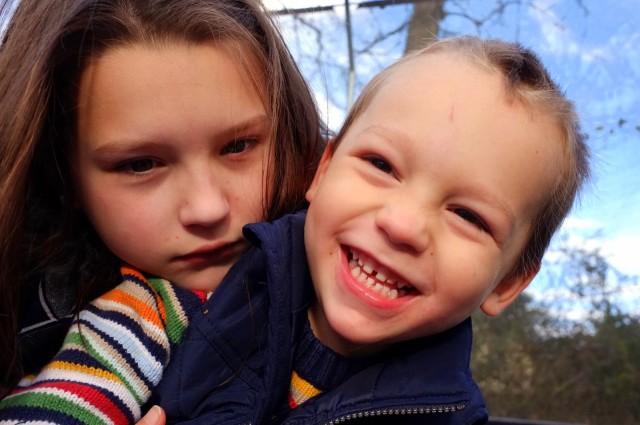
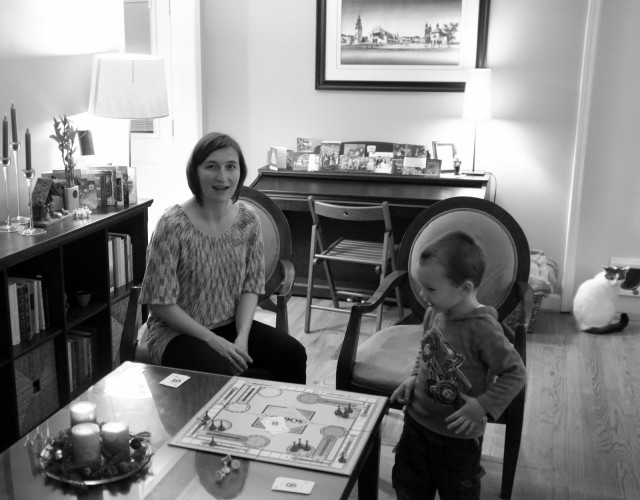
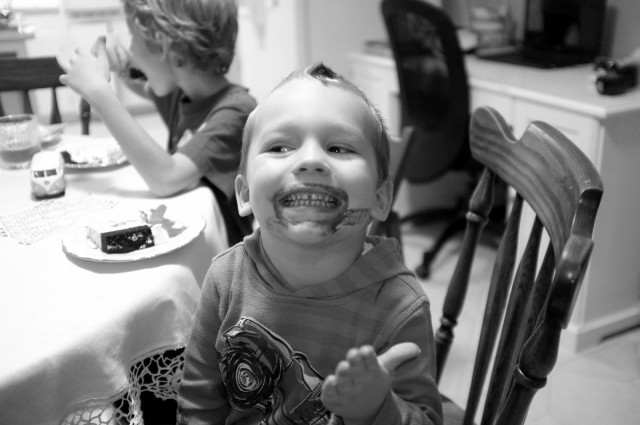
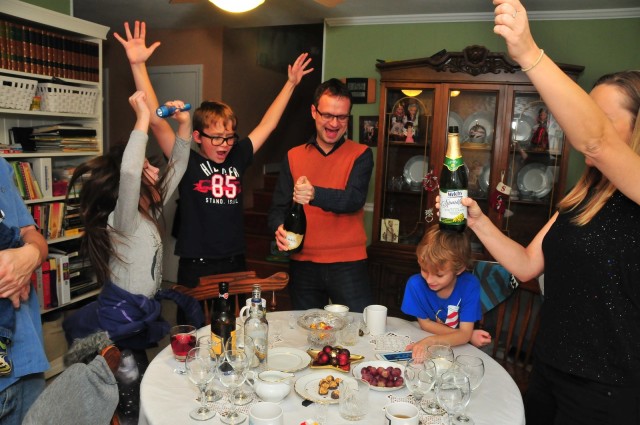
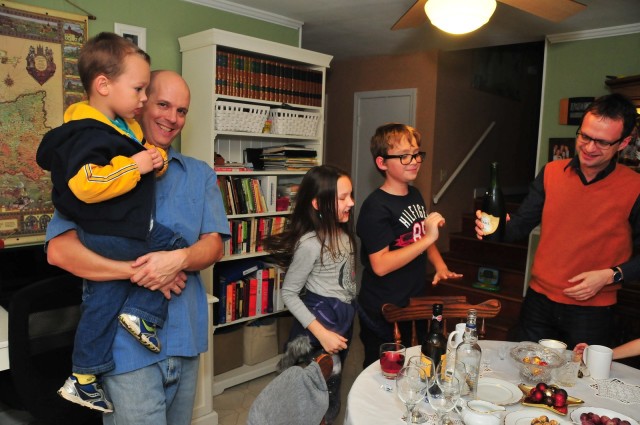
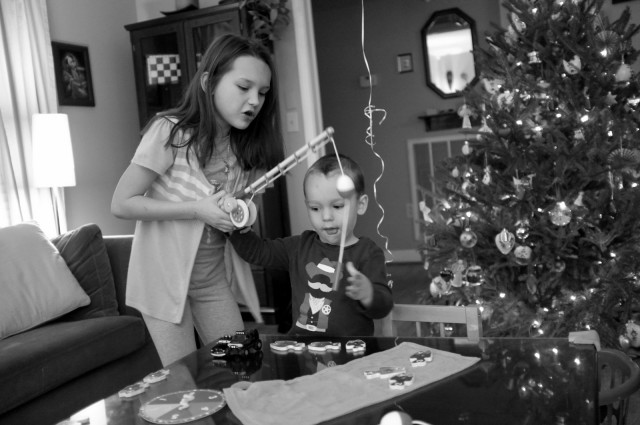
matching tracksuits

fun in threes, sometimes fours

Śpij, kochanie

“Daddy, I want to go to sleep.” And so I put up the book, turn off the light, and start the music.

The Boy rolls over on his back, and I rest my arm along his back, running my fingers through his hair gently. He stops moving, his breathing slows, and within moments, he’s asleep. Still I lie, continually stroking his head, rubbing his back. He takes a deep breath, lets it out, and sinks deeper.

W górze tyle gwiazd,
W dole tyle miast,
Gwiazdy miastu dają znać,
Że dzieci muszą spać.

Just listening to the Polish lullaby gets me thinking of all the twists and turns it took to get me to this moment in which I’m listening to a song in a language I never dreamed of learning, thinking how appropriate the lyrics — “Above, so many stars / below, so many cities. The stars let the cities know / That it’s time for children to sleep” — are some nights when the Boy tosses and turns and turns and tosses as my Polish wife puts our daughter to bed in the next room. All those little twists and turns, those seemingly insignificant decisions that led to meeting, returning, dancing, flying — all the things that led to the present moment, the present family.

“It was fate,” some might say. “It was the hand of God,” others might rejoin. “It was a happy sequence of accidents,” still others might insist. Fate, accident, God — whatever the cause, I’m grateful for all the steps, trips, and slips that led to this moment. Remembering that on a regular basis, I think, is the key to happiness.
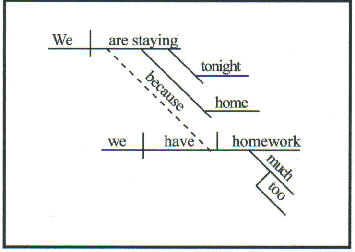
Diagram

L and I were sitting by her bed, reading the graphic-novel version of Shakespeare that she brought from the school library when she came across a sentence that stumped her: the king sent to men “to consult with the oracle of Delphi, in Greece.” I explained to her what “consult” means and then began working to help her figure out what “oracle” might mean.

“If ‘consult’ means something like ‘ask advice from’ and the men went to consult with the oracle, what did they ask advice from?” Much to my surprise, she couldn’t figure it out. I explained that the verb was “consult,” the action is “consulting.” “So who’s doing the action, who is consulting?”

“The king?”

It was clear a new strategy was necessary.

basic32

That’s right, I started teacher her how to diagram sentences. There are few skills that are so incredibly useful for getting students to see the inner working of a sentence, the clockworks of the sentence. Of course it’s no longer taught today except by eccentric English teachers who have free reign with their curriculum design — in other words, it’s not taught anymore. Still, I’ve begun wondering if I could somehow incorporate it into my own teaching

43

Birthday, Thirty Years Earlier — today’s entry from Anne Frank’s diary:

Wednesday, January 13, 1943

Terrible things are happening outside. At any time of night and day, poor helpless people are being dragged out of their homes. They’re allowed to take only a knapsack and a little cash with them, and even then, they’re robbed of these possessions on the way. Families are torn apart; men, women and children are separated. Children come home from school to find that their parents have disappeared. Women return from shopping to find their houses sealed, their families gone. The Christians in Holland are also living in fear because their sons are being sent to Germany. Everyone is scared. Every night hundreds of planes pass over Holland on their way to German cities, to sow their bombs on German soil. Every hour hundreds, or maybe even thousands, of people are being killed in Russia and Africa. No one can keep out of the conflict, the entire world is at war, and even though the Allies are doing better, the end is nowhere in sight.

As for us, we’re quite fortunate. Luckier than millions of people. It’s quiet and safe here, and we’re using our money to buy food. We’re so selfish that we talk about “after the war” and look forward to new clothes and shoes, when actually we should be saving every penny to help others when the war is over, to salvage whatever we can.

The children in this neighborhood run around in thin shirts and wooden shoes. They have no coats, no caps, no stockings and no one to help them. Gnawing on a carrot to still their hunger pangs, they walk from their cold houses through cold streets to an even colder classroom. Things have gotten so bad in Holland that hordes of children stop passersby in the streets to beg for a piece of bread.

Halušky

1-VIV_0826

Reading

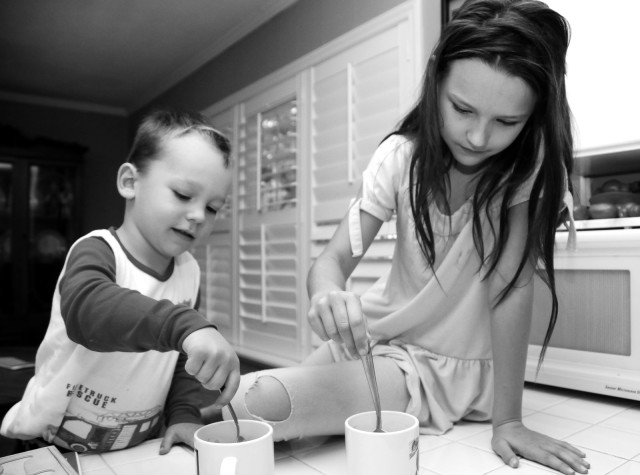
I give the students the same information every year, but this year, I decided to break it down in a letter. Dear student, you recently took the MAP test, which measures your reading progress. And so on and so on. It's a mail merge, so "student" is replaced with the kid's name, and all the details are individualized. Like the winter score. Like its grade-level equivalent. It's bound to be a disheartening moment for some: I'm not sure they've ever been told point blank, "Your reading scores indicate that you're reading at a second-grade level." How do you take the news that your skills are six years behind where they should be?
1-DSCF7873

There are a number of reasons one could posit for this, and for each, a exception: For some, it's a question of limited English exposure at home. But I have Latino students in my honors high school courses as well. For others its a question of limited access to books. But I have such students in my honors high school courses as well, and they solve the problem by basically camping out in the school library. No role model in the immediate family to provide the support necessary. But I've had students in my honors high school courses who'd never even met their biological father.

2-DSCF7877

At times they seem like excuses, at times they seem like legitimate -- and tragic -- explanations. Whatever the case, they're my charge, and I'm tasked with reversing the trend. Some days, though, it just feels like I'm making the situation worse still.

Sunday in the Park

The patriarch of the Buendía family, José Arcadio Buendía, spent the last days of his life under the chestnut tree in the courtyard of his home. Even when villagers carried his body to his bed as his end became increasingly obviously near, he woke and went back to the tree every morning as "a habit of his body." Thus Marquez describes it in his classic One Hundred Years of Solitude, which I am re-reading some twenty or twenty-five years after I first read it. The idea of a habit of one's body stuck with me all these years, and tonight, when I finally read that scene, I smiled. It was one of the passages of the novel I couldn't recall where exactly it fell but read eagerly in search of it.

Part of the joy of watching children, I think, is that they have no habits of the body yet. They don't get up at five thirty and make the morning coffee without thinking about it. They don't come to an intersection intending to turn right but pulling into the left lane out of habit. They don't have a routine they follow in which they suddenly become aware they're half-way through the routine. Every action is new. Every action has a certain uncertainty to it that demands their attention and their care. Every act brings forth a joy of the novel.

Family Reunion

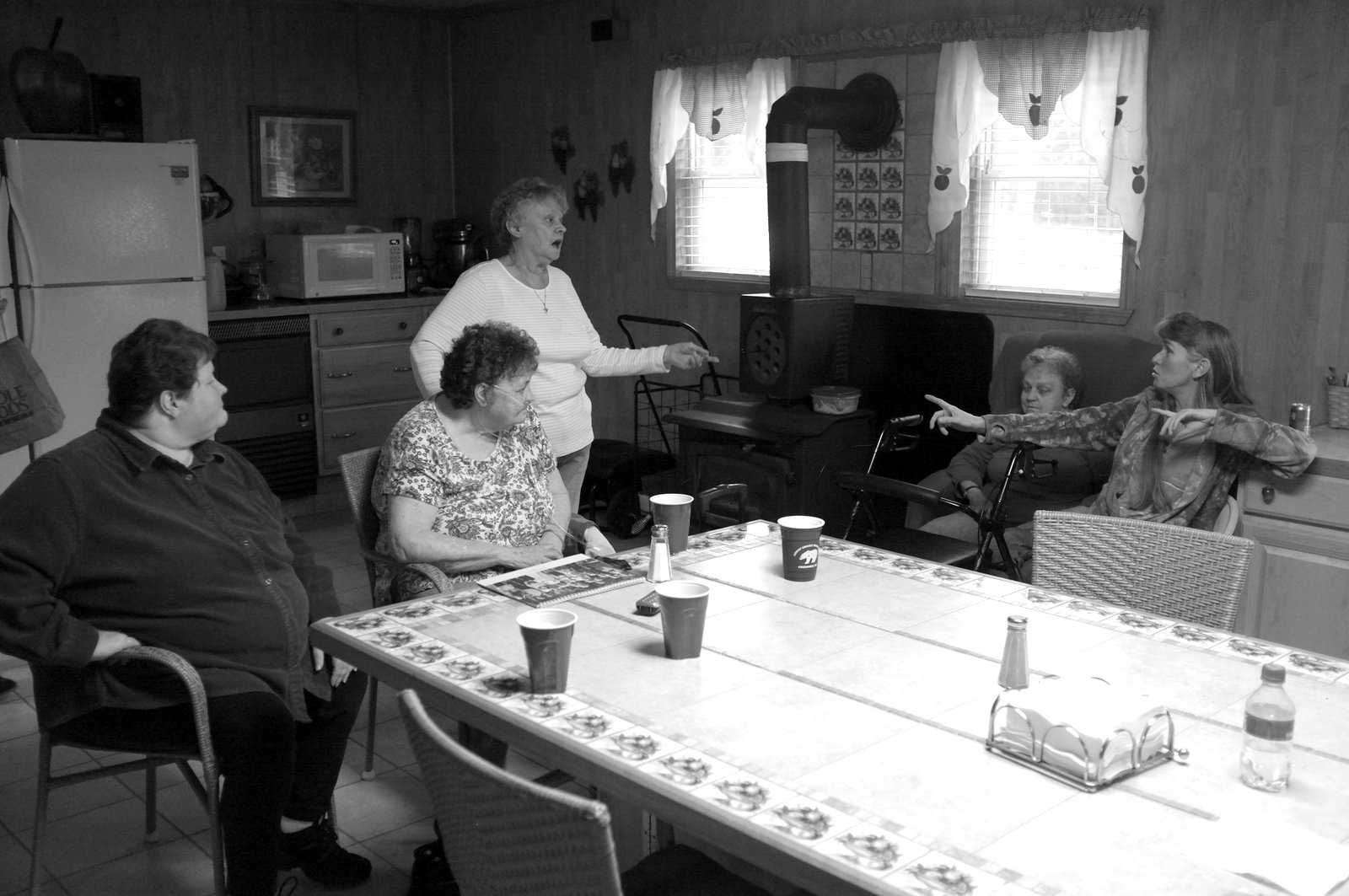
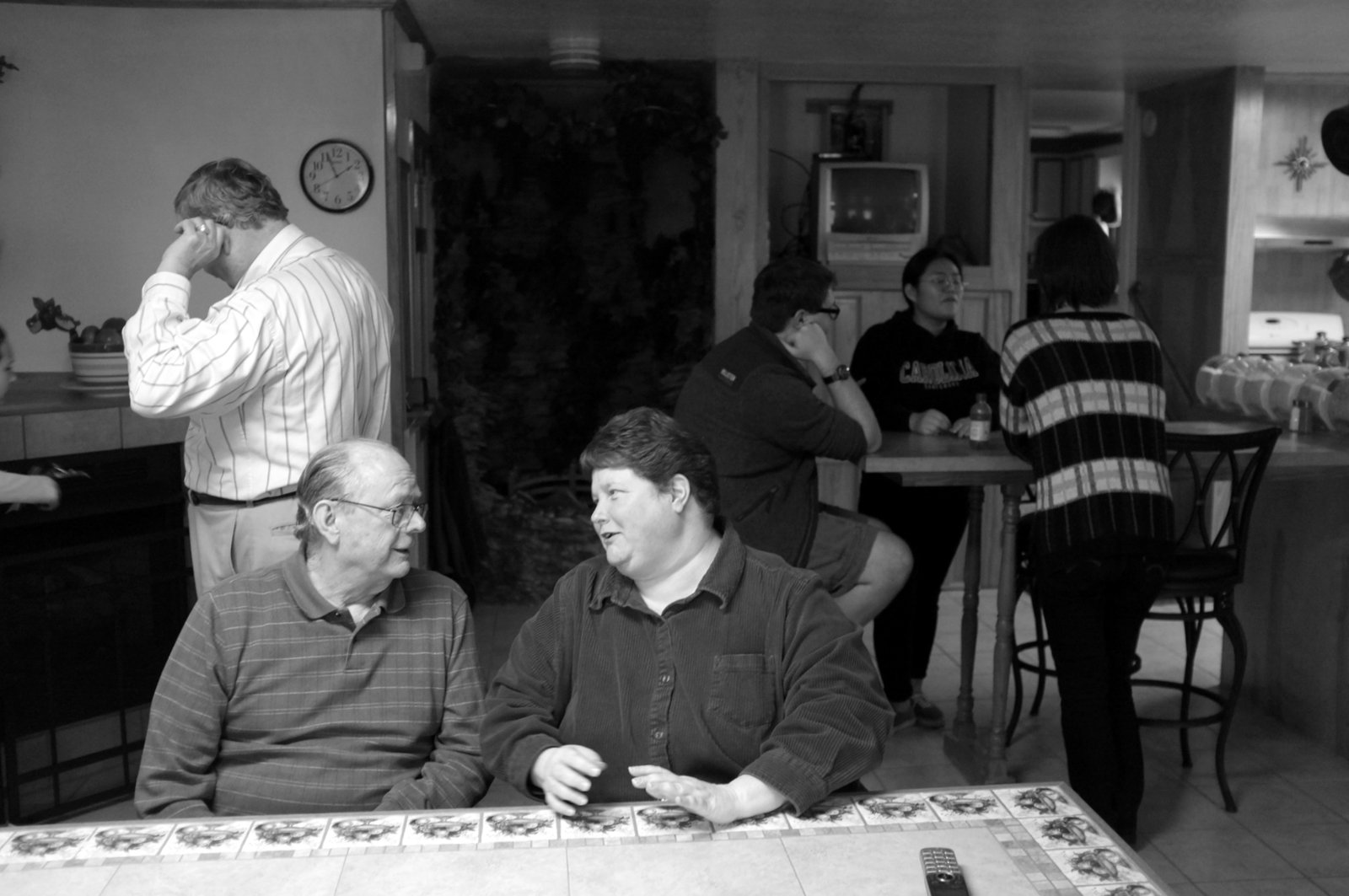
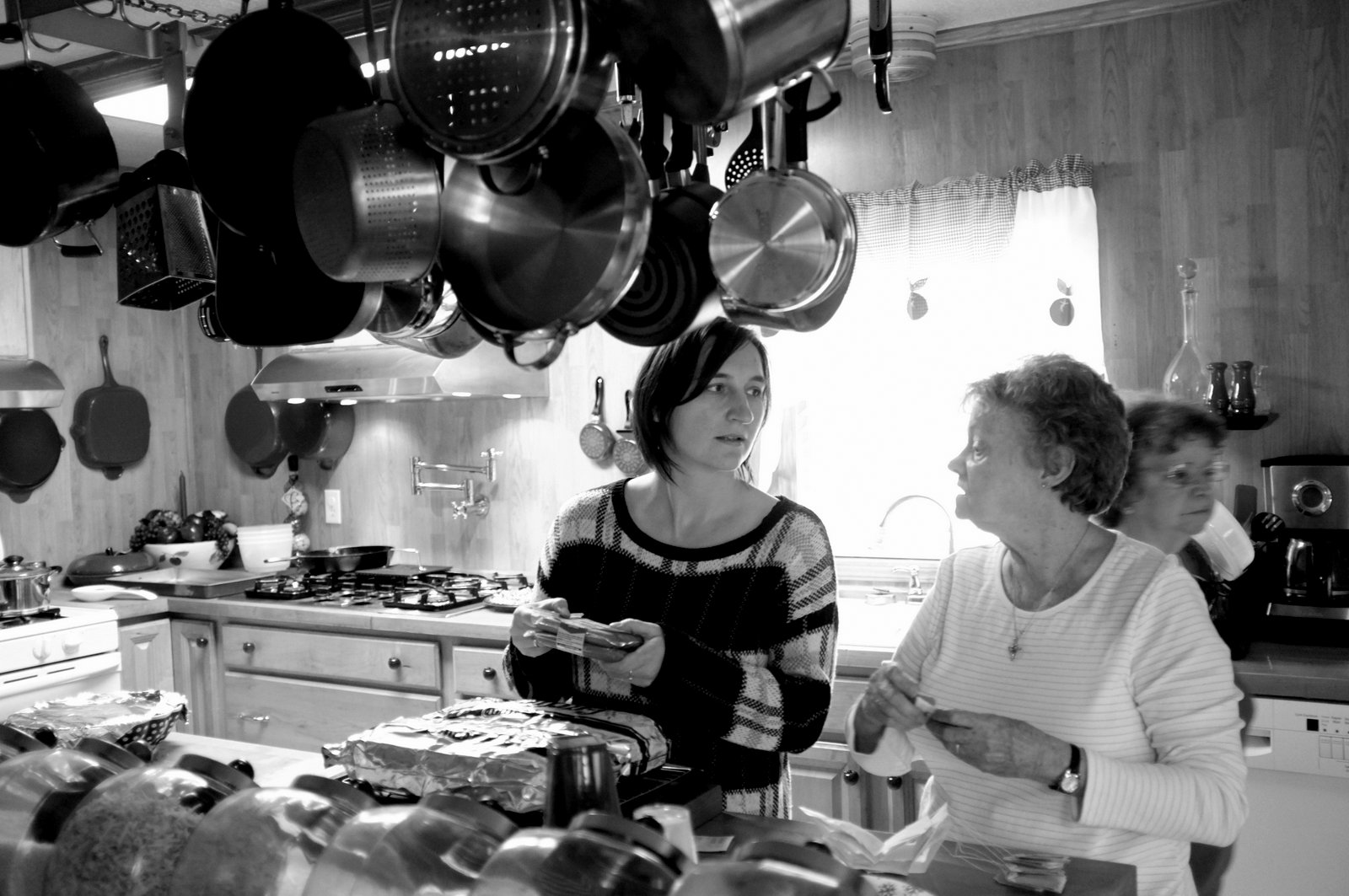
Not quite a family reunion, but a gathering of folks who haven't been together for a long time. And where are the pictures? Quite simply, I was too busy chatting. An opportunity lost.

Peeling Eggs

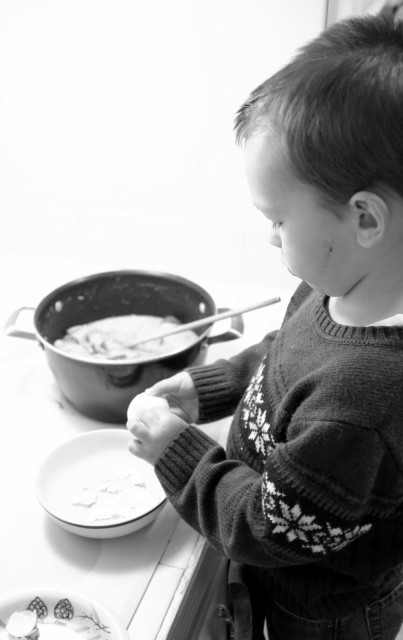
The Boy is always eager to help, especially when it comes to cooking. Any time K is standing at the stove, E bounds over to the dining table, grabs a chair, and slides it across the whole room to the stove.

"I want to help!"

Most often, that's just stirring. It's simple, difficult to mess up, and difficult to make a mess doing. Today, though, as I was rinsing the boiled eggs we'd be putting in our żurek later, he decided he wanted to learn how to peel the eggs. Rather, having just woke up from a nap, he was encouraged to learn. Bribed, for he's awfully fussy when he's awakened prematurely.

DSCF7833

"Want to help me cook?" I began.

He was reluctant at first, but the words "learn" and "something new" seemed to pique his interest, and soon enough, he was peeling an egg.

When it came time for dinner, he was quite insistent that he got the egg that he had peeled.

"Bardzo słuszna koncepcja."

Why a Jet?

First Day Returning

The first day back can always be stressful: you walk back into the school wondering what kind of day the kinds have packed in their book bags and hauled to school from Christmas break. Some years, they unpack a chattiness and an unwillingness to work that in a lot of ways is understandable. Other years, they haul out their books and their attention and make the day slide by almost effortlessly.

It occurred to me that I could help them pack their bag by having them leave on a good note, hence my opłatek efforts at the end of the year. Through most of the day, I thought that perhaps it had worked, that perhaps ending the year on a deliberately positive note helped bring them back with a positive outlook. They worked brilliantly, and not a complaint as I introduced and modeled a new weekly assignment, the article of the week, based on Kelly Gallagher’s ideas.

The final period of the day rolled to a close, and one young lady who was absent the final day asked me if I’d saved a cookie for her.

“Excuse me?”

“The cookies you gave everyone before the break.”

Here it was — definitive proof that what we’d done together had made an impact, for someone had clearly told her about the experience. Obviously it had struck something in their souls, made them resonate as one for a moment, showing them the oneness of humanity and all the hopes and dreams of everyone who has ever set out to create a utopia.

“Oh, yes,” I replied. “How did you hear about them?”

“Oh, everyone was just saying they were really tasty.”

A utopia for the taste buds, I guess, is better than no utopia at all.

Final Sunday of the Break

Just as predicted, we blinked twice and it was Christmas Eve; another two blinks and it was New Year's Eve. And now, it's all over again. Another Christmas break is little more than memory. But that's not a bad thing: Most of our lives are memory. The present is just a passing phase that disappears as soon as you acknowledge its existence. The future is relatively uncertain. So it's our memories that make up the majority of our life.

1-DSCF7806
Slightly more serious

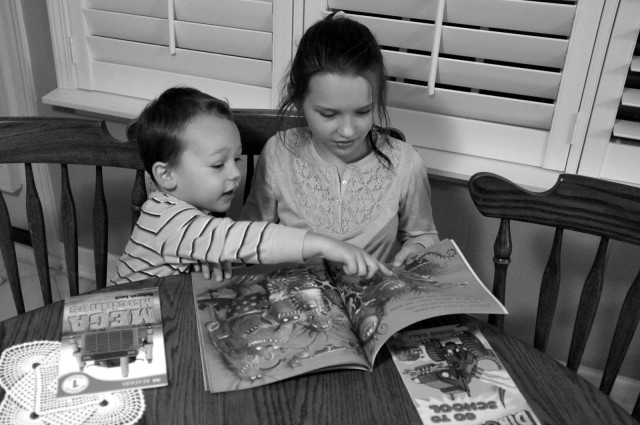
Today was glorious, but we were all tired, so we stayed home. It was a lazy day from the beginning: the alarm went off at seven, and it took only a moment for K and me to decide that the eleven o'clock Mass was a better option than the nine o'clock Mass.
2-DSCF7810
Slightly less

We were thinking about going for some afternoon outing, perhaps hiking somewhere, but soon after Mass, as we were heading to the car, I think I'd decided that even going to a nearby park might be too ambitious.
3-DSCF7828

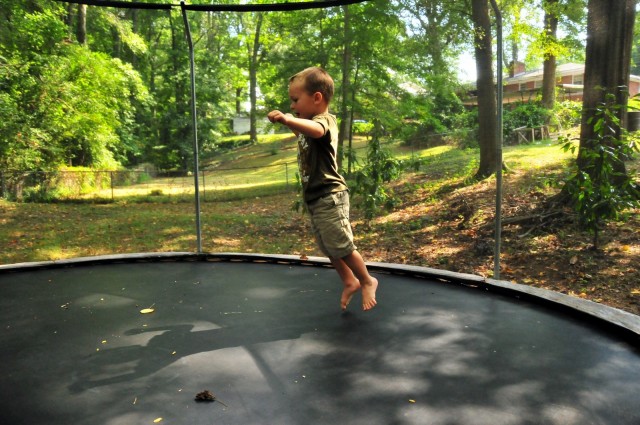
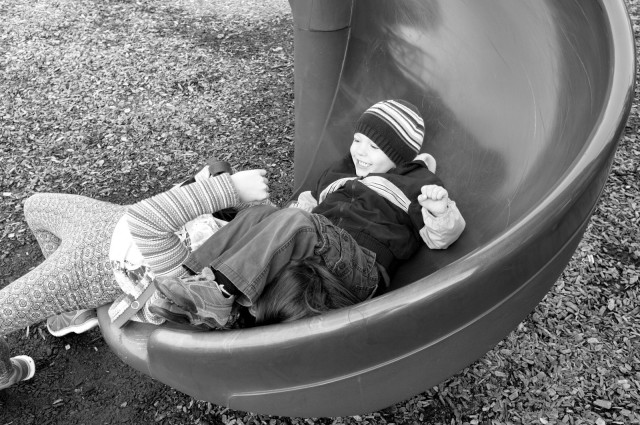
So in the end, we spent the day at home. There was an abundance of trampoline time, including the fun game of Charge Yourself with Ample Static Electricity by Shuffling Around the Trampoline with Your Socks On Then Discharge It All Onto Daddy's Bald Head. A fun game, that.
New Year’s 2016

For someone as obsessed with the passage of time as I am, I am strangely ambivalent about New Year's Eve. When I was younger, it was just an excuse to go to a party. As I grow older, it's just an excuse to get together with friends.

1-DSCF7751

Then, as our children grow older, it's become an excuse for them to stay up as long as humanly possible.

2-DSCF7756

And a last stab at ice cream and chocolate overload.

4-VIV_0764

Last night, I children did both. For L, it's not much of a feat -- she managed it last year, and probably the year before. For the Boy, though, to stay up that late. This is the kid that fell asleep at his normal bedtime at our Christmas gathering last week.

5-VIV_0770

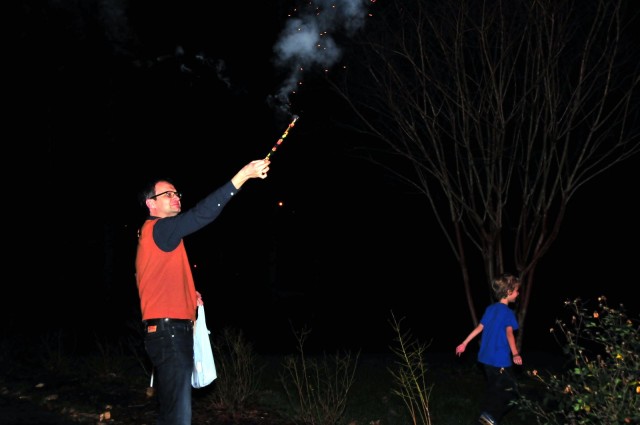
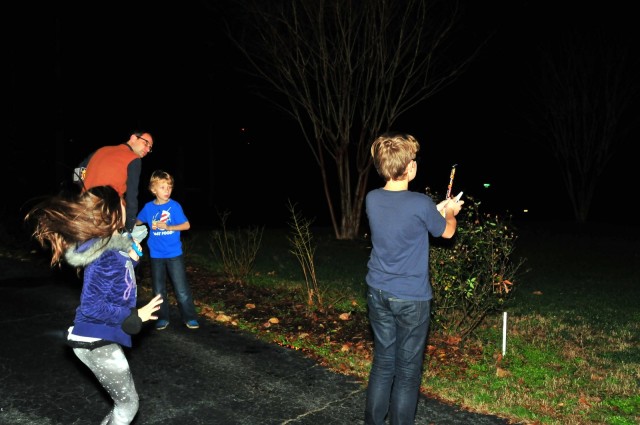
But he made it. And he survived the fearful experience of his first near encounter with fireworks.

6-VIV_0780

"Daddy, I want to go back inside," he said, a slight panic in his voice.

"What's my job?" I asked him.

"To protect me."

"So I would never put you in a dangerous situation, right? I would never put you somewhere that you could get hurt, right?"

7-VIV_0782

After a few minutes, he was a different little boy.

"Daddy, I love fireworks."

8-VIV_0784

Overcoming a fear -- a good way to start the year.

2015

01-DSCF1553
January
02-DSCF2364
February
03-DSCF2869
March
04-VIV_3572
April
05-DSCF3668
May
06-IMG_4088
May
07-DSCF4271
June
08-IMG_8209
July
09-VIV_7856
August
10-VIV_7831
August
11-DSCF6163
September
12-BW0_8789
October
13-DSCF7051
November
14-DSCF7503
December

For Granted

This evening, K and I finished out the day watching Iris, a film about the British writer Iris Murdoch. I know little about Murdoch, and I've never read any of her work, but the film stars Dame Judi Dench, so I thought it couldn't be that bad, and it really wasn't. Dench does a good job, as always, and it's a tough thing, I would imagine, portraying a lively mind sinking into Alzheimer's. It got me to research Murdoch, though, and I found a curious quote attributed to her about marriage:

I have a strong memory of an interview between Murdoch and the writer A.N. Wilson in which, when asked about her marriage, she replied: “Oh well; I love, and am loved.” She also informed Wilson that the benefit of marriage is being able to take the other for granted. (Source)

The article is entitled "The secrets of Iris Murdoch and John Bayley's unconventional marriage," and the article reveals that "She was apparently very sexual, and not only with John; he, perhaps, was less interested in matters carnal." In short, she had multiple affairs, apparently fairly openly, throughout their marriage. In the film, Murdoch says to Bayley early in their romance, when he has just discovered her unfaithfulness, which she freely admits, that he just has to accept her as she is. She's not willing to change for him, in other words. While that might be admirable in some areas, in sexual promiscuity I find it a bit selfish, and I found myself wondering at the end of the film if that's what she meant in the interview (I researched as the film uncoiled) about being able to "take the other for granted."

DSCF7731

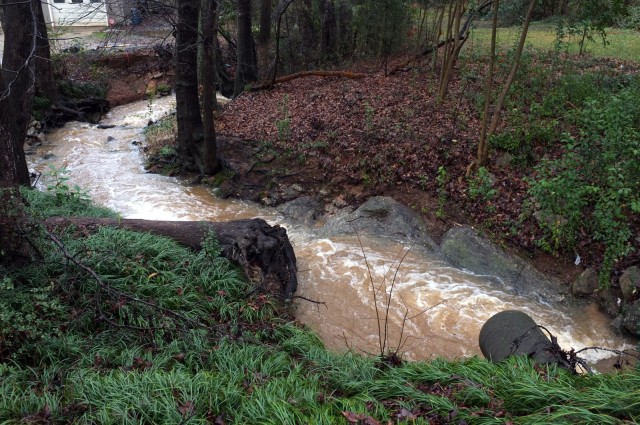
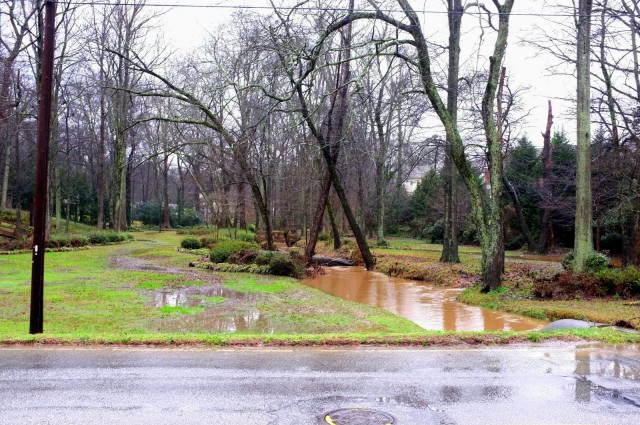
I take so much for granted it's not even humorous in the slightest. I take for granted that I will have a dry place to stay when the rain pours and pours as it has for the last several days. I take it for granted that I will walk up and see my wife and children in the morning and carry on my life like normal. I take for granted that I can slip downstairs late one evening, occasionally light a cigar and pour a little libation, and write.

DSCF7732

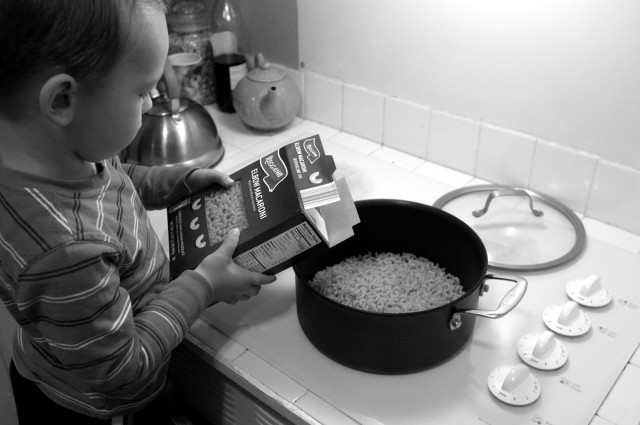
I take for granted that my family will have food to eat, and that if, after returning home from inspecting the neighborhood during a let-up in the downpour, we decide to have mac and cheese for lunch, that we can do just that. And I take for granted that I can take all these things for granted.

DSCF7734

And that is probably why I have always been somewhat obsessed by time and its passing. Like so many others, I get into the habit of taking things for granted, and when they come to an end, as this year is or as our extended holiday break is, I realize unconsciously that I've taken it for granted and not made the most of it. At least I did. Having children changed that to a degree

DSCF7738

I learned to be aware of each passing moment because it was just that, a passing moment. This is especially true since the birth of E. The Girl's first years showed me how one can grow accustomed to -- take for granted -- the little quirks a child exhibits as she grows and then suddenly, one realizes that the child has outgrown that quirk.

Now I'm still obsessed with time, but the obsession has changed. No longer do I find myself thinking, "This wonderful experience is ending, and I'm not sure anything coming will ever be as magnificent as this," for that was how I framed my taking-for-granted nature. Instead, I find myself shocked at how quickly time as passed, regretting slightly the moments I've taken for granted and more determined not to do it any more.

Tuesday

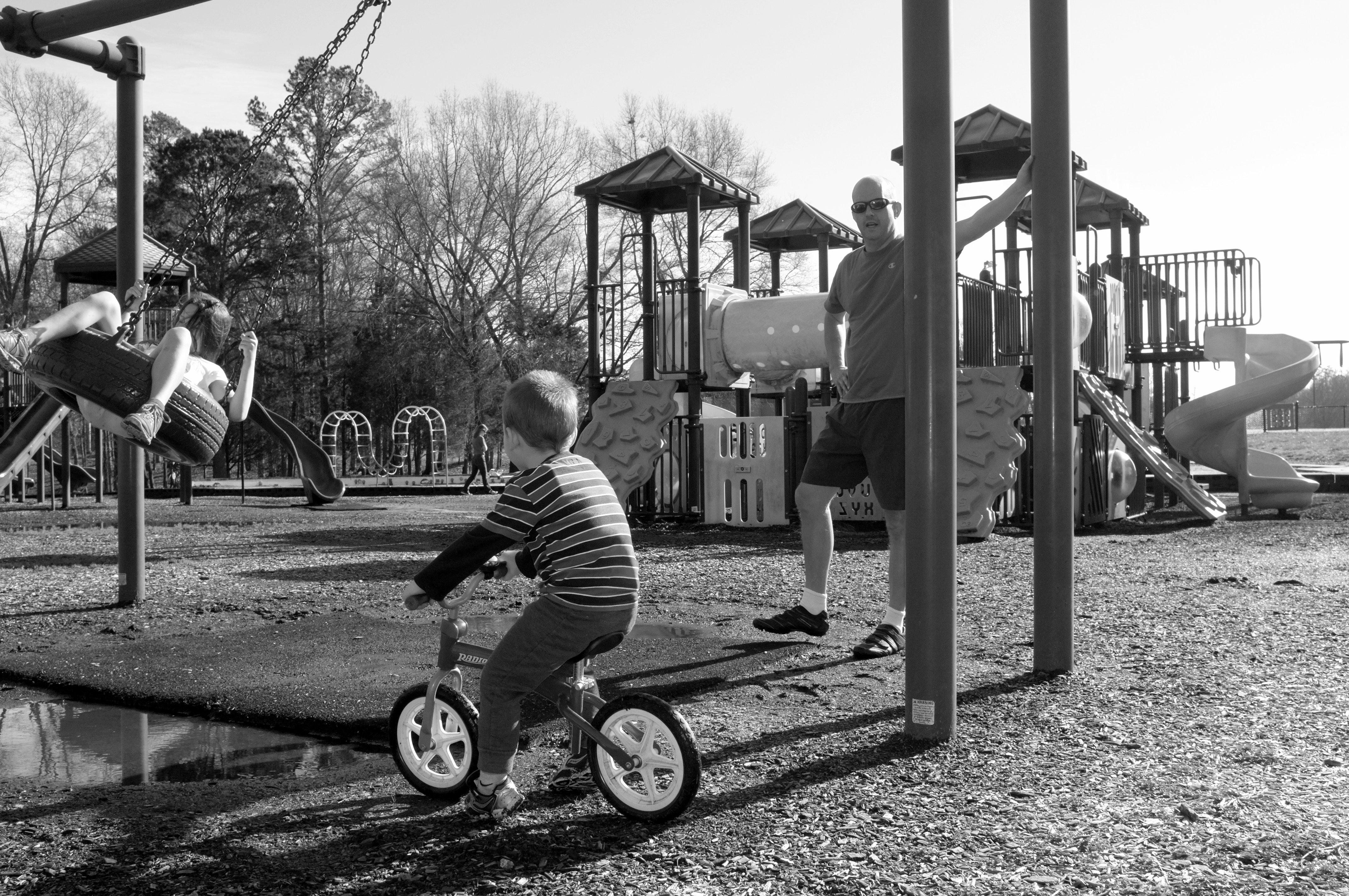
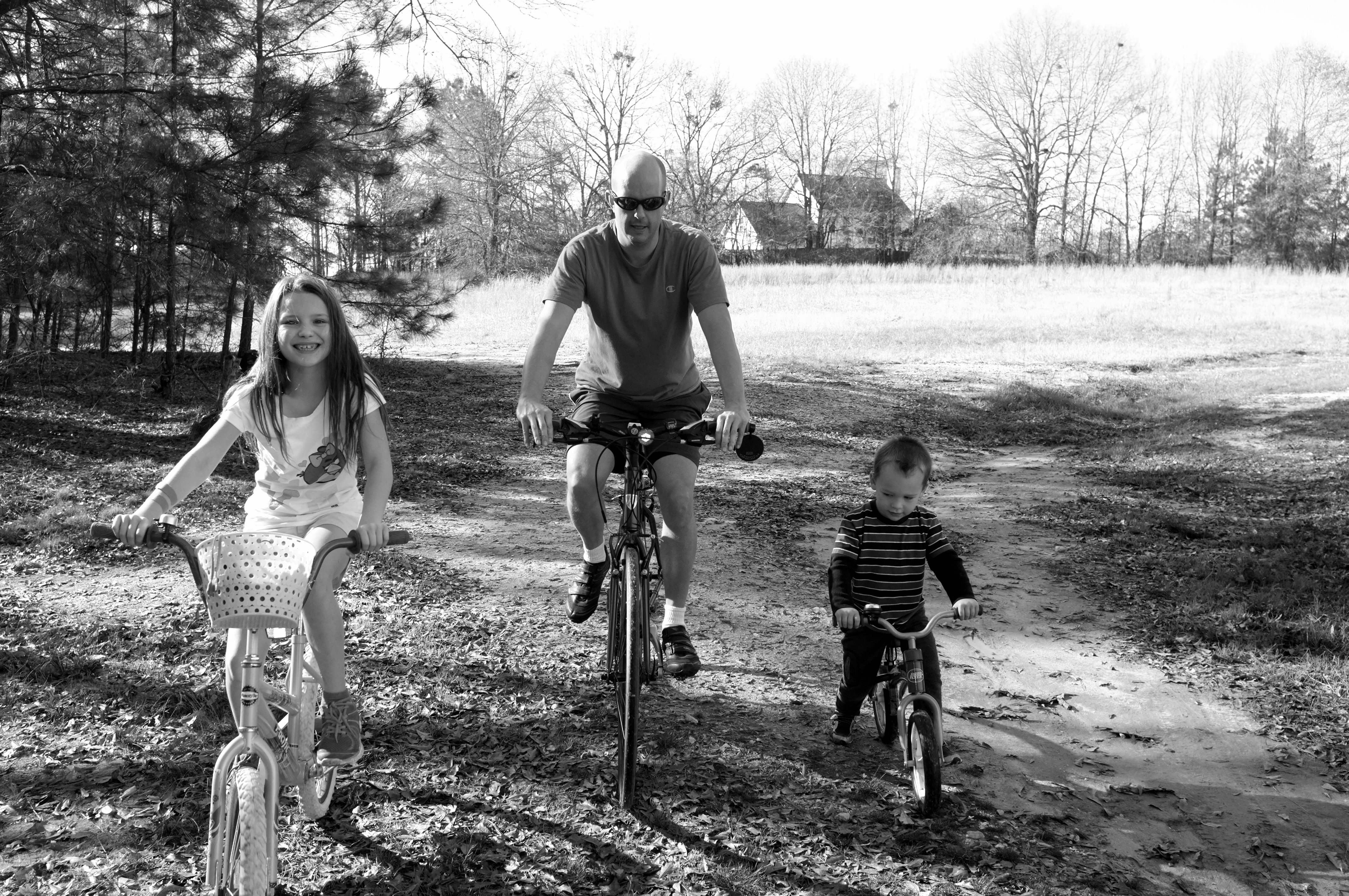
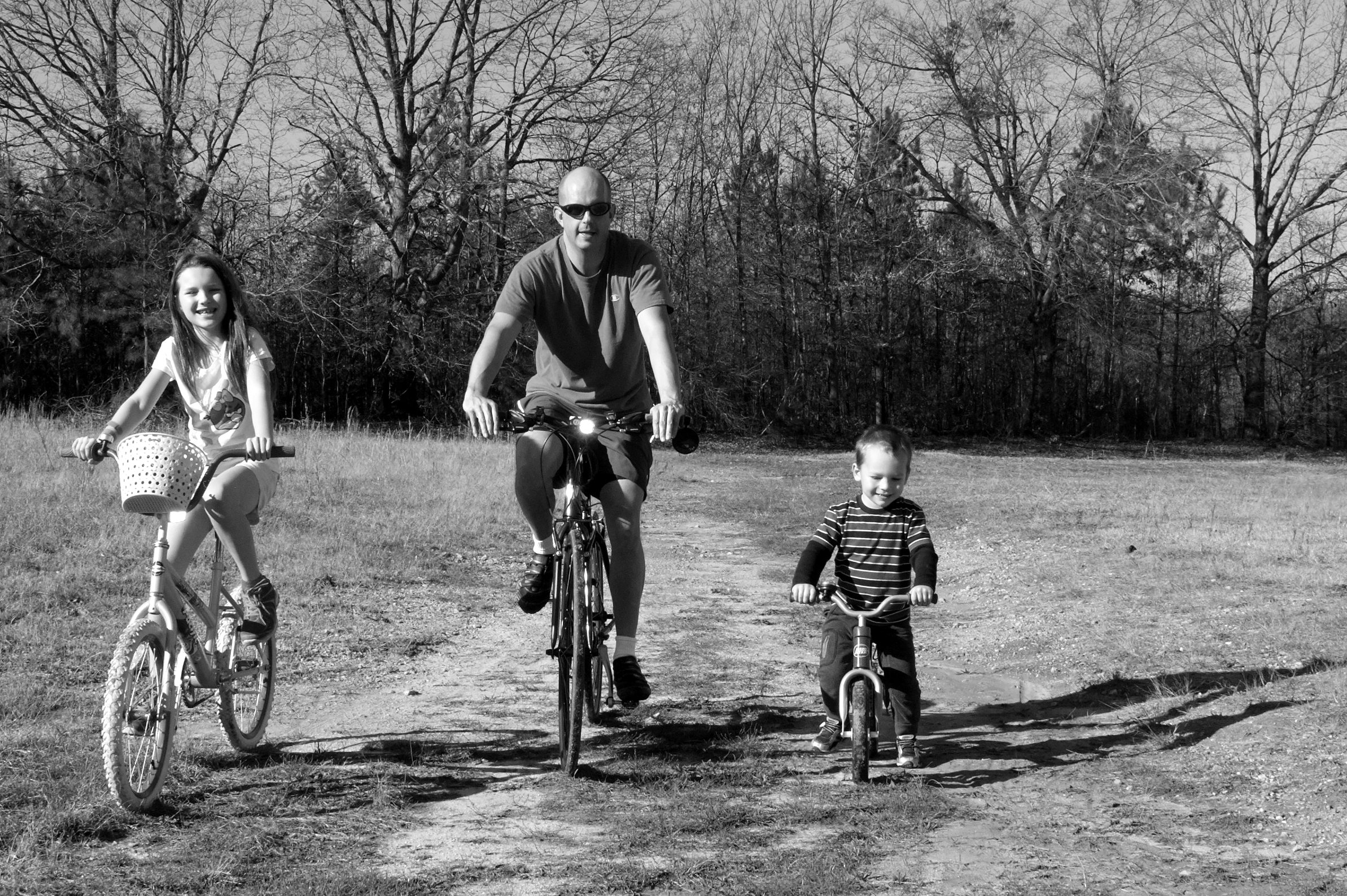
With a break in the clouds, the unseasonably warm temperatures, and a free day for everyone, there was only one place to go: the park.

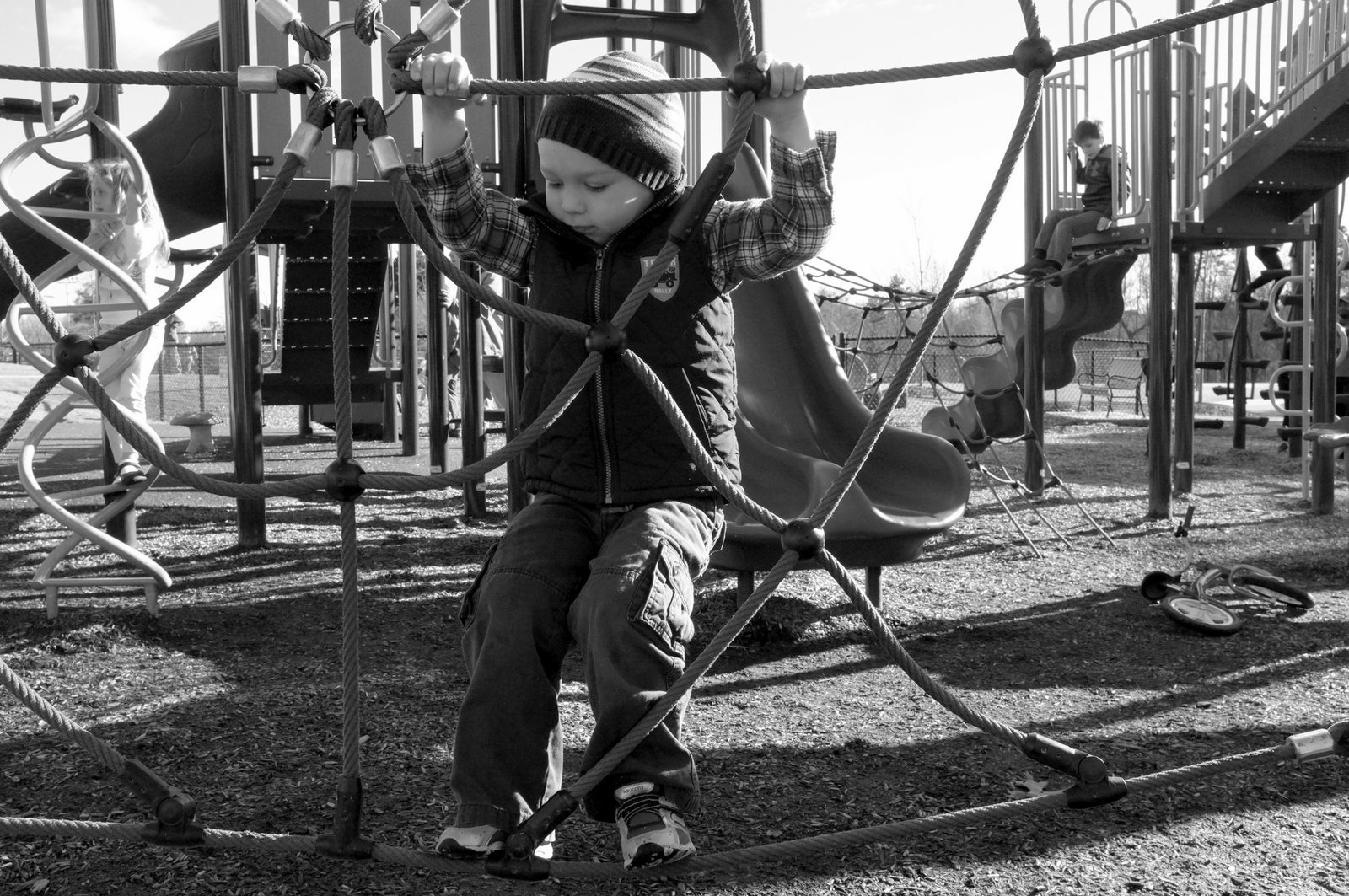
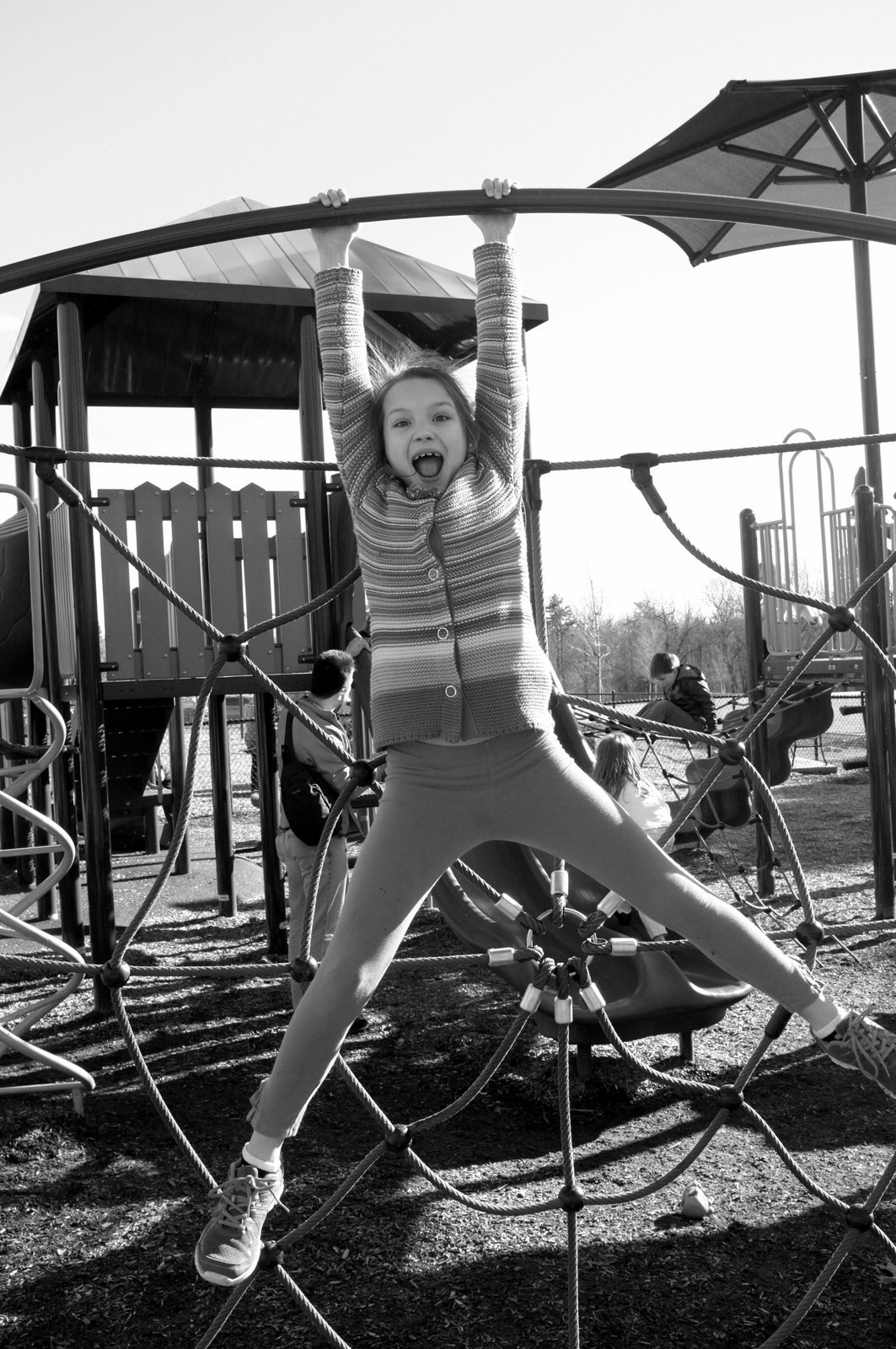
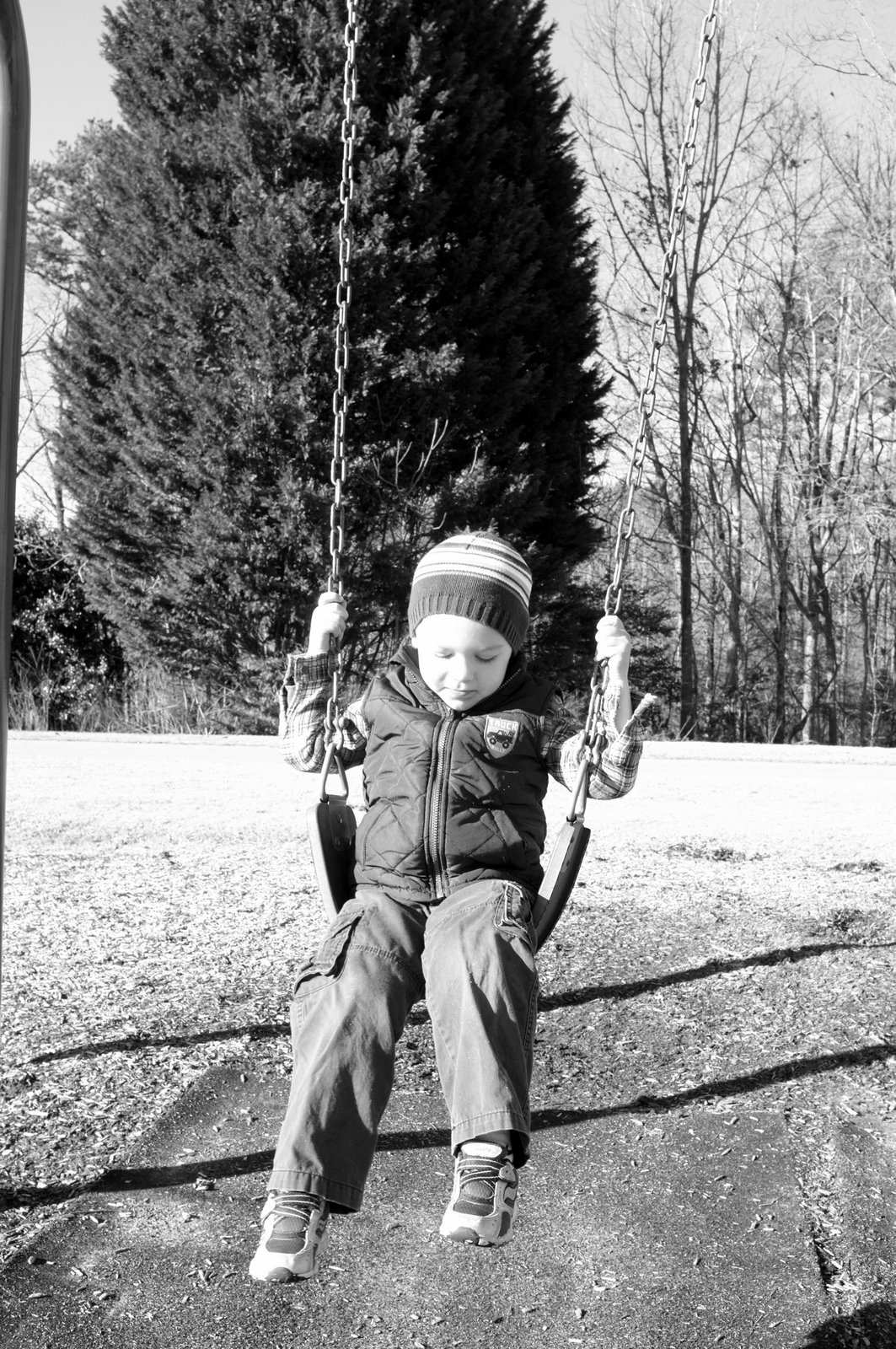
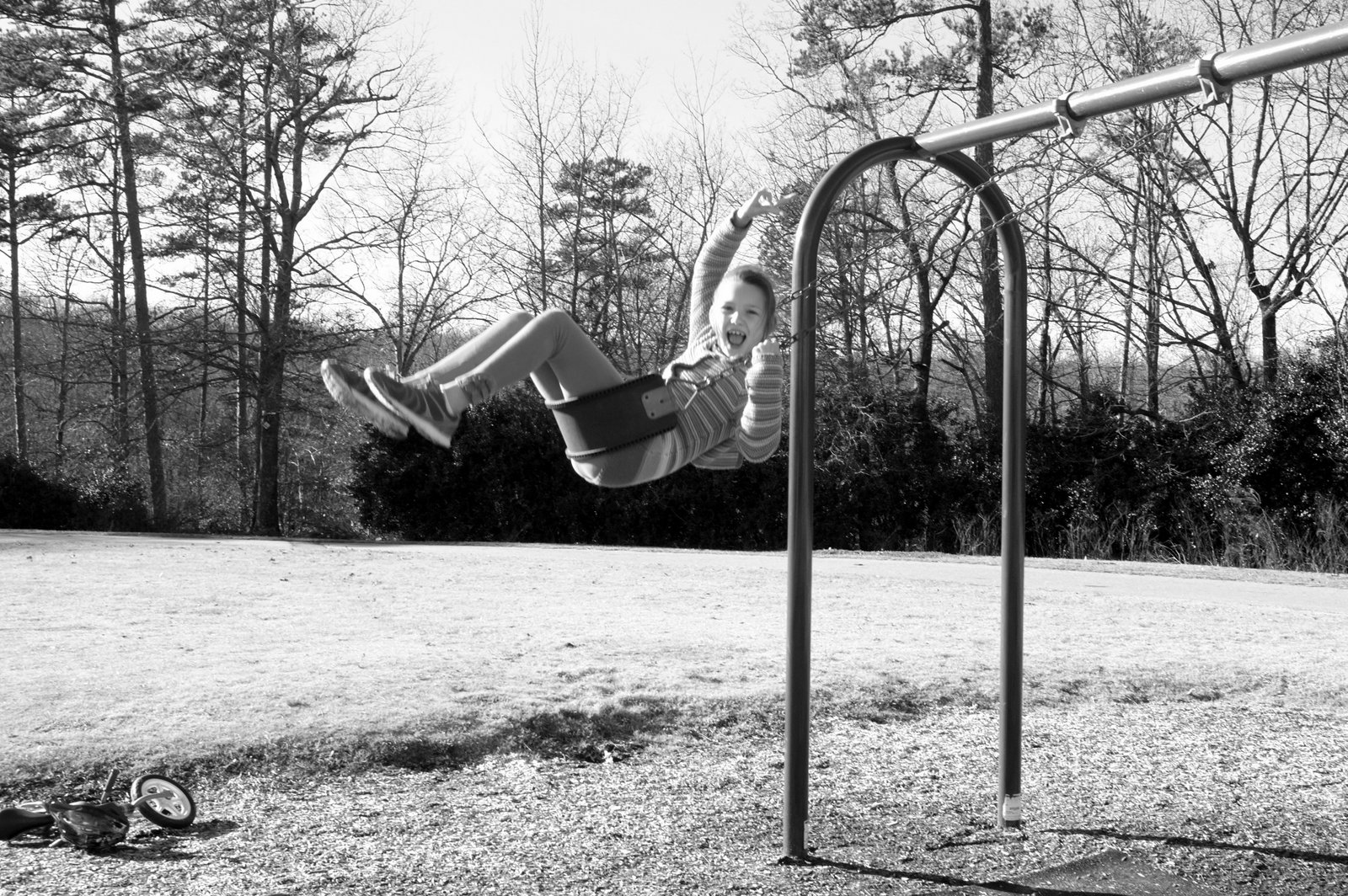
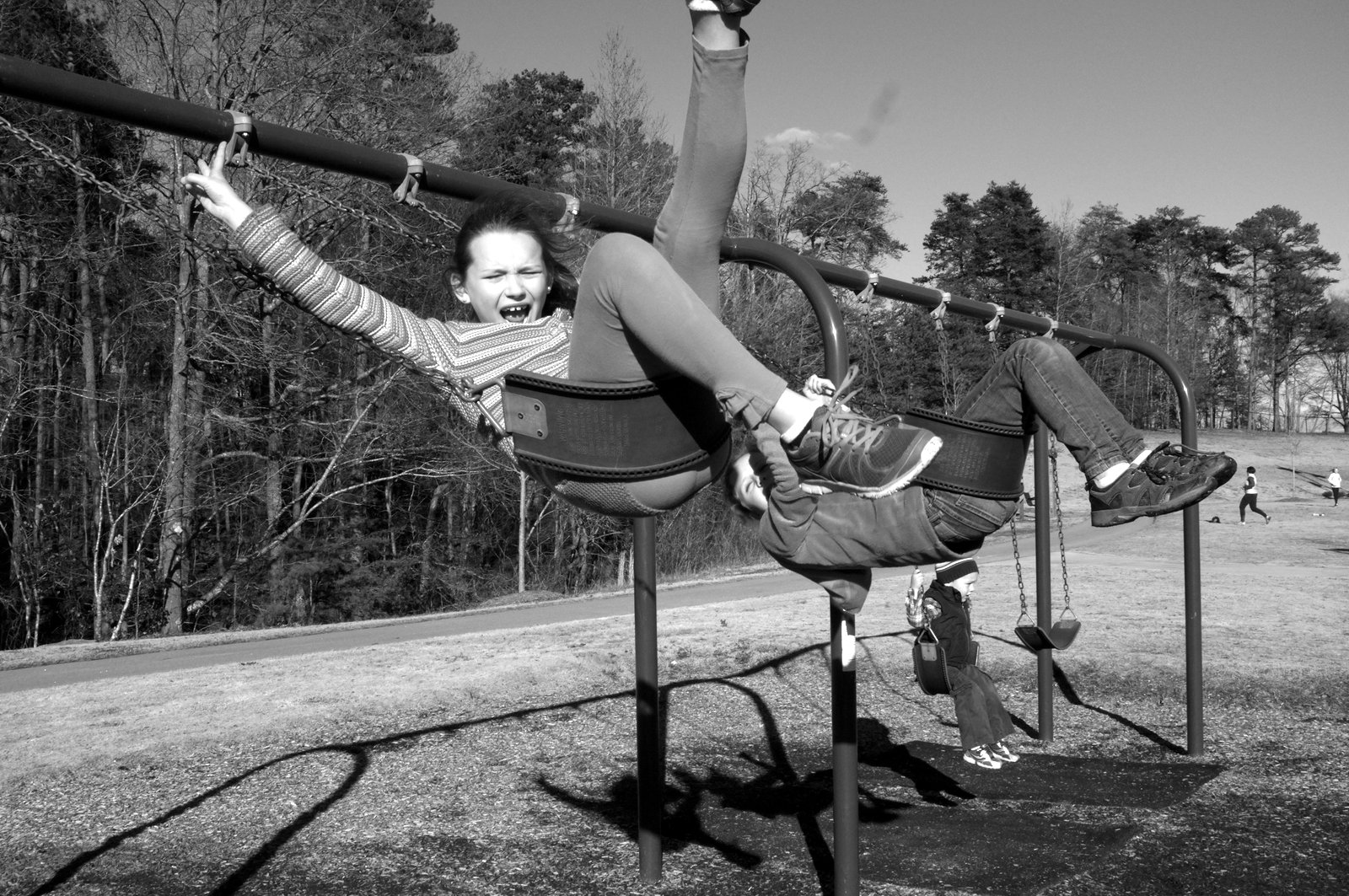
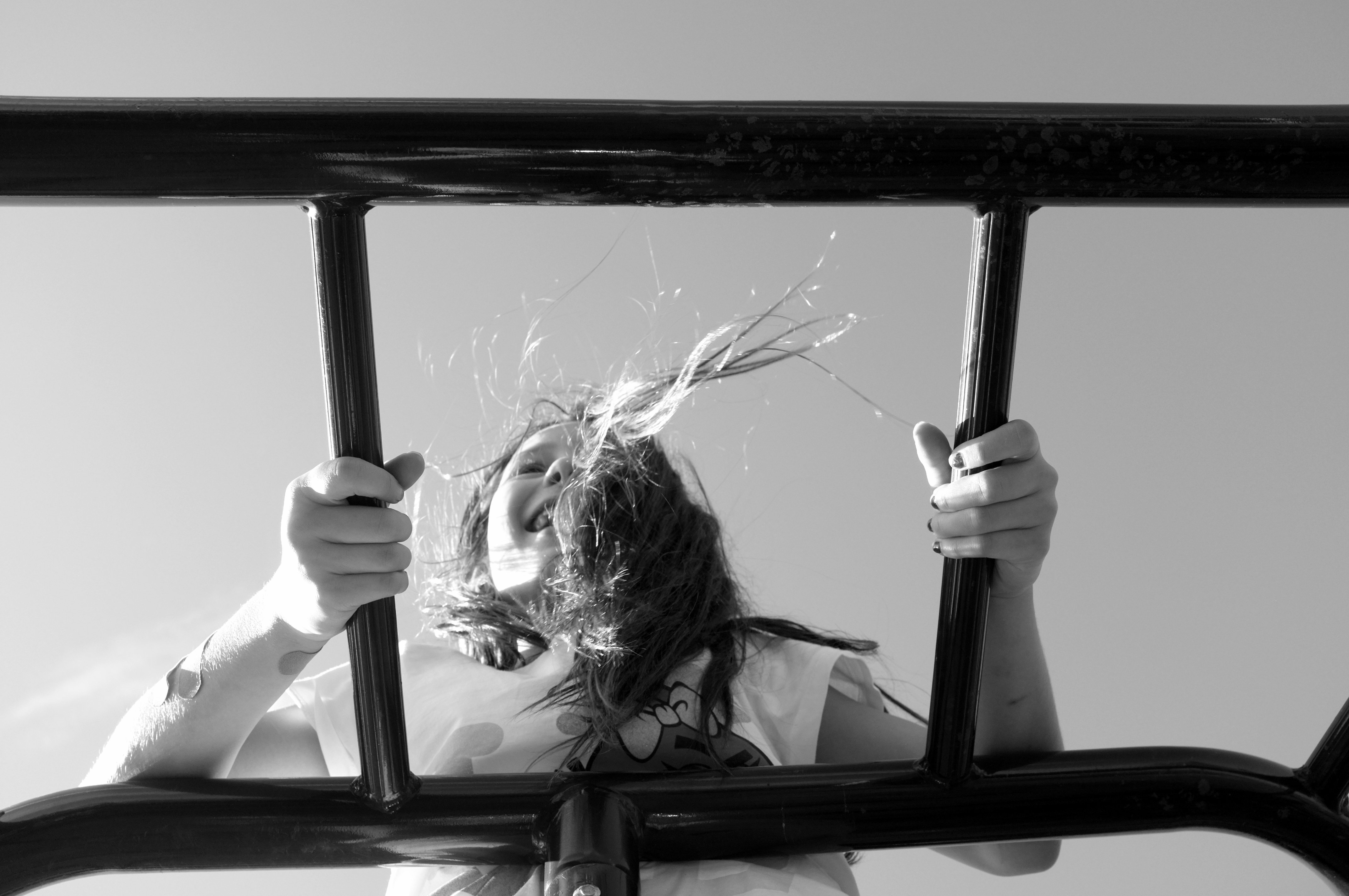
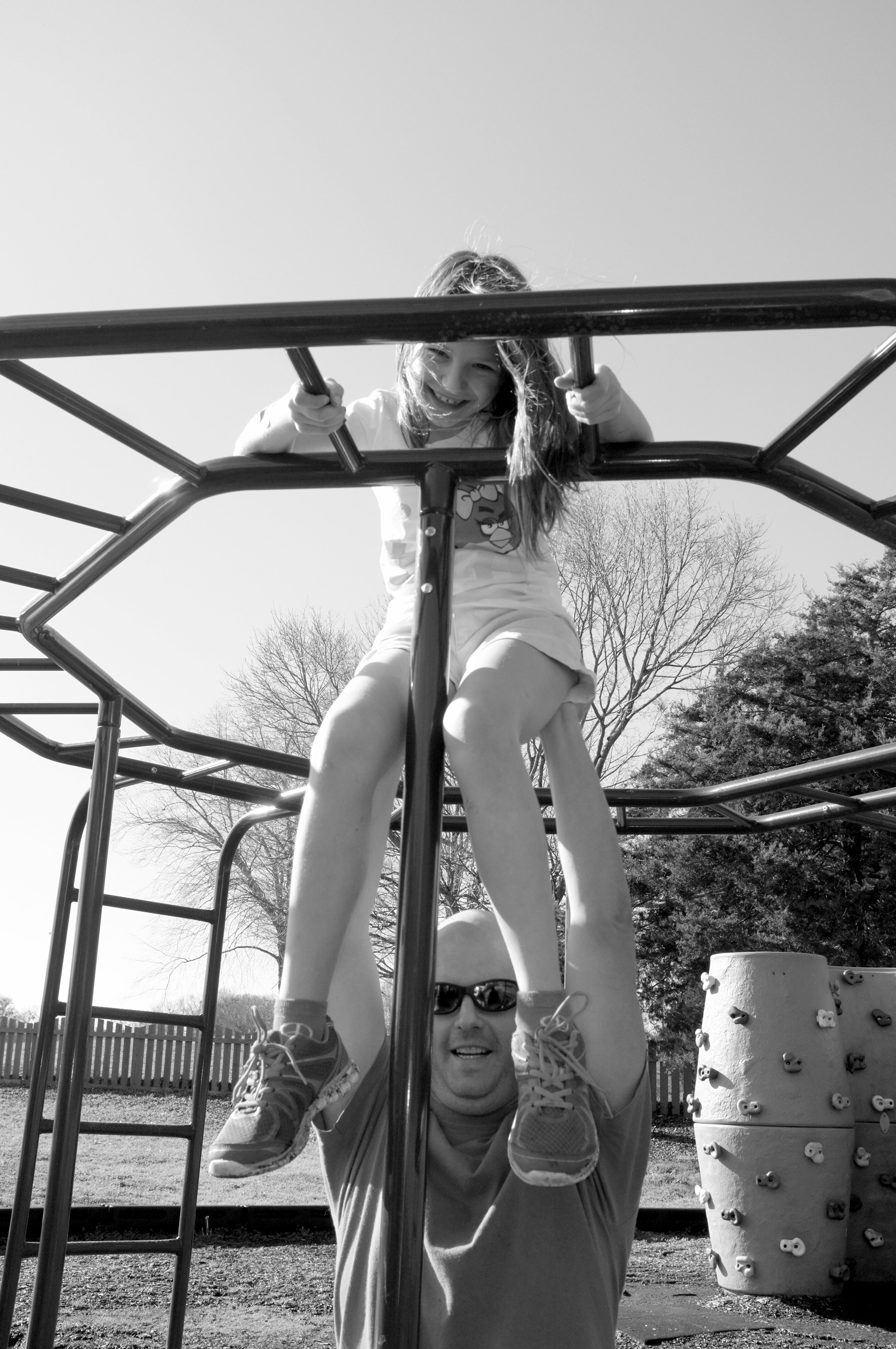
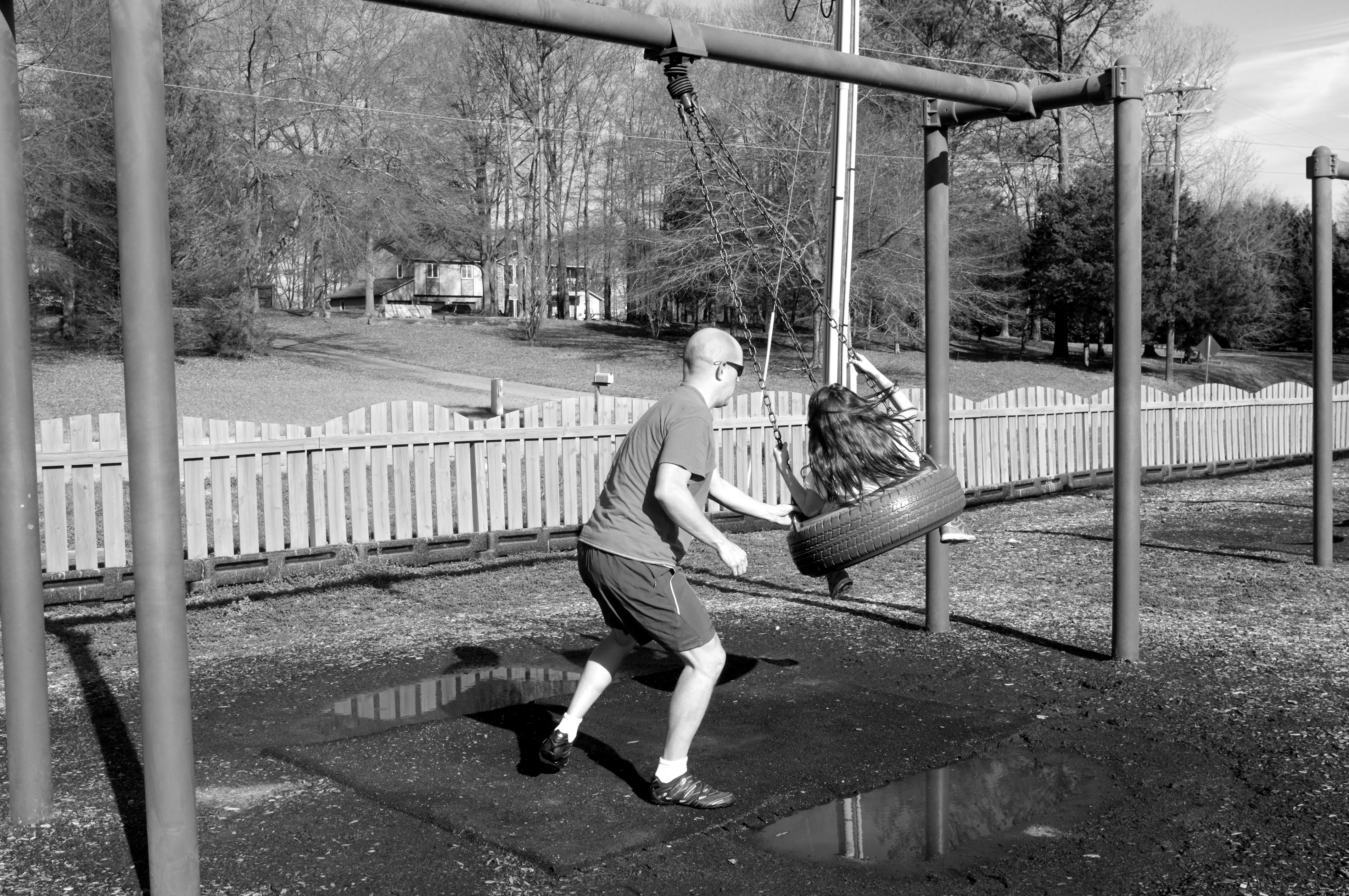
First a bit of playground fun. L has been growing more creative in her daring, but still needs a bit of help every now and then. Her grand idea of swinging down from the monkey in one fluid motion ended with frantic calls for help. Her insistence that she could take whatever spinning madness I could produce on the tire swing ended with her begging me, though not in a panic, to slow her down.

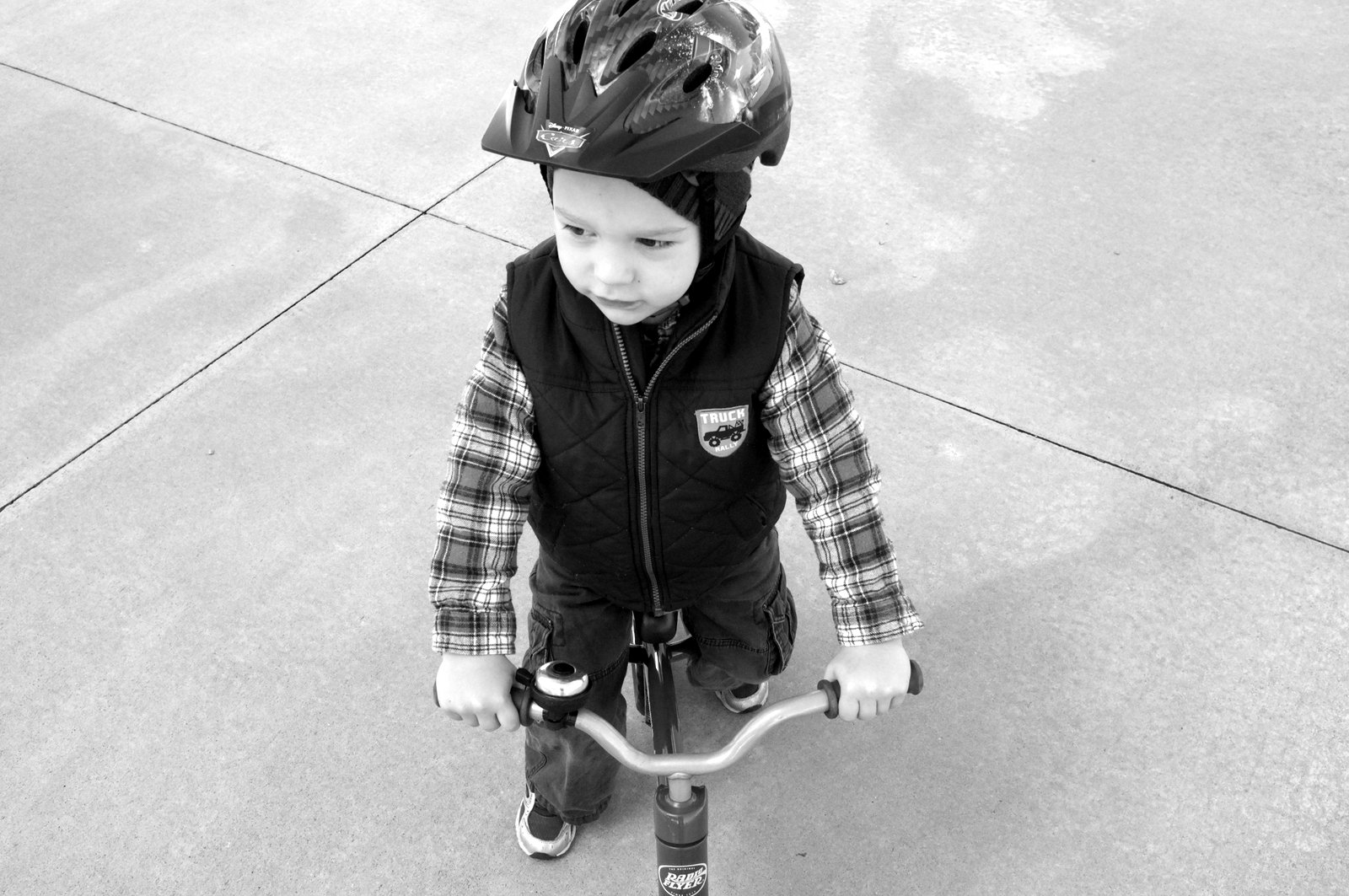
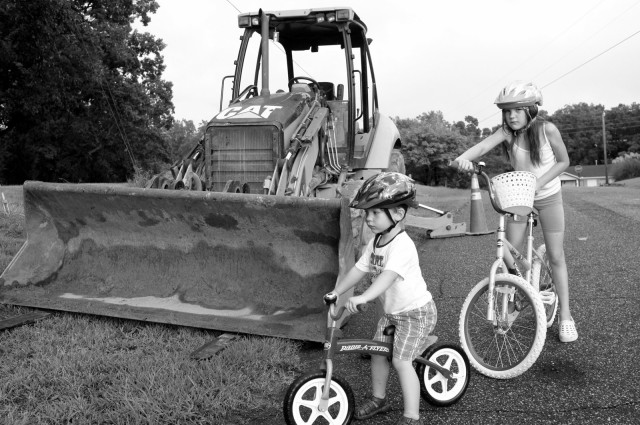
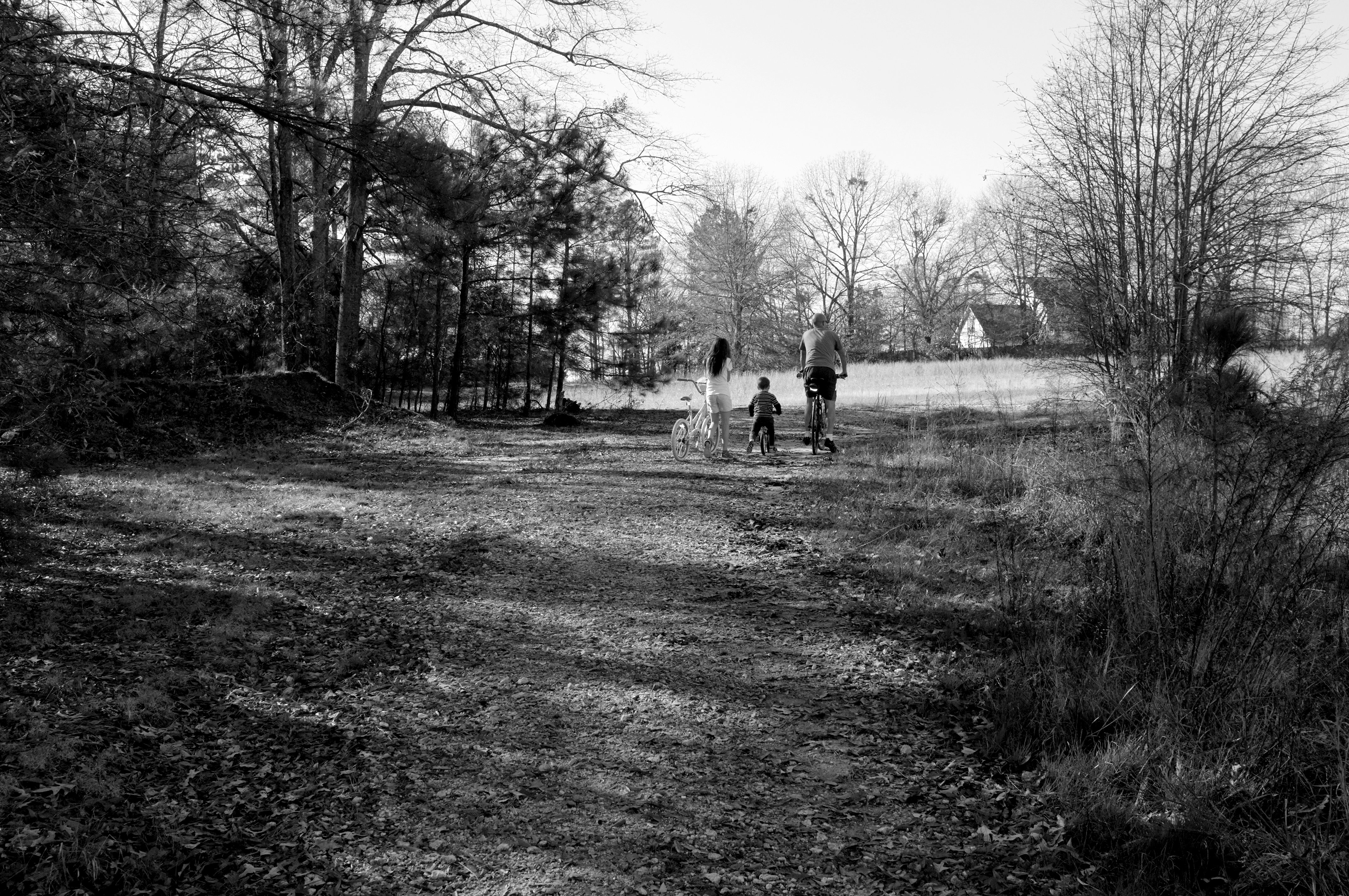
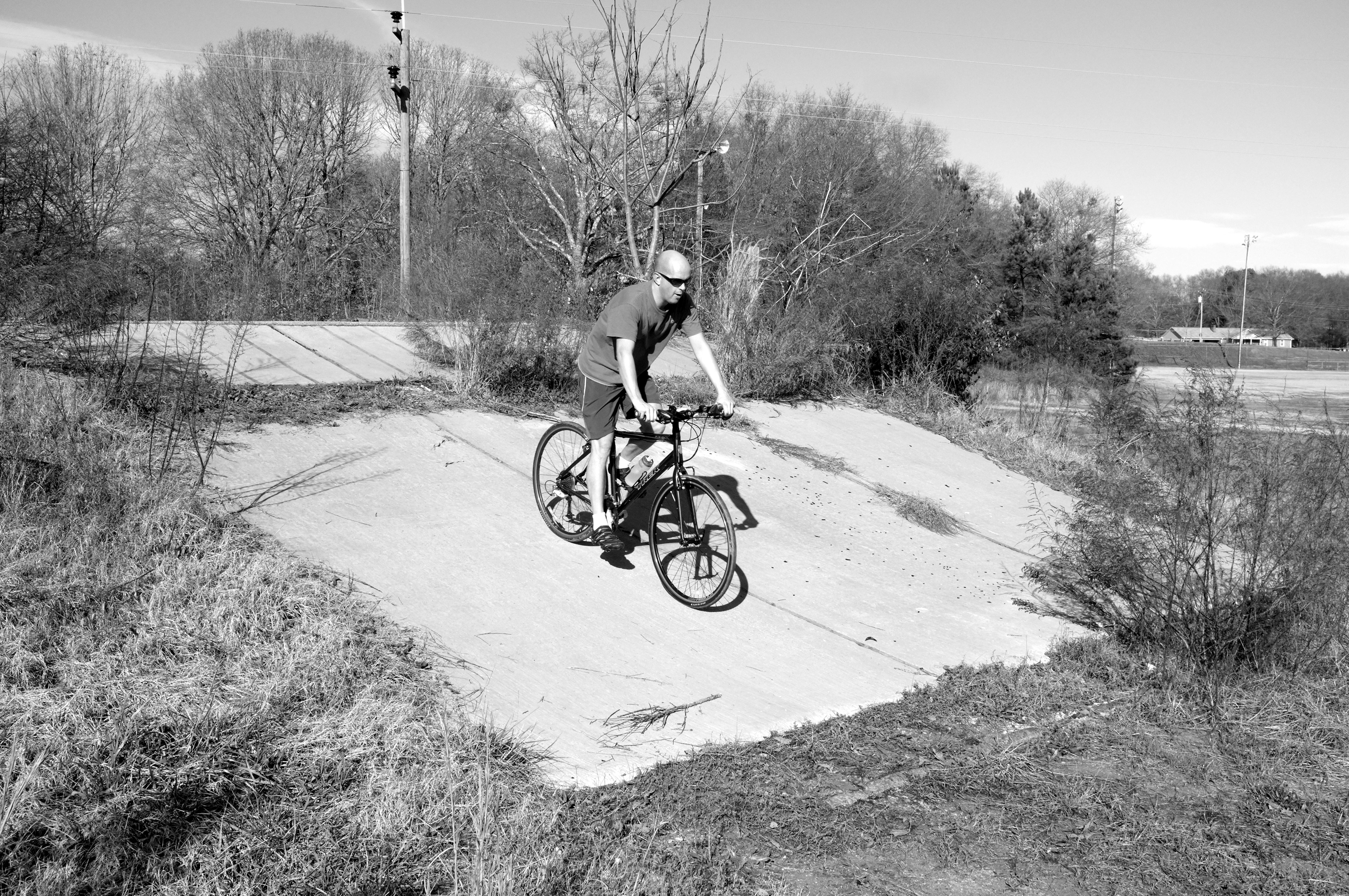
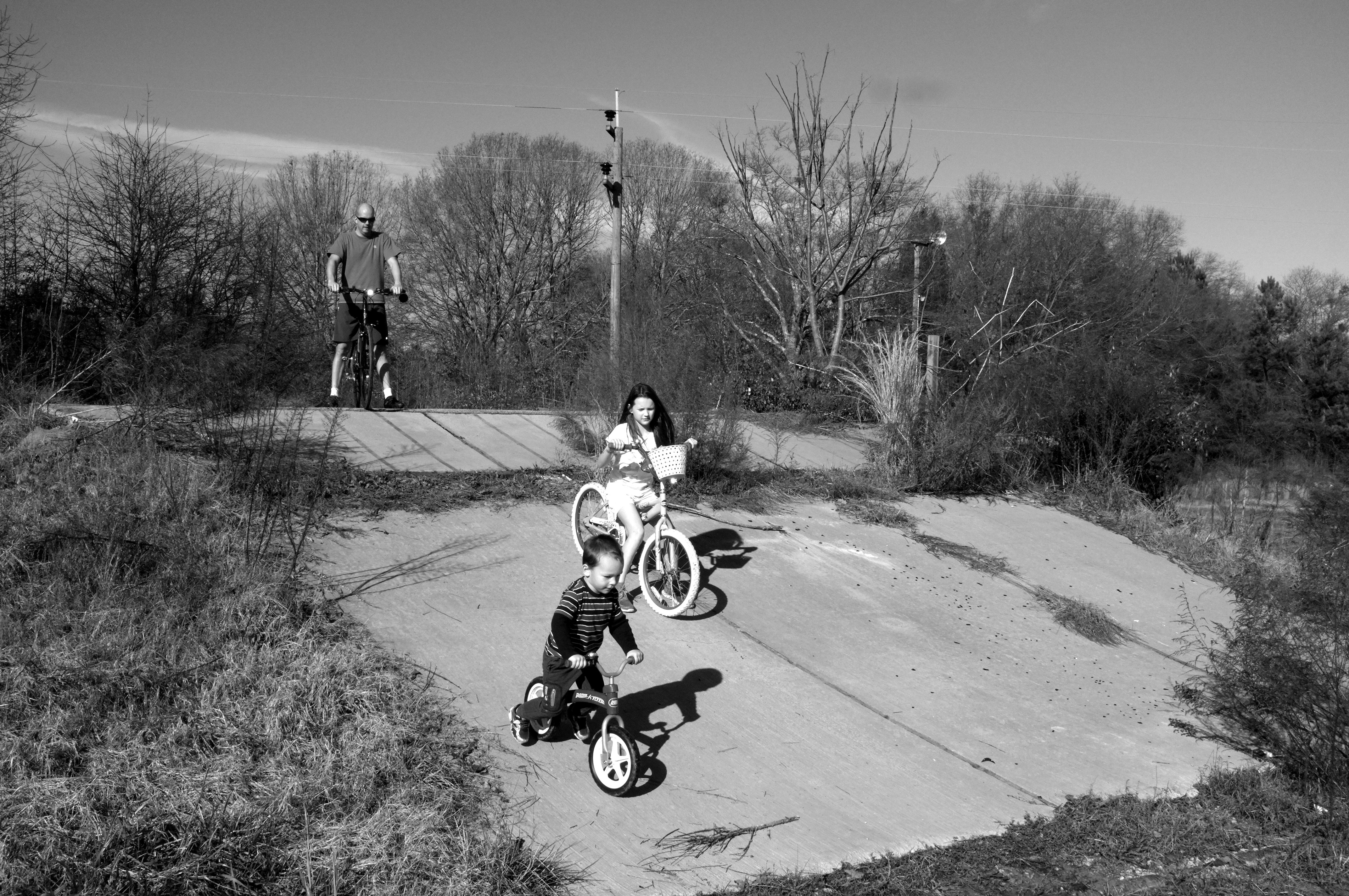
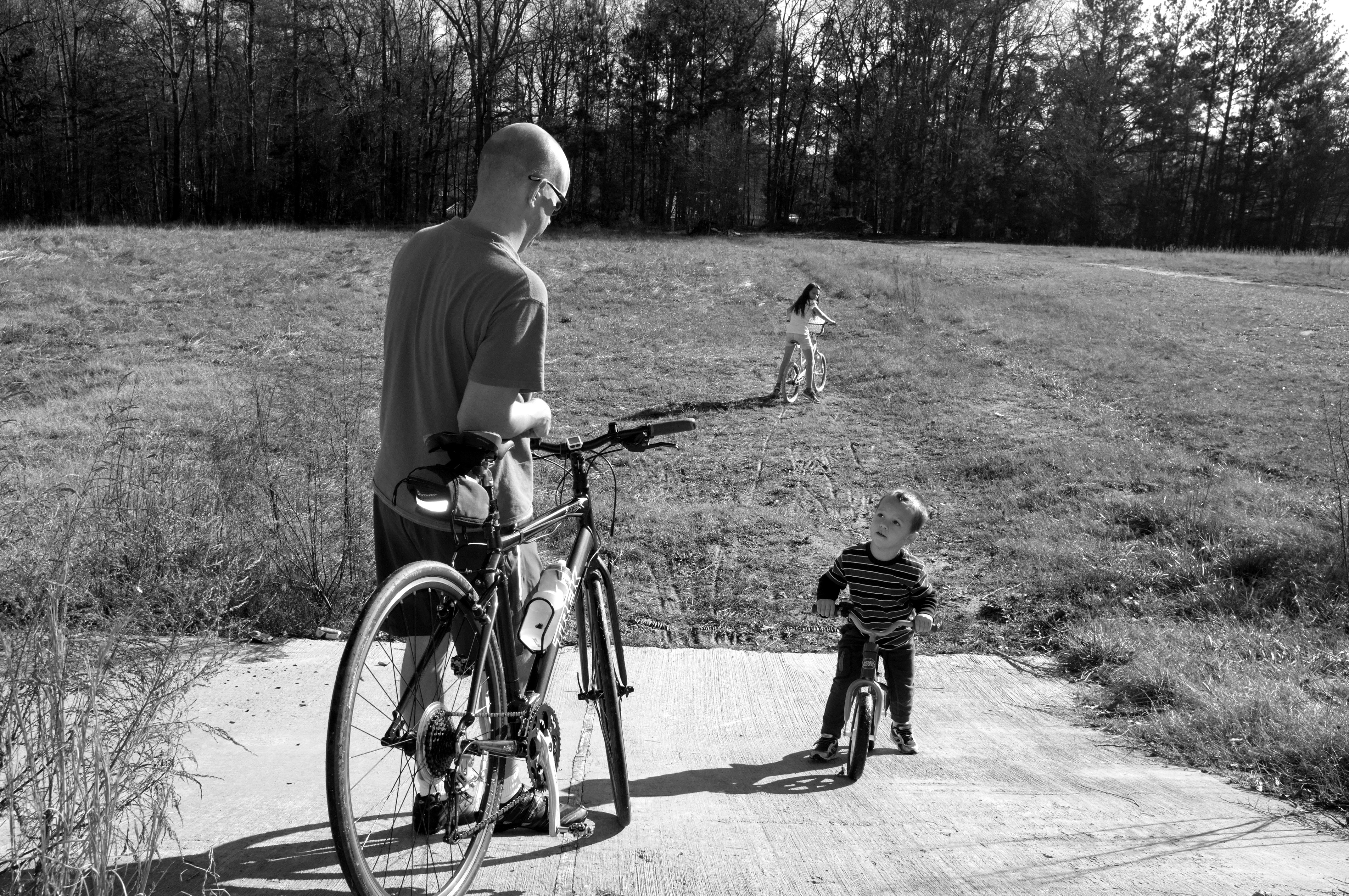
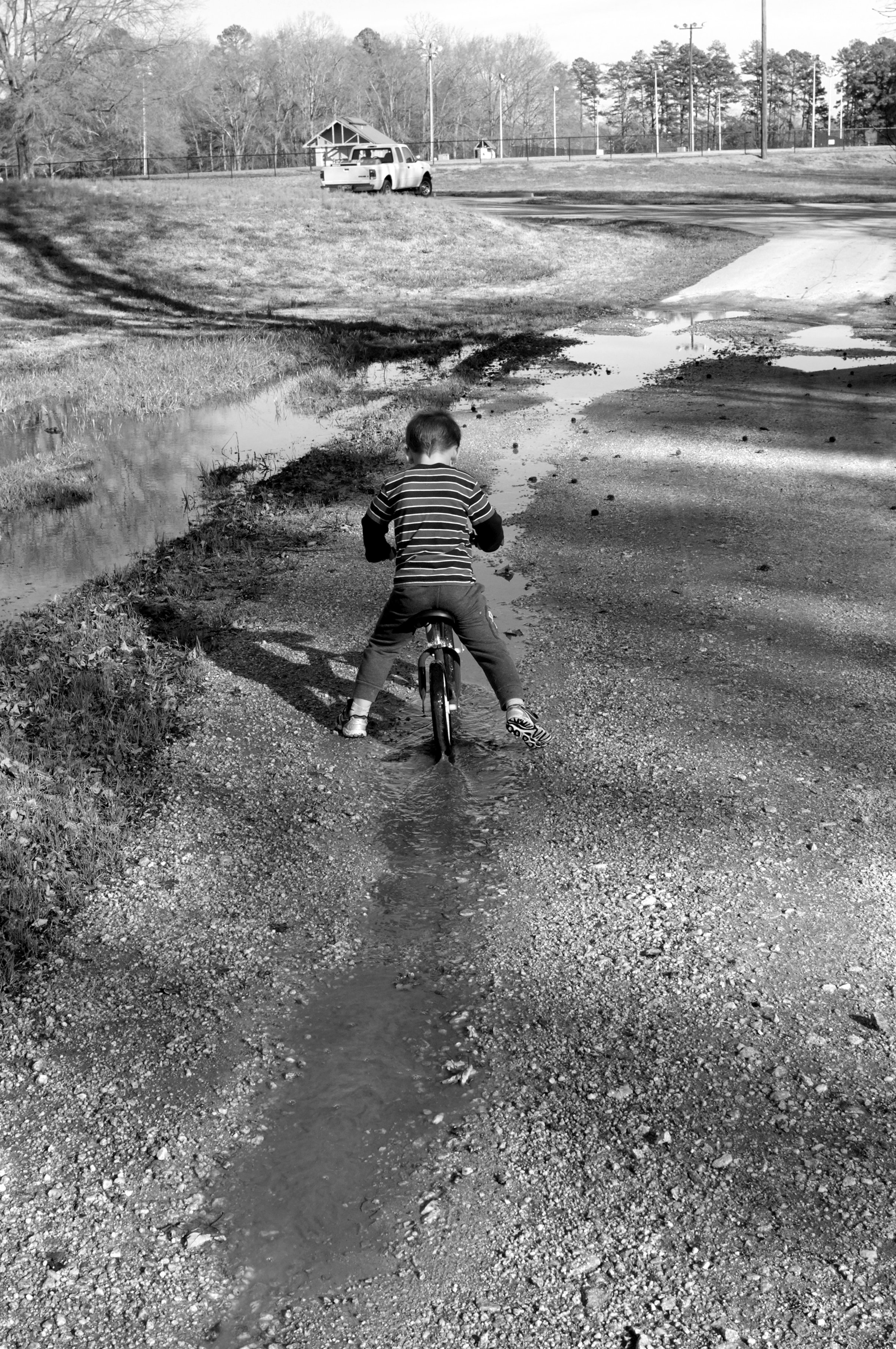
Afterward, bikes. It was fairly amazing to see how L has changed with her bike riding. Adjacent to the park we were visiting was an abandoned BMX race track, with only the starting gates remaining. The Girl was eager to try riding down the lower portion, below the gates themselves. Once I showed here how to navigate the lowered starting barrier, she rode down the concrete ramp seemingly countless times. And the Boy, as he always does, imitated her. Yet, also as he always does, his trusted his intuition and didn't even want to try going from the top of the ramp.

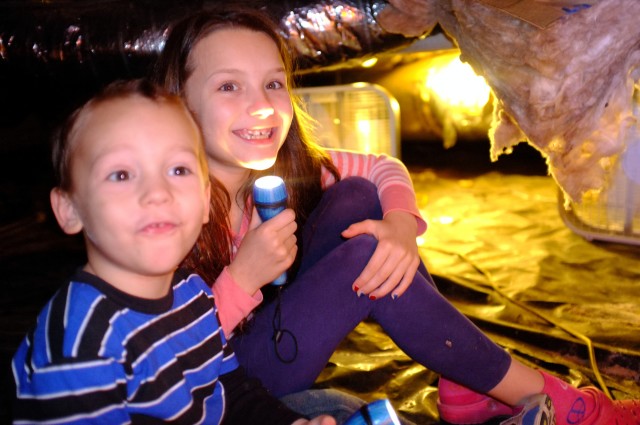
Finally, an odd adventure: we've had a leak in the crawl space, and I've tried a few things to figure out what was causing the leak exactly. When I suggested that the Boy could go into the crawl space with me to check the latest effort, he was literally ecstatic. "Daddy, I love the crawl space!" And as L always does, she wanted to join us. I took the camera down to snap a few shots of the damage (which was not as bad as I thought), and of course I had to take a quick picture of the kids in a once-in-their-lifetimes location.

13-DSCF7722

And while that bit of hanging insulation looks awfully close to them, it really wasn't -- an effect of the lens.