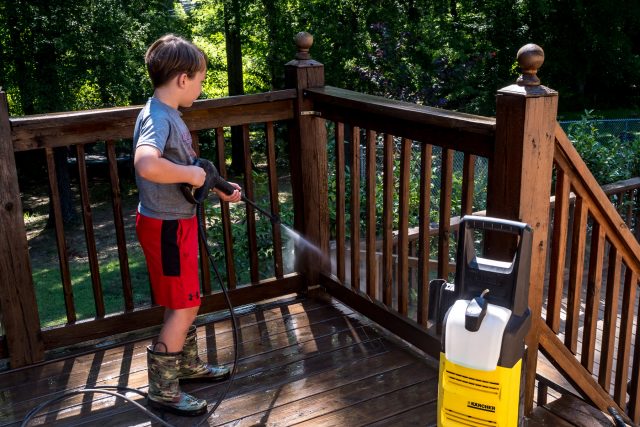
matching tracksuits

fun in threes, sometimes fours

Lipnica Past

Through a social media account dedicated to publishing old photos of Orawa, the region of Poland where I lived for seven years, I've discovered photographs of Lipnica Wielka from a time long before I was born, not to mention before I came to know and love the place.
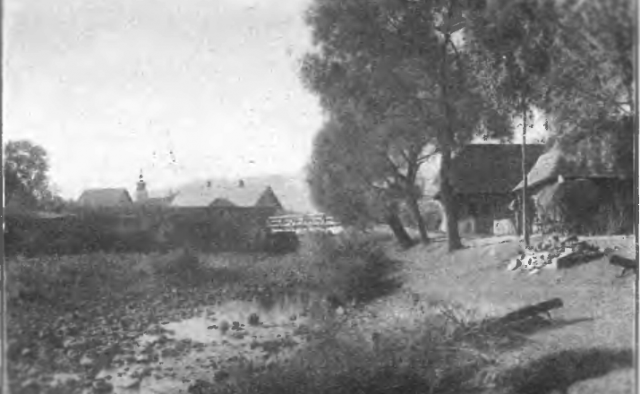
Approaching centrum, 1920

Most of the photos are of the centrum area, which makes sense: it is literally the center of the village. From centrum, the village now stretches about four kilometers toward Lake Orawa and six kilometers to the base of Babia Gora, giving the name centrum both a geographical and functional significance. During the time these pictures were taken, those distances might have been different, but I doubt it: instead, there was likely simply more room between homesteads.
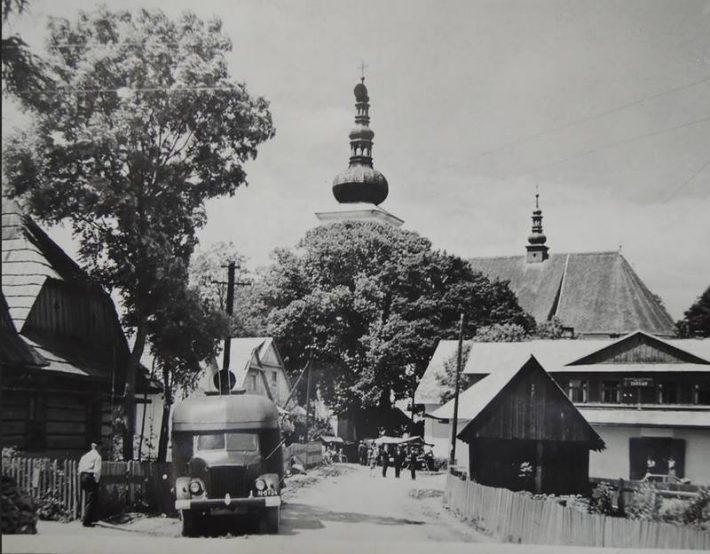
Lipnica in the 1960s

The shot from the sixties -- the second and third houses on the left are still there. I've visited friends in both of them.

In one of them lived two of my students. I'd gotten to know their father, F, as he would come to a shop my friend S owned when I was there hanging out, drinking a beer, chatting with my friend. F was always insisting that I would have to come to visit him for a coffee; I was always putting it off.

I did visit him once. I was leaving S's store when an eruption of yelling and what sounded like physical fighting spilled into the street, and F's youngest son came running out, a look of panic and fear on his seven-year-old face. More yelling. I pushed through the gate and walked to the house. "Wujek!" I called out -- I'd taken to calling him "Uncle" as my friend S did. "I came for that coffee you promised." Just then, his son -- whom I taught -- came out of the house yelling back at him, his father in pursuit, his mother tugging at her husband. "Wujek, I came for that coffee," I repeated, trying to sound as if I had no idea what was going on and just happened to choose that moment to take him up on the offer.

F saw me, stopped, and calmed immediately. "Get out of here," I said in English to his son, "and take your little brother with you."

Soon, we were sitting at a small table in their kitchen, his wife making coffee. When F left the room to retrieve something to show me -- pictures? some kind of manual? -- I said quickly to his wife, "Sorry to come in like this. I just thought I might be able to help." The corners of her mouth arched upward slightly but said nothing.
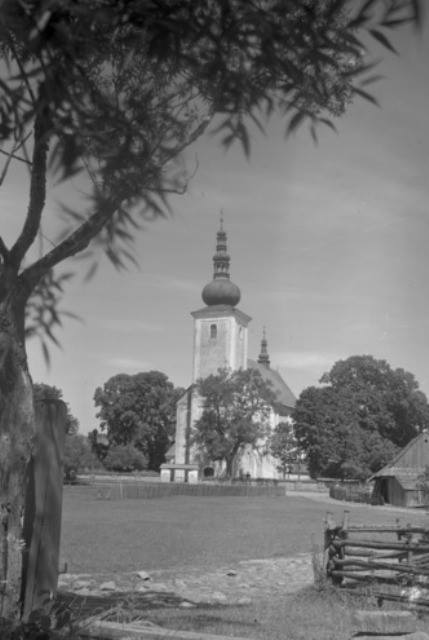
Church in 1932

The church in the thirties: that view is impossible now. There are several houses there, many of which weren't even there when I first arrived in 1996. The village is expanding, with houses being built off the main road, which necessitates new roads, new infrastructure, new, new new. Such a strange juxtaposition to the numerous half-completed homes that dot the village -- all villages in southern Poland -- that have stood as empty shells for years, decades even, after the family abruptly moved to America. That stone road, though, is still there albeit paved.
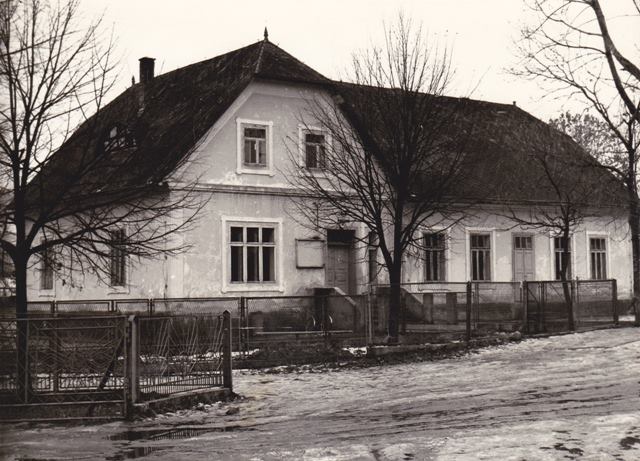
Old school in Lipnica

Two images look strikingly similar to my first encounters: the old school in Lipnica looked exactly the same when I arrived. It was no longer in use, with the elementary school it used to house in the lower floor of the large, then-new school complex where I taught high school students. The volunteer fire department band used upper room for rehearsals, though, and many a summer evening, when all the windows were open, I could easily hear them in my apartment in dom nauczyciela behind it. Sometimes heated discussions replaced the music, but by the time my Polish was good enough to scratch out some meaning from my eavesdropping, they'd stop rehearsing there.
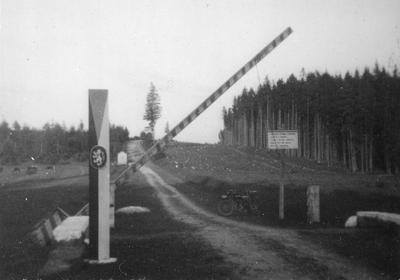
lipnica1930-7
Border of Poland and Czechoslovakia in the 1930s

Except for the dirt road, the border looked almost identical as well. This was the small crossing that I never dared use because there was never any officers there to document my departure from Poland and my arrival to Slovakia. I was terrified at the thought of being caught in Slovakia without proper stamps in my passport or caught coming back into Poland without the appropriate stamps.

Once, I rode my bike there with K, and feeling mischevious, I stepped over the border briefly. If memory serves, K assured me that we could continue on the road without any worries, but in a way, that doesn't sound like K.
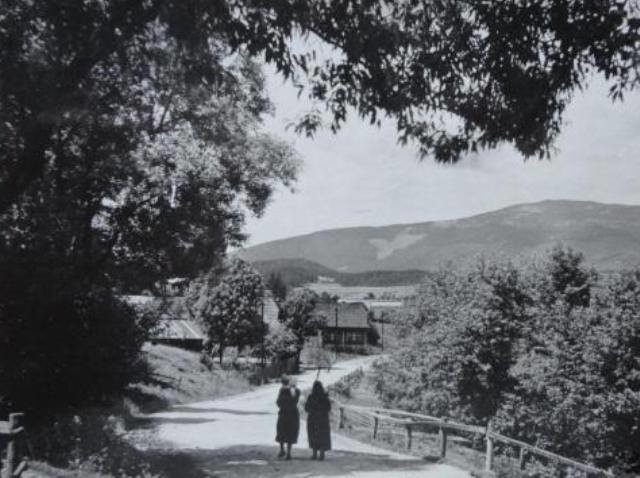
lipnica1950s
Lipnica in the 1950s

Finally, there is a portion of the road that I recognize not because of buildings or anything else; I simply recognize the curve and slope of the road, with Babia Gora just behind it. So odd that I can recognize a coupe-hundred-meter stretch of road in a small Polish village simply from that.

It was the route I walked countless Saturday nights with friends as we headed to a discoteque housed in the empty rooms above one of the bakeries in the village. There was always such a mix there:

  • Teens who were not yet of age (i.e., my students) who shouldn't have been in there, but what else are they going to do?
  • Men in their twenties and a few in their thirties -- occasionally, older -- who went to drink.
  • Men in their twenties and a few in their thirties -- occasionally, older -- who went to drink and flirt with girls entirely too young for them.
  • Young ladies who'd come in groups to dance.
  • Young ladies who'd come in groups to dance and flirt.

I sat with my friends, drinking beer, talking to folks (occasionally students), watching people, making mental notes that eventually found their way into my journal.

All those memories embodied, strangely enough, in that little curve of road.
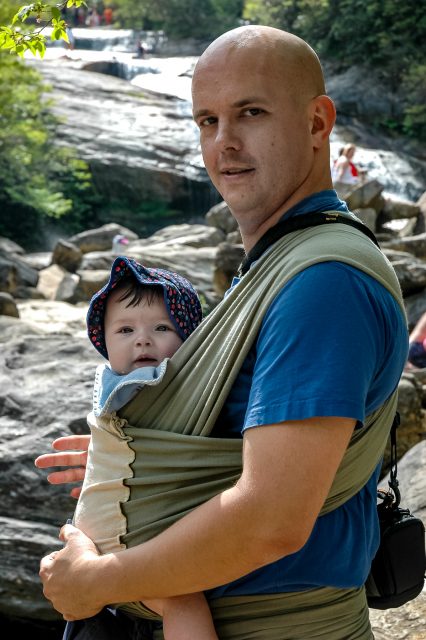
Graveyard Fields

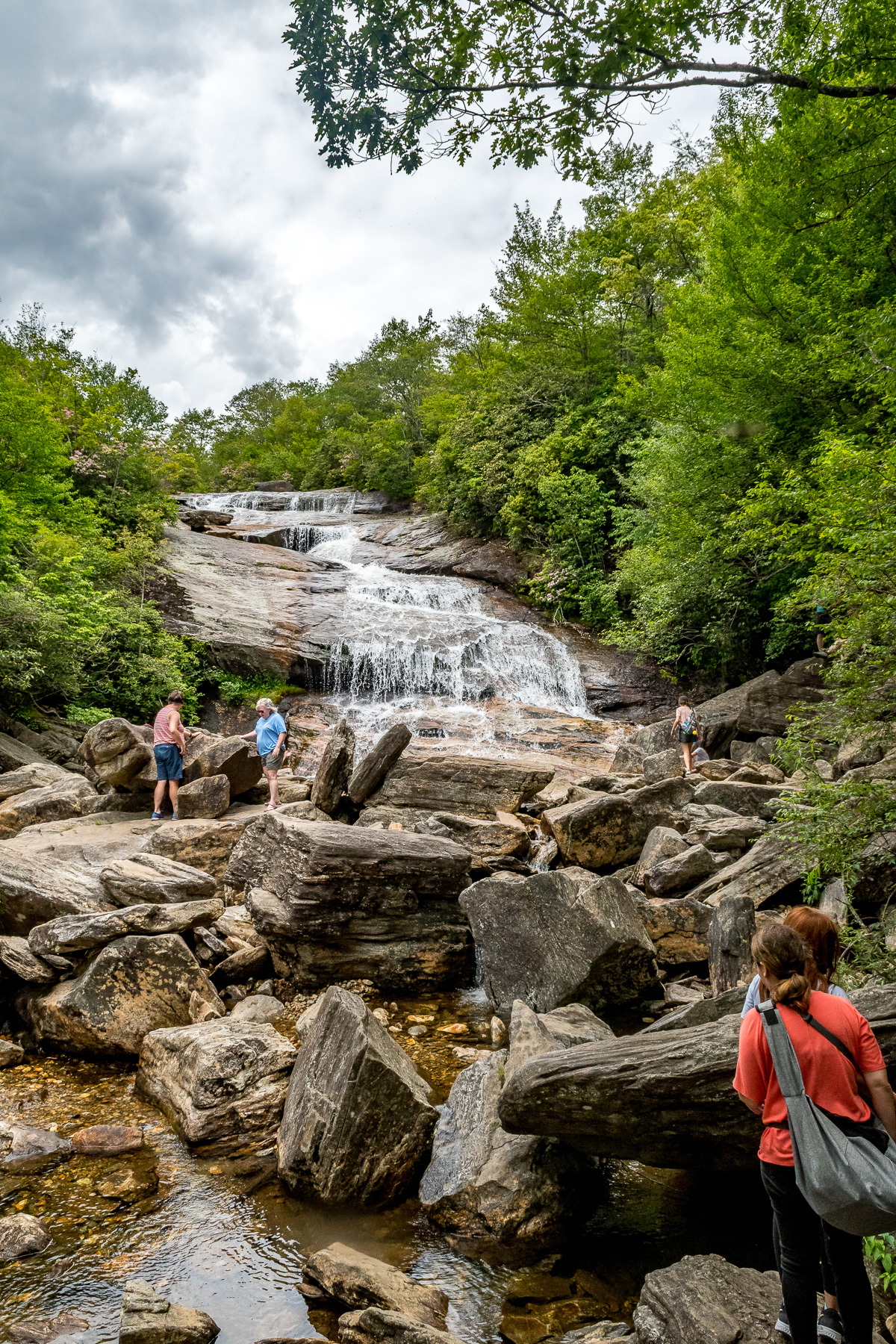
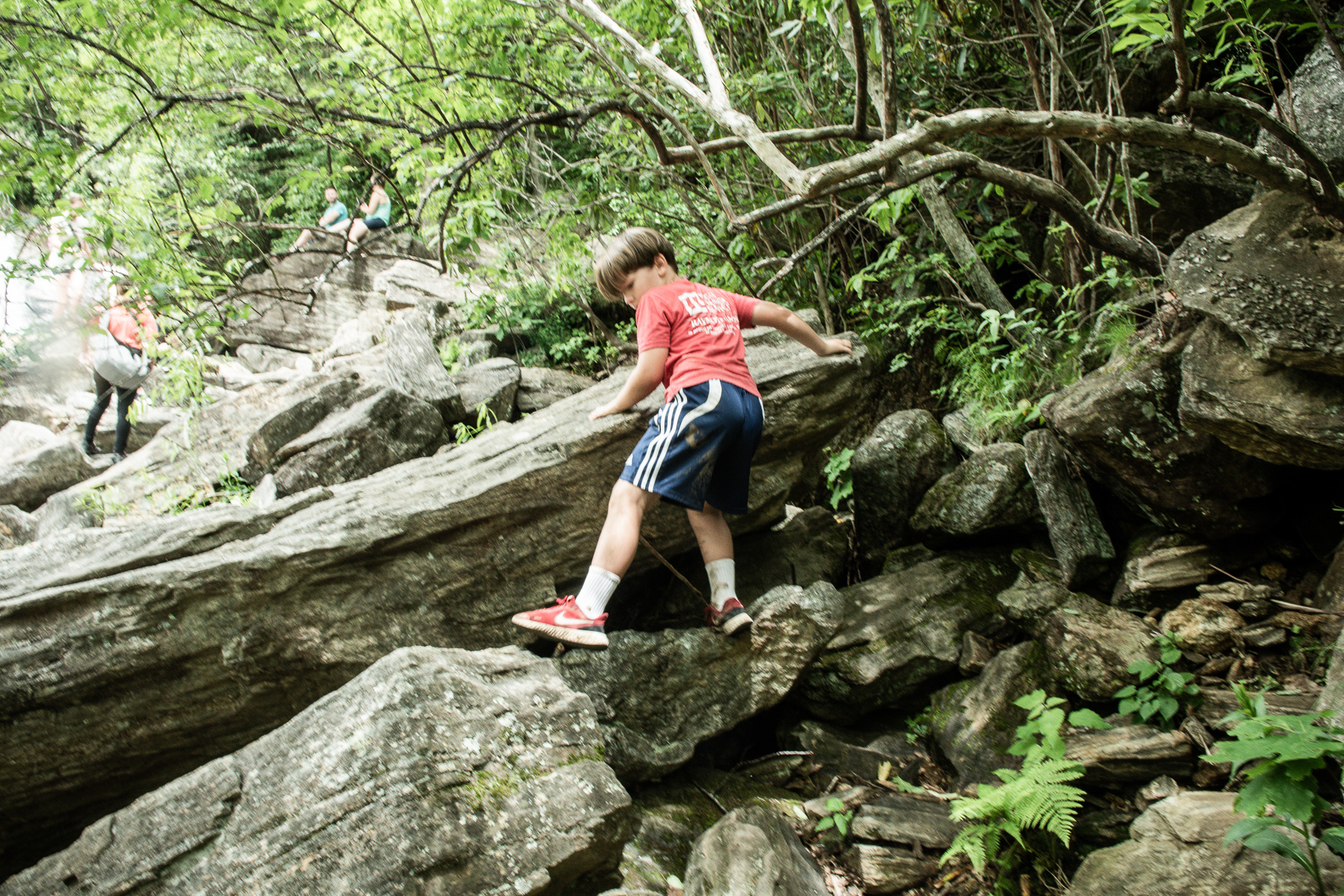
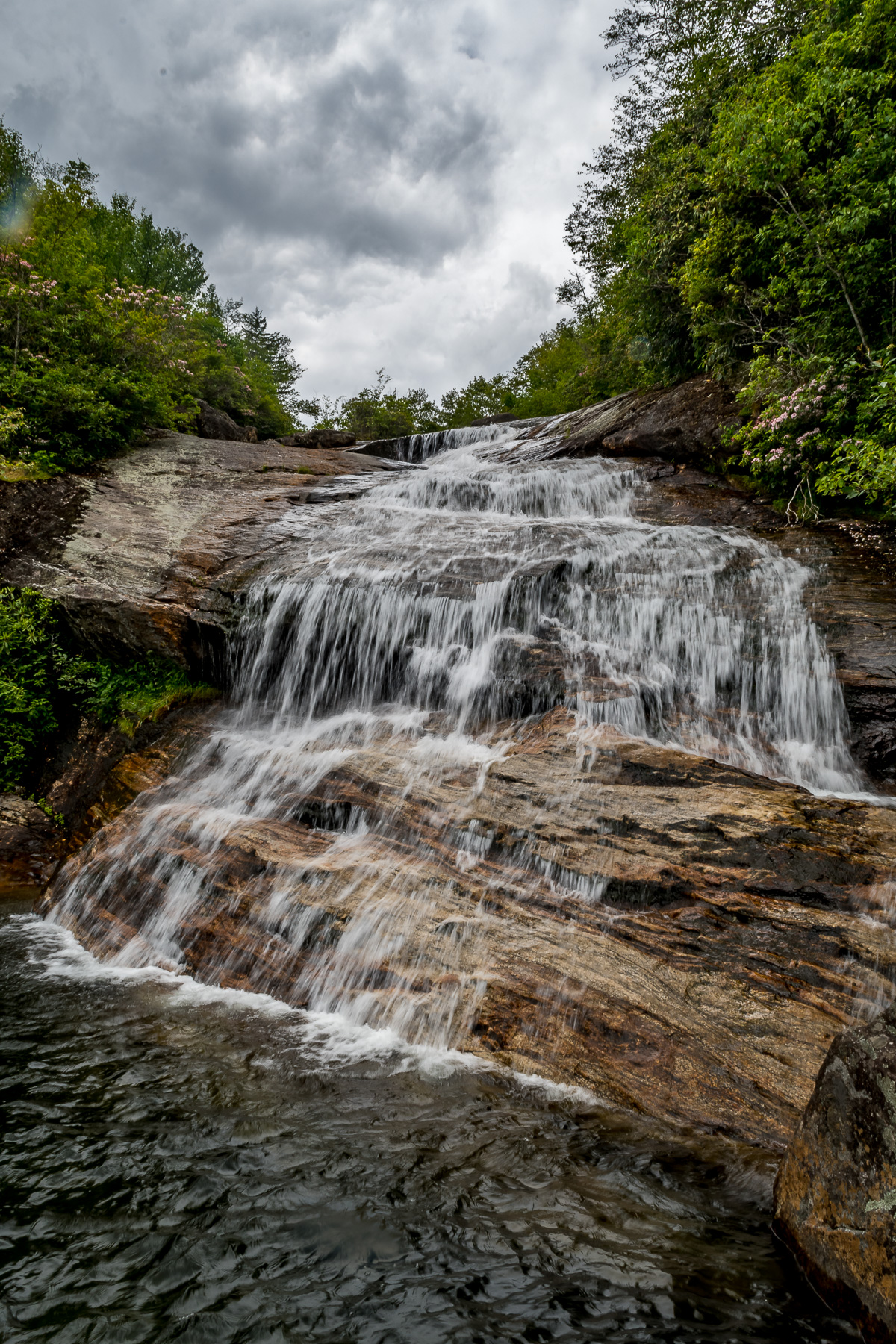
We hiked Graveyard Fields off the Blue Ridge Parkway twice within six months thirteen years ago:

Graveyard Fields

Repeating Ourselves

K and I are certain we went a third time -- though we think it was actually our first time. There's no mention of it on MTS; I can't find any pictures of that trip. Still, K and I are certain we went.

This morning, we went for the first time in about thirteen years. The last time we went, L looked like this

Today, when we made it to the same location, I had the Girl stand roughly in the same spot to take a picture:

Where did that little girl go? We'll be asking the for the rest of our lives, I realize, but every time I ask that question again, I'm surprised again.

Playdate

Out Back

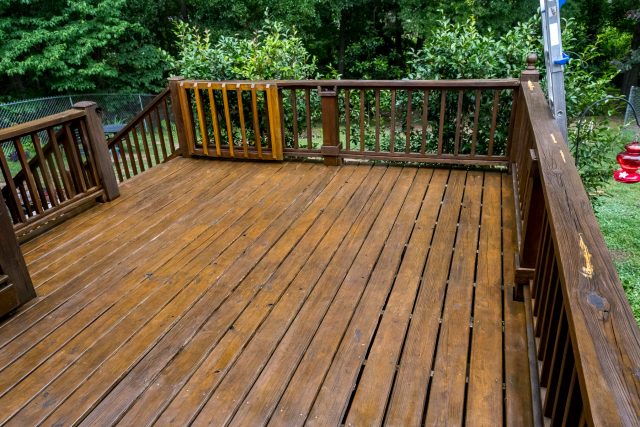
Deck Plus

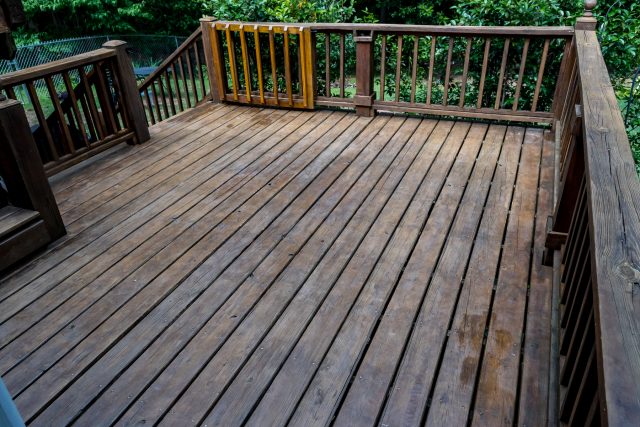
The deck is finished -- more or less.

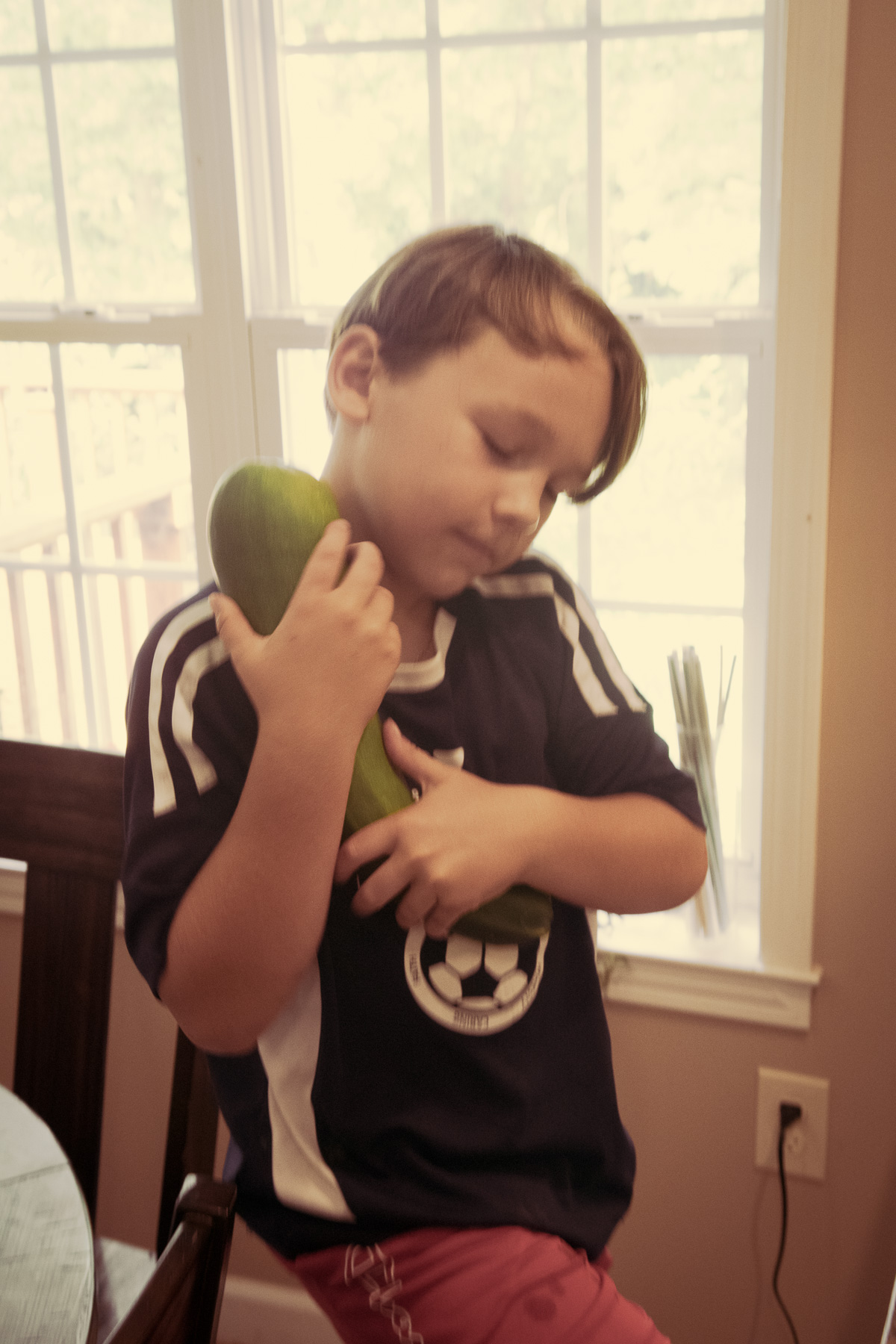
The zucchinis, too.

A couple hid under leaves until they got ridiculously big.

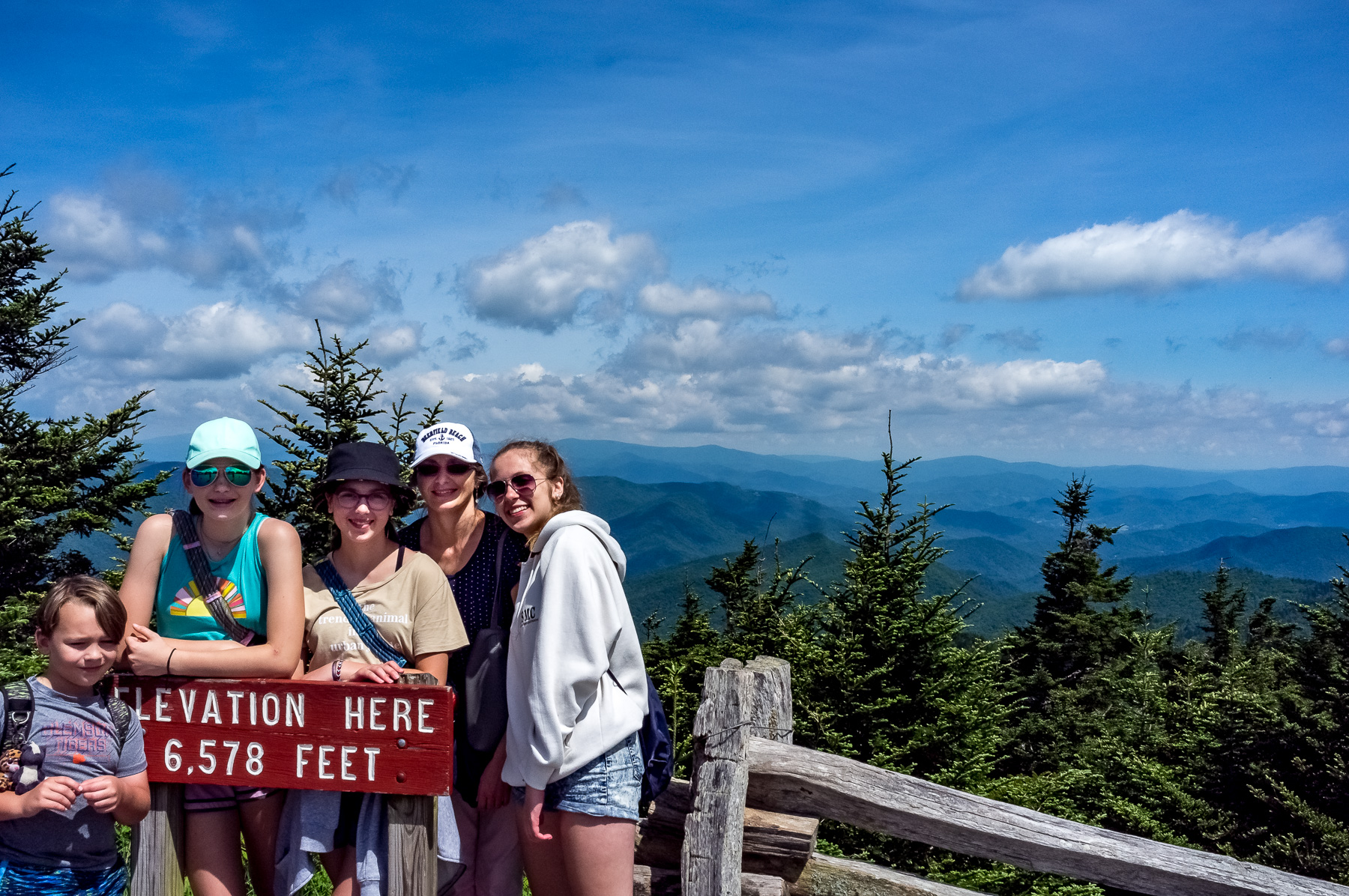
Mount Mitchell

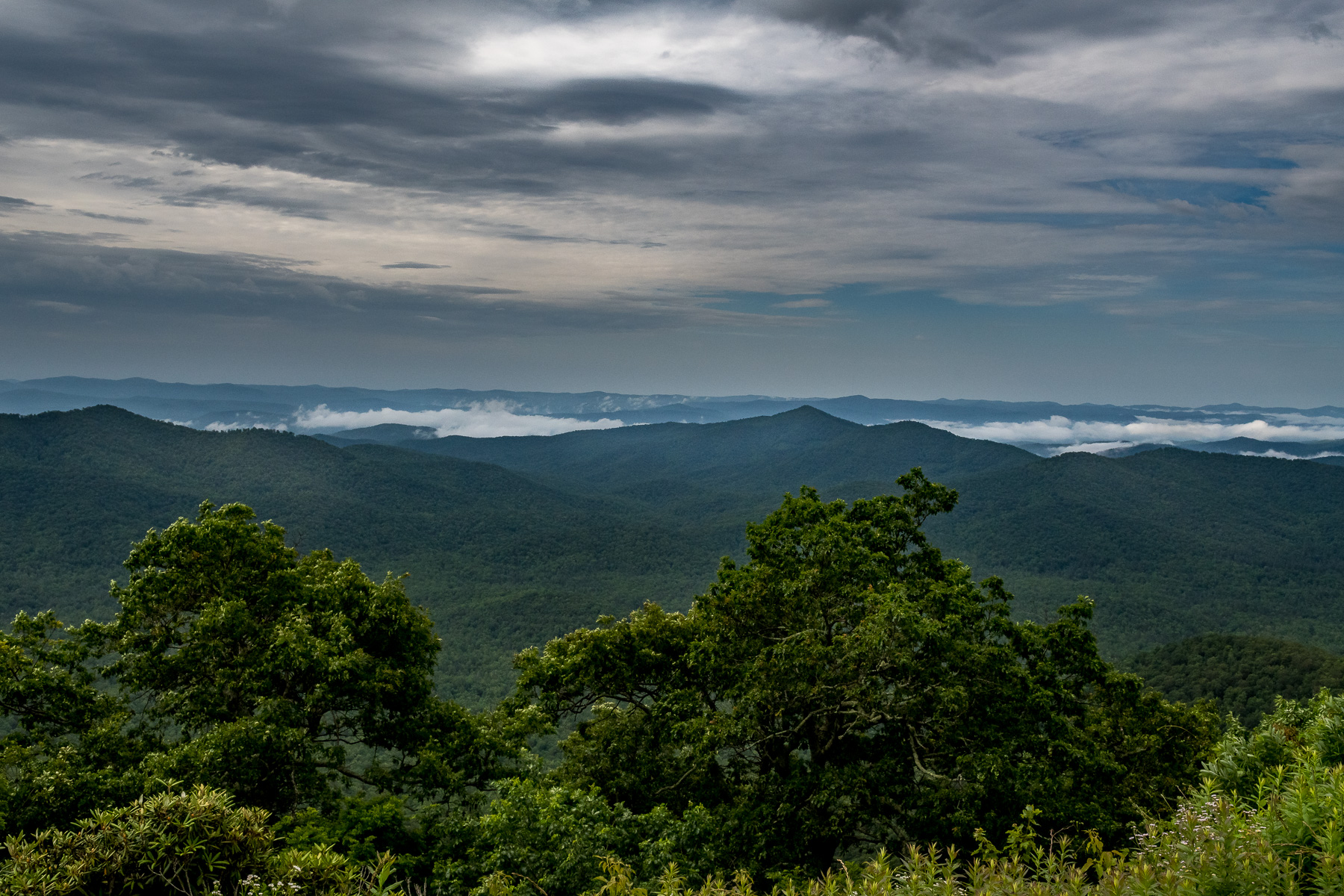
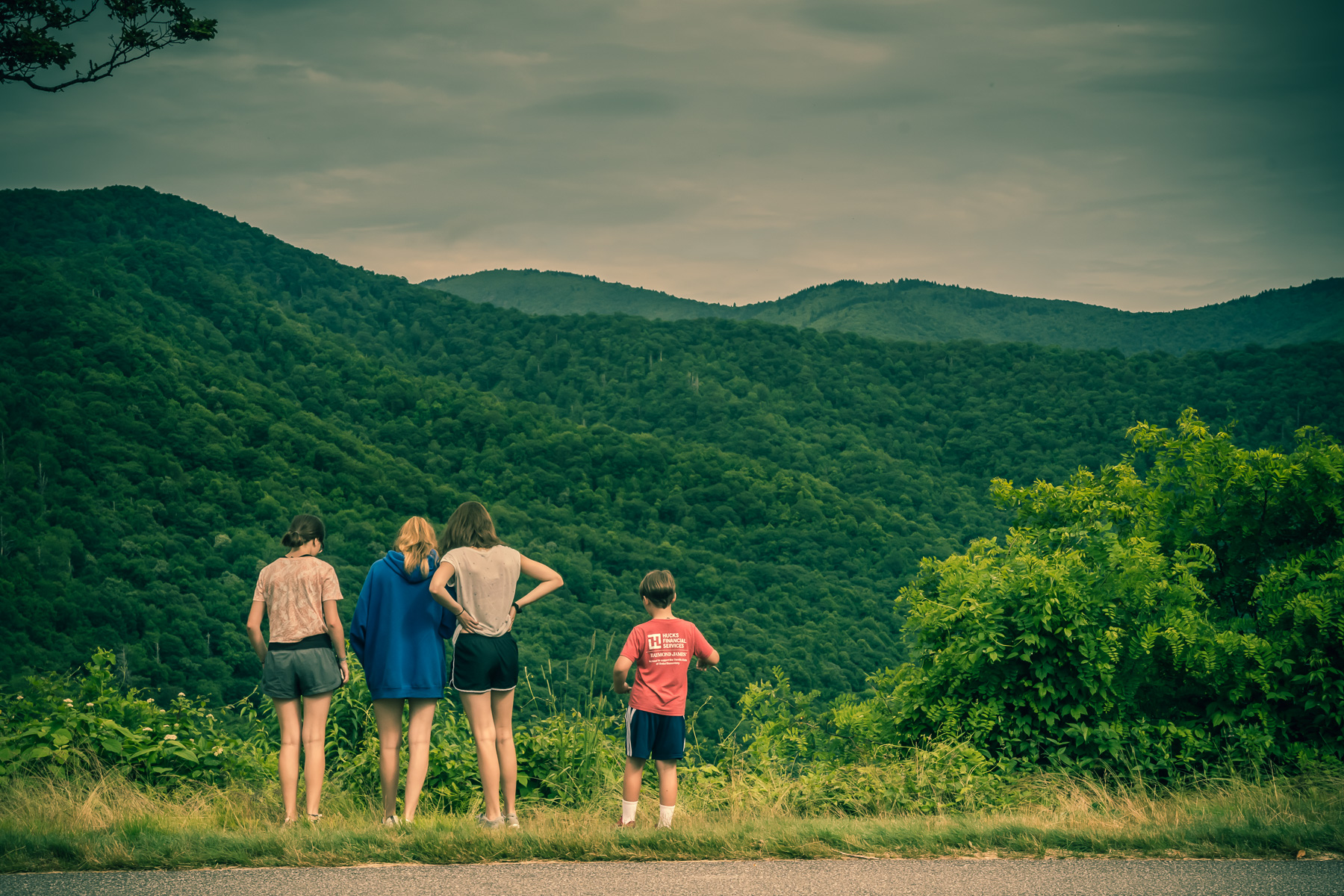
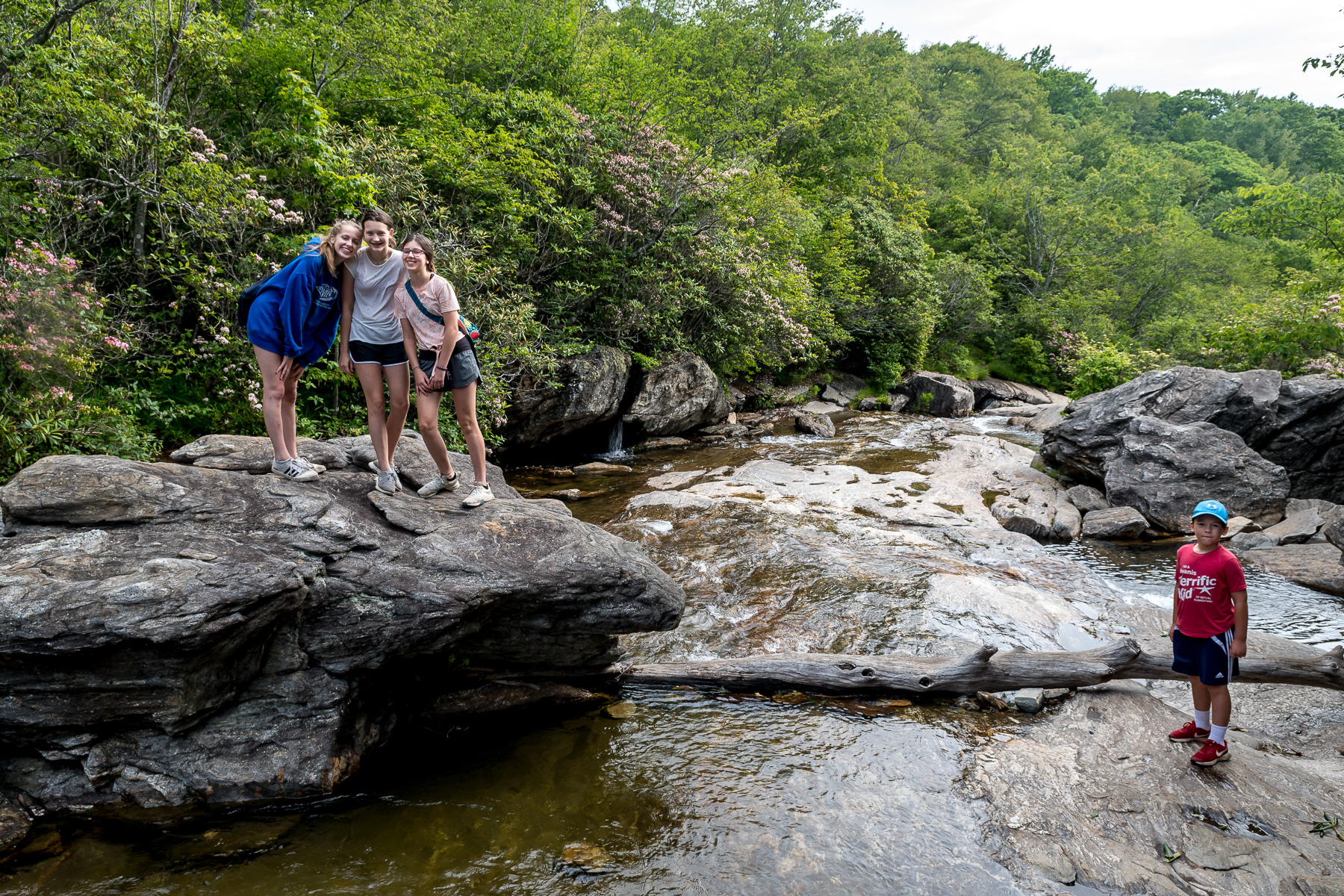
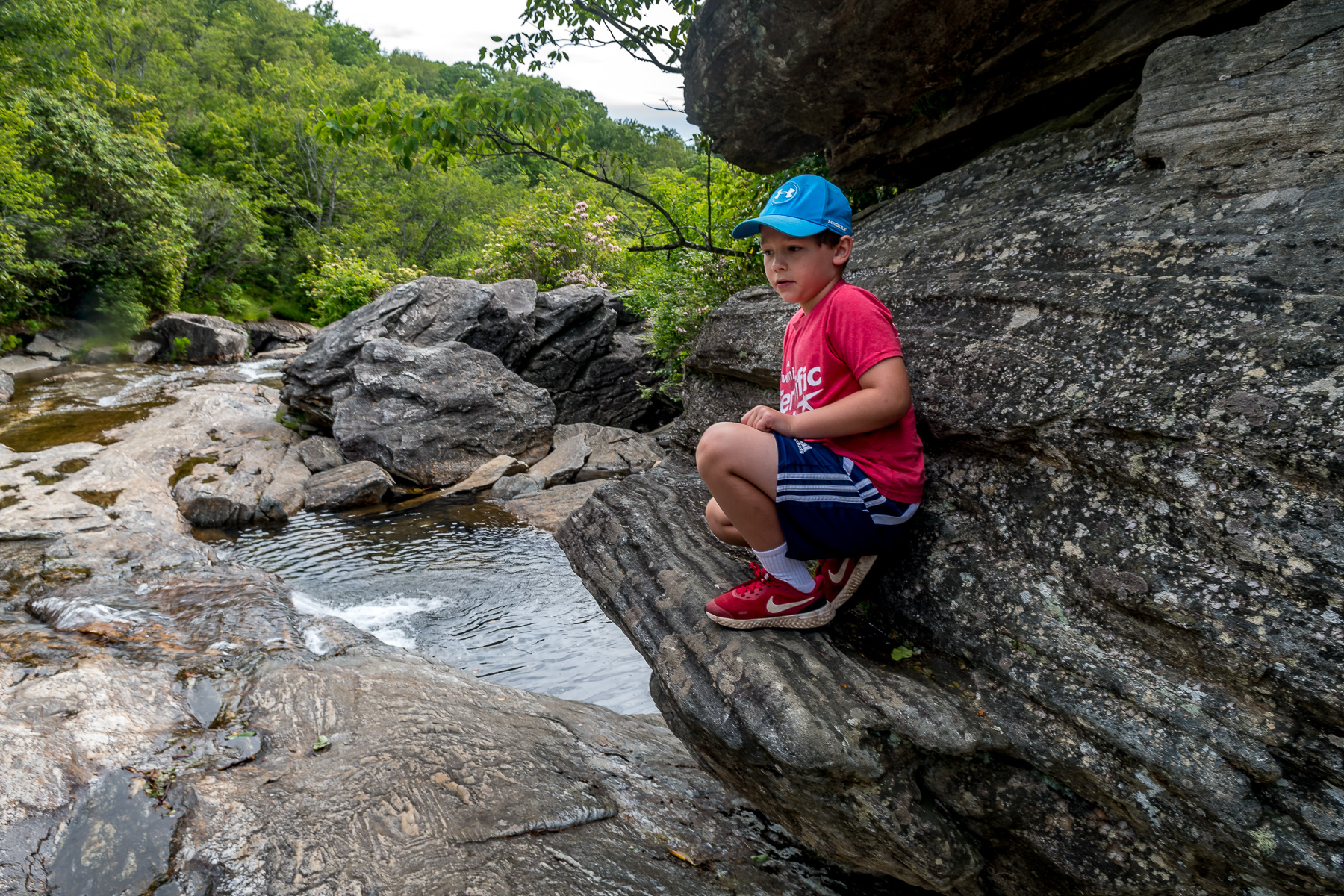
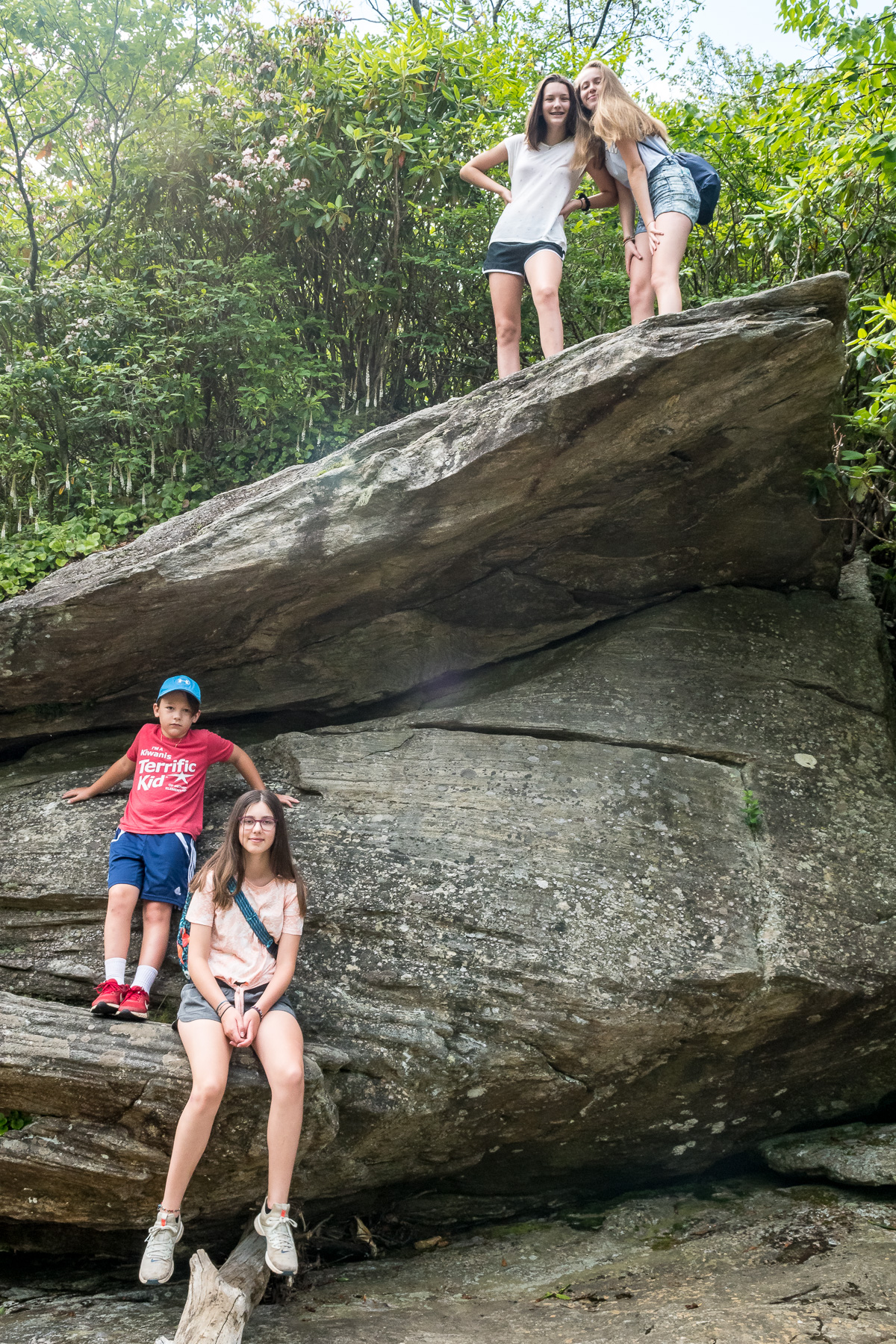
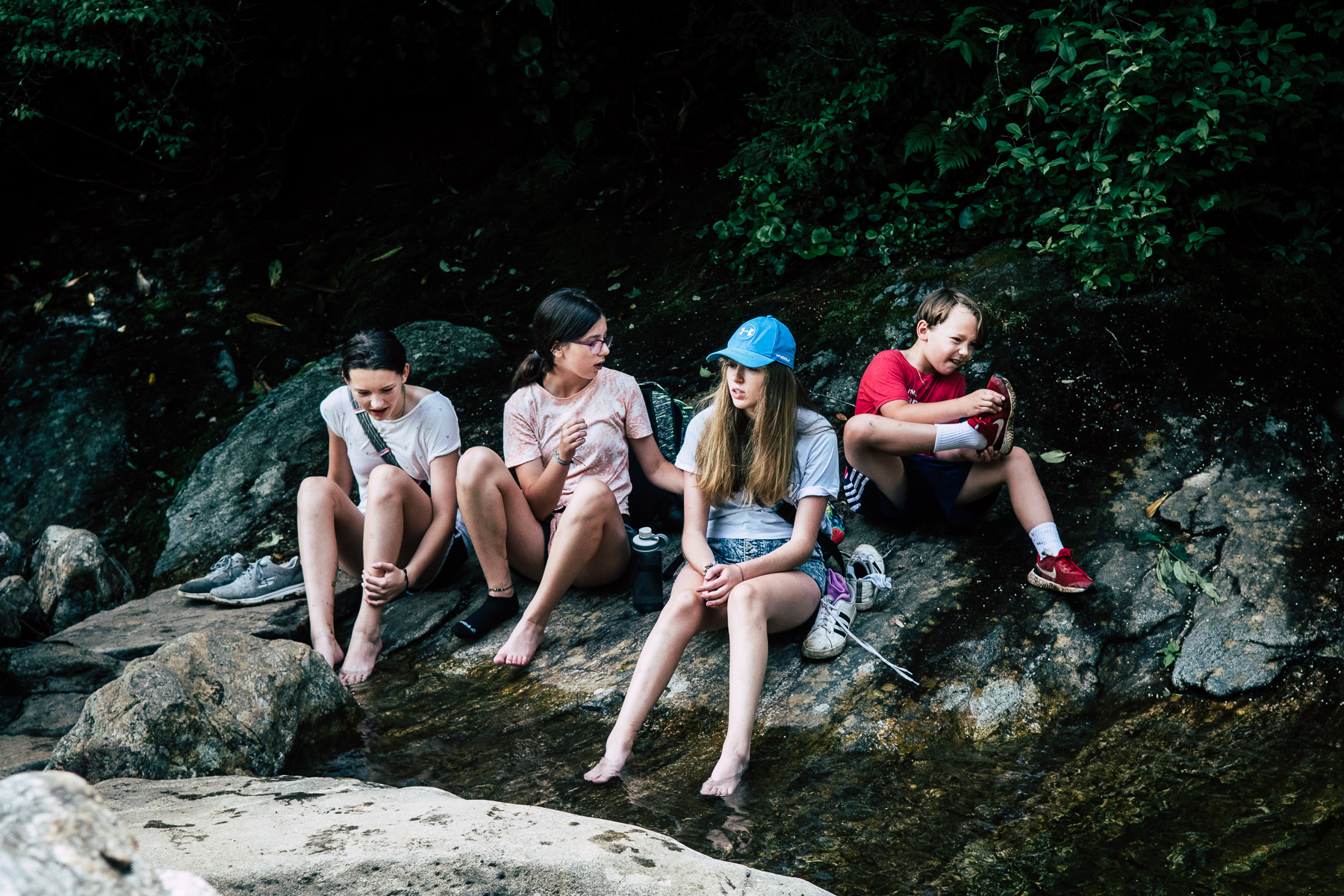
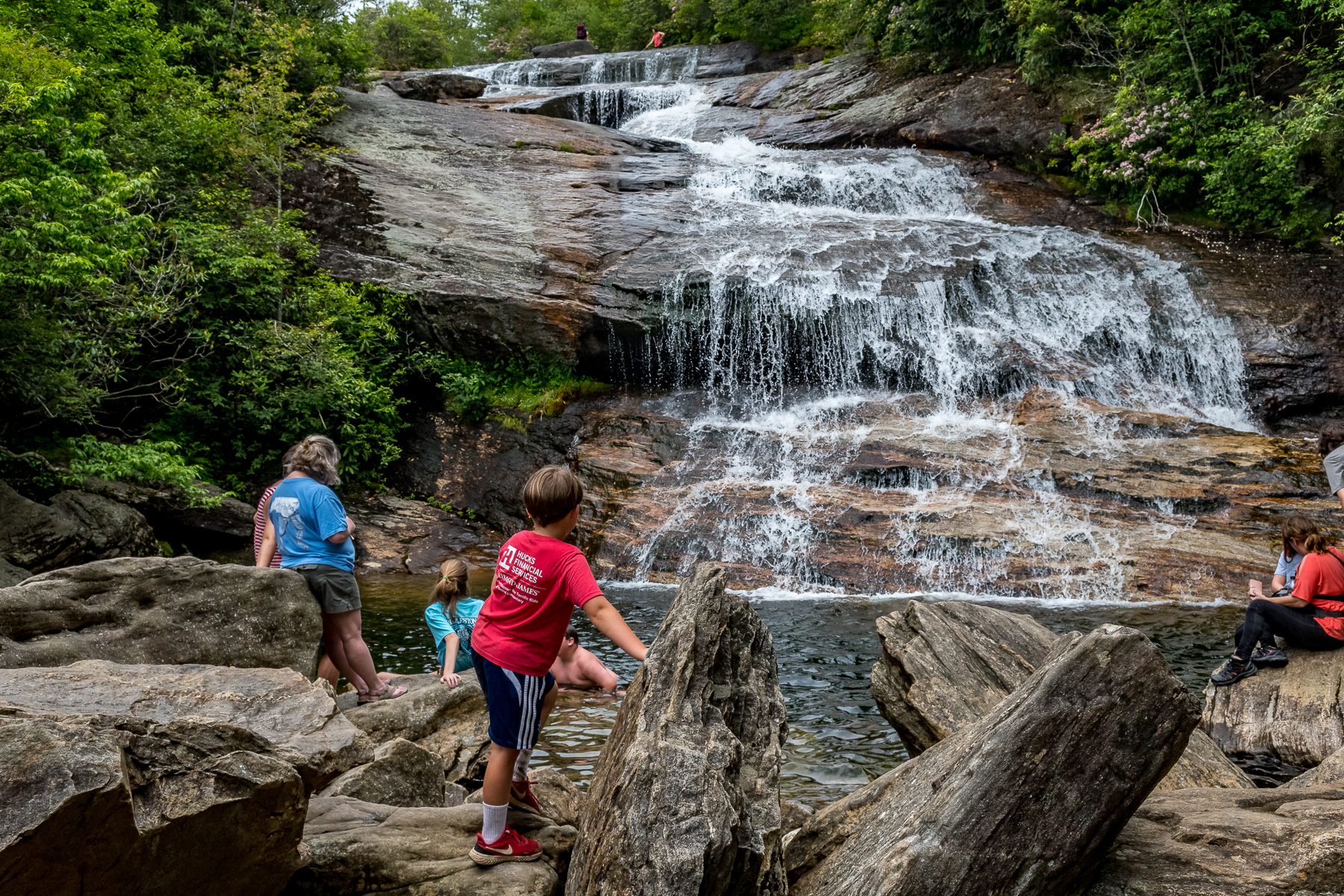
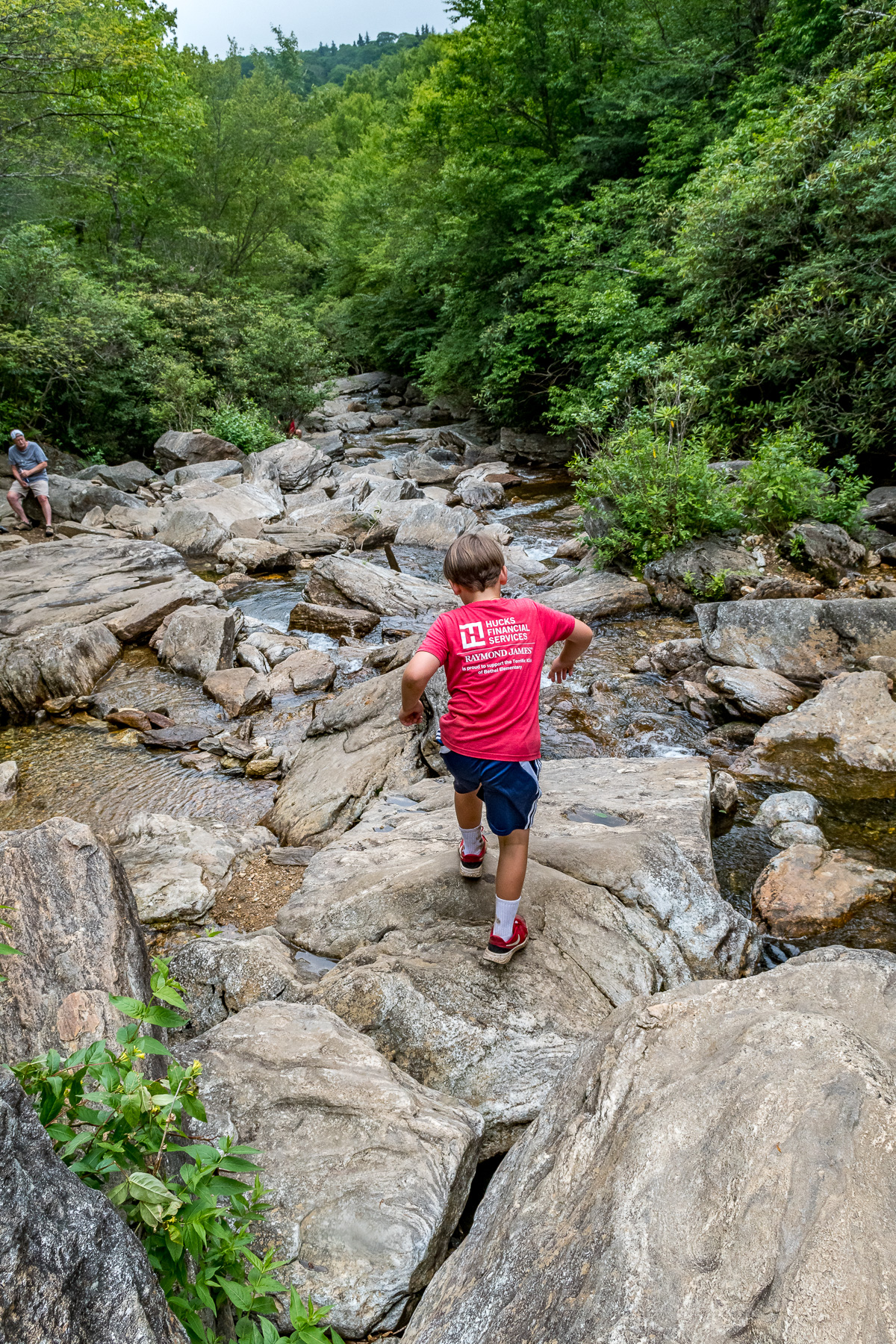
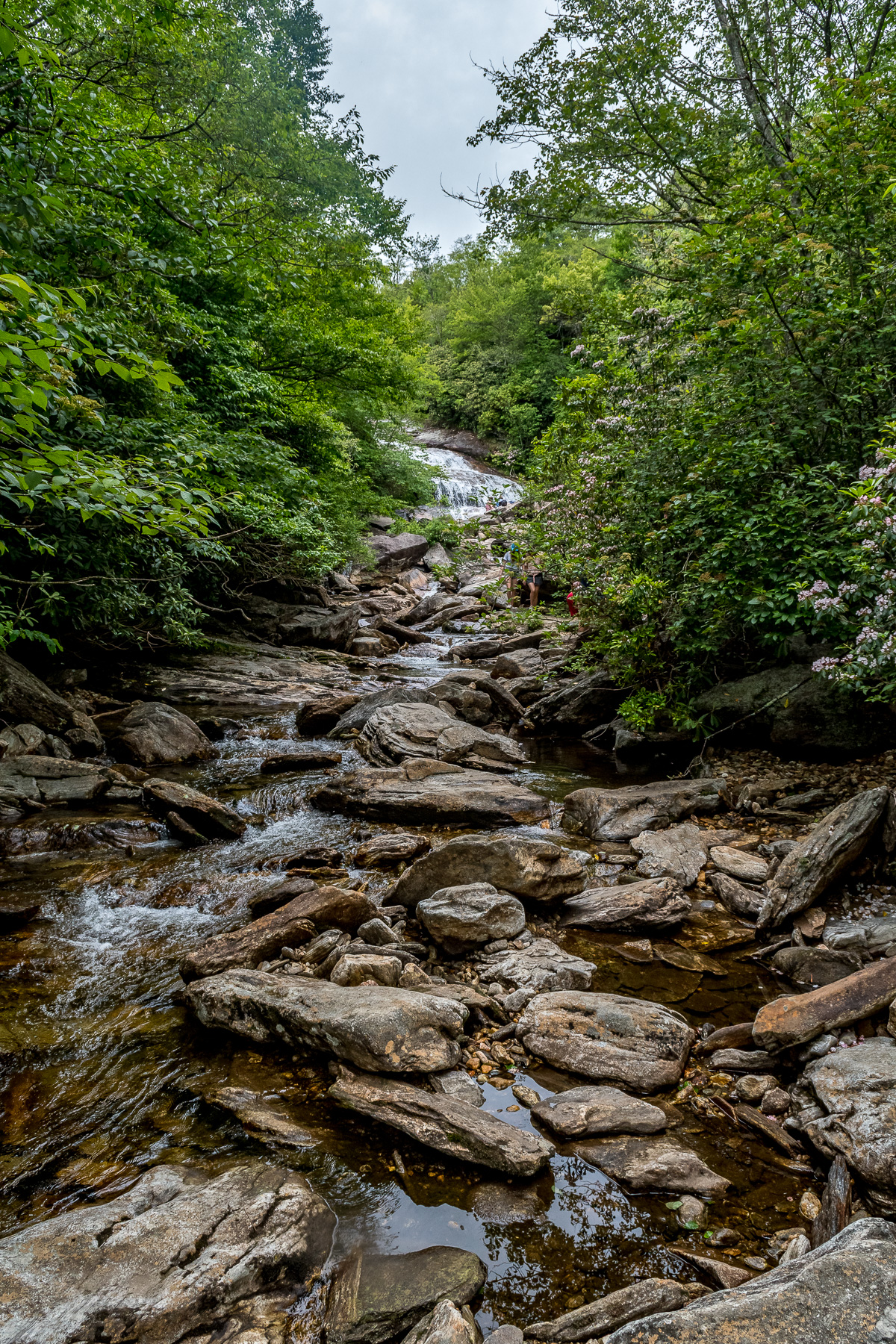
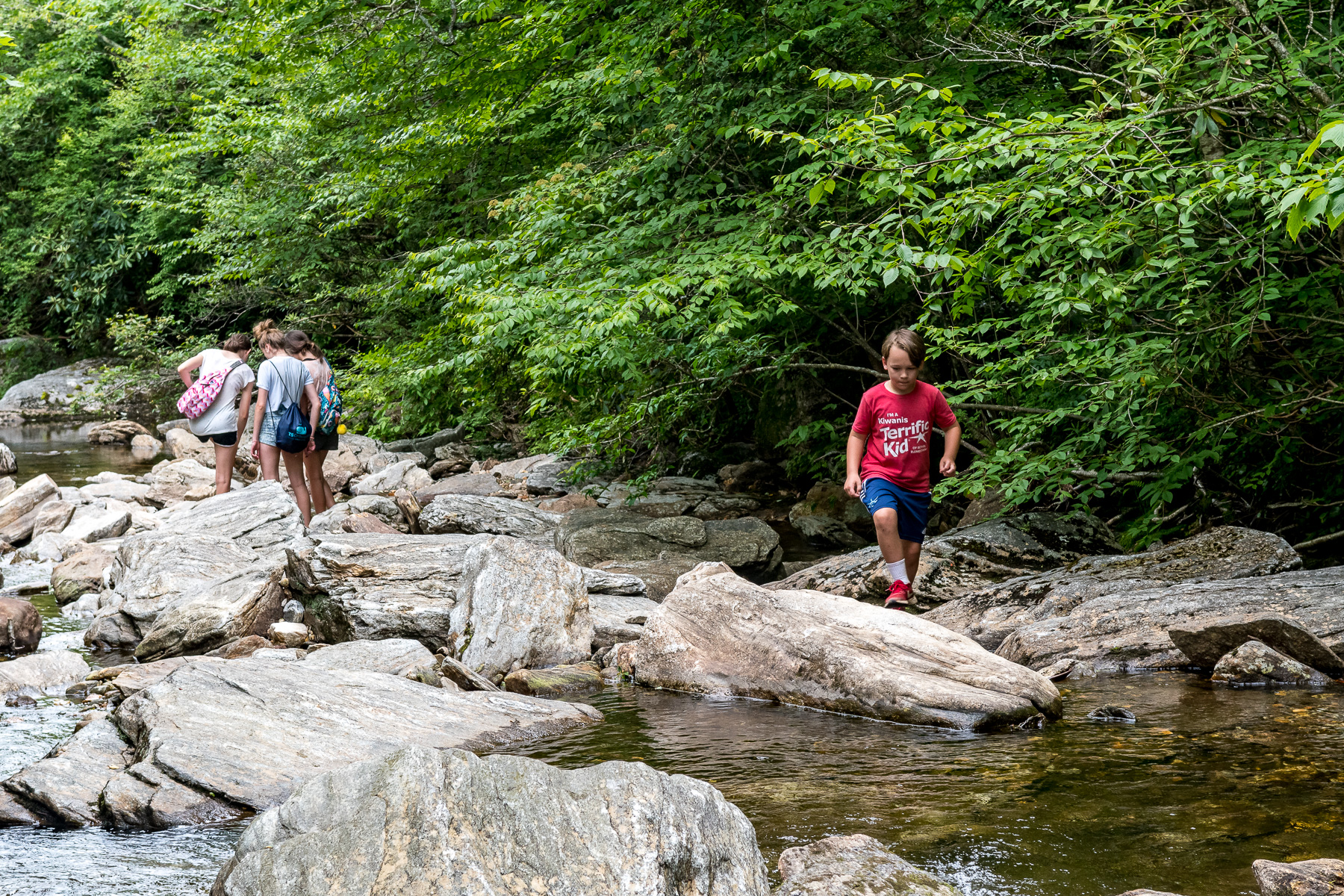
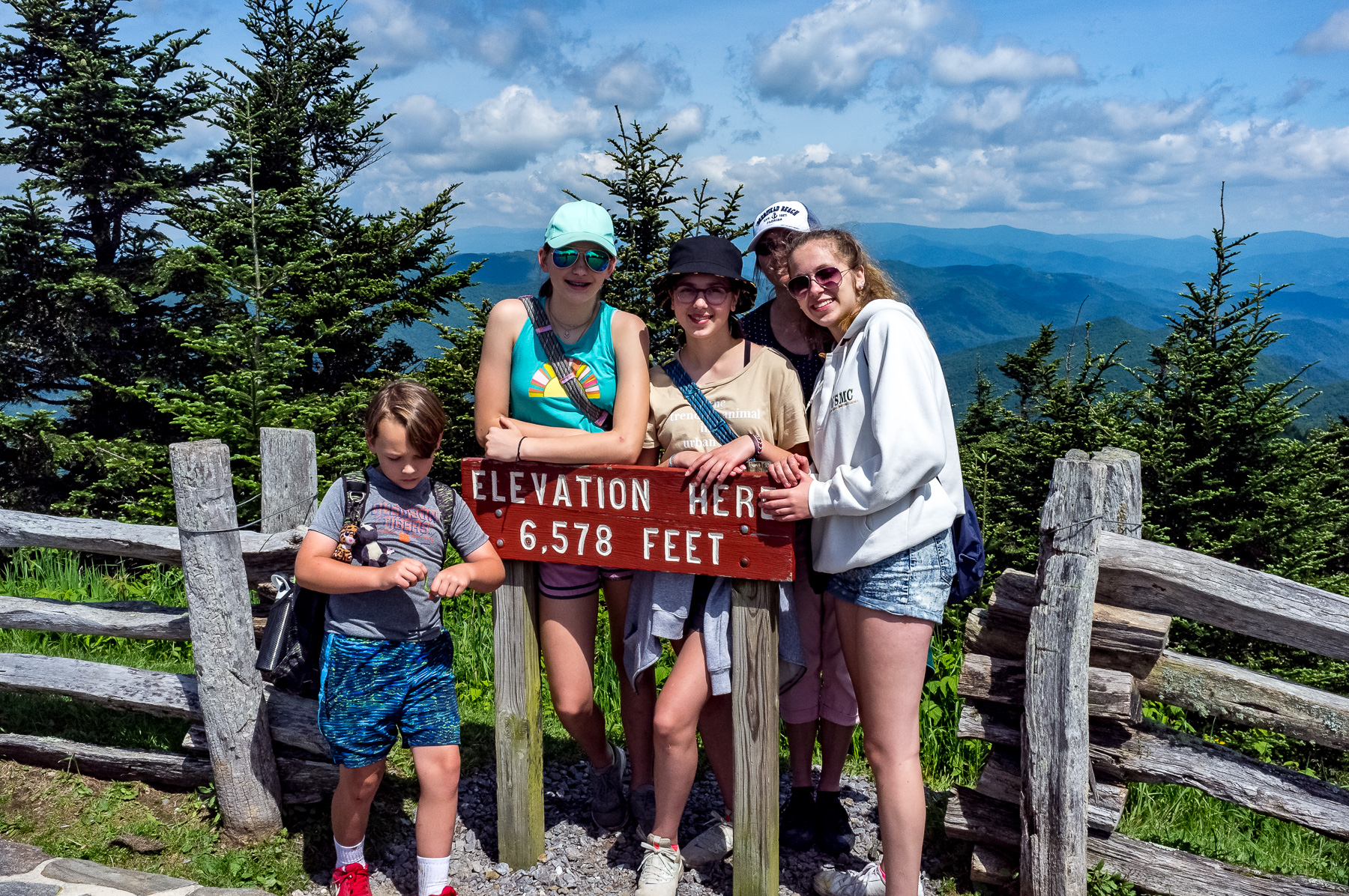
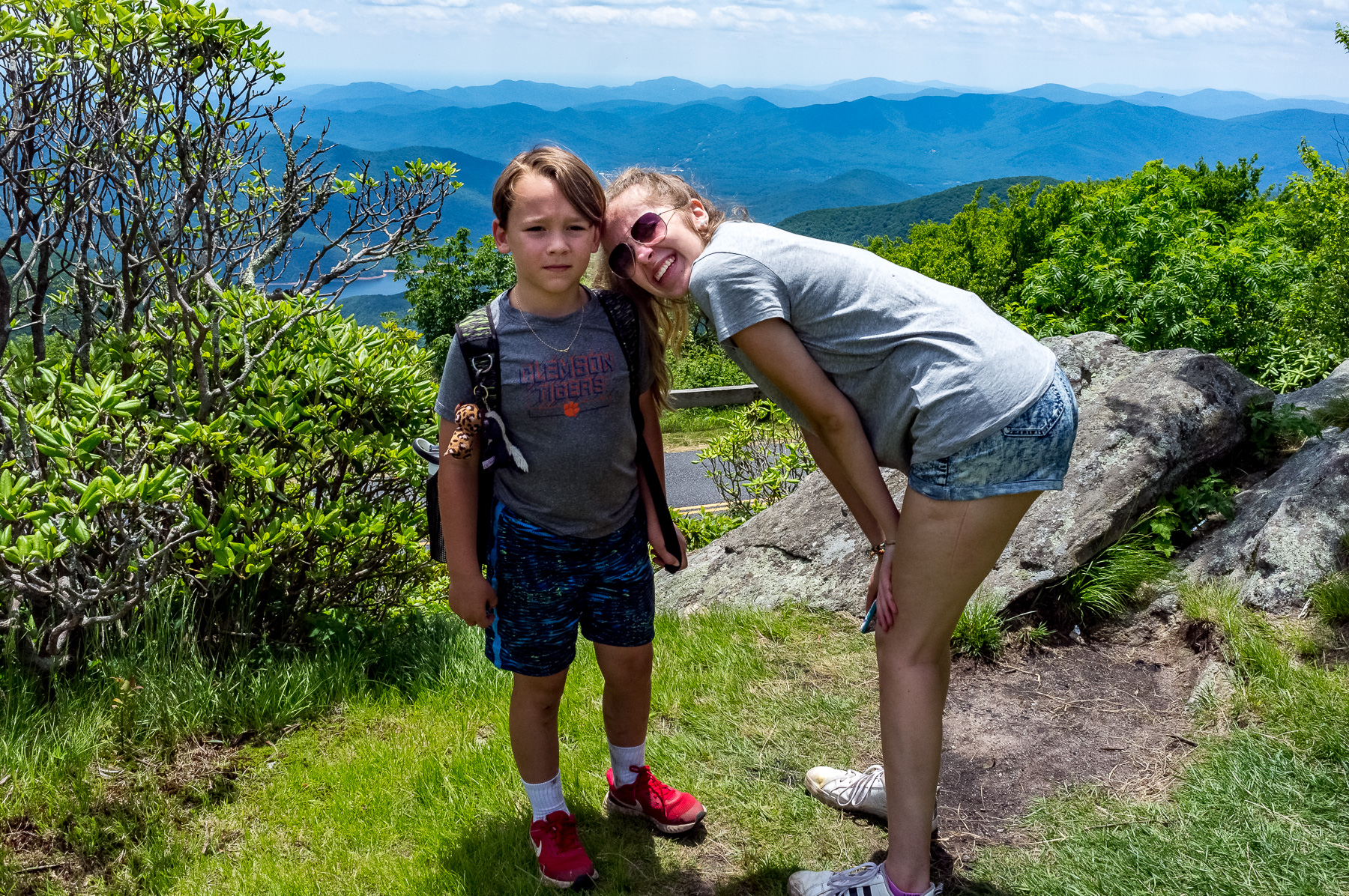
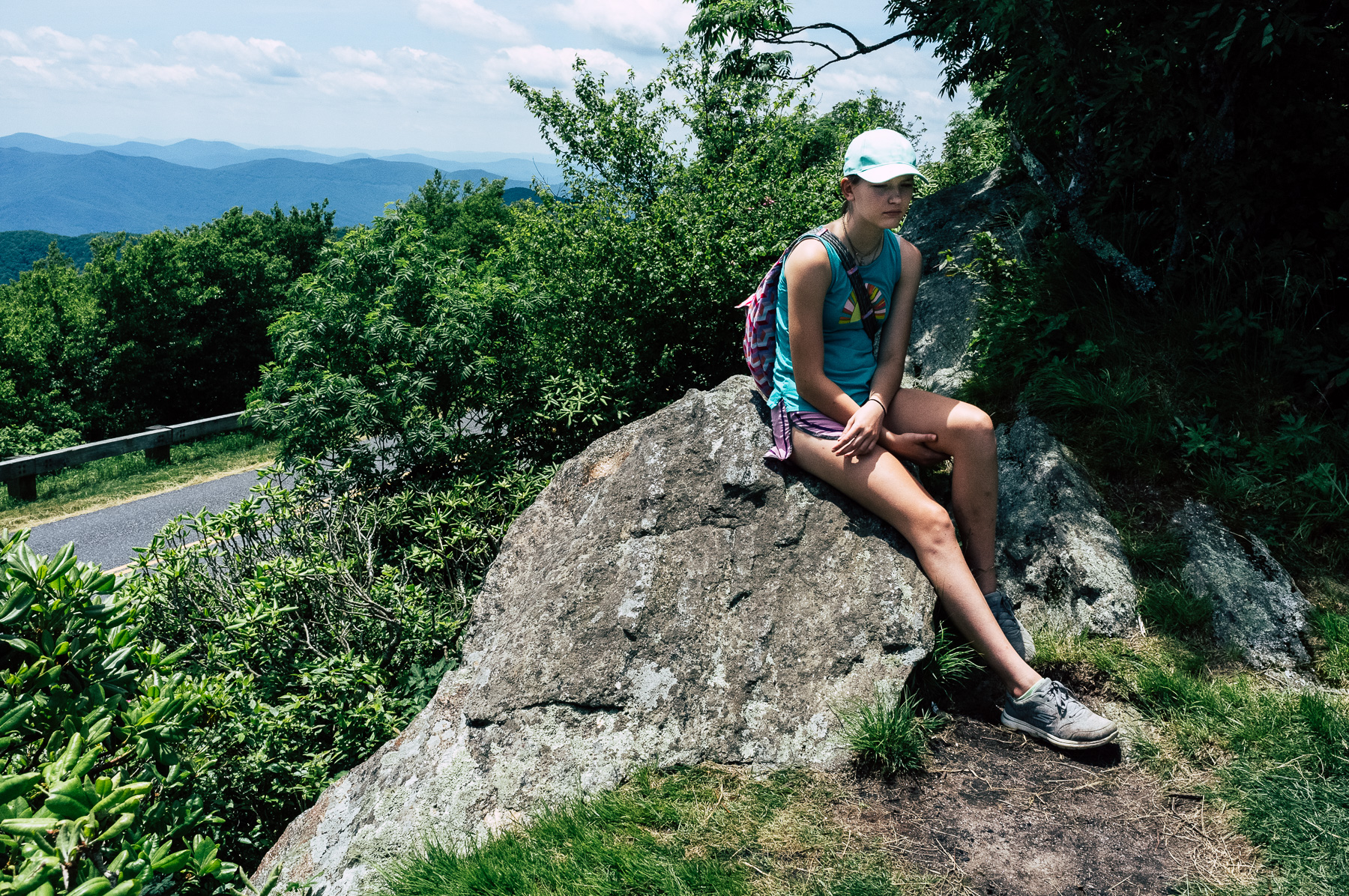
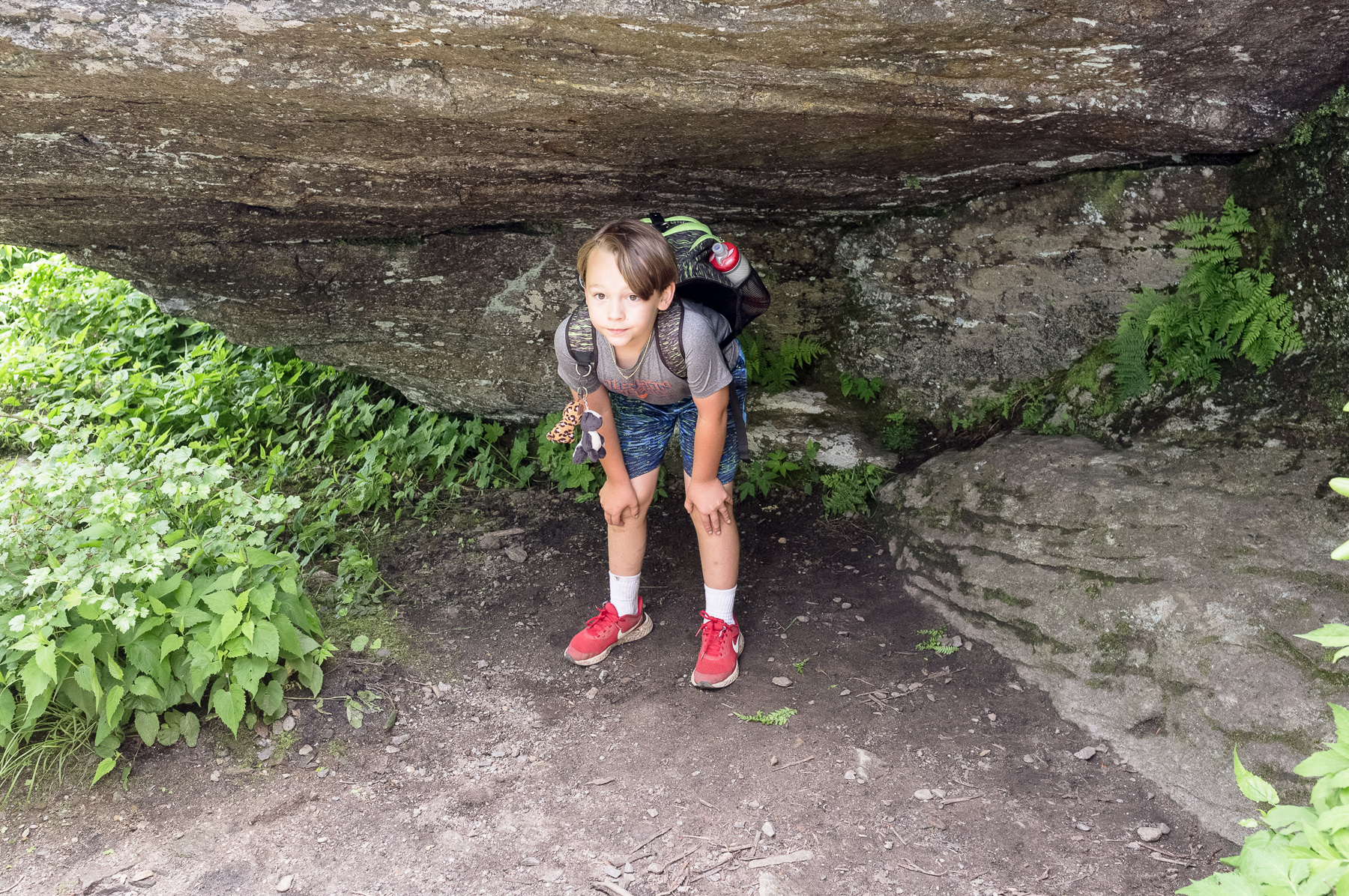
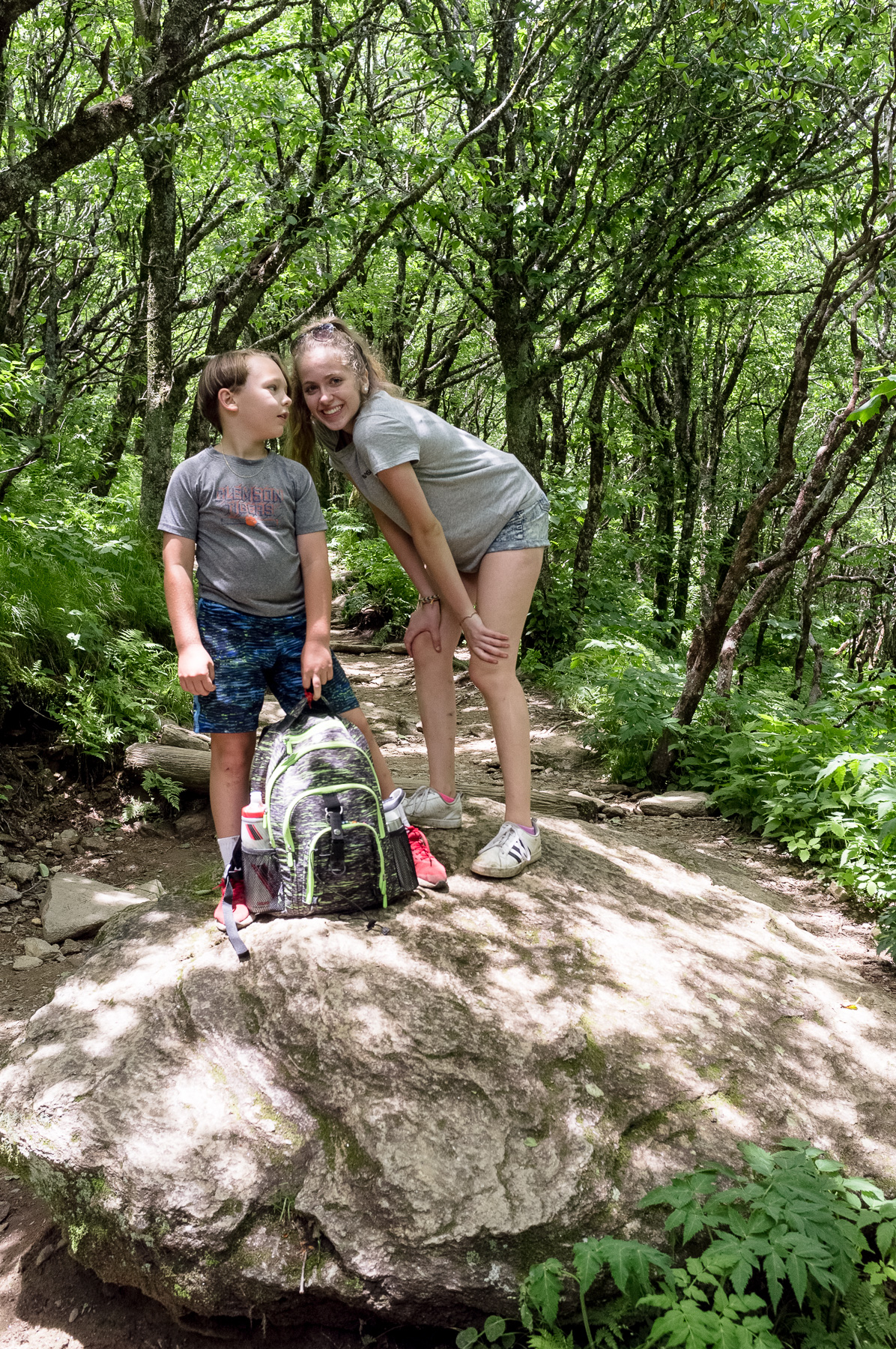
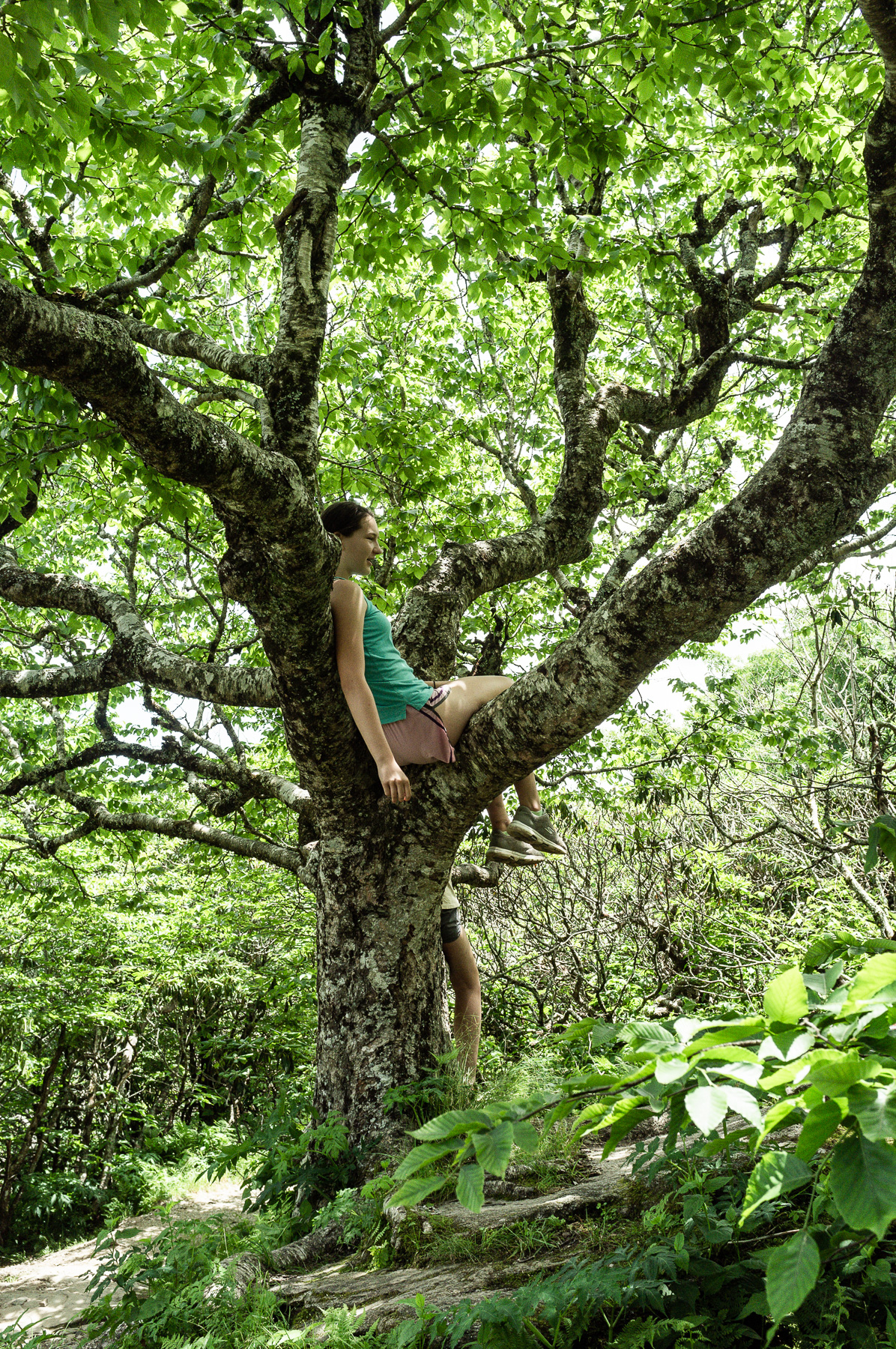
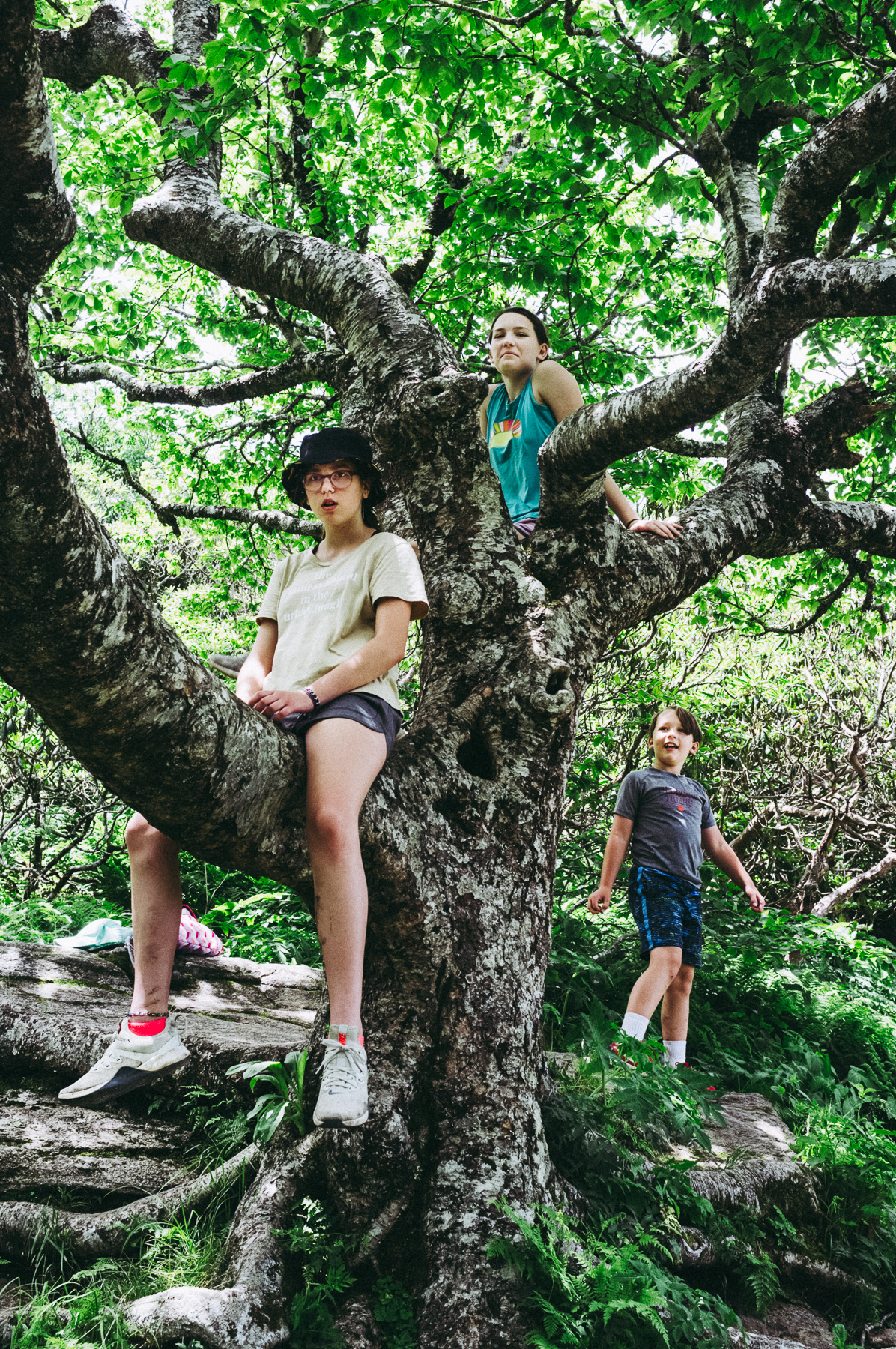
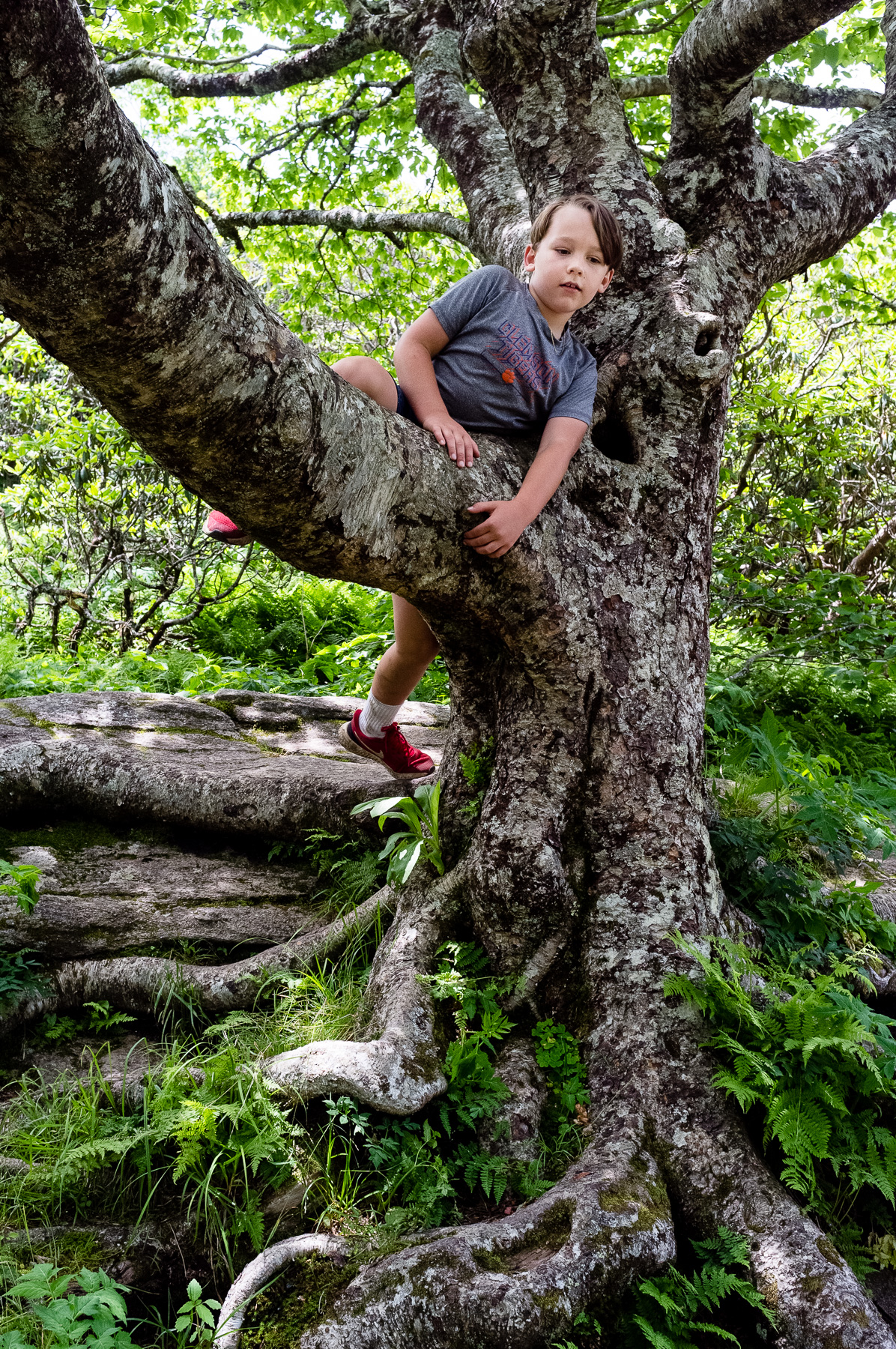
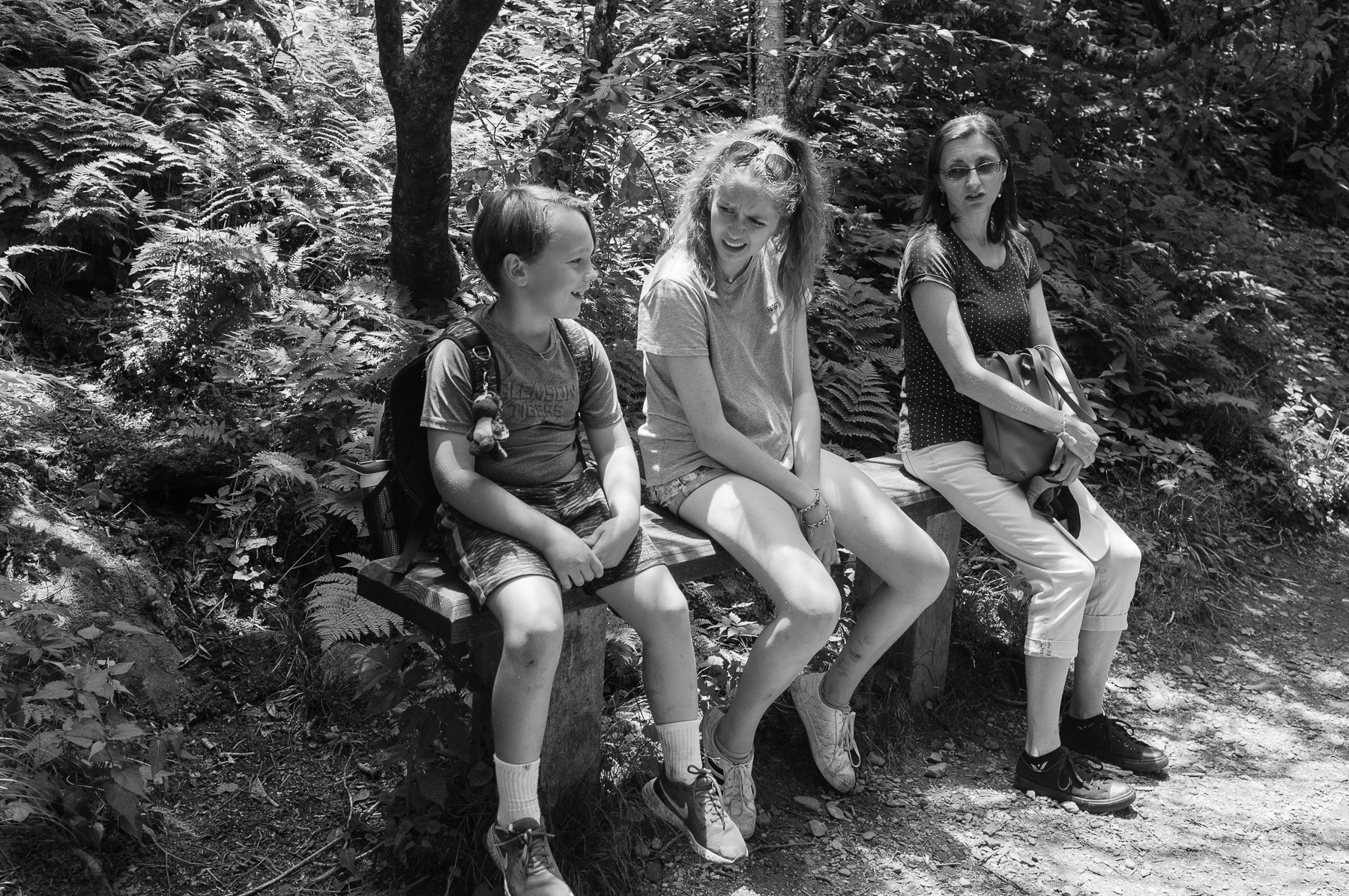
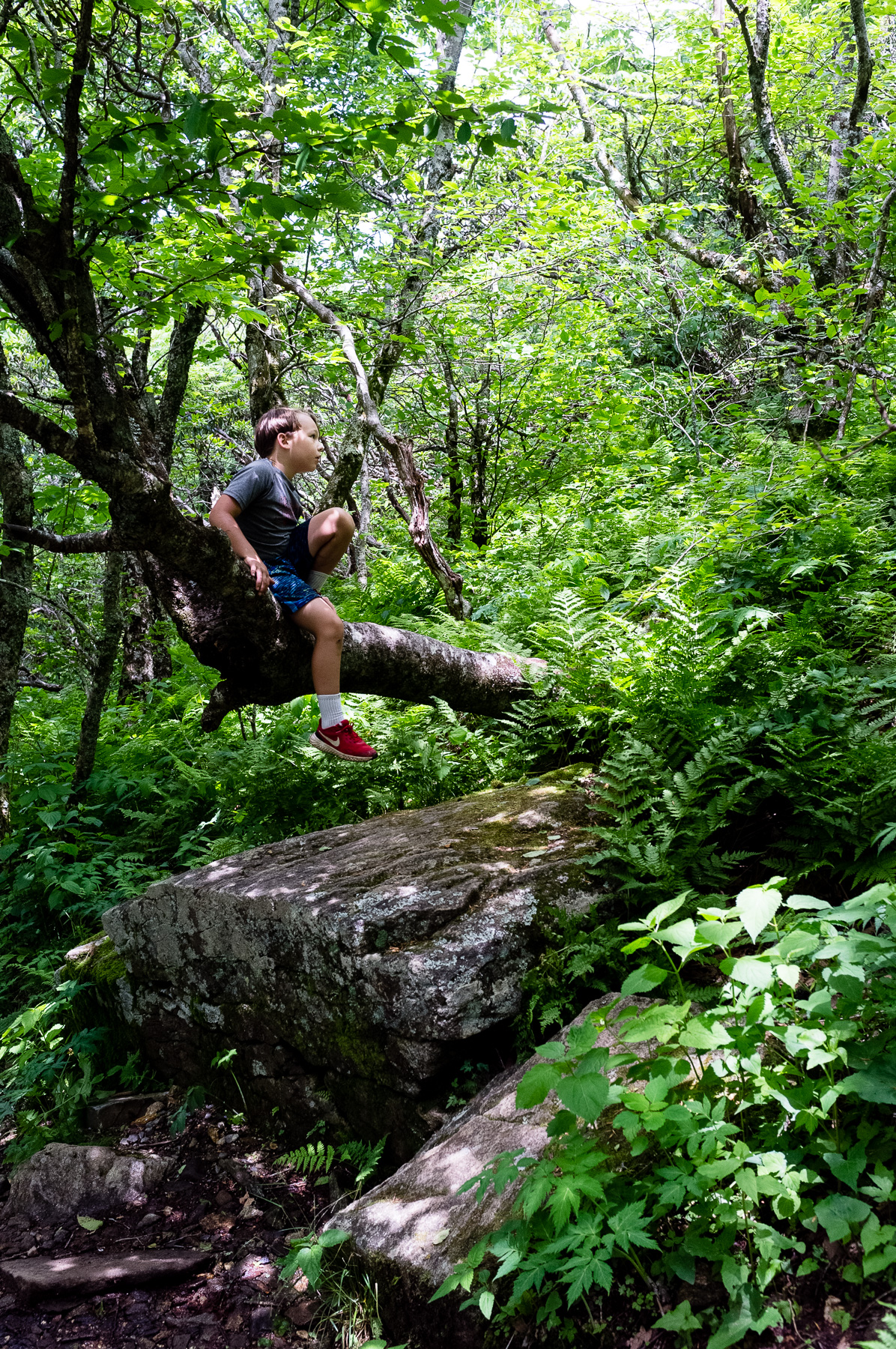
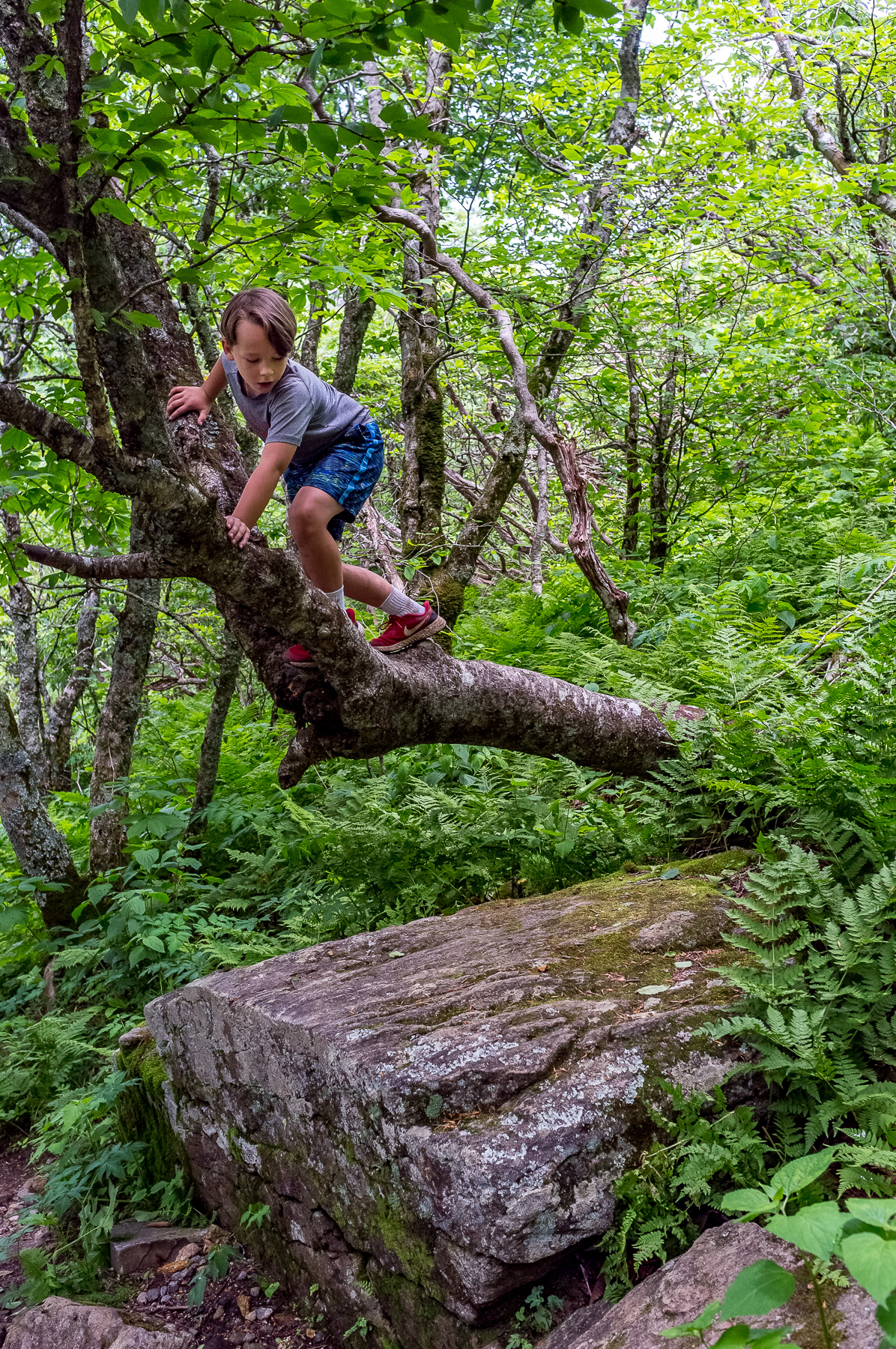
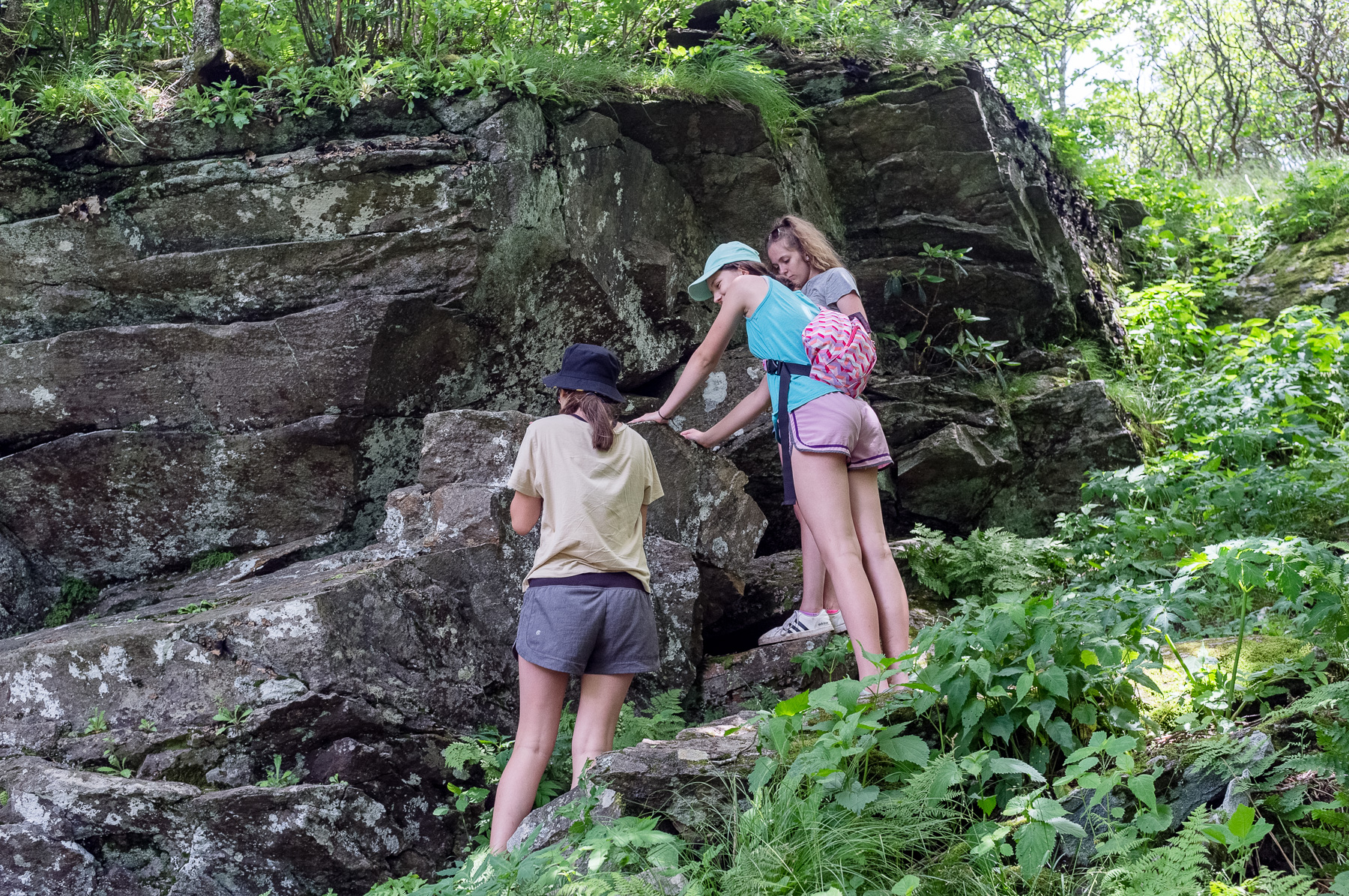
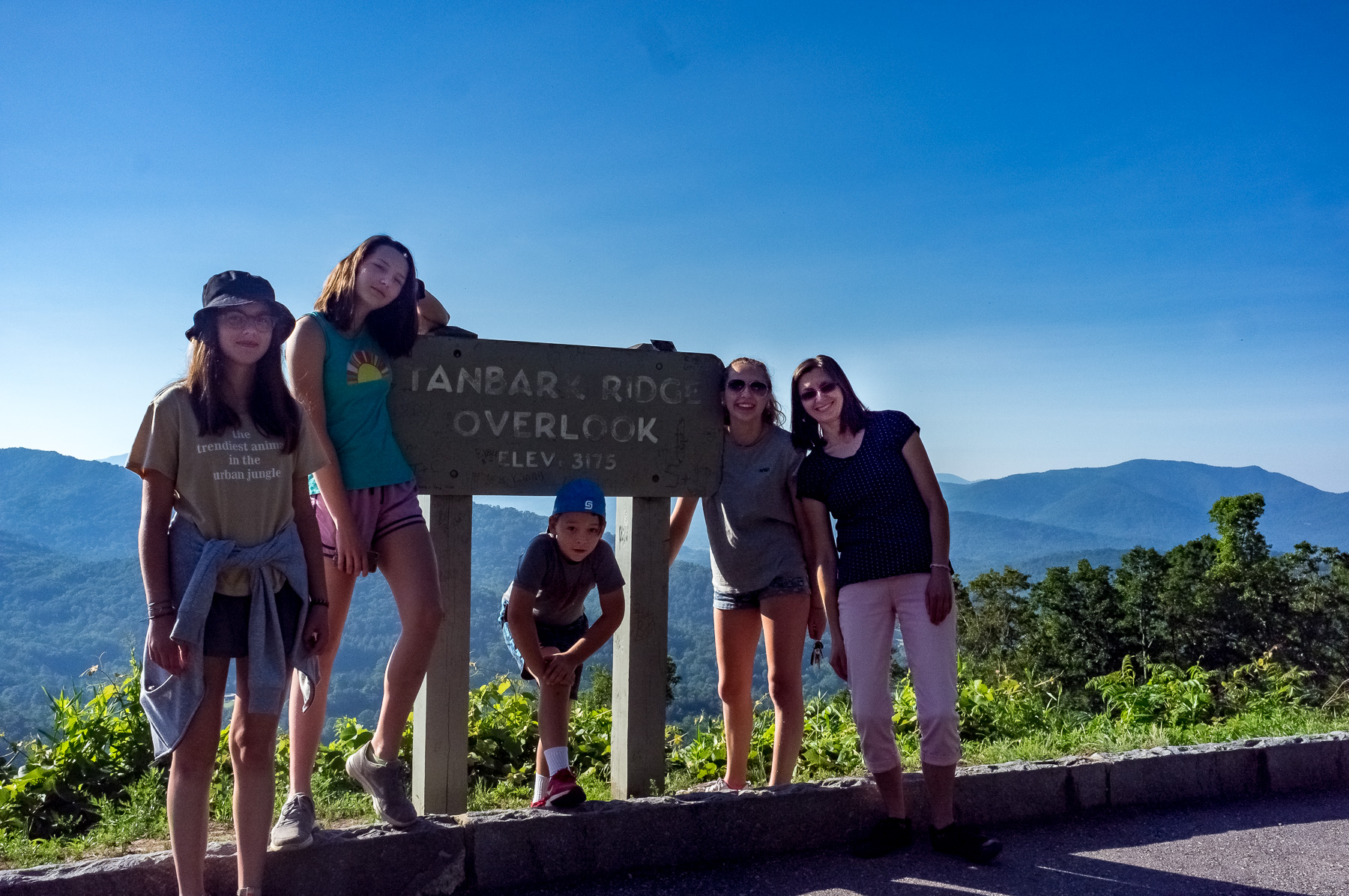
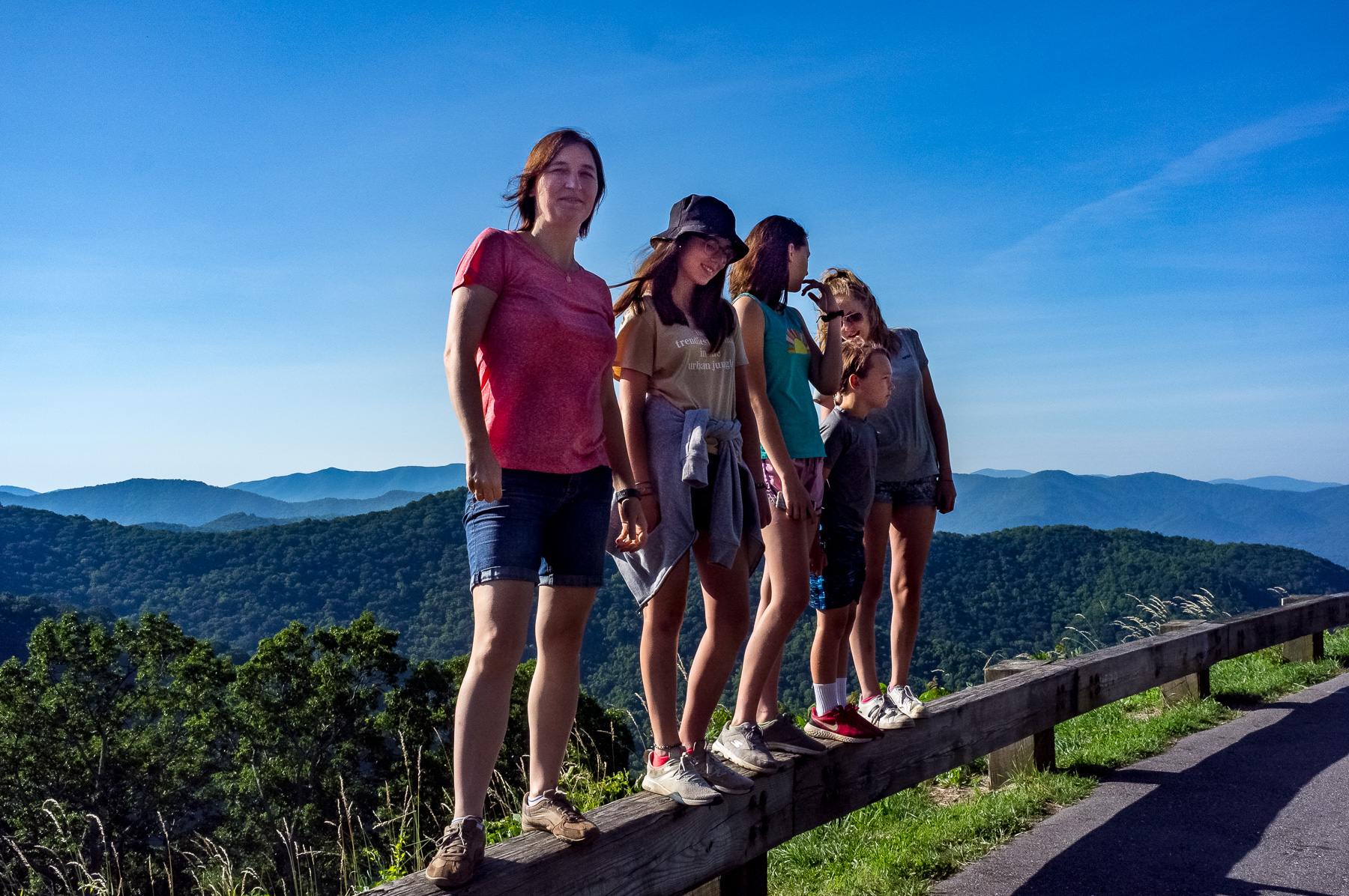
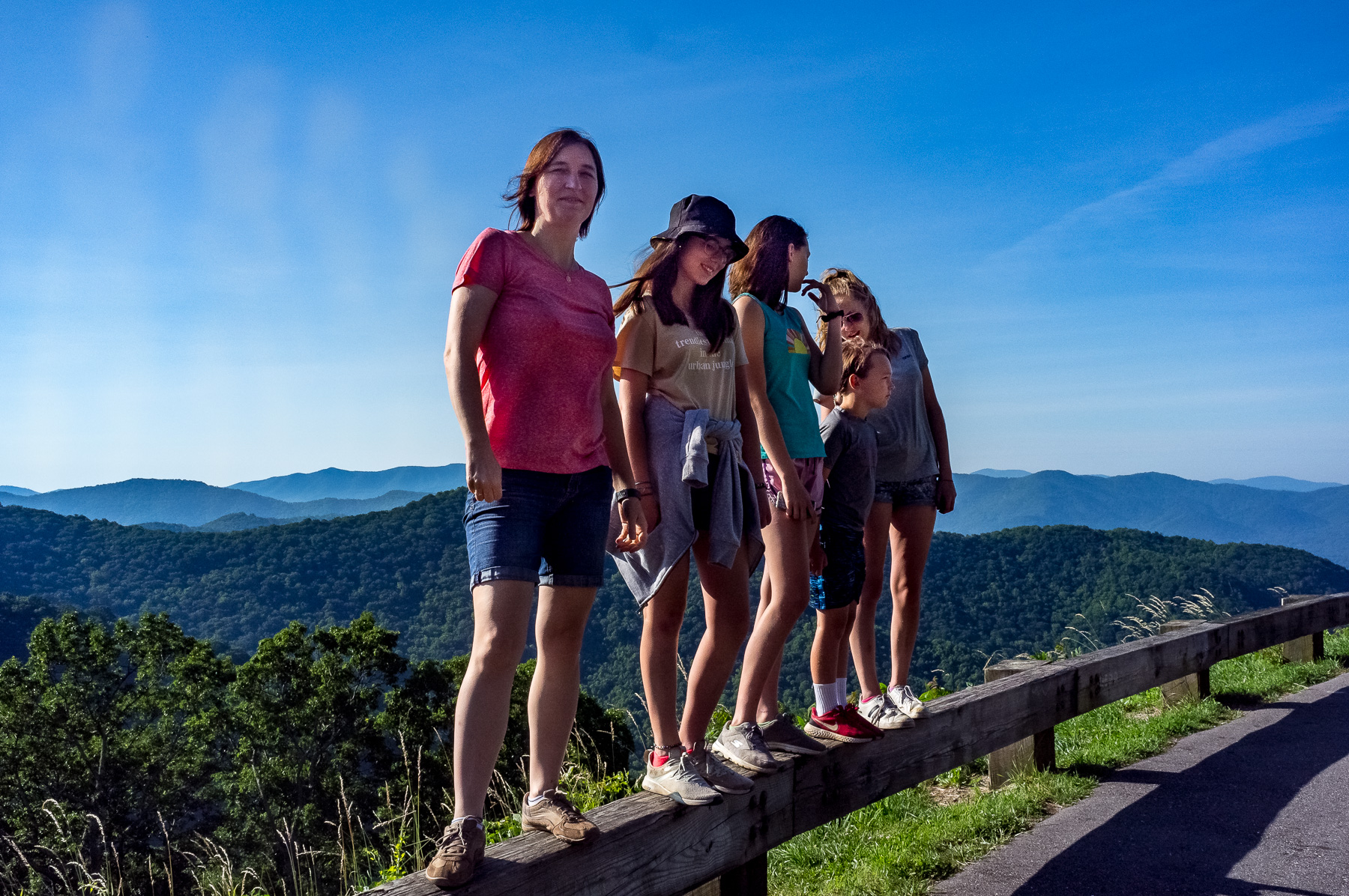
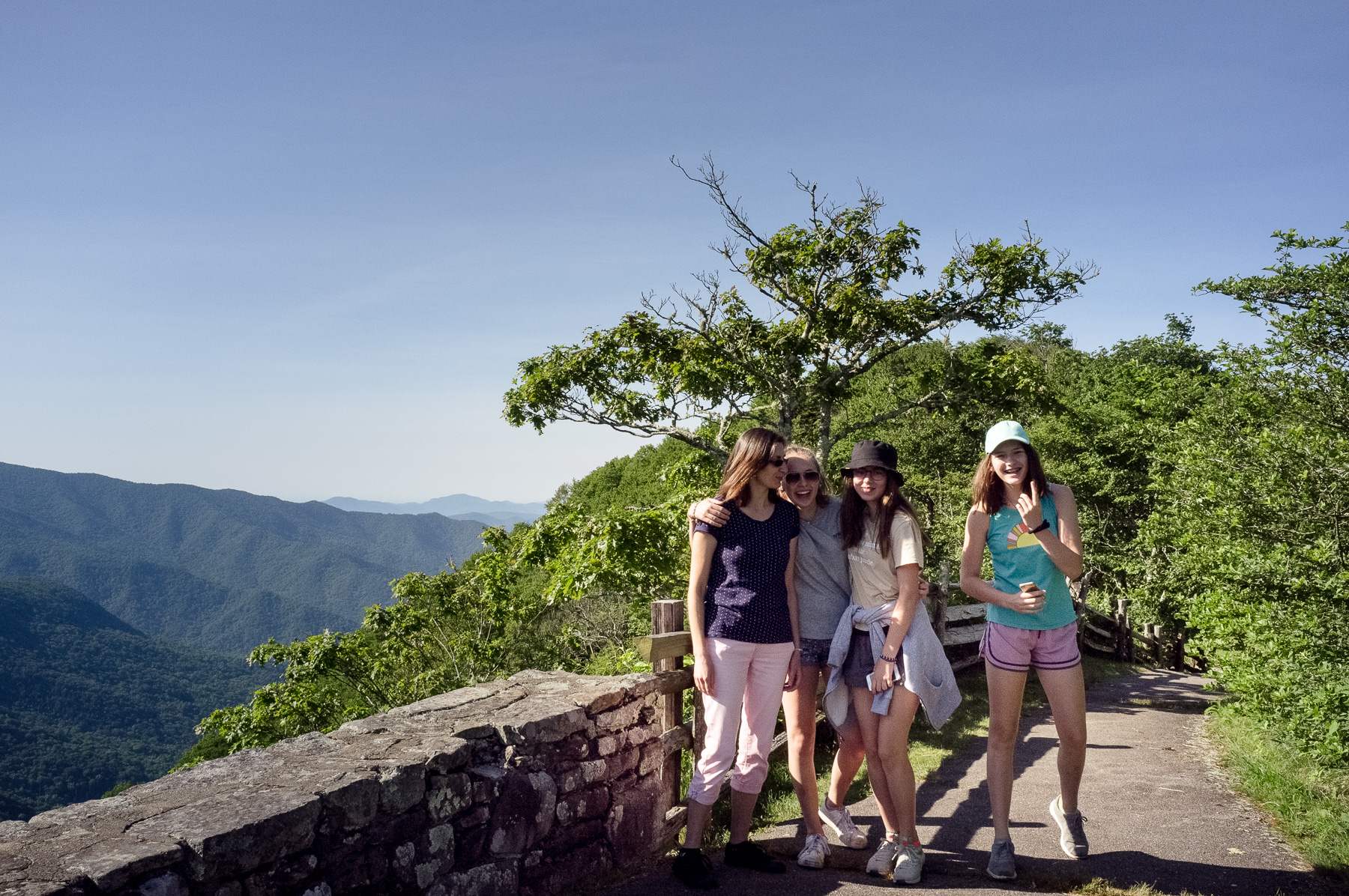
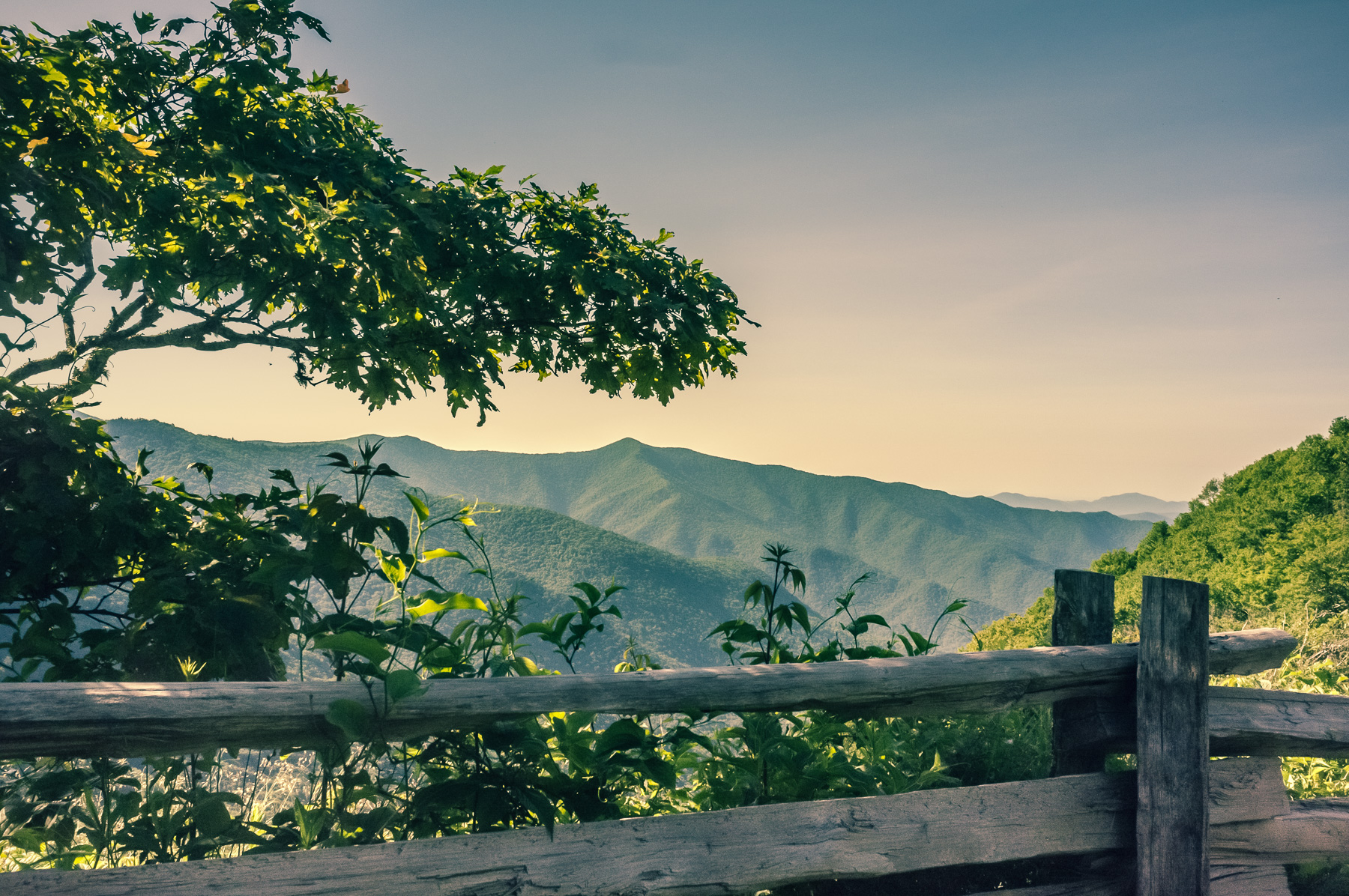
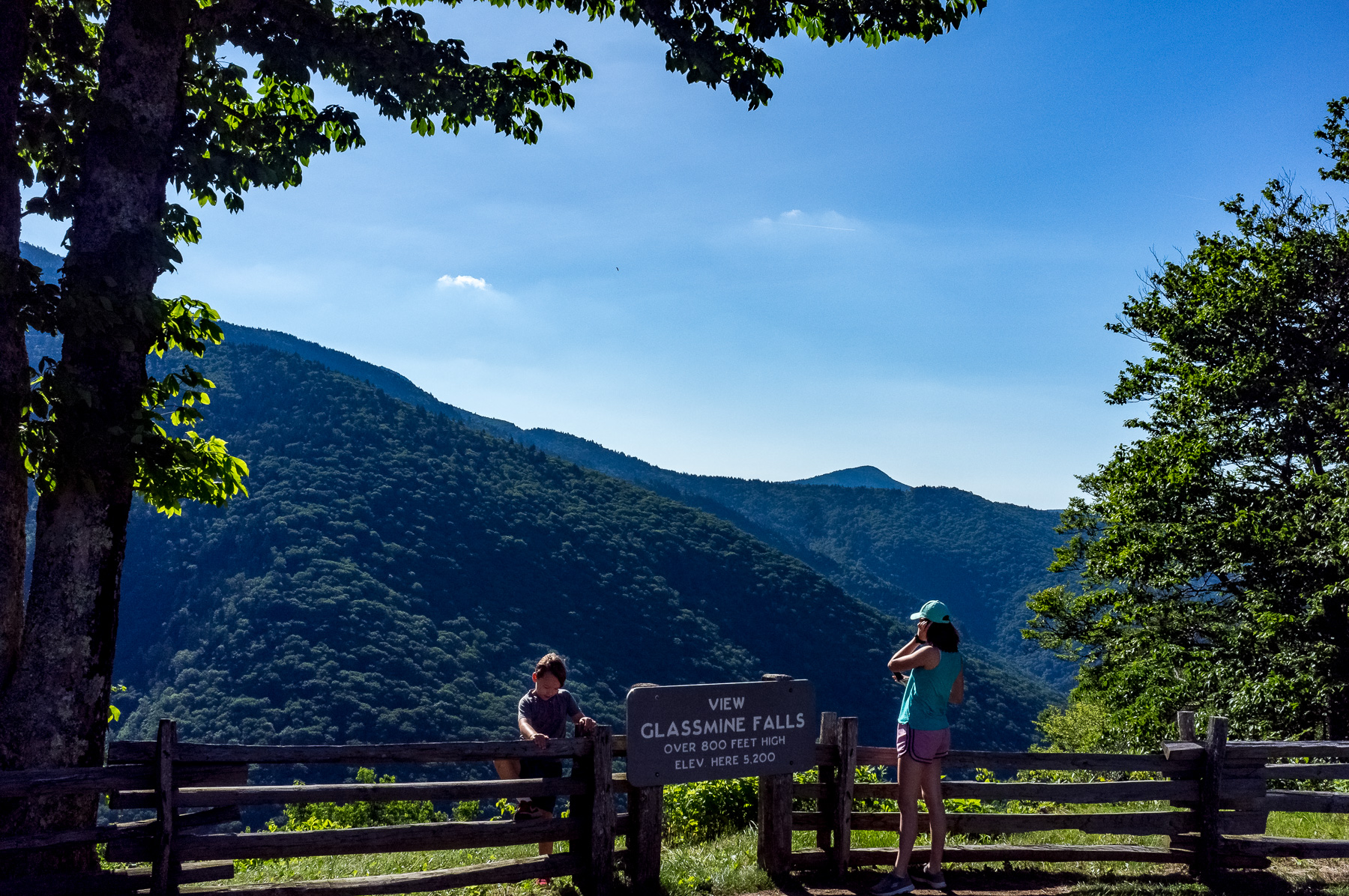
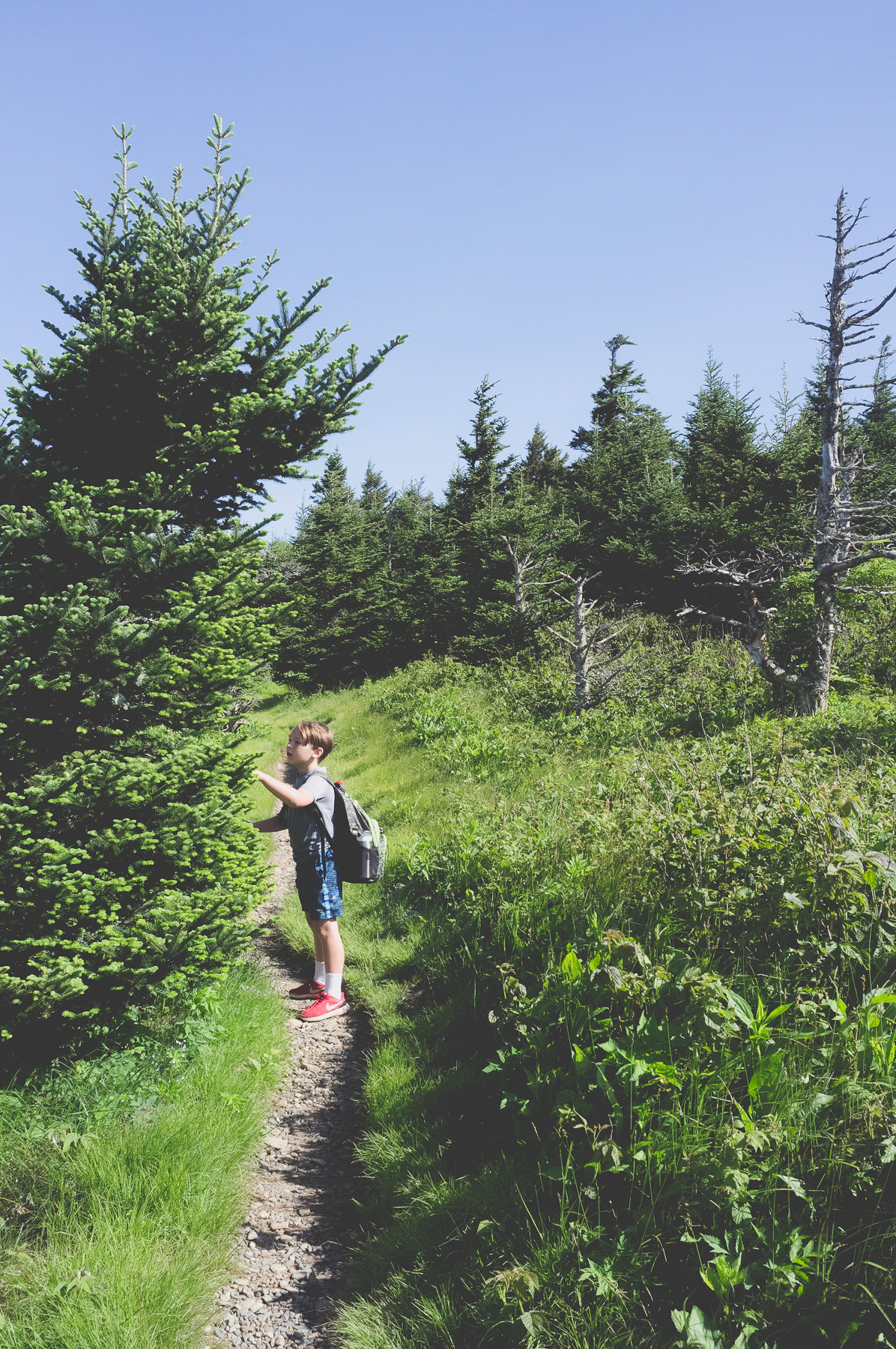
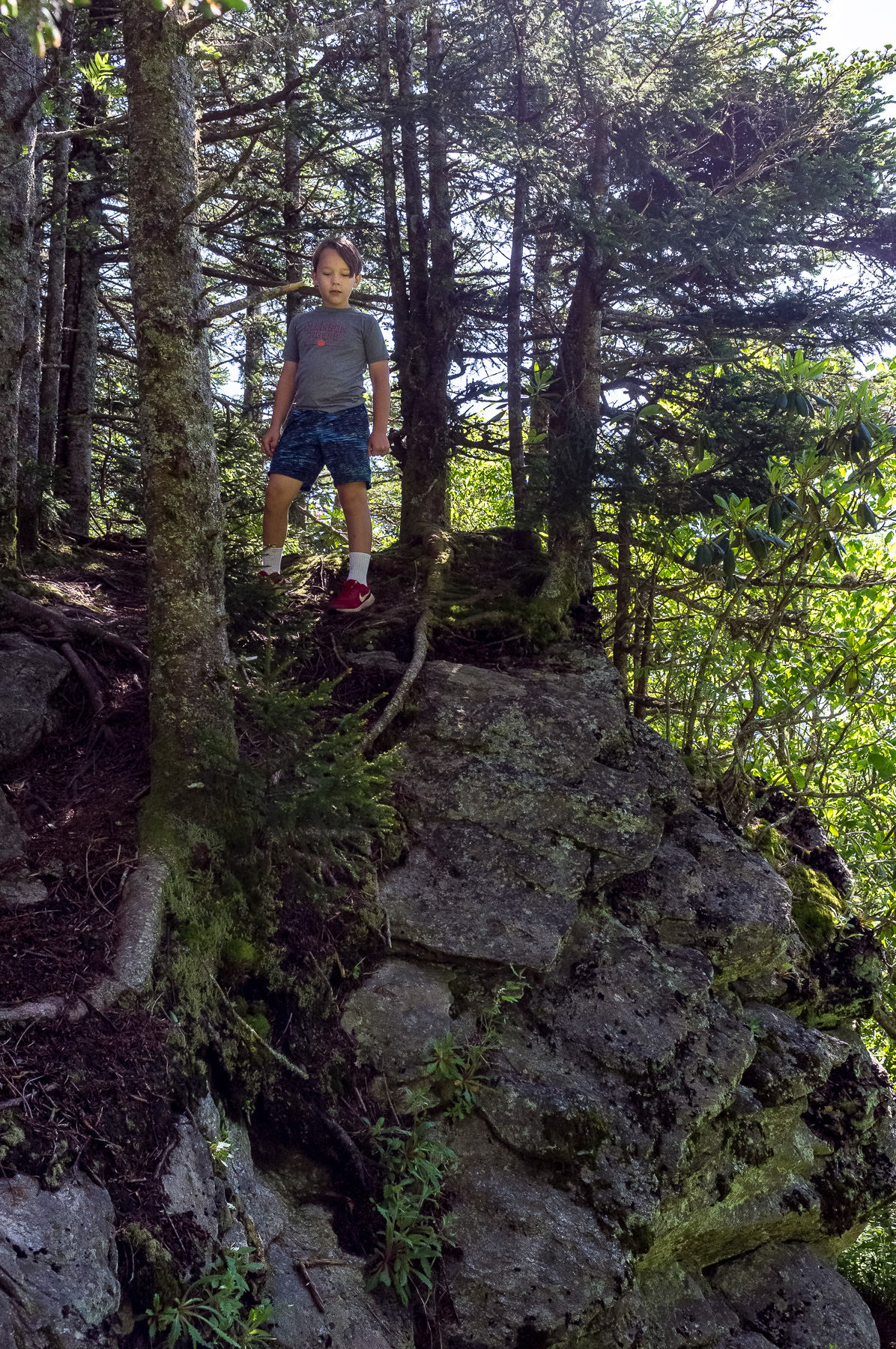
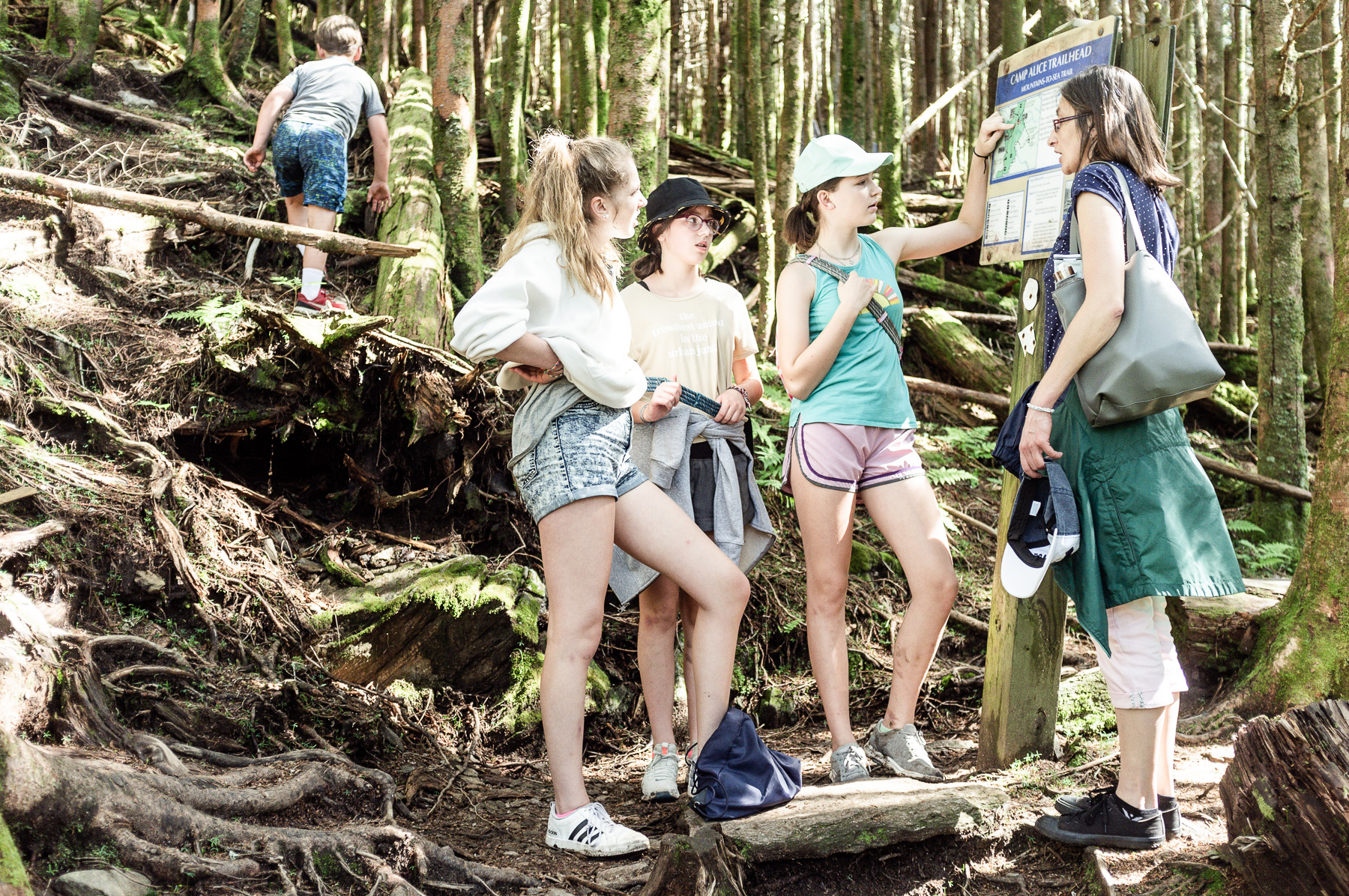
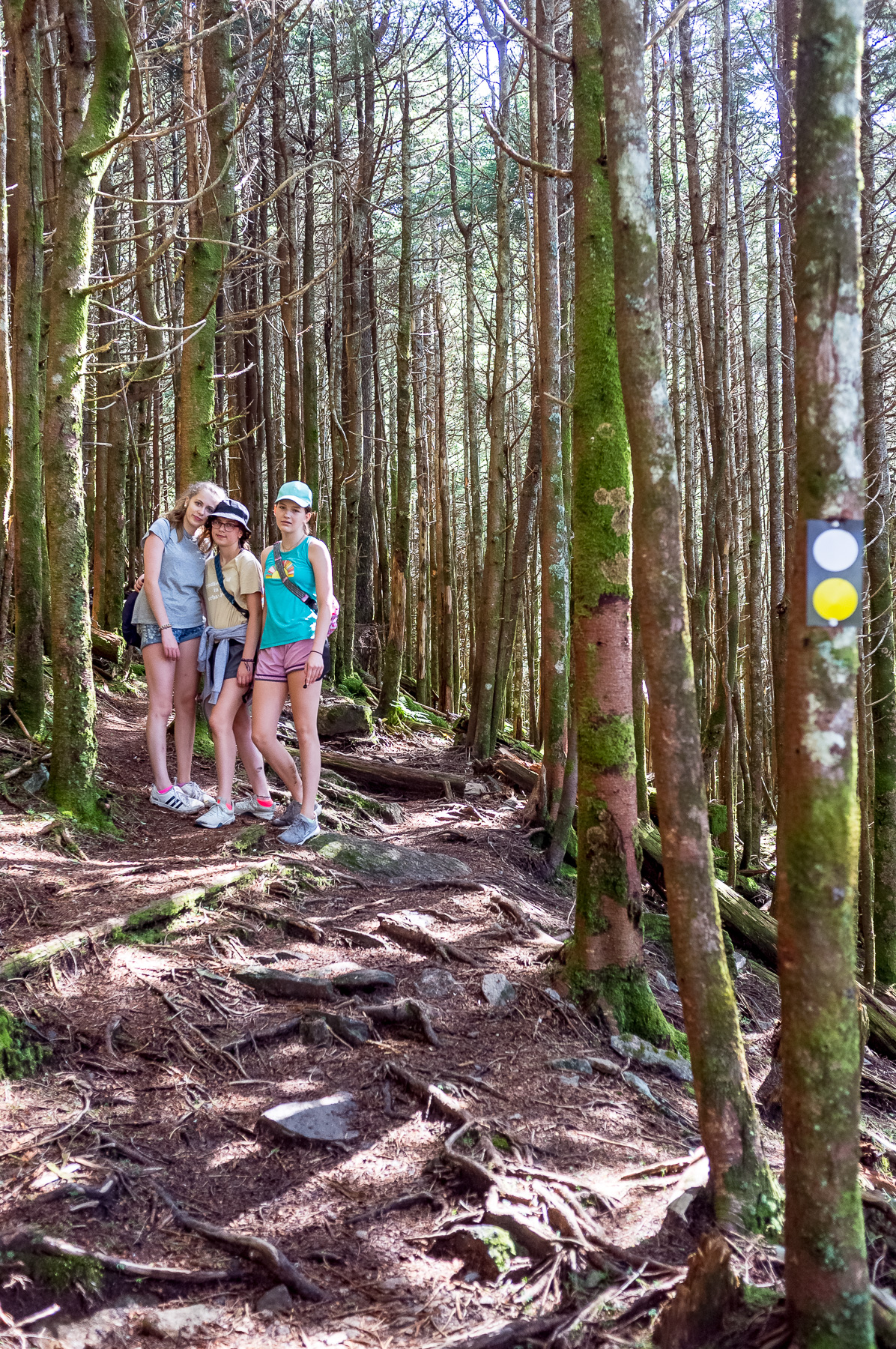
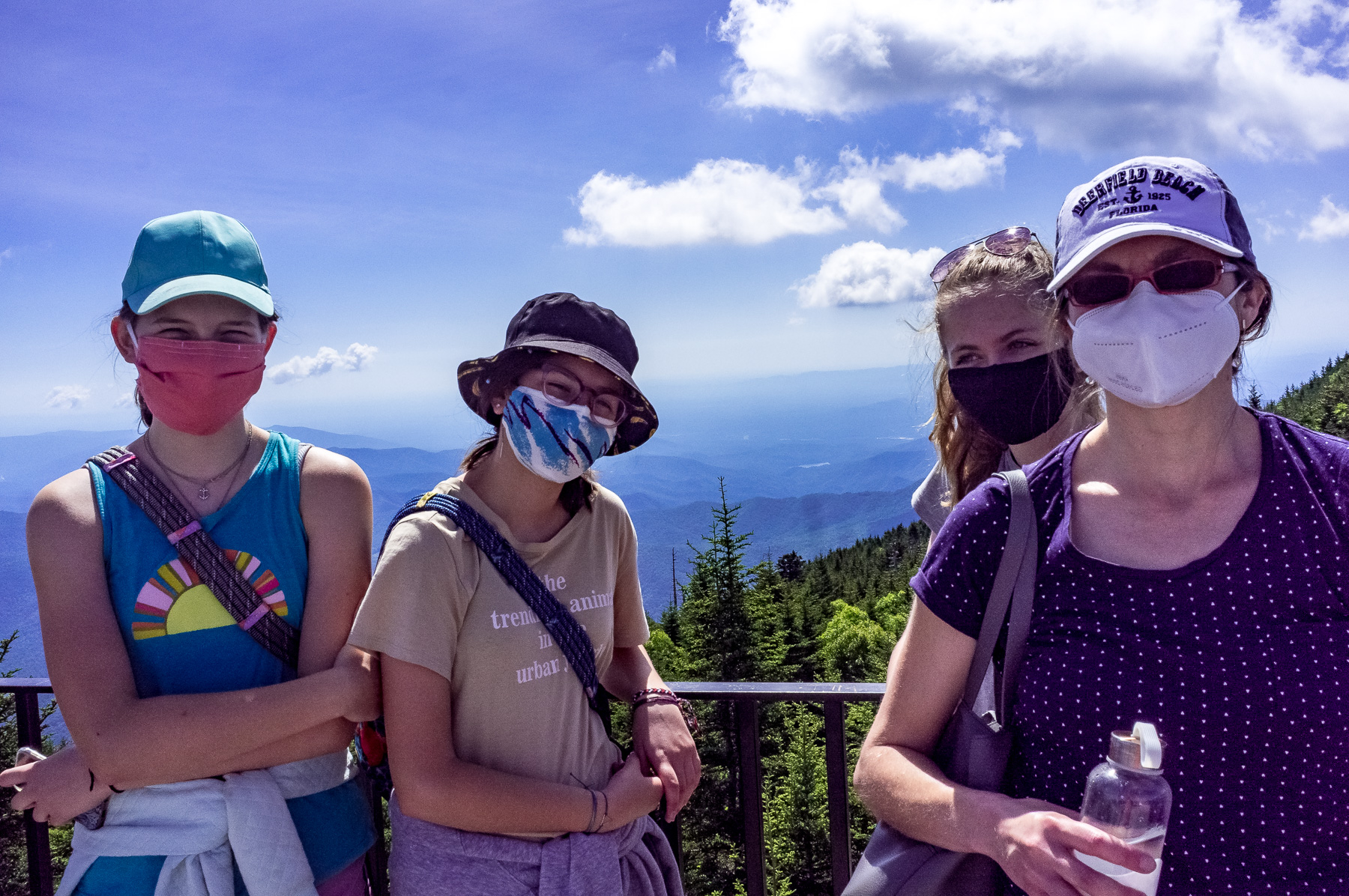
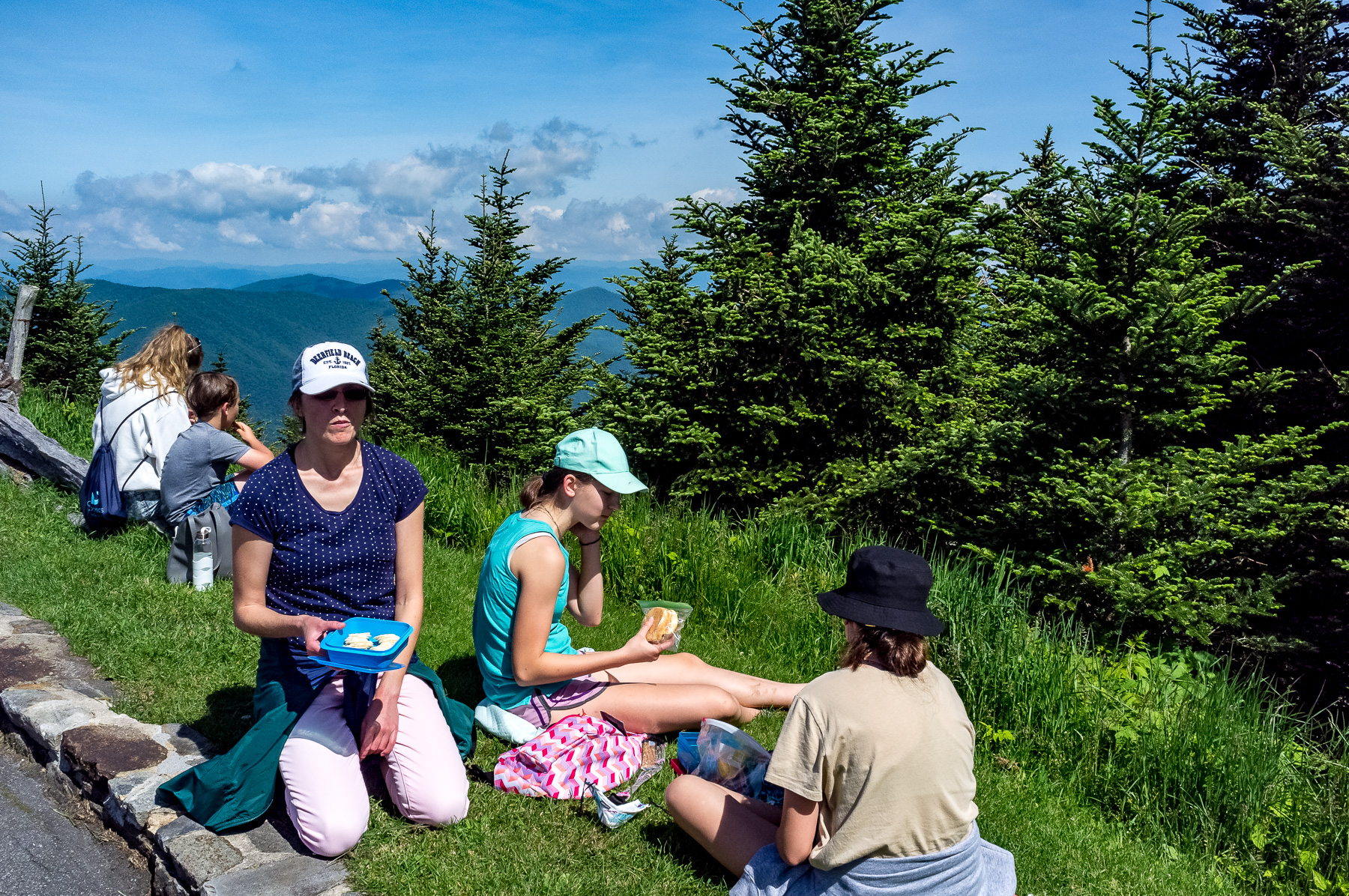
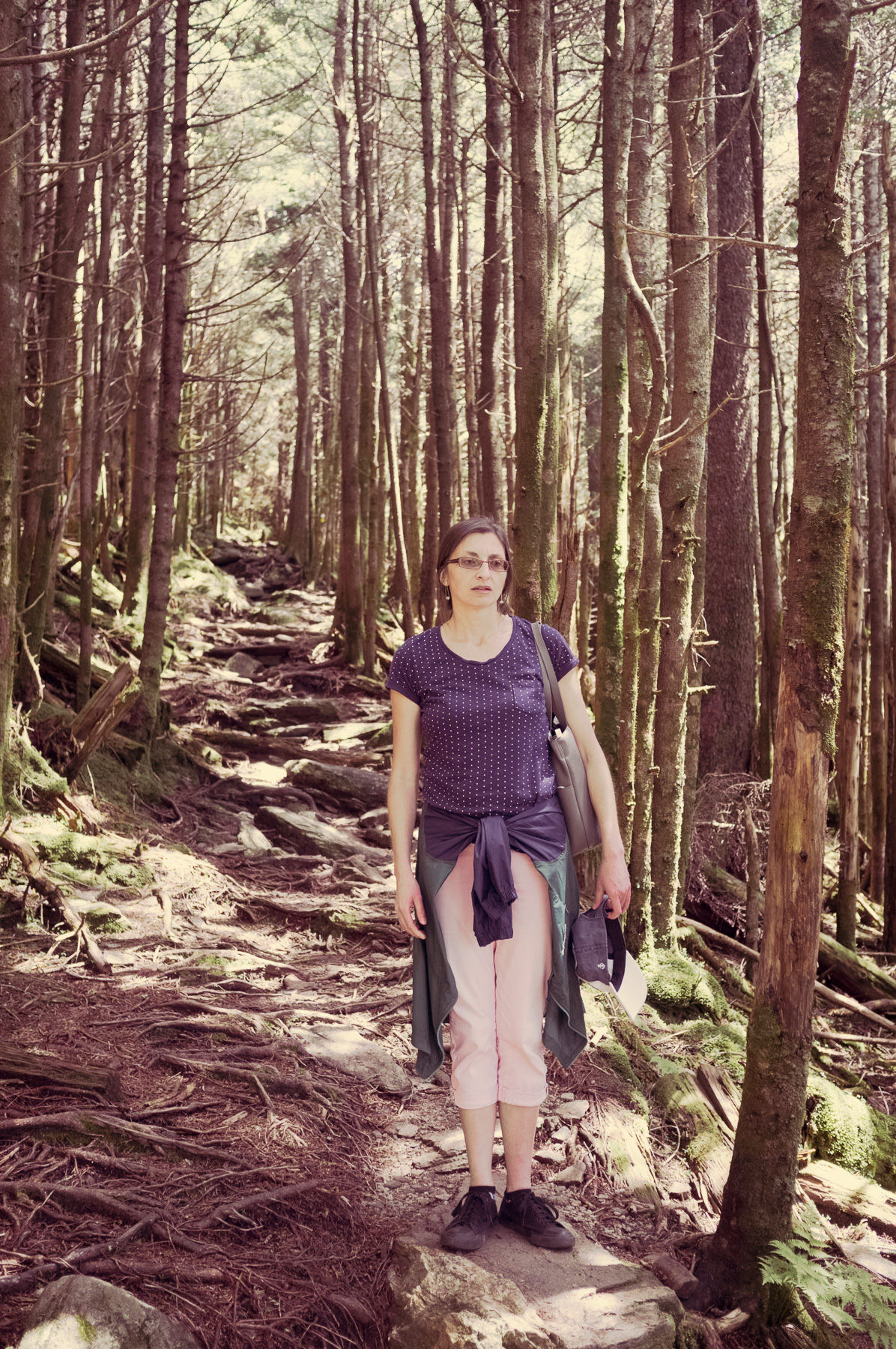
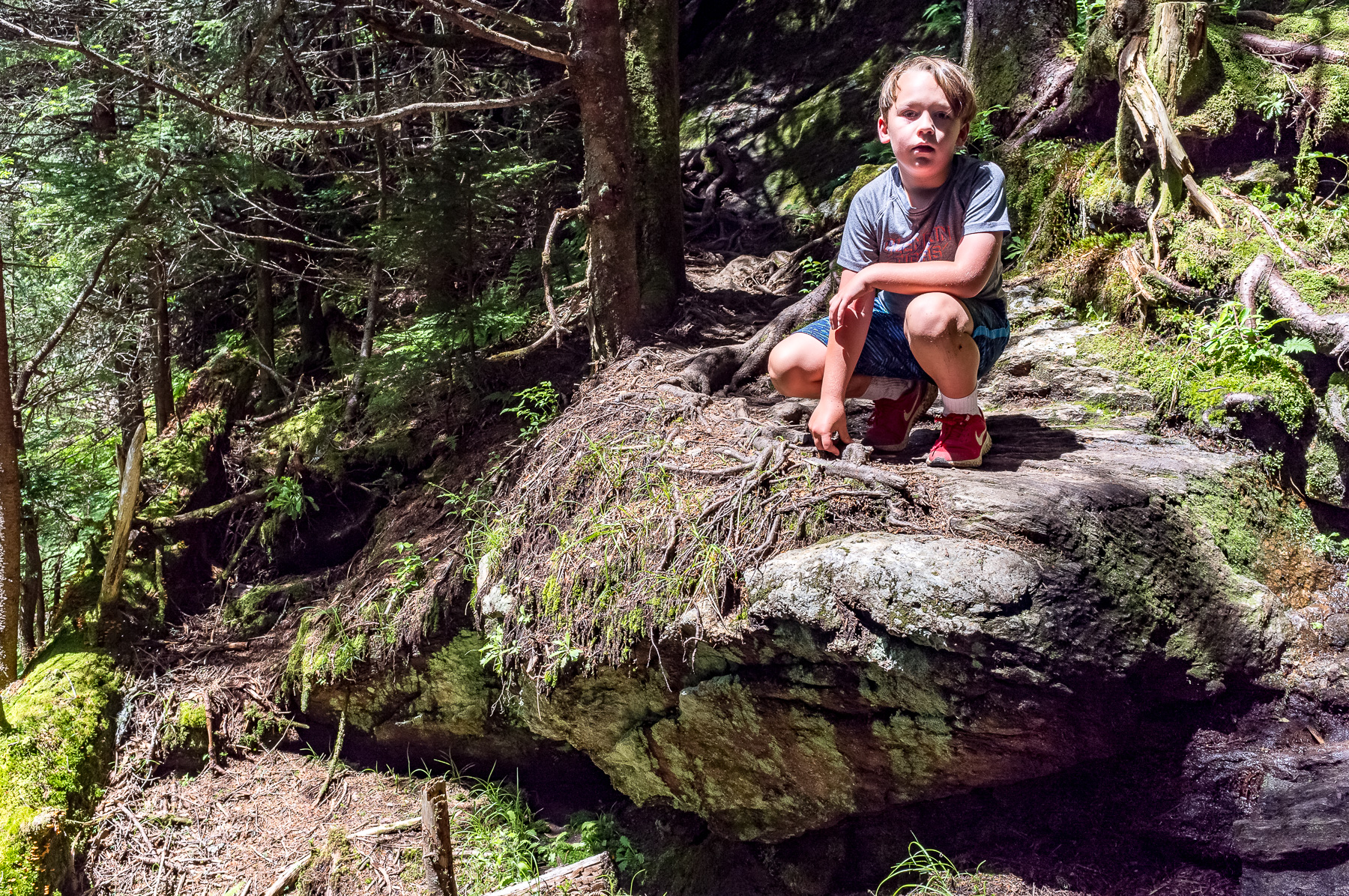
K took the kids to meet with their Polish/American "cousins" to spend some time hiking in the Blue Ridge Mountains, specifically hiking up Mount Mitchell, the highest peak east of the Mississippi.

Karma

Written several years ago during the school year.

A young man this morning had a run-in with me. I say “he had a run-in with me,” but I guess the opposite is equally true: I had a run-in with him. But in a way, it’s a matter of semantics, for it seems all our interactions are negative like this morning’s. In short, he does not like being told what to do by anyone, and though I don’t teach him, I am still responsible for him as a teacher on the hall, so I have to tell him to do things. Like get in dress code. Or take off the headphones. Or stop chasing this or that girl. Or get to class. Or get to your locker. Any number of things that he knows perfectly well he’s expected to do. This morning’s encounter was another in a long line of meaningless conflicts that arise from his instant disrespect whenever he’s told to do something.

At about six-two, Terrence is taller than almost all his eighth-grade peers, perhaps because he’s supposed to be in ninth grade. He struts down the hall and is admired by boys and girls alike. Boys and girls who see his supposed toughness as a virtue. Boys and girls for whom his probation-related ankle-bracelet adds to his prestige. Most teachers think a little less highly of him than do his peers.

“Terrence, you need to get to your class. It’s girls’ locker time, not boys’.”

Instant conflict: “Man, you see my teacher ain’t here. You see I gotta wait in the hall!” in such a bellicose and hateful yelled tone that it’s a wonder he was surprised at all what was coming next: a reprimand for disrespect.

“There’s no need to talk to me that way…” and he turned his back on me and stood with his back to me. Fairly typical behavior.

“That’s fine, Terrence. I’ll refer this matter to the administrator.” Which means really nothing because he’ll get a day or to OSS for it, and kicking a kid like this out of school is no kind of punishment at all. It is, of course, a relief to his teachers because they don’t have to deal with his nonsense. It’s a relief to his classmates because now they can get some work done. But for Terrence? It’s meaningless, and he didn’t mind telling me so.

“Man, I don’t even care.”

That could be his mantra, and he’s not the only student like that. They’re the ones that are the toughest to care about because they don’t even seem to care about themselves or others enough to see the harm their behavior causes, to themselves or to others. Their lack of self-confidence displays itself in bellicosity and anger, and the only way to get through a protective shell like that is not to take their verbal strutting personally — much easier said than done. And so such students just jostle about through the day, bouncing from one conflict to another, all of which serves as just more evidence to their victim mentality that the whole world is out to get them.

Later in the day, he was sauntering down the hall while I was out working with a couple of students who’d asked to work in the hall to avoid a potential conflict in the classroom (Some days, it’s all about the “drama” as the kids call it). Terrence stopped briefly to chat with a friend who was returning to another classroom from the bathroom. He explained that he had a day of OSS.

“Why?” his friend asked.
“Because of him,” he said, pointing at me.
I’d written the administrative referral during my morning planning period, and the grade-level administrator had already processed it. It’s telling because of the simple fact that Terrence’s referral received top-level priority. I’m not sure he would have grasped the significance or irony. In honesty, though, none of that entered my mind at the moment. I simply replied with my own mantra of sorts, the standard response I give to students who blame a teacher for their behavior issues: “No, Terrence, it was because of the choices you made.”

“Man, I didn’t even want to talk to you,” he sneered.

There, in less than ten words, was the summation of his whole problem. In fact, he only needed four: “I didn’t even want…” If Terrence doesn’t want something, he doesn’t do it; if he wants something, he does it. Anything that gets in the way is going to cause a conflict, and Terrence has learned that if he is aggressive enough, disrespectful enough, and consistent enough, he can get what he wants from a lot of people who in fact are in positions of authority over him. Clearly, he behaves thus with his parents (or, more likely, with  his mother — statistically speaking, he’s likely from a single-parent home), and clearly it works, else he wouldn’t do it. It’s probably also worked with teachers who are just tired of the fight and give in from exhaustion. But I’ll stand my ground with a Terrence. I’ll be part of the wall that he crashes himself against. “It’s better that he learn now when the stakes are not as high,” I might even justify it to myself. Truth be told, a significant portion of it is pride — same as Terrence.

“It doesn’t matter whether you wanted to talk to me or not. I’m the one in authority, and when you don’t…” but it was useless.

What I really wanted to say was, “Well, there will be lots of people you don’t want to talk to, like the judges you’ll appear before throughout your life. But they won’t really care whether or not you want to talk to them, and if you talk to them as you speak to any and all adults in this building, you’ll have some pretty hefty consequences.” I thought of Ebony Burks and her encounter with a judge during her arraignment.

We might be troubled by the way the judge seems to antagonize the situation, but in the end, Ms. Burks is responsible for what comes out of Ms. Burks’s mouth, and she could have stopped at any moment. Terrence is easy to imagine responding in a similar fashion.

That’s what I wanted to say but of course would never say. “Less said, easier mended” our previous principal’s email signature read, and it was something I really took to heart. Besides, to tell Terrence that would be to tell him one day he’s going to sprout wings and become a flying turnip: he’d never believe it.

Terrence is the type that has such an impact on the hall that when he’s missing, it’s immediately obvious, and so in the afternoon, I noticed he was missing but assumed he’d just been sent to ISS for the remainder of the day. Perhaps he’d given another teacher trouble, and the teacher simply sent Terrence to the administrator straight from the classroom.

It turns out he’d continued making poor decisions after our first encounter, but the decisions of the morning were nothing compared to the decisions he’d made even earlier in the day, before he left for school, as he was packing his materials, such as they are, for a day of instruction — choices so dire that his hypothetical appearance before a judge I’d been imagining transformed to the afternoon’s certainty. In short, having brought a pistol to school, he is in about as much trouble as a young man can be in, and he will not be coming back to school.

And my reaction? I smiled at the thought of almost-instant karma. In fact, walking out to the car, I couldn’t wipe the stupid grin from my face. It was as if I’d experienced the greatest “I told you so” moment in my life. “Of all the kids to bring a gun to school,” all the teachers had been saying, “I would have picked him.” Of all the students to do something that would land him in front of a judge, I would have picked Terrence. Our clairvoyance instantaneously confirmed.

And now? I think to myself, why in the hell was I smiling at another human being’s misfortune? Certainly his misfortune was a self-created condition, borne of his consecutive poor decisions. In short, from a certain point of view, he got what he deserved. But for a child of that age, no more than fourteen, perhaps fifteen (if he’s been held back a year), it’s tragic to think that his worldview, his reactions, his existence has been so poorly shaped that he already has virtually no future. He had no input regarding his environment. He had no input into the involvement of his father in his life. He adapted to the laws of the street and simply never learned to turn those behaviors off when in a situation with said behaviors were no longer positive but in fact detrimental.

I’m not saying he’s just a victim, for he’s had seven or even eight, possibly nine, full years of school in which to watch other students who don’t find themselves constantly in trouble and learn to copy their behavior. Still, there is an element of victimization here that only leaves me shaking my head, determined to try to get through to the next Terrence I meet (I have a couple in my own classes every year) and thankful that I am able to provide my own children with the stability that these children never experienced.

Addendum: Background

The above was written some time ago–I held off publishing it because I really didn’t know how the story would end.

I know now.

Terrence appeared before a judge and faced charges. He appeared before the school board and was expelled. And he committed another crime in the meantime and is now locked up.

I held off publishing also because I thought he might end up back at our school if he’d been expelled. Unlikely, but a possibility, for expulsion in our county means expulsion for a full year, after which, the student can return to the school and pick up where he left off, so to speak. With his later charges, Terrence likely won’t be coming back ever again.

We heard more about his situation as the year progressed. Apparently, his father had just gotten out of prison when all this started. I can only imagine the sense of complete failure his father felt when he learned what his son had done, the frustration he felt driving to the school to meet with administrators and police officers about the choices his son had made. I can imagine a conversation like this when he sees his son:

“Didn’t I teach you anything going to prison?”

“Yeah, you taught me plenty.”

Late June Wednesday

If it’s late June and we’re in Poland, we might be celebrating Babcia’s birthday in one form or another. Probably not a lot of celebrating happening the day of it (at least not until later in the day) as Babcia, lacking any social media whatsoever, spends the day talking to people who phone her with birthday wishes.

As it is, we simply got everyone up early and phoned ourselves. It was hard to get through, though. Everyone loves Babcia.

If it’s late June and we’re not in Poland, I’ll probably be on the back deck, applying water sealant.

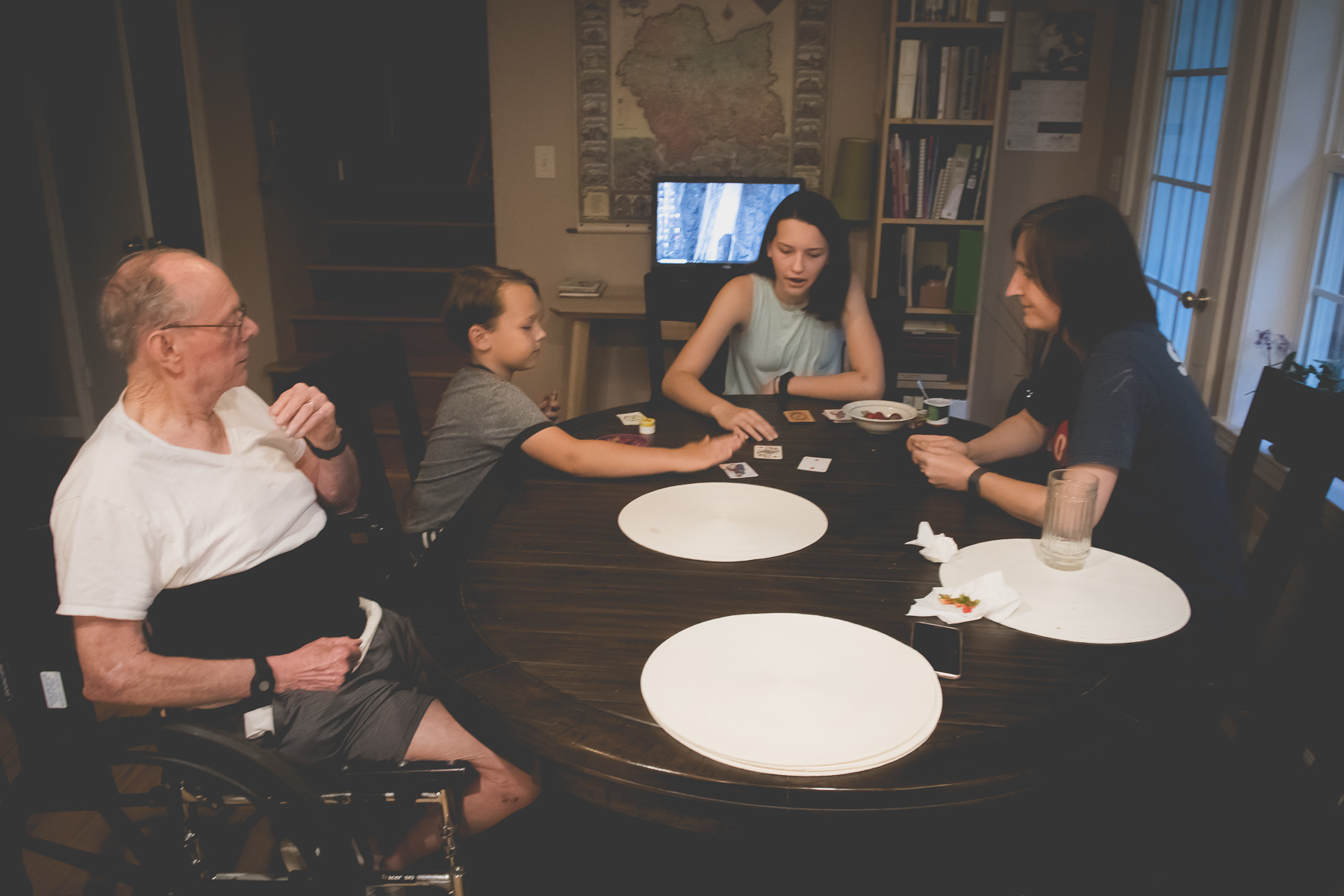
And of course, there’s the evening game of hearts.

Two nights in a row — how do I do it?

A Perfect Day

In the morning, a bike ride. The kids don't really want to go, but it's supposed to rain on and off throughout the day, and they need exercise, so I all but force them. L fusses about one thing; E has a wreck (due to his own carelessness) and ends up fussy for some time; I fuss about their fussing. It's easy to get caught up in the negative and let it chart the day's course for you if you're not careful. Not deliberate.

So I try to make things a little more careful, a little more deliberate. We get back and spend a fair amount of time, just the three of us, working on our bikes' brakes. They're all squeaking and squawking like feral hogs tied to deranged cats. For each bike, we loosen everything -- cables, brake pads, centering screws -- and recalibrate everything. As we're working, I like to think that the kids are enjoying learning something, but I'm not sure. In fact, I rather doubt it. But there's still some value in this, even if it's just spending time together solving a problem.

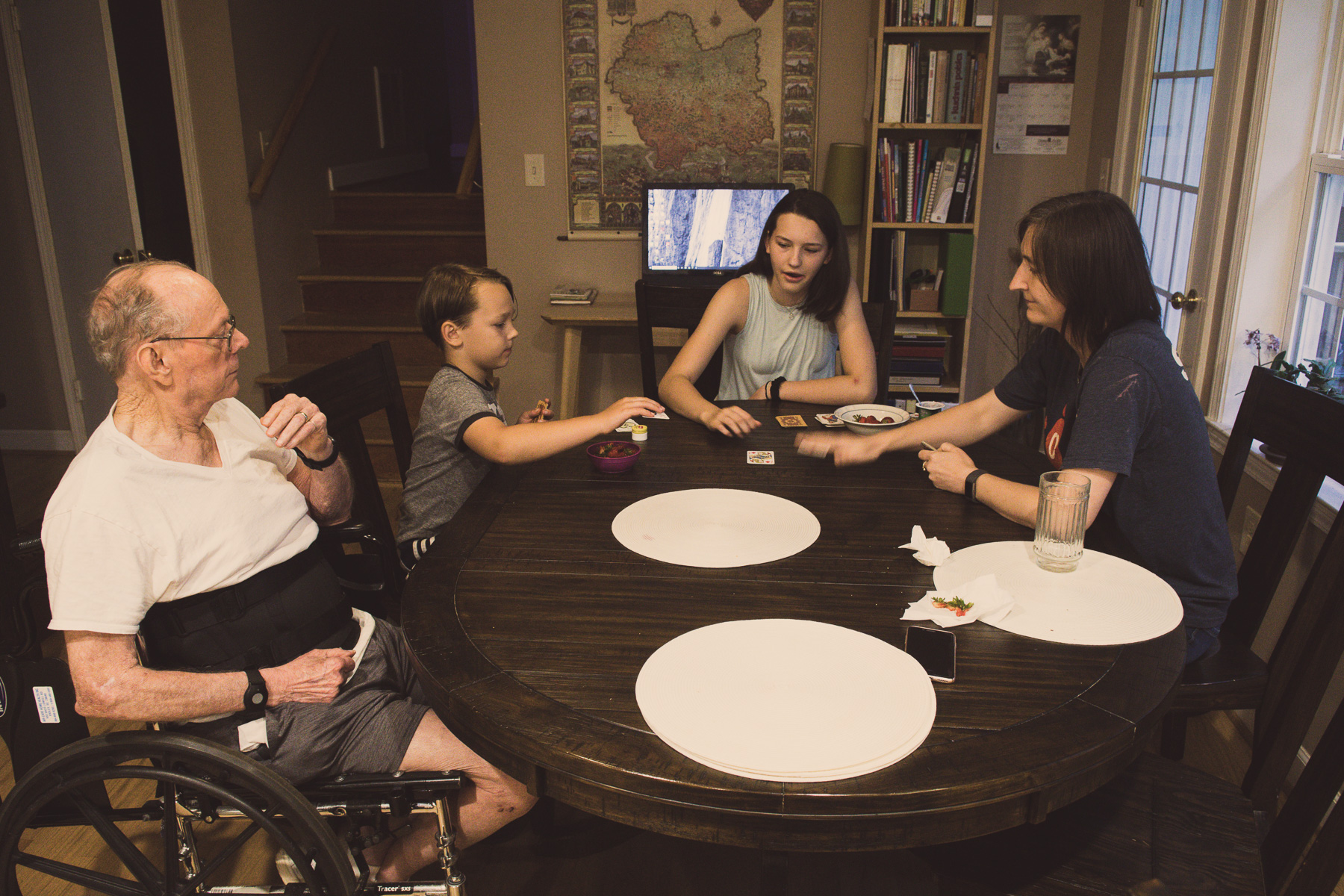
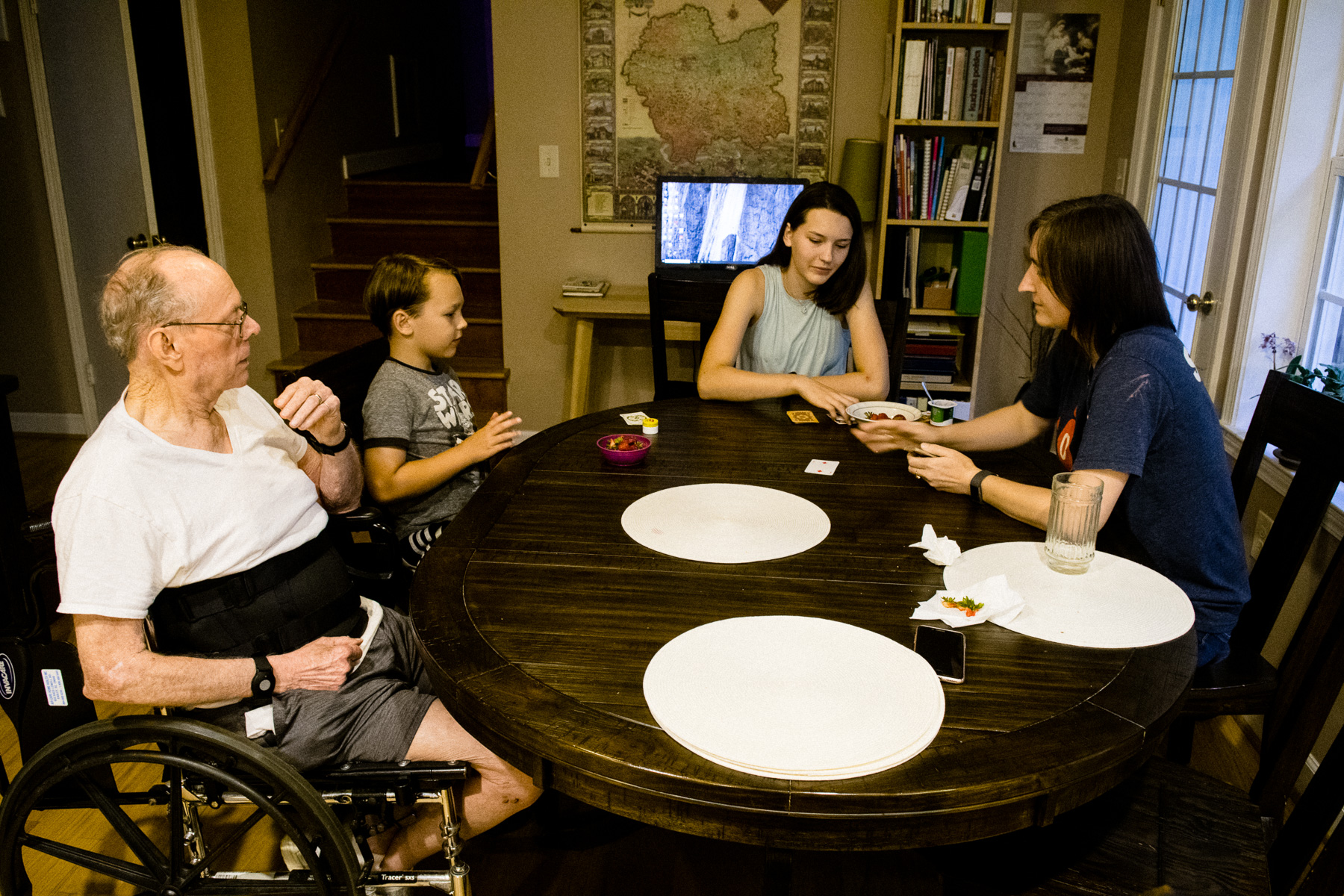
After dinner, the Girl decides she wants to play Hearts with Papa, K, and me. E is across the street playing with neighbors, and he's not able to follow a game with tricks and trumps just yet, so we play just the four of us.

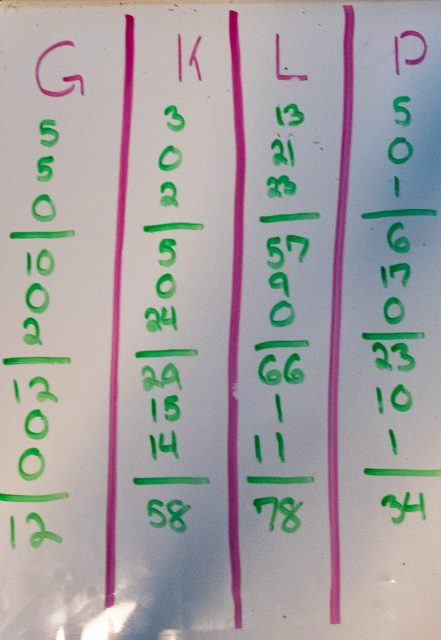
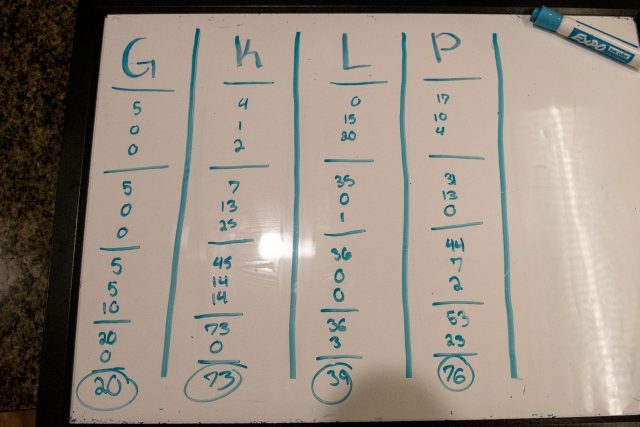
We play eight hands, and in a surprise -- I never win at games -- I destroy everyone. L is the nearest to me, and she has almost double the points I have.

After the Boy comes in, he suggests War -- he's just learned it, and he likes it. One of two card games (Uno being the other one) that he enjoys.

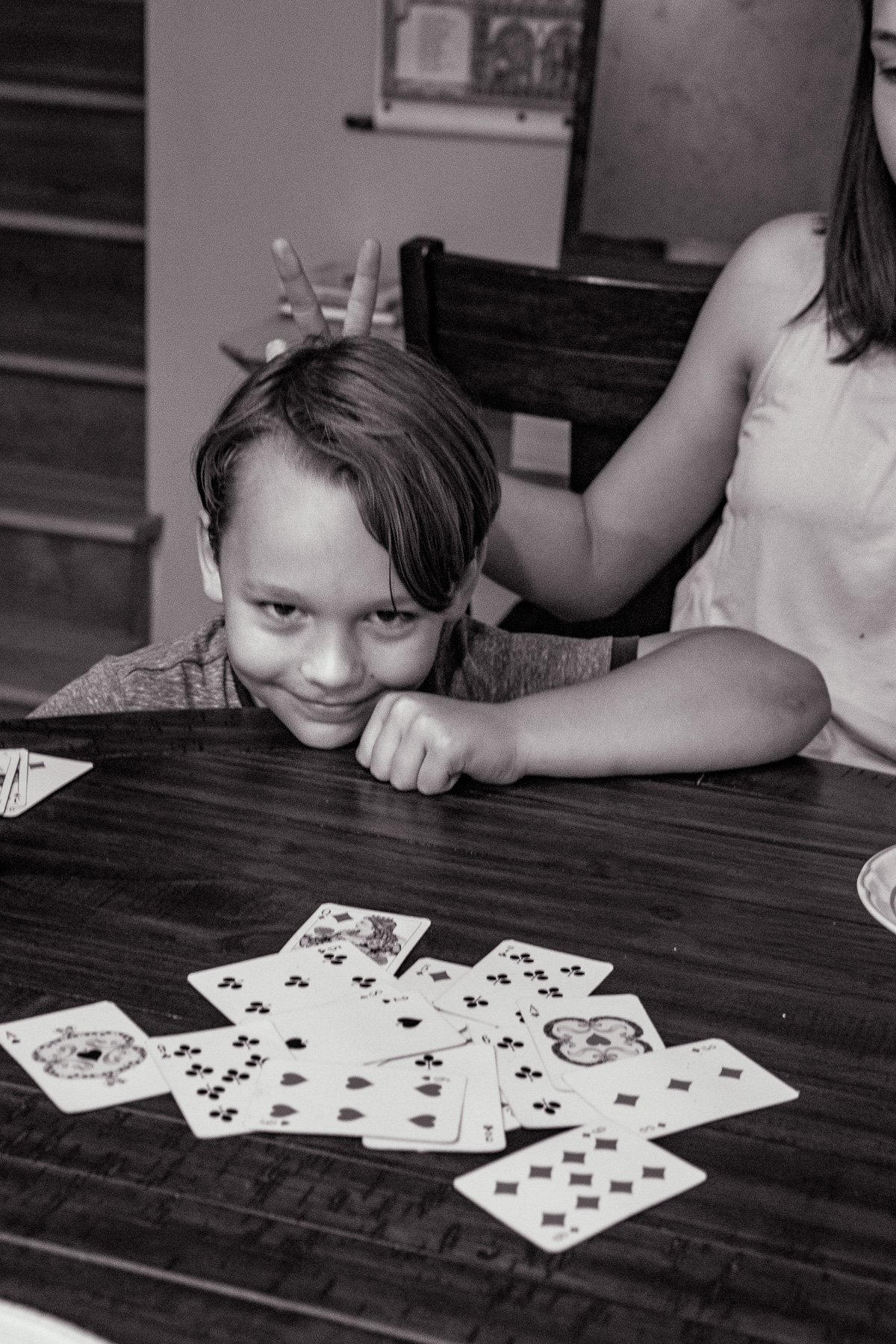
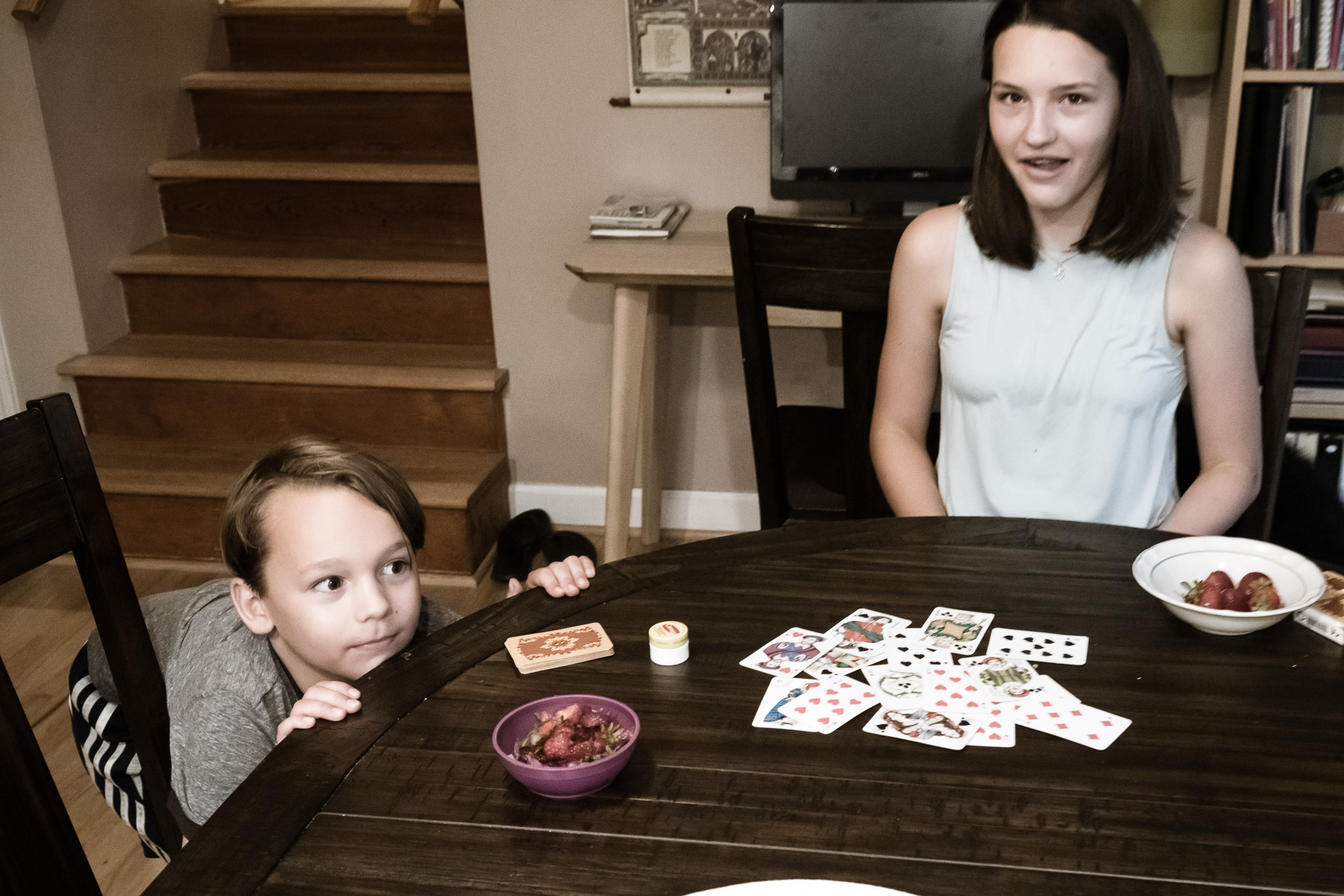
I take the opportunity to take a few pictures. In the end, I can't decide between three action shots, so I include them all. And the other two shots? They're winning hands the Boy is particularly proud of. In the first one, the Girl gives him rabbit ears; in the second, he's wised up.

Once I put the Boy to bed, I grab L and take her down to watch a movie. It's the second night we've done this. Last night, I showed her The Help. It's a good sign when she wants the movie paused when she leaves to get a snack; last night, she paused it herself. Tonight we watch a quirky British romantic comedy, About Time. It's about making the most of life by looking at each day as a treasure. We all need to be reminded of that from time to time, especially a thirteen-year-old and her cranky father.

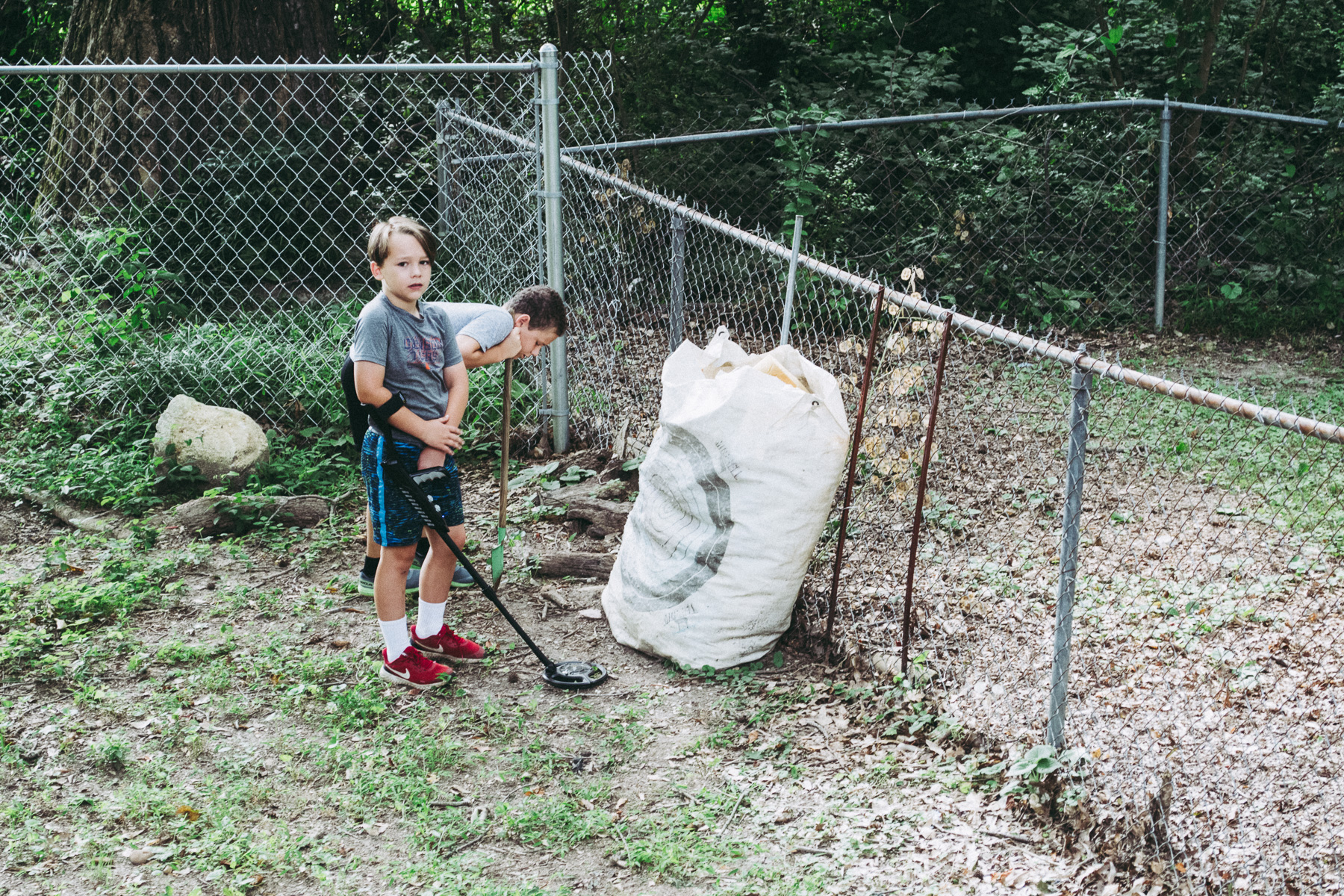
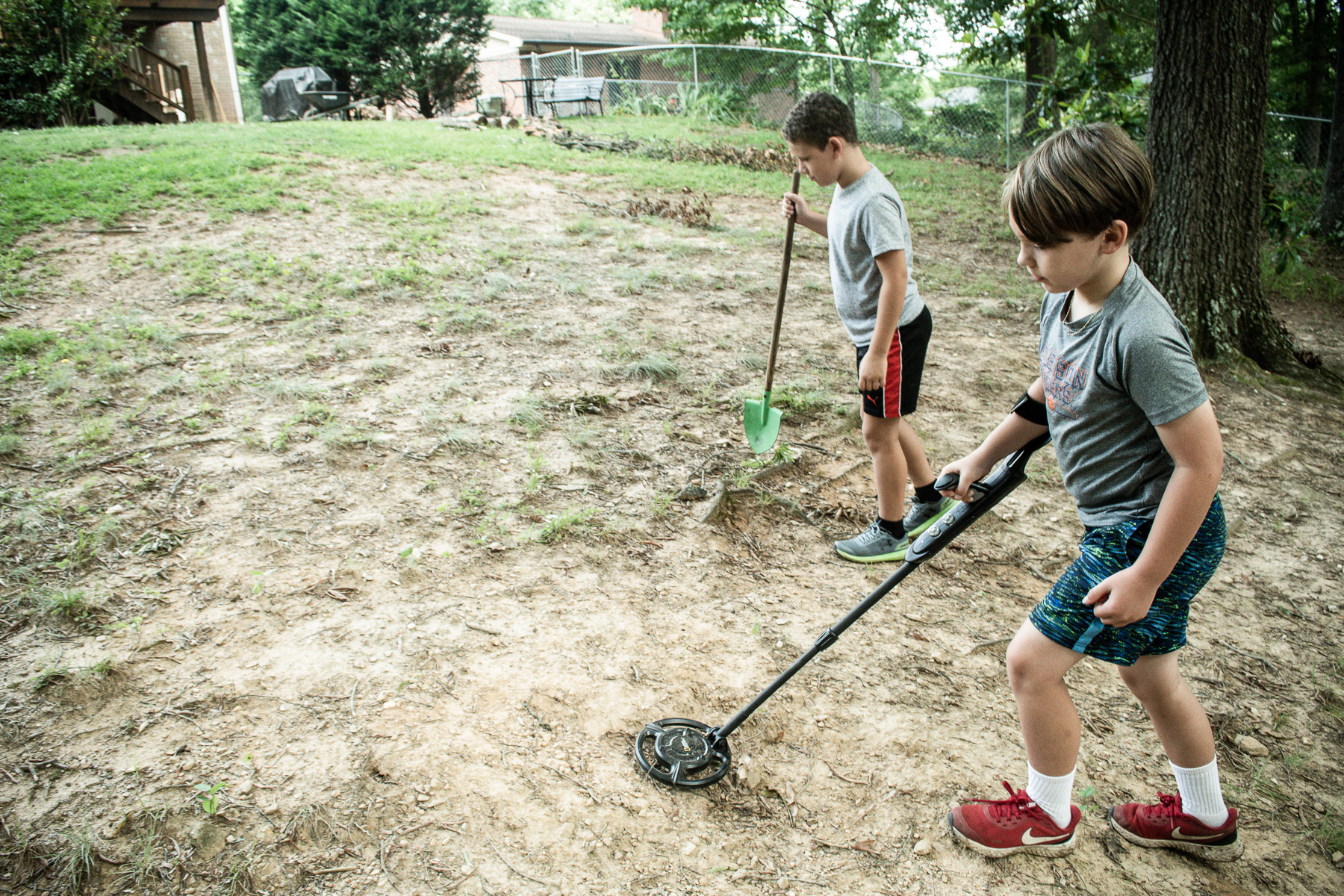
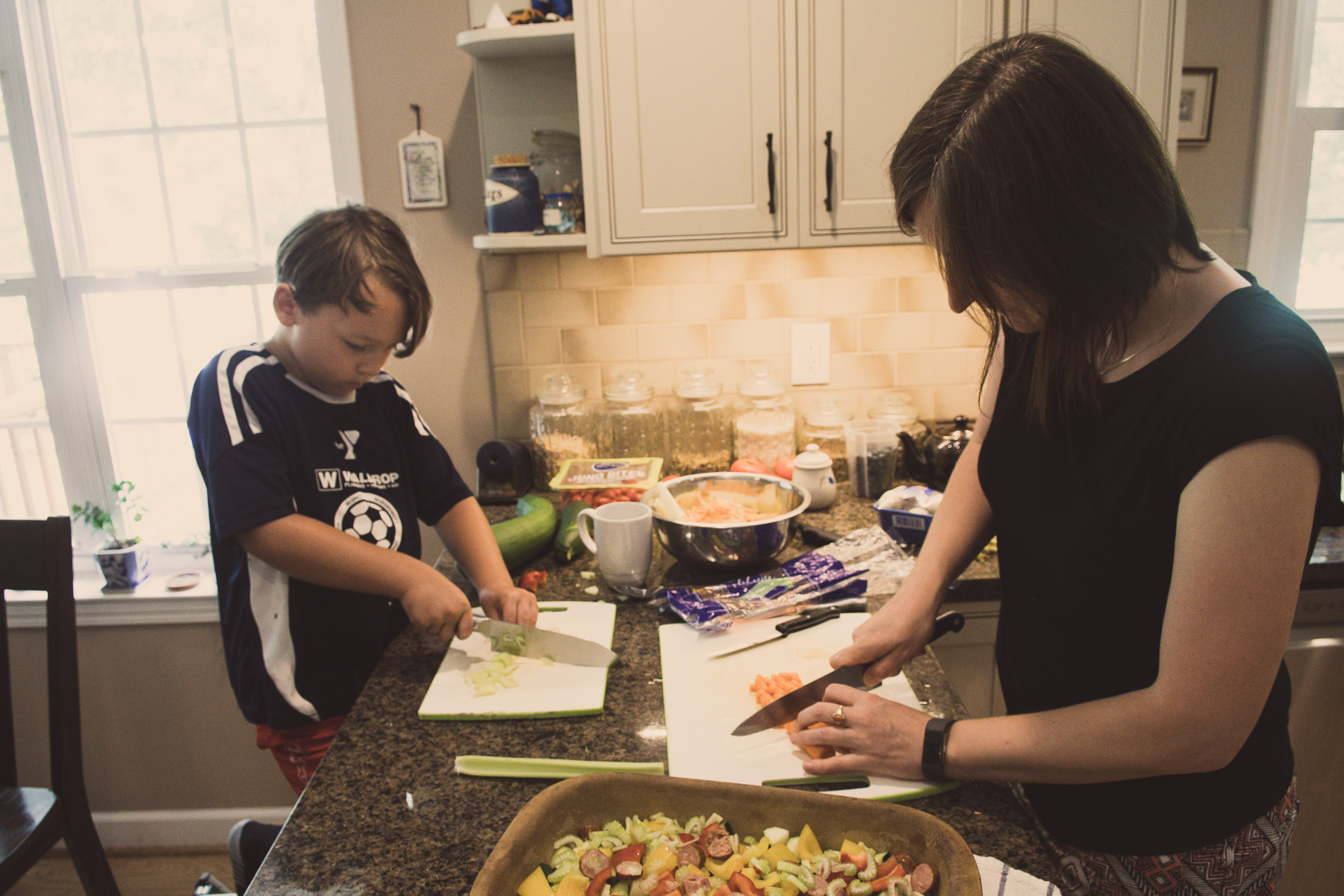
Helping