






fun in threes, sometimes fours
g


is boring. Well, not necessarily boring, but almost all the trips disappear, pack and den meetings are carefully choreographed disasters of social distancing (always) and mask wearing (when indoors at least), and everyone gets the feeling that scouting is just not what it used to be.
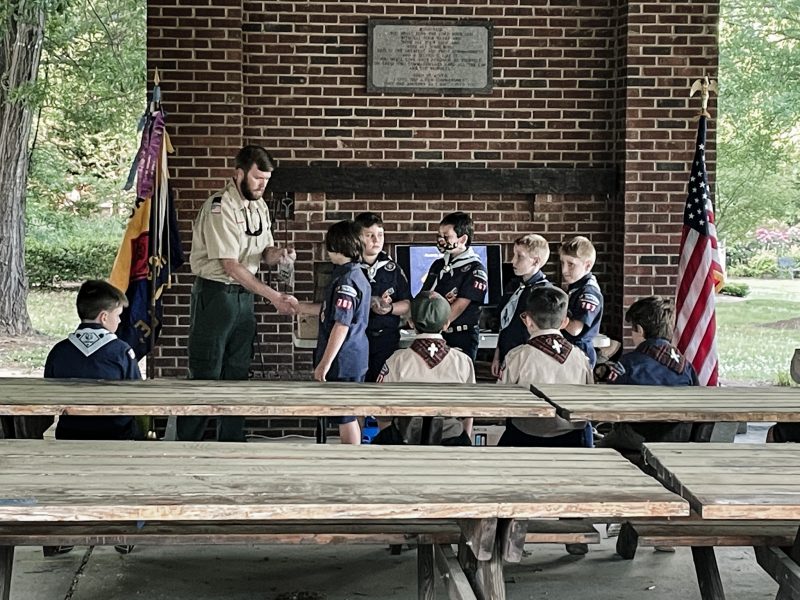
This evening, we had the final pack meeting of the year before the crossing over ceremony later in the month, when E and the other bears move up to Weblos. After that portion of the meeting, we adults talked about what trips we might take next year. Some of the decisions we made:
I told the Boy about these things as we drove home. “I definitely want to sign up next year!”
The first concert I ever attended was in Johnson City, Tennessee in about 1985 or 1986. The band was Huey Lewis and the News, and even though I was not the biggest fan, I joined two friends (who were brothers) for the concert. Their dad dropped us off and then met us once it was over.
It wasn’t until a few years later that I went to a concert because I truly loved the band and not simply because I had the chance to see someone live. It was R.E.M. in Knoxville, and it’s a concert I remember to this day.
In college, I got to see a number of bands like the Pixies and U2, but the most exciting for me was Pink Floyd.
But there was always one band missing, always a single concert that I thought, “If I ever get a chance…” My first love. Genesis. Now, there’s no way I’ll ever see the Genesis I’ve always truly loved — the Genesis of the early- to mid-seventies with Peter Gabriel on lead vocals and Steve Hackett on lead guitar. But the genius of the band, musically speaking, has always been the keyboard player, Tony Banks. He’s still with them. Phil Collins can no longer stand for long periods, and Mike Rutherford — who knows? But they’re coming out of retirement for one last tour. And my best friend and I have tickets to see them in Charlotte. And we have an extra ticket, for the Boy’s first concert.
“I’m a little nervous,” he confessed. “It is my first concert. Mama said it will be very loud.”
“It will be,” I confirmed. “But you’ll have ear protection.”
I read the instructions to the kids -- the same instructions I've read for years. It's the same test program they've used for years. (Doesn't the company to which our state pays millions of dollars ever develop new software? Isn't this just antiquated after so many years?) Then comes the statement: "Do your best when answering the questions." It might not be a word-for-word quote there, but it's the gist.
I literally remind the kids to do their best.
To be fair, though, it's hard for the kids to see any sense in this test. By the time the results come back in September, they're a month into their high school adventure -- what do they care about middle school scores anymore? As far as they can tell, the test does nothing for them, affects them in no way.
That's a two-edged sword, to be honest. On the one hand, it saves them worry and stress. On the other hand, it makes it more difficult for them to take the thing seriously. And why should they?
I usually level with them: "It has no real effect on you."
"Why do we do it?" they ask.
"It's a measure of my effectiveness." If all my students fail the test, that reflects badly on me. If the expected number fail the test, I'm an adequate teacher. If fewer than expected fail the test, I'm an excellent teacher.
It's all about the numbers, as it always is. Weezer says it best:
There's always a number that'll make you feel bad 'bout yourself
You try to measure up, try to measure up to somebody else
Numbers are out to get you, numbers are out to get you
Numbers, ooh
They say that you're too short to join the team
And your IQ's too low for poetry
Numbers are out to get you, numbers are out to get you
Education has three agents:
It's only that third element that can be legislated, and those numbers are a useful metric in that endeavor.
So I smiled and read again today, "Do your best when answering questions."
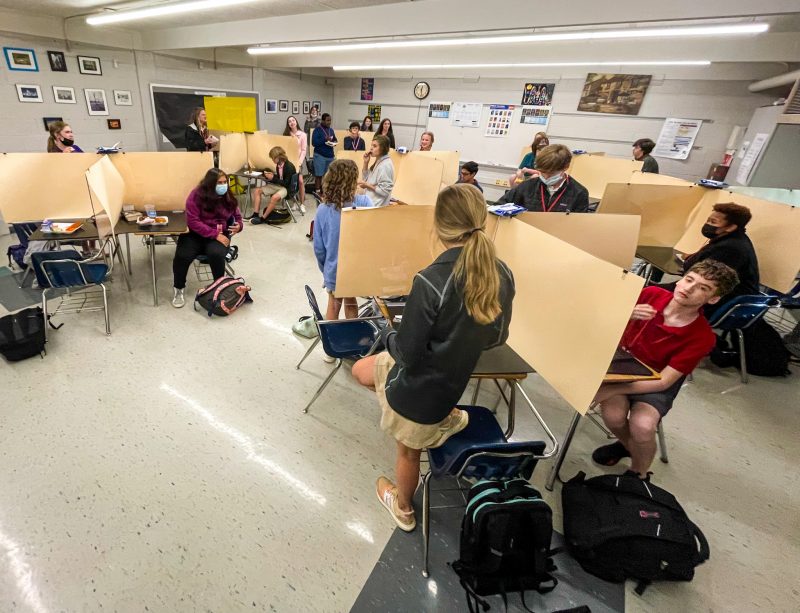
After hours of testing, confined essentially to little boxes, my students decided to have lunch standing.
Both the kids had tournaments this weekend. The Girl's tournament was outside Atlanta, and it was her first time in competitive sand volleyball.
"How'd it go?" I asked.
"I got sand in my mouth," was the first impression.







The Boy's tournament was local. They made it to the semifinals then lost.
"We should have won" was the sentiment. How to get him to accept "win some, lose some" and still have the fire in the belly?