Matching Tracksuits

fun in fours

Month: May 2020

Day 68: Training Death and the Maiden for Exploring

Death and the Maiden

My friend M grew up on a farm with his grandparents. His father passed away; I never really knew what happened to his mother. But from the time I met M, he lived with Ma and Pa as he called them, and as I came to call them.

Their farm was just outside the city limits, a place in the county that felt so different and distant from my suburban, cookie-cutter neighborhood that I felt I might be in a different state. In a different country.

We spent a fair amount of our time there shooting .22s and shotguns. We'd shot at birds and usually miss. We'd shoot at squirrels with the .22s and miss; we'd shoot at them with the shotguns and, well, it wasn't pretty. We were stupid -- what can I say?

One Sunday afternoon in 1990, just before I started my senior year of high school, Pa gave us a task. "There are raccoons that are just givin' the garden a hard time. How about sittin' up on the hill above the garden and seein' if you boys can take care of the problem?" He needed to say no more. We took a bottle of Mountain Dew, Pa's double-barrel 16-gauge shotgun and Papa's bolt action 20-gauge (a bolt-action shotgun? really?) and took positions on the slope just behind the garden.

About an hour before sundown, the raccoons made their way into the garden. We waited until they were among the cornstalks, reasoning that they would sustain the least damage from stray pellets, then fired away. Papa's shotgun had a two-shell clip and held one in the barrel. I discharged those in short order then reloaded as quickly as I could. M fired one then the other barrel, broke the gun over his knee, tossed out the spent shells, and was firing again before I knew it. I think we reloaded twice. M might have reloaded thrice.
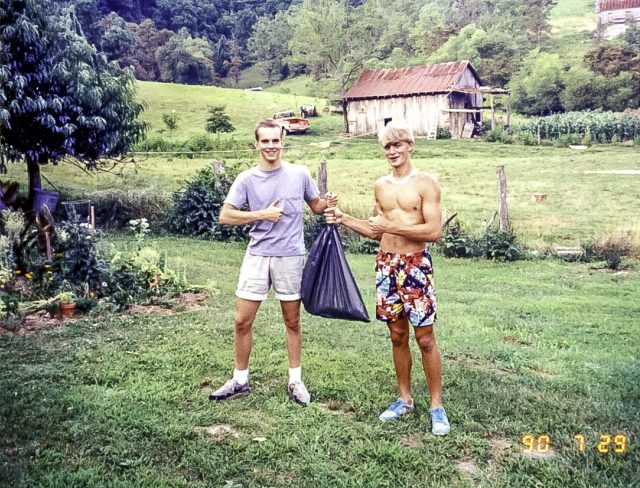
All told, we killed three raccoons that afternoon and earned the gratitude of both Ma and Pa. And we had a hell of a good time.

I've long ago lost touch with M. I last saw him in 1998 during the summer I came home after two years in Poland and one more year waiting. He'd made some bad decisions, and the place of our meeting was something out of an O. Henry short story. After that, we corresponded a few times, but the last we communicated was in late 1999.

That was almost thirty years ago now, and I still think back on that day fondly. Not because of the death we dealt but because of the innocent friendship lost. I don't feel guilty for killing those 'coons, though: they were doing real damage to the garden, and we took care of the problem in the country-folk way. Sure, we probably could have trapped them and released them somewhere else, but Pa was not a sentimental man, and he would have regarded that as a waste of time.

Years later, I thought of this day when I read the poem "The Early Purges" by Seamus Heaney:

The Early Purges

I was six when I first saw kittens drown.
Dan Taggart pitched them, 'the scraggy wee shits',
Into a bucket; a frail metal sound,

Soft paws scraping like mad. But their tiny din
Was soon soused. They were slung on the snout
Of the pump and the water pumped in.

'Sure, isn't it better for them now?' Dan said.
Like wet gloves they bobbed and shone till he sluiced
Them out on the dunghill, glossy and dead.

Suddenly frightened, for days I sadly hung
Round the yard, watching the three sogged remains
Turn mealy and crisp as old summer dung

Until I forgot them. But the fear came back
When Dan trapped big rats, snared rabbits, shot crows
Or, with a sickening tug, pulled old hens' necks.

Still, living displaces false sentiments
And now, when shrill pups are prodded to drown
I just shrug, 'Bloody pups'. It makes sense:

'Prevention of cruelty' talk cuts ice in town
Where they consider death unnatural
But on well-run farms pests have to be kept down.

Today, the Boy made his first kill. Birds were in our blueberry bushes, and the Boy had his bb gun. Somehow, he was close enough that one shot dropped a robin that was making an evening snack of our still-unripe berries.

The Girl was furious about it. She was literally in tears, shouting at him that he had no right to kill an innocent bird that had done nothing to us.

"In this time of the pandemic, we have to share," she muttered as we ate dinner -- fish our neighbor caught a couple of weeks ago when the governor let boat ramps open again before reclosing them due to a general failure to follow the newly-established guidelines.

I didn't point out the obvious irony, nor did I point it out when she popped chicken nuggets into the toaster oven for her evening snack.

Training

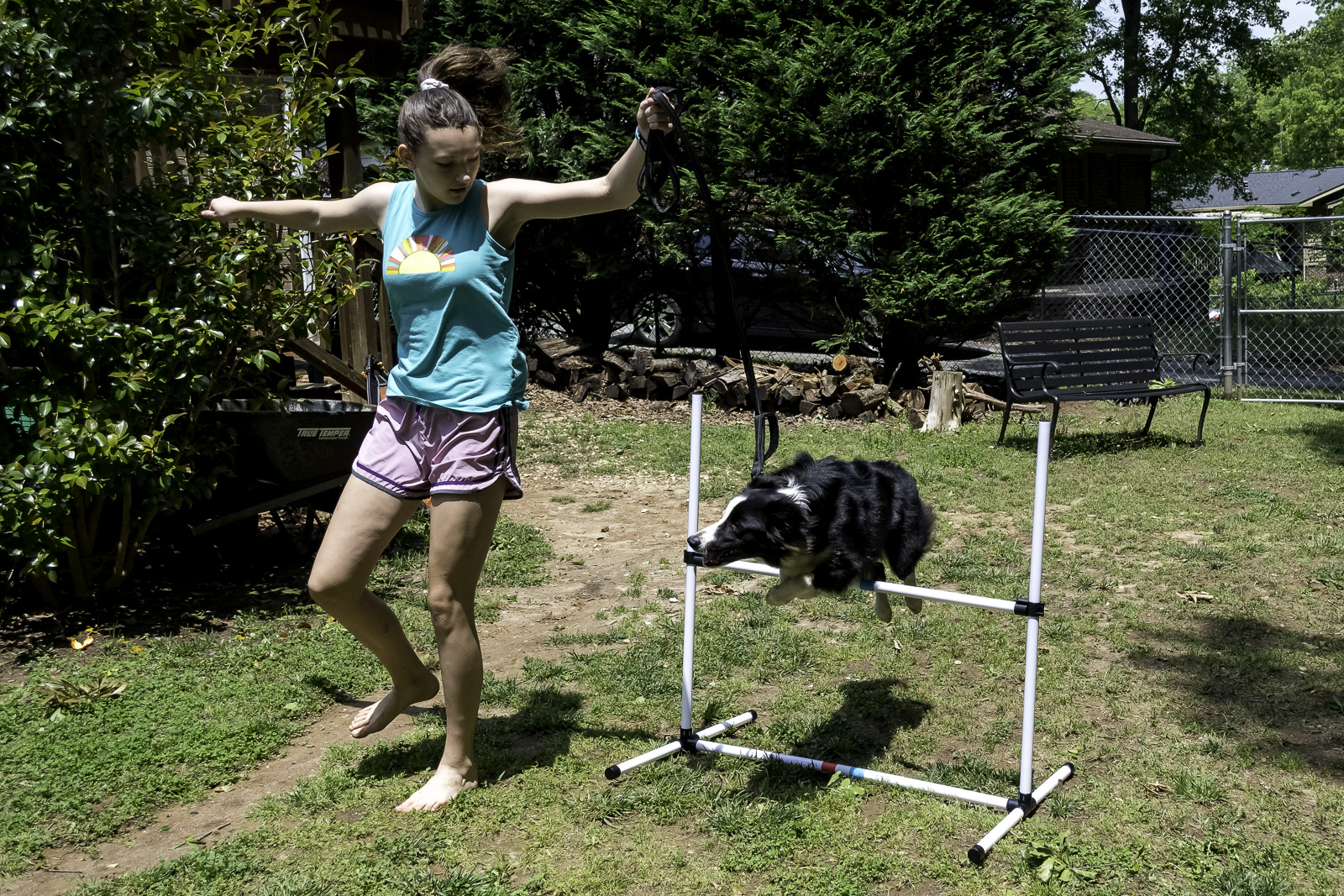
The other day was Clover's birthday. I think it was her birthday. L insists -- positively and passionately insists -- that it is the 21st of May. Or the 20th. Or maybe it was the 19th. I'm not sure. I'm not sure about her certainty. But we celebrated Clover's third birthday this week nonetheless by getting her an agility course.
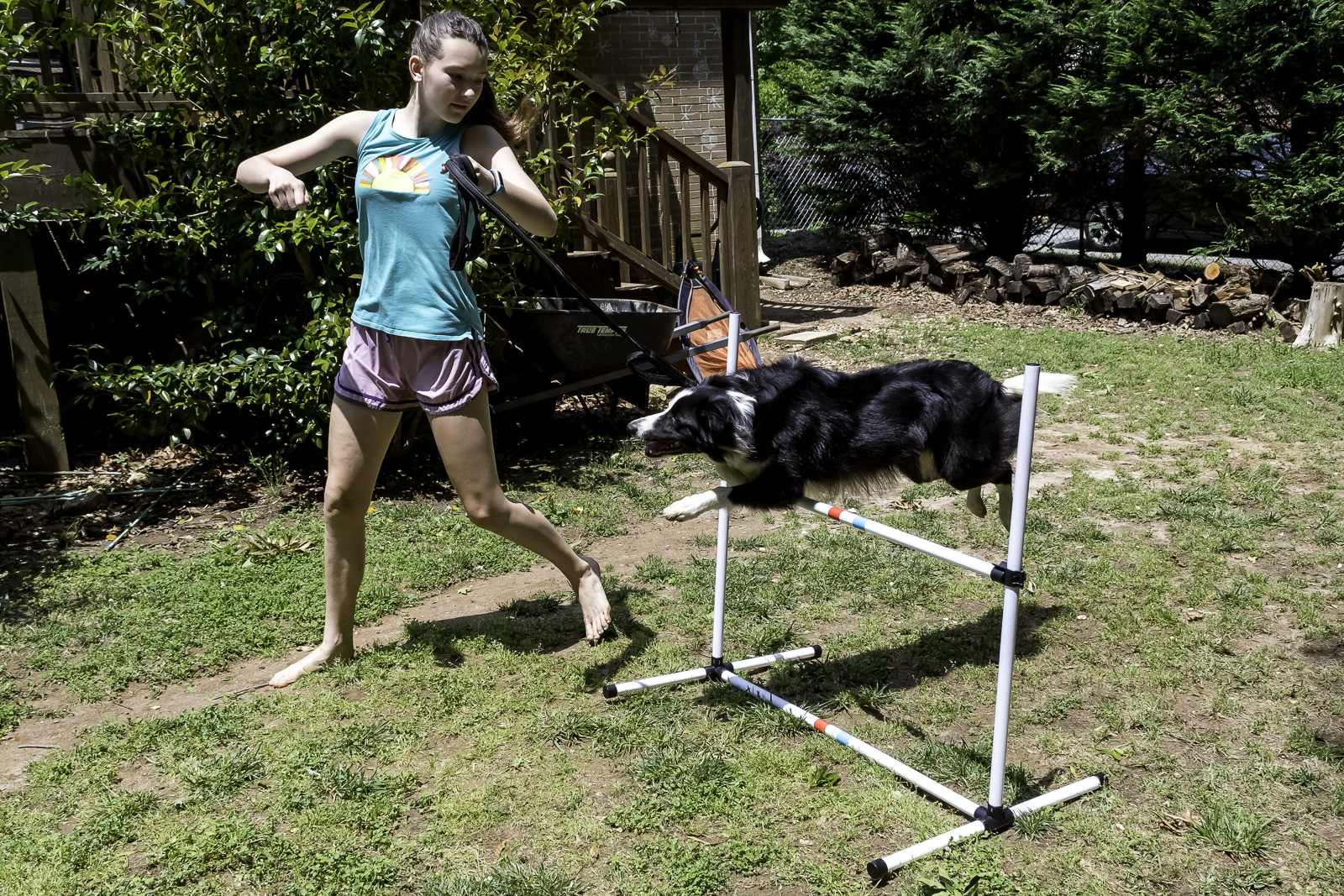
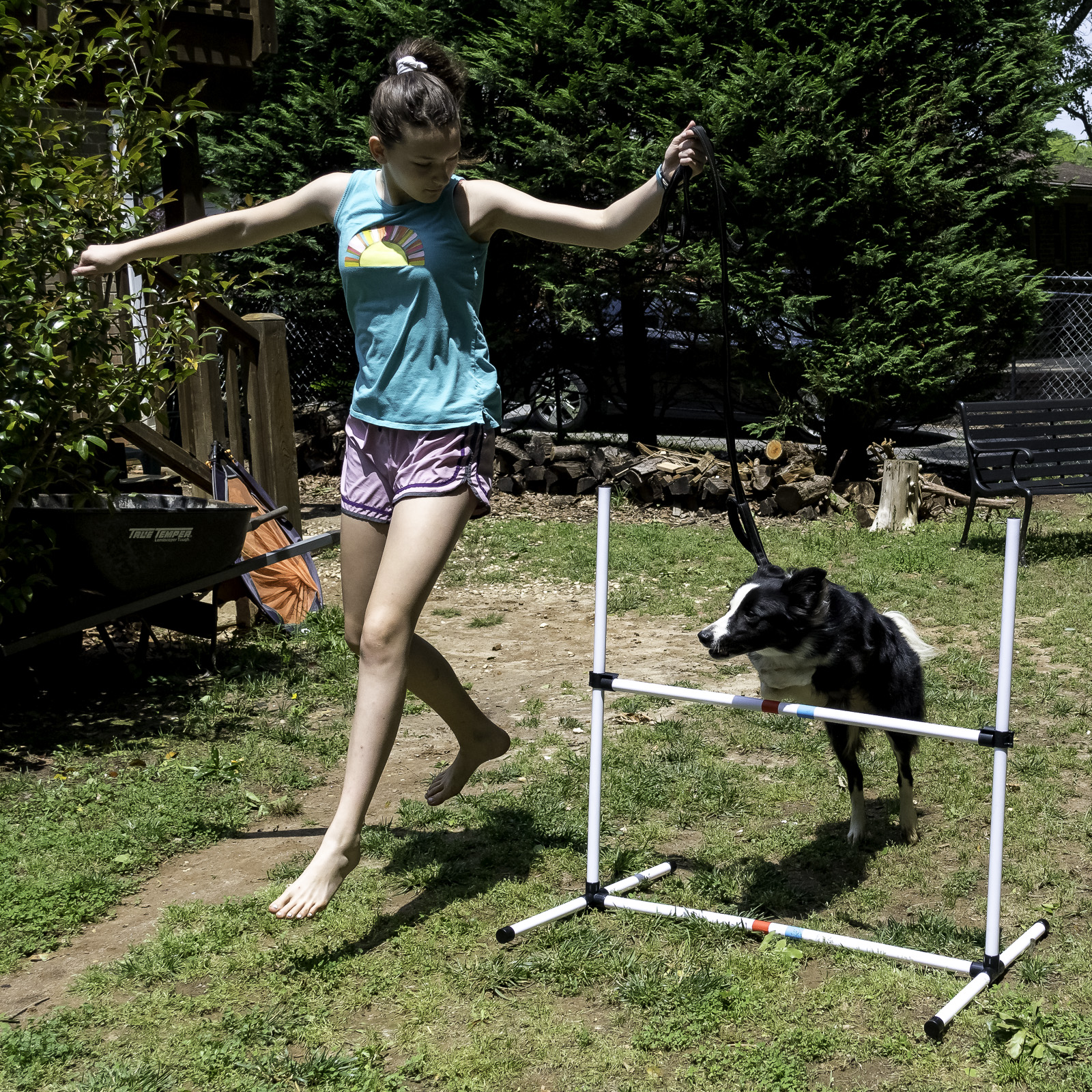
She's already got a few new tricks up her, well, I guess tangled in the long hair on her hindquarters. (Cliches sometimes break down, I suppose.)

Exploring

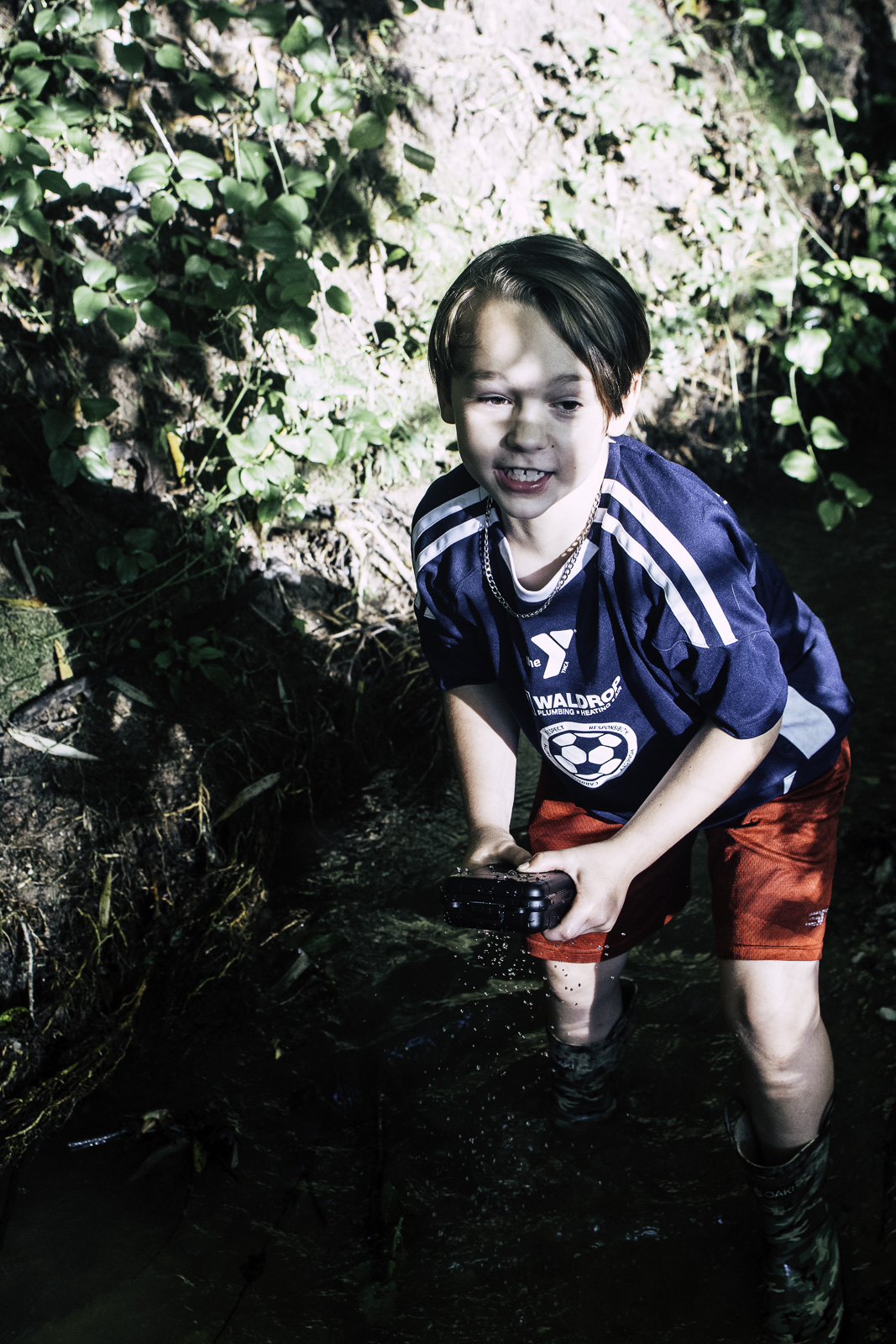
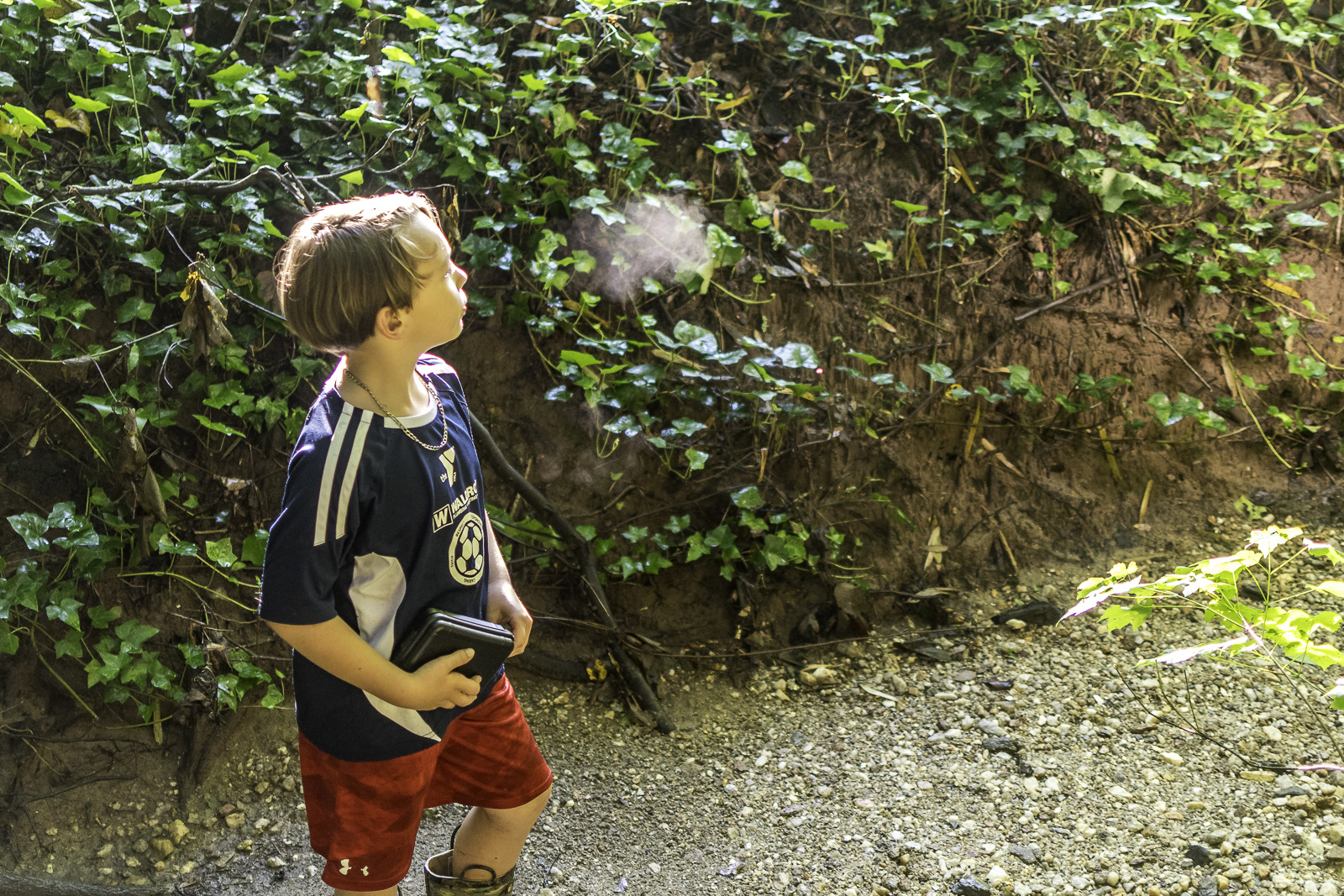
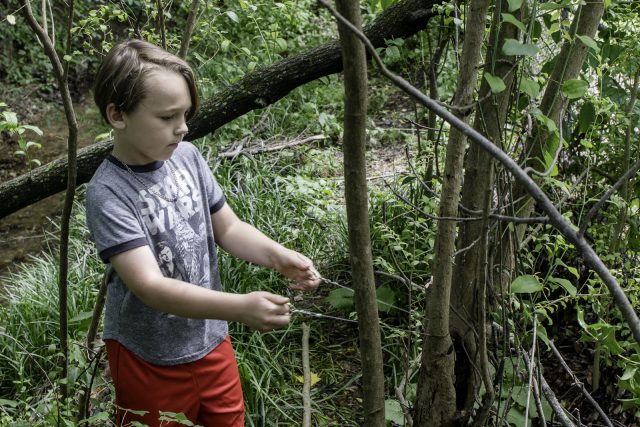
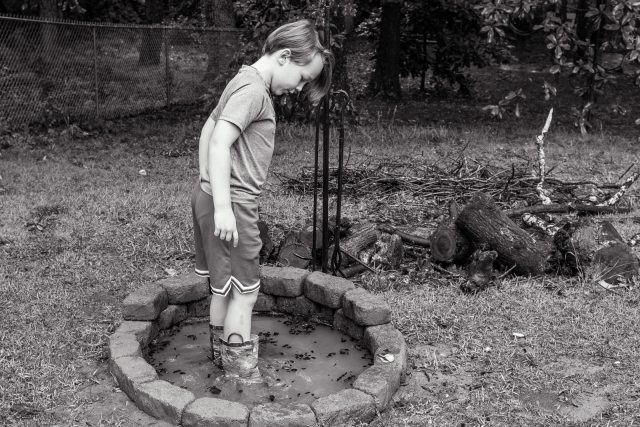
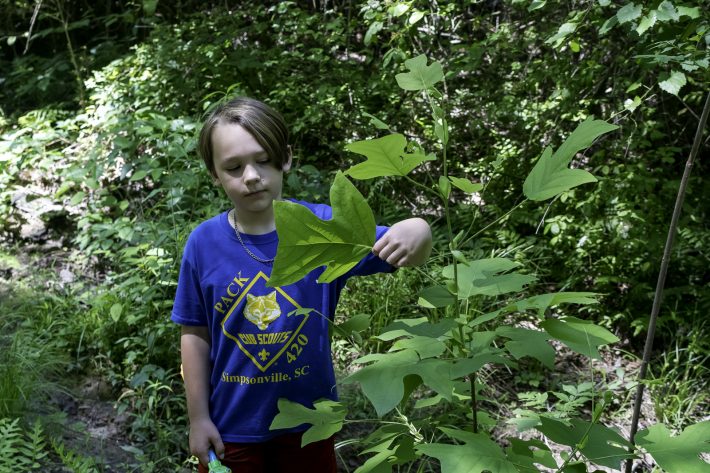
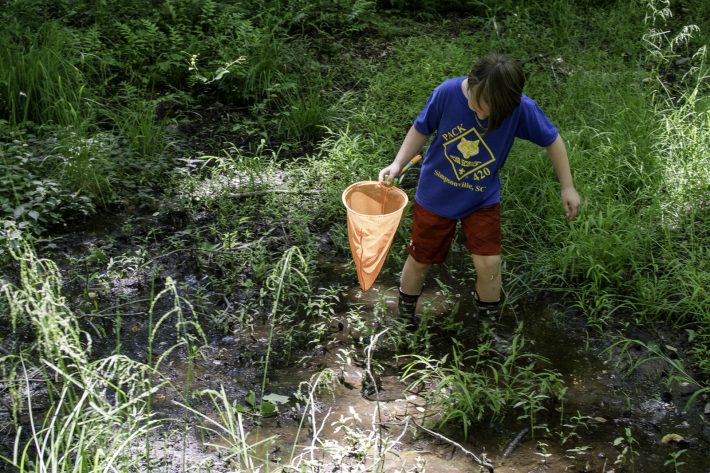
E talked K into doing a little exploring after dinner. While K was still in her good clothes.
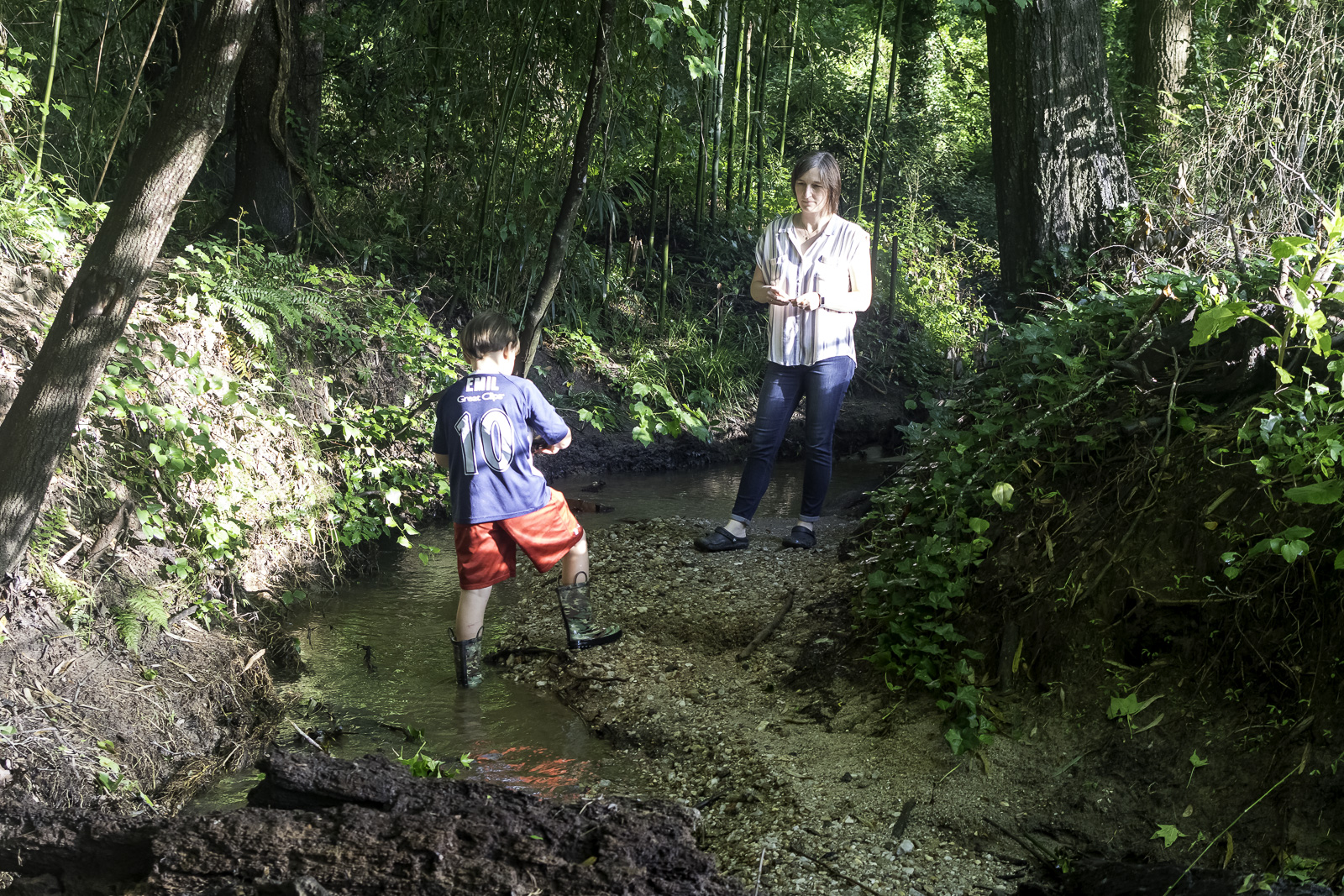
He was keen to show her how the plastic box his survival gear came in is, in fact, watertight.
Day 67: Cleaning, Surveying, Surviving, and Commenting

Cleaning Out

The end of the school year always brings a lot of cleaning and paperwork. We have an entire list of things we teachers have to do before going home for the summer.

  • We have to return materials to the media center.
  • Emergency guides need to go back to an administrator.
  • We have to make it easy for everything to be removed from our room, so that usually means packing up all the books on my bookshelves and storing them somewhere.
  • The plant engineer needs to check our room for any issues that will hamper the cleaning of our room over the summer.
  • We have extensive checks about grades as well as reports we have to print out for the office staff in case there are any questions about grades over the summer.
  • We have to return our keys to the a designated administrator.
  • We have to return our receipt books to the accountant.
  • We have numerous meetings about various things, some of which feel incredibly important and some of which feel not so important.
  • Prepare letters to go home with final grades.

The first year I was a teacher at this school, it took three days to get everything ready because, in addition to all this (and a lot of stuff I’ve forgotten/neglected to mention), we had to put copies of the final report cards in permanent records and then organize the permanent records based on which high schools students were attending. These last two steps are now out of our hands, but it still takes a while to get all this done.

Part of the challenge is getting signatures. At the end of the whole process, we are to provide the principal with a checklist that has been initialed by everyone involved to show that we’ve done all the steps above. Sometimes, it’s a bit of a trick tracking down a given administrator.

I went to the school today for the end-of-year checkout, arriving at around ten in the morning, and by twelve, I was done.

This is just another way that this year is exceptional.

I’m not complaining: I didn’t have to move my books at all because the custodial staff, in an effort to get a head start on the summer’s duties, has already cleaned my room, most significantly the floor (cleaned and waxed). Turns out they just worked around the bookshelves. The curmudgeon in me will forever after complain, “Why can’t you just do that every year? It’s not like I ever move my room around — everything goes back to the same place, year after year.” Still, I would have preferred a regular ending to this year, and for that, I would have willingly done the whole check-out procedure — twice, if necessary.

Surveying the Changes

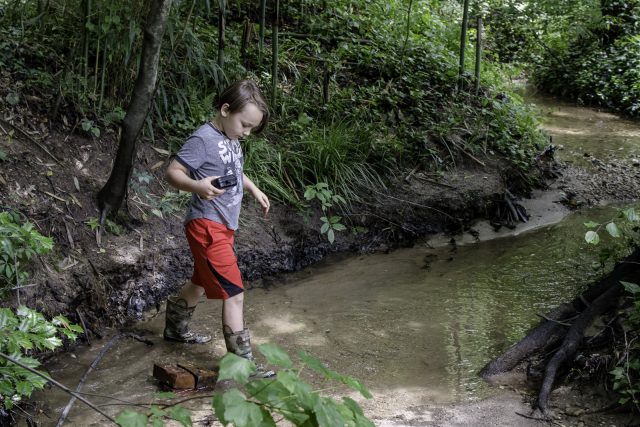
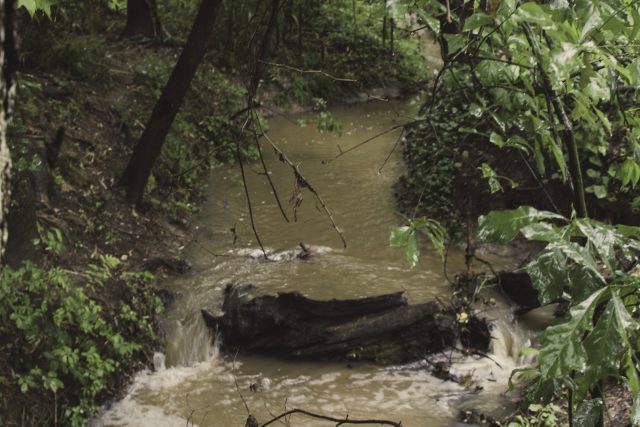
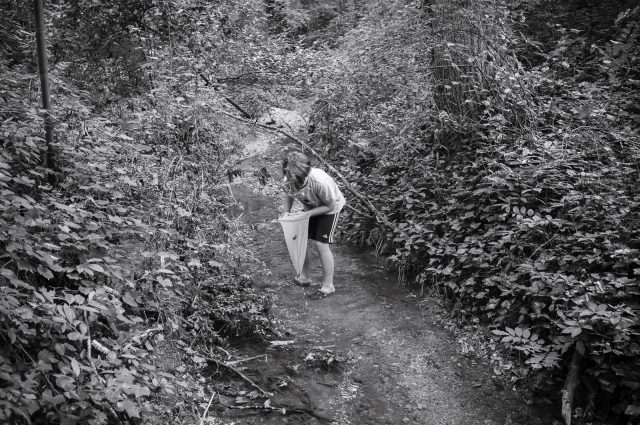
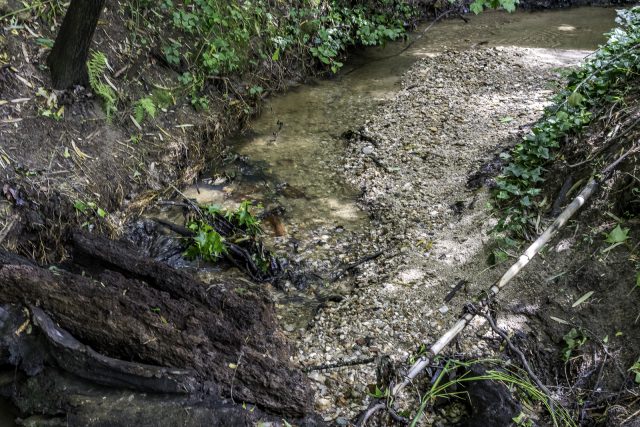
Every time we have a significant rainfall that results in the creek behind our house rising to food or near-flood levels, the Boy and I like to go out and see what has changed. The surging waters bring new flotsam and jetsom after it washes away existing flotsam and jetsom.

It changes the flow of the creek, too. For example, the spot where we usually cross was just wide enough that I could step over it with one stretching step. Now it’s much wider. As I was wearing tennis shoes during our afternoon adventure, I was unwilling to take the chance of getting them wet. The Boy kindly built a stepping pylon out of the bricks we’d brought down last year to help with the crossing in another spot.

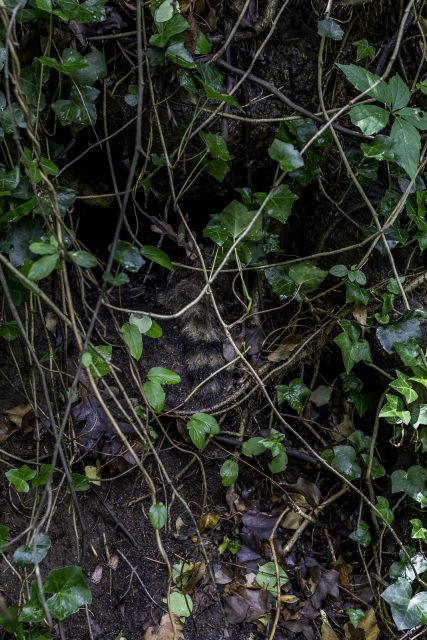
During our exploring, the made a grisly discovery: the raccoon we thought was just inexpertly hiding the other day was in the same spot.

“So it died there?” the Boy asked. “Did it attack something there? What could kill a raccoon?!” He related some video he’d watched in which a farmer explained how raccoons killed some of his chickens. “It would have to be something really big to take down a raccoon!” I could see the wheels turning: he was thinking about what type of enormous preditor could be lurking in that wooded area we explore with seemingly careless abandon.

I suggested that perhaps it was just sick and crawled in there to die.

“Or maybe the snake we saw bit it and that’s where it died,” the Boy intelligently suggested.

That sounds reasonable.

Survival Gear

The Boy is into survival skills. He’s been watching a couple of YouTubers who do survival stuff as their main content. The primitive building of two weeks ago, with plans to build a vast underground bunker complete with swimming pool — forgotten. Completely. Not a word about it.

He used some of his money this week to buy a survival kit.

He just had to try out the saw today.

The Comment

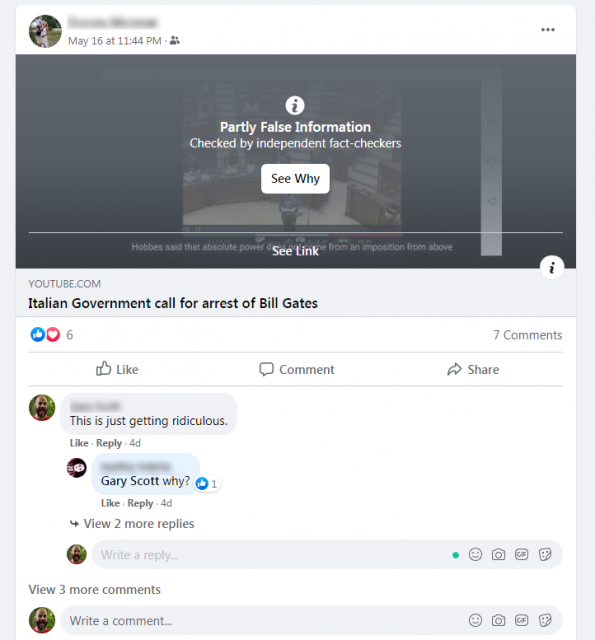
A former student shared a video on social media. I watched about 5 minutes of it. Bill Gates and 5G networks are conspiring to spread the virus. I made a comment: “This is just getting ridiculous.”

“Why?” someone asked.

My response was admittedly a bit barbed: “If I have to explain it, there’s no point. You’ve swallowed the conspiracy theory Kool-Aid.”

My former student took me to task:

You wrote something is ridiculous without explaining why, so it’s normal to ask ‘why?’

What did you think was ridiculous? Which one of the statements that this parliamentarian was providing was ridiculous? I know we don’t hear these statements in MSM but I think that it’s better to check all information available before ridiculing anyone. It’s too easy to discredit something just because it sounds ridiculous. There were many things in history that sounded absurd to many and yet with time they proved to be true.

Anyway wherever the truth is, it’s always a good idea to ask questions and there can be nothing and no one that should be unquestionable.

After the comment, I went back to watch the video, only to find it had been flagged by fact-checkers. I simply pointed them to a couple of articles and left it alone.

What I wanted to say:

  • “What did you think was ridiculous?” The whole thing. The idea that someone could possibly take this nonsense seriously.
  • “Which one of the statements that this parliamentarian was providing was ridiculous?” Every single one of them. Each sentence that came out of the woman’s mouth. They’re all demonstrably false and completely illogical.
  • “I know we don’t hear these statements in MSM” — there’s a reason for that: it’s called presenting facts as opposed to obviously false, idiotic statements. It’s like the old joke: there’s a name for alternative medicine that works — medicine.
  • “but I think that it’s better to check all information available before ridiculing anyone.” Point taken. Now, go check the facts.
  • “It’s too easy to discredit something just because it sounds ridiculous.” At least you’re admitting it sounds ridiculous. That’s a start.
  • “There were many things in history that sounded absurd to many and yet with time they proved to be true.” Other than quantum theory, name one.

I should be used to this kind of nonsense now, but I’m not. Nor should I be. It’s normal now but it shouldn’t be.

Day 66: Morning Ignorance of the Below and Above

Morning

The morning, post-breakfast ritual during this time of lockdown and isolation:

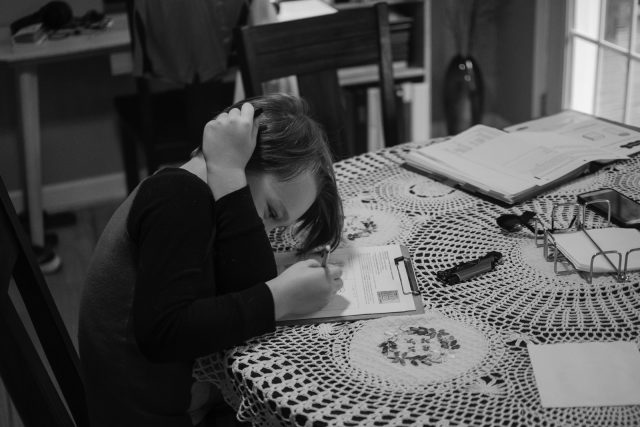
The Boy works on his schoolwork. We try to pace it: whatever’s going to be more challenging for the day we tackle first. Lately, things have been fairly balanced: everything has been much easier, in short. Still, old habits persist, and he’ll start fussing if he gets the slightest bit frustrated some mornings.

Today, we made it through everything fairly quickly with minimal fussing.

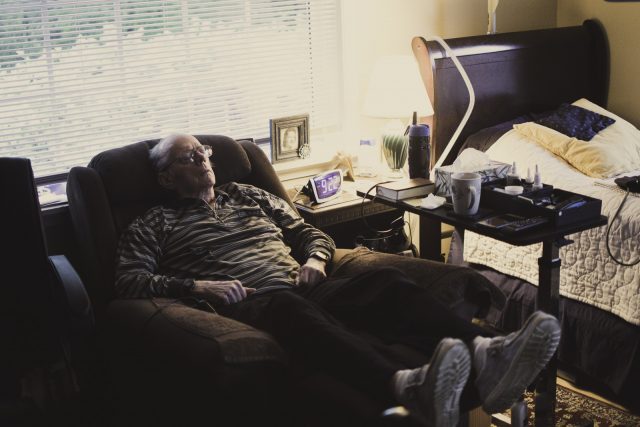
Papa often takes a nap. He doesn’t necessarily intend to take a nap — he’s just comfortable, full, content, watching television or listening to a book, and what else is there to do?

K works on emails for her real estate clients. She’s trying to work two jobs now. We all tell her that she needs to focus on one or the other. We know which one she’d like to focus on. We also know that that job doesn’t have a set pay schedule.

I am usually either helping the Boy or working on my own school work downstairs. Or as in this case, taking pictures.

The Girl — well, she does what a teenager does best.

Below

Ever since we had our first flood in the basement several years ago, a heavy rainfall makes me just a bit nervous. I look at the puddles forming in the backyard. I check the weather. I duck into the crawl space to look in the sump pump basin. I repeat the cycle. I worry, worry, worry. Until our big flood in February, I’d gotten to the point, though, that I really fretted very little. It had gotten a little wet but it hadn’t flooded flooded. Still, I’m always probably going to be a little worried about water coming up from below, the hydrostatic pressure building to the point that it forces water through the smallest of cracks and starts filling our basement again. It will happen. And though I have taken steps to remediate the situation, there are no more steps I can take that don’t involve massive work and a sizeable fiscal commitment.

Option 1

Our neighbor up the street had a drainage system put in his basement recently: around the entire parameter of the basement, workers busted up the concrete and the applied perforated drain pipes that lead to a central sump pump. It was a five-figure job.

That might be the next step if the basement continues flooding. It’s the type of job that, having the summer off every year, I’d be keen on tackling myself. At the very least, I could rent a jackhammer and bust up the concrete and dig down to the footer, cutting the cost significantly, I would think. Or at least hope.

Option 2

The other option: when we pull out the landscaping front of the kids’ bedrooms, I could dig down to the footer there and re-seal the foundation, perhaps installing a French drain system there while everything is dug up.

And Above

I was playing pool with a friend in the basement probably almost decade ago when water started pouring onto the pool table. It turned out that the shower pan in the master bathroom had failed.

Count Me Out, In

We ended up renovating the whole bathroom as a result.

There was one other time when the water came from above instead of below: somehow, the water came in between the upstairs deck and the door sill and started dripping from the top of the door in the basement. I never figured out what caused that, but I caulked well around the door and it never happened again.

But most of our experience with water entering the house comes from below.

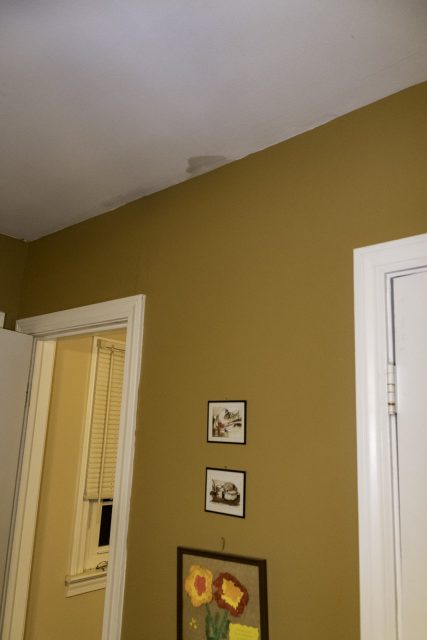
But tonight, the Boy was getting ready for his bath when he looked up and asked, “Daddy, is that a leak?”

Shit.

I went to get a chair so I could reach up and feel the dampness I knew would be there. Still, as I walked to the Boy’s room and returned with the chair, I found myself thinking, “Please, oh please just be a dark spot on the ceiling that I’ve never noticed though we’ve lived here almost thirteen years.”

I looked carefully at where the stain was and realized quickly what had likely happened: the roof vent flashing had somehow failed. Perhaps it had gotten cracked. Perhaps it was torn. Perhaps, perhaps, perhaps.

“Maybe it’s just running down the sewer vent,” I thought.

I climbed on the roof to see if anything was amiss. “Perhaps the hail we had a few days ago damaged something and insurance will pay for an entire re-roofing job,” I thought both hopefully and sickeningly. Examining the flashing, I couldn’t see any sign of compromise. We covered it with some plastic and hoped for the best.

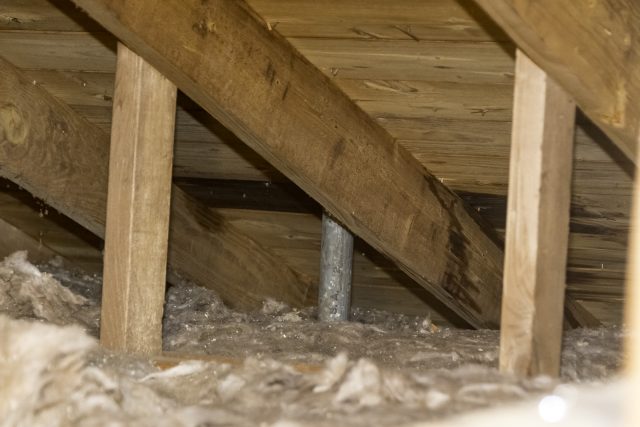
Still, I needed to check in the attic to see just how bad the problem was.

I don’t really know if that’s bad or not. Part of me says, “That’s horrible: it’s bad enough that it’s saturated the ceiling sheetrock enough to make a stain.” And yet, I really don’t know.

So tomorrow we’ll call the insurance adjuster and a roofer to see what they say.

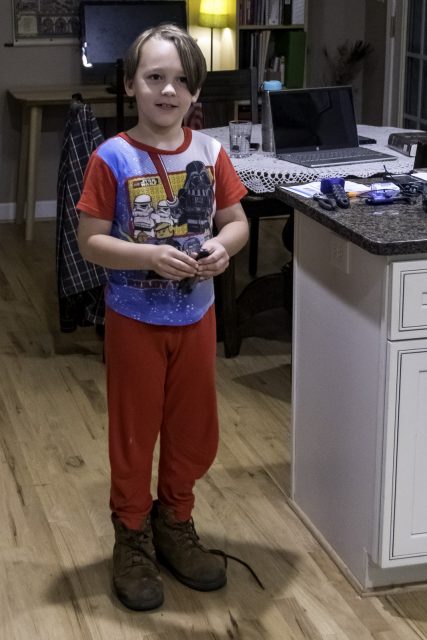
When I got back down and talked to K about what I found, the Boy discovered my boots and couldn’t resist.

Later in the evening, K thought the spot is damper than it was earlier. We decided to go all out: we brought out the two tarps we use for camping, overlapping one with the other so that water can run under the tarp, weighing the whole thing down with bricks and cinder blocks. And doing all this in a light rain. At 10:30.

Lightroom Revisit

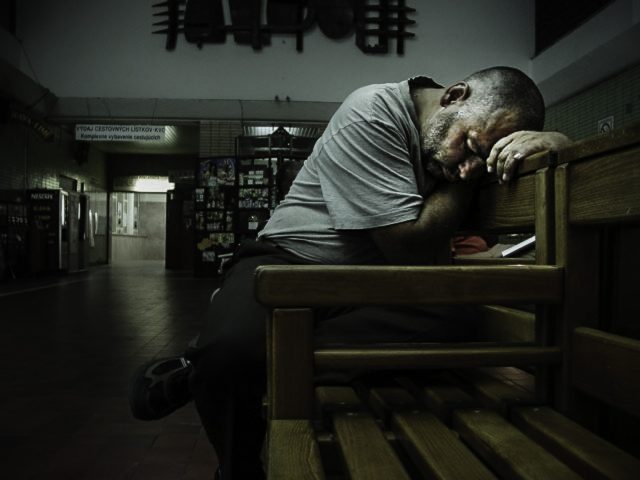
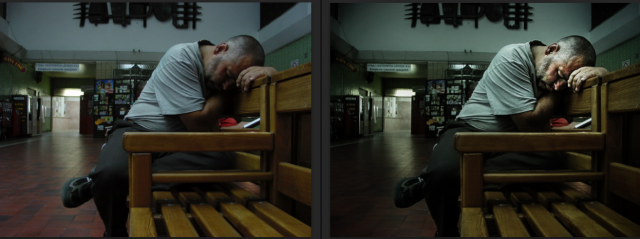
In August 2003, K and I rode our bikes south through Slovakia to Hungary to spend a week in Budapest. When we returned, we rode to Sturovo, a town in southern Slovakia, where we caught a train to Zilina, where we waited for another train to Trstena, just across the border from where we lived in southern Poland. We had to wait in the Zilina train station for most of the night to catch the 5:00 a.m. train to Trstena. This guy was waiting for a train, too.

This is one I’m particularly pleased with the Lightroom reworking. The before-and-after shows how much of a difference it makes to do selective editing:

Day 65: Inferring in the Rain

Inferring

Authors often say a lot without saying much. A good author leaves a lot for the reader to piece together for herself, and that's one of the things that can make a book engaging. But filling in those gaps is a skill that readers must learn. It doesn't come naturally.

This is one of the things I spend a lot of time and energy teaching my eighth graders how to do. The honors kids are usually fairly adept at it, but the on-level students often struggle. I have to model it for them, doing think-alouds in which I say aloud all the inferences that are running through my head when I read. I infer; I predict; I connect to previous knowledge; I comment on what I read. I model, model, model, then turn it over to them to try as a class before they try it in groups and finally as individuals. Scaffolding, that's called: model it, practice as a whole class, practice in groups, practice individually -- the bread and butter of my teaching.

Tom Sawyer is providing ample chance for me to begin exposing the Boy to this kind of critical thinking.

Presently [Aunt Polly] stepped into the kitchen, and Sid, happy in his immunity, reached for the sugar-bowl -- a sort of glorying over Tom which was wellnigh unbearable. But Sid’s fingers slipped and the bowl dropped and broke. Tom was in ecstasies.

I pause: "What do you think will happen?" I ask the Boy.

"Aunt Polly will think that Tom broke the sugar bowl," he said after a moment's thought.

"Right. That's called predicting..." I begin.
"I know, Daddy. You tell me that every time we read something." Perhaps not every time, but often enough.

We continue:

In such ecstasies that he even controlled his tongue and was silent. He said to himself that he would not speak a word, even when his aunt came in, but would sit perfectly still till she asked who did the mischief; and then he would tell, and there would be nothing so good in the world as to see that pet model “catch it.” He was so brimful of exultation that he could hardly hold himself when the old lady came back and stood above the wreck discharging lightnings of wrath from over her spectacles. He said to himself, “Now it’s coming!” And the next instant he was sprawling on the floor!

"What does 'sprawling' mean?" the Boy asks.

I explain, then ask, "Do you understand what happened?"

There is a lot going on in that passage, particularly in the final two sentences: "He said to himself, 'Now it’s comin!' And the next instant he was sprawling on the floor!" Missing from this is the fact that Aunt Polly slaps Tom so hard that it knocks him off his chair.

I explained it to the Boy. He thought it was horrible that someone would slap a child so hard that it knocks him out of his chair. I think that's a fairly reasonable concern, to say the least. Why do we adults find that passage funny, though? I think it's because of all the work Twain makes us do, all the thinking, all the blanks we fill in. Twain is a master of implication.

In the Rain

It rained all day today. K and I were concerned that it might turn out to be enough to threaten our basement again. Granted, I have filled all the termite treatment holes with hydraulic cement: those holes shouldn't let any more water into our basement, let alone the geysers and fountains that were gushing in during our last storm. And the crack by the fireplace? I drilled it out completely and patched it with more hydraulic cement.

So part of me was thinking, "Okay -- bring it on. Let's see if I've got you licked" (to employ a usage from Tom Sawyer that still tickles the Boy).

But most of me was just hoping that it didn't come to that. When the Boy and I headed out in the morning to see how much rain had fallen, things were looking bad but not dreadful.

We went back out in the afternoon after more rain. We went ahead and crossed the creek at this point like usual: the water was only a few inches above our feet. I held the Boy's hand, and we ventured up a bit further. The rain continued, and by the time we made it back to this point, the water was waist-deep for the Boy. I held his hand firmly, and we made it across easily, but it was a lesson: "See how quickly the water can rise?" That's the epitome of flash-flooding.

Scare Politics

I noticed this particular meme this evening on social media:

I find it hard to imagine what kind of simplistic thinking could lead to something like this. Surely no one so naive as to believe that it's as simple as this meme suggests. To think that we could go from Trump-istan to this worst-case-scenario, utterly exaggerated vision of progressive ideas run amuck in one election cycle -- I just don't get it.

What I do get is the fear buttons this kind of meme pushes. The left has their own versions of these memes, of course. I could probably browse the tweets of friends who lean much further to the left that an avowed centrist (don't we all see ourselves as centrists? no -- we certainly don't) like me and find the equivalent: we're one step away from living in a real-life Handmaid's Tale. (Come to think of it, I believe there was a protest with women dressed as handmaids from the novel/movie/series.) Making decisions from fear is bad enough, but making them from a sense of fear that might very well have been intentionally manipulated -- that in itself is terrifying.

The Dog

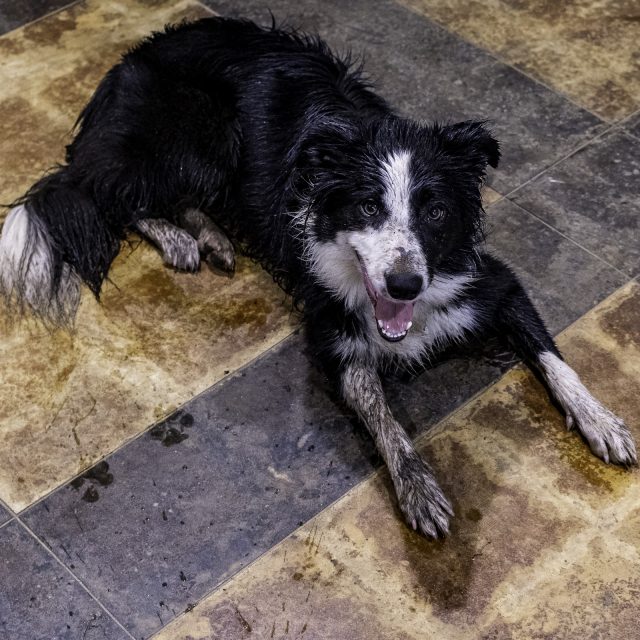
Two things: how can a dog get that dirty in a matter of seconds? And how can it seem to disappear as soon as she's dry?

Day 64: Working, Ending, and Reading

Working and Ending

We’re nearing the end of the year — only a couple of weeks to go. These weeks promise to be anything but typical. For one thing, I’m giving assignments with the understanding, on both sides, that I will provide minimal feedback and that the grade depends more on effort than accuracy. That’s the district policy during our quarantine teaching. It might be the state policy. So some kids do their absolute best, like this analysis of chapter 24 of To Kill a Mockingbird:

Chapter 24 is important because it shows how the town of Maycomb isn’t as “Christian” or as “nice” as they claim to be. For example, Mrs. Farrow Mentions how they can educate them and try to make them Christians but till there will be, “no lady safe in her bed.” The antecedent ambiguity that Mrs. Farrow makes using “them” as in the African Americans shows a sense of judgment she has towards them. Not only that but when she mentions how much they are fighting a losing battle and women still can’t be safe shows the hierarchy these white people have put themselves in showing that no matter what an African American will never be better as a person of white ethnicity. Similarly, Merriweather states how there are some, “Misguided people” in the town who think they were “Doing right”, but all they did was “Stir [them] up.” This second case of antecedent ambiguity this time towards Atticus shows the real hypocrisy of Mrs. Merriweather. Mrs.Maudie backs that up with a remark showing how Mrs. Merrieweather doesn’t feel any ounce of remorse talking trash, but eating Atticus’ food. Showing how really bad Mrs. Merriweather actually is.

Other students don’t turn in anything. Despite calls to parents. Despite emails. Despite encouragement. Despite the constant reminder that this the only time they’ll have to pull in a handful of 100s (nine of them, in fact) for simply doing the work. Just putting forth the most minimal effort. It’s frustrating, not to mention tiring.

The Boy, though, gets no mercy. Just try to skip something, or not do his absolute best — K is on him to get everything done, and when she’s not, I am. Truth be told, though, she’s done the lion’s share of the work with him — probably something like 95% of the work with him even if I’m being generous with myself. I have spent most of that time in the basement, “grading” things, sending emails, planning things, meeting on Google Meet. She has kept him on his toes, kept his nose to the cliche grindstone, which means she’s been keeping her own to the grindstone as well.

I am usually keeping my own students’ noses to the cliche at this time of year, especially the English I students. They’ll soon be writing their letters to next year’s students, and I have to make sure their final impressions of the class will help them create the appropriate first impressions in next year’s classes. They’re usually finishing up Great Expectations or Lord of the Flies at this point in the year. They’re out of breath, academic legs aching, making the last mad dash for the finish, and I’m there cheering them on and behind them whipping them faster, mixing metaphors left and right. The letter is supposed to be completed in one class period. That’s what makes it so impressive to the students next year.
“How would you rate this letter’s organization?” I ask. They usually are moderately impressed.

“How would you rate this letter’s length?” I ask. They usually are moderately impressed.

“How would you rate this letter’s persuasiveness?” I ask. They usually are moderately impressed.

“Last year’s students wrote these letters in one class period. These are, therefore, first drafts.” I pause for effect. Everyone begins looking at each other. “Whose opinion of these letters has risen noticeably?” Every hand — every single one — goes up.

And this year? How can I make sure each student only spends the equivalent of one class period on her letter? In short, I can’t.

Not the end of the world, but frustrating.

Reading

E and I finished Twenty Thousand Leagues Under the Sea last night. After complaining about how he didn’t understand everything for the last couple of weeks, he changed his tune when I realized we wouldn’t find out what happened to Captain Nemo.
“Is there a sequel?”

“I think there is. Or at least he appears in another book,” I say.

“Can we read it?”

No — not now. Enough Jules Verne for now.

Our next book: The Adventures of Tom Sawyer. We begin with a history and culture lesson: I talk to the Boy about the n-word. It appears in the book. There’s no escaping it. He’ll encounter it in one way or another soon enough.
Then we begin reading. I’m hoping he’ll find it amusing. If he doesn’t… well, I guess we’ll have to try something else. But soon enough, he’s laughing:

The summer evenings were long. It was not dark, yet. Presently Tom checked his whistle. A stranger was before him—a boy a shade larger than himself. A new-comer of any age or either sex was an impressive curiosity in the poor little shabby village of St. Petersburg. This boy was well dressed, too—well dressed on a week-day. This was simply astounding. His cap was a dainty thing, his close-buttoned blue cloth roundabout was new and natty, and so were his pantaloons. He had shoes on—and it was only Friday. He even wore a necktie, a bright bit of ribbon. He had a citified air about him that ate into Tom’s vitals. The more Tom stared at the splendid marvel, the higher he turned up his nose at his finery and the shabbier and shabbier his own outfit seemed to him to grow. Neither boy spoke. If one moved, the other moved—but only sidewise, in a circle; they kept face to face and eye to eye all the time. Finally, Tom said:

“I can lick you!”

“I’d like to see you try it.”

“Well, I can do it.”

“No you can’t, either.”

“Yes I can.”

“No you can’t.”

“I can.”

“You can’t.”

“Can!”

“Can’t!”

The Boy is laughing so hard by the time we get here. We reenact the dialogue a number of times, each time to more uproarious laughter. I’m not sure what he finds more amusing: the idea of “whip” meaning “to beat up” or repetition of assertion and denial.

We continue:

An uncomfortable pause. Then Tom said:

“What’s your name?”

“’Tisn’t any of your business, maybe.”

“Well I ’low I’ll make it my business.”

“Well why don’t you?”

“If you say much, I will.”

“Much—much—much. There now.”

The whole “much-much-much” just about doubled him over. It’s what an eight-year-old might do, after all.

After his evening dental hygiene session (what a way to describe an eight-year-old boy brushing his teeth), we embark on chapter two, the most famous of all Twain’s passages: the whitewashing scene.

Tom gave up the brush with reluctance in his face, but alacrity in his heart. And while the late steamer Big Missouri worked and sweated in the sun, the retired artist sat on a barrel in the shade close by, dangled his legs, munched his apple, and planned the slaughter of more innocents. There was no lack of material; boys happened along every little while; they came to jeer, but remained to whitewash. By the time Ben was fagged out, Tom had traded the next chance to Billy Fisher for a kite, in good repair; and when he played out, Johnny Miller bought in for a dead rat and a string to swing it with—and so on, and so on, hour after hour. And when the middle of the afternoon came, from being a poor poverty-stricken boy in the morning, Tom was literally rolling in wealth. He had besides the things before mentioned, twelve marbles, part of a jews-harp, a piece of blue bottle-glass to look through, a spool cannon, a key that wouldn’t unlock anything, a fragment of chalk, a glass stopper of a decanter, a tin soldier, a couple of tadpoles, six fire-crackers, a kitten with only one eye, a brass door-knob, a dog-collar—but no dog—the handle of a knife, four pieces of orange-peel, and a dilapidated old window sash.

The idea of “a dead rat and a string to swing it with” was just terribly amusing for the Boy.

As he was drifting off to sleep, he remembered another favorite line — once I explained key vocabulary — and muttered it one last time: “would have bankrupted every boy in the village.”

Day 63: First Mass

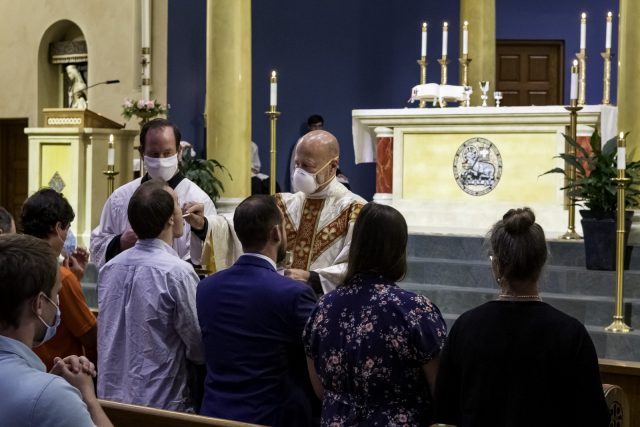
Today, parishes across the state were able to have public Mass for the first time in two months.

The local Catholic newspaper hired me to photograph Mass at a couple of locations.

A surreal scene, to be sure.

Day 62: Camping in the Backyard

We’ve gone camping as a family quite a few times: Stone Mountain, Deep Creek, Lake Jocassee, and Huntington Beach come immediately to mind. Memorial Day was always a great weekend to go camping, and we went most often to the beach. But then life got complicated, family got sick, schedules changed, and responsibilities grew so that now, even if there weren’t a pandemic to worry about, we would not be able to go camping as a family for quite some time. For how long? We really don’t know.

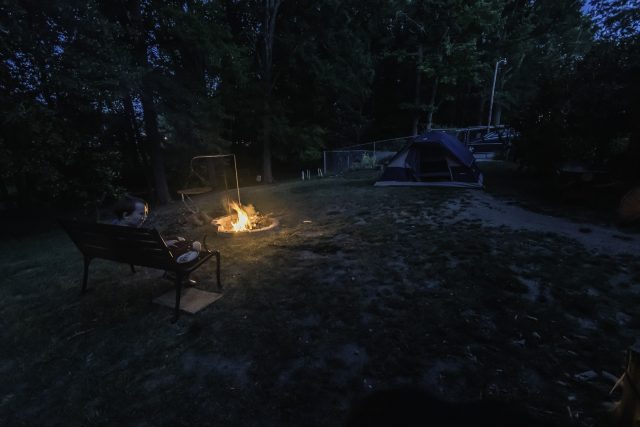
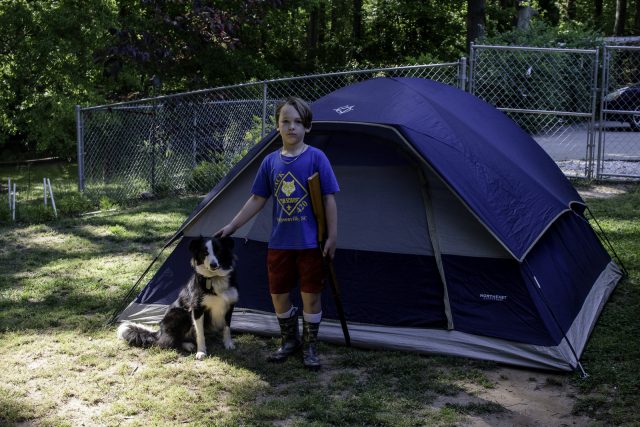
The Boy, though, wanted to go camping. So we did the obvious thing last night: we pitched a tent in our backyard and spent the night in it. There — camping.

Well, not quite. We took our pillows down with us. Somehow, we never remember to bring our pillows — or any pillows really — when we go camping.

Also, I went in to get E’s blanket in the middle of the night when I woke to find him only barely covered with the sleeping bag because he was sleeping under it instead of in it.

And we didn’t have to strike camp this morning. We just left it up, thinking we might go camping again.

Finally, and most significantly for me, I took a shower without flipflops this morning.

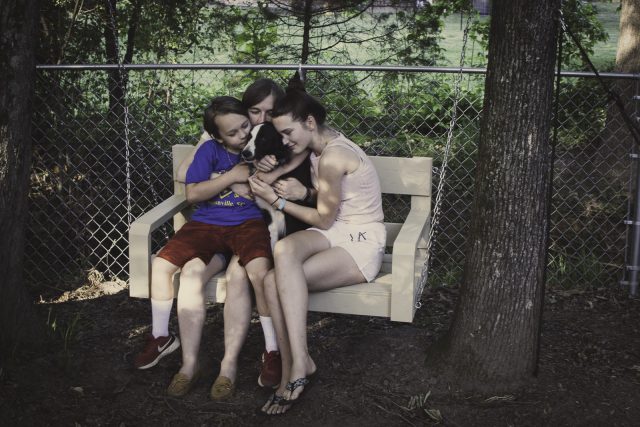
Yesterday afternoon, we also put up K’s new swing. It’s hanging a little wonky now, and I didn’t have a chance to figure out today why, but it’s there. And the dog even likes it.

As for today, other than the single picture from this morning, I never had occasion to take out the camera. Who wants to see pictures of bathrooms in the midst of weekly cleaning or the crawl space as I examine the water pipes to try to figure out why they’re banging and knocking?

Day 61: Fear, Faith, and Fun

Fear and Faith

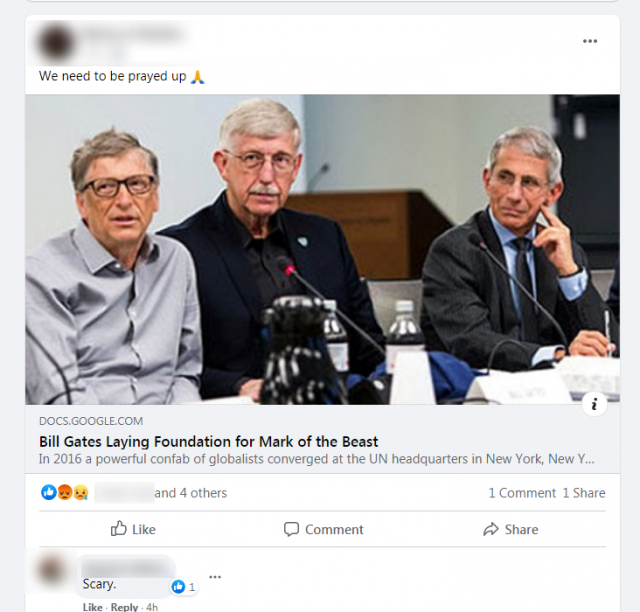
Imagine fear nestled into anxiety burrowed into terror, and all of that is supposed, in the end, to be a source of great joy. "In my beginning is my end" T. S. Eliot wrote, but for some evangelical Christians, it might be reworded, "In my anxiety is my comfort," for they view their everyday reality through an apocalyptic lens. They post things like this on social media:

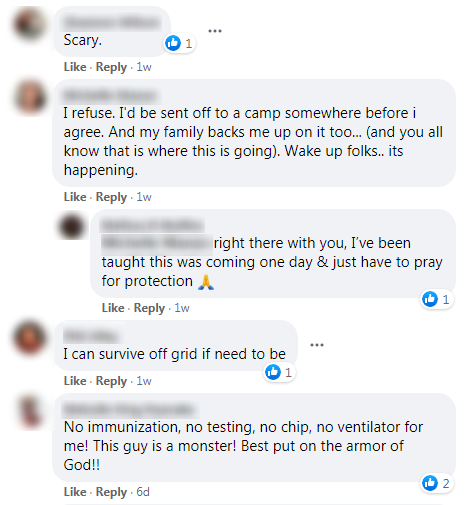
The single comment "Scary" reveals the paradox at the heart of this line of thinking.

On the one hand, there is a sense of terror at what's coming. Such believers look at the Bible as a roadmap for the future, seeing all sorts of ideas that, to those of us on the outside looking in, seem patently ridiculous. They see a coming world-engulfing violent cataclysm that will wipe out wide swaths of humanity and subject the survivors to near-slavery under the rule of some world-dominating ruler known simply The Beast, who will rule in what they call The Tribulation. During this time, there will be mass executions of believers and worldwide oppression.

At this point, the vision starts fracturing. What will happen to Christians, to good Bible-believing Christians who saw all this coming and gave themselves over to the Lord long ago? Some suggest that these poor Christians will have to go through all this; others (most) believe firmly that they'll all be whisked away to heaven before all this -- the rapture.

I grew up being taught that, like the rapture, God would supernaturally protect all his faithful Christians from this onslaught of literal hell on earth, but instead of being taken away into heaven, we would escape to a location of protection, which got the name the Place of Safety. Our religious leader conjectured it would be in Petra, Jordan. There we would spend the three-and-a-half years that the devil, through his Beast, would rule and torment the world, emerging at the end when Jesus returns to put the devil in his place and us in charge of rebuilding the world. Sounds crazy -- but not any crazier than being whisked away like the Left Behind book series narrates.

Whatever the belief, though, these groups have one thing in common: the believers -- the right-believing faithful -- will be saved. This, then, should be a time of joy for such Christians. The end is almost here, and because they believed the right things all these times, they won't have to endure the horrors coming.

So why the fear? Just look at the thoughts that follow the original "Scary" comment:

These poor folks are genuinely scared about Bill Gates's supposed plans to use this pandemic and the resulting vaccine, which they fear will be mandatory (which it should be), to implant chips into them.

There is an amusing irony in all this, though:

Such a strange mix of confusion, and it's driving thousands upon thousands to outright terror.

There is, of course, one thing that these fear-stricken Christians can do: they can pray about it.

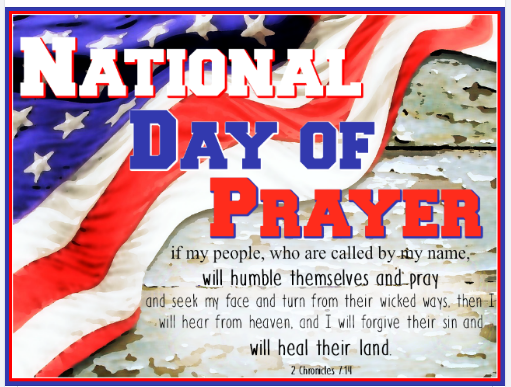
Yet what is the effectiveness of this prayer? This verse from the Bible promises that "if my people, who are called by my name, will humble themselves and pray" that God "will heal their land." If that doesn't sound like a promise from omnipotence that is directly applicable to our current situation, I don't know what does.

But we've tried this before:

These Christians will point out that there are conditions: the petitioners must "turn from their wicked ways" before this promise will be fulfilled, so that's probably the problem: America is still aborting pregnancies, fornicating, and tolerating homosexuality (the three biggies), so God is just waiting for that to stop.

On March 30 televangelist Kenneth Copeland must have decided he would not wait for the stubborn, God-hating Americans to repent and simply "exercised judgment" on the pandemic, thus ending it:

But four days later, he realized he had to try again:

And yet it's still not over.

Here's where another layer of anxiety enters: these poor souls must be wracking their brains and souls trying to figure out what they're doing wrong. So it seems to me that this type of Christianity does not relieve anxiety but only heightens it. Instead of these beliefs calming you, they add another layer of anxiety when one’s prayer’s and petitions are either ignored or answered in the negative, and the natural response is to blame oneself: “God promised. I must have done something wrong.”

So by the time we get to this level, we have the following fears, some conscious and some less so.

  1. The end of the world is literally around the corner. If I’m right with God, I’ll be spared. Am I right with God?
  2. Even if I’m right with God, my interpretation of end-time prophecy might be a little wrong and Jesus might not return until after the tribulation. So if I go through this horror, how will I know I’ll be spared in the end?
  3. I know God doesn’t always answer prayers, but his Word says he will if I repent and pray, so if I or someone close to me becomes infected, I’ll pray, but it might not be his will.
  4. And even if it is his will, I might have done something wrong. Or my country might be doing something wrong.

For something that’s supposed to bring comfort, that’s an awful lot of sources of anxiety.

In a sense, these folks have a right to their anxiety. The First Amendment guarantees that right. But some of these anxiety-inducing conspiracy theories have long-reaching effects. They lead people to reject science for religious-based superstition:

Conspiracy theories have been around for ages, and fundamentalist Evangelical Christians have often been particularly willing to believe them. After all, their whole religion is a conspiracy theory: the devil is constantly trying to get humans to do his bidding unknowingly. The group I grew up in went so far as to call itself the only group of true Christians in the world: the rest of the "so-called" Christians were actually worshipping a Satan-created replacement Christianity. These "so-called Christians" were, for all intents and purposes, worshiping the devil himself. But even among the milder, less cultish groups, there is a sense of conspiracy. Indeed, this conspiracy goes all the way back to the Garden of Eden, when the devil tried to usurp God's control over humanity.

I'm certainly not the only one to notice this similarity:

Arthur Jones, the director of the documentary film Feels Good Man, which tells the story of how internet memes infiltrated politics in the 2016 presidential election, told me that QAnon reminds him of his childhood growing up in an evangelical-Christian family in the Ozarks. He said that many people he knew then, and many people he meets now in the most devout parts of the country, are deeply interested in the Book of Revelation, and in trying to unpack “all of its pretty-hard-to-decipher prophecies.” Jones went on: “I think the same kind of person would all of a sudden start pulling at the threads of Q and start feeling like everything is starting to fall into place and make sense. If you are an evangelical and you look at Donald Trump on face value, he lies, he steals, he cheats, he’s been married multiple times, he’s clearly a sinner. But you are trying to find a way that he is somehow part of God’s plan.”

So we're at the point that we're all living in different realities. The Atlantic has an article about this now: "The Prophecies of Q," aptly summarized, "American conspiracy theories are entering a dangerous new phase."

The power of the internet was understood early on, but the full nature of that power—its ability to shatter any semblance of shared reality, undermining civil society and democratic governance in the process—was not. The internet also enabled unknown individuals to reach masses of people, at a scale Marshall McLuhan never dreamed of. The warping of shared reality leads a man with an AR-15 rifle to invade a pizza shop. It brings online forums into being where people colorfully imagine the assassination of a former secretary of state. It offers the promise of a Great Awakening, in which the elites will be routed and the truth will be revealed. It causes chat sites to come alive with commentary speculating that the coronavirus pandemic may be the moment QAnon has been waiting for. None of this could have been imagined as recently as the turn of the century.

Would could imagine a scenario in which a prankster began something like Q and then it quickly gets out of hand. The prankster tries to step forward and point out that he began it all. "Look, I have evidence!" He could have even had the foresight to record everything he did on video and through screen-recording software, yet that wouldn't be enough once the conspiracy had gained a life of its own. One can only imagine what such a prankster would feel as he watched his creation ravage reasonable -- a modern Frankenstein, with the conspiracy theory being his unnamed monster.

Yet Frankenstein could reason with his creation, and in fact did attempt to talk to him. Conspiracy theories are like memes: they're elements of the brain that are belong to no one and are somewhat self-replicating. In short, there's no reasoning with a conspiracy theory, and there's little ability to talk to a believer in one:

Taking a page from Trump’s playbook, Q frequently rails against legitimate sources of information as fake. Shock and Harger rely on information they encounter on Facebook rather than news outlets run by journalists. They don’t read the local paper or watch any of the major television networks. “You can’t watch the news,” Shock said. “Your news channel ain’t gonna tell us shit.” Harger says he likes One America News Network. Not so long ago, he used to watch CNN, and couldn’t get enough of Wolf Blitzer. “We were glued to that; we always have been,” he said. “Until this man, Trump, really opened our eyes to what’s happening. And Q. Q is telling us beforehand the stuff that’s going to happen.” I asked Harger and Shock for examples of predictions that had come true. They could not provide specifics and instead encouraged me to do the research myself. When I asked them how they explained the events Q had predicted that never happened, such as Clinton’s arrest, they said that deception is part of Q’s plan. Shock added, “I think there were more things that were predicted that did happen.” Her tone was gentle rather than indignant.

There's no reasoning with them because they often don't even see themselves as conspiracy theorists:

“Some of the people who follow Q would consider themselves to be conspiracy theorists,” [David] Hayes[,  one of the best-known QAnon evangelists on the planet] says in the video. “I do not consider myself to be a conspiracy theorist. I consider myself to be a Q researcher. I don’t have anything against people who like to follow conspiracies. That’s their thing. It’s not my thing.”

So in the end, it's hard not to be at least somewhat depressed about all this, and that in turn tends to make me just a little pessimistic about our future as a species -- yet again. I can help our children develop the critical thinking skills (the painfully basic critical thinking skills) to avoid falling into this trap themselves, but that's two in a nation of millions. These ideas are gaining momentum, and the alternative cultures they spawn are growing.

Fun

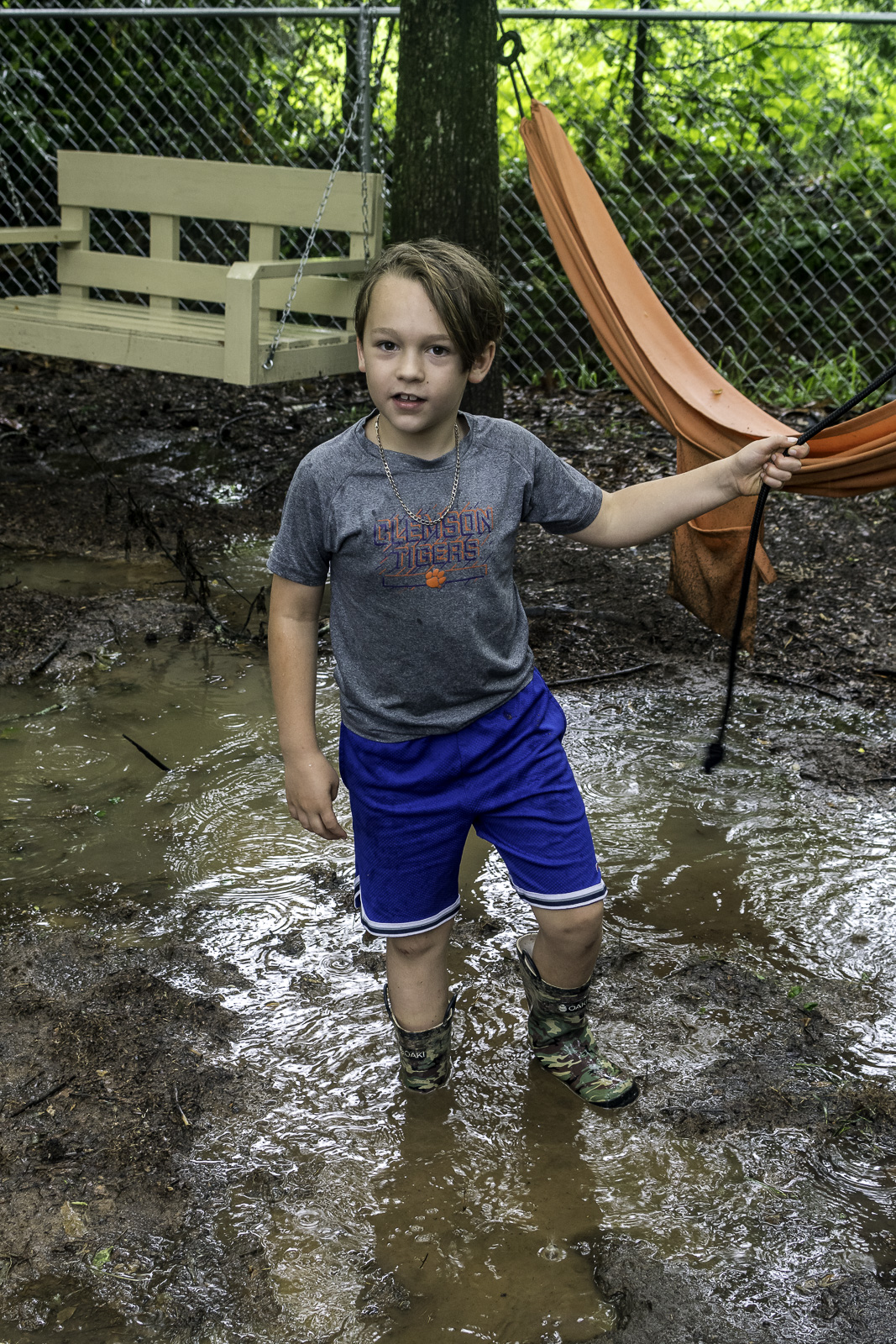
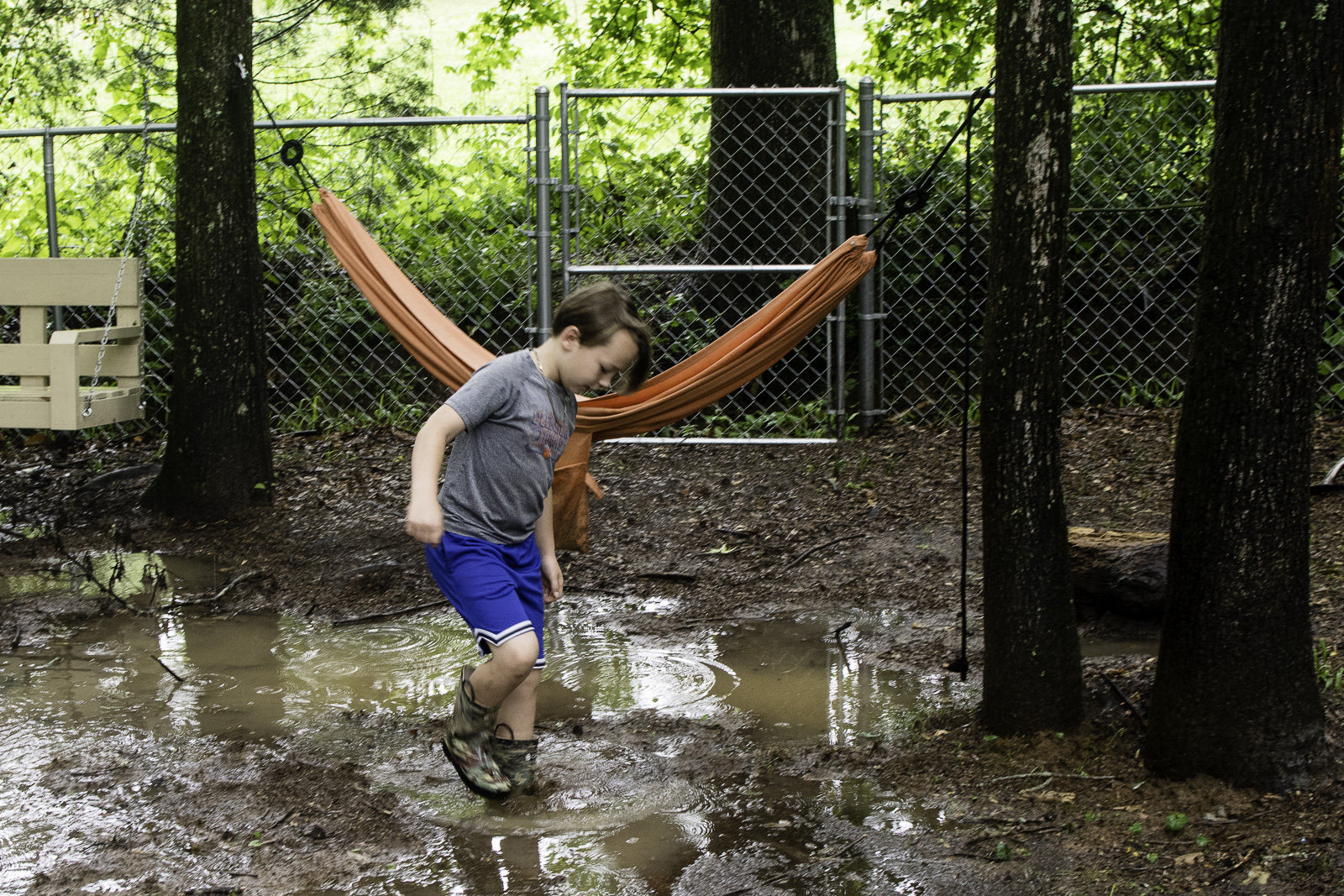
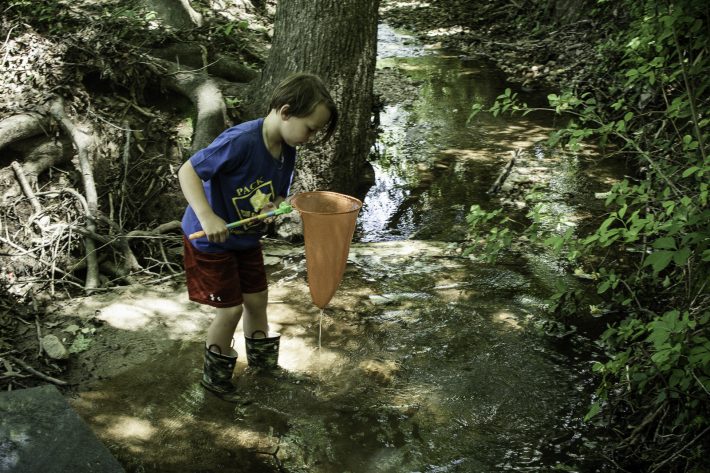
The Boy and I went out exploring again today. He had to try his new gumboots. I warned him about deep water: "If the water goes over the top of the boot, your foot will be permanently soaked." He stepped in water that was too deep. One foot got soaked. We laughed quite a while about the squishing sounds coming from his boot.

Day 60: Eighth Birthday

A proper birthday has to start with a proper birthday breakfast and a phone call from Babcia. For E, this meant an omelette for breakfast. Never mind that this was only the second time he's ever had an omelet, a proper omelette, but  he fell in love with it earlier this week, on Mother's Day, and decided that it was his favorite breakfast of all time. Making omelets though is a time-consuming task, so although I layered the sauteed onions, sauteed peppers, and bacon bits very carefully for the Boy, the rest of us got it all mixed up in scrambled eggs.

"I could have it that way, I guess," he confessed. "It's the same thing, just all mixed up."

The phone call from Babcia was a little less fluid. E is reticent to speak Polish, so although he understands everything Babcia says, he usually responds in English then turns to K, expecting a translation. Today Babcia tried to help him out, tried to ease his anxiety. She asked him simple questions like, "Are the flowers blooming?" or "What color are the flowers?" Yet he was still reluctant to speak Polish.

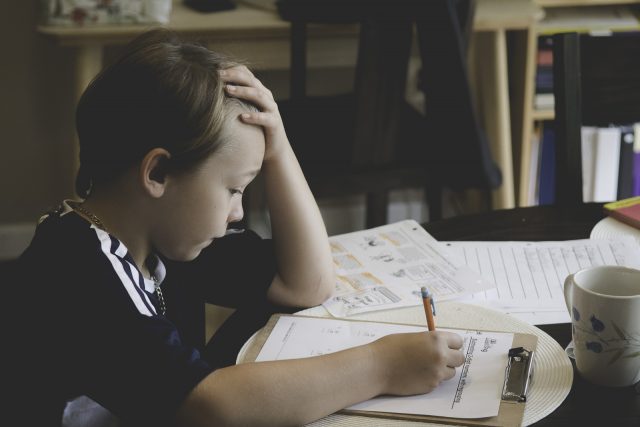
School today for him was relatively simple. At first, he wanted yesterday to complete as much of today's work in addition to yesterday's work as possible. But yesterday in the afternoon he decided that was not the best plan after all. He was ready for some free time. This meant of course that he had all the work for today to complete.

At the beginning of this quarantine, a day's worth of work was just that: a day's worth of work. The amount was greater than it is now, to be sure, but he fussed incessantly how about the frustrations he was feeling, about the difficulty of the math problems, about the length of the readings. We are half expecting such antics today, interspersed with cries of, "But it's my birthday. Why do I have to work on my birthday?" However, he plowed through his work with relative ease, making it through math, which was subtracting three-digit numbers from three-digit numbers, each problem requiring regrouping and then word problems, in less than fifteen minutes. He wrote two more chapters of his frog/toad book and was done.

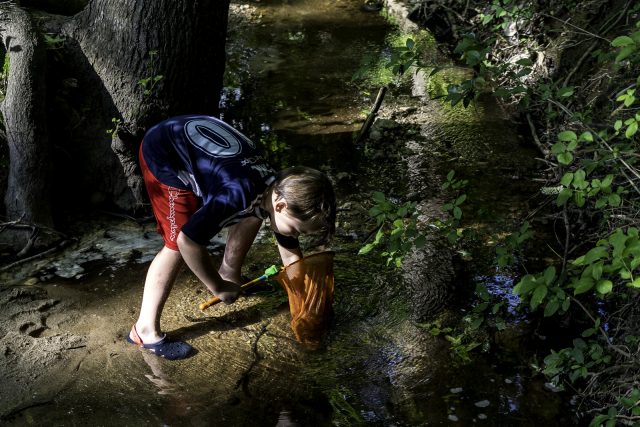
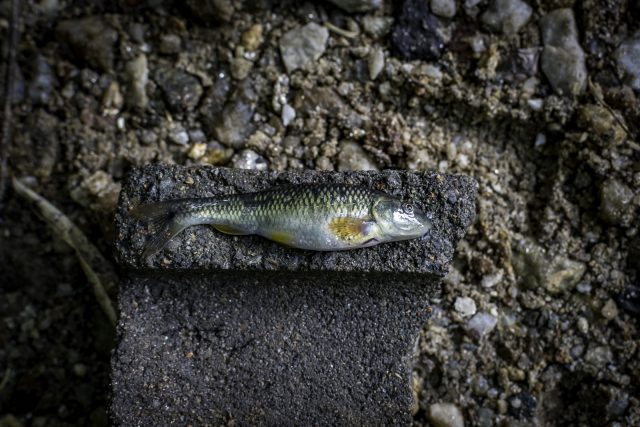
In the afternoon, we headed back down to the spot where we'd caught and inadvertently killed a minnow yesterday. I thought perhaps we might have a repeat, feared it in some ways -- who wants to just go around killing little fish? Yet E was keen to try again. We did try again, and caught three fish. Two of them made it back to the water fine.

One of them -- well, we didn't quite hook him in the mouth but somehow hooked him through his body. He was already bleeding when we pulled him out of the water.

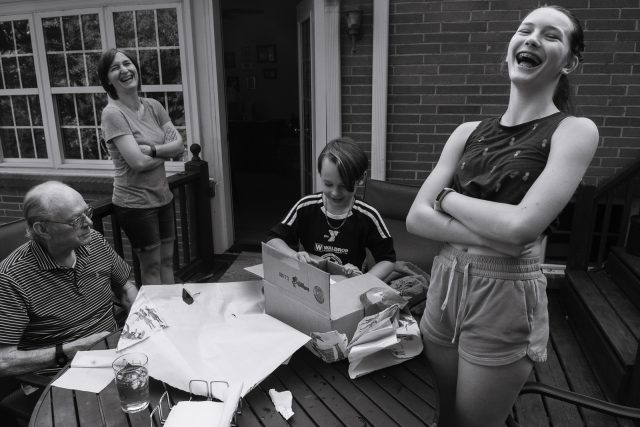
While we were down there, L came to the balcony and yelled across the yard, "You guys need to come back! Now!" At first, I was afraid that something had happened to Papa. Of late he's been spending afternoons on the deck wallowing in nostalgia by exploring songs he hasn't heard in decades, all thanks to Spotify.

Instead, we all got a pleasant surprise:

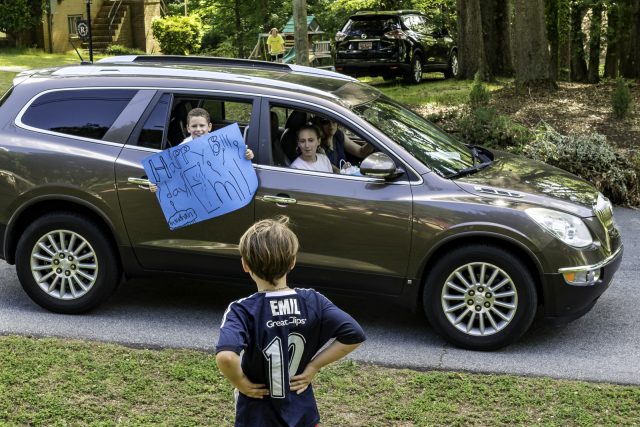
E's best friend's mother drove him by our house to wish the Boy happy birthday.

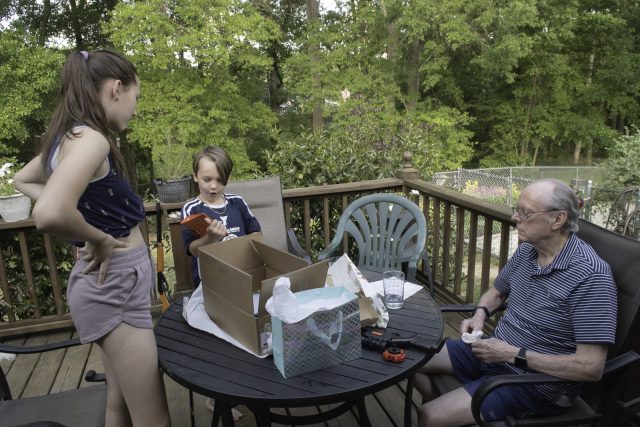
As for our celebration, we played a trick on him that Nana and Papa played on me a couple of times: give him something that's relatively worthless without the other item. Like a cable to hook up a laptop to something suggesting that it might work with an old laptop, then giving a new one as a surprise (a la Nana and Papa).

We gave him a tablet case and screen protector. He'd been asking for a tablet for some time, and we thought we'd see what would happen if he got only the empty shell. "You can keep and maybe you'll get a tablet next year," I suggested. "Oh, that's great," he said very calmly -- not really upset, not really thrilled.

Then, when he opened Papa's present, lo and behold -- an Amazon Fire, just for him.

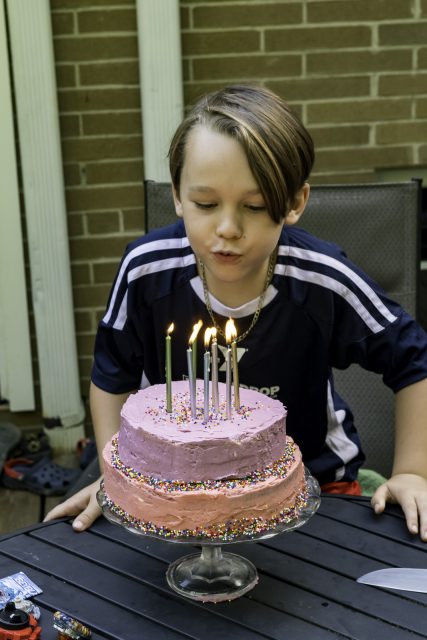
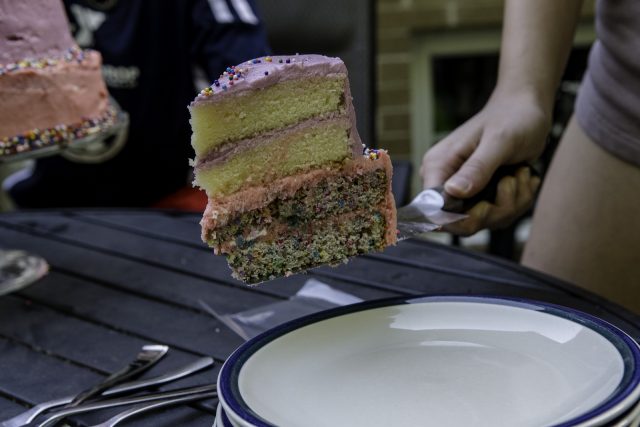
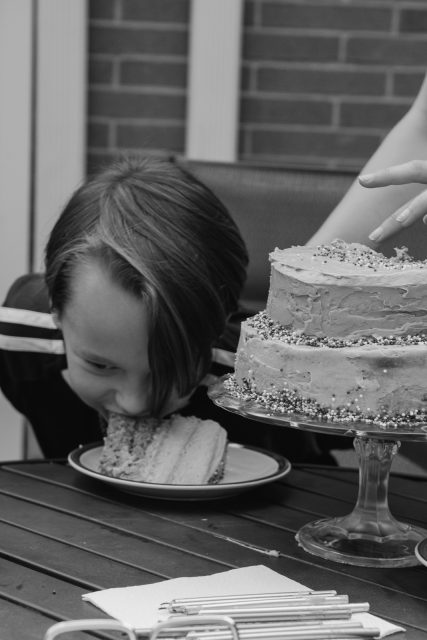
Finally, there was the cake. L began working on the cake yesterday and decided to add to it today. A two-tiered cake, each with two layers.

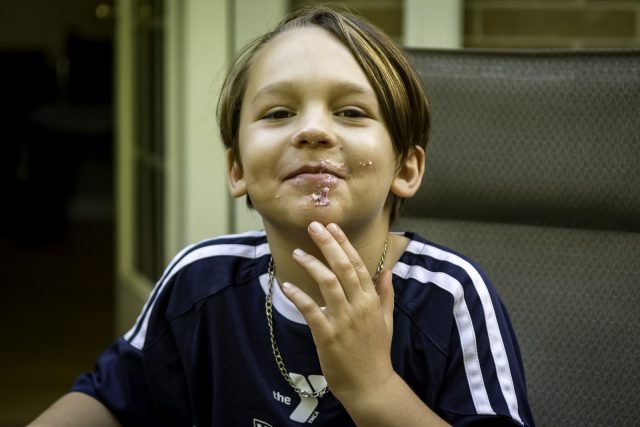
The slices were impressive to say the least. K and I split one: she took the top tier, and I worked on the bottom one. The Girl is getting the flavors down -- she's still not thrilled with the presentation, though.

"Patience and practice," K said to her. Though perhaps not quite so much practice while we're all locked down.

Previous Years

Day 59: Morning Work Hooks the Companion

Morning Work

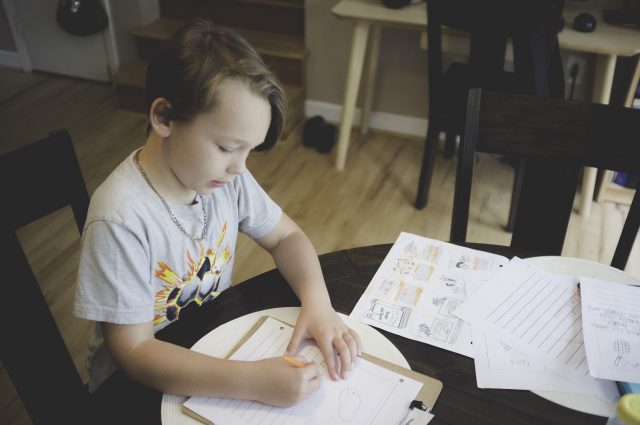
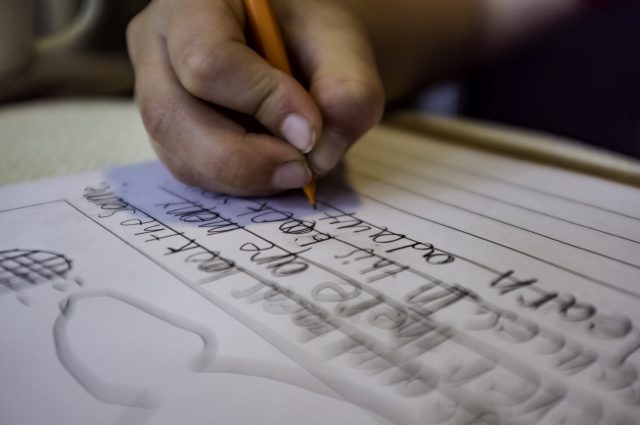
Since I didn’t have much to do for school this morning, I took over the first part of E’s homeschooling adventure. Our first task: to write the first chapter or two of his book about frogs and toads. Six chapters will constitute the final product:

  1. Introduction
  2. Toads
  3. Frogs
  4. Similarities
  5. Differences
  6. Dedication

As we read, I saw the difficulties and frustrations lying ahead: when it would come time to write the book, he might fuss, “Now we’ll have to go back through the text again. We have to read it again!!” So I taught him a little trick as we read that I use with my students.

“As you’re re-reading, highlight facts you might want to rewrite in your own writing. Then put a number beside it to indicate which chapter you’ll use it in. When it comes time to write, then, you’ll just have to look at all the numbers for the chapter you happen to be working on.”

There are two reasons for this: first, it will help him with his writing later. That’s the most obvious way it assists him. Less obvious but more importantly, it helps him develop skills as a critical, analytic reader. My own students often have difficulty reading because they’re not reading for a particular reason. Giving kids a purpose as they read gives them a goal and a metric to measure comprehension and success.

As we read, E grew more confident about the whole process; as he began writing the first chapters, he realized the sense behind it all. That might lead to a little less fussing as he continues to work on the piece.

Hook

Mr. F, our neighbor, is a keen fisherman. He’s got a boat, countless rods and reels, and multiple tackle boxes filled with endless lures and hooks. Heading out to the lake regularly, he often comes home with enough fish for his family and some neighbors: he’s given us many, many pounds of fish over the year. He’s the type of fisherman that, as regards fishing equipment, if he doesn’t have it, it probably doesn’t exist.

The Boy often goes over to help Mr. F. He’s something of a third grandfather to E, which makes him really like a second grandfather since Dziadek passed before E was a year old and E knows him only from pictures.

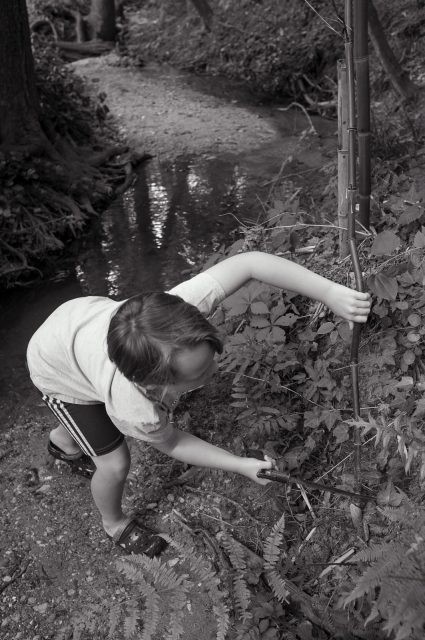
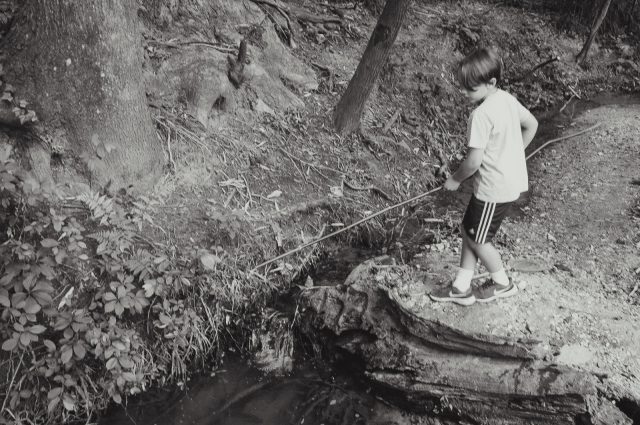
When E and I discovered in the creek that runs behind our house a couple of pools that are deep enough for larger minnows -- some looking to be three or more inches long, maybe even four inches long -- I commented that they’re almost big enough actually to use a hook and bait. Recalling the little minnows we caught in Lake Jocassee with just a line, a hook, and some bread, I suggested that we could use a bamboo cane and make a real, old-fashioned playin’-hooky-to-go-fishin’ cane fishing pole.

After we were both done with school, we headed down, saw and net in hand. “I still want to try to net some minnow,” he explained. We found an adequately small cane and cut it after a bit of unsuccessfully netting attempts.

“Now we just need the line and a hook,” the Boy said as we headed back, adding as a sad afterthought, “but we don’t have any.”

“Why not ask Mr. F?” I suggested.

“Oh yeah!”

Then the real question as far as I was concerned: with Mr. F not out, he would have to go knock on the neighbors’ door, and I decided it was something he was going to have to do by himself. Would he do it?

“Just go knock on their door,” I said after he protested that Mr. F wasn’t outside at that moment.

“What if Mrs. P answers the door?”

“Just tell her that you have a favor to ask of Mr. F.”

He paused in thought. “Okay.”

When he came back, the Girl had joined us and was snooping about to figure out what was up. I explained. “Oh.” No protests about how awfully cruel it would be to catch a minnow with a hook. “With a hook!? Jabbed in its mouth?!” I could just hear her indignantly and incredulously asking.

When the Boy headed down for some fishing, I suggested that L might want to go with him. “Don’t let her talk you into letting her have the first turn because she will try to bamboozle you,” I warned.

He headed down by himself, though. I thought for a while that I should go with him at least to memorialize the moment photographically. Then I thought better of it: he needs some independence, and since he didn’t even ask me (with the explanation of being scared or worried about this or that) to go with him, I stayed behind.

He came back up a few minutes later, a scowl on his face as he stomped up the hill.

“Guess what?” he began, not waiting for a response. “I had one or two good tries and then the hook got stuck. When I tried to pull it out, the hook came off!” He plopped in a chair. “Now I can’t fish at all today!”

“Sounds like we might need to go get our own hooks,” I suggested.

More incredulity: “At the store?!” E is the most worried about cornavirus in our family. I think he’s convinced, despite our efforts to explain everything, that one can just get it, that it just lurks in the air waiting for unsuspecting victims.

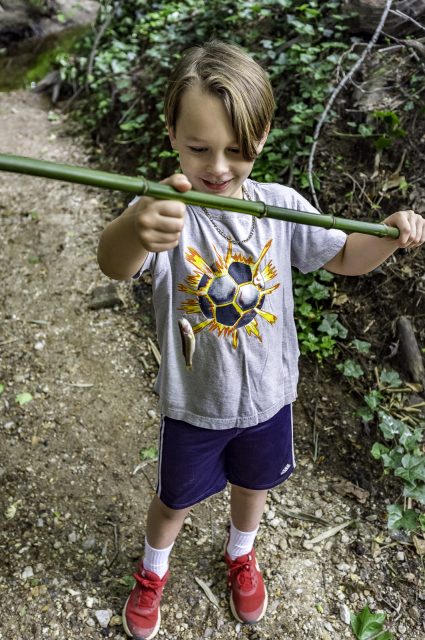
In the end, we didn't have to go get more hooks: the Boy remembered he had one small hook still on his fishing pole, so we cut it off and tied it onto the cane pole. We took some bread from a dinner roll we had, rolled it back into dough, and put it on the hook.

Soon enough, we had a minnow.

But our catch-and-release plan was thwarted by the difficulty of removing a hook from such a small fish. In the end, something terribly traumatic happened to the poor fish as we were removing the hook, and it went belly up immediately upon release.

The Companion

Clover has become a companion dog. She doesn’t wander around, looking to find what she can get into. She doesn’t sneak off to try to get on the couch. She doesn’t (always) go off searching for a toy. She plops down next to someone and just relaxes. When we’re outside and L is, for instance, in our fort reading and Papa is on the deck listening to music (he’s become a real Spotify fiend), the pup moves from person to person, spending a little time by my side, a little time by Papa’s side, and a little time with L.

Another sign that she’s no longer a puppy.

Then she goes over to the fence just to antagonize the neighbors’ dog, so many not so much...

Convenient cane pole storage system