Month: May 2020
Day 77: First Day in Conestee in Rainbows
First Day in Conestee
We've been waiting for our favorite park to open for weeks now. It seemed to us that going for a walk in the park should be something that lends itself rather naturally to social distancing. Certainly, you have to be aware of where everyone is and perhaps not go at the pace you would normally walk, but those are small concerns that mature people can keep in mind and in action relatively easily. But the city kept the parks closed.
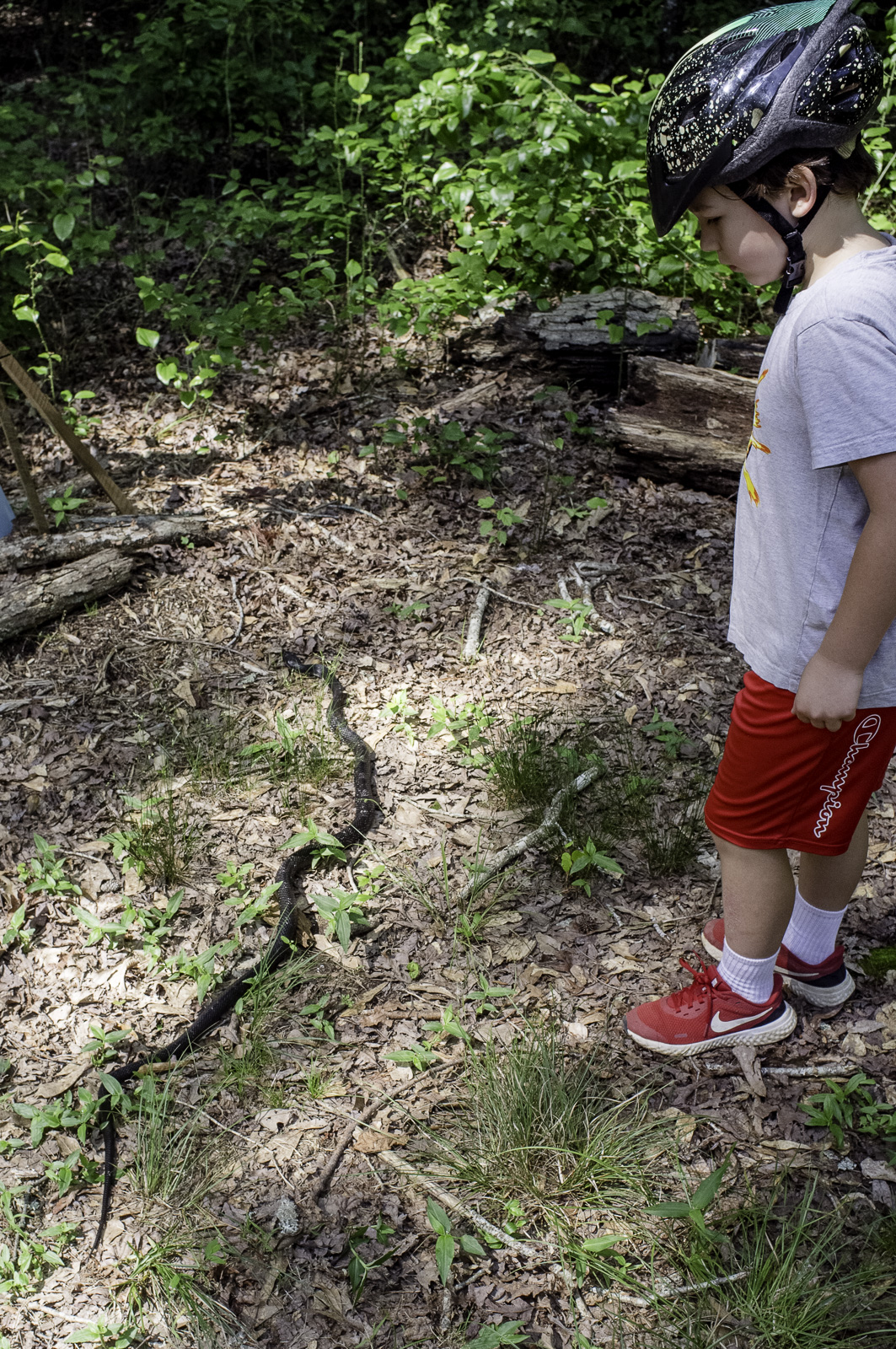
Today, they were open, so we went for a walk in the morning when it was likely to be less crowded. We kept our distance from everyone and behaved as model citizens.
The kids were just glad to get out and do something. Perhaps they were also glad to see other faces -- I know I was.
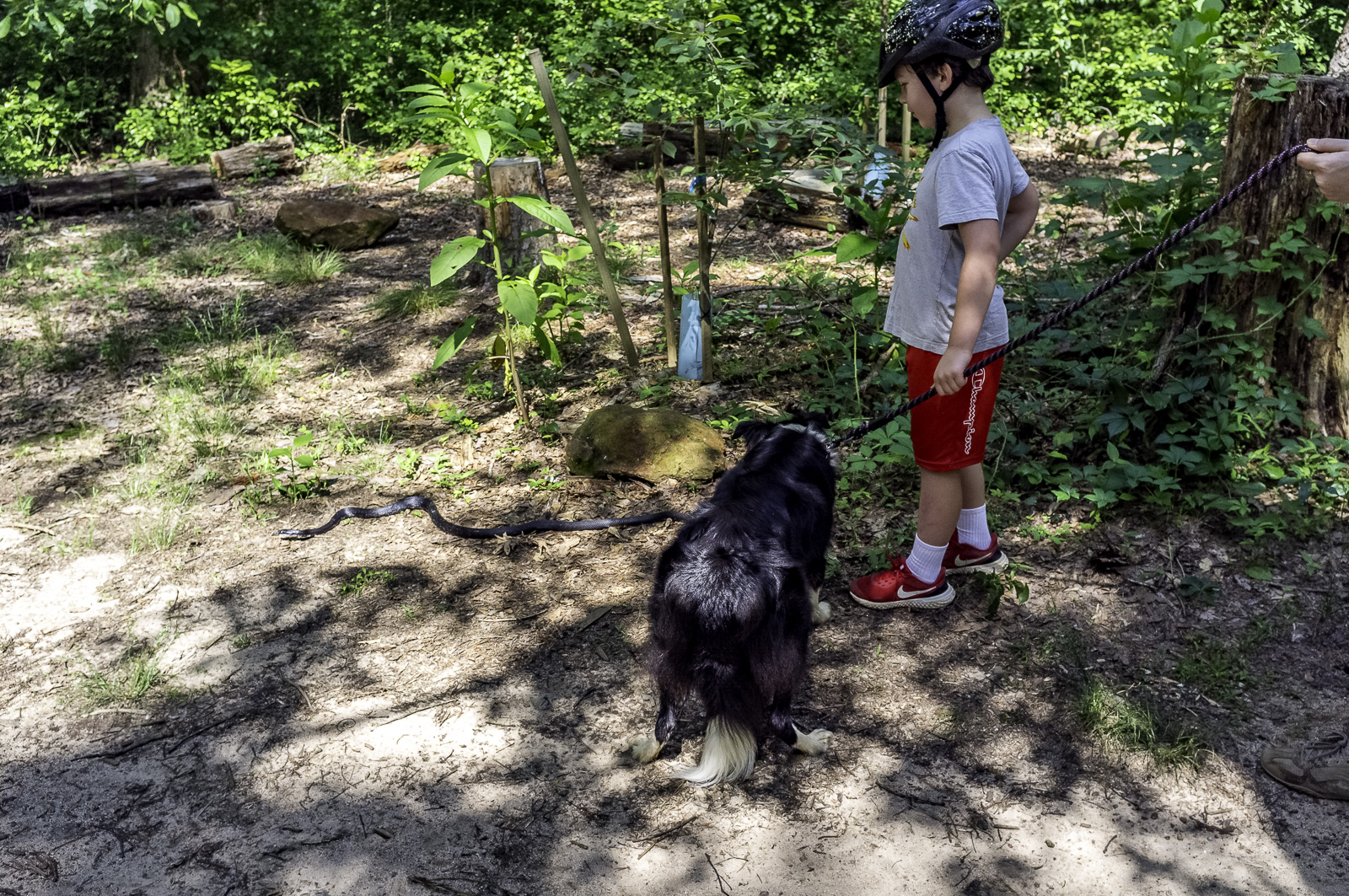
But I've had concerns about this opening up of South Carolina. I don't get the impression that everyone else is being as careful as we are. And the numbers prove it. Earlier this week, we had a day with 300+ new cases -- the highest we'd ever had. Then we had a couple of more days in the 200s or high 100s range, then yesterday we saw that the number jumped up again. Today, there were 312, but there was also an addendum about yesterday's count:
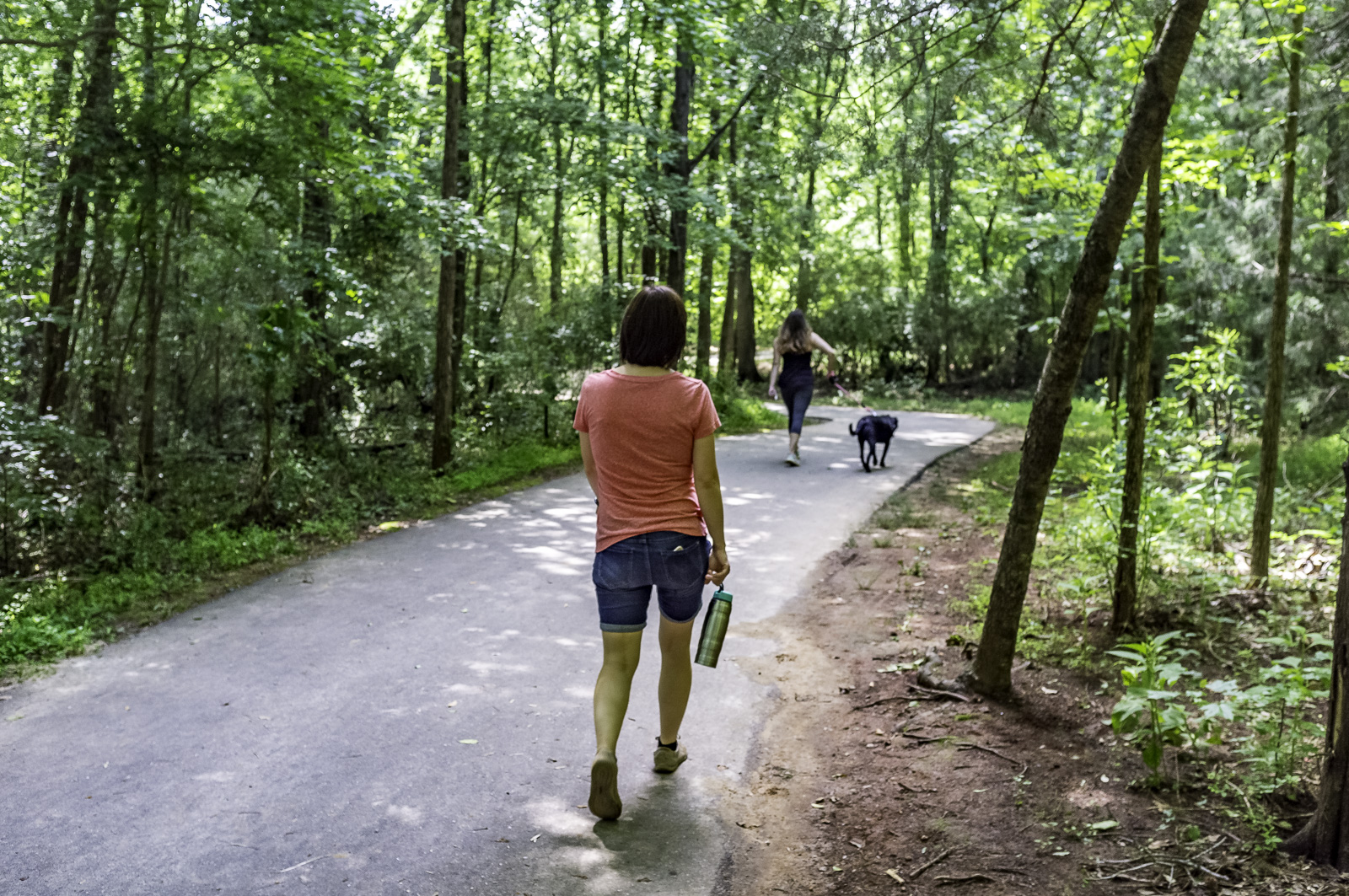
154 cases that should have been reported in yesterday's positive case counts were not updated from suspected to confirmed cases in our database by the time yesterday's news release was issued. An additional quality check of yesterday's positive case numbers revealed the omission of these cases in the daily reporting total. The corrected total of positive cases for yesterday (May 30) has been updated to 420. (Source)
So we've gone from having no single day with more than about 280 to having a day with over 400. Just about two weeks after restrictions were eased. Which is to say that I'm afraid people's stupidity ("This has all blown over -- back to normal") will cause a spike that will undo all we sacrificed over the last months.
In Rainbows
When Noah and the survivors emerged from the ark after God had wiped out all of humanity except them, there would have likely been some consternation: what if God decides to do this again and this time, we don't make the cut? It seems God wanted to assuage exactly those fears:
Then God said to Noah and to his sons with him: “I now establish my covenant with you and with your descendants after you and with every living creature that was with you—the birds, the livestock and all the wild animals, all those that came out of the ark with you—every living creature on earth. I establish my covenant with you: Never again will all life be destroyed by the waters of a flood; never again will there be a flood to destroy the earth.”
And God said, “This is the sign of the covenant I am making between me and you and every living creature with you, a covenant for all generations to come: I have set my rainbow in the clouds, and it will be the sign of the covenant between me and the earth. Whenever I bring clouds over the earth and the rainbow appears in the clouds, I will remember my covenant between me and you and all living creatures of every kind. Never again will the waters become a flood to destroy all life. Whenever the rainbow appears in the clouds, I will see it and remember the everlasting covenant between God and all living creatures of every kind on the earth.” (Genesis 9.8-16)
A skeptic like me has a lot of issues with this passage. Well, there are a lot of issues about the whole story of Noah and the ark, not the least of which is God deciding to wipe out all of humanity instead of, say, coming down and teaching them how they're making bad choices, like a parent would do. Perhaps a spanking of some sort if we want to get Victorian. Then there's the question of getting all the species in the boat, the inexperience of Noah as a shipwright -- just problems all over the place.
But just these few verses offer a couple of big issues: first, why does God need reminding? "I will see it and remember the everlasting covenant" not "you will see it and remember the everlasting covenant," though I guess that's implied. But I suppose we could work out some literary way to get around that.
What we can't get around is the simple fact that text here seems to suggest that there was never a rainbow before this event: "Whenever I bring clouds over the earth and the rainbow appears in the clouds" certainly hints at this. So you see the opening: "You mean to tell me that the lingering droplets of water in the sky that act as a prism and break the sunlight into its various colors -- an act of physics -- never happened before this?" Rainbows are not mysteries: we know exactly how they form, and I would imagine that meteorological sciences have gotten to the point that they can list several conditions that need to exist before a storm that will set in action a chain of events that will end in said rainbow.
Apologists who take the Bible literally have to deal with this. How to do so? I suppose they could suggest that, yes, God altered the laws of physics at that moment. But a more common explanation is a little more baffling: it had never rained before the deluge, apologist suggest. Mists and dew and the like were enough to water the flora of the Earth.
I mentioned this to K: she raised her eyebrows. "That's the first time I ever heard of that." I suspect it's an Evangelical (i.e., American Christianity) attempt at explaining an obvious problem with the Biblical text in such a way that allows believers to continue interpreting it literally, word-for-word.
I first heard that argument when I was a kid. I want to say, "It struck me as strange even then," but I don't really recall. I remember hearing it, so it made some kind of impression on me, and it stuck in the back of my head as another example of some of the odd contortions literalists bend themselves into in order to continue interpreting the Bible literally.
I heard it again tonight. Or rather, overheard it. I wasn't involved in the conversation, just listening from the fringes. "I mean, God created the world so perfectly that they didn't even need rain -- just a mist was enough," the apologist explained.
It was one of those times that I really wanted to jump into a conversation but knew that there would be no point. Neither of us would budge from our view.
Day 76: Reality in the Shower
We are a pattern-seeking species. And where we find patterns, there we find meaning. Even if that meaning is nonexistent because the pattern itself is an accident of nature. Instead of seeing it like this, though, we often prefer to take these as omens.
I’ve found a few omens, then, in our shower.
There’s a Grateful Dead teddy bear on one tile. I wouldn’t have even noticed it if I hadn’t been such a Grateful Dead fan in high school (now, not so much — they’re okay, but I rarely listen to them).

There’s a bandit with a kerchief covering his mouth. His eyebrows are straight and determined: he’s surely about to commit a crime. Perhaps a home invasion is imminent for us. But our little town is really quite peaceful (we checked with the police department and did some research before buying here), so it’s unlikely.

There’s a fetal-size footprint. Surely this is a hint of things to come? A prophecy of another child on the way? No. It’s just a shape.
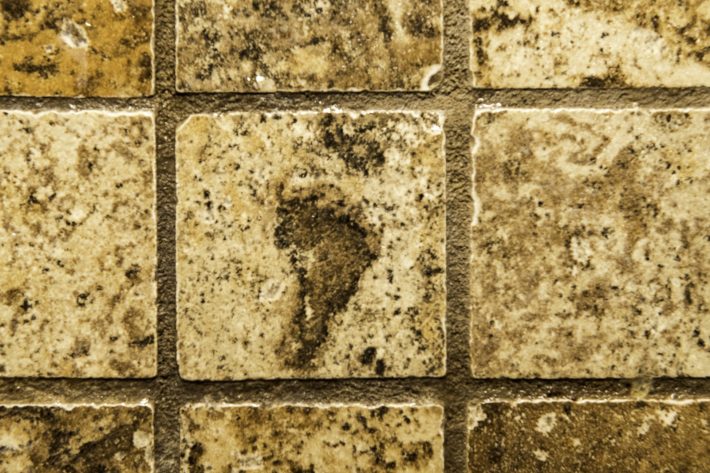
There’s the number 12 — certainly, that is not an accident but, like Jesus burned into toast and the Virgin Mary on an underpass, a message from the heavens, some reference to the disciples.

Yes, this is a little something I wrote long ago and just tucked away for just such an occasion: I’m still working on pictures from the Mass I shot (a paying gig this time!) and won’t be done any time soon…
Day 75: Awards
Today was the last day of the school year. Were it a normal year, we would have had three more half days. They're useless for instruction: we've already completed grades, and what can you do with half days? Students clean out their lockers, sign each other's yearbooks, have field day (or in eighth grade's case, eighth-grade day, which differs from field day only insofar as the PTSA feeds the kids at the end of it all), and sundry end-of-the-year things. I use that time usually to pack up my room: I have lots of kids, empty boxes, and books -- they make short work of what would take me a couple of hours. Were it a normal year -- but it wasn't, and three half-days of online instruction when a normal day of online instruction means thirty minutes of work per class -- well, it just doesn't make sense, and much to my surprise, the district realized that and basically thought like teachers for a change.
The Boy's teachers had an awards day Google Meet -- a very sweet thing for them to do. They recognized academic achievements like the A/B honor roll. When they began talking about it, I asked E if he thought he as on it.
"I don't know."
Indeed, I didn't either. I knew he'd struggled mightily with a few things, and he was able to finish tests only because the teachers allowed him extra time. "I have to pay for it with less time on the playground, because that's when I finish," he once explained, "but that's okay."
But there was his name on the list, and there was a big smile on his face. High fives from everyone.
Is it a bad thing that I honestly had no idea whether or not he'd made the honor roll? I don't think so: in second grade, grades appear for the first time. Everyone's getting used to them. They're not meaningless, but they're not all that important, so I never really worried about his grades. I don't quite think it was the same for K, but she never made a B (or 4 in the Polish system) even in her worst nightmares, so she put a little more weight on the grades. And to be fair, aiming high is always a good habit to develop. It's not that I wanted him to settle. It's just -- well, it was second grade. I don't remember a thing from second grade.
At the end of the program, they gave every single student a special award: most likely to -- superlatives, in other words. E won "Most likely to win an episode of Survivor." The other day during a Google Meet, E showed everyone his survival kit and told them a little about our adventures. That was what stuck in the teachers' minds, and it was a cute award that just made E's day.
What superlative would I give him? Sometimes, with his sensitive nature and keen sense of right and wrong, I think he's most likely to have his heart broken in as many ways as one can imagine. He sometimes gets so frustrated with others' unwillingness to follow basic rules. "That's just not nice!" he concluded many stories about some tragedy that befell him in school. This is not to say that I assume he's always an angel: many of our conversations involved me trying to help him see how he could have been nicer. Still, he's a very by-the-book fellow, and it upsets him that others aren't.
Maybe "Most likely to brighten someone's day." He can sure do that, but that requires a bit of familiarity. He's not entirely comfortable approaching, say, a lonely kid on the playground that he doesn't know but who might need someone to play with. The unknown -- he's not keen on that.
Maybe "Most likely to be an engineer." He does love building things.
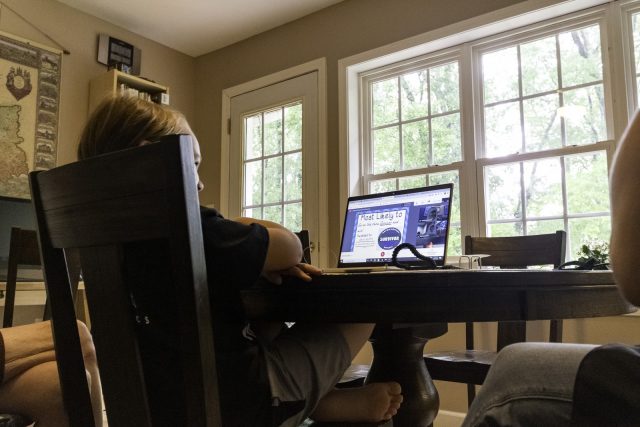
Or just "Most likely to make his family proud."
As for the Girl, she got the good news that she definitely made it into geometry and English I Honors. That means she'll be taking the course that I will teach exclusively next year. Were she a student at our school, that might cause problems: I wouldn't want to stress of grading my own daughter.
For me, what's more impressive is the geometry. I didn't take geometry until tenth grade. She's two years ahead of me.
She was worried about the possibility of not making one or both of those classes. Being a teacher and knowing how things often work behind the scenes, I knew it was unlikely. But I also knew that no "behind the scenes" would be necessary: she's worked very hard this year, and she's make sure that her grades are not just good grades but reflections of her actual understanding. She and K spent many an hour going over this or that algebra trick, and it all paid off.
So congratulations to both our kids!
Day 74: Rainy Dickens
Another Rainy Day
We are sick of the rain. Simply sick of it. Every day for the last — how long has it even been? A week? Day in, day out, at some point during every single day, it rains. The air is heavy and moist, and it’s just not a pleasant experience — though it could be worse with all the flooding others are getting.
Today, we finally got outside in the afternoon. It was muggy but sunny. What else could we do but head back to our new fort location and work on it. Doing what exactly? Well, chopping things down.
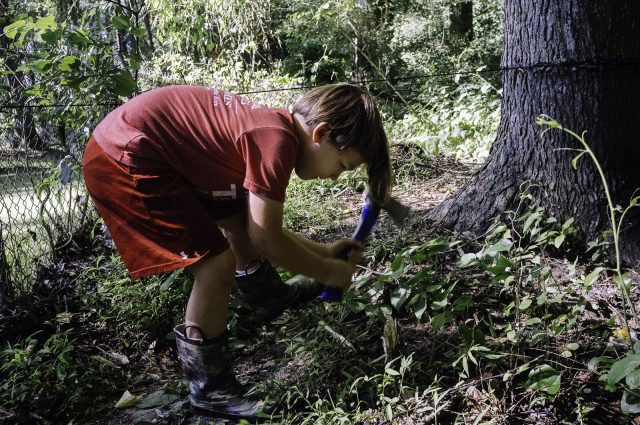
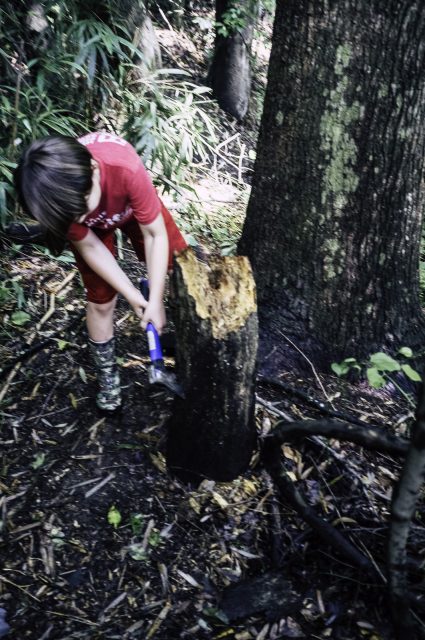
Some things were much easier to chop than others. The mushy, termite-infested stump we discovered to be such a few months back when I gave what appeared to be a 10-foot stump a push and broke it off about two feet from the ground — that stump is quite solid a little further down.
Of course, the sprinkles that filled the morning and early afternoon and kept us inside came back with friends in the early evening just as we got back from our walk.
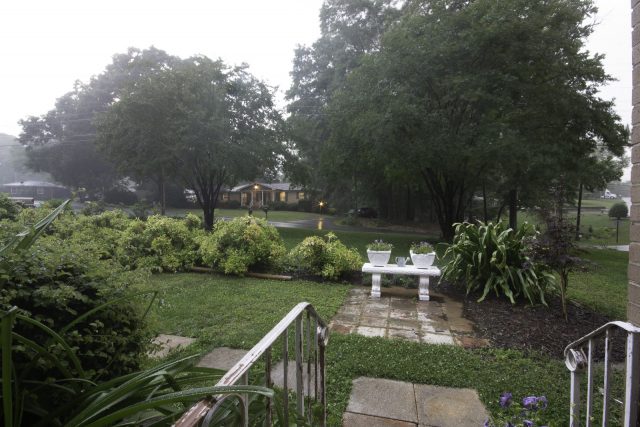
I took a few experimental shots — long exposure. Long exposure for daylight pictures. The above image was about 15 seconds. I don’t know what I was hoping to accomplish — get streaks of rain in the image, I guess — but it just turned out to be a bland shot of our front yard.
Later in the evening, we tried it inside. When I explained what a long exposure inside would do, the kids thought it was a very unique idea. “Make us ghosts!”
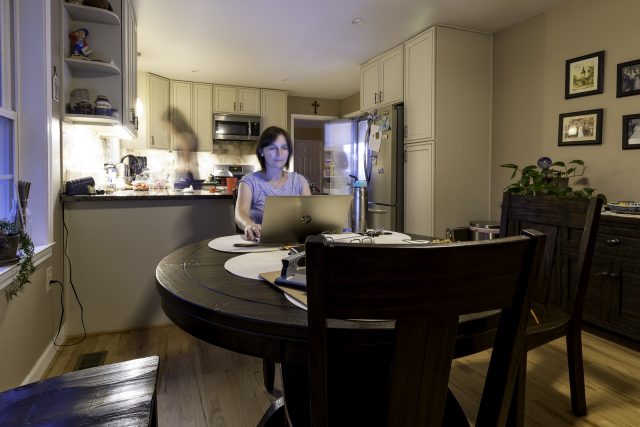
Done.
Dickensian Commonalities
I’ve been listening to Dickens’s Dombey and Son on Spotify this week — the first time in close to 20 years that I’ve read a new (to me) Dickens book. One of the things that I’m enjoying most is the simple pleasure of discovering new examples of Dickensian acerbic wit, like this:
After the lapse of some minutes, which appeared an immense time to little Paul Dombey on the table, Doctor Blimber came back. The Doctor’s walk was stately, and calculated to impress the juvenile mind with solemn feelings. It was a sort of march; but when the Doctor put out his right foot, he gravely turned upon his axis, with a semi-circular sweep towards the left; and when he put out his left foot, he turned in the same manner towards the right. So that he seemed, at every stride he took, to look about him as though he were saying, “Can anybody have the goodness to indicate any subject, in any direction, on which I am uninformed? I rather think not.”
Add to that a classic Dickensian name — can there be a more inept educator than someone named Doctor Blimber? — and it just brought out of me a loud laugh.
I’m discovering too that this is another example of Dickensian exposes on the Victorian view of children, which often enough bordered on abuse. And as always, Dickens does it with a flourish of humor that still has enough darkness around the edges to make the reader shudder just a little at what the child must be going through.
Poor Paul Dombey, at six, has been deposited at a boarding school in an effort to make up lost time in his education due to his generally ill condition. The headmaster, Dr. Blimber of above, is known for instilling in the children a thorough knowledge of Greek and Latin grammar and little else and of assuming that he’s aptly prepared his pupils for the challenges of life. Paul, on his second day of school, is given a pile of books to read and master. He does the best he can with them:
‘Now, Dombey,’ said Miss Blimber. ‘How have you got on with those books?’
They comprised a little English, and a deal of Latin—names of things, declensions of articles and substantives, exercises thereon, and preliminary rules—a trifle of orthography, a glance at ancient history, a wink or two at modern ditto, a few tables, two or three weights and measures, and a little general information. When poor Paul had spelt out number two, he found he had no idea of number one; fragments whereof afterwards obtruded themselves into number three, which slided into number four, which grafted itself on to number two. So that whether twenty Romuluses made a Remus, or hic haec hoc was troy weight, or a verb always agreed with an ancient Briton, or three times four was Taurus a bull, were open questions with him.
‘Oh, Dombey, Dombey!’ said Miss Blimber, ‘this is very shocking.’
‘If you please,’ said Paul, ‘I think if I might sometimes talk a little to old Glubb, I should be able to do better.’
‘Nonsense, Dombey,’ said Miss Blimber. ‘I couldn’t hear of it. This is not the place for Glubbs of any kind. You must take the books down, I suppose, Dombey, one by one, and perfect yourself in the day’s instalment of subject A, before you turn at all to subject B. I am sorry to say, Dombey, that your education appears to have been very much neglected.’
‘So Papa says,’ returned Paul; ‘but I told you—I have been a weak child. Florence knows I have. So does Wickam.’
‘Who is Wickam?’ asked Miss Blimber.
‘She has been my nurse,’ Paul answered.
‘I must beg you not to mention Wickam to me, then,’ said Miss Blimber. ‘I couldn’t allow it’.
‘You asked me who she was,’ said Paul.
Bear in mind that Paul at this point is six years old. “How is your Latin grammar?” asks the headmaster. “I am sorry to say, Dombey, that your education appears to have been very much neglected,” declares his tutor, the headmaster’s daughter. Just what were they expecting of a six-year-old boy?
Day 73: Changes and Changes
Changes I
K has moved into real estate, though she hasn't quite working part-time at her old job. She likes the security it provides. I tell her that things are going fine with real estate: she's just helped a client buy a house, she's got two other clients she's helping, and one of them might be completing two transactions using K's services. "It's all only potential earnings," seems to be her mantra, and that's why she's reticent to quit her hold job completely.
It was a little ironic, then, that one of the memories that popped up in the Time Machine widget at the bottom of the page had to do with our first day out house hunting.
Criteria, Part II
I read through what I wrote then and realize that neither K nor I really knew what we were doing. That's to be understood -- it was the first time we'd bought a house. Still -- were we really so green?
That's one of the reasons I continue writing this thing -- evidence of how much things have changed.
How E and I play-build has changed. It used to be something we did almost exclusively in his room, using blocks and Legos and Tinkertoys and whatever else we could find. It still is, to be sure.
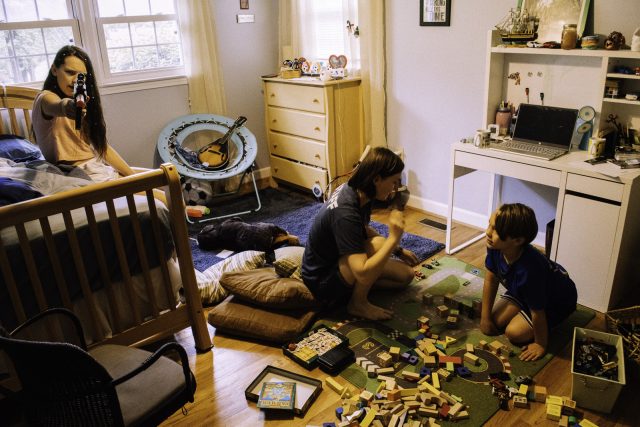
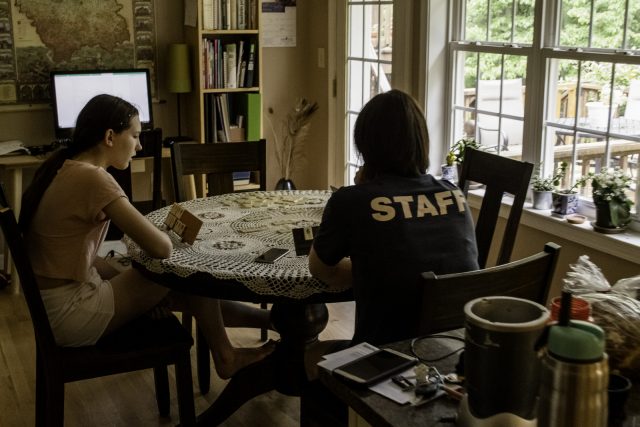
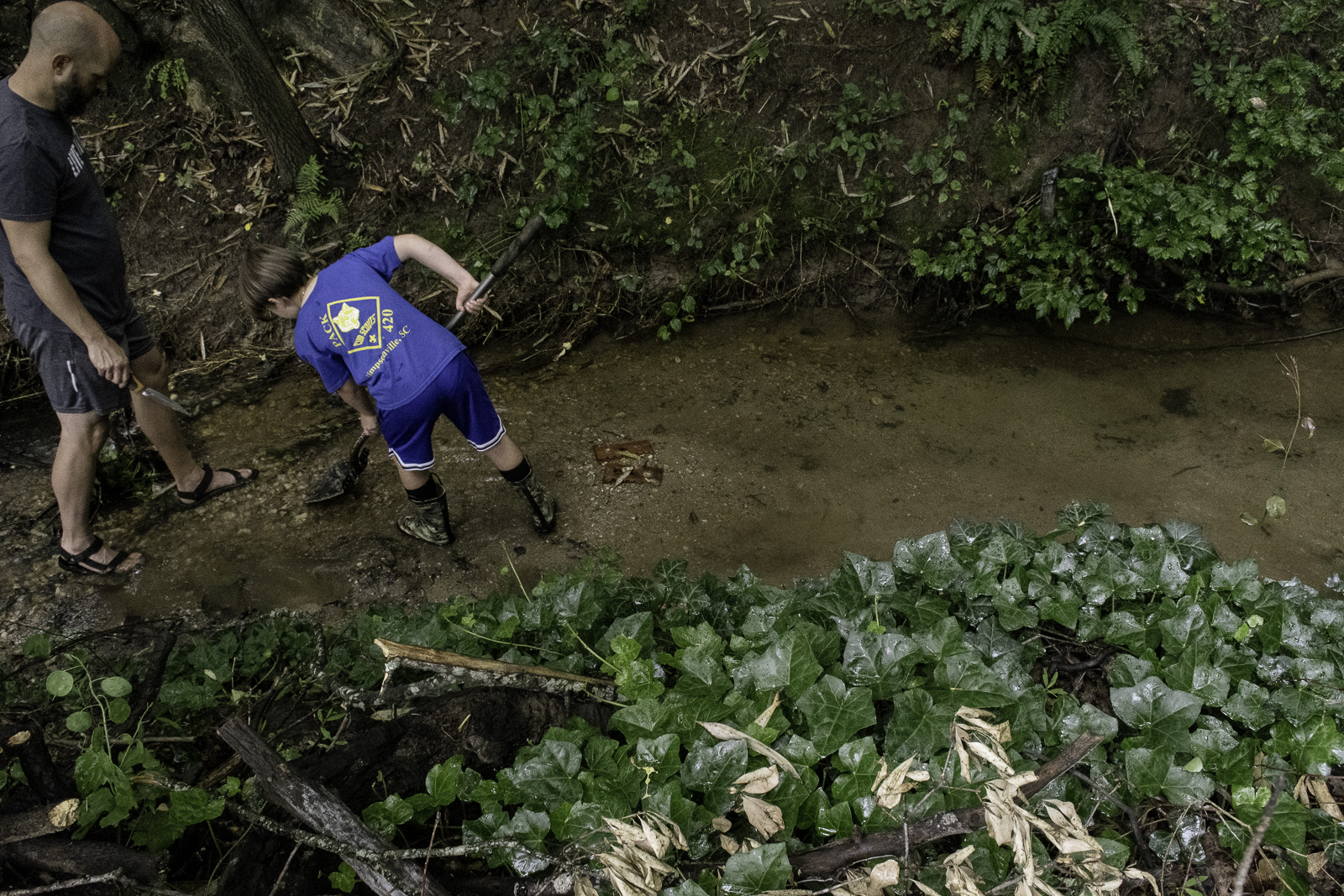
But we often find ourselves outside building something more substantial. Or at last more in the Boy's mind's eye, that's what we're doing. His plans are often overly-ambitious, as every eighth-year-old's plans should be. But as we begin working, more realistic goals form.
One thing that will never change is the sadness we feel on May 27 from now on -- the one year anniversary of Nana's passing.
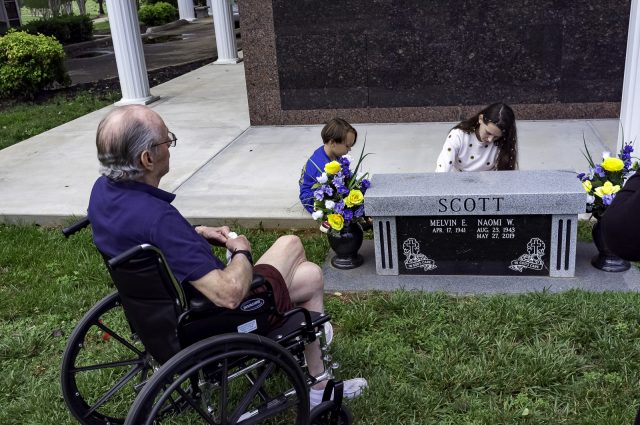
I look back on that day and remember very little about it. I know took the dog for a walk around lunchtime and listened to Mozart's Requiem. I know Papa and I had a scotch on the back porch that evening. But it was Memorial Day -- it slowed the pace significantly, which perhaps was a good thing.
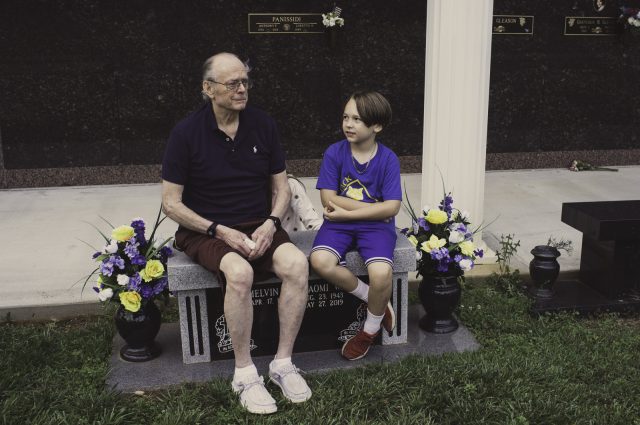
And what of today? A year on? Papa still gets blindsided by it occasionally. That's to be expected; that will never go away. I do, too. Also to be expected.
Changes II
I was going through some pictures from 2003 around K's family house at Easter. I hadn't realized how much things had changed.
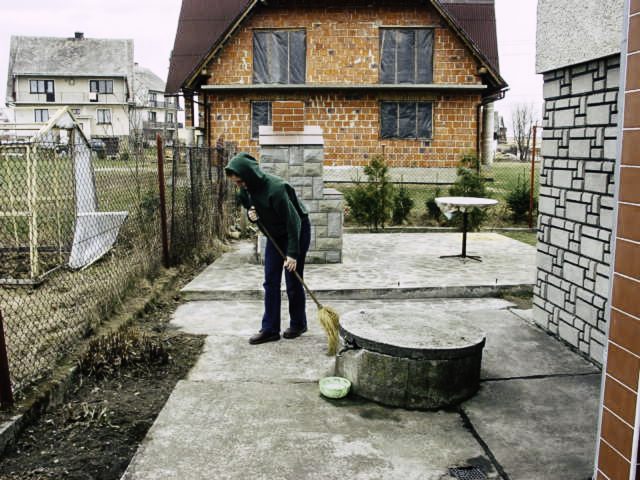
Those saplings in the neighboring lot -- they completely hide the house now. That pad of concrete with an outdoor oven on it -- enclosed and roofed. (That was done long before we left, though.) That fence to the left -- hidden by a taller fence of wood to hide the field behind it. But the house itself, the one in the background still under construction -- exactly the same.
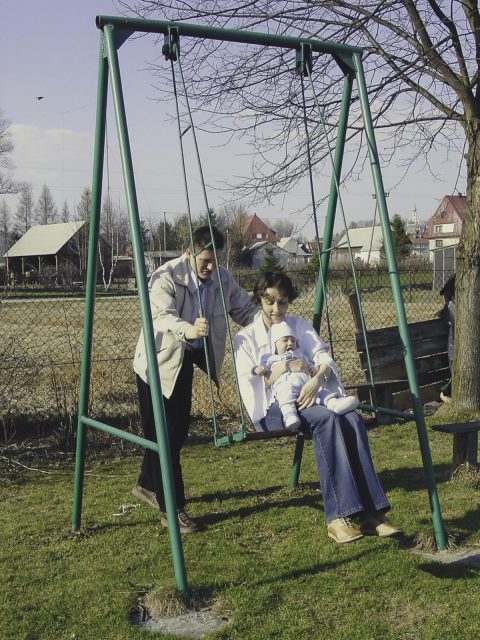
That little baby, K's nephew -- a seventeen-year-old high school student. The field behind the happy family -- storage for a building materials company. But the swing -- still there, still exactly the same. The wooden seat has possibly been replaced, but who knows. Maybe it's still the same one.
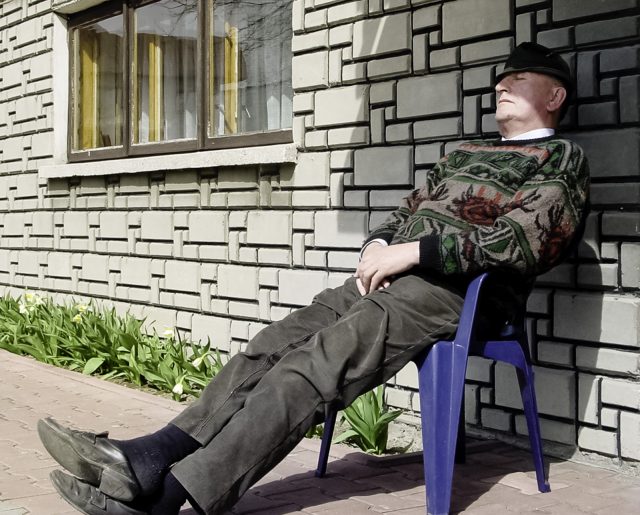
One more change -- the most significant:
Day 72: Reflection and Time Together with a Tripod
Reflection
I titled the post “Heading Out.” It comprised one single picture:
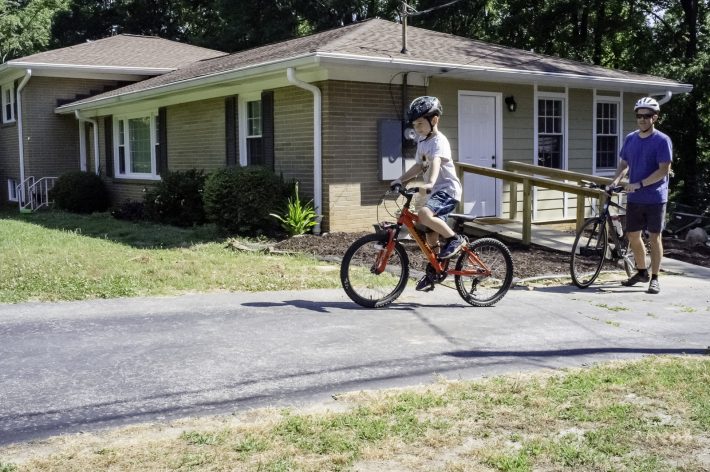
The Boy and I were going out for a Sunday-morning ride. We rode about our neighborhood, the neighboring neighborhood, up to his school, back — a typical ride for us. If there were any puddles I would have had to tell him not to ride through them.
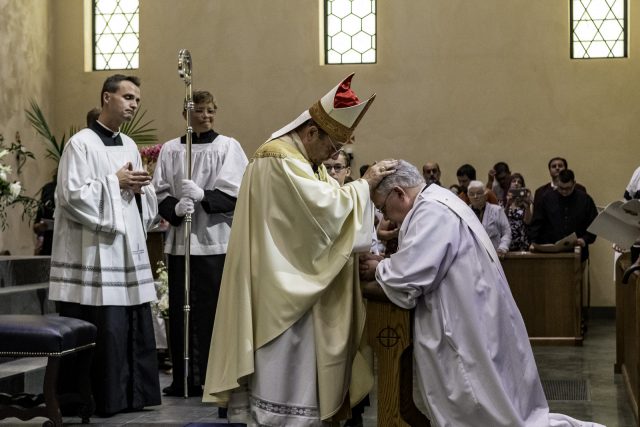
We got back sweaty and satisfied, and after a shower, we had lunch with Nana and Papa and then I headed out to photograph a special ordination Mass for a deacon in our parish, Deacon Richard — now Father Richard.
At some point during the afternoon — I don’t remember because I wasn’t there — Nana went to sleep. K must have texted me about it because I remember thinking, “Well, we gave her an opioid — she always goes to sleep after that.” The Mass ended and the reception began, and after an hour and a half of the reception, K texted me that I should probably come home. “It doesn’t look good,” she texted.
Still, I wasn’t worried. “She’s just asleep. The opioid’s effect will wear off and tomorrow morning she’ll be just as good as new.”
That was May 26, 2019. She passed away sometime in the early hours of May 27. We’re not exactly sure when even though the death certificate has the time the hospice nurse came and checked: 7:30.
“Tomorrow morning she’ll be as good as new.”
I’m not sure how I could have been so blind other than to suggest it was self-deception out of a sense of self-protection. A lot of “self” in that.
“Can we have some time together?”
The Boy asks me every day, “Can we have some time together?” On the one hand, that makes it sound like I don’t spend a lot of time with him. “Poor kid — has to ask his father to spend time with him.” It sounds positively Dickensian. On the other hand, that shows how conscientious he is about spending time with me: he wants to make sure the day doesn’t slip by without us doing something together, and that has happened.
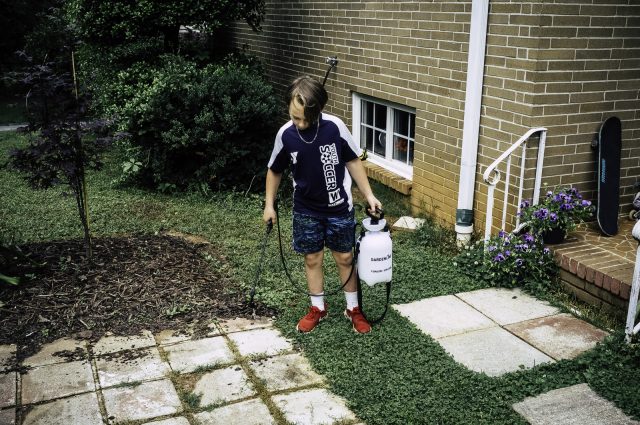
Today, I had some work to do, though, after I completed my school responsibilities (only three more days) and before I could play. The Boy is always eager to learn how to do something, so I invited him along.
Spraying for pests suits him, I think.But then again, you do have to be somewhat systematic — follow a pattern, a plan, a path. You can just spray here, spray there. You have to make sure you have even coverage over the whole area you’re hoping to affect. Much like with mowing, then, I let him work but often took back the equipment to hit a spot he’d missed.
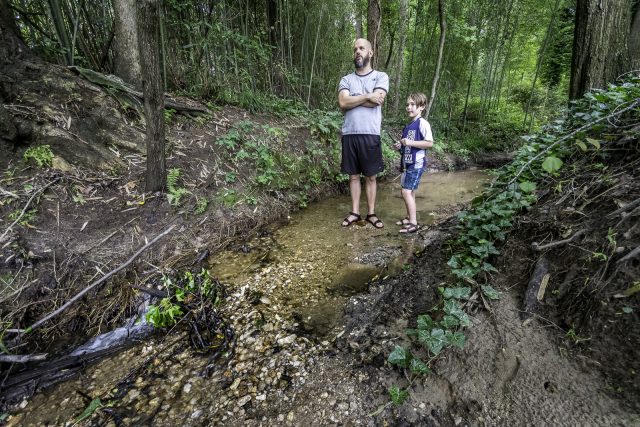
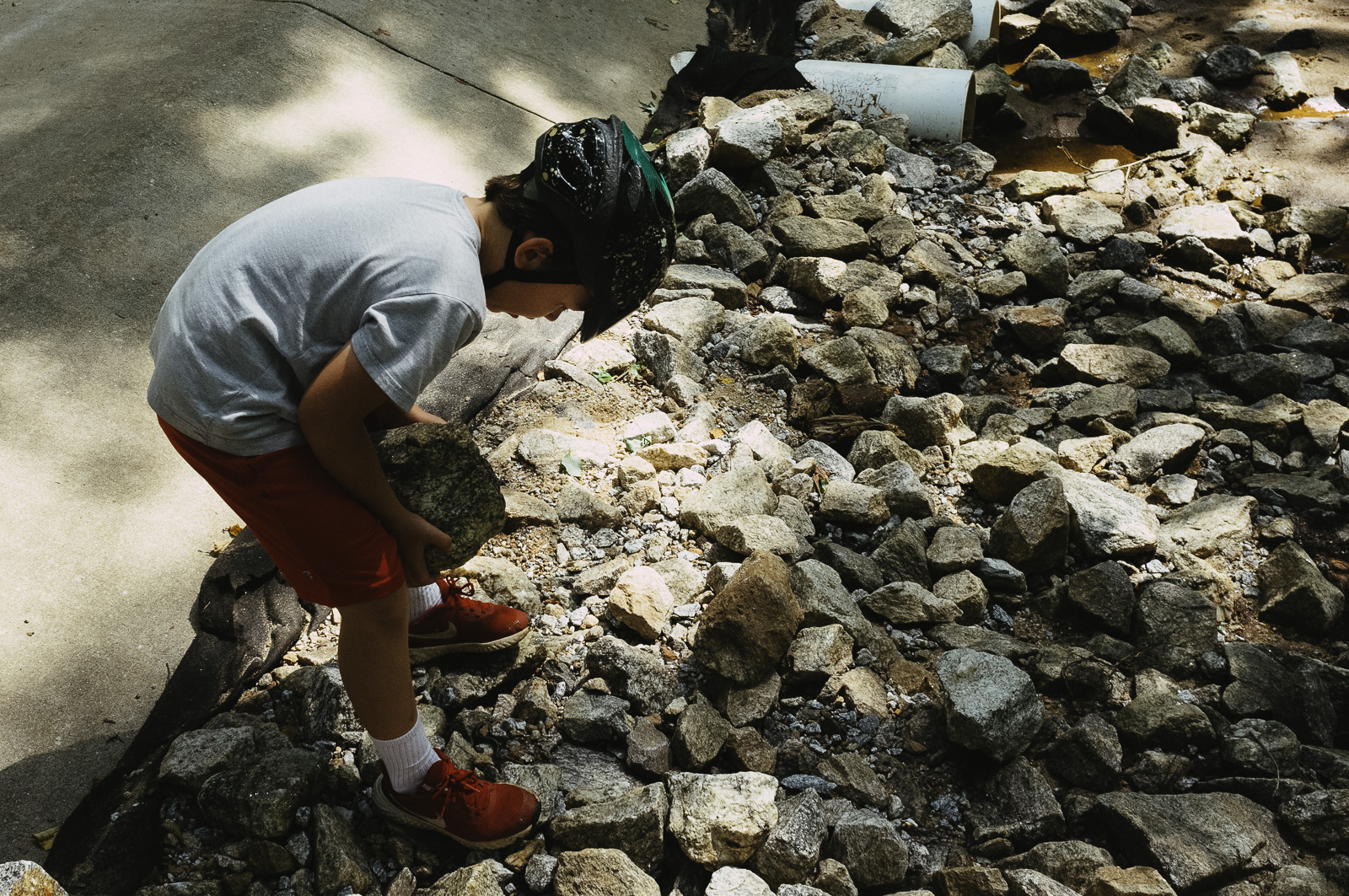
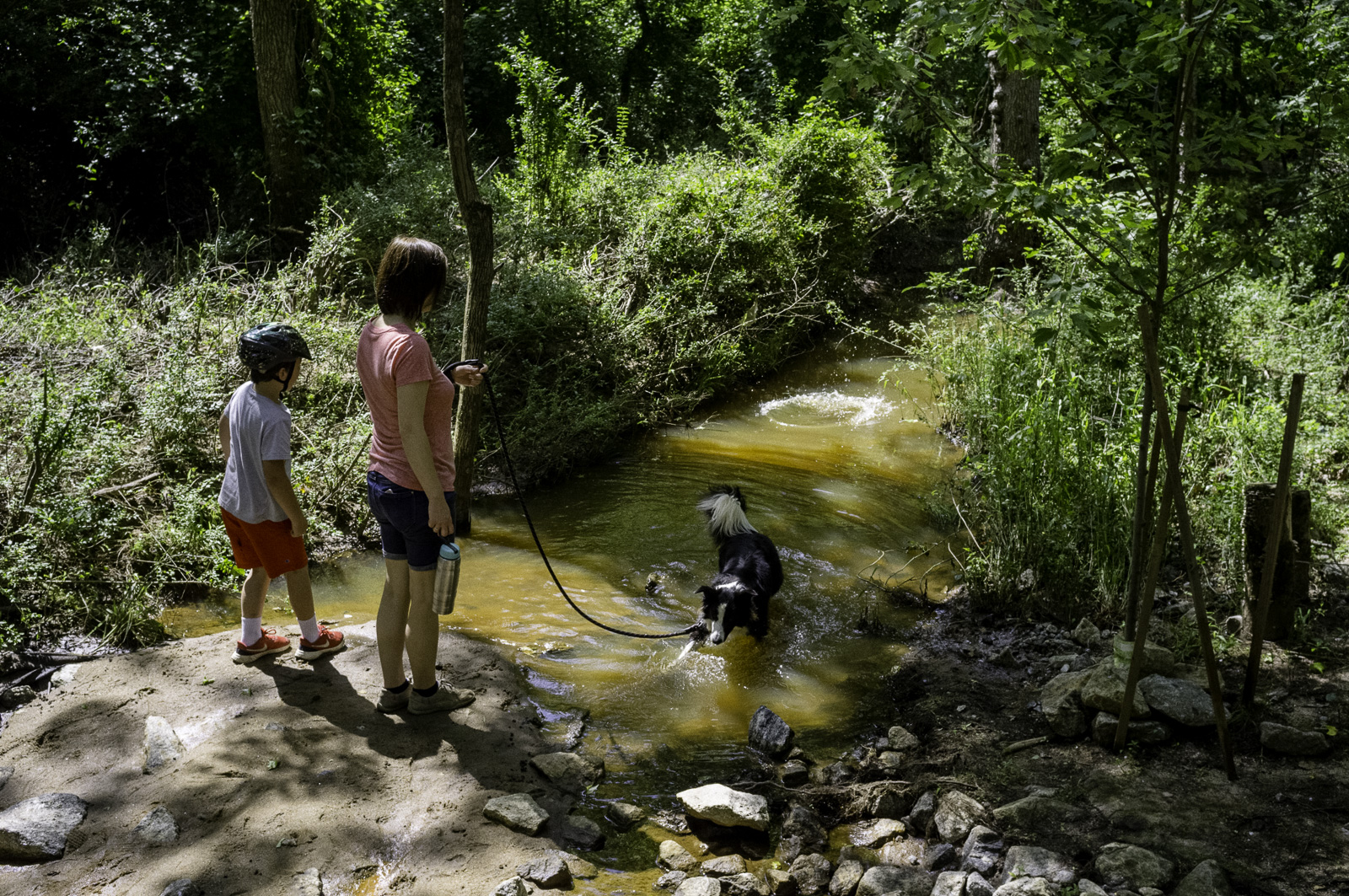
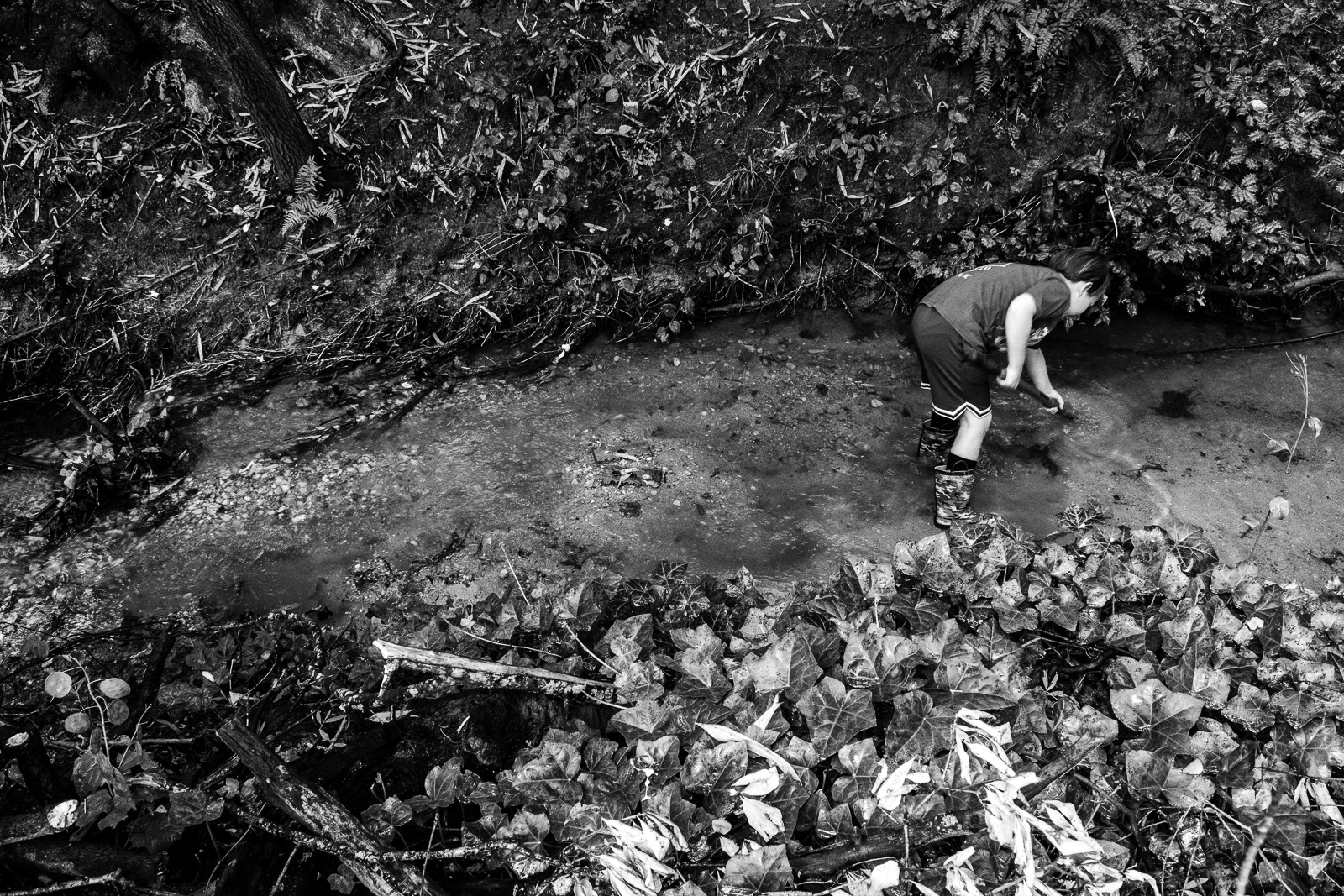
After the work (“Is this our time together?” the Boy asked, concerned), we went back to our favorite spot in the creek and discovered, much to our surprise, that the island we use to assist in crossing the creek was gone. The last flood must have washed it out completely.
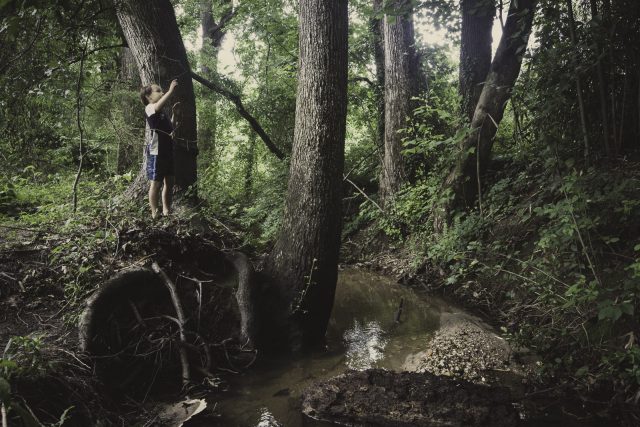
We also started planning our next fort. We might get a little less primitive this time. We might even use some 2x4s.
Tripod
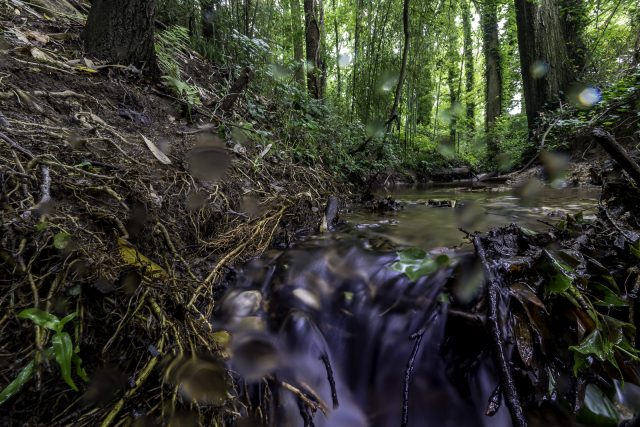
I took the camera and tripod out with us today and set the camera to take a picture every minute.
Why didn’t I do that before? I don’t have many pictures with the Boy when we go on these adventures. It’s a simple way to solve that problem.
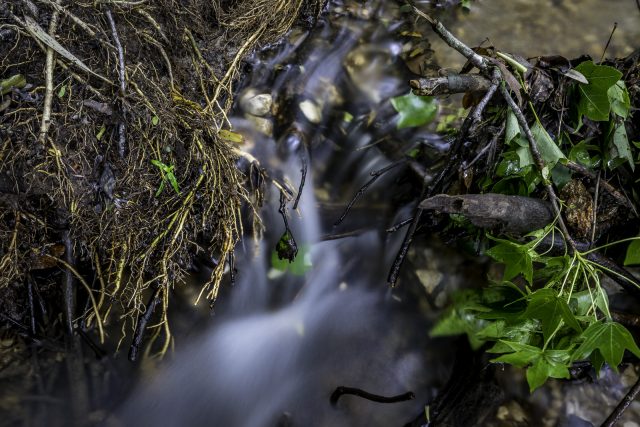
One can also reverse-mount the tripod and take some pictures otherwise impossible: three-second exposures at water level. That type of thing.
Day 71: Playing and Counting
Games We Play
This morning, E and I decided to play a game we hadn't played in ages: Pentago. It's a simple concept: Get five marbles of your color in a row. But the challenge is that each of the four nine-by-nine quadrants can be rotated. It's a great game for the mental manipulate of objects because players have to turn those quadrants in their heads and make plans to try to surprise their opponent with an unseen 5-row connection.
At first, the Boy just tried to connect five in a row. I showed him quickly how easily stopped that could be, and how I could simply build on my efforts to stop him and create my own row with a twist here or there. Then he got it.
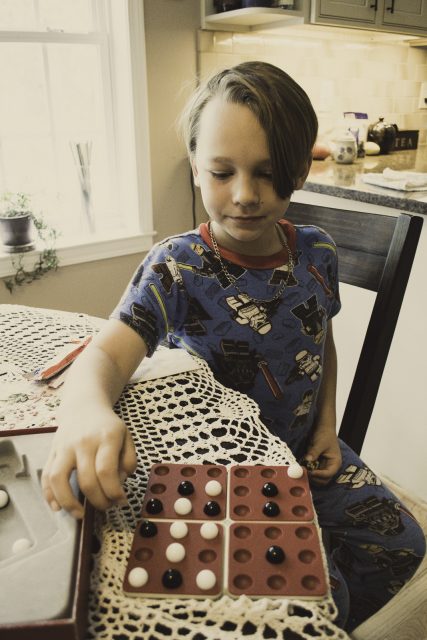
Did I "let him win"? Well, not so much. Once he figured out the importance of the twist, I played a while without really paying attention to anything other than his obvious efforts and he sneaked one or two by me.
After each game: "Can we play again?"
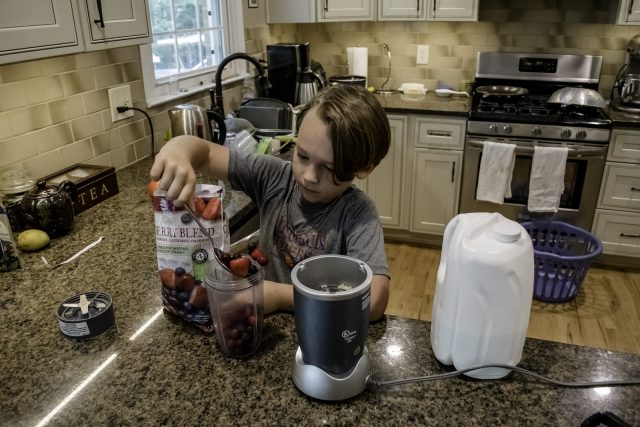
In the afternoon, the kids brought the old Rummikub satchel out: "Can you teach us how to play this?" they asked.
Indeed -- I could barely remember myself. Something about runs and threes- and fours-of-a-kind. That was about all I could remember, and there were no instructions in the game.
It's moments like that which make me really appreciate YouTube. A quick search, three minutes of watching the video, and off we went, playing a game I hadn't played in decades.
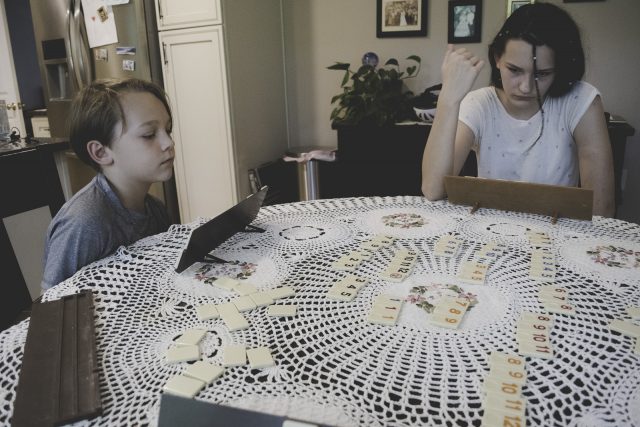
I last remember playing it in Nashville with Uncle N and Aunt L over the Thanksgiving weekend. We might have played it the last time we were there for Thanksgiving, which would have been 2005. Though we could have just played dominoes and Uno -- that's all I have photographic evidence for:
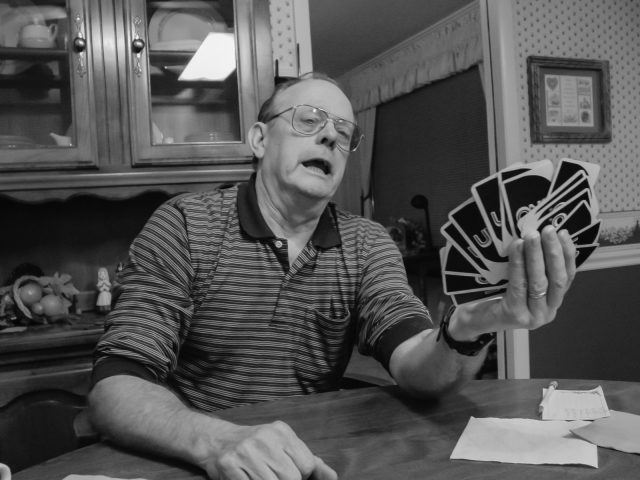
Uncle N passed away less than a year later from ALS, and we never went back there for Thanksgiving. So it might have been even longer since I played Rummikub. At any rate, the kids loved it. The Boy, less so because he couldn't see all the combinations and such. L, however, fit into the game perfectly: that type of kombinowanie is just what she does best.
Yesterday
We watched last night the 2019 film Yesterday, in which a failing musician somehow enters an alternate reality in which only he knows anything about the Beatles. He subsequently recreates their catalog as his own. As expected, there are lots of Beatles songs in the film.
"Is that a Beatles song?" L asked as one started.
"Is that a Beatles song?" E asked with the next one.
"Yes, they're almost all Beatles songs," I explained.
"How many songs did they write?!" the Boy asked incredulously.
As a result, we listened to a lot of Beatles music this afternoon. They kind of liked it -- we kind of encouraged them.
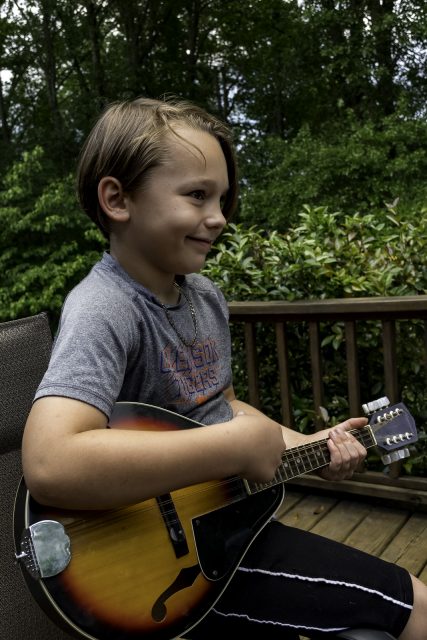
It did inspire some musicality from them. The Boy has a little guitar that he suddenly became interested in. However, it is missing strings, so I suggested he play my mandolin, which I bought in high school because R.E.M. had released Green, which featured the mandolin on a number of tunes. It's a $100 plywood job that's a perfect size for him.
Tonight, I worked with him on some basic ideas: pressing down strings just behind a fret to change the pitch. Chords? They're a long way off. (Besides, I can only remember four or five chords on a mandolin.)
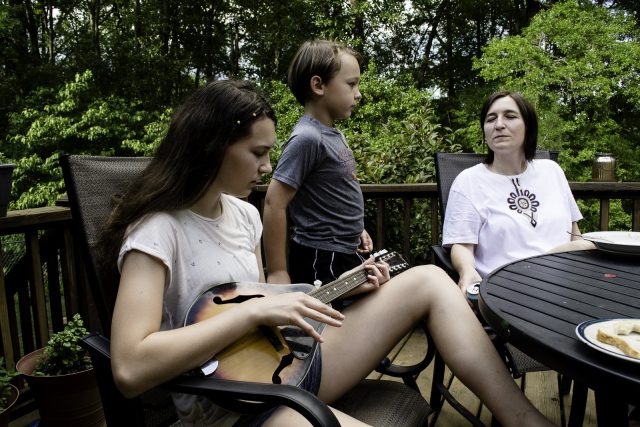
The Girl, who has been toying with a ukelele from time to time, gave it a try only to be shocked at how very different it was tuned from her uke. (When she first got the uke, I was surprised to find that, like a five-string banjo, the highest string is actually in the position where the lowest string is for most other instruments. They both just have that one out-of-place string that always gives me fits.)
We'll see how this develops, but hopefully, the interest will remain.
When do I stop counting?
When is this quarantine officially over? When do I stop prefacing every post with "Day X"? I started the first day we were supposed to go to school and yet didn't -- March 16.
Yet because we don't have any coordinated national approach and since every state is easing restrictions step-by-step, there's really no firm date for me to stop doing that. When we head back to school on a normal routine? (Will we do that in the fall?) I've decided that the most logical date to stop doing that is June 4, which would have been the last day of school were this a normal year.
On the other hand, I'm fairly certain that we will see an enormous uptick in cases after states have eased these restrictions. Just look at Cocoa Beach in Florida this weekend:
It's concerning, to say the least:
On the Sunday talk shows, Dr. Deborah Birx, the coordinator of the White House coronavirus task force, said she was "very concerned" about scenes of people crowding together over the weekend.
"We really want to be clear all the time that social distancing is absolutely critical. And if you can't social distance and you're outside, you must wear a mask," she said on ABC's "This Week." (Source)
If we have an explosion of cases, the very thing we were trying to avoid, then this entire 70+ lockdown will have been for nothing. Absolutely nothing.
Are we smarter than that as a species? Most days I have my doubts.
Counting
I'm on a run: I've never posted so many consecutive days on this site. Not even close. I've posted daily since December 21, 2019. Counting roughly, that's 130+ consecutive days. Why? Why not?
Not only that, but for the month of May, I've written an average of 1,047 words a day. That's like my journal writing when I first arrived in Poland and everything -- everything -- fascinated me endlessly.
Of course, I have cheated a few times: I included long quotes from books I'm reading, in part because I was honestly interested in writing a little something about them, in part (at least once) because I just wanted to reach that arbitrary number (like I just did in this paragraph). One thousand words. At least. Every day.
I can't possibly keep that up. The quarantine is helping with that. But daily posts? Could I make it a full year? Probably. Will I? No idea.
Day 70: Flood
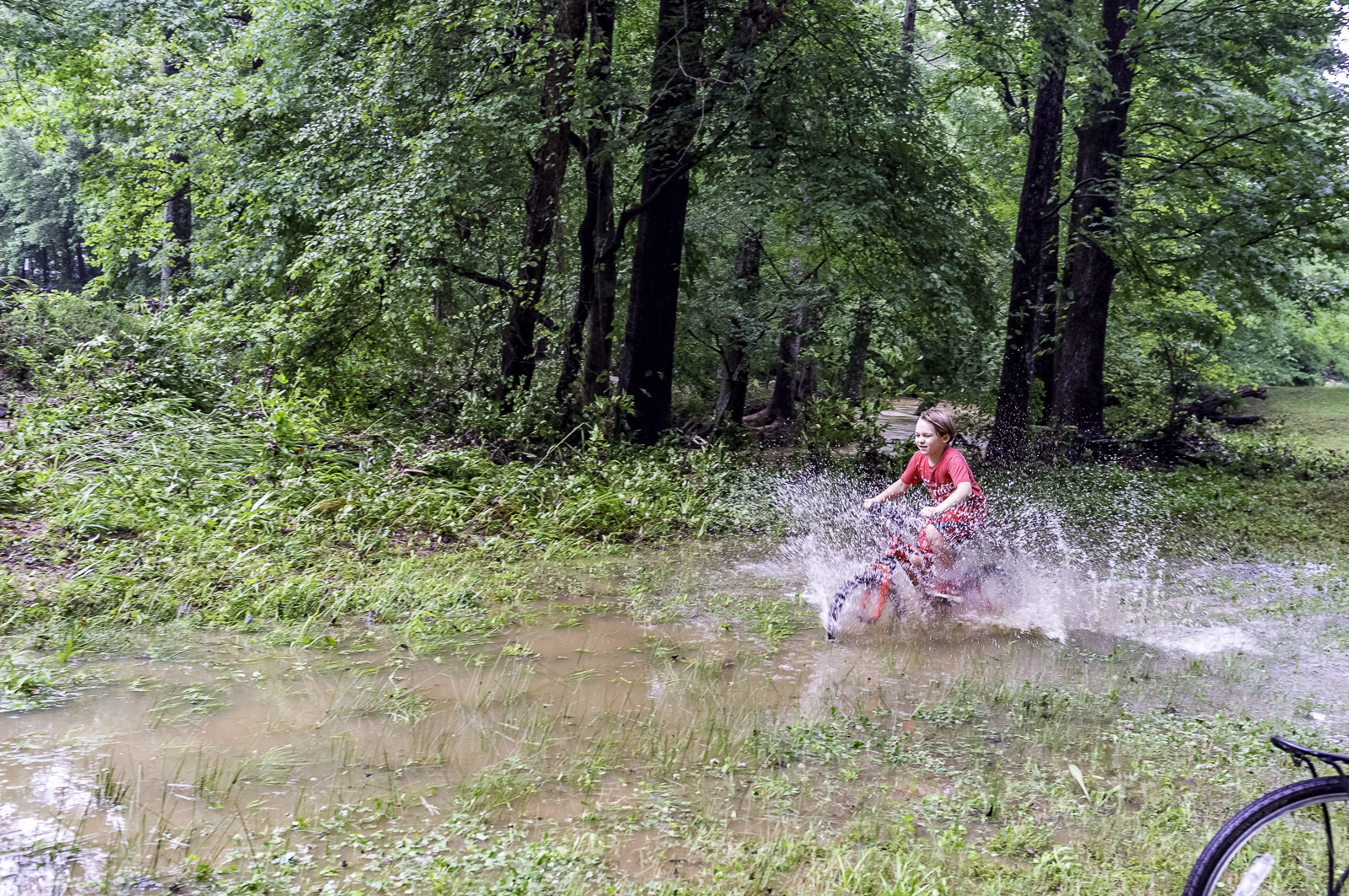
It started raining around two this afternoon, first sporadic rain with fat, lazy drops, then steady rain, then torrential rain.
In the past, such rain worried me because of flooding in our basement. With the leak in our roof, I now have different concerns. As the storm grew and the wind blew harder, I wonder whether or not I'd secured the two tarps protecting our roof well enough to keep them in place with such a storm. There was really nothing I could do about it at the time, of course: it would not have been remotely safe to head onto the roof in a storm to put down additional weight to keep the tarps from flying off.
In the end, my worries were for nothing: the tarps stayed in place; the sump basin didn't even have much water in it, so the basement wasn't even close to being threatened.
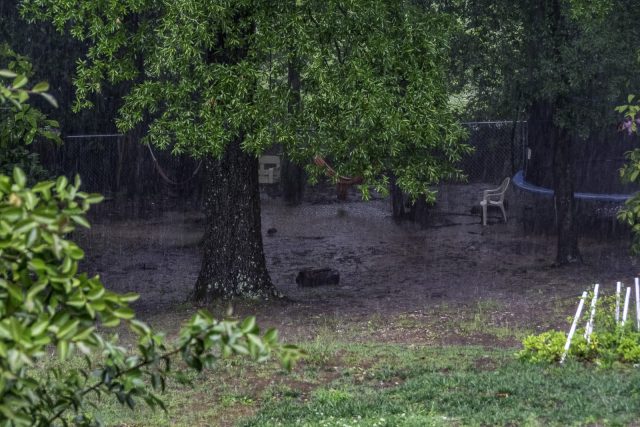
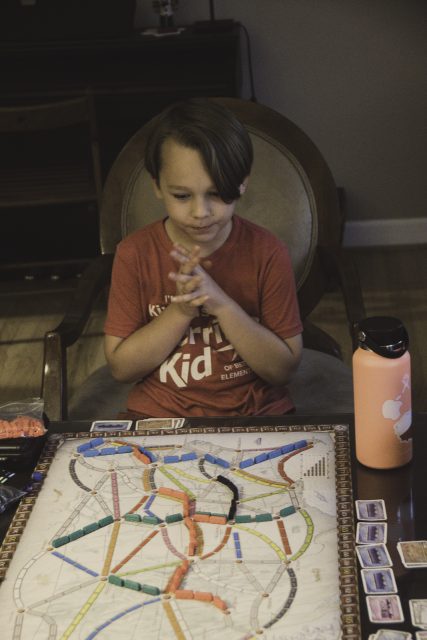
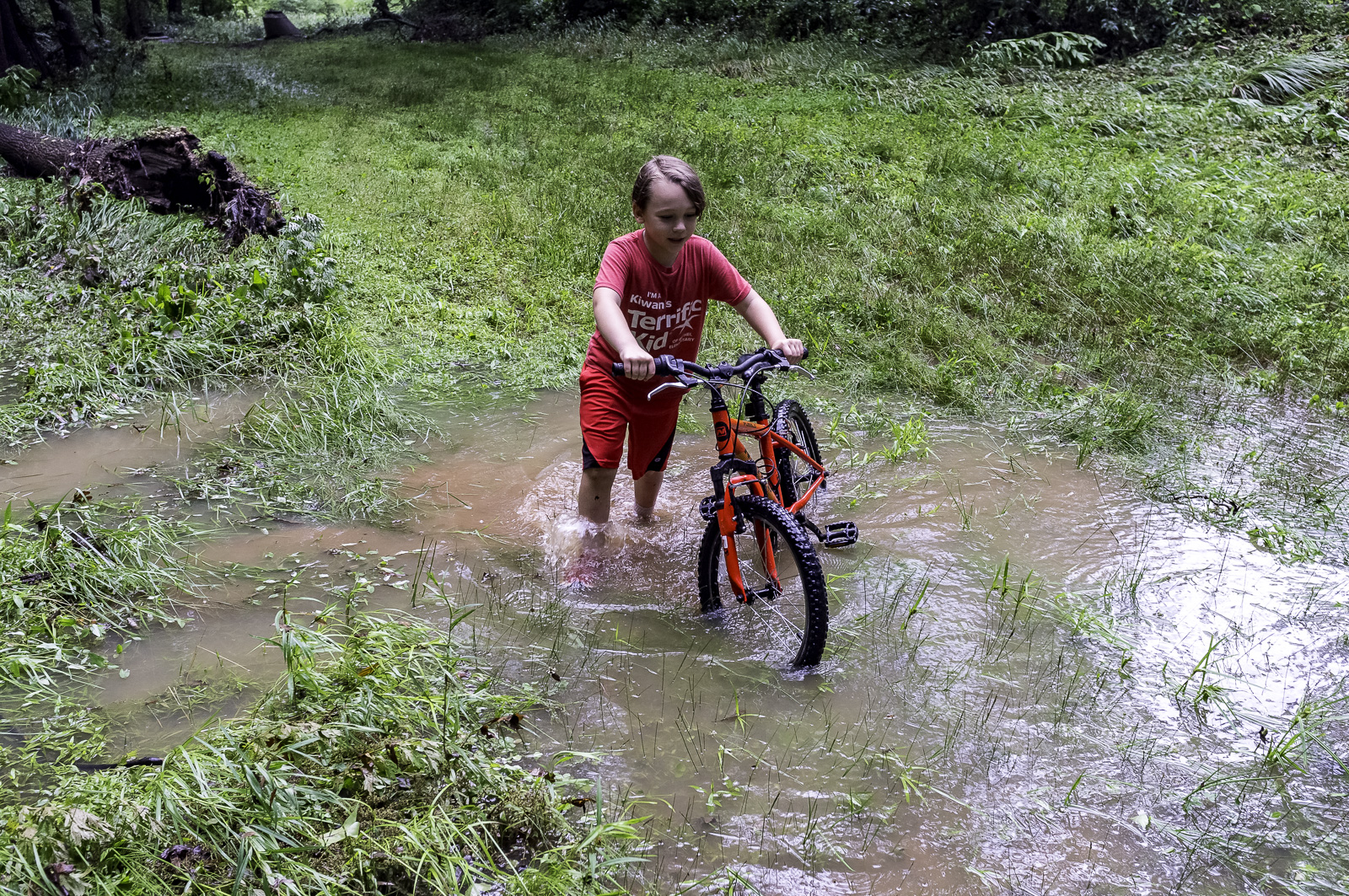
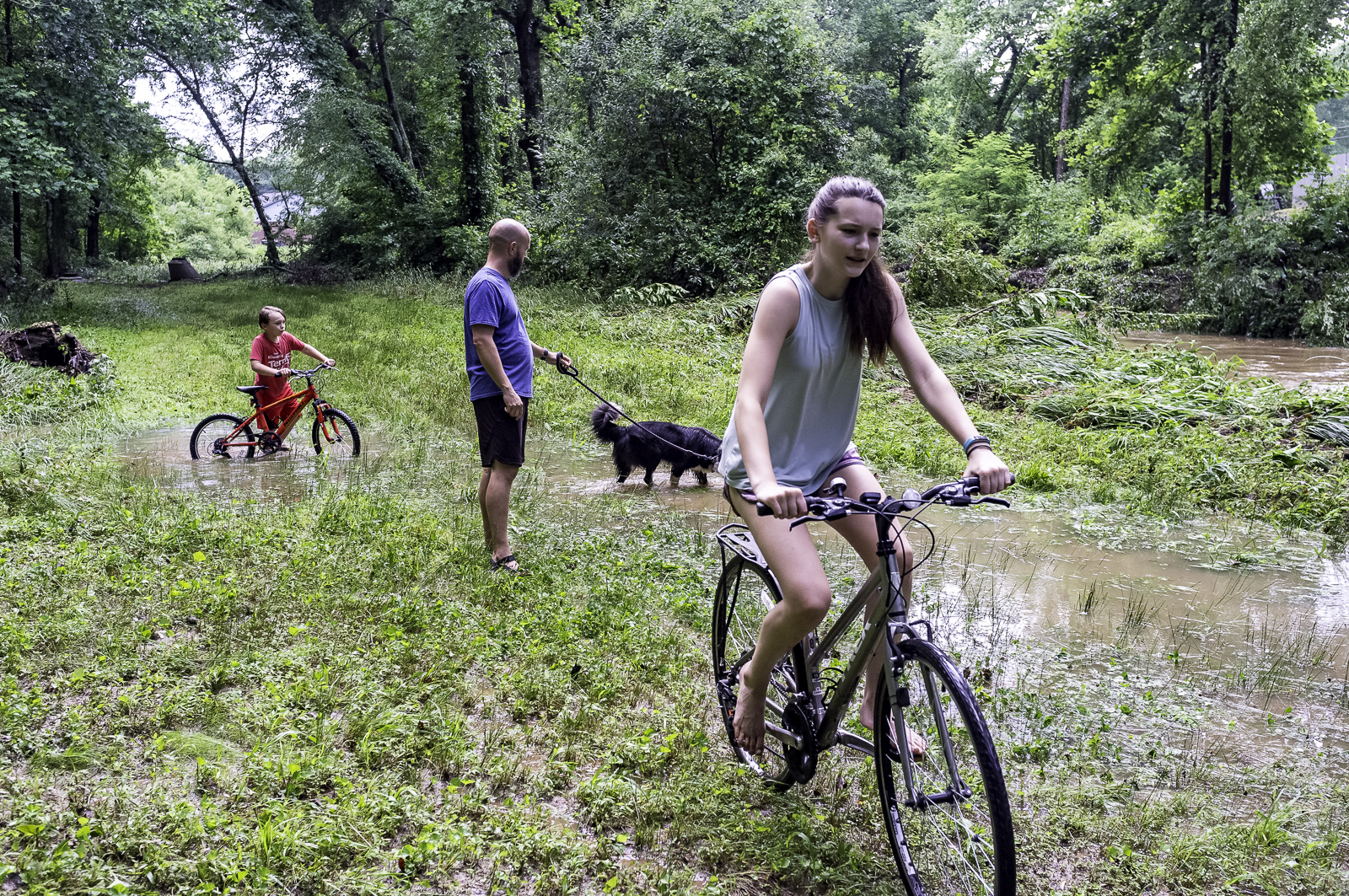
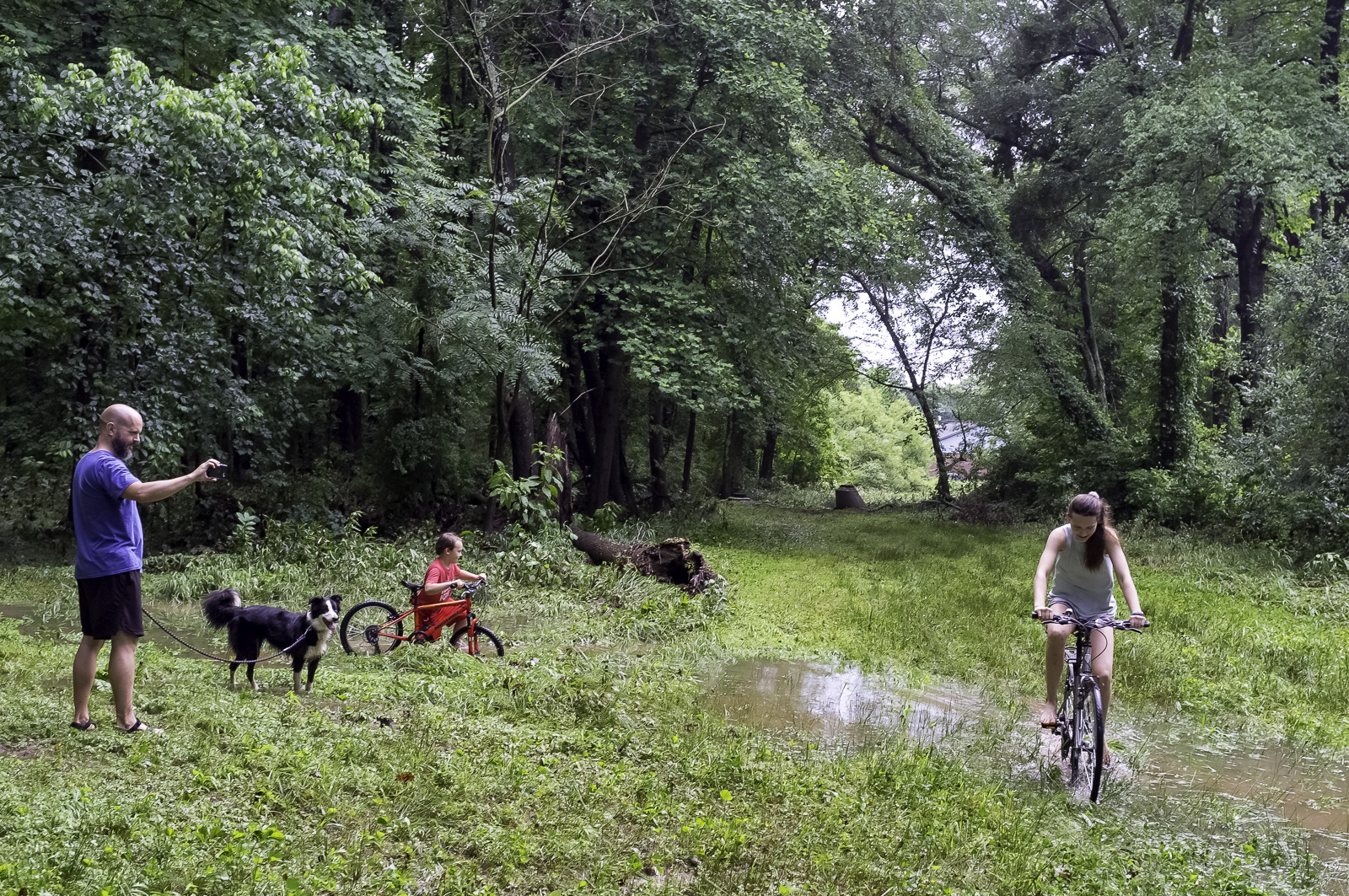
Yet we still had a lake in our backyard: the creek didn't crest but we had essentially one big puddle in the lowest part of our yard, so after we finished playing a game ("Ticket to Ride" -- I never play to win; I play to block other players -- you can't lose if you're not trying to win!), E and I struck out to see what was going on in the neighborhood.
We weren't prepared for what we found:
To begin with, there is a house basically in a hole that has an enormous backyard -- I thought it was a park when we first moved here.
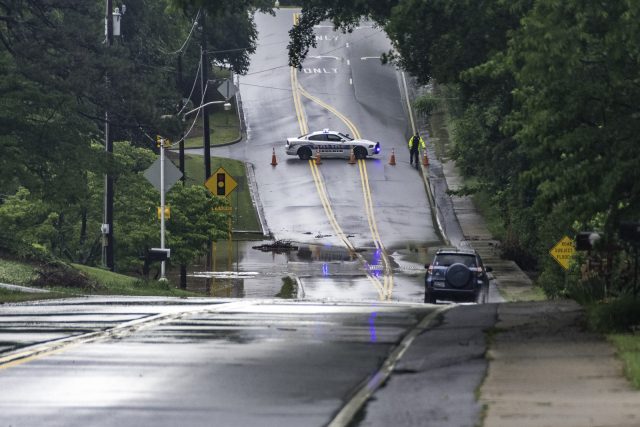
The road that goes by it was closed because their yard, which is in reality just a drainage basin for the surrounding community, was completely flooded.
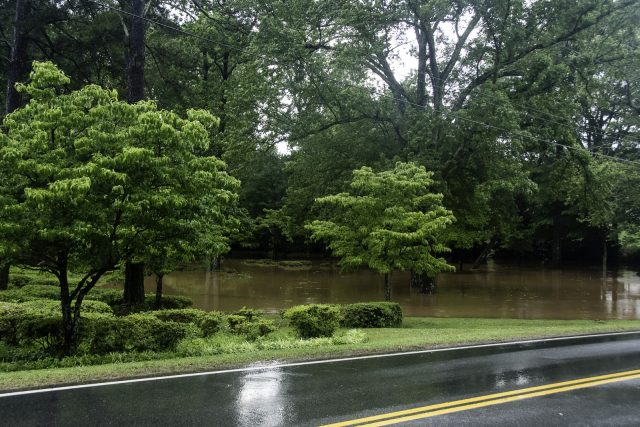
Completely.
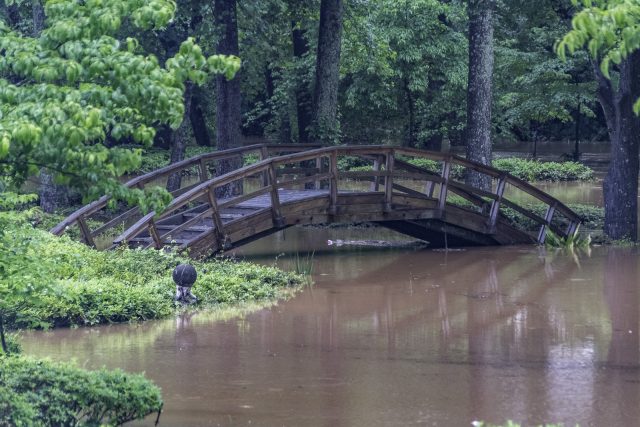
So much so that the culvert under the road was completely submerged, creating a whirlpool as the water tried to drain.
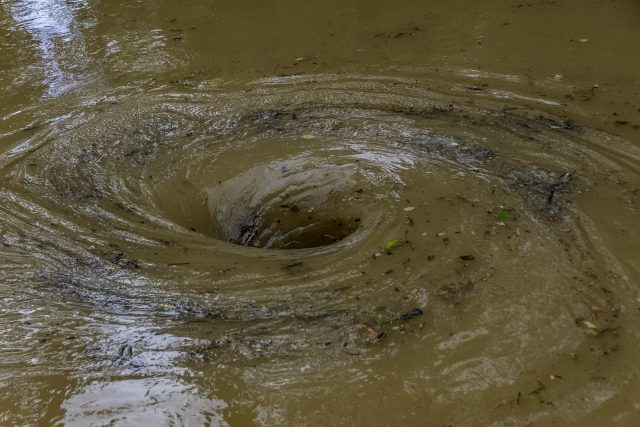
We stood in the road looking at the whirlpool, right at the edge of the water. We're past the time of E asking questions like, "Daddy, what would happen if I fell in that water?" He knows. He likes to show he knows. "Boy, Daddy, if I fell in that..." and his voice trailed off for effect.
It gave me a little shudder, the shudder of a parent having nightmarish visions of the worst possible outcome. Once such thoughts enter my mind, it's hard to shake them. The Boy seemed to realize that. "Come on, Daddy, let's go back to the other side.
All that water -- undoubtedly the worst flooding we've seen there. It was still nothing compared to what we saw later, downstream. We walk by here almost every night -- it's K's favorite walk.
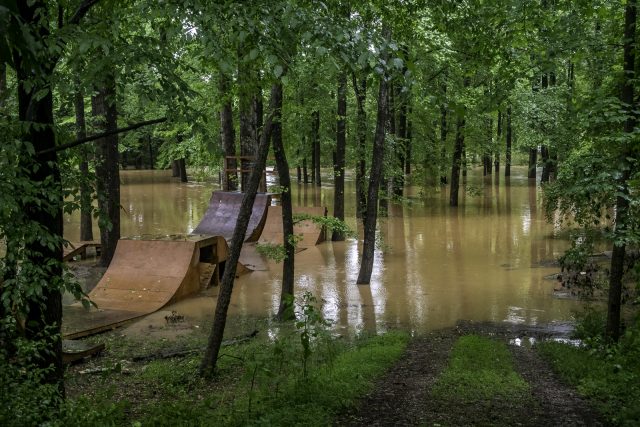
The creek that was forming the whirlpool earlier joins with another creek at this point, and the two completely covered the flat land around it.
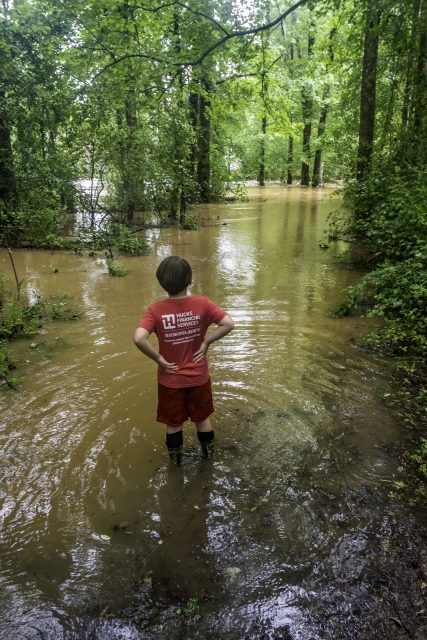
We headed back home, still having fun on the way.
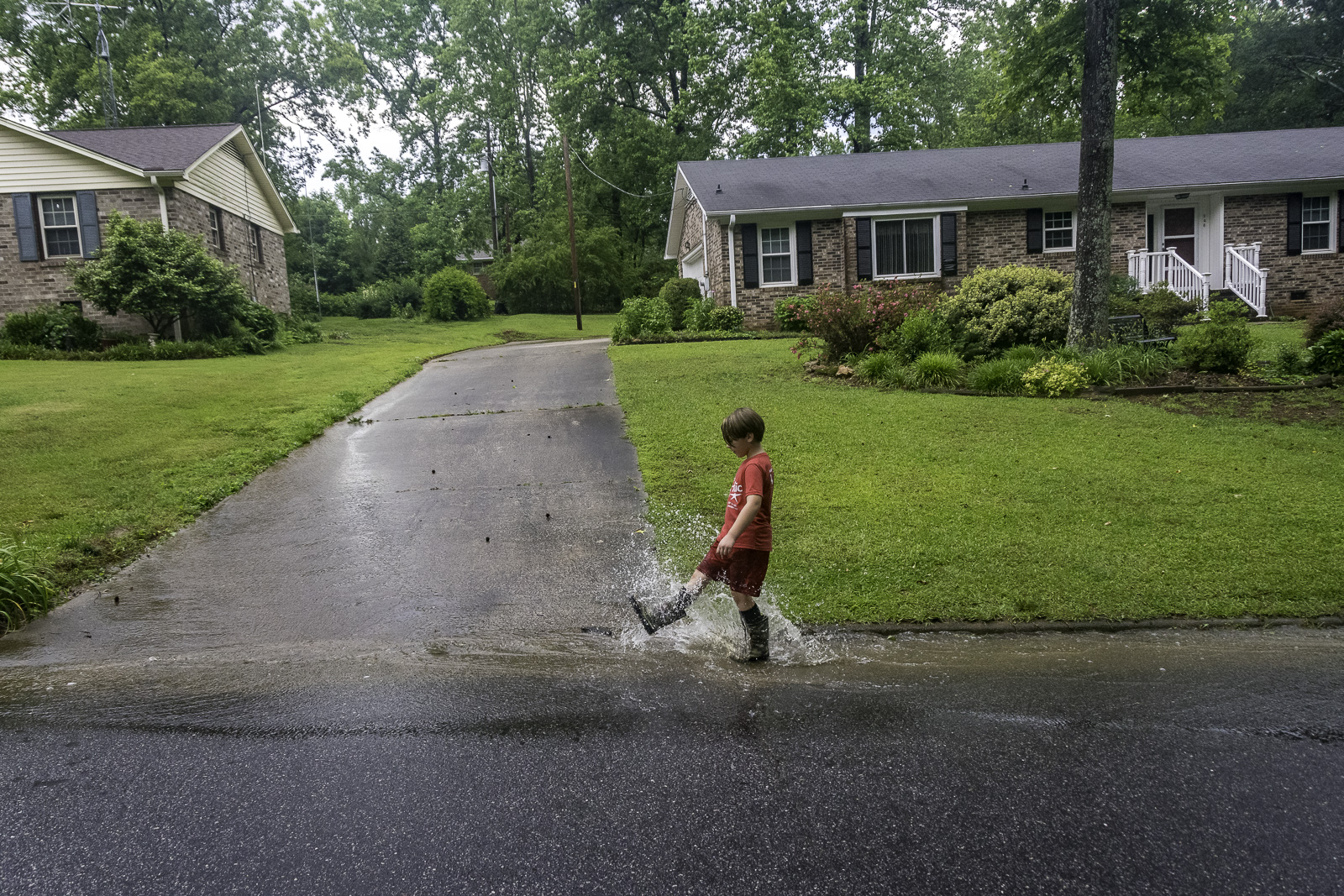
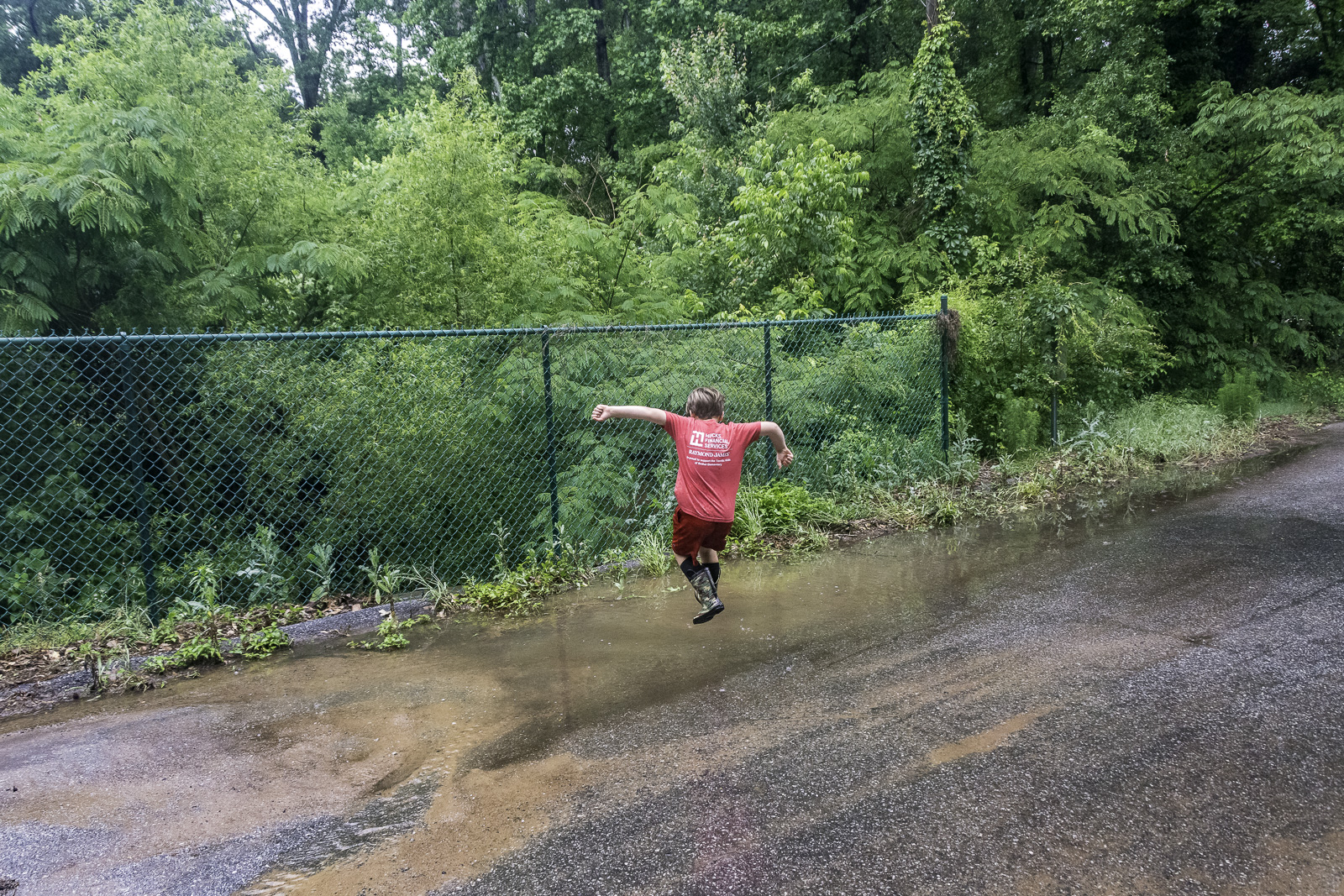
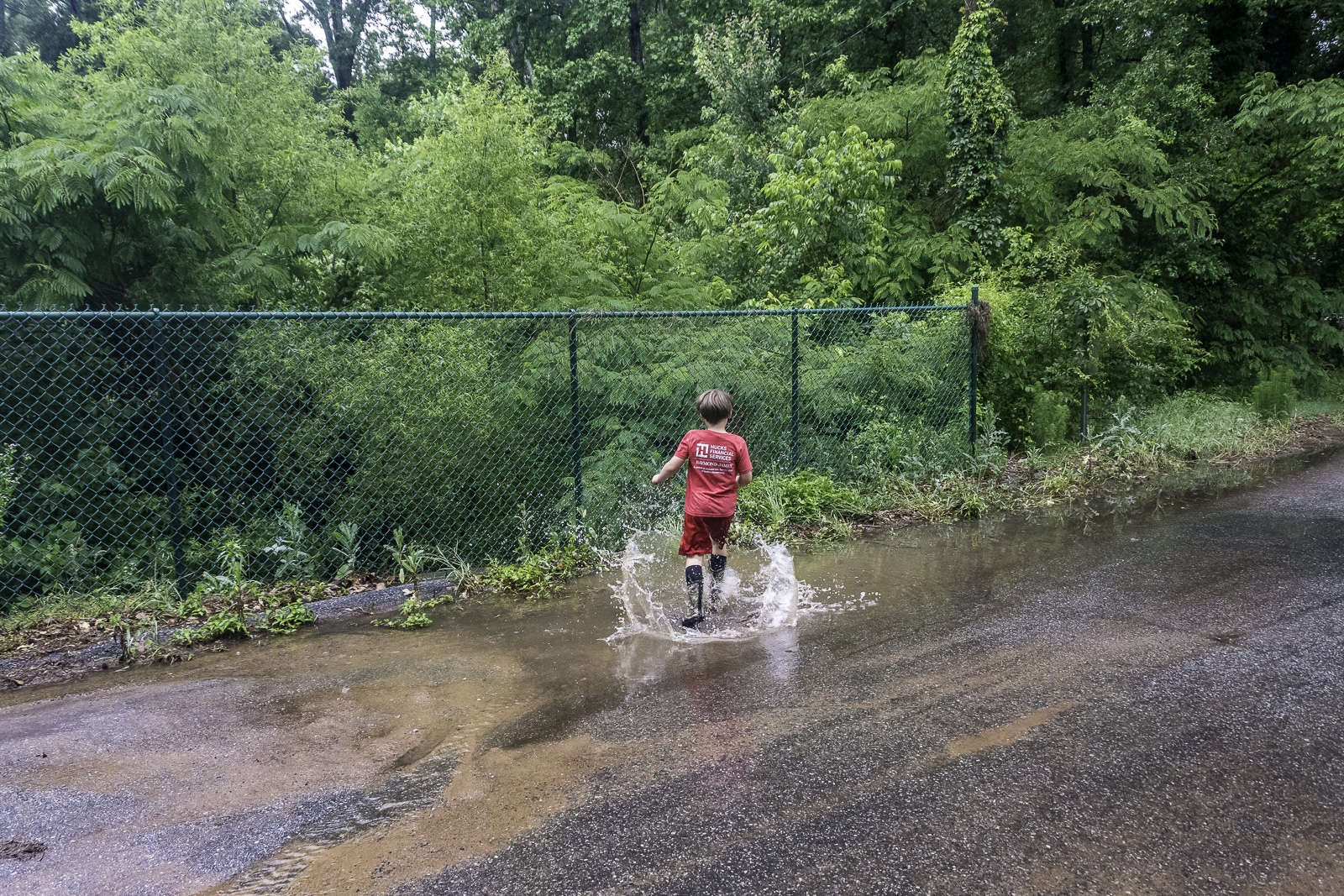
In the evening, we went for a walk to show the girls what it looked like. Of course, most of the water had subsided, but there was still enough to be impressive, and just enough to enjoy safely.
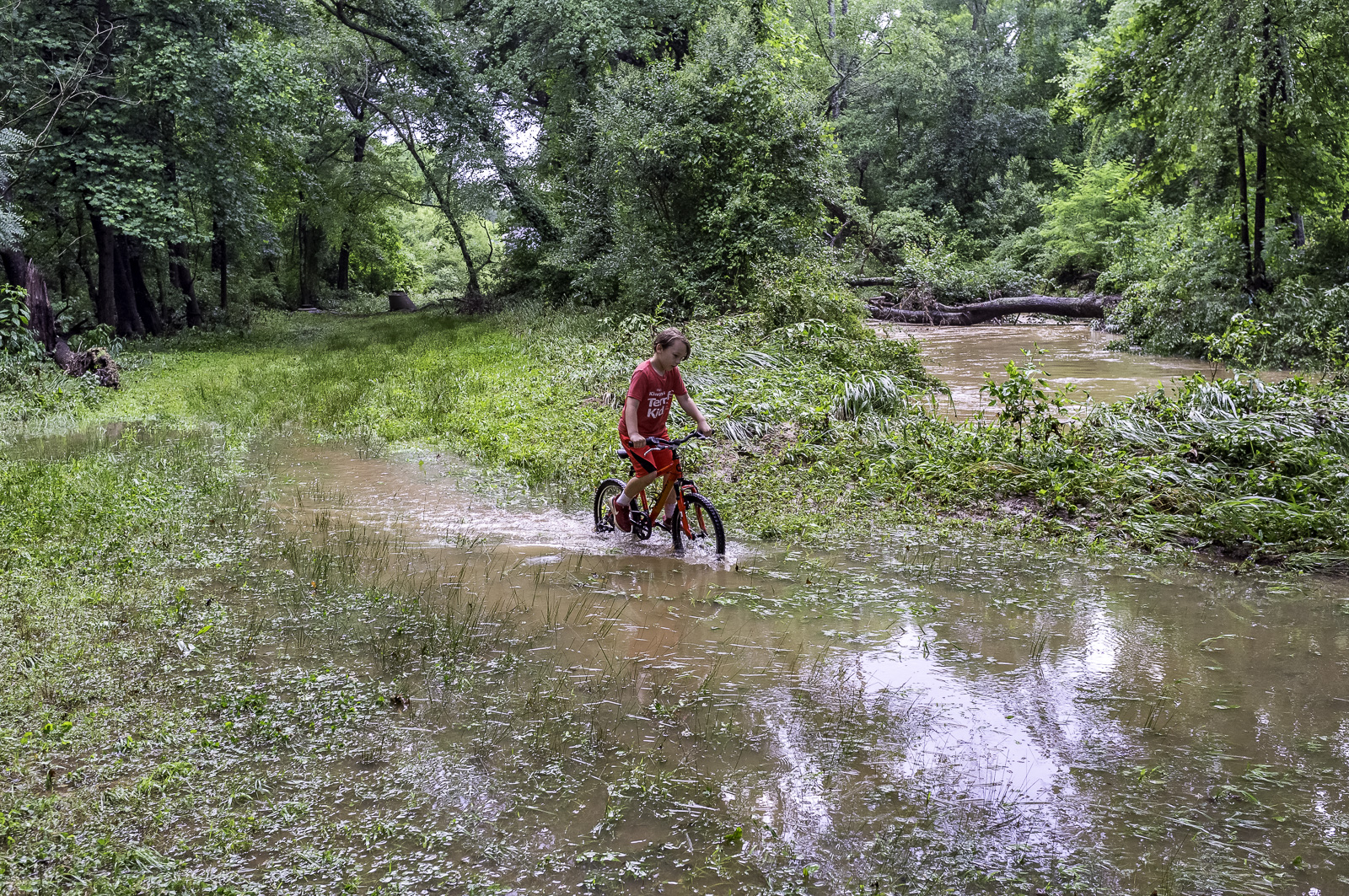
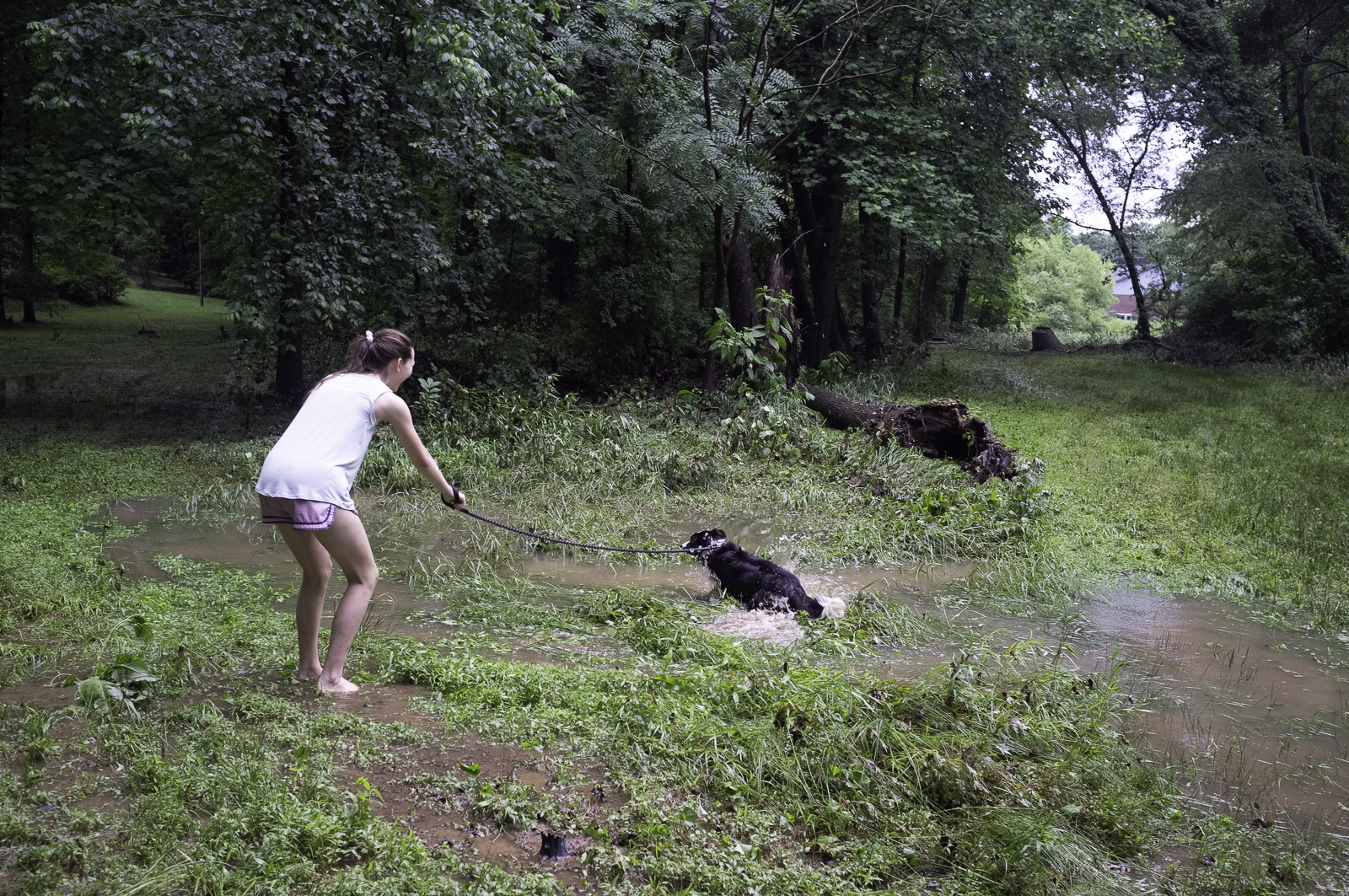
Day 69: Training, Cleaning, and Reading
Our pup has come a very long way. I thought, when we got her, that since she’s a border collie (smartest breed on the planet, right?), things would be easy. She’d be easy to train, easy to control (after all, you can get those dogs to do the most amazing tricks herding sheep), easy to house-break — just easy. But it turns out that BCs are too smart for their own good: it makes them a little stubborn at times. And that describes our Clover perfectly: stubborn, stubborn, stubborn. But we didn’t give up on her: we took her for some obedience training, we left her a couple of times for one-on-one days with a trainer, and for the last year, things have been going great.
Now, we have a few tricks with her.
- You can, for instance, drop a piece of the most tempting meat in front of her and she’ll just sit down at it, shifting her gaze from the meat to you and back to the meat, a pleading look in her eye, and she won’t touch it until you tell her, “Eat.”
- In the morning, you can open the door and tell her, “Siusiu,” and she’ll go out and immediately relieve her self and come back inside.
- You can call her and she comes and sits beside you.
- If you want her on the other side, just say “Other side” and she’ll switch sides.
- You can tell her to stay and then kick ever her most beloved ball and she won’t go darting after it until you tell her “free” or “go get it” or “release.”
- “Heel” means “heel.”
- When you’re taking her for a walk and stop moving, she sits — sometimes immediately, but usually after a bit of hesitation. (There’s that stubbornness.)
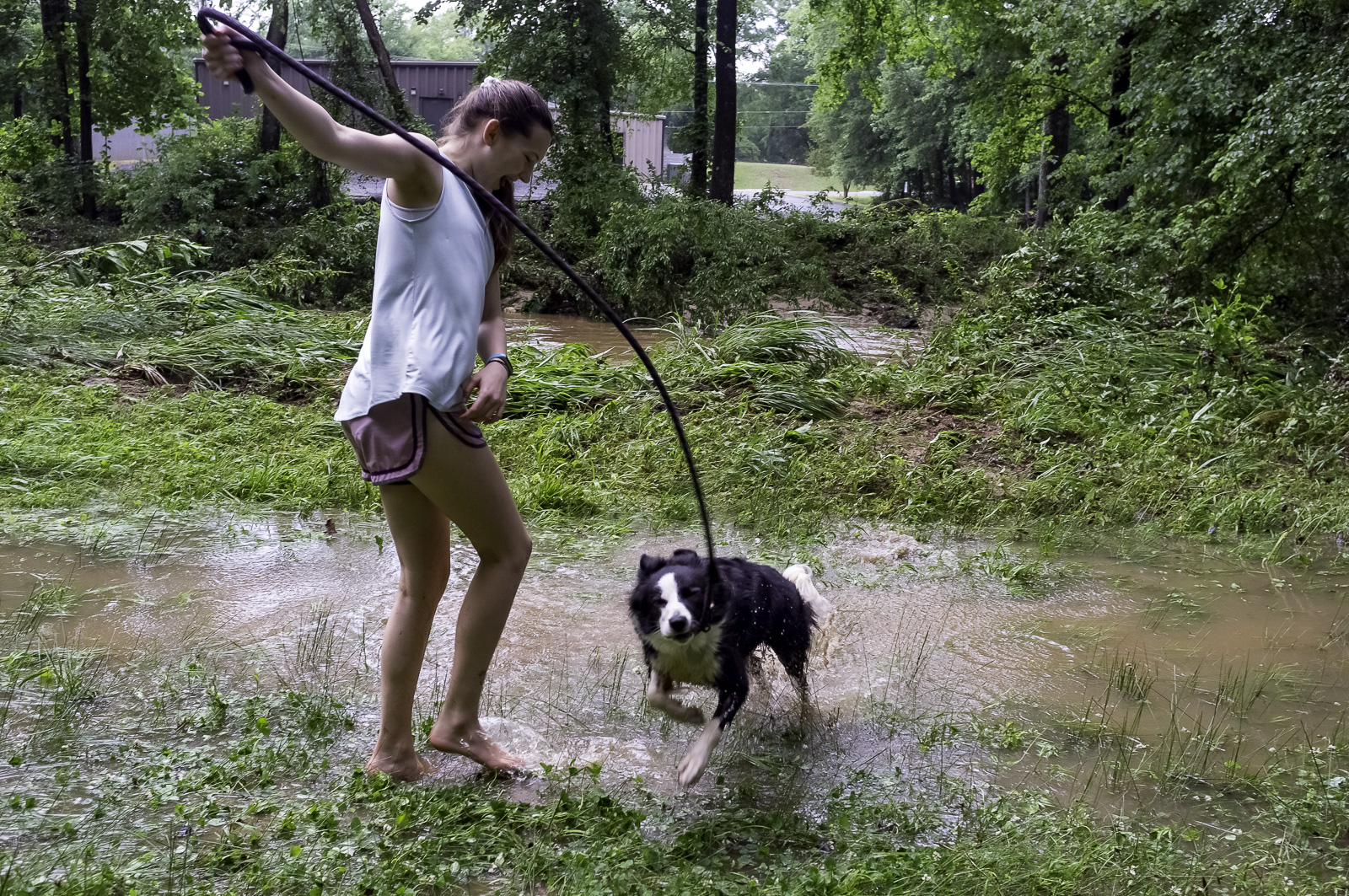
For her birthday, though, we got her an agility course. The Girl began training her yesterday. It was fairly simple: she figured out that she had to jump over the bar, had to jump through the hoop. Easy-peasy. She looked up at L like she looks up at me when we go for a run: “Was that supposed to be a challenge or something?”
Today, the Boy got in on the fun. He had a little difficulty getting her to jump without a leash on her to guide her, but soon enough, he’d worked out his own way of bribing her with a little treat.
My Ántonia
I finished reading My Ántonia today — or rather, listening to it on Spotify. I first read that book in college, and it astounded me, particularly one quote: “Some memories are realities, and are better than anything that can ever happen to one again.” More than O, Pioneers! (the only other Cather book I’ve read), I really connected with the sense of nostalgia that pervades My Ántonia. That’s why I remember that quote almost a quarter of a century later: I read it shortly after some emotionally traumatic losses (not deaths, just losses) in my life, and I was wallowing in nostalgia about those lost relationships.
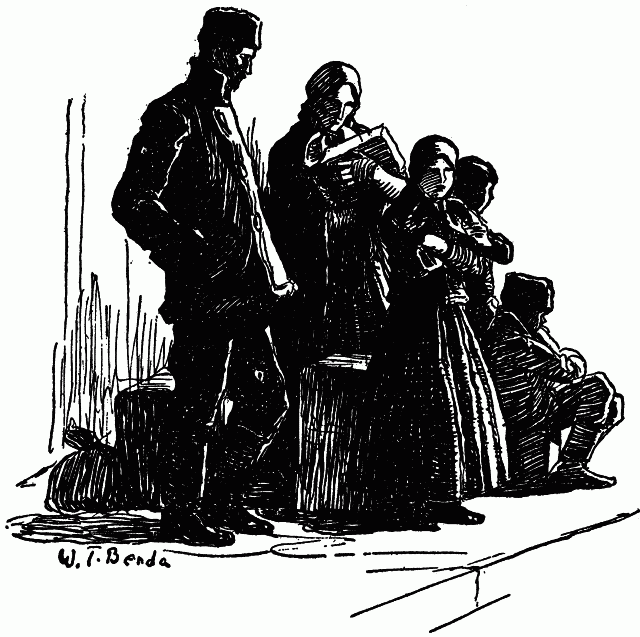
I had forgotten, though, about the ending:
This was the road over which Ántonia and I came on that night when we got off the train at Black Hawk and were bedded down in the straw, wondering children, being taken we knew not whither. I had only to close my eyes to hear the rumbling of the wagons in the dark, and to be again overcome by that obliterating strangeness. The feelings of that night were so near that I could reach out and touch them with my hand. I had the sense of coming home to myself, and of having found out what a little circle man’s experience is. For Ántonia and for me, this had been the road of Destiny; had taken us to those early accidents of fortune which predetermined for us all that we can ever be. Now I understood that the same road was to bring us together again. Whatever we had missed, we possessed together the precious, the incommunicable past.
“What a little circle man’s experience is.” What a lovely notion, what a great truth.
Returning to Dickens
“What to listen to now?” I thought, as I finished the Cather novel early in the day and still had plenty of outside work to keep me occupied. Much of the morning I spent cleaning rocks. Yes, cleaning rocks. The drainage trough (for lack of a better term) I made at the base of our driveway has, over the years, become more and more clogged with dirt. Now instead of wicking water away from the drive, it just serves as a barrier and makes it puddle water. What’s more, with all that dirt, weeds had a great place to grow. So I pulled out all the rocks down to the landscaping fabric, washed the dirt off the rocks, and put them back. (Coronavirus quarantine has lent itself to long-ignored, not-necessarily-critical projects.) Anyway, I was still working on the rocks and the book finished.
Spotify is sort of hit-or-miss with audiobooks: there’s very little (that I’ve found) that’s relatively recent, and a lot of the older books are actually in translation — lots and lots of German audiobooks I’ve found.
When I lived in Poland, I had some difficulty finding affordable English-language books. Penguin Classis, though, were plentiful and relatively cheap. That’s how I read almost every Dickens book in the space of three years. There are a few that I never found, though, and I thought today might be a good day to return to Dickens.
I hadn’t really read him in almost twenty years. I teach Great Expectations some years to my English I Honors students, but that doesn’t really count: the last year I taught it (two years ago, I think), I didn’t even read it with the students.
So today I began Dombey and Son. I’d forgotten how clever and witty Dickens can be, and how gifted he can be at beginning a novel. Think of his most famous, A Tale of Two Cities:
It was the best of times, it was the worst of times, it was the age of wisdom, it was the age of foolishness, it was the epoch of belief, it was the epoch of incredulity, it was the season of Light, it was the season of Darkness, it was the spring of hope, it was the winter of despair, we had everything before us, we had nothing before us, we were all going direct to Heaven, we were all going direct the other way— in short, the period was so far like the present period, that some of its noisiest authorities insisted on its being received, for good or for evil, in the superlative degree of comparison only.
Or my personal favorite Dickens beginning, which I’ve mentioned here before, Bleak House:
London. Michaelmas term lately over, and the Lord Chancellor sitting in Lincoln’s Inn Hall. Implacable November weather. As much mud in the streets as if the waters had but newly retired from the face of the earth, and it would not be wonderful to meet a Megalosaurus, forty feet long or so, waddling like an elephantine lizard up Holborn Hill. Smoke lowering down from chimney-pots, making a soft black drizzle, with flakes of soot in it as big as full-grown snowflakes—gone into mourning, one might imagine, for the death of the sun. Dogs, undistinguishable in mire. Horses, scarcely better; splashed to their very blinkers. Foot passengers, jostling one another’s umbrellas in a general infection of ill temper, and losing their foot-hold at street-corners, where tens of thousands of other foot passengers have been slipping and sliding since the day broke (if this day ever broke), adding new deposits to the crust upon crust of mud, sticking at those points tenaciously to the pavement, and accumulating at compound interest.
Fog everywhere. Fog up the river, where it flows among green aits and meadows; fog down the river, where it rolls defiled among the tiers of shipping and the waterside pollutions of a great (and dirty) city. Fog on the Essex marshes, fog on the Kentish heights. Fog creeping into the cabooses of collier-brigs; fog lying out on the yards and hovering in the rigging of great ships; fog drooping on the gunwales of barges and small boats. Fog in the eyes and throats of ancient Greenwich pensioners, wheezing by the firesides of their wards; fog in the stem and bowl of the afternoon pipe of the wrathful skipper, down in his close cabin; fog cruelly pinching the toes and fingers of his shivering little ‘prentice boy on deck. Chance people on the bridges peeping over the parapets into a nether sky of fog, with fog all round them, as if they were up in a balloon and hanging in the misty clouds.
Dombey, though, has a clever opening:
Dombey sat in the corner of the darkened room in the great arm-chair by the bedside, and Son lay tucked up warm in a little basket bedstead, carefully disposed on a low settee immediately in front of the fire and close to it, as if his constitution were analogous to that of a muffin, and it was essential to toast him brown while he was very new.
Dombey was about eight-and-forty years of age. Son about eight-and-forty minutes. Dombey was rather bald, rather red, and though a handsome well-made man, too stern and pompous in appearance, to be prepossessing. Son was very bald, and very red, and though (of course) an undeniably fine infant, somewhat crushed and spotty in his general effect, as yet. On the brow of Dombey, Time and his brother Care had set some marks, as on a tree that was to come down in good time—remorseless twins they are for striding through their human forests, notching as they go—while the countenance of Son was crossed with a thousand little creases, which the same deceitful Time would take delight in smoothing out and wearing away with the flat part of his scythe, as a preparation of the surface for his deeper operations.
Of course, Dickens can be tiring with all his subplots and sub-subplots (after all, the longer he stretched novels, which were always published in syndication in magazines, the more money he could make from a given book), but I’m thinking he’ll be a lot easier to listen to than read.