
fun in threes, sometimes fours
Month: April 2015

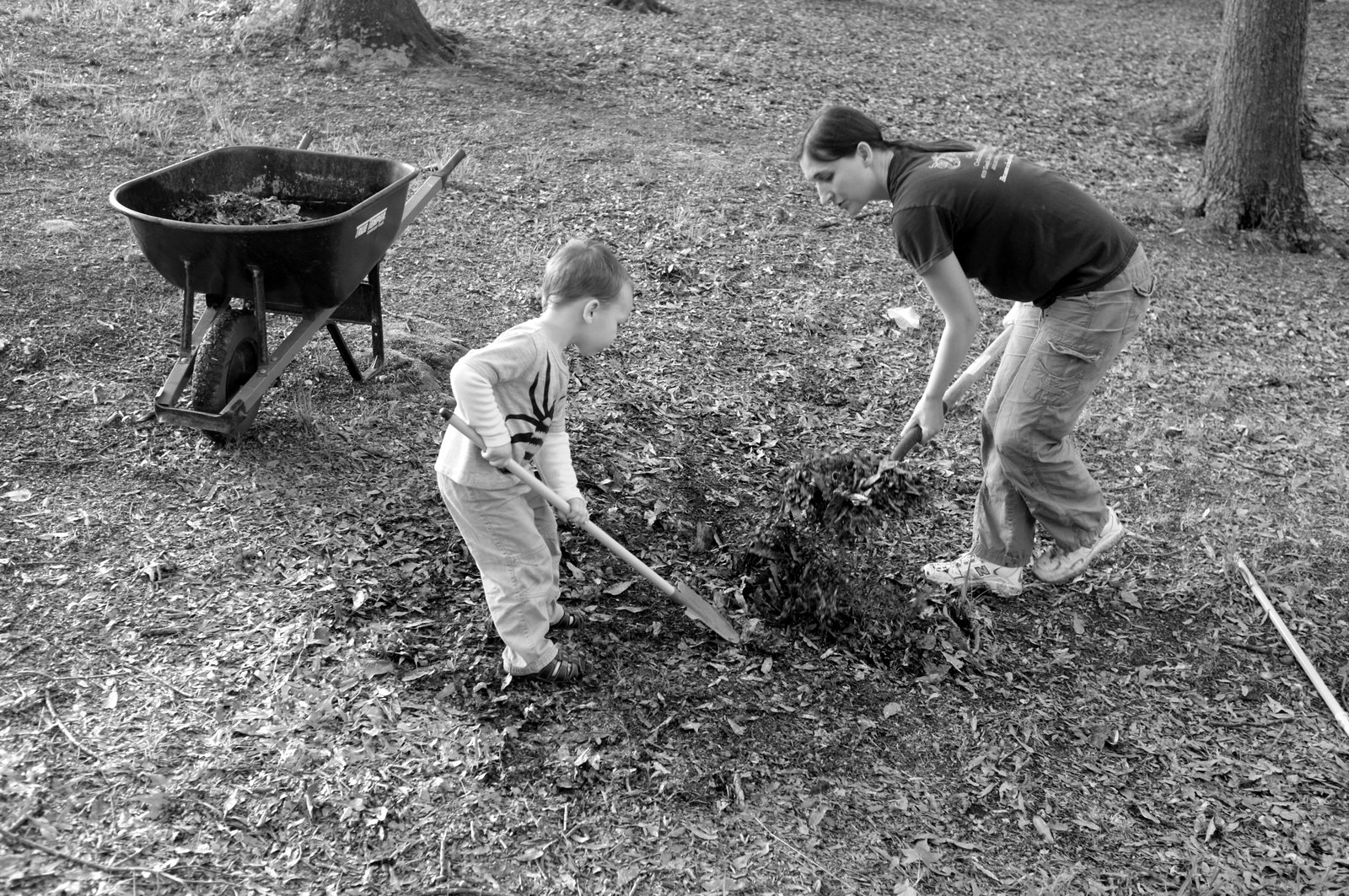
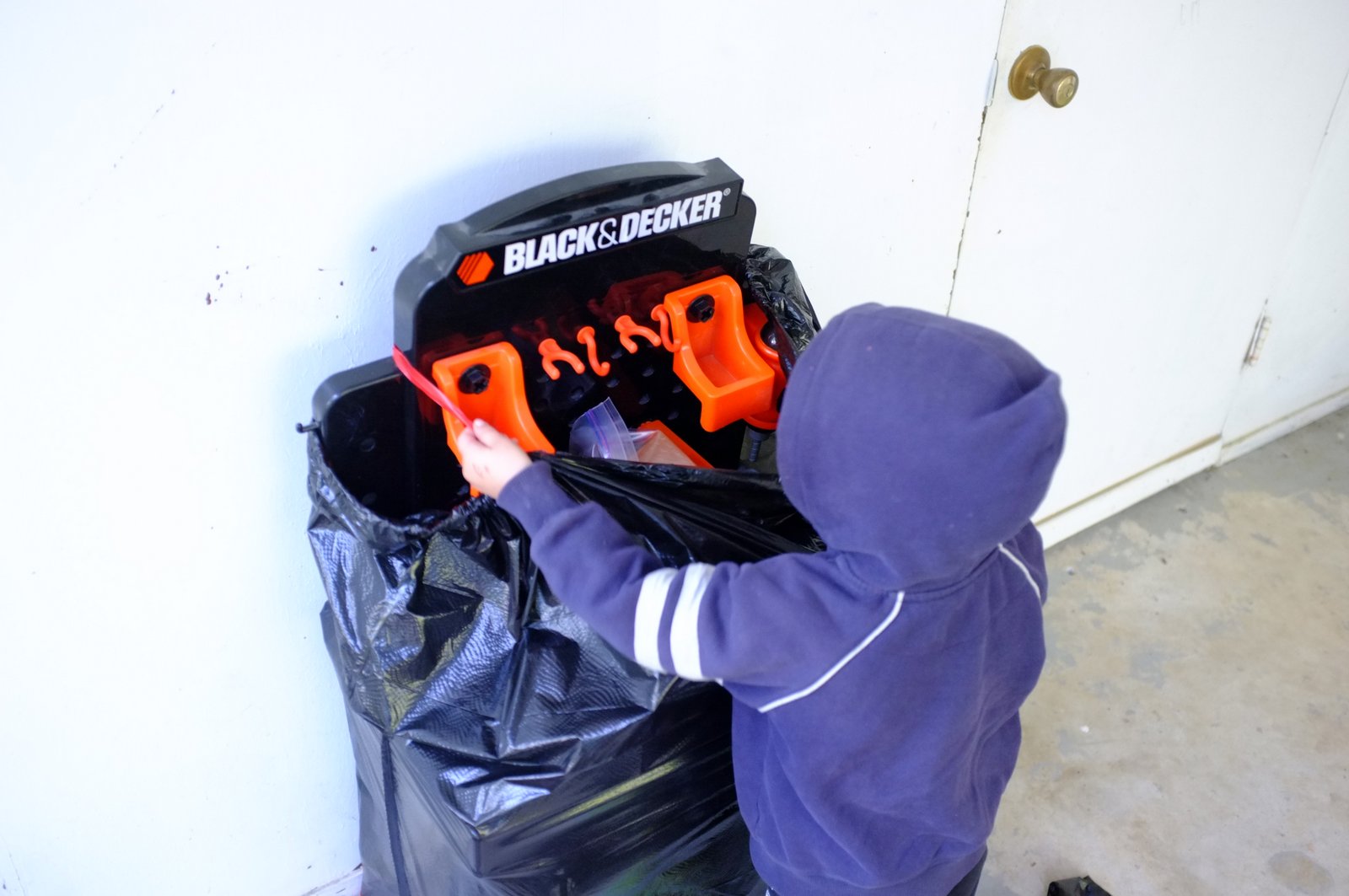
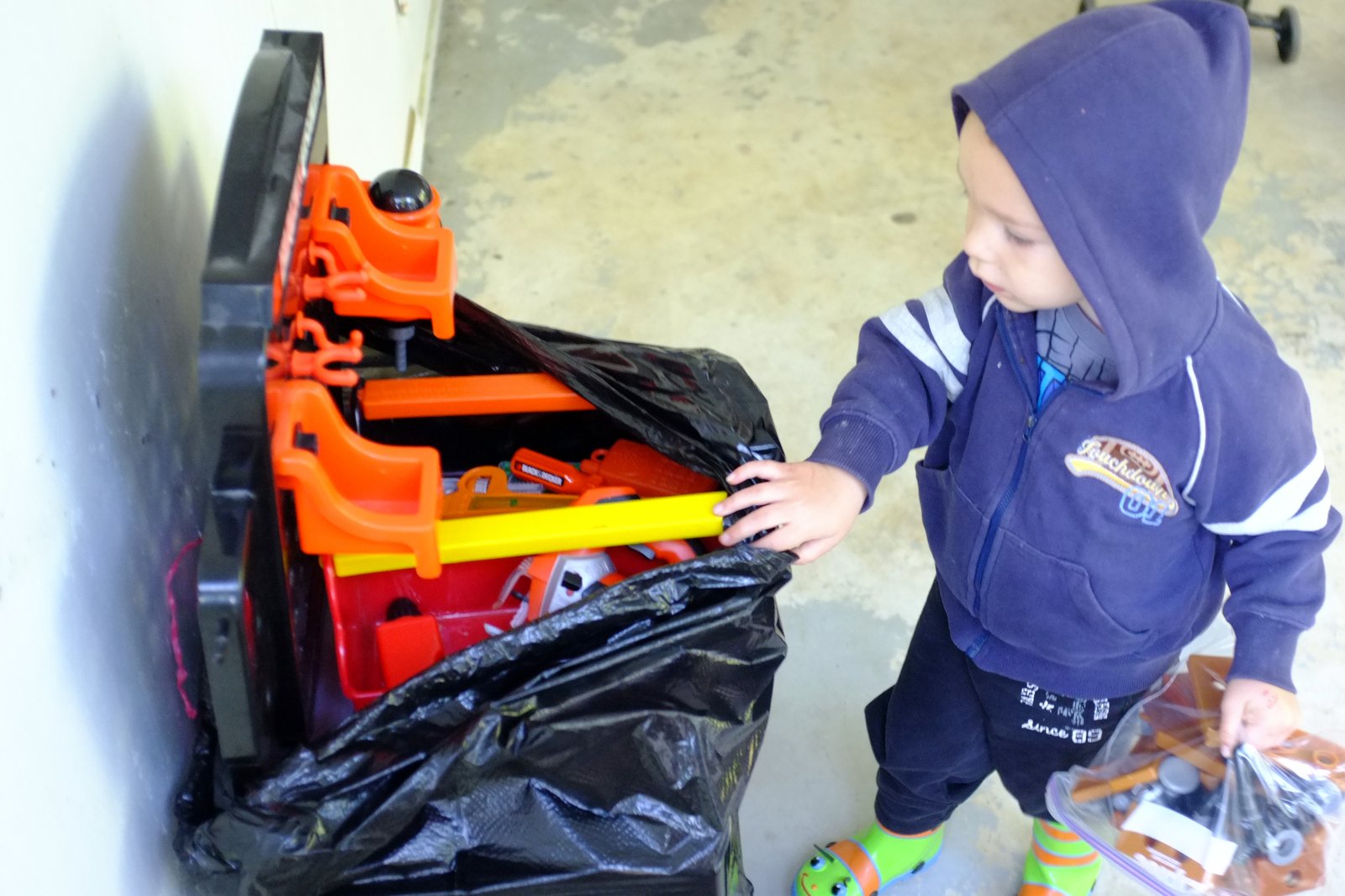
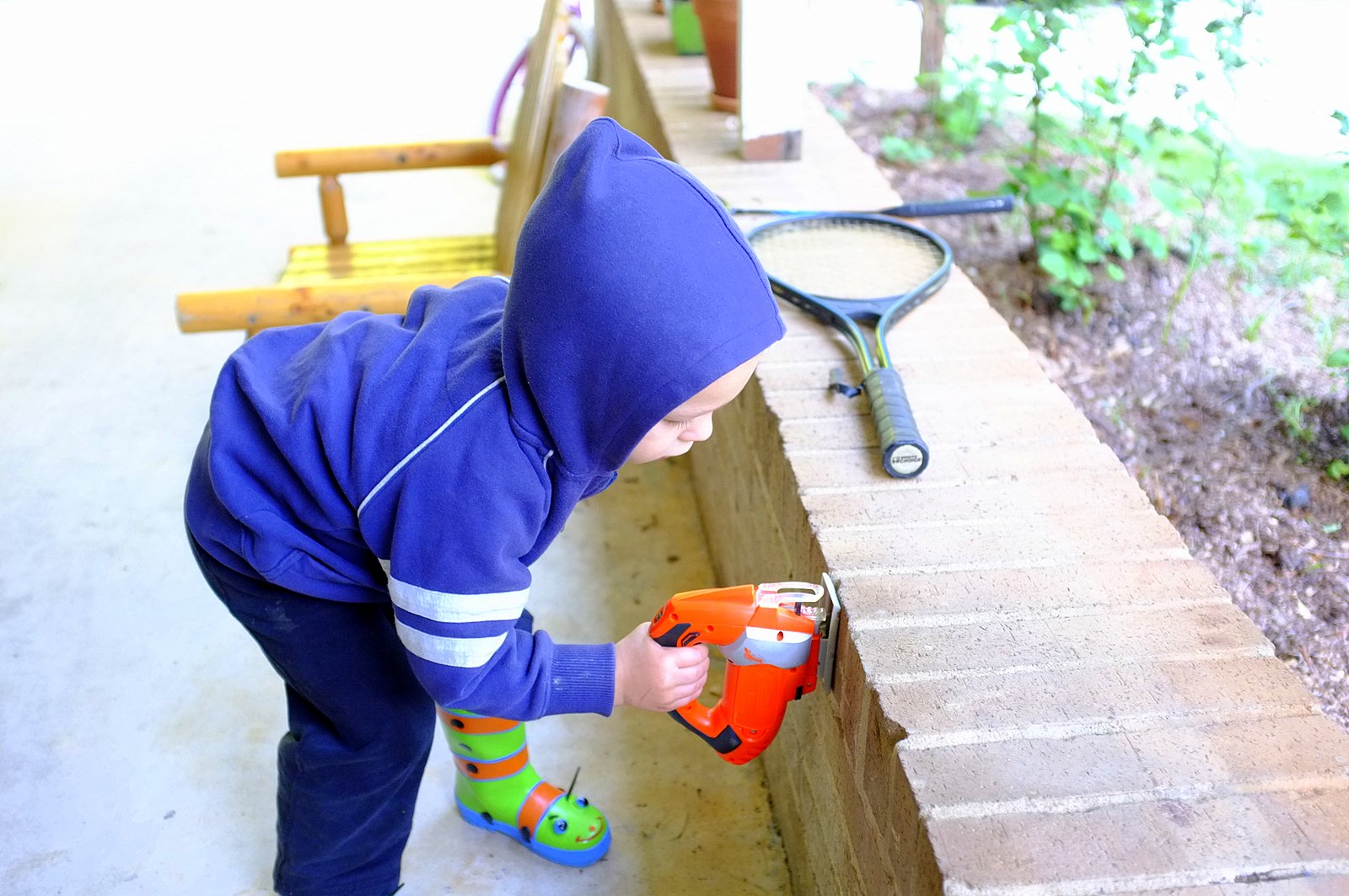
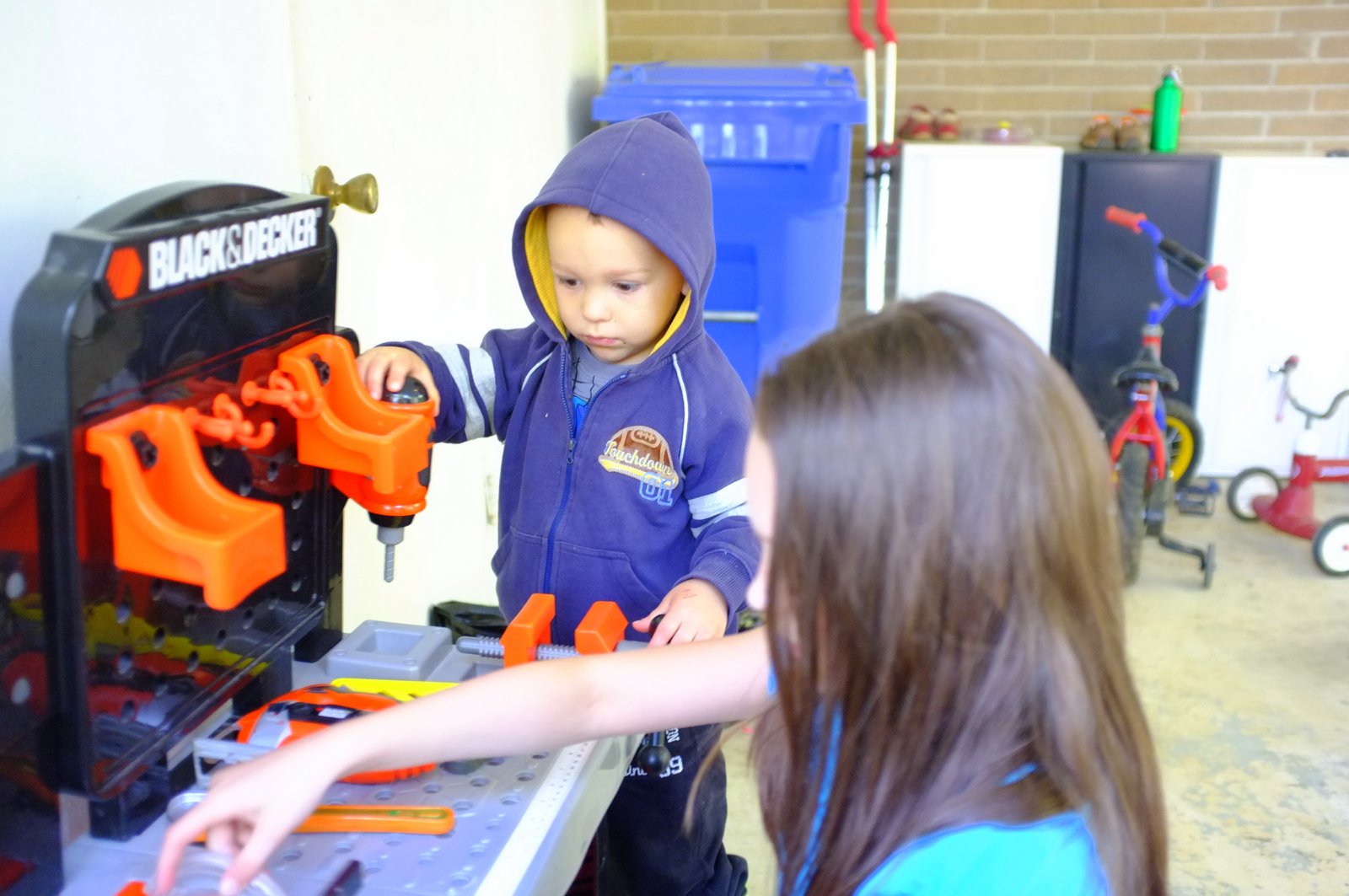
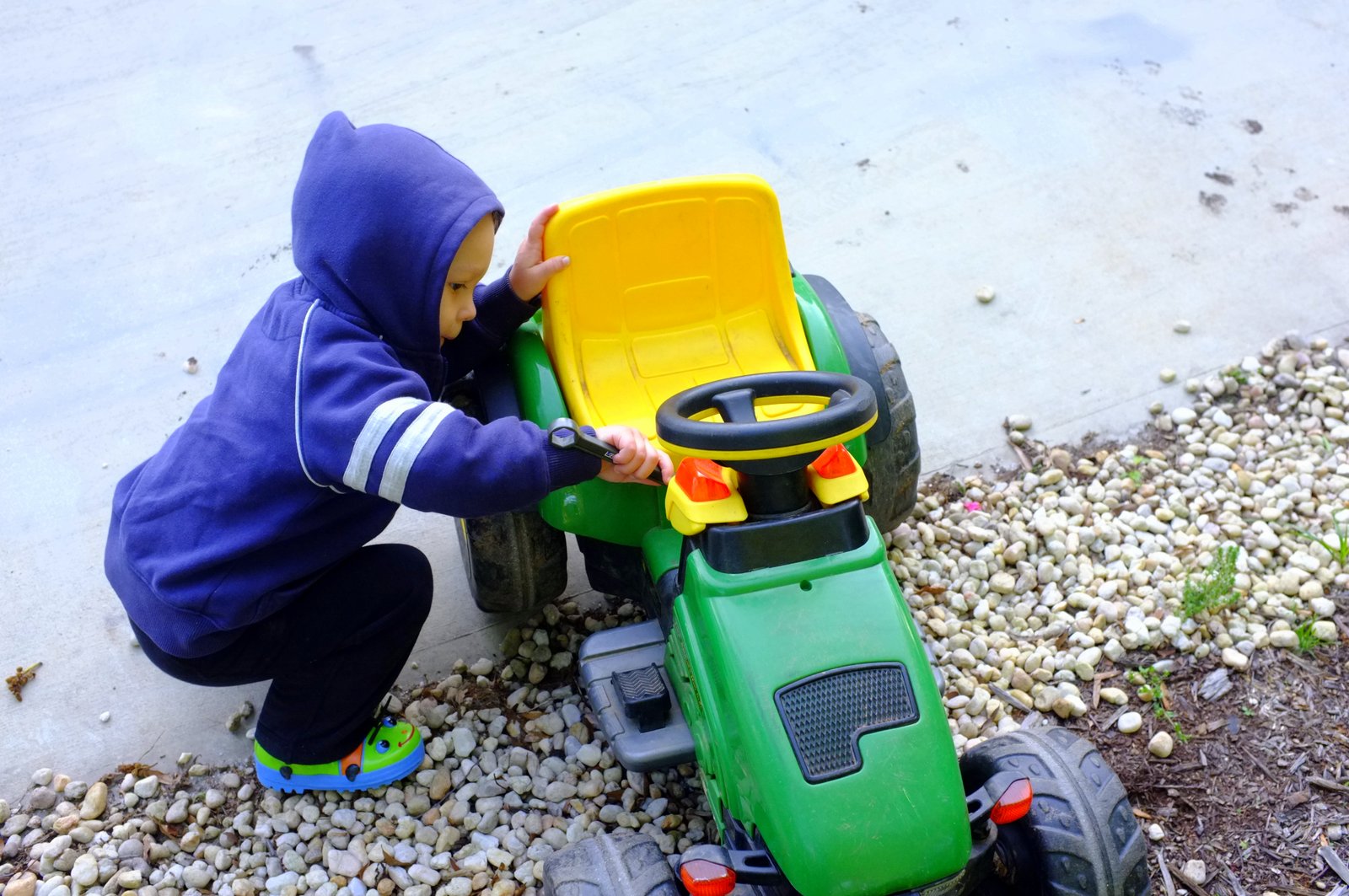
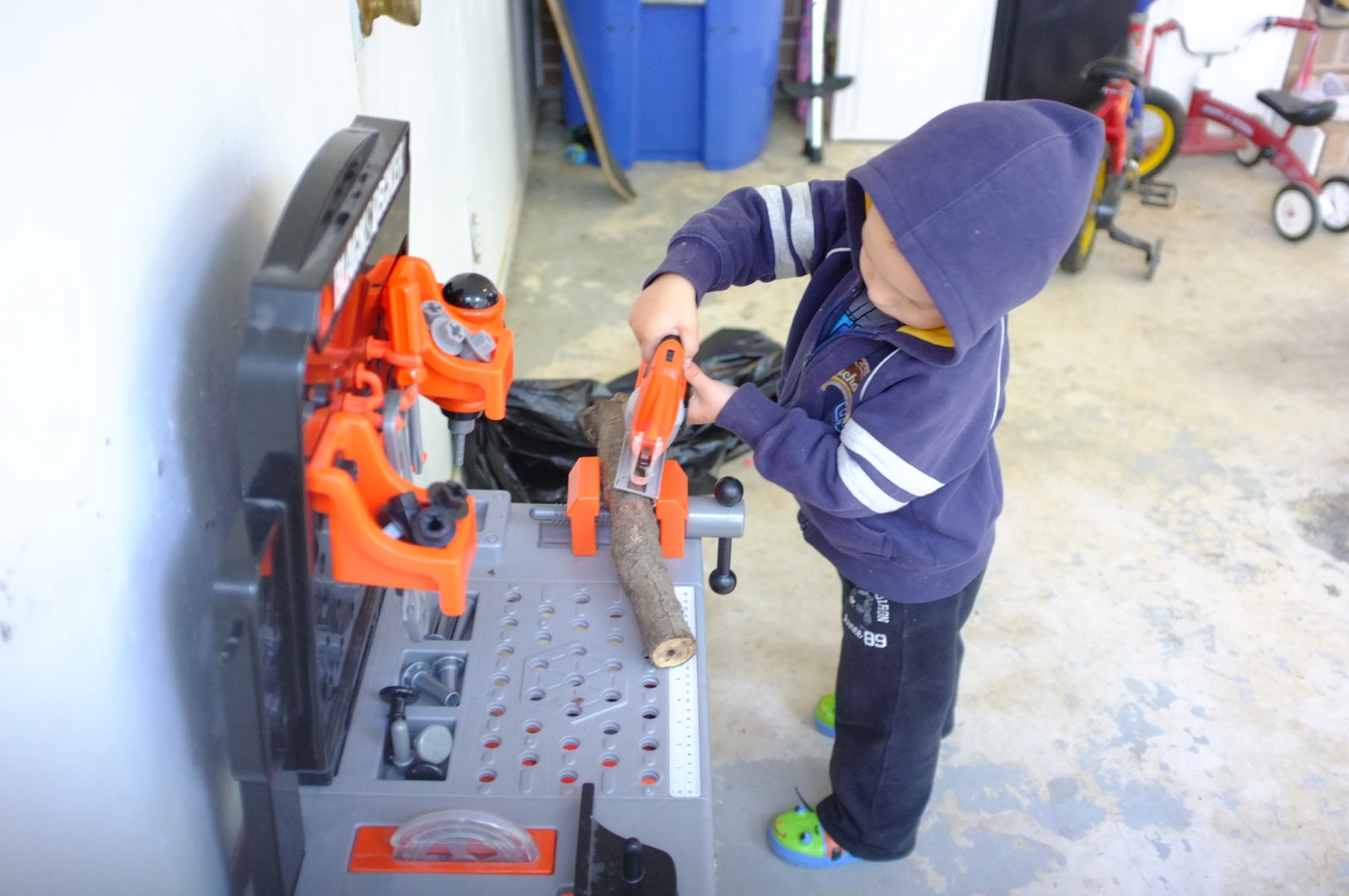
The Boy got some new tools yesterday. Today, we had to test them.

The Boy got some new gum boots yesterday. Today, we had to test them.


Morning. The Boy and his neighborhood friend have the perfect recipe for for a fun morning. Water plus dirt equals fun.

He explains to K the simple truth: "Mama, I just love mud."
In the afternoon, a friend drops off a play set that his youngest has outgrown. If there were a more perfect toy for the Boy, I'm not sure what it could be.
Mothers are defensive -- ferocious, in fact. A bird, for example, will take on an animal much larger than itself in an attempt to defend her young. Our tenants on the back downspout have been proving this.

Come out, for example, onto the back deck while she's feeding, and she'll attack -- positively attack.









We have two birds’ nests in the downspout of our gutters. One is at the back of the house, in a very safe location. We just leave them alone every year, and we get a good view of the hatchlings as a result.

The other nest is in the downspout next to our raspberry and blackberry canes. We have to put up netting to keep the birds out, and so the last thing I really want is to enclose them in the netting. With the blackberries blooming, it’s only a matter of time before we start putting the nets back up.

My first effort to evict them was a failure: I put nails in a board, much like anti-pigeon devices one might find in cities, and set the board in the downspout. They build around it. So I’ve been going out and knocking the nest down, hoping they’ll get the hint. But they’re stubborn and rebuild. I took some bleach water while they were out and soaked the nest, thinking the odor would repel them. It did, for a while.

I’ve got another solution in mind, but in the meantime, I just go out and knock the nest down before they really settle in. “Just leave them alone,” K says, but it’s a battle I will win.
So the day begins with an eviction, and then another battle: thick, long, heavy grass. The Boy comes running up, walking beside me as I struggle with the tall grass before deciding to raise the mower deck to its highest level for an initial trim.
“I’m going to help you!” cries E, squeezing his way between me and the mower.

It slows the process considerably, but it’s worth it. We work out a deal: he helps one direction, then races me back to the other end. We’re both happy with the compromise.

After dinner, it’s time for a little exploring.

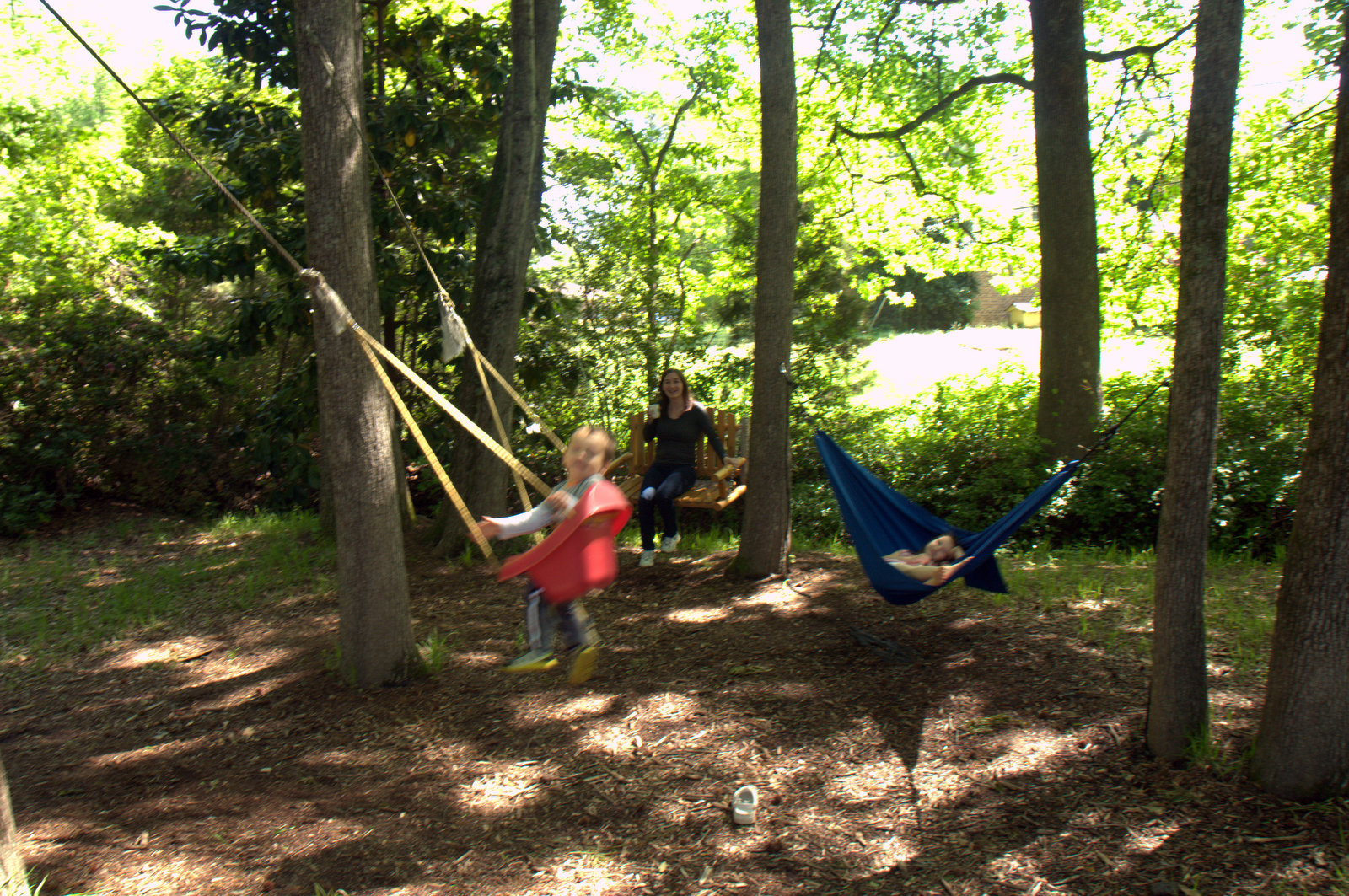
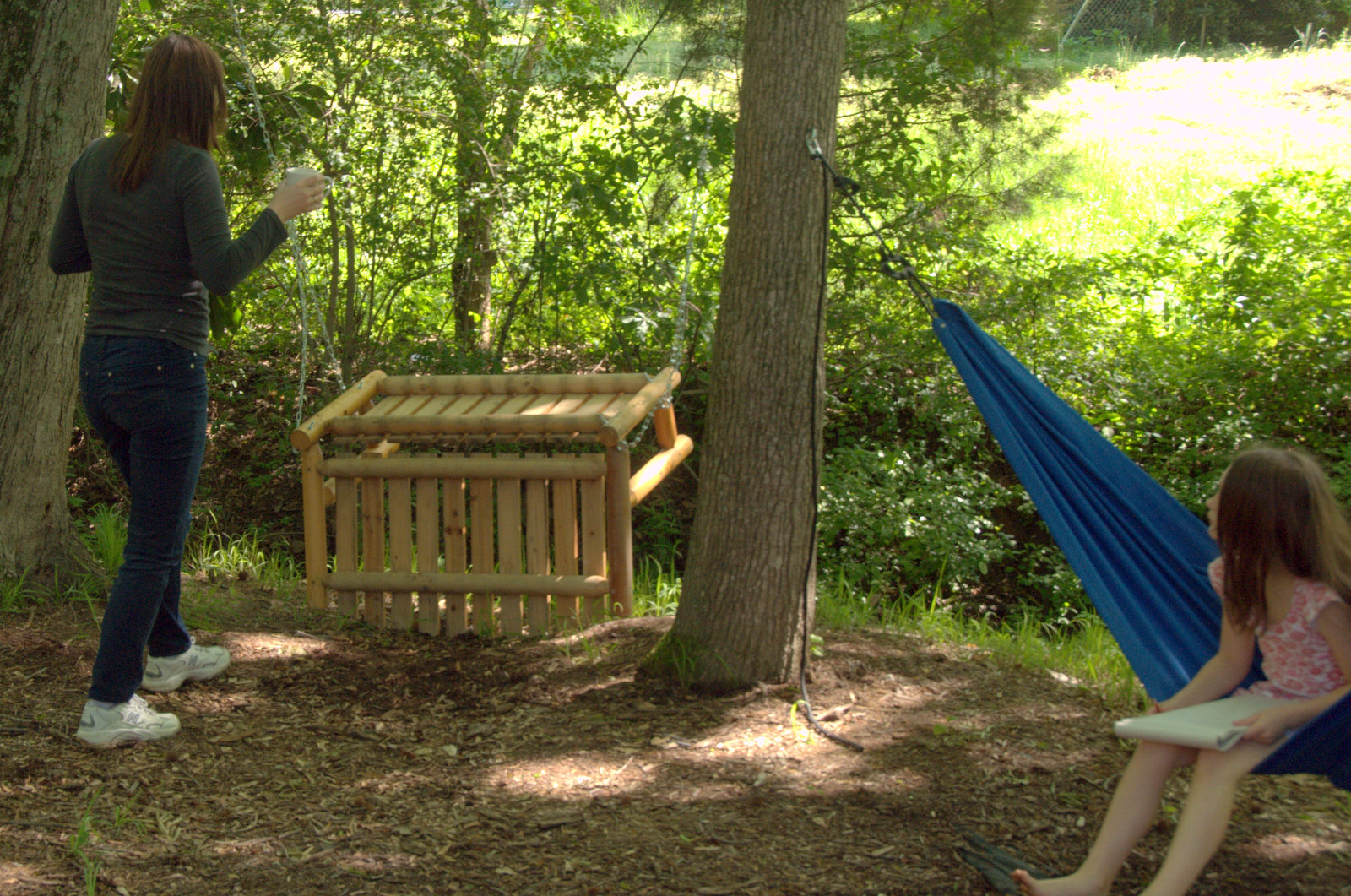
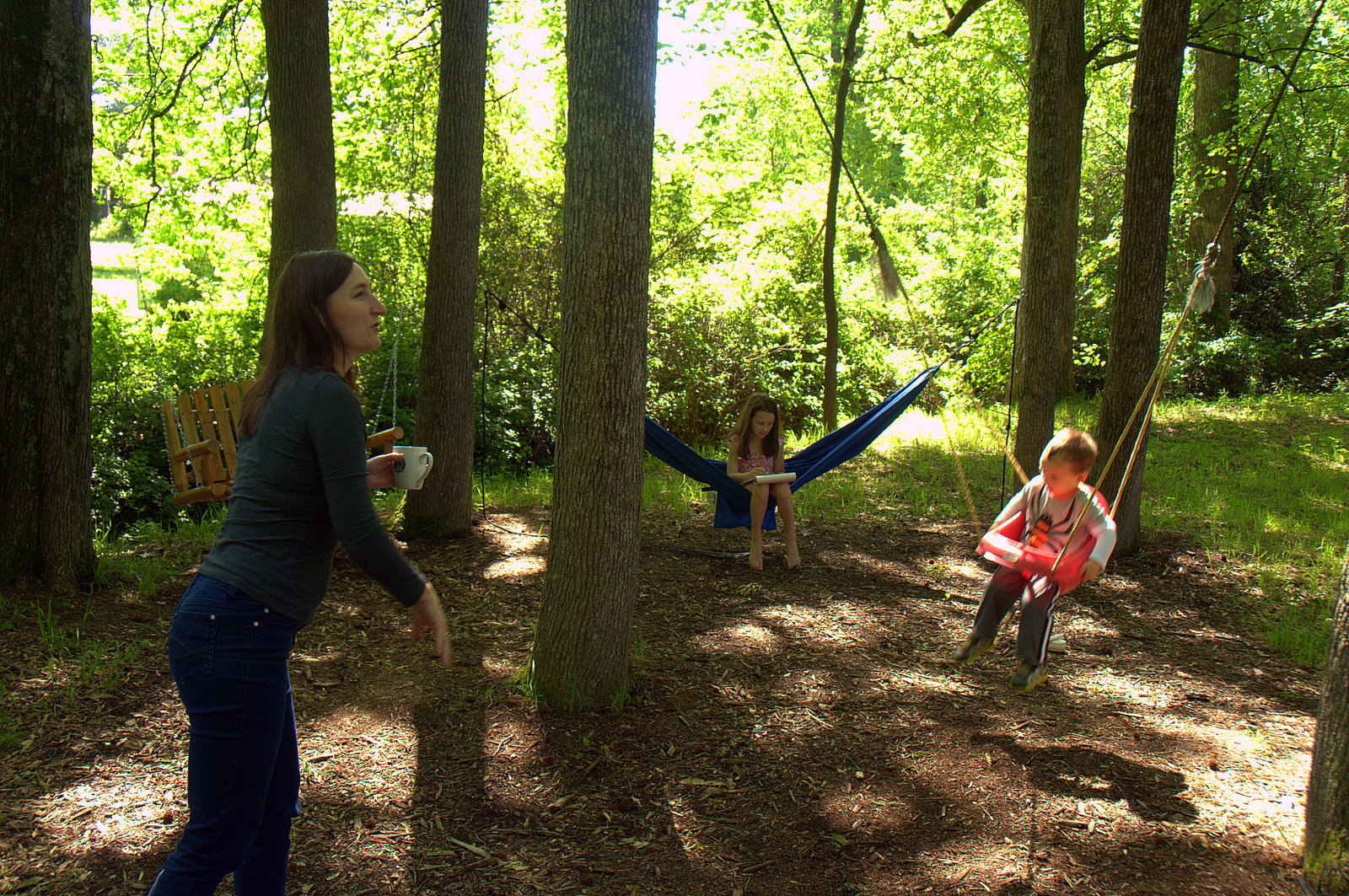
The azaleas are in full bloom now, and the kids love picking up the fallen blossoms (and picking them from the bush if I don’t keep a close watch), so between the swing, the creek, and the blooms, it’s paradise.


The Sweet Gum tree — it spreads easily, is virtually impossible to kill, and is not as good as it looks. Sin, in other words.
As I am going over the parameters of the practice test we're about to take, I notice her pass him a spiral notebook. Kids pass notes that way these days: they would fill a whole spiral notebook with slang-filled (and profanity filled for some) notes if a teacher doesn't confiscate it. I ask him to put it up; he continues writing. I continue giving instructions, then tell him to put it up. He continues writing.
I take the notebook away from him, and he pulls another sheet of paper from his binder, with a smirk. I tell him, "Mr. S, don't do it." He continues writing. I let him write the note as I continue addressing the class then take it from him as he folds it. He takes another sheet of paper from his binder and begins again.
How many times could we continue this? By handling it this way, am I not just building steam in him, potentially creating a bigger issue shortly? If I were the type of teacher to do something deliberately provocative, I could push the kid to an anger that would get the best of him and give me something I could easily write him up for. These kids are so easily provoked, so easily manipulated, so short tempered, so fragile.
In the end, I just send him out of the room before either of us provoke the other any further.
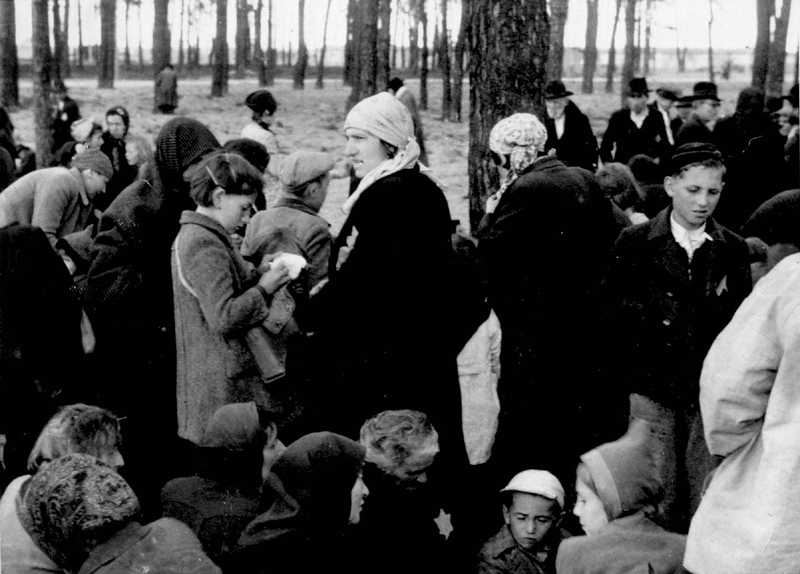
Today is Holocaust Remembrance Day, when we recall all the millions of Jews who died at the hands of the Nazis, some of whom stood in line for the gas chambers at Auschwitz and Treblinka, at Chełmno, Belzec, and Sobibor. It is something unthinkable for me: why stand peacefully in line? Why not fight? Of course, it would be in vain, but why not resist? Of course in the early days, they might not have realized what was happening, for the Nazis went to great measures to hide the fact that they were about to die. Still, rumors spread as the Holocaust continued, as people escaped from camps and told their stories, and many knew what was about to happen. Still, they stood in line for showers that many of them knew were not actual showers. Perhaps they did not want to panic their children. Perhaps they wanted their last moments to be as peaceful as possible. Whatever the reason, many of them waited in line.
Tonight, I was waiting in line at Barnes and Nobles when I saw the cover of this month's Atlantic. The cover story is an article by Jeffrey Goldberg entitled, "Is It Time for the Jews to Leave Europe?" It is an article that details the stunning rise in anti-Semitism in Europe. Goldberg writes that "France’s 475,000 Jews represent less than 1 percent of the country’s population. Yet last year, according to the French Interior Ministry, 51 percent of all racist attacks targeted Jews."
While the article dealt with, for example, the highly nationalistic, ultra-right Nation Front of France and Greece's openly anti-Semitic Golden Dawn, Goldberg also spends a great deal of time discussing the rise of Islamic anti-Semitism.
Finkielkraut[, a French Jew,] sees himself as an alienated man of the left. He says he loathes both radical Islamism and its most ferocious French critic, Marine Le Pen, the leader of France’s extreme right-wing–and once openly anti-Semitic–National Front party. But he has lately come to find radical Islamism to be a more immediate, even existential, threat to France than the National Front. “I don’t trust Le Pen. I think there is real violence in her,” he told me. “But she is so successful because there actually is a problem of Islam in France, and until now she has been the only one to dare say it.”
Goldberg goes on to give numbers: "Violence against Jews in Western Europe today, according to those who track it, appears to come mainly from Muslims, who in France, the epicenter of Europe’s Jewish crisis, outnumber Jews 10 to 1."
Yet for secular, left-leaning Western Europe, there is a problem: Muslims are seen as victims just as much as Jews. Scratch that: more so: “'People don’t defend the Jews as we expected to be defended, [Finkielkraut] said. 'It would be easier for the left to defend the Jews if the attackers were white and rightists.'" Even Goldberg seems to see the problem with Islamic anti-Semitism as a question of social injustice rather than a theological component of Islam itself when he explains that the "failure of Europe to integrate Muslim immigrants has contributed to their exploitation by anti-Semitic propagandists and by recruiters for such radical projects as the Islamic State, or ISIS." One only has to look at imams'Â comments coming out of the Middle East to see the prevailing contemporary view of Jews in the Islamic world.
As I stood in line, though, not having read the article, I was initially taken aback: I thought for a moment it might be an extreme leftist anti-Zionist diatribe and not just one that skates close to anti-Semitism but that openly embraces it. I decided I must read it when I got home, though. I looked down at the book I was purchasing, ironically about Auschwitz, then glanced around the shop. A covered Muslim woman was approaching with her uncovered husband and son. I glanced at the book in my hand, glanced at the Muslim family, glanced at the magazine cover, and wondered at the irony of the moment.
I never put pictures from yesterday up. The Boy was exploring (what's new?) and fussing (actually rare) and helping. The Girl was picking blossoms, antagonizing the Boy, and occasionally fussing.