And she never saw it coming...








fun in threes, sometimes fours
Month: August 2013
And she never saw it coming...

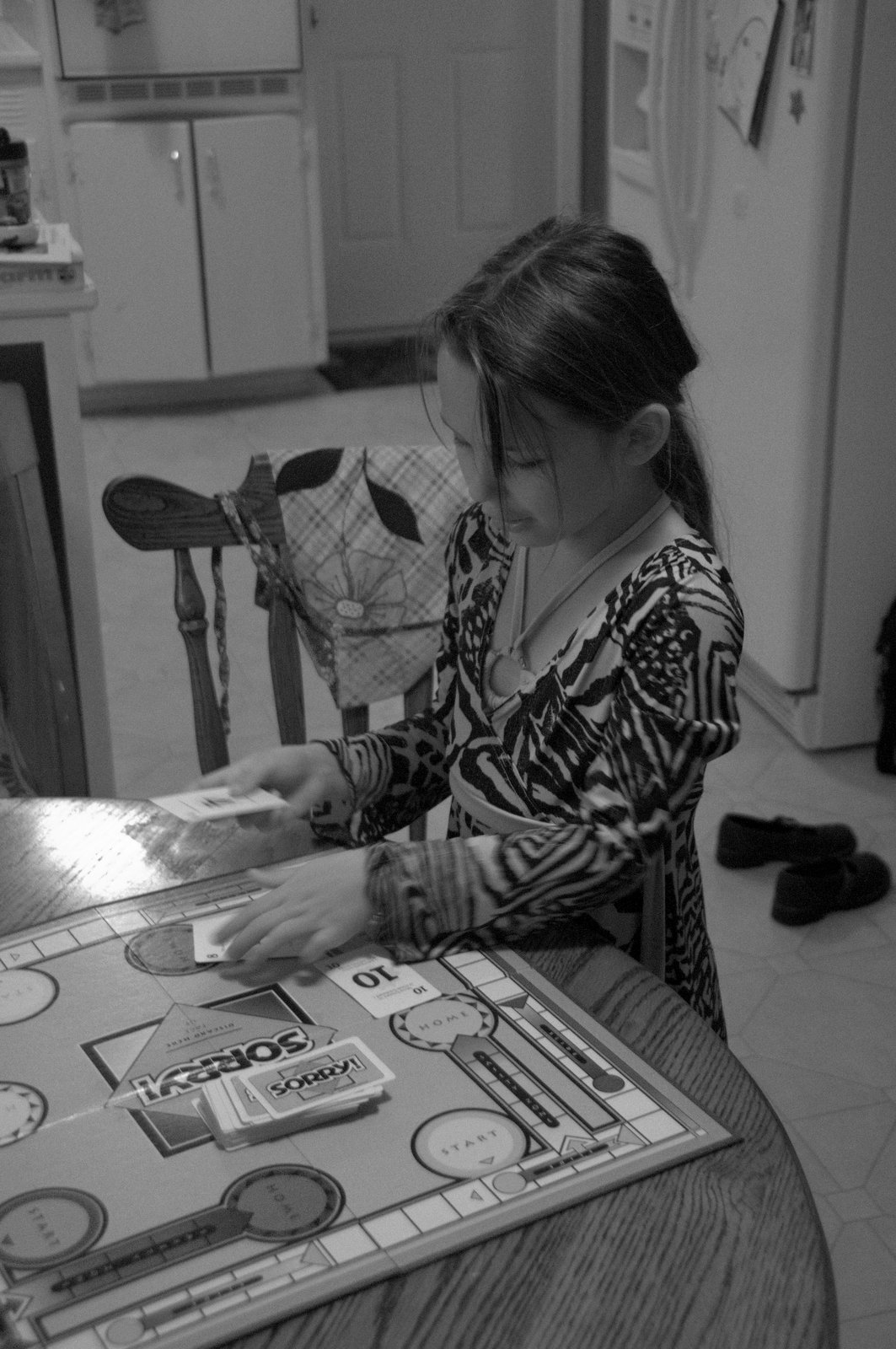
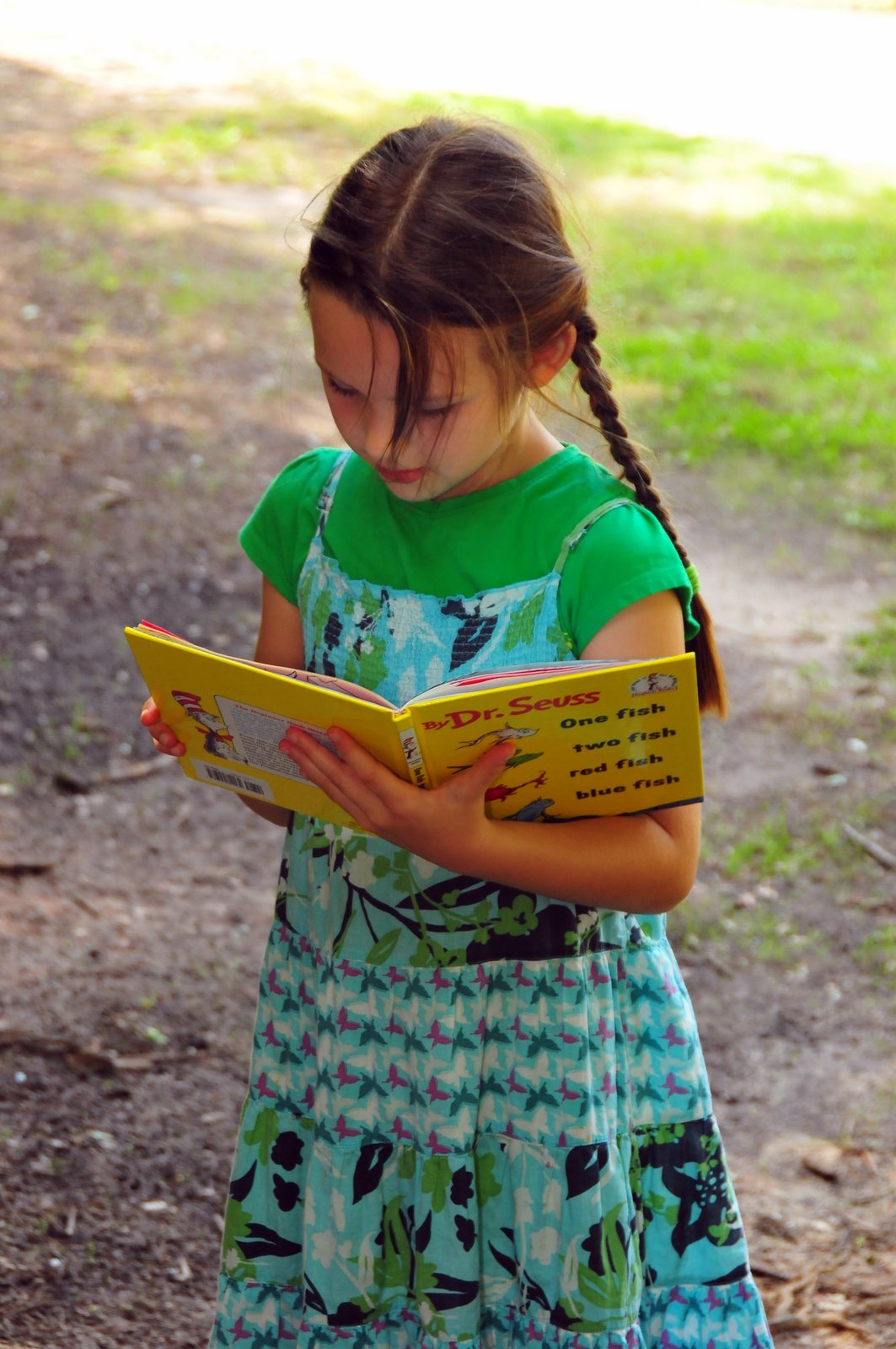
L has been worried about starting school this year. New teacher; new students; new room in a new hall -- new everything.
"I don't want to be a first grader," she lamented.
"I don't want to go to that school," she whined.
"I want to go back to Ms. B's class," she begged.
I recall being somewhat nervous about starting new grades. First grade for me too was tough: I was starting a new school, and the bathrooms we used were situated between first and second grade (it was an open classroom design). That meant every time I went to the restroom, I ran the risk of encountering an unimaginably large second grader. It was terrifying.
L had different worries, different concerns. Her first disappointment came when she learned that she would no longer be the first released to the car line. "Well, you're not in kindergarten anymore," I explained. Her first bit of pride came a little before that, though, as she was walking down the hall with her class and encountered a favorite teacher from last year.
"Did you say 'Hi'?" K asked as we talked about it over dinner.
"No, Mama! We were walking down the hall. We couldn't talk. We're first graders! We can't do that!"

K saw her first baseball game this weekend. It's amazing how many rules one doesn't really think about until trying to explain the game to someone who knows only the goal of hitting a white ball with a wooden bat. Fly balls and tagging up? Still just a little confusing for her, I think. The guys trying to entertain the crowd, though -- easy-peasy lemon squeezy...








Dear Terrence,
Every year — every single year — I make the same promise to myself around the end of third quarter: “Next year I will start the year as an authoritarian jerk. I will rule my classroom with an iron cliche and only later loosen my grip.” It’s easier, after all, to loosen things than to tighten them up. And then by the beginning of the year, I begin second guessing myself. “Nobody likes a jerk,” I say, “and that would essentially would be acting like a jerk.”
It’s a delicate balance to achieve when you have a classroom filled with students of varying interest levels, social skills, intellectual abilities, cultures, races, economic realities, and a thousand other variables, and my job is to focus them all on one goal: improving their ability to read and to write. Some of them love school and are inherently interested in this common goal; some of them hate school and don’t care about anything I have to say; some of them love school but, being more mathematically inclined, are not inherently interested in what I have to teach; some of them don’t even seem to know what they’re doing in school; some of them have only one goal: attract as much attention as possible. And they’re all in my classroom.
This dilemma about how to open the year boils down to how to deal with one group of students: the disengaged, interest-lacking student who wants to pass most of the class period chatting. In other words, students like you, Terrence. Indeed, in every class — that is, in every on-level class — there is at least one Terrence who simply says what he thinks when he thinks it without any thought to the approriateness of the moment. I’ve literally had a student say, “If I think it, I say it.” If in that classroom, there are a few more students who, with that initial proding, will join into a conversation (in other words, they remain generally quiet until someone speaks to them), then we’re going to have little pockets of chaos throughout the classroom that add up to a disrupted and disruptive class. As the year develops and relationships grow, it seems like this might be easier to control, but the reality is often frustratingly the opposite. When you and your friends behave like this, Terrence, you rob others of an education, because I have to spend time dealing with your behavior rather than teaching.
To be a teacher, one has to be something of an idealist, somewhat naive regarding human nature. One has to look at these impulsive, often rude, sometimes cruel children — no more than two or three in a class — and think, “They must understand that their life can be better. They must want to change and simply not be able.” It’s easy to think of them even as victims — victims of neglect, of a shallow society, even of irresponsibile or possibly cruel parents. And so the second balancing act: to understand that they’re responsible for their own actions, but that they’re acting from habits formed in an environment not entirely of their choosing.
But naivete and idealism aren’t really necessary if I remember one thing: it’s all about the relationships. You and other students like you, Terrence, might have developed bad social habits because of a lack of positive adult relationships in your life, but I don’t have to be an additional, negative relationship simply in the name of “classroom management.” So at the beginning of this new school year, before I’ve even met you, I say to you what I say to every student. No matter what it feels like, no matter how harsh I seem to be, I am always on your side. It’s just that I’m on every student’s side, and when one student is taking from another her opportunity for an education, I am going to intervene and stop it. If that means coming down on you because your talking is disturbing others, then that’s what will happen; if that means coming down on others because their talking is disturbing you, then that’s what will happen. But no matter what, I am always on your side.
Regards,
Your Soon-To-Be Teacher
[Belief] may be the battle of your life, but emotionally and intellectually, it could also be the most exhilarating one you’ve ever engaged in. Whether you experience God’s reality or are just intellectually intrigued by the idea, God can be a very real force in peoples’ lives – spiritual, emotional, supportive – that almost no other system can offer. But you must gird yourself for a fight and know that you’re going to have to try to reconcile very difficult things. Or at least hold them in suspension and bounce them back and forth and get tired. There’s no quick fix, but we have the benefit of drawing on thousands of years of religious thinking. You can’t learn it over a weekend. It’s an engagement for the rest of your life.
I am increasingly politically and fiscally conservative in a lot of areas, but concerning education...
The real role of leadership in education … is not and should not be command and control. The real role of leadership is climate control, creating a climate of possibility.