Walking the Girl to preschool today, I caught a faint whiff of coal smoke. Immediately thoughts of late autumn, of settling down for a long winter and the developing school year, of boots and jackets and layering all returned. For a brief second, it was as if I had returned to 1998.
Month: June 2013
Polish Weather
My general color association with the sky in this region is gray — a mix of dark gray and light gray, a whole palette of grays. Some days, the sky was a solid, single gray. Other days, there were lower gray clouds with higher clouds of a lighter gray. But no matter what shade of gray, there was one thing in common: the sun was invisible. Hidden. Nonexistent.
For the first few days here, the sky was blue, the sun was out, and I actually found myself thinking from time to time, “Wow, it’s actually almost hot.”
But of course it wasn’t to last. For the last week or so, the gray has returned (with the exception of a couple of hours yesterday morning), the temperatures have dropped: the Polish weather I loathed has finally arrived.
What’s New in Lipnica, Redux
A return to Lipnica today to wander about, photograph this and that, chat with the mayor, perhaps meet some old friends, coworkers, and/or students. In the end, I accomplished all four. The common theme was the same as always: change. It’s everywhere and nowhere.
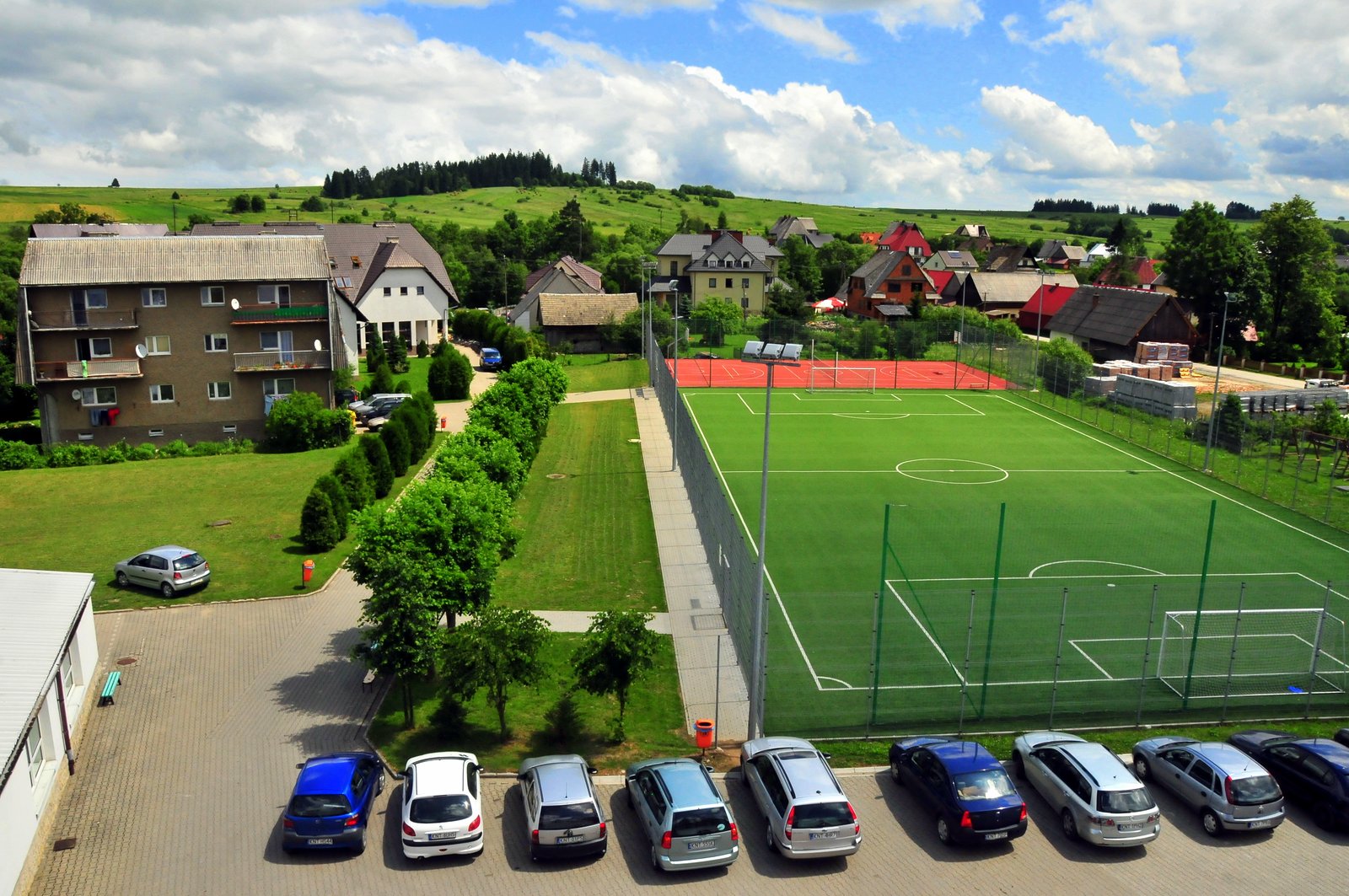
The view from the school in which I top shows how much Lipnica has changed, and how little, too. The soccer field and tennis court on the right are now; the apartment building on the left, dom nauczyciela (teacher’s housing), has been there decades, and has looked the same since at least 1996 when I first moved into the apartment in the lower right corner. Within the school itself, it’s much the same: former students are now teachers, and teachers who were there before I began teaching there still work there.
Some of the changes are typical of a country that’s moving into the full reality of capitalism, perhaps we could say the uglier side of competition. The little shop where I did most of my shopping for years, now shuttered. In an unexpected twist, I met the former owner as I was standing there.
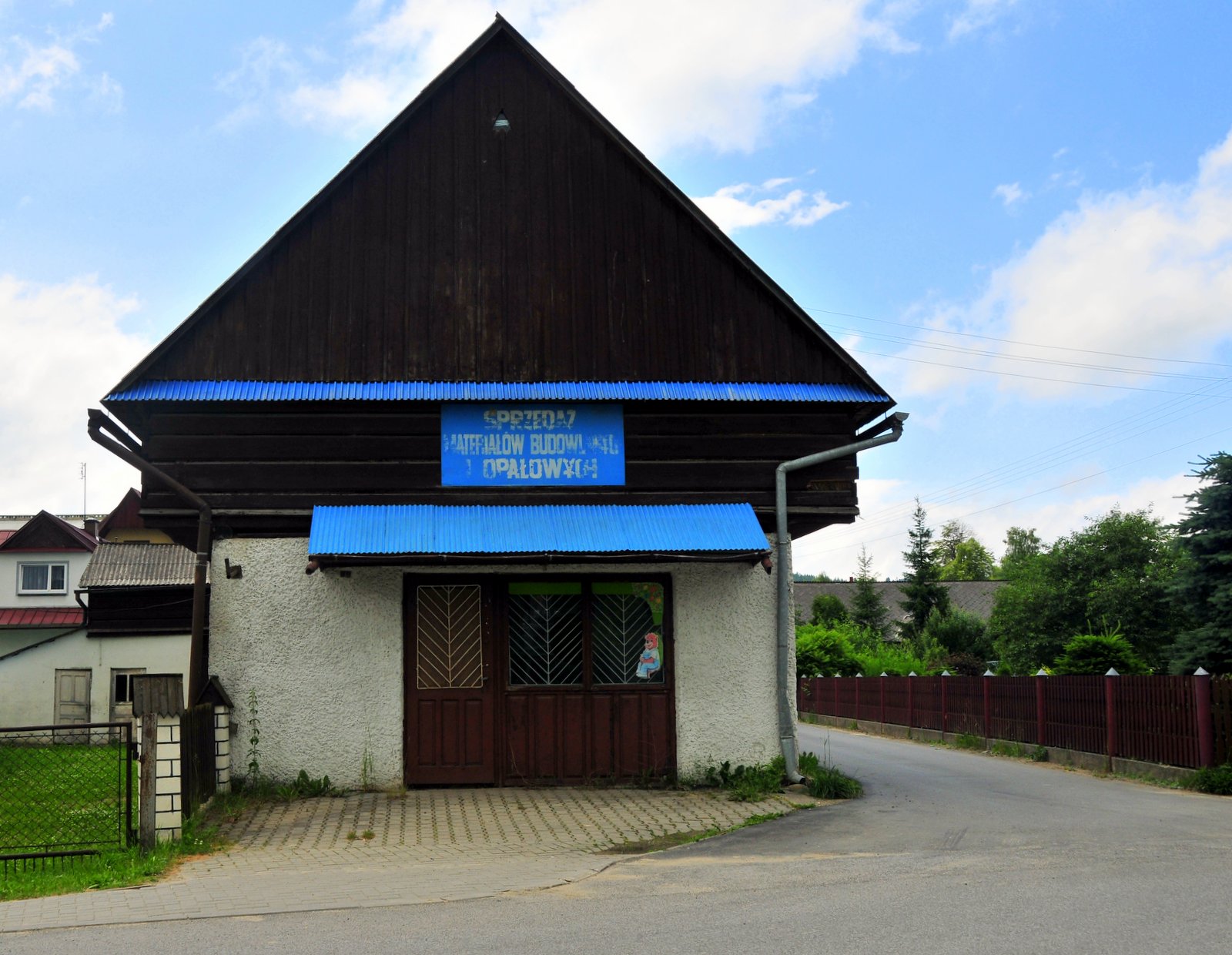
“What happened?”
“We went bankrupt thanks to the Biedronka in Jablonka.” The supermarket chain “Ladybug” has been putting local businesses out of business for years now, and I suppose it was only a question of time before affected local businesses I know.
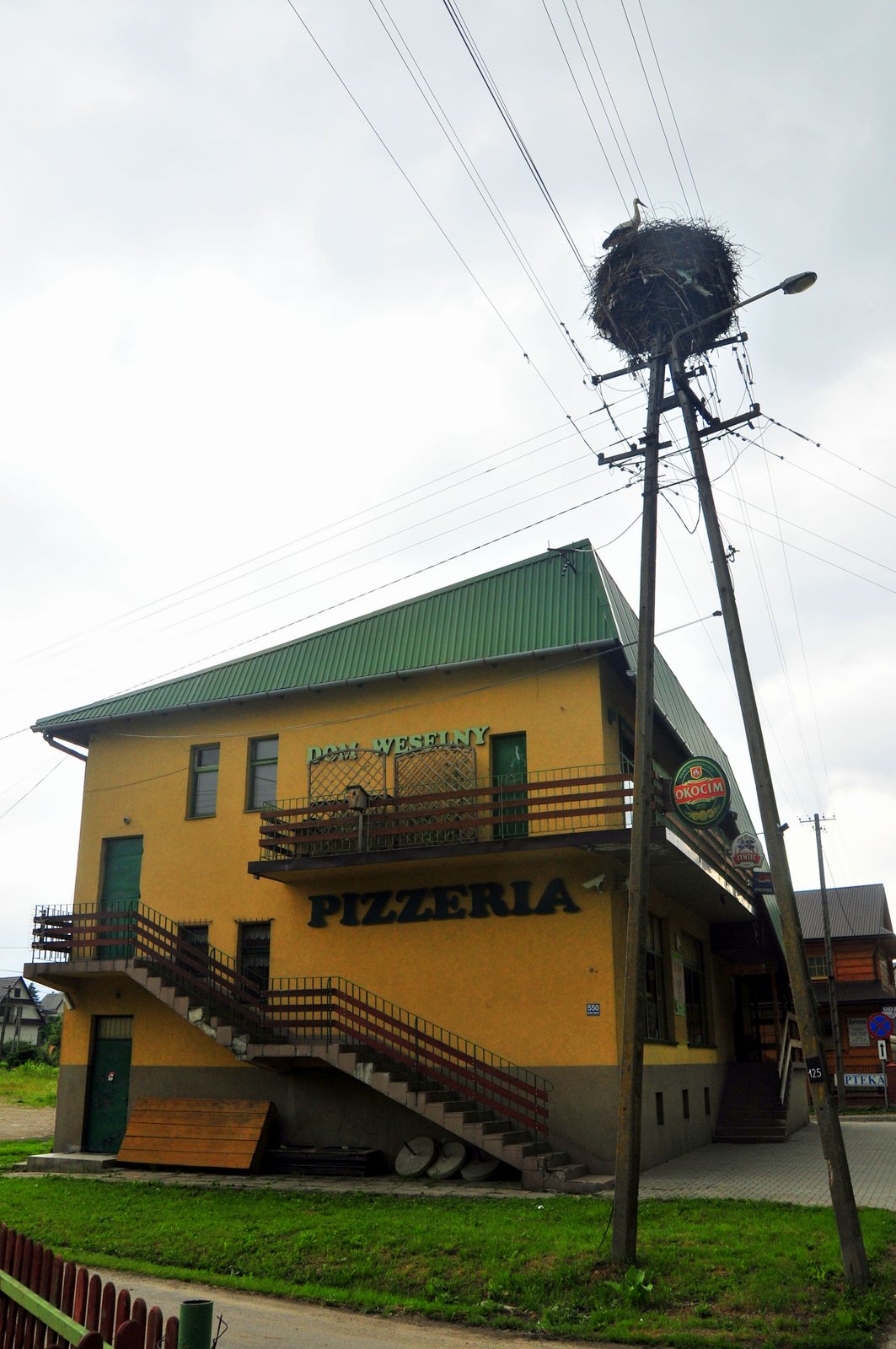
Further down the road, still more changes: the locale I frequented that closed shortly before K and I left has now reopened as a pizza place and “wedding house.”
“They don’t have much room there,” the mayor, a former teacher and colleague, explained, “so it’s really only for small weddings. They mainly handle baptism parties and the like.”
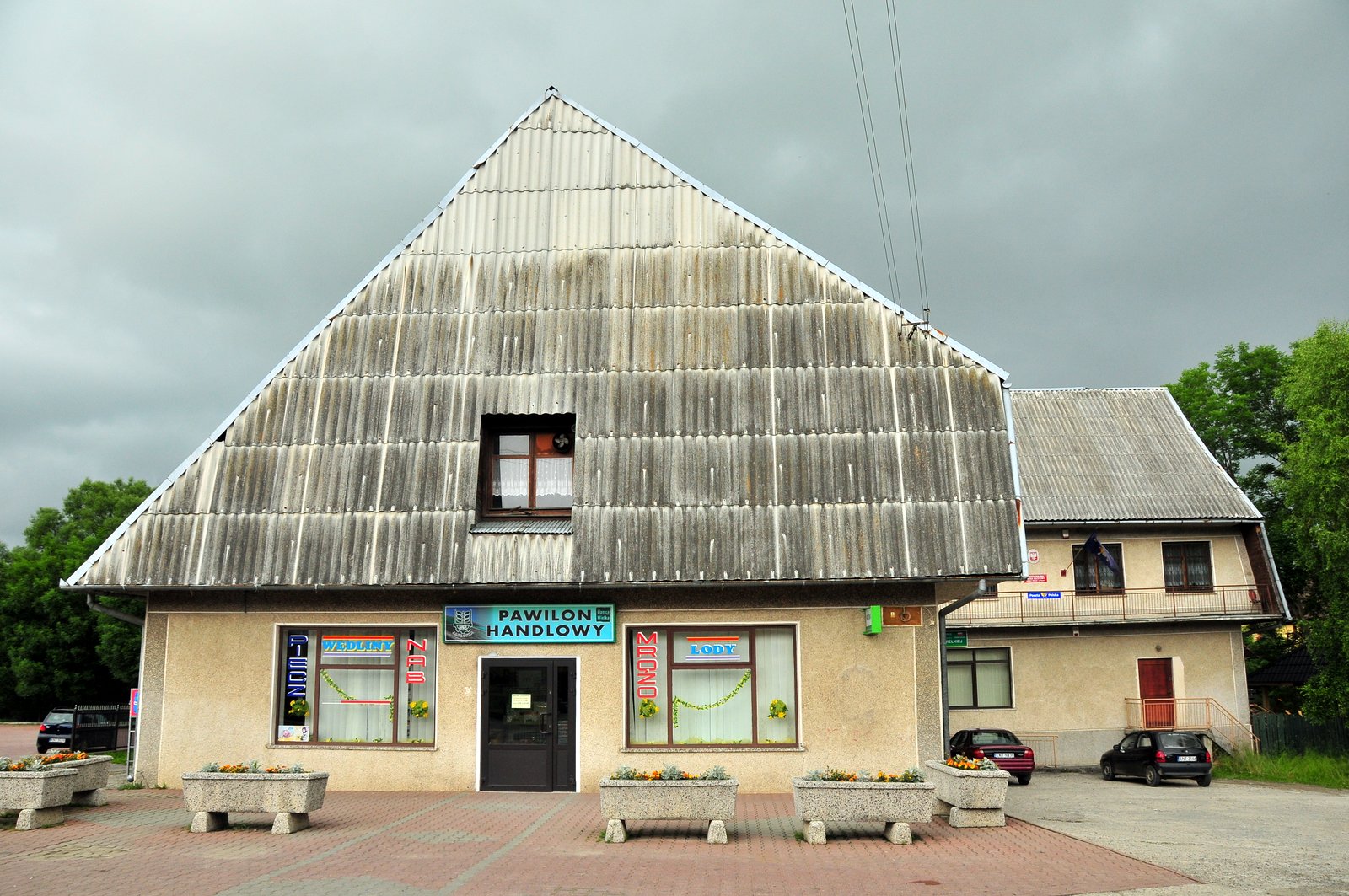
And the old wedding house, the one above “Trade Pavilion”? It too looks just like it did when I moved there in 1996.
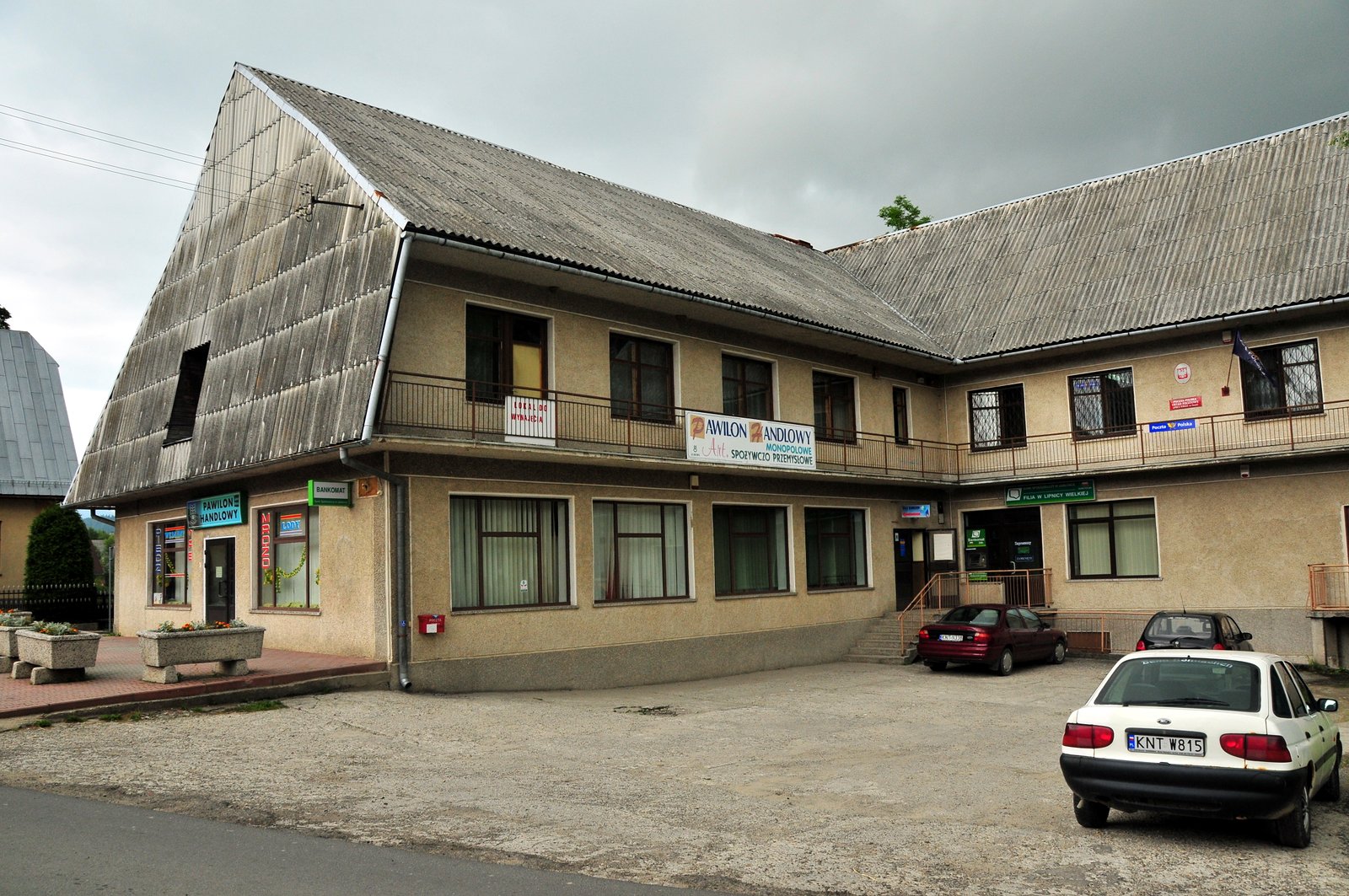
The same concrete planters decorate the front, probably in the exact same places. The metal roof is still as stained and rusted. But the store is still open, if not swarmed with customers.
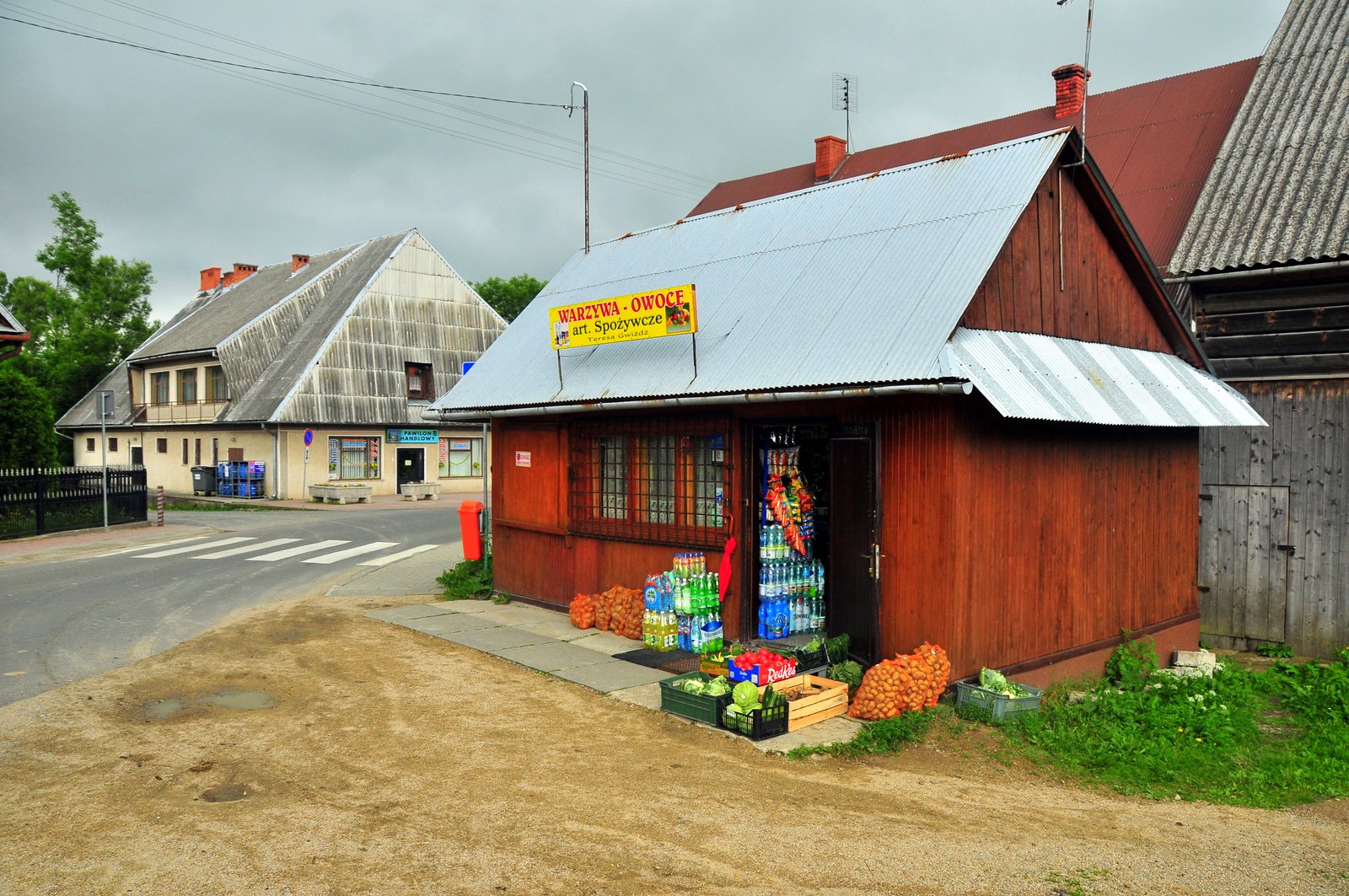
One other store that seems to have made it is the small shop across from the church, within sight of the “Trade Pavilion.” It was always one of the best places to find fresh produce, and it’s probably one of the few old-style, non-self-service shops in Lipinca, if not the only one.
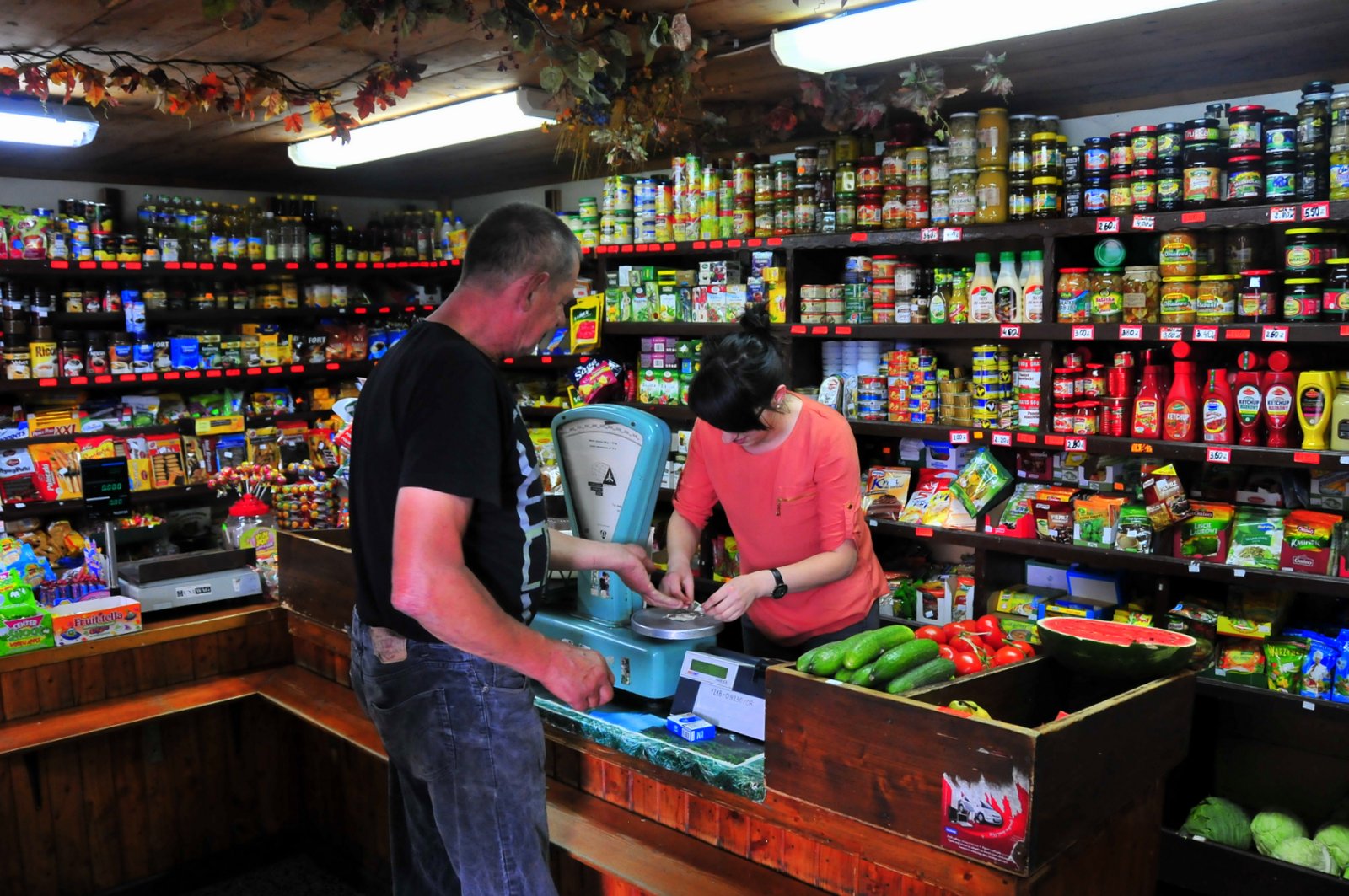
The idea is simple: the customer stands on one side of the counter; the sales assistant/shop owner stands on the other, with all the merchandise behind her. In other words, an old-fashioned general store. It was in such a store — in fact, the store up the street now out of business — that I began really having my first significant exchanges with strangers. Small talk really, but it was encouraging when I discovered I could engage in small talk. Microscopic talk, to be sure, but still, it’s the mindless chatter like that that makes one feel part of the culture.
Lost
It began with a simple question: how many Jews were there in the Orawa region before the Holocaust? We were sitting in my now-in-laws' kitchen, and Babcia explained a common enough situation in rural Poland: most, if not all, of the stores were Jewish interests, leading to a resentment, sadly not all that uncommon, that resonates even today. More than once I've heard that Jews run Poland now. Yet in the midst of the original conversation, Babcia mentioned something that piqued my interest.
"There's even a Jewish cemetery somewhere around here," she said as a sort of after thought.
"Where?"
"Oh, I don't know. Somewhere near Podwilk."
That was probably ten years ago. Every time I went through Podwilk, I thought of the cemetery. I imagined a rusty, decrepit iron fence surrounding a few tombstones, trees overturning a few gravestones. A cliche in other words.
The reality, though, was much less romantic. The discovery began with a simple search on Google: "żydowski cmentarz podwilk." A cemetery dating from the nineteenth century, the resting place for Jews not only of Podwilk but also neighboring and nearby villages: Jablonka, Syptkowice, Lipnica, and others.
Within a few clicks, I had directions:
Jadąc od strony Chyżnego należy skręcić we wsi przed kościołem w prawo, dalej kierować się drogą asfaltową aż do małej kapliczki. Przy kapliczce po prawej stronie drogi należy skręcić w prawo (droga pnie się pod górę) w pola. Od końca asfaltowej drogi trzeba iść pieszo około 250 m pod górę. Cmentarz położony jest pod lasem.
A few minutes in the car, and there was the turn to the right just before the church. A kilometer down the road and there was the small chapel with the road off to the right. The asphalt ended, and all I saw in front of me were little forests. I stopped to ask a resident, who pointed out a small patch of trees that sat near the top of a hill, in front of a larger forest.
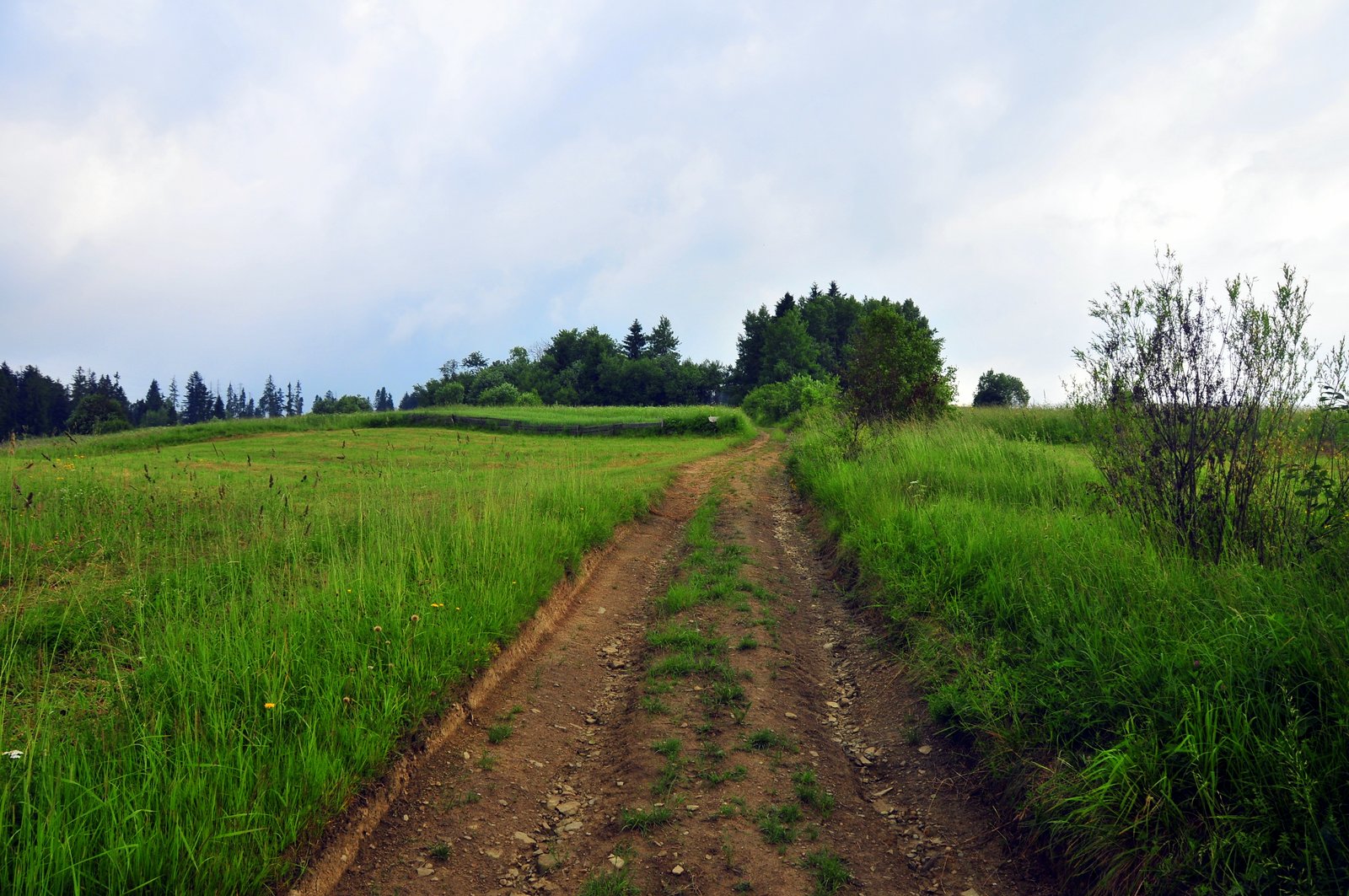
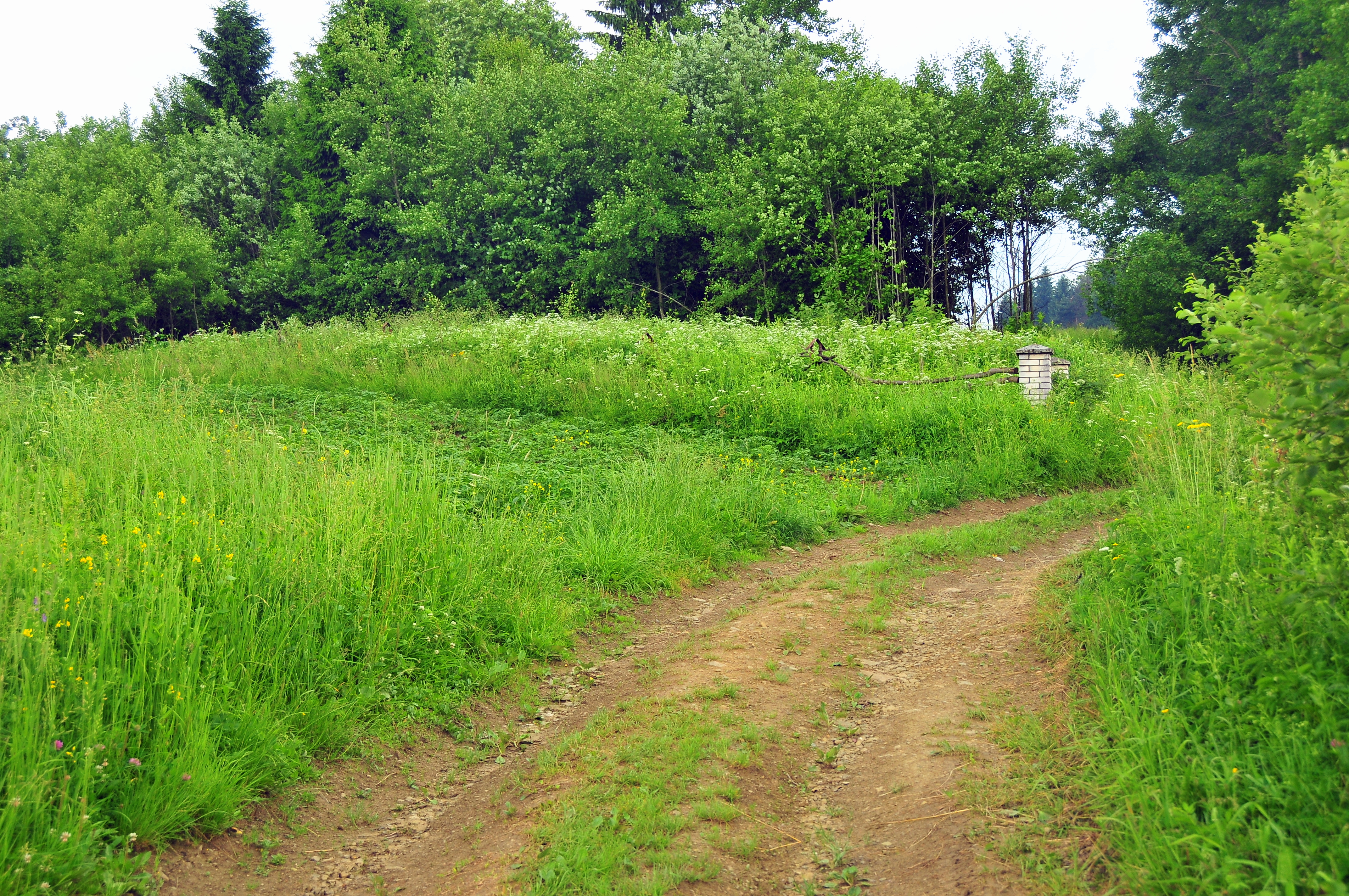
As I neared, signs of rumors I'd discovered on the internet appeared. For a few years, a group of Poles was taking care of the cemetery, and they even started building an enclosure. And there, by a field of potatoes and in front of the small patch of trees the young man had pointed out to me stood a brick fence post. Yet as I neared, I wondered if I was mistaken, though. Perhaps it was the beginnings of a house: Poles often build the fence around their lot before actually proceeding much beyond the foundation. No sign of any cemetery: nothing that even hinted at relative antiquity; no stones; no markers of any kind.
Still, I left the rutted road and headed through the weeds and grass, and hidden at the edge of the forest, I saw the corner of a grave marker. Venturing into the small wood, I saw a second, and a third. Deeper and deeper and suddenly they were everywhere.
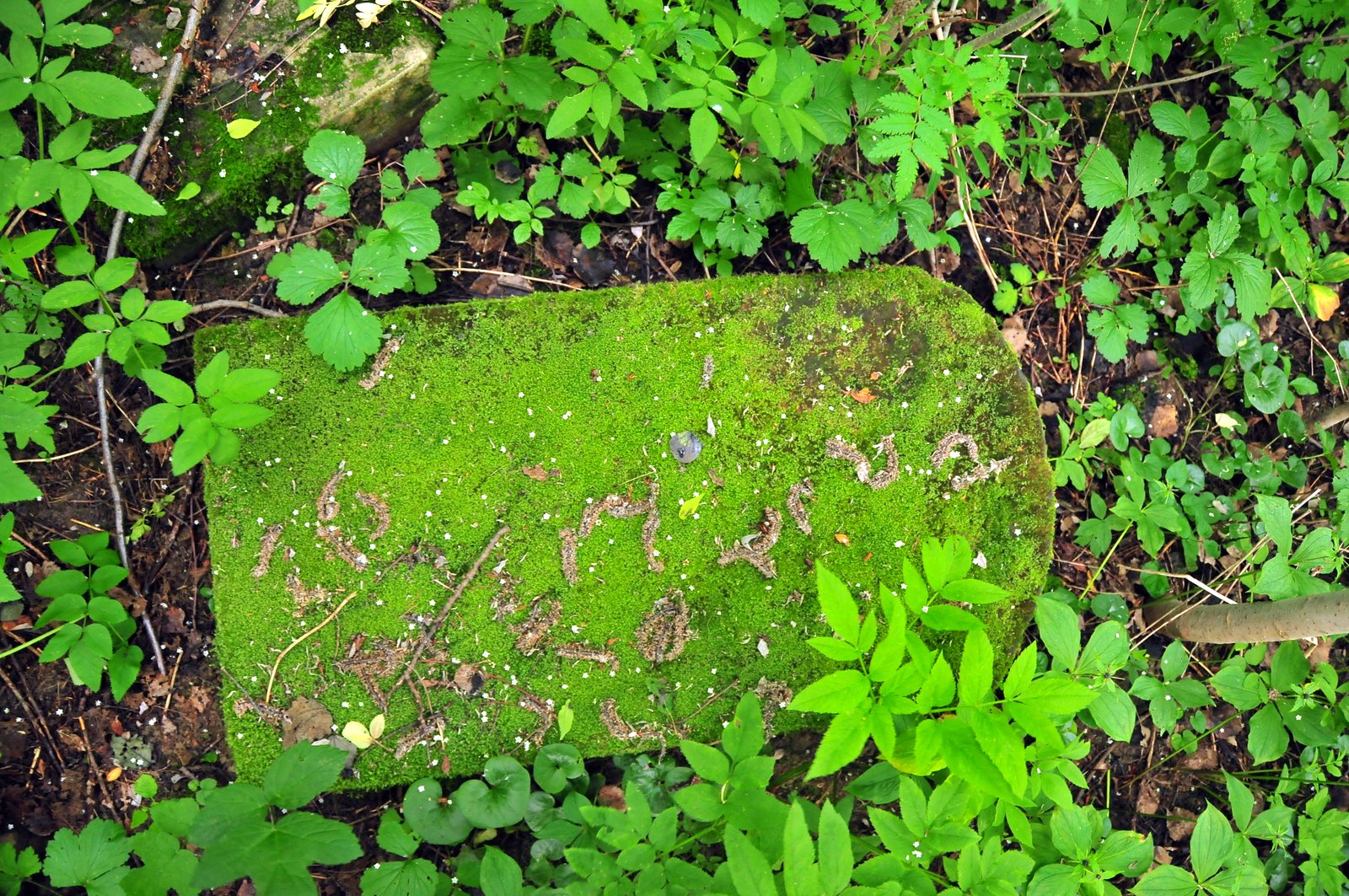
Some lay on the ground covered in moss, completely illegible. Others leaned against this tree or that, the Hebrew lettering in various stages of illegibility. Some stood straight and true but with an edge or corner knocked off, the missing piece nowhere to be found. Few if any stood unaffected by the years of weather and roots.
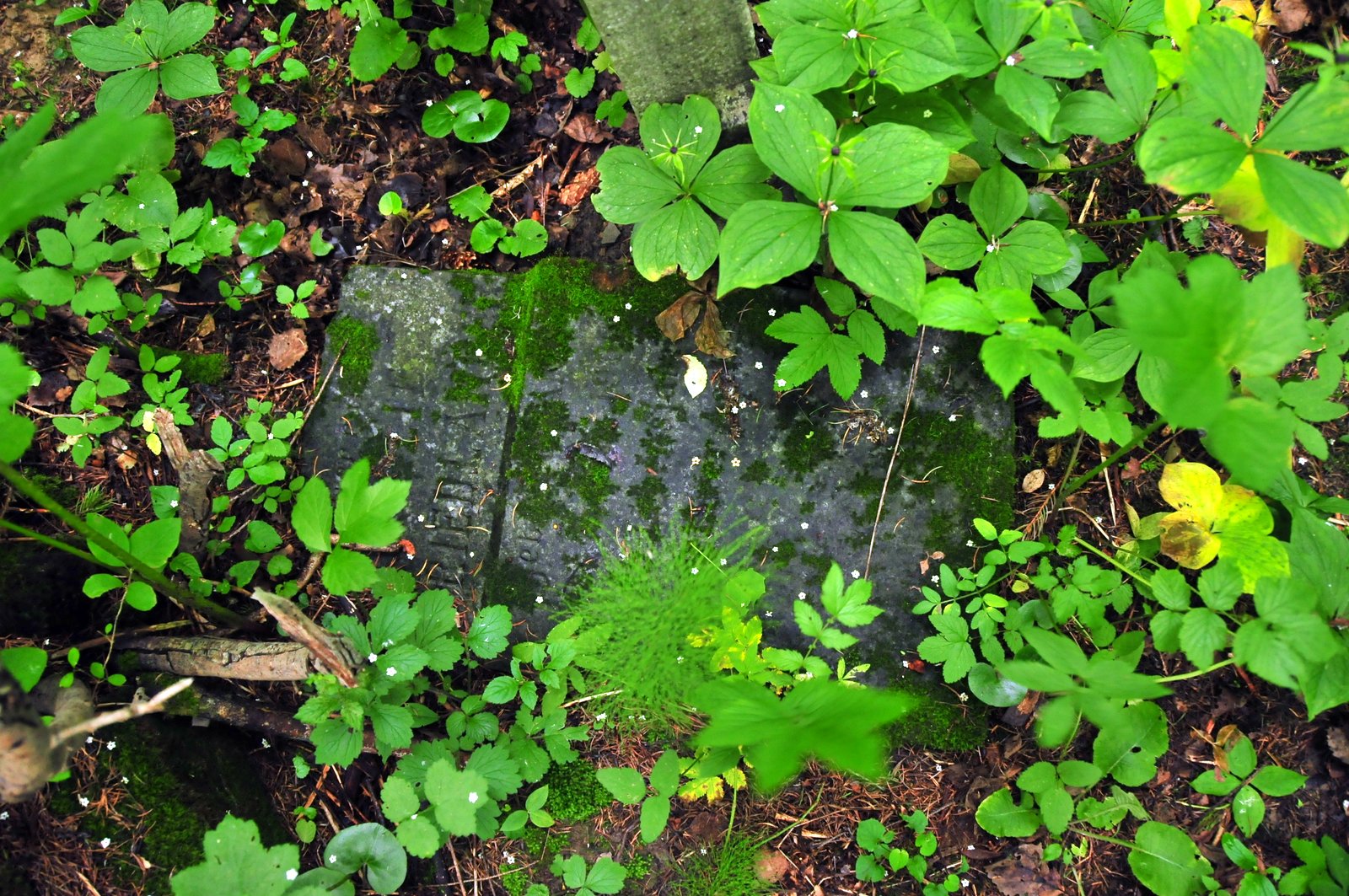
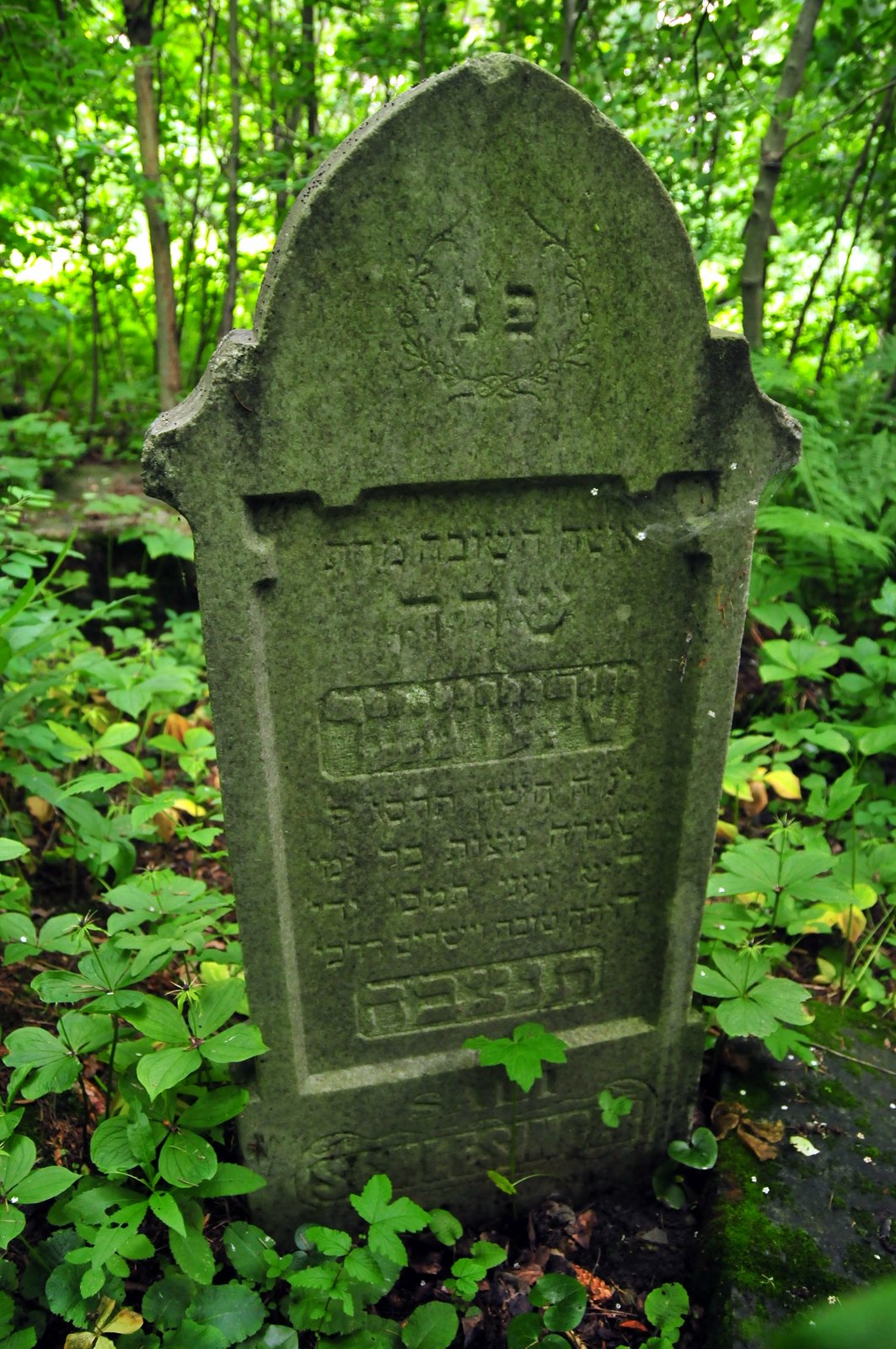
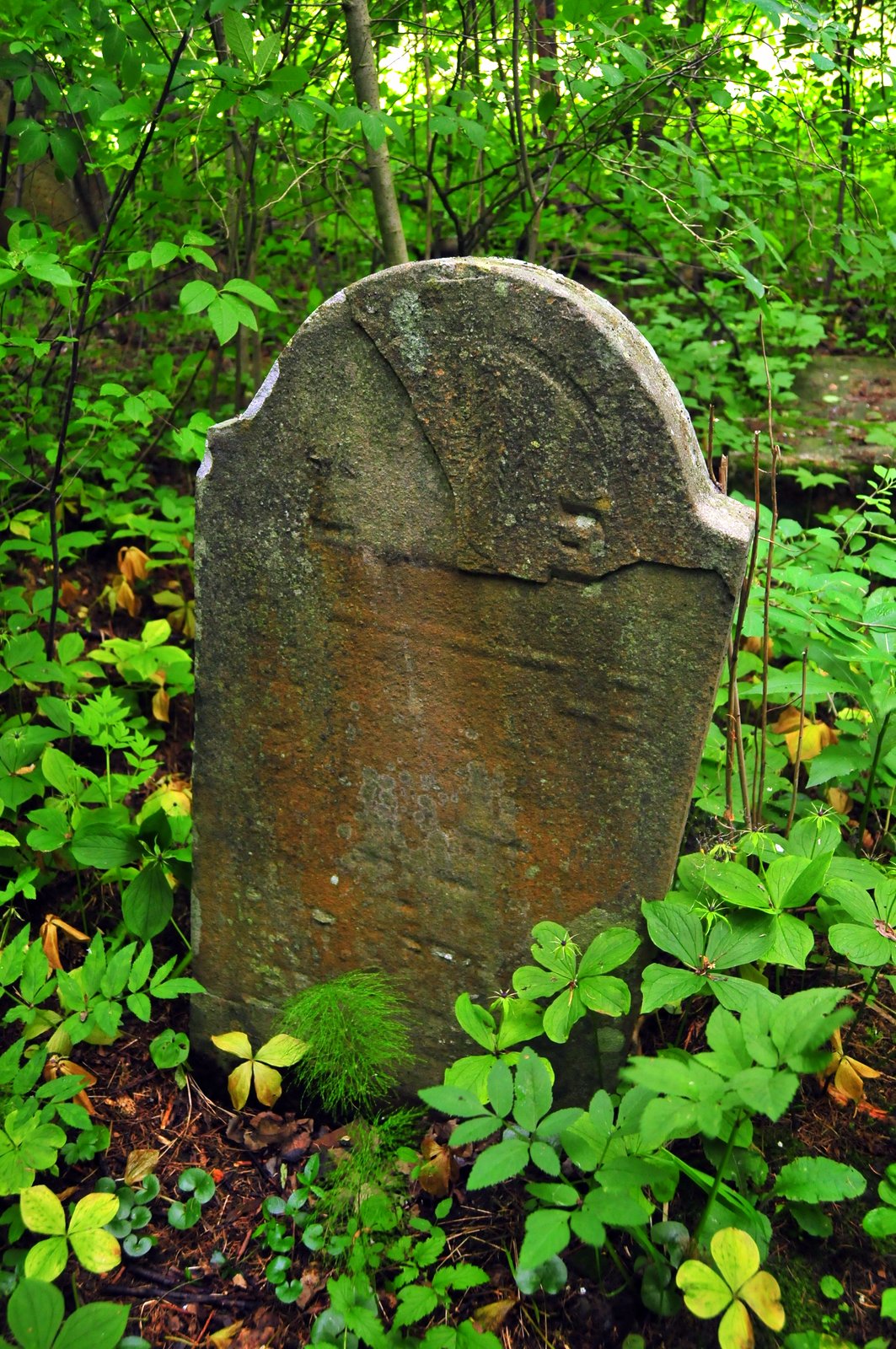
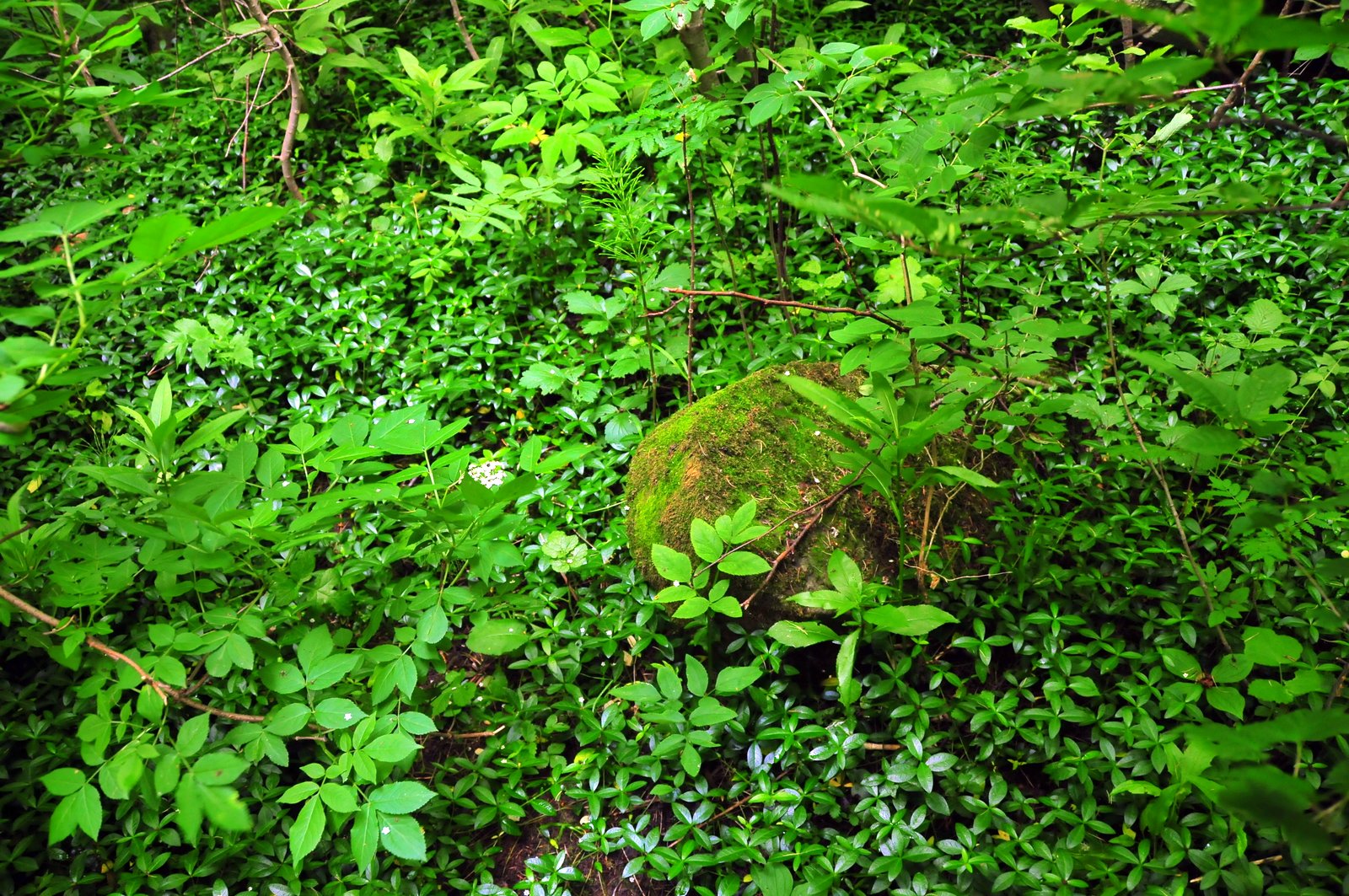
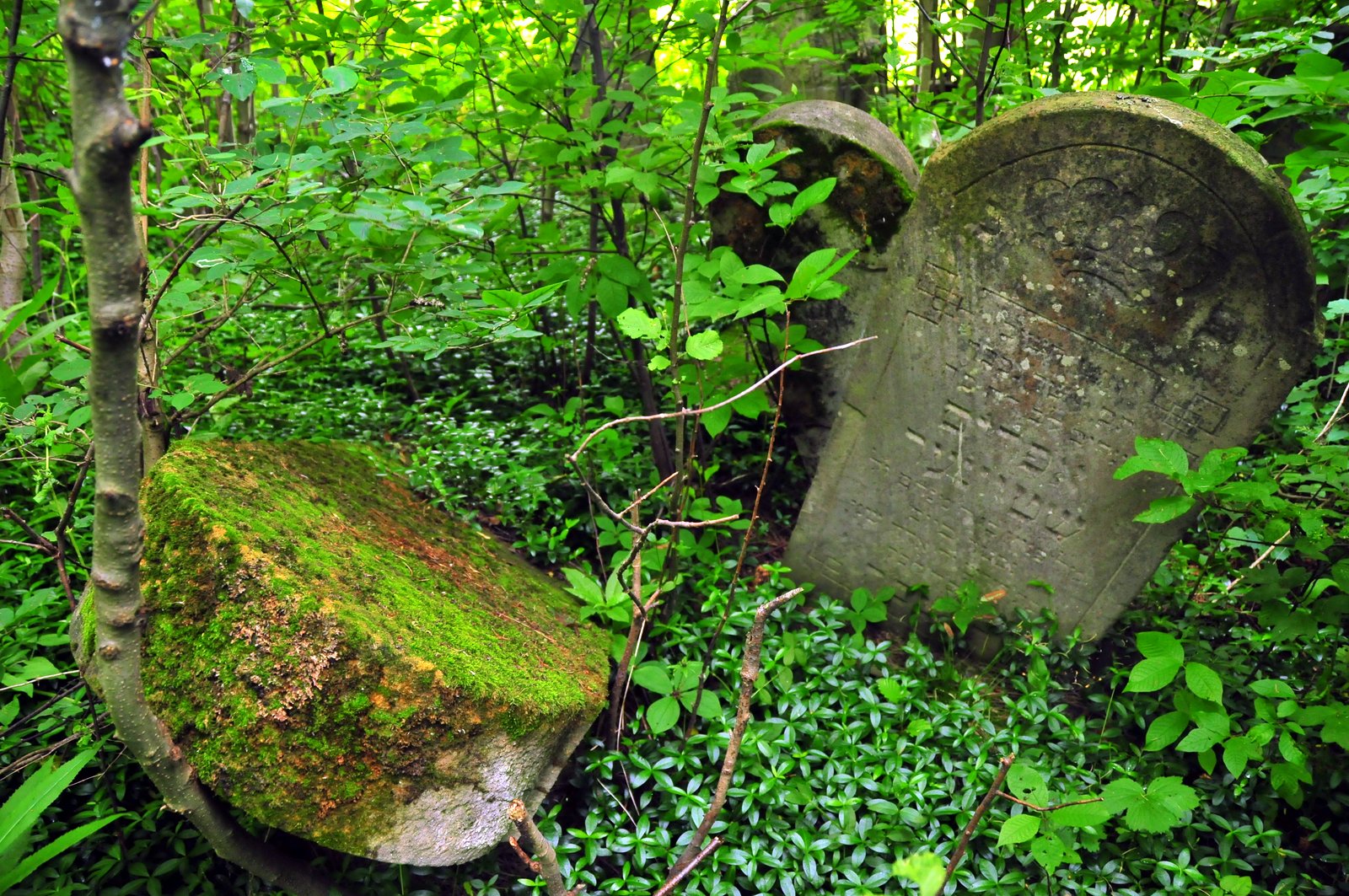
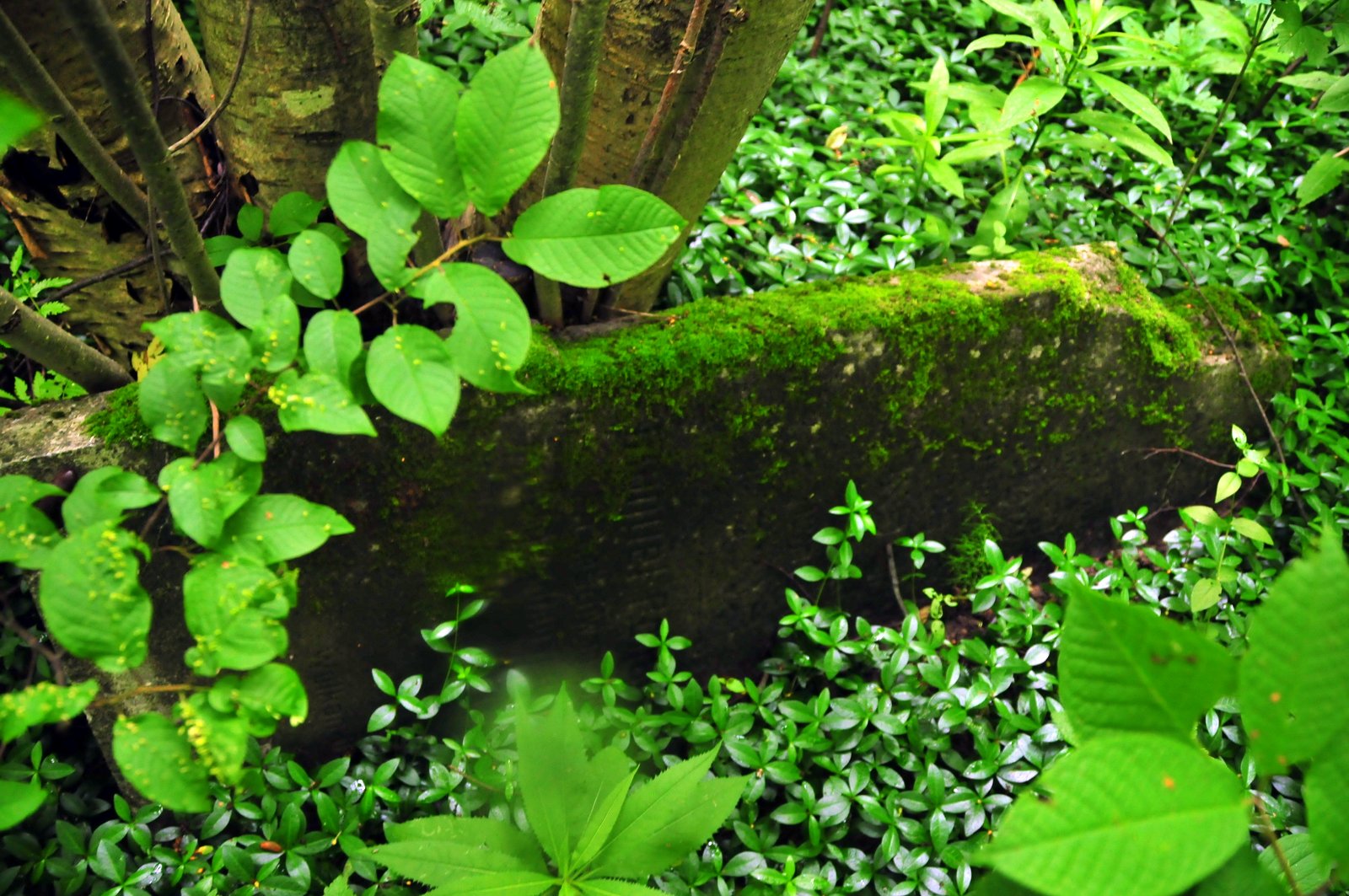

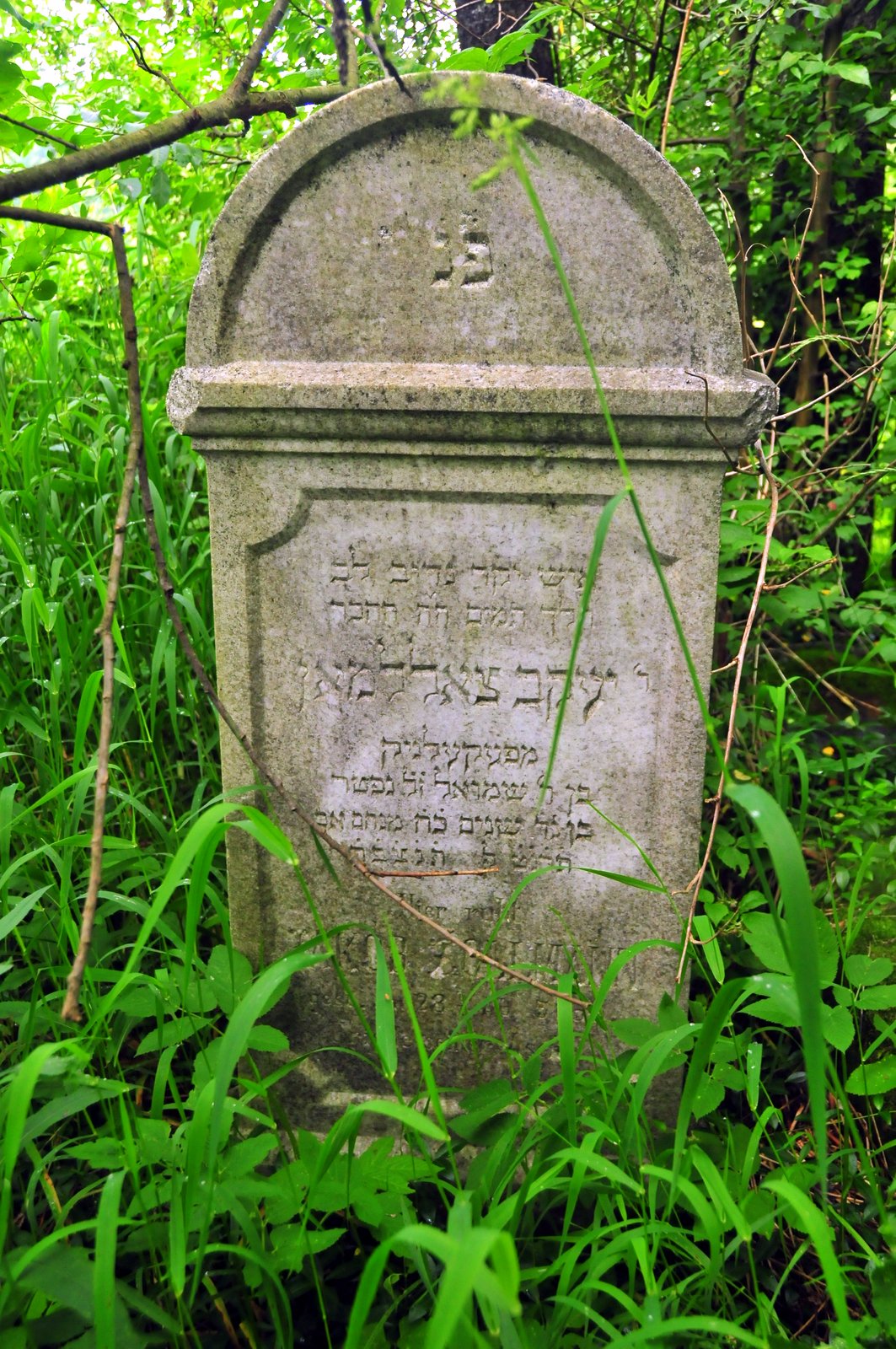

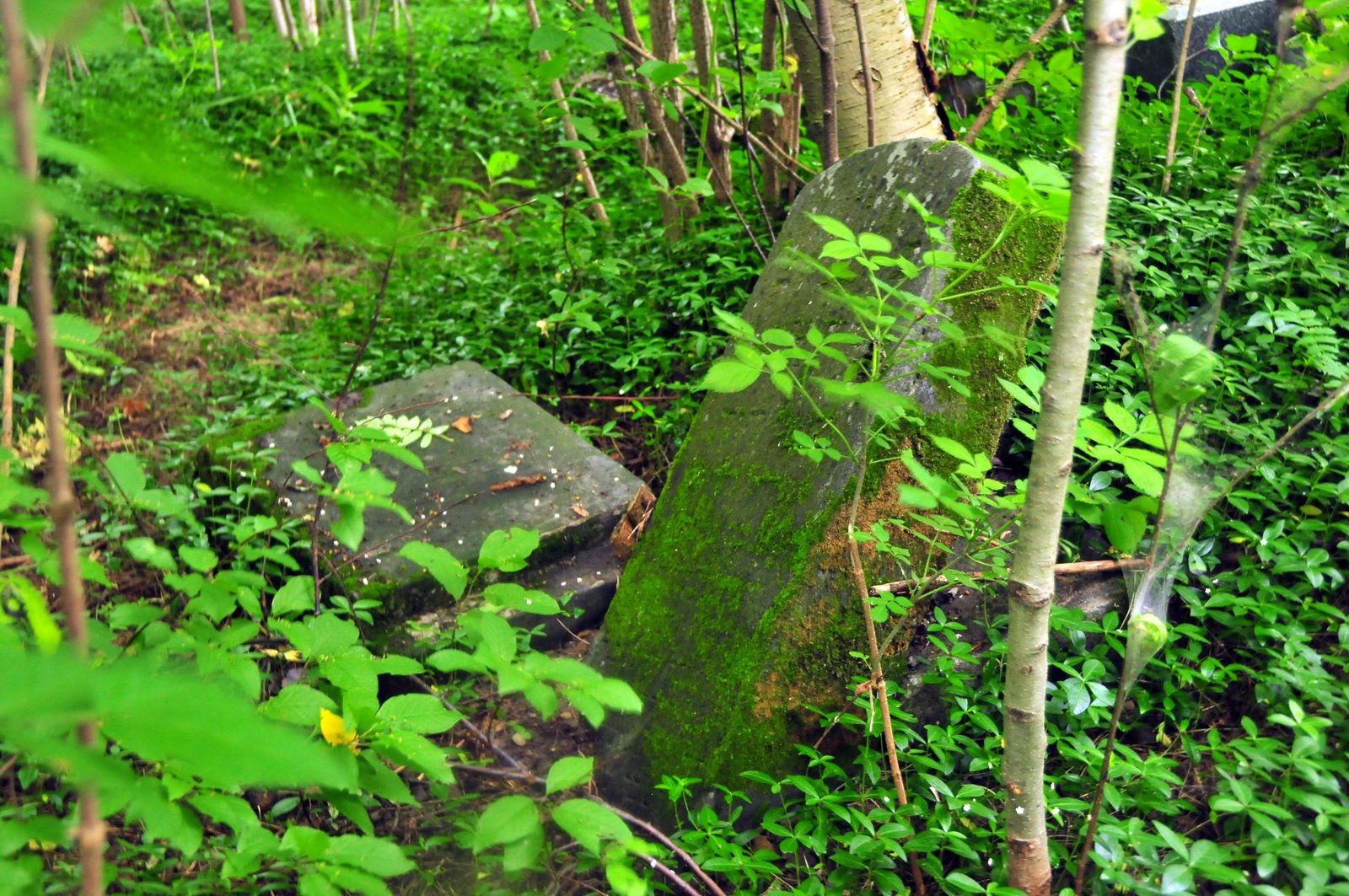

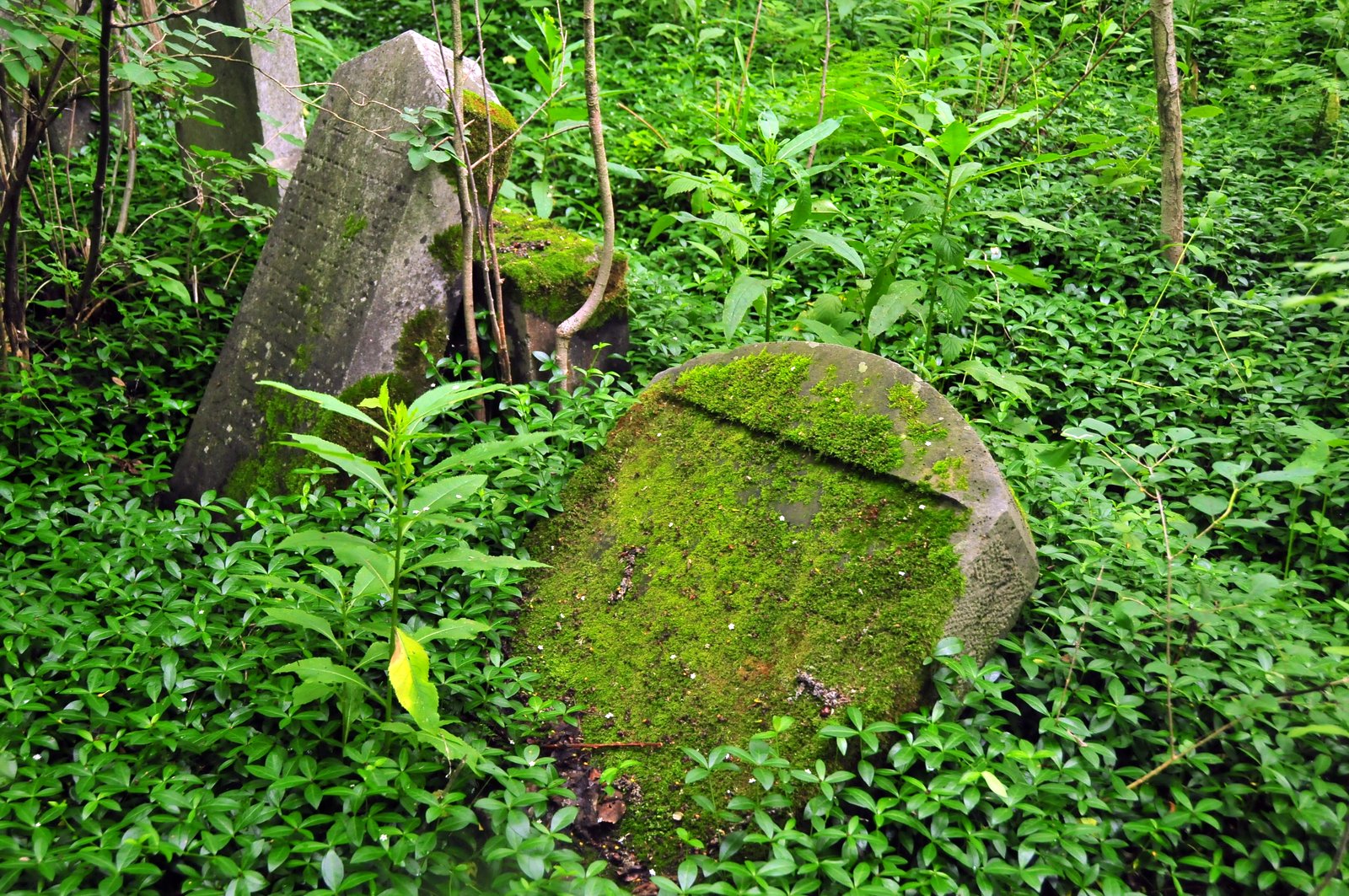
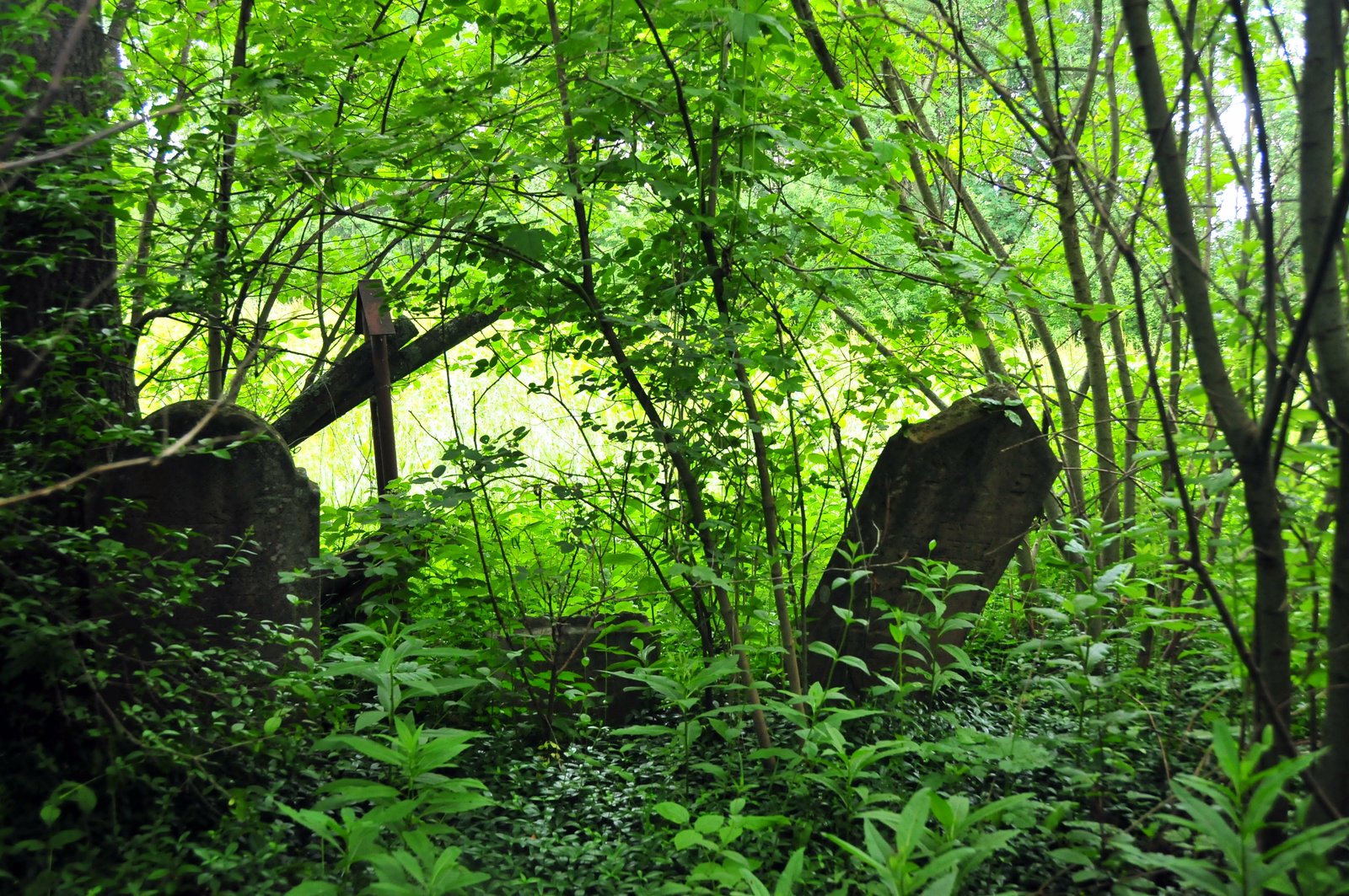
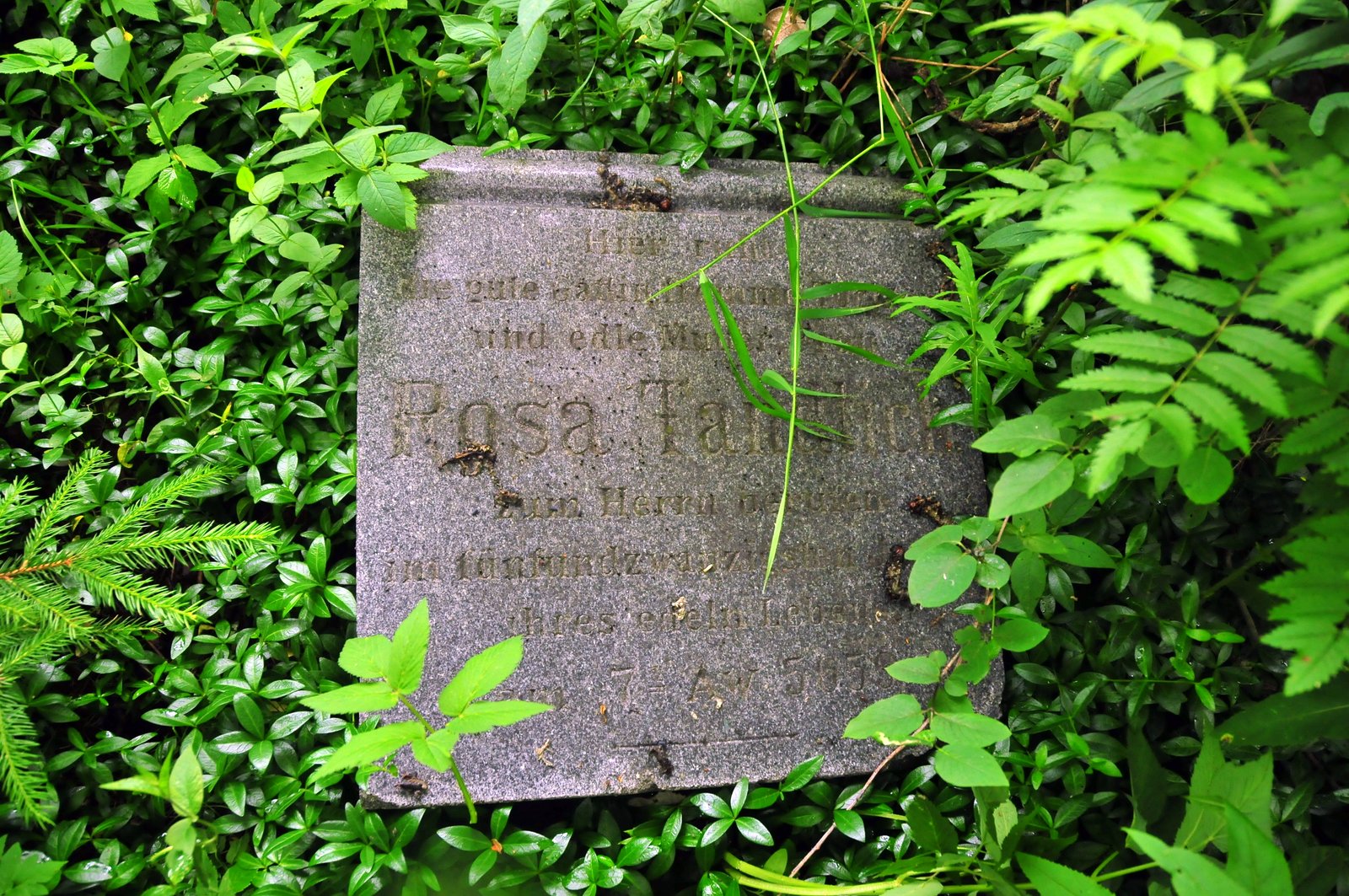
"And this is all that is left of a rich Jewish heritage here in Orawa," I thought. The Nazis destroyed the people themselves; time and apathy is taking care of the rest. Soon, there will be little to show that Jews lived, and died, in this area.
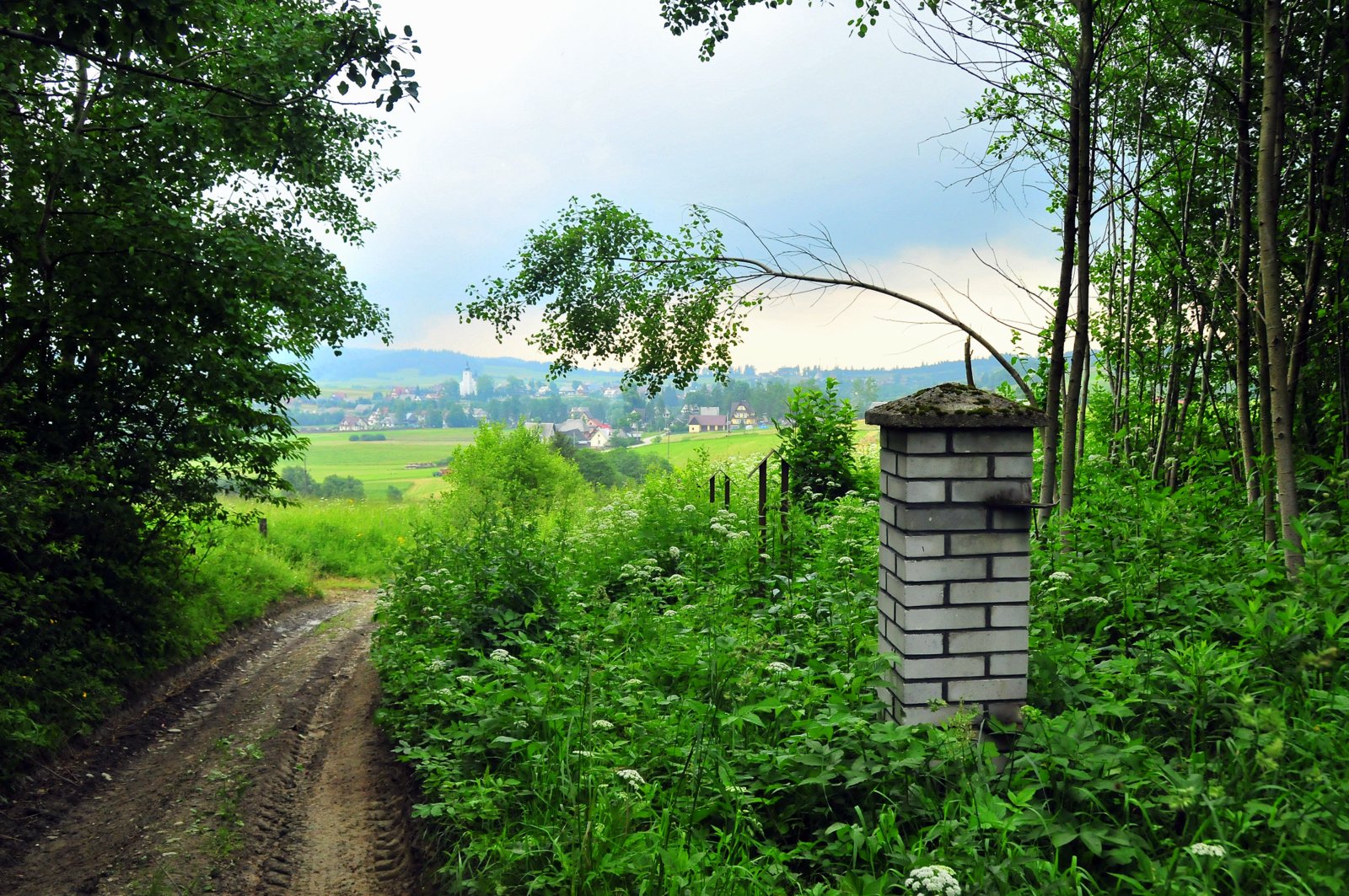
I turned to leave and noticed a small tree that looked as if it were itself about to fall. The forest will grow, fall, and rot, the stones themselves will dissolve in the countless downfalls that wash through the area, eventually, only trained archeologists, if they still exist at that time, would be able to find the cemetery.
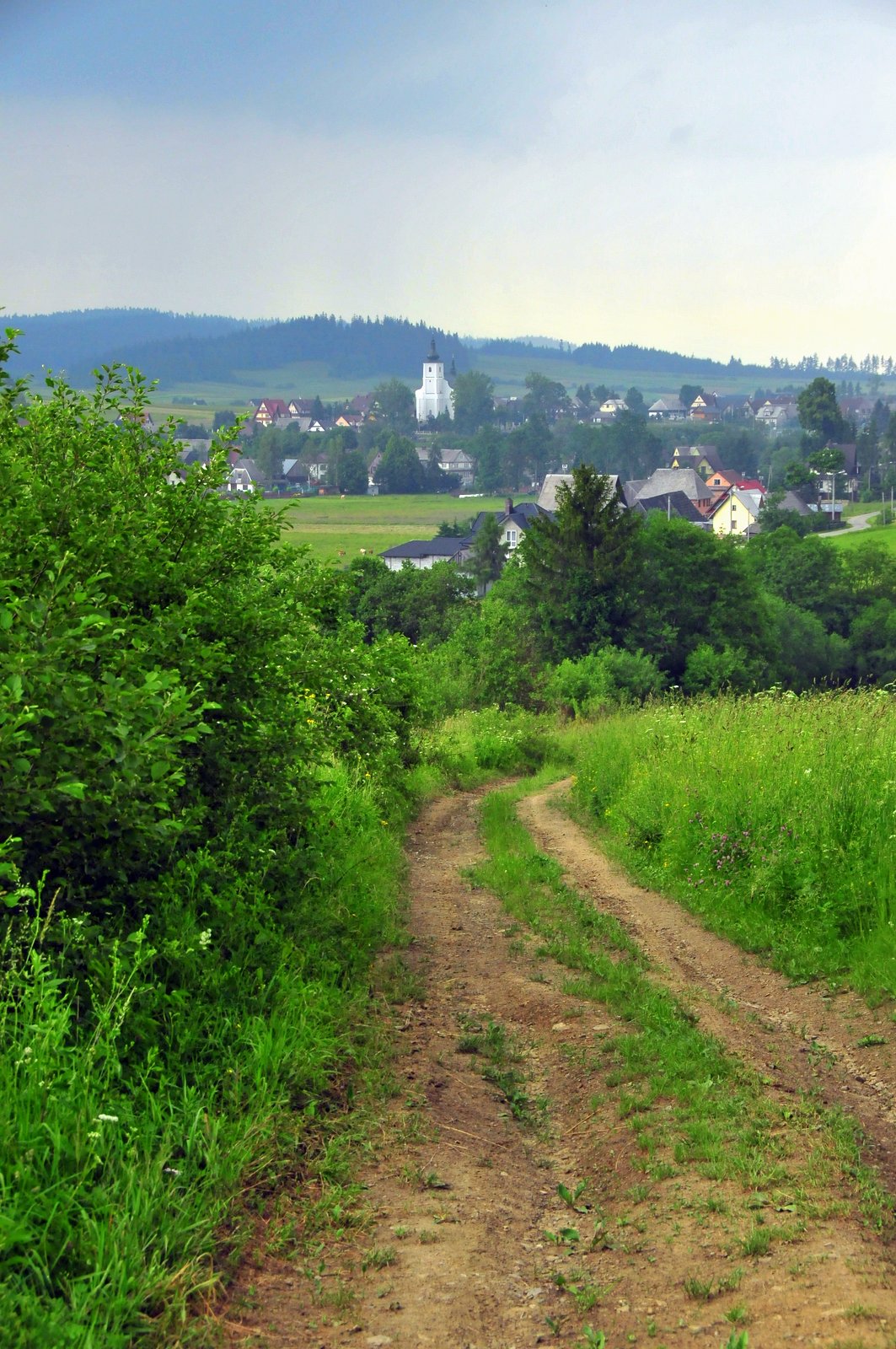
That is of course the fate of all of us, to be sure. But as a species, we're so obsessed with our legacy, and it's a little disconcerting to find such apparent disregard for the meager physical remnants of an entire ethnic group.
"Imagine a Polish cemetery in some foreign country looking like this," Babcia said looking at the pictures. Indeed, imagine just about any other ethnic group's cemetery looking like this.
The Other Half
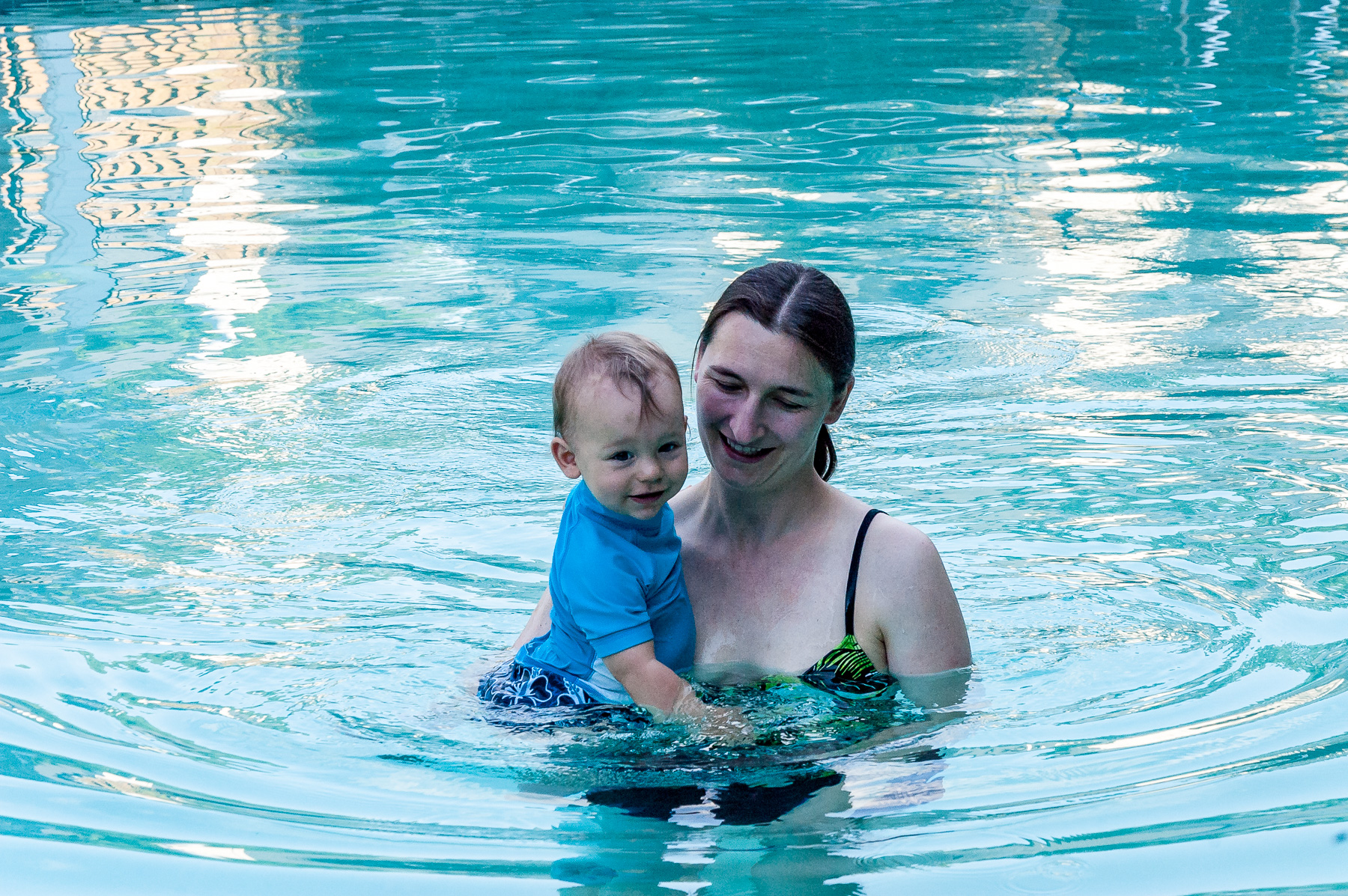
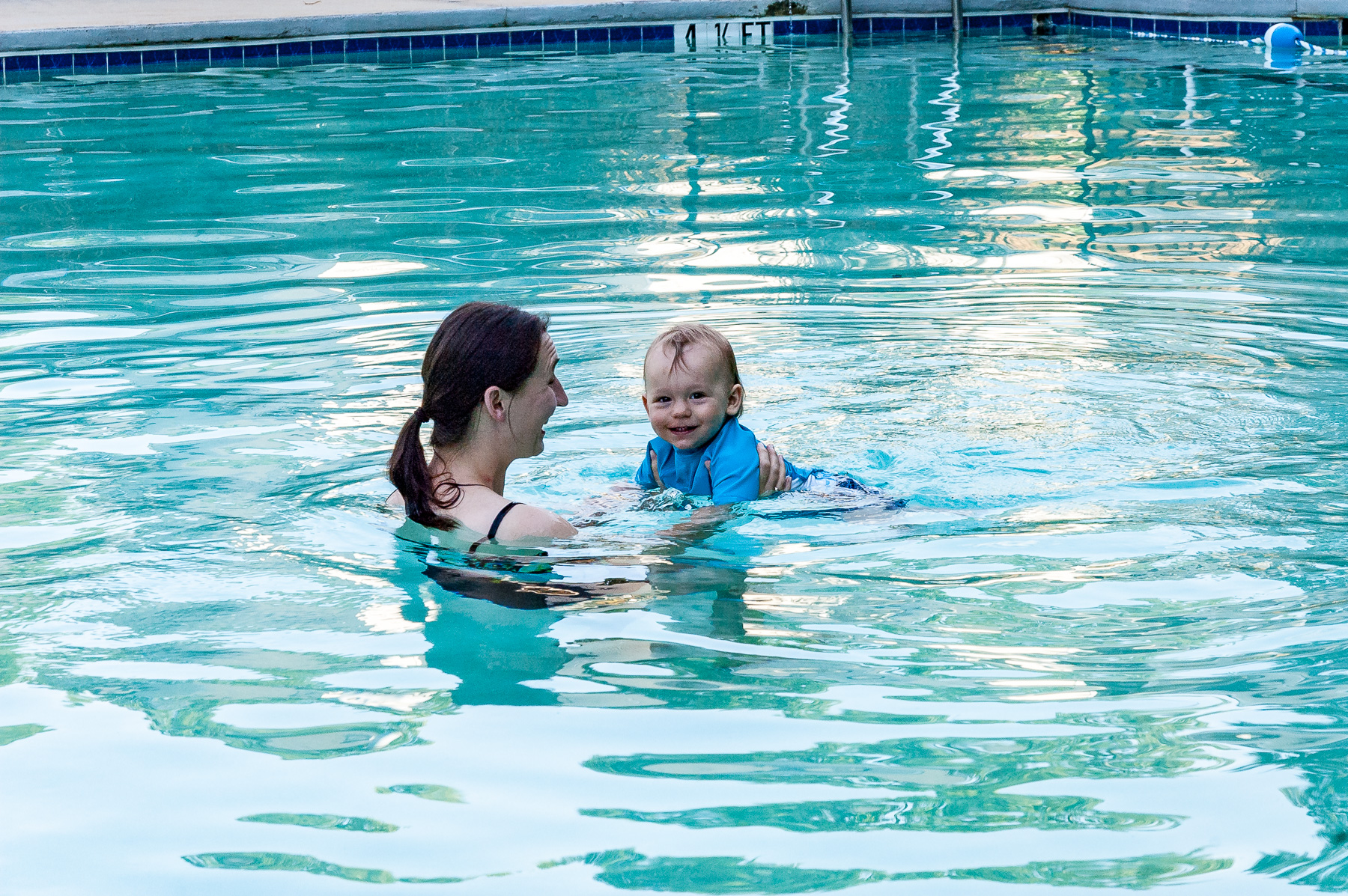
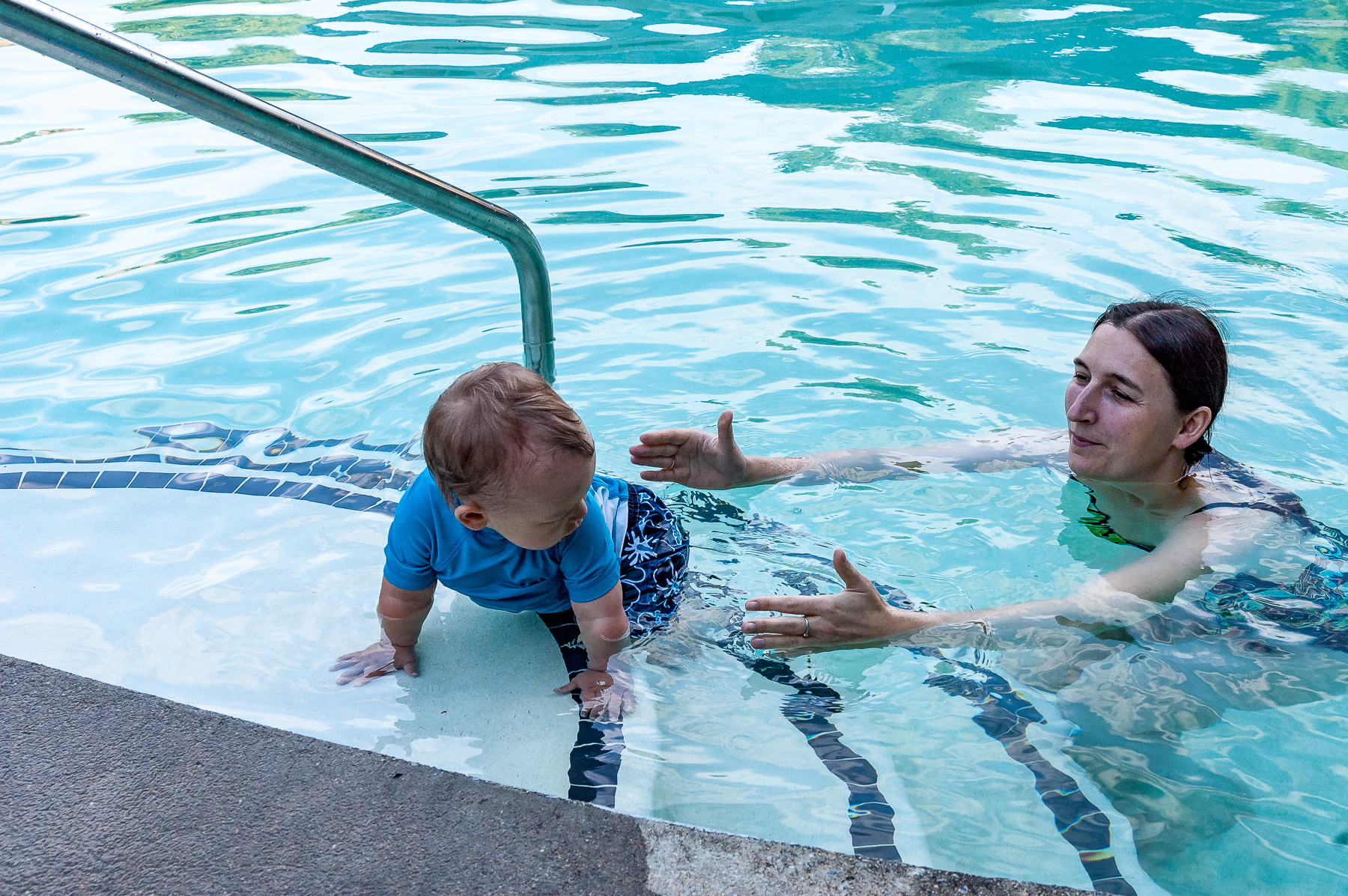
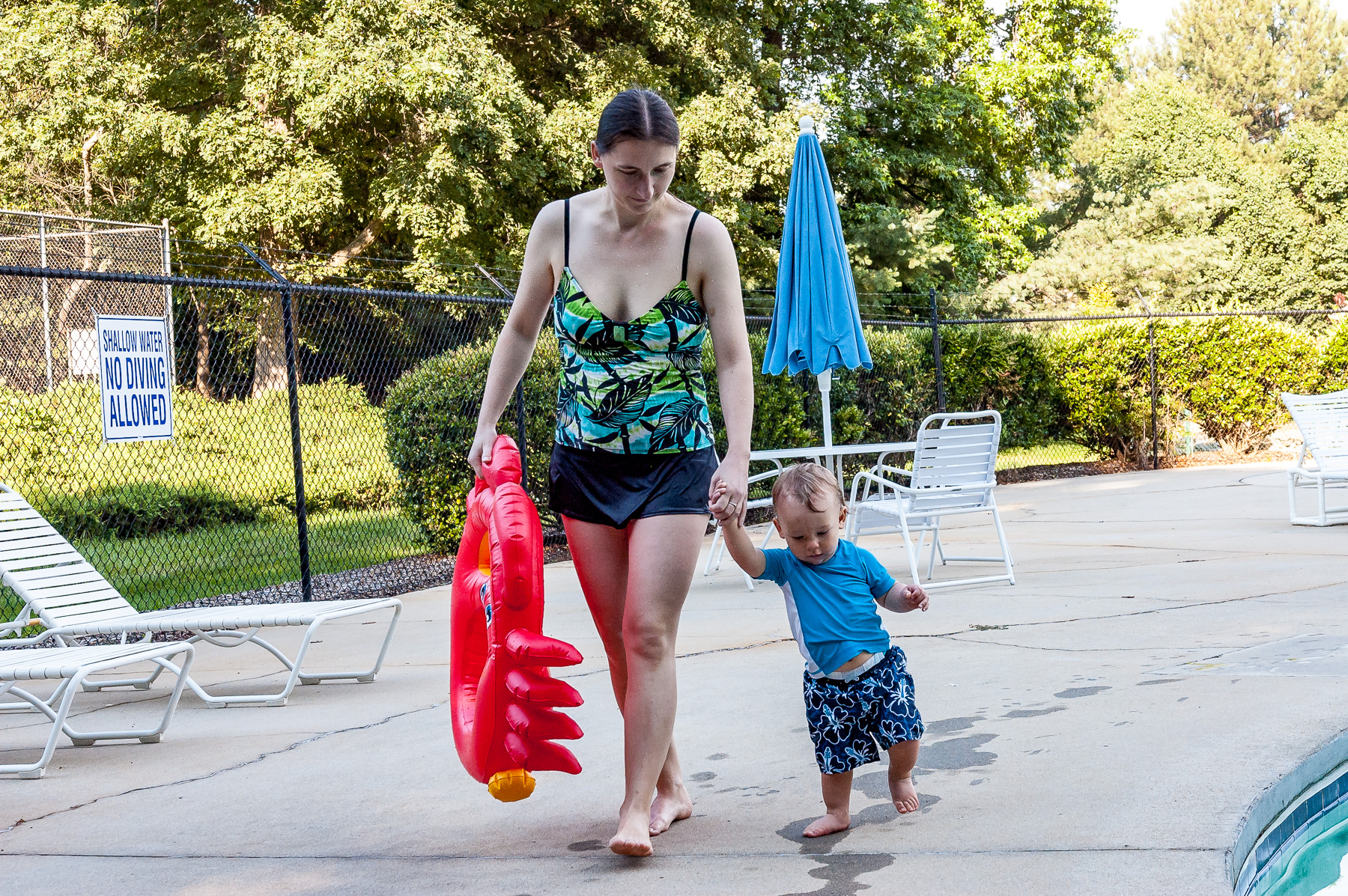
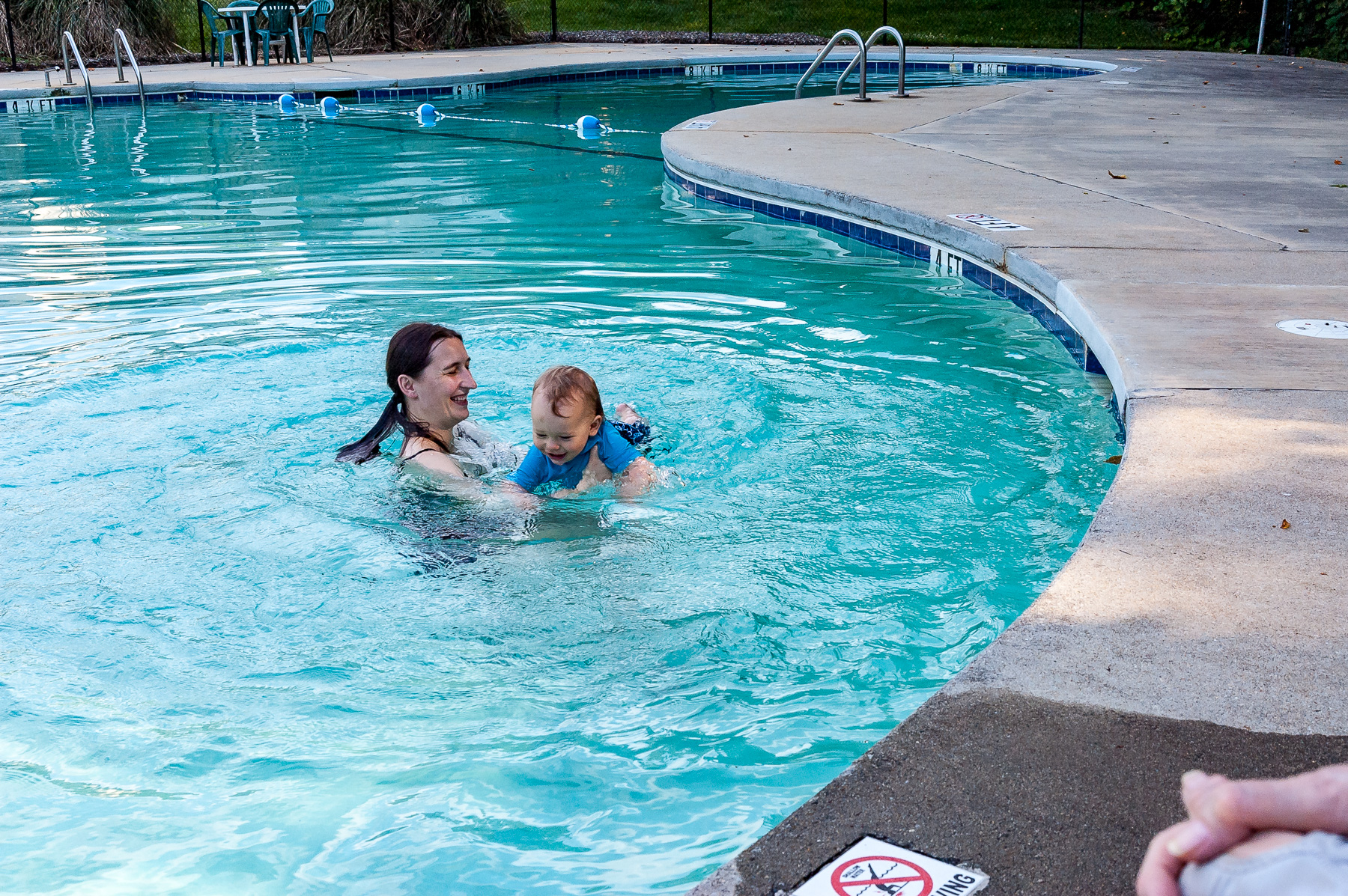
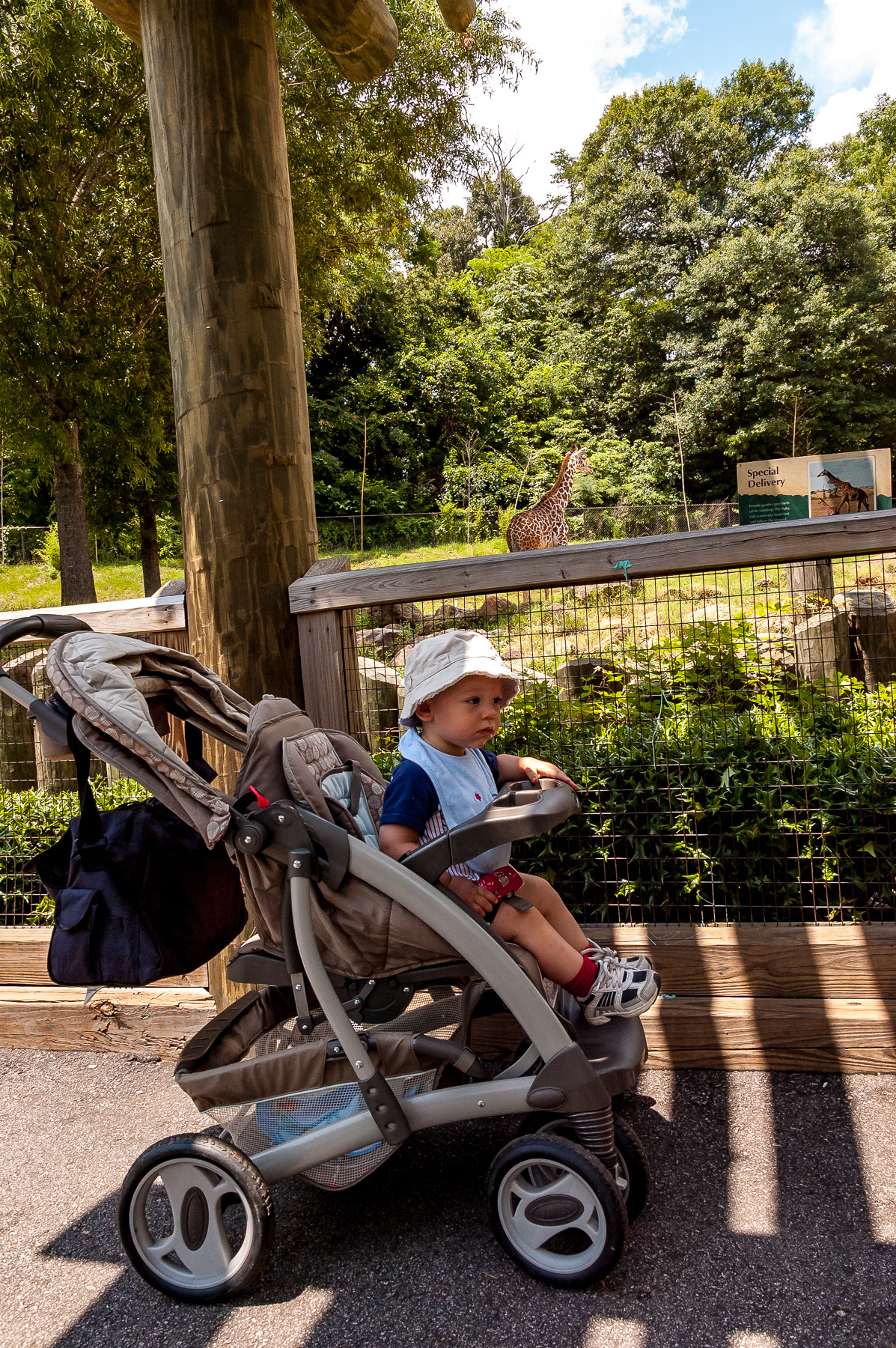
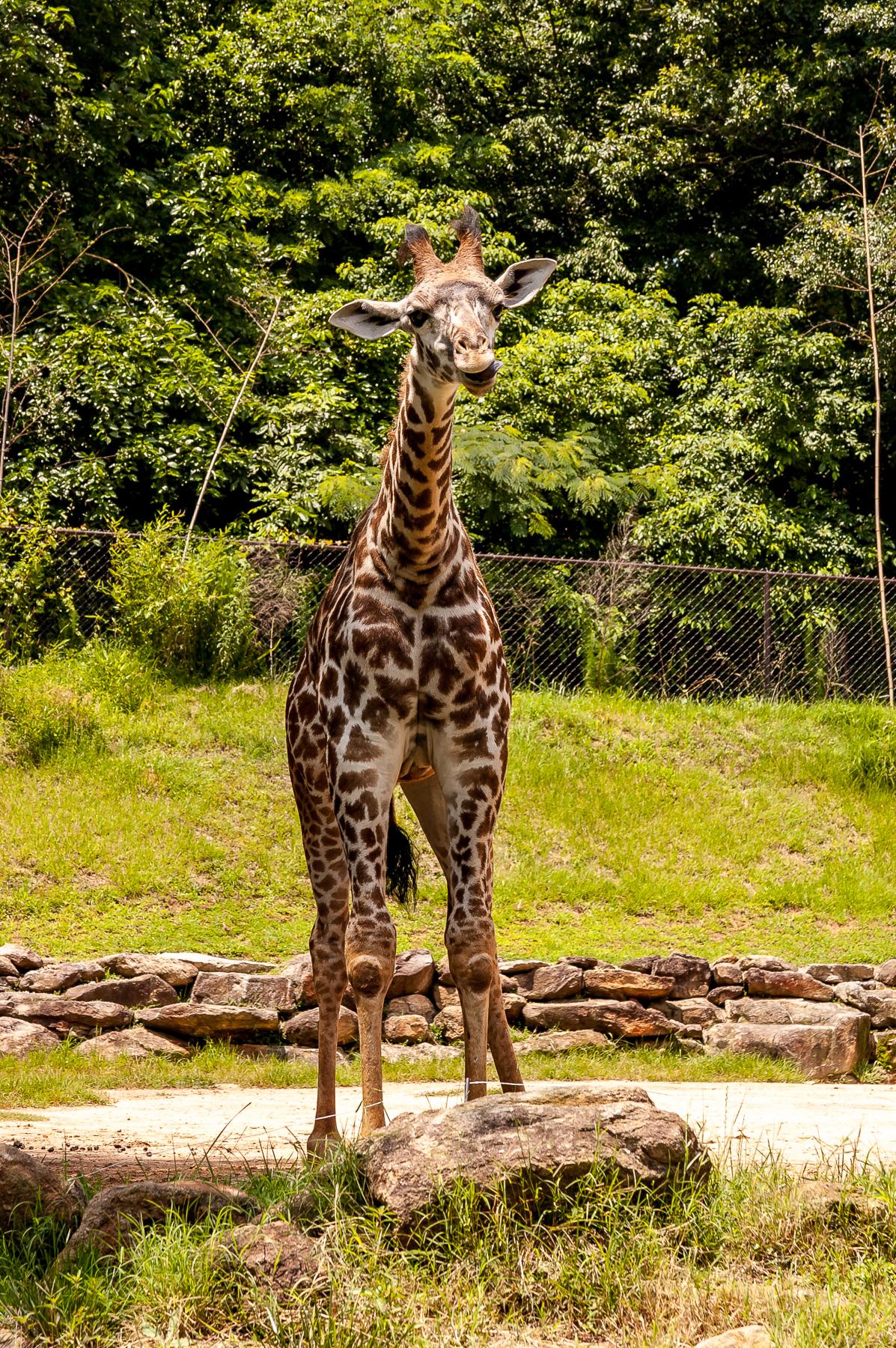
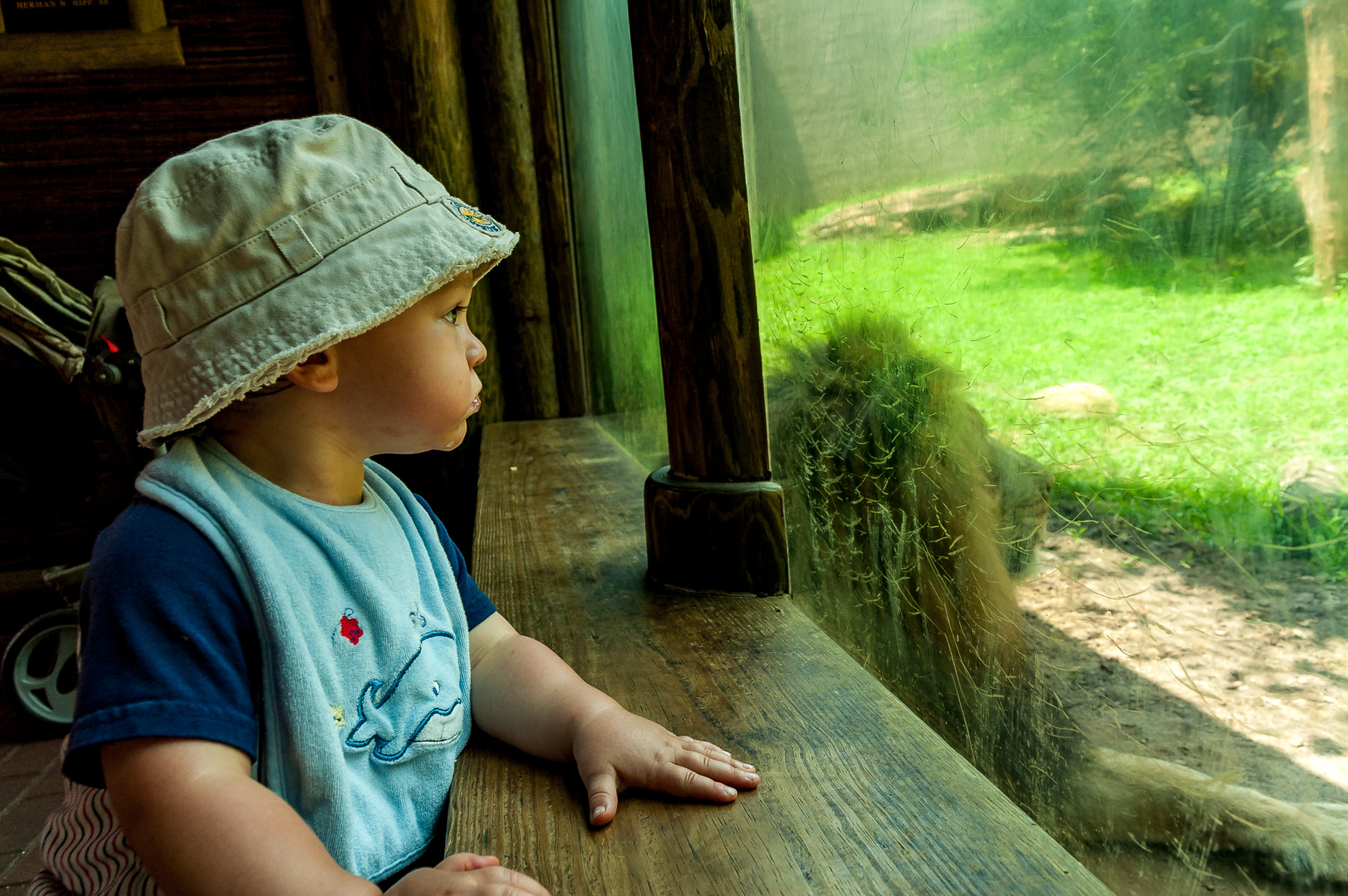
"Half in Poland Edition" means that each half only appears to the other in the form of Skype chats and pictures. On a computer screen, in other words. Yet since I can't get K to write for MTS, I'm left filling in the blanks for the pictures.
The swimming pool at Nana's and Papa's is providing smiles and continual adventures.
The zoo is providing stimulation.
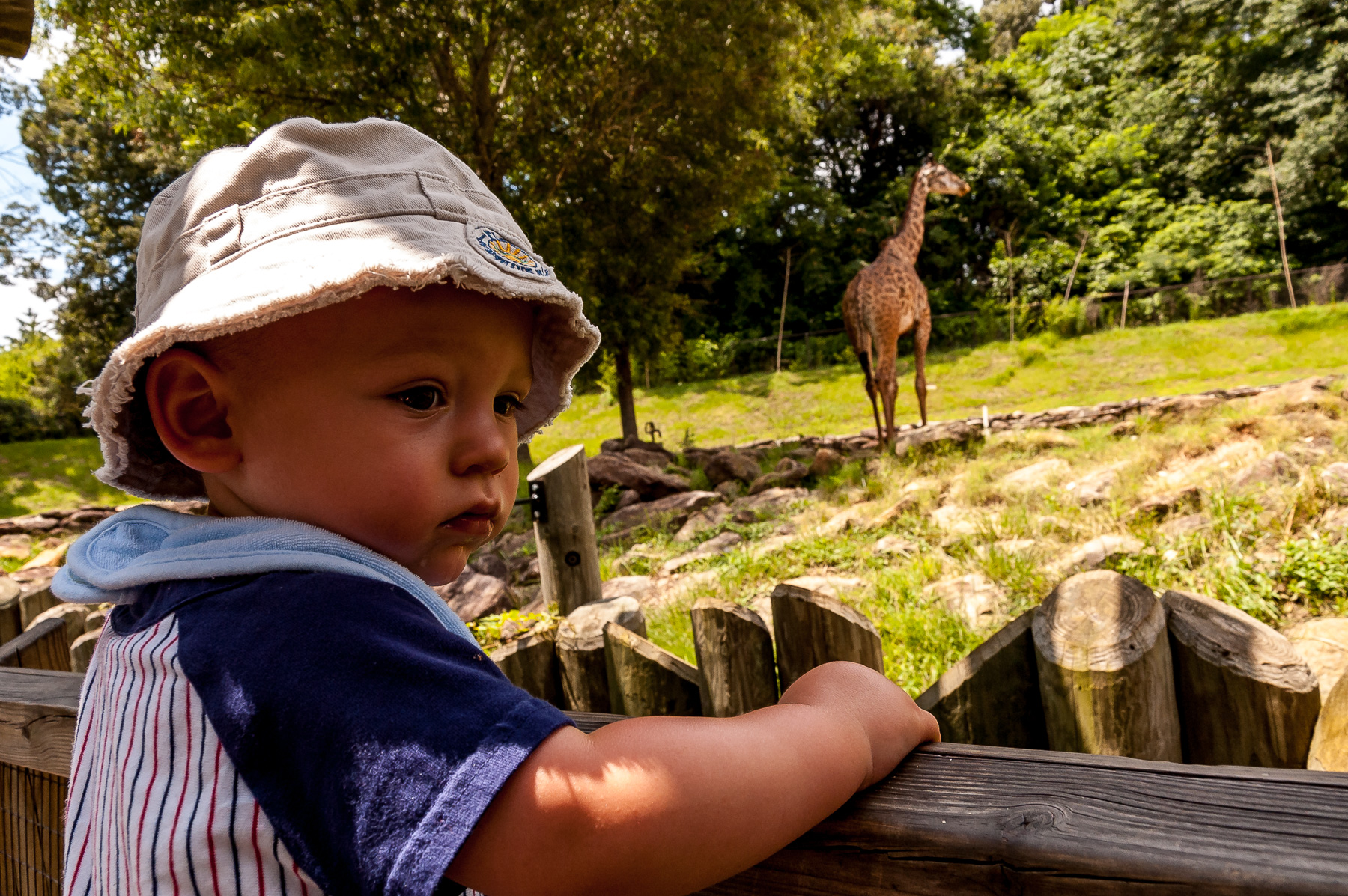
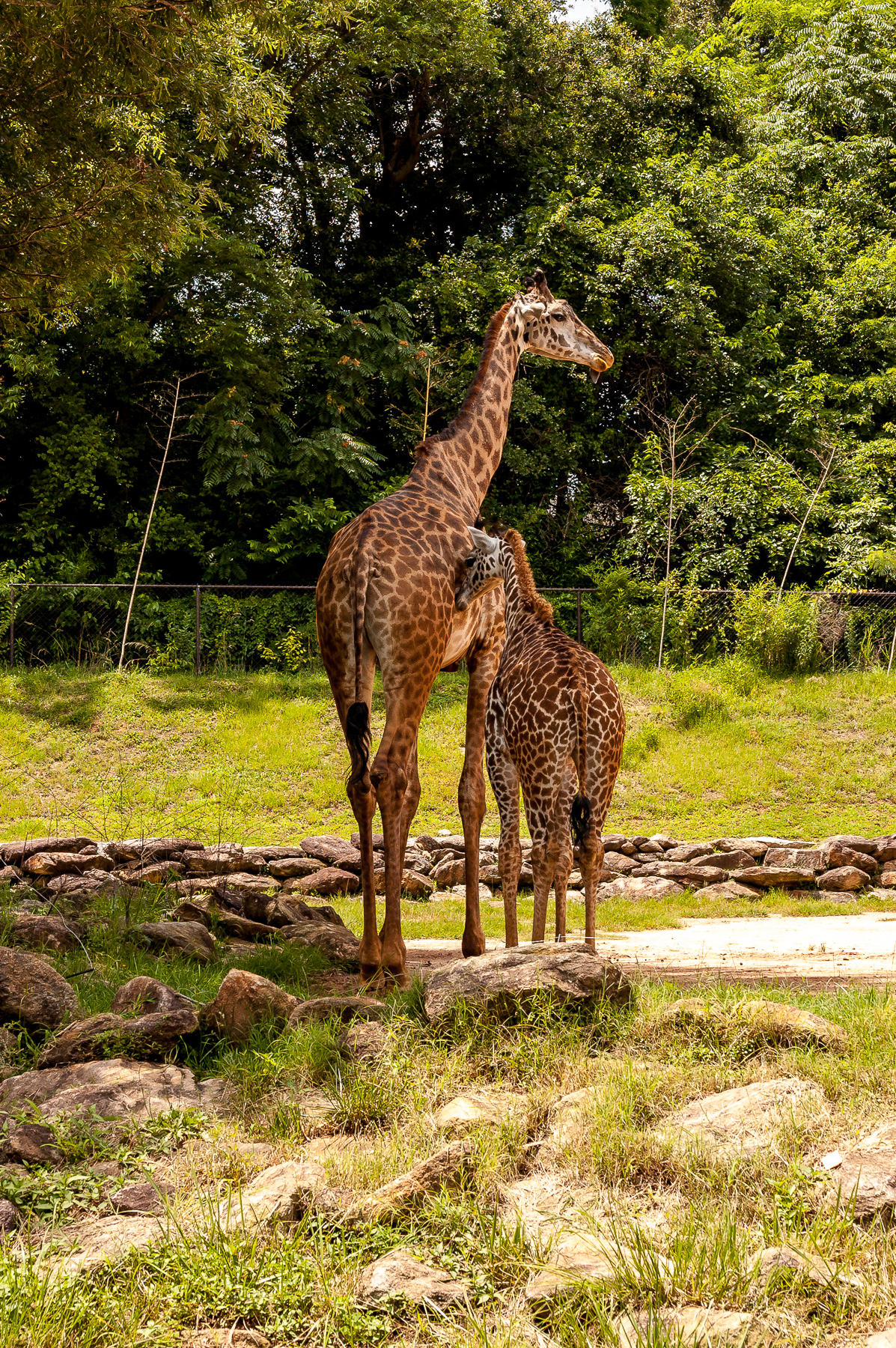
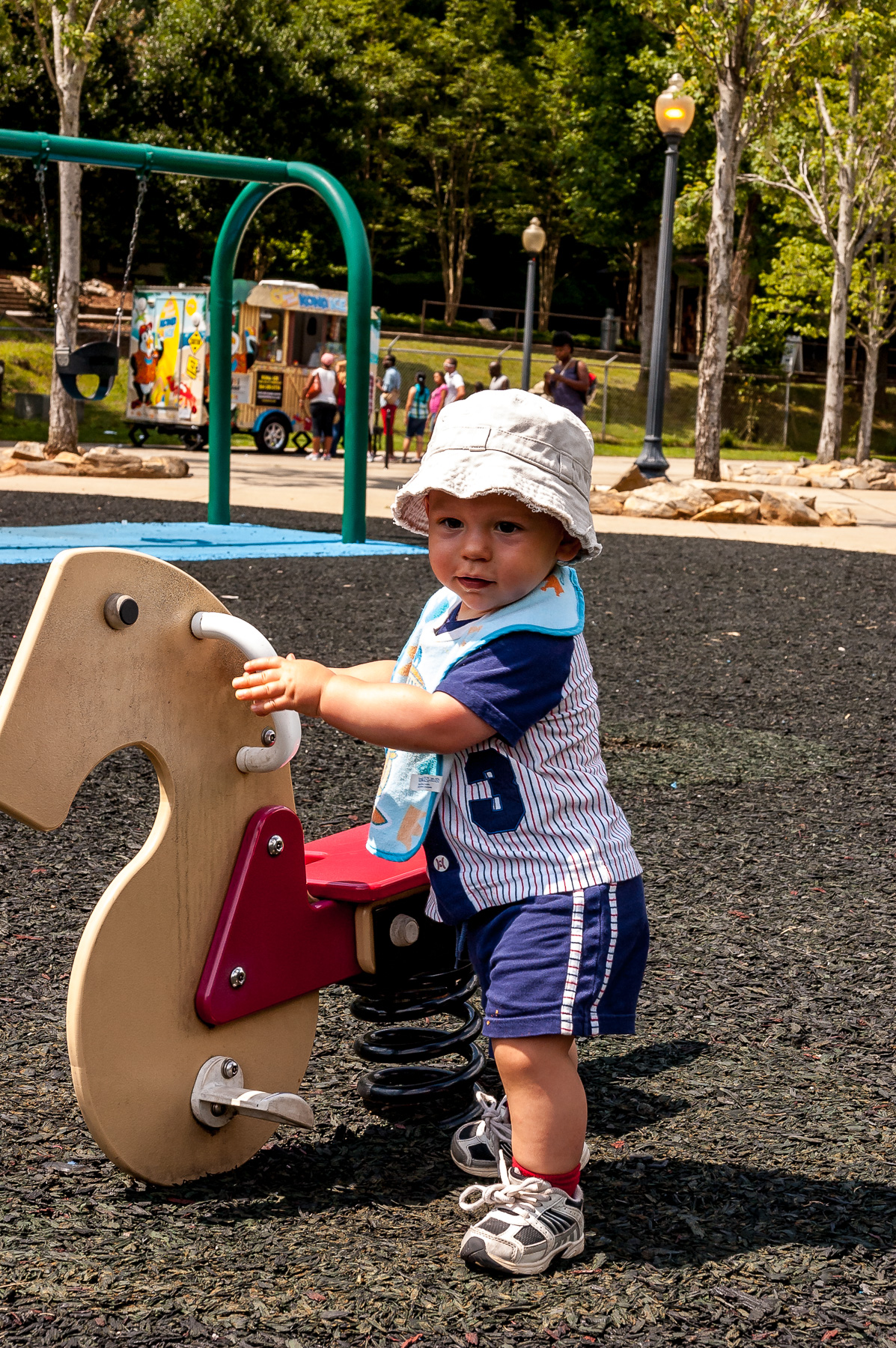
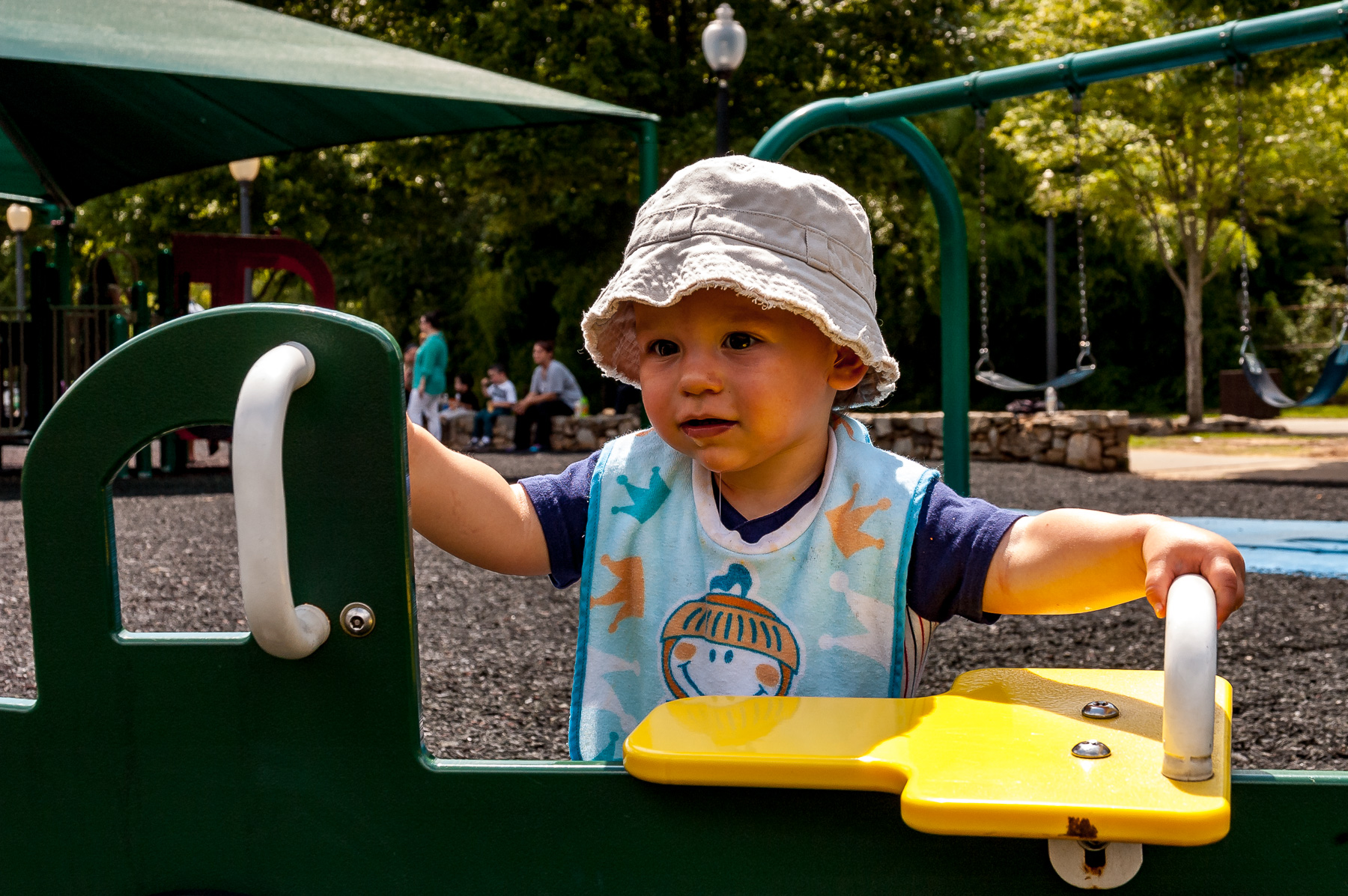
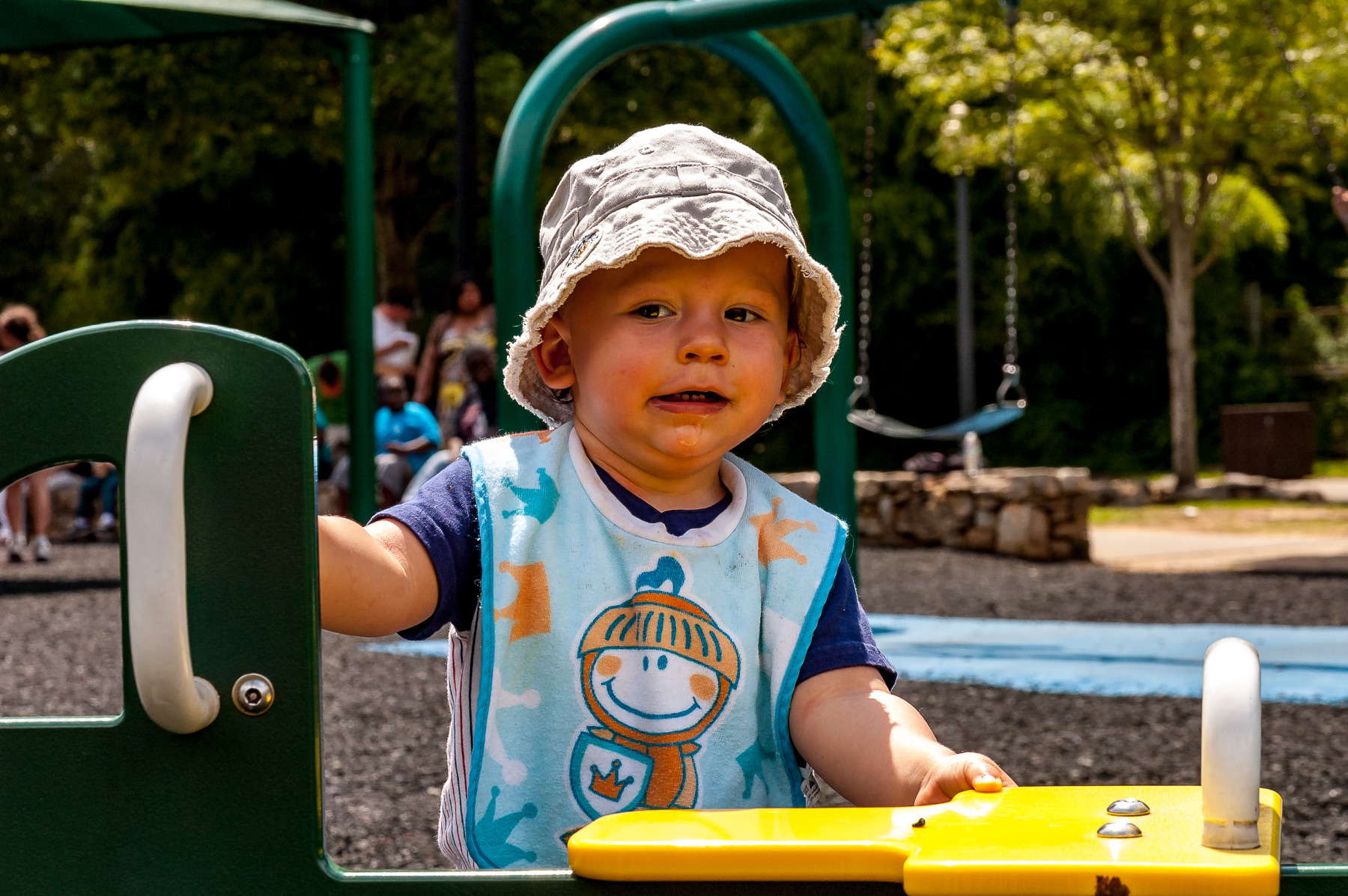
The small inflatable pool in the backyard is providing entertainment.
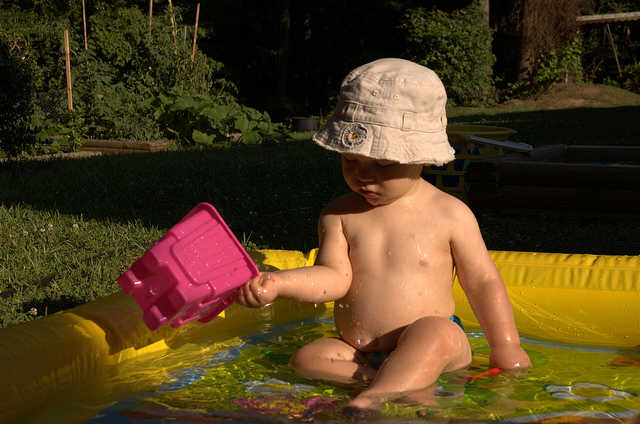
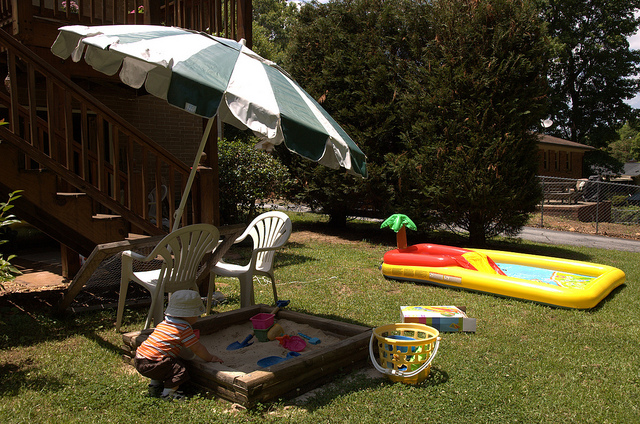
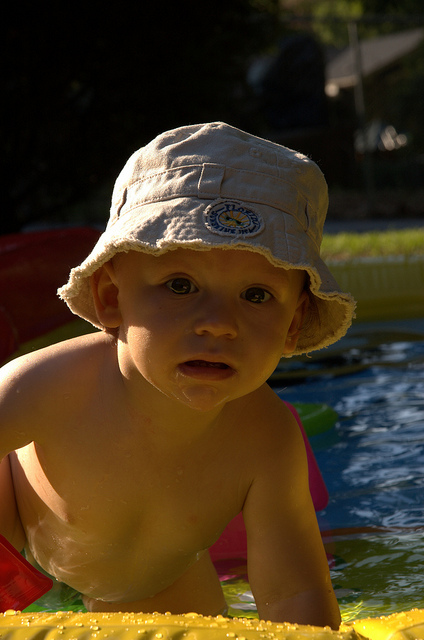
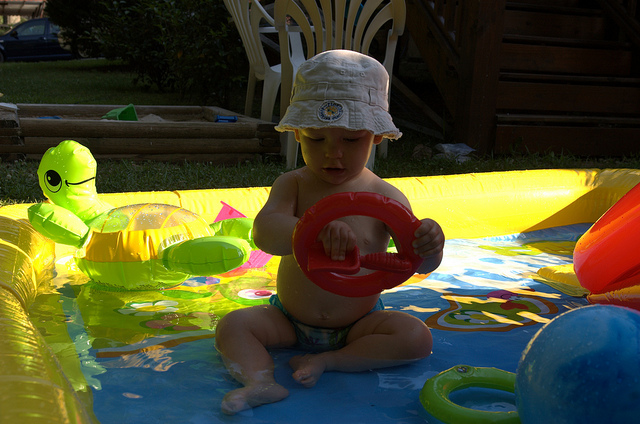
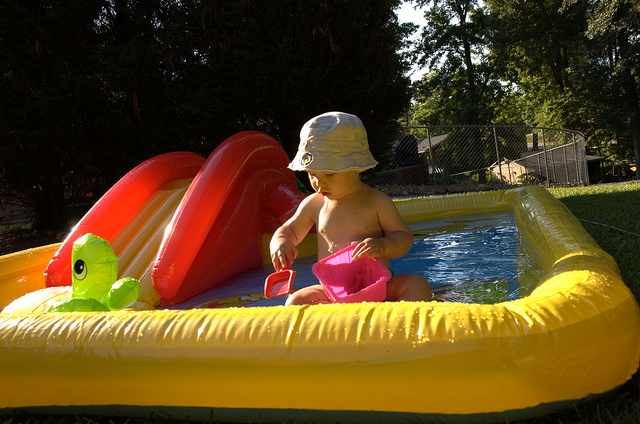
And though we're having a fine time on this side of the ocean, it would be better in some ways to be together on either side.
The Cows, Coming Home
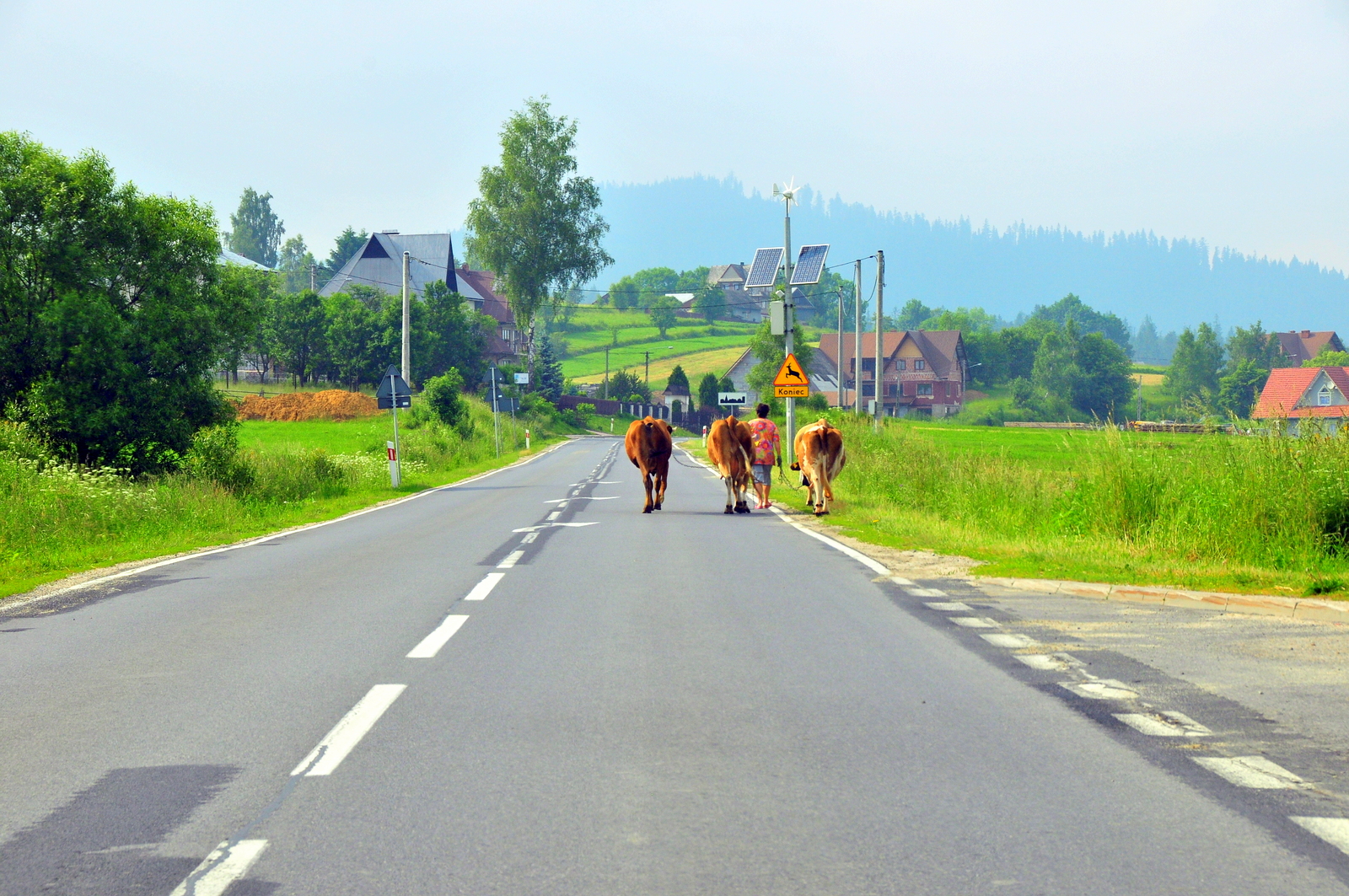
This was in Pieniążkowice on the way home yesterday.
Odpust
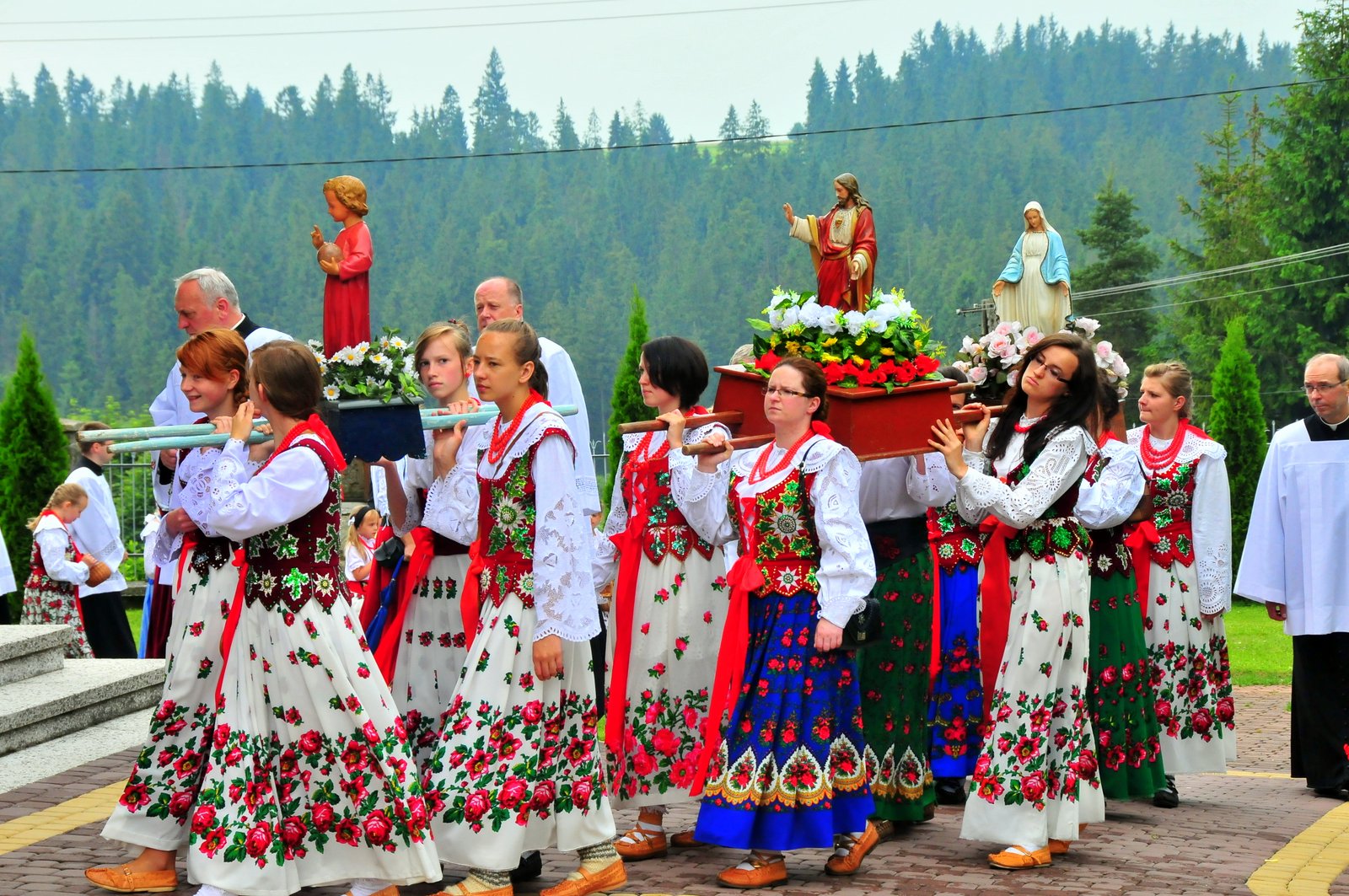
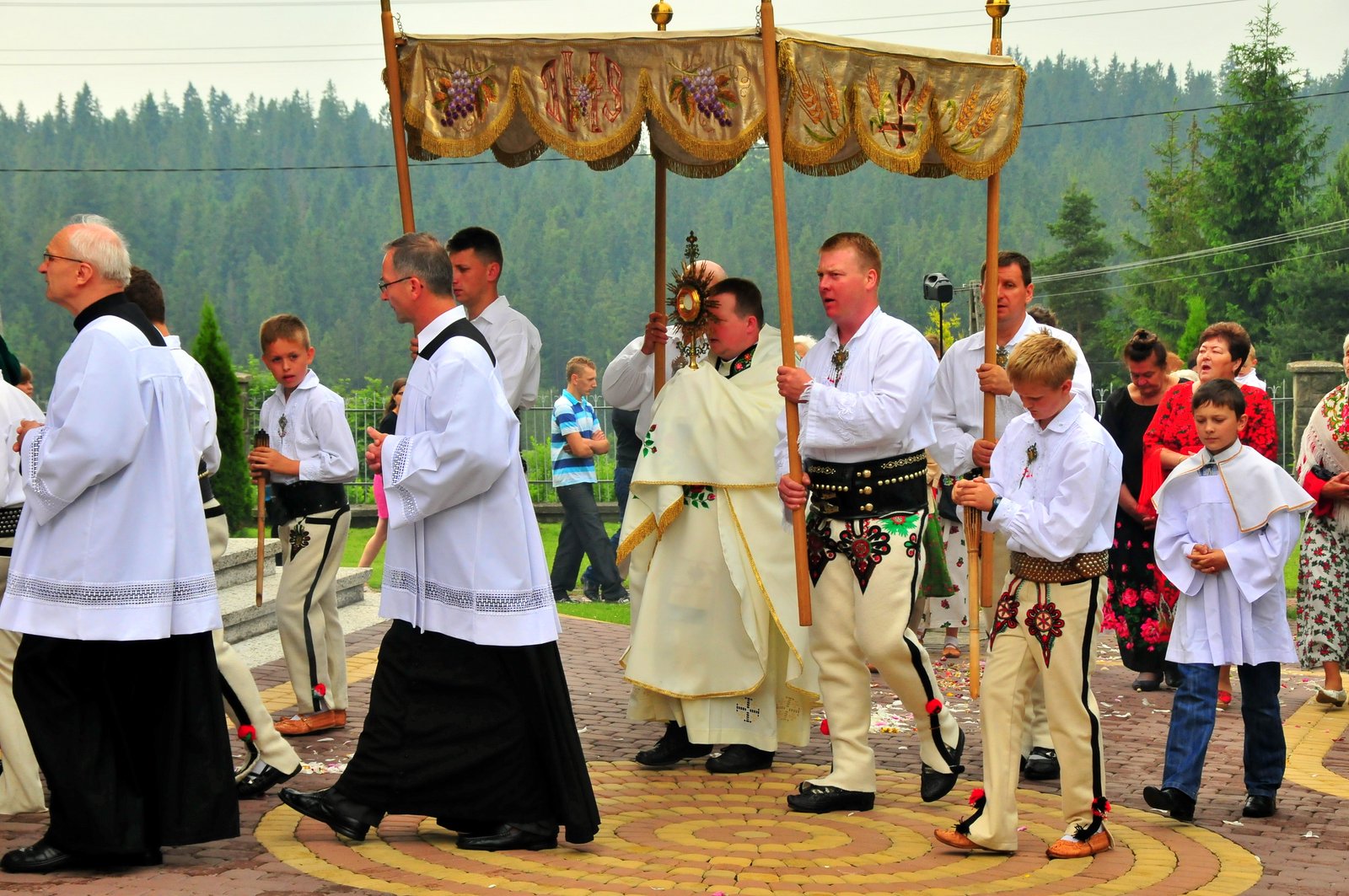
It’s a hard word to translate: odpust most strictly means “indulgence” or “pardon.” But there are other, wider meanings. In Pyzówka today, it would best be translated as “church fair” or “church fete.” In short, today was the Solemnity of John the Baptist, the patron saint of Pyzówka’s small parish. (Technically, the Solemnity is tomorrow, but who wants to have a church fair on a Monday?)
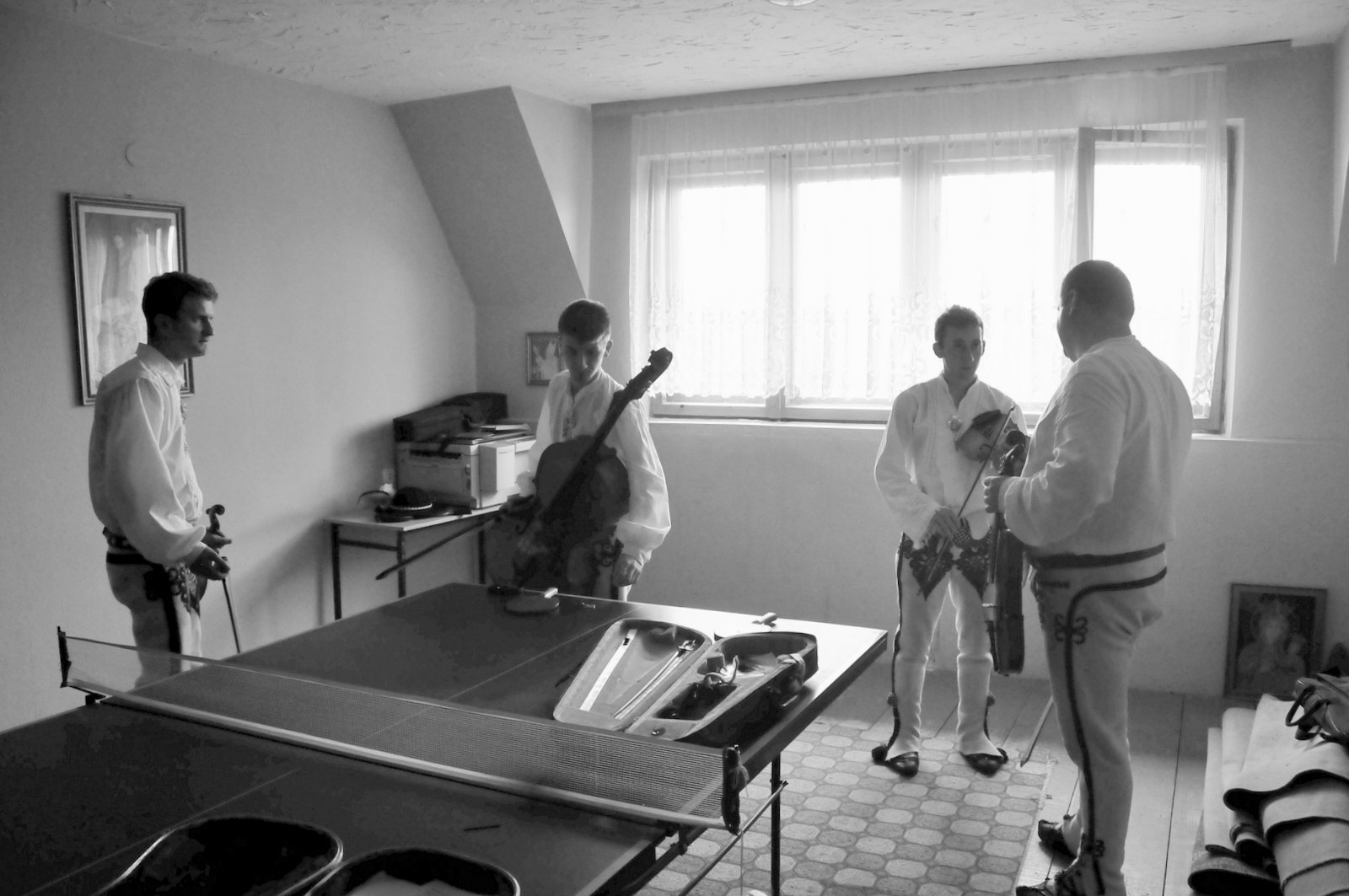
That means a festive Mass, with the majority of parishoners dressed in traditional highlander clothing and a string band playing during the offering and communion. And because G is a member of the group, I was able to join them before Mass as the got in tune and rehearsed for a moment.
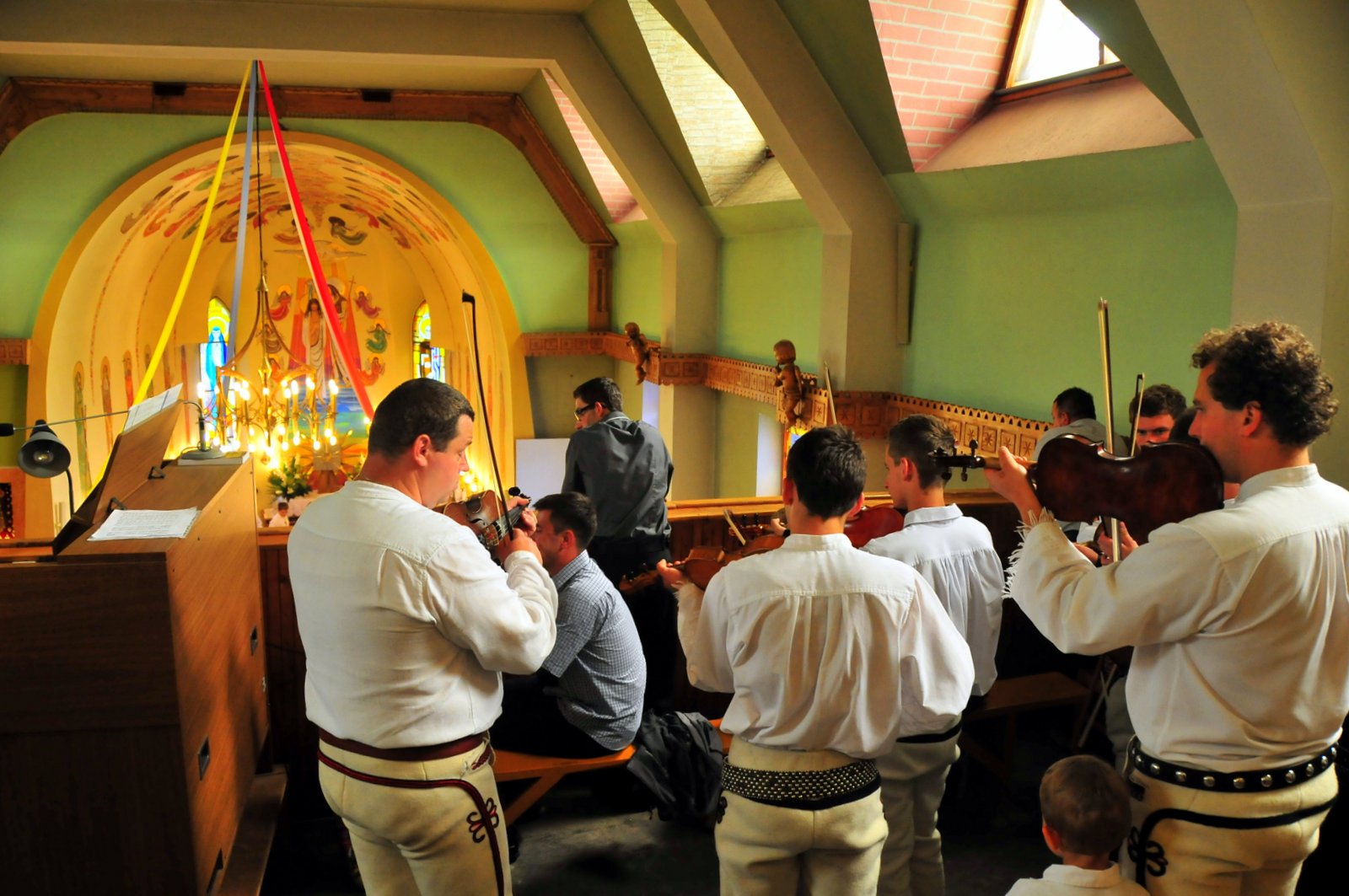
Mass began and I stayed with the band as they took their place in the choir loft. And suddenly, there was the reminder of what Catholicism in America used to look like: no Extraordinary Eucharistic Ministers; the priests alone distributed Communion. Additionally, while there was no actual rail, so to speak, parishoners behaved like there was an altar rail.
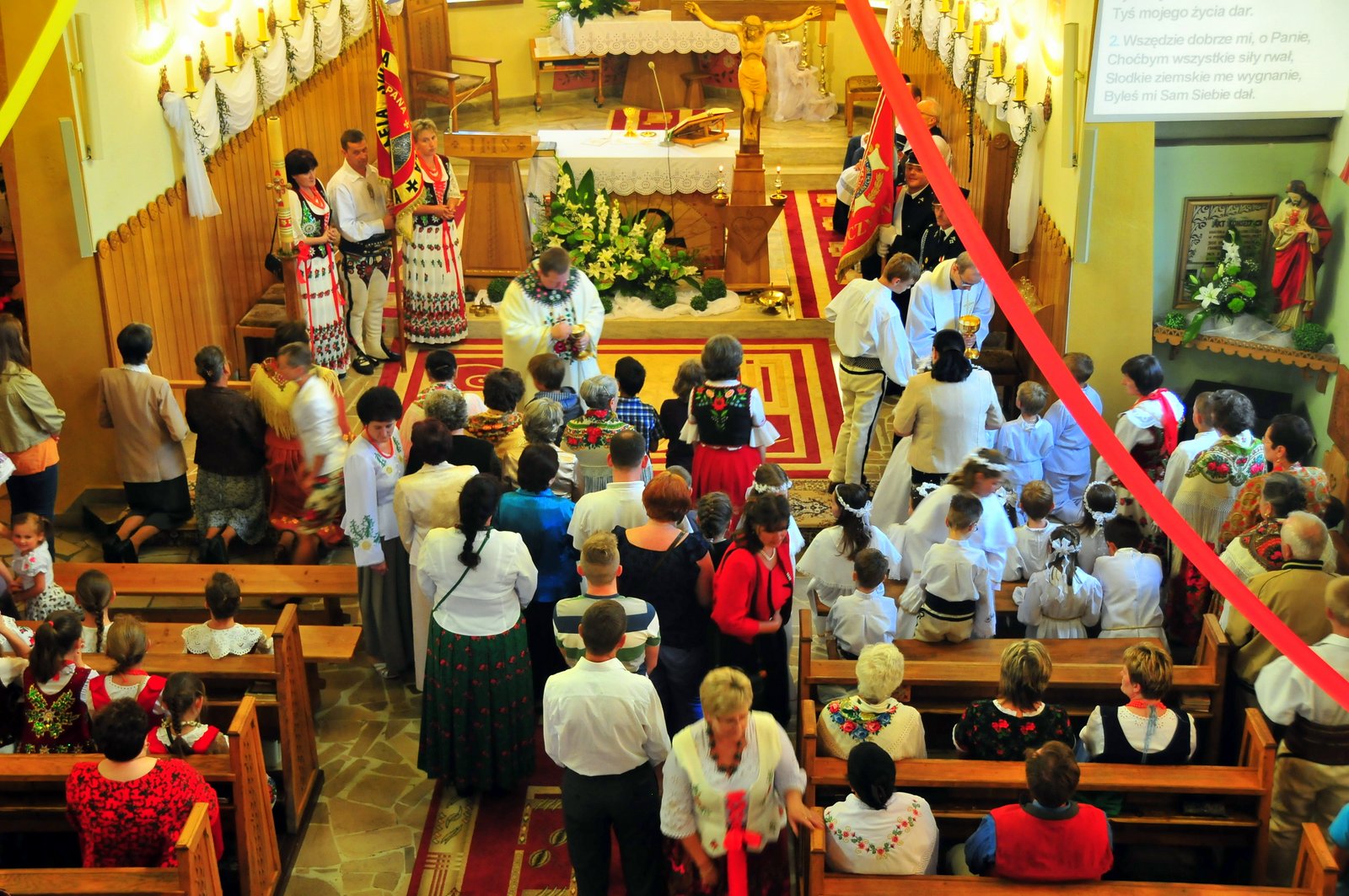
After Mass, there was Adoration complete with a procession around the church.
But for the children, all that was, in a sense, only a prelude to the real highlight of the day: stall after stall of venders selling one (or more) of four things: cheap plastic toys, cheap plastic jewelry, bags of candy, and/or fireworks.
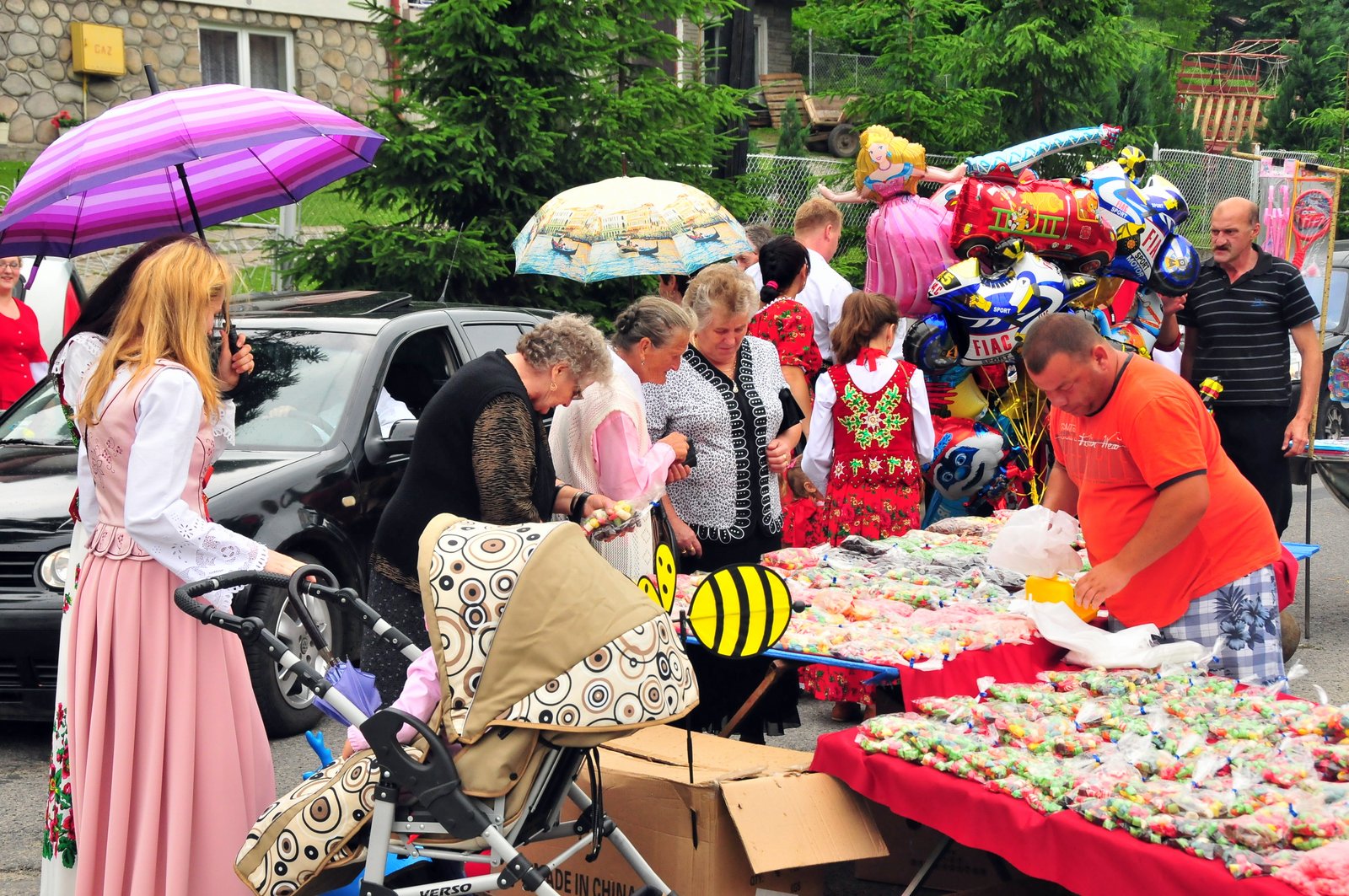
Dolls, gummies, tractors, bracelets ping pong sets, rings, lawn mowers, hard candy.
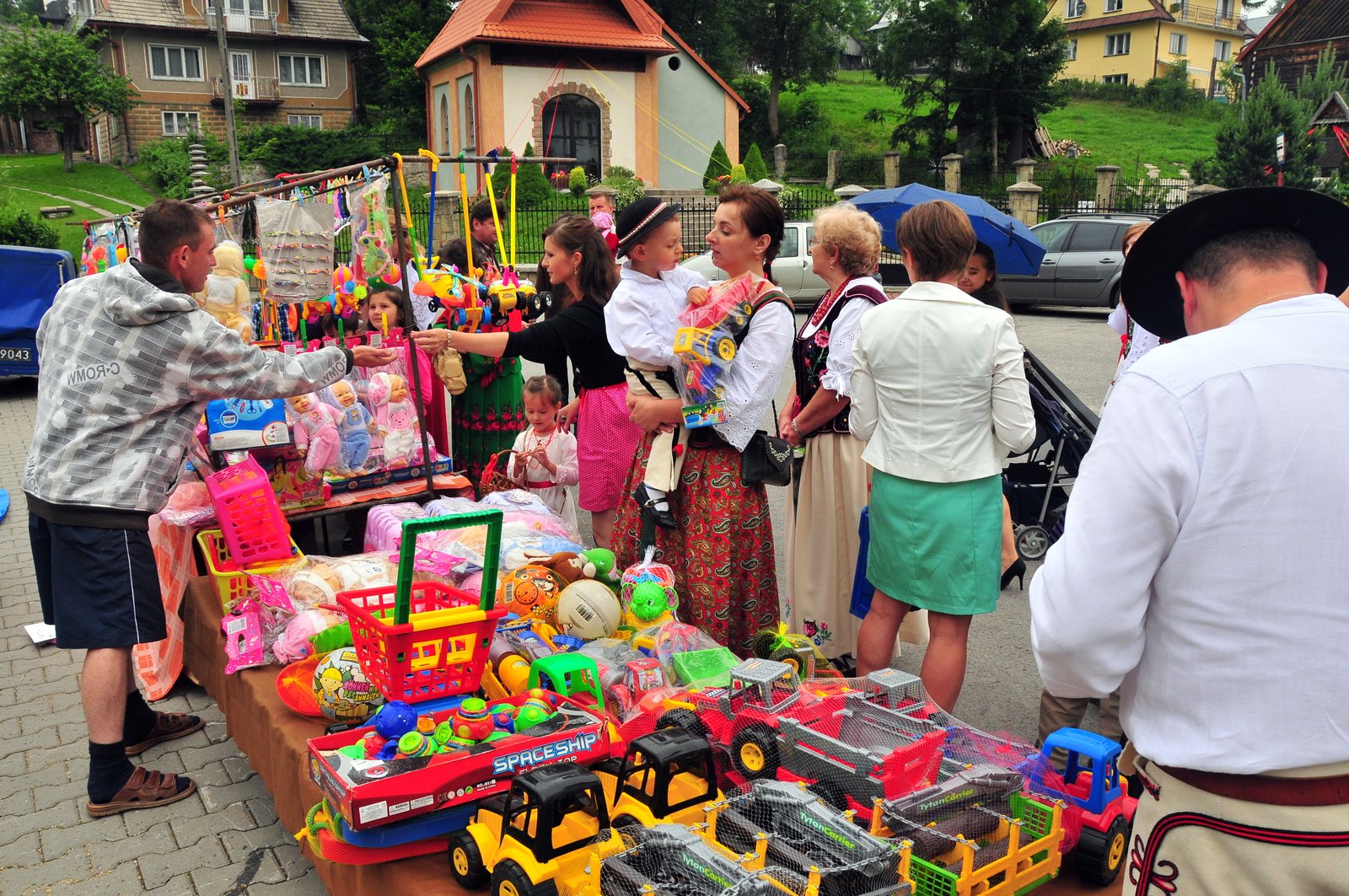
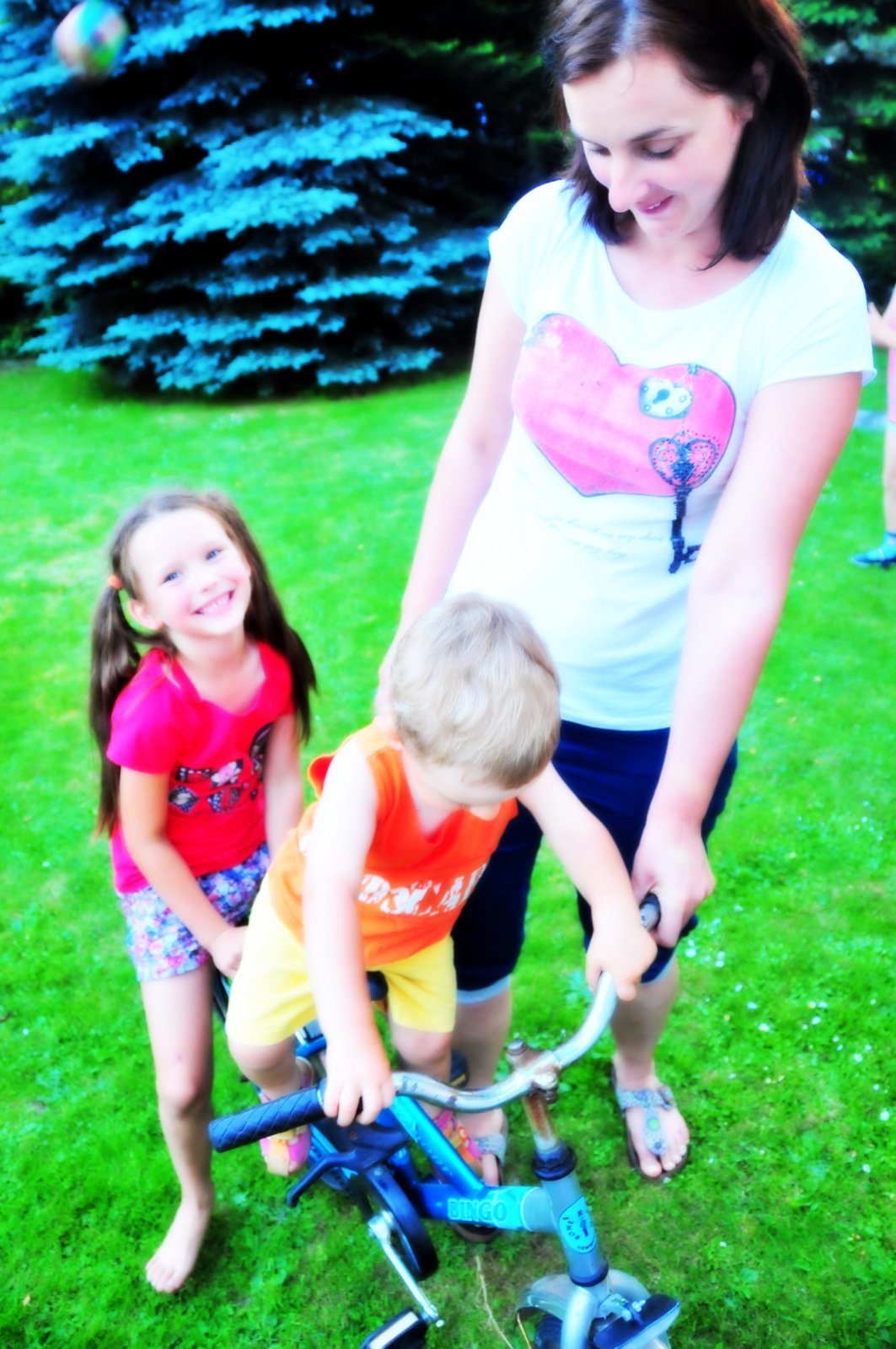
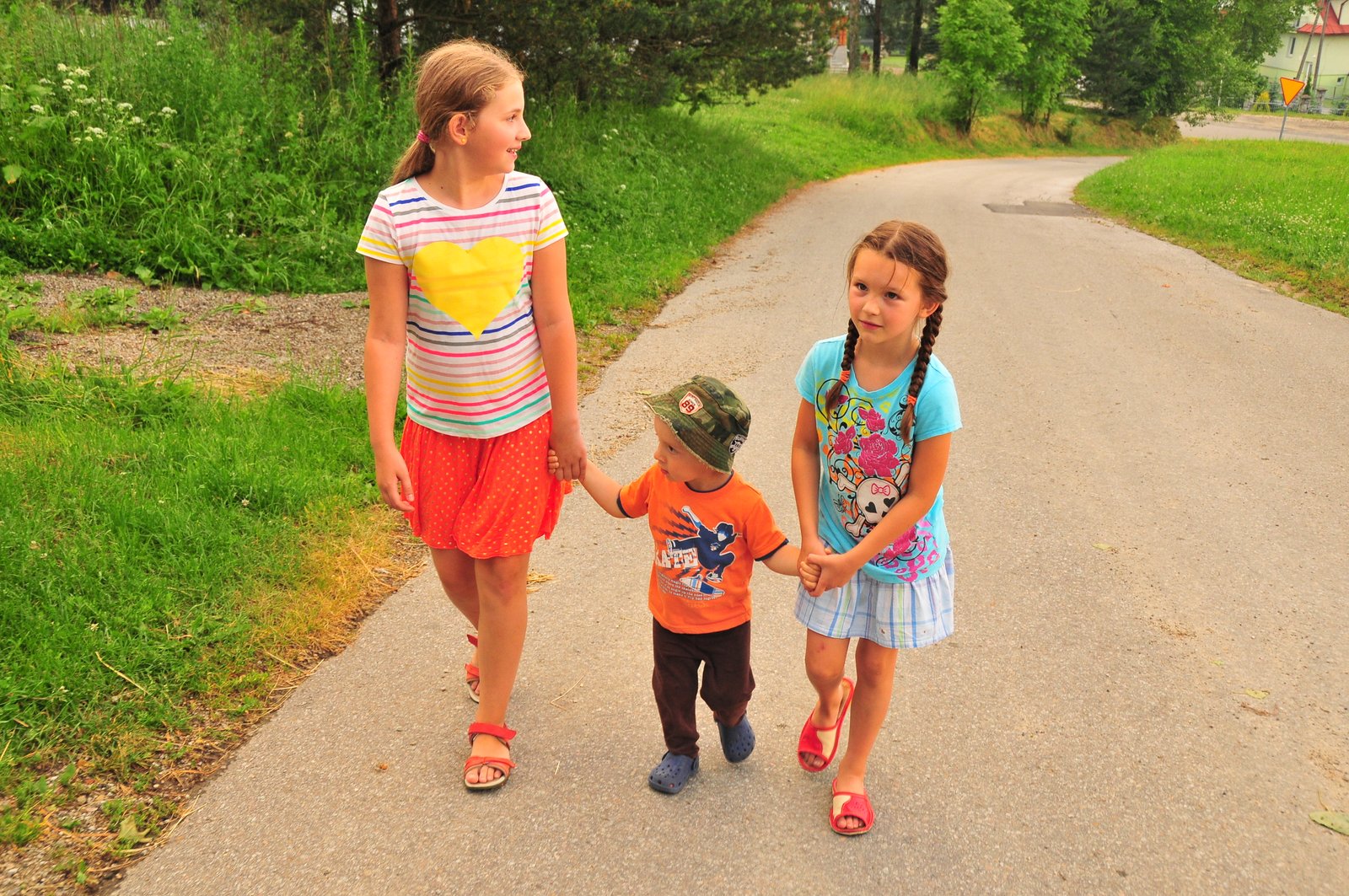
A jarmark for kids. We returned with mountains of silliness and sweet gesture. The Girl decided we needed to buy something for the Boy. She chose a toy, asked how much it was, and paid for it with her own money. And she even haggled (with some encouragement from me) the price down five zloty.
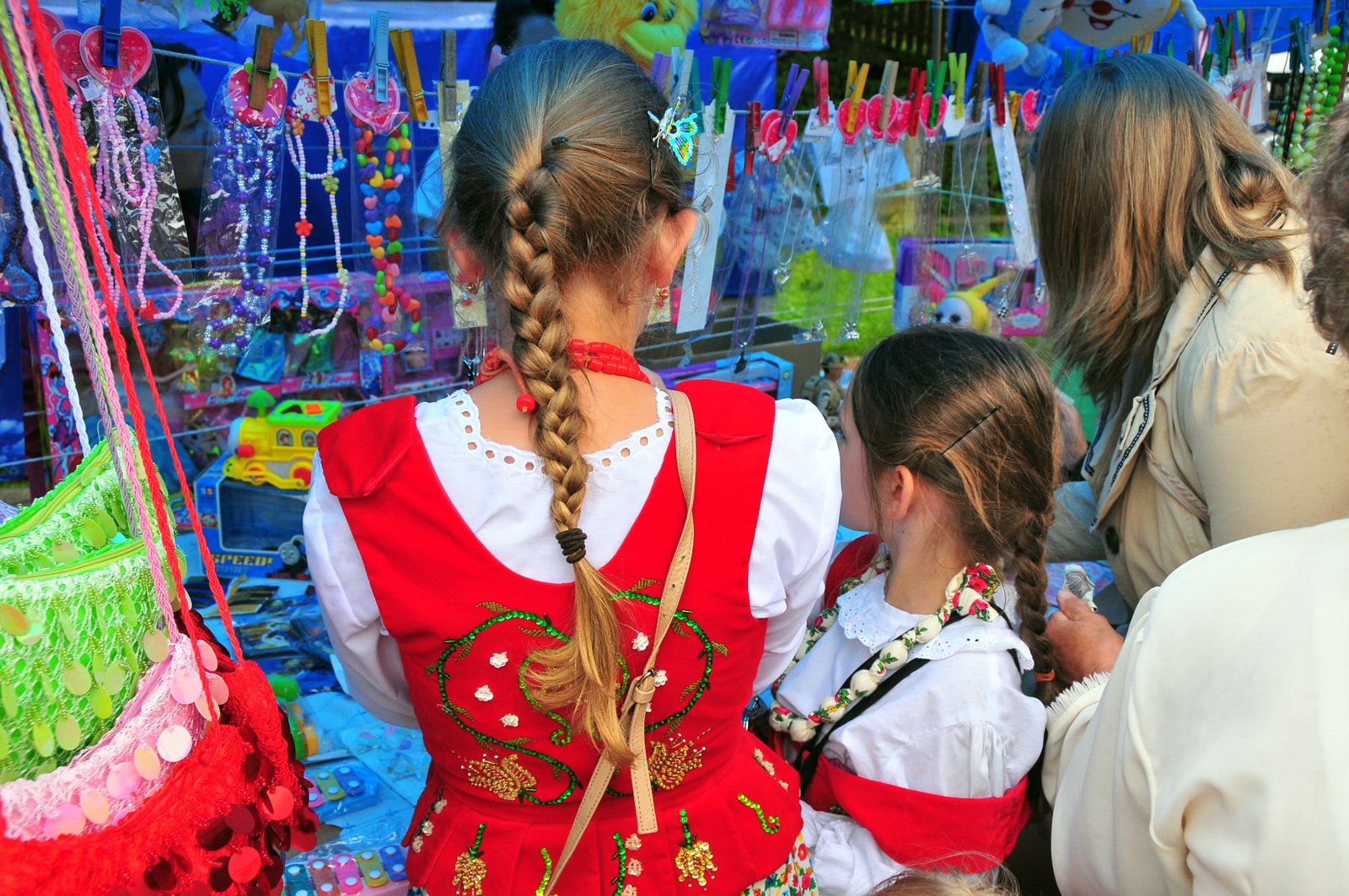
She becomes more Polish every moment.
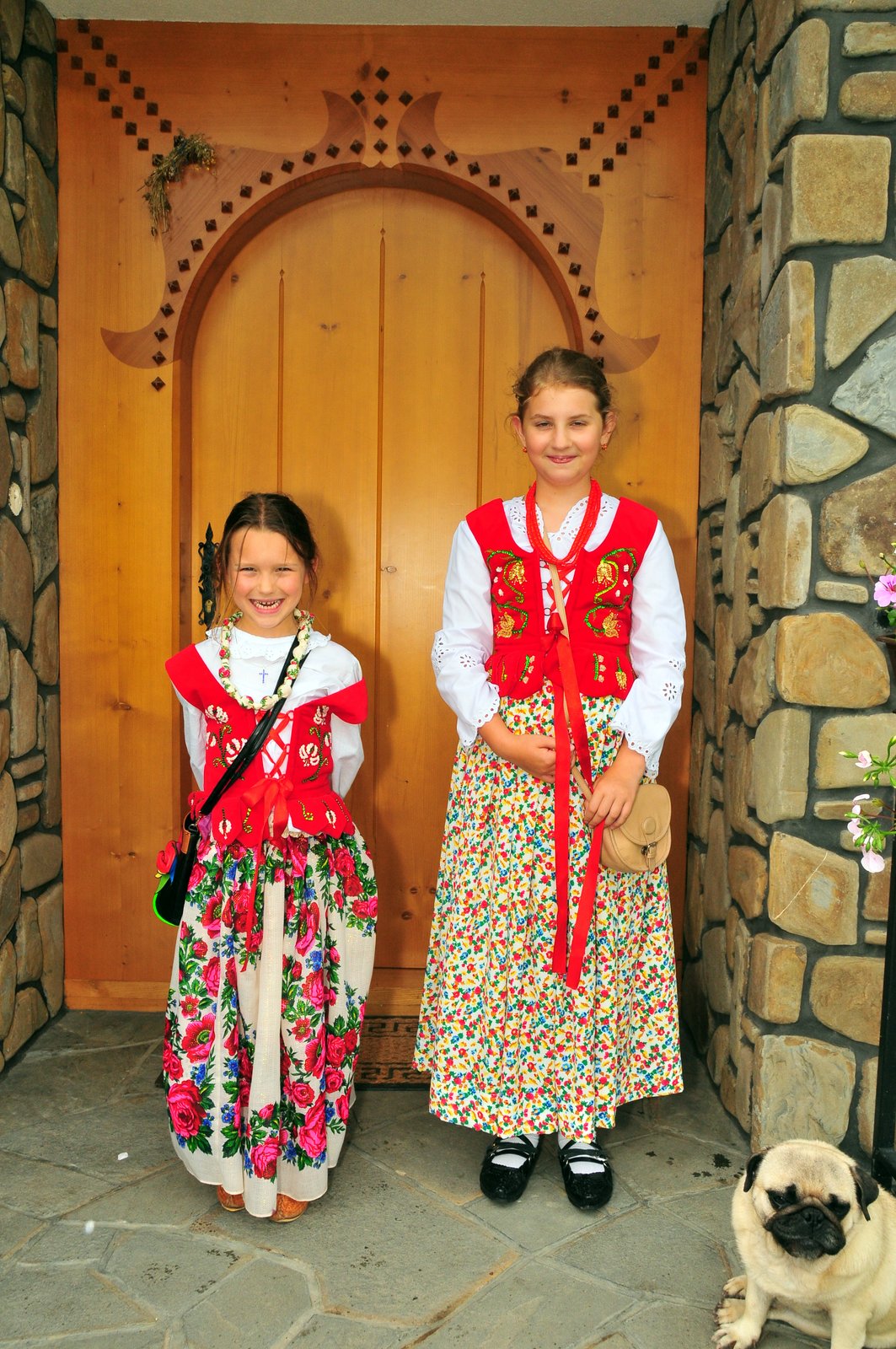
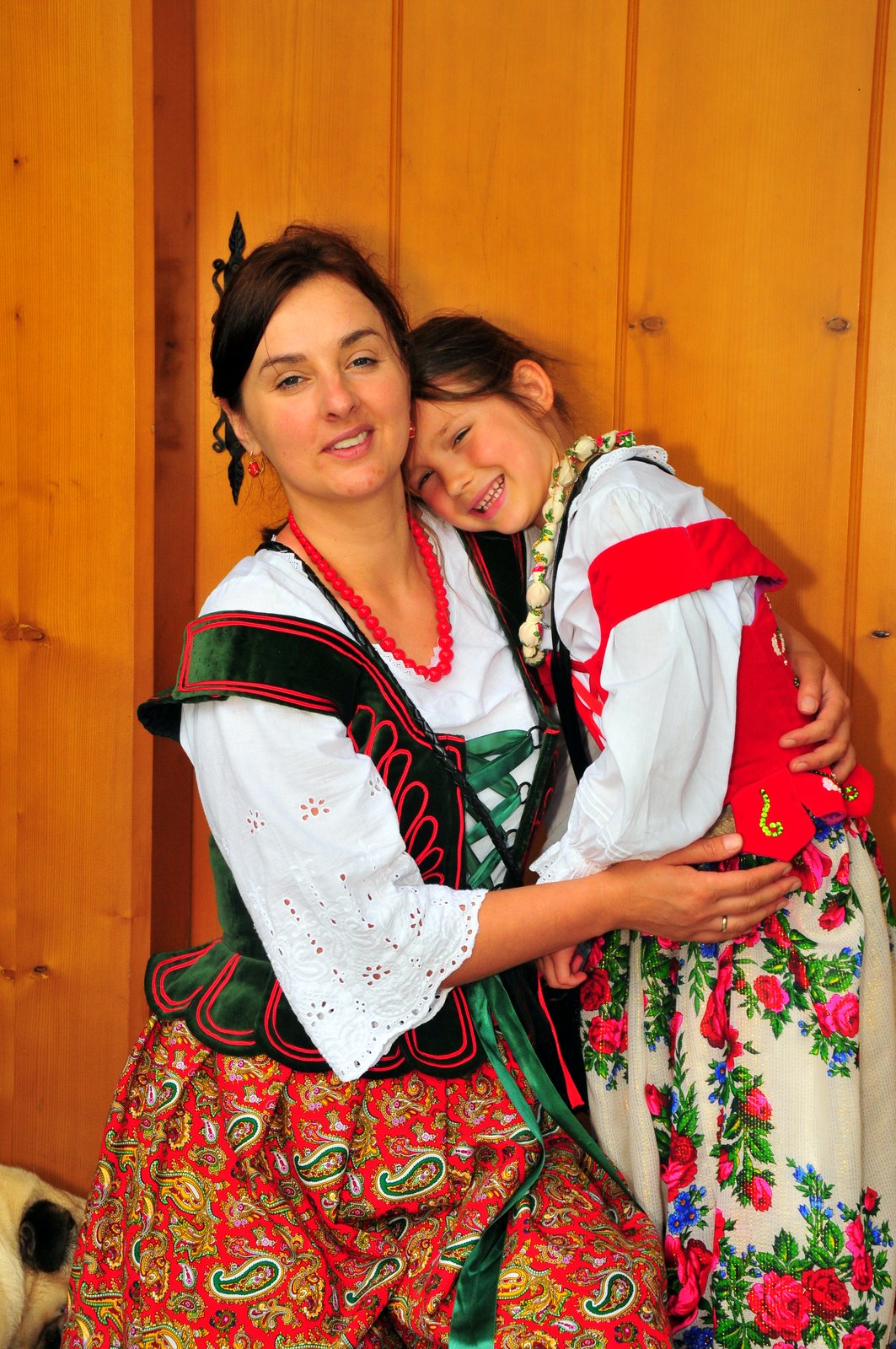
With her godmother
Pyzówka Evening
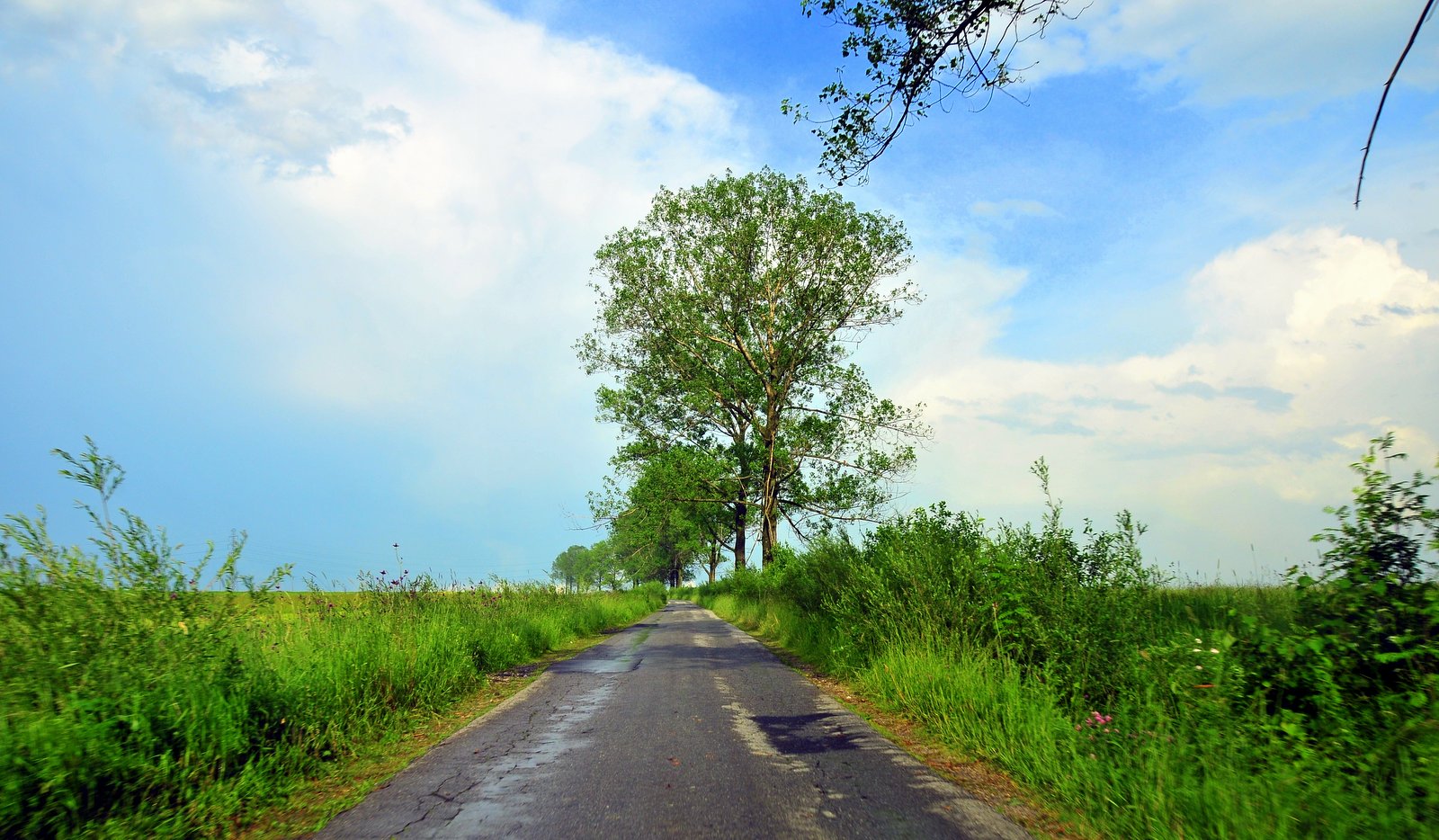
Pyzówka is a small village a few miles outside of Nowy Targ, the county seat, and in some ways, a world away from the rest of Poland. Relatively isolated, it still has the look and feel of a Polish village as I remember it from the 1990s.
To get there, you have to go up this road. Well, there are other ways of getting there, but I chose the back roads that I cycled so often when I lived here: narrow streets crowded with large house-barn complexes typical of this area, long stretches of road with only hayfields in forests in sight.
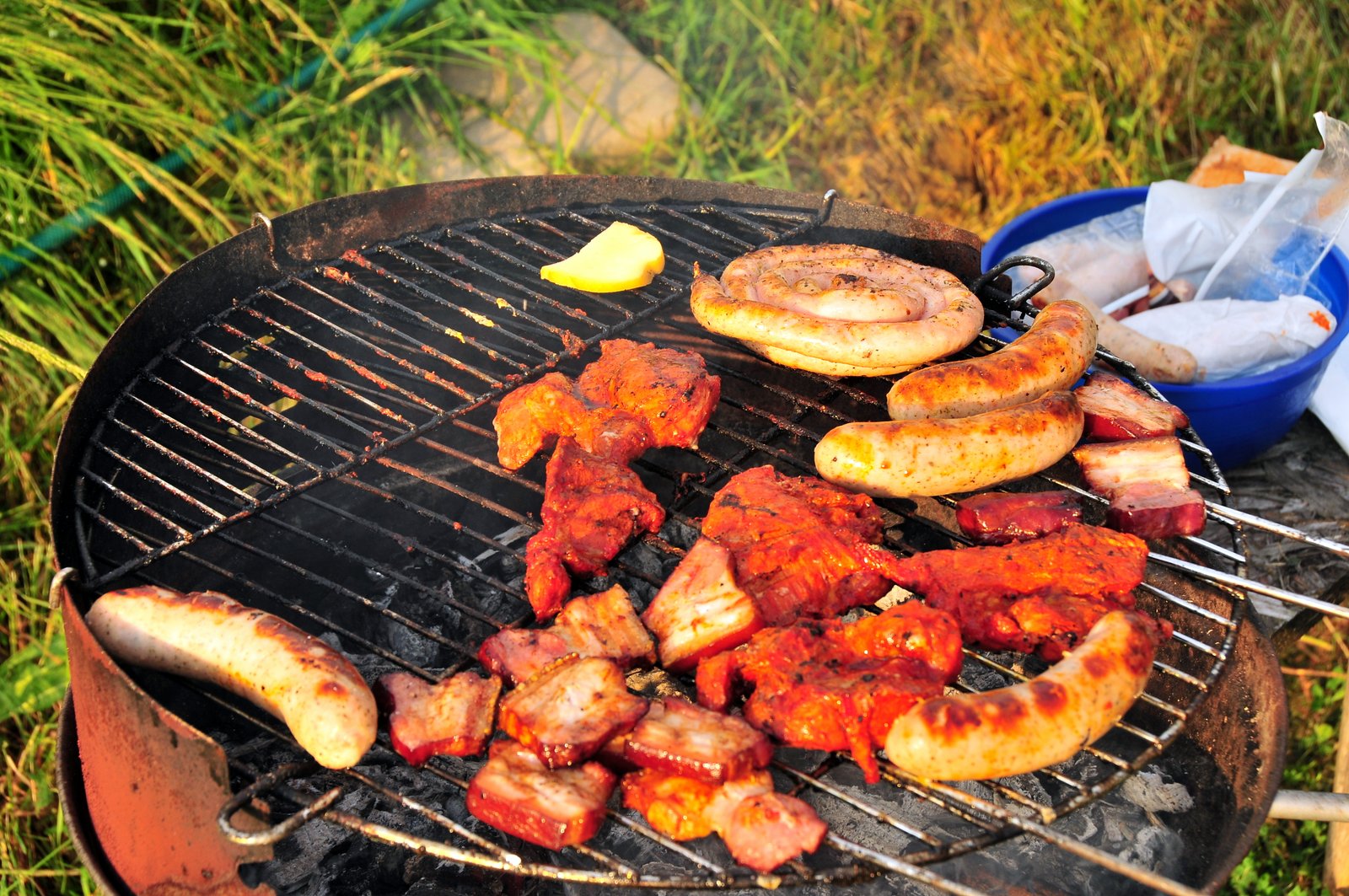
When L and I arrived at G's and D's charming new house, the sun was still high and soon G had meat, meat, and cheese on the grill while all the ladies took a short trip to Nowy Targ.
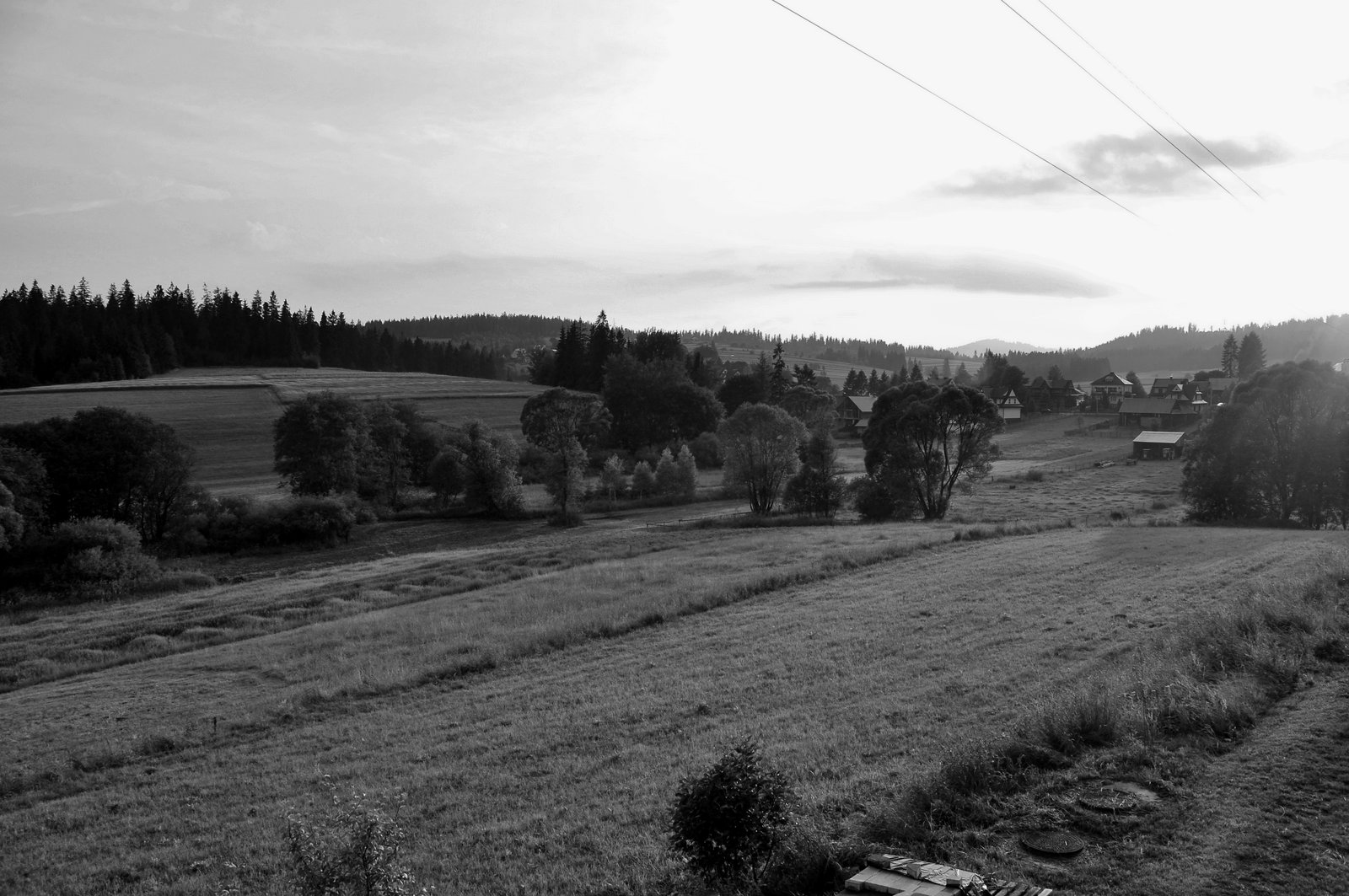
I couldn't help but be a bit jealous. Not of the house so much, though it is beautiful. No, I was jealous of the views, of the sounds, even of the smells. A house set in the middle of pastures, bordered by forests and a stream. The odor of hay and pines and dung making an unmistakable odor that, in its muskiness and simplicity, provide a hint of what life was like before cars, the internet, cell phones, nightly news, and the thousand and one other distractions that we call modern life.
After dinner, D, who is L's godmother, chased the rest of us out of the house for a while so she could prepare some things for the next day -- sounds very familiar -- and so the five of us hiked up the hill to the cross. "Do krzyża." It has a specific name; it has a specific history; we discussed it. I remember none of it. I only know that as we were approaching the village, as I was not sure I'd headed the right direction, I was terribly relieved to see the iron cross on the mountain: I knew we'd made it.
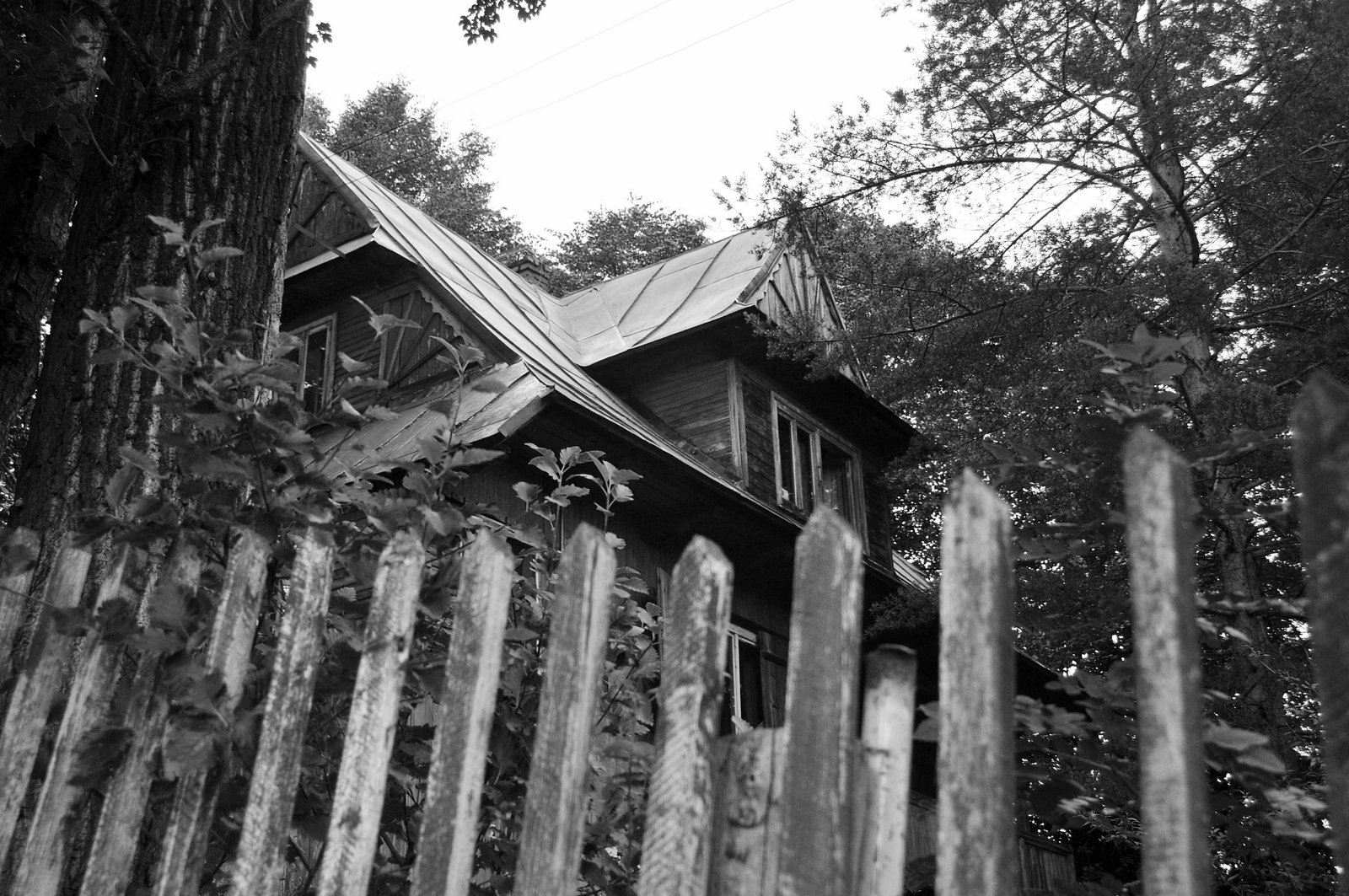
"Does anybody live in that house?" I asked G as we passed by an old-style mountain home.
"No, nobody," came the anticipated reply.
"It's a shame -- such a beautiful house."
Yet unlike the Communist-style bus station in Nowy Targ, this structure has a fighting chance. Someone could remodel it, keeping the character but bringing it into the modern era. Still, such an endeavor is more costly that simply building a house.
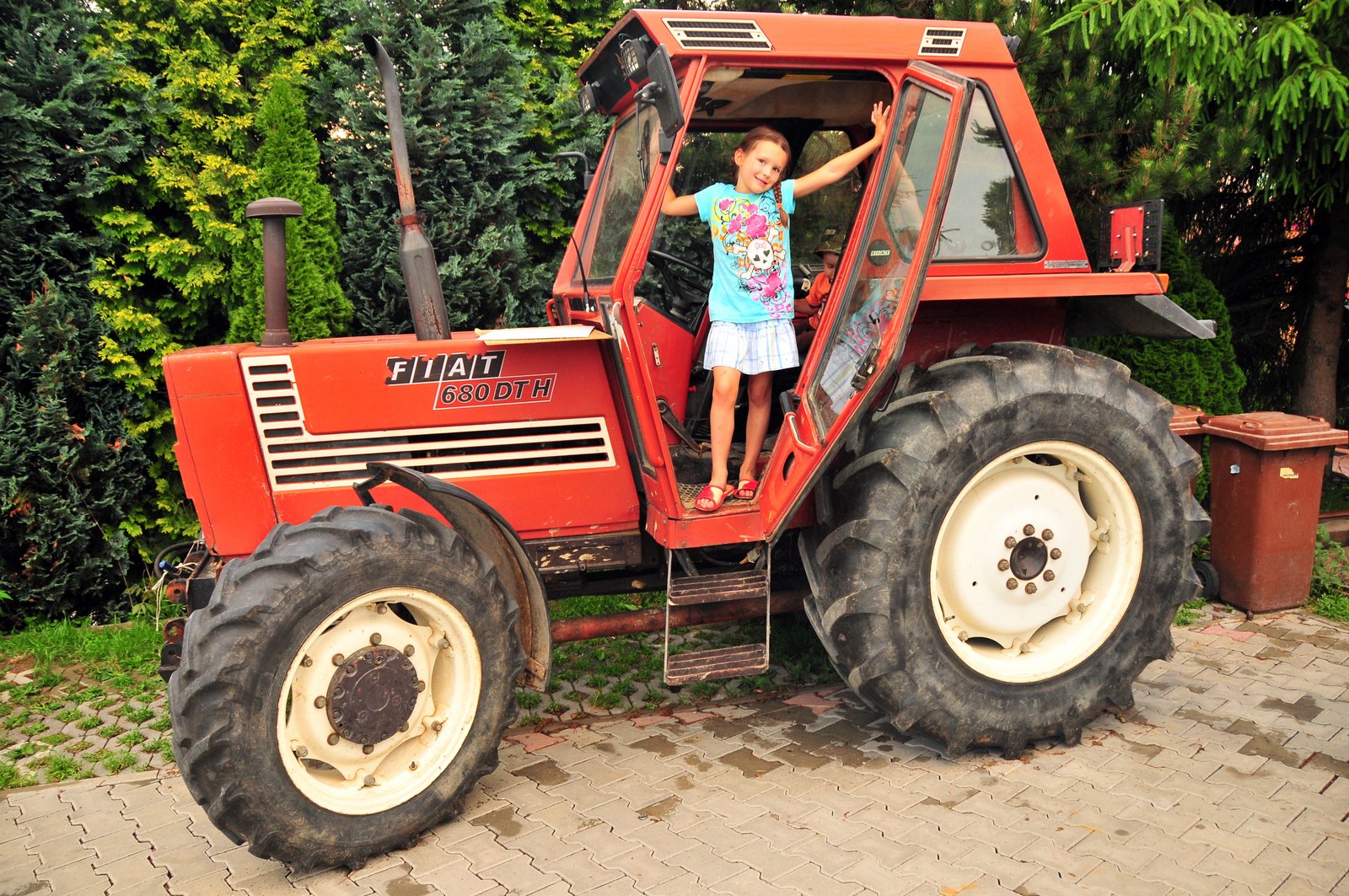
We continued on our way, pausing occasionally to talk to this individual or that, stopping to buy some homemade treats. And then M, G's and D's two-year-old son, saw the tractor. And when a two-year-old sees a tractor, the earth stops its rotation and all else loses significance. Others are welcome to play about on the tractor as long as the two-year-old sits in the driver's seat.
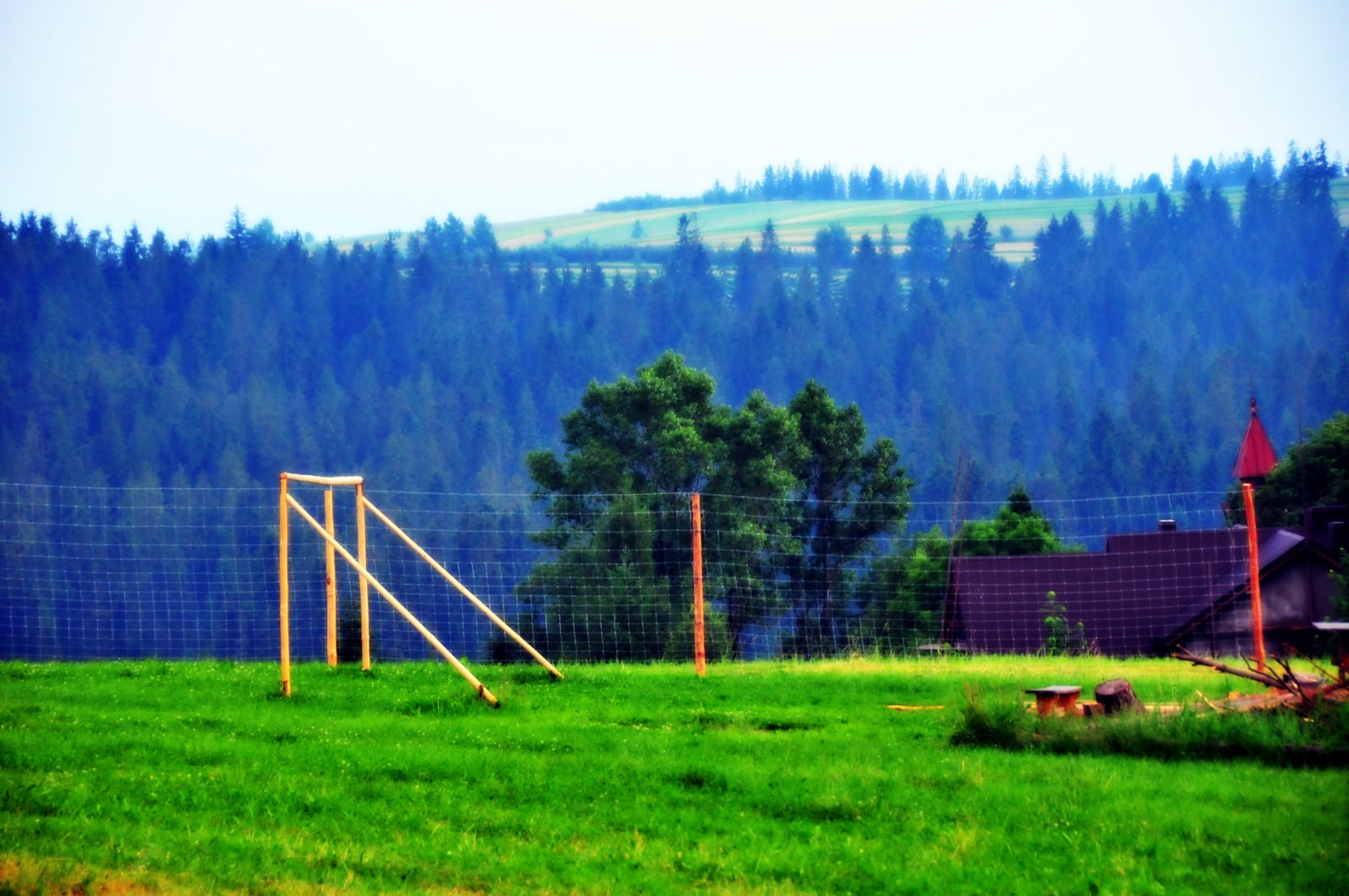
Further up the slope, items of interest for older boys.
We finally reached the cross, climbed on the cross, looked up through the cross, and ate a few of the freshly baked cookies we'd just bought -- masterpieces of Polish baking. Crisp to the point of being brittle, lightly sweet.
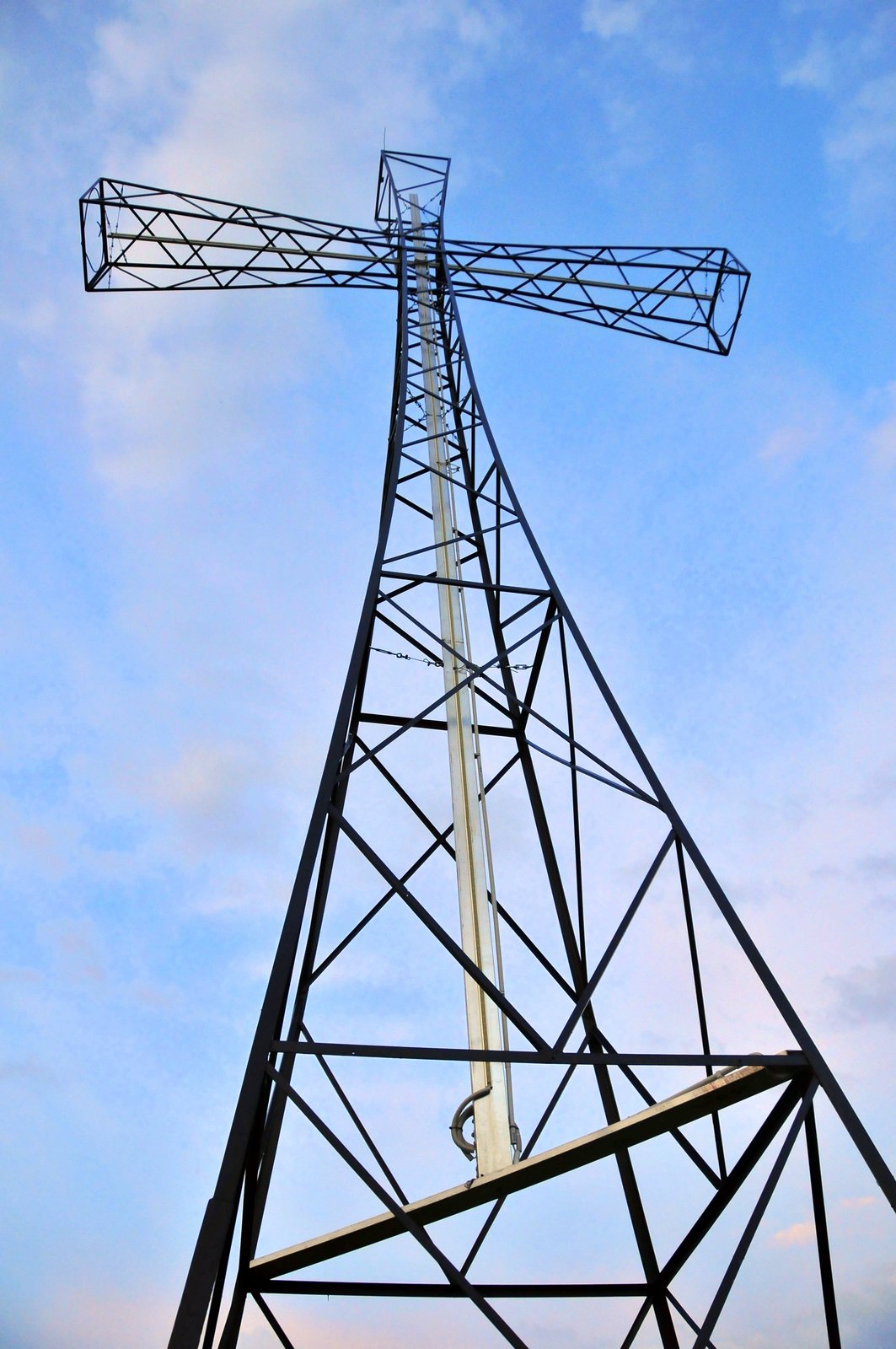
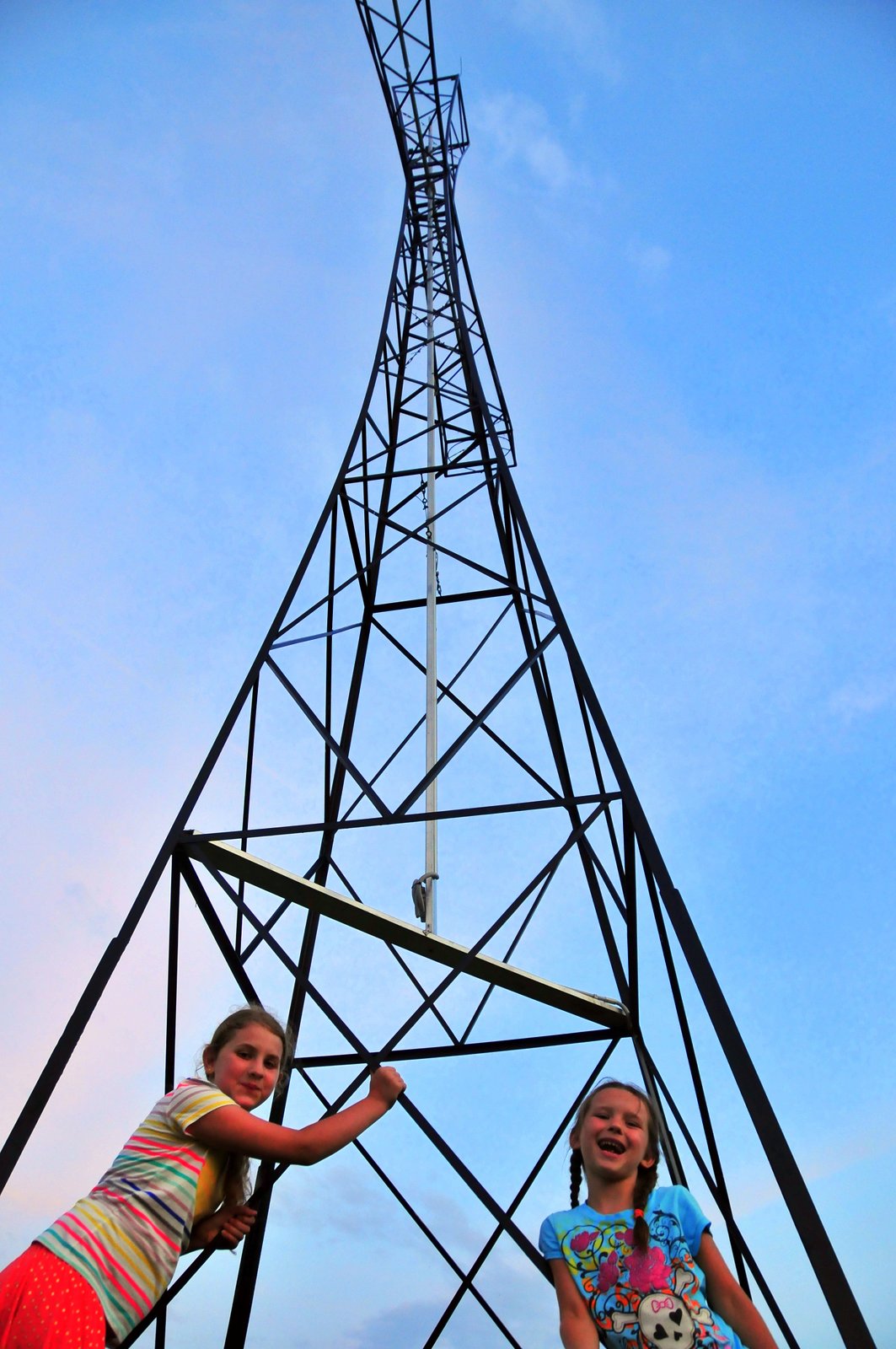
By this time, the fog was settling in the valleys and the blue hues of dusk softened the views.
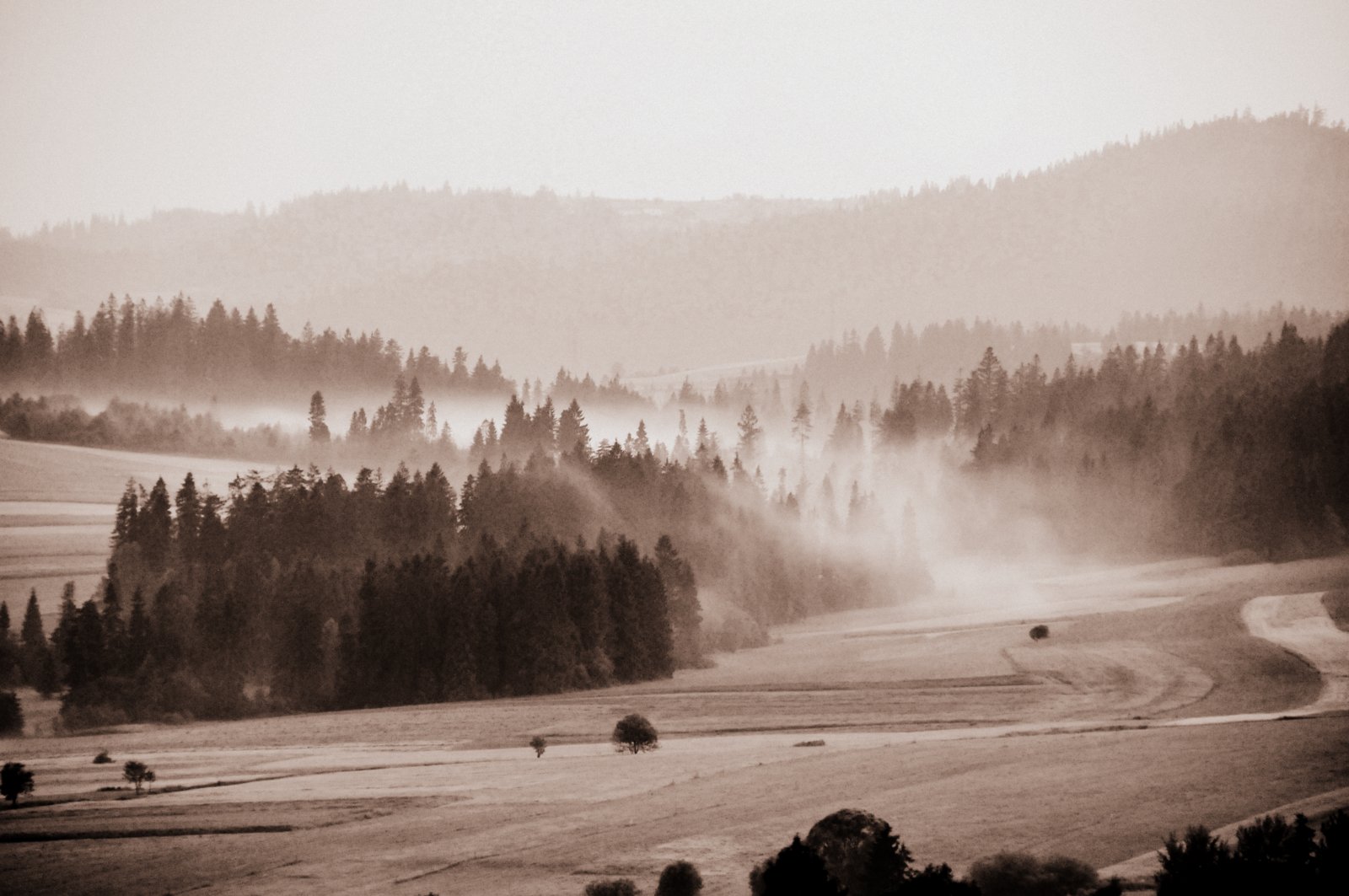
We headed back down
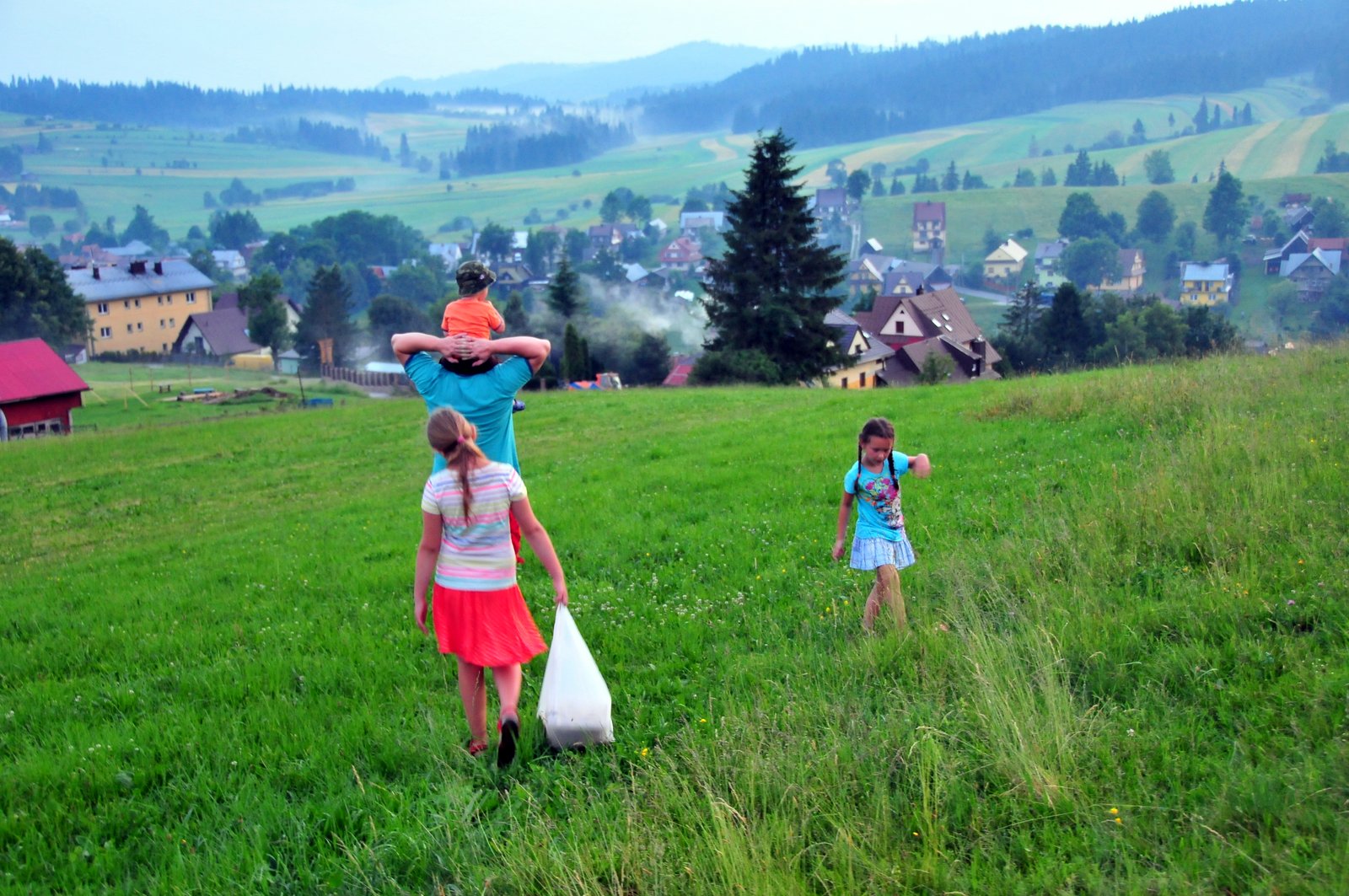
past the church and cemetery,
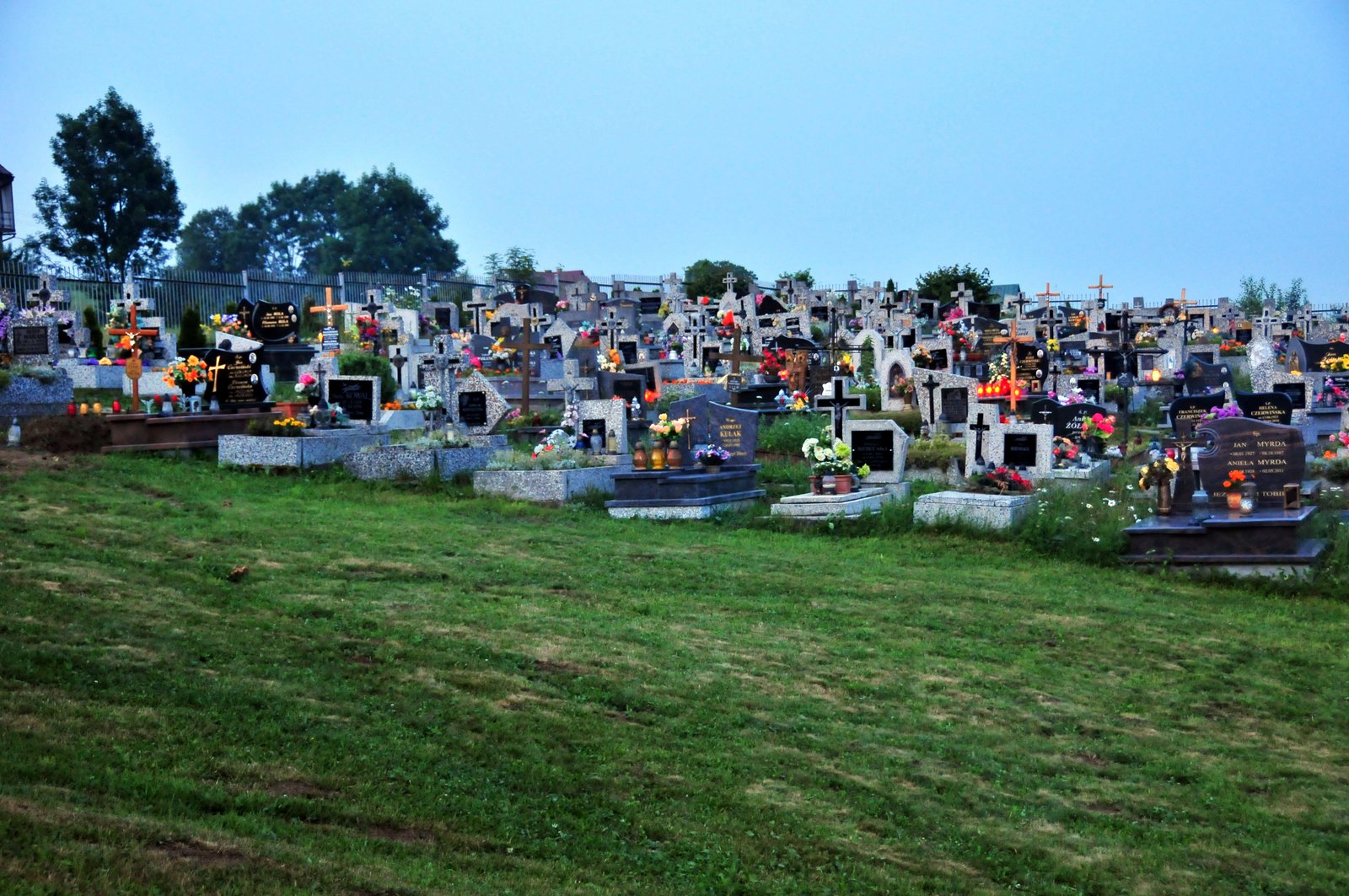
and returned to the back patio. By nine thirty, the littlest trooper was in bed, D's brother, K, arrived with a friend, and a long evening of chatting, discussing, and snacking ensued.
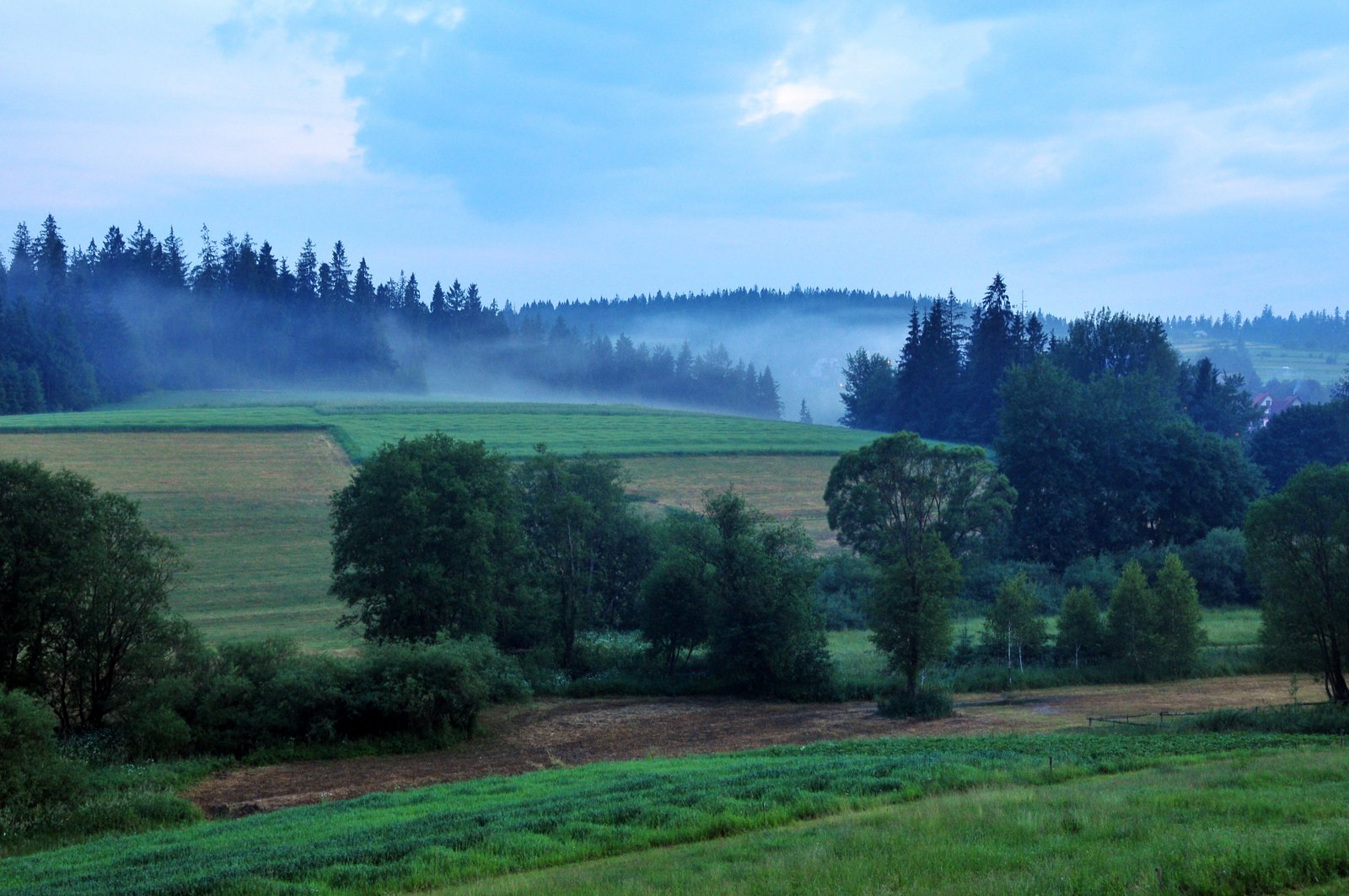
Just a little slice of perfection in this six-week adventure.
Call Me Noah
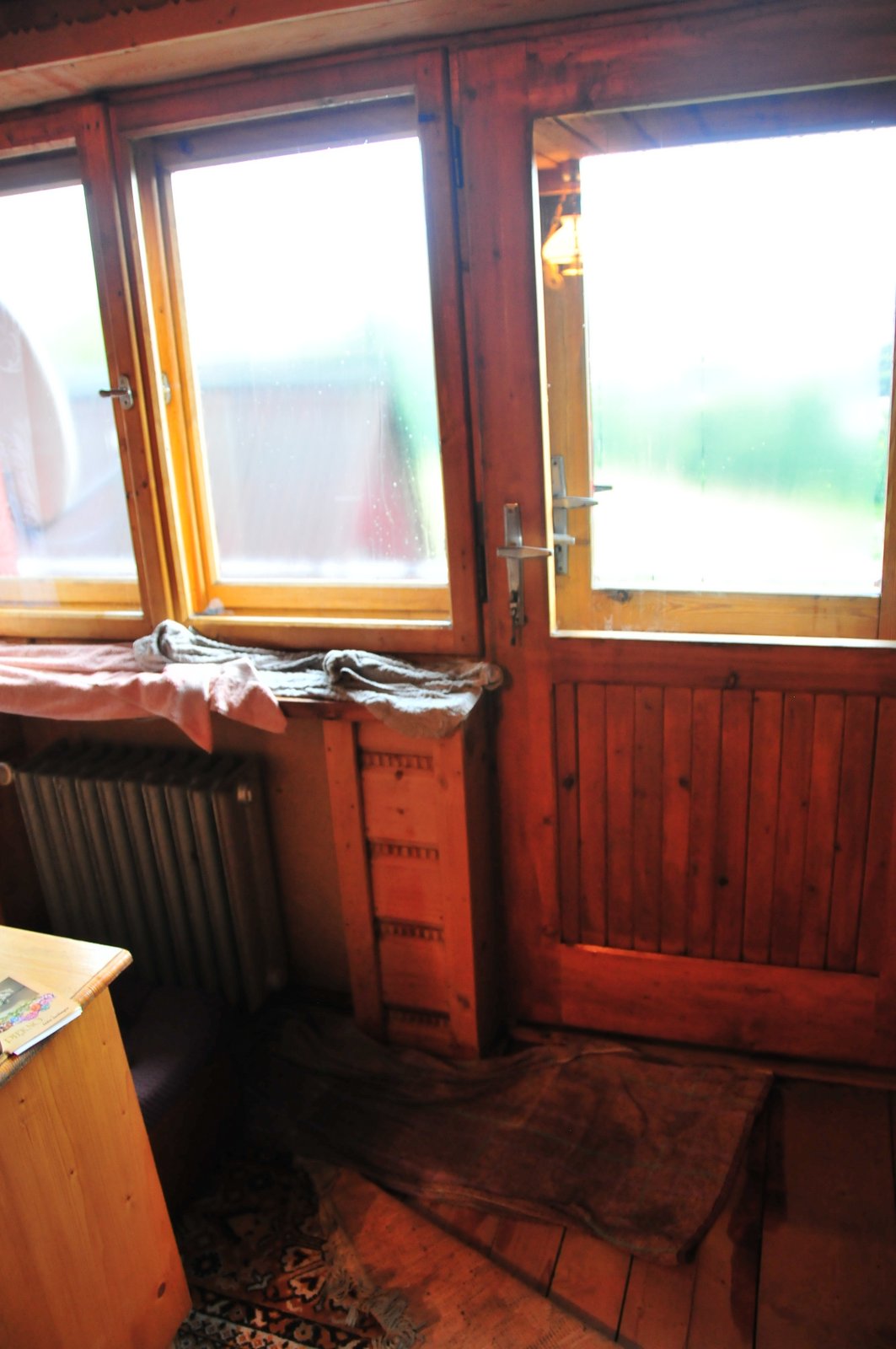
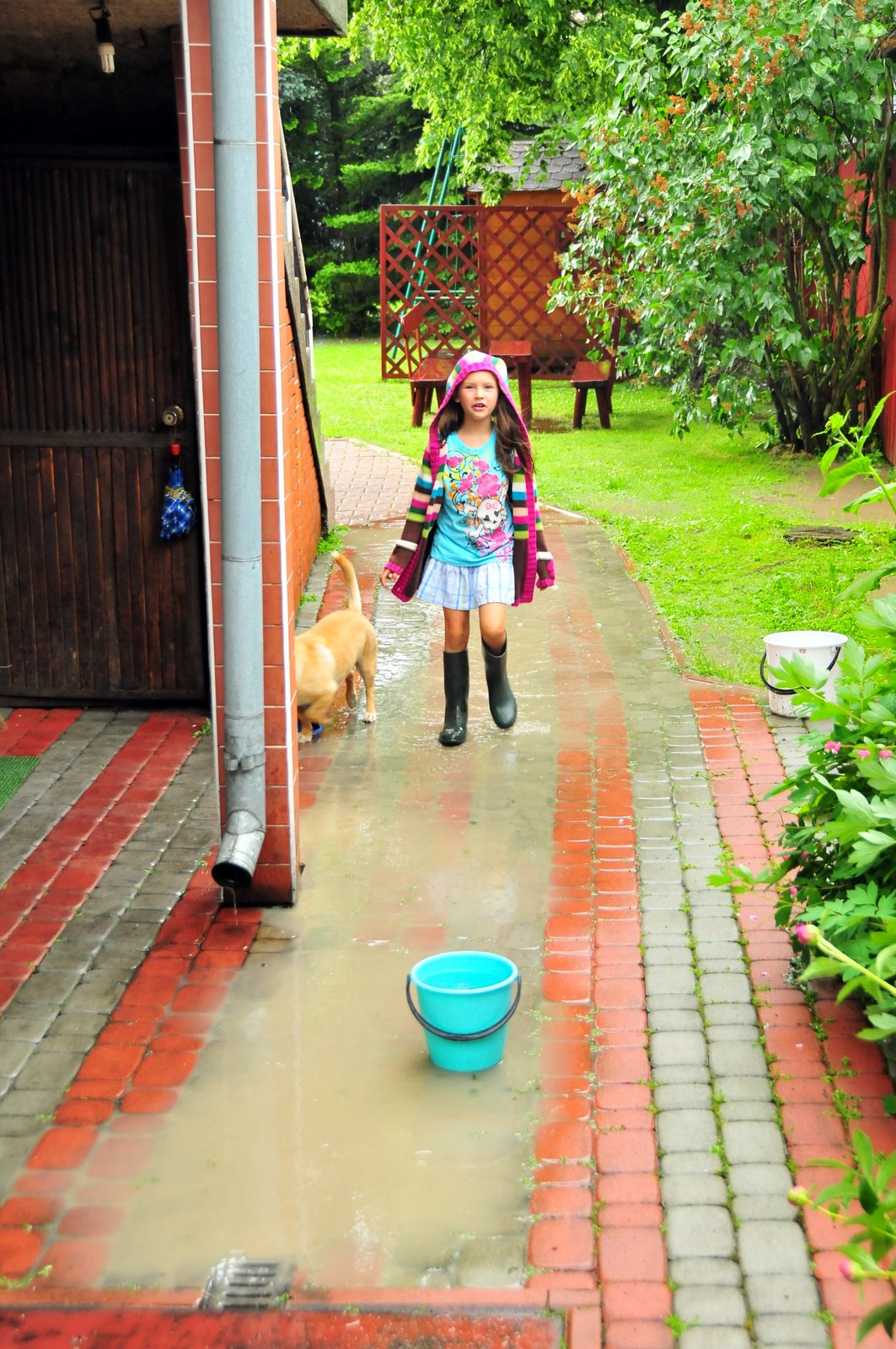
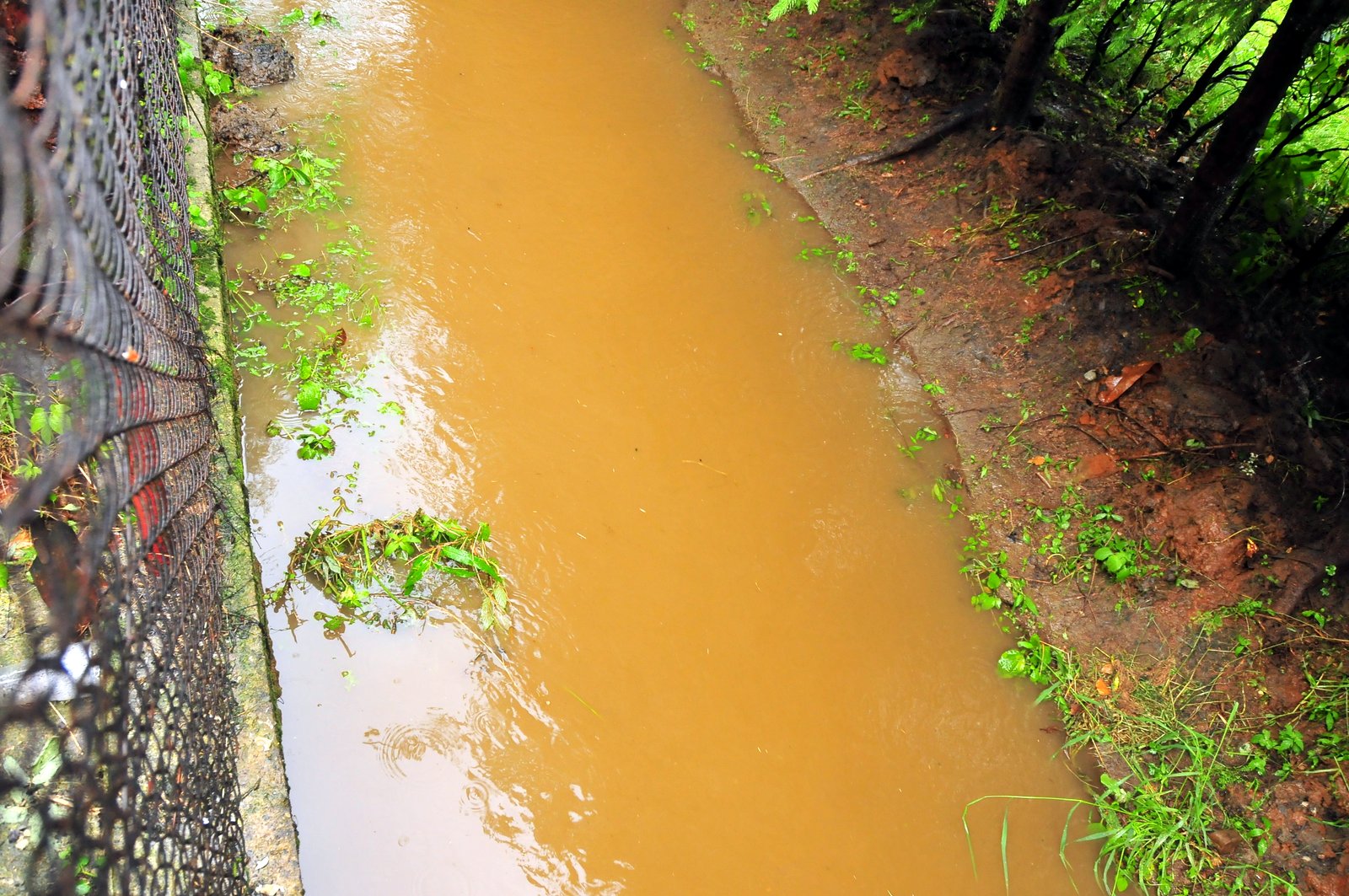
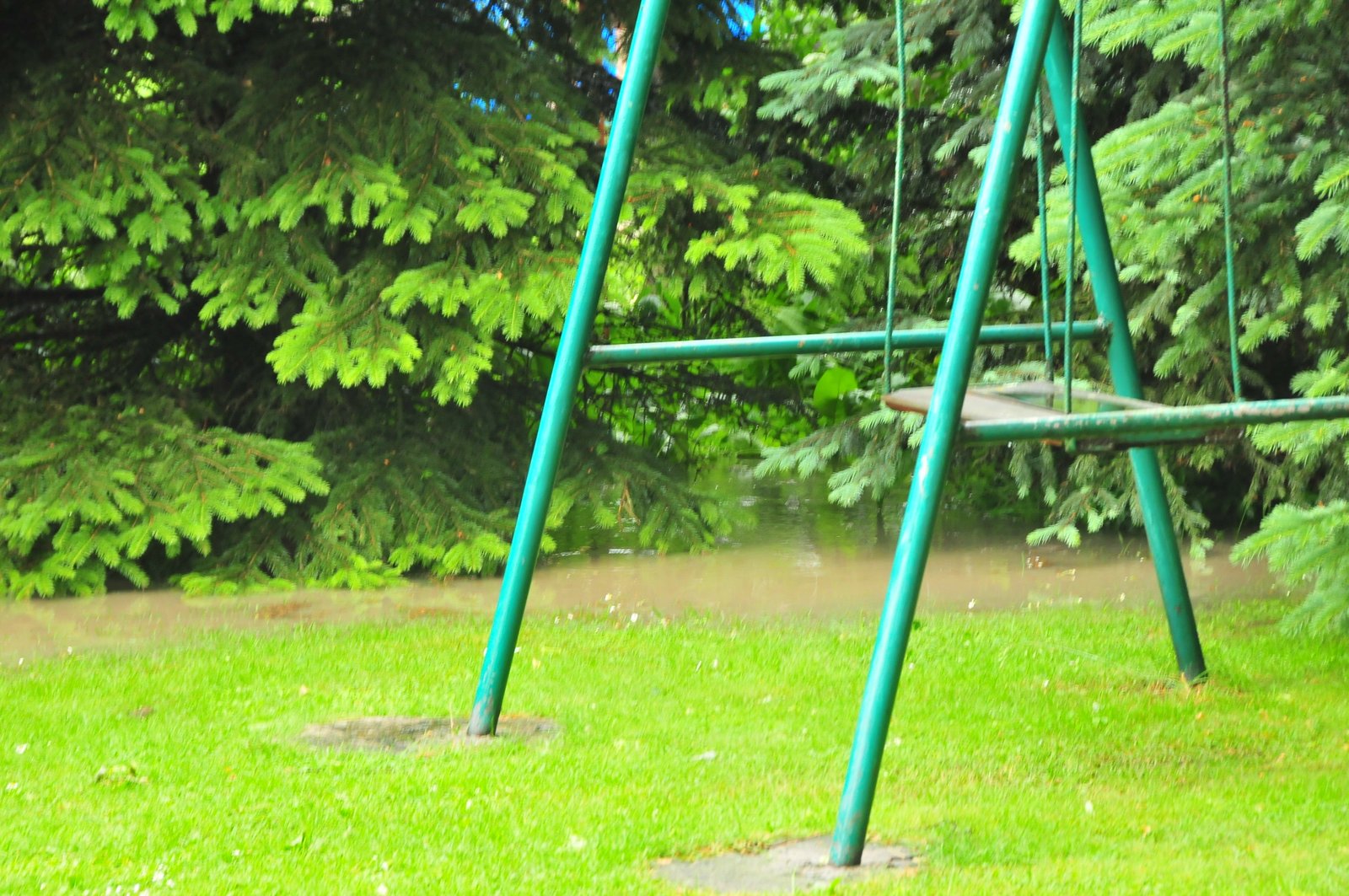
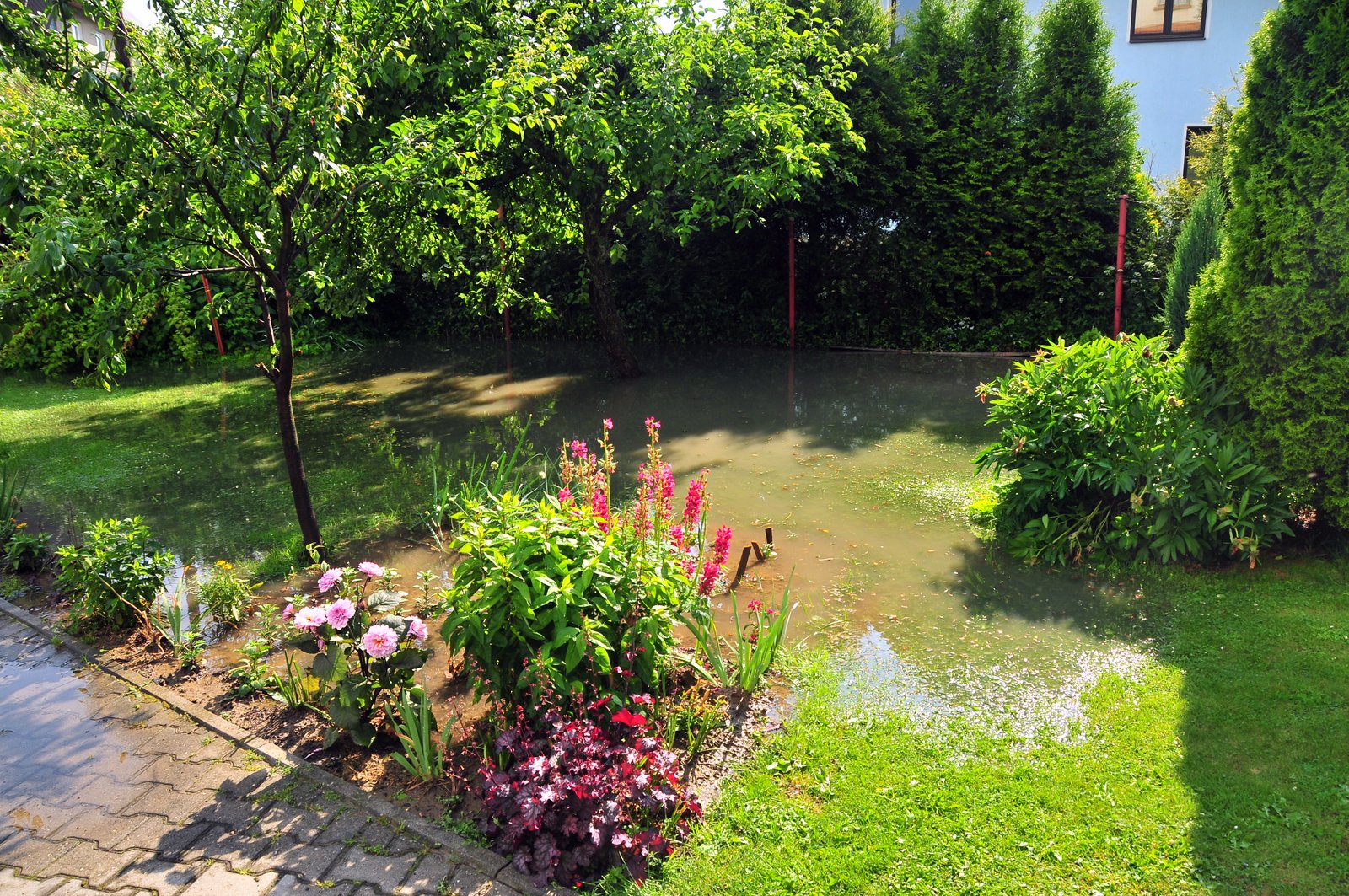
What is it with me and flooding downpours lately?
Godmother