matching tracksuits

fun in threes, sometimes fours

Month: February 2006

Review: How We Believe

Despite occasional comments that the world would be better off without religion, I like to think of myself as an agnostic who is at the very least sympathetic to religion, and certainly fascinated by it. I once described it to a professor with the metaphor of watching people dance without being able to hear the music.

It’s no wonder then that I was attracted by the title alone to Michael Shermer’s _How We Believe: The Search for God in an Age of Science_. Shermer is better known as head of the Skeptics Society and for his _Why People Believe Weird Things_, and while it might not seem likely from these credentials, Shermer is — by his own account — sympathetic to religious belief himself. Perhaps not sympathetic — understanding. That fact sets him as an outsider looking in on religious belief.

That wasn’t always the case. There was a period when Shermer considered himself a Christian. A fundamentalist, even. He once gave a professor a copy of Hal Lindsey’s _The Late, Great Planet Earth_ in an effort to proselytize. Instead of seeing the light, the professor

Saw red and hammered out a two-page, single-space typed list of problems with Lindsey’s book. I still have the list, folded and tucked neatly into my copy of the book. (6)

Eventually Shermer abandoned the Christian worldview for a materialist view of the world. He was still intrigued by religion, though, and this led eventually to him exploring how people believe.

This is not to be confused with the question of “Why people believe.” Shermer begins the book by explaining “the God problem” is insoluble. He is not out to disprove God’s existence, for that can’t be done, he argues. He also holds that God’s existence can’t be proved, and that therefore the most logical position for him is that of agnosticism.

To explain further, Shermer uses Donald Symons’ question, “Do you believe in [fill in any three letters] exists?” then quotes Symons extensively:

You have to know more about what’s in the brackets and how its existence or nonexistence might be determined or, at least, what kinds of evidence might potentially bear on the question. If you find out that the questioner has no ideas about the characteristics of the [      ] (such as, for example, whether it is made of matter), and more importantly, states that no conceivable observation could have any bearing on the existence/nonexistence question, then to me the original question is meaningless, or incoherent, or empty, or some similar concept. (10)

Since we cannot know — in a scientific sense — any of these characteristics, then it becomes a matter of faith. And that’s more or less where Shermer leaves it.

Shermer’s goal, then, is to explore the notion of belief from a strictly psychological, biological, generally scientific point of view. In other words, how did belief evolve?

To do this, posits “The Belief Engine.” Humans are pattern-seeking animals, Shermer notes, and “humans evolved a Belief Engine whose function it is to seek patterns and find causal relationships, and in the process makes mistakes in thinking” (39). Religion is not the inevitable outcome, though: “under certain conditions it leads to magical thinking while under different circumstances it leads to scientific thinking” (38). Yet how could this possibly work?

Humans evolved to be skilled pattern-seeking creatures. Those who were best at finding patterns (standing upwind of game animals is bad for the hut, cow manure is good for the crops) left behind the most offspring. We are their descendants. The problem in seeking and finding patterns is knowing which ones are meaningful and which ones are not. Unfortunately are brains are not always good at determining the difference. The reason is that discovering a meaningless pattern (painting animals on a cave wall before a hunt) usually does no harm and may even do some good in reducing anxiety in certain environments (38).

Shermer then outlines two kinds of thinking errors:

Type 1 Error: Believing a falsehood

Type 2 Error: Rejecting a truth

Shermer continues:

In some cases, neither of these errors will automatically get us killed, so we can live with them. […] The Belief Engine is an evolved mechanism for helping us survive, because in addition to committing Type 1 and Type 2 errors, we also commit what we might call a _Type 1 Hit: not believing a falsehood_ and a _Type 2 Hit: Believing a truth_.

One might wonder whether the book at this point is starting to take a somewhat antagonistic view of religion. It’s an almost a Golden Bough-ian view of religion: cave paintings and magical thinking led eventually to cathedrals and theology.
Daily Dose

We have a particular friend here in Asheville–a Polish friend we’ll call Franek–who can get caught in the such pessimistic moods about the nature of “the system,” about his own inability change that system, about the amount of suffering in the world–in short, about the “human condition”–that it’s made me say, “Damn, Franek! I thought I was a pessimist!”

And I did, and indeed I was. I was a half-glass-of-bile-a-day guy for a little while, though my episodes usually only lasted, say, the duration of a visit to a museum. In the National Gallery in Berlin, I felt sick to my stomach thinking of the money I’d paid to see idyllic paintings of Tahitians (Yes, it was a Gauguin exhibition.) when the majority of the people in the world had to scrounge for survival.

But I bounced out of it, probably because of my profession. Teaching is, at it’s core, simply the act of helping people understand and practice something–math, a foreign language, cosmetology–better. Right now, working with autistic primary school children, the skills I’m trying to help students master are much more basic than a second language or expository writing. As such, I see daily progress, and I often get my daily dose of hope many times over.

Talking to Franek, I said that I see miracles every day. I’d never thought of teaching like that, but that’s precisely what I mean by getting a daily dose of hope, corny as that sounds. In individual students I’ve seen enough improvements in behavior and impulse regulation, communication, social skills, and a host of other challenges unique to autistic children, that I can easily say to myself, “I have made a difference.” It has certainly been a team effort, and my part might have in fact been minimal. But minimal is better than nothing.

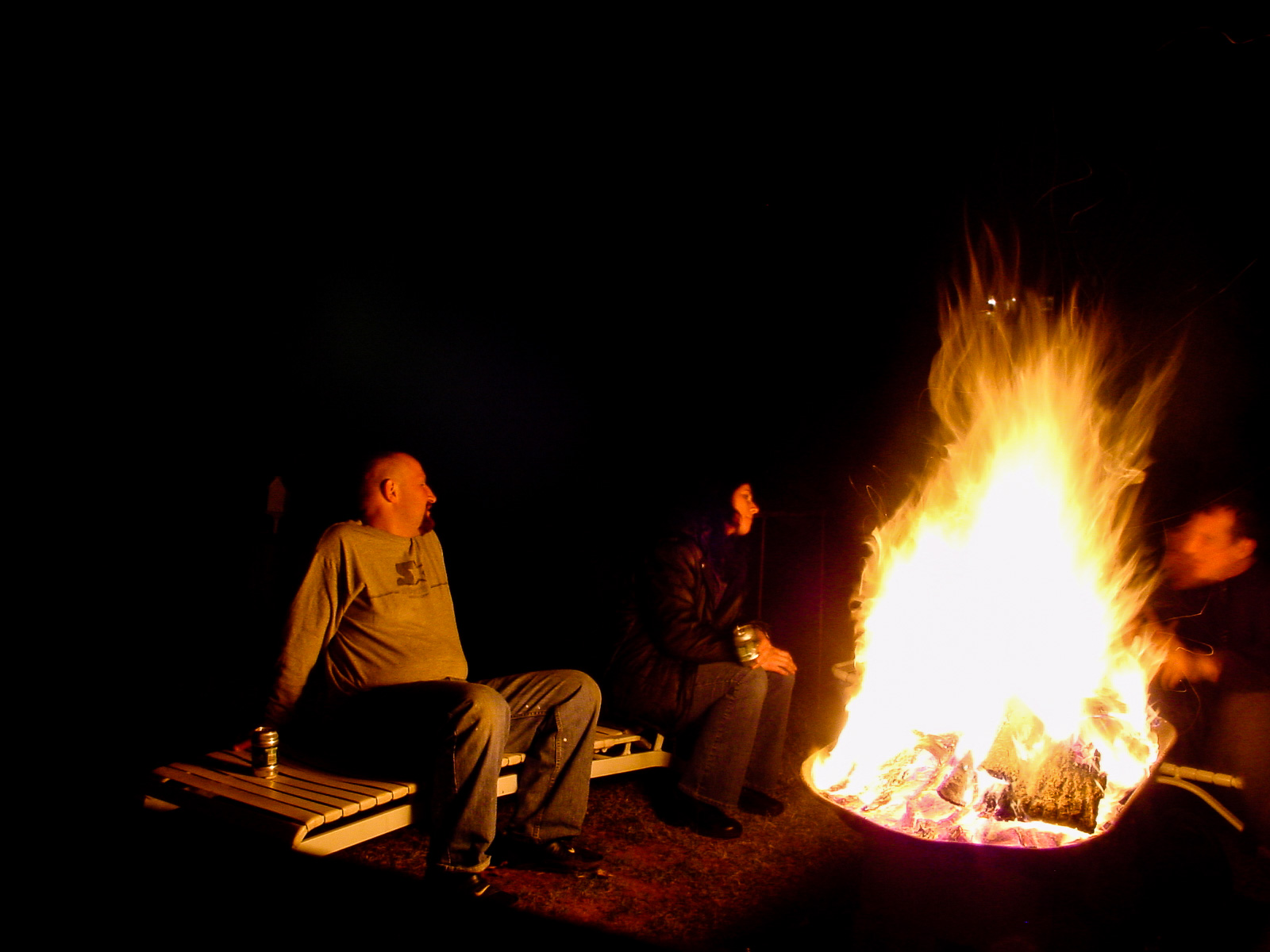
Ognisko

The Alternative?

The battle lines are drawn again. South Dakota’s legislature has voted to make abortion illegal in all circumstances. No exceptions.

A direct attack on Roe v. Wade is coming from the South Dakota legislature. The new bill, which outlaws abortion, makes no exceptions, not for a pregnancy caused by incest or rape. It would only be legal -- the only exception if it would save the pregnant woman's life.

Doctors who perform abortions could face up to five years in prison. The bill passed the State Senate 23-12. It's expected to pass the House again and then go to Governor Mike Rounds' desk. The bill's sponsor says he thinks the antiabortion movement has momentum on its side and a -- quote -- “change in national policy on abortion is going to come in the not-too-distant future.” (MSNBC)

With Alito and Roberts now on the Supreme Court, the intention couldn’t be any clearer: a full-scale assault on Roe v. Wade.

There's a good piece in the Village Voice about South Dakota's strategy.

Roe v. Wade was decided in 1973, just after I was born. As an adoptee, I have wondered many times about what would have happened had Roe been a year earlier. Knowing next to nothing about my birth mother, it’s a question that will never have an answer. If I had the opportunity to ask my birth mother, it might still go unanswered. Thirty-three years of introspection would produce a very different response, I’m sure.

This fact alone serves as the foundation for my very mixed feelings about legalized abortion. On the one hand, I walk lock-step with other bleeding-hearts in saying that a woman’s body is just that -- not mine, but hers. And yet, thinking about the possible abortion of what became my body, I think, “Hey, wait -- I have something to say in this too.”

“What became my body?” What was it before? Abortion opponents have a point that if the fetus is human, there is very little to talk about, and very few instances when abortion can be ethically defensible. Is it human? I don’t know. And the purpose of this post is not to ruminate over the slippery slope of when a fetus becomes a human.

All that being said, I remain pro-choice, but with a lump in my throat. I remain nervously pro-choice. Like many, I would like to live in a world in which abortion is a woman’s legal right, but never, ever necessary. A utopia, in other words.

Anti-abortion activists should be working to make that utopia a reality, but I don’t see much happening in that way. Indeed, this is what bothers me most about the various camps that make up the anti-abortion movement: their unwillingness to help provide a viable alternative, namely adoption. How many children has the average women’s health clinic picketer adopted? How many protest by example? It seems to me that if these individuals feel so strongly about the issue, they would literally put their money where their angry, raised voices are and adopt, adopt, adopt.

Restrained Freedom Part II

Fun on the Phone

I’m looking for a second job to get a little extra money in the bank. We want to buy a house, and every little bit helps.

I was looking through the classifieds at Mountain Xpress when I found the perfect job scam. The nature of the company was pretty obvious from the advertisement:

Companies desperately need employees to assemble products at home. No selling; any hours. $500 weekly potential. Information: 1-985-646-1700, Department NC-6529. (Source)

Up to 2k a month, and you don't even have to leave your house? Sounds too good to be true, so of course it is. But I like playing the sucker from time to time, so I called.

"Are you calling about the ad in the paper?" a woman asked when I called. No greeting, no pleasantries -— straight to the chase.

“Yes,” I reply.

“Is this the first time you’ve called?” my inquisitor asks. If red flags hadn’t been up when I first read the ad, they would be up now.

“Yes,” I respond.

“Are you calling for yourself or for someone else?” Now comes a bit of a puzzle. If this weren’t such an obvious scam, I might in addition to myself be calling for my wife. Two people can put together twice as much cheap plastic crap as one person.

Thinking all this, I hesitate, the reply, “I’m not sure.” I was going to ask for clarification, but the pleasant lady didn’t give me a chance.

“Well, you call back when you are sure.” Click.

Being rude to me on the phone is not a good idea. I like to call back. And so I do. Unfortunately, another woman answers the phone.

I decide to go through the whole monologue.

It turns out there are simply dozens of companies out there who just need my help. “What will you be doing?” the operator asks rhetorically and almost breathlessly. I can put together wooden CD shelves, jewelry boxes, and so on. This fine company will put me in contact with all these other companies who need my help. All for just a small fee of forty-three dollars. “And you don’t even need to worry about that, because we have a money back guarantee, written -- on page three of our brochure.” It’s just too bad I don’t have one of these sitting in front of me. Still -talking- reading on the same breath as she started the -conversation- monologue with, the kind lady tells me that I can put this small, insignificant fee on a credit card, or I can send a check--why, I can even do it C.O.D.

“Come to me baby! Come to me C.O.D.” I think. She probably wouldn’t get the allusion. (Do you? Quick, quick -- name the song and artist. And no Googling!) Besides, I couldn’t get a word in even if I greased it up really well, so I just smile to myself and continue listening.

Finally, I sense the spiel is winding down, and I get ready to say, “I’m not really interested.” Here it comes… “And so do you have any questions, sir?”

“No, but I don’t think I’m interested.”

“Something-unintelligible-about-four-syllables-long” comes the staccato reply, then click!

I bemoan my poor memory: “Why, oh why can’t I remember this woman’s name?” I have to call back. There’s just no choice.

It’s a moral imperative. (Quick -- what movie?)

I get to the “Is this the first time you’ve called” point, and say, “No -- actually it’s the third time.”

“Oh?”

“I’m just calling to suggest you hire some operators with better people skills,” I continue.

“I know,” she sympathizes. She confesses that they’ve been getting a lot of complaints. I think, “Sounds like you should be monitoring your calls, with the little announcement at the beginning of the phone call that we’re all so used to hearing now.”

We chat for a couple of minutes. There’s no way for anyone to track down who it was that took my two calls, she explains. All the lines are directed to the one phone number, and there’s just a room full of people answering these phones.

“Well, then I suggest you get better telephone hardware, because tracking who answered a call like that is a pretty basic thing,” I explain. Whoosh -- over her head.

Should I ask for a supervisor? She probably wouldn’t know what one is. “We just clock in, start answering the phones -- we don’t even know who we’re working for.”

After I hung up, I thought about calling back again, but what for? These jerks have to deal with enough jerks like me, I’m sure.

They’re just tryin’ to make a buck…

No Non-Autistic Child Left Behind

One thing that can cause massive amounts of problems for autistic children is lack of consistency. Our classroom is strewn with visual reminders of one sort or another to help the children stay calm by giving them a pattern to their day. At the basic level, it consists of schedules given to each student -- rather, placed in "his/her" area -- that outline what we'll be doing the whole day.

Unexpected changes can send more profoundly autistic children into spirals of panic, which manifest themselves usually in a meltdown of screaming and other “typical” autistic behaviors.

Even with this, some children have trouble navigating through the day without having someone assist them exclusively throughout the day. These services are supplied by the Autism Society, which receives a great deal of federal funding.

Well, the Federal funding has been cut, and that means that all services in our area end 17 March. No tapering off; no warning -- just BOOM!

“Sorry Joey, but your one-on-one had to leave. You won’t see him again. The entire structure of your school day will now be instantly and violently disrupted. Have fun!”

Thanks, W. Really -- No Child (who isn’t autistic, and whose parents are middle or upper class and contribute to my campaign) will be Left Behind.

Peter Piper Left a Peck of Peppers

What would you do if you were walking into your apartment building and dropped a jar of hot peppers on the sidewalk? You'd probably come back and clean it up. Most people would.

What would you do if someone at your apartment building did it late Sunday morning and it was still there Sunday evening? (Apparently "most people" don't live in our building.)

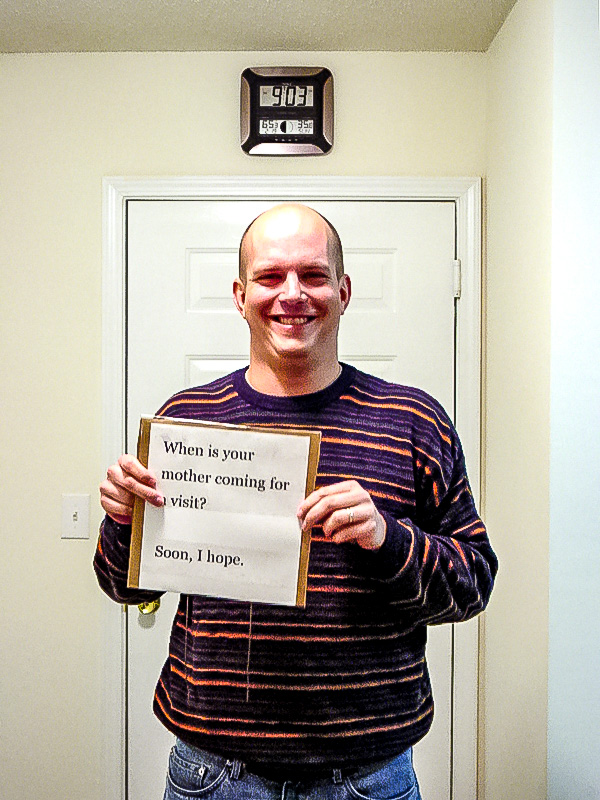
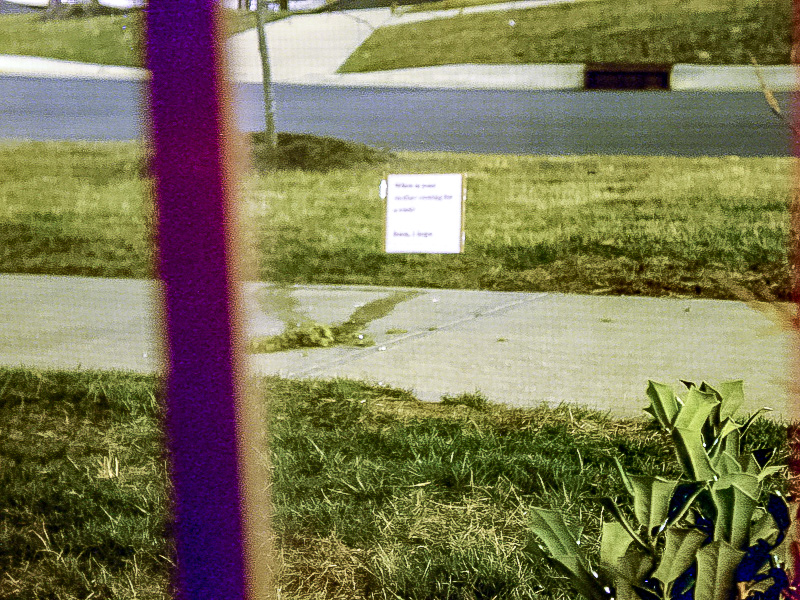
In my "fury," I made a sign...

When is your mother coming for a visit? Soon, I hope.

Immature? Sure, a little. "I'd have just cleaned it up," a co-worker laughed. That's sort of the point, though...

Oh well -- it was amusing at the time.

The Neighbors

Kinga and I are looking to buy a house -- sort of. Kinga and I have begun something we expected to start only after a year and a half in the States: we’re looking for a house. Our thinking was based on our likelihood of getting a loan, our lack of any kind of down payment, and initially, our lack of a job or any sense of security. But we’ve been pre-approved at a couple of different places; we have decent jobs, with the promise of it only getting better; and we’re sick and tired of paying several hundred dollars a month for nothing.

Granted, the rent is shockingly low compared to what I was paying in Boston. In 1999, I was paying $850 for a one-bedroom with barely enough room to turn around in. That place is certainly over a grand a month now. We don’t even pay seven hundred for a two-bedroom place. In the summer, when we were looking at the place, I laughed when told that the apartment is spacious but the rent “is a little high.”

Most expensive property taxes in Asheville

The real estate market here is simply going through the roof. It’s tough to find anything under $150,000 that doesn’t need massive renovation. It’s easy to find massive homes:

Two decades ago, million-dollar homes were a rarity in these hills but not anymore. In 2002, Buncombe County had 38 homes with an assessed tax value of $1 million or more. In this year’s revaluation, the number will jump to 484. […]

“It’s just boomed,” Roberts said. “What we’ve noticed is there’s a lot of new construction of those type of homes, with those type of high-end materials: slate roofs, unique woods, specialty tile. The other side of that is that people will take some of the older homes and greatly remodel the entire home or add a whole new wing, and that pushes it over $1 million.”

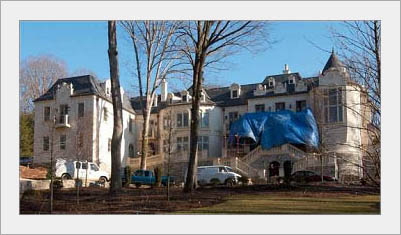
The luxury housing boom is not news to Ron Olin and his wife, who moved here 12 years ago from Texas. According to the new revaluations, the Olins own the highest-assessed home in Buncombe County, a new, 15,449-square-foot French chateau style house in Biltmore Forest valued at just over $6 million.

Olin, a money manager who loves the Asheville area for its scenic beauty, climate and amenities, has no problem paying his fair share of property taxes to support local government. But one point sticks in his craw.

“Once we’re in the house, maybe it’s worth that much, but we haven’t even moved in yet,” Olin said. “They did an interim assessment in 2005, and we know they raised it a lot.”

The assessed value last year was about $4.6 million, but as the home nears completion it becomes more valuable. With amenities including an indoor swimming pool, an elevator, a hot tub, sauna and seven fireplaces, the price tag keeps rising. (Citizen-Times)

It’s because of people like the Olins that this area is soon going to become so expensive that no one can afford to live here unless they’ve got a six-figure income. Maybe not that bad, but it is fairly ridiculous.

Interest rates are yet another thorn in our side. We think enviously of those who bought homes a couple of years ago when the interest rate was not bearing down on seven percent. My brother-in-law took his home loan in Swiss francs, and pays some ridiculously low percentage – under four, I think. At today’s rate of 6.38%, a loan of $130,000 would generate monthly payments of $808.06. At 4.00%, it would be $620.65, with about 40% of that going to the principal.

And so instead of looking at actual single-family homes, we considered a townhouse or condo. What do you actually own in that? If it’s a townhouse, you might own the land directly under your portion of the building, but nothing else. With condos, you jointly own the land, along with everyone else in the same building. At least it was something like that. I can’t quite recall how our realtor explained it. I’m not really interested in the land, I guess, so I didn’t pay much attention. In the end, we decided that all we’d be doing is changing landlords. And so we’re looking for a moderate “fixer-upper.”

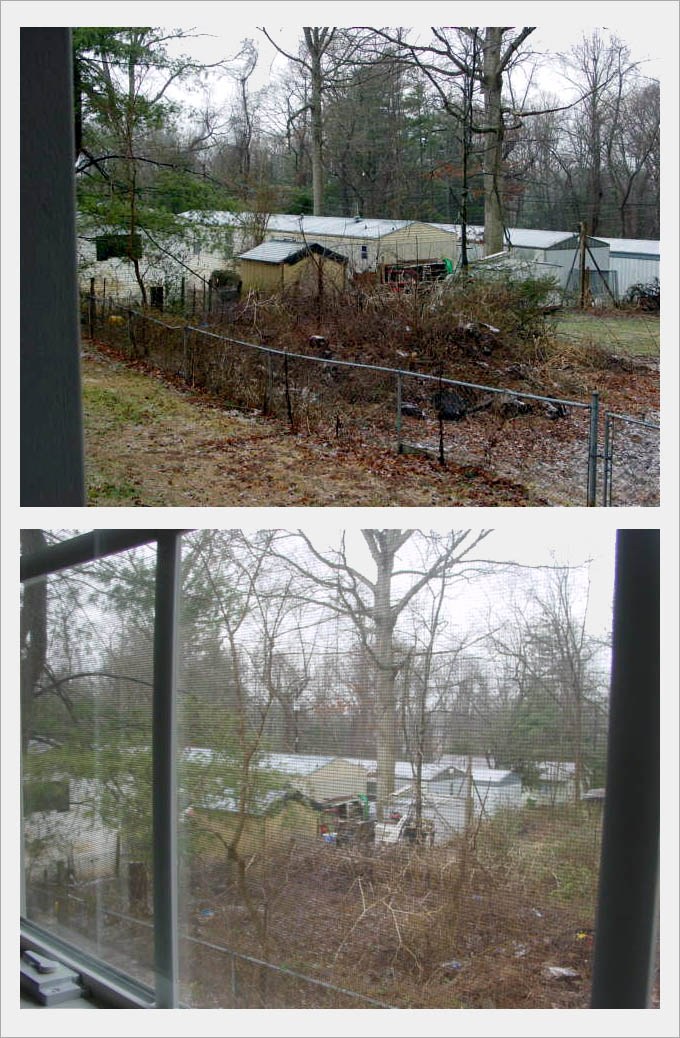
One thing we’ve learned quickly is the sometimes-tragic effect of neighbors on property value. We found a very warm, two-bedroom place with hardwood floors and a nice floor plan that was completely ruined by the neighbor’s lack of any sense of responsibility for the appearance of his house. The yard filled with junk; Christmas lights still hanging; a balding lawn – it was awful.

“These people will never get their asking price because of that,” our realtor said. So you lose money because your neighbor’s a complete slob.

We went to the south of the city where we found a rather nice home just about a mile from Biltmore Forest – Ron Olin’s neighborhood. If there’s somewhere in you don’t have to worry about the neighborhood, you’d think it’s the area less than a mile from the most expensive neighborhood in the whole city.

Wrong.

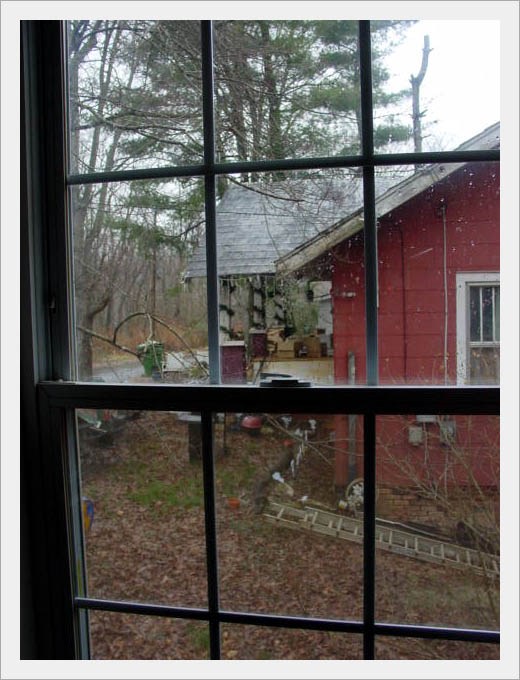
We pulled into the driveway and new immediately that there was no way we’d even consider the house. The view from the back-bedroom window explains it.

Hiking