Tag Archives: vacation

Final Day

The final day at Lake Tillery also included a boat ride, with the girls sitting in the back singing Polish Christmas carols as the Boy slept.

Carols on the Water

The destination: “Big Bridge,” a name that sounds just like something a three- or four-year-old would name a bridge that is rather large. Sort of like Big Wolf. (He still sleeps with the Girl every night. “He keeps me calm,” she once explained.)

"Big Bridge"

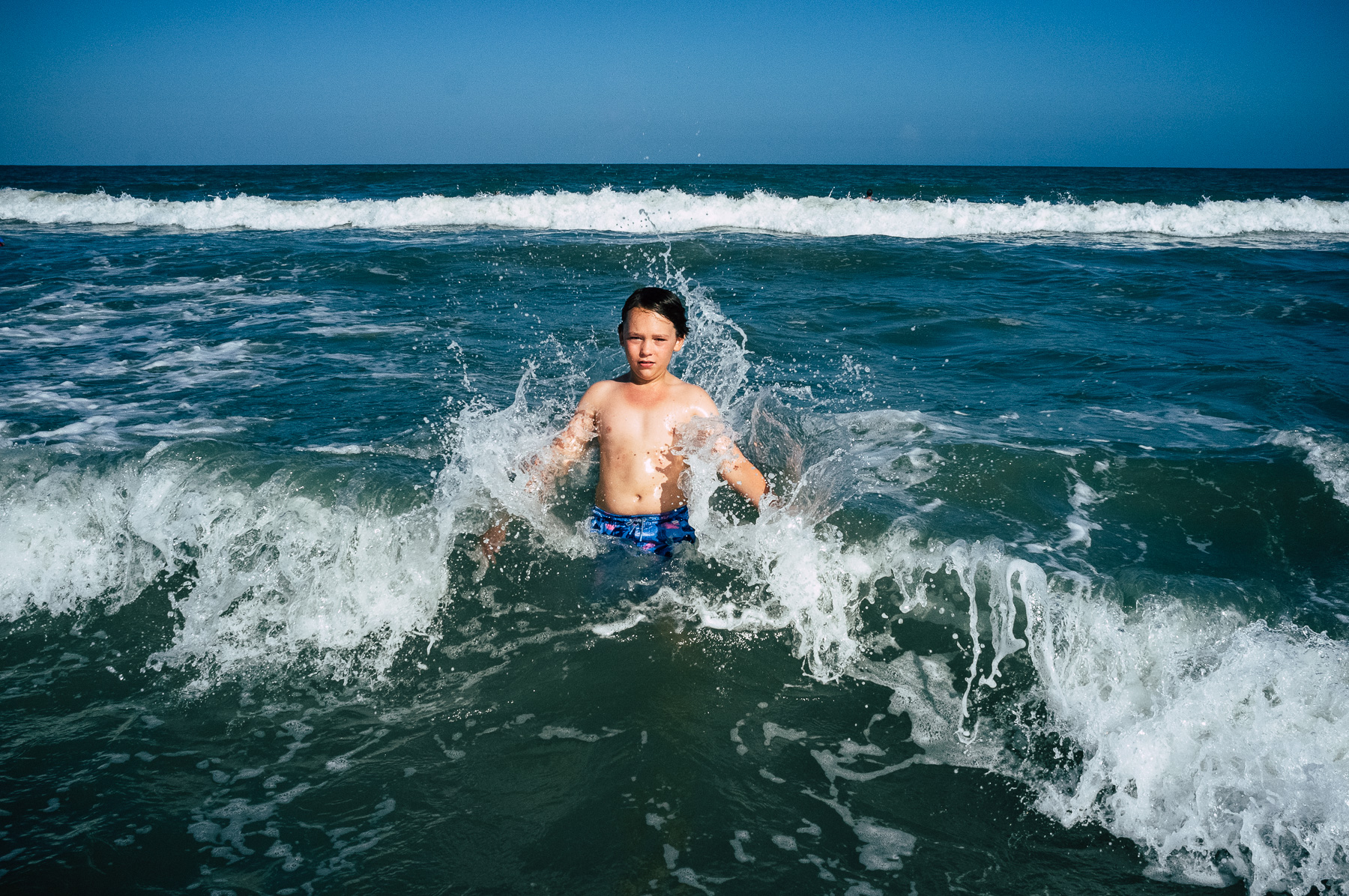
Of course, there was one last swim…

Swimming by the Lake

asdf

First

Nana and Papa certainly have the picture somewhere: I stand by my uncle’s pond, rod and reel in hand, with a small fish on the line. I must have been four, maybe fine. The rod and reel seemed impossibly heavy, and I thought the photographer — my uncle? mother? — would never snap the picture.

Afternoon Fishing

So I think I can understand the Girl’s frustration with me as I maneuvered for picture after picture of her first fish.

VIV_1921

Boat Ride Bookends, Part Two

After the boat ride and swimming, we were shocked suddenly to discover it was lunch time. And once lunch was over, we were shocked at how tired the kids were — except the two youngest.

VIV_1963

But soon after, everyone was rested and the water called us back again. The little puppy running around the lakefront — dubbed Cutie by the kids — was quite an attraction, too. In fact, more so in many ways. Even when the puppy wasn’t there, they played as if she were there. “We must find Cutie!” L cried out, fishing for her with a bit of line and a magnet. “She must have fallen in!”

VIV_1988

But she hadn’t — we were the only ones to fall in. Make that jump in — the Girl’s newest water obsession.
VIV_1968

Meanwhile, the youngest looked on and ate an early dinner.

With a twelve-week-old, our schedule is his schedule. “He ate at three,” K begins, figuring the next feeding time and its impact on our less-than-tight schedule. Sometimes that’s a challenge; at the lake, it was inconsequential. After all, how many vacations run on a tight schedule? Well, scratch that: I know some who run their vacations like boot camp.

VIV_2008

Evening came and we decided on another boat ride. The Boy took it all in stride: his expression consistently said, “Oh well, here we go again. This should be fun…”

VIV_2034

And it was for some of us. L got to drive a boat for the first time. It was a carefree frolic for her. No stress; no worries, no fear.

VIV_2069

We returned to find brilliance.

VIV_2022

Brilliance that shifted.

VIV_2015


Boat Ride Bookends, Part One

Day two at Lake Tillery began and ended with a boat ride. “I’ve never been on a boat,” L announced in excitement, obviously having forgotten earlier rides in Slovakia.

Yet it was certainly the Boy’s first boat ride, the first time we bundled him up in a life jacket.

VIV_1852

“L would not have put up with this for a moment,” K laughed as we pulled out of the channel into the lake. The Boy, though, simply snuggled into the jacket and fell asleep.

VIV_1857

Had he known who was driving, he might not have been quite so calm. L’s best friend from Montessori, E, was at the wheel, his father at his side, doing a fine job despite the jokes.

VIV_1863

Pulling into the dock of E’s aunt, K immediately loosened the Boy’s life jacket and found a place for him to continue his apparently eternal nap.

VIV_1874

The Girl took a quick break, and upon waking, the Boy joined his mother in the lake with his newest friends.

VIV_1894

Afternoon at the Lake

L has fallen in love with water this summer. Among her favorite sports to watch in London are swimming and diving; she asks daily to go to the pool; she flops about in the tub in her best imitation of Rebecca Soni. Despite her consistent love of water, though, she wasn’t that wild about the beach when we first went. Or when we went the second time. So when we headed to North Carolina with friends for a weekend at the lake, I was a but curious how she would take swimming in the open water.

As might be expected, she was a bit cautions at first. Thought she’d given up her arm floats earlier in the summer, she learned that one of the rules of the pier was that children must always wear flotation devices — and since there were no more swim belts, the Girl was stuck wearing her arm floats again.

There was also initial concern regarding what else might be swimming with her — or under her. Talk of an enormous catfish that broke a line earlier in the day had her worried and sitting on the edge for a while.

But only for a while.

Thus began a weekend of firsts. Fishing, for example — something that requires more patience than I thought the Girl had ever shown in her whole life. Something that involves touching things the Girl might not like to touch, like hooks and worms and fish. Something that can pass hours with only one reward: the peace of the wait.

Yet the girl is growing, and she’s always surprising us with what she can do, what she’s willing to try, what we can force her to eat. (Some humor intended there.) Fishing became the big hit for the Girl.

Yet there were the old stand-bys — what kid in history has been able to turn down an invitation to watch a film while sitting in an old water heater box?

Cramped, stuffy, view-blocking — it didn’t matter. What mattered was to be in the box. The movie was only secondary entertainment.

With a full moon that night, though, adults had other forms of less-cramped, more serene entertainment.

The Return to Reality

The return after a long break is both nerve-wracking and refreshing. The former comes from the unpredictability of fourteen-year-olds. The latter is a simple function of having a long period away from each other. As much as I like my students, it’s good to be away from them from time to time — to be around adults more than kids. (Well, having a five-year-old daughter, I’m not sure how much that’s really possible.)

For everyone today — teachers and students — it seemed the “refreshing” won out. Far from being reluctant to return to studies, many students seemed positively eager to come back — at least that was the feeling I got in my classes.

It was a good Monday, and often can one say that, especially after a long break?

Waterfalls

Throughout Transylvania County, North Carolina, there are virtually countless waterfalls. One can purchase a guide that provides directions to various sites, with some of the less popular ones including instructions like, “Turn right on the gravel road just past the fish hatchery. Drive 1.1 miles.” Yet many of them are easy to find; indeed, they’re hard to miss, like Looking Glass Falls.

VIV_1596

Down a winding, paved path to an enormous rock outcropping, our family and our guests find our way to one of the most significant falls in the area. A fine mist drifts through the gorge combines with the cool water for a most effective chilling experience. All that’s missing is a chair and a good book (preferably a ratty copy: it’s likely to get ruined in the mist).

Lacking those things, we do what comes natrually: the children splash each other and K, and I switch the camera to the six-frames-per-second mode to capture fifty photos of the fun that will be whittled down to one or two.

DSC_1667

We’re not the only ones playing, but it seems to me we’re taking the saner route to amusement. Of course, the adolescent head is impervious to rocks, adolescent arms never lose their grip, and adolescent feet are always sure and balanced.

VIV_1594

After a bit of splashing around, it’s time to head further up the stream to Sliding Rock, the most famous and most popular attraction in the area. Indeed, it’s so popular that we arrive to find the parking has closed because of overflow, which means the wait times for the main attraction — obviously a large rock one sides down — are close to fifteen minutes.

Instead we head further up the stream to the education center, which houses the fish hatchery. In the outdoor “race tracks” (do they actually have contests?), we find the trout are, according to our New Jersey Polish visitors, upchani jak śledzie: apparently commuters and fish of all species can be described this way. The saying refers to the habit of packing pickled herring tightly in jars for storage.

DSC_1687

After a picnic break, we contemplate returning to Sliding Rock. Instead, we go for one of the “turn right on the gravel road just past…” waterfalls.

DSC_1806

It turns out to be not as much of a waterfall as it is an outdoor, stone-faced sprinkler. The floaties and life jacket we brought for the children are for naught.

DSC_1816

DSC_1837

Still, a lovely view, some nice light, and a chance to trek through the forest for a while. It is a teaching experience, one could say. But not a lot of fun. That would be Sliding Rock, and we decide finally to head back and see if it’s still packed.

It’s not, and in fact, there is virtually no line for the star attraction.

DSC_1942

K goes first. After a while, she talks the Girl in to a short run with her.

DSC_1885

DSC_1890

Perhaps Sliding Rock will become yet another metric of growth: the first time the Girl slides solo. Eventually.

Botany Bay

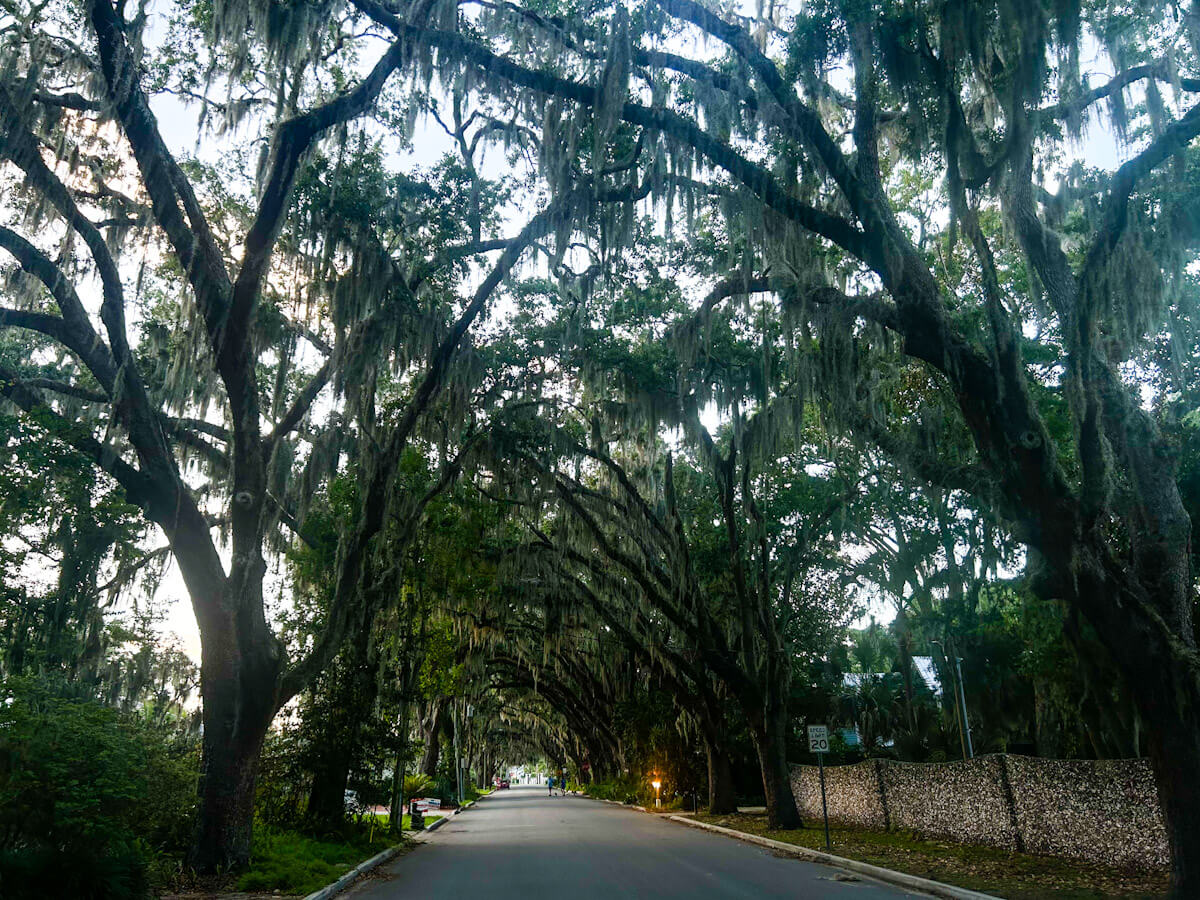
It’s probably one of the most famous roads on Edisto Island: a sand lane that runs under a canopy of Live Oaks, looking positively like something out of Gone With the Wind.

DSC_7390

DSC_7372

Botany Bay Wildlife Management area is actually made up of three plantations: Bleak Hall, Botany Bay, and Sea Cloud. All three grew sea island cotton, which has particularly long fibers and was used in France for high quality lace.

This morning, we’re going on a botany tour — appropriate, given the name of the site. One other family is joining us.

DSC_7317

We walk among the marshes, stopping every few moments to learn a bit more about the island.

DSC_7324

Along the way, one young lady catches a fiddler crab.

DSC_7321

L gets her own:

DSC_7518

We learn about the importance of the marshes as a protective barrier for hurricanes: they act as sponges and thus do much to minimize the effect of higher tides from hurricanes.

We find out that the English came to Edisto in search of riches and found a treasure in the huge Live Oaks on the island.

We learn that the use of palms in South Carolina naval fortifications were literally so effective at dissipating energy that canon balls essentially bounced off them.

We arrive at the beach, where our guide, Meg, gave us more information on loggerhead turtles and residents’ effort to help them.

DSC_7330

It’s about the third time we’ve heard about loggerheads and the nest relocation activities of the Edistoians. They’re obviously proud of it, and rightly so: it takes a great deal of dedication among many people to keep the program going.

DSC_7336

Meg shows us a loggerhead skull, and it’s immediately obvious how huge the turtles are. The females drag their bodies out of the water to dig a nest, and often enough, they don’t get beyond the high tide line.

DSC_7337

The incoming tide destroys the nests; volunteers on the island, though, head out nightly and relocate the nests. Then the hatchlings only have to worry about birds and raccoons as they make their way to the surf.

After Meg leaves, we explore the beach a bit on our own, and what a beach it is — like something from a tourist brochure. In fact, it is.

DSC_7533

The ocean is slowly reclaiming this portion of the shore. It creeps inward at a relatively steady pace, turning everything into beach, and hence killing all the flora that cannot handle an intensely salty environment.

DSC_7551

K takes the camera and goes for a picture walk;

DSC_7553

I stay with the Girl, hoping to talk her into the ocean,

DSC_7559

unsuccessfully.

Emtpy Handed

The first camera I remember owning was one our family bought at Sears just before a trip to California in 1984. I believe it was even a Sears brand; it seemed terribly fancy for a twelve-year-old, though it was just a point and shoot.

The next camera I remember was an SLR manual focus that I borrowed from a friend. I took some pictures of birds, but I don’t think I ever developed those shots.

It wasn’t until I went to Poland in 1996 that I became seriously interested in photography. I took a Canon point and shoot with me, but I quickly discovered its limitations. I headed to the market and bought a Zenit — a Russian made SLR that could drive nails. Literally.

K’s first camera was a Russian view finder that I can’t even recall the name of. She moved to Zenit and Nikon; I replaced my Zenit with a succession of Nikon and Canon manual and auto focus cameras.

Finally, K and I ended up with our current primary: a Nikon D70s, which was fairly cutting edge when we bought it. Since then, we’ve added a couple of lenses to our collection and have a whole bag of glass to carry around.

Friday, we pack our things and head to Charleston for a day of wandering about the city, stopping at cafes for coffee, taking pictures, and simply experiencing one of America’s most historic cities. We arrive and I glance in the back.

“Where’d you put the camera?” I’d been packing our bikes and related materials. I assumed…

“I didn’t get it. I thought you…”

We look at each other for a moment.

What to do?

Simple: enjoy Charleston without a camera. Life without a camera is possible.

In the meantime, Nana and Papa took the Girl to the serpentarium. Nana and Papa remembered their camera…

IMG_0318

IMG_0325

IMG_0333

IMG_0336

With the Current

Wednesday afternoon, Nana and Papa arrive for a short stay on their way down to visit friends in Florida. It’s lovely to see them, but just as lovely is the prospect of having sitters for the Girl.

The day begins as it usually does: breakfast and the beach. This time, L makes a friend. They dig in the sand together, build things together, destroy things together.

IMG_0278

Then the girl heads to the water. We’re hopeful: maybe L will see her friend playing in the surf and think, “Hey, maybe I’ll give that a try.” Maybe, but not likely.

090722_beach

Still, with L occupied and Nana and Papa there to keep an eye on her, K and I do something we hadn’t done all week: go swimming together. Papa obliges our photo request and does a fine job.

The afternoon brings more babysitting — what to do? It’s not that we’re thrilled to be free of L, but we are. In a sense. Every time we’re without her, the same things happen: a strange sense of freedom from obligation followed very quickly by a quirky little tinge of emptiness.

Before the tinge sets in, we get in kayaks for a quick tour of the marshlands.

IMG_0284

It has been over ten years — closer to fifteen — since I’ve been in a kayak, but I still keep my arm straight by my side when the guide asks, “Who has little to no experience in a kayak?” Surely it’s like riding a bike. What’s there to worry about? The greatest danger in a paid tour would be raising my paddle too high, dripping water onto my lap.

We set off, and sure enough, K and I are pros.

Lindsey, our guide, stops frequently to explain the flora and fauna about us.

IMG_0306

“How many think that’s mud on the banks?” she asks. Some of us would probably raise our hands if we weren’t so busy paddling. Lindsey explains that it is, in fact, hundreds of years of decayed marsh grass (I can’t recall the name of the grass). It’s also floating about in the water, and this is the primary component of the mussels’ diet.

IMG_0293

A couple of times, Lindsey has us back our canoes into the bank while she discusses the environment in detail, and answers questions.

The pressing question: Alligators? Generally, none in the marshes — they stick to fresh water and keep themselves as far away from humans as possible.

IMG_0296

It’s from Lindsey that we learn about pelicans’ potential for eye damage due to diving for fish.

IMG_0303

As with the spider wasp, that lays its eggs in a paralyzed, still active spider so that its young can feast on the still-living spider, it strikes me as a particularly cruel twist.

Tides

Our first view of the marsh behind our little cabin was at high tide: a sea of greenish water with twigs sticking out. We wait for low tide, wondering just how far down the water will draw.

DSC_7165

The next morning, our answer:

DSC_7172

I go out into the muck, make a quick discovery, then rush back for the girls. “You’ve got to see this,” I tell L, wondering if she’ll be as fascinated as I hope she’ll be.

DSC_7162

In the briny muck left behind, fiddler crabs roam about, the males waving their enormous claw, clamoring for the attention of the females.

DSC_7146

“Their name derives from the motions they make when they eat,” our kayaking guide will tell us later. “They raise their small claw up to their mouths very rhythmically, and juxtaposed to their large claw — which is used for nothing other than attracting females — it looks like they’re playing a fiddle.”

DSC_7156

L watches, and she’s immediately fascinated. It’s a fascination that will continue through the vacation, especially at Botany Bay. In the meantime, though, it’s beach time, and the Girl is ready for more digging in the sand.

DSC_7217

K and I insist on a hat for L, and with her Dora sunglasses, she proclaims, “I’m a movie star!” Judging from our YouTube account, I think I’d have to agree.

DSC_7236

After a nap and some lunch, we decide it’s time to explore downtown Edisto Island (inasmuch as there is a downtown) and get some ice cream. When we arrived, we drove about a bit, looking for the marina and shopping district we’d heard about, but all we found were million dollar beach-front homes and tourists like ourselves.

A slower pace should help.

IMG_0232

In the end, it takes us almost an hour to find the small marina tucked in the corner of the island. All the while, we’ve heard the same mantra from the bike trailer. “I want ice cream!” and it’s a relief when we find a tackle shop with a small freezer.

“I want blue!” L proclaims. It’s a common combination, food and color. She often pulls out our pots and pans to make soup and proclaims, “I’m making blue zupa!” combining the majority English with a single Polish word — another habit.

IMG_0202

We take a quick walk down the short marina, pondering the prices of the boats and the careers of people who can afford $200k boats and $130k slips to moor them. To be able to afford such expensive toys would be a dream and a nightmare, I’m sure. K and I play the age old game of “What would we do if we were rich” as we walk along, and boats and expensive cars never come up. Living off the grid; having the fiscal freedom to live wherever we want; knowing that L’s education is paid for — these are the things we talk about. And maybe one or two toys…

IMG_0214

Satisfied with the wealth we do have — health, jobs, a happy family — we head back through the swamps.

IMG_0222

IMG_0229

Afternoon Bike Rides

This was the afternoon activity for our first morning on the beach. I didn’t combine the posts because I had yet to transfer the pictures from the small Canon we borrowed from Nana and Papa.

The first few days, we spent our afternoons on bikes, with L in a trailer. The state park at Edisto Island has a few miles of packed-shell bike paths with wooden bridges over the marshes. After negotiating the treacherous sand access road (riding on sand without knobby tires is much like riding in slushy snow that’s layered atop pure ice: there’s as much lateral movement — sometimes the front tire, sometimes the rear, sometimes both simultaneously — at times as there is forward movement), it was really a pleasure.

IMG_0176

Who would enjoy riding in an environment like this?

No strenuous climbs, as it was coastal terrain. No merciless sun, as it was all in a forest filled with Live Oaks and Spanish Moss. It was, in every sense, leisurely riding.

IMG_0179

Several friends thought we were nuts to go cycling in a South Carolina July. The ocean breeze combined with unseasonably cool weather, though, and it was an absolute joy. Except for the sandy road.

IMG_0182

Our first destination: a prehistoric oyster shell bank. No one knows the significance of the location; no one knows why Native Americans chose this particular spot to eat oysters (and lots of them). But we do know that the mound is some ten percent of its size when discovered by Spanish explorers in the seventeenth century.

IMG_0180

Perhaps this was inspiration for Lewis Carroll:

‘A loaf of bread,’ the Walrus said,
‘Is what we chiefly need:
Pepper and vinegar besides
Are very good indeed –
Now, if you’re ready, Oysters dear,
We can begin to feed.’

Or perhaps not. All the same, it was a frabjous day, and we chortled in our joy all the way back to the cabin.

Morning on the Beach

“They’re a bit rustic,” K’s colleague said about the cabins at Edisto Beach State Park. “They’re okay if you like ‘roughing it,’” he concluded.

“If this is ‘roughing it’,” K said as we walked in, “then I’d hate to see what his idea of luxury is.” We quickly determined that in between the two visits there must have been some extensive renovations.

DSC_7176

Surely no one could call this “roughing it.”

Hardwood floors and an interior done completely in unfinished pine — it is a welcoming space from the beginning. The living room has a Murphy Bed and an ample sitting area.

DSC_7177

At the other end, a small television (hidden in the cabinet on the wall) and a leather couch.

DSC_7189

There’s a small bedroom in one corner of the cabin — it’s L’s bedroom.

DSC_7179

The kitchen is well light (in the day, anyway) and perfectly adequate for vacation.

The real treasure, though, is in the back.

DSC_7182

A restful night is a simple matter there, with the wind blowing through the palms and the crickets all around.

We wake the next morning to visitors: a family of four deer that almost managed to scamper away completely before I stumble back into the cabin for the camera.

DSC_7123

Still, we didn’t come to Edisto for the wildlife. We came for the beaches, eager to give L her first beach experience.

With the initial fear from the previous afternoon a distant memory, L is able to get down to some serious sand castle building. She carefully makes a ring of towers with an eventual moat. K, of course, only watches. Having grown up in southern Poland, she’s had enough beach time in her life!

DSC_7128

The pelicans off the coast have breakfast while the architectural wonders rise from the sand. They hit the water with shocking impact. We later find out that the repeated impact can so damage their eyes that they can eventually go blind.

DSC_7140

The Girls, somewhat oblivious to the masochistic fishing exercise going on just behind them, continue to build.

Eventually, I try to convince L to approach the water and let the waves lightly wash over her toes. She’s not receptive, and when I press the issue, assuring her that I’ll hold her the entire time, that she has nothing to fear, that I’ll never let anything hurt her (A lie? No: some things are out of my control, but those things that I can control I will control. Or will I? There is learning in pain…), that it will be great fun — all for naught.

DSC_7137

The more I reassure her, the more she panics. At last, I calm her down and assure her that I won’t make her go to the water.

It’s like with many foods: I know she’ll love it as soon as she overcomes her distrust.

DSC_7139

She should be glad that she’s not a pelican, I decide. Then again, instinct is frightfully powerful, as is conditioning.

IMG_0168