I finished a book a couple of days ago that had been on my to-read list since college if not longer: Carl Bernstein's and Bob Woodward's All the Presidents Men. I knew a little about Watergate; now I know a bit more. Two conclusions I drew from the book: first, the Republican party, for at least half a century, has had many members who are primarily concerned with maintaining power by any means necessary. Watergate was the lowest point until January 6 and the GOP's unwillingness to convict, but those are just the things we know about. Second, while there were those who sought to stay in power at any cost, there were some Republicans who had at least a rusty moral compass and had some line somewhere that they considered beyond the pale. Today's GOP can watch the sitting president incite an insurrection and not only do nothing about it but also fall back in line when it's clear that their constituents require it.
After such a depressing book, I needed a laugh, so I turned to Dickens's The Life and Adventures of Martin Chuzzlewit. Few people can so humorously and clearly introduce characters as Charles Dickens:
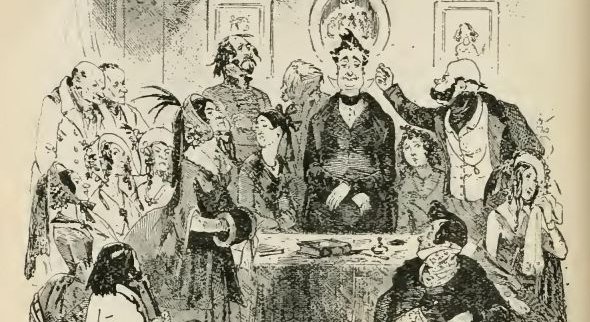
But when the company arrived! That was the time. When Mr Pecksniff, rising from his seat at the table’s head, with a daughter on either hand, received his guests in the best parlour and motioned them to chairs, with eyes so overflowing and countenance so damp with gracious perspiration, that he may be said to have been in a kind of moist meekness! And the company; the jealous stony-hearted distrustful company, who were all shut up in themselves, and had no faith in anybody, and wouldn’t believe anything, and would no more allow themselves to be softened or lulled asleep by the Pecksniffs than if they had been so many hedgehogs or porcupines!
First, there was Mr Spottletoe, who was so bald and had such big whiskers, that he seemed to have stopped his hair, by the sudden application of some powerful remedy, in the very act of falling off his head, and to have fastened it irrevocably on his face. Then there was Mrs Spottletoe, who being much too slim for her years, and of a poetical constitution, was accustomed to inform her more intimate friends that the said whiskers were ‘the lodestar of her existence;’ and who could now, by reason of her strong affection for her uncle Chuzzlewit, and the shock it gave her to be suspected of testamentary designs upon him, do nothing but cry—except moan. Then there were Anthony Chuzzlewit, and his son Jonas; the face of the old man so sharpened by the wariness and cunning of his life, that it seemed to cut him a passage through the crowded room, as he edged away behind the remotest chairs; while the son had so well profited by the precept and example of the father, that he looked a year or two the elder of the twain, as they stood winking their red eyes, side by side, and whispering to each other softly. Then there was the widow of a deceased brother of Mr Martin Chuzzlewit, who being almost supernaturally disagreeable, and having a dreary face and a bony figure and a masculine voice, was, in right of these qualities, what is commonly called a strong-minded woman; and who, if she could, would have established her claim to the title, and have shown herself, mentally speaking, a perfect Samson, by shutting up her brother-in-law in a private madhouse, until he proved his complete sanity by loving her very much. Beside her sat her spinster daughters, three in number, and of gentlemanly deportment, who had so mortified themselves with tight stays, that their tempers were reduced to something less than their waists, and sharp lacing was expressed in their very noses. Then there was a young gentleman, grandnephew of Mr Martin Chuzzlewit, very dark and very hairy, and apparently born for no particular purpose but to save looking-glasses the trouble of reflecting more than just the first idea and sketchy notion of a face, which had never been carried out. Then there was a solitary female cousin who was remarkable for nothing but being very deaf, and living by herself, and always having the toothache. Then there was George Chuzzlewit, a gay bachelor cousin, who claimed to be young but had been younger, and was inclined to corpulency, and rather overfed himself; to that extent, indeed, that his eyes were strained in their sockets, as if with constant surprise; and he had such an obvious disposition to pimples, that the bright spots on his cravat, the rich pattern on his waistcoat, and even his glittering trinkets, seemed to have broken out upon him, and not to have come into existence comfortably. Last of all there were present Mr Chevy Slyme and his friend Tigg. And it is worthy of remark, that although each person present disliked the other, mainly because he or she did belong to the family, they one and all concurred in hating Mr Tigg because he didn’t.
What wonderful description: we know so much about their appearance and personality just through a few lines of description. How anyone can feel anything but affection for Dickens is beyond me. (Granted, he does get longwinded at times, but as I always explained to my students, even great artists can succumb to their basest temptations and stretch things for sake of a few more quid in the bank.)
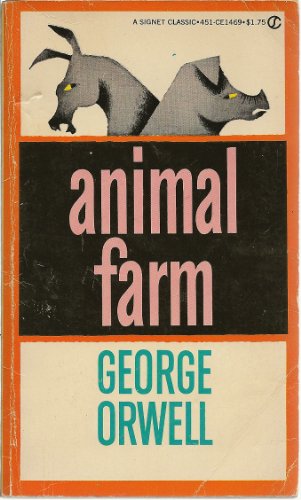
When teachers throughout South Carolina became significantly concerned that the state might ban, among other things, 1984, I'm sure I wasn't the only teacher who thought, "Now, when was the last time I read that? I should probably reread it." However, I just reread it a few years ago, and while I love re-reading favorite books, enough time has to pass between reading to make it enjoyable. It occurred to me, though, that, books becoming increasingly worrisome to the powers that be, I might like to read it to the Boy. I knew the Girl had already read it, but the Boy -- it's not a book he would read himself. Truthfully, though, he is a bit young for it. So I decided we'd do the next best thing: read Animal Farm.
We've been reading a chapter every few nights, and I've used it to teach the Boy a bit about the history underlying that fable. Tonight we read chapter 8.
A few days later, when the terror caused by the executions had died down, some of the animals remembered-or thought they remembered-that the Sixth Commandment decreed "No animal shall kill any other animal." And though no one cared to mention it in the hearing of the pigs or the dogs, it was felt that the killings which had taken place did not square with this. Clover asked Benjamin to read her the Sixth Commandment, and when Benjamin, as usual, said that he refused to meddle in such matters, she fetched Muriel. Muriel read the Commandment for her. It ran: "No animal shall kill any other animal without cause." Somehow or other, the last two words had slipped out of the animals' memory. But they saw now that the commandment had not been violated; for clearly there was good reason for killing the traitors who had leagued themselves with Snowball.
I told the Boy about the Stalinist purges, especially the Great Terror of 1937. I told him about Solzhenitsyn and some of the anecdotes he relates in The Gulag Archipelago. The Boy was shocked?
"Why did they do that?"
"To maintain power."
Napoleon was now never spoken of simply as "Napoleon." He was always referred to in formal style as "our Leader, Comrade Napoleon," and this pigs liked to invent for him such titles as Father of All Animals, Terror of Mankind, Protector of the Sheep-fold, Ducklings' Friend, and the like. In his speeches, Squealer would talk with the tears rolling down his cheeks of Napoleon's wisdom the goodness of his heart, and the deep love he bore to all animals everywhere, even and especially the unhappy animals who still lived in ignorance and slavery on other farms. It had become usual to give Napoleon the credit for every successful achievement and every stroke of good fortune. You would often hear one hen remark to another, "Under the guidance of our Leader, Comrade Napoleon, I have laid five eggs in six days"; or two cows, enjoying a drink at the pool, would exclaim, "Thanks to the leadership of Comrade Napoleon, how excellent this water tastes!"
I told the Boy about all the titles bestowed upon Stalin, all the awards, all the honorifics.
"What did Stalin try to do, then?" I asked.
"Make himself into a god." A bit simplistic, but not too far from the truth.
I explained the illogical thinking behind the claim that atheism is behind the most horrific events of the twentieth century because China and the Soviet Union were officially atheistic states. "They had the exact same dogmatic belief structure as the strictest religion," I explained.
In the late summer yet another of Snowball's machinations was laid bare. The wheat crop was full of weeds, and it was discovered that on one of his nocturnal visits Snowball had mixed weed seeds with the seed corn. A gander who had been privy to the plot had confessed his guilt to Squealer and immediately committed suicide by swallowing deadly nightshade berries. The animals now also learned that Snowball had never-as many of them had believed hitherto-received the order of "Animal Hero First Class." This was merely a legend which had been spread some time after the Battle of the Cowshed by Snowball himself. So far from being decorated, he had been censured for showing cowardice in the battle. Once again some of the animals heard this with a certain bewilderment, but Squealer was soon able to convince them that their memories had been at fault.
I explained to the Boy the idea of saboteurs in Soviet ideology: all the shortcomings of state-run enterprises (i.e., most of what happened in the USSR) were explained away by the idea of enemies of communism undermining the efforts of the Soviet government to create a utopia.
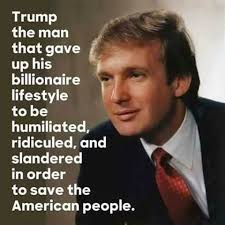
I can't help but see parallels in all of this with the MAGA cult. Just as the pigs were gaslighting the animals about the changes going on around them, Trump lies opening to his followers, and the true MAGA devotees, blinded by their devotion to Trump, don't even see the obvious inconsistencies and lies. Just as Napoleon's and Stalin's sycophants praised them with honorifics and virtual worship, so too the MAGA commitment to promoting Trump in literally messianic terms. Just as Squealer and the other pigs convince the animals to disbelieve their own memories, Trump's campaign brazenly called on his supports to cast Harris as a threat to democracy while painting the man who literally led an attempted insurrection as the savior of all.
Our country is about to be in a mess that might not be fully cleaned up by the time the Boy is nearly my age, and he needs to know it has happened before and will happen again.
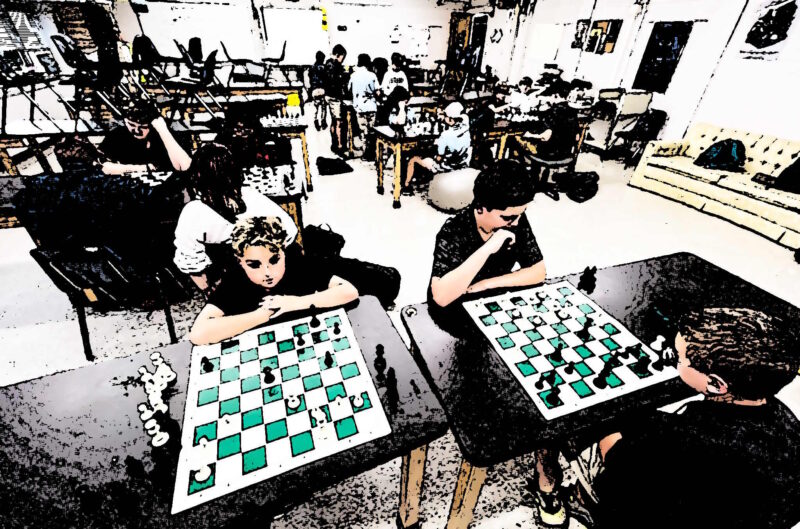
I had a thought during chess club today: many of the kids who come for our meetings are, for lack of a better word, nerds. That's how others see so many of them. Social misfits, uncoordinated socially and physically. I think it's fairly safe to say that a lot of the kids who come to play chess don't always feel like they fit in. During PE class, one or two might suffer mini- (or not-so-mini-) anxiety attacks at the thought of participating in a physical activity. During social time, one or two might feel completely lost when around the "cool" kids. When tensions flair in a hallway, one or two might cast a quick glance at the kid who bullies others, wondering if they'll be the new victim. One or two. Or more.
And it occurred to me as we finished up, and I heard one boy as he was leaving saying, "I love chess club," that this might be one of the few times some of these kids feel absolutely in the right place with the right people. It might be the one time they feel like they fit.
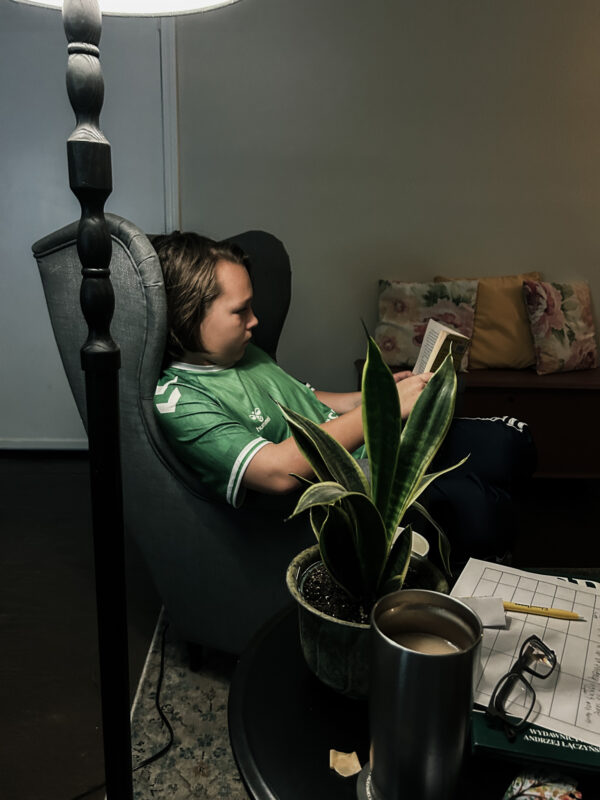
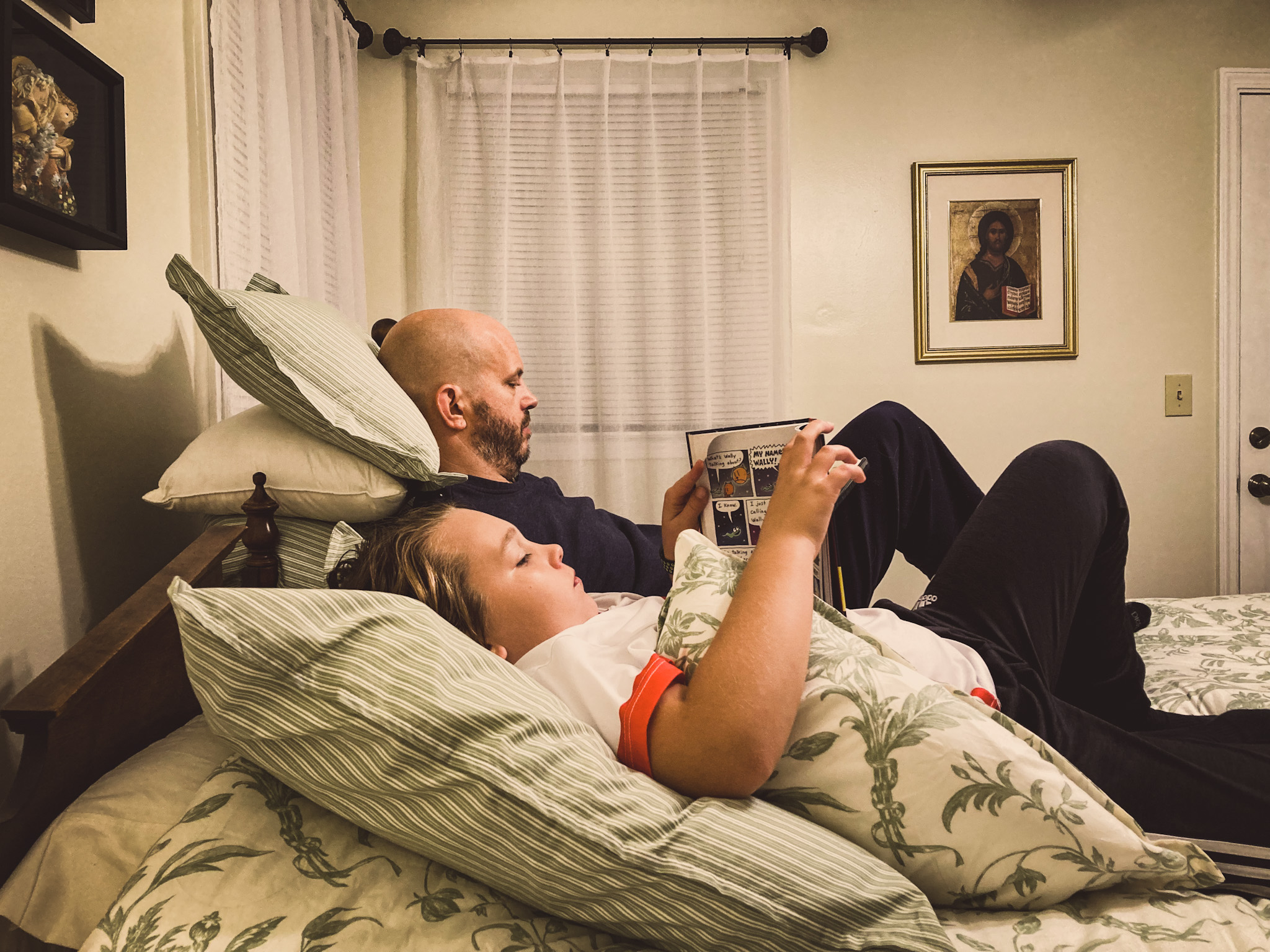
In the evening, the Boy and I sat in the basement reading. He's put off an assignment for far too long, and tonight we started making headway to the Friday deadline.
The first hurdle: where did you stop?
"I don't know. I can't remember."
"Don't you have a bookmark?" How can anyone keep track of reading without a bookmark?
"No."
"Which chapter was the last you remember reading?"
"I don't know. I can't read Roman numerals."
I take a quick glance: chapters are numbered with a bunch of confusing letters, so I teach him how to read Roman numerals.
Finally, we get everything squared, and he begins reading. His goal: ten chapters. His accomplishment: ten chapters.
The Boy claims he hates — hates — reading. It’s hard. It’s exhausting. It’s boring. Yet there are some strange quirks about him.
For example, he loves reading — if someone else is doing it. He will sit for hours and listen to you read a book to him. One of his favorite things to listen to is an audiobook.
He also enjoys certain books. The Dog Man series is an eternal favorite for him.
Most strikingly, he scores very high on his standardized reading tests — in the 90th percentile as I best recall, which means he’s very good at reading for his age.
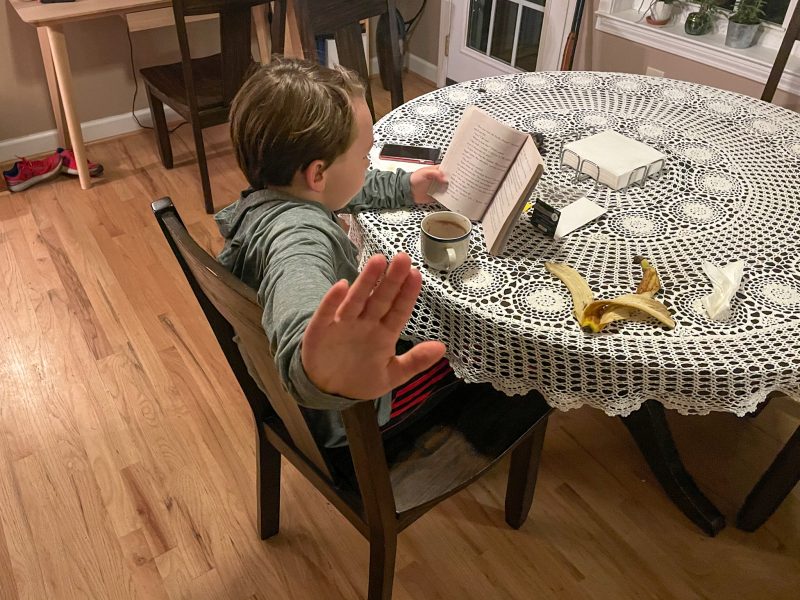
But we still have to force him to get his nightly twenty minutes of reading in. Yet he was so engrossed that he didn’t even notice I’d snapped this picture.
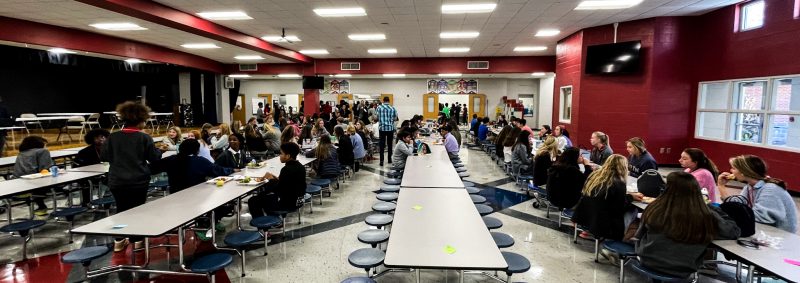
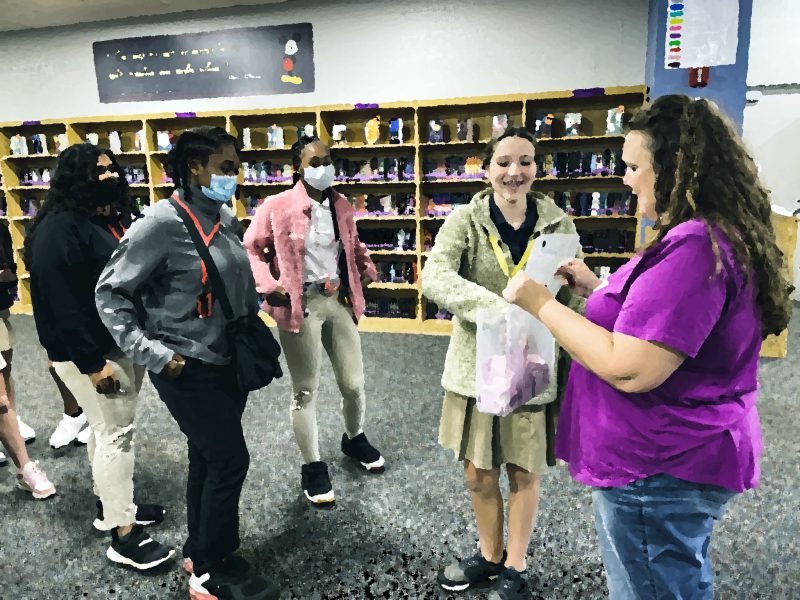
Our first day back after the break, and we had quite a change: for the first time since March 2020 we ate lunch in the cafeteria. By “we” I mean our team, which constitutes one-third of the eighth-grade students. And it’s a one-day-a-week gig only: we can’t get everyone in there and maintain social distance, so we get Mondays.
Such a strange thing to return to what was a taken-for-granted reality for so long after such an extended break.
Back home, though, it was a return to familiar routines that paused a little during the extended break: a small dinner (barszcz ukrainski — the first time in ages that we’ve had that wonder of the culinary world), a bit of reading, an early bedtime.
We're working on a tricky standard in school in my on-level classes. They'll have a TDA (text-dependent analysis) question as part of their year-end test, and it's often a question about how some text develops some idea or other. It might even provide an excerpt and ask specifically how that passage contributes to this or that idea. It's not a straightforward question, and while I'm not entirely sure it's a useful question to pursue with kids who have difficulty reading at grade level, I am obliged to some degree or other to teach to the test. That's what we've done the last couple of days. We worked through a text together and then figured out how to answer such a question. Today, students were working to do it on their own.
Part of the process, I taught them, is to take the main idea of the text and compare it with the passage the question wants us to analyze. "See what similarities they have, what differences. Think about the relationships between those." Since the first multiple-choice comprehension question for our article "Why I Refuse To Say I 'Fight' My Disability" was "Which of the following statements best expresses a central idea of the article?" I knew we could save time in determining the main idea for ourselves. We evaluated the four possibilities and realized it was the first option: "Hitselberger’s disability is an important part of who she is, not an enemy that she needs to defeat."
The analysis question didn't deal with just one or two sentences; it dealt with the entire final third of the article. "How do paragraphs 5-14 contribute to the development of ideas in the text?" At first I thought, "Great, the kids will have to comb through nine paragraphs to find the answer." Then I looked at the nine paragraphs. I didn't have to look closely: the relationship is literally plastered throughout the passage.
I will say I fight ableism and prejudice.
I will say I fight lack of access, stigma and ignorance.
I will say I fight discrimination.
I will say I fight these things, because I do. These are battles to fight, and win. It is ableism, prejudice, lack of access, stigma, ignorance and discrimination that prevent me from having the same opportunities in life as my able-bodied brother and sister, not my cerebral palsy, my wheelchair or my inability to walk.
I will fight to make this world a better place for future generations of kids just like me.
I will fight to make sure they are never told or led to believe their bodies are a problem or something they must do battle against on a daily basis just to fit in.
I will fight to make sure those kids have the same opportunities as everybody else, and never believe everything would be better if they could just change who they are.
I will fight for a world where the mere presence of disability does not make you extraordinary. Where disabled children are taught to aspire to more than just existing, and where being disabled doesn’t mean you have to be 10 times better than everyone else just to be good enough.
I will fight for a world where we talk about living with and owning our disabled bodies rather than overcoming them.
I will fight for a better world, and a better future, because those things are worth fighting for, but I will not fight a war against myself.
So it's simple, I thought. The main idea statement is "Hitselberger’s disability is an important part of who she is, not an enemy that she needs to defeat." Every single paragraph of the passage begins with "I will fight." It's not terribly difficult to see the connection between "fight," "enemy," and "defeat." So the main idea statement says that the author will not fight her disability while the passage gives a list of things the author will fight.
Most of them could not see it. I phrased it differently and rephrased it again. Many of them could still not see it.
I've been thinking about this all day, wondering what went wrong. Was it the presentation? I'd like to think I'd done a decent job scaffolding the learning: we'd practiced the very same thing with the very same question yesterday. The only difference was the text. Was it the students? Just as I'd like to think I wasn't responsible, I'd like to think it wasn't a question of student culpability because there are only two ways to explain it: they can't do it, or they won't do it. Neither one is appealing. Yet of all three options, I wonder if the truth isn't hidden in one of them. It's not a question of intelligence or reading ability; perhaps it's just a question of critical thinking.
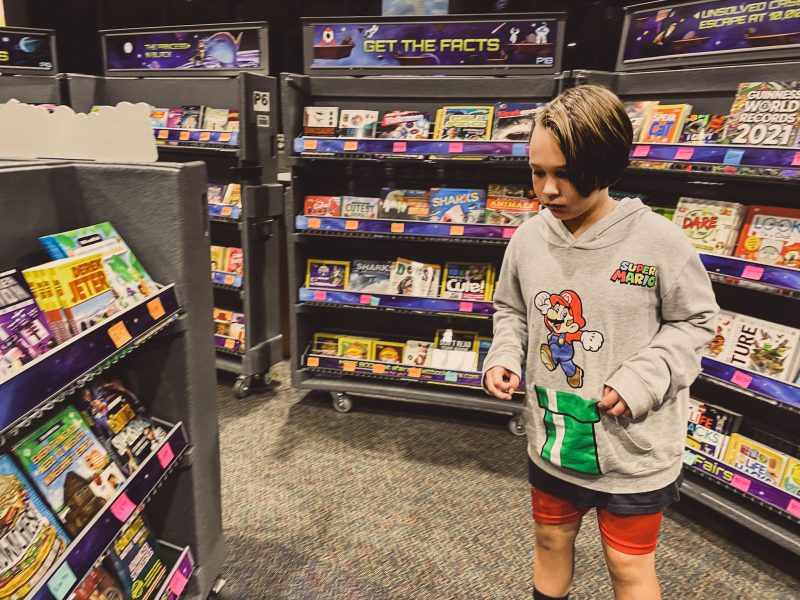
The Boy wanted to go to the bookfair. For someone who doesn’t like reading, or at least claims he doesn’t like reading, he certainly does get excited about getting new books.
The trick, as with every reader, is to find books he likes — and in his case, that means books that make him laugh. The Dog Man series is a favorite, so he bought the newest installment, Grime and Punishment. Yes, it is making the allusion you’re thinking. Other books in the series include:
Mothering Heights
Fetch-22
Lord of the Fleas
A Tale of Two Kitties
For Whom the Ball Rolls
Brawl of the Wild
I don’t know how many other kids know the allusions, but I explained them all to the Boy. I couldn’t talk intelligently about two of the books, though: For Whom the Bell Tolls (which I’ve never even attempted to read) and Catch-22 (which I tried to read in high school but just never got into).
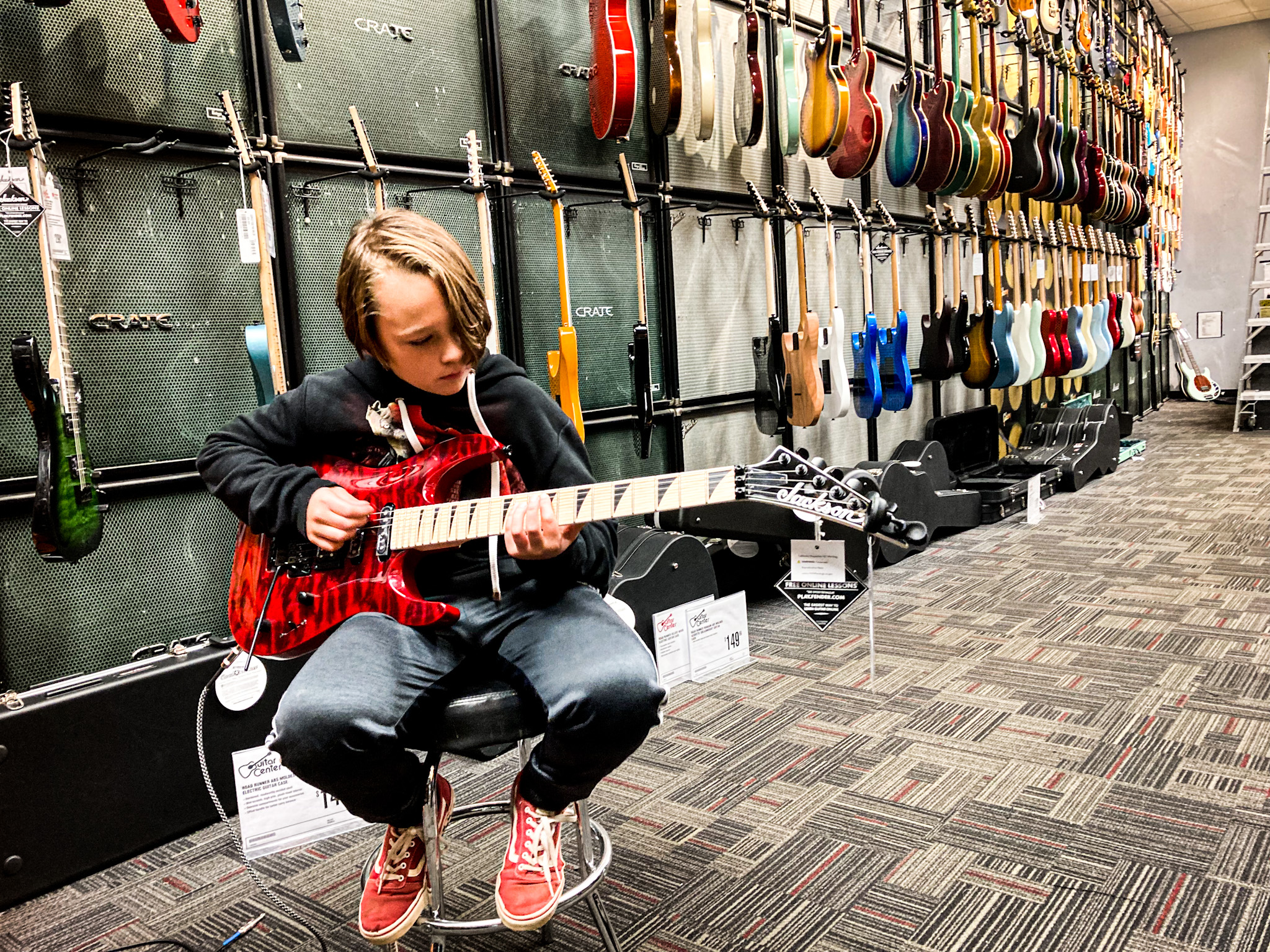
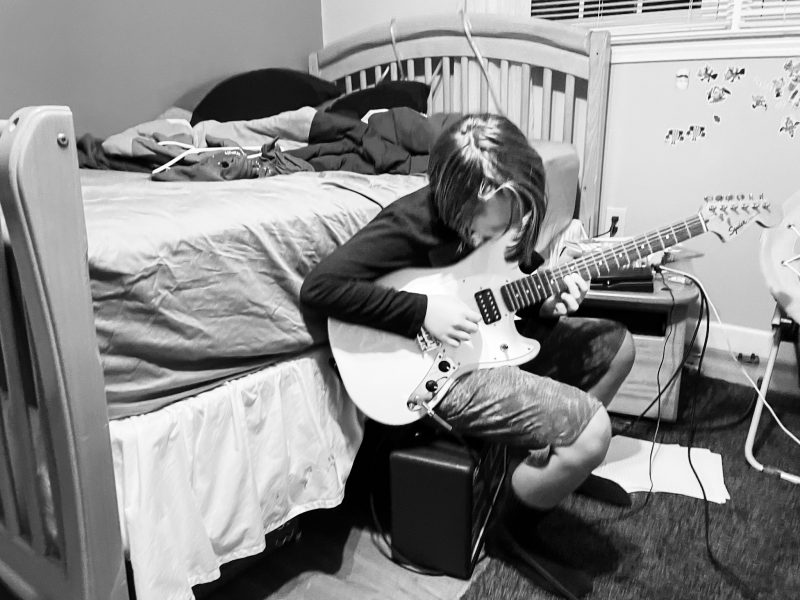
Afterward, a bit of guitar practice. D, my best friend since forever (as my kids would say), is coming to town next weekend for a Genesis concert in Charlotte: it will be a boys’ night out, just the three of us. The Boy’s first concert. He’s preparing a little concert for D with a few little surprises sure to make him smile.
As for the girls this evening? They’re at L’s third and final club tryout. She’s been offered positions in the top teams of the other two clubs she tried out for this weekend, and I expect the same from this club. It is, after all, Excell, for whom she’s played for two years now, playing sand, grass, and indoor with them. I have a feeling, though, that she’s not going to go with them this year.
I took the kiddos to the library today to get their first independent reading selections for the second quarter. The librarians came up with a clever game for the kids to play: they chose cards at random that “dared” them to get particular books.
“Get a book with a red cover.”
“Get a book by a female author.”
“Get a book from a friend’s recommendation.”
“Get a book with a one-word title.”
I talked the librarians into adding a new one: “Get a book Mr. Scott selects for you.”
For two girls I selected Ender’s Game — a science fiction masterpiece. I first read it when I was their age, and it thrilled me. What a shocking ending! I chose it for the two girls because they had never really read science fiction. “I’m more a dystopian fiction girl,” one of them said, “But I’ll give it a shot.”