Matching Tracksuits

fun in fours

memory

High Dive

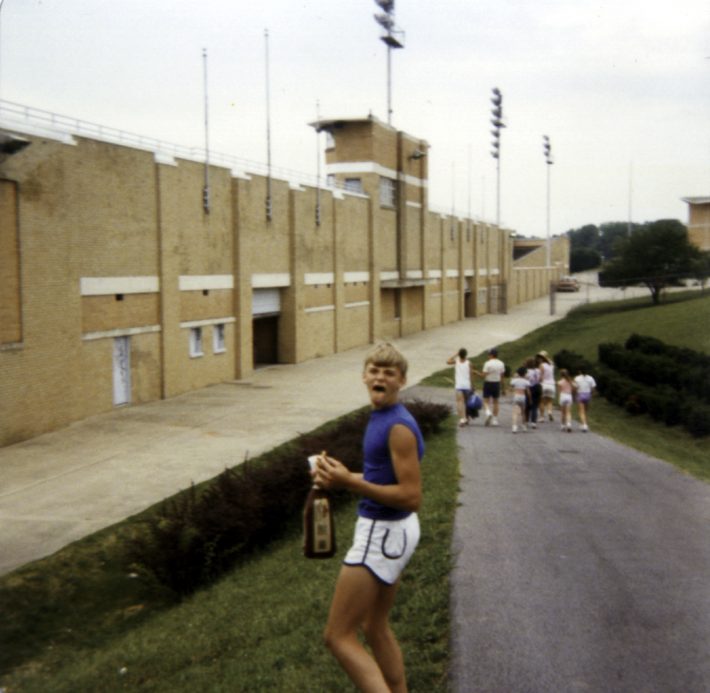
Looking for all the extra runway he can find, he leans back, arms straight, glistening hands gripping the rails. He hangs momentarily, his body hovering over the concrete ten feet down — certain death if his wet hands lose their grip — before he jerks his whole body forward as he begins his takeoff. As he bolts toward the end of the board, a fine mist of water blooming from is wet hair with each step, those of us still with feet planted firmly on the pool deck watch, mouths slightly agape in wonder of what mastery Chad is going to display. Approaching the end of the board, Chad leaps upward, somehow transferring his forward momentum into an upward launch while still miraculously maintaining much of his forward motion so that when he springs from the end of the board, he soars impossibly high and impossibly far. We all watch him as his legs pump in the air and his arms extend from his sides like wings gliding. He leans slightly forward, legs still turning as he approaches the water. Just when it seems he’s going to fold into the water face-first, he throws one arm forward, one arm backward, instantaneously rotating his body 180 degrees. […] Finally, the back of his head pops the water with a loud crack. Countless shards of glass — or even diamonds — explode upward accompanied by a single cannon shot, an explosive pop!, all of which arc and fall back back, showering the water in flashes of sunlight. Chad, the best diver in the pool, has performed yet another perfect twister.

I am next, a scrawny thirteen-year-old who cannot do a twister at all. My slider is also non-existent. And a flying squirrel? No way. But I do have a trick that produces a moderately high and voluminous splash: my watermelon.

I reach the top of the high dive and begin may approach. Like the twister, the watermelon is a trick of delay. The key, what makes it look dangerous and thus gives it panache, is to look like you’re about to do a simple belly flop. At the last minute, you assume a fetal position and throw your ass over your feet, essentially completing a half flip just as you enter the water. If your timing is right, your feet will hit last and produce an eruption of water. You can always tell how succesful you were by the depth of the pop you hear underwater. If your rotation is wrong or improperly timed, you make no splash or, at worst, complete a belly-flop.

This one, though, is as good as I’ve ever done. I surface feeling certain I’ve held my own in the informal, unspoken daily contest at the high dive of Spring Lakes Swim Club. Confirmation comes when I hear Chad, who is sitting on the edge of the pool chatting with a bikini-clad goddess whom I would never approach, say, “Sweet watermelon, man.”

The king has spoken; the king approves.
Fiddlesticks

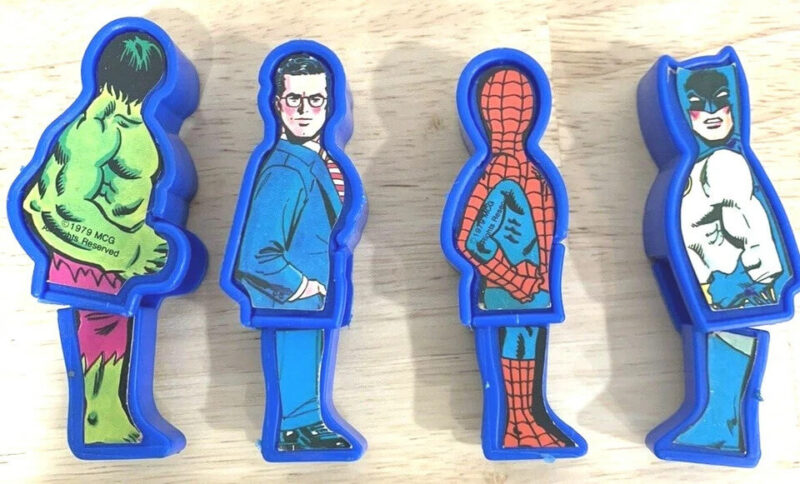
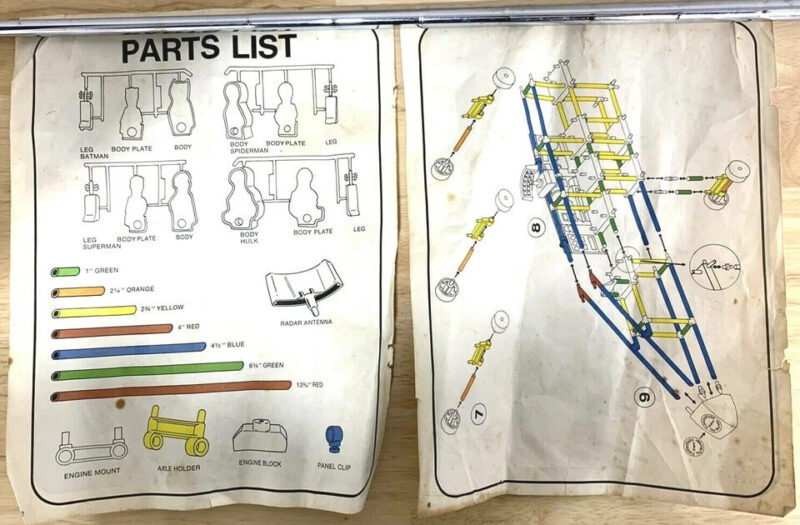
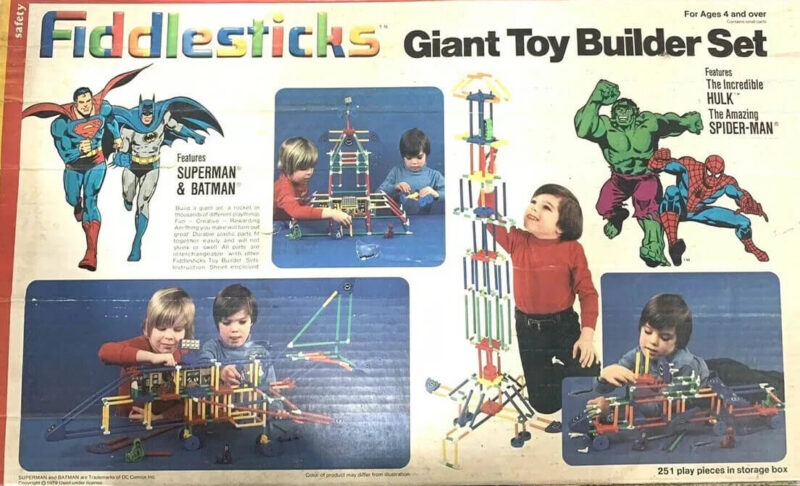
Though we did not celebrate Christmas, my parents often bought me something to occupy my time during winter break. One year, likely 1979 or 1980, they bought me an enormous box of Fiddlesticks, plastic building toys consisting of plastic tubes of varying lengths and colors along with connectors of various configurations.

My set came with strange Batman, Superman, Hulk, and Spider-man figures that bent at the waist and had stickers to represent the sides of their bodies, but they all had their heads turned and their fits balled at their waists, making them look more constipated than ferocious.

The first item in the instruction booklet was a gigantic plane that I probably built at least twenty times. The toy required substantial imaginative license as there was actually nothing solid about the plane (or any other toy one created with the set). Everything, then, looked particularly unrealistic, but I, a kid in the early-eighties, couldn't have cared less.

As with many of the other toys I had, I grew tired of creating just the pre-planned planes, rockets, and cars and began creating my own things: guns (it was particularly good for creating assault rifles), stilettos, and incendiary devices.

And the thought of them came to me today out of the blue...

Memory

If memory were a food, mine would be Swiss cheese: so filled with holes that it seems more not to be there than to be there.

My wife asks me to go to the store.

"Sure," I say.

"We need milk, soy sauce, and ..." and it takes no more. I'm already reaching for my phone to pull up Evernote, the app which takes the place of my memory, and start writing the list.

"Can't you remember a handful of things?" I ask myself as my thumbs key in the list. "Five things. What's so hard about five things?"

The truth of the matter is, if I didn't walk it down, I would take fewer steps than there are items on the list and already forget have the list.

First step -- there goes the dog food. Second step -- soy sauce is no more. Third step -- well, maybe I can keep milk in mind since it's the most common thing we all buy in the story.

Sometimes I try to keep the list in my head. I make meaningless, stupid sentences or images to help me remember -- a method with a fancy name that leads to ordinary results. 

"Let's see. Soy sauce, dog food, and milk. I'll think of our dog as a big St. Bernard, with a jar of soy sauce around its neck instead of that little barrel of whatever they carry. What do they carry? I think it's brandy, meant to warm up people who are lost in snow -- a bit of warmth in the middle of a snow storm. That's stupid, though. I remember reading that drinking anything alcoholic is a terrible idea when you're cold. It might warm you up for a minute, but your body spends more energy converting the alcohol to sugar than the benefits of the alcohol...." and I can't even remember to stay on task long enough to complete my picture of a soy-sauce-carrying dog chasing after a milk truck.

Then I get to the store and I can't remember my stupid picture. "It had a pet in it, didn't it? Wasn't it our cat, skiing down a hill of matches? Cat food and matches?"

First House

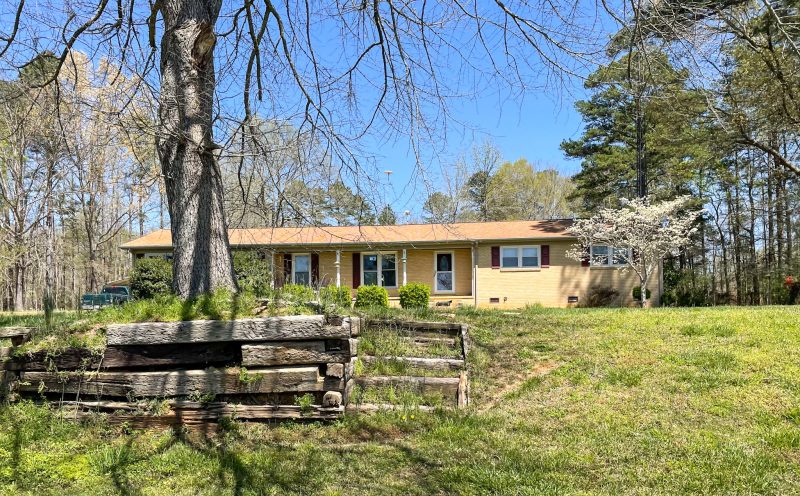
The last time L and I were in Rock Hill for a volleyball tournament, and Papa was still alive, I managed to find the first house I remember living in, the house Nana and Papa owned when they brought me home.

In the front was the same railroad-tie planter that Papa had built decades and decades ago, sometime in 1976 or 1977 I would imagine: I say this because I remember him building it, in vague, hazy memories that might be more the product of suggestion than actual memories.

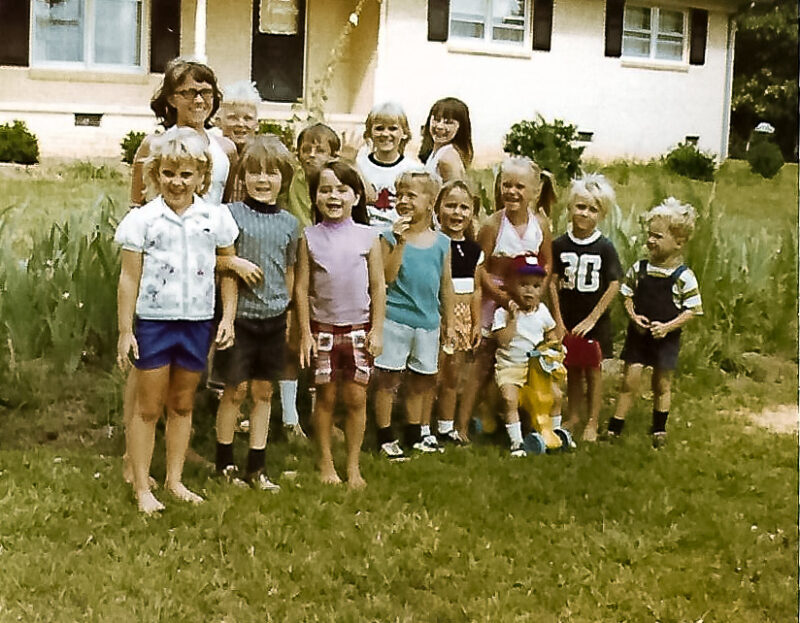
Image from 1975

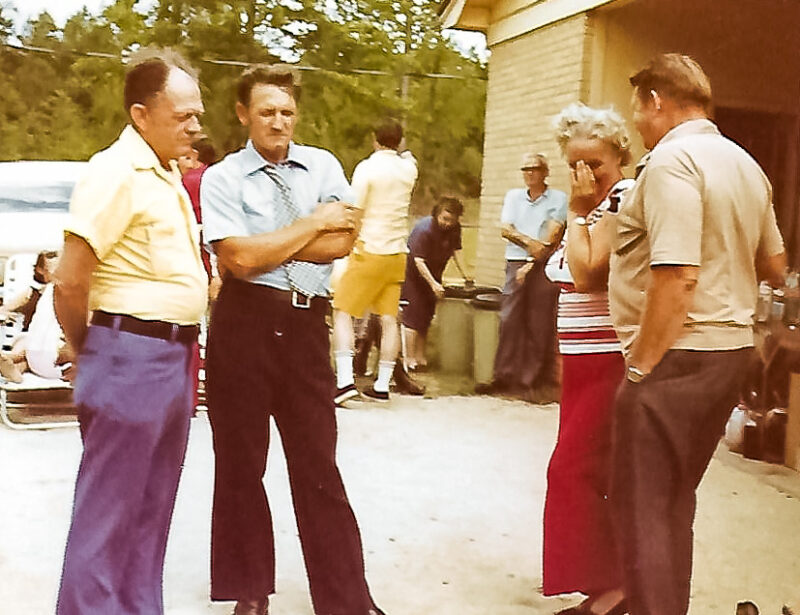
When Nana passed away and I was going through all the old photos we'd taken from their condo, I found one of us cousins in front of that house. I'm on the little horse toy toward the far right; that's my cousin C behind me. This was from a family reunion that we had at our house. I remember a family reunion there, so it must have been a second one: I'm far too young in this picture to remember anything from that time.

From the same series of pictures is one of my grandparents: Papa's father is on the far left; Papa's mother is the only woman in the foreground.

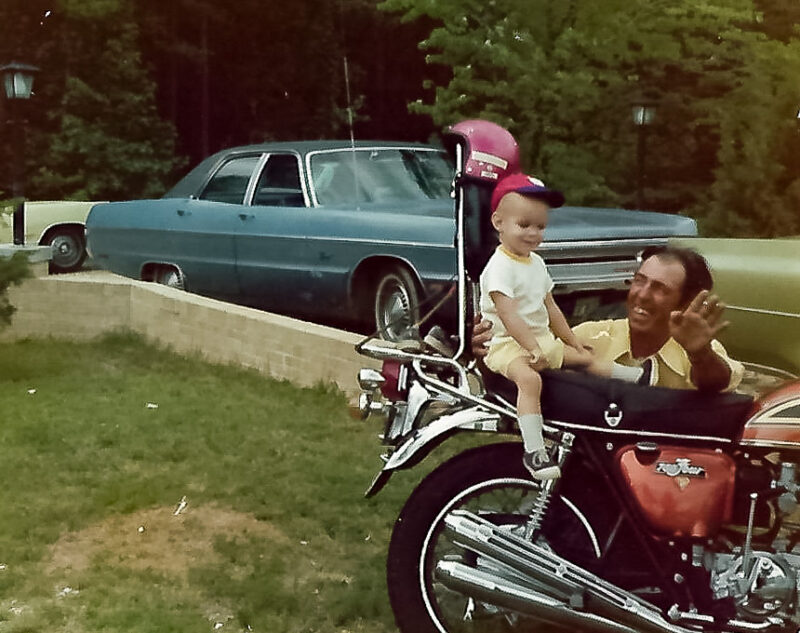
And yet another one from that day, this time on someone's motorcycle. I'm not sure whose, and I'm not sure it was the owner posing with me in this shot, and I'm not sure who the man in the picture is. These are all just things that exist in my past but not in my memory.

And the obvious move: what pictures will have this same effect on my own children? Probably none -- their lives are so completely documented here that they would have no problem figuring out who was holding them on a motorcycle...

Lighthouse

In a scene in After Life,  Ricky Gervais's character Tony Johnson is in the car as his brother-in-law drives, and he's looking for music to play. He pulls out a CD, identifies the artist, and starts mocking his brother-in-law.

"Lighthouse Family?!?" he asks incredulously. He's tempted to throw the disc out the window as he does several others.

Immediately I think, "I've listened to them. Or at least I've heard of them." I hit "Pause" and sit staring at the screen. "Who was that group? How do I know them?" I wonder. I pull out my phone, load Spotify, search "Lighthouse Family," play the first song that appeared, and in an instant, I know something is about to change.

When you're close to tears remember
Someday it'll all be over
One day we're gonna get so high

The singer begins, accompanied by some light strings, a piano, and an organ.

"I've heard this, I think."

The second line begins and the bass and drums enter:

Though it's darker than December
What's ahead is a different color
One day we're gonna get so high.

"I've heard this! I know I've heard this -- countless times, it seems." But I can't place it. Then the pre-chorus begins:

And at
The end of the day remember the days
When we were close to the edge
And wonder how we made it through the night
The end of the day remember the way
We stayed so close till the end
We'll remember it was me and you

"This seems so very familiar!" But I still can't place where I'd heard it. It feels like hearing a line from a film, knowing I've seen the film, but not even being able to remember the scene, the title, the actor. I familiar void.

When the chorus enters, though, I know. I remember where I've heard this song. I remember why I've heard it so many times.

'Cause we are gonna be
Forever you and me
You will
Always keep me flying high
In the sky of love

"My God! It's that song!"

In 1997, just a year after I'd moved to Poland, this song had just been about everywhere. On the radio. Playing in passing cars. At bars. At discos (i.e., Polish discos -- dance places). Everywhere. And I always hated that song -- so saccharine. Admittedly, the guy's voice is gold, but the song itself? So empty. So vapid.

Yet I sit here listening to it, suddenly transported by a song I haven't heard in over twenty years, a song I have thankfully and mercifully forgotten in probably just as long, and I feel such a longing to go back to that time for just one evening, just one beer, just one song. This song. It's a song I hate and now, thanks to Ricky Gervais's After Life, I love in that syrupy way that only nostalgia can inspire.

Time Machine

One of the things I like most about this site is the Time Machine widget at the bottom that serves up links every day from the past. What were we doing three years ago? Five? Ten?

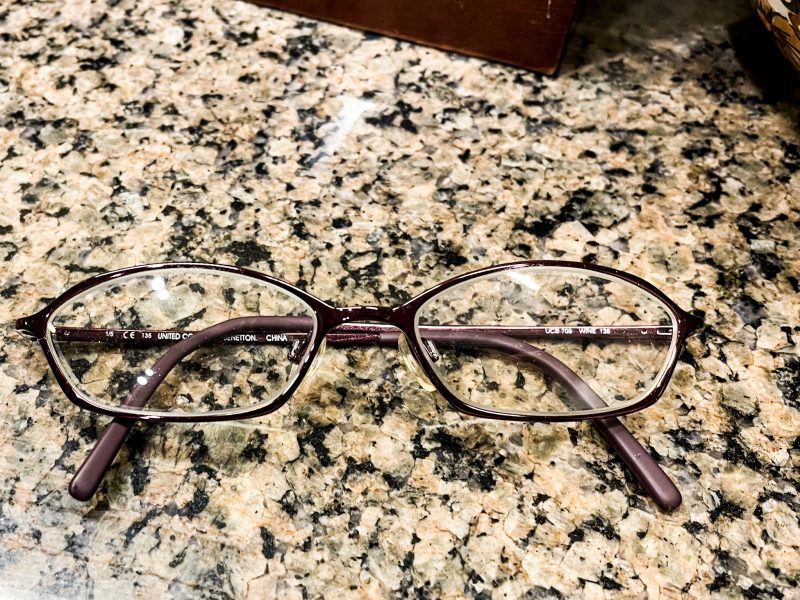
But it’s the unpredictable things that bring long-forgotten memories that are the most enjoyable — like finding your fourteen-year-old daughter’s glasses that she wore when she was five.

Millennium Falcon

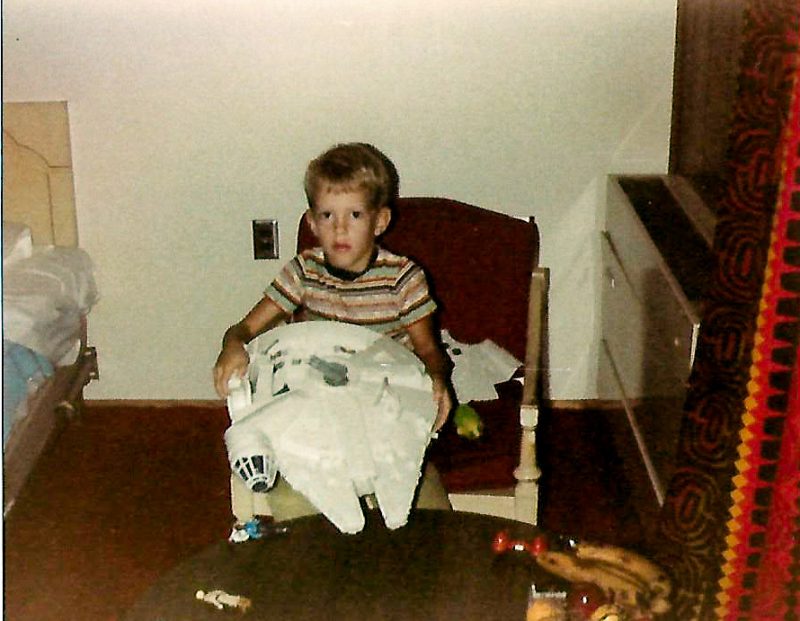
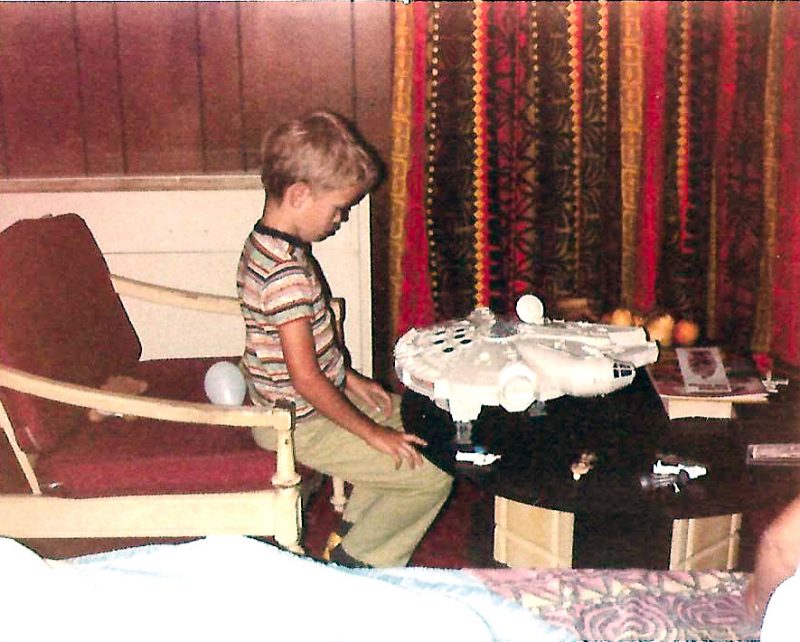
It was the greatest moment of my life to that point: a new, clean Millennium Falcon, nearly as big as I, was mine.

At times all I could do was sit and look at it incredulously.

Now, over forty years later, it’s in the Boy’s room, though the newness has worn off — both from the Falcon and for the Boy.

Old Friend

M and I were the most unlikely of friends. In many ways, we were as opposite as anyone could imagine. He was raised by his grandparents in the country, and throughout his schooling, I'm sure he was considered "at-risk." He smoked (cigarettes and more), drank, and was, by his own admission, a hellion. When, at a church youth function, the minister gathered all the boys together and asked who'd brought the flask, it was M. If anyone ever got in trouble for making a smartass remark in youth group, it was always M. He was rebellious and sometimes disrespectful, and academic concerns were of little importance in his thinking. He finished high school, but just barely.

Yet on a church youth trip to Disneyworld, he and I ended up spending an afternoon together. We'd been in separate groups during the morning, but the kids in my group had wanted to break up into small groups. "Mr. K said not to do that," I protested. But they did it anyway, and the result was the Mr. K, the minister, followed through with his threat: they had to spend the rest of the day with him and his group of adults. I protested my innocence, and the kids in my group admitted that I'd tried to keep the group together, so I was pardoned. M and I ended up spending the rest of the day together. It was the first time we'd really spent any time together, and from that afternoon, we became close friends.

While we had little in common, what we did have in common was enough, I guess. We both loved hot food, for example, and we'd often get the spiciest salsa we could find with a bag of chips to see if we could handle it, washing it all down with Mountain Dew. We loved music, and we spent a lot of time with his grandparents playing bluegrass, Paw (as I came to call his grandfather just as he did) and I on guitar, M on banjo, and Maw singing. We both enjoyed shooting .22s at anything that would sit still long enough, and though we shot at a lot of squirrels and birds, we never hit them. Old cans and cola bottles filled with water were our favored targets. How many times can you hit that two-liter bottle before all the water drains out? The strategy is, of course, simple: start aiming at the top and work your way down. During the summer, if we needed money, we'd spend an afternoon helping this neighbor or that put up hay, and we'd earn enough for dinner, gas, and a couple of movies.

When he graduated high school the year before me, my parents asked him about his plans. "I'll just get a job in construction, I guess." They encouraged him to at least take a few courses at the local community college. "Then, you could start your own construction firm and you'd have the paperwork skills to run it," my mom explained. "Nah," he laughed, "school's not for me."

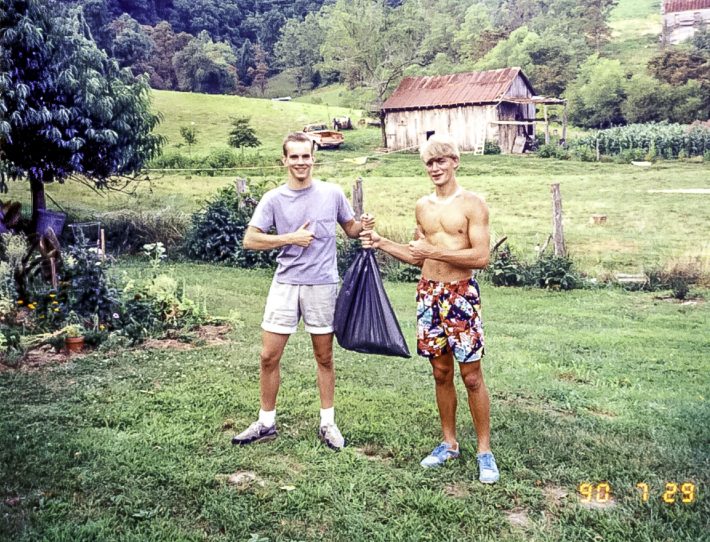
One July day that summer, Paw gave us a job: "There's some raccoons that are just giving our garden hell," he said. "I'd appreciate it if you boys'd take care of it." We sat at the edge of a small clump of trees that summer evening, a two-liter bottle of Mountain Dew sitting between us, .22s by our sides waiting. Soon enough, three raccoons trundled into the garden. We waited until the were situated so that we could shoot away from any houses then let loose.

Maw and Paw's farm was in a valley that seemed to echo with the sounds of neighbors' activities, and as we fired away, we heard their nearest neighbors, who were sitting on their front porch, cheer us on: "Somebody's gettin' some coons!" they whooped.

Afterward, we put them in a trash bag and Maw took a commemorative picture.

Eight years after his picture, I came home for the summer after spending two years in Poland and having already committed to a third year. I went to track down M, heading to his grandparents' farm. I didn't know if M was still living with them or if he'd moved out. In point of fact, he'd been moved out.

"He's locked up in the Washington County jail," his grandmother explained. "Breaking and entering."

I went to visit him that same afternoon. After the deputy filled out all the paperwork, I waited in the visiting room. It wasn't a room with a row of chairs and little telephones like you see in the movies. This was no prison, just a county facility: there was a chair on the other side of the bars and the rest of the office with a single chair next to the bars on the visitors' side. Glancing around, I saw a sign that visitors were not allowed to bring anything to inmates. I looked down at the two packs of cigarettes I'd bought him, wondering what I'd do with them, when I heard the deputy call his name: "You've got a visitor." M's face was a mixture of pleased shock and utter embarrassment. We talked for a while -- I'm not sure because we never really talked about anything important. I had friends that I could sit around and talk about the existence of gods, the current political situation, the ironies of life, but with M, it was seldom more than friendly banter.

As the visit ended, I turned to the deputy. "Here's some cigarettes. I guess you can give them to any officers who smoke since I can't give them to my friend." The deputy smiled: "Go ahead. It's no big deal."

When I returned a year later, he was incarcerated again, this time in prison; I was in Boston, starting what I thought would be a long slog to a Ph.D. in the philosophy of religion. We corresponded for about nine months, and then it just stopped just about the time I dropped out of grad school with the realization that while the philosophy of religion is an utterly fascinating topic, it has little practical value. I can't remember who sent the last letter.

Shortly after K and I moved to America in 2005, I got word that M's younger brother, who was in his mid-thirties like I was, had died from an aneurysm in his brain. Paw had died just a few years before that, and I hadn't gone to the funeral because I was still living in Poland, but I was determined to go to C's funeral.

The day before the funeral, though, a horrible storm swept through Ashville, covering the mountain I'd have to drive over with icy snow. K asked me not to take the chance; Nana begged me not to take the chance. I didn't go.

A few years after that, Maw passed away. She'd moved in with her older daughter, and we'd moved to Greenville. For whatever reason, I didn't go.

Some years ago, Nana got a contact number for M from his aunt, who was more like a sister -- or was it the opposite, an sister so much older that she was more like an aunt? I can't remember. I sent a text to that number, but I never got a response.

I find myself sometimes thinking about people from the past, wondering where they ended up. Social media has answered that question for so many of the people I grew up with. Others disappear. But it occurred to me that I might simply Google him.

I did, and I wish I didn't: I find an article from the local paper where we grew up -- "Bristol, Va. man arrested after agents find meth lab." The link is to a Facebook post, so I click through, but the link to the article itself is broken. I go directly to the site and search. I find two hits.

"Please let this be a different man."

It's not.

A Bristol, Virginia man is charged after a tip given to police leads to the discovery of a methamphetamine lab.

Washington County, Virginia Sheriff Fred Newman said a search warrant was secured to examine a home located in the 22000 block of Benhams Road on Monday.

Deputies then arrested Michael Lee Braswell, 44, who is charged with possession with intent to manufacture 28 grams or more of methamphetamine, possess precursors to manufacture methamphetamine, allow a minor under the age of 15 to be present while manufacturing methamphetamine, and possession of meth.

Newman said Braswell is being held without bond in the Southwest Virginia Regional Jail in Abingdon. (Source 1 || Source 2)

The article is from Tuesday, September 20, 2016. I guess had I been in the area then, I could have visited him in the same jail in which I'd visited him almost twenty years earlier.

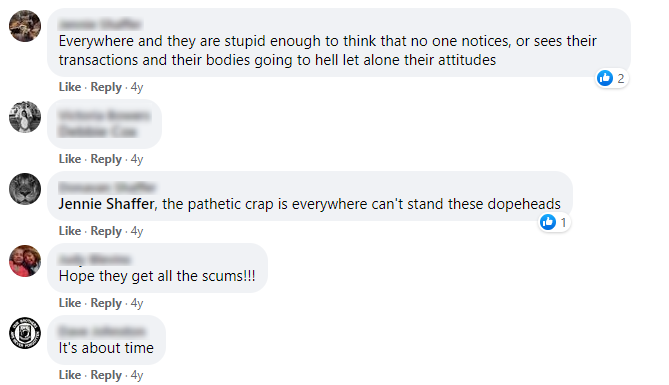
I head back to the Facebook source and read the comments:

A dear friend from my youth is being called a dopehead (I guess that's true) and scum.

I guess I could have seen it coming when we were kids. I did see it coming. I was with him on two occasions when he bought pot. He didn't admit. He didn't show it to me. He certainly didn't offer it to me, but there was no doubt. When you pull into a convenience store parking lot, and your friend gets out, goes over to another car, and sits in that car for a few minutes, coming back stuffing something in his pocket, it's obvious. When you and your friend pull into a driveway, and a scruffy young man walks out to the car, makes small talk, then asks, "How much of that stuff did you want," it's obvious.

I clean up his photo in Lightroom to make him look a little less -- what?

It doesn't work. He still looks too much like a -- what? A thug? An exhausted and frustrated man? I try again, trying to soften the hardness of his skin.

A little better, but there's nothing I can do with those eyes, those forlorn eyes that seem completely lacking in surprise, completely resigned to his reality, completely fatalistic.

Every year, there's a kid or two on the hall that I find myself wondering about, thinking that he or she might end up like this. There's the same resignation about them, the same air of fatalism. Every year I try to help them, to show them that they do have some control over their fate, to show them that more is in their hands than they probably realize (though the cards are often stacked against them). To try to prevent them from being a photo someone looks at thirty years later, wonders whatever happens to them, then loads a search engine and beings looking...

The Solo

Looking through old images for pictures of Dad, I found this video and promptly uploaded it for posterity. This was Thanksgiving 2005, our last Thanksgiving in Nashville, where we used to go every two years to spend the holiday with Mom’s brother Nelson and his family.

I can’t remember why Dad was pantomiming singing, but it was like in connection to the years-long running joke about his lack of singing ability. He used to say that most people like it when he sings a tenor solo: “Ten or more miles away, and so low you can’t hear it” he’d add with a sly smile.

February Evening

I head out for a walk with the dog as I listen to one of Sam Harris’s latest editions of the Waking Up podcast in which he discusses the nature of time with physicist Frank Wilczek. We like to think of time as this little moving slice of now that’s passing through the past into the future, but it’s really not like that at all. Time in a sense is the measure of change, and basically clocks things that change predictably and regularly against which we mark the seeming passing of time. In that sense, then, everything that changes is a clock, Wilczek points out.

Everything is a clock. I stopped in mid-stride to think about that. It’s so profound and yet so simple at the same time, an observation that’s been staring us in the face all our lives but eluding us at the same time. Simple, elegant.

As I continue my walk, I pass a man standing in his garage talking on the phone. I raise my hand in greeting. It’s a Southern thing — we wave at everyone — but he doesn’t wave back. “Perhaps he didn’t see me,” I think. Then, noticing some of the flags hanging in his garage indicating a political persuasion diametrically opposed to mine, a little thought experiment begins in my head. “What if we could read each other’s minds? We’d know where the other stands on so many issues that we otherwise keep to ourselves. We’d really, truly know one another. Would we be less likely to wave at each other?” And that’s a terrifying thought.

About this time, I grow tired of the podcast and switch to a playlist I’ve created called “Nostalgia” — songs to induce just that. The first song up: “Private Universe” by Crowded House. What a strangely perfect song. It’s not at all about the private universe I’ve been contemplating, but what a coincidence. Private universes — the physicists’ idea of a multiverse is a reality, because we all live in our own private universe. It sounds lonely, but it’s much more comfortable for us to live in these little walled-off universes because they afford some privacy that a non-private, evening-walk-thought-experiment mind-reading universe would render impossible. Even if that means we never truly know one another, it’s better in our private universes. We’re passing our experiences and memories, emotions and impulses through our own filters as we share them with others who then pass them through their interpretive filters. There are so many layers separating us that it’s a miracle we can claim to know anyone at all.

But there’s a hint of tragedy in this, because even with those with whom we’d be most willing to share such a non-private universe, it’s impossible. I will never truly know my children because of all the things they don’t, won’t, or can’t share with me, and they will never really know me. In a sense, we live with strangers, each and every one of us. The only thing we truly have in common is the fate that awaits us all — when the clock that is our body wears down and stops recording time for us as conscious individuals and begins to be a measure of unconscious decay.

It’s about this time that the next song comes on: Billy Joel’s “Lullabye (Goodnight My Angel).” This song has always made me think of Natalia, a student I taught in Poland who died before her senior year in the summer of 1999. “That’s almost 22 years ago now,” I think. “Had she not died, she’d now be old enough to have children older than she was when she died.” The song winds down:

Someday we’ll all be gone
But lullabies go on and on
They never die
That’s how you
And I will be

How did I never notice that nod to mortality at the end of the song? And how is it that a talk about physics can end with such nostalgia? I feel like I should have an answer, but I also feel like none is needed. I’ve done what I set out to do: record some thoughts I had one February evening as I walk our silly dog, and that’s really all this is for. Billy Joel writes his songs that will never die; I write a blog a decade after they ceased being hip.